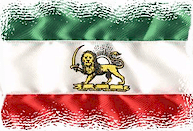

IMPERIAL EMBLEM

PERSIA
Iranian Freedom Fighters UNITE

Showing posts with label US. Show all posts
Showing posts with label US. Show all posts
Monday, December 08, 2008
Sunday, October 28, 2007
WHO IS STEALING YOUR HARD EARNED MONEY FROM YOUR BACK POCKET ?
FIAT EMPIRE - Why the Federal Reserve Violates the U.S. Constitution
Tuesday, August 14, 2007
This is happening all over American campuses near you
"Indoctrinate U" Outtake on Columbia Exposes Hamid Dabashi's BigotryBy Cinnamon StillwellCampus Watch Web LogAugust 10, 2007 : http://www.campus-watch.org/weblog/id/88 Campus Watch Home Middle East studies in the News
Hamid Dabashi, Hagop Kevorkian Professor of Iranian Studies and Comparative Literature and Chairman of the Middle East Languages and Cultures department at ColumbiaUniversity, figures prominently in the work of those of us trying to bring accountability and balance back to the field of Middle East studies. His anti-Western, pro-Islamist, and, at times, anti-Semitic commentary have been noted by Campus Watch on many occasions.
Indeed, he holds the current "Quote of the Month" spot for his review of the film "300," in which he likens the Persian Empire to modern-day America and the Spartans to the "Iraqi resistance, the Palestinians, [and] Hizbullah," while attempting to justify suicide bombings by comparing them to the Spartans' last stand at Thermopylae. This is what many have come to expect from Dabashi, whose apologetics seem to know no bounds.Dabashi makes another appearance of sorts in an outtake from the upcoming documentary, "Indoctrinate U." The film, which will feature interviews with Middle East Forum director Daniel Pipes and Middle East scholar Martin Kramer, focuses on bias and the "institutional intolerance" that's rampant in higher education. Filmmaker Evan Coyne Maloney has been making deleted scenes available at the "Indoctrinate U" website and the first of these involves Columbia University (watch it here). In a "Columbia Quiz" given randomly to students and other passersby on campus, Maloney uses a Dabashi quote to make a point about what passes for acceptable in academia today. Titled, "A Professor's Lesson in Tolerance and Civility," the clip features Maloney asking quiz takers to guess whether the following quote originated with "a) Adolph Hitler b) Osama bin Laden or c) a Columbia professor":
Who said of "Israeli Jews...the way they talk, walk, the way they greet each other, there is a vulgarity of character that is bone deep and structural to the skeletal vertebrae of its culture"?
The results are humorous, and yet also rather frightening. None of the quiz takers know off the bat that the quote belongs to Dabashi and one even tells Maloney that she suspects "this whole thing is designed to make me say a Columbia professor." A few correctly guess that a "Columbia professor" is the answer, while others, after appearing visibly shocked by the bigotry of the quote, assume that it originated with either Hitler or bin Laden. When Maloney informs them that the quote is, in fact, attributed to "Hamid Dabashi, the Chair of the Middle East Languages and Cultures department," the reaction is mixed. Some just shake their heads in consternation, one cheers that she got the answer right, and others simply look uncomfortable. One student remarks, "I remember reading about this. It was insane," and then goes on to ask if it happened "while he was teaching here." "He's still here now," answers Maloney. Then he concludes: "That's the kind of education you get up here at the Middle East Languages and Culture department at Columbia, I guess." Indeed.
NOW WATCH THESE TWO VIDEOS - IT IS HAPPENING TO US BECOUSE WE DO IT TO OUR SELVES - AZ MUST KE BAR MUST -
Part 1 ---------> http://www.youtube.com/watch?v=VTebbTZ0FTg
Part 2 ---------> http://www.youtube.com/watch?v=Rqwy7xSDTt4
AND THIS : Frances Harrison on Reporting from Tehran
Journalist Frances Harrison has been the BBC's correspondent in the Iranian capital city of Tehran for the past 3 years. She says conditions have gotten worse, especially for women, under the increasing strictures being put in place by the ultraconservative Islamic government. Listen here.
Harrison's husband is Iranian; prior to her posting in Iran, she reported for the BBC from Sri Lanka, Bangladesh and Malaysia. She's now back in the U.K.
Bankrupting Iran is Not Enough :
http://iranvajahan.net/cgi-bin/news.pl?l=en&y=2007&m=08&d=13&a=10
Thursday, March 22, 2007
Can Bush Force Iran Into a Deal? by Michael Hirsh ,Newsweek
U.S. forces are massing on Iran, and soon it will be time to strike. No, not militarily—that would be the height of insanity—but diplomatically. The Americans and Europeans are close to achieving the leverage they have long sought against Tehran through a deftly managed policy of political encirclement and economic strangulation. Just two big pieces still need to fall into place: a sign from Iran that it is willing to suspend uranium enrichment, at least temporarily, and a willingness on the part of George W. Bush to take yes for an answer—and strike a deal. On the latter point, the Bush administration does seem to be shifting in tone. With the departure of several key Bush hardliners in recent months, it feels as if the regime-change fever has broken in Washington. While still talking tough, chief Iran envoy Nicholas Burns sounded almost magnanimous toward Tehran on Wednesday as he detailed the “multiple points of pressure” being applied on Iran’s leaders.
Speaking at a Rand Corp. conference on Capitol Hill, Burns said the Western allies are still very willing to offer Tehran a nearly simultaneous "suspension for suspension"—that is, the West will stop the U.N. resolution process if Iran ceases enriching—even though the Americans and Europeans are in a much stronger position than they were several months ago. Just as importantly, Burns said the United States was sensitive to Tehran’s need to save face after its leaders have spent months defiantly insisting that they would never give up their uranium-enrichment program. “We understand they have their domestic political arena” to think about, he said. “We have carefully given the Iranians ‘exit doors’” —ways to retain a civilian nuclear program while guaranteeing there would be no bomb. Burns also dismissed the still-current idea in Washington that Bush intends to attack Iran, saying the United States has “plenty of time” to pressure Tehran before it’s ready to build a nuclear bomb. How long? Perhaps extending into the next presidency, Burns said. That was quite a contrast to John Bolton, the just-departed U.N. ambassador who told reporters separately Wednesday: "I believe that ultimately the only real prospect of getting Iran to give up nuclear weapons is to change the regime." Not long ago, it was the Boltons who spoke for Bush, not the Burnses. So now it’s decision time for Iran. The U.N. Security Council is only days away from a vote on a second resolution that would hit Iran with even tougher sanctions, including a ban on arms and an expanded list of officials and companies targeted for financial and travel restrictions, like the Revolutionary Guard Corps. Using a blend of Wall Street strategy and Tony Soprano tactics, Washington continues to strong-arm major global companies into giving up their Iran business. In the last nine months, U.S. Undersecretary of Treasury Stuart Levey told Congress this week, Washington has met with more than 40 big banks around the world to “discuss the risks of doing business with Iran.” (Translation: if you bank with the Iranians, you may suddenly find it tough opening up that branch or doing mergers and acquisitions in the world’s biggest economy, America’s.) And this week, another big link in the Western policy of encirclement dropped into place when Russia finally joined with the Americans and Europeans after months of balking at confronting Iran. With Tehran already experiencing technical setbacks at its Natanz enrichment plant—its “cascades” of centrifuges aren’t working right—Moscow announced it would not ship fuel to Iran’s prized Bushehr reactor, which Russia is building. While Russian Foreign Minister Sergei Lavrov denied reports that Moscow had linked completion of Bushehr to Iranian suspension of enrichment activities, U.S. and European officials say they’ve been reassured by Russia that this is the case, and Tehran appeared to fear just that. "It is clear that Russia has stopped construction of this plant under pressure and for political reasons," Iranian state television said. While Russia attributed its action to Tehran's failure to pay up on time, Western officials say the Kremlin is finally fed up with Iran's defiance over enrichment. For Tehran, all this means that the price of its nuclear dreams has escalated dramatically in the last several months. “As the vise tightens with a second or perhaps third Security Council resolution," the political cost for Tehran’s leaders will become acute, Burns said. The proud Iranians, who see themselves as a benign regional power, have now been branded an international rogue by virtually every nation on earth except a handful of fellow rogues: Cuba, Venezuela, Syria and Belarus. And Iran's political elite knows it's all largely thanks to the over-the-top rhetoric of their radical populist president, Mahmoud Ahmadinejad, who is getting less popular in Tehran by the hour. One important element remains. Much of Tehran's high-handed refusal to negotiate since Ahmadinejad’s election two years ago is rooted in the Iranian hardliners’ conviction that Bush is hopelessly bogged down in Iraq. “The Iranians may think they can wait this out until the ‘surge’ plan fails,” says Trita Parsi, a Washington-based Iran expert. But if Gen. David Petraeus, the commander of multinational forces in Iraq, succeeds in quieting things down next door, Tehran won't even have that card to play (yet another reason why the Democrats’ flagging efforts to legislate a deadline for Petraeus are foolhardy). Will Iran deal? Signals so far seem mixed. Supreme Leader Ayatollah Ali Khamenei, whose views are vastly more important than those of the more visible Ahmadinejad, made a veiled threat this week to kick out remaining U.N. inspectors and withdraw from Nuclear Nonproliferation Treaty protocol if a second U.N. resolution is passed, saying: “Until today, what we have done has been in accordance with international regulations. But if they take illegal actions, we too can take illegal actions and will do so." But outgoing U.N. Ambassador Javad Zarif, a moderate who is one of Tehran’s top negotiators, has been extended in his post by a couple of months as his bosses probe the diplomatic possibilities. Speaking to the Washington Rand conference by video (he’s not allowed to leave the U.N. environs in New York), Zarif sounded peevishly skeptical about a temporary suspension of enrichment on Wednesday. Yet he did not rule it out. Nor did he say another popular compromise plan—an international consortium that would place Iran’s program under U.N. and European supervision—was out of the question. “We are prepared to accept joint ownership and joint control of [the nuclear] facilities in Iran,” Zarif said. If Bush can convert his hard-won bargaining capital into a diplomatic payoff, he might even have a shot at rescuing his presidential legacy. Currently the post-Bush landscape looks as bleak in foreign policy as any in memory. “No president will ever have handed over a worse international situation than George W. Bush,” former Clinton administration ambassador Richard Holbrooke told me recently. But if Bush completes last month’s deal committing North Korea to nuclear dismantlement—and then manages to find an accommodation that takes Iran out of the nuclear-arms business, too—presidential historians may find something else to write about beside Iraq. They could well record that this most unilateralist of first-term presidents left behind two splendid models of multilateral diplomacy in his second term.
Speaking at a Rand Corp. conference on Capitol Hill, Burns said the Western allies are still very willing to offer Tehran a nearly simultaneous "suspension for suspension"—that is, the West will stop the U.N. resolution process if Iran ceases enriching—even though the Americans and Europeans are in a much stronger position than they were several months ago. Just as importantly, Burns said the United States was sensitive to Tehran’s need to save face after its leaders have spent months defiantly insisting that they would never give up their uranium-enrichment program. “We understand they have their domestic political arena” to think about, he said. “We have carefully given the Iranians ‘exit doors’” —ways to retain a civilian nuclear program while guaranteeing there would be no bomb. Burns also dismissed the still-current idea in Washington that Bush intends to attack Iran, saying the United States has “plenty of time” to pressure Tehran before it’s ready to build a nuclear bomb. How long? Perhaps extending into the next presidency, Burns said. That was quite a contrast to John Bolton, the just-departed U.N. ambassador who told reporters separately Wednesday: "I believe that ultimately the only real prospect of getting Iran to give up nuclear weapons is to change the regime." Not long ago, it was the Boltons who spoke for Bush, not the Burnses. So now it’s decision time for Iran. The U.N. Security Council is only days away from a vote on a second resolution that would hit Iran with even tougher sanctions, including a ban on arms and an expanded list of officials and companies targeted for financial and travel restrictions, like the Revolutionary Guard Corps. Using a blend of Wall Street strategy and Tony Soprano tactics, Washington continues to strong-arm major global companies into giving up their Iran business. In the last nine months, U.S. Undersecretary of Treasury Stuart Levey told Congress this week, Washington has met with more than 40 big banks around the world to “discuss the risks of doing business with Iran.” (Translation: if you bank with the Iranians, you may suddenly find it tough opening up that branch or doing mergers and acquisitions in the world’s biggest economy, America’s.) And this week, another big link in the Western policy of encirclement dropped into place when Russia finally joined with the Americans and Europeans after months of balking at confronting Iran. With Tehran already experiencing technical setbacks at its Natanz enrichment plant—its “cascades” of centrifuges aren’t working right—Moscow announced it would not ship fuel to Iran’s prized Bushehr reactor, which Russia is building. While Russian Foreign Minister Sergei Lavrov denied reports that Moscow had linked completion of Bushehr to Iranian suspension of enrichment activities, U.S. and European officials say they’ve been reassured by Russia that this is the case, and Tehran appeared to fear just that. "It is clear that Russia has stopped construction of this plant under pressure and for political reasons," Iranian state television said. While Russia attributed its action to Tehran's failure to pay up on time, Western officials say the Kremlin is finally fed up with Iran's defiance over enrichment. For Tehran, all this means that the price of its nuclear dreams has escalated dramatically in the last several months. “As the vise tightens with a second or perhaps third Security Council resolution," the political cost for Tehran’s leaders will become acute, Burns said. The proud Iranians, who see themselves as a benign regional power, have now been branded an international rogue by virtually every nation on earth except a handful of fellow rogues: Cuba, Venezuela, Syria and Belarus. And Iran's political elite knows it's all largely thanks to the over-the-top rhetoric of their radical populist president, Mahmoud Ahmadinejad, who is getting less popular in Tehran by the hour. One important element remains. Much of Tehran's high-handed refusal to negotiate since Ahmadinejad’s election two years ago is rooted in the Iranian hardliners’ conviction that Bush is hopelessly bogged down in Iraq. “The Iranians may think they can wait this out until the ‘surge’ plan fails,” says Trita Parsi, a Washington-based Iran expert. But if Gen. David Petraeus, the commander of multinational forces in Iraq, succeeds in quieting things down next door, Tehran won't even have that card to play (yet another reason why the Democrats’ flagging efforts to legislate a deadline for Petraeus are foolhardy). Will Iran deal? Signals so far seem mixed. Supreme Leader Ayatollah Ali Khamenei, whose views are vastly more important than those of the more visible Ahmadinejad, made a veiled threat this week to kick out remaining U.N. inspectors and withdraw from Nuclear Nonproliferation Treaty protocol if a second U.N. resolution is passed, saying: “Until today, what we have done has been in accordance with international regulations. But if they take illegal actions, we too can take illegal actions and will do so." But outgoing U.N. Ambassador Javad Zarif, a moderate who is one of Tehran’s top negotiators, has been extended in his post by a couple of months as his bosses probe the diplomatic possibilities. Speaking to the Washington Rand conference by video (he’s not allowed to leave the U.N. environs in New York), Zarif sounded peevishly skeptical about a temporary suspension of enrichment on Wednesday. Yet he did not rule it out. Nor did he say another popular compromise plan—an international consortium that would place Iran’s program under U.N. and European supervision—was out of the question. “We are prepared to accept joint ownership and joint control of [the nuclear] facilities in Iran,” Zarif said. If Bush can convert his hard-won bargaining capital into a diplomatic payoff, he might even have a shot at rescuing his presidential legacy. Currently the post-Bush landscape looks as bleak in foreign policy as any in memory. “No president will ever have handed over a worse international situation than George W. Bush,” former Clinton administration ambassador Richard Holbrooke told me recently. But if Bush completes last month’s deal committing North Korea to nuclear dismantlement—and then manages to find an accommodation that takes Iran out of the nuclear-arms business, too—presidential historians may find something else to write about beside Iraq. They could well record that this most unilateralist of first-term presidents left behind two splendid models of multilateral diplomacy in his second term.
Wednesday, March 14, 2007
Iraq Intensifies Efforts to Expel Iranian GroupThough
Labeled Terrorist, MEK Has Updated U.S. on Tehran's Nuclear Program
By Ernesto Londoño and Saad al-IzziWashington Post Staff WritersWednesday, March 14, 2007; A10
BAGHDAD -- For three years, thousands of members of a militant group dedicated to overthrowing Iran's theocracy have lived in a sprawling compound north of Baghdad under the protection of the U.S. military. American soldiers chauffeur top leaders of the group, known as the Mujaheddin-e Khalq, or MEK, to and from their compound, where they have hosted dozens of visitors in an energetic campaign to persuade the State Department to stop designating the group as a terrorist organization. Now the Iraqi government is intensifying its efforts to evict the 3,800 or so members of the group who live in Iraq, although U.S. officials say they are in no hurry to change their policy toward the MEK, which has been a prime source of information about Iran's nuclear program. The Iraqi government announced this week that roughly 100 members would face prosecution for human rights violations, a move MEK officials contend comes at the request of the Iranian government. "We have documents, witnesses," Jaafar al-Moussawi, a top Iraqi prosecutor, said Monday, alleging that the MEK aided President Saddam Hussein's campaign to crush Shiite and Kurdish opposition movements at the end of the 1991 Persian Gulf War. Moussawi said the criminal complaint would implicate MEK members in "killing, torture, [wrongful] imprisonment and displacement." The group denied involvement in Hussein's reprisals. "These allegations are preposterous and lies made by the Iranian mullahs and repeated by their agents," it said in a statement issued this week. The case highlights the occasional discord between the U.S. and Iraqi governments on matters related to Iran. While the U.S. government has accused Iran of supplying Iraqi Shiite militias with sophisticated weapons that it says have been used to kill American troops, Iraq's Shiite-led government has expanded commercial and diplomatic ties with its majority-Shiite neighbor. "This organization has always destabilized the security situation" in Iraq, said Mariam Rayis, a top foreign affairs adviser to Prime Minister Nouri al-Maliki, adding that the MEK's continued presence "could lead to deteriorating the relationship with neighboring countries." MEK leaders dispute the prosecutor's allegations. They contend that Iran has infiltrated Iraq's political leadership while also supporting militant groups in an effort to keep the United States in a quagmire in Iraq. They also say the Iranian government wants to forestall a U.S. attack on Iran. "The Iranian regime wants very much to prevent the winds of change," Behzad Saffari, a spokesman for the group, said in a recent interview at a Baghdad hotel. "Instead of fighting the Americans in Iran, [the Iranian government] is fighting them in Iraq. If we have to leave Iraq, it means the Americans are defeated. It means Iran has prevailed." Maliki told officials from neighboring countries during a meeting in Baghdad on Saturday that Iraq should not become a battleground where other nations attempt to settle their disputes. The Iranian Embassy in Baghdad did not reply to questions about the MEK. The MEK, also known as the People's Mujaheddin of Iran, was founded by students at Tehran University in 1965 as an opposition movement to Shah Mohammad Reza Pahlavi, the country's U.S.-backed dictator. The group clashed with that government and later with the Islamic Republic established by Ayatollah Ruhollah Khomeini in 1979. In 1986, the MEK moved its headquarters to Iraq, where Hussein welcomed the organization. MEK fighters have been widely accused of backing Hussein's suppression of the Shiite and Kurdish uprisings, but MEK officials say Kurdish leaders have absolved them of playing a role in the crackdown on Kurds. In 1997, during a period of warmer relations between Washington and Tehran under the Clinton administration, the State Department added the MEK to its list of foreign terrorist organizations. The group's leader, Maryam Rajavi, lives in Paris. She has a cultlike following among members, some of whom set themselves on fire to protest her brief arrest in 2003 after French officials raided the group's offices. Rajavi has led efforts to have the group's terror label removed in the United States and Europe. In December, a European court overturned an E.U. order freezing the group's assets. The European Union has not removed the group from its terrorist list. The MEK says it has several thousand members in Iran, but the extent of its support base is unclear. Most exiled members live in the camp at Ashraf, north of Baghdad. After Hussein was toppled, the MEK agreed to turn over its weapons to U.S. military officials. In 2004, the U.S. military granted its members the status of "protected persons" under the Geneva Conventions and has since provided security for the camp. Shortly after the camp was set up, FBI and State Department officials screened residents and found no evidence that would lead them to charge anyone with a crime. A Washington Post special correspondent toured Camp Ashraf in January. It is a largely self-sufficient compound, and the majority of members haven't left in years. It has shops, a swimming pool, an ice cream store, a bakery and a soda factory that makes a cola- and orange-flavored drink locals call Ashraf Cola.
Last summer, Maliki gave the group six months to leave Iraq. Although the deadline has elapsed, Iraqi officials say they intend to expel the group after getting parliamentary approval.
MEK officers argue that their expulsion would be a violation of international law and have obtained a legal opinion to that effect from the U.N. refugee agency. They say they should be treated as refugees, not terrorists. Lou Fintor, the spokesman at the U.S. Embassy in Baghdad, said there has been no change in the government's position toward the MEK. A U.S. military spokesman in Iraq did not respond to questions about the MEK. A senior U.S. military official who spoke on condition of anonymity said protecting the MEK was "not a big drain on our resources," adding, "This is a political problem between Iraq, Iran and the MEK." If the group is expelled, it is unclear where Ashraf residents would go or what other country might take them. MEK leaders refuse to speak about such a scenario, reiterating that their expulsion would be illegal. The leaders say they are a main source of intelligence on Iran and question why the United States keeps the group on its terrorist list. "All the important things that are talked about are things revealed by us," said Mohammad Mohaddessin chairman of the National Council of Resistance of Iran, the MEK's political arm, referring to information about Iran's nuclear ambitions and, more recently, the roadside bombs the United States says Iran has made available to insurgents in Iraq. Moussawi, the Iraqi prosecutor, said the human rights case is not politically motivated. The issue of expulsion, which is not directly related to the pending criminal charges, is expected to come before the Iraqi parliament in coming weeks. Some lawmakers have criticized Maliki for making the issue a priority at a time when Iraq is besieged by more serious problems. "If you take it from a humanitarian side, I don't think they should leave until the situation can be resolved," Saleh al-Mutlak, a Sunni lawmaker, said in an interview. "It is surprising that the government of Iraq is giving such an order. This will only show that the Maliki government will obey Iran's orders."
Latest News
Iran vows 'no surrender' in face of new sanctions Stuff.co.nz 16:10
Iran vows "no surrender" in face of new sanctions Yahoo! US 16:10
Russian nuclear firm warns Bushehr stoppage could be "irreversible" The Raw Story 16:10
Iran sanctions talks at U.N. entering last phase The Star Online 16:09
Livni, Peretz meet with UN's Ban, urge harsher sanctions on Iran Ha'aretz 16:08
Iran sees end to Russian atomic plant row News.com.au 16:05
Survey finds widespread agreement that climate change is a pressing problem York Dispatch, Pennsylvania 16:00
Iran’s under-financing of Bushehr project continues-Atomstroiexport ITAR-TASS 16:00
Arab Press Roundup: March 14, 2007 World Peace Herald 15:57
Iran will respond if UN adopts sanctions: Foreign Minister Focus English News 15:57
Iran sanctions talks at UN entering last phase (Reuters) Yahoo! US 15:55
Russia Getting Fed Up With Iran CBS.com 15:53
Nuclear subs program expected to sail through The Sydney Morning Herald 15:51
Iran sanctions talks at UN entering last phase Reuters 15:49
Iran is entitled to ... IRNA 15:49
Iraq, U.S. At Odds Over Iranian Rebels The Post Chronicle 15:47
Ahmadinejad: World Is Isolated, Not Iran The Post Chronicle 15:47
U.S.: Al-Sadr Still In Iran CBS.com 15:45
Israel not “enthusiastic” about strike on Iran: Olmert Khaleej Times 15:44
Iran warns Russia nuclear delay will hurt trade Khaleej Times 15:44
Israel not 'enthusiastic' about strike on Iran: Olmert Focus English News 15:43
Iran will respond if UN adopts sanctions: FM Khaleej Times 15:42
Army spokesman: We're tracking al-Sadr CNN 15:38
British lawmakers to vote on government proposal on a new nuclear missile program San Diego Union-Tribune, California 15:32
Tehran expects Russia to supply nuclear fuel to Bushehr in March Government Opportunities 15:29
Pelosi's Betrayal Etherzone 15:28
U.S. says al-Sadr probably still in Iran Dallas Morning News, Texas 15:27
Iran Moves Out of the Isolation Booth TIME 15:23
Iraq Intensifies Efforts to Expel Iranian Group Washington Post 15:22
A Most Sovereign Indifference TomPaine.com 15:19
Iran-Halabcheh IRNA 15:18
Iran's Nuclear Program Is Peaceful - Foreign Min Mottaki Nasdaq 15:17
Velayati: International pressure the price to be paid for nuclear fuel cycle Payvand 15:17
Wednesday, March 07, 2007
Interview: Decision to Meet With Syria, Iran 'Positive Change' in U.S. Policy
By STEVEN A. COOK AND BERNARD GWERTZMAN
Interviewee: Steven A. Cook, Douglas Dillon Fellow
Interviewer: Bernard Gwertzman, Consulting Editor
Steven A. Cook, an expert on Middle East policy, who served as an adviser to the Iraq Study Group, says the Bush administration’s decision to participate in a regional meeting on Iraq, including Iran and Syria, marks “a positive change in policy,” at a time of widespread criticism of its Iraq policy in Congress.
The Iraq Study Group, in its report last December, called for a dialogue between Iraq and the United States on one side and other countries in the Middle East including Syria and Iran. The administration seemed to go out of its way to denigrate that recommendation; in fact, it said that until Iran and Syria changed their unhelpful behavior in Iraq, it wasn’t going to talk to them. What do you think brought about this change yesterday in which Secretary of State Condoleezza Rice said the United States would attend such a regional meeting?
There are a number of things that have happened that have forced the administration’s hand and forced it to change tracks. One, the political pressure in Washington has been building for a regional dialogue. Since the administration is on the defensive with regard to its Iraq policy, with nonbinding resolutions in the Congress opposing the administration’s policy, this is a way in which the Bush administration can demonstrate that it learned it can actually change, that it has learned from the experience and it is now willing to talk to the regional actors.
Now that’s not necessarily the way the administration sees it. The official reason for the change in policy is now the United States is not on the defensive vis-à-vis Iran in particular. They’ve ratcheted up the pressure on the Iranians over the course of the last month to six weeks. They’ve arrested Iranians in Iraq, they’ve made a big push to demonstrate that the Iranians are supplying a variety of Iraqi militia groups with these things called EFPs [Explosively Formed Projectiles] and the means to develop them. The United States has also sent another carrier battle group off the coast of Iran in an effort to ratchet up the pressure on the Iranians. So the administration feels they would be negotiating with the Iranians from a position of strength now. I’m not necessarily sure that I buy that argument. It is true they’ve ratcheted up the pressure on the Iranians. But at the same time, the Iranians hold many of the cards, and even with this pressure they have the means to make the U.S. military’s life much more difficult in Iraq. Even though we have done this “show the flag” operation with the navy, it hasn’t altered Iranian behavior. Iranian president Mahmoud Ahmadinejad has said as recently as yesterday that the Iranians will continue to develop their nuclear weapons. This is a positive change in policy; we need to have a broad discussion with the Iranians. But I don’t necessarily see this as being the end of the story here.
As many people have pointed out, the forces that have killed more Americans are the al-Qaeda and Sunni forces in Iraq, which presumably Iran has little influence over. Can such a regional conference do anything to halt that violence, since most Arab countries who would be at the conference are largely Sunni?
It should be part of our foreign policy to be talking to the Iranians and the Syrians. I’m not sure that in the region the Sunni powers can tamp down on al-Qaeda-type violence. This is a group that is not going to be satisfied by political deals, by carrots and things along those lines. The hope is that the broader Sunni population of Iraq will not feel so vulnerable if the whole region is involved, if there is support from the Saudis and the Jordanians. But with every action there’s a reaction. So if the Saudis, the Jordanians, the Egyptians, and the other Sunni powers seem to be supporting the Sunnis, what will the majority Shiites do in response?
There are competing visions over the future of Iraq. The Shiites clearly see power in their demographic numbers. The Sunnis, who don’t necessarily feel themselves as a minority, would like to regain power. But even if the Sunni powers were able to manage to help the Sunnis regain 30 percent of the power that they once held, that’s still 70 percent less than what they once held. So it’s a good thing for the United States to be discussing the region with folks like the Syrians and the Iranians, but I don’t see this as a panacea. It can help, but it’s not the magic bullet.
Now you and I talked recently when Rice started the round of talks with the Israelis and Palestinians because the Iraq Study Group had also said progress should be made on that front. That started before these Iraq talks will start. Is there still a relationship, you think?
I do think there is a relationship. The Sunni powers, the people who are going to help us on the Palestinian front, need to demonstrate something as a result of their helping the United States. This is the obvious thing for them, so I think there’s a relationship. And that’s why the United States has been so involved. You hate to be cynical about these things, but clearly, Condoleezza Rice has been as active as she has been—after six and a half years of this administration holding the Arab-Israeli conflict at arm’s length—because we need help from other Arab capitals, and this is clearly the price that they’re extracting from the United States. Bottom line, it’s a good thing for the United States to be involved in Arab-Israeli peacemaking. One of the things that outrages Arab publics is that we haven’t been involved. And if we can be seen to be constructive, it may help our very weak position in terms of public opinion in the Middle East.
Now the Palestinians still haven’t announced officially this new unity government. I guess people are waiting to see who’s in it and whether the United States and Israel will deal with it.
Right.
The United States has taken the position it’ll deal with that when they see the makeup of the new government. Do you think there’s any chance the United States might be more flexible?
My sense is that what we’ll see exactly what we’ve seen all along. The United States is going to follow the Israelis’ lead on this one. If it’s good enough for the Israelis, then it’ll be good enough for the United States. Interestingly though, the Europeans are starting to peel away from the United States on this. There have been some statements from British diplomats saying that if this national unity government is good enough, we should start dealing with whatever national unity government comes about. The Mecca agreement is enough for the European Union. So now you’re going to have a split within the “Road Map” quartet. Russia all along has been saying that we should lift the ban on aid to the Palestinians. The European Union has stood with the United States, but now we’re seeing some daylight between the United States and the European Union.
Coming back to yesterday’s announcement by Secretary of State Rice that the United States would participate in this regional conference, it has now been expanded I gather to include the European Union and the UN Security Council.
And invitations were sent to representatives from the Group of Eight (G8) industrialized nations last night. So this is going to be rather expansive, and I think the administration is hedging. It’s going to be at a meeting with the Iranians and the Syrians, but there is a desire to have enough people around the table so that it dilutes this. It’s unclear as of yet whether Secretary Rice will meet one-on-one with the Syrian and Iranian foreign ministers. There’s something else about this proposed meeting that I think is important. There has been continuity in Iranian foreign policy going back even to the days of the Shah, and this is a quest for recognition of Iran’s role as a regional power. Here’s an opportunity to open a broad dialogue with the Iranians in this way and implicitly recognize their regional role and their regional influence. I wonder whether this might be the start of a dialogue that would change in some ways Iranian behavior. I wonder if an acknowledgement of its role in the region and its importance may not ameliorate other areas where we’re having problems with the Iranians, particularly in the Gaza strip, particularly in Iraq, maybe that will change to some extent Iranian policy, and also in Lebanon.
The Iranians are hard-nosed negotiators. We do have a difference of interests with the Iranians and they still see large American forces on all of their borders, but this is a step that we should take before we take military action against the Iranians. We should exhaust the discussions with them.
You’re already talking about military action?
I’m not jumping into it. I’m saying we need to exhaust this diplomatic avenue before we move to military action because military action would actually be disastrous for the United States.
The administration keeps saying it’s not planning any military action.
The administration says a lot of things, but of course they are doing things that are ratcheting up the pressure. And from the other side, the Iranians perceive the United States to be weak. So, you know, that’s not a good combination. I’m not an advocate of military action and that’s why I think ultimately these talks are positive. We need to explore this avenue. If the Iranians reveal themselves to be noncooperative, well, then we’re on a different road.
What about Syria? Can they do anything to help out Iraq?
The Syrians can do a better job on policing their border. But what’s uppermost in the minds of the Syrian leadership is relieving the pressure on the investigation and international tribunal on the assassination of former Lebanese Prime Minister Rafik Hariri. That is essentially the price the United States is going to have to pay. That’s what the Syrians are looking for in terms of gaining its cooperation. Talks with the Iranians are much more important than the talks with the Syrians, to be honest with you. But there is a Syrian-Israeli angle here. The Israelis have demonstrated an interest in dealing with the Syrians as a result of the war in Lebanon over the summer. There may be something that can be done as a result of these talks to jump-start a Syrian-Israeli negotiation. But the Syrians have a history of playing both ends of the fence, being constructive in one area and being the furthest from constructive in another area.
Sunday, February 25, 2007
More deadly attacks in Baghdad
At least one person has been killed and eight injured in a car bomb attack near the heavily fortified Green Zone in central Baghdad. The blast was only 50 metres from the Iranian embassy, although the authorities did not initially believe that the building was the intended target. The Green Zone also houses the US and British embassies and key offices of the Iraqi government. Soon after the attack, two rockets hit a Shia enclave in southern Baghdad, injuring a number of people. There were conflicting reports about the number of casualties with some police sources saying at least 10 people were killed and eight injured. The Reuters news agency, however, said other police sources reported that only three people had been wounded. The two Katyusha rockets slammed into the Abu Dishir district, which is surrounded by a predominantly Sunni neighbourhood.
Mosque targeted
It was not clear whether the Green Zone blast was intended as a signal to the Iranians.
The explosion ripped through the street at 08:45 am (0545 GMT) during the busiest period of the morning rush hour, when nearby roads were packed with motorists and pedestrians heading for work, many in nearby Iraqi ministries. Khalil Saadati, an Iranian diplomat, said: "It was close to the embassy, but we weren't the target." On Saturday, a fuel tanker rigged with explosives killed 40 people when it blew up near a Sunni mosque in western Iraq . The blast came a day after the mosque's imam had criticised al-Qaeda fighters, police and residents said.
The bomb exploded in a market in the town of Habaniya in the province of Anbar, where US forces are battling armed Sunni Arab groups. Local police said they believed the mosque was the target, adding that the market had been destroyed and 64 people wounded. Women and children were among the dead, they said.
Fears Grow over Iran
February 23, 2007 The Times : Tom Baldwin in Washington and Philip Webster, Political Editor
Tony Blair has declared himself at odds with hawks in the US Administration by saying publicly for the first time that it would be wrong to take military action against Iran. The Prime Minister’s comments came hours before the UN’s nuclear watchdog raised the stakes in the West’s showdown with Tehran. The International Atomic Energy Agency concluded that Iran had expanded its nuclear programme, defying UN demands for it to be suspended.
Hundreds of uranium-spinning centrifuges in an underground hall are expected to be increased to thousands by May when Iran moves to “industrial-scale production”.
Senior British government sources have told The Times that they fear President Bush will seek to “settle the Iranian question through military means” next year, before the end of his second term if he concludes that diplomacy has failed. “He will not want to leave it unresolved for his successor,” said one. But there are deep fissures within the US Administration. Robert Gates, the Defence Secretary, who has previously called for direct talks with Tehran, is said to be totally opposed to military action. Although he has dispatched a second US aircraft carrier to the Gulf, he is understood to believe that airstrikes would inflame Iranian public opinion and hamper American efforts in Iraq and Afghanistan. One senior adviser to Mr Gates has even stated privately that military action could lead to Congress impeaching Mr Bush.
Condoleeza Rice, the Secretary of State, is also opposed to using force, while Steve Hadley, the President’s National Security Adviser, is said to be deeply sceptical. The hawks are led by Dick Cheney, the Vice-President, who is urging Mr Bush to keep the military option “on the table”. He is also pressing the Pentagon to examine specific war plans — including, it is rumoured, covert action.
But Mr Blair, in a BBC interview yesterday, said: “I can’t think that it would be right to take military action against Iran . . . What is important is to pursue the political, diplomatic channel. I think it is the only way that we are going to get a sensible solution to the Iranian issue.”
The diplomatic options will be on the table on Monday when representatives of the five permanent members of the UN Security Council and Germany meet in London to begin drafting a new resolution. It was notable that Mr Blair’s remarks yesterday closely resembled those of Jack Straw last year, who said that an attack on Iran was “inconceivable”, angering Washington and perhaps contributing to his removal as Foreign Secretary. The Prime Minister’s comments reflect what British officials have been saying privately for some time, but also show a growing streak of independence from Mr Bush. The White House was unhappy with the timing of Mr Blair’s announcement this week on withdrawing 1,600 British troops, concerned that it undercut Mr Bush’s efforts to shore up support for his troop surge on Capitol Hill while sending out “mixed messages” to the Iranians. Britain has also privately expressed concern over the handling of the US military briefing last week which alleged that the “highest levels” of the Iranian Government were behind the supply of weapons to Iraqi militias. - Mr Straw, the Leader of the Commons, did break ranks yesterday by declaring that the Government was committed to a full inquiry into mistakes made in the invasion of Iraq and its aftermath. He said that he was ready “in due course” for a wider inquiry than those held to date. However a Downing Street spokesman said yesterday that there would come a time to “look at these issues”.
Sunday, February 18, 2007
On Iran: US Has Many Options, By Amir Taheri
Has war between the United States and the Islamic Republic of Iran become inevitable?These days, the question is at the center of discussions in diplomatic circles across the globe. A good part of the talk on the sidelines of the annual International Security Conference, held in Munich, Germany, last week was precisely about that.The same question will be at the center of talks between Iran President Mahmoud Ahmadinejad and his Syrian counterpart Bashar Assad who is due in Tehran today to coordinate his strategies with Iran.

Judged by the visuals of the case, a military conflict seems possible. Like a pair of angry cats contesting the same space, Iran and the United States have been frowning and making warlike gestures, over who should set the agenda for the Middle East, for a quarter of a century. At some point, the two cats must jump at one another. In a sense, the two have been at war since 1979 when Khomeinist militants raided the US Embassy in Tehran and seized its diplomat’s hostage.Since then, pro-Iran militants have killed almost 1,000 Americans across the globe, including in Pakistan, Saudi Arabia, Kuwait, Lebanon and, more recently, Iraq. The Americans killed almost as many Iranians with the accidental downing of an Iranian jetliner and the destruction of Revolutionary Guard positions along the Gulf in 1987. Through the 1990s, the two managed to avoid conflict, by ignoring one another. That changed after 9/11 when the US decided to reshape the Middle East with “regime change” in Afghanistan and Iraq. Calling the Islamic republic part of an “Axis of Evil”, President George W. Bush made it clear there would be no room for Khomeinism in his new Middle East.That prompted Tehran to prepare for a showdown that Ahamdinejad seems to welcome. Iran intensified the arming of Hezbollah, renewed contacts with Shiite militants in Arab states, and increased its military budget by 21 percent. It also resumed uranium enrichment, putting its controversial nuclear program into high gear, and provoking a diplomatic tussle with US and its allies. In Afghanistan, Iran reactivated Gulbuddin Hekmatyar’s Hizb Islami militia, shipped arms to the Is’haqzai Pushtun tribe, and helped Hazara Shiites raise an army of 12,000. Iran also opened its borders to fleeing Taleban and Al-Qaeda militants. According to Arab intelligence sources, some 30 senior “Arab Afghans” are in Iran. To exert pressure on another US ally, Iran has shipped arms to Balochi rebels in Pakistan, including Marri tribesmen led by Nawab Khair-Baksh.Next, Tehran established contact with Palestinian radicals, notably Hamas, feting its leaders in Tehran and providing aid worth $250 million. Last week’s capture of Iranian military advisers in Gaza shows that Tehran was also involved in training Palestinian fighters. Last summer, Tehran fought a proxy war against Washington in Lebanon with Israel, the United States’ regional ally, dueling with Hezbollah, Iran’s cat’s-paw in the Arab world. A month before the war, Iran had signed a defense treaty with Syria, turning into a client state. Hezbollah’s perceived “victory” encouraged Iran to seek extending its glacis to Lebanon, by trying to topple the pro-Arab government of Prime Minister Fouad Siniora. Since last year, however, Iraq has become the principal battleground in the indirect war between Iran and the US. Iranian strategists assume that, if the Americans run away, Iraq will be divided into three mini-states: Kurdish, Sunni, and Shiite. Invoking the 19th century Treaty of Erzerum, which gives Iran certain rights in Iraq’s Shiite areas, Tehran hopes to play “big brother” to a future ministate in southern Iraq. The list of US accusations against Tehran includes:

• Supplying Iraqi militants with roadside bombs, known as Explosive Formed Projectiles (EFPs), which have killed at least 170 US soldiers and maimed over 600 others. • Supplying Iraqi insurgents, both Sunni and Shiite, with sniper rifles bought by Iran from Austria in 2002.• Recruiting, training and financing a number of Iraqi Shiite militias, notably the Mahdi Army, led by Moqtada Sadr.• Setting up command-and-control networks to coordinate insurgent attacks on US forces in Iraq. Seventy-eight members of Iran’s Islamic Revolutionary Guard Corps and security services have been arrested in Iraq, including seven senior officers captured in raids in Erbil and Baghdad. Among them were Muhsin Shirazi and Muhammad-Ja’afar Sahraroudi who have been in charge of pro-Iran militant groups abroad since the 1980s.• Offering safe haven to anti-US militants, including Jamal Jaafar-Muhammad, a member of the Iraqi National Assembly who coordinated the smuggling of EFPs into Iraq. Moqtada Sadr is also in Iran along with Abu-Hamza, a leader of the Al-Qaeda and Ramadan Al-Shalah, leader of the Islamic Jihad Organization (IJO).Iran cannot allow the imposition of a pax Americana in which Khomeinism could have no place. The US, for its part, cannot allow its Khomeinist foes to dominate a region that contains half the world’s oil and gas reserves. The conventional wisdom is that with the US Army bogged down in Iraq and Afghanistan, Washington cannot wage full-scale war against the Islamic republic. This ignores the fact that the US Navy and Air Force remain fully free and ready for action. Washington’s choice is not limited to either invading Iran or surrendering to the mullahs. Between the two, a range of options is available.

/strong>
Some are already being used. These include moves, known in military jargon as “proximity pressure”. Bush has changed the rules of engagement in Iraq to allow US forces to capture or kill Iranian infiltrators. The arrival of two naval battle groups in the Gulf represents the biggest concentration of firepower there since 1990. These could take out the Islamic Revolutionary Guards positions close to or along the Gulf, including key strategic assets like the bases in Dezful, Bushehr, Bandar Abbas, the Jask Peninsula, and Konarak.Iran’s nuclear installations in Klardasht, Arak, Tehran, Natanz, and Isfahan, along with the uranium mines of Bafq and Sarcheshmeh could also be destroyed, postponing the emergence of the Khomeinist regime as a nuclear power by years.Other targets include the bases and headquarters of the so-called Quds (Jerusalem) Corps that Iran has uses for “exporting revolution”. Located in western Iran, close to Iraq, these could be taken out with a combination of air attacks and ground commando raids.Such moves by the US would face the Iranian leadership with a tough choice: Whether to retaliate, thus provoking a full-scale war. Iran could retaliate by using its Lebanese and Palestinian clients for attacks against Israel. It could also organize terror operations in several Arab states and in Europe while making life harder for NATO in Afghanistan. Escalation, however, would provide Washington with the excuse to hit the command-and-control structures of the Khomeinist regime, including in Tehran itself. So far, the Khomeinsit leadership has swallowed the American accusations and “proximity pressure” operations with uncharacteristic pusillanimity. Ahmadinejad’s talk of the “Samson option”, meaning to set the Middle East ablaze if the Islamic republic is threatened, has not gone beyond rhetoric. It is as if the mullahs are looking for a way to walk back from the edge of precipice without losing face. The question, however, is whether the US, emboldened by the mullahs’ lack of response, will not seek “regime change”, and whether the Khomeinist leadership can climb down without losing face, and, perhaps, its grip on power. This is high stakes poker, with its outcome hard to predict.
Judged by the visuals of the case, a military conflict seems possible. Like a pair of angry cats contesting the same space, Iran and the United States have been frowning and making warlike gestures, over who should set the agenda for the Middle East, for a quarter of a century. At some point, the two cats must jump at one another. In a sense, the two have been at war since 1979 when Khomeinist militants raided the US Embassy in Tehran and seized its diplomat’s hostage.Since then, pro-Iran militants have killed almost 1,000 Americans across the globe, including in Pakistan, Saudi Arabia, Kuwait, Lebanon and, more recently, Iraq. The Americans killed almost as many Iranians with the accidental downing of an Iranian jetliner and the destruction of Revolutionary Guard positions along the Gulf in 1987. Through the 1990s, the two managed to avoid conflict, by ignoring one another. That changed after 9/11 when the US decided to reshape the Middle East with “regime change” in Afghanistan and Iraq. Calling the Islamic republic part of an “Axis of Evil”, President George W. Bush made it clear there would be no room for Khomeinism in his new Middle East.That prompted Tehran to prepare for a showdown that Ahamdinejad seems to welcome. Iran intensified the arming of Hezbollah, renewed contacts with Shiite militants in Arab states, and increased its military budget by 21 percent. It also resumed uranium enrichment, putting its controversial nuclear program into high gear, and provoking a diplomatic tussle with US and its allies. In Afghanistan, Iran reactivated Gulbuddin Hekmatyar’s Hizb Islami militia, shipped arms to the Is’haqzai Pushtun tribe, and helped Hazara Shiites raise an army of 12,000. Iran also opened its borders to fleeing Taleban and Al-Qaeda militants. According to Arab intelligence sources, some 30 senior “Arab Afghans” are in Iran. To exert pressure on another US ally, Iran has shipped arms to Balochi rebels in Pakistan, including Marri tribesmen led by Nawab Khair-Baksh.Next, Tehran established contact with Palestinian radicals, notably Hamas, feting its leaders in Tehran and providing aid worth $250 million. Last week’s capture of Iranian military advisers in Gaza shows that Tehran was also involved in training Palestinian fighters. Last summer, Tehran fought a proxy war against Washington in Lebanon with Israel, the United States’ regional ally, dueling with Hezbollah, Iran’s cat’s-paw in the Arab world. A month before the war, Iran had signed a defense treaty with Syria, turning into a client state. Hezbollah’s perceived “victory” encouraged Iran to seek extending its glacis to Lebanon, by trying to topple the pro-Arab government of Prime Minister Fouad Siniora. Since last year, however, Iraq has become the principal battleground in the indirect war between Iran and the US. Iranian strategists assume that, if the Americans run away, Iraq will be divided into three mini-states: Kurdish, Sunni, and Shiite. Invoking the 19th century Treaty of Erzerum, which gives Iran certain rights in Iraq’s Shiite areas, Tehran hopes to play “big brother” to a future ministate in southern Iraq. The list of US accusations against Tehran includes:
• Supplying Iraqi militants with roadside bombs, known as Explosive Formed Projectiles (EFPs), which have killed at least 170 US soldiers and maimed over 600 others. • Supplying Iraqi insurgents, both Sunni and Shiite, with sniper rifles bought by Iran from Austria in 2002.• Recruiting, training and financing a number of Iraqi Shiite militias, notably the Mahdi Army, led by Moqtada Sadr.• Setting up command-and-control networks to coordinate insurgent attacks on US forces in Iraq. Seventy-eight members of Iran’s Islamic Revolutionary Guard Corps and security services have been arrested in Iraq, including seven senior officers captured in raids in Erbil and Baghdad. Among them were Muhsin Shirazi and Muhammad-Ja’afar Sahraroudi who have been in charge of pro-Iran militant groups abroad since the 1980s.• Offering safe haven to anti-US militants, including Jamal Jaafar-Muhammad, a member of the Iraqi National Assembly who coordinated the smuggling of EFPs into Iraq. Moqtada Sadr is also in Iran along with Abu-Hamza, a leader of the Al-Qaeda and Ramadan Al-Shalah, leader of the Islamic Jihad Organization (IJO).Iran cannot allow the imposition of a pax Americana in which Khomeinism could have no place. The US, for its part, cannot allow its Khomeinist foes to dominate a region that contains half the world’s oil and gas reserves. The conventional wisdom is that with the US Army bogged down in Iraq and Afghanistan, Washington cannot wage full-scale war against the Islamic republic. This ignores the fact that the US Navy and Air Force remain fully free and ready for action. Washington’s choice is not limited to either invading Iran or surrendering to the mullahs. Between the two, a range of options is available.
/strong>
Some are already being used. These include moves, known in military jargon as “proximity pressure”. Bush has changed the rules of engagement in Iraq to allow US forces to capture or kill Iranian infiltrators. The arrival of two naval battle groups in the Gulf represents the biggest concentration of firepower there since 1990. These could take out the Islamic Revolutionary Guards positions close to or along the Gulf, including key strategic assets like the bases in Dezful, Bushehr, Bandar Abbas, the Jask Peninsula, and Konarak.Iran’s nuclear installations in Klardasht, Arak, Tehran, Natanz, and Isfahan, along with the uranium mines of Bafq and Sarcheshmeh could also be destroyed, postponing the emergence of the Khomeinist regime as a nuclear power by years.Other targets include the bases and headquarters of the so-called Quds (Jerusalem) Corps that Iran has uses for “exporting revolution”. Located in western Iran, close to Iraq, these could be taken out with a combination of air attacks and ground commando raids.Such moves by the US would face the Iranian leadership with a tough choice: Whether to retaliate, thus provoking a full-scale war. Iran could retaliate by using its Lebanese and Palestinian clients for attacks against Israel. It could also organize terror operations in several Arab states and in Europe while making life harder for NATO in Afghanistan. Escalation, however, would provide Washington with the excuse to hit the command-and-control structures of the Khomeinist regime, including in Tehran itself. So far, the Khomeinsit leadership has swallowed the American accusations and “proximity pressure” operations with uncharacteristic pusillanimity. Ahmadinejad’s talk of the “Samson option”, meaning to set the Middle East ablaze if the Islamic republic is threatened, has not gone beyond rhetoric. It is as if the mullahs are looking for a way to walk back from the edge of precipice without losing face. The question, however, is whether the US, emboldened by the mullahs’ lack of response, will not seek “regime change”, and whether the Khomeinist leadership can climb down without losing face, and, perhaps, its grip on power. This is high stakes poker, with its outcome hard to predict.
Thursday, February 15, 2007
Fight Iran with a war of ideas
Empowering the country's dissidents, not military action, is the best way to weaken the Islamic regime. By Azar Nafisi, AZAR NAFISI is director of the Dialogue Project at the School of International Studies at Johns Hopkins University.February 15, 2007
THOSE WHO SEE a military attack on Iran as inevitable are relying on a specific interpretation and image of that country: Iran supports terrorism and develops weapons of mass destruction. The terms "WMD" and "terror" generate panic and fear, and the images coming out of Iran seem to justify those responses. However, that is an incomplete picture, one that has been reduced to the Iran espoused by President Mahmoud Ahmadinejad and his supporters: a belligerent president, a violent rhetoric, a denial of the Holocaust. In addition, some analysts and Iran experts say that the Iranian people have given up on change, that they have left the political arena, opting for economic wellbeing, and therefore there is no longer a real resistance against the Islamic regime.Those who hold this narrow and dire view conclude that such conditions could lead to a military attack on Iran. But were we to include the full range of images and voices in Iran today in the scenario, we would see that Ahmadinejad's violent rhetoric abroad and repressive measures at home stem not from a position of strength but weakness. Since his election, there have been two demonstrations by Iranian women and a campaign to gather a million signatures against the segregationist laws in Iran. There have been workers' protests in 10 cities since January, and others at universities, which Ahmadinejad has called the bedrock of "secularism and liberalism"; students have greeted him and his projects with slogans of "death to the dictator." He has been the target of severe criticism even within the ruling hierarchy, including the conservative camp. And he has been chastised in parliament for using bluster and violent rhetoric abroad to divert attention from domestic problems, especially dire economic conditions, inflation and unemployment. Under such conditions, who would benefit from a military attack on Iran? Not the workers, students, minorities, women or the dissenters who have been trying to find nonviolent and democratic ways of resisting and changing the present system. Such an attack would provide an excuse for the most reactionary and violent elements within the ruling elite to stifle any voice of dissent not just from within the civil society, but from the divided and factional ruling elite. It would help rally factions within that elite behind Ahmadinejad, and it would provide Iran a good excuse to attempt to further isolate the United States within the international community. In other words, the main beneficiary of an attack on Iran would be the most militaristic and reactionary elements in the Iranian ruling hierarchy. As someone who has for years advocated that the best policy toward Iran is to support the Iranian people's democratic aspirations and that the only means of establishing pluralism and openness in that country is through democratic and nonviolent means, I emphasize once more that the best weapon democracies have against repressive regimes and against terror is not military but ideological and cultural. The most effective war against the tyrants in Iran is through giving voice to the workers asking for their rights, to women fighting for equality and to students, journalists, writers and intellectuals fighting for freedom of expression.To miss this opportunity not only would be disastrous for the Iranian people, it would have dire consequences for the United States and the world.
THOSE WHO SEE a military attack on Iran as inevitable are relying on a specific interpretation and image of that country: Iran supports terrorism and develops weapons of mass destruction. The terms "WMD" and "terror" generate panic and fear, and the images coming out of Iran seem to justify those responses. However, that is an incomplete picture, one that has been reduced to the Iran espoused by President Mahmoud Ahmadinejad and his supporters: a belligerent president, a violent rhetoric, a denial of the Holocaust. In addition, some analysts and Iran experts say that the Iranian people have given up on change, that they have left the political arena, opting for economic wellbeing, and therefore there is no longer a real resistance against the Islamic regime.Those who hold this narrow and dire view conclude that such conditions could lead to a military attack on Iran. But were we to include the full range of images and voices in Iran today in the scenario, we would see that Ahmadinejad's violent rhetoric abroad and repressive measures at home stem not from a position of strength but weakness. Since his election, there have been two demonstrations by Iranian women and a campaign to gather a million signatures against the segregationist laws in Iran. There have been workers' protests in 10 cities since January, and others at universities, which Ahmadinejad has called the bedrock of "secularism and liberalism"; students have greeted him and his projects with slogans of "death to the dictator." He has been the target of severe criticism even within the ruling hierarchy, including the conservative camp. And he has been chastised in parliament for using bluster and violent rhetoric abroad to divert attention from domestic problems, especially dire economic conditions, inflation and unemployment. Under such conditions, who would benefit from a military attack on Iran? Not the workers, students, minorities, women or the dissenters who have been trying to find nonviolent and democratic ways of resisting and changing the present system. Such an attack would provide an excuse for the most reactionary and violent elements within the ruling elite to stifle any voice of dissent not just from within the civil society, but from the divided and factional ruling elite. It would help rally factions within that elite behind Ahmadinejad, and it would provide Iran a good excuse to attempt to further isolate the United States within the international community. In other words, the main beneficiary of an attack on Iran would be the most militaristic and reactionary elements in the Iranian ruling hierarchy. As someone who has for years advocated that the best policy toward Iran is to support the Iranian people's democratic aspirations and that the only means of establishing pluralism and openness in that country is through democratic and nonviolent means, I emphasize once more that the best weapon democracies have against repressive regimes and against terror is not military but ideological and cultural. The most effective war against the tyrants in Iran is through giving voice to the workers asking for their rights, to women fighting for equality and to students, journalists, writers and intellectuals fighting for freedom of expression.To miss this opportunity not only would be disastrous for the Iranian people, it would have dire consequences for the United States and the world.
How the west can avert war with Iran
By Reuel Marc Gerecht and Gary Schmitt
Do the Europeans really want to prevent a war between the US or Israel and Iran? If they had to choose between curtailing trade with the Islamic republic, or seeing either America or Israel preventatively strike Iran’s nuclear facilities, which would London, Paris and Berlin prefer? These are not unfair questions: at no time since the European Union started the “EU3” negotiations with Iran’s clerical regime in 2004 have the Europeans probably had more leverage over Tehran’s actions. At no time since 2002, when it became clear that the mullahs were conducting a clandestine nuclear research programme, has there been a more critical moment for determining which path – diplomatic or military – the US and Israel will choose to try to stop Iran’s pursuit of the bomb.
Washington and Jerusalem clearly have no desire to attack Iran. But if the Europeans close down the option of boosting the soft-power of sanctions, the odds on military strikes will increase significantly. Most in Europe’s political elite may well agree with President Jacques Chirac of France when he recently revealed he had no problem with Iran having “one or two” nuclear weapons. Embracing the theory of deterrence, Mr Chirac apparently envisioned the Israelis or the Americans threatening annihilation of Iran as a means of escaping from the international contretemps provoked by the mullahs’ nuclear aspirations. The European hope is that the Americans and the Israelis will realise that an attack on Iran’s nuclear sites is unthinkable.
But what if the Americans or the Israelis do not see it that way? George W. Bush and many other Americans are not convinced that the theory of deterrence is either a moral or effective idea when used against a terrorist-supporting state. Is the US going to slaughter hundreds of thousands – even millions – of Iranians for an unclaimed nuclear terrorist strike? If Tehran launched a conventional terrorist attack on a US facility – such as the one it is strongly suspected of having masterminded on the Khobar Towers complex in Saudi Arabia in 1996 – would not Washington be even less likely to respond, knowing the other side has the bomb?
We know that Iran’s leaders allowed members of al-Qaeda to pass through their territory after al-Qaeda had successfully displayed its penchant for slaughtering Americans. Even after the anti-Semitic tirades of Mr Ahmadi-Nejad, which echo the “bye-bye-Israel” nuclear bravado of former president Ali Akbar Hashemi Rafsanjani, the Europeans remain surreally casual about how a nuclear Iran could effectively intimidate Israel – politically, spiritually and economically. Both Americans and Israelis reflect seriously on the awful prospect of ideologically volatile Sunni Arab dictatorships obtaining their own nuclear weapons to counter Shia Iran’s bomb-enhanced ambitions.
Within Iran, is the clerical regime likely to reform, or become more paranoid, as internal dissent mounts? The permanently dysfunctional nature of the Islamic republic – the tension between theocracy and democracy and the corrupt, impoverishing statist economic structure guarantee the continuing insecurity of the regime and hence, in part, its willingness to use violence internally and externally. Since the death of Ayatollah Ruhollah Khomeini in 1989, Iranian society has been shearing away from its clerical overlords, who see themselves as the vanguard of the Iranian nation and the Muslim world. This process will continue and, with it, the anti-American and anti-Israeli animosity of the regime.
In 2003 when the British, French and Germans feared that Mr Bush might attack another “axis of evil” member, European nuclear negotiations with Tehran began in earnest. One of the most serious diplomatic undertakings in the EU’s history, the EU3 process signalled to the Iranians, as well as to all EU members and the US, that Europe would use both carrots and sticks to persuade the mullahs to cease their uranium enrichment activities. In the intervening four years, the EU3 has dangled various inducements before Tehran to no avail. Proceeding with tougher sanctions is a real opportunity for transatlantic relations; conversely, failure to do so will only signal how great remains the divide in relations.
Timing in a poker game is critical: if you do not know when to raise, you always lose. There are signs of serious political and economic turbulence inside the Islamic republic’s autocratic, socialist system. Iran’s rulers have now seen the Americans deploy a new battle group to the Persian Gulf, implement more aggressive rules to counter Iranian meddling in Iraq, interrupt the cash-flow of Iranian banks overseas (with some European participation), and watched the Americans and Europeans move forward with a sanctions regime at the United Nations. It is no coincidence that the internal Iranian discussion about Mr Ahmadi-Nejad’s competence and the “nuclear energy” programme has heated up. The effect inside Iran of EU-imposed sanctions could be considerable, given the fragility of the Iranian economy and concerns among Iranians about the possible cascading effect of sanctions. Poker may well have been invented in Iran, but it came to the Americans via the Europeans. Do the Europeans still know how to play?
The writers are scholars at the American Enterprise Institute
0
comments

 Labels:
Ahmadinejad,
Bomb,
EU,
Iran,
Islamic Republic,
Khamanei,
Military engagment,
Missile,
Nuclear,
Persian Gulf,
Petrol,
Qods,
Rafsanjani,
SANCTIONS,
US,
US ARMY,
Us pressure,
War
 Labels:
Ahmadinejad,
Bomb,
EU,
Iran,
Islamic Republic,
Khamanei,
Military engagment,
Missile,
Nuclear,
Persian Gulf,
Petrol,
Qods,
Rafsanjani,
SANCTIONS,
US,
US ARMY,
Us pressure,
War
Wednesday, February 14, 2007
U.S. admiral decries talk of war on Iran
Associated Press - Wednesday, February 14th, 2007 10:35:10 AM
CAMP H.M. SMITH, HAWAII -- The man who's about to become the new commander of all American forces in the Middle East says the US does not want war with Iran.Admiral William Fallon says another war in the region is, quote, "not where we want to go." Fallon takes over from Army General John Abizaid next month as he head of the US Central Command. He's currently chief of US forces in the Pacific.In an interview with The Associated Press, Fallon also calls for an end to speculation that the Bush administration may be gearing up for military action against Iran. He calls it "unhelpful" and says such talk only serves to "up the ante of fear and uncertainty."The administration recently has been underscoring Iranian threats, including its nuclear program and alleged backing for terrorists in Iraq. Fallon himself thinks Iran is trying to inflame instability in Iraq but hopes it will change direction and play a constructive role.
CAMP H.M. SMITH, HAWAII -- The man who's about to become the new commander of all American forces in the Middle East says the US does not want war with Iran.Admiral William Fallon says another war in the region is, quote, "not where we want to go." Fallon takes over from Army General John Abizaid next month as he head of the US Central Command. He's currently chief of US forces in the Pacific.In an interview with The Associated Press, Fallon also calls for an end to speculation that the Bush administration may be gearing up for military action against Iran. He calls it "unhelpful" and says such talk only serves to "up the ante of fear and uncertainty."The administration recently has been underscoring Iranian threats, including its nuclear program and alleged backing for terrorists in Iraq. Fallon himself thinks Iran is trying to inflame instability in Iraq but hopes it will change direction and play a constructive role.
0
comments
Labels:
Ahmadinejad,
Concern in Iran,
Iran,
Khamanei,
US,
US Naval Vessel. Persian Gulf,
US Navy,
Us pressure,
US.
Labels:
Ahmadinejad,
Concern in Iran,
Iran,
Khamanei,
US,
US Naval Vessel. Persian Gulf,
US Navy,
Us pressure,
US.
Voice of America Broadcasts Into Iran Harming U.S. Interests
Washington, DC - An Oklahoma Senator says American taxpayer-funded radio broadcasts into Iran are actually harming U.S. interests. A report says Radio Farda, a joint project of Radio Free Europe/Radio Liberty and Voice of America 'rarely takes a stance that could risk antagonizing the Islamic Republic'. The report also criticizes Voice of America's Persian service for seldom inviting government officials to explain the U.S. policy, but has given plenty of airtime to leaders of Hezbollah and anti-American advocates. In a letter to President Bush (website - news - bio) , Coburn said during a recent hearing, he heard from witnesses who testified that U.S. broadcasts into Iran 'do more to undermine our foreign policy than support it.'
After hearing that testimony, Coburn began investigating the VOA Persian Service and Radio Farda. "What I discovered was troubling," Coburn said. "Our broadcasts to Iran gave a significant amount of airtime to guests and content that undermine U.S. policy on Iran, often even supporting the propaganda of the Islamic Republic of Iran." Coburn was also troubled by the coverage of the President's State of the Union speech by two guests invited by VOA to analyze the speech. Among other things, Coburn is asking the President to look into reforms at the Broadcasting Board of Governors. To view Coburn's complete letter to the President, click here.
After hearing that testimony, Coburn began investigating the VOA Persian Service and Radio Farda. "What I discovered was troubling," Coburn said. "Our broadcasts to Iran gave a significant amount of airtime to guests and content that undermine U.S. policy on Iran, often even supporting the propaganda of the Islamic Republic of Iran." Coburn was also troubled by the coverage of the President's State of the Union speech by two guests invited by VOA to analyze the speech. Among other things, Coburn is asking the President to look into reforms at the Broadcasting Board of Governors. To view Coburn's complete letter to the President, click here.
ANOTHER DIRTY PROPOSAL FOR A NEW DEAL BY EUROPEANS AND THE ISLAMIC REPUBLIC
Switzerland Submits to Tehran a Proposal for Solving Crisis Over Iran's Nuclear Program
Some intelligence sources reveal that Monday, Feb. 12, the six-point proposal secret Swiss emissaries delivered to the Iranian government ten days ago was accepted. Its six points are revealed here for the first time:
Iran will be allowed to produce a predetermined quota of enriched uranium against its pledge not to exceed this limit or produce it up to weapons grade.
International nuclear IAEA inspections will be expanded to encompass nuclear weaponization activity.
In return for Tehran’s acceptance of 1.and 2., the IAEA will supply Iran with advanced nuclear technology and Russia will release nuclear fuel rods to power its Bushehr atomic reactor.
UN Security Council sanctions against Iran will not be stiffened.
The US and Europe will promise to desist from any military attack on Iran.
America and Europe will close down their clandestine support programs for Iran’s disaffected minorities, such as the Arabs of Khuzistan and the Kurds.
It has been reported that the Swiss go-betweens were received by aides of former president Hashem Rafsanjani, whose word as one of supreme ruler Ayatollah Ali Khamenei ‘s closest advisers counts for much in the Iranian capital. Those aides, according to Swiss sources, were “more than interested” in the proposal and intimated that if Washington could be won over negotiations could go forward to solve the controversy over Iran’s nuclear program.
They also disclose that the Swiss diplomats who brought the proposal to Tehran had also involved themselves in mediation efforts in the past two years to persuade Syrian president Bashar Assad and Hamas leaders in Damascus to agree to talks with Israel. Israel rejected both initiatives. Bush administration officials suspect that the outgoing French president Jacques Chirac is quietly sponsoring the Bern government’s initiative. Our Iranian sources disclose Tehran attaches high hopes to the Swiss plan. The two sides are working on a “non-paper” which European Union’s foreign policy executive Javier Solana will be asked to present in Washington.
Tuesday, February 13, 2007
Iraqi insurgents using Austrian rifles recived from Iran
Austrian sniper rifles that were exported to Iran have been discovered in the hands of Iraqi terrorists . More than 100 of the.50 calibre weapons, capable of penetrating body armour, have been discovered by American troops during raids. The guns were part of a shipment of 800 rifles that the Austrian company, Steyr-Mannlicher, exported legally to Iran last year. The sale was condemned in Washington and London because officials were worried that the weapons would be used by insurgents against British and American troops. Within 45 days of the first HS50 Steyr Mannlicher rifles arriving in Iran, an American officer in an armoured vehicle was shot dead by an Iraqi insurgent using the weapon. Over the last six months American forces have found small caches of the £10,000 rifles but in the last 24 hours a raid in Baghdad brought the total to more than 100, US defence sources reported.

They said 170 American and British soldiers had been killed by such weapons. The discovery of the sniper rifles will further encourage those in Washington who want to see Iran's uranium-enriching facilities destroyed before a nuclear weapon is produced. The Foreign Office expressed "serious concerns" over the sale of the rifles last year and Britain protested to the Austrian government. A Foreign Office spokesman said last night: "Although we did make our worries known the sale unfortunately went ahead and now the potential that these weapons could fall into the wrong hands appears to have happened." The rifle can pierce all body armour from up to a mile and penetrate armoured Humvee troop carriers. It is highly accurate and fires a round called an armour piercing incendiary, a bullet that the Iranians manufacture. The National Iranian Police Organisation bought the rifles allegedly to use them against drug smugglers in an £8 million order placed with Steyr in 2005. The company was given permission to export them by the Austrian government, which is not a Nato member.
They said 170 American and British soldiers had been killed by such weapons. The discovery of the sniper rifles will further encourage those in Washington who want to see Iran's uranium-enriching facilities destroyed before a nuclear weapon is produced. The Foreign Office expressed "serious concerns" over the sale of the rifles last year and Britain protested to the Austrian government. A Foreign Office spokesman said last night: "Although we did make our worries known the sale unfortunately went ahead and now the potential that these weapons could fall into the wrong hands appears to have happened." The rifle can pierce all body armour from up to a mile and penetrate armoured Humvee troop carriers. It is highly accurate and fires a round called an armour piercing incendiary, a bullet that the Iranians manufacture. The National Iranian Police Organisation bought the rifles allegedly to use them against drug smugglers in an £8 million order placed with Steyr in 2005. The company was given permission to export them by the Austrian government, which is not a Nato member.
Anxiety grows on Iran's eastern border
Rumours grow over Iranian interest in Taliban heartlands of southern Afghanistan and tribal regions of Pakistan
TAFTAN, PAKISTAN — You can smell the tension along the Iranian border. A thick stench of rotting fruit and vegetables hangs over market stalls in the border town of Taftan, near the three-way juncture of Afghanistan, Pakistan and Iran.The wild country here on the edge of the Afghan desert has grown notorious as a shipment point for drugs and weapons, a source of worry for all three governments. For years, those concerns rarely interrupted the work of ordinary traders, but last week the Pakistani authorities caught seven Iranians trying to sneak across the border at night, and a squabble ensued over which country had the right to interrogate them.Iran closed its border in protest, and for several days the town was awash with food destined for Iranian shelves, long rows of packing crates crawling with flies.Mullah Zafran, president of the Taftan fruit market, said these interruptions of trade are becoming more frequent. "There is no discipline on the border," he said, bitterly.The scene in Taftan is one of several signs of growing anxiety along Iran's eastern border. The country's western flank has received vastly more attention in recent days, as the United States accuses Iran of helping insurgents in Iraq. But some observers have also started to question Iran's strategy in the Taliban heartlands of southern Afghanistan and the tribal regions of Pakistan.Officially, Tehran remains closely allied with Kabul, having poured more than $200-million (U.S.) into the reconstruction of its war-torn neighbour. Iran's Foreign Minister met with Afghanistan's outgoing ambassador to Tehran on the weekend, praising their warm relations and calling for more economic co-operation.Behind the smiles, however, lies a heated debate. Nearly every Afghan politician criticizes Pakistan for stoking the Taliban insurgency, but they're divided about Iran. Some describe their neighbour as exerting only political and commercial influence, broadcasting anti-American radio and television programs into the country and using predatory business practices to gain control over parts of Afghanistan's economy."They are meddling, for sure," a senior Kabul politician said. "But for now, we can't say they are interfering in the military aspect." In Kandahar, another politician said he believes that Iran supports the Ishaqzai tribal faction within the Taliban. The Afghan politician said he recently met with an Iranian official and challenged him about the rumours, which produced only a shrug from the Iranian."He said, 'What should we do? If we knew that the United States would behave like this, we would not have opposed the Taliban at first,' " the politician said.Support for the Taliban would be a major reversal for the Shia government in Iran, which nearly went to war with the Sunni Taliban regime over the killing of seven Iranian diplomats in 1998. Iran continued to give weapons and other assistance to the Taliban's enemies in northern Afghanistan until the regime was overthrown.But the arrival of foreign soldiers in Afghanistan brought new concerns for Tehran, especially as the North Atlantic Treaty Organization increases its troop strength in provinces near the Iranian border. NATO's chief of staff in southern Afghanistan, Canadian Colonel Mike Kampman, responded cautiously when asked about Iran's response."You put all this in the larger international atmosphere, or environment, and you can imagine the tensions of any sort of Western presence that gets close to that border," Col. Kampman said.Lieutenant-General Rahmatullah Raoufi, southern regional commander for the Afghan army, said he hasn't seen any firm indications that Iran backs the insurgency. "We don't have any evidence," he said. "We just don't know." A few hints — rumours, mostly — suggest the Iranians may have established links with the insurgents.A 22-year-old Taliban fighter from Maywand district, west of Kandahar, was shot in the chest during a fight with NATO troops in September, and dragged off the battlefield by his comrades.He returned home several months later, with his wounds healed, and told his neighbours that the Taliban took him for treatment to a hospital in Tehran."He kept talking about the Iranian nurses," said a neighbour, who feared for his life if he told the story publicly. "He said, 'They were really beautiful, and I wish I could speak Persian.' " A Taliban source said he knows of opium barons who have dramatically increased their regular cash payments to insurgent leaders in Quetta, Pakistan. The payments are protection money, paid by drug dealers whose smuggling routes are guarded by Taliban fighters. Those routes often run across the Iranian border, and the Taliban source speculated that somebody inside Iran is putting cash in the drug convoys for delivery to the insurgents.(A low-ranking Western intelligence staffer also said Iran is funding the Taliban, but offered no details.)A Taliban fighter in Kandahar, however, was skeptical about the Iranian support. "We get some Kalashnikovs from Iran, but we have to pay for them," he said. "If they want to help us, they should give them free." Free or not, Iranian weapons have been reported on the battlefields of Panjwai district, where Canadian troops recently fought insurgents.Gul Mohammed, a villager from Sangisar, about 40 kilometres west of Kandahar city, said Taliban fighters burned his cousin's home and stole two Russian-made Kalashnikovs during the fighting in his village this summer. He approached the fighters on his cousin's behalf, he said, asking them to give the weapons back. Many households in Afghanistan are stocked with assault rifles for personal protection, and Mr. Mohammed argued with the Taliban that his cousin needed the weapons to protect his family.The insurgents were reluctant to give back the Russian rifles, which are prized in Afghanistan for their quality. Instead, the fighters offered Mr. Mohammed two rifles they described as "Iranian Kalashnikovs," shorter weapons with two grey plastic pistol-grips and folding metal stocks. His description sounded closer to the Hungarian AMD-65 than any Iranian rifle, but the insurgents said the weapons and ammunition were both supplied by Iran."The guns were new," Mr. Mohammed said. "The black paint was very shiny." Such claims are difficult to verify; Afghanistan has issued AMD-65s to some police officers, and deep corruption in the country's law enforcement means that police weapons often wind up in the hands of insurgents.In fact, the Afghan police officer who stood guard outside Iran's consulate in Kandahar last week was carrying the same weapon, a weathered AMD-65.Inside the ornate building, in an office decorated with hundreds of tiny mirrors and a portrait of Ayatollah Khomaini, the head of Iran's reconstruction efforts in southern Afghanistan shook his head scornfully when asked whether Iranian weapons are being used by the Taliban."It's impossible," said Sheik Hossein Zeineddin, director of the Iranian Council in Kandahar. "We are working in a very transparent way." Echoing the arguments made by Pakistani authorities, however, Mr. Zeineddin added that it's difficult for Iran to stop insurgents from crossing the expanses of open terrain that form his country's border with Afghanistan."We have a 900-kilometre border with Afghanistan," he said. "Who can control every kilometre?" But the problems with the border are less of a threat to Afghanistan than to Iran, Mr. Zeineddin added, because the Western allies now operating in the region are trying to make trouble for his country.He alleged that British forces are using the drug dealers in Helmand province for espionage against Iran: "They are gathering information, visiting, making connections, watching us."At the same time, Mr. Zeineddin said, the United States and Pakistan are supporting the Baloch tribes in their separatist insurgency in southeastern Iran."They are raising the Baloch against us," he said, even suggesting that NATO operates training camps for Baloch fighters inside Afghanistan.A gracious man, wearing a suit jacket and speaking fluent English, Mr. Zeineddin said his suspicions about the Western powers haven't stopped him from pursuing a humanitarian mission in southern Afghanistan. Some of the initiatives he described, such as subsidizing Ariana Afghan Airlines' regular flights to Tehran, and training 300 literacy teachers as Persian-language instructors, seemed designed to extend Iran's influence in this Pashto-speaking area.But he also gave a long list of other Iranian projects that appeared to support NATO's goal of rebuilding the country: a trade school, a sports centre, a women's clinic, a library, a soccer pitch, renovations for an orphanage and several others.The frustration of trying to implement these projects with the Afghan government — money gone missing, and Afghan officials refusing to take responsibility for their work — shows why insurgent groups such as the Taliban don't require help from outside the country, he said."Now, there's so much corruption, no wonder the people go back to the Taliban," Mr. Zeineddin said.
TAFTAN, PAKISTAN — You can smell the tension along the Iranian border. A thick stench of rotting fruit and vegetables hangs over market stalls in the border town of Taftan, near the three-way juncture of Afghanistan, Pakistan and Iran.The wild country here on the edge of the Afghan desert has grown notorious as a shipment point for drugs and weapons, a source of worry for all three governments. For years, those concerns rarely interrupted the work of ordinary traders, but last week the Pakistani authorities caught seven Iranians trying to sneak across the border at night, and a squabble ensued over which country had the right to interrogate them.Iran closed its border in protest, and for several days the town was awash with food destined for Iranian shelves, long rows of packing crates crawling with flies.Mullah Zafran, president of the Taftan fruit market, said these interruptions of trade are becoming more frequent. "There is no discipline on the border," he said, bitterly.The scene in Taftan is one of several signs of growing anxiety along Iran's eastern border. The country's western flank has received vastly more attention in recent days, as the United States accuses Iran of helping insurgents in Iraq. But some observers have also started to question Iran's strategy in the Taliban heartlands of southern Afghanistan and the tribal regions of Pakistan.Officially, Tehran remains closely allied with Kabul, having poured more than $200-million (U.S.) into the reconstruction of its war-torn neighbour. Iran's Foreign Minister met with Afghanistan's outgoing ambassador to Tehran on the weekend, praising their warm relations and calling for more economic co-operation.Behind the smiles, however, lies a heated debate. Nearly every Afghan politician criticizes Pakistan for stoking the Taliban insurgency, but they're divided about Iran. Some describe their neighbour as exerting only political and commercial influence, broadcasting anti-American radio and television programs into the country and using predatory business practices to gain control over parts of Afghanistan's economy."They are meddling, for sure," a senior Kabul politician said. "But for now, we can't say they are interfering in the military aspect." In Kandahar, another politician said he believes that Iran supports the Ishaqzai tribal faction within the Taliban. The Afghan politician said he recently met with an Iranian official and challenged him about the rumours, which produced only a shrug from the Iranian."He said, 'What should we do? If we knew that the United States would behave like this, we would not have opposed the Taliban at first,' " the politician said.Support for the Taliban would be a major reversal for the Shia government in Iran, which nearly went to war with the Sunni Taliban regime over the killing of seven Iranian diplomats in 1998. Iran continued to give weapons and other assistance to the Taliban's enemies in northern Afghanistan until the regime was overthrown.But the arrival of foreign soldiers in Afghanistan brought new concerns for Tehran, especially as the North Atlantic Treaty Organization increases its troop strength in provinces near the Iranian border. NATO's chief of staff in southern Afghanistan, Canadian Colonel Mike Kampman, responded cautiously when asked about Iran's response."You put all this in the larger international atmosphere, or environment, and you can imagine the tensions of any sort of Western presence that gets close to that border," Col. Kampman said.Lieutenant-General Rahmatullah Raoufi, southern regional commander for the Afghan army, said he hasn't seen any firm indications that Iran backs the insurgency. "We don't have any evidence," he said. "We just don't know." A few hints — rumours, mostly — suggest the Iranians may have established links with the insurgents.A 22-year-old Taliban fighter from Maywand district, west of Kandahar, was shot in the chest during a fight with NATO troops in September, and dragged off the battlefield by his comrades.He returned home several months later, with his wounds healed, and told his neighbours that the Taliban took him for treatment to a hospital in Tehran."He kept talking about the Iranian nurses," said a neighbour, who feared for his life if he told the story publicly. "He said, 'They were really beautiful, and I wish I could speak Persian.' " A Taliban source said he knows of opium barons who have dramatically increased their regular cash payments to insurgent leaders in Quetta, Pakistan. The payments are protection money, paid by drug dealers whose smuggling routes are guarded by Taliban fighters. Those routes often run across the Iranian border, and the Taliban source speculated that somebody inside Iran is putting cash in the drug convoys for delivery to the insurgents.(A low-ranking Western intelligence staffer also said Iran is funding the Taliban, but offered no details.)A Taliban fighter in Kandahar, however, was skeptical about the Iranian support. "We get some Kalashnikovs from Iran, but we have to pay for them," he said. "If they want to help us, they should give them free." Free or not, Iranian weapons have been reported on the battlefields of Panjwai district, where Canadian troops recently fought insurgents.Gul Mohammed, a villager from Sangisar, about 40 kilometres west of Kandahar city, said Taliban fighters burned his cousin's home and stole two Russian-made Kalashnikovs during the fighting in his village this summer. He approached the fighters on his cousin's behalf, he said, asking them to give the weapons back. Many households in Afghanistan are stocked with assault rifles for personal protection, and Mr. Mohammed argued with the Taliban that his cousin needed the weapons to protect his family.The insurgents were reluctant to give back the Russian rifles, which are prized in Afghanistan for their quality. Instead, the fighters offered Mr. Mohammed two rifles they described as "Iranian Kalashnikovs," shorter weapons with two grey plastic pistol-grips and folding metal stocks. His description sounded closer to the Hungarian AMD-65 than any Iranian rifle, but the insurgents said the weapons and ammunition were both supplied by Iran."The guns were new," Mr. Mohammed said. "The black paint was very shiny." Such claims are difficult to verify; Afghanistan has issued AMD-65s to some police officers, and deep corruption in the country's law enforcement means that police weapons often wind up in the hands of insurgents.In fact, the Afghan police officer who stood guard outside Iran's consulate in Kandahar last week was carrying the same weapon, a weathered AMD-65.Inside the ornate building, in an office decorated with hundreds of tiny mirrors and a portrait of Ayatollah Khomaini, the head of Iran's reconstruction efforts in southern Afghanistan shook his head scornfully when asked whether Iranian weapons are being used by the Taliban."It's impossible," said Sheik Hossein Zeineddin, director of the Iranian Council in Kandahar. "We are working in a very transparent way." Echoing the arguments made by Pakistani authorities, however, Mr. Zeineddin added that it's difficult for Iran to stop insurgents from crossing the expanses of open terrain that form his country's border with Afghanistan."We have a 900-kilometre border with Afghanistan," he said. "Who can control every kilometre?" But the problems with the border are less of a threat to Afghanistan than to Iran, Mr. Zeineddin added, because the Western allies now operating in the region are trying to make trouble for his country.He alleged that British forces are using the drug dealers in Helmand province for espionage against Iran: "They are gathering information, visiting, making connections, watching us."At the same time, Mr. Zeineddin said, the United States and Pakistan are supporting the Baloch tribes in their separatist insurgency in southeastern Iran."They are raising the Baloch against us," he said, even suggesting that NATO operates training camps for Baloch fighters inside Afghanistan.A gracious man, wearing a suit jacket and speaking fluent English, Mr. Zeineddin said his suspicions about the Western powers haven't stopped him from pursuing a humanitarian mission in southern Afghanistan. Some of the initiatives he described, such as subsidizing Ariana Afghan Airlines' regular flights to Tehran, and training 300 literacy teachers as Persian-language instructors, seemed designed to extend Iran's influence in this Pashto-speaking area.But he also gave a long list of other Iranian projects that appeared to support NATO's goal of rebuilding the country: a trade school, a sports centre, a women's clinic, a library, a soccer pitch, renovations for an orphanage and several others.The frustration of trying to implement these projects with the Afghan government — money gone missing, and Afghan officials refusing to take responsibility for their work — shows why insurgent groups such as the Taliban don't require help from outside the country, he said."Now, there's so much corruption, no wonder the people go back to the Taliban," Mr. Zeineddin said.
N. Korea agrees to nuclear disarmament
By BURT HERMAN, Associated Press Writer 4 minutes ago
North Korea agreed Tuesday after arduous talks to shut down its main nuclear reactor and eventually dismantle its atomic weapons program, just four months after the communist state shocked the world by testing a nuclear bomb. The deal marks the first concrete plan for disarmament in more than three years of six-nation negotiations, and could potentially herald a new era of cooperation in the region with the North's longtime foes — the United States and Japan — also agreeing to discuss normalizing relations with Pyongyang.
Under the deal, the North will receive initial aid equal to 50,000 tons heavy fuel oil within 60 days for shutting down and sealing its main nuclear reactor and related facilities at Yongbyon, north of the capital, to be confirmed by international inspectors. For irreversibly disabling the reactor and declaring all nuclear programs, the North will eventually receive another 950,000 tons in aid. The agreement was read to all delegates in a conference room at a Chinese state guesthouse and Chinese envoy Wu Dawei asked if there were any objections. When none were made, the officials all stood and applauded. The main U.S. nuclear envoy said Washington was satisfied with an agreement on initial steps for North Korea to disarm but called it just the start of the process. "Obviously we have a long way to go, but we're very pleased with this agreement," Assistant Secretary of State Christopher Hill told reporters. "It's a very solid step forward." Hill said that Washington had pledged to resolve financial restrictions against a bank where North Korea held accounts within a month. Washington's blacklisting of a Macau bank in September 2005 had been an obstacle to nuclear talks, leading the North to a more-than-yearlong boycott during which it tested its first nuclear bomb. "We will resolve the matter of the financial sanctions relating to (Banco Delta Asia) within 30 days," Hill said.
Donkeys following donkeys
West Adds to Strains on Iran’s Lifeline created by the mullah's
Western political and economic pressure on Iran over its nuclear program has chilled foreign investment to the extent that it is now squeezing the country’s long-fragile energy industry, adding strains to a government that is burdened by sanctions and wary of unrest at home.The world’s fourth-largest oil exporter, Iran sits on the second-largest oil and gas reserves. But it has struggled in recent years to keep its oil production, currently running at about four million barrels a day, from falling.
Some analysts say that if this acute imbalance between stagnant production and rising demand at home continues unchecked, Iran will have no oil left over to export within a decade. Its oil exports, totaling $47 billion last year, account for half the government’s revenue. “They have a perfect storm of problems feeding into each other,” said Robert Murphy, an analyst at PFC Energy, a consulting firm in Washington. He estimated that Iran might have no more oil to export by around 2015 if it did not rein in runaway consumption and reverse the long-term decline in its oil production. “The domestic energy situation is as big as the international issue, and feeds into it in a very significant way,” he said. To curb demand, which has been driven in part by subsidies that keep the domestic pump price at a mere 35 cents a gallon, the government plans to begin rationing gasoline in March, a measure so unpopular, and potentially explosive, that rationing plans have been put off several times in the past.

Iran’s energy problem is in many ways at the heart of the nuclear controversy as well. Iran’s leadership says it wants to develop nuclear power generation to free its petroleum resources for domestic use or for exports (a big lie). The United States and other Western countries say Iran is using the program as a front for building weapons. At a time of relatively high prices, oil is clearly providing Iran’s government with enormous strength — but also with an Achilles’ heel. In December, the United Nations Security Council voted unanimously to impose limited economic sanctions on Iran until it halts its nuclear program. So far, American and European officials say they are not seeking to cut off Iran’s oil exports, because that would disrupt global markets and raise prices for Western consumers. Still, the pressure on Western energy companies not to deal with Iran may ultimately speed that outcome. Iran currently exports about 2.5 million barrels a day. In recent weeks, senior American officials warned several European oil companies that if they invested in new energy projects, they risked financial sanctions in the United States, according to a European energy executive who spoke on the condition that he not be identified because of the delicate nature of his company’s relations with Iran. Foreign investors, who have helped promote Iran’s oil development, have been scarce since the 1979 revolution, and the country’s oil industry has now suffered decades of economic, political and technical problems. Iran has signed no firm oil or gas contracts with foreign investors since June 2005, when Mahmoud Ahmadinejad was elected president and began flaunting the country’s nuclear ambitions and renewing tensions with the West.
At home, meanwhile, Iran has had to appease a population historically prone to unrest. It spends about $20 billion each year, or 15 percent of its economic output, to keep consumer prices low for gasoline, natural gas, electricity and other energy products, according to estimates from the International Monetary Fund and others. Those subsidies have prompted double-digit growth in consumption in this country of 70 million people. Iran holds 11 percent of global oil reserves, second only to Saudi Arabia. But each year, Iran has to find ways to make up for natural declines in production from existing wells, which in past years has dipped by 200,000 to 500,000 barrels a day. It has managed to hold its own, but just barely. Moreover, Iran’s refining capacity lags far behind its domestic needs, so the country is forced to import 40 percent of its gasoline. Because of delays in developing new fields, like Yadavaran, Azadegan and others, Iran has scaled back its targets; it now plans to increase oil production to 4.5 million barrels by 2010, down from 5 million barrels. But even that might prove challenging, according to analysts who cite the figures. Iranian production is now about 3.9 million barrels. It peaked at more than 6 million barrels a day in the mid-1970s, but plummeted to 1.5 million barrels just after the 1979 revolution. During the eight-year war against Iraq that followed, Iran’s oil infrastructure lining the Persian Gulf was a frequent target.
Iran currently uses 1.5 million barrels of oil a day, triple its consumption in 1980, and must import about 170,000 barrels a day of gasoline, which last year cost the government more than $4 billion.
Some Iranian fields are in dire need of foreign technical expertise to help reverse their natural decline rates, estimated at 8 to 10 percent a year. Modern methods of enhanced oil recovery, which involve reinjecting natural gas to flush out more oil from the fields, can greatly increase production rates but are both costly and difficult to perform without foreign assistance.
“Iran needs to invest more than it does,” said Manouchehr Takin, an Iranian energy analyst at the Center for Global Energy Studies in London. “It needs foreign companies to bring expertise, capital and technology.” But oil companies complain that the rewards are limited. Under Iran’s stringent buyback contracts, oil companies basically operate as contractors for the government for a limited time. They are not allowed to book the reserves as their own and gain little in extra profits when energy prices go up. Iran’s energy officials have already indicated they would sweeten buyback contracts. At a meeting held at a Hilton hotel in Vienna this month, they unveiled a new licensing round for 17 onshore and offshore exploration blocks. The conference was attended by dozens of European, Chinese and Russian oil executives. For Gholam Hossein Nozari, the managing director of Iran’s national oil company, continued interest from Europe and Asia is “a sure sign companies do not cower to U.S. pressure,” according to Iran’s official news agency, IRNA. Fereidun Fesharaki, an energy adviser to the Iranian government before the revolution, said, “For all its faults, the Islamic Republic is very flexible.” Not all countries or international companies have bowed to American pressure. India has rebuffed Washington’s efforts to cut off gasoline exports to Iran. New Delhi has also rejected American requests to cancel a planned pipeline project that would take Iranian natural gas through Pakistan to India.
But recent conversations with European energy executives and consultants, who spoke anonymously to protect their relations with Iran, suggest there is a new wave of concern about starting projects in the country. Even Chinese companies, which Iran is trying to lure with big oil and gas deals, seem to be acting with caution. Oil companies, including Royal Dutch Shell, Total of France, Eni of Italy and Repsol YPF of Spain, are playing for time in the hope that the political situation may somehow improve, energy analysts said. Shell and Repsol announced last month a preliminary deal for South Pars, the world’s largest natural gas field. But the project, estimated at $10 billion, has been delayed for more than a year. A final investment decision is not due until at least the end of 2007. Asked about the project at a news conference this month, Jeroen van der Veer, the chief executive of Shell, expressed some embarrassment, saying, “We have a dilemma.” Iran’s oil and gas reserves are too big to ignore, he said, but “we have all the short-term political concerns, as you can see.”
Last year, Inpex, a Japanese oil company, agreed to sharply cut its stake in a $2 billion project to develop the Azadegan field, in the southwestern province of Khuzestan, near Iraq. Inpex cut its stake to 10 percent from 75 percent after problems with land mines left over from the Iran-Iraq war delayed development. But some analysts said the decision reflected Japan’s displeasure at Iran’s nuclear stance. Japan accounts for 20 percent of all Iranian oil exports.
“Oil companies are simply assessing risk, including what some see as the real risk of a military strike against Iran,” said Cliff Kupchan, an analyst at the Eurasia Group, a political risk consulting firm, and a former senior State Department official. “Some are deciding it’s not worth it.”
The United States is pressing Europeans to trim their government-backed loan guarantees, which amounted to $18 billion in 2005. European countries have recently said they would not issue guarantees for companies that the United Nations lists as tied to Iran’s nuclear or missile programs. But Washington is calling on Europe to make sure it is not dealing with front companies, possibly in the energy field.
Since opening up their energy sector to foreigners in the 1990s, Iran’s clerical leaders have sought to turn their energy riches into political alliances. In the mid-1990s, they tried to persuade an American company, Conoco (now ConocoPhillips), to develop an oil field in a strategic bid to thaw relations with the United States; when that failed, after President Bill Clinton banned American investments in Iran, Iran turned to Europe and Japan. More recently, Iranian leaders have set their sights on China and Russia.
But while China’s three main state-owned oil companies have been eager to sign preliminary agreements with Iran in recent years, drawing criticism from the United States, analysts say few projects have actually gotten off the ground.
Western political and economic pressure on Iran over its nuclear program has chilled foreign investment to the extent that it is now squeezing the country’s long-fragile energy industry, adding strains to a government that is burdened by sanctions and wary of unrest at home.The world’s fourth-largest oil exporter, Iran sits on the second-largest oil and gas reserves. But it has struggled in recent years to keep its oil production, currently running at about four million barrels a day, from falling.
Some analysts say that if this acute imbalance between stagnant production and rising demand at home continues unchecked, Iran will have no oil left over to export within a decade. Its oil exports, totaling $47 billion last year, account for half the government’s revenue. “They have a perfect storm of problems feeding into each other,” said Robert Murphy, an analyst at PFC Energy, a consulting firm in Washington. He estimated that Iran might have no more oil to export by around 2015 if it did not rein in runaway consumption and reverse the long-term decline in its oil production. “The domestic energy situation is as big as the international issue, and feeds into it in a very significant way,” he said. To curb demand, which has been driven in part by subsidies that keep the domestic pump price at a mere 35 cents a gallon, the government plans to begin rationing gasoline in March, a measure so unpopular, and potentially explosive, that rationing plans have been put off several times in the past.
Iran’s energy problem is in many ways at the heart of the nuclear controversy as well. Iran’s leadership says it wants to develop nuclear power generation to free its petroleum resources for domestic use or for exports (a big lie). The United States and other Western countries say Iran is using the program as a front for building weapons. At a time of relatively high prices, oil is clearly providing Iran’s government with enormous strength — but also with an Achilles’ heel. In December, the United Nations Security Council voted unanimously to impose limited economic sanctions on Iran until it halts its nuclear program. So far, American and European officials say they are not seeking to cut off Iran’s oil exports, because that would disrupt global markets and raise prices for Western consumers. Still, the pressure on Western energy companies not to deal with Iran may ultimately speed that outcome. Iran currently exports about 2.5 million barrels a day. In recent weeks, senior American officials warned several European oil companies that if they invested in new energy projects, they risked financial sanctions in the United States, according to a European energy executive who spoke on the condition that he not be identified because of the delicate nature of his company’s relations with Iran. Foreign investors, who have helped promote Iran’s oil development, have been scarce since the 1979 revolution, and the country’s oil industry has now suffered decades of economic, political and technical problems. Iran has signed no firm oil or gas contracts with foreign investors since June 2005, when Mahmoud Ahmadinejad was elected president and began flaunting the country’s nuclear ambitions and renewing tensions with the West.
At home, meanwhile, Iran has had to appease a population historically prone to unrest. It spends about $20 billion each year, or 15 percent of its economic output, to keep consumer prices low for gasoline, natural gas, electricity and other energy products, according to estimates from the International Monetary Fund and others. Those subsidies have prompted double-digit growth in consumption in this country of 70 million people. Iran holds 11 percent of global oil reserves, second only to Saudi Arabia. But each year, Iran has to find ways to make up for natural declines in production from existing wells, which in past years has dipped by 200,000 to 500,000 barrels a day. It has managed to hold its own, but just barely. Moreover, Iran’s refining capacity lags far behind its domestic needs, so the country is forced to import 40 percent of its gasoline. Because of delays in developing new fields, like Yadavaran, Azadegan and others, Iran has scaled back its targets; it now plans to increase oil production to 4.5 million barrels by 2010, down from 5 million barrels. But even that might prove challenging, according to analysts who cite the figures. Iranian production is now about 3.9 million barrels. It peaked at more than 6 million barrels a day in the mid-1970s, but plummeted to 1.5 million barrels just after the 1979 revolution. During the eight-year war against Iraq that followed, Iran’s oil infrastructure lining the Persian Gulf was a frequent target.
Iran currently uses 1.5 million barrels of oil a day, triple its consumption in 1980, and must import about 170,000 barrels a day of gasoline, which last year cost the government more than $4 billion.
Some Iranian fields are in dire need of foreign technical expertise to help reverse their natural decline rates, estimated at 8 to 10 percent a year. Modern methods of enhanced oil recovery, which involve reinjecting natural gas to flush out more oil from the fields, can greatly increase production rates but are both costly and difficult to perform without foreign assistance.
“Iran needs to invest more than it does,” said Manouchehr Takin, an Iranian energy analyst at the Center for Global Energy Studies in London. “It needs foreign companies to bring expertise, capital and technology.” But oil companies complain that the rewards are limited. Under Iran’s stringent buyback contracts, oil companies basically operate as contractors for the government for a limited time. They are not allowed to book the reserves as their own and gain little in extra profits when energy prices go up. Iran’s energy officials have already indicated they would sweeten buyback contracts. At a meeting held at a Hilton hotel in Vienna this month, they unveiled a new licensing round for 17 onshore and offshore exploration blocks. The conference was attended by dozens of European, Chinese and Russian oil executives. For Gholam Hossein Nozari, the managing director of Iran’s national oil company, continued interest from Europe and Asia is “a sure sign companies do not cower to U.S. pressure,” according to Iran’s official news agency, IRNA. Fereidun Fesharaki, an energy adviser to the Iranian government before the revolution, said, “For all its faults, the Islamic Republic is very flexible.” Not all countries or international companies have bowed to American pressure. India has rebuffed Washington’s efforts to cut off gasoline exports to Iran. New Delhi has also rejected American requests to cancel a planned pipeline project that would take Iranian natural gas through Pakistan to India.
But recent conversations with European energy executives and consultants, who spoke anonymously to protect their relations with Iran, suggest there is a new wave of concern about starting projects in the country. Even Chinese companies, which Iran is trying to lure with big oil and gas deals, seem to be acting with caution. Oil companies, including Royal Dutch Shell, Total of France, Eni of Italy and Repsol YPF of Spain, are playing for time in the hope that the political situation may somehow improve, energy analysts said. Shell and Repsol announced last month a preliminary deal for South Pars, the world’s largest natural gas field. But the project, estimated at $10 billion, has been delayed for more than a year. A final investment decision is not due until at least the end of 2007. Asked about the project at a news conference this month, Jeroen van der Veer, the chief executive of Shell, expressed some embarrassment, saying, “We have a dilemma.” Iran’s oil and gas reserves are too big to ignore, he said, but “we have all the short-term political concerns, as you can see.”
Last year, Inpex, a Japanese oil company, agreed to sharply cut its stake in a $2 billion project to develop the Azadegan field, in the southwestern province of Khuzestan, near Iraq. Inpex cut its stake to 10 percent from 75 percent after problems with land mines left over from the Iran-Iraq war delayed development. But some analysts said the decision reflected Japan’s displeasure at Iran’s nuclear stance. Japan accounts for 20 percent of all Iranian oil exports.
“Oil companies are simply assessing risk, including what some see as the real risk of a military strike against Iran,” said Cliff Kupchan, an analyst at the Eurasia Group, a political risk consulting firm, and a former senior State Department official. “Some are deciding it’s not worth it.”
The United States is pressing Europeans to trim their government-backed loan guarantees, which amounted to $18 billion in 2005. European countries have recently said they would not issue guarantees for companies that the United Nations lists as tied to Iran’s nuclear or missile programs. But Washington is calling on Europe to make sure it is not dealing with front companies, possibly in the energy field.
Since opening up their energy sector to foreigners in the 1990s, Iran’s clerical leaders have sought to turn their energy riches into political alliances. In the mid-1990s, they tried to persuade an American company, Conoco (now ConocoPhillips), to develop an oil field in a strategic bid to thaw relations with the United States; when that failed, after President Bill Clinton banned American investments in Iran, Iran turned to Europe and Japan. More recently, Iranian leaders have set their sights on China and Russia.
But while China’s three main state-owned oil companies have been eager to sign preliminary agreements with Iran in recent years, drawing criticism from the United States, analysts say few projects have actually gotten off the ground.
The best policy towards Iran may be to do nothing at all
US financial squeeze on Iran yields results . Iran's weekend offer to resume nuclear negotiations, coupled with new flexibility over how and where future uranium enrichment trials may be conducted, represents the first clear evidence that domestic and international pressure on Tehran's hardliners is beginning to bear fruit. But the US military build-up in the Gulf, UN sanctions, or even Washington's latest Iraq "dossier", are not primarily responsible for this apparent shift: American meddling with the mullahs' money has been much more effective. Since imposing penalties last autumn on Iran's largest commercial bank, Bank Saderat, for allegedly transferring funds to Hizbullah and other "terrorist organisations", the US treasury and associated agencies have been spinning an expanding, entangling web of unilateral sanctions and other punitive measures around Iran's financial institutions and commercial enterprises. Where direct US regulatory enforcement is impossible, as with European businesses trading with Iran, American political, diplomatic and other pressures are proving to be almost equally effective. Another big Iranian state-controlled bank, Bank Sepah, and its wholly owned UK subsidiary, was targeted last month. Washington accused the bank of being "the financial linchpin of Iran's missile procurement network", and off having links to a North Korean missile technology exporter. As in other cases, US entities and citizens were barred from dealing with the bank while assets under US jurisdiction were frozen. Officials said the US had also "shared information" with European and other allies and private sector businesses. There is speculation meanwhile that three other leading Iranian banks, Bank Melli, Bank Mellat and Bank Tejarat, may be targeted. Despite legal worries and concerns about "extra-territoriality" - attempts to apply US laws beyond US shores - European governments are being urged to curtail all types of business with Iran, including commodities and manufacturing. This goes far beyond the measures agreed in December by the UN security council and approved by EU foreign ministers yesterday. Further limited UN sanctions will follow if Iran misses the next UN compliance deadline later this month - but again, the scope of Washington's action remains far greater. Unlike the US, which has almost no bilateral trade, the EU is Iran's top trading partner, with business worth $25bn (£12.8bn) last year. EU countries provided $18bn in loan guarantees in 2005 to companies doing business in Iran. All this must stop, the Americans insist, if Iran's proliferation and terrorism-related activities are to be effectively discouraged. Latest figures suggest the strategy is working. Exports from Germany, which with Italy is Iran's leading European trade partner, dropped by an estimated 20% last year. "Business dealings are going backwards, de facto," a Berlin official said. "A lot of German companies do business with the US. We don't have to say anything. They've got the message." Private western banks are also under pressure to comply with what is rapidly becoming a "Cuba-plus" US-led international embargo, by withholding letters of credit, loans, loan insurance and transfer facilities. Barclays plc and HSBC holdings are among those that have curbed their Iranian dealings. Iran's oil industry, providing 70% of state revenues and crucial funding for an extensive welfare state, is a particular US target. The industry has suffered years of underinvestment and has never entirely recovered from the Iran-Iraq war. US pressure on western oil companies and energy-hungry governments such as Japan not to put money and technology into a country with the world's third largest oil reserves is intense. As a result, some estimates suggest Iran's oil exports are falling by 10% annually. All this hardly helps plans by President Mahmoud Ahmadinejad for a 20% increase in budget spending to quell growing public anger over rising prices and unemployment while maintaining domestic energy subsidies amounting to a massive 15% of GDP. Iran's fragile, mismanaged economy, 80% state owned or controlled and plagued by corruption and inefficiency, is the weak link in its defences, and Tehran's leaders know it - hence, perhaps, their new nuclear flexibility. Yet according to Roger Stern of Johns Hopkins University, Washington's financial squeeze may be unnecessary. "The mullahs are doing a good job of destroying Iran's economy. They should be left alone to complete their work," he wrote recently. "Attacking Iran would allow the regime to escape responsibility for the economic disaster it created. Worse, an attack could unite Iran behind the clerical terror sponsors whose grasp on power may be slipping. For these reasons, the best policy towards Iran may be to do nothing at all."
Subscribe to:
Posts (Atom)


 Posts




 اخبار مربوط به زندانیان سیاسی و نقض حقوق بشر


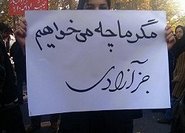


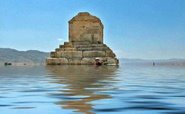



 Tulips in Holland