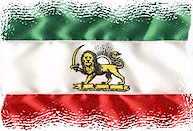

IMPERIAL EMBLEM

PERSIA
Iranian Freedom Fighters UNITE

Showing posts with label Bush. Show all posts
Showing posts with label Bush. Show all posts
Monday, December 08, 2008
Monday, March 24, 2008
On Admiral Fallon's Departure
On Admiral Fallon's Departure - the short article
A different look at the resignation of Admiral William Fallon - listen to the full interview -
A different look at the resignation of Admiral William Fallon - listen to the full interview -
Thursday, March 06, 2008
911 Links & Videos - LIES ABOUT 911 -
911 Links & Videos
We've included links to investigative sites, video documentaries, and articles so that you may come to your own conclusions about PEAK OIL and the events of 9/11. Because a democracy depends on an informed citizenry, we strongly recommend reading "Crossing the Rubicon" by Michael C. Ruppert, one of the most comprehensive investigative reports ever written, as well as the extensive library of work listed at 911Truth.org and these other sites.
SEE HERE : http://www.theshellgame.net/links2.htm
Alian Gods
Alien Gods
Add to My Profile | More Videos
Thursday, July 12, 2007
Text of Bush news conference Thursday By The Associated Press
By The Associated Press 38 minutes ago
Text of President Bush's remarks on Thursday, as transcribed by CQ Transcriptions.
BUSH: Good morning. Thank you. Yesterday, America lost an extraordinary first lady and a fine Texan, Lady Bird Johnson. She brought grace to the White House and beauty to our country.
On behalf of the American people, Laura and I send our condolences to her daughters, Lynda and Luci, and we offer our prayers to the Johnson family.
Before I answer some of your questions, today I'd like to provide the American people with an update on the situation in Iraq. Since America began military operations in Iraq, the conflict there has gone through four major phases. The first phase was the liberation of Iraq from Saddam Hussein. The second phase was the return of sovereignty to the Iraqi people and the holding of free elections. The third phase was the tragic escalation of sectarian violence sparked by the bombing of the Golden Mosque in Samarra.
We've entered a fourth phase, deploying reinforcements and launching new operations to help Iraqis bring security to their people.
I'm going to explain why the success of this new strategy is vital for protecting our people and bringing our troops home, which is a goal shared by all Americans. I'll brief you on the report we are sending to Congress. I'll discuss why a drawdown of forces that is not linked to the success of our operations would be a disaster.
As president, my most solemn responsibility is to keep the American people safe. So on my orders, good men and women are now fighting the terrorists on the front lines in Iraq.
I've given our troops in Iraq clear objectives. And as they risk their lives to achieve these objectives, they need to know they have the unwavering support from the commander in chief.
And they do. And they need the enemy to know that America is not going to back down. So when I speak to the American people about Iraq, I often emphasize the importance of maintaining our resolve and meeting our objectives. As a result, sometimes the debate over Iraq is cast as a disagreement between those who want to keep our troops in Iraq and those who want to bring our troops home. And this is not the real debate. I don't know anyone who doesn't want to see the day when our brave service men and women can start coming home.
In my address to the nation in January, I put it this way: If we increase our support at this crucial moment, we can hasten the day our troops begin coming home.
The real debate over Iraq is between those who think the fight is lost or not worth the cost and those who believe the fight can be won, and that, as difficult as the fight is, the costs of defeat would be far higher. I believe we can succeed in Iraq, and I know we must. So we're working to defeat al-Qaida and other extremists, and aid the rise of an Iraqi government that can protect its people, deliver basic services, and be an ally in the war against these extremists and radicals.
By doing this, we'll create the conditions that will allow our troops to begin coming home, while securing our long-term national interests in Iraq and in the region.
When we start drawing down our forces in Iraq, it will because our military commanders say the conditions on the ground are right, not because pollsters say it'll be good politics.
The strategy I announced in January is designed to seize the initiative and create those conditions. It's aimed at helping the Iraqis strengthen their government so that it can function even amid violence. It seeks to open space for Iraq's political leaders to advance the difficult process of national reconciliation which is essential to lasting security and stability.
It is focused on applying sustained military pressure to root out terrorist networks in Baghdad and surrounding areas. It is committed to using diplomacy to strengthen regional and international support for Iraq's democratic government.
Doing all these things is intended to make possible a more limited role in Iraq for the United States. It's the goal outlined by the bipartisan Iraq Study Group. It's the goal shared by the Iraqis and our coalition partners. It is the goal that Ambassador Crocker and General Petraeus and our troops are working hard to make a reality.
Our top priority is to help the Iraqis protect their population, so we've launched an offensive in and around Baghdad to go after extremists, to buy more time for Iraqi forces to develop, and to help normal life and civil society take root in communities and neighborhoods throughout the country. We're helping enhance the size, capabilities and effectiveness of the Iraqi security forces, so the Iraqis can take over the defense of their own country.
We're helping the Iraqis take back their neighborhoods from the extremists.
In Anbar province, Sunni tribes that were once fighting alongside al-Qaida against our coalition are now fighting alongside our coalition against al-Qaida. We're working to replicate the success in Anbar in other parts of the country. Two months ago, in the supplemental appropriations bill funding our troops, Congress established 18 benchmarks to gauge the progress of the Iraqi government. They required we submit a full report to Congress by September the 15th.
Today, my administration has submitted to Congress an interim report that requires us to assess, and I quote the bill, whether satisfactory progress toward meeting these benchmarks is or is not being achieved. Of the 18 benchmarks Congress asked us to measure, we can report that satisfactory progress is being made in eight areas. For example, Iraqis have provided the three brigades they promised for operations in and around Baghdad. And the Iraqi government is spending nearly $7.3 billion from its own funds this year to train, equip and modernize its forces. In eight other areas, the Iraqis have much more work to do.
For example, they've not done enough to prepare for local elections or pass a law to share oil revenues. And in two remaining areas, progress is too mixed to be characterized one way or the other. Those who believe that the battle in Iraq is lost will likely point to the unsatisfactory performance on some of the political benchmarks. Those of us who believe the battle in Iraq can and must be won see the satisfactory performance on several of the security benchmarks as a cause for optimism. Our strategy is built on the premise that progress on security will pave the way for political progress. So it's not surprising that political progress is lagging behind the security gains we are seeing. Economic development funds are critical to helping Iraq make this political progress. Today I'm exercising the waiver authority granted me by Congress to release a substantial portion of those funds. The bottom line is that this is a preliminary report. And it comes less than a month after the final reinforcements arrived in Iraq. In September, as Congress has required, General Petraeus and Ambassador Crocker will return to Washington to provide a more comprehensive assessment. By that time, we hope to see further improvement in the positive areas and the beginning of improvement in the negative areas. We'll also have a clearer picture of how the new strategy is unfolding, and be in a better position to judge where we need to make any adjustments.
Sunday, March 04, 2007
Iran and Baghdad Conference , Amir Taheri ,
Even before invitation cards were out for next weekend’s international conference in Baghdad, the issue had become another bone of contention in the acrimonious American debate on Iraq.
Those who wish the United States to fail have dismissed the plan as a belated, and thus useless, attempt by the Bush administration to implement the Baker-Hamilton recommendations of last year. Some members of the Baker-Hamilton group, appearing on the box with “I-told-you-so” grins wider than the Pacific, have echoed that view. A few pundits have suggested that US Secretary of State Condoleezza Rice’s eagerness to promote a conference where Iran would also be present amounted to a reversal of the policy not to talk to the mullahs. The so-called “neocons”, who had dismissed Baker-Hamilton as a dangerous exercise from the start, have described US participation in the conference as a “ dangerous betrayal.” The truth, however, is that the proposed conference has nothing to do with Baker-Hamilton. It is an idea, first launched by Iraqi Foreign Minister Hoshyar Zebari in 2005, and recently adopted by Prime Minister Nuri Al-Maliki. Maliki and Zebari had rejected the Baker-Hamilton recommendation that the US discuss the future of Iraq with Iran and Syria to the exclusion of the elected Iraqi government. Thus, the coming conference should be seen as a sign that the Bush administration has definitely rejected the key recommendation of the Baker-Hamilton group. However, shouldn’t one see the administration’s decision to attend as a sign that Washington is eating humble pie on Iran? The answer is no. Since 2002, US has attended several international conferences in which the Islamic republic has also been present. There was the 2001 Bonn conference on Afghanistan followed by the 2004 Madrid and Sharm Al-Sheikh conferences on Iraq and the 2005 Tokyo conference on Afghanistan. The only question pertinent to the proposed Baghdad conference is whether it contributes to containing and finally ending violence in Iraq, thus allowing political and economic reconstruction to proceed faster. The conference deserves support for a number of reasons. To start with, it is the first major diplomatic initiative launched by the new Iraqi regime. The conference will bring together envoys from all permanent members of the UN Security Council, plus Iraq’s six neighbors. The Arab League and the Organization of the Islamic Conference (OIC) will also be present. There are also talks to ensure participation by other powers, notably Japan and India. This would be the first time that envoys from some 70 nations come to Baghdad to in a show of support for new Iraq. The presence of Arab and other Islamic powers is especially significant if only because most had tried to hedge their bets about the future of Iraq by effectively ignoring the new Iraqi regime. Their attendance would end an unannounced boycott of the Maliki government. Initially, most would-be participants were cool on the idea. As late as last December, Arab leaders would tell us that they had no interest in bolstering a Shiite-dominated regime in Baghdad, and would rather wait and see whether the Americans stay or run away. The US decision to send some 27,000 more troops to Iraq, plus a second aircraft carrier in the Gulf, has helped persuade the hesitant Arabs that there would be no American cut-and-run at least for as long as George W. Bush is in the White House. That analysis helped the Arabs to create a new bloc of eight nations to oppose Tehran’s regional ambitions. (Last month that bloc was reinforced with a new Islamic bloc consisting of Indonesia, Malaysia, Pakistan, Turkey, Saudi Arabia, Jordan and Egypt; pointedly excluding Iran.) The Baghdad conference would open the way for new Iraq to join the new emerging Arab and Islamic blocs as a partner on the diplomatic scene. However, diplomatic recognition is not all that Iraq needs. It also needs the cooperation of its neighbors to stem the flow of arms and terrorists. In that context, two neighbors, Syria and Iran, may come under the spotlight at the Baghdad conference. Iraqi officials claim they have “names, addresses, and a mass of other evidence”, indicating Syria’s “extensive involvement” in the Sunni-led insurgency.
They also claim that “compelling evidence” exists of Iran’s efforts to build a network of influence in Iraq, especially in the south. The Baghdad conference provides an opportunity for developing an international plan to help new Iraq fight its enemies. In that context, it would be hard for Iran and Syria to continue investing in terrorists and/or militias in Iraq. At the same time, the so-called moderate Arab states that have acted as cheerleaders for insurgents, not to mention their turning a blind eye to the activities of anti-Iraq groups on their soil, would have to abandon such destructive tactics. New Iraq may need another three years, certainly until after the next general election at the end of 2009 or early 2010, to rebuild its security forces to levels required to end the insurgency and impose effective government presence throughout the nation. For domestic political reasons, the US may not remain committed to Iraq beyond the Bush presidency. It is, therefore, imperative for new Iraq to find new friends and partners, especially as far as training the security forces and helping protect its extensive borders are concerned. The Baghdad conference could commit the participants to a five-year plan to help rebuild Iraq’s military and economic infrastructures. The conference could play yet another useful role by enabling the Maliki government to make concessions needed on the domestic scene. Under pressure from problematic Shiite allies who keep his coalition in power, Maliki cannot impose policies needed to reassure the Arab Sunni minority and nonsectarian parties. These policies include amending the de-Baathification law to end the exclusion of more than a million people from the civil and military service. That would allow large numbers of experienced bureaucrats to help revive the civil service. Also, tens of thousands of people with experience, purged from the army because of their membership of the Baath, could be recruited by the new army and police. Other moves that should be made with support from the international community include a postponement of the referendum in Kirkuk, a mixed city contested by Kurds, Turcomans and Sunni Arabs. The proposed development of federal structures should also be slowed down, allowing the people of Iraq to understand what is at stake before they decide whether they want it or not. The Baghdad conference is expected to come up with draft proposals for submission to a conference at foreign ministers’ level, to be held in Istanbul in April. Rather that staying on the sidelines, smirking in Schadenfreude against the US, the international community must help new Iraq. But that help must be conditional on Iraqis helping themselves. And that means taking the tough decisions that Maliki and his predecessors have been unwilling and/or unable to make.
Friday, March 02, 2007
Greatest Expectations
Meanwhile, ............. we wait to see if the US and Iran go for a compromise proposal tendered by the Swiss to allow "dry enrichment" (suspension of uranium enrichment, but not centrifuge operations).
Follow this link : http://www.opednews.com/articles/opedne_russ_wel_070301_greatest_expectation.htm
Follow this link : http://www.opednews.com/articles/opedne_russ_wel_070301_greatest_expectation.htm
Thursday, March 01, 2007
The Pentagon Plays War Games with Iran
"The question is not what the Americans are planning," Walsh said, "but what the Iranians are planning."
Inter Press Service Gareth Porter
Two weeks ago, Pentagon officials discussed a strategy to escalate US pressure on Iran with the intention of creating the impression that the United States is ready to go to war, according to an account by one of the participants. A meeting at the Pentagon in mid-February was said by a participant to have revolved around a plan to ratchet up US rhetoric about an Iranian threat and make further military preparations for war in a way that would be reminiscent of what happened prior to the US invasion of Iraq in 2003. The account was described by a source outside the Pentagon who obtained it directly from the participant. The description of Pentagon thinking suggests a strategy that is much more aggressive than the line represented by Secretary of State Condoleezza Rice's announcement on Tuesday that the United States would participate in direct talks with Iran in the context of a conference to be convened by the Iraqi government.


According to the account provided by the participant, the US administration's decision last month to increase military strength in Iraq by at least 22,000 troops is related more to a strategy of increased pressure on Iran than to stabilizing the situation in Baghdad. The troop decision was described as putting the US military in a better position to respond to attacks by Shi'ite forces on US troops in retaliation against a possible strike against Iran. That description is consistent with other indications that President George W Bush's decision on the troop "surge" was made primarily in the context of its strategy toward Iran.
Immediately after Bush's January 10 speech announcing the additional troops, the National Broadcasting Co's Tim Russert reported that Bush and his top advisers had told a small group of journalists that the United States would not sit down with Iran until the US had gained "leverage". That was the most direct indication from Bush administration officials that they believed the US could negotiate successfully with Iran once the administration had altered the bargaining relationship with Tehran. In that same briefing for reporters, according to Russert, the officials indicated that one of the administration objectives was to achieve a situation in which Washington would not have to "go to Syria and Iran" and "ask for anything". That was an indirect reference to the bargaining leverage that Iran was believed to have derived from the widely shared belief that the US would need Iran's help to stabilize the situation in Iraq. Bush was apparently convinced that the troop increase would convince Iran that the US would not have to rely on Iranian influence in Iraq to deal with Shi'ite opposition to the occupation. But the troop-surge decision was also linked to another aspect of the US-Iran bargaining relationship. It had been widely speculated that the vulnerability of the US to retaliatory attacks in Iraq added to Tehran's leverage by restraining the Bush administration from waging a preemptive war against Iran.


The briefing before Bush's January 10 speech also provided a key piece of evidence that the Bush strategy would involve increasing pressure on Iran by framing the issue of US policy in terms of new military threats from Iran toward US and allied interests in the Middle East. Russert reported that administration officials had tipped off journalists that Iran would soon be raised as a major issue in what Russert called "a very acute way". The January speech was followed by a carefully orchestrated campaign of administration statements and leaks alleging official Iranian involvement in providing armor-penetrating weapons to Shi'ite militias in Iraq. The administration admitted in a briefing in Baghdad aimed at bolstering that charge that it was based on "inference" rather than actual evidence. To increase the sense of heightened tension with Iran and suggest momentum toward a military confrontation, the administration had already moved an additional aircraft-carrier task force into the Persian Gulf. Another move in the increased pressure on Iran, according to the same source, is that refueling assets are now being flown into the US base at Diego Garcia in the Indian Ocean. "You can't launch air strikes against Iran without refueling assets being there," the source observed. High administration officials have used carefully chosen words in recent weeks to suggest that they are planning for war against Iran even as press leaks about a possible attack multiplied. On February 15, Defense Secretary Robert Gates said, "We are not looking for an excuse to go to war with Iran ...We are not planning a war with Iran." Meanwhile, however, the administration maintains the position that the option of a military strike against Iran remains as its last resort if Iran does not agree to US terms for negotiations. After the administration failed to produce evidence of Iranian government involvement in exporting weapons to the Shi'ites in a Baghdad press conference on February 11, it introduced a new line on an alleged Iranian threat. Vice Admiral Patrick Walsh, who is leaving his position as commander of Naval Forces Central Command, told reporters on February 19 that the Iranian military conducts exercises in the Strait of Hormuz, suggesting that it could use mines to close the narrow strait linking the Persian Gulf to the Gulf of Oman and, thence, the Indian Ocean. Walsh called mines "an offensive terrorist type of weapon". Iranian officials have always placed their threats to close the Strait of Hormuz explicitly in the context of retaliation for a strike by the US against Iran. "The question is not what the Americans are planning," Walsh said, "but what the Iranians are planning." That statement indicates that the US is designing a new campaign to portray Iran's military posture as threatening to US allies and security in the Middle East. The participant's account of the Pentagon meeting did not indicate any timetable for the sequence of steps or what the climactic move in the campaign would be. Nor did it suggest that a decision had been made by the White House to launch air strikes against Iran. However, the moves now planned would increase the likelihood of war in the event that Washington's escalatory moves fail to sway Iran's leaders. A former assistant secretary of defense in the administration of US president Bill Clinton, Charles Freeman, who was also ambassador to Saudi Arabia, calls Bush's escalation of military pressure "brinkmanship" - a term recalling the practice by president Dwight D Eisenhower and his secretary of state John Foster Dulles of threatening war against China over Korea and the Taiwan Strait. "By deploying forces to add credibility to the threat," Freeman told Inter Press Service. "You increase the risk of military conflict, which is [in] fact what is intended." Gareth Porter is an investigative historian and journalist specializing in US national-security policy. His latest book, Perils of Dominance: Imbalance of Power and the Road to War in Vietnam, was published in June 2005.
Inter Press Service Gareth Porter
Two weeks ago, Pentagon officials discussed a strategy to escalate US pressure on Iran with the intention of creating the impression that the United States is ready to go to war, according to an account by one of the participants. A meeting at the Pentagon in mid-February was said by a participant to have revolved around a plan to ratchet up US rhetoric about an Iranian threat and make further military preparations for war in a way that would be reminiscent of what happened prior to the US invasion of Iraq in 2003. The account was described by a source outside the Pentagon who obtained it directly from the participant. The description of Pentagon thinking suggests a strategy that is much more aggressive than the line represented by Secretary of State Condoleezza Rice's announcement on Tuesday that the United States would participate in direct talks with Iran in the context of a conference to be convened by the Iraqi government.

According to the account provided by the participant, the US administration's decision last month to increase military strength in Iraq by at least 22,000 troops is related more to a strategy of increased pressure on Iran than to stabilizing the situation in Baghdad. The troop decision was described as putting the US military in a better position to respond to attacks by Shi'ite forces on US troops in retaliation against a possible strike against Iran. That description is consistent with other indications that President George W Bush's decision on the troop "surge" was made primarily in the context of its strategy toward Iran.
Immediately after Bush's January 10 speech announcing the additional troops, the National Broadcasting Co's Tim Russert reported that Bush and his top advisers had told a small group of journalists that the United States would not sit down with Iran until the US had gained "leverage". That was the most direct indication from Bush administration officials that they believed the US could negotiate successfully with Iran once the administration had altered the bargaining relationship with Tehran. In that same briefing for reporters, according to Russert, the officials indicated that one of the administration objectives was to achieve a situation in which Washington would not have to "go to Syria and Iran" and "ask for anything". That was an indirect reference to the bargaining leverage that Iran was believed to have derived from the widely shared belief that the US would need Iran's help to stabilize the situation in Iraq. Bush was apparently convinced that the troop increase would convince Iran that the US would not have to rely on Iranian influence in Iraq to deal with Shi'ite opposition to the occupation. But the troop-surge decision was also linked to another aspect of the US-Iran bargaining relationship. It had been widely speculated that the vulnerability of the US to retaliatory attacks in Iraq added to Tehran's leverage by restraining the Bush administration from waging a preemptive war against Iran.


The briefing before Bush's January 10 speech also provided a key piece of evidence that the Bush strategy would involve increasing pressure on Iran by framing the issue of US policy in terms of new military threats from Iran toward US and allied interests in the Middle East. Russert reported that administration officials had tipped off journalists that Iran would soon be raised as a major issue in what Russert called "a very acute way". The January speech was followed by a carefully orchestrated campaign of administration statements and leaks alleging official Iranian involvement in providing armor-penetrating weapons to Shi'ite militias in Iraq. The administration admitted in a briefing in Baghdad aimed at bolstering that charge that it was based on "inference" rather than actual evidence. To increase the sense of heightened tension with Iran and suggest momentum toward a military confrontation, the administration had already moved an additional aircraft-carrier task force into the Persian Gulf. Another move in the increased pressure on Iran, according to the same source, is that refueling assets are now being flown into the US base at Diego Garcia in the Indian Ocean. "You can't launch air strikes against Iran without refueling assets being there," the source observed. High administration officials have used carefully chosen words in recent weeks to suggest that they are planning for war against Iran even as press leaks about a possible attack multiplied. On February 15, Defense Secretary Robert Gates said, "We are not looking for an excuse to go to war with Iran ...We are not planning a war with Iran." Meanwhile, however, the administration maintains the position that the option of a military strike against Iran remains as its last resort if Iran does not agree to US terms for negotiations. After the administration failed to produce evidence of Iranian government involvement in exporting weapons to the Shi'ites in a Baghdad press conference on February 11, it introduced a new line on an alleged Iranian threat. Vice Admiral Patrick Walsh, who is leaving his position as commander of Naval Forces Central Command, told reporters on February 19 that the Iranian military conducts exercises in the Strait of Hormuz, suggesting that it could use mines to close the narrow strait linking the Persian Gulf to the Gulf of Oman and, thence, the Indian Ocean. Walsh called mines "an offensive terrorist type of weapon". Iranian officials have always placed their threats to close the Strait of Hormuz explicitly in the context of retaliation for a strike by the US against Iran. "The question is not what the Americans are planning," Walsh said, "but what the Iranians are planning." That statement indicates that the US is designing a new campaign to portray Iran's military posture as threatening to US allies and security in the Middle East. The participant's account of the Pentagon meeting did not indicate any timetable for the sequence of steps or what the climactic move in the campaign would be. Nor did it suggest that a decision had been made by the White House to launch air strikes against Iran. However, the moves now planned would increase the likelihood of war in the event that Washington's escalatory moves fail to sway Iran's leaders. A former assistant secretary of defense in the administration of US president Bill Clinton, Charles Freeman, who was also ambassador to Saudi Arabia, calls Bush's escalation of military pressure "brinkmanship" - a term recalling the practice by president Dwight D Eisenhower and his secretary of state John Foster Dulles of threatening war against China over Korea and the Taiwan Strait. "By deploying forces to add credibility to the threat," Freeman told Inter Press Service. "You increase the risk of military conflict, which is [in] fact what is intended." Gareth Porter is an investigative historian and journalist specializing in US national-security policy. His latest book, Perils of Dominance: Imbalance of Power and the Road to War in Vietnam, was published in June 2005.
Sunday, February 18, 2007
What do the ex CIA operatives say about USA`s War with Iran?
http://harpers.org/sb-war-with-ir-1171457451.html
Anonymous Former CIA Official #1 : A former CIA official, who asked to remain unnamed. He was stationed in the Persian Gulf during the first Gulf War and served in Iraq after the 2003 invasion. I don't think the administration is about to carry out military action. The military does not want to do this. We will lose planes if there is a massive air strike over Iran, we'll have pilots killed and captured. Iran has a lot of ways to hurt us. If they decide to come after uniformed personnel in Iraq, or more easily, civilians and contractors, things could quickly get out of hand. You could have kidnappings or a mass casualty attack—they drove us out of Lebanon in the 1980s; a mass casualty attack like the Marine barracks bombing would likely be the end in Iraq. But the administration's actions are increasing the chances for an accidental confrontation. People don't realize how small and narrow the Gulf is, especially as you approach the Straits of Hormuz. The tanker/container and related commerce traffic is incredible and it goes on twenty-four hours a day. We've already got one carrier battle group there and now we're going to put in another one, which will add a huge footprint. When you have, on both sides, nineteen-year-olds manning weapons, it's a formula for an accident that could spin out of control. Here's an example: Every night, members of the Revolutionary Guard pack up their speed boats with rugs and crafts, really pricey stuff. They weave their way through all the traffic on the Gulf and sell the stuff on remote areas of beach just north of Sharjah, Ajman, and Umm al Qaywayn. They off-load and sell their goods and then load up with Jack Daniels, porn, CDs, electronics, satellite receivers, and computers, and weave their way back through traffic to Iran. At 3 a.m. on a moonless night, one of those boats speeding across the Gulf could easily cross the defensive radar signature of a U.S. frigate, and it's going to get shot up. So you have a situation that is essentially an accident, and all of a sudden you have a crisis. Military action is not the best option. This is not like Iraq's Osirak reactor, which Israel destroyed in 1981. In that case, there was a single target. Iran's nuclear program is dispersed and our intelligence picture is thin because we don't have enough well-placed spies. It would take a massive air strike package with consecutive strikes to hit all the targets. You could hurt them and complicate their activities, but I don't think you could turn off their program. The way to pressure the Iranian government is through pressure inside Iran and inside Iraq. There's a thirst for information in Iran and we should be bombarding them with accurate information via conventional and unconventional means. We could be using TV and radio broadcasts, the Internet, Wi-Fi networks in Iraq, and underground newspapers to reach Iranians. There are about 60,000 Iranians in the Los Angeles area, many with daily contact with family and colleagues in Iran. Los Angeles is the headquarters for the American media/movie/television apparatus—and yet we're not broadcasting into Iran. Turn them loose! They can produce soap operas, talk shows, news programs, entertainment shows, all in Farsi. Propagandizing is part of the CIA's mission charter, but the current leadership has decided against it. (They've also decided against covert action, direct action, covert influence, and other active measures.) The agency did it for years in Eastern Europe, Africa, Central and South America, and other parts of the world during the Cold War, with huge impact. With advances in technology, it's so much easier to do now. When I started in this business, there was only TV, radio, and print, and it was very hard to influence what was shown on TV. Now you can plant a story on the Internet in a couple of minutes. You want to make Ahmadinejad react to stories—create the perception of a rift between him and the religious leadership and cast it as a problem in the country. The rumor mill works overtime in that part of the world. You'd want nuggets of truth in these stories, aimed at Iranian youth. We should be emphasizing the huge unemployment in Iran, the staleness of the revolution, the age of the mullahs, and how they live very well—their pious lifestyle is all baloney. But doing it requires too much effort, and careers could be risked.
Frank Anderson : Frank Anderson worked for the CIA from 1968 until 1995. He served three tours of duty in the Middle East as an agency station chief, headed the Afghan Task Force (1987-1989), and was chief of the Near East Division. He now runs a consulting practice that focuses on the Middle East.
I think that the Bush Administration has certainly ordered up contingency plans that give them military options for dealing with three possible Iran-related objectives. In decreasing order of importance, possible triggers for war are:
Reaction to Iranian support for attacks on U.S. troops;
Destruction or delay of Iranian nuclear capability; and/or
Regime change (the guys who brought us the Iraq war are still in charge).
Any administration would so prepare. This administration has, at least, a significant minority of officials who are determined to take on Iran, with the goals of destroying nuclear capabilities and/or regime change, before they leave office. Couple that with an abundant supply of provocations from an Iranian President whose political core is radically and almost recklessly anti-American. Thus, I think we're “locked and loaded” for an attack. That said, the barriers to action are formidable. The President's party has lost control of the legislature and is in trouble over war in the Middle East. Interestingly, the last Iranian elections showed that the Iranian President is also in trouble, mostly over botched economic performance, but his opponents have linked the troubled economy to Ahmadinejad's confrontational foreign and nuclear policies. So, no matter how much the national executive on both sides might want a fight, they are both constrained. Moreover, it's difficult to come up with a “target deck” that, if struck, would make a strategic difference worth the political price. Of course, even the Administration's biggest war fans have to deal with the condition of our overall military capabilities and our weakened diplomatic position. We should be trying to cope with Iran, rather than trying to take them out. Were I was still taking a government paycheck, I would be pushing for coping mechanisms but also looking hard for intelligence on which to base strikes that could take out targets clearly tied to Iranian misdeeds in Iraq, like I.E.D. engineering and supply. I'd also look for, but doubt I could find, some set of critical targets whose destruction could seriously impact the prospects for an Iranian nuclear weapon. My bottom-line guess is that we don't have the intelligence or military capability that would justify an attack on Iran that would be worth the significant cost. With the President politically constrained, that makes me bet against it, but the spread isn't big.
Anonymous Former CIA Official #2 : A former senior CIA official, who preferred to remain unidentified, but who has broad experience in the Middle East :
The Bush Administration's combative rhetoric—its accusations about Iran's nuclear program, involvement in Iraq, and support for Hezbollah and Hamas—looks like a prelude to military action. It's eerily reminiscent of the fall 2002/winter 2003 rhetoric on Iraq, when the administration was talking about WMDs and Saddam Hussein's meddling in the region. It's back to the future. The administration is unlikely to embark upon military action immediately, but it's trying to squeeze Iran, to egg on the government, and hoping that Iran commits some sort of military action that the Bush Administration can use as justification for a strike. The administration was hurt by the accusation that it conducted a war of choice against Iraq, so it's trying to create a situation where it can say this is a war of necessity against Iran. But its actions are essentially the same thing as planning to go to war. I see four types of evidence that the administration is planning military action. First, it is escalating its anti-Iran rhetoric. Second, it is parading evidence about Iranian involvement in Iraq, citing intelligence reports, serial numbers of weapons, and so on. Third, the United States is building up its military presence in the Gulf. Fourth, pro-United States regimes in the region, with encouragement, clearly, by the Bush Administration, are issuing statements denouncing Iran's threatening posture towards them, and its alleged efforts to pressure for the “Shiite-ification” of Sunni communities. Despite differences between Shiites and Sunnis, a U.S. attack on Iran would be viewed in the region as the fifth in a series of American wars against Islam—after Afghanistan, Iraq, Hamas, and Hezbollah. Iran and its supporters will seek to respond, including through attacks on Israel. An American strike poses a huge threat to Israel, which I'm not sure the administration has thought through. It will also destabilize pro-American regimes in the region, solidify the jihadists in Iraq, and unify Iranians around their government.
Also read : http://harpers.org/sb-war-with-iran-1-1171385486.html
and : http://harpers.org/sb-war-with-iran-3-1171549349.html
0
comments

 Labels:
Ahmadinejad,
Bush,
Iran,
IRCG,
Islamic Republic,
Khamanei,
Shia,
Sunni,
US ARMY,
US Naval Vessel. Persian Gulf,
USA,
War
 Labels:
Ahmadinejad,
Bush,
Iran,
IRCG,
Islamic Republic,
Khamanei,
Shia,
Sunni,
US ARMY,
US Naval Vessel. Persian Gulf,
USA,
War
Thursday, February 15, 2007
THE WEST MUST STAND UP TALL AGAINST THIS TIN POT RAG TAGS
Iran and the Heisenberg Principle of Pacifist Diplomacy
Pacifists are enticing the mullahs to get nukes as quickly as possible. By Mario Loyola
Last Sunday, to the fanfare of national celebrations, Iranian president Mahmoud Ahmadinejad again rejected any suspension in uranium enrichment, in open defiance of a U.N. Security Council commandment that Iran is treaty-bound to obey. Meanwhile, in Great Britain, a coalition of humanitarian organizations, think tanks, and peace groups are the latest to warn of the disastrous consequences of a military confrontation with Iran. This steady “pacifist” drumbeat is meant to keep U.S. policy peaceful. But its chief effect is to make Iran increasingly belligerent. By behaving as if we are the only ones with a risk calculation to make, we are unwittingly shaping Iran’s risk calculation in the worst possible way — by making it risk-free. The result is predictably perverse—in the name of dialogue, pacifism, and international law, we are ruining the prospects for all three. If military conflict would be a disaster for everyone, then it is Iran that should worry first and worry most. Iran could easily satisfy its stated nuclear energy goals and the West’s security concerns at the same time. But it is not interested in a negotiated settlement satisfactory to all. It has rejected Europe’s offer of all the carrots in the world, and on the contrary promises at every turn to “defeat” and even “destroy” the United States and Israel. Iran is propelling us towards a confrontation — against our will. By aggressively challenging the status quo without addressing the legitimate security concerns of other nations, Iran is engaging in strategic aggression. Encouraged by the West’s pseudo-pacifists, Iran is starting to think that further progress in its nuclear program carries no military risk. And that is not all. The pacifists peddle the magical panacea of “direct talks,” even though existing backchannels would more than suffice to end the crisis if Iran were really interested in negotiating. This is shameful as well as illogical: to ask for direct talks after you have laid down your sticks, and all your carrots have been rejected, is simply begging. And allowing the world’s most prolific state-sponsor of terror to have nukes is begging for calamity.
PLEASE READ THE REST OF THIS ARTICLE BY FOLLOWING THIS LINK,
http://article.nationalreview.com/print/?q=MDg5NjE4OTQ3ZmI3YTFiZWViYjRmMzA5OGFlMzFlMWQ=
Wednesday, February 14, 2007
Bush: 'Preposterous' to suggest intelligence on Iran is wrong
Bush insists that Iran is providing weapons for Iraq

Text of President Bush on Wednesday, as transcribed by CQ Transcriptions : http://www.forbes.com/feeds/ap/2007/02/14/ap3427046.html
WASHINGTON (AP) — President Bush said Wednesday he's convinced that the Iranian government is supplying deadly weapons to fighters in Iraq, even if he can't prove the orders came from the highest levels in Tehran. More important, Bush said in his first news conference of the year, is protecting U.S. troops against the lethal new threat. "I'm going to do something about it," Bush said. U.S. officials have said that Iran helped on attacks on troops in Iraq, an assertion denied by Iran's president, Mahmoud Ahmadinejad.
Meanwhile, Bush shrugged off congressional debate on a resolution opposing his Iraq policy, noting that the measure was non-binding and mostly symbolic. But he said U.S. troops are counting on lawmakers to provide them the funds they need to win.
Bush spoke as the Democratic-controlled House of Representatives debated a measure opposing his decision to send some 21,500 additional troops to Iraq. "They have every right to express their opposition and it is a non-binding resolution," he said of the House members, who were continuing a marathon Iraq policy debate on Capitol Hill even as he spoke. In his first news conference since Dec. 20, Bush said he received a briefing earlier in the day from Iraq from newly-confirmed Gen. David Petraeus, the new chief commander of U.S. forces in Iraq, who is now in Baghdad. "We talked about the coordination between Iraqi and coalition forces," Bush said. For now, he said, that coordination appeared to be good, although Bush said much work remains. Meanwhile, Bush responded carefully when asked about Russian President Vladimir Putin's recent sharp criticism of U.S. foreign and military policy. Bush said he had a "complicated relationship" with the Russian leader. Bush also said that he and Putin have a lot they agree on, and that's what people in the United States need to understand. Chief among those common priorities, Bush said, is making sure that Iran does not develop nuclear weapons.

Putin slammed U.S. domination of world affairs at an international conference of security officials in Germany over the weekend, saying it was making the world more dangerous by overusing its military power. The depth of Putin's criticism surprised U.S. officials. Moscow and Washington drew closer together immediately after the Sept. 11, 2001, terror attacks, but more recently relations have been more strained.
Some highlights: 11:58 a.m.
Sitting down with Iran wouldn't work: The last question was why -- if the U.S. could negotiate with the former Soviet Union over nuclear weapons -- it can't sit down one-on-one with Iran. "If I thought we could achieve success I would sit down" with Iran, the president said. "But I don't think we could achieve success right now." The president said there is a better chance of success if "the whole world stays engaged" and he pointed to the multi-lateral talks with North Korea as an example of such a strategy working.11:47 a.m.Opponents are patriots too: Those who oppose his policies in Iraq are just as patriotic as he is, the president said. But he said again that lawmakers who disagree with what he's doing still need to vote to approve the funds that he says troops need to accomplish the mission he's set out for them. 11:42 a.m. ET. On "CIA leak;" no comment: Washington Post reporter Peter Baker tried several ways to get the president to comment on the "CIA leak" saga, which is in the news this week thanks to the trial of former White House aide Lewis "Scooter" Libby, who's accused of lying during the investigation of that leak. "Not going to talk about it Peter," Bush said. He offered to "recycle" Baker and give him a chance to ask a different question. Baker declined. 11:35 a.m. ET. Troop morale: Questioned about whether he has been told that the morale of U.S. troops in Iraq is weakening, the president said, "what I hear from commanders is that the place where there is concern is from the family members," not the troops. 11:28 a.m.Iran: Back on Iran and evidence that it is supplying weapons to terrorists and insurgents in Iraq, Bush responded forcefully to a question on why U.S. intelligence should be trusted. "The idea that we're somehow manufacturing the idea that the Iranians are providing (bombs) is preposterous," Bush said.

11:25 a.m.North Korea: Tuesday, former U.N. ambassador John Bolton slammed the deal reached this week with North Korea on its nuclear weapons program. Bush said Bolton and others who criticize the agreement are "flat wrong." "I changed the dynamic on the North Korean issue by convincing other people to be at the table with us ... (and) we had a breakthrough," Bush said. "Those who say the North Koreans have got to prove themselves by following through on the deal are right," Bush added, "and I'm one" who says that.11:20 a.m. On Iran: The president was asked about comments this week by Gen. Peter Pace, chairman of the Joint Chiefs of Staff, who said he isn't sure the government of Iran has ordered that weapons be supplied to insurgents in Iraq. "Either they knew or they didn't know," that some Iranian weapons have ended up in Iraq, Bush said. "What's worse? That the government knew or that the government didn't know?"11:13 a.m.Don't prejudge Iraq plan: Of the debate underway in Congress over non-binding resolutions that oppose his plans in Iraq, the president said "it opposes our new plan before it has a chance to work." While Congress has the right to debate the policy, Bush said, it also needs to approve funding that will give U.S. troops what they need to carry out their missions in Iraq.11:07 a.m. ET. Securing Baghdad "will take time:" In his opening remarks, the president spoke about an update he got this morning from Lt. Gen. David Petraeus, the new U.S. commander in Iraq. "The operation to secure Baghdad is going to take time," Bush said, "and there's going to be violence." He is aware, the president added, that U.S. and Iraqi forces will not be able to stop all suicide bombers and others who want to disrupt progress in Iraq. But, "to step back from the fight in Baghdad would have disastrous consequences for people in America," Bush said. If "we fail there, the enemy will follow us here."
Bush was pressed repeatedly during the nearly hour-long news conference to explain an apparent contradiction between U.S. military briefers in Baghdad and the chairman of the Joint Chiefs of Staff, Marine Gen. Peter Pace, over Iranian government involvement in the purported supply of weapons, including high-powered explosives, that have been used against U.S. forces in deadly roadside bombings in Iraq. In a weekend briefing, reporters in Baghdad were told that the "highest levels" of the Iranian government had ordered the smuggling of the weapons into Iraq. But Pace said later it was not clear "that the Iranian government per se, for sure, is directly involved in doing this." Bush said the Quds Force, a component of Iran's Revolutionary Guards, has been "instrumental in providing these deadly IEDs [improvised explosive devices] to networks inside of Iraq" and that the Quds Force "is part of the Iranian government." He added, "What we don't know is whether the head leaders in Iran ordered the Quds Force to do what they did." He then asked, "What's worse? That the government knew or that the government didn't know?" He said in reply to a subsequent question, "There are weapons in Iraq that are harming U.S. troops" because of smuggling by the Quds Force. "Whether [Iranian President Mahmoud] Ahmadinejad ordered the Quds Force to do this, I don't know." Bush asserted, "There is no contradiction that the weapons are there and they were provided by the Quds Force." Disclosing this does not mean that he is "trying to have a pretext for war" against Iran, Bush said. "This means I'm trying to protect our troops." He repeated his previous warnings that U.S. forces "will deal with" networks and agents involved in smuggling Iranian weapons into Iraq. U.S. officials have vowed to carry out such actions inside Iraq's borders.
Text of President Bush on Wednesday, as transcribed by CQ Transcriptions : http://www.forbes.com/feeds/ap/2007/02/14/ap3427046.html
WASHINGTON (AP) — President Bush said Wednesday he's convinced that the Iranian government is supplying deadly weapons to fighters in Iraq, even if he can't prove the orders came from the highest levels in Tehran. More important, Bush said in his first news conference of the year, is protecting U.S. troops against the lethal new threat. "I'm going to do something about it," Bush said. U.S. officials have said that Iran helped on attacks on troops in Iraq, an assertion denied by Iran's president, Mahmoud Ahmadinejad.
Meanwhile, Bush shrugged off congressional debate on a resolution opposing his Iraq policy, noting that the measure was non-binding and mostly symbolic. But he said U.S. troops are counting on lawmakers to provide them the funds they need to win.
Bush spoke as the Democratic-controlled House of Representatives debated a measure opposing his decision to send some 21,500 additional troops to Iraq. "They have every right to express their opposition and it is a non-binding resolution," he said of the House members, who were continuing a marathon Iraq policy debate on Capitol Hill even as he spoke. In his first news conference since Dec. 20, Bush said he received a briefing earlier in the day from Iraq from newly-confirmed Gen. David Petraeus, the new chief commander of U.S. forces in Iraq, who is now in Baghdad. "We talked about the coordination between Iraqi and coalition forces," Bush said. For now, he said, that coordination appeared to be good, although Bush said much work remains. Meanwhile, Bush responded carefully when asked about Russian President Vladimir Putin's recent sharp criticism of U.S. foreign and military policy. Bush said he had a "complicated relationship" with the Russian leader. Bush also said that he and Putin have a lot they agree on, and that's what people in the United States need to understand. Chief among those common priorities, Bush said, is making sure that Iran does not develop nuclear weapons.
Putin slammed U.S. domination of world affairs at an international conference of security officials in Germany over the weekend, saying it was making the world more dangerous by overusing its military power. The depth of Putin's criticism surprised U.S. officials. Moscow and Washington drew closer together immediately after the Sept. 11, 2001, terror attacks, but more recently relations have been more strained.
Some highlights: 11:58 a.m.
Sitting down with Iran wouldn't work: The last question was why -- if the U.S. could negotiate with the former Soviet Union over nuclear weapons -- it can't sit down one-on-one with Iran. "If I thought we could achieve success I would sit down" with Iran, the president said. "But I don't think we could achieve success right now." The president said there is a better chance of success if "the whole world stays engaged" and he pointed to the multi-lateral talks with North Korea as an example of such a strategy working.11:47 a.m.Opponents are patriots too: Those who oppose his policies in Iraq are just as patriotic as he is, the president said. But he said again that lawmakers who disagree with what he's doing still need to vote to approve the funds that he says troops need to accomplish the mission he's set out for them. 11:42 a.m. ET. On "CIA leak;" no comment: Washington Post reporter Peter Baker tried several ways to get the president to comment on the "CIA leak" saga, which is in the news this week thanks to the trial of former White House aide Lewis "Scooter" Libby, who's accused of lying during the investigation of that leak. "Not going to talk about it Peter," Bush said. He offered to "recycle" Baker and give him a chance to ask a different question. Baker declined. 11:35 a.m. ET. Troop morale: Questioned about whether he has been told that the morale of U.S. troops in Iraq is weakening, the president said, "what I hear from commanders is that the place where there is concern is from the family members," not the troops. 11:28 a.m.Iran: Back on Iran and evidence that it is supplying weapons to terrorists and insurgents in Iraq, Bush responded forcefully to a question on why U.S. intelligence should be trusted. "The idea that we're somehow manufacturing the idea that the Iranians are providing (bombs) is preposterous," Bush said.
11:25 a.m.North Korea: Tuesday, former U.N. ambassador John Bolton slammed the deal reached this week with North Korea on its nuclear weapons program. Bush said Bolton and others who criticize the agreement are "flat wrong." "I changed the dynamic on the North Korean issue by convincing other people to be at the table with us ... (and) we had a breakthrough," Bush said. "Those who say the North Koreans have got to prove themselves by following through on the deal are right," Bush added, "and I'm one" who says that.11:20 a.m. On Iran: The president was asked about comments this week by Gen. Peter Pace, chairman of the Joint Chiefs of Staff, who said he isn't sure the government of Iran has ordered that weapons be supplied to insurgents in Iraq. "Either they knew or they didn't know," that some Iranian weapons have ended up in Iraq, Bush said. "What's worse? That the government knew or that the government didn't know?"11:13 a.m.Don't prejudge Iraq plan: Of the debate underway in Congress over non-binding resolutions that oppose his plans in Iraq, the president said "it opposes our new plan before it has a chance to work." While Congress has the right to debate the policy, Bush said, it also needs to approve funding that will give U.S. troops what they need to carry out their missions in Iraq.11:07 a.m. ET. Securing Baghdad "will take time:" In his opening remarks, the president spoke about an update he got this morning from Lt. Gen. David Petraeus, the new U.S. commander in Iraq. "The operation to secure Baghdad is going to take time," Bush said, "and there's going to be violence." He is aware, the president added, that U.S. and Iraqi forces will not be able to stop all suicide bombers and others who want to disrupt progress in Iraq. But, "to step back from the fight in Baghdad would have disastrous consequences for people in America," Bush said. If "we fail there, the enemy will follow us here."
Bush was pressed repeatedly during the nearly hour-long news conference to explain an apparent contradiction between U.S. military briefers in Baghdad and the chairman of the Joint Chiefs of Staff, Marine Gen. Peter Pace, over Iranian government involvement in the purported supply of weapons, including high-powered explosives, that have been used against U.S. forces in deadly roadside bombings in Iraq. In a weekend briefing, reporters in Baghdad were told that the "highest levels" of the Iranian government had ordered the smuggling of the weapons into Iraq. But Pace said later it was not clear "that the Iranian government per se, for sure, is directly involved in doing this." Bush said the Quds Force, a component of Iran's Revolutionary Guards, has been "instrumental in providing these deadly IEDs [improvised explosive devices] to networks inside of Iraq" and that the Quds Force "is part of the Iranian government." He added, "What we don't know is whether the head leaders in Iran ordered the Quds Force to do what they did." He then asked, "What's worse? That the government knew or that the government didn't know?" He said in reply to a subsequent question, "There are weapons in Iraq that are harming U.S. troops" because of smuggling by the Quds Force. "Whether [Iranian President Mahmoud] Ahmadinejad ordered the Quds Force to do this, I don't know." Bush asserted, "There is no contradiction that the weapons are there and they were provided by the Quds Force." Disclosing this does not mean that he is "trying to have a pretext for war" against Iran, Bush said. "This means I'm trying to protect our troops." He repeated his previous warnings that U.S. forces "will deal with" networks and agents involved in smuggling Iranian weapons into Iraq. U.S. officials have vowed to carry out such actions inside Iraq's borders.
Friday, February 09, 2007
"we will stop them."
These two news items were the most important new of the last few days. In a speech on Thursday trying to gain support from the locals by raising alarm of an impending American attack Iran's top authority, Supreme Leader Ayatollah Ali Khamenei said that : Iran will target U.S. interests if attacked . Thu Feb 8, 2007 6:16 PM IST - TEHRAN (Reuters) -
He said that the Islamic Republic would target U.S. interests around the world if it came under attack. "The enemies know well that any aggression will lead to a reaction from all sides in the Iranian nation on the aggressors and their interests around the world," Khamenei was quoted as saying by state television. "We believe that no one will make such an unwise and wrong move (to attack Iran) that would endanger their country and interests. Some say that the U.S. president is not the type who acts based on calculations or thinks about the consequences of his action. But even these people can be brought to their senses," he said.
U.S. President George Bush has said he has no intention of invading Iran, though he has pledged to step up pressure on the Islamic Republic over its nuclear programme and what Washington calls Iran's meddling in Iraq. Tehran insists its nuclear programme is purely civilian and says it is not backing militants in Iraq.
Now this is the American reaction to this speech by Khamenei.
No intention of war with Iran, U.S. says . Thu Feb 8 , 8:01 PM
WASHINGTON (Reuters) - The White House dismissed threats from a top Iranian official on Thursday, saying the United States has no intention of going to war with Iran. Iran's top authority, Supreme Leader Ayatollah Ali Khamenei, had said the Islamic Republic would target U.S. interests around the world if it came under attack over its disputed nuclear program. "Khamenei from time to time makes these unprovoked statements and we would certainly hope they are not directed at the United States because President Bush has made it clear we have no intention of going to war with Iran," said Gordon Johndroe, spokesman for the White House National Security Council. In addition to Khamenei's remarks, an Iranian naval commander said the Revolutionary Guards had test fired missiles that could sink "big warships" in the Gulf, the waterway where a second U.S. aircraft carrier is now heading. Of this development, Johndroe said: "They run various exercises from time to time in the Persian Gulf. We monitor those exercises." President George W. Bush has vowed to find a diplomatic solution to Iran's nuclear ambitions, which Tehran denies is aimed at developing a nuclear weapon. But he has said if Iranian agents attempt to kill American forces or Iraqi citizens inside Iraq, "we will stop them."
Monday, February 05, 2007
U.S. Not Planning Iran War
The defense secretary Gates Says U.S. Not Planning Iran War

At a news conference on Thursday 1St February 2007 Defence Secretary Gates said that the decision announced in January to send a second U.S. aircraft carrier to the Persian Gulf region does not mean the United States is planning for a war with Iran. He said the purpose was to underscore to U.S. allies as well as potential adversaries that the Gulf is a vital interest to the United States. "Nobody is planning, we are not planning for a war with Iran," Gates said. He then went on to say that the United States' main aim with regard to Iranian influence inside Iraq is to counter what he called networks providing explosives used to make roadside bombs that are powerful enough to destroy a U.S. tank. "Because we are acting against the Iranians' activities in Iraq, it has given rise to some of these talks" of U.S. intentions to attack Iran, he said, adding that there is no such plan. Gen. Peter Pace, chairman of the Joint Chiefs of Staff in the same conference said that over the past month or so, raids against those bomb-supplying networks had netted two Iranians. Secretary Gates also said that it was too soon to say with a high degree of confidence whether Iranians were involved in the ambush in Karbala, in southern Iraq, that left five American soldiers dead. U.S. officials have said in recent days that they are investigating possible Iranian links. "The information that I've seen is ambiguous," he said.
Gates then said that U.S. military officers in Baghdad were planning to brief reporters on what is known about Iranian involvement in Iraq but that he and other senior administration officials had intervened to delay the briefing in order to assure that the information to be provided is accurate.
Iran has denied accusations it is supplying weapons to Shiite militias in Iraq. An official assessment of Iraq by U.S. intelligence agencies has said that Iran was providing lethal support to select Shiite groups but that "outside actors" such as Iran and Syria are "not likely to be a major driver of violence or the prospects for stability" in Iraq. Stephen Hadley, Bush's national security adviser, said the declassified public document "does not adequately reflect" the degree of concern in nearby Sunni nations about Shiite-run Iran's meddling in Iraq. He disputed suggestions that Bush has overemphasized Iran's role.In his Iraq speech to the nation last month, Bush said the U.S. would "seek out and destroy the networks providing advanced training and weaponry to our enemies in Iraq," citing Iran and Syria. Critics of Bush's harder line on Iran fall into two camps: those who worry his recent strong talk might lead to a military conflict and those who claim he should have gotten tough earlier. Democratic presidential hopeful John Edwards, for instance, has criticized what he suggests is previous indifference to the Iranian threat. "In order to ensure Iran never gets nuclear weapons, all options must remain on the table," Edwards says in a hint at possible military action. The vice presidential nominee in 2004 has called for withdrawing troops from Iraq.For now, time appears to favor Iran, says Anthony Cordesman, an analyst with the Center for Strategic and International Studies. Even if the United States and Iraq's Shiite-led government can bring stability, "Iran must now feel it can outwit the U.S., exploit U.S. unpopularity in many Shiite areas, and has every reason to be opportunistic. "Iran wins to some degree even if it does not exploit the situation. A Shiite-dominated Iraq is going to need Iranian help and support for years to come."
Saturday, January 27, 2007
President's Iran rhetoric causes alarm among the Democrats
Bush confirmed Last week that his troops in Iraq have been given the okay to capture or kill Iranian agents who pose a threat to Americans fighting there – a significant change in the rules of engagement and a provocative move to back long-standing White House claims that Iran is funnelling weapons into the country.
To some Democrats, it is the latest frightening show of "cowboy diplomacy" from a wounded president who has no support in Congress or on the streets of America. Some analysts are suggesting the ratcheting-up of rhetoric against Iran is a well-worn diversionary tactic from a president trying to buy time for a last-ditch move in Iraq to bear fruit.
Bush himself dismissed those who are joining the dots and suggesting he is about to broaden the war in Iraq and said he will not send troops across the border.
"The Iranian people are proud people, and they've got a great history and a great tradition," George W. Bush said yesterday. "Our struggle is not with the Iranian people. "My problem is with the government that takes actions that end up isolating their people and ends up denying the Iranian people their true place in the world."
Gary Sick, acting director of Columbia University's Middle East Institute, said refocusing attention on Iran could remove some of the scrutiny of the Iraq catastrophe.
"Perhaps Iran is being set up as the excuse for why the Iraq policy is not working very well," Sick said. He said if the U.S. really wanted to deal with the Iranian regime's determination to develop nuclear weapons, it will need more than air strikes. It will have to put military boots on the ground. "We don't have those boots right now," Sick said. "Iran is a huge country. It's far more nationalistic than Iraq. "It would actually make the Iraqi campaign look simple by comparison."
Yesterday, Bush conjured a new label for himself, discarding the old "Decider" moniker and anointing himself "The Decisionmaker." "One of the things I've found in Congress is that most people recognize that failure (in Iraq) would be a disaster for the United States," Bush said. "And, in that I'm the decision-maker, I had to come up with a way forward that precluded disaster." That was downright conciliatory when compared to a now famous post-State of the Union interview Dick Cheney granted CNN's Wolf Blitzer. In it, the vice-president elevated his cantankerous and confrontational reputation to a higher plane. Cheney dismissed suggestions of blunders in Iraq as "hogwash," grunted one-word answers, railed against "TV talking heads," responded to criticism by Republican Senator John McCain with "So?", suggested Blitzer was out of line and dared Congress to try to block his troop "surge."
Subscribe to:
Posts (Atom)


 Posts




 اخبار مربوط به زندانیان سیاسی و نقض حقوق بشر







 Tulips in Holland