

Iran general killed in clashes with rebels: report - Fri Sep 19, 8:02 AM ET
Four members of the Iranian security forces, including a general, have been killed in clashes with rebels in the southeast, the semi-official Fars news agency said on Friday quoting a police official. "During clashes with armed rebels on Thursday night, Brigadier General Mohammad Sar-Golzaie was killed" in Sistan-Baluchestan province, a local police commander, Salah Asgari, said. He said the general was killed during mopping up operations in the Nosratabad area northwest of the provincial capital Zahedan. He said three other soldiers had been killed in fighting in recent days without specifying where. "Several rebels were also killed," he added. Sistan-Baluchestan has seen a spate of attacks by Sunni Muslim militant group Jundullah (Soldiers of God) in recent years. The province is home to a large ethnic Baluch community, who, unlike most Iranians, are Sunnis. The province also borders Afghanistan and Pakistan and is a major drug trafficking route.
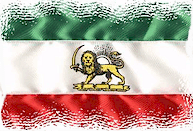
IMPERIAL EMBLEM

PERSIA
Iranian Freedom Fighters UNITE
Showing posts with label War. Show all posts
Showing posts with label War. Show all posts
Saturday, September 20, 2008


Sunday, July 20, 2008
Thursday, July 10, 2008
Saturday, July 05, 2008
Secret war against Iran underway
Seymour Hersh says Democratic Party leaders signed on to secret war against Iran
Lessons to be learned -A History Of Britain - Revolutions -
Lessons to be learned -A History Of Britain - Revolutions -
Tuesday, July 01, 2008
News Form Hell On Earth - The Mullah Land.
Pentagon Official Warns of Israeli Attack on Iran
iranvajahan Tuesday, July 1, 2008 11:10:00 AM CEST
Translate:[ar] [zh] [fr] [de] [it] [ja] [ko] [pt] [ru] [es]
WASHINGTON -- Senior Pentagon officials are concerned that Israel could carry out an attack on Iran's nuclear facilities before the end of the year, an action that would have enormous security and economic repercussions for the United States and the rest of the world....
Interview with Israeli Politician Isaac Ben-Israel: 'Israel Will Not Stand By While Iran Builds the Bomb'
spiegel-en Tuesday, July 1, 2008 11:08:00 AM CEST
(Translate:[ar] [zh] [fr] [de] [it] [ja] [ko] [pt] [ru] [es]
Isaac Ben-Israel, a former Israeli Air Force general and now member of the ruling Kadima party, spoke with SPIEGEL about the limits of sanctions in dealing with Iran's nuclear program. He says Israel is prepared to mount a military strike against the mullah regime if diplomacy fails....
dailytimesPK Monday, June 30, 2008 11:13:00 PM CEST
TEHRAN: Iran has made new changes at its Supreme National Security Council (SNSC), which looks after negotiations with the West in the nuclear crisis, the Mehr news agency reported on Monday. Javad Vaeedi has been replaced as the council’s deputy head in charge of international affairs by Ali.......
MANAMA (Agencies): The commander of the US navy’s Fifth Fleet warned on Moday that the United States will not allow Iran to shut the Strait of Hormuz
arabtimes Tuesday, July 1, 2008 8:31:00 AM CEST
Translate:[ar] [zh] [fr] [de] [it] [ja] [ko] [pt] [ru] [es]
Strait of Hormuz, the Gulf sea lane through which much of the world’s oil is supplied. “They will not close it... They will not be allowed to close it,” Vice-Admiral Kevin J. Cosgriff told a press conference in Bahrain, where the Fifth Fleet is His remarks followed comments by the chief of Iran’s elite Revolutionary Guards, General
arabtimes Monday, June 30, 2008 9:14:00 AM CEST
Translate:[ar] [zh] [fr] [de] [it] [ja] [ko] [pt] [ru] [es]
leadership, according to a report in The New Yorker magazine published online on Sunday. The article by reporter Seymour Hersh, from the magazine’s July 7 and 14 issue, centers on a highly classified Presidential Finding signed by Bush which by US law must ....
Israel getting too big for its britches: Rafsanjani
tehrantimes Sunday, June 29, 2008 8:51:00 PM CEST

Sunday, June 29, 2008
U.S. escalating covert operations against Iran: report
Seymour Hersh Exposes New US Covert Operations In Iran (VIDEO) - Politics on The Huffington Post
Subject: Report: U.S. 'preparing the battlefield' in Iran - CNN.com
http://www.cnn.com/2008/WORLD/meast/06/29/us.iran/index.html
WASHINGTON (Reuters) - U.S. congressional leaders agreed late last year to President George W. Bush's funding request for a major escalation of covert operations against Iran aimed at destabilizing its leadership, according to a report in The New Yorker magazine published online on Sunday. The article by reporter Seymour Hersh, from the magazine's July 7 and 14 issue, centers on a highly classified Presidential Finding signed by Bush which by U.S. law must be made known to Democratic and Republican House and Senate leaders and ranking members of the intelligence committees. "The Finding was focused on undermining Iran's nuclear ambitions and trying to undermine the government through regime change," the article cited a person familiar with its contents as saying, and involved "working with opposition groups and passing money." Hersh has written previously about possible administration plans to go to war to stop Tehran from obtaining nuclear weapons, including an April 2006 article in the New Yorker that suggested regime change in Iran, whether by diplomatic or military means, was Bush's ultimate goal. Funding for the covert escalation, for which Bush requested up to $400 million, was approved by congressional leaders, according to the article, citing current and former military, intelligence and congressional sources. Clandestine operations against Iran are not new. U.S. Special Operations Forces have been conducting crossborder operations from southern Iraq since last year, the article said. These have included seizing members of Al Quds, the commando arm of the Iranian Revolutionary Guard, and taking them to Iraq for interrogation, and the pursuit of "high-value targets" in Bush's war on terrorism, who may be captured or killed, according to the article. The U.S. ambassador in Iraq, Ryan Crocker, told CNN's "Late Edition" he had not read the article, but denied the allegations of cross-border operations. "I'll tell you flatly that U.S. forces are not operating across the Iraqi border into Iran, in the south or anywhere else," he said in an interview from Baghdad on Sunday. The scale and the scope of the operations in Iran, which include the Central Intelligence Agency, have now been significantly expanded, the New Yorker article said, citing current and former officials. Many of these activities are not specified in the new finding, and some congressional leaders have had serious questions about their nature, it said. Among groups inside Iran benefiting from U.S. support is the Jundallah, also known as the Iranian People's Resistance Movement, according to former CIA officer Robert Baer. Council on Foreign Relations analyst Vali Nasr described it to Hersh as a vicious organization suspected of links to al Qaeda. The article said U.S. support for the dissident groups could prompt a violent crackdown by Iran, which could give the Bush administration a reason to intervene. None of the Democratic leaders in Congress would comment on the finding, the article said. The White House, which has repeatedly denied preparing for military action against Iran, and the CIA also declined comment. The United States is leading international efforts to rein in Iran's suspected effort to develop nuclear weapons, although Washington concedes Iran has the right to develop nuclear power for civilian uses. (Additional reporting by Paul Eckert in Washington; writing by Chris Michaud; editing by Eric Beech and David Wiessler)
Pentagon Official Warns of Israeli Attack on Iran
June 30, 2008 ABC News Jonathan Karl
WASHINGTON -- Senior Pentagon officials are concerned that Israel could carry out an attack on Iran's nuclear facilities before the end of the year, an action that would have enormous security and economic repercussions for the United States and the rest of the world. A senior defense official told ABC News there is an "increasing likelihood" that Israel will carry out such an attack, a move that likely would prompt Iranian retaliation against, not just Israel, but against the United States as well. The official identified two "red lines" that could trigger an Israeli offensive. The first is tied to when Iran's Natanz nuclear facility produces enough highly enriched uranium to make a nuclear weapon. According to the latest U.S. and Israeli intelligence assessments, that is likely to happen sometime in 2009, and could happen by the end of this year. "The red line is not when they get to that point, but before they get to that point," the official said. "We are in the window of vulnerability." The second red line is connected to when Iran acquires the SA-20 air defense system it is buying from Russia. The Israelis may want to strike before that system -- which would make an attack much more difficult -- is put in place. Some Pentagon officials also worry that Israel may be determined to attack before a new U.S. president, who may be less supportive, is sworn in next January. Pentagon officials believe the massive Israeli air force exercise in early June, first reported by the New York Times, was done to prepare for a possible attack. A senior official called it "not a rehearsal, but basic, fundamental training" required to launch an operation against Iran. "The Israeli air force has already conducted the basic exercise necessary to tell their senior leadership, 'We have the fundamentals down.' Might they need some more training and rehearsals? Yes. But have they done the fundamentals? I think that is what we saw," the official told ABC News, adding that if Israel moves closer to military action, he expects to see more exercises like the one conducted in early June. The chairman of the Joint Chiefs of Staff, Adm. Mike Mullen, was in Israel over the weekend for a series of meetings with senior Israeli military officials, including, Lt. Gen. Gabi Ashkenazi, the chief of staff of the Israeli Defense Forces. According to a military spokesman, Iran's nuclear program was "a major topic" of discussion. The widely held view among Pentagon officials is that an Israeli attack would do only temporary damage to Iran's nuclear program, and that it would cause major problems in the region and beyond, prompting a wave of attacks on U.S. interests in Iraq, the Persian Gulf and elsewhere. As another senior defense official put it, "We'd be guilty by association."
Sunday, May 18, 2008
Taking Liberties (Since 1997)
Revolver Entertainment - 101 min - Feb 7, 2008
TAKING LIBERTIES is a shocking but hilarious polemic documentary that charts the destruction of all your Basic Liberties under 10 Years of N...all » TAKING LIBERTIES is a shocking but hilarious polemic documentary that charts the destruction of all your Basic Liberties under 10 Years of New Labour. Released to coincide with Tony Blair's departure, the film and the book follow the stories of normal people who's lives have been turned upside down by injustice - from being arrested for holding a placard outside parliament to being tortured in Guantanamo Bay. THIS IS WHAT YOU DON'T READ IN THE PAPERS! THIS IS WHAT YOU DON'T SEE ON TV! AND IT'S HAPPENING TO YOU!
Waking_life
Monday, April 21, 2008
GET YOURSELVES READY - THE TICK TACK OF THE NEXT STAGE HAS STARTED
THE WAR ON THE TERRORISTS OF QOM IS GETTING NEAR - GET READY FOR THE NEXT PHASE OF THE WAR ON THE IRI - THE ISLAMIC REPUBLIC OF IDIOTS !
Iraq Rebels 'Get Extra aid From Iran'
April 20, 2008 The Australian From Correspondents in Baghdad
A US general said today the increasingly sophisticated attacks carried out by Shiite extremists in Iraq were evidence they were getting extra aid from Iranian groups in the country.Major General Rick Lynch, commander of US forces in central Iraq, said rocket and mortar attacks by Shiite extremists were "more effective than before".This, he said, indicated a rise in Iranian help to the militants."We are seeing an increase in (Iranian) influence ... the number of attacks that are directly attributed to Iranian influence have indeed increased," Maj-Gen Lynch said."The number of EFP (explosively formed penetrator) attacks have increased, the number of Iranian rocket attacks have indeed increased, the amount of Iranian weapons I am finding on the battlefield has increased. The amount of Shiite extremists who tie their training back to Iran have indeed increased."Maj-Gen Lynch, whose area of operation in Iraq has a long stretch of border with Iran, also said his troops have found large numbers of caches of weapons and ammunition bearing Iranian markings.Citing a recent example, the general said his troops found in one place "enough components for 1100 EFPs directly traceable back to Iran".Iran denies supplying ammunition to insurgents, or training them.Maj-Gen Lynch said previous rocket attacks were "ineffective... now there is a difference. Now they have sophisticated launch systems".The US military said about 600 rockets or mortar rounds were fired by Shiite extremists at Baghdad's heavily fortified Green Zone between March 23 and April 12.Many of them had Iranian markings on them, it said.Maj-Gen Lynch, who commands US forces in the Shiite provinces of Babil, Karbala, Najaf and Wasit, said that in recent weeks his troops had detained 25 extremists trained in Iran or by Iranian-linked groups in Iraq.During interrogation "they say we were trained in Iran or we were trained by Iranians in Iraq or we were trained by Iraqi surrogates who had been trained in Iran who have come back and trained us," the General said."So it just continues to highlight what we are experiencing, which is particularly troublesome Iranian influence in our area that's resulted in casualties of the Iraqi people, the Iraqi security forces and coalition forces."Maj-Gen Lynch said there was a "marked" Iranian influence, adding that several of the 146 US troops from his command who had been killed succumbed to "Iranian munition"."You know I have lost 146 soldiers, mainly those who were killed by Iranian munitions - either by Iranian rockets or by Iranian explosively formed penetrators - all of which are directly traceable to Iran," he said.Maj-Gen Lynch and his troops were deployed south of Baghdad in April 2007 as part of the "surge" to curb the raging bloodshed across Iraq.
Afghan, Iranian Forces Trade Gunfire on Southwester Border : April 20, 2008 The Associated Press Fox News
KABUL, Afghanistan — Afghan police clashed with Iranian forces at the southwestern border between the two countries, leaving one civilian dead and two Iranian officers wounded, officials said Sunday.The incident in the village of Pul-e-Abreshum in Nimroz province happened Saturday after an Iranian patrol entered Afghanistan, the Interior Ministry said in a statement.Afghan police dispatched a unit to the village and a gunbattle ensued. A teacher from the village was killed during the firefight, said provincial police chief Gen. Ayub Badakhshi.Two Iranian officers were wounded, the statement said. The long and porous border between the two countries is used by smugglers to traffic drugs into Iran. Many Afghans also cross illegally into Iran from the area. Border clashes are common.
ALSO : Afghan, Iran guards in deadly clash over land 43 minutes ago
An Afghan teacher was killed in a clash between Afghan and Iranian border guards over a small piece of land on the frontier, Afghanistan's interior ministry said.Two Iranian guards were also wounded in the clash Saturday, it said, adding the fighting started after Iranian border security forces entered the western province of Nimroz.
"An Afghan civilian who was a teacher was killed in a clash between Afghan and Iranian border guards. The fighting took place after the Iranians entered and claimed a piece of land," the ministry said in a statement.It did not say how much land the Iranians had claimed except that it was not large and added that the Afghan owner, who was using it for farming, had documents proving his ownership.The Afghan troops sealed off the area and forced their Iranian counterparts to "escape," the ministry said.The Iranians had left behind a vehicle which was returned to them, it said.The long border between the two countries is porous and difficult to police. It has seen clashes before, sometimes related to the trafficking of Afghanistan's mammoth drugs production across the frontier.
Rice blasts cleric's strategy in Baghdad visit
By By Anne Gearan, Associated Press - Monday, April 21, 2008
Secretary of State Condoleezza Rice characterized militant Shiite cleric Muqtada al-Sadr as being a coward hiding in Iran on Sunday, hours after the radical leader threatened to declare war unless U.S. and Iraqi forces end a military crackdown on his followers.Rice, in the Iraqi capital to address security gains and what she calls an emerging political consensus, said al-Sadr is content to issue threats and edicts from the safety of Iran, where he is studying.Al-Sadr heads an unruly militia that was the main target of an Iraqi government assault in the oil-rich city of Basra last month, and his future role as a spoiler is an open question."I know he's sitting in Iran," Rice said, when asked about al-Sadr's latest threat to lift a self-imposed cease-fire with government and U.S. forces. "I guess it's all-out war for anybody but him. I guess that's the message: His followers can go to their deaths, and he's in Iran."In a statement on his official Web site, al-Sadr said, "We denounce the visit of U.S. secretary, asking the government to ban the entrance of the terrorists' occupiers to our pure land."The statement asked Iraqis to express their opposition to the visit through peaceful means.A full-blown uprising by al-Sadr, who led two rebellions against U.S.-led forces in 2004, could lead to a dramatic increase in violence in Iraq at a time when the Sunni extremist group al-Qaida in Iraq appears poised for new attacks after suffering severe blows last year.In a posting Saturday on his Web site, al-Sadr said he tried to defuse tensions by declaring the truce last August, only to see the Shiite-led government of Prime Minister Nouri al-Maliki respond by closing his offices and "resorting to assassinations."He said government sold out to the Americans and branded his followers as "criminals."
Saturday, April 12, 2008
USS Typhoon Fires Warning Shots At Iranian Boats
The U.S. patrol craft USS Typhoon fired warning shots at an Iranian high-speed boat as it approached the Typhoon in a "taunting manner" in the central Persian Gulf, a U.S. military official said.The USS Typhoon tried unsuccessfully to establish radio contact with the Iranian boat after it came within an estimated 200 yards of the Typhoon Thursday night, the AP quoted an official in the U.S. navy as saying.The Typhoon then warned it away by firing a flare. Two other small Iranian boats were also there in the vicinity, but turned away, the official said.However, Iran denied any kind of "confrontation" with a U.S. navy ship in the Persian Gulf - By RTTNews - For comments and feedback: contact editorial@rttnews.com
Latest News on the WAR against the Isllamic republic of Idiots-IRI-
Iran Fighting Proxy War in Iraq, U.S. Envoy Says
WASHINGTON -- Iran is engaging in a proxy war with the United States in Iraq, adopting tactics similar to those it has used to back fighters in Lebanon, the United States ambassador to Iraq said Friday
Iran Top Threat To Iraq, U.S. Says

April 12, 2008 The Washington Post Karen DeYoung, Washington Post Staff Writer
Last week's violence in Basra and Baghdad has convinced the Bush administration that actions by Iran, and not al-Qaeda, are the primary threat inside Iraq, and has sparked a broad reassessment of policy in the region, according to senior U.S. officials. Evidence of an increase in Iranian weapons, training and direction for the Shiite militias that battled U.S. and Iraqi security forces in those two cities has fixed new U.S. attention on what Defense Secretary Robert M. Gates yesterday called Tehran's "malign" influence, the officials said.The intensified focus on Iran coincides with diminished emphasis on al-Qaeda in Iraq as the leading justification for an ongoing U.S. military presence in Iraq.In congressional hearings this week, Army Gen. David H. Petraeus said the U.S. military has driven al-Qaeda from Baghdad, Anbar province and central Iraq, and he depicted the group as now largely concentrated in a reduced territory around the northern city of Mosul.During their Washington visit, Petraeus, the top U.S. military commander in Iraq, and Ambassador Ryan C. Crocker barely mentioned al-Qaeda in Iraq but spoke extensively of Iran.With "al-Qaeda in retreat and disarray" in Iraq, said one official who spoke on the condition of anonymity because he was not authorized to speak on the record, "we see other obstacles that were under the waterline more clearly. . . . The Iranian-armed militias are now the biggest threat to internal order."Partly in response to advice from Petraeus and Crocker, the administration has initiated an interagency assessment of what is known about Iranian activities and intentions, how to combat them and how to capitalize on them. The review stems from an internal conclusion, following last week's fighting, that the administration lacked a comprehensive understanding and a sophisticated approach.President Bush reiterated yesterday that if Iran continues to help militias in Iraq, "then we'll deal with them," saying in an interview with ABC News that "we're learning more about their habits and learning more about their routes" for infiltrating or sending equipment.But he also reaffirmed that he has no desire to go to war with Tehran. Saying that his job is to "solve these issues diplomatically," Bush suggested heightened interest in reaching a solution with other countries. "You can't solve these problems unilaterally. You're going to need a multilateral forum."Iran has long been seen as a spoiler in Iraq, with such strong ties to all of the major Shiite political and militia groups, including that of Prime Minister Nouri al-Maliki, that other Arab countries have begun to regard Iraq as almost a client state of Iran.The recent fighting in Basra, which began when Maliki launched a military offensive against the Mahdi Army militia of Shiite cleric Moqtada al-Sadr, revealed a threat and an opportunity, officials said.U.S. military officials said that much of the plentiful, high quality weaponry the militia used in Basra and in rocket attacks against the Green Zone in Baghdad, where the U.S. Embassy and much of the Iraqi government are located, was recently manufactured in Iran. At the same time, the militia's improved targeting and tactics indicated stepped-up Iranian training.Interrogations of four leaders of Iran's Revolutionary Guard Corps Quds Force captured in Iraq in December 2006 and January 2007 have also bolstered U.S. conclusions that portions of Sadr's militia are directed from Tehran.Despite earlier indications that Iranian backing for Iraqi armed groups and the flow of Iranian arms have waned, Adm. Michael Mullen, chairman of the Joint Chiefs of Staff, said yesterday that "this action in Basra was very convincing that indeed they haven't." Basra "gave us much more insight into their involvement in many activities."Gates, who appeared with Mullen at a Pentagon news conference, said of Iran: "We are going to be as aggressive as we possibly can be inside Iraq in trying to counter their efforts." Iraqi security operations in Basra, he said, have been "a real eye-opener" for Maliki's government.Petraeus told Congress that Maliki had launched the offensive hastily and with inadequate preparation, leading to a standoff and the need to call in U.S. air support. During the first days of the Basra operation, U.S. officials were sharply critical of Maliki's timing and performance; some worried that the attack against Sadr forces was less an offensive against what he called "criminals" in Basra than it was an attempt to win political advantage over a rival Shiite group before upcoming elections.Iran's brokering of a tentative cease-fire among Shiite political groups and the militia in Tehran added to U.S. consternation."The importance of Iranian influence in facilitating the discussion between different political factions was of significant importance," Petraeus told Pentagon reporters yesterday. Administration officials worried that Iran appeared in control of events in Iraq, while the United States seemed weak and uninformed.But more recently, U.S. officials have seen a possible advantage in the situation. Maliki's willingness to go after fellow Shiites attracted support from other political groups in Iraq, including Sunnis and Kurds, that have long been suspicious of his sectarian leanings. It also gave Washington a talking point to use with Sunni Arab governments in the region that have shunned him. "It's an opportunity to make him look better inside Iraq and to make a better argument to the Arabs," an official said.The administration has long tried in vain to build Arab diplomatic and economic support for the Iraqi government. But the Arabs, led by Saudi Arabia, consider Shiite Iran a competitor for regional dominance and have rejected Maliki as "a stooge for Tehran," as one U.S. official called him."The Saudis appear to feel that the current Iraqi government is pretty much in thrall to Iran," said a State Department official involved in Middle East policy. The administration's hope, "in the wake of Maliki's decisions on Basra," the official said, "is that the Saudis will take a step back and take another look."In a news conference Thursday, Crocker dismissed Arab concerns about a recent visit to Baghdad by Iranian President Mahmoud Ahmadinejad. "It's not the fact of the Ahmadinejad visit, but the absence of visits by other neighbors that it's important to focus on. There hasn't been a single visit, even by an Arab cabinet minister, to Baghdad. As Iraq grapples with the challenges Iran is posing, it could certainly do with some Arab support."After consultations with Crocker and Petraeus this week, Bush cut short their Washington visit and dispatched them to Riyadh. During a luncheon at The Washington Post, Crocker said that at a White House meeting Thursday morning, they "reviewed where we are in Iraq."The message to the Saudis, he said, "is going to be . . . it is time, more than time, for the Arab states to step forward and engage constructively with Iraq. Get their embassies open, get ambassadors on the ground, consider visits, implement debt relief, treat Iraq like the country it is, which is a central part of the Arab world."Staff writers Peter Baker and Ann Scott Tyson contributed to this report.
Gates: Iran Boosts Support for Militias
WASHINGTON -- Iranian support for militias in Iraq has grown, top U.S. defense leaders said Friday, asserting that recent battles in Basra gave the Iraqis an eye-opening view of Iran's increased negative role there. Defense Secretary Robert Gates said the U.S. will be as aggressive as possible to counter that increase, adding that the Iraqis "are in a position themselves to bring some pressures to bear on Iran
As Iran Works on its Bomb, the World DriftsPresident Mahmoud Ahmadinejad of Iran made another blustering claim this week: that his scientists are tripling the size of their nuclear fuel program. The fact that it made barely a diplomatic ripple is another reminder that the major powers are adrift on one of the major security challenges of the day.
Saturday, March 29, 2008
Saudi Newspaper: Prepare for radioactive fallout from US nuclear attack on Iran
Bush sends nuclear sub and more warships to the Gulf
by Richard Clark - http://www.opednews.com/ - Mon Mar 24, 2008
According to Chris Floyd at the Empire Burlesque web site:
The Saudi government is now preparing plans to deal with "any sudden nuclear and radioactive hazards" that may arise from an attack on Iran's nuclear reactors. This was reported by a top Saudi newspaper, Okaz, and relayed by a leading German news service, DPA -- one day after Dick Cheney paid a visit to the kingdom. As we noted, no one knows exactly what was said at that confab of allied authoritarians -- but something sure lit a fire under the Saudis, and convinced them that urgent action is needed to brace for the lethal overspill from a strike on Iran. Floyd points out that nothing in Saudi Arabia becomes the top news story without government approval. That such a story should be released the day after Cheney's visit, sends a message to everyone about what’s on Cheney's mind. This, combined with the dismissal of Centcom chief, Admiral Fallon, Petreus' claim to have evidence (which he doesn't produce) that Iran was responsible for the recent shelling of the Green Zone, . . and the Egyptian report that a nuclear sub has been ordered by Bush into the Gulf, the bleak picture in both Pakistan and Afghanistan (accelerating collapse of Musharraf's power and strategy, the coming spring offensive in the Taliban's announced drive for Kabu), . . plus the oft-stated desire of Bush and Cheney to attack Iran, and, as noted by former mideast policy official William K. Polk at Juan Cole's site just a few days ago, the last time Cheney visited the nations he visited this time was right before the Iraq attack, . . then only a moron would deny that Bush and Dick have nothing but contempt for the will of the people, congress and the courts, and that they crave war like a junkie craves his fix.
http://soldiervoices.net/svfor/showthread.php?p=4883
Cheney Visits them, and Saudis then Prepare for "Sudden Nuclear Hazards" - One Tick Closer to Midnight
Last Friday, Dick Cheney was in Saudi Arabia for high-level meetings with the Saudi king and his ministers. On Saturday, it was revealed that the Saudi Shura Council -- the elite group that implements the decisions of the autocratic inner circle -- is preparing "national plans to deal with any sudden nuclear and radioactive hazards that may affect the kingdom following experts' warnings of possible attacks on Iran's Bushehr nuclear reactors," one of the kingdom's leading newspapers, Okaz, reports. The German-based DPA news service relayed the paper's story.
Simple prudence -- or ominous timing? We noted here last week that an American attack on Iran was far more likely than most people suspect. We pointed to the mountain of evidence for this case gathered by scholar William R. Polk, one of the top aides to John Kennedy during the Cuban Missile Crisis, and to other indicators of impending war. The story by Okaz -- which would not have appeared in the tightly controlled dictatorship without approval from the top -- is yet another, very weighty piece of evidence laid on the scales, pointing toward a new, horrendous conflict. We don't know what the Saudis told Cheney in private -- or even more to the point, what he told them. But the release of this story now, just after his departure, would seem to be a clear indication that the Saudis have good reason to fear a looming attack on Iran's nuclear facilities, and that they are actively preparing for it. We don't know what the Saudis told Cheney in private -- or even more to the point, what he told them. But the release of this story now, just after his departure, would seem to be a clear indication that the Saudis have good reason to fear a looming attack on Iran's nuclear facilities, and that they are actively preparing for it. And they certainly should be bracing themselves. A U.S. attack on Iran will come suddenly, and if it is indeed aimed at destroying Iran's nuclear capabilities -- a "threat" being talked up again with new urgency by both Cheney and Bush lately -- it has the potential for unimaginable consequences.
War With Iran May Have Begun With Offensive In Iraq
The United States military offensive against Iran may have begun with a swiftly escalating series of operations directed against the Mahdi Army in Iraq.
Pulling Triggers In Iraq
Basra Fighting -- Why Now?
The Iranian Regime's Lobby In US And The Israeli Decoy
I wholeheartedly believe that a US war against Iran will be a catastrophe of unbelievable dimensions. It equally troubles me to see that Tehran's lobbyists and ayatollahs' advocates disguise their patronage for mullahs as anti-war pursuit. Their disinformation campaign is bringing us to the brink of a war they pretend they aim to deter..
Iraqi Police In Basra Shed Their Uniforms, Kept Their Rifles And Switched Sides
Abu Iman barely flinched when the Iraqi Government ordered his unit of special police to move against al-Mahdi Army fighters in Basra. His response, while swift, was not what British and US military trainers who spent the past five years schooling the Iraqi security forces would have hoped for. He and 15 comrades took off their uniforms, kept their government-issued rifles and went to the other side without a second thought.
IRIP copter crashes, five on board killed
Islamic Republic News Agency - Tehran,IranA helicopter operating under Islamic Republic of Iran Police crashed Friday afternoon killing all five on board, a provincial official said Saturday.
The Sunni-Shiite Terror Network
Wall Street Journal - USAMcCain suggested that the Islamic Republic in Iran, a Shiite power, may be helping al Qaeda, a Sunni outfit, in its murderous campaign in Iraq and elsewhere ...
Saudi Arabia's King Abdullah says we monotheists worship the same deity.
SAUDI KING SAYS CHRISTIANS, JEWS, MUSLIMS SHOULD LIVE IN PEACE
By J. Grant Swank, Jr.MichNews.com -Mar 27, 2008
We don’t. - Allah is Lucifer, the Koran scribed by demons and mosque clerics agents of hell. Christ is the true Messiah, the Bible is divine revelation and biblical gospel-tellers are agents of heaven. Judaism does not recognize Christ as Messiah, holds to the Old Testament as divine revelation, and discounts Allah as co-deity.
Nevertheless, the king spoke at a seminar on “Culture and Respect of Religions.” There he set forth that better relations need to exist in his Muslim country because of the “weakening of the family, increasing atheism and a lack of ethics, loyalty and sincerity for our religions and humanity” per AP. Christianity is given the daily threat in Saudi Arabia. For a Muslim to testify to Christ as Savior equals death. So obviously the Islamic regime has set up Christianity as the archenemy. Time to be nice to Christians? Belatedly so. Weakening of the family? I did not know there was much of a Muslim regard for family, not with females regarded as less than dung and honor killing a daily slice-and-dice. As for atheism, I would think it would flourish as the most reasonable alternative to Islam. As for “ethics,” what does that mean to sharia and the Koran but bloodletting? Anyhow, at least the speech will make Islam appear the “peace religion” some think it is. Kudos to the king.
--Read: http://jgrantswankjr.blogspot.com/
Saturday, December 22, 2007
Truth And Lies In The War On Terror Pt 1-4
Truth And Lies In The War On Terror Pt 1-4..Please Repost
Wednesday, October 31, 2007
War Made Easy
War Made Easy reaches into the Orwellian memory hole to expose a 50-year pattern of government deception and media spin that has dragged the United States into one war after another from Vietnam to Iraq. Narrated by actor and activist Sean Penn, the film exhumes remarkable archival footage of official distortion and exaggeration from LBJ to George W. Bush, revealing in stunning detail how the American news media have uncritically disseminated the pro-war messages of successive presidential administrations.
Sunday, October 21, 2007
Spys Spys...They are everywhere,,,Watch out...
The Secret History of the Impending War with Iran That the White House Doesn't Want You to Know By :By John H. Richardson - Esquire Magazine

Two former high-ranking policy experts from the Bush Administration say the U.S. has been gearing up for a war with Iran for years, despite claiming otherwise. It'll be Iraq all over again.
Read the full story here : http://www.esquire.com/features/iranbriefing1107
Two former high-ranking policy experts from the Bush Administration say the U.S. has been gearing up for a war with Iran for years, despite claiming otherwise. It'll be Iraq all over again.
Read the full story here : http://www.esquire.com/features/iranbriefing1107
Monday, September 24, 2007
STAND DOWN . THERE WILL BE NO WAR AGAINST IRAN !
How Armed Exiles are Working to Topple Tehran's Islamic Government
Secret US air force team to perfect plan for Iran strike
Times Online - UKTHE United States Air Force has set up a highly confidential strategic planning group tasked with "fighting the next war" as tensions rise with Iran. ...
No Iran war, says admiral
Financial Times, UK - 11 hours agoBy Daniel Dombey and AP in Washington The head of US forces in the Middle East has warned of the risks of mounting tensions between Washington and Iran, ...
US military chief foresees no war with Iran
Ynetnews, Israel - 14 hours agoAP America's top military man in the Middle East does not think the US is headed to war with Iran. Admiral William Fallon, who heads the US Central Command, ...
US Mideast Commander Forsees No War With Iran
RadioFreeEurope/RadioLiberty, Czech Republic - 15 hours agoSeptember 23, 2007 -- The commander of US military forces in the Middle East says he does not forsee a war with Iran. Admiral William Fallon, the head of ...
Military Chief: 'No War' With Iran
The Associated Press - 19 hours agoBAGHDAD (AP) — The commander of US military forces in the Middle East does not believe current tensions with Iran will lead to war and urges for greater ...
US commander urges diplomacy on Iran
PRESS TV, Iran - 11 hours agoSource: AP The Commander of US Central Command dismisses the idea of military action against Iran over the country's nuclear standoff with the West. ...
Fallon: ‘Constant drumbeat’ of Iran war talk ‘not helpful.
’Think Progress, DC - 11 hours agoIn an interview with al Jazeera television, CentCom Commander Admiral William Fallon warned that constant talk of bombing Iran is not hepful. ...
Blast at Secret Syrian Missile Site Kills "Dozens" of Iranian Advisers
The Men Planning America's Next Air War
An invitation to visit "Checkmate", the US air force's most important and secretive strategic planning group, was an offer that, as a veteran military analyst, I could not refuse. A few weeks earlier, I had written that the air force was the supreme instrument of America's global power, likening it to the 19th-century Royal Navy. Were it not for the USAF's 24-hour close air support, I said, US and British ground forces in Iraq and Afghanistan would be unable to defend their long, vulnerable supply lines, and might even face defeats like those suffered by imperial Britain at Kut and in the Afghan wars
Secret US Air Force Team to Perfect Plan for Iran Strike
Men at Work, Children at Play
Boycott Ahmadinejad
Ahmadinejad Belittles U.S. Ahead Of New York Visit
Iran exhibits homemade weapons in show of force : http://www.latimes.com/news/nationworld/world/middleeast/la-fg-iran23sep23,0,6537867.story?coll=la-home-center
Iran leader defiant as protests grow over visit to New York
Guardian Unlimited - UKIn a speech marking the event, Ahmadinejad shrugged off US and regional concerns about Iran's more assertive role, saying: 'Iran is an influential power in ...
Iran shows off military might with parade in Tehran
Ha'aretz - Tel Aviv,IsraelBy AP TEHRAN, Iran - Threats and economic sanctions will not stop Iran's technological progress, President Mahmoud Ahmadinejad warned yesterday at a large
Enemies will regret any attack on Iran: IRGC commander
Tehran Times - IranTEHRAN -- The enemies will bitterly regret any attack against Iran, Islamic Revolution Guards Corps (IRGC) Commander Major General Mohammad-Ali Jafari said ...
Saturday, September 15, 2007
ARE YOU READY FOR THIS ! THE TUMP TUMP OF THE WAR DRAMS
Be Afraid of a Game of US-Iranian Chicken in the Gulf
Overarching the Middle East like a dark canopy is the growing confrontation between the United States and Iran. The test of wills is sometimes obscured by the daily war news from Iraq, but it has become the main event in the region - carrying dangers of wider war and also some new opportunities for creative diplomacy.
Israel Allegedly Gets Turkish Army's OK For Flights Targeting Iran
As the mystery continues over Syrian allegations that Israeli F-15 jets flew over its territory on Sept. 6, bombing some cities near the Turkish border, there has been increased speculation in Ankara that Tel Aviv received secret permission from the Turkish military for the fight by Israeli Defense Forces (IDF) fighters.
Jaafari Name Stirs Confusion in Iran, Iraq
Will the real Mohammad Ali Jaafari, who now heads Iran's Islamic Revolutionary Guards Corps, please step forward? The existence of two prominent Iranians with identical names has created confusion, inside and outside of Iran, over who is in charge of the group accused by the United States of arming Shi'ite militias in Iraq.
Proxy War Could Soon Turn to Direct Conflict, Analysts Warn
The growing US focus on confronting Iran in a proxy war inside Iraq risks triggering a direct conflict in the next few months, regional analysts are warning. US-Iranian tensions have mounted significantly in the past few days, with heightened rhetoric on both sides and the US decision to establish a military base in Iraq less than five miles from the Iranian border to block the smuggling of Iranian arms to Shia militias.
By Julian Borger and Ian Black
سایت حکومتی عصرایران: تانكهاي انگليسي با پیشروی غیرمتعارف تا پشت خاكريزهاي مرزي ايران دست به یک مانور نظامی زدند . مقارن ساعت 11 و ده دقيقه جمعه تعداد 12 دستگاه تانك ارتش انگليس در منطقه شلمچه اقدام به حضور و مانور كردند. اين تانكها تا پشت خاكريزهاي مرزي ايران در شلمچه و در منطقه روبروي يادمان شهداي گمنام شلمچه پيشروي كردند و پس از يك حضور 20 دقيقهاي منطقه را ترك كردند. گزارش خبرنگار ما حاكي است پس از استقرار اين تانكها نيروهاي تيپ سوم لشگر هفت حضرت ولي عصر(عج) به حالت آمادهباش كامل درآمدند. يك مقام مسئول سياسي در خرمشهر گفت: اين تانكها براي مانور نظامي و آموزش به مرزبانان عراقي در منطقه حضور پيدا كردهاند. از سوي ديگر مقامات بريتانيايي چند روز پيش اعلام كردند كه قصد استقرار 350 نيروي تفنگدار خود را در مرزهاي جنوبي استان بصره عراق با استان خوزستان دارند . حضور اين نيروها در حالي است كه تعدادي از نيروهاي نظامي آمريكا نيز به همراه سگهاي خود در نزديكي دروازه مرزي شلمچه استقرار يافتهاند.
Tuesday, September 04, 2007
Collapse of Congress' Anti-war Coalition Opens the Door for Bush to Attack Iran :Patrick Buchanan
September 04, 2007 : San Jose Mercury News
Those who hoped that - with the victory of the anti-war party in 2006, the departure of Rumsfeld and the neocons from the Pentagon, the rise of Condi and the eclipse of Cheney - America was headed out of Iraq got a rude awakening. They are about to get another. Today, the United States has 30,000 more troops in Iraq than on the day America repudiated the Bush war policy and voted the GOP out of power. And President Bush, self-confidence surging, is now employing against Iran a bellicosity redolent of the days just prior to Operation Iraqi Freedom.
What gives Bush his new cockiness? The total collapse of the anti-war coalition on Capitol Hill and the breaking of the Congress. Last spring, Bush vetoed the congressional deadlines for troop withdrawals, then rubbed Congress' nose in its defeat by demanding and getting $100 billion to support the surge and continue the war. Before the August recess, Democrats broke again and voted to give Bush the warrantless wiretap authority many among them had said was an unconstitutional and impeachable usurpation of power. They are a broken and frightened lot.
Comes now evidence congressional Democrats have not only lost the pro-victory vote, but forfeited the peace vote, as well. According to a Zogby poll the last week in August, just two weeks before Gen. David Petraeus and Ambassador Ryan Crocker report, Americans, by 45 percent to 20 percent, give this Democratic Congress lower grades on handling the war than the Republican Congress it replaced. Fifty-four percent of the nation believes, contra Harry Reid, the war is not lost. That is twice the support that Bush enjoys for his war leadership, a paltry 27 percent. But, by 9 to 1, Bush's leadership on the war is preferred to that of the Congress of Nancy Pelosi and Harry Reid. Incredibly, only 3 percent of the nation gives Congress a positive rating on its handling of the war. Congress has lost the hawks, and the owls, and the doves. No one trusts its leadership on the war. And George W. smells it. He no longer fears the power of Congress, and his rhetoric suggests he is contemptuous of it. He is brimming with self-assurance that he can break any Democratic attempt to impose deadlines for troop withdrawal and force Congress to cough up all the funds he demands. Confident of victory this fall on the Hill, Bush is now moving into Phase III in his War on Terror: First, Afghanistan, then Iraq, then Iran. Do not take this writer's word for it. Hearken to the astonishing rhetoric Bush used at the American Legion Convention in Las Vegas against Tehran: "Iran . . . is the world's leading state sponsor of terrorism. . . . Iran funds terrorist groups like Hamas and the Palestinian Islamic Jihad, which murder the innocent and target Israel. . . . Iran is sending arms to the Taliban. . . . Iran has arrested visiting American scholars who have committed no crimes. . . . Iran's active pursuit of technology that could lead to nuclear weapons threatens to put a region already known for instability and violence under the shadow of a nuclear holocaust. "Iran's actions threaten the security of nations everywhere. . . . We will confront this danger before it is too late." Bush has repeatedly warned Iran to cease supplying Iraqi insurgents with arms and enhanced IEDs for attacks on our troops in Iraq. How has Tehran responded to Bush's virtual ultimatums?"The attacks on our bases and our troops by Iranian-supplied munitions have increased in the last few months - despite pledges by Iran to help stabilize the security situation in Iraq. . . . "Iran's leaders cannot escape responsibility for aiding attacks against coalition forces and the murder of innocent Iraqis." This is a case for war. Indeed, it's an assertion by President Bush that Iran is colluding in acts of war against the soldiers and Marines and allies of the United States. What does he intend to do? "I have authorized our military commanders in Iraq to confront Tehran's murderous activities. . . . We've conducted operations against Iranian agents supplying lethal munitions to extremist groups." This suggests that U.S. forces may already be engaged in combat operations against Iranians. Who or what can stop this drive to war? Last spring, Nancy Pelosi herself, after a call from the Israeli lobby, pulled an amendment that would have forced Bush to come to Congress for specific authorization before attacking Iran. Before the August recess, the Senate voted 97 to zero for a resolution sponsored by Joe Lieberman to censure Iran for complicity in the killing of U.S. soldiers in Iraq.
The resolution explicitly rejected .Authorization for immediate military action, but the gist of it declared that Iran is participating in acts of war against the United States, laying the foundation for a confrontation. What is to prevent Bush from attacking Iran and widening the war, at a time and place of his choosing, and sooner than we think? Nothing and no one.
Wednesday, August 29, 2007
Study: US preparing 'massive' military attack against Iran Larisa Alexandrovna and Muriel Kane
Print This Email This

The United States has the capacity for and may be prepared to launch without warning a massive assault on Iranian uranium enrichment facilities, as well as government buildings and infrastructure, using long-range bombers and missiles, according to a new analysis.The paper, "Considering a war with Iran: A discussion paper on WMD in the Middle East" – written by well-respected British scholar and arms expert Dr. Dan Plesch, Director of the Centre for International Studies and Diplomacy of the School of Oriental and African Studies (SOAS) at the University of London, and Martin Butcher, a former Director of the British American Security Information Council (BASIC) and former adviser to the Foreign Affairs Committee of the European Parliament – was exclusively provided to RAW STORY late Friday under embargo.
"We wrote the report partly as we were surprised that this sort of quite elementary analysis had not been produced by the many well resourced Institutes in the United States," wrote Plesch in an email to Raw Story on Tuesday.Plesch and Butcher examine "what the military option might involve if it were picked up off the table and put into action" and conclude that based on open source analysis and their own assessments, the US has prepared its military for a "massive" attack against Iran, requiring little contingency planning and without a ground invasion.The study concludes that the US has made military preparations to destroy Iran’s WMD, nuclear energy, regime, armed forces, state apparatus and economic infrastructure within days if not hours of President George W. Bush giving the order. The US is not publicising the scale of these preparations to deter Iran, tending to make confrontation more likely. The US retains the option of avoiding war, but using its forces as part of an overall strategy of shaping Iran’s actions. Any attack is likely to be on a massive multi-front scale but avoiding a ground invasion. Attacks focused on WMD facilities would leave Iran too many retaliatory options, leave President Bush open to the charge of using too little force and leave the regime intact.S bombers and long range missiles are ready today to destroy 10,000 targets in Iran in a few hours. US ground, air and marine forces already in the Gulf, Iraq, and Afghanistan can devastate Iranian forces, the regime and the state at short notice. Some form of low level US and possibly UK military action as well as armed popular resistance appear underway inside the Iranian provinces or ethnic areas of the Azeri, Balujistan, Kurdistan and Khuzestan. Iran was unable to prevent sabotage of its offshore-to-shore crude oil pipelines in 2005. Nuclear weapons are ready, but most unlikely, to be used by the US, the UK and Israel.

The human, political and environmental effects would be devastating, while their military value is limited. Israel is determined to prevent Iran acquiring nuclear weapons yet has the conventional military capability only to wound Iran’s WMD programmes. The attitude of the UK is uncertain, with the Brown government and public opinion opposed psychologically to more war, yet, were Brown to support an attack he would probably carry a vote in Parliament. The UK is adamant that Iran must not acquire the bomb. The US is not publicising the scale of these preparations to deter Iran, tending to make confrontation more likely. The US retains the option of avoiding war, but using its forces as part of an overall strategy of shaping Iran’s actions.When asked why the paper seems to indicate a certainty of Iranian WMD, Plesch made clear that "our paper is not, repeat not, about what Iran actually has or not." Yet, he added that "Iran certainly has missiles and probably some chemical capability."Most significantly, Plesch and Butcher dispute conventional wisdom that any US attack on Iran would be confined to its nuclear sites. Instead, they foresee a "full-spectrum approach," designed to either instigate an overthrow of the government or reduce Iran to the status of "a weak or failed state." Although they acknowledge potential risks and impediments that might deter the Bush administration from carrying out such a massive attack, they also emphasize that the administration's National Security Strategy includes as a major goal the elimination of Iran as a regional power. They suggest, therefore, that:This wider form of air attack would be the most likely to delay the Iranian nuclear program for a sufficiently long period of time to meet the administration’s current counterproliferation goals. It would also be consistent with the possible goal of employing military action is to overthrow the current Iranian government, since it would severely degrade the capability of the Iranian military (in particular revolutionary guards units and other ultra-loyalists) to keep armed opposition and separatist movements under control. It would also achieve the US objective of neutralizing Iran as a power in the region for many years to come. However, it is the option that contains the greatest risk of increased global tension and hatred of the United States. The US would have few, if any allies for such a mission beyond Israel (and possibly the UK). Once undertaken, the imperatives for success would be enormous.Butcher says he does not believe the US would use nuclear weapons, with some exceptions."My opinion is that [nuclear weapons] wouldn't be used unless there was definite evidence that Iran has them too or is about to acquire them in a matter of days/weeks," notes Butcher. "However, the Natanz facility has been so hardened that to destroy it MAY require nuclear weapons, and once an attack had started it may simply be a matter of following military logic and doctrine to full extent, which would call for the use of nukes if all other means failed."

Military Strategy
The bulk of the paper is devoted to a detailed analysis of specific military strategies for such an attack, of ongoing attempts to destabilize Iran by inciting its ethnic minorities, and of the considerations surrounding the possible employment of nuclear weapons.In particular, Plesch and Butcher examine what is known as Global Strike – the capability to project military power from the United States to anywhere in the world, which was announced by STRATCOM as having initial operational capability in December 2005. It is the that capacity that could provide strategic bombers and missiles to devastate Iran on just a few hours notice.Iran has a weak air force and anti aircraft capability, almost all of it is 20-30 years old and it lacks modern integrated communications. Not only will these forces be rapidly destroyed by US air power, but Iranian ground and air forces will have to fight without protection from air attack. British military sources stated on condition of anonymity, that "the US military switched its whole focus to Iran" from March 2003. It continued this focus even though it had infantry bogged down in fighting the insurgency in Iraq.Global Strike could be combined with already-existing "regional operational plans for limited war with Iran, such as Oplan 1002-04, for an attack on the western province of Kuzhestan, or Oplan 1019 which deals with preventing Iran from closing the Straits of Hormuz, and therefore keeping open oil lanes vital to the US economy."
The Marines are not all tied down fighting in Iraq. Several Marine forces are assembling in the Gulf, each with its own aircraft carrier. These carrier forces can each conduct a version of the D-Day landings. They come with landing craft, tanks, jump-jets, thousands of troops and hundreds more cruise missiles. Their task is to destroy Iranian forces able to attack oil tankers and to secure oilfields and installations. They have trained for this mission since the Iranian revolution of 1979 as is indicated in this battle map of Hormuz illustrating an advert for combat training software.Special Forces units – which are believed to already be operating within Iran – would be available to carry out search-and-destroy missions and incite internal uprisings, while US Army units in both Iraq and Afghanistan could mount air and missile attacks on Iranian forces, which are heavily concentrated along the Iran-Iraq border, as well as protecting their own supply lines within Iraq:A key assessment in any war with Iran concerns Basra province and the Kuwait border. It is likely that Iran and its sympathizers could take control of population centres and interrupt oil supplies, if it was in their interest to do so. However it is unlikely that they could make any sustained effort against Kuwait or interrupt supply lines north from Kuwait to central Iraq. US firepower is simply too great for any Iranian conventional force.
Experts question the report's conclusions .Former CIA analyst and Deputy Director for Transportation Security, Antiterrorism Assistance Training, and Special Operations in the State Department's Office of Counterterrorism, Larry Johnson, does not agree with the report’s findings. "The report seems to accept without question that US air force and navy bombers could effectively destroy Iran and they seem to ignore the fact that US use of air power in Iraq has failed to destroy all major military, political, economic and transport capabilities," said Johnson late Monday after the embargo on the study had been lifted."But at least in their conclusions they still acknowledge that Iran, if attacked, would be able to retaliate. Yet they are vague in terms of detailing the extent of the damage that the Iran is capable of inflicting on the US and fairly assessing what those risks are."There is also the situation of US soldiers in Iraq and the supply routes that would have to be protected to ensure that US forces had what they needed. Plesch explains that “"firepower is an effective means of securing supply routes during conventional war and in conventional war a higher loss rate is expected.""However as we say do not assume that the Iraqi Shiia will rally to Tehran – the quietist Shiia tradition favoured by Sistani may regard itself as justified if imploding Iranian power can be argued to reduce US problems in Iraq, not increase them."John Pike, Director of Global Security, a Washington-based military, intelligence, and security clearinghouse, says that the question of Iraq is the one issue at the center of any questions regarding Iran."The situation in Iraq is a wild card, though it may be presumed that Iran would mount attacks on the US at some remove, rather than upsetting the apple-cart in its own front yard," wrote Pike in an email.
Political Considerations
Plesch and Butcher write with concern about the political context within the United States:
This debate is bleeding over into the 2008 Presidential election, with evidence mounting that despite the public unpopularity of the war in Iraq, Iran is emerging as an issue over which Presidential candidates in both major American parties can show their strong national security bona fides. ... The debate on how to deal with Iran is thus occurring in a political context in the US that is hard for those in Europe or the Middle East to understand. A context that may seem to some to be divorced from reality, but with the US ability to project military power across the globe, the reality of Washington DC is one that matters perhaps above all else. ... We should not underestimate the Bush administration's ability to convince itself that an "Iran of the regions" will emerge from a post-rubble Iran. So, do not be in the least surprised if the United States attacks Iran. Timing is an open question, but it is hard to find convincing arguments that war will be avoided, or at least ones that are convincing in Washington. Plesch and Butcher are also interested in the attitudes of the current UK government, which has carefully avoided revealing what its position might be in the case of an attack. They point out, however, "One key caution is that regardless of the realities of Iran’s programme, the British public and elite may simply refuse to participate – almost out of bloody minded revenge for the Iraq deceit."And they conclude that even "if the attack is 'successful' and the US reasserts its global military dominance and reduces Iran to the status of an oil-rich failed state, then the risks to humanity in general and to the states of the Middle East are grave indeed."
The United States has the capacity for and may be prepared to launch without warning a massive assault on Iranian uranium enrichment facilities, as well as government buildings and infrastructure, using long-range bombers and missiles, according to a new analysis.The paper, "Considering a war with Iran: A discussion paper on WMD in the Middle East" – written by well-respected British scholar and arms expert Dr. Dan Plesch, Director of the Centre for International Studies and Diplomacy of the School of Oriental and African Studies (SOAS) at the University of London, and Martin Butcher, a former Director of the British American Security Information Council (BASIC) and former adviser to the Foreign Affairs Committee of the European Parliament – was exclusively provided to RAW STORY late Friday under embargo.
"We wrote the report partly as we were surprised that this sort of quite elementary analysis had not been produced by the many well resourced Institutes in the United States," wrote Plesch in an email to Raw Story on Tuesday.Plesch and Butcher examine "what the military option might involve if it were picked up off the table and put into action" and conclude that based on open source analysis and their own assessments, the US has prepared its military for a "massive" attack against Iran, requiring little contingency planning and without a ground invasion.The study concludes that the US has made military preparations to destroy Iran’s WMD, nuclear energy, regime, armed forces, state apparatus and economic infrastructure within days if not hours of President George W. Bush giving the order. The US is not publicising the scale of these preparations to deter Iran, tending to make confrontation more likely. The US retains the option of avoiding war, but using its forces as part of an overall strategy of shaping Iran’s actions. Any attack is likely to be on a massive multi-front scale but avoiding a ground invasion. Attacks focused on WMD facilities would leave Iran too many retaliatory options, leave President Bush open to the charge of using too little force and leave the regime intact.S bombers and long range missiles are ready today to destroy 10,000 targets in Iran in a few hours. US ground, air and marine forces already in the Gulf, Iraq, and Afghanistan can devastate Iranian forces, the regime and the state at short notice. Some form of low level US and possibly UK military action as well as armed popular resistance appear underway inside the Iranian provinces or ethnic areas of the Azeri, Balujistan, Kurdistan and Khuzestan. Iran was unable to prevent sabotage of its offshore-to-shore crude oil pipelines in 2005. Nuclear weapons are ready, but most unlikely, to be used by the US, the UK and Israel.
The human, political and environmental effects would be devastating, while their military value is limited. Israel is determined to prevent Iran acquiring nuclear weapons yet has the conventional military capability only to wound Iran’s WMD programmes. The attitude of the UK is uncertain, with the Brown government and public opinion opposed psychologically to more war, yet, were Brown to support an attack he would probably carry a vote in Parliament. The UK is adamant that Iran must not acquire the bomb. The US is not publicising the scale of these preparations to deter Iran, tending to make confrontation more likely. The US retains the option of avoiding war, but using its forces as part of an overall strategy of shaping Iran’s actions.When asked why the paper seems to indicate a certainty of Iranian WMD, Plesch made clear that "our paper is not, repeat not, about what Iran actually has or not." Yet, he added that "Iran certainly has missiles and probably some chemical capability."Most significantly, Plesch and Butcher dispute conventional wisdom that any US attack on Iran would be confined to its nuclear sites. Instead, they foresee a "full-spectrum approach," designed to either instigate an overthrow of the government or reduce Iran to the status of "a weak or failed state." Although they acknowledge potential risks and impediments that might deter the Bush administration from carrying out such a massive attack, they also emphasize that the administration's National Security Strategy includes as a major goal the elimination of Iran as a regional power. They suggest, therefore, that:This wider form of air attack would be the most likely to delay the Iranian nuclear program for a sufficiently long period of time to meet the administration’s current counterproliferation goals. It would also be consistent with the possible goal of employing military action is to overthrow the current Iranian government, since it would severely degrade the capability of the Iranian military (in particular revolutionary guards units and other ultra-loyalists) to keep armed opposition and separatist movements under control. It would also achieve the US objective of neutralizing Iran as a power in the region for many years to come. However, it is the option that contains the greatest risk of increased global tension and hatred of the United States. The US would have few, if any allies for such a mission beyond Israel (and possibly the UK). Once undertaken, the imperatives for success would be enormous.Butcher says he does not believe the US would use nuclear weapons, with some exceptions."My opinion is that [nuclear weapons] wouldn't be used unless there was definite evidence that Iran has them too or is about to acquire them in a matter of days/weeks," notes Butcher. "However, the Natanz facility has been so hardened that to destroy it MAY require nuclear weapons, and once an attack had started it may simply be a matter of following military logic and doctrine to full extent, which would call for the use of nukes if all other means failed."
Military Strategy
The bulk of the paper is devoted to a detailed analysis of specific military strategies for such an attack, of ongoing attempts to destabilize Iran by inciting its ethnic minorities, and of the considerations surrounding the possible employment of nuclear weapons.In particular, Plesch and Butcher examine what is known as Global Strike – the capability to project military power from the United States to anywhere in the world, which was announced by STRATCOM as having initial operational capability in December 2005. It is the that capacity that could provide strategic bombers and missiles to devastate Iran on just a few hours notice.Iran has a weak air force and anti aircraft capability, almost all of it is 20-30 years old and it lacks modern integrated communications. Not only will these forces be rapidly destroyed by US air power, but Iranian ground and air forces will have to fight without protection from air attack. British military sources stated on condition of anonymity, that "the US military switched its whole focus to Iran" from March 2003. It continued this focus even though it had infantry bogged down in fighting the insurgency in Iraq.Global Strike could be combined with already-existing "regional operational plans for limited war with Iran, such as Oplan 1002-04, for an attack on the western province of Kuzhestan, or Oplan 1019 which deals with preventing Iran from closing the Straits of Hormuz, and therefore keeping open oil lanes vital to the US economy."
The Marines are not all tied down fighting in Iraq. Several Marine forces are assembling in the Gulf, each with its own aircraft carrier. These carrier forces can each conduct a version of the D-Day landings. They come with landing craft, tanks, jump-jets, thousands of troops and hundreds more cruise missiles. Their task is to destroy Iranian forces able to attack oil tankers and to secure oilfields and installations. They have trained for this mission since the Iranian revolution of 1979 as is indicated in this battle map of Hormuz illustrating an advert for combat training software.Special Forces units – which are believed to already be operating within Iran – would be available to carry out search-and-destroy missions and incite internal uprisings, while US Army units in both Iraq and Afghanistan could mount air and missile attacks on Iranian forces, which are heavily concentrated along the Iran-Iraq border, as well as protecting their own supply lines within Iraq:A key assessment in any war with Iran concerns Basra province and the Kuwait border. It is likely that Iran and its sympathizers could take control of population centres and interrupt oil supplies, if it was in their interest to do so. However it is unlikely that they could make any sustained effort against Kuwait or interrupt supply lines north from Kuwait to central Iraq. US firepower is simply too great for any Iranian conventional force.
Experts question the report's conclusions .Former CIA analyst and Deputy Director for Transportation Security, Antiterrorism Assistance Training, and Special Operations in the State Department's Office of Counterterrorism, Larry Johnson, does not agree with the report’s findings. "The report seems to accept without question that US air force and navy bombers could effectively destroy Iran and they seem to ignore the fact that US use of air power in Iraq has failed to destroy all major military, political, economic and transport capabilities," said Johnson late Monday after the embargo on the study had been lifted."But at least in their conclusions they still acknowledge that Iran, if attacked, would be able to retaliate. Yet they are vague in terms of detailing the extent of the damage that the Iran is capable of inflicting on the US and fairly assessing what those risks are."There is also the situation of US soldiers in Iraq and the supply routes that would have to be protected to ensure that US forces had what they needed. Plesch explains that “"firepower is an effective means of securing supply routes during conventional war and in conventional war a higher loss rate is expected.""However as we say do not assume that the Iraqi Shiia will rally to Tehran – the quietist Shiia tradition favoured by Sistani may regard itself as justified if imploding Iranian power can be argued to reduce US problems in Iraq, not increase them."John Pike, Director of Global Security, a Washington-based military, intelligence, and security clearinghouse, says that the question of Iraq is the one issue at the center of any questions regarding Iran."The situation in Iraq is a wild card, though it may be presumed that Iran would mount attacks on the US at some remove, rather than upsetting the apple-cart in its own front yard," wrote Pike in an email.
Political Considerations
Plesch and Butcher write with concern about the political context within the United States:
This debate is bleeding over into the 2008 Presidential election, with evidence mounting that despite the public unpopularity of the war in Iraq, Iran is emerging as an issue over which Presidential candidates in both major American parties can show their strong national security bona fides. ... The debate on how to deal with Iran is thus occurring in a political context in the US that is hard for those in Europe or the Middle East to understand. A context that may seem to some to be divorced from reality, but with the US ability to project military power across the globe, the reality of Washington DC is one that matters perhaps above all else. ... We should not underestimate the Bush administration's ability to convince itself that an "Iran of the regions" will emerge from a post-rubble Iran. So, do not be in the least surprised if the United States attacks Iran. Timing is an open question, but it is hard to find convincing arguments that war will be avoided, or at least ones that are convincing in Washington. Plesch and Butcher are also interested in the attitudes of the current UK government, which has carefully avoided revealing what its position might be in the case of an attack. They point out, however, "One key caution is that regardless of the realities of Iran’s programme, the British public and elite may simply refuse to participate – almost out of bloody minded revenge for the Iraq deceit."And they conclude that even "if the attack is 'successful' and the US reasserts its global military dominance and reduces Iran to the status of an oil-rich failed state, then the risks to humanity in general and to the states of the Middle East are grave indeed."
Tuesday, June 26, 2007
Iran bombers attack Our Boys : By TOM NEWTON DUNN - Defence Editor
Iran bombers attack Our Boys : By TOM NEWTON DUNN - Defence Editor- June 26, 2007
IRANIAN forces are being choppered over the Iraqi border to bomb Our Boys, intelligence chiefs say. Military experts claim this worrying move means we are at WAR with Iran in all but name.
Last night an intelligence source told The Sun: “It is an extremely alarming development and raises the stakes considerably. In effect, it means we are in a full on war with Iran — but nobody has officially declared it. “We have hard proof that the Iranian Revolutionary Guard Corps have crossed the border to attack us. “It is very hard for us to strike back. All we can do is try to defend ourselves. We are badly on the back foot.” Our Boys picked up the Iranian helicopters on radar crossing into empty desert. The sightings have been confirmed to The Sun by very senior military sources. At least two Brit squaddies are thought to have been killed by bombs planted during these incursions into Maysan province — Corporal Ben Leaning, 24, and Trooper Kristen Turton, 27. A further 44 British deaths have also been linked to the highly advanced bombs, rockets and mortars which originated in Iran. Coming so swiftly after the kidnap of 15 Royal Navy sailors in the Gulf, our revelation will send strained relations between London and Tehran plummeting further. Until now, secret units from Iran’s fanatical RGC have restricted themselves to just training and arming Shia rebels in Iraq. They include the al Quds Brigade — a secretive force tasked to spread Islamic revolution abroad who are the main backers for Hezbollah terrorists in Lebanon and are also active in Palestine and northern Iraq. An MoD spokeswoman said: “There is evidence that explosive devices used against our troops in southern Iraq originated in Iran. “Any Iranian link to armed militias in Iraq either through weapons supply, training or funding are unacceptable.
Thursday, April 19, 2007
A History Lesson Still Unlearned : Amir Taheri
With war drums beating louder, senior military commanders in Tehran miss few opportunities to warn the government against plunging the country into an unequal fight with the United States and its allies. One such warning came last month from the Commander of the Islamic Revolutionary Guard (IRCG) General Rahim Safavi.In an unusually frank assessment of the situation, he told an audience of guardsmen that the country lacked the necessary means to defend its extensive land and sea borders. He insisted that everything be done to avoid an "unhappy episode".In Tehran's military circles, the phrase "unhappy episode" is a codeword for the only direct military clash that has so far taken place between the Islamic Republic and the United States.The clash came on April 18, 1988, exactly 19 years ago today.At the time, the Islamic Republic censored all news of the event so that most Iranians do not even know that it happened at all. For their part, the Americans also "managed" the flow of information about the clash to prevent its strategic importance from becoming apparent at the time.Nevertheless, the clash between the navy of the Islamic Republic and a US naval task force led by the aircraft carrier USS Enterprise, was subsequently classed as one of the five naval battles of historic importance that established American sup-remacy at sea.ClashThe background to the clash was rather complicated.At the time, the Islamic Republic was at war against Iraq under Saddam Hussain, rejecting United Nations pleas for a ceasefire.Towards the end of 1987, the Islamic Republic started firing on Kuwaiti oil tankers passing through the Gulf on the grounds that Arab oil money fuelled Saddam's war machine. Weeks of efforts by the UN, the Arab League, the Organisation of Islamic Conference (OIC), and the nonaligned bloc to persuade Tehran to stop attacking Kuwaiti tankers produced no results.It was then that President Ronald Reagan decided to put the Kuwaiti tankers under the US flag and escort them through the waterway.The Islamic Republic retaliated by mining some of the shipping lanes in the waterway. On April 14, 1988, the USS Samuel B. Roberts struck a mine and was seriously damaged. It was towed to Dubai where it arrived two days later.The following day experts established that the mine had been made in Iran and placed by the IRCG.Within hours, President Ronald Reagan ordered the US task force to retaliate. The IRCG responded by firing missiles at US vessels without inflicting any harm.The US task force seized the opportunity to unleash its superior firepower to virtually break the Iranian navy.The Americans lost two men, the crew of a helicopter that came down in an accident far from the battle.The IRCG lost 87 men and over 300 wounded. Later, the Islamic Republic filed a suit against the US at the International Court at The Hague claiming losses amounting to several billion dollars. (The court rejected Tehran's suit in November 2003.)The battle's effect in Tehran was immediate.Ayatollah Ruhollah Khomeini, then the leader of the Islamic Republic, was initially inclined to retaliate by ordering Hezbollah to carry out suicide attacks against American and other Western interests.However, he was persuaded by Hashemi Rafsanjani, then the ayatollah's closest aide, to take a deep breath and maintain a low profile. There was to be no retaliation. The remaining vessels of the Iranian navy were ordered to clear their movements with the US task force in advance to avoid any misunderstanding.The battleThe battle, nicknamed by the US "Operation Praying Mantis", was followed in July by a tragic accident when the USS Vincennes shot down an Iran Air jetliner by mistake, killing all 290 passengers and crew.Khomeini interpreted the accident as a deliberate escalation by the US and feared that his regime was in danger. Rafsanjani and other advisers used that fear to persuade the ayatollah to end the war with Iraq, something he had adamantly refused for eight years.A broken Khomeini appeared on TV to announce that he was "drinking the chalice of poison" by accepting a UN-ordered ceasefire. He was no longer going to Karbala on his way to Jerusalem.In his memoirs, Rafsanjani makes it clear that without the disastrous naval battle and the downing of the Iran Air jet, Khomeini would not have agreed to end a war that had already claimed a million Iranian and Iraqi lives.The reason was that Khomeini was leader of a regime that lacked adequate mechanisms for self-restraint. He was the driver of a vehicle with no clutch or reverse-gear, let alone a brake, and thus was doomed to speed ahead until it hit something hard.Interestingly, President Mahmoud Ahmadinejad used a similar image recently when he committed the regime to a no-compromise position on the nuclear issue. "This train has no reverse-gear and no brakes," he said.Khomeini could have ended the war with Iraq years earlier, obtaining decent terms for Iran. He did not because the extremist nature of his regime made it impossible to even contemplate the fact that realism, prudence and compromise are key elements of good leadership.Khomeini could not have ended the war. He needed Reagan to do it for him. If the Islamic Republic is a train without a reverse-gear and brakes, it does not need a conductor. It could race ahead until it hits something hard on its way.
Sunday, March 04, 2007
Iraq's Maliki offers olive branch to insurgents
Sun Mar 4, 2007 5:20 AM EST
BAGHDAD (Reuters) - Shi'ite Prime Minister Nuri al -Maliki on Sunday offered an olive branch to Iraqi insurgents waging war against his government and said he would announce a long-awaited cabinet reshuffle within two weeks. Speaking at a Baghdad conference aimed at speeding up reconciliation among Iraq's warring communities, Maliki said a new U.S.-backed security plan launched in the capital last month would be extended to "every inch" of Iraq. "We do not need to implement security measures except against those who reject the language of reconciliation and dialogue, those who insist on restoring the past," Maliki said, in a reference to Sunni Arab insurgents loyal to Saddam Hussein. "We present in our hand a green olive branch, and in the other hand we present the law." Shi'ite officials have said his government could collapse if the crackdown fails to put a brake on sectarian violence that threatens to plunge Iraq into full-scale civil war. Maliki has pledged to tackle Shi'ite militias as hard as Sunni insurgents, although some Sunni leaders are skeptical. He did not say if any insurgents who stopped fighting would be given an amnesty. The prime minister is expected to replace under-performing ministers in the reshuffle, which he has promised for months. In an earlier interview with a pool television camera, Maliki said the changes would be unveiled "either this week or next." He gave no hints about who he would replace in his cabinet, which is mostly made up of members of Shi'ite, ethnic Kurd and Sunni Arab parties. In early November, Maliki called for a "comprehensive" reshuffle "to send a message to all ministers that they may be replaced if they don't succeed." He had said then he would not necessarily stick to "quotas" of cabinet posts according to parties' strength in parliament but would appoint those competent for their tasks -- something Iraq badly needs, with its potentially oil-rich economy still in a morass and its ministries accused of rampant corruption. The nearly three-week old offensive in Baghdad has sharply reduced the number of death squad killings in the capital, although car bombs still explode regularly. U.S. commanders say it will take months for the plan to produce concrete results. They say the aim of the Baghdad push is to create some "breathing space" to allow politicians to reach a political consensus. Maliki told the reconciliation meeting on Sunday he hoped an international conference being held in Baghdad on March 10 would lay the foundations for increased international and regional cooperation in stabilizing Iraq. He has invited neighboring countries and world powers to a meeting that could open the way for the United States to talk to Syria and Iran, which Washington says are fuelling violence in Iraq. Both countries deny the accusations. The United States and Syria have said they would take part, while Iran said it was weighing the invitation. A full ministerial meeting is expected in April, Washington has said. "This conference will be the basis for other regional dialogue that we hope will lead to international and regional accordance and reconciliation," Maliki said. No one should lay out the "red carpet" for any state that worked against Iraq's interests, he added.
BAGHDAD (Reuters) - Shi'ite Prime Minister Nuri al -Maliki on Sunday offered an olive branch to Iraqi insurgents waging war against his government and said he would announce a long-awaited cabinet reshuffle within two weeks. Speaking at a Baghdad conference aimed at speeding up reconciliation among Iraq's warring communities, Maliki said a new U.S.-backed security plan launched in the capital last month would be extended to "every inch" of Iraq. "We do not need to implement security measures except against those who reject the language of reconciliation and dialogue, those who insist on restoring the past," Maliki said, in a reference to Sunni Arab insurgents loyal to Saddam Hussein. "We present in our hand a green olive branch, and in the other hand we present the law." Shi'ite officials have said his government could collapse if the crackdown fails to put a brake on sectarian violence that threatens to plunge Iraq into full-scale civil war. Maliki has pledged to tackle Shi'ite militias as hard as Sunni insurgents, although some Sunni leaders are skeptical. He did not say if any insurgents who stopped fighting would be given an amnesty. The prime minister is expected to replace under-performing ministers in the reshuffle, which he has promised for months. In an earlier interview with a pool television camera, Maliki said the changes would be unveiled "either this week or next." He gave no hints about who he would replace in his cabinet, which is mostly made up of members of Shi'ite, ethnic Kurd and Sunni Arab parties. In early November, Maliki called for a "comprehensive" reshuffle "to send a message to all ministers that they may be replaced if they don't succeed." He had said then he would not necessarily stick to "quotas" of cabinet posts according to parties' strength in parliament but would appoint those competent for their tasks -- something Iraq badly needs, with its potentially oil-rich economy still in a morass and its ministries accused of rampant corruption. The nearly three-week old offensive in Baghdad has sharply reduced the number of death squad killings in the capital, although car bombs still explode regularly. U.S. commanders say it will take months for the plan to produce concrete results. They say the aim of the Baghdad push is to create some "breathing space" to allow politicians to reach a political consensus. Maliki told the reconciliation meeting on Sunday he hoped an international conference being held in Baghdad on March 10 would lay the foundations for increased international and regional cooperation in stabilizing Iraq. He has invited neighboring countries and world powers to a meeting that could open the way for the United States to talk to Syria and Iran, which Washington says are fuelling violence in Iraq. Both countries deny the accusations. The United States and Syria have said they would take part, while Iran said it was weighing the invitation. A full ministerial meeting is expected in April, Washington has said. "This conference will be the basis for other regional dialogue that we hope will lead to international and regional accordance and reconciliation," Maliki said. No one should lay out the "red carpet" for any state that worked against Iraq's interests, he added.
Subscribe to:
Posts (Atom)


 Posts





 اخبار مربوط به زندانیان سیاسی و نقض حقوق بشر


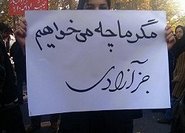


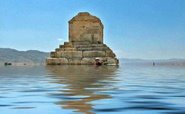



 Tulips in Holland