

12/04/2007
Colleagues' farewell to victims
In pictures: A bridge blown in two
Your view: Has the war damaged Britain's standing?
Con Coughlin: The 'superpower lite' punching above its weight
Cars plunge into the Tigris as bomber hits bridge
British forces have hit back at Iraqi insurgents who killed six colleagues last week, by launching an operation in which they shot dead more than 20 gunmen of Basra's rogue militias.
Details of the assault emerged last night as the bodies of four soldiers killed by a roadside bomb on Thursday were put on flights back to the UK. They arrived at RAF Lyneham in Wiltshire this morning for a repatriation ceremony. The attack began when a battalion-size force was sent into one of the southern city's toughest terrorist strongholds, three miles from where four soldiers, including two women, were blown up in their Warrior armoured vehicle. An armoured force of 400 troops from the 2Bn The Rifles and 2Bn The Duke of Lancaster's Regiment, both of which suffered fatalities last week, entered the Shia Flats area on the western outskirts of Basra to search for hidden weapons. The district is notorious as one of the most dangerous in southern Iraq. "We wanted to make quite clear there's nowhere in Basra we cannot go," a British commander told The Daily Telegraph yesterday. "We are prepared to be there in daylight and take whatever comes our way. We are not being bombed out or intimidated." Initially there was no response as the troops began searching homes where they recovered some small arms. But then the atmosphere changed. "It was all going very well but then there was a sense something bad was about to happen as we noticed children starting to speak into their mobile phones and point at us," the commander said. "At this stage it became clear that the militia was massing for some kind of attack." As the troops took up defensive positions around their Warrior and Bulldog armoured vehicles, Iraqi gunmen carrying AK47 assault rifles and rocket-propelled grenades could be seen scurrying along rooftops and down streets. It is believed ammunition and hundreds of weapons are hidden in the area and brought into the open at short notice when the British appear. Intelligence sources also informed the troops on the ground that Shia terrorists were heading towards them from other parts of the city. The battle began on Tuesday afternoon with numerous rocket-propelled grenades and small arms fire hitting the British positions. The soldiers from the Rifles and Duke of Lancaster's held off the attacks for more than two hours and shot a number of gunmen. There were no British casualties as they gradually fought their way back to their base at Basra Palace. Coalition jets also made low flying passes to intimidate the enemy although they did not drop any bombs. During one skirmish two attackers, who fired grenades at a British position, were chased down and arrested. Both are likely to face charges. Commanders believed that some of the dead might have been behind the ambush of a Warrior in which 2nd Lt Joanna Dyer, a close friend of Prince William at Sandhurst, and three other soldiers were killed. A sniper, possibly from Shia Flats, also killed two other soldiers earlier last week. "This was at a location where we believe those responsible for killing our people were almost certainly recruited from," a military source said. During the battle an Iraqi policeman was shot by one of the militias. He later died. No civilians are believed to have been killed in the fight, the military reported, although it could not rule out innocent casualties caught in the crossfire. "While we may regret that such incidents have to take place, we will not allow militia gunmen to control parts of Basra," said Lt Col Kevin Stratford-Wright, the British military spokesman in southern Iraq. "There are no 'no-go' areas for multi-national forces in Basra. Security is our responsibility and, in conjunction with the Iraqi security forces, we seek to provide as secure an environment as possible. This will inevitably involve taking on the rogue militia who blight the lives of people in Basra." Official estimates put the number of Iraqis hit by British gunfire at 10 but other defence sources said that double that figure had been shot.
IMPERIAL EMBLEM

PERSIA
Iranian Freedom Fighters UNITE
Showing posts with label Military engagment. Show all posts
Showing posts with label Military engagment. Show all posts
Thursday, April 12, 2007
Thursday, March 29, 2007
News Videos
http://www.foxnews.com/video2/player06.html?032807/032807_herridge_iran&FNL&Video%20Shows%20Detained%20British%20Troops&acc&World&-1&News&280&&&exp
Russian Intelligence Sees U.S. Military Buildup on Iran Border
March 27, 2007 RIA Novosti Russian News and Information Agency
MOSCOW -- Russian military intelligence services are reporting a flurry of activity by U.S. Armed Forces near Iran's borders, a high-ranking security source said Tuesday. "The latest military intelligence data point to heightened U.S. military preparations for both an air and ground operation against Iran," the official said, adding that the Pentagon has probably not yet made a final decision as to when an attack will be launched. He said the Pentagon is looking for a way to deliver a strike against Iran "that would enable the Americans to bring the country to its knees at minimal cost." He also said the U.S. Naval presence in the Persian Gulf has for the first time in the past four years reached the level that existed shortly before the invasion of Iraq in March 2003. Col.-Gen. Leonid Ivashov, vice president of the Academy of Geopolitical Sciences, said last week that the Pentagon is planning to deliver a massive air strike on Iran's military infrastructure in the near future. A new U.S. carrier battle group has been dispatched to the Gulf. The USS John C. Stennis, with a crew of 3,200 and around 80 fixed-wing aircraft, including F/A-18 Hornet and Superhornet fighter-bombers, eight support ships and four nuclear submarines are heading for the Gulf, where a similar group led by the USS Dwight D. Eisenhower has been deployed since December 2006. The U.S. is also sending Patriot anti-missile systems to the region.
Posted 28/3/2007 @ 23:36:35 GMTIranian Official Denies Report of British Servicewoman's Early ReleaseRIYADH, Saudi Arabia -- Iran's foreign minister backed off a prediction that a detained British servicewoman could be freed Wednesday or Thursday but said Tehran agreed to allow British officials to meet with 15 sailors and marines in Iranian custody. more By The Associated Press
Posted 28/3/2007 @ 23:31:54 GMTFury as Iran Shows Footage of Captured SailorsIran dramatically raised the stakes in its tense diplomatic stand-off with Britain last night, broadcasting a propaganda video of the British sailors and marines seized last week, including a "confession" that they had entered Iranian waters. more By The Guardian
Posted 28/3/2007 @ 23:26:38 GMTUnacceptable BehaviourWith each day that passes, the crisis triggered by Iran's seizure of 15 British marines and sailors in the Shatt al-Arab waterway on Friday grows. Last night leading seaman Faye Turney was paraded on Iranian television, "admitting" they had trespassed into Iranian waters. The video was heavily edited and there was no way of telling under what duress it had been filmed. The video and the accompanying letter, apologising to the Iranian people, was reminiscent of all the worst Iranian hostage dramas. Earlier, the Iranians promised British officials they would not parade crew members on television, which contravenes the Geneva convention (even if it is only deemed to apply in a state of war) and last night they broke that promise too. more By The Guardian
Posted 28/3/2007 @ 23:13:36 GMTHow Britons Were Conned by Iranian Gunboat TrickThe British sailors and marines being held by Iran were ambushed at their most vulnerable moment, while climbing down the ladder of a merchant ship and trying to get into their bobbing inflatables. Out of sight of their warship and without any helicopter cover, their only link to their commanders was a communications device beaming their position by satellite. more By The Times
Posted 28/3/2007 @ 23:10:8 GMTA Mother On Parade in Iran's Propaganda WarHer blonde hair covered with a black headscarf and puffing on a cigarette, Faye Turney enunciated each word carefully to her unseen interviewer. Her patrol boat had “obviously” trespassed into Iranian waters, she said. But she and her fellow servicemen were being treated well by their “friendly, hospitable, thoughtful and nice” captors. more By The Times
Posted 28/3/2007 @ 17:36:35 GMTIran Shows Video of Captured BritonsIranian state TV showed video Wednesday of the 15 British sailors and marines who were seized last week, including a female captive who wore a white tunic and a black head scarf and said the British boats "had trespassed" in Iranian waters. more By The Associated Press
Posted 28/3/2007 @ 17:16:35 GMTIranian TV Shows Captured SailorsThe British Foreign Office condemned the broadcast of footage on Iranian television showing sailors and marines detained last week as "completely unacceptable". Iranian television showed footage on Wednesday of several British sailors held in Iran and said they were safe and well. more By Northern Territory News
Posted 28/3/2007 @ 16:40:41 GMTIran Foreign Minister Says Iran Will Release Female SailorIran said a female British sailor seized with 14 other crew members would be released Wednesday or Thursday, softening Tehran's position by suggesting their boats' alleged entry into Iranian waters may have been a mistake. more By The Associated Press
Posted 28/3/2007 @ 14:59:20 GMTThe Iran Crisis DeepensPRAGUE, Czech Republic -- We have seen this movie before. One of the West's leading statesmen, and a powerful advocate for human rights, is deliberately humiliated by hostage-seizing Iranian radicals. Moreover, the Iranian radicals believe they can get away with it because they know perfectly well that the Western leaders are constrained by their own moral code to abide, as far as they can, by international law. more By United Press International
Posted 28/3/2007 @ 14:23:46 GMTU.A. Emirates Won't Participate in US Moves Against IranThe president of the United Arab Emirates forbade the US military from using bases in his country to attack or spy on Iran as mammoth US Navy maneuvers in the Gulf entered their second day. Sheik Khalifa bin Zayed Al Nahyan, who leads this key US ally, said Tuesday that the Emirates had assured Iran that it was not siding with Washington in its dispute over Teheran's nuclear program. more By The Associated Press
Posted 28/3/2007 @ 13:50:51 GMTShould Iran Rush into War?MOSCOW -- There are many indications that in the past 12-13 months, Iran has been intentionally escalating the military tensions surrounding its nuclear program. The rhetoric of the Iranian political and military elite has become much tougher; Tehran has been flexing its military muscle over the same issue, and has ostentatiously turned down the IAEA and UN Security Council proposals to return to the negotiating table in order to resolve the problem; and finally, the Iranian Navy captured 15 British sailors before the Security Council adopted its latest resolution on tougher sanctions against Tehran. more By RIA Novosti
Posted 28/3/2007 @ 13:37:22 GMTBritain Freezing Talks With Iran LONDON -- Britain said it was freezing talks on all other issues with Iran until it freed 15 Royal Navy crew members seized last week, and the British military released what it said was proof its boats were within Iraqi territorial waters when they were seized. more By The Associated Press
MOSCOW -- Russian military intelligence services are reporting a flurry of activity by U.S. Armed Forces near Iran's borders, a high-ranking security source said Tuesday. "The latest military intelligence data point to heightened U.S. military preparations for both an air and ground operation against Iran," the official said, adding that the Pentagon has probably not yet made a final decision as to when an attack will be launched. He said the Pentagon is looking for a way to deliver a strike against Iran "that would enable the Americans to bring the country to its knees at minimal cost." He also said the U.S. Naval presence in the Persian Gulf has for the first time in the past four years reached the level that existed shortly before the invasion of Iraq in March 2003. Col.-Gen. Leonid Ivashov, vice president of the Academy of Geopolitical Sciences, said last week that the Pentagon is planning to deliver a massive air strike on Iran's military infrastructure in the near future. A new U.S. carrier battle group has been dispatched to the Gulf. The USS John C. Stennis, with a crew of 3,200 and around 80 fixed-wing aircraft, including F/A-18 Hornet and Superhornet fighter-bombers, eight support ships and four nuclear submarines are heading for the Gulf, where a similar group led by the USS Dwight D. Eisenhower has been deployed since December 2006. The U.S. is also sending Patriot anti-missile systems to the region.
Posted 28/3/2007 @ 23:36:35 GMTIranian Official Denies Report of British Servicewoman's Early ReleaseRIYADH, Saudi Arabia -- Iran's foreign minister backed off a prediction that a detained British servicewoman could be freed Wednesday or Thursday but said Tehran agreed to allow British officials to meet with 15 sailors and marines in Iranian custody. more By The Associated Press
Posted 28/3/2007 @ 23:31:54 GMTFury as Iran Shows Footage of Captured SailorsIran dramatically raised the stakes in its tense diplomatic stand-off with Britain last night, broadcasting a propaganda video of the British sailors and marines seized last week, including a "confession" that they had entered Iranian waters. more By The Guardian
Posted 28/3/2007 @ 23:26:38 GMTUnacceptable BehaviourWith each day that passes, the crisis triggered by Iran's seizure of 15 British marines and sailors in the Shatt al-Arab waterway on Friday grows. Last night leading seaman Faye Turney was paraded on Iranian television, "admitting" they had trespassed into Iranian waters. The video was heavily edited and there was no way of telling under what duress it had been filmed. The video and the accompanying letter, apologising to the Iranian people, was reminiscent of all the worst Iranian hostage dramas. Earlier, the Iranians promised British officials they would not parade crew members on television, which contravenes the Geneva convention (even if it is only deemed to apply in a state of war) and last night they broke that promise too. more By The Guardian
Posted 28/3/2007 @ 23:13:36 GMTHow Britons Were Conned by Iranian Gunboat TrickThe British sailors and marines being held by Iran were ambushed at their most vulnerable moment, while climbing down the ladder of a merchant ship and trying to get into their bobbing inflatables. Out of sight of their warship and without any helicopter cover, their only link to their commanders was a communications device beaming their position by satellite. more By The Times
Posted 28/3/2007 @ 23:10:8 GMTA Mother On Parade in Iran's Propaganda WarHer blonde hair covered with a black headscarf and puffing on a cigarette, Faye Turney enunciated each word carefully to her unseen interviewer. Her patrol boat had “obviously” trespassed into Iranian waters, she said. But she and her fellow servicemen were being treated well by their “friendly, hospitable, thoughtful and nice” captors. more By The Times
Posted 28/3/2007 @ 17:36:35 GMTIran Shows Video of Captured BritonsIranian state TV showed video Wednesday of the 15 British sailors and marines who were seized last week, including a female captive who wore a white tunic and a black head scarf and said the British boats "had trespassed" in Iranian waters. more By The Associated Press
Posted 28/3/2007 @ 17:16:35 GMTIranian TV Shows Captured SailorsThe British Foreign Office condemned the broadcast of footage on Iranian television showing sailors and marines detained last week as "completely unacceptable". Iranian television showed footage on Wednesday of several British sailors held in Iran and said they were safe and well. more By Northern Territory News
Posted 28/3/2007 @ 16:40:41 GMTIran Foreign Minister Says Iran Will Release Female SailorIran said a female British sailor seized with 14 other crew members would be released Wednesday or Thursday, softening Tehran's position by suggesting their boats' alleged entry into Iranian waters may have been a mistake. more By The Associated Press
Posted 28/3/2007 @ 14:59:20 GMTThe Iran Crisis DeepensPRAGUE, Czech Republic -- We have seen this movie before. One of the West's leading statesmen, and a powerful advocate for human rights, is deliberately humiliated by hostage-seizing Iranian radicals. Moreover, the Iranian radicals believe they can get away with it because they know perfectly well that the Western leaders are constrained by their own moral code to abide, as far as they can, by international law. more By United Press International
Posted 28/3/2007 @ 14:23:46 GMTU.A. Emirates Won't Participate in US Moves Against IranThe president of the United Arab Emirates forbade the US military from using bases in his country to attack or spy on Iran as mammoth US Navy maneuvers in the Gulf entered their second day. Sheik Khalifa bin Zayed Al Nahyan, who leads this key US ally, said Tuesday that the Emirates had assured Iran that it was not siding with Washington in its dispute over Teheran's nuclear program. more By The Associated Press
Posted 28/3/2007 @ 13:50:51 GMTShould Iran Rush into War?MOSCOW -- There are many indications that in the past 12-13 months, Iran has been intentionally escalating the military tensions surrounding its nuclear program. The rhetoric of the Iranian political and military elite has become much tougher; Tehran has been flexing its military muscle over the same issue, and has ostentatiously turned down the IAEA and UN Security Council proposals to return to the negotiating table in order to resolve the problem; and finally, the Iranian Navy captured 15 British sailors before the Security Council adopted its latest resolution on tougher sanctions against Tehran. more By RIA Novosti
Posted 28/3/2007 @ 13:37:22 GMTBritain Freezing Talks With Iran LONDON -- Britain said it was freezing talks on all other issues with Iran until it freed 15 Royal Navy crew members seized last week, and the British military released what it said was proof its boats were within Iraqi territorial waters when they were seized. more By The Associated Press
Sunday, February 18, 2007
WHO IS KEEPING THE AMERICANS IN IRAQ?
Ironically, Iran's long-term position could weaken when the United States draws down its forces. At first, the U.S. withdrawal will expand the power vacuum and Iran will try to fill it, but the limited chaos Iran foments can easily become uncontrolled. Iran's economic and military power is limited, and Iran's theocratic model of governance has little appeal for most Iraqis. Even many Shiite militants have at times been hostile to Iran, and respected moderates such as Grand Ayatollah Ali Sistani are careful to maintain their distance from Tehran. Sunnis already rage against perceived Iranian dominance.
http://www.washingtonpost.com/wp-dyn/content/article/2007/02/16/AR2007021601708.html?nav=rss_print/outlook
http://www.washingtonpost.com/wp-dyn/content/article/2007/02/16/AR2007021601708.html?nav=rss_print/outlook
Thursday, February 15, 2007
How the west can avert war with Iran
By Reuel Marc Gerecht and Gary Schmitt
Do the Europeans really want to prevent a war between the US or Israel and Iran? If they had to choose between curtailing trade with the Islamic republic, or seeing either America or Israel preventatively strike Iran’s nuclear facilities, which would London, Paris and Berlin prefer? These are not unfair questions: at no time since the European Union started the “EU3” negotiations with Iran’s clerical regime in 2004 have the Europeans probably had more leverage over Tehran’s actions. At no time since 2002, when it became clear that the mullahs were conducting a clandestine nuclear research programme, has there been a more critical moment for determining which path – diplomatic or military – the US and Israel will choose to try to stop Iran’s pursuit of the bomb.
Washington and Jerusalem clearly have no desire to attack Iran. But if the Europeans close down the option of boosting the soft-power of sanctions, the odds on military strikes will increase significantly. Most in Europe’s political elite may well agree with President Jacques Chirac of France when he recently revealed he had no problem with Iran having “one or two” nuclear weapons. Embracing the theory of deterrence, Mr Chirac apparently envisioned the Israelis or the Americans threatening annihilation of Iran as a means of escaping from the international contretemps provoked by the mullahs’ nuclear aspirations. The European hope is that the Americans and the Israelis will realise that an attack on Iran’s nuclear sites is unthinkable.
But what if the Americans or the Israelis do not see it that way? George W. Bush and many other Americans are not convinced that the theory of deterrence is either a moral or effective idea when used against a terrorist-supporting state. Is the US going to slaughter hundreds of thousands – even millions – of Iranians for an unclaimed nuclear terrorist strike? If Tehran launched a conventional terrorist attack on a US facility – such as the one it is strongly suspected of having masterminded on the Khobar Towers complex in Saudi Arabia in 1996 – would not Washington be even less likely to respond, knowing the other side has the bomb?
We know that Iran’s leaders allowed members of al-Qaeda to pass through their territory after al-Qaeda had successfully displayed its penchant for slaughtering Americans. Even after the anti-Semitic tirades of Mr Ahmadi-Nejad, which echo the “bye-bye-Israel” nuclear bravado of former president Ali Akbar Hashemi Rafsanjani, the Europeans remain surreally casual about how a nuclear Iran could effectively intimidate Israel – politically, spiritually and economically. Both Americans and Israelis reflect seriously on the awful prospect of ideologically volatile Sunni Arab dictatorships obtaining their own nuclear weapons to counter Shia Iran’s bomb-enhanced ambitions.
Within Iran, is the clerical regime likely to reform, or become more paranoid, as internal dissent mounts? The permanently dysfunctional nature of the Islamic republic – the tension between theocracy and democracy and the corrupt, impoverishing statist economic structure guarantee the continuing insecurity of the regime and hence, in part, its willingness to use violence internally and externally. Since the death of Ayatollah Ruhollah Khomeini in 1989, Iranian society has been shearing away from its clerical overlords, who see themselves as the vanguard of the Iranian nation and the Muslim world. This process will continue and, with it, the anti-American and anti-Israeli animosity of the regime.
In 2003 when the British, French and Germans feared that Mr Bush might attack another “axis of evil” member, European nuclear negotiations with Tehran began in earnest. One of the most serious diplomatic undertakings in the EU’s history, the EU3 process signalled to the Iranians, as well as to all EU members and the US, that Europe would use both carrots and sticks to persuade the mullahs to cease their uranium enrichment activities. In the intervening four years, the EU3 has dangled various inducements before Tehran to no avail. Proceeding with tougher sanctions is a real opportunity for transatlantic relations; conversely, failure to do so will only signal how great remains the divide in relations.
Timing in a poker game is critical: if you do not know when to raise, you always lose. There are signs of serious political and economic turbulence inside the Islamic republic’s autocratic, socialist system. Iran’s rulers have now seen the Americans deploy a new battle group to the Persian Gulf, implement more aggressive rules to counter Iranian meddling in Iraq, interrupt the cash-flow of Iranian banks overseas (with some European participation), and watched the Americans and Europeans move forward with a sanctions regime at the United Nations. It is no coincidence that the internal Iranian discussion about Mr Ahmadi-Nejad’s competence and the “nuclear energy” programme has heated up. The effect inside Iran of EU-imposed sanctions could be considerable, given the fragility of the Iranian economy and concerns among Iranians about the possible cascading effect of sanctions. Poker may well have been invented in Iran, but it came to the Americans via the Europeans. Do the Europeans still know how to play?
The writers are scholars at the American Enterprise Institute
Do the Europeans really want to prevent a war between the US or Israel and Iran? If they had to choose between curtailing trade with the Islamic republic, or seeing either America or Israel preventatively strike Iran’s nuclear facilities, which would London, Paris and Berlin prefer? These are not unfair questions: at no time since the European Union started the “EU3” negotiations with Iran’s clerical regime in 2004 have the Europeans probably had more leverage over Tehran’s actions. At no time since 2002, when it became clear that the mullahs were conducting a clandestine nuclear research programme, has there been a more critical moment for determining which path – diplomatic or military – the US and Israel will choose to try to stop Iran’s pursuit of the bomb.
Washington and Jerusalem clearly have no desire to attack Iran. But if the Europeans close down the option of boosting the soft-power of sanctions, the odds on military strikes will increase significantly. Most in Europe’s political elite may well agree with President Jacques Chirac of France when he recently revealed he had no problem with Iran having “one or two” nuclear weapons. Embracing the theory of deterrence, Mr Chirac apparently envisioned the Israelis or the Americans threatening annihilation of Iran as a means of escaping from the international contretemps provoked by the mullahs’ nuclear aspirations. The European hope is that the Americans and the Israelis will realise that an attack on Iran’s nuclear sites is unthinkable.
But what if the Americans or the Israelis do not see it that way? George W. Bush and many other Americans are not convinced that the theory of deterrence is either a moral or effective idea when used against a terrorist-supporting state. Is the US going to slaughter hundreds of thousands – even millions – of Iranians for an unclaimed nuclear terrorist strike? If Tehran launched a conventional terrorist attack on a US facility – such as the one it is strongly suspected of having masterminded on the Khobar Towers complex in Saudi Arabia in 1996 – would not Washington be even less likely to respond, knowing the other side has the bomb?
We know that Iran’s leaders allowed members of al-Qaeda to pass through their territory after al-Qaeda had successfully displayed its penchant for slaughtering Americans. Even after the anti-Semitic tirades of Mr Ahmadi-Nejad, which echo the “bye-bye-Israel” nuclear bravado of former president Ali Akbar Hashemi Rafsanjani, the Europeans remain surreally casual about how a nuclear Iran could effectively intimidate Israel – politically, spiritually and economically. Both Americans and Israelis reflect seriously on the awful prospect of ideologically volatile Sunni Arab dictatorships obtaining their own nuclear weapons to counter Shia Iran’s bomb-enhanced ambitions.
Within Iran, is the clerical regime likely to reform, or become more paranoid, as internal dissent mounts? The permanently dysfunctional nature of the Islamic republic – the tension between theocracy and democracy and the corrupt, impoverishing statist economic structure guarantee the continuing insecurity of the regime and hence, in part, its willingness to use violence internally and externally. Since the death of Ayatollah Ruhollah Khomeini in 1989, Iranian society has been shearing away from its clerical overlords, who see themselves as the vanguard of the Iranian nation and the Muslim world. This process will continue and, with it, the anti-American and anti-Israeli animosity of the regime.
In 2003 when the British, French and Germans feared that Mr Bush might attack another “axis of evil” member, European nuclear negotiations with Tehran began in earnest. One of the most serious diplomatic undertakings in the EU’s history, the EU3 process signalled to the Iranians, as well as to all EU members and the US, that Europe would use both carrots and sticks to persuade the mullahs to cease their uranium enrichment activities. In the intervening four years, the EU3 has dangled various inducements before Tehran to no avail. Proceeding with tougher sanctions is a real opportunity for transatlantic relations; conversely, failure to do so will only signal how great remains the divide in relations.
Timing in a poker game is critical: if you do not know when to raise, you always lose. There are signs of serious political and economic turbulence inside the Islamic republic’s autocratic, socialist system. Iran’s rulers have now seen the Americans deploy a new battle group to the Persian Gulf, implement more aggressive rules to counter Iranian meddling in Iraq, interrupt the cash-flow of Iranian banks overseas (with some European participation), and watched the Americans and Europeans move forward with a sanctions regime at the United Nations. It is no coincidence that the internal Iranian discussion about Mr Ahmadi-Nejad’s competence and the “nuclear energy” programme has heated up. The effect inside Iran of EU-imposed sanctions could be considerable, given the fragility of the Iranian economy and concerns among Iranians about the possible cascading effect of sanctions. Poker may well have been invented in Iran, but it came to the Americans via the Europeans. Do the Europeans still know how to play?
The writers are scholars at the American Enterprise Institute
0
comments

 Labels:
Ahmadinejad,
Bomb,
EU,
Iran,
Islamic Republic,
Khamanei,
Military engagment,
Missile,
Nuclear,
Persian Gulf,
Petrol,
Qods,
Rafsanjani,
SANCTIONS,
US,
US ARMY,
Us pressure,
War
Labels:
Ahmadinejad,
Bomb,
EU,
Iran,
Islamic Republic,
Khamanei,
Military engagment,
Missile,
Nuclear,
Persian Gulf,
Petrol,
Qods,
Rafsanjani,
SANCTIONS,
US,
US ARMY,
Us pressure,
War
 Labels:
Ahmadinejad,
Bomb,
EU,
Iran,
Islamic Republic,
Khamanei,
Military engagment,
Missile,
Nuclear,
Persian Gulf,
Petrol,
Qods,
Rafsanjani,
SANCTIONS,
US,
US ARMY,
Us pressure,
War
Labels:
Ahmadinejad,
Bomb,
EU,
Iran,
Islamic Republic,
Khamanei,
Military engagment,
Missile,
Nuclear,
Persian Gulf,
Petrol,
Qods,
Rafsanjani,
SANCTIONS,
US,
US ARMY,
Us pressure,
War
Wednesday, February 14, 2007
PRESS RELEASE BY JONDOLAH REGARDING THE BUS EXPLOSION IN ZAHEDAN
The latest news
2007 Friday 16 February
اطلاعیه جنبش مقاومت مردمی ایران (جندالله )
به نام خداجنبش مقاومت مردمی ایران (جندالله ) بیانیه تفرقه انگیز حسنعلی نوری فرماندار رژیم در زاهدان مبنی بر ادعای اینکه مسلم کیخا شهید عقیده ، اصالت و مردانگی سیستانی و شیعه است را به شدت محکوم می کند.
اینگونه بیانات اقدامی در راستای تفرقه اندازی بین مردم شیعه و سنی ، فارس و بلوچ می باشد و این نوع حرکات در راستای ضرب المثل مشهور تفرقه بینداز و حکومت کن می باشد .
همچنین جنبش مقاومت مردمی باری دیگر تاکید می کند که هیچ یک از دلاوران مبارز دستگیر نشده و ادعاهای پوچ و بی اساس رژیم آخوندی را تکذیب می کند.
از آنجا که رژیم می خواهد بر ضعف خود سر پوش نهاده و وانمود کند که بسیار مقتدر است فورا اعلام کرد که ما عوامل اصلی این عملیات را دستگیر کرده ایم و نیز مسئولیت ضعف خود را بر دوش دیگر کشورها نظیر پاکستان انداخت .
کسانی که دستگیر شده اند از اقوام و خویشاوندان مبارزان هستند که هیچ گونه همکاری با جنبش نداشته اند و رژیم از این ترفند برای فشار بر مبارزین استفاده می نماید و در مورد آنچه که رژیم ادعا می کند که سلاح ها و مهماتی کشف نموده ، جنبش این نکته را تایید می کند ولی در خانه ای که این مهمات قرار داشته اند فردی حضور نداشته و کسی دستگیر نشده است .
ادعای رژیم مبنی بر کشف اسنادی در ارتباط رابطه جنبش با سرویس های اطلاعاتی امریکا و انگلیس کذب محض بوده و مضحکه می باشد و دال بر بی عقلی ، جهالت و نادانی مسئولان جاهل و نادان رژیم می باشد .
اولا : اگر ارتباطی با سرویس های اطلاعاتی می باشد این وظیفه شبکه اطلاعاتی و کادر سیاسی است نه شاخه نظامی .
ثانیا : بر اساس آموزشهای چریکی اسنادی نه اینچنین مهم بلکه اسناد معمولی را نباید در منطقه عملیاتی نگاه داشت .
ثالثا : جنبش هیچ نیازی برای برقراری ارتباط با سرویس های اطلاتی ندارد و باید برای عقل و خرد این سرمداران رژیم عزای عمومی اعلام کرد ( بر این عقل و خرد بباید گریست ).
و در آخر جنبش مقاومت مردمی شدیدا به تمامی سردمداران رژیم و مزدورانش در منطقه هشدار می دهد که جواب تمام این توطئه ها و تبلیغات دروغین ، دستگیری و شکنجه جوانان بیگناه و به پای تلویزیون کشیدن آنها و وادار نمودنشان به اعتراف به جرمهای ناکرده را در اسرع وقت آنچنان زیبا و خوب خواهد گرفت تا باشد عبرتی برای بی خردان زیرا که خردمندان تا به حال می بایست عبرت می گرفتند .
و ان شاء الله به حول و قوه الهی حیات خلوت دشمنان مردم ایران را در پایتخت کشور که آزادانه و با امنیت تردد می کنند تبدیل به جهنمی خواهیم کرد تا همه مستکبران عالم بدانند که قهر و خشم یک ملت با سرکوب خاموش نخواهد شد.
طی این اطلاعیه فرماندهی نظامی جنبش مقاومت مردمی به شرافت خود قسم یاد می کند که اگر جوانان بیگناه تا چند روز دیگر آزاد نشوند درسی به یاد ماندنی به رژیم خواهیم داد و تمام استراتژیها و دکترینهای ضد حکومتی را اختیار خواهیم نمود.جنبش مقاومت مردمی ایران
انفجار زاهدان: اطلاعیه جدید جنبش مقاومت مردمی ایران (جندالله)
بنام خدا
جنبش مقاومت مردمی ایران (جندالله ) عملیات موفقیت آمیز چهارشنبه ۲۵ بهمن ماه ۱۳۸۵ دلاوران مبارز شاخه نظامی شهید احمد دهمرده را به عموم مردم ستمدیده بلوچستان و ایران تبریک عرض مینماید و همچنین این مژده را به مردم عزیز میدهد که رشته عملیاتهای اقتدار ۲ با موفقیت کامل به پایان رسید و به زودی رشته عملیاتهای اقتدار ۳ در ابعادی وسیعتر در سایر نقاط و مراکز حساس نظامی ایران به اجرا در خواهد آمد. موفقیت و پیروزی مبارزان در عملیاتهای متعدد مرهون خون مبارزان شهید و مردم بیگناهی که در زندانها و دادگاههای دژخیمانی همجون نکونام ها و بدون داشتن وکیل و اثبات جرمی به اعدام محکوم گشتند می باشد.
جنبش مقاومت به اطلاع مردم می رساند که اخبار مربوط به دستگیری مبارزین دروغ محض بوده و رژیم از روی ضعف و زبونی خویش در برابر مبارزین اینچنین شایعاتی را انتشار میدهد. طی این اطلاعیه فرمانده امیر عبدالمالک بلوچ رهبری جنبش مقاومت مردمی از اپوزیسیون خواستند که ندای حق خواهی مردم مظلوم ما را بیش از پیش به گوش هموطنان و جهانیان برسانند تا همگان بدانند که بر ما چه میگذرد. در ادامه ایشان افزودند که جنبش مقاومت مردمی به روشهای مسالت آمیز و مقاومت منفی و پرهیز از خشونت اعتقاد دارد تا زمانی که طرف مقابل نیز به این روشها احترام بگذارد اما هنگامیکه به اعتراضات مسالمت آمیز مردمی با خشونت پاسخ داده میشود دیگر این روشها ناکارآمد شده و توسل به این روشها پایان می پذیرد و در این مرحله است که چاره ای جر دست به سلاح بردن وجود ندارد. ما عدم خشونت را به عنوان یک استراتژی قبول داریم نه به عنوان یک اصل کلی و اساسی و اخلاقی . بنابراین استفاده از یک روش بی اثر هیچ پاداش اخلاقی ندارد و ما باری دیگر قبل از آغاز رشته عملیاتهای اقتدار ۳ رژیم را به فراهم نمودن زمینه برای راههای مقاومت منفی و اعتراضات دموکراتیک دعوت می نماییم و اگر رژیم از امروز این زمینه را فراهم نماید ما در انظار مردم ایران و حهان اعلام میکنیم که سلاح را بر زمین میگذاریم و در صورتیکه رژیم این زمینه را مهیا نکند ما نیز چاره ای به جز سلاح نداریم زیرا در کشوری که فضای خفگان بر آن حاکم باشد هیچ راهی برای زنده ماندن جز مقاومت مسلحانه نخواهد بود. جنبش ما هیچ گونه وابستگی با قاچاق مواد مخدر ، طالبان و القاعده نداشته و ندارد و اگر رژیم خود را صادق میداند چرا به نمایندگانی که از طرفش نزد ما می آیند اجازه نمی دهد تا حقایق را در رسانه های اظهار نمایند. خواسته های ما منطقی است و حقوقی است که همه انسانها در سراسر دنیا از آن برخوردارند و اولین خواسته ما این است که رژیم به منشور حقوق بشر سازمان ملل متحد احترام گذاشته و مطابق با آن ما حقوق اقلیتهای ملی و مذهبی را به رسمیت بشناسد . جنبش مقاومت مردمی ایران (جندالله )
0
comments
Labels:
Bomb,
Concern in Iran,
FORCES,
Freedom,
insurgents,
Jondolah,
Middle East,
Military engagment,
Pakistan,
Pasdars,
Sunni
Labels:
Bomb,
Concern in Iran,
FORCES,
Freedom,
insurgents,
Jondolah,
Middle East,
Military engagment,
Pakistan,
Pasdars,
Sunni
Office Of Mohammad Khatami Raided, WHO IS LAUGHING NOW.
NOW ITS HIS TURN TO TEAST A BIT OF HIS OWN MEDICEN

The office of former reformist president of Iran Hojjatoleslam Mohammad Khatami has been “raided” overnight by unidentified people who have taken away all the computers, documents, fax machines and other equipments at the “Baran” and the International Centre for Dialogue among Cultures and Civilisations, it was reported on Monday 12 February 2007. “When employees at Baran (Foundation for Freedom, Development and Progress of Iran and the International Institute for Dialogue Between Cultures and Civilizations entered their offices on Monday morning, they found out that the floor is littered with papers, all computers, fax machines, scanners and other equipments and documents are missing”, a spokesman for Baran reported, adding that “obviously, the doors of the offices were broken”. Founded by Mr. Khatami, both Baran and the Centre for Dialogue are NOG’s promoting understanding and discussions between representatives of different cultures, religions and civilizations. Iranian independent and reformist media, including the semi independent students news agency or the daily E’temad Melli briefly reported the incident, adding that the Police is “looking in the incident”, no other media in Iran mentioned the burglary. Although other people close to Mr. Khatami have been subject this kind of “theft”, like Hojjatoleslam Mohammad Ali Abtahi, his outspoken deputy who’s portable telephone was taken away or Abdollah Ramezanzadeh, the official spokesman of his Government, whom the computer had disappeared, but this is the first time that his own office has been “visited” by burglars. “No doubt that the work is very professional. But professional thieves do not break doors for the fear of possible human presence. And why professional burglars would be interested in probably old computers, fax or scanners machines or documents with no value for them? If you can answer this question then you probably would find out who hired them”, one former security officer told Iran Press Service. In recent months, Mr. Khatami had joined his predecessor, Ayatollah Ali Akbar Hashemi Rafsanjani to oppose the antagonistic policies of the fanatic and belligerent President Mahmoud Ahmadi Nezhad, whom is accused by a large segment of Iranian leadership of having placed Iran in the grip of the United Nations Security Council, which decided economic and diplomatic sanctions against Tehran last December. As the battle raged between the so-called “pragmatists” with the hard liners of the regime, several moderate and reformist personalities and publications have been subject to this kind of burglaries, which, most analysts believe could be ordered by the office of the President, since, so far, no investigations had been launched by the competent administrations and no one has ever been arrested.
The office of former reformist president of Iran Hojjatoleslam Mohammad Khatami has been “raided” overnight by unidentified people who have taken away all the computers, documents, fax machines and other equipments at the “Baran” and the International Centre for Dialogue among Cultures and Civilisations, it was reported on Monday 12 February 2007. “When employees at Baran (Foundation for Freedom, Development and Progress of Iran and the International Institute for Dialogue Between Cultures and Civilizations entered their offices on Monday morning, they found out that the floor is littered with papers, all computers, fax machines, scanners and other equipments and documents are missing”, a spokesman for Baran reported, adding that “obviously, the doors of the offices were broken”. Founded by Mr. Khatami, both Baran and the Centre for Dialogue are NOG’s promoting understanding and discussions between representatives of different cultures, religions and civilizations. Iranian independent and reformist media, including the semi independent students news agency or the daily E’temad Melli briefly reported the incident, adding that the Police is “looking in the incident”, no other media in Iran mentioned the burglary. Although other people close to Mr. Khatami have been subject this kind of “theft”, like Hojjatoleslam Mohammad Ali Abtahi, his outspoken deputy who’s portable telephone was taken away or Abdollah Ramezanzadeh, the official spokesman of his Government, whom the computer had disappeared, but this is the first time that his own office has been “visited” by burglars. “No doubt that the work is very professional. But professional thieves do not break doors for the fear of possible human presence. And why professional burglars would be interested in probably old computers, fax or scanners machines or documents with no value for them? If you can answer this question then you probably would find out who hired them”, one former security officer told Iran Press Service. In recent months, Mr. Khatami had joined his predecessor, Ayatollah Ali Akbar Hashemi Rafsanjani to oppose the antagonistic policies of the fanatic and belligerent President Mahmoud Ahmadi Nezhad, whom is accused by a large segment of Iranian leadership of having placed Iran in the grip of the United Nations Security Council, which decided economic and diplomatic sanctions against Tehran last December. As the battle raged between the so-called “pragmatists” with the hard liners of the regime, several moderate and reformist personalities and publications have been subject to this kind of burglaries, which, most analysts believe could be ordered by the office of the President, since, so far, no investigations had been launched by the competent administrations and no one has ever been arrested.
0
comments
Labels:
Concern in Iran,
Criminal,
Iran,
IRI,
Khatami,
Military engagment,
Political coalition,
represion,
Shia,
Spys,
Sunni
Labels:
Concern in Iran,
Criminal,
Iran,
IRI,
Khatami,
Military engagment,
Political coalition,
represion,
Shia,
Spys,
Sunni
Tuesday, February 13, 2007
GOOD MORNING AMERICA AND WATCH OUT DEMOCRATS
Its wishful thinking to hope that Iran’s ayatollahs would commit to more constructive policies in the region. This is against all that the Islamic Republic has written, preached, or practiced world-wide for 27 years.
The Message to the Americans : The U.S. needs to get one very important thing right on Iran. By Farhad Mansourian .
In the February 1, 2007, issue of the Iranian journal Sobheh Sadegh, Reza Zaker, the head of Iranian president Mahmoud Ahmadinejad’s Strategic Research Institute, states that “kidnapping American soldiers in Iraq, Afghanistan, Central Asia, Pakistan, India, Africa, Latin America, and even Europe and transferring them to safe houses is even easier than ordering a container full of Chinese junk.” The article continues, “We can open our purse just a little and witness the capture of a long line of blue eyed and blonde officers trapped by hungry fighters who are simply waiting for our direction.” Meanwhile, Hassan Kazami Qumi, Iran’s ambassador in Iraq, brags to the New York Times that Iran is going to “greatly expand...economic and military ties with Iraq.” In the Gaza Strip, Fatah says its arrested seven Iranian military “trainers.”The Islamic Republic is no status quo power. The Iranian government is expanding its operations into Afghanistan, Gaza, Sudan, Ethiopia, Somalia, and elsewhere.


With the partisan shift in Congress, pressure on the Bush administration to begin negotiations with Iran is mounting. In the February 8 Washington Post, two Iranian-American scholars argued that the U.S. should begin unconditional negotiations with Tehran. They spoke of the Iranian government’s factions, but did not mention that all Iranian politicians, regardless of faction, are subject to the dictates of the Supreme Leader.
Under today’s conditions it will be very difficult, if not impossible, for Iran and the U.S. to find a diplomatic solution to their ever-increasing conflict. Faced with strategic stalemate, we can break it only by changing the strategy itself.
It is imperative that the U.S. government achieve unity on Iran policy.
The issue of the Islamic Republic of Iran is not a partisan one, but rather an American one. Democrats need to know that as suggested by Baker-Hamilton report “the need to unconditionally engage Iran in the hope that Iran’s ayatollahs would commit to more constructive policies in the region” is simply not in line with what the Islamic Republic has written, preached, or practiced worldwide for 27 years. If the ayatollahs sense that all they have to do is keep the Middle East in chaos until the Democrats take control of the White House, then American and world security will continue to be gravely compromised. Democrats must be reminded that if they win the White House, they would also inherit this mess.
The Bush administration needs to strengthen its message to the Iranian people and their Islamic regime. They need to clearly understand that, as Under Secretary of State Nicholas Burns said, the Iranian government “have to understand that there are consequences to their actions.” The Iranian people must be reminded and the White House and Congress must affirm that if it has to pursue dialogue, it does not mean abandoning the freedom-aspiring Iranian people.
The dialogue must have both moral clarity and purpose.
The Bush administration and Congress should commit to aiding internal Iranian efforts that strive to bring about democratic regime change from within.
Only through these efforts will we, as Americans, be safe from this peril that the Islamic Republic has become.— Farhad Mansourian is a research fellow at the Center For Promotion of Democracy & Human Rights.
The Message to the Americans : The U.S. needs to get one very important thing right on Iran. By Farhad Mansourian .
In the February 1, 2007, issue of the Iranian journal Sobheh Sadegh, Reza Zaker, the head of Iranian president Mahmoud Ahmadinejad’s Strategic Research Institute, states that “kidnapping American soldiers in Iraq, Afghanistan, Central Asia, Pakistan, India, Africa, Latin America, and even Europe and transferring them to safe houses is even easier than ordering a container full of Chinese junk.” The article continues, “We can open our purse just a little and witness the capture of a long line of blue eyed and blonde officers trapped by hungry fighters who are simply waiting for our direction.” Meanwhile, Hassan Kazami Qumi, Iran’s ambassador in Iraq, brags to the New York Times that Iran is going to “greatly expand...economic and military ties with Iraq.” In the Gaza Strip, Fatah says its arrested seven Iranian military “trainers.”The Islamic Republic is no status quo power. The Iranian government is expanding its operations into Afghanistan, Gaza, Sudan, Ethiopia, Somalia, and elsewhere.
With the partisan shift in Congress, pressure on the Bush administration to begin negotiations with Iran is mounting. In the February 8 Washington Post, two Iranian-American scholars argued that the U.S. should begin unconditional negotiations with Tehran. They spoke of the Iranian government’s factions, but did not mention that all Iranian politicians, regardless of faction, are subject to the dictates of the Supreme Leader.
Under today’s conditions it will be very difficult, if not impossible, for Iran and the U.S. to find a diplomatic solution to their ever-increasing conflict. Faced with strategic stalemate, we can break it only by changing the strategy itself.
It is imperative that the U.S. government achieve unity on Iran policy.
The issue of the Islamic Republic of Iran is not a partisan one, but rather an American one. Democrats need to know that as suggested by Baker-Hamilton report “the need to unconditionally engage Iran in the hope that Iran’s ayatollahs would commit to more constructive policies in the region” is simply not in line with what the Islamic Republic has written, preached, or practiced worldwide for 27 years. If the ayatollahs sense that all they have to do is keep the Middle East in chaos until the Democrats take control of the White House, then American and world security will continue to be gravely compromised. Democrats must be reminded that if they win the White House, they would also inherit this mess.
The Bush administration needs to strengthen its message to the Iranian people and their Islamic regime. They need to clearly understand that, as Under Secretary of State Nicholas Burns said, the Iranian government “have to understand that there are consequences to their actions.” The Iranian people must be reminded and the White House and Congress must affirm that if it has to pursue dialogue, it does not mean abandoning the freedom-aspiring Iranian people.
The dialogue must have both moral clarity and purpose.
The Bush administration and Congress should commit to aiding internal Iranian efforts that strive to bring about democratic regime change from within.
Only through these efforts will we, as Americans, be safe from this peril that the Islamic Republic has become.— Farhad Mansourian is a research fellow at the Center For Promotion of Democracy & Human Rights.
Monday, February 12, 2007
IF YOU DO NOTHING ELSE TONIGHT WATCH THIS VIDEO
Iran in Iraq
U.S. outlines its evidence of Iranian meddling in Iraq. CNN's Michael Ware reports. (February 11)
http://edition.cnn.com/video/player/player.html?url=/video/world/2007/02/11/ware.iraq.iran.weapons.cnn&source=money&wm=11
U.S. outlines its evidence of Iranian meddling in Iraq. CNN's Michael Ware reports. (February 11)
http://edition.cnn.com/video/player/player.html?url=/video/world/2007/02/11/ware.iraq.iran.weapons.cnn&source=money&wm=11
0
comments
Labels:
Ahmadinejad,
Ghods,
hezbolah,
Iran,
Iranian Missile,
Khamanei,
Military engagment,
Shia,
Sunni,
US,
US ARMY,
US.,
War
Labels:
Ahmadinejad,
Ghods,
hezbolah,
Iran,
Iranian Missile,
Khamanei,
Military engagment,
Shia,
Sunni,
US,
US ARMY,
US.,
War
U.S. Troops In Iraq Are Short of 4,000 Humvee Armor Kits
The Army is working to fill a shortfall in Iraq of thousands of advanced Humvee armor kits designed to reduce U.S. troop deaths from roadside bombs - including a rising threat from particularly lethal weapons linked to Iran and known as "explosively formed penetrators" (EFP) - that are now inflicting 70 percent of the American casualties in the country, according to U.S. military and civilian officials.The additional protection is needed for thousands of U.S. reinforcement troops flowing into Baghdad, where these devastating weapons - used primarily by Shiite fighters - are particularly prevalent, said the officials.
U.S. Army units in Iraq and Afghanistan lack more than 4,000 of the latest Humvee armor kit, known as FRAG Kit 5, according to U.S. officials. The Army has ramped up production of the armor, giving priority to troops in Baghdad, but the upgrade is not scheduled to be completed until this summer, Army officials said. That is well into the timeline for major operations launched last week to quell violence by Sunni insurgents and Shiite militias, which the U.S. military now views as the top security threat in Iraq."Those who need FRAG Kit 5 are receiving FRAG Kit 5 based upon theater requirements and priorities," said Army Brig. Gen. Charles Anderson, director of force development for the Army deputy chief of staff.

The Army is supplying the life-saving kits "as quickly as we can," he said in an interview and in written responses. "Kits are being flown to theater."The Army declined to disclose details on the number of kits installed and where the shortages exist.The Army began the Iraq war with an estimated $56 billion equipment shortage and has struggled to keep up with demands for new armor to protect against increasingly deadly bombs. In the case of FRAG Kit 5, the Army quickly produced a bolt-on version in limited quantities, while the permanent version has taken longer than expected to develop, test, produce and install. Meanwhile, the unexpected deployment of five additional Army brigades into Baghdad has created an urgent need for 2,000 Humvees with the new armor.Shiite forces in recent months have stepped up their targeting of U.S. soldiers in Baghdad with sophisticated EFPs, described by one official as like "a spear that rips right through the vehicle".The penetrator, a heavy, metal projectile, is propelled by an explosive and strikes with enough speed and power to shatter the relatively brittle, "high hard" steel of up-armored Humvees, creating what experts call "behind armor debris (BAD)" - essentially, turning pieces of the vehicle into shrapnel. The new armor kit is designed with more flexible materials that slow down the projectile and contain the debris, limiting the damage to that caused directly by the EFP.However, there is no guarantee that even the latest armor - which reinforces the doors - can prevent deaths from EFPs, defense officials have emphasized, and U.S. troops in Humvees outfitted with the new kit have been killed by EFPs.The Pentagon does not release overall data on EFP strikes or their effectiveness, to prevent such information from being exploited by attackers. But reports from the military and family members on specific attacks indicate that since November, at least 11 U.S. soldiers and an interpreter have died in EFP strikes, all but one of them in Baghdad."In November, there was all of a sudden a ridiculous surge in EFP activity. People were getting killed left and right," said one military officer who served recently in Iraq. While other roadside bombs often cause no casualties, EFPs "make everyone nervous," he said. "It's a catastrophic weapon."Senior U.S military officials in Baghdad held a briefing yesterday in which they presented evidence of apparent Iranian involvement in supplying EFP technology and components to fighters in Iraq.The total number of roadside bombs laid in Iraq doubled in the past year, Marine Gen. Peter Pace, chairman of the Joint Chiefs of Staff, testified before Congress last week."You add that, then, to the new explosively formed projectiles, which are a much more deadly form that are coming into Iraq from Iran, and the combination has maintained the level of casualties," Pace said, despite advances in U.S. protective gear, tactics and targeting of bomb networks. Pace recently said two Iranians had been detained in raids on the networks.EFP attacks are a small percentage of the roughly 1,200 attacks against U.S. forces each month involving roadside bombs, according to the Pentagon's Joint IED Defeat Organization. About half the roadside bombs in Iraq are found and disabled, and only 20 percent cause U.S. casualties. But EFPs "are far more lethal," Defense Secretary Robert M. Gates said recently, adding, "They can take out an Abrams tank."U.S. commanders have voiced frustration recently at the ability of enemy fighters in Iraq to change tactics to defeat U.S. protective gear. "Equipment that was, we thought, pretty effective in protecting our troops just a matter of months ago is now being in fact challenged by some of the techniques and devices over there," Adm. William J. Fallon, the new U.S. commander for the Middle East, said last month.Fewer than half the Army's roughly 14,500 up-armored Humvees in Iraq and Afghanistan have been outfitted with the bolt-on version of FRAG Kit 5. Thousands of the permanent kits have been flown to Iraq and are being installed at 11 locations around the country, officials said. Over the next six months, the Army plans to produce 5,000 more Humvees with the permanent kits already installed, said Anderson.Overall, Army equipment backlogs had grown so severe, Anderson said, such a troop increase would not have been possible last year. He said the Army is in a far better position now, thanks to an infusion of $17 billion last year to replace and repair equipment.Still, Pace said last week that U.S. troops will face a gap of up-armored Humvees and other armored vehicles that will not be closed until July, and according to the Pentagon, commanders will be required to share 500 up-armored vehicles. But the Army said it is not short of up-armored Humvees in Iraq.
U.S. Army units in Iraq and Afghanistan lack more than 4,000 of the latest Humvee armor kit, known as FRAG Kit 5, according to U.S. officials. The Army has ramped up production of the armor, giving priority to troops in Baghdad, but the upgrade is not scheduled to be completed until this summer, Army officials said. That is well into the timeline for major operations launched last week to quell violence by Sunni insurgents and Shiite militias, which the U.S. military now views as the top security threat in Iraq."Those who need FRAG Kit 5 are receiving FRAG Kit 5 based upon theater requirements and priorities," said Army Brig. Gen. Charles Anderson, director of force development for the Army deputy chief of staff.
The Army is supplying the life-saving kits "as quickly as we can," he said in an interview and in written responses. "Kits are being flown to theater."The Army declined to disclose details on the number of kits installed and where the shortages exist.The Army began the Iraq war with an estimated $56 billion equipment shortage and has struggled to keep up with demands for new armor to protect against increasingly deadly bombs. In the case of FRAG Kit 5, the Army quickly produced a bolt-on version in limited quantities, while the permanent version has taken longer than expected to develop, test, produce and install. Meanwhile, the unexpected deployment of five additional Army brigades into Baghdad has created an urgent need for 2,000 Humvees with the new armor.Shiite forces in recent months have stepped up their targeting of U.S. soldiers in Baghdad with sophisticated EFPs, described by one official as like "a spear that rips right through the vehicle".The penetrator, a heavy, metal projectile, is propelled by an explosive and strikes with enough speed and power to shatter the relatively brittle, "high hard" steel of up-armored Humvees, creating what experts call "behind armor debris (BAD)" - essentially, turning pieces of the vehicle into shrapnel. The new armor kit is designed with more flexible materials that slow down the projectile and contain the debris, limiting the damage to that caused directly by the EFP.However, there is no guarantee that even the latest armor - which reinforces the doors - can prevent deaths from EFPs, defense officials have emphasized, and U.S. troops in Humvees outfitted with the new kit have been killed by EFPs.The Pentagon does not release overall data on EFP strikes or their effectiveness, to prevent such information from being exploited by attackers. But reports from the military and family members on specific attacks indicate that since November, at least 11 U.S. soldiers and an interpreter have died in EFP strikes, all but one of them in Baghdad."In November, there was all of a sudden a ridiculous surge in EFP activity. People were getting killed left and right," said one military officer who served recently in Iraq. While other roadside bombs often cause no casualties, EFPs "make everyone nervous," he said. "It's a catastrophic weapon."Senior U.S military officials in Baghdad held a briefing yesterday in which they presented evidence of apparent Iranian involvement in supplying EFP technology and components to fighters in Iraq.The total number of roadside bombs laid in Iraq doubled in the past year, Marine Gen. Peter Pace, chairman of the Joint Chiefs of Staff, testified before Congress last week."You add that, then, to the new explosively formed projectiles, which are a much more deadly form that are coming into Iraq from Iran, and the combination has maintained the level of casualties," Pace said, despite advances in U.S. protective gear, tactics and targeting of bomb networks. Pace recently said two Iranians had been detained in raids on the networks.EFP attacks are a small percentage of the roughly 1,200 attacks against U.S. forces each month involving roadside bombs, according to the Pentagon's Joint IED Defeat Organization. About half the roadside bombs in Iraq are found and disabled, and only 20 percent cause U.S. casualties. But EFPs "are far more lethal," Defense Secretary Robert M. Gates said recently, adding, "They can take out an Abrams tank."U.S. commanders have voiced frustration recently at the ability of enemy fighters in Iraq to change tactics to defeat U.S. protective gear. "Equipment that was, we thought, pretty effective in protecting our troops just a matter of months ago is now being in fact challenged by some of the techniques and devices over there," Adm. William J. Fallon, the new U.S. commander for the Middle East, said last month.Fewer than half the Army's roughly 14,500 up-armored Humvees in Iraq and Afghanistan have been outfitted with the bolt-on version of FRAG Kit 5. Thousands of the permanent kits have been flown to Iraq and are being installed at 11 locations around the country, officials said. Over the next six months, the Army plans to produce 5,000 more Humvees with the permanent kits already installed, said Anderson.Overall, Army equipment backlogs had grown so severe, Anderson said, such a troop increase would not have been possible last year. He said the Army is in a far better position now, thanks to an infusion of $17 billion last year to replace and repair equipment.Still, Pace said last week that U.S. troops will face a gap of up-armored Humvees and other armored vehicles that will not be closed until July, and according to the Pentagon, commanders will be required to share 500 up-armored vehicles. But the Army said it is not short of up-armored Humvees in Iraq.
Sunday, February 11, 2007
Surprising Partners Among Tehran's Layer of Alliances
The Guardian / Julian Borger, Diplomatic Editor .

When Iran's supreme leader, Ayatollah Ali Khamenei, vowed this week to hit back at American interests around the world if Iran was attacked, it was no empty threat. More than at any time in the life of the Islamic republic, Iran is positioned to inflict significant pain on the US and its allies in many places at the same time. US stumbling in the Middle East has strengthened and emboldened Iran. On top of an array of patron-client relationships with powerful Shia groups, like Hizbullah in Lebanon, the Badr brigades and the Mahdi army in Iraq, Tehran has built a new layer of alliances with some more surprising partners among the Sunni jihadists. It has forged a relationship with Hamas in Gaza, and even appears to have developed links with the Taliban. In the wake of anecdotal accounts of would-be Iranian jihadists turning up in Afghanistan, western intelligence sources believe official contacts have been made between the erstwhile enemies. Iranian intelligence is thought to be providing some money and training to the Taliban and giving safe passage for jihadists travelling from the Iraqi to the Afghan front. Seth Jones, a terrorism expert at the Rand Corporation thinktank, who has just returned from Afghanistan, said: "There are indications the Iranians have opened contacts with insurgent groups, including the Quetta Shura (the Taliban command council for southern Afghanistan)". He said there was so far no evidence Iran had supplied what the Taliban need most, modern surface-to-air missiles. He also stressed that Iranian backing for the Taliban was barely significant compared to the support it enjoyed in Pakistan, while Tehran enjoyed strong relations with the Karzai government in Kabul. "What Iran in my view is doing is pursuing a hedging strategy," he said. "The Iranian government would prefer to keep a close relationship with the Afghan government, but also wants to protect itself from a strike from the US or Israel." Iran could make life more difficult for the US, Britain and their allies in southern Afghanistan. "If the Taliban got surface-to-air missiles, it would really change things in Afghanistan." What was unfolding in Afghanistan was part of a broader contest, in which both sides were seeking a more lethal grip on their opponent as insurance against attack. "There is a struggle for influence between US and Iran right across south-west Asia, in which main theatres of operation are Lebanon, Afghanistan and Iraq," said Afshin Molavi, an Iranian specialist at the International Crisis Group (ICG). In that struggle, Iran national interests rise above sectarian or ideological affiliation. Meanwhile, the long-standing relationship with Hizbullah offers Iran the potential to threaten US interests much further afield. Tehran helped set up the Shia militia after the Israeli invasion of Lebanon in 1982, and it has since developed a global presence stretching as far as Lebanese communities in Latin America.
In the event of an attack on Iran, it could offer Tehran a potent network for reprisals.
But Iran's capacity to hit back is limited to the readiness of its clients and partners to take on the US. In recent years, Hizbullah has opted to focus on its role in Lebanon and its conflict with Israel. "The Mahdi army and Moqtada al-Sadr are willing to take money from Iranians, but he is an Iraqi nationalist with no pro-Iranian proclivities," said Joost Hiltermann, a Jordan-based analyst for the ICG. Furthermore, Tehran must calibrate any retaliation to avoid bringing the region down on its head. It may support the Taliban, but does not want to see the Sunni extremist movement back in power on its eastern border.
When Iran's supreme leader, Ayatollah Ali Khamenei, vowed this week to hit back at American interests around the world if Iran was attacked, it was no empty threat. More than at any time in the life of the Islamic republic, Iran is positioned to inflict significant pain on the US and its allies in many places at the same time. US stumbling in the Middle East has strengthened and emboldened Iran. On top of an array of patron-client relationships with powerful Shia groups, like Hizbullah in Lebanon, the Badr brigades and the Mahdi army in Iraq, Tehran has built a new layer of alliances with some more surprising partners among the Sunni jihadists. It has forged a relationship with Hamas in Gaza, and even appears to have developed links with the Taliban. In the wake of anecdotal accounts of would-be Iranian jihadists turning up in Afghanistan, western intelligence sources believe official contacts have been made between the erstwhile enemies. Iranian intelligence is thought to be providing some money and training to the Taliban and giving safe passage for jihadists travelling from the Iraqi to the Afghan front. Seth Jones, a terrorism expert at the Rand Corporation thinktank, who has just returned from Afghanistan, said: "There are indications the Iranians have opened contacts with insurgent groups, including the Quetta Shura (the Taliban command council for southern Afghanistan)". He said there was so far no evidence Iran had supplied what the Taliban need most, modern surface-to-air missiles. He also stressed that Iranian backing for the Taliban was barely significant compared to the support it enjoyed in Pakistan, while Tehran enjoyed strong relations with the Karzai government in Kabul. "What Iran in my view is doing is pursuing a hedging strategy," he said. "The Iranian government would prefer to keep a close relationship with the Afghan government, but also wants to protect itself from a strike from the US or Israel." Iran could make life more difficult for the US, Britain and their allies in southern Afghanistan. "If the Taliban got surface-to-air missiles, it would really change things in Afghanistan." What was unfolding in Afghanistan was part of a broader contest, in which both sides were seeking a more lethal grip on their opponent as insurance against attack. "There is a struggle for influence between US and Iran right across south-west Asia, in which main theatres of operation are Lebanon, Afghanistan and Iraq," said Afshin Molavi, an Iranian specialist at the International Crisis Group (ICG). In that struggle, Iran national interests rise above sectarian or ideological affiliation. Meanwhile, the long-standing relationship with Hizbullah offers Iran the potential to threaten US interests much further afield. Tehran helped set up the Shia militia after the Israeli invasion of Lebanon in 1982, and it has since developed a global presence stretching as far as Lebanese communities in Latin America.
In the event of an attack on Iran, it could offer Tehran a potent network for reprisals.
But Iran's capacity to hit back is limited to the readiness of its clients and partners to take on the US. In recent years, Hizbullah has opted to focus on its role in Lebanon and its conflict with Israel. "The Mahdi army and Moqtada al-Sadr are willing to take money from Iranians, but he is an Iraqi nationalist with no pro-Iranian proclivities," said Joost Hiltermann, a Jordan-based analyst for the ICG. Furthermore, Tehran must calibrate any retaliation to avoid bringing the region down on its head. It may support the Taliban, but does not want to see the Sunni extremist movement back in power on its eastern border.
Saturday, February 10, 2007
Lieutenant General David Petraeus
Stakes high as Bush's Iraq strategy gets underway


The make-or-break US strategy to quell the violence in Iraq has begun in earnest with the new commander of US troops Lieutenant General David Petraeus
http://www.wws.princeton.edu/qzalumni/testimonials/petraeus.html
set to spearhead the offensive. "He's the General Grant of the surge," said Republican US Senator Lindsey Graham, quoted by the Washington Post, referring to the legendary Union general in the American Civil War, Ulysses S. Grant, who went on to be president. "He's our last best chance as a military commander to bring about a change on the ground," the paper added, saying the general had flown to Iraq this week. read the rest of this article by following the link.
The make-or-break US strategy to quell the violence in Iraq has begun in earnest with the new commander of US troops Lieutenant General David Petraeus
http://www.wws.princeton.edu/qzalumni/testimonials/petraeus.html
set to spearhead the offensive. "He's the General Grant of the surge," said Republican US Senator Lindsey Graham, quoted by the Washington Post, referring to the legendary Union general in the American Civil War, Ulysses S. Grant, who went on to be president. "He's our last best chance as a military commander to bring about a change on the ground," the paper added, saying the general had flown to Iraq this week. read the rest of this article by following the link.
0
comments
Labels:
Iran,
Iranian Missile,
IRI,
Middle East,
Military engagment,
Petraeus,
US,
US ARMY,
War
Labels:
Iran,
Iranian Missile,
IRI,
Middle East,
Military engagment,
Petraeus,
US,
US ARMY,
War
Target Iran: US able to strike in the spring
Despite denials, Pentagon plans for possible attack on nuclear sites are well advanced . Ewen MacAskill in Washington . Saturday February 10, 2007.


GuardianUS preparations for an air strike against Iran are at an advanced stage, in spite of repeated public denials by the Bush administration, according to informed sources in Washington. The present military build-up in the Gulf would allow the US to mount an attack by the spring. But the sources said that if there was an attack, it was more likely next year, just before Mr Bush leaves office. Neo-conservatives, particularly at the Washington-based American Enterprise Institute, are urging Mr Bush to open a new front against Iran. So too is the vice-president, Dick Cheney. The state department and the Pentagon are opposed, as are Democratic congressmen and the overwhelming majority of Republicans. The sources said Mr Bush had not yet made a decision. The Bush administration insists the military build-up is not offensive but aimed at containing Iran and forcing it to make diplomatic concessions. The aim is to persuade Tehran to curb its suspect nuclear weapons programme and abandon ambitions for regional expansion. Robert Gates, the new US defence secretary, said yesterday: "I don't know how many times the president, secretary [of state Condoleezza] Rice and I have had to repeat that we have no intention of attacking Iran." But Vincent Cannistraro, a Washington-based intelligence analyst, shared the sources' assessment that Pentagon planning was well under way. "Planning is going on, in spite of public disavowals by Gates. Targets have been selected. For a bombing campaign against nuclear sites, it is quite advanced. The military assets to carry this out are being put in place." He added: "We are planning for war.
It is incredibly dangerous Deployment

Mr Cannistraro, who worked for the CIA and the National Security Council, stressed that no decision had been made. Last month Mr Bush ordered a second battle group led by the aircraft carrier USS John Stennis to the Gulf in support of the USS Eisenhower. The USS Stennis is due to arrive within the next 10 days. Extra US Patriot missiles have been sent to the region, as well as more minesweepers, in anticipation of Iranian retaliatory action. In another sign that preparations are under way, Mr Bush has ordered oil reserves to be stockpiled. The danger is that the build-up could spark an accidental war. Iranian officials said on Thursday that they had tested missiles capable of hitting warships in the Gulf. Colonel Sam Gardiner, a former air force officer who has carried out war games with Iran as the target, supported the view that planning for an air strike was under way: "Gates said there is no planning for war. We know this is not true. He possibly meant there is no plan for an immediate strike. It was sloppy wording. "All the moves being made over the last few weeks are consistent with what you would do if you were going to do an air strike. We have to throw away the notion the US could not do it because it is too tied up in Iraq. It is an air operation." One of the main driving forces behind war, apart from the vice-president's office, is the AEI, headquarters of the neo-conservatives. A member of the AEI coined the slogan "axis of evil" that originally lumped Iran in with Iraq and North Korea. Its influence on the White House appeared to be in decline last year amid endless bad news from Iraq, for which it had been a cheerleader. But in the face of opposition from Congress, the Pentagon and state department, Mr Bush opted last month for an AEI plan to send more troops to Iraq. Will he support calls from within the AEI for a strike on Iran? Josh Muravchik, a Middle East specialist at the AEI, is among its most vocal supporters of such a strike. "I do not think anyone in the US is talking about invasion. We have been chastened by the experience of Iraq, even a hawk like myself." But an air strike was another matter. The danger of Iran having a nuclear weapon "is not just that it might use it out of the blue but as a shield to do all sorts of mischief. I do not believe there will be any way to stop this happening other than physical force." Mr Bush is part of the American generation that refuses to forgive Iran for the 1979-81 hostage crisis. He leaves office in January 2009 and has said repeatedly that he does not want a legacy in which Iran has achieved superpower status in the region and come close to acquiring a nuclear weapon capability. The logic of this is that if diplomatic efforts fail to persuade Iran to stop uranium enrichment then the only alternative left is to turn to the military. Mr Muravchik is intent on holding Mr Bush to his word: "The Bush administration have said they would not allow Iran nuclear weapons. That is either bullshit or they mean it as a clear code: we will do it if we have to. I would rather believe it is not hot air." Other neo-cons elsewhere in Washington are opposed to an air strike but advocate a different form of military action, supporting Iranian armed groups, in particular the Mujahideen-e Khalq (MEK), even though the state department has branded it a terrorist organisation. Raymond Tanter, founder of the Iran Policy Committee, which includes former officials from the White House, state department and intelligence services, is a leading advocate of support for the MEK. If it comes to an air strike, he favours bunker-busting bombs. "I believe the only way to get at the deeply buried sites at Natanz and Arak is probably to use bunker-buster bombs, some of which are nuclear tipped. I do not believe the US would do that but it has sold them to Israel." Opposition support
Another neo-conservative, Meyrav Wurmser, director of the centre for Middle East policy at the Hudson Institute, also favours supporting Iranian opposition groups. She is disappointed with the response of the Bush administration so far to Iran and said that if the aim of US policy after 9/11 was to make the Middle East safer for the US, it was not working because the administration had stopped at Iraq. "There is not enough political will for a strike. There seems to be various notions of what the policy should be." In spite of the president's veto on negotiation with Tehran, the state department has been involved since 2003 in back-channel approaches and meetings involving Iranian officials and members of the Bush administration or individuals close to it. But when last year the Iranian president, Mahmoud Ahmadinejad, sent a letter as an overture, the state department dismissed it within hours of its arrival.
Support for negotiations comes from centrist and liberal thinktanks. Afshin Molavi, a fellow of the New America Foundation, said: "To argue diplomacy has not worked is false because it has not been tried. Post-90s and through to today, when Iran has been ready to dance, the US refused, and when the US has been ready to dance, Iran has refused. We are at a stage where Iran is ready to walk across the dance floor and the US is looking away."
He is worried about "a miscalculation that leads to an accidental war".
The catalyst could be Iraq. The Pentagon said yesterday that it had evidence - serial numbers of projectiles as well as explosives - of Iraqi militants' weapons that had come from Iran. In a further sign of the increased tension, Iran's main nuclear negotiator, Ali Larijani, cancelled a visit to Munich for what would have been the first formal meeting with his western counterparts since last year.
If it does come to war, Mr Muravchik said Iran would retaliate, but that on balance it would be worth it to stop a country that he said had "Death to America" as its official slogan.
"We have to gird our loins and prepare to absorb the counter-shock," he said.
War of words
GuardianUS preparations for an air strike against Iran are at an advanced stage, in spite of repeated public denials by the Bush administration, according to informed sources in Washington. The present military build-up in the Gulf would allow the US to mount an attack by the spring. But the sources said that if there was an attack, it was more likely next year, just before Mr Bush leaves office. Neo-conservatives, particularly at the Washington-based American Enterprise Institute, are urging Mr Bush to open a new front against Iran. So too is the vice-president, Dick Cheney. The state department and the Pentagon are opposed, as are Democratic congressmen and the overwhelming majority of Republicans. The sources said Mr Bush had not yet made a decision. The Bush administration insists the military build-up is not offensive but aimed at containing Iran and forcing it to make diplomatic concessions. The aim is to persuade Tehran to curb its suspect nuclear weapons programme and abandon ambitions for regional expansion. Robert Gates, the new US defence secretary, said yesterday: "I don't know how many times the president, secretary [of state Condoleezza] Rice and I have had to repeat that we have no intention of attacking Iran." But Vincent Cannistraro, a Washington-based intelligence analyst, shared the sources' assessment that Pentagon planning was well under way. "Planning is going on, in spite of public disavowals by Gates. Targets have been selected. For a bombing campaign against nuclear sites, it is quite advanced. The military assets to carry this out are being put in place." He added: "We are planning for war.
It is incredibly dangerous Deployment
Mr Cannistraro, who worked for the CIA and the National Security Council, stressed that no decision had been made. Last month Mr Bush ordered a second battle group led by the aircraft carrier USS John Stennis to the Gulf in support of the USS Eisenhower. The USS Stennis is due to arrive within the next 10 days. Extra US Patriot missiles have been sent to the region, as well as more minesweepers, in anticipation of Iranian retaliatory action. In another sign that preparations are under way, Mr Bush has ordered oil reserves to be stockpiled. The danger is that the build-up could spark an accidental war. Iranian officials said on Thursday that they had tested missiles capable of hitting warships in the Gulf. Colonel Sam Gardiner, a former air force officer who has carried out war games with Iran as the target, supported the view that planning for an air strike was under way: "Gates said there is no planning for war. We know this is not true. He possibly meant there is no plan for an immediate strike. It was sloppy wording. "All the moves being made over the last few weeks are consistent with what you would do if you were going to do an air strike. We have to throw away the notion the US could not do it because it is too tied up in Iraq. It is an air operation." One of the main driving forces behind war, apart from the vice-president's office, is the AEI, headquarters of the neo-conservatives. A member of the AEI coined the slogan "axis of evil" that originally lumped Iran in with Iraq and North Korea. Its influence on the White House appeared to be in decline last year amid endless bad news from Iraq, for which it had been a cheerleader. But in the face of opposition from Congress, the Pentagon and state department, Mr Bush opted last month for an AEI plan to send more troops to Iraq. Will he support calls from within the AEI for a strike on Iran? Josh Muravchik, a Middle East specialist at the AEI, is among its most vocal supporters of such a strike. "I do not think anyone in the US is talking about invasion. We have been chastened by the experience of Iraq, even a hawk like myself." But an air strike was another matter. The danger of Iran having a nuclear weapon "is not just that it might use it out of the blue but as a shield to do all sorts of mischief. I do not believe there will be any way to stop this happening other than physical force." Mr Bush is part of the American generation that refuses to forgive Iran for the 1979-81 hostage crisis. He leaves office in January 2009 and has said repeatedly that he does not want a legacy in which Iran has achieved superpower status in the region and come close to acquiring a nuclear weapon capability. The logic of this is that if diplomatic efforts fail to persuade Iran to stop uranium enrichment then the only alternative left is to turn to the military. Mr Muravchik is intent on holding Mr Bush to his word: "The Bush administration have said they would not allow Iran nuclear weapons. That is either bullshit or they mean it as a clear code: we will do it if we have to. I would rather believe it is not hot air." Other neo-cons elsewhere in Washington are opposed to an air strike but advocate a different form of military action, supporting Iranian armed groups, in particular the Mujahideen-e Khalq (MEK), even though the state department has branded it a terrorist organisation. Raymond Tanter, founder of the Iran Policy Committee, which includes former officials from the White House, state department and intelligence services, is a leading advocate of support for the MEK. If it comes to an air strike, he favours bunker-busting bombs. "I believe the only way to get at the deeply buried sites at Natanz and Arak is probably to use bunker-buster bombs, some of which are nuclear tipped. I do not believe the US would do that but it has sold them to Israel." Opposition support
Another neo-conservative, Meyrav Wurmser, director of the centre for Middle East policy at the Hudson Institute, also favours supporting Iranian opposition groups. She is disappointed with the response of the Bush administration so far to Iran and said that if the aim of US policy after 9/11 was to make the Middle East safer for the US, it was not working because the administration had stopped at Iraq. "There is not enough political will for a strike. There seems to be various notions of what the policy should be." In spite of the president's veto on negotiation with Tehran, the state department has been involved since 2003 in back-channel approaches and meetings involving Iranian officials and members of the Bush administration or individuals close to it. But when last year the Iranian president, Mahmoud Ahmadinejad, sent a letter as an overture, the state department dismissed it within hours of its arrival.
Support for negotiations comes from centrist and liberal thinktanks. Afshin Molavi, a fellow of the New America Foundation, said: "To argue diplomacy has not worked is false because it has not been tried. Post-90s and through to today, when Iran has been ready to dance, the US refused, and when the US has been ready to dance, Iran has refused. We are at a stage where Iran is ready to walk across the dance floor and the US is looking away."
He is worried about "a miscalculation that leads to an accidental war".
The catalyst could be Iraq. The Pentagon said yesterday that it had evidence - serial numbers of projectiles as well as explosives - of Iraqi militants' weapons that had come from Iran. In a further sign of the increased tension, Iran's main nuclear negotiator, Ali Larijani, cancelled a visit to Munich for what would have been the first formal meeting with his western counterparts since last year.
If it does come to war, Mr Muravchik said Iran would retaliate, but that on balance it would be worth it to stop a country that he said had "Death to America" as its official slogan.
"We have to gird our loins and prepare to absorb the counter-shock," he said.
War of words

"If Iran escalates its military action in Iraq to the detriment of our troops and/or innocent Iraqi people, we will respond firmly"George Bush, in an interview with National Public Radio ."The Iranians clearly believe that we are tied down in Iraq, that they have the initiative, that they are in position to press us in many ways. They are doing nothing to be constructive in Iraq at this point"Robert Gates . "I think it's been pretty well-known that Iran is fishing in troubled waters" Dick Cheney ."It is absolutely parallel. They're using the same dance steps - demonise the bad guys, the pretext of diplomacy, keep out of negotiations, use proxies. It is Iraq redux" Philip Giraldi, a former CIA counter- terrorism specialist, in Vanity Fair, on echoes of the run-up to the war in Iraq ."US policymakers and analysts know that the Iranian nation would not let an invasion go without a response. Enemies of the Islamic system fabricated various rumours about death and health to demoralise the Iranian nation, but they did not know that they are not dealing with only one person in Iran. They are facing a nation"Iranian supreme leader Ayatollah Ali Khamenei
0
comments
Labels:
Ahmadinejad,
Bomb,
Iran,
IRI,
Khamanei,
Military engagment,
Oil,
Strikes,
US ARMY,
US Naval Vessel. Persian Gulf,
Us pressure,
War
Labels:
Ahmadinejad,
Bomb,
Iran,
IRI,
Khamanei,
Military engagment,
Oil,
Strikes,
US ARMY,
US Naval Vessel. Persian Gulf,
Us pressure,
War
Deadliest Bomb in Iraq Is Made by Iran, U.S. Says
By MICHAEL R. GORDON / WASHINGTON, Feb. 9 —


The most lethal weapon directed against American troops in Iraq is an explosive-packed cylinder that United States intelligence asserts is being supplied by Iran. The assertion of an Iranian role in supplying the device to Shiite militias reflects broad agreement among American intelligence agencies, although officials acknowledge that the picture is not entirely complete.
In interviews, civilian and military officials from a broad range of government agencies provided specific details to support what until now has been a more generally worded claim, in a new National Intelligence Estimate, that Iran is providing “lethal support” to Shiite militants in Iraq.
The focus of American concern is known as an “explosively formed penetrator,” a particularly deadly type of roadside bomb being used by Shiite groups in attacks on American troops in Iraq. Attacks using the device have doubled in the past year, and have prompted increasing concern among military officers. In the last three months of 2006, attacks using the weapons accounted for a significant portion of Americans killed and wounded in Iraq, though less than a quarter of the total, military officials say. Because the weapon can be fired from roadsides and is favored by Shiite militias, it has become a serious threat in Baghdad. Only a small fraction of the roadside bombs used in Iraq are explosively formed penetrators. But the device produces more casualties per attack than other types of roadside bombs. Any assertion of an Iranian contribution to attacks on Americans in Iraq is both politically and diplomatically volatile. The officials said they were willing to discuss the issue to respond to what they described as an increasingly worrisome threat to American forces in Iraq, and were not trying to lay the basis for an American attack on Iran. The assessment was described in interviews over the past several weeks with American officials, including some whose agencies have previously been skeptical about the significance of Iran’s role in Iraq. Administration officials said they recognized that intelligence failures related to prewar American claims about Iraq’s weapons arsenal could make critics skeptical about the American claims. The link that American intelligence has drawn to Iran is based on a number of factors, including an analysis of captured devices, examination of debris after attacks, and intelligence on training of Shiite militants in Iran and in Iraq by the Iranian Revolutionary Guard and by Hezbollah militants believed to be working at the behest of Tehran. The Bush administration is expected to make public this weekend some of what intelligence agencies regard as an increasing body of evidence pointing to an Iranian link, including information gleaned from Iranians and Iraqis captured in recent American raids on an Iranian office in Erbil and another site in Baghdad. The information includes interrogation reports from the raids indicating that money and weapons components are being brought into Iraq from across the Iranian border in vehicles that travel at night. One of the detainees has identified an Iranian operative as having supplied two of the bombs. The border crossing at Mehran is identified as a major crossing point for the smuggling of money and weapons for Shiite militants, according to the intelligence. According to American intelligence, Iran has excelled in developing this type of bomb, and has provided similar technology to Hezbollah militants in southern Lebanon. The manufacture of the key metal components required sophisticated machinery, raw material and expertise that American intelligence agencies do not believe can be found in Iraq. In addition, some components of the bombs have been found with Iranian factory markings from 2006. Defense Secretary Robert M. Gates appeared to allude to this intelligence on Friday when he told reporters in Seville, Spain, that serial numbers and other markings on weapon fragments found in Iraq point to Iran as a source. Some American intelligence experts believe that Hezbollah has provided some of the logistical support and training to Shiite militias in Iraq, but they assert that such steps would not be taken without Iran’s blessing. “All source reporting since 2004 indicates that Iran’s Islamic Revolutionary Corps-Quds Force is providing professionally-built EFPs and components to Iraqi Shia militants,” notes a still-classified American intelligence report that was prepared in 2006.
“Based on forensic analysis of materials recovered in Iraq,” the report continues, “Iran is assessed as the producer of these items.” The United States, using the Swiss Embassy in Tehran as an intermediary, has privately warned the Iranian government to stop providing the military technology to Iraqi militants, a senior administration official said. The British government has issued similar warnings to Iran, according to Western officials. Officials said that the Iranians had not responded. An American intelligence assessment described to The New York Times said that “as part of its strategy in Iraq, Iran is implementing a deliberate, calibrated policy — approved by Supreme Leader Khamenei and carried out by the Quds Force — to provide explosives support and training to select Iraqi Shia militant groups to conduct attacks against coalition targets.” The reference was to Ayatollah Ali Khamenei, the Iranian leader, and to an elite branch of Iran’s Islamic Revolutionary Guards Command that is assigned the task of carrying out paramilitary operations abroad. “The likely aim is to make a military presence in Iraq more costly for the U.S.,” the assessment said. Other officials believe Iran is using the attacks to send a warning to the United States that it can inflict casualties on American troops if the United States takes a more forceful posture toward it. Iran has publicly denied the allegations that it is providing military support to Shiite militants in Iraq. Javad Zarif, Iran’s ambassador to the United Nations, wrote in an Op-Ed article published on Thursday in The Times that the Bush administration was “trying to make Iran its scapegoat and fabricating evidence of Iranian activities in Iraq.” The explosively formed penetrator, detonated on the roadside as American vehicles pass by, is capable of blasting a metal projectile through the side of an armored Humvee with devastating consequences. American military officers say that attacks using the weapon reached a high point in December, when it accounted for a significant portion of Americans killed and wounded in Iraq. For reasons that remain unclear, attacks using the device declined substantially in January, but the weapons remain one of the principal threats to American troops in and around Baghdad, where five additional brigades of American combat troops are to be deployed under the Bush administration’s new plan. “It is the most effective I.E.D out there,” said Lt. Col. James Danna, who led the Second Battalion, Sixth Infantry Regiment in Baghdad last year, referring to improvised explosive devices, as the roadside bombs are known by the American military. “To me it is a political weapon. There are not a lot of them out there, but every time we crack down on the Shia militias that weapon comes out. They want to keep us on our bases, keep us out of their neighborhoods and prevent us from doing our main mission, which is protecting vulnerable portions of the population.”
Adm. William Fallon, President Bush’s choice to head the Central Command, alluded to the weapon’s ability to punch through the side of armored Humvees in his testimony to Congress last month. “Equipment that was, we thought, pretty effective in protecting our troops just a matter of months ago is now being challenged by some of the techniques and devices over there,” Admiral Fallon said. “So I’m learning as we go in that this is a fast-moving ballgame.” Mr. Gates told reporters last week that he had heard there had been cases in which the weapon “can take out an Abrams tank.” The increasing use of the weapon is the latest twist in a lethal game of measure and countermeasure that has been carried out throughout the nearly four-year-old Iraq war. Using munitions from Iraq’s vast and poorly guarded arsenal, insurgents developed an array of bombs to strike the more heavily armed and technologically superior American military. In response, the United States military deployed armored Humvees, which in turn spawned the development of even more potent roadside bombs. American officials say that the first suspected use of the penetrator occurred in late 2003 and that attacks have risen steadily since then. To make the weapon, a metal cylinder is filled with powerful explosives. A metal concave disk manufactured on a special press is fixed to the firing end. Several of the cylinders are often grouped together in an array. The weapon is generally triggered when American vehicles drive by an infrared sensor, which operates on the same principle as a garage door opener. The sensor is impervious to the electronic jamming the American military uses to try to block other remote-control attacks. When an American vehicle crosses the beam, the explosives in the cylinders are detonated, hurling their metal lids at targets at a tremendous speed. The metal changes shape in flight, forming into a slug that penetrate many types of armor. In planning their attacks, Shiite militias have taken advantage of the tactics employed by American forces in Baghdad. To reduce the threat from suicide car bombs and minimize the risk of inadvertently killing Iraqi civilians, American patrols and convoys have been instructed to keep their distance from civilian traffic. But that has made it easier for the Shiite militias to attack American vehicles. When they see American vehicles approaching, they activate the infrared sensors.
According to American intelligence agencies, the Iranians are also believed to have provided Shiite militants with rocket-propelled grenades, shoulder-fired antiaircraft missiles, mortars, 122-millimeter rockets and TNT. Among the intelligence that the United States is expected to make public this weekend is information indicating that some of these weapons said to have been made in Iran were carried into Iraq in recent years. Examples include a shoulder-fired antiaircraft missile that was fired at a plane flying near the Baghdad airport in 2004 but which failed to launch properly; an Iranian rocket-propelled grenade made in 2006; and an Iranian 81-millimeter mortar made in 2006. Assessments by American intelligence agencies say there is no indication that there is any kind of black-market trade in the Iranian-linked roadside bombs, and that shipments of the components are being directed to Shiite militants who have close links to Iran.
The American military has developed classified techniques to try to counter the sophisticated weapon. Marine officials say that weapons have not been found in the Sunni-dominated Anbar Province, adding to the view that the device is an Iranian-supplied and Shiite-employed weapon. To try to cut off the supply, the American military has sought to focus on the cells of Iranian Revolutionary Guard operatives it asserts are in Iraq. American intelligence agencies are concerned that the Iranians may respond by increasing the supply of the weapons. “We are working day and night to disassemble these networks that do everything from bring the explosives to the point of construction, to how they’re put together, to who delivers them, to the mechanisms that are used to have them go off,” Gen. Peter Pace, the chairman of the Joint Chiefs of Staff, said last week. “It is instructive that at least twice in the last month, that in going after the networks, we have picked up Iranians.”
The most lethal weapon directed against American troops in Iraq is an explosive-packed cylinder that United States intelligence asserts is being supplied by Iran. The assertion of an Iranian role in supplying the device to Shiite militias reflects broad agreement among American intelligence agencies, although officials acknowledge that the picture is not entirely complete.
In interviews, civilian and military officials from a broad range of government agencies provided specific details to support what until now has been a more generally worded claim, in a new National Intelligence Estimate, that Iran is providing “lethal support” to Shiite militants in Iraq.
The focus of American concern is known as an “explosively formed penetrator,” a particularly deadly type of roadside bomb being used by Shiite groups in attacks on American troops in Iraq. Attacks using the device have doubled in the past year, and have prompted increasing concern among military officers. In the last three months of 2006, attacks using the weapons accounted for a significant portion of Americans killed and wounded in Iraq, though less than a quarter of the total, military officials say. Because the weapon can be fired from roadsides and is favored by Shiite militias, it has become a serious threat in Baghdad. Only a small fraction of the roadside bombs used in Iraq are explosively formed penetrators. But the device produces more casualties per attack than other types of roadside bombs. Any assertion of an Iranian contribution to attacks on Americans in Iraq is both politically and diplomatically volatile. The officials said they were willing to discuss the issue to respond to what they described as an increasingly worrisome threat to American forces in Iraq, and were not trying to lay the basis for an American attack on Iran. The assessment was described in interviews over the past several weeks with American officials, including some whose agencies have previously been skeptical about the significance of Iran’s role in Iraq. Administration officials said they recognized that intelligence failures related to prewar American claims about Iraq’s weapons arsenal could make critics skeptical about the American claims. The link that American intelligence has drawn to Iran is based on a number of factors, including an analysis of captured devices, examination of debris after attacks, and intelligence on training of Shiite militants in Iran and in Iraq by the Iranian Revolutionary Guard and by Hezbollah militants believed to be working at the behest of Tehran. The Bush administration is expected to make public this weekend some of what intelligence agencies regard as an increasing body of evidence pointing to an Iranian link, including information gleaned from Iranians and Iraqis captured in recent American raids on an Iranian office in Erbil and another site in Baghdad. The information includes interrogation reports from the raids indicating that money and weapons components are being brought into Iraq from across the Iranian border in vehicles that travel at night. One of the detainees has identified an Iranian operative as having supplied two of the bombs. The border crossing at Mehran is identified as a major crossing point for the smuggling of money and weapons for Shiite militants, according to the intelligence. According to American intelligence, Iran has excelled in developing this type of bomb, and has provided similar technology to Hezbollah militants in southern Lebanon. The manufacture of the key metal components required sophisticated machinery, raw material and expertise that American intelligence agencies do not believe can be found in Iraq. In addition, some components of the bombs have been found with Iranian factory markings from 2006. Defense Secretary Robert M. Gates appeared to allude to this intelligence on Friday when he told reporters in Seville, Spain, that serial numbers and other markings on weapon fragments found in Iraq point to Iran as a source. Some American intelligence experts believe that Hezbollah has provided some of the logistical support and training to Shiite militias in Iraq, but they assert that such steps would not be taken without Iran’s blessing. “All source reporting since 2004 indicates that Iran’s Islamic Revolutionary Corps-Quds Force is providing professionally-built EFPs and components to Iraqi Shia militants,” notes a still-classified American intelligence report that was prepared in 2006.
“Based on forensic analysis of materials recovered in Iraq,” the report continues, “Iran is assessed as the producer of these items.” The United States, using the Swiss Embassy in Tehran as an intermediary, has privately warned the Iranian government to stop providing the military technology to Iraqi militants, a senior administration official said. The British government has issued similar warnings to Iran, according to Western officials. Officials said that the Iranians had not responded. An American intelligence assessment described to The New York Times said that “as part of its strategy in Iraq, Iran is implementing a deliberate, calibrated policy — approved by Supreme Leader Khamenei and carried out by the Quds Force — to provide explosives support and training to select Iraqi Shia militant groups to conduct attacks against coalition targets.” The reference was to Ayatollah Ali Khamenei, the Iranian leader, and to an elite branch of Iran’s Islamic Revolutionary Guards Command that is assigned the task of carrying out paramilitary operations abroad. “The likely aim is to make a military presence in Iraq more costly for the U.S.,” the assessment said. Other officials believe Iran is using the attacks to send a warning to the United States that it can inflict casualties on American troops if the United States takes a more forceful posture toward it. Iran has publicly denied the allegations that it is providing military support to Shiite militants in Iraq. Javad Zarif, Iran’s ambassador to the United Nations, wrote in an Op-Ed article published on Thursday in The Times that the Bush administration was “trying to make Iran its scapegoat and fabricating evidence of Iranian activities in Iraq.” The explosively formed penetrator, detonated on the roadside as American vehicles pass by, is capable of blasting a metal projectile through the side of an armored Humvee with devastating consequences. American military officers say that attacks using the weapon reached a high point in December, when it accounted for a significant portion of Americans killed and wounded in Iraq. For reasons that remain unclear, attacks using the device declined substantially in January, but the weapons remain one of the principal threats to American troops in and around Baghdad, where five additional brigades of American combat troops are to be deployed under the Bush administration’s new plan. “It is the most effective I.E.D out there,” said Lt. Col. James Danna, who led the Second Battalion, Sixth Infantry Regiment in Baghdad last year, referring to improvised explosive devices, as the roadside bombs are known by the American military. “To me it is a political weapon. There are not a lot of them out there, but every time we crack down on the Shia militias that weapon comes out. They want to keep us on our bases, keep us out of their neighborhoods and prevent us from doing our main mission, which is protecting vulnerable portions of the population.”
Adm. William Fallon, President Bush’s choice to head the Central Command, alluded to the weapon’s ability to punch through the side of armored Humvees in his testimony to Congress last month. “Equipment that was, we thought, pretty effective in protecting our troops just a matter of months ago is now being challenged by some of the techniques and devices over there,” Admiral Fallon said. “So I’m learning as we go in that this is a fast-moving ballgame.” Mr. Gates told reporters last week that he had heard there had been cases in which the weapon “can take out an Abrams tank.” The increasing use of the weapon is the latest twist in a lethal game of measure and countermeasure that has been carried out throughout the nearly four-year-old Iraq war. Using munitions from Iraq’s vast and poorly guarded arsenal, insurgents developed an array of bombs to strike the more heavily armed and technologically superior American military. In response, the United States military deployed armored Humvees, which in turn spawned the development of even more potent roadside bombs. American officials say that the first suspected use of the penetrator occurred in late 2003 and that attacks have risen steadily since then. To make the weapon, a metal cylinder is filled with powerful explosives. A metal concave disk manufactured on a special press is fixed to the firing end. Several of the cylinders are often grouped together in an array. The weapon is generally triggered when American vehicles drive by an infrared sensor, which operates on the same principle as a garage door opener. The sensor is impervious to the electronic jamming the American military uses to try to block other remote-control attacks. When an American vehicle crosses the beam, the explosives in the cylinders are detonated, hurling their metal lids at targets at a tremendous speed. The metal changes shape in flight, forming into a slug that penetrate many types of armor. In planning their attacks, Shiite militias have taken advantage of the tactics employed by American forces in Baghdad. To reduce the threat from suicide car bombs and minimize the risk of inadvertently killing Iraqi civilians, American patrols and convoys have been instructed to keep their distance from civilian traffic. But that has made it easier for the Shiite militias to attack American vehicles. When they see American vehicles approaching, they activate the infrared sensors.
According to American intelligence agencies, the Iranians are also believed to have provided Shiite militants with rocket-propelled grenades, shoulder-fired antiaircraft missiles, mortars, 122-millimeter rockets and TNT. Among the intelligence that the United States is expected to make public this weekend is information indicating that some of these weapons said to have been made in Iran were carried into Iraq in recent years. Examples include a shoulder-fired antiaircraft missile that was fired at a plane flying near the Baghdad airport in 2004 but which failed to launch properly; an Iranian rocket-propelled grenade made in 2006; and an Iranian 81-millimeter mortar made in 2006. Assessments by American intelligence agencies say there is no indication that there is any kind of black-market trade in the Iranian-linked roadside bombs, and that shipments of the components are being directed to Shiite militants who have close links to Iran.
The American military has developed classified techniques to try to counter the sophisticated weapon. Marine officials say that weapons have not been found in the Sunni-dominated Anbar Province, adding to the view that the device is an Iranian-supplied and Shiite-employed weapon. To try to cut off the supply, the American military has sought to focus on the cells of Iranian Revolutionary Guard operatives it asserts are in Iraq. American intelligence agencies are concerned that the Iranians may respond by increasing the supply of the weapons. “We are working day and night to disassemble these networks that do everything from bring the explosives to the point of construction, to how they’re put together, to who delivers them, to the mechanisms that are used to have them go off,” Gen. Peter Pace, the chairman of the Joint Chiefs of Staff, said last week. “It is instructive that at least twice in the last month, that in going after the networks, we have picked up Iranians.”
0
comments
Labels:
Iran,
Iranian Missile,
Iraq,
IRI,
Khamanei,
Military engagment,
Pasdars,
US,
Us pressure
Labels:
Iran,
Iranian Missile,
Iraq,
IRI,
Khamanei,
Military engagment,
Pasdars,
US,
Us pressure
Al-Qaida suspects color Iran debate
White House offensive could prompt Tehran to free terror suspects
By Dafna Linzer / The Washington Post
Last week, the CIA sent an urgent report to President Bush's National Security Council: Iranian authorities had arrested two al-Qaeda operatives traveling through Iran on their way from Pakistan to Iraq. The suspects were caught along a well-worn, if little-noticed, route for militants determined to fight U.S. troops on Iraqi soil, according to a senior intelligence official.
The arrests were presented to Bush's senior policy advisers as evidence that Iran appears committed to stopping al-Qaeda foot traffic across its borders, the intelligence official said. That assessment comes at a time when the Bush administration, in an effort to push for further U.N. sanctions on the Islamic republic, is preparing to publicly accuse Tehran of cooperating with and harboring al-Qaeda suspects. The strategy has sparked a growing debate within the administration and the intelligence community, according to U.S. intelligence and government officials. One faction is pressing for more economic embargoes against Iran, including asset freezes and travel bans for the country's top leaders. But several senior intelligence and counterterrorism officials worry that a public push regarding the al-Qaeda suspects held in Iran could jeopardize U.S. intelligence-gathering and prompt the Iranians to free some of the most wanted individuals.
"There was real debate about all this," said one counterterrorism official. "If we go public, the Iranians could turn them loose." The official added: "At this point, we know where these guys are and at least they are off the streets. We could lose them for years if we go down this path." Squeezing Iran from multiple directionsThe administration's planned diplomatic offensive is part of an effort to pressure Tehran from multiple directions. Bush has given the U.S. military the authority to kill or capture Iranian government agents working with Shiite militias inside Iraq. Yesterday, Defense Secretary Robert M. Gates said serial numbers and markings on some explosives used in Iraq indicate that the material came from Iran, but he offered no evidence. With the aim of shaking Tehran's commitment to its nuclear program, Bush also approved last fall secret operations to target Iranian influence in southern Lebanon, in western Afghanistan, in the Palestinian territories and inside Iran. The new strategy, a senior administration official said, aims to portray Iran as a "terror-producing country, instead of an oil-producing country," with links to al-Qaeda, Hezbollah and death squads in Iraq. U.S. officials have asserted for years that several dozen al-Qaeda fighters, including Osama bin Laden's son, slipped across the Afghan border into Iran as U.S. troops hunted for the perpetrators of the Sept. 11, 2001, attacks. U.S. and allied intelligence services, which have monitored the men's presence inside Iran, reported that Tehran was holding them under house arrest as bargaining chips for potential deals with Washington. Last fall, Bush administration officials asked the CIA to compile a list of those suspects so the White House could publicize their presence. For years, the administration has not revealed their names, in part because it sought to protect its intelligence sources but also because at the time the U.S. government was concealing the identities of suspects it was holding in secret CIA custody. Names of 'high-value' targets emergeBut the names of some of the men in Iran have become public, including "high-value" targets such as al-Qaeda spokesman Sulaiman Abu Ghaith of Kuwait and Saif al-Adel of Egypt. U.S. intelligence officials said they are members of the "al-Qaeda operational management committee." U.S. intelligence officials said there are suspicions, but no proof, that one of them may have been involved from afar in planning an attack in Riyadh, Saudi Arabia, in May 2003. Intelligence officials said bin Laden's son Saad is also being held with the other men in Iran. Five administration officials were made available for interviews for this story on the condition that they not be identified. Other officials who spoke without permission -- including senior officials, career analysts and policymakers -- said their standing with the White House would be at risk if they were quoted by name. The State Department, Pentagon and CIA referred all questions about the story to the National Security Council. In a written response to questions, NSC spokesman Gordon Johndroe said: "Iran's sponsorship of terrorism is one of the reasons for the sanctions now against it. We note that U.N. Security Council resolutions already oblige all states to ensure that members of terrorist groups, including al-Qaeda, are brought to justice." Since al-Qaeda fighters began streaming into Iran from Afghanistan in the winter of 2001, Tehran had turned over hundreds of people to U.S. allies and provided U.S. intelligence with the names, photographs and fingerprints of those it held in custody, according to senior U.S. intelligence and administration officials. In early 2003, it offered to hand over the remaining high-value targets directly to the United States if Washington would turn over a group of exiled Iranian militants hiding in Iraq. Some of Bush's top advisers pushed for the trade, arguing that taking custody of bin Laden's son and the others would produce new leads on al-Qaeda. They were also willing to trade away the exiles -- members of a group on the State Department's terrorist list -- who had aligned with Saddam Hussein in an effort to overthrow the Iranian government. Bush rejects prisoner exchangeOfficials have said Bush ultimately rejected the exchange on the advice of Vice President Cheney and then-Defense Secretary Donald H. Rumsfeld, who argued that any engagement would legitimize Iran and other state sponsors of terrorism. Bush's National Security Council agreed to accept information from Iran on al-Qaeda but offer nothing in return, officials said. But no information has been forthcoming, intelligence officials said. One official said the CIA and the Pentagon's Defense Intelligence Agency have disagreed over how effectively the Iranians are controlling al-Qaeda members and whether the Tehran government is aware of the extent of al-Qaeda movements through the country. Nevertheless, administration officials said they are determined to press Iran on the matter. "We are not convinced that the Iranians have been honest or open about the level or degree of al-Qaeda presence in their midst," said one Bush adviser who was instrumental in coming up with a more confrontational U.S. approach to Iran. "They have not made proper accounting with respect to U.N. resolutions, have not been clear about who is in detention and have not been clear as to what is happening to individuals who might be in custody."
Violation of U.N. resolutions .
Bush administration officials pointed to U.N. Security Council Resolutions 1267 and 1373, which state that harboring al-Qaeda members constitutes a threat to international peace and security, and authorize force to combat that threat. The resolutions compel nations to share any information on al-Qaeda suspects and give the United Nations authority to freeze the assets of suspects and those who provide them with safe haven.Two U.S. officials said the administration plans to argue that Iran is violating those resolutions. A team of senior U.S. officials has been holding briefings for visiting European diplomats on the issue while administration lawyers prepare options for holding Iran in violation of U.N. resolutions. "We've started a more aggressive and major attempt to try to convince other countries to use their influence on this issue," a senior U.S. diplomat said. "Until now, the Europeans have been focused on the nuclear issue and we want this high up on the agenda." But another government official predicted that no European country would support a call on Iran to turn the al-Qaeda group over to U.S. military detention at Guantanamo Bay, Cuba, a facility widely condemned by Washington's closest allies. In the past year, U.S. officials said they successfully pushed Egypt, Kuwait and Saudi Arabia to seek extradition of their citizens held in Iran, but Tehran rebuffed the requests. Administration officials said they interpreted the refusal as evidence of cooperation between the Iranian government and the group. "We'd be happy to see them face trial anywhere," a senior administration official said.
By Dafna Linzer / The Washington Post
Last week, the CIA sent an urgent report to President Bush's National Security Council: Iranian authorities had arrested two al-Qaeda operatives traveling through Iran on their way from Pakistan to Iraq. The suspects were caught along a well-worn, if little-noticed, route for militants determined to fight U.S. troops on Iraqi soil, according to a senior intelligence official.
The arrests were presented to Bush's senior policy advisers as evidence that Iran appears committed to stopping al-Qaeda foot traffic across its borders, the intelligence official said. That assessment comes at a time when the Bush administration, in an effort to push for further U.N. sanctions on the Islamic republic, is preparing to publicly accuse Tehran of cooperating with and harboring al-Qaeda suspects. The strategy has sparked a growing debate within the administration and the intelligence community, according to U.S. intelligence and government officials. One faction is pressing for more economic embargoes against Iran, including asset freezes and travel bans for the country's top leaders. But several senior intelligence and counterterrorism officials worry that a public push regarding the al-Qaeda suspects held in Iran could jeopardize U.S. intelligence-gathering and prompt the Iranians to free some of the most wanted individuals.
"There was real debate about all this," said one counterterrorism official. "If we go public, the Iranians could turn them loose." The official added: "At this point, we know where these guys are and at least they are off the streets. We could lose them for years if we go down this path." Squeezing Iran from multiple directionsThe administration's planned diplomatic offensive is part of an effort to pressure Tehran from multiple directions. Bush has given the U.S. military the authority to kill or capture Iranian government agents working with Shiite militias inside Iraq. Yesterday, Defense Secretary Robert M. Gates said serial numbers and markings on some explosives used in Iraq indicate that the material came from Iran, but he offered no evidence. With the aim of shaking Tehran's commitment to its nuclear program, Bush also approved last fall secret operations to target Iranian influence in southern Lebanon, in western Afghanistan, in the Palestinian territories and inside Iran. The new strategy, a senior administration official said, aims to portray Iran as a "terror-producing country, instead of an oil-producing country," with links to al-Qaeda, Hezbollah and death squads in Iraq. U.S. officials have asserted for years that several dozen al-Qaeda fighters, including Osama bin Laden's son, slipped across the Afghan border into Iran as U.S. troops hunted for the perpetrators of the Sept. 11, 2001, attacks. U.S. and allied intelligence services, which have monitored the men's presence inside Iran, reported that Tehran was holding them under house arrest as bargaining chips for potential deals with Washington. Last fall, Bush administration officials asked the CIA to compile a list of those suspects so the White House could publicize their presence. For years, the administration has not revealed their names, in part because it sought to protect its intelligence sources but also because at the time the U.S. government was concealing the identities of suspects it was holding in secret CIA custody. Names of 'high-value' targets emergeBut the names of some of the men in Iran have become public, including "high-value" targets such as al-Qaeda spokesman Sulaiman Abu Ghaith of Kuwait and Saif al-Adel of Egypt. U.S. intelligence officials said they are members of the "al-Qaeda operational management committee." U.S. intelligence officials said there are suspicions, but no proof, that one of them may have been involved from afar in planning an attack in Riyadh, Saudi Arabia, in May 2003. Intelligence officials said bin Laden's son Saad is also being held with the other men in Iran. Five administration officials were made available for interviews for this story on the condition that they not be identified. Other officials who spoke without permission -- including senior officials, career analysts and policymakers -- said their standing with the White House would be at risk if they were quoted by name. The State Department, Pentagon and CIA referred all questions about the story to the National Security Council. In a written response to questions, NSC spokesman Gordon Johndroe said: "Iran's sponsorship of terrorism is one of the reasons for the sanctions now against it. We note that U.N. Security Council resolutions already oblige all states to ensure that members of terrorist groups, including al-Qaeda, are brought to justice." Since al-Qaeda fighters began streaming into Iran from Afghanistan in the winter of 2001, Tehran had turned over hundreds of people to U.S. allies and provided U.S. intelligence with the names, photographs and fingerprints of those it held in custody, according to senior U.S. intelligence and administration officials. In early 2003, it offered to hand over the remaining high-value targets directly to the United States if Washington would turn over a group of exiled Iranian militants hiding in Iraq. Some of Bush's top advisers pushed for the trade, arguing that taking custody of bin Laden's son and the others would produce new leads on al-Qaeda. They were also willing to trade away the exiles -- members of a group on the State Department's terrorist list -- who had aligned with Saddam Hussein in an effort to overthrow the Iranian government. Bush rejects prisoner exchangeOfficials have said Bush ultimately rejected the exchange on the advice of Vice President Cheney and then-Defense Secretary Donald H. Rumsfeld, who argued that any engagement would legitimize Iran and other state sponsors of terrorism. Bush's National Security Council agreed to accept information from Iran on al-Qaeda but offer nothing in return, officials said. But no information has been forthcoming, intelligence officials said. One official said the CIA and the Pentagon's Defense Intelligence Agency have disagreed over how effectively the Iranians are controlling al-Qaeda members and whether the Tehran government is aware of the extent of al-Qaeda movements through the country. Nevertheless, administration officials said they are determined to press Iran on the matter. "We are not convinced that the Iranians have been honest or open about the level or degree of al-Qaeda presence in their midst," said one Bush adviser who was instrumental in coming up with a more confrontational U.S. approach to Iran. "They have not made proper accounting with respect to U.N. resolutions, have not been clear about who is in detention and have not been clear as to what is happening to individuals who might be in custody."
Violation of U.N. resolutions .
Bush administration officials pointed to U.N. Security Council Resolutions 1267 and 1373, which state that harboring al-Qaeda members constitutes a threat to international peace and security, and authorize force to combat that threat. The resolutions compel nations to share any information on al-Qaeda suspects and give the United Nations authority to freeze the assets of suspects and those who provide them with safe haven.Two U.S. officials said the administration plans to argue that Iran is violating those resolutions. A team of senior U.S. officials has been holding briefings for visiting European diplomats on the issue while administration lawyers prepare options for holding Iran in violation of U.N. resolutions. "We've started a more aggressive and major attempt to try to convince other countries to use their influence on this issue," a senior U.S. diplomat said. "Until now, the Europeans have been focused on the nuclear issue and we want this high up on the agenda." But another government official predicted that no European country would support a call on Iran to turn the al-Qaeda group over to U.S. military detention at Guantanamo Bay, Cuba, a facility widely condemned by Washington's closest allies. In the past year, U.S. officials said they successfully pushed Egypt, Kuwait and Saudi Arabia to seek extradition of their citizens held in Iran, but Tehran rebuffed the requests. Administration officials said they interpreted the refusal as evidence of cooperation between the Iranian government and the group. "We'd be happy to see them face trial anywhere," a senior administration official said.
0
comments
Labels:
9/11,
al-qaeda,
Concern in Iran,
Criminal,
Iran,
IRI,
Khamanei,
Military engagment,
Prisioners,
SANCTIONS,
Sunni,
Taliban,
Trial,
US,
Us pressure,
War
Labels:
9/11,
al-qaeda,
Concern in Iran,
Criminal,
Iran,
IRI,
Khamanei,
Military engagment,
Prisioners,
SANCTIONS,
Sunni,
Taliban,
Trial,
US,
Us pressure,
War
Friday, February 09, 2007
Gates: U.S. Has Evidence That Iran's Helping Insurgents in Iraq
SEVILLE, Spain — Serial numbers and markings on explosives used in Iraq provide "pretty good" evidence that Iran is providing either weapons or technology for militants there, Defense Secretary Robert Gates asserted Friday. Offering some of the first public details of evidence the military has collected, Gates said, "I think there's some serial numbers, there may be some markings on some of the projectile fragments that we found," that point to Iran. At the same time, however, he said he was somewhat surprised that recent raids by coalition and Iraqi forces in Iraq swept up some Iranians. Just last week, Gates said that U.S. military officers in Baghdad were planning to brief reporters on what is known about Iranian involvement in Iraq but that he and other senior administration officials had intervened to delay the briefing in order to assure that the information provided was accurate. Speaking to reporters at a defense ministers conference here, Gates said Friday, "I don't think there was surprise that the Iranians were actually involved, I think there was surprise we actually picked up some." He and other U.S. officials have said for some time that Iranians, and possibly the government of Iran, have been providing weapons technology, and possibly some explosives to Iraqi insurgents . The improvised explosive devices (IEDs) have been a leading killer of U.S. forces in Iraq, where more than 3,000 servicemen and women have died in the nearly four-year-old war. Gates, who is attending his first NATO defense ministers meeting, said Iran is "very much involved in providing either the technology or the weapons themselves for these explosively formed projectiles. Now they don't represent a big percentage of the IED attacks but they're extremely lethal." Gates said the raids combined with the movement of an additional U.S. aircraft carrier into the Persian Gulf have created a stir, but said the Bush administration has no intention of attacking Iran.
0
comments
Labels:
Concern in Iran,
Iran,
Iranian Missile,
Khamanei,
Military engagment,
US,
Us pressure,
War
Labels:
Concern in Iran,
Iran,
Iranian Missile,
Khamanei,
Military engagment,
US,
Us pressure,
War
Thursday, February 08, 2007
A warning to Iran From Wesley Clark.The democratic party`s 2008 presidential hopfull
"Good Morning. I'm Wes Clark. I'm a soldier, and I'm fighting for my country." And although he didn't quite come out and say it, Wes Clark could just as well have added, "And I want to be the next president of the United States."
Retired Gen. Wesley Clark is concerned by Iran's nuclear ambitions and cautioned the Islamic republic to take U.S. warnings "very, very seriously." the former warrior-turned-politician at the same time admitted being worried by the Bush administration's strong-arm policies in the Middle East. "I'm concerned,"and worried that the rising tension between the United States and Iran could escalate to a point of no return. As a former soldier who has seen his share of action from Vietnam to Kosovo, Mr. Clark does not scare easily.
But the Iranians, too, have reason to be concerned, says Mr. Clark. Speaking to United Press International Friday after addressing a meeting of the Democratic National Committee in Washington, Mr. Clark said that the Iranians should take "very, very seriously the prospect of air strikes and missile strikes as well as other operations directed against Iran's nuclear capacities and all other elements of their military power." When it comes to war, Mr. Clark has an advantage over other presidential candidates. He has tasted the ugliness of war; he knows firsthand what it means seeing men -- sometimes boys hardly old enough to shave -- killed in battle.
"I know what it is to plan and prepare for war and to send the cream of our youth on a mission from which they may not return," Mr. Clark told the group of assembled Democrats a short while earlier. "I know firsthand the struggles of domestic politics and international diplomacy to accomplish a difficult peace after the shooting stops." For many people who have lived through the hell called combat, war is the last resort they want to turn to. So how would Wes Clark's policies be different were he elected president? How would he stop the war in Iraq, for example? "I would use diplomacy first... I would find common ground," said the former soldier. Isn't this a tad oversimplifying an overcomplicated issue? What if the political track fails?
Mr. Clark insists the political track will not fail. "You have to force them or induce them into the political track," said Mr. Clark. "You have to use 'carrots and sticks.' " And how do you accomplish this? By including all countries in the region in accepting a "statement of principles" that would guarantee the security of each, taking into account their needs for secure borders, while promoting and opening the region to commerce, trade and tourism. Does "all countries" in the region include Syria and Iran? Would Mr. Clark, as president, establish dialogue with Damascus and Tehran? "Yes," he says. "As I look at the discussions ongoing inside Iran as best I can follow them from here, it's clear that there are different sectors of opinion in the leadership and I think the leadership needs to understand that it is seriously at risk," said Mr. Clark.
Mr. Clark also said that : "I speak to you today as the only person who will take this podium before you having actually done the things we need to do to succeed in Iraq, Afghanistan and throughout the world.
looking at it from another angle
"Don't be fooled by the appearance of dissent or disunity inside Iran's super-sophisticated, apparently disjointed political system," cautioned Clare Lopez, a former CIA operations officer who worked briefly with the Iran Policy Committee. "Iran's democratic facade is just that, a veneer and nothing more," said Miss Lopez. "The Majlis or local and municipal councils can do or say what they like, it matters not to the Shi'ite clergy and IRGC that actually run the country. "The diplomatic track that is now the flavor of the week is just checking the box, one last-ditch effort to make this work, maybe with Sunni Arab support," says Miss Lopez. "Iran will blow that off, just like they've blown off the IAEA [International Atomic Energy Agency] and the [United Nations] Security Council. These mullahs know that their window of opportunity is closing fast and that without a nuclear weapon, they cannot possibly hope to hang on to power for very much longer, much less expand throughout the region as they wish to."
Also In reply to those who say that there are two schools of thought in dealing with Iran -- diplomacy and force -- Raymond Tanter, a professor at Georgetown and an active IPC member says: "Please recall a third option. Removing the main Iranian opposition from Western terrorist lists to threaten the Iranian regime's survival and provide it an incentive to negotiate on the nuclear file, subversion of Iraq, and the destabilization of Lebanon," . By "main opposition" Mr. Tanter means the MeK, or Mujahedeen-e-Khalq. "Opening up a third option not only reinforces diplomacy, the third alternative also keeps the U.S. military strike option available for future contingencies," Mr. Tanter added. ( there are other anti IRI forces that the US can relay on).
Retired Gen. Wesley Clark is concerned by Iran's nuclear ambitions and cautioned the Islamic republic to take U.S. warnings "very, very seriously." the former warrior-turned-politician at the same time admitted being worried by the Bush administration's strong-arm policies in the Middle East. "I'm concerned,"and worried that the rising tension between the United States and Iran could escalate to a point of no return. As a former soldier who has seen his share of action from Vietnam to Kosovo, Mr. Clark does not scare easily.
But the Iranians, too, have reason to be concerned, says Mr. Clark. Speaking to United Press International Friday after addressing a meeting of the Democratic National Committee in Washington, Mr. Clark said that the Iranians should take "very, very seriously the prospect of air strikes and missile strikes as well as other operations directed against Iran's nuclear capacities and all other elements of their military power." When it comes to war, Mr. Clark has an advantage over other presidential candidates. He has tasted the ugliness of war; he knows firsthand what it means seeing men -- sometimes boys hardly old enough to shave -- killed in battle.
"I know what it is to plan and prepare for war and to send the cream of our youth on a mission from which they may not return," Mr. Clark told the group of assembled Democrats a short while earlier. "I know firsthand the struggles of domestic politics and international diplomacy to accomplish a difficult peace after the shooting stops." For many people who have lived through the hell called combat, war is the last resort they want to turn to. So how would Wes Clark's policies be different were he elected president? How would he stop the war in Iraq, for example? "I would use diplomacy first... I would find common ground," said the former soldier. Isn't this a tad oversimplifying an overcomplicated issue? What if the political track fails?
Mr. Clark insists the political track will not fail. "You have to force them or induce them into the political track," said Mr. Clark. "You have to use 'carrots and sticks.' " And how do you accomplish this? By including all countries in the region in accepting a "statement of principles" that would guarantee the security of each, taking into account their needs for secure borders, while promoting and opening the region to commerce, trade and tourism. Does "all countries" in the region include Syria and Iran? Would Mr. Clark, as president, establish dialogue with Damascus and Tehran? "Yes," he says. "As I look at the discussions ongoing inside Iran as best I can follow them from here, it's clear that there are different sectors of opinion in the leadership and I think the leadership needs to understand that it is seriously at risk," said Mr. Clark.
Mr. Clark also said that : "I speak to you today as the only person who will take this podium before you having actually done the things we need to do to succeed in Iraq, Afghanistan and throughout the world.
looking at it from another angle
"Don't be fooled by the appearance of dissent or disunity inside Iran's super-sophisticated, apparently disjointed political system," cautioned Clare Lopez, a former CIA operations officer who worked briefly with the Iran Policy Committee. "Iran's democratic facade is just that, a veneer and nothing more," said Miss Lopez. "The Majlis or local and municipal councils can do or say what they like, it matters not to the Shi'ite clergy and IRGC that actually run the country. "The diplomatic track that is now the flavor of the week is just checking the box, one last-ditch effort to make this work, maybe with Sunni Arab support," says Miss Lopez. "Iran will blow that off, just like they've blown off the IAEA [International Atomic Energy Agency] and the [United Nations] Security Council. These mullahs know that their window of opportunity is closing fast and that without a nuclear weapon, they cannot possibly hope to hang on to power for very much longer, much less expand throughout the region as they wish to."
Also In reply to those who say that there are two schools of thought in dealing with Iran -- diplomacy and force -- Raymond Tanter, a professor at Georgetown and an active IPC member says: "Please recall a third option. Removing the main Iranian opposition from Western terrorist lists to threaten the Iranian regime's survival and provide it an incentive to negotiate on the nuclear file, subversion of Iraq, and the destabilization of Lebanon," . By "main opposition" Mr. Tanter means the MeK, or Mujahedeen-e-Khalq. "Opening up a third option not only reinforces diplomacy, the third alternative also keeps the U.S. military strike option available for future contingencies," Mr. Tanter added. ( there are other anti IRI forces that the US can relay on).
0
comments
Labels:
Concern in Iran,
Iran,
Iranian Missile,
Khamanei,
Middle East,
Military engagment,
Shia,
suni,
US,
US Naval Vessel,
Us pressure,
W.Clark,
War
Labels:
Concern in Iran,
Iran,
Iranian Missile,
Khamanei,
Middle East,
Military engagment,
Shia,
suni,
US,
US Naval Vessel,
Us pressure,
W.Clark,
War
Tuesday, February 06, 2007
IRANIAN DIPLOMAT DETAINED IN BAGHDAD
IRAN FOREIGN MINISTRY CONFIRMS IRANIAN DIPLOMAT KIDNAPPED IN BAGHDAD - IRAN STUDENTS NEWS AGENCY.
Gunmen in Iraqi army uniforms are reported to have detained and taken away a senior Iranian diplomat in Baghdad. An Iraqi government official quoted by Reuters news agency has said the abduction took place in the central Karrada district of the city on Sunday. He says the gunmen were wearing uniforms of a special operations unit that often works with the US military. The diplomat is said to be the second secretary at the Iranian embassy in Baghdad.

WANTED ....DEAD OR ALIVE...IN BAGHDAD.....
An official with the Iranian Embassy in Baghdad, who spoke to The Associated Press on condition of anonymity because he was not authorized to disclose the information, said the diplomat was heading to check on the planned opening of an Iranian bank Sunday in the central Karradah neighborhood when he was seized by men wearing Iraqi army uniforms.
The Iraqi government official said Iraqi soldiers in two vehicles intercepted a car carrying the diplomat at 6 p.m. Sunday in the predominantly Shiite area, then placed him in one of their vehicles that sped away. Iraqi police, apparently suspecting that a kidnapping was taking place, opened fire on the second vehicle and detained the occupants, according to the official. He added that the men who had been detained were released Monday into the custody of members of the unit, who showed official badges and said they need to transfer the suspects to another police station.
The Iraqi troops were part of an army unit that receives direct orders from the U.S. military, the official said, declining to be identified because of the sensitivity of the information. Two other Iraqi officials said earlier that the diplomat was kidnapped by gunmen in Karradah, which has been hit by several recently bombings, and they expected negotiations to start to secure his release.
REACTION FROM TEHRAN (Reuters) - Iran's Foreign Ministry confirmed on Tuesday that an Iranian diplomat in Baghdad was seized on Sunday and said it held U.S. forces responsible for his safety, An Iraqi official had earlier said the diplomat was seized by gunmen who were wearing uniforms of the Iraqi 36th Commando Battalion, a special operations unit that often works with U.S. military forces in Iraq. Iranian Foreign Ministry spokesman Mohammad Ali Hosseini said Jalal Sharafi, second secretary the embassy in the Baghdad, was seized by a group related to Iraq's Defense Ministry "which works under the supervision of American forces,". He was kidnapped outside a branch of Iran's Bank Melli in the Iraqi capital, he said. "Based on reliable information, the group which has committed this completely terrorist act, are active under the supervision of the American forces and some of them have been arrested. There is a record of their previous acts," Hosseini said. It was not immediately clear if those Hosseini said were arrested were seized in relation to the latest incident or other incidents. "The Islamic Republic of Iran holds the American forces in Iraq responsible for the life and safety of the Iranian diplomat and condemns this action strongly and wants the quick release of the Iranian diplomat," Hosseini said.
REACTION FROM THE AMERICAN MILATARY IN IRAQ : The U.S. Embassy spokesman said he could not confirm the reports. "There appear to be conflicting accounts of this alleged incident and we are in the process of trying to determine the facts," the spokesman, Lou Fintor, said. But a military spokesman denied any U.S. troops or Iraqis that report to them were involved. "We've checked with our units and it was not an MNF-I (Multi-National Forces — Iraq) unit that participated in that event," military spokesman Lt. Col. Christopher Garver said, adding he could not confirm the diplomat was seized.
WHATCH THIS VIDEO : http://www.cbsnews.com/sections/i_video/main500251.shtml?id=2413978n
Tehran - Iran on Tuesday summoned the ambassadors of Iraq and Switzerland to the foreign ministry and protested against the `kidnapping` of an Iranian diplomat in Baghdad, the news network Khabar reported. The foreign ministry demanded the immediate release of the diplomat and held both states responsible for his safety. As the US has no diplomatic relations with Iran, Switzerland is representing American interests in the Islamic Republic. Iran had earlier Tuesday harshly condemned the kidnapping of an Iranian diplomat as a 'terrorist act,' the state news agency IRNA reported. Foreign Ministry Spokesman Mohammad-Ali Hosseini confirmed that the second secretary of the Iranian embassy, Jalal Sharafi was kidnapped on Sunday by what the spokesman described as 'elements related to the Iraqi defence ministry who are known to be under US control.' Hosseini added, 'The Americans have violated all international and diplomatic norms by launching such operations which will in general have negative impacts on diplomatic norms around the world.' The spokesman called on the Iraqi government and US forces in Iraq to enable the immediate release of the Iranian diplomat.
Gunmen in Iraqi army uniforms are reported to have detained and taken away a senior Iranian diplomat in Baghdad. An Iraqi government official quoted by Reuters news agency has said the abduction took place in the central Karrada district of the city on Sunday. He says the gunmen were wearing uniforms of a special operations unit that often works with the US military. The diplomat is said to be the second secretary at the Iranian embassy in Baghdad.
WANTED ....DEAD OR ALIVE...IN BAGHDAD.....
An official with the Iranian Embassy in Baghdad, who spoke to The Associated Press on condition of anonymity because he was not authorized to disclose the information, said the diplomat was heading to check on the planned opening of an Iranian bank Sunday in the central Karradah neighborhood when he was seized by men wearing Iraqi army uniforms.
The Iraqi government official said Iraqi soldiers in two vehicles intercepted a car carrying the diplomat at 6 p.m. Sunday in the predominantly Shiite area, then placed him in one of their vehicles that sped away. Iraqi police, apparently suspecting that a kidnapping was taking place, opened fire on the second vehicle and detained the occupants, according to the official. He added that the men who had been detained were released Monday into the custody of members of the unit, who showed official badges and said they need to transfer the suspects to another police station.
The Iraqi troops were part of an army unit that receives direct orders from the U.S. military, the official said, declining to be identified because of the sensitivity of the information. Two other Iraqi officials said earlier that the diplomat was kidnapped by gunmen in Karradah, which has been hit by several recently bombings, and they expected negotiations to start to secure his release.
REACTION FROM TEHRAN (Reuters) - Iran's Foreign Ministry confirmed on Tuesday that an Iranian diplomat in Baghdad was seized on Sunday and said it held U.S. forces responsible for his safety, An Iraqi official had earlier said the diplomat was seized by gunmen who were wearing uniforms of the Iraqi 36th Commando Battalion, a special operations unit that often works with U.S. military forces in Iraq. Iranian Foreign Ministry spokesman Mohammad Ali Hosseini said Jalal Sharafi, second secretary the embassy in the Baghdad, was seized by a group related to Iraq's Defense Ministry "which works under the supervision of American forces,". He was kidnapped outside a branch of Iran's Bank Melli in the Iraqi capital, he said. "Based on reliable information, the group which has committed this completely terrorist act, are active under the supervision of the American forces and some of them have been arrested. There is a record of their previous acts," Hosseini said. It was not immediately clear if those Hosseini said were arrested were seized in relation to the latest incident or other incidents. "The Islamic Republic of Iran holds the American forces in Iraq responsible for the life and safety of the Iranian diplomat and condemns this action strongly and wants the quick release of the Iranian diplomat," Hosseini said.
REACTION FROM THE AMERICAN MILATARY IN IRAQ : The U.S. Embassy spokesman said he could not confirm the reports. "There appear to be conflicting accounts of this alleged incident and we are in the process of trying to determine the facts," the spokesman, Lou Fintor, said. But a military spokesman denied any U.S. troops or Iraqis that report to them were involved. "We've checked with our units and it was not an MNF-I (Multi-National Forces — Iraq) unit that participated in that event," military spokesman Lt. Col. Christopher Garver said, adding he could not confirm the diplomat was seized.
WHATCH THIS VIDEO : http://www.cbsnews.com/sections/i_video/main500251.shtml?id=2413978n
Tehran - Iran on Tuesday summoned the ambassadors of Iraq and Switzerland to the foreign ministry and protested against the `kidnapping` of an Iranian diplomat in Baghdad, the news network Khabar reported. The foreign ministry demanded the immediate release of the diplomat and held both states responsible for his safety. As the US has no diplomatic relations with Iran, Switzerland is representing American interests in the Islamic Republic. Iran had earlier Tuesday harshly condemned the kidnapping of an Iranian diplomat as a 'terrorist act,' the state news agency IRNA reported. Foreign Ministry Spokesman Mohammad-Ali Hosseini confirmed that the second secretary of the Iranian embassy, Jalal Sharafi was kidnapped on Sunday by what the spokesman described as 'elements related to the Iraqi defence ministry who are known to be under US control.' Hosseini added, 'The Americans have violated all international and diplomatic norms by launching such operations which will in general have negative impacts on diplomatic norms around the world.' The spokesman called on the Iraqi government and US forces in Iraq to enable the immediate release of the Iranian diplomat.
0
comments
Labels:
Concern in Iran,
Iran,
Iraq,
Military engagment,
Pasdars,
US ARMY,
Us pressure,
War
Labels:
Concern in Iran,
Iran,
Iraq,
Military engagment,
Pasdars,
US ARMY,
Us pressure,
War
Jimmy Carter – the Grand Impostor
ANOTHER EXCELLENT ARTICLE THAT ALL IRANIANS SHOULD READ
by jalil bahar February 3, 2007 at 16:08:29
Jimmy Carter, former US president, has been on a book tour recently. He just published his 22 nd book: "Palestine – Peace not Apartheid", and has been on a virtually every talk show promoting his book, pretending he cares about the condition of the Palestinians.I tried many times to get through on the phone lines to ask him some direct questions about his administration's policies towards Iran. Not one of the shows would allow questions related to Iran. The closest anyone got to asking him a question related to Iran, was directly from one of his hosts. The host asked: what he knew about the Republican Party's schemes to undermine his presidential campaign in 1980 with a secret deal with Iran's Mullahs to delay the release of the hostages (October Surprise).His answer: "Well, I know several books have been written about the subject, but I have not seen any direct evidence to prove this actually happened."As if the murder of 19 people directly involved in the scheme was not evidence enough... many died mysteriously during critical moments (like the just before providing evidence to congressional committees or speaking to journalists). How about the indirect evidence from his National Security staff team member (Gary Sick), or Reagan's own political campaign staff (Barbara Hoeneger), or reports detailing these events from foreign intelligence services providing surveillance data for important meetings and events.With his response, Jimmy Carter actually confirmed what has been suspected all along – that the Republicans and Democrats have come to some sort of accommodation on all this and agreed to "move on" and run the country. Incidentally, Lee Hamilton who chaired the House Select Committee to investigate this probably helped negotiate a ceasefire, which is why he keeps getting asked to chair 'bi-partisan' commissions like the 9/11 or Iraq Study Group...as a professional whitewasher.Carter would also not answer direct questions on the Camp David accord – which he claims is his single foreign policy achievement! Now, in retrospect, it is clear that it was an incomplete document, leaving many critical elements for long-term peace unresolved without any commitments or deadlines on Israel to resolve them.It is clear now, that the Camp David accord, only really served Israel's interests – by splitting the Arabs apart and neutralizing Israel's most potent opponent (Egypt). Without Camp David, Israel would probably have reconsidered its excursions into Lebanon or Gaza or even more settlements on the West Bank. No one, it seems, can stand up to Israel today. Wittingly or unwittingly, Carter carried out Israel's strategic objectives, and banished the Palestinians to hell. Carter now has the audacity to blame Israel for Palestinian woes, when in fact it was his accord that created the conditions for the current situation. Israel will never commit to a comprehensive peace without some arm-twisting or fear. Right now, with Saddam gone, there is no one that can exert any pressure on them. It's all Carter's fault!And when it comes to Iran, there is a long laundry list of Jimmy Carter mishaps. Everything from engineering the downfall of the Shah, to supporting the rise of the Mullahs (and Islamic Fundamentalism) in Iran and Afghanistan , and then 'regretting' it (after the hostage crisis) resulting in the 180 Degree turn by the Mullahs against Carter, to attempting a failed coup in Iran, and then failing in the hostage rescue attempt, to then asking Saddam Hussein to invade Iran (when all else failed).There is a memo from Al Haig, Reagan's Secretary of State, upon his visit to Saudi Arabia with extensive details of his conversations with the Saudi Royals – confirming that they had conveyed messages from Carter to Saddam Hussein encouraging Saddam to invade Iran.With over 1 Million people dead in the Iran-Iraq war, countless thousands of Palestinians, Lebanese etc killed during Israel's several incursions into Lebanon, Gaza and West Bank, over 1 million Iranians fleeing overseas ...and not to forget over 2 million Afghan refugees during Soviet Union's incursion into Afghanistan...not to mention the two US led Gulf wars which were directly precipitated by "Carter's push" (... if Iraq had not invaded Iran, he would not have amassed the arms and the debt obligations that led him to invade Kuwait)... all as direct result of Carter's actions! I wonder how Jimmy Carter sleeps at night.He is guilty of significant policy failures with horrendous consequences on millions of human beings. Perhaps these books are designed to help him somehow shed his guilty! Some form of Haiku!?He comes off as a Saint in these talk shows. He looks and sounds like the best ex-president ever. But, in truth, he is one of the most evil, most dangerous and most irresponsible leaders the United States has ever had. He should be hiding at home in Plains, Georgia and keeping a very low profile. The more he appears in large public forums, the greater chance he is taking that all this will eventually be revealed publicly and really humiliate him publicly and expose his false facade. He is an impostor, and he will not be able to hide the truth forever.
www.faceofiran.com
Former Iranian Diplomat, now retired real estate investor in Delaware
by jalil bahar February 3, 2007 at 16:08:29
Jimmy Carter, former US president, has been on a book tour recently. He just published his 22 nd book: "Palestine – Peace not Apartheid", and has been on a virtually every talk show promoting his book, pretending he cares about the condition of the Palestinians.I tried many times to get through on the phone lines to ask him some direct questions about his administration's policies towards Iran. Not one of the shows would allow questions related to Iran. The closest anyone got to asking him a question related to Iran, was directly from one of his hosts. The host asked: what he knew about the Republican Party's schemes to undermine his presidential campaign in 1980 with a secret deal with Iran's Mullahs to delay the release of the hostages (October Surprise).His answer: "Well, I know several books have been written about the subject, but I have not seen any direct evidence to prove this actually happened."As if the murder of 19 people directly involved in the scheme was not evidence enough... many died mysteriously during critical moments (like the just before providing evidence to congressional committees or speaking to journalists). How about the indirect evidence from his National Security staff team member (Gary Sick), or Reagan's own political campaign staff (Barbara Hoeneger), or reports detailing these events from foreign intelligence services providing surveillance data for important meetings and events.With his response, Jimmy Carter actually confirmed what has been suspected all along – that the Republicans and Democrats have come to some sort of accommodation on all this and agreed to "move on" and run the country. Incidentally, Lee Hamilton who chaired the House Select Committee to investigate this probably helped negotiate a ceasefire, which is why he keeps getting asked to chair 'bi-partisan' commissions like the 9/11 or Iraq Study Group...as a professional whitewasher.Carter would also not answer direct questions on the Camp David accord – which he claims is his single foreign policy achievement! Now, in retrospect, it is clear that it was an incomplete document, leaving many critical elements for long-term peace unresolved without any commitments or deadlines on Israel to resolve them.It is clear now, that the Camp David accord, only really served Israel's interests – by splitting the Arabs apart and neutralizing Israel's most potent opponent (Egypt). Without Camp David, Israel would probably have reconsidered its excursions into Lebanon or Gaza or even more settlements on the West Bank. No one, it seems, can stand up to Israel today. Wittingly or unwittingly, Carter carried out Israel's strategic objectives, and banished the Palestinians to hell. Carter now has the audacity to blame Israel for Palestinian woes, when in fact it was his accord that created the conditions for the current situation. Israel will never commit to a comprehensive peace without some arm-twisting or fear. Right now, with Saddam gone, there is no one that can exert any pressure on them. It's all Carter's fault!And when it comes to Iran, there is a long laundry list of Jimmy Carter mishaps. Everything from engineering the downfall of the Shah, to supporting the rise of the Mullahs (and Islamic Fundamentalism) in Iran and Afghanistan , and then 'regretting' it (after the hostage crisis) resulting in the 180 Degree turn by the Mullahs against Carter, to attempting a failed coup in Iran, and then failing in the hostage rescue attempt, to then asking Saddam Hussein to invade Iran (when all else failed).There is a memo from Al Haig, Reagan's Secretary of State, upon his visit to Saudi Arabia with extensive details of his conversations with the Saudi Royals – confirming that they had conveyed messages from Carter to Saddam Hussein encouraging Saddam to invade Iran.With over 1 Million people dead in the Iran-Iraq war, countless thousands of Palestinians, Lebanese etc killed during Israel's several incursions into Lebanon, Gaza and West Bank, over 1 million Iranians fleeing overseas ...and not to forget over 2 million Afghan refugees during Soviet Union's incursion into Afghanistan...not to mention the two US led Gulf wars which were directly precipitated by "Carter's push" (... if Iraq had not invaded Iran, he would not have amassed the arms and the debt obligations that led him to invade Kuwait)... all as direct result of Carter's actions! I wonder how Jimmy Carter sleeps at night.He is guilty of significant policy failures with horrendous consequences on millions of human beings. Perhaps these books are designed to help him somehow shed his guilty! Some form of Haiku!?He comes off as a Saint in these talk shows. He looks and sounds like the best ex-president ever. But, in truth, he is one of the most evil, most dangerous and most irresponsible leaders the United States has ever had. He should be hiding at home in Plains, Georgia and keeping a very low profile. The more he appears in large public forums, the greater chance he is taking that all this will eventually be revealed publicly and really humiliate him publicly and expose his false facade. He is an impostor, and he will not be able to hide the truth forever.
www.faceofiran.com
Former Iranian Diplomat, now retired real estate investor in Delaware
0
comments
Labels:
Carter,
Concern in Iran,
Criminal,
Fear,
Impostor,
Iran,
Iraq,
Khomaini,
Military engagment,
Persian Gulf,
Rafsanjani,
Shah,
Us pressure,
War
Labels:
Carter,
Concern in Iran,
Criminal,
Fear,
Impostor,
Iran,
Iraq,
Khomaini,
Military engagment,
Persian Gulf,
Rafsanjani,
Shah,
Us pressure,
War
Subscribe to:
Posts (Atom)


 Posts
Posts





 اخبار مربوط به زندانیان سیاسی و نقض حقوق بشر


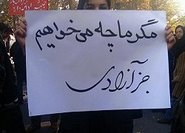





 Tulips in Holland