

15/06/2008 Iran/United States : INTELLIGENCE ONLINE N° 570
StatesPutting the Sqeeze on the IraniansINTELLIGENCE ONLINE N° 570 To turn up the heat on Tehran, Washington is not only seeking to discourage Western companies from penning contracts in Iran - Shell and Repsol are about to withdraw from the South Pars gas project - but is equally targeting holding companies controlled by Iranians living abroad. The Commerce Department’s Bureau of Industry & Security is training its sights on the British steel trading giant Balli Group. Property of the Alaghband family of Iranian origin, Balli has been accused of leasing airliners to Tehran. But it is probably also being penalized for its key part in maintaining tight commercial and diplomatic ties between Iran and the West.How Three Boeing Airliners Ended Up in Iran. Even though one of the Balli Group's leading offices is in Houston, the company which boasts annual sales of over USD 1 billion, has been banned from exporting or helping to export American goods subject to restrictions until September 18 of this year. The Temporary Denial Order slapped on it by the BIS came on the heels of several operations in recent years by one of its affiliates, Balli Aviation. When United Airlines was placed under Chapter 11 in 2002, Balli Aviation bought three aging Boeing 747 airliners from the company (all three entered service in 1993). The aircraft were subsequently leased to another affiliate of the Balli Group, Blue Sky Airways, which began operating last year in Tehran to carry Iranian passengers to South East Asia and Mecca. According to the BIS, Blue Sky is about to sell three other Boeing 747s in its fleet to the Iranian carrier Mahan Air, a charge both Balli and Blue Sky strongly deny. On Feb. 22, the two firms were ordered to give back all the American-origin aircraft they own to the U.S., without the least compensation. In failing to obey what would have clearly been a commercially suicidal order, Balli Group and Blue Sky and all their affiliates and executives were forbidden to trade in American products subject to export clamps. The affair has surfaced as Iran is multiplying its efforts to acquire short and long-haul aircraft for its airlines. According to our sources, several go-betweens acting on Tehran's behalf recently made contact with Dutch companies marketing Fokkers.
The Balli Group’s Connections.
In hitting out at the Balli Group, the BIS was targeting one of the leading players that pursue commercial and political relations between Iran and the Western world. Highly active in Iran, the Balli Group is the official representative of two American multinationals in Iran, and not the least, either: Xerox and Caterpillar. Iranian firms that want to buy Caterpillar earth-moving machinery or Xerox’s products pass by way of the Balli Group. The company also has influential connections in London and Washington. One of the members of its board is Norman Lamont (Lord Lamont of Lerwick) who was John Major’s chancellor of the exchequer. Lamont is also the chairman of the highly active British Iranian Chamber of Commerce which speaks for British groups operating in Iran and is calling for wider commercial ties between the U.K. and Tehran. The chairman of Balli, Vahid Alaghband, whose personal fortune has been estimated at GBP 125 million, is one of the co-founders of the Iran Heritage Foundation that devotes itself to “promoting Iran’s cultural heritage.” Each year the Foundation throws a “Nouroz Gala” for the Persian community living in exile in London. Elsewhere, the Alaghband family figures among contributors to the PARSA Community Foundation which specializes in bankrolling projects carried out by Iranians or members of the Persian diaspora. Indeed, the PARSA Community Foundation donated a grant to the National Iranian American Council, an organization set up in 2002 to push in Washington for the restoration of diplomatic relations between the United States and Washington.The NIAC, which has won the backing of George Soros’ Open Society Institute, endeavors to tone down the saber-rattling rhetoric of numerous neo-conservative think tanks in the U.S., among them the Committee on Present Danger and the Foundation for Democracy in Iran.
Iran News Round Up [Michael Rubin]
National Review Online Blogs - New York,NY,USAAccording to Mowj News Agency, Ayatollah Mesbah-Yazdi attacks "those who have managed to build empires of wealth" in the Islamic Republic. ...
US president says Iran isolates its people by rejecting plan to ...
PR-Inside.com (Pressemitteilung) - Wien,AustriaAP PARIS (AP) - US President George W. Bush said Saturday that Iran has isolated its people and put the world in danger by rejecting a deal aimed at halting ...
Iraqi army gears up for next operation in Amarah
The Associated Press - US and Iraqi commanders say many militia chiefs have fled to Amarah and Iran after security operations against them in Basra and Baghdad's Sadr City ...
MUST READ THIS ! Ba Ehteram
http://www.aciiran.com/ensaf_siyasi_ejtemaie.htm
IMPERIAL EMBLEM

PERSIA
Iranian Freedom Fighters UNITE
Showing posts with label SANCTIONS. Show all posts
Showing posts with label SANCTIONS. Show all posts
Sunday, June 15, 2008
Tuesday, March 04, 2008
NEWS CENTRAL
UN agrees new sanctions against Iran
Mar 03 2008 21:54A third package of sanctions was imposed against the Islamic republic on Monday, targeting individuals most closely involved with its alleged nuclear weapons programme Read more »
More starch in UN sanctions
December 2006: United Nations Security Council first imposes sanctions, ordering all countries to stop supplying Iran with materials and technology that could contribute to its nuclear and missile programs. It also orders countries to freeze the assets of 10 Iranian companies and 12 individuals.March 2007: Security Council votes to toughen sanctions after Iran expands its enrichment program. It bans Iranian arms exports and orders countries to freeze the assets of 28 additional individuals and organizations.March 2008: The Council's third resolution, approved Monday, does the following:•Introduces monitoring of two banks with suspected links to proliferation activities, Bank Melli and Bank Saderat.•Calls on all countries "to exercise vigilance" in entering into new trade commitments with Iran.• Orders countries to freeze the assets of 12 additional companies and 13 individuals linked to Iran's nuclear or ballistic-missile programs.•Bans travel abroad by five individuals linked to Iran's nuclear effort.•For the first time, bans trade with Iran in goods that have both civilian and military uses and authorizes inspections of shipments to and from Iran by sea and air that are suspected of carrying banned items.
Security Council Votes New Sanctions Against Iran
March 03, 2008 The New York Times Warren Hoge Elaine Sciolino
The Security Council on Monday adopted its third resolution imposing sanctions on Iran for its refusal to cease enriching uranium, an activity that Western nations say is designed to build nuclear weapons.The previous two measures gained unanimous support of the 15-member panel, but in Monday’s balloting, Indonesia abstained, saying it “remained to be convinced of the efficacy of adopting additional sanctions at this juncture.” Fourteen countries voted in favor.The resolution authorizes inspections of cargo to and from Iran that is suspected of carrying prohibited equipment, tightens the monitoring of Iranian financial institutions and extends travel bans and asset freezes against persons and companies involved in the nuclear program.It adds 13 names to the existing list of 5 individuals and 12 companies subject to travel and asset restrictions. The new names include people with direct responsibility for building fast-spinning centrifuges that enrich uranium ore and a brigadier general engaged in “efforts to get round the sanctions” in the two earlier resolutions.The new measure also bans all trade and supply of so-called dual-use items, materials and technologies that can be adapted for military as well as civilian ends.Earlier Monday in Vienna, Mohamed ElBaradei, the director of the International Atomic Energy Agency, the United Nations nuclear monitor, said that newly disclosed intelligence reports that Iran had secretly researched how to make nuclear weapons were of “serious concern” and would be pursued by his office.“Iran continues to maintain that these alleged weaponization studies related to conventional weapons only are fabricated,” Dr. ElBaradei said in a speech to the agency’s 35-country policy-making body. “However a full-fledged examination of this issue has yet to take place.”The studies were described last Monday, in a briefing for the agency’s 35-country governing body by Olli Heinonen, the agency’s senior inspector.They included sketches and a video that appeared to have come from Iran’s own military laboratories, and Mr. Heinonen said they showed work “not consistent with any application other than the development of a nuclear weapon.”In a thinly veiled criticism of Iran, Dr. ElBaradei said, “I urge Iran to be as active and cooperative as possible in working with the agency to clarify this matter of serious concern.”Iran says that the agency’s findings support its claim that its nuclear program is solely for peaceful purposes, and it has rejected all suggestions that it was studying how to make nuclear weapons.Iran’s ambassador to the agency, Ali Asghar Soltanieh, called the intelligence data “forged and fabricated” and denounced the new Council resolution Monday as “irresponsible” and “an arrow aiming at the heart of” the atomic energy agency.Iran argues that its program is devoted solely to producing fuel for nuclear reactors that generate electricity. The United States and its European allies on the council contend the real purpose is to make Iran an atomic power, and they say they are determined to prevent that from happening.The resolution voted Monday was originally scheduled for a decision on Friday, but its two sponsors, Britain and France, delayed consideration in the hope of getting as close to unanimity as possible. In addition to Indonesia, three other Council countries - Libya, South Africa and Vietnam - had expressed reservations.To address them, the final version included last minute language changes making it clear that cargo inspections must conform to local and international laws and stressing the central role of the International Atomic Energy Agency and evidence in the latest report from Dr. ElBaradei Feb. 22 that Iran was cooperating with the agency.The resolution extends the reach of punishments in the two earlier measures, adopted in December, 2006 and March, 2007, but it does not make them any tougher.The text was drawn up after months of talks among the Council’s five permanent members - Britain, China, France, Russia and the United States — and Germany, which is not a Council member.It repeats a pledge from the six countries to establish full relations and economic cooperation with Iran should it agree to suspend enrichment-related and reprocessing activities.In Vienna, Britain, France and Germany said they were preparing a draft resolution critical of Iran that could be adopted by the agency’s policy-making body later this week. The United States, Canada, Australia and Japan already have indicated privately they would support such a move.It would be the first time the board had passed such a resolution on Iran since it sent the Iran to the Security Council for review two years ago.The United States, which in the past has criticized Dr. ElBaradei for not being tough enough on Iran, expressed support for this approach. “Despite some progress in addressing past issues, troubling questions remain about Iranian activities that strongly suggest a clandestine weapons-related program,” Gregory L. Schulte, the American envoy to the agency, told reporters in Vienna.He added, “Between the indications of weapons work, which would constitute a violation of Iran’s treaty obligations and Iran’s blatant violations of Security Council resolutions, there is strong reason for Iran’s file to remain open both in New York and in Vienna.”
On Monday, the UN Security Council finally made good on its threats to slap more sanctions on Iran for its nuclear arrogance. For those keeping score, that's three sets of sanctions ... and counting.
UN Deepens the Iran Nuclear Crisis
On Monday, the United Nations Security Council adopted a third round of sanctions on Iran [1] that will likely escalate the nuclear crisis, given Tehran's stated promise to resist "unlawful" pressures and demands. This may well mean resisting a key aspect of the UN resolution that calls for the interdiction of ships and airplanes carrying suspected nuclear cargo to and from Iran.
Activist Says Barred from Leaving Iran to Get Award
TEHRAN -- An Iranian women's rights campaigner said police prevented her from flying out of Tehran on Monday to pick up a 75,000 dollars human rights award in Sweden.
New Death Sentences for Political Activists
FIDH and LDDHI express their utmost concern at the recent condemnation to death of three Kurdish activists by an Iranian revolutionary tribunal.
Iranian President Loses Face
Iran's radical president ended a red-carpet visit to Baghdad yesterday without getting the photo-op he desperately wanted with Iraq's most powerful cleric. Mahmoud Ahmadinejad had wanted to visit the holy city of Najaf to see Grand Ayatollah Ali al-Sistani, but that event was scrubbed due to a scheduling problem, according to an Iraqi TV channel, al-Sharquiyah
Stop Iran's Power Grab
Iran's campaign to become the leading power in the Middle East is moving ahead on several fronts. It may be stopped by firm international economic and diplomatic pressure, but the opportunity to act is slipping away
Iran Just Won't Stay Isolated
The U.N. Security Council on Monday passed a third round of sanctions against Iran. But at the same time that the United States and its European allies were building support for the new U.N. resolution, Iran's president was making an official visit to Iraq, the first such visit since the Islamic Revolution in 1979. The upshot is that despite the tightening of U.N. sanctions, the West's efforts to contain Iran are crumbling where it matters most: in the Middle East
Twenty-year high in rice prices sparks fears
Mar 04 2008 02:41The latest sign of global food inflation could lead to shortages and civil unrest in Asia where more than 2.5bn people depend on cheap and abundant supplies of the grain Read more »
THE FITLY SAVAMA ( SAVAK 2) WANTS YOUR SISTERS,BROTHERS,HUSBANDS, WIVES ,FATHERS AND MOTHERS TO SPY ON YOU AND LET THE BLOODY FASCIST ISLAMIC REPUBLIC OF IDIOTS KNOW SO THAT THEY CAN THROW YOU IN JAIL AND HANG YOU -
WATCH THIS:New Iranian Propaganda
به پشت بام منازل مردم می روند و ديش ها را جمع می کنند
فاز جديد جمع آوري ديش هاي ماهواره يي از پشت بام منازل مردم آغاز شده است. ديروز يگان هايي از نيروي انتظامي با وانت و کاميون به برخي مناطق شهرک غرب و سعادت آباد و شهرک اکباتان اعزام شدند و ديش هاي ماهواره يي را از پشت بام ها جمع کردند. همچنين گزارش رسيده در برخي شهرک هاي اطراف تهران هم جمع آوري ماهواره ها آغاز شده است. عرف نيروي انتظامي هم اين است که به پشت بام منازل مردم مي روند و ديش ها را از بالاي ساختمان ها به پايين پرتاب مي کنند و سپس ديش ها را با وانت و کاميون به مکان هاي معين منتقل مي کنند.
سردار از ما خواست لخت شویم و نماز جماعت بخوانیم!
سایت پیک نت: سردار سرتیپ پاسدار "زارعی" فرمانده نیروی انتظامی استان تهران و مسئول مستقیم اجرای طرح باصطلاح مقابله با اوباش در یک خانه فساد و در حالیکه با شش زن سرگرم عیش و نوش بود بازداشت شد. این بازداشت بدستور مستقیم آیت الله شاهرودی و از روی سر قاضی مرتضوی دادستان مرکز صورت گرفت و همین مسئله برای 48 ساعت به تند ترین واکنش ها در قوه قضائیه انجامید. از آنجا که شاهرودی حدس می زده قاضی مرتضوی با توجه به رابطه بسیار نزدیکی که با "زارعی" دارد، او را از ماجرای بازداشت مطلع کرده و نجات خواهد داد، طرح بازداشت "زارعی" بدون اطلاع او صورت گرفت. حتی گفته می شود برکناری رئیس دادگاه فرودگاه نیز در همین ارتباط و برای کور کردن پیوندهای وی با مرتضوی و زارعی صورت گرفته است. صدور قرار وثیقه و آزادی زارعی و جلوگیری از پخش خبر به بهانه عدم تضعیف نیروی انتظامی نیز به معنای پایان کشاکش تند بین شاهرودی و مرتضوی نیست و در روزهای اخیر این مسئله در شعب دادگاه ها و دادسرای تهران بر سر زبان قضات و روسای این شعب و دادسراست. در شعبه.... دادگاه های تهران، رئیس دادگاه، رئیس دفتر و حتی منشی دادگاه گفتند که شاهرودی تاکنون یک قدم از مجازات شدید زارعی عقب نشینی نکرده و بیت رهبری هم خواهان اجرای قانون شده است، اما بدون سرو صدا و پس از انتخابات!مبنای اولیه تحقیقات مردم محلی بوده اند که خانه فساد در آن برپا بوده است. مردم این خانه را بعنوان خانه ای مشکوک معرفی می کنند و روز حمله به این خانه، سردار زارعی در کنار شش زن و دختر و در شرایطی زننده بازداشت می شود.
زنانی که در آن خانه بوده اند نیز بازداشت شده اند و در جریان بازجوئی و تحقیقات گفته اند سردار زارعی از ما خواسته بود لخت شده و دسته جمعی به صف شده و نماز بخوانیم!
Ahmadinejad: US Should Leave Iraq : By QASSIM ABDUL-ZAHRA
BAGHDAD (AP) - Iranian President Mahmoud Ahmadinejad on Monday dismissed U.S. accusations that his country is training extremists and demanded that the Americans withdraw from Iraq. Speaking in a nearly hour-long news conference at the end of an unprecedented visit to Iraq, Ahmadinejad said the U.S. allegations - that Iran is training Shiite militants who target American troops and Muslim rivals - don't matter to the Iranians."Of course American officials make such remarks and such statements, and we do not care ... because they make statements on the basis of erroneous information," said the hard-line Iranian leader, who smiled through much of the session. "We cannot count on what they say."He said the foreign presence in Iraq was an "insult to the regional nations and a humiliation." Ahmadinejad is the first Iranian president to visit Iraq, and his two-day trip highlighted one of the unintended consequences for Washington after the 2003 U.S.-led invasion of the Iraq that ousted Saddam Hussein from power.Under Saddam, a Sunni who once led an eight-year war against Iran, the two countries were bitter enemies, but Iraq's new Shiite-dominated government has deep ties to Iran's cleric-led Islamic republic.Ahmadinejad was warmly received by Iraqi President Jabal Talabani, a Sunni Kurd, and other Iraqi leaders. He said Tehran and Baghdad are "brotherly" nations who share many beliefs and values."Of course, dictators and foreigners have tried to tarnish and undermine the emotional relations between the two states," he said.After meeting Sunday with Talabani, who told the Iranian leader to call him "Uncle Jalal," Ahmadinejad drove through the U.S.-controlled Green Zone to visit Prime Minister Nouri al-Maliki, a fellow Shiite, at his Cabinet offices.The sprawling Green Zone contains the core of the U.S. diplomatic mission to Iraq - including a massive new embassy - and is heavily protected against occasional rocket barrages. American officials have accused Iran of backing Shiite extremists behind such attacks."The presence of foreigners in the region has been to the detriment of the nations of the region," Ahmadinejad said. "It is nothing but a humiliation to the regional nations."Their only achievements are that regional nations further dislike them, it adds to the regional nations' hatred. No one likes them."Pressed by a reporter how he knows the Iraqis don't like the U.S., Ahmadinejad said that the "Iraqi people have been anti-colonialist and anti-occupation in the course of their history.""If you go to the streets and talk to ordinary Iraqi people, you will be able to realize the true nature of such a claim," he said.Still, the Iraqis are precariously balanced between U.S. and Iran, with government officials saying in recent weeks that they don't want the country torn apart in a power struggle between the two sides.About 1,000 protesters in a Sunni-dominated neighborhood in Baghdad protested his visit Monday, a day after scattered demonstrations greeted his arrival. "Your mortars preceded your visit," one placard read.Though both Iraq and Iran have Shiite majorities, they were hostile to each other throughout Saddam's long reign. About 1 million people died in the fighting that ensued after Saddam invaded Iran in 1980.But when Saddam's Sunni-dominated regime fell to the U.S.-led invasion and Iraq's Shiite majority took power, long-standing ties between the Shiites of both countries flourished.Earlier Monday, Talabani and Ahmadinejad signed seven memorandums of understanding on issues including industrial development, trade and customs.
1 comments

 Labels:
Grains,
Iran,
Islamic Republic of Idiots,
Rice,
SANCTIONS,
savak,
SAVAMA,
Spies,
United Nations
Labels:
Grains,
Iran,
Islamic Republic of Idiots,
Rice,
SANCTIONS,
savak,
SAVAMA,
Spies,
United Nations
 Labels:
Grains,
Iran,
Islamic Republic of Idiots,
Rice,
SANCTIONS,
savak,
SAVAMA,
Spies,
United Nations
Labels:
Grains,
Iran,
Islamic Republic of Idiots,
Rice,
SANCTIONS,
savak,
SAVAMA,
Spies,
United Nations
Monday, November 19, 2007
Lessons that Islamic Republic of Idiots will not learn or put into practice!
Iran Rising disparities in Urban & rural economyMonday, 19 November 2007, : Morteza Aminmansour
The government of Iran should:
Minimize the degree of urban subsidy and expand the scope of recipients to rural population.
Promote better access for the unemployed to the labor market and jobs.
Create jobs by investing in service and technology oriented industries as they continue to reform.
Provide training and education for the labor force.
Remove discrimination against women in education and employment.
Adopt preferential treatment for foreign investment in inland areas.
The Iranian government should practice a policy of buying agricultural products at higher prices and selling industrial products to farmers at lower prices. Consequently they can earn enough to support their families through the year.
Iranian government is proposing to financially subsidize grain production to increase farmers’ incomes. It is to believe that this policy may not be suitable for economic development in the long run. But the government should reform the investment policy that is putting rural economic development at a disadvantage and should invest vigorously in rural education.
While regional imbalances and socio-economic disparities have persisted in Iran over the last decades of planned economic development, it should be a matter of particular concern to policy-makers that these same policies been the couse that have tended to widen these imbalances at an alarming rate.
Accelerating national growth, reducing poverty, and achieving national social targets will not be possible without strengthening the performance of, and access to, services in these disadvantage provinces, sectors and communities.
Implementation of reforms is essential to reduce fiscal imbalances and improve the composition of public expenditure and investment climate.
Of particular importance for poverty reduction and increasing rural incomes are policies aimed at increasing agricultural productivity and rural employment.
Iranian government should create a Rural Entrepreneurs and Micro enterprise Program that would allow rural entrepreneurs to acquire the skills, obtain capital, and build networks necessary to establish new small businesses in rural areas and receive continuing technical assistance as the individuals begin operating the small business.
Micro enterprise would be defined in the program as a business that employs five or fewer individuals, creating a Community Entrepreneurial Development Program based on four pillars of rural economic and community development: entrepreneurship, capital, youth, and leadership.
This program should offer grants to collaborating communities to establish regional initiatives for entrepreneurial development, including small business education and technical assistance, leadership, development, youth attraction and retention, and inter- generational business transfer planning.
Read the full article here : http://preview.tinyurl.com/2nrslw
Instead of all the above - this is what they do - and that is to their loyal opposition, let alone what they do to their unfriendly oppositions!
Iran sentences labour leader to five years imprisonment
Mansoor Osanloo, leader of the Tehran bus drivers union, who has been imprisoned for months after being kidnapped on the street by police has just been sentenced by Iran's judiciary. An Iranian court has sentenced a dissident labor leader to five years in jail, a judiciary official was quoted as saying on Wednesday.
Mansoor Osanloo, who runs a union grouping bus drivers, was detained in July for "distributing statements against the system". Western rights groups say Iran has launched a crackdown on dissenting voices, although Tehran denies this. "This verdict is certain and he is currently serving his jail sentence," Hassan Haddad, deputy prosecutor in Tehran, was quoted as saying by the official IRNA news agency, without giving details of the charges. Iran's judiciary says Osanloo's union is an illegal organization.Haddad was quoted as saying about the case in August: "I told Osanloo 'your behavior creates problems for the country's security' ... Because he has traveled abroad he thinks he can do whatever he wants." Rights groups and Western governments say Iran this year has launched a fresh crackdown on dissent in the Islamic Republic, with the authorities targeting women's rights activists, students, journalists and labor figures. The European Union last week said it was "deeply concerned at the growing repression against all groups which exercise their right to freely express their opinions ... in the Islamic Republic." Iran rejects accusations it is violating human rights and the government of President Mahmoud Ahmadinejad says it supports free speech and welcomes constructive opposition.
IRAN: Journalist and Woman Activist, Maryam Hosseinkhah, Arrested
Maryam HossienkhahChange for Equality: November 18, 2007:
Maryam Hossienkhah, Journalist, member of the Women's Cultural Center, and an active member of the One Million Signatures Campaign was arrested earlier today. A few days after the site of the Women's Cultural Center, a leading women's NGO, was shut down on order of the Ministry of Culture and Islamic Guidance and the Judiciary, Maryam Hosseinkhah, an editor of the site of this organization as well as one of the editors of the site of the One Million Signatures Campaign, Change for Equality, was summoned to the security branch of the Revolutionary Courts on Saturday 17th of November. She was interrogated for over 2 hours on Saturday and was told that she is charged with disruption of public opinion, propaganda against the state, and publication of lies through the publication of untrue news items on the site of the Women's Cultural Center and the One Million Signatures Campaign. Maryam Hosseinkhah was also ordered to return to the Revolutionary Courts for more interrogation today, Sunday November 18, 2007 at 9:00am. After arriving at Court today, an order of arrest of issued for Ms. Hosseinkhah, and to our disbelief she was arrested and transferred to Evin Prison at 2:00pm.
The arrest of Maryam Hosseinkhah marks the continuation of increased harassment of women's rights activists, especially members of the Campaign, by the Security forces. To date, over 40 individuals have been arrested in relation to their peaceful activities in support of the Campaign. Currently two other members of the Campaign besides Maryam remain in prison. Ronak Safarzadeh and Hana Abdi were both arrested in Kurdistan after collection of signatures. They remain in prison and have had not had access to their families or lawyers.
Surfer dude stuns physicists with theory of everything : By Roger Highfield, Science Editor : Last Updated:14/11/2007

An impoverished surfer has drawn up a new theory of the universe, seen by some as the Holy Grail of physics, which has received rave reviews from scientists.
Garrett Lisi, 39, has a doctorate but no university affiliation and spends most of the year surfing in Hawaii, where he has also been a hiking guide and bridge builder (when he slept in a jungle yurt).In winter, he heads to the mountains near Lake Tahoe, Nevada, where he snowboards. "Being poor sucks," Lisi says. "It's hard to figure out the secrets of the universe when you're trying to figure out where you and your girlfriend are going to sleep next month." Despite this unusual career path, his proposal is remarkable because, by the arcane standards of particle physics, it does not require highly complex mathematics. Even better, it does not require more than one dimension of time and three of space, when some rival theories need ten or even more spatial dimensions and other bizarre concepts. And it may even be possible to test his theory, which predicts a host of new particles, perhaps even using the new Large Hadron Collider atom smasher that will go into action near Geneva next year. Although the work of 39 year old Garrett Lisi still has a way to go to convince the establishment, let alone match the achievements of Albert Einstein, the two do have one thing in common: Einstein also began his great adventure in theoretical physics while outside the mainstream scientific establishment, working as a patent officer, though failed to achieve the Holy Grail, an overarching explanation to unite all the particles and forces of the cosmos. Now Lisi, currently in Nevada, has come up with a proposal to do this. Lee Smolin at the Perimeter Institute for Theoretical Physics in Waterloo, Ontario, Canada, describes Lisi's work as "fabulous". "It is one of the most compelling unification models I've seen in many, many years," he says. "Although he cultivates a bit of a surfer-guy image its clear he has put enormous effort and time into working the complexities of this structure out over several years," Prof Smolin tells The Telegraph. "Some incredibly beautiful stuff falls out of Lisi's theory," adds David Ritz Finkelstein at the Georgia Institute of Technology, Atlanta. "This must be more than coincidence and he really is touching on something profound." The new theory reported today in New Scientist has been laid out in an online paper entitled "An Exceptionally Simple Theory of Everything" by Lisi, who completed his doctorate in theoretical physics in 1999 at the University of California, San Diego. He has high hopes that his new theory could provide what he says is a "radical new explanation" for the three decade old Standard Model, which weaves together three of the four fundamental forces of nature: the electromagnetic force; the strong force, which binds quarks together in atomic nuclei; and the weak force, which controls radioactive decay. The reason for the excitement is that Lisi's model also takes account of gravity, a force that has only successfully been included by a rival and highly fashionable idea called string theory, one that proposes particles are made up of minute strings, which is highly complex and elegant but has lacked predictions by which to do experiments to see if it works. But some are taking a cooler view. Prof Marcus du Sautoy, of Oxford University and author of Finding Moonshine, told the Telegraph: "The proposal in this paper looks a long shot and there seem to be a lot things still to fill in." And a colleague Eric Weinstein in America added: "Lisi seems like a hell of a guy. I'd love to meet him. But my friend Lee Smolin is betting on a very very long shot." Lisi's inspiration lies in the most elegant and intricate shape known to mathematics, called E8 - a complex, eight-dimensional mathematical pattern with 248 points first found in 1887, but only fully understood by mathematicians this year after workings, that, if written out in tiny print, would cover an area the size of Manhattan. E8 encapsulates the symmetries of a geometric object that is 57-dimensional and is itself is 248-dimensional. Lisi says "I think our universe is this beautiful shape." What makes E8 so exciting is that Nature also seems to have embedded it at the heart of many bits of physics. One interpretation of why we have such a quirky list of fundamental particles is because they all result from different facets of the strange symmetries of E8. Lisi's breakthrough came when he noticed that some of the equations describing E8's structure matched his own. "My brain exploded with the implications and the beauty of the thing," he tells New Scientist. "I thought: 'Holy crap, that's it!'" What Lisi had realised was that he could find a way to place the various elementary particles and forces on E8's 248 points. What remained was 20 gaps which he filled with notional particles, for example those that some physicists predict to be associated with gravity.Physicists have long puzzled over why elementary particles appear to belong to families, but this arises naturally from the geometry of E8, he says. So far, all the interactions predicted by the complex geometrical relationships inside E8 match with observations in the real world. "How cool is that?" he says. The crucial test of Lisi's work will come only when he has made testable predictions. Lisi is now calculating the masses that the 20 new particles should have, in the hope that they may be spotted when the Large Hadron Collider starts up. "The theory is very young, and still in development," he told the Telegraph. "Right now, I'd assign a low (but not tiny) likelyhood to this prediction. "For comparison, I think the chances are higher that LHC will see some of these particles than it is that the LHC will see superparticles, extra dimensions, or micro black holes as predicted by string theory. I hope to get more (and different) predictions, with more confidence, out of this E8 Theory over the next year, before the LHC comes online."
Damian Lanigan: The dumb physics genius
Damian Lanigan: Great physicist - in theory
Weird Wired Web: If you liked 'tree man'...
Is this the fabric of the universe?
Are we missing a dimension of time?
Parallel universe proof boosts time travel hopes


The British Law is An ASS , It Allows her to support the Terrorist , and lie to and cheat its citizens and The World
British Aid Mocks Sanctions Threat Against Iran : November 18, 2007 : Times : Jonathan Leake and Sarah Baxter
The government faces a diplomatic row with America over disclosures that it has provided the Iranian regime with financial support worth about £290m while at the same time calling for sanctions. The money was offered by the Export Credits Guarantee Department (ECGD) to support British firms exporting to Iran, mainly to the country’s petrochemical industry.
Many of the loans were being negotiated while British ministers were threatening sanctions against Iran for creating a nuclear enrichment facility to make atomic weapons. Last week Gordon Brown called for new sanctions against Iran in addition to those already imposed by the United Nations security council. The prime minister wants a ban on investment in the oil and gas industries if Iran does not agree to end the production of enriched uranium. This weekend government sources signalled their embarrassment over the ECGD’s activities. “There is clearly a gap between our actions and our rhetoric,” said one Whitehall insider. The US administration has been privately lobbying Britain to end the financial support. Stuart Levey, the US Treasury official responsible for terrorism and financial intelligence, stepped up the pressure in private discussions with British ministers in London in July, claiming that such export credits were inconsistent with UN sanctions. Danielle Pletka, an expert on trade links with Iran at the Washington-based American Enterprise Institute, said: “You can’t subsidise with one hand and sanction with the other. Britain is saying the European Union needs to do more but it needs to lead by example, not just by its mouth.” The government is also under political pressure at home. William Hague, the shadow foreign secretary, said: “Our government must make up its mind about export credit guarantees to Iran. Britain should lead the way with a clear, unequivocal commitment to banning new export credit guarantees to Iran.” The ECGD underwrites bank loans to enable overseas buyers to purchase goods, often including military hardware, from UK companies. It stopped providing support for Iran in 1994 but resumed in 2000. Much of the support was for the National Iranian Oil Company and a subsidiary, the National Petrochemical Company.
The decision to start pushing hard for new business came in 2003, the year of the second Iraq war. It coincided with a declaration by the International Atomic Energy Agency that Iran had been secretly constructing a nuclear enrichment plant. The same year, however, the ECGD announced a £72m deal for a plastics plant in Iran. It then sent John Weiss, its business group director, to Iran to speak at a petrochemical conference to drum up more business. Weiss said then: “The petrochemical sector in Iran is a key target for the ECGD, but we are also keen to look at sectors including oil, gas, transport, power, water and telecommunications.” Such optimism contrasted with warnings throughout 2003 from Tony Blair, then prime minister, that Iran should halt its nuclear ventures. He also accused it of supporting terrorist groups attacking British troops in Iraq. In the same year the ECGD negotiated a series of deals involving the National Iranian Oil Company that were worth another £63m. In 2005 the ECGD extended credit worth £109m to the oil company, with more to other Iranian firms.
Parliamentary records show that the ECGD received 153 requests for credit guarantees from firms dealing with Iran between 2002 and March 2007. Most of the contracts are still in force and Britain’s total “exposure” to Iranian deals is now valued at £290m. Last week the Foreign Office said that money earned by the Iranian oil industry was used to support its nuclear enrichment programme and the Iraq insurgency.
The ECGD, however, said it had acted “completely within the law”.
A CLEAR AND A DIRECT WORNING TO THE MULLAH MAFIA'S OF IRAN
US Mideast Military Chief Says Iranian Behavior Unhelpful
November 18, 2007 The Associated Press International Herald Tribune
CAIRO, Egypt -- The Iranians need to realize that the U.S. is ready to stand up to them and the region is concerned about their radical rhetoric, the top American commander in the Middle East said Sunday. Speaking at a press conference in Cairo with Egyptian President Hosni Mubarak, Central Command chief Admiral William J. Fallon said that Iran's behavior since he assumed his post eight months earlier has not been helpful. "I don't want the Iranians to make a mistake and feel that we are afraid of them or not willing to stand up for things that we should in this region," he said. "There's concern over the Iranian behavior, concern in the region from the radical talk that is constantly threatening other people." Fallon was in Egypt for the massive regional Bright Star military excercises held every two years between Egypt and the United States that include several other nations. "Iran is a challenge to us, to me as a commander in chief in this area," he added. "Iran's behavior has not been very helpful in the region." The U.S. accuses Iran of supporting armed groups in Iraq that attack American forces — a charge the Iranians deny.
The government faces a diplomatic row with America over disclosures that it has provided the Iranian regime with financial support worth about £290m while at the same time calling for sanctions. The money was offered by the Export Credits Guarantee Department (ECGD) to support British firms exporting to Iran, mainly to the country’s petrochemical industry.
Many of the loans were being negotiated while British ministers were threatening sanctions against Iran for creating a nuclear enrichment facility to make atomic weapons. Last week Gordon Brown called for new sanctions against Iran in addition to those already imposed by the United Nations security council. The prime minister wants a ban on investment in the oil and gas industries if Iran does not agree to end the production of enriched uranium. This weekend government sources signalled their embarrassment over the ECGD’s activities. “There is clearly a gap between our actions and our rhetoric,” said one Whitehall insider. The US administration has been privately lobbying Britain to end the financial support. Stuart Levey, the US Treasury official responsible for terrorism and financial intelligence, stepped up the pressure in private discussions with British ministers in London in July, claiming that such export credits were inconsistent with UN sanctions. Danielle Pletka, an expert on trade links with Iran at the Washington-based American Enterprise Institute, said: “You can’t subsidise with one hand and sanction with the other. Britain is saying the European Union needs to do more but it needs to lead by example, not just by its mouth.” The government is also under political pressure at home. William Hague, the shadow foreign secretary, said: “Our government must make up its mind about export credit guarantees to Iran. Britain should lead the way with a clear, unequivocal commitment to banning new export credit guarantees to Iran.” The ECGD underwrites bank loans to enable overseas buyers to purchase goods, often including military hardware, from UK companies. It stopped providing support for Iran in 1994 but resumed in 2000. Much of the support was for the National Iranian Oil Company and a subsidiary, the National Petrochemical Company.
The decision to start pushing hard for new business came in 2003, the year of the second Iraq war. It coincided with a declaration by the International Atomic Energy Agency that Iran had been secretly constructing a nuclear enrichment plant. The same year, however, the ECGD announced a £72m deal for a plastics plant in Iran. It then sent John Weiss, its business group director, to Iran to speak at a petrochemical conference to drum up more business. Weiss said then: “The petrochemical sector in Iran is a key target for the ECGD, but we are also keen to look at sectors including oil, gas, transport, power, water and telecommunications.” Such optimism contrasted with warnings throughout 2003 from Tony Blair, then prime minister, that Iran should halt its nuclear ventures. He also accused it of supporting terrorist groups attacking British troops in Iraq. In the same year the ECGD negotiated a series of deals involving the National Iranian Oil Company that were worth another £63m. In 2005 the ECGD extended credit worth £109m to the oil company, with more to other Iranian firms.
Parliamentary records show that the ECGD received 153 requests for credit guarantees from firms dealing with Iran between 2002 and March 2007. Most of the contracts are still in force and Britain’s total “exposure” to Iranian deals is now valued at £290m. Last week the Foreign Office said that money earned by the Iranian oil industry was used to support its nuclear enrichment programme and the Iraq insurgency.
The ECGD, however, said it had acted “completely within the law”.
A CLEAR AND A DIRECT WORNING TO THE MULLAH MAFIA'S OF IRAN
US Mideast Military Chief Says Iranian Behavior Unhelpful
November 18, 2007 The Associated Press International Herald Tribune
CAIRO, Egypt -- The Iranians need to realize that the U.S. is ready to stand up to them and the region is concerned about their radical rhetoric, the top American commander in the Middle East said Sunday. Speaking at a press conference in Cairo with Egyptian President Hosni Mubarak, Central Command chief Admiral William J. Fallon said that Iran's behavior since he assumed his post eight months earlier has not been helpful. "I don't want the Iranians to make a mistake and feel that we are afraid of them or not willing to stand up for things that we should in this region," he said. "There's concern over the Iranian behavior, concern in the region from the radical talk that is constantly threatening other people." Fallon was in Egypt for the massive regional Bright Star military excercises held every two years between Egypt and the United States that include several other nations. "Iran is a challenge to us, to me as a commander in chief in this area," he added. "Iran's behavior has not been very helpful in the region." The U.S. accuses Iran of supporting armed groups in Iraq that attack American forces — a charge the Iranians deny.
Tuesday, November 13, 2007
Who Are Iran's Revolutionary Guards? November 15, 2007 The Wall Street Journal Amir Taheri
The scene is a board meeting of Bank Sepah, Iran's second-largest financial institution, in Tehran. The directors are waiting for the sardar (literally "head-owner") to arrive. But the sardar is in a changing room, shedding his uniform for a civilian suit. The man in question is Gen. Mohammad Ali Jafari, the new commander-in-chief of the Islamic Revolutionary Guard Corps (IRGC), which owns and controls the bank. Most Americans already know more about the IRGC than they'd like to.
In September the Senate voted overwhelmingly in favor of a nonbinding resolution urging President Bush to label the IRGC a terrorist group. He did so a month later and has since implemented harsh new sanctions targeting the business interests of the IRGC. As Treasury Secretary Henry Paulson told the press recently, "It is increasingly likely that if you are doing business with Iran you are doing business with the IRGC." Still, there is much about this organization that is misunderstood. The IRGC is a unique beast. It is an army answerable to no one but the "Supreme Leader" of the Islamic Revolution,
Ayatollah Ali Khamenei. It is also a business conglomerate that controls over 500 companies active in a wide range of industries -- from nuclear power to banking, life insurance to holiday resorts and shopping centers. By most estimates, the IRGC is Iran's third-largest corporation -- after the National Iranian Oil Company and the Imam Reza Endowment in the "holy" city of Mashhad, northeast of Tehran. The Islamic Republic established by the Ayatollah Khomeini after the ouster of the Shah in 1979, is often labeled a "mullahrchy" -- a theocracy dominated by the Shiite clergy. The truth, however, is that a majority of Shiite clerics never converted to Khomeinism and did not endorse the Islamic Republic. In the past few years, especially since the election of President Ahmadinejad in 2005, those mullahs who converted to Khomeinism have lost
some of their power and privileges. Today, the IRGC is the dominant force within the ruling establishment in Tehran. It is not a monolith, and to label all of it a "terrorist" organization as the Bush administration has done, may make it difficult to strike deals with parts of it when, and if, the opportunity arises. A thorough analysis of the IRGC must take into account a number of facts. First, the IRGC is not a revolutionary army in the sense that the ALN was in Algeria or the Vietcong in Vietnam. Those were born during revolutionary wars in which they became key players. The IRGC was created after the Khomeinist revolution had succeeded. This fact is of crucial importance. Those who joined the IRGC came from all sorts of backgrounds. The majority were opportunists. By joining the IRGC, they could not only obtain revolutionary credentials, often on fictitious grounds, but would also secure well-paying jobs, at a time that economic collapse made jobs rare. Joining the IRGC enabled many who had cooperated with the ancien regime to rewrite their CVs and obtain "revolutionary virginity." Membership of the IRGC ensured access to rare goods and services, from color TVs to more decent housing. As the years went by, IRGC membership provided a fast track to social, political and economic success. Today, half of President Ahmadinejad's cabinet ministers are members of the IRGC, as is the president himself. IRGC members hold nearly a third of seats in the Islamic Consultative Assembly (Majlis), the ersatz parliament created in 1979. Twenty of Iran's 30 provinces have governors from the IRGC. IRGC members have also started capturing key posts in the diplomatic service. Today, for the first time, the Islamic Republic's ambassadors in such important places as the United Nations in New York and embassies in a dozen Western capitals are members of the IRGC. But it is as an economic power that the IRGC weighs so heavily on Iranian politics. In 2004, a Tehran University study estimated the annual turnover of IRGC businesses at $12 billion with total net profits of $1.9 billion. The privatization package prepared by President Ahmadinejad is likely to increase the IRGC's economic clout. Almost all of the public-sector companies marked for privatization -- at a total value of $18 billion -- are likely to end up in the hands of the IRGC and its individual commanders. The crown jewel of the IRGC's business empire is the Islamic Republic's nuclear program, which has cost the nation over $10 billion so far. This is part of a broader scheme of arms purchases and manufacture, which in total accounts for almost 11% of the annual national budget. The IRGC also controls the lucrative business of "exporting the revolution" estimated to be worth $1.2 billion a year. It finances branches of the Hezbollah movement in at least 20 countries, including some in Europe, and provides money, arms and training for radical groups with leftist backgrounds. In recent years, it has emerged as a major backer of the armed wing of the Palestinian Hamas and both Shiite and Sunni armed groups in Iraq, Afghanistan and Pakistan. The vehicle through which the IRGC "exports" revolution is a special unit known as The Quds (Jerusalem) Force. This consists of 15,000 highly trained men and women specializing in "martyrdom operations," a code word for guerrilla war, armed insurgency and terrorism. The Islamic Republic has invested some $20 billion in Lebanon since 1983. In most cases, the Lebanese branch of the Hezbollah is nominally in control. However, a closer examination reveals that in most cases the Lebanese companies are fronts for Iranian concerns controlled by the IRGC. The IRGC is divided into five commands, each of which has a direct line to the Ayatollah Khamenei. To minimize the risk of coup d'etat, IRGC's senior officers are not allowed to engage in "sustained communication" with one another on "sensitive subjects." Of the five commands in question, two could be regarded as "terrorist" according to the U.S. State Department's definition that, needless to say, is rejected by the Islamic Republic. One command is in charge of the already mentioned Quds Corps, which is waging indirect war against U.S. and allied forces in Iraq and Afghanistan. Apart from Hezbollah and Hamas, it also runs a number of radical groups across the globe. The second command ensures internal repression. It operates through several auxiliary forces, including the notorious Karbala, Ashura and Al Zahra (an all female unit) brigades, which are charged with crushing popular revolt. Many Iranians see these as instruments of terror. As a parallel to the regular army, the IRGC has its ground forces, navy and air force. It also controls the so-called Basij Mustadafin (mobilization of the dispossessed), a fanatical, semi-voluntary force of 90,000 full-time fighters that could be built up to 11 million according to its commander Brig. Gen. Mohammad Hejazi. The IRGC's own strength stands at 125,000 men. Its officers' corps, including those in retirement, numbers around 55,000 and is as divided on domestic and foreign policies as the rest of society. Some IRGC former commanders who did not share the Islamic Republic's goals have already defected to the U.S. Hundreds of others have gone into low-profile exile, mostly as businessmen in the United Arab Emirates, Malaysia and Turkey. An unknown number were purged because they refused to kill anti-regime demonstrators in Iranian cities. Many prominent IRGC commanders may be regarded as businessmen first and military leaders second. Usually, they have a brother or a cousin in Europe or Canada to look after their business interests and keep a channel open to small and big "satans" in case the regime falls. A few IRGC commanders, including some at the top, do not relish a conflict with the U.S. that could destroy their business empires without offering Iran victory on the battlefield. Indeed, there is no guarantee that, in case of a major war, all parts of the IRGC would show the same degree of commitment to the system. IRGC commanders may be prepared to kill unarmed Iranians or hire Lebanese, Palestinian and Iraqi radicals to kill others. However, it is not certain they would be prepared to die for President Ahmadinejad's glory. These concerns persuaded Ayatollah Khamenei to announce a Defense Planning Commission last year, controlled by his office. A blanket labeling of the IRGC as "terrorist," as opposed to targeting elements of it that terrorize the Iranian people and others in the region and beyond, could prove counterproductive. It may, in fact, unite a fractious force that could splinter into more manageable parts given the right incentives. Inside Iran, the IRGC is known as pasdaran (vigilantes) and inspires a mixture of intense hatred and grudging admiration. While many Iranians see it as a monster protecting an evil regime, others believe that, when the crunch comes, it will side with the people against an increasingly repressive and unpopular regime.
Iran's poor excuse for democracy stifles all who advocate for change : 11/14/2007
The Islamic Republic of Iran is master of the double standard. For instance, the regime believes it has the right to establish political groups in other countries, such as Lebanon's Hezbollah, the Iraqi Islamic Supreme Council and a number of groups in Afghanistan. It openly supports Hamas to the tune of millions of dollars - another example of this general modus operandi. So, by logical extension, the Islamic Republic asserts that opponents of a government have the right to create an armed organization, and foreign governments have the right to supply these opponents with money, weapons and training. Yet within its own borders, the Iranian government has stifled all dissent. It has shuttered all opposition media outlets. It does not tolerate any independent organizations, even trade unions. If teachers demand back pay, they are dismissed, jailed or exiled. The regime will not accept even non-violent protest. In order to crush opposition groups with impunity, it brands peaceful, legal activism "soft subversion" or a "velvet revolution."
Iran claims to be a democracy. But in free countries, where the rule of law is respected, political parties vie for control of parliament or the executive branch by means of elections. The Islamic Republic accepts no electoral rivals; any independent party that aims to gain political power is declared illegitimate. What are groups expected to do when they gather? Answer: Extol revered religious figures or lament their own demise. In truth, the Islamic Republic of Iran rules through quotas, both literal and figurative. Important political jobs are open only to clerics, starting with the supreme leader, Ali Khamenei, and extending through his appointments to the Guardian Council, the head of the judiciary and the intelligence minister. The Assembly of Experts, which chooses the supreme leader, is composed entirely of clerics. University admissions, too, are decided by factors other than academic excellence. Slots are set aside for the family members of martyrs and members of the Basij, the volunteer militia that enforces clerical rule. Those jobs, educational perks and privileges translate into riches for those loyal to the regime. For example, many big infrastructure projects are awarded to the Revolutionary Guard Corps, the most powerful wing of the military. As a result, a segment of the corps has emerged as a new economic class whose financial activity and growing wealth are unknown and unaccountable. For those who oppose the Islamic Republic, there are reverse quotas of a sort, which ensure the regime's survival. The Bahais, declared heretics for their religious faith, cannot attend universities. Professors who support democracy and defend human rights, such as Abdulkarim Soroush, Mohsen Kadivar and Hadi Semati, are banned from teaching. Question clerical rule and you might be denied the right to travel abroad or to publish books. In addition, a number of activists recently have been beaten in the streets and publicly humiliated.
The regime seems to have a quota for its jails too. A number of opponents must always be imprisoned so that activists will not succumb to the delusion that they are free to engage in political activity. Many are already locked away - including three students from Amir Kabir University sentenced last month. Prison sentences hang over the heads of others like the sword of Damocles. And then there are the individuals who must be taken back to jail from time to time, such as Mansour Osanloo, the Tehran bus drivers union leader; Mahmoud Dordkeshan, a political activist; and journalists such as Said Matinpur and Emaddedin Baghi. Matinpur and Jalil Qanilu, both activists for the Azerbaijani ethnic minority, have been held in solitary confinement for about five years with no family visits or access to lawyers. I was in Tehran's infamous Evin prison from 2000 to 2006. I know what prolonged solidarity confinement can do to a person, and I know the sound of torture. I survived my ordeal in part because global civil society mobilized and pressed for my release. As I write, the Iranian regime is invoking the threat of a U.S. military attack - which is very real - and using that as an excuse for a major crackdown on dissidents. No regime has the right to inflict such indignities on its own people. Those who are not in jail have a moral duty to raise their voices against the detention of all political prisoners. The Islamic Republic may try to dismiss international condemnation as illegitimate foreign interference or an affront to national sovereignty - but human rights are universal, and we must persevere until all prisoners of conscience are free.
Why Iran is Dying for a Fight : Tuesday, November 13, 2007 -Online Spengler
Iran's demographic catastrophe in the making, I have long argued, impels Tehran to stake its claim for regional empire quickly, while it still has the manpower to do so. Now one of the world's most attentive students of the global South, Prof Philip Jenkins, has taken notice of Iran's population bust and come to a conclusion diametrically opposite to mine. Writing in the November 9 New Republic, he opines, "there's a good chance that [Iran's] declining fertility rates will usher in a new era of stability - an Iran that is bourgeois, secular, less like Children of Men's bombed-out Britain and more like ... Denmark". It pains me to take Prof Jenkins to the woodshed - I gave his last book a glowing review [1] - but it does not seem to have occurred to him that things which make peace inevitable in the long run may propel countries into war in the short run. The textbook example (if we had a competent textbook) would be France in 1914, which sought a quick war because its falling birth rate ensured that it could not beat Germany unless it did so immediately (more on this below). Republican France was not afflicted by the apocalyptic visions of Iran's President Mahmud Ahmadinejad, but led the rush to war just the same. Population decline eventually leads to stability, but not necessarily by a direct path. Some years ago a Danish politician proposed to replace the Defense Ministry with a telephone answering machine with the message: "We surrender." Unlike Denmark, whose raiders terrorized Europe during the Dark Ages, Iran is not yet dead. I am reminded of Heinrich Heine's verse about a jilted lover:
Die Maedchen fluestern sich ins Ohr: "Der Stieg wohl aus dem Grab empor." Nein, nein, ihr lieben Jungfrauelein: Der legt sich erst ins Grab hinein. (The pretty girls passed by and quipped: "He must have risen from his crypt!" Not yet, I'd tell the girls, if queried: He first will die, and then be buried.)
Before Iran is buried, it will have occasion to command the undivided attention of the West. The rulers of the Persian pocket-empire know better than Jenkins that today's soldiers will become pensioners a generation hence, turning a belligerent and ambitious country into an impoverished , geriatric ruin. They believe that Iran has a last opportunity for greatness, on which they will stake their last dinar. I summarized the evidence in a series of essays in this space, including The demographics of radical Islam (Aug 23, 2005) and The demographics of radical Islam (Sept 13, 2005). As Jenkins reports, Iran's fertility rate has fallen to only 0.66 children per female, a third of the population replacement rate of 2.1. A generation ago, it stood at 6.5. In other words, Iran presently has a bulge of military-age men as cannon-fodder. In a generation it will not be able to fill the ranks. What does this imply? "The connection between fertility rates and political stability is still not fully understood," Jenkins writes, "mostly because the human race has never, in its entire history, reproduced at below-replacement levels." But Jenkins has not a word to say about the sources of Iran's extremely low birth rate, much lower, in fact, than that of most of Western Europe. Iran's extremely low birth rate resembles the Ukraine or Belarus more than it does Denmark. One explanation is demoralization and degradation, including prostitution on an alarming scale (see Jihadis and whores, Nov 21, 2006), Nov 21, 2006). That might explain why Iran's birthrate is closest to that of the Eastern European countries that lose the most females to human trafficking. Birth rates as such are not the question. The question is: why is the human race reproducing at below-replacement levels in the first place? Along with Phillip Longman and others, I contend that the decline of religious faith lies at the root of the problem. Without the hope of eternal life, humankind cannot abide its earthly existence, and ceases to propagate. Iran's demographic implosion implies the erosion of the faith of traditional society. Jenkins is quite right that the sort of despair that causes depopulation often leads to depression and inactivity. Most of the 6,700 languages now spoken will become extinct not with a bang, but a whimper. But that is not always the case. Hitler was decidedly pessimistic about the future of the Aryan race. He wrote in Mein Kampf, "Aryan races ˇ create cultures which originally bear all the inner characteristics of their nature, however, the conquerors transgress against the principle of blood purity ˇ they begin to mix with the subjugated inhabitants and thus end their own existence; for the fall of man in paradise has always been followed by his expulsion." In his own time, Hitler believed that the Aryan race stood at the edge of extinction, due to interbreeding and poisoning of blood through syphilis, and might be saved only by early and extreme action which, however, only would postpone the inevitable Goetterdaemmerung. The French example, though, is the most convincing, because the issue of declining population growth rates was openly debated as a strategic risk to France immediately before the First World War. As historian Judith Wishnia observes, fear about the falling French birth rate in the face of German demographic dynamism worsened the crisis that led to the First World War. Politicians, clergy, the literati and the army exhorted the French to have more children in the strategic interests of the nation. [2] Between 1870, when Germany humiliated Napoleon III in the Franco-Prussian War, and 1914, the population of the German Empire nearly doubled, while the French population was almost unchanged. In 1870, the two countries could field roughly the same number of soldiers; by 1913, Germany had nearly double the available manpower. Just prior to the outbreak of general war in August 1914, France had called up 80% of its military age men in the most comprehensive mobilization in history. Only by keeping nearly all its available manpower in uniform could France field enough soldiers to match the German army in the field. With a much larger population, Germany had only half its military-age men under arms. The economic strain upon France of maintaining such a high degree of mobilization was insupportable. France either had to go to war quickly, or lose its only opportunity to revenge itself upon Germany for the loss of territory and the humiliation of 1870. No single country, to be sure bears the guilt for the outbreak of this war, but there is considerable evidence that France used all its influence to bring Russia into the war. The French ambassador to Russia, Maurice Paleologue, persuaded a skeptical Czar Nicholas II that war was likely and that he need to prepare for it. Paleologue's memoirs are available online in English translation, and I have cited some of the relevant passages in another location. French bellicosity in 1914 refutes the political scientist's canard that democracies do not start wars. But it is true that democracy makes it harder for even the most bloodthirsty government to begin a war. France saw no alternative to war, except resignation to unending mediocrity, as it ceased to breed soldiers. All the less should we expect Iran's theocratic dictatorship to give up its nuclear ambitions and its territorial designs on its neighbors in the face of demographic crisis. Notes [1] A new Jerusalem in sub-Saharan Africa [2] See "Natalisme et nationalisme pendant la premiere guerre mondiale," by Judith Wishnia Vingtieme Siecle. Revue d'histoire, No 45 (Jan-Mar 1995), pp 30-39
A BLIND EYE ON IRAN'S NUKES : By AMIR TAHERI- November 14, 2007-
MUHAMMAD El Baradei could make the differ ence between war and peace later this week, with his latest report on Iran's nuclear program.
El Baradei, the Egyptian director of the International Atomic Energy Agency, must answer a key question: Has Iran complied with the two resolutions passed by the UN Security Council?If his answer is yes, the Security Council could pass a resolution confirming Iran's compliance and initiating talks to build on the positive development. What if Baradei reports that the Islamic Republic is still defying the two resolutions? The council, having fixed a two-month ultimatum, would have to consider tougher measures, even military action. The common assumption in Western political circles is that the Bush administration would like nothing better than a legal cover for military action against Iran - such as a report that clearly says Iran is defying the UN resolutions. That consideration might persuade Baradei to avoid giving a clear answer. He isn't as concerned about Iran's building a nuclear arsenal as American and European leaders, who would have to deal with a dangerous adversary that could use the ultimate weapon against them.
Baradei assumes that, were Iran to do big mischief, the Americans would deal with it regardless of what the IAEA says. And if it doesn't, Baradei can spend his retirement on the lecture circuit bragging about his success in preventing another Middle East war. So the IAEA director may see no reason to anger Iran and risk being targeted by "martyrdom-loving" fanatics by exposing the mullahs' mendacity. But, by refusing to expose the Islamic Republic's violation of the UN resolutions, Baradei would encourage Iranian President Mahmoud Ahmadinejad in his delusion that Tehran has won - and thus need offer no concessions on the nuclear issue.Ahmadi - nejad hammered that point home in his talks in Tehran last week with Russian Foreign Minister Sergey Lavrov. When Lavrov told the Iranians that they had to do something fast in order to avoid new UN sanctions, the mullahs came back with the claim that Iran expects a "good report" from Baradei. "Why should we do anything when the IAEA admits that we have broken no rules?" Ahmadinejad asked Lavrov, according to sources in Tehran. The nuclear dispute has been transformed into a key issue of Iran's domestic politics. Ahmadinejad claims that his rivals (including two of his predecessors as president, Hashemi Rafsanjani and Muhammad Khatami) "betrayed the revolution" by agreeing to scale down Iran's nuclear program and suspend uranium enrichment. "The more concessions we give to the Great Satan, the hungrier it becomes for more," Ahmadi - nejad said in a speech last Sunday. "Those who press us to climb down [on the nuclear issue] are traitors whom we shall expose." He further insists that offering any concession would, in itself, amount to an admission of guilt. Those arguments resonate well with the regime's radical base. He says that the Islamic Republic wants to join the club of the seven nations capable of enriching uranium, now that "the world is moving toward massive use of nuclear energy." "There is no reason why we should become dependent on the seven . . . when we have both the natural resources and the technology to satisfy domestic demand and even have some exports."What Ahmadinejad didn't say, but implied, is even more important. He claims that the Islamic Republic should consider offering concessions only if, and when, it has no other choice. For the time being, however, he thinks that the Islamic Republic has won by confusing the issue, dividing the big powers and engaging the IAEA in a cynical tango. "Why should we offer preemptive surrender when the threat of preemptive war against us is nonexistent?" demands Hassan Abbasi, the president's strategic guru.
This brings us back to Baradei's report.
Back in 2002, Baradei's ambiguous reports on Iraq's nuclear program encouraged Saddam Hussein in his defiance of 18 UN resolutions. Had Baradei and his boss at the time, Hans Blix, come out with a clear statement that Iraq didn't possess any WMDs, they might have made it impossible for the US-led coalition to invade Iraq. On the other hand, had they reported that Saddam should take measures to prove that he had dismantled his arsenal of nuclear and other WMDs (and also removed the structures that could rebuild them at short notice), they might have persuaded the despot to take the threat of war seriously and transfer power to a caretaker administration in Baghdad. In either case, a clear position from the UN inspectors might have prevented war. But Baradei and Blix chose the worst option: They equivocated, thus encouraging Saddam in his defiance while leaving America and its allies no option but war to enforce the UN resolutions. Baradei shouldn't repeat the same mistake on Iran.
His report should debunk Ahmadinejad's claims by stating unequivocally that Iran has violated the terms of the Nuclear Nonproliferation Treaty on 32 issues over more than 18 years. He should also expose Ahmadinejad's bogus claim that Iran is enriching uranium as fuel for power stations. Iran has no nuclear power plants and thus has no need of enriched uranium. The only nuclear plant under construction is to be completed by Russians at an unspecified date. But the uranium enriched by Iran at Natanz isn't suitable for that plant, which needs a specific type of fuel - the specifications for which Moscow has refused to give to Tehran.Because nuclear fuel has a lifespan of three to four years, the Natanz uranium can't be intended for any of the 22 nuclear power plants that Ahmadinejad says he wants to build in Iran over the next 25 years. If told that the centrifuges are working to train Iranian scientists, Baradei should know that, at the level of scientific research, Iran already could enrich uranium in 1978.The centrifuges working at Natanz can only be producing ingredients for nuclear warheads. Baradei should tell that truth to the Iranian people and the world at large.
Chavez: ‘Madman’ Bush planning Iran invasion
Venezuela’s Chavez calls Bush ‘madman,’ says U.S. planning to invade Iran
By CHRISTOPHER TOOTHAKERAssociated Press Writer
He frequently refers to President Bush as “Mr. Danger,” but Thursday, Venezuela’s grande enchilada, Hugo Chavez, escalated the name-calling. Accusing the United States and Britain of planning to invade Iran, the South American country’s closest Middle East ally, Chavez said Bush “thinks of himself as the owner of the world,” adding, “The guy is a madman.”
The leftist leader, up for re-election in December, also repeated claims that Washington intends to undermine him, too, though he offered no proof of the alleged scheming during a speech to supporters. The two antagonists are feuding, with each country expelling a diplomat in recent days.
In September the Senate voted overwhelmingly in favor of a nonbinding resolution urging President Bush to label the IRGC a terrorist group. He did so a month later and has since implemented harsh new sanctions targeting the business interests of the IRGC. As Treasury Secretary Henry Paulson told the press recently, "It is increasingly likely that if you are doing business with Iran you are doing business with the IRGC." Still, there is much about this organization that is misunderstood. The IRGC is a unique beast. It is an army answerable to no one but the "Supreme Leader" of the Islamic Revolution,
Ayatollah Ali Khamenei. It is also a business conglomerate that controls over 500 companies active in a wide range of industries -- from nuclear power to banking, life insurance to holiday resorts and shopping centers. By most estimates, the IRGC is Iran's third-largest corporation -- after the National Iranian Oil Company and the Imam Reza Endowment in the "holy" city of Mashhad, northeast of Tehran. The Islamic Republic established by the Ayatollah Khomeini after the ouster of the Shah in 1979, is often labeled a "mullahrchy" -- a theocracy dominated by the Shiite clergy. The truth, however, is that a majority of Shiite clerics never converted to Khomeinism and did not endorse the Islamic Republic. In the past few years, especially since the election of President Ahmadinejad in 2005, those mullahs who converted to Khomeinism have lost
some of their power and privileges. Today, the IRGC is the dominant force within the ruling establishment in Tehran. It is not a monolith, and to label all of it a "terrorist" organization as the Bush administration has done, may make it difficult to strike deals with parts of it when, and if, the opportunity arises. A thorough analysis of the IRGC must take into account a number of facts. First, the IRGC is not a revolutionary army in the sense that the ALN was in Algeria or the Vietcong in Vietnam. Those were born during revolutionary wars in which they became key players. The IRGC was created after the Khomeinist revolution had succeeded. This fact is of crucial importance. Those who joined the IRGC came from all sorts of backgrounds. The majority were opportunists. By joining the IRGC, they could not only obtain revolutionary credentials, often on fictitious grounds, but would also secure well-paying jobs, at a time that economic collapse made jobs rare. Joining the IRGC enabled many who had cooperated with the ancien regime to rewrite their CVs and obtain "revolutionary virginity." Membership of the IRGC ensured access to rare goods and services, from color TVs to more decent housing. As the years went by, IRGC membership provided a fast track to social, political and economic success. Today, half of President Ahmadinejad's cabinet ministers are members of the IRGC, as is the president himself. IRGC members hold nearly a third of seats in the Islamic Consultative Assembly (Majlis), the ersatz parliament created in 1979. Twenty of Iran's 30 provinces have governors from the IRGC. IRGC members have also started capturing key posts in the diplomatic service. Today, for the first time, the Islamic Republic's ambassadors in such important places as the United Nations in New York and embassies in a dozen Western capitals are members of the IRGC. But it is as an economic power that the IRGC weighs so heavily on Iranian politics. In 2004, a Tehran University study estimated the annual turnover of IRGC businesses at $12 billion with total net profits of $1.9 billion. The privatization package prepared by President Ahmadinejad is likely to increase the IRGC's economic clout. Almost all of the public-sector companies marked for privatization -- at a total value of $18 billion -- are likely to end up in the hands of the IRGC and its individual commanders. The crown jewel of the IRGC's business empire is the Islamic Republic's nuclear program, which has cost the nation over $10 billion so far. This is part of a broader scheme of arms purchases and manufacture, which in total accounts for almost 11% of the annual national budget. The IRGC also controls the lucrative business of "exporting the revolution" estimated to be worth $1.2 billion a year. It finances branches of the Hezbollah movement in at least 20 countries, including some in Europe, and provides money, arms and training for radical groups with leftist backgrounds. In recent years, it has emerged as a major backer of the armed wing of the Palestinian Hamas and both Shiite and Sunni armed groups in Iraq, Afghanistan and Pakistan. The vehicle through which the IRGC "exports" revolution is a special unit known as The Quds (Jerusalem) Force. This consists of 15,000 highly trained men and women specializing in "martyrdom operations," a code word for guerrilla war, armed insurgency and terrorism. The Islamic Republic has invested some $20 billion in Lebanon since 1983. In most cases, the Lebanese branch of the Hezbollah is nominally in control. However, a closer examination reveals that in most cases the Lebanese companies are fronts for Iranian concerns controlled by the IRGC. The IRGC is divided into five commands, each of which has a direct line to the Ayatollah Khamenei. To minimize the risk of coup d'etat, IRGC's senior officers are not allowed to engage in "sustained communication" with one another on "sensitive subjects." Of the five commands in question, two could be regarded as "terrorist" according to the U.S. State Department's definition that, needless to say, is rejected by the Islamic Republic. One command is in charge of the already mentioned Quds Corps, which is waging indirect war against U.S. and allied forces in Iraq and Afghanistan. Apart from Hezbollah and Hamas, it also runs a number of radical groups across the globe. The second command ensures internal repression. It operates through several auxiliary forces, including the notorious Karbala, Ashura and Al Zahra (an all female unit) brigades, which are charged with crushing popular revolt. Many Iranians see these as instruments of terror. As a parallel to the regular army, the IRGC has its ground forces, navy and air force. It also controls the so-called Basij Mustadafin (mobilization of the dispossessed), a fanatical, semi-voluntary force of 90,000 full-time fighters that could be built up to 11 million according to its commander Brig. Gen. Mohammad Hejazi. The IRGC's own strength stands at 125,000 men. Its officers' corps, including those in retirement, numbers around 55,000 and is as divided on domestic and foreign policies as the rest of society. Some IRGC former commanders who did not share the Islamic Republic's goals have already defected to the U.S. Hundreds of others have gone into low-profile exile, mostly as businessmen in the United Arab Emirates, Malaysia and Turkey. An unknown number were purged because they refused to kill anti-regime demonstrators in Iranian cities. Many prominent IRGC commanders may be regarded as businessmen first and military leaders second. Usually, they have a brother or a cousin in Europe or Canada to look after their business interests and keep a channel open to small and big "satans" in case the regime falls. A few IRGC commanders, including some at the top, do not relish a conflict with the U.S. that could destroy their business empires without offering Iran victory on the battlefield. Indeed, there is no guarantee that, in case of a major war, all parts of the IRGC would show the same degree of commitment to the system. IRGC commanders may be prepared to kill unarmed Iranians or hire Lebanese, Palestinian and Iraqi radicals to kill others. However, it is not certain they would be prepared to die for President Ahmadinejad's glory. These concerns persuaded Ayatollah Khamenei to announce a Defense Planning Commission last year, controlled by his office. A blanket labeling of the IRGC as "terrorist," as opposed to targeting elements of it that terrorize the Iranian people and others in the region and beyond, could prove counterproductive. It may, in fact, unite a fractious force that could splinter into more manageable parts given the right incentives. Inside Iran, the IRGC is known as pasdaran (vigilantes) and inspires a mixture of intense hatred and grudging admiration. While many Iranians see it as a monster protecting an evil regime, others believe that, when the crunch comes, it will side with the people against an increasingly repressive and unpopular regime.
Iran's poor excuse for democracy stifles all who advocate for change : 11/14/2007
The Islamic Republic of Iran is master of the double standard. For instance, the regime believes it has the right to establish political groups in other countries, such as Lebanon's Hezbollah, the Iraqi Islamic Supreme Council and a number of groups in Afghanistan. It openly supports Hamas to the tune of millions of dollars - another example of this general modus operandi. So, by logical extension, the Islamic Republic asserts that opponents of a government have the right to create an armed organization, and foreign governments have the right to supply these opponents with money, weapons and training. Yet within its own borders, the Iranian government has stifled all dissent. It has shuttered all opposition media outlets. It does not tolerate any independent organizations, even trade unions. If teachers demand back pay, they are dismissed, jailed or exiled. The regime will not accept even non-violent protest. In order to crush opposition groups with impunity, it brands peaceful, legal activism "soft subversion" or a "velvet revolution."
Iran claims to be a democracy. But in free countries, where the rule of law is respected, political parties vie for control of parliament or the executive branch by means of elections. The Islamic Republic accepts no electoral rivals; any independent party that aims to gain political power is declared illegitimate. What are groups expected to do when they gather? Answer: Extol revered religious figures or lament their own demise. In truth, the Islamic Republic of Iran rules through quotas, both literal and figurative. Important political jobs are open only to clerics, starting with the supreme leader, Ali Khamenei, and extending through his appointments to the Guardian Council, the head of the judiciary and the intelligence minister. The Assembly of Experts, which chooses the supreme leader, is composed entirely of clerics. University admissions, too, are decided by factors other than academic excellence. Slots are set aside for the family members of martyrs and members of the Basij, the volunteer militia that enforces clerical rule. Those jobs, educational perks and privileges translate into riches for those loyal to the regime. For example, many big infrastructure projects are awarded to the Revolutionary Guard Corps, the most powerful wing of the military. As a result, a segment of the corps has emerged as a new economic class whose financial activity and growing wealth are unknown and unaccountable. For those who oppose the Islamic Republic, there are reverse quotas of a sort, which ensure the regime's survival. The Bahais, declared heretics for their religious faith, cannot attend universities. Professors who support democracy and defend human rights, such as Abdulkarim Soroush, Mohsen Kadivar and Hadi Semati, are banned from teaching. Question clerical rule and you might be denied the right to travel abroad or to publish books. In addition, a number of activists recently have been beaten in the streets and publicly humiliated.
The regime seems to have a quota for its jails too. A number of opponents must always be imprisoned so that activists will not succumb to the delusion that they are free to engage in political activity. Many are already locked away - including three students from Amir Kabir University sentenced last month. Prison sentences hang over the heads of others like the sword of Damocles. And then there are the individuals who must be taken back to jail from time to time, such as Mansour Osanloo, the Tehran bus drivers union leader; Mahmoud Dordkeshan, a political activist; and journalists such as Said Matinpur and Emaddedin Baghi. Matinpur and Jalil Qanilu, both activists for the Azerbaijani ethnic minority, have been held in solitary confinement for about five years with no family visits or access to lawyers. I was in Tehran's infamous Evin prison from 2000 to 2006. I know what prolonged solidarity confinement can do to a person, and I know the sound of torture. I survived my ordeal in part because global civil society mobilized and pressed for my release. As I write, the Iranian regime is invoking the threat of a U.S. military attack - which is very real - and using that as an excuse for a major crackdown on dissidents. No regime has the right to inflict such indignities on its own people. Those who are not in jail have a moral duty to raise their voices against the detention of all political prisoners. The Islamic Republic may try to dismiss international condemnation as illegitimate foreign interference or an affront to national sovereignty - but human rights are universal, and we must persevere until all prisoners of conscience are free.
Why Iran is Dying for a Fight : Tuesday, November 13, 2007 -Online Spengler
Iran's demographic catastrophe in the making, I have long argued, impels Tehran to stake its claim for regional empire quickly, while it still has the manpower to do so. Now one of the world's most attentive students of the global South, Prof Philip Jenkins, has taken notice of Iran's population bust and come to a conclusion diametrically opposite to mine. Writing in the November 9 New Republic, he opines, "there's a good chance that [Iran's] declining fertility rates will usher in a new era of stability - an Iran that is bourgeois, secular, less like Children of Men's bombed-out Britain and more like ... Denmark". It pains me to take Prof Jenkins to the woodshed - I gave his last book a glowing review [1] - but it does not seem to have occurred to him that things which make peace inevitable in the long run may propel countries into war in the short run. The textbook example (if we had a competent textbook) would be France in 1914, which sought a quick war because its falling birth rate ensured that it could not beat Germany unless it did so immediately (more on this below). Republican France was not afflicted by the apocalyptic visions of Iran's President Mahmud Ahmadinejad, but led the rush to war just the same. Population decline eventually leads to stability, but not necessarily by a direct path. Some years ago a Danish politician proposed to replace the Defense Ministry with a telephone answering machine with the message: "We surrender." Unlike Denmark, whose raiders terrorized Europe during the Dark Ages, Iran is not yet dead. I am reminded of Heinrich Heine's verse about a jilted lover:
Die Maedchen fluestern sich ins Ohr: "Der Stieg wohl aus dem Grab empor." Nein, nein, ihr lieben Jungfrauelein: Der legt sich erst ins Grab hinein. (The pretty girls passed by and quipped: "He must have risen from his crypt!" Not yet, I'd tell the girls, if queried: He first will die, and then be buried.)
Before Iran is buried, it will have occasion to command the undivided attention of the West. The rulers of the Persian pocket-empire know better than Jenkins that today's soldiers will become pensioners a generation hence, turning a belligerent and ambitious country into an impoverished , geriatric ruin. They believe that Iran has a last opportunity for greatness, on which they will stake their last dinar. I summarized the evidence in a series of essays in this space, including The demographics of radical Islam (Aug 23, 2005) and The demographics of radical Islam (Sept 13, 2005). As Jenkins reports, Iran's fertility rate has fallen to only 0.66 children per female, a third of the population replacement rate of 2.1. A generation ago, it stood at 6.5. In other words, Iran presently has a bulge of military-age men as cannon-fodder. In a generation it will not be able to fill the ranks. What does this imply? "The connection between fertility rates and political stability is still not fully understood," Jenkins writes, "mostly because the human race has never, in its entire history, reproduced at below-replacement levels." But Jenkins has not a word to say about the sources of Iran's extremely low birth rate, much lower, in fact, than that of most of Western Europe. Iran's extremely low birth rate resembles the Ukraine or Belarus more than it does Denmark. One explanation is demoralization and degradation, including prostitution on an alarming scale (see Jihadis and whores, Nov 21, 2006), Nov 21, 2006). That might explain why Iran's birthrate is closest to that of the Eastern European countries that lose the most females to human trafficking. Birth rates as such are not the question. The question is: why is the human race reproducing at below-replacement levels in the first place? Along with Phillip Longman and others, I contend that the decline of religious faith lies at the root of the problem. Without the hope of eternal life, humankind cannot abide its earthly existence, and ceases to propagate. Iran's demographic implosion implies the erosion of the faith of traditional society. Jenkins is quite right that the sort of despair that causes depopulation often leads to depression and inactivity. Most of the 6,700 languages now spoken will become extinct not with a bang, but a whimper. But that is not always the case. Hitler was decidedly pessimistic about the future of the Aryan race. He wrote in Mein Kampf, "Aryan races ˇ create cultures which originally bear all the inner characteristics of their nature, however, the conquerors transgress against the principle of blood purity ˇ they begin to mix with the subjugated inhabitants and thus end their own existence; for the fall of man in paradise has always been followed by his expulsion." In his own time, Hitler believed that the Aryan race stood at the edge of extinction, due to interbreeding and poisoning of blood through syphilis, and might be saved only by early and extreme action which, however, only would postpone the inevitable Goetterdaemmerung. The French example, though, is the most convincing, because the issue of declining population growth rates was openly debated as a strategic risk to France immediately before the First World War. As historian Judith Wishnia observes, fear about the falling French birth rate in the face of German demographic dynamism worsened the crisis that led to the First World War. Politicians, clergy, the literati and the army exhorted the French to have more children in the strategic interests of the nation. [2] Between 1870, when Germany humiliated Napoleon III in the Franco-Prussian War, and 1914, the population of the German Empire nearly doubled, while the French population was almost unchanged. In 1870, the two countries could field roughly the same number of soldiers; by 1913, Germany had nearly double the available manpower. Just prior to the outbreak of general war in August 1914, France had called up 80% of its military age men in the most comprehensive mobilization in history. Only by keeping nearly all its available manpower in uniform could France field enough soldiers to match the German army in the field. With a much larger population, Germany had only half its military-age men under arms. The economic strain upon France of maintaining such a high degree of mobilization was insupportable. France either had to go to war quickly, or lose its only opportunity to revenge itself upon Germany for the loss of territory and the humiliation of 1870. No single country, to be sure bears the guilt for the outbreak of this war, but there is considerable evidence that France used all its influence to bring Russia into the war. The French ambassador to Russia, Maurice Paleologue, persuaded a skeptical Czar Nicholas II that war was likely and that he need to prepare for it. Paleologue's memoirs are available online in English translation, and I have cited some of the relevant passages in another location. French bellicosity in 1914 refutes the political scientist's canard that democracies do not start wars. But it is true that democracy makes it harder for even the most bloodthirsty government to begin a war. France saw no alternative to war, except resignation to unending mediocrity, as it ceased to breed soldiers. All the less should we expect Iran's theocratic dictatorship to give up its nuclear ambitions and its territorial designs on its neighbors in the face of demographic crisis. Notes [1] A new Jerusalem in sub-Saharan Africa [2] See "Natalisme et nationalisme pendant la premiere guerre mondiale," by Judith Wishnia Vingtieme Siecle. Revue d'histoire, No 45 (Jan-Mar 1995), pp 30-39
A BLIND EYE ON IRAN'S NUKES : By AMIR TAHERI- November 14, 2007-
MUHAMMAD El Baradei could make the differ ence between war and peace later this week, with his latest report on Iran's nuclear program.
El Baradei, the Egyptian director of the International Atomic Energy Agency, must answer a key question: Has Iran complied with the two resolutions passed by the UN Security Council?If his answer is yes, the Security Council could pass a resolution confirming Iran's compliance and initiating talks to build on the positive development. What if Baradei reports that the Islamic Republic is still defying the two resolutions? The council, having fixed a two-month ultimatum, would have to consider tougher measures, even military action. The common assumption in Western political circles is that the Bush administration would like nothing better than a legal cover for military action against Iran - such as a report that clearly says Iran is defying the UN resolutions. That consideration might persuade Baradei to avoid giving a clear answer. He isn't as concerned about Iran's building a nuclear arsenal as American and European leaders, who would have to deal with a dangerous adversary that could use the ultimate weapon against them.
Baradei assumes that, were Iran to do big mischief, the Americans would deal with it regardless of what the IAEA says. And if it doesn't, Baradei can spend his retirement on the lecture circuit bragging about his success in preventing another Middle East war. So the IAEA director may see no reason to anger Iran and risk being targeted by "martyrdom-loving" fanatics by exposing the mullahs' mendacity. But, by refusing to expose the Islamic Republic's violation of the UN resolutions, Baradei would encourage Iranian President Mahmoud Ahmadinejad in his delusion that Tehran has won - and thus need offer no concessions on the nuclear issue.Ahmadi - nejad hammered that point home in his talks in Tehran last week with Russian Foreign Minister Sergey Lavrov. When Lavrov told the Iranians that they had to do something fast in order to avoid new UN sanctions, the mullahs came back with the claim that Iran expects a "good report" from Baradei. "Why should we do anything when the IAEA admits that we have broken no rules?" Ahmadinejad asked Lavrov, according to sources in Tehran. The nuclear dispute has been transformed into a key issue of Iran's domestic politics. Ahmadinejad claims that his rivals (including two of his predecessors as president, Hashemi Rafsanjani and Muhammad Khatami) "betrayed the revolution" by agreeing to scale down Iran's nuclear program and suspend uranium enrichment. "The more concessions we give to the Great Satan, the hungrier it becomes for more," Ahmadi - nejad said in a speech last Sunday. "Those who press us to climb down [on the nuclear issue] are traitors whom we shall expose." He further insists that offering any concession would, in itself, amount to an admission of guilt. Those arguments resonate well with the regime's radical base. He says that the Islamic Republic wants to join the club of the seven nations capable of enriching uranium, now that "the world is moving toward massive use of nuclear energy." "There is no reason why we should become dependent on the seven . . . when we have both the natural resources and the technology to satisfy domestic demand and even have some exports."What Ahmadinejad didn't say, but implied, is even more important. He claims that the Islamic Republic should consider offering concessions only if, and when, it has no other choice. For the time being, however, he thinks that the Islamic Republic has won by confusing the issue, dividing the big powers and engaging the IAEA in a cynical tango. "Why should we offer preemptive surrender when the threat of preemptive war against us is nonexistent?" demands Hassan Abbasi, the president's strategic guru.
This brings us back to Baradei's report.
Back in 2002, Baradei's ambiguous reports on Iraq's nuclear program encouraged Saddam Hussein in his defiance of 18 UN resolutions. Had Baradei and his boss at the time, Hans Blix, come out with a clear statement that Iraq didn't possess any WMDs, they might have made it impossible for the US-led coalition to invade Iraq. On the other hand, had they reported that Saddam should take measures to prove that he had dismantled his arsenal of nuclear and other WMDs (and also removed the structures that could rebuild them at short notice), they might have persuaded the despot to take the threat of war seriously and transfer power to a caretaker administration in Baghdad. In either case, a clear position from the UN inspectors might have prevented war. But Baradei and Blix chose the worst option: They equivocated, thus encouraging Saddam in his defiance while leaving America and its allies no option but war to enforce the UN resolutions. Baradei shouldn't repeat the same mistake on Iran.
His report should debunk Ahmadinejad's claims by stating unequivocally that Iran has violated the terms of the Nuclear Nonproliferation Treaty on 32 issues over more than 18 years. He should also expose Ahmadinejad's bogus claim that Iran is enriching uranium as fuel for power stations. Iran has no nuclear power plants and thus has no need of enriched uranium. The only nuclear plant under construction is to be completed by Russians at an unspecified date. But the uranium enriched by Iran at Natanz isn't suitable for that plant, which needs a specific type of fuel - the specifications for which Moscow has refused to give to Tehran.Because nuclear fuel has a lifespan of three to four years, the Natanz uranium can't be intended for any of the 22 nuclear power plants that Ahmadinejad says he wants to build in Iran over the next 25 years. If told that the centrifuges are working to train Iranian scientists, Baradei should know that, at the level of scientific research, Iran already could enrich uranium in 1978.The centrifuges working at Natanz can only be producing ingredients for nuclear warheads. Baradei should tell that truth to the Iranian people and the world at large.
Chavez: ‘Madman’ Bush planning Iran invasion
Venezuela’s Chavez calls Bush ‘madman,’ says U.S. planning to invade Iran
By CHRISTOPHER TOOTHAKERAssociated Press Writer
He frequently refers to President Bush as “Mr. Danger,” but Thursday, Venezuela’s grande enchilada, Hugo Chavez, escalated the name-calling. Accusing the United States and Britain of planning to invade Iran, the South American country’s closest Middle East ally, Chavez said Bush “thinks of himself as the owner of the world,” adding, “The guy is a madman.”
The leftist leader, up for re-election in December, also repeated claims that Washington intends to undermine him, too, though he offered no proof of the alleged scheming during a speech to supporters. The two antagonists are feuding, with each country expelling a diplomat in recent days.
Monday, November 12, 2007
US pension funds ask Shell to scrap £5bn Iran project : Steve Hawkes - July 26, 2007
Shell is coming under intense pressure to scrap a £5 billion natural gas project in Iran after a call from a group of leading US pension funds for energy companies around the world to cut their ties with the Middle Eastern state. Some of America’s most influential institutional investors have written to Shell and seven of its major rivals, including Russia’s Gazprom and Total, warning that there is an increasing risk that sanctions imposed on the country will hit their business.
In a two-page letter sent to Jeroen van der Veer, Shell’s chief executive, the funds have revealed they are even concerned that infrastructure developed by the company could be targeted in any future war. It stated: “Historically, regional conflict has exposed facilities and infrastructure to the risk of attack, as evidenced by the Iran-Iraq war of the 1980s.” The move threatens to overshadow what promises to be one of the best set of quarterly results from Shell for nine months today. Analysts expected the group to reveal second quarter profits of $6.7 billion (£3.2 billion). The concerned shareholders include New York City’s five main pension funds and the influential California Public Employees Retirement System (Calpers), which has $700 million invested in Shell. The funds are coming under increasing pressure from State legislators in the US to divest their holdings in companies with ties to Iran. American oil and gas companies have already been barred from dealing with Iran, a stance backed by Lord Browne of Madingley, the former chief executive of BP, two years ago. He said: “Politically, Iran is not a flyer.” Shell has a long history with the Middle Eastern state, and three years ago signed a framework agreement to develop part of the giant South Pars gasfield and a liquefied natural gas plant with Spain’s Repsol. Mr van der Veer has continually refused to clarify Shell’s position regarding Iran, insisting that a final investment decision is more than a year away. A spokesman last night refused to comment on the letter except to confirm it had been received. He said: “When we come to deciding on Iran, we will take political considerations into account.” Iran holds the second-biggest gas reserves in the world behind Russia and is seen by analysts as a key part of Shell’s portfolio, given the company’s need to replenish its oil and gas developments. Other companies on the pension funds’ hit list include Repsol, Italy’s ENI, China National Petroleum Corp, ONGC of India and Japan’s Inpex Corporation. In total they hold $3.7 billion worth of shares in energy companies involved in Iran. Industry sources last night told The Times that pressure from the US is already making it harder for British exporters to bank letters of credit from Tehran. UK companies sell hundreds of products for oil pipelines in Iran. A spokesman for Calpers insisted that the letter sent to Shell and its rivals was little more than a “fact-find-ing mission” to establish the extent of their operations in the country. However, he admitted there was increasing concern about the companies’ ties to a “state sponsor of terrorism”. “It is increasingly likely that the worsening situation will negatively impact companies doing business there,” he said.
Iran’s pool
— Iran has 132.5 billion barrels of proven oil reserves – 10 per cent of the world’s total
— It holds 970 trillion cubic feet of natural gas, second only to Russia
— The country is the second-biggest Opec member behind Saudi Arabia, producing nearly four million barrels of oil a day, more than either BP or Shell’s global daily output
— Oil exports generate more than $45 billion a year for Iran, half its annual budget
— Exports are up by 40 per cent compared with the level just three years ago
In a two-page letter sent to Jeroen van der Veer, Shell’s chief executive, the funds have revealed they are even concerned that infrastructure developed by the company could be targeted in any future war. It stated: “Historically, regional conflict has exposed facilities and infrastructure to the risk of attack, as evidenced by the Iran-Iraq war of the 1980s.” The move threatens to overshadow what promises to be one of the best set of quarterly results from Shell for nine months today. Analysts expected the group to reveal second quarter profits of $6.7 billion (£3.2 billion). The concerned shareholders include New York City’s five main pension funds and the influential California Public Employees Retirement System (Calpers), which has $700 million invested in Shell. The funds are coming under increasing pressure from State legislators in the US to divest their holdings in companies with ties to Iran. American oil and gas companies have already been barred from dealing with Iran, a stance backed by Lord Browne of Madingley, the former chief executive of BP, two years ago. He said: “Politically, Iran is not a flyer.” Shell has a long history with the Middle Eastern state, and three years ago signed a framework agreement to develop part of the giant South Pars gasfield and a liquefied natural gas plant with Spain’s Repsol. Mr van der Veer has continually refused to clarify Shell’s position regarding Iran, insisting that a final investment decision is more than a year away. A spokesman last night refused to comment on the letter except to confirm it had been received. He said: “When we come to deciding on Iran, we will take political considerations into account.” Iran holds the second-biggest gas reserves in the world behind Russia and is seen by analysts as a key part of Shell’s portfolio, given the company’s need to replenish its oil and gas developments. Other companies on the pension funds’ hit list include Repsol, Italy’s ENI, China National Petroleum Corp, ONGC of India and Japan’s Inpex Corporation. In total they hold $3.7 billion worth of shares in energy companies involved in Iran. Industry sources last night told The Times that pressure from the US is already making it harder for British exporters to bank letters of credit from Tehran. UK companies sell hundreds of products for oil pipelines in Iran. A spokesman for Calpers insisted that the letter sent to Shell and its rivals was little more than a “fact-find-ing mission” to establish the extent of their operations in the country. However, he admitted there was increasing concern about the companies’ ties to a “state sponsor of terrorism”. “It is increasingly likely that the worsening situation will negatively impact companies doing business there,” he said.
Iran’s pool
— Iran has 132.5 billion barrels of proven oil reserves – 10 per cent of the world’s total
— It holds 970 trillion cubic feet of natural gas, second only to Russia
— The country is the second-biggest Opec member behind Saudi Arabia, producing nearly four million barrels of oil a day, more than either BP or Shell’s global daily output
— Oil exports generate more than $45 billion a year for Iran, half its annual budget
— Exports are up by 40 per cent compared with the level just three years ago
Saturday, November 10, 2007
Washington tells EU firms: quit Iran now
UK, French and German companies begin pullout under US pressure .
David Gow in Munich and Ewen MacAskill in Washington - Friday November 9, 2007

GuardianMultinational companies are coming under increasing pressure from the US to stop doing business with Iran because of its nuclear programme. European operators are facing threats from Washington that they could jeopardise their US interests by continuing to deal with Tehran, with increasing evidence that European governments, mainly France, Germany and Britain, are supporting the US campaign. It emerged last night that Siemens, one of the world's largest engineering groups and based in Germany, has pulled out of all new business dealings with Iran after pressure from the US and German governments. This follows the decision by Germany's three biggest banks, Deutsche, Commerzbank, and Dresdner, to quit Iran after a warning from US vice-president Dick Cheney that if firms remain in Tehran, they are going to have problems doing business in the US. The Foreign Office, while sympathising with City firms, has privately backed the US warnings in recent weeks, telling companies such as Shell and BP of the risks of continuing business with Iran. The French president, Nicolas Sarkozy, has urged French energy firms Total and GDF not to pursue new business in Iran. Angela Merkel, Germany's chancellor, is joining him in pressing for new sanctions, probably at EU level. The US is tightening its economic squeeze on Iran and last month unilaterally imposed a new round of sanctions. It regularly complains in private to the British and other European governments that American efforts are being undermined by European companies continuing to do business with Tehran. If economic sanctions fail to have an impact by next year, pressure will mount from Mr Cheney to launch air strikes against Iran. The under-secretary for political affairs at the US state department, Nicholas Burns, and the under-secretary at the Treasury, Stuart Levey, have made frequent trips to Europe to warn companies they face the loss of American business if they continue to deal with Iran. BP said back in 2005 that "politically Iran is not a flyer" because of the company's huge presence in the US. Rival Shell has been tentatively moving forward with engineering studies on a large gas project in Iran but has insisted in the past that it would only take a final decision once it knew it was commercially viable. A spokesman for the company would not comment last night but industry sources said it was a "very sensitive issue", given the scale of Shell's oil business in the US. The two British banks most frequently mentioned in Washington in relation to Iran are HSBC and Standard Chartered. Both banks have scaled down their operations in Iran but maintain a modest presence in Tehran. Siemens insiders said the group, which is in the throes of clearing up a series of bribery and corruption cases involving payments of some €1.3bn (£900,000), would carry out existing contracts in Iran which have attracted government export credit guarantees, but would seek no new contracts. The engineering group won a contract four years ago to supply 24 power stations to the Iranians and last year secured a provisional €450m deal to supply 150 locomotives for Iran's railways. Officials said Siemens' Iranian business amounted to less than 1% of annual group turnover of €84bn last year. This compares with sales of $21.4bn (€14.4bn or £10.1bn) in the US where the group employs 70,000. It is understood that 80% of the company's trade is in power generation but sources insisted that Siemens had no involvement in Iran's nuclear power programme. Germany is Iran's biggest trading partner, with a 2006 surplus of €4bn, but trade was down 18% in the first half of this year. UK exports to Iran fell 7% last year to £431.4m, according to the British-Iran chamber of commerce.
David Gow in Munich and Ewen MacAskill in Washington - Friday November 9, 2007
GuardianMultinational companies are coming under increasing pressure from the US to stop doing business with Iran because of its nuclear programme. European operators are facing threats from Washington that they could jeopardise their US interests by continuing to deal with Tehran, with increasing evidence that European governments, mainly France, Germany and Britain, are supporting the US campaign. It emerged last night that Siemens, one of the world's largest engineering groups and based in Germany, has pulled out of all new business dealings with Iran after pressure from the US and German governments. This follows the decision by Germany's three biggest banks, Deutsche, Commerzbank, and Dresdner, to quit Iran after a warning from US vice-president Dick Cheney that if firms remain in Tehran, they are going to have problems doing business in the US. The Foreign Office, while sympathising with City firms, has privately backed the US warnings in recent weeks, telling companies such as Shell and BP of the risks of continuing business with Iran. The French president, Nicolas Sarkozy, has urged French energy firms Total and GDF not to pursue new business in Iran. Angela Merkel, Germany's chancellor, is joining him in pressing for new sanctions, probably at EU level. The US is tightening its economic squeeze on Iran and last month unilaterally imposed a new round of sanctions. It regularly complains in private to the British and other European governments that American efforts are being undermined by European companies continuing to do business with Tehran. If economic sanctions fail to have an impact by next year, pressure will mount from Mr Cheney to launch air strikes against Iran. The under-secretary for political affairs at the US state department, Nicholas Burns, and the under-secretary at the Treasury, Stuart Levey, have made frequent trips to Europe to warn companies they face the loss of American business if they continue to deal with Iran. BP said back in 2005 that "politically Iran is not a flyer" because of the company's huge presence in the US. Rival Shell has been tentatively moving forward with engineering studies on a large gas project in Iran but has insisted in the past that it would only take a final decision once it knew it was commercially viable. A spokesman for the company would not comment last night but industry sources said it was a "very sensitive issue", given the scale of Shell's oil business in the US. The two British banks most frequently mentioned in Washington in relation to Iran are HSBC and Standard Chartered. Both banks have scaled down their operations in Iran but maintain a modest presence in Tehran. Siemens insiders said the group, which is in the throes of clearing up a series of bribery and corruption cases involving payments of some €1.3bn (£900,000), would carry out existing contracts in Iran which have attracted government export credit guarantees, but would seek no new contracts. The engineering group won a contract four years ago to supply 24 power stations to the Iranians and last year secured a provisional €450m deal to supply 150 locomotives for Iran's railways. Officials said Siemens' Iranian business amounted to less than 1% of annual group turnover of €84bn last year. This compares with sales of $21.4bn (€14.4bn or £10.1bn) in the US where the group employs 70,000. It is understood that 80% of the company's trade is in power generation but sources insisted that Siemens had no involvement in Iran's nuclear power programme. Germany is Iran's biggest trading partner, with a 2006 surplus of €4bn, but trade was down 18% in the first half of this year. UK exports to Iran fell 7% last year to £431.4m, according to the British-Iran chamber of commerce.
Saturday, November 03, 2007
US hits at Beijing over Iran stance : By James Blitz, Diplomatic Editor FT: November 2 2007
The US on Friday for the first time publicly criticised China over its stance on Iran’s nuclear programme, expressing disappointment that Beijing is stalling over plans for a new United Nations resolution imposing sanctions on Tehran. After senior officials from the five permanent members of the UN security council and Germany held talks in London on the issue, the US warned that China was putting its economic interests in Iran ahead of the need to resolve the nuclear dispute. “We are disappointed by the lack of co-operation by China on a third Security Council resolution,” said Nicholas Burns, US under-secretary of state, representing Washington at the meeting. “We don’t think that China is moving with us.”
Mr Burns said the US believes China has increased trade with Iran in the last six months, sending the wrong signal to Tehran about the international community’s attitude towards the nuclear programme. Political directors from Britain, France, Germany, the US, Russia and China will meet again on November 19 to decide whether to press for fresh UN sanctions.By then, they will be able to assess fresh reports from the UN’s nuclear watchdog and from the European Union foreign policy chief Javier Solana on the state of Iran’s nuclear programme.A downbeat report from Mohamed ElBaradei, the head of the International Atomic Energy Agency (IAEA), could give fresh impetus for a new UN resolution on Iran. However, a more mixed report from the IAEA chief is likely to see the six powers dividing over what action to take. The US, UK, France and Germany are pressing for a new raft of sanctions, believing that Iran is covertly seeking to develop a nuclear weapon. Russia and China, however, have long made clear their reluctance to approve fresh sanctions on Iran. Several senior diplomats in the P5 have indicated that, behind the scenes, Russia is putting pressure on Iran to suspend its uranium enrichment plans. However, these diplomats argue that China is beginning to become a far more serious obstacle to agreement on a new resolution because of its economic interests in the country. According to one senior EU diplomat, the Chinese leadership’s attention has been completely dominated by the recent Communist party congress. “The Chinese leadership has therefore not had the opportunity for a full reconsideration of its policy on Iran,” the diplomat said.
Friday, November 02, 2007
Top Stories (Last 24hrs)
Fatah targets mosques in latest anti-Hamas campaign· West Bank preachers arrested or sacked · Imams ordered to stop spreading dissent
Iran warns Europe over sanctionsTelegraph.co.uk 15:59 1-Nov-07
Russia, China have blocked tough Iran sanctions: U.S.canada.com 12:23 1-Nov-07
Iranian president warns Europe will see economic retaliation for...San Diego Union-Tribune, California 16:49 1-Nov-07
Calling Henry KissingerMSNBC 17:26 1-Nov-07
U.S.: Tough Iran sanctions near after Russia-China blockReuters 19:03 1-Nov-07
Gates: Iran assured Iraq on weapons (AP)Yahoo! US 21:33 1-Nov-07
UPDATE 2-Gulf Arabs offer to provide uranium to Iran-reportNoozz.com 16:53 1-Nov-07
Iran warns Europe will see economic retaliationAshland Daily Tidings, Oregon 20:10 1-Nov-07
Russia, China block tough Iran sanctions: USGulf Industry Magazine Online 13:18 1-Nov-07
US' Burns: Iran Faces Increased Isolation, More SanctionsNasdaq 13:17 1-Nov-07
more
Iran warns Europe over sanctionsTelegraph.co.uk 15:59 1-Nov-07
Russia, China have blocked tough Iran sanctions: U.S.canada.com 12:23 1-Nov-07
Iranian president warns Europe will see economic retaliation for...San Diego Union-Tribune, California 16:49 1-Nov-07
Calling Henry KissingerMSNBC 17:26 1-Nov-07
U.S.: Tough Iran sanctions near after Russia-China blockReuters 19:03 1-Nov-07
Gates: Iran assured Iraq on weapons (AP)Yahoo! US 21:33 1-Nov-07
UPDATE 2-Gulf Arabs offer to provide uranium to Iran-reportNoozz.com 16:53 1-Nov-07
Iran warns Europe will see economic retaliationAshland Daily Tidings, Oregon 20:10 1-Nov-07
Russia, China block tough Iran sanctions: USGulf Industry Magazine Online 13:18 1-Nov-07
US' Burns: Iran Faces Increased Isolation, More SanctionsNasdaq 13:17 1-Nov-07
more
Thursday, November 01, 2007
Why did Lavrov visit Ahmadinejad? 31/ 10/ 2007
MOSCOW. (RIA Novosti political commentator Pyotr Goncharov) - Obviously, Moscow is trying to persuade Iran to adjust its nuclear policy in line with the demands of Iran's two main opponents, the U.S. and the EU: renounce uranium enrichment or face sanctions.
Russia opposes unilateral sanctions against Teheran and is still advocating a collective solution to the problem, said the Russian Foreign Minister after meeting the Iranian President Mahmoud Ahmadinejad. The otherwise standard sentence has one important detail. Moscow, unlike Teheran, does not deny the existence of the Iranian nuclear problem and urges the need to solve it. True, it makes no difference whatsoever to the collectively developed scenario. The scenario, to which Russia has signed on, would toughen UN Security Council's sanctions against Iran if it refuses to stop uranium enrichment.
The most likely aim of Sergei Lavrov's flying visit to Teheran was to bring home to Ahmadinejad the simple truth that if Iran fails to comply with the Security Council demand to stop uranium enrichment by the end of November, Moscow will have no grounds for protecting it. That sanctions (in the event of non-compliance with the UN demand) would become inevitable was recently stressed by the European Union's Foreign Policy and Security Chief Xavier Solana. Solana, along with IAEA head Muhammed el-Baradei, are to prepare a report on the Iranian nuclear program by November 15. Judging from his remarks, Solana is in a very resolute mood.
Lavrov's visit to Iran was a departure from standard practice. It had not been planned. A force majeure move had to have weighty reasons. Perhaps it was prompted by another round of unilateral U.S. actions against Iran. The specific targets were elite units of the Iranian Revolutionary Guards and its special Qods Force as well as three Iranian state banks and their foreign branches. One of these was the Moscow branch of Bank Melli which handles the payments for Russian military hardware supplied to Iran (29 Tor-M1 anti-aircraft missiles worth a total of $700 million). There may be some more intriguing motives. The U.S. Assistant Secretary of State Daniel Fried recently said that the U.S. would certainly come to certain conclusions regarding the deployment of the missile defense elements in Europe if Iran stopped all uranium enrichment work and began cooperating with the international community. Needless to say, it was a deal the White House proposed to the Kremlin. The tempting proposal was made almost simultaneously with Putin's visit to Teheran. It is believed in the White House that Moscow - especially after that visit - is in a position to influence some aspects of Iran's foreign policy. So, why not ask it to persuade the Ayatollahs to renounce uranium enrichment and change their tone in dealing with the West? Lastly, The International Herald Tribune has reported, citing American diplomatic sources, that the U.S. was ready to offer Moscow concessions on the CFE Treaty in exchange for a softening of its stance on Kosovo and a toughening of its stance on Iran. Most likely the prospect of multiple concessions (on missile defense and CFE) prompted Moscow to try to persuade Teheran to announce a moratorium on all uranium enrichment. But what can Russia offer in exchange? Teheran is unlikely to be moved by the mere readiness of Washington to sit down at the negotiating table or even resume direct bilateral contacts. The more likely explanation lies elsewhere. Teheran has long wanted to position itself as Russia's "strategic ally". So, there is no reason why Moscow should not make use of partnership relations. It could well act as a guarantor of the peaceful character of the Iranian nuclear program in exchange for the U.S. renunciation of military actions. Russia, of course, has something to offer Iran. And judging from the reception accorded in the Iranian capital to Sergei Lavrov, Teheran finds these proposals interesting.
The opinions expressed in this article are the author's and do not necessarily represent those of RIA Novosti.
Russia opposes unilateral sanctions against Teheran and is still advocating a collective solution to the problem, said the Russian Foreign Minister after meeting the Iranian President Mahmoud Ahmadinejad. The otherwise standard sentence has one important detail. Moscow, unlike Teheran, does not deny the existence of the Iranian nuclear problem and urges the need to solve it. True, it makes no difference whatsoever to the collectively developed scenario. The scenario, to which Russia has signed on, would toughen UN Security Council's sanctions against Iran if it refuses to stop uranium enrichment.
The most likely aim of Sergei Lavrov's flying visit to Teheran was to bring home to Ahmadinejad the simple truth that if Iran fails to comply with the Security Council demand to stop uranium enrichment by the end of November, Moscow will have no grounds for protecting it. That sanctions (in the event of non-compliance with the UN demand) would become inevitable was recently stressed by the European Union's Foreign Policy and Security Chief Xavier Solana. Solana, along with IAEA head Muhammed el-Baradei, are to prepare a report on the Iranian nuclear program by November 15. Judging from his remarks, Solana is in a very resolute mood.
Lavrov's visit to Iran was a departure from standard practice. It had not been planned. A force majeure move had to have weighty reasons. Perhaps it was prompted by another round of unilateral U.S. actions against Iran. The specific targets were elite units of the Iranian Revolutionary Guards and its special Qods Force as well as three Iranian state banks and their foreign branches. One of these was the Moscow branch of Bank Melli which handles the payments for Russian military hardware supplied to Iran (29 Tor-M1 anti-aircraft missiles worth a total of $700 million). There may be some more intriguing motives. The U.S. Assistant Secretary of State Daniel Fried recently said that the U.S. would certainly come to certain conclusions regarding the deployment of the missile defense elements in Europe if Iran stopped all uranium enrichment work and began cooperating with the international community. Needless to say, it was a deal the White House proposed to the Kremlin. The tempting proposal was made almost simultaneously with Putin's visit to Teheran. It is believed in the White House that Moscow - especially after that visit - is in a position to influence some aspects of Iran's foreign policy. So, why not ask it to persuade the Ayatollahs to renounce uranium enrichment and change their tone in dealing with the West? Lastly, The International Herald Tribune has reported, citing American diplomatic sources, that the U.S. was ready to offer Moscow concessions on the CFE Treaty in exchange for a softening of its stance on Kosovo and a toughening of its stance on Iran. Most likely the prospect of multiple concessions (on missile defense and CFE) prompted Moscow to try to persuade Teheran to announce a moratorium on all uranium enrichment. But what can Russia offer in exchange? Teheran is unlikely to be moved by the mere readiness of Washington to sit down at the negotiating table or even resume direct bilateral contacts. The more likely explanation lies elsewhere. Teheran has long wanted to position itself as Russia's "strategic ally". So, there is no reason why Moscow should not make use of partnership relations. It could well act as a guarantor of the peaceful character of the Iranian nuclear program in exchange for the U.S. renunciation of military actions. Russia, of course, has something to offer Iran. And judging from the reception accorded in the Iranian capital to Sergei Lavrov, Teheran finds these proposals interesting.
The opinions expressed in this article are the author's and do not necessarily represent those of RIA Novosti.
War Plans: United States and Iran : Stratfor Geopolitical Intelligence Report George Friedman
October 30, 2007
A possible U.S. attack against Iran has been a hot topic in the news for many months now. In some quarters it has become an article of faith that the Bush administration intends to order such an attack before it leaves office. It remains a mystery whether the administration plans an actual attack or whether it is using the threat of attack to try to intimidate Iran -- and thus shape its behavior in Iraq and elsewhere. Unraveling the mystery lies, at least in part, in examining what a U.S. attack would look like, given U.S. goals and resources, as well as in considering the potential Iranian response. Before turning to intentions, it is important to discuss the desired outcomes and capabilities. Unfortunately, those discussions have taken a backseat to speculations about the sheer probability of war.
Read the full article here : http://tinyurl.com/24tolp
A possible U.S. attack against Iran has been a hot topic in the news for many months now. In some quarters it has become an article of faith that the Bush administration intends to order such an attack before it leaves office. It remains a mystery whether the administration plans an actual attack or whether it is using the threat of attack to try to intimidate Iran -- and thus shape its behavior in Iraq and elsewhere. Unraveling the mystery lies, at least in part, in examining what a U.S. attack would look like, given U.S. goals and resources, as well as in considering the potential Iranian response. Before turning to intentions, it is important to discuss the desired outcomes and capabilities. Unfortunately, those discussions have taken a backseat to speculations about the sheer probability of war.
Read the full article here : http://tinyurl.com/24tolp
Thursday, October 25, 2007
U.S. Imposing New Sanctions Against Iran
State, Treasury Depts. Announce Toughest Steps Since 1979 Hostage Crisis - Oct. 25, 2007
The U.S. And Iran
Iran Takes Center Stage In Democratic Race
U.S. Could Wait For "Proof" Of Iran Threat
(CBS/AP) The United States announced Thursday that it is imposing sweeping new sanctions against Iran's defense ministry, its Revolutionary Guard Corps and a number of banks to punish them for purported support of terrorist organizations in Iraq and the Middle East, missile sales and nuclear activities. The measures, announced by Secretary of State Condoleezza Rice and Treasury Secretary Henry Paulson, will cover some of the Iranian government's largest military and financial institutions, which Washington blames for supporting the Taliban in Afghanistan and Shia insurgent groups in Iraq, along with the Hamas and Hezbollah organizations, they said. Also designated were several Iranian individuals and organizations.
Read the full article here : http://www.cbsnews.com/stories/2007/10/25/world/main3407007.shtml
Also : Banks In Iran Under Fire
US turns heat up on Iran BBC 15:13
New Sanctions Levied Against Iran"... Washington DC Examiner 15:34
US imposes new sanctions on Iran FT.com 15:33
Britain backs new US sanctions on Iran Metro 15:32
US imposes harsh new sanctions against Iran Telegraph.co.uk 15:28
US slaps sanctions on Iran ITN 15:26
Washington cible les Gardiens de la révolution en Iran (Reuters) Le Monde.fr 15:26
"CBS News RAW": The White House calls on the international community to stop doing business with Iranian banks and companies that are believed to be connected to nuclear proliferation and terrorism.
USA verschärfen Druck auf Iran: Sanktionen gegen Militär ORF.at 15:09
Atomkonflikt mit Iran: USA verschärfen den Druck sueddeutsche.de 15:09
15:47 VS stellen nieuwe sancties in tegen Iran De Verenigde Staten gaan sancties instellen... de
VS stellen nieuwe sancties in tegen Iran Club Metro 15:07
USA med nye Iran-sanksjoner NRK 15:07
The U.S. And Iran
Iran Takes Center Stage In Democratic Race
U.S. Could Wait For "Proof" Of Iran Threat
(CBS/AP) The United States announced Thursday that it is imposing sweeping new sanctions against Iran's defense ministry, its Revolutionary Guard Corps and a number of banks to punish them for purported support of terrorist organizations in Iraq and the Middle East, missile sales and nuclear activities. The measures, announced by Secretary of State Condoleezza Rice and Treasury Secretary Henry Paulson, will cover some of the Iranian government's largest military and financial institutions, which Washington blames for supporting the Taliban in Afghanistan and Shia insurgent groups in Iraq, along with the Hamas and Hezbollah organizations, they said. Also designated were several Iranian individuals and organizations.
Read the full article here : http://www.cbsnews.com/stories/2007/10/25/world/main3407007.shtml
Also : Banks In Iran Under Fire
US turns heat up on Iran BBC 15:13
New Sanctions Levied Against Iran"... Washington DC Examiner 15:34
US imposes new sanctions on Iran FT.com 15:33
Britain backs new US sanctions on Iran Metro 15:32
US imposes harsh new sanctions against Iran Telegraph.co.uk 15:28
US slaps sanctions on Iran ITN 15:26
Washington cible les Gardiens de la révolution en Iran (Reuters) Le Monde.fr 15:26
"CBS News RAW": The White House calls on the international community to stop doing business with Iranian banks and companies that are believed to be connected to nuclear proliferation and terrorism.
USA verschärfen Druck auf Iran: Sanktionen gegen Militär ORF.at 15:09
Atomkonflikt mit Iran: USA verschärfen den Druck sueddeutsche.de 15:09
15:47 VS stellen nieuwe sancties in tegen Iran De Verenigde Staten gaan sancties instellen... de
VS stellen nieuwe sancties in tegen Iran Club Metro 15:07
USA med nye Iran-sanksjoner NRK 15:07
Subscribe to:
Posts (Atom)


 Posts
Posts




 اخبار مربوط به زندانیان سیاسی و نقض حقوق بشر


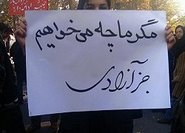


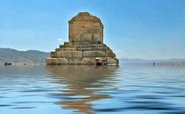


 Tulips in Holland