

Iran denies arming the Taleban !
Iran’s President has rejected accusations that elements of his Government have supplied weapons to Taleban insurgents to destabilise international efforts to rebuild Afghanistan.
Mahmoud Ahmadinejad, on his first visit to Afghanistan since he took office, refuted the British and American claims. “I doubt seriously if there is any truth in it,” he told a press conference held with President Karzai of Afghanistan in Kabul. “With all our force, we support the political process in Afghanistan. For us, a secure and stable Afghanistan is the best.” The claims have opened up a split between President Bush and Mr Karzai. During a meeting at Camp David last week Mr Karzai called Iran “a helper and a solution” to problems in Afghanistan, claiming that it was a vital ally in the fight against terrorism and drugs. Mr Bush said that he “would be very cautious about whether or not the Iranian influence there in Afghanistan is a positive force.”
Despite Mr Karzai’s claims that Mr Ahmadinejad’s Government is supporting reconstruction efforts in Afghanistan, intelligence sources in the country indicate that it is also helping to undermine Nato and American efforts.
America to crack down on businesses in Iran
Progress, of a sort, that the two leaders are talking
Colonel Rahmatullah Safi, head of border police for western Afghanistan, which borders Iran, said this month: “I have to tell the truth. It is clear to everyone that Iran is supporting the enemy of Afghanistan, the Taleban.” Afghan and international intelligence sources believe that most weaponry is filtered through a drug smuggler in the south-western province of Nimroz. The middle man is from the minority Baluch tribe and is thought to have bought weapons off the Iranian Government and sold them on to the Taleban. The most deadly weapons that have been smuggled into Afghanistan across the porous border with Iran are Iranian-made armour-piercing explosives. The bombs have been used to deadly effect in Iraq and have recently been discovered in western Afghanistan. Colonel Thomas Kelly, an American under the command of Nato, stopped short of blaming the Iranian Government, but said: “These are very sophisticated IEDs and they are really not manufactured in any other place to our knowledge than Iran.” The US Government has accused Iran’s Quds force, an arm of the Revolutionary Guard, of arming and training Shia extremist groups in Iraq. The fear now is that Iran, a Shia country, has overcome its theological difference with the Sunni Taleban to fight a larger enemy.
“The Taleban are Sunni extremists and the Iranians definitely don’t want them to take control of Afghanistan again, but right now they support them as there is a bigger enemy, America. The enemy of my enemy is my friend,” said Haji Rafiq Shahir, a law professor at Herat University.
see this : 100 Iran-made bombs seized, claim Afghan officials
MAZAR-I-SHARIF, Aug 14 (Pajhwok Afghan News): Balkh intelligence officials have claimed seizing a hundred Iranian-made improvised explosive devices (IED) in the Hairatan border town on the eve of President Mahmoud Ahmadinejads maiden visit to Kabul. An intelligence official, who did not want to be named, confided to Pajhwok Afghan News on Tuesday they recovered the bombs recently smuggled into the northern province for disruptive activities. The YM-type landmines - manufactured in 1997 by the neighbouring country - were to be used for blowing up gas and oil installations in the region, claimed the intelligence official, who offered no concrete proof in support of his assertion. Initial investigations indicated the explosive devices were smuggled into Afghanistan from Uzbekistan by loyalists of warlord Tahir Yoldashev, said the source, who alleged the dreaded militant leader was fighting alongside al-Qaeda terrorists in Pakistan's lawless tribal areas. Intelligence personnel are combing certain locations to track down the smugglers, according to the official, familiar with the seizure and the ongoing probe. He declined to give more details, arguing such information could hurt the manhunt and the investigation. A senior official based in Hairatan, Qazi Najibullah, confirmed the sleuths recovered the bombs in his presence last evening. The official, who would not reveal more details for security reasons, added the explosives had been shifted to Mazar-i-Sharif. Less than two weeks back, 16 Iranian-made landmines were found from a hideout in the mountainous district of Ghorian in the western Herat province that borders with Iran. On June 2, officials said five anti-tank mines - with all the Iranian hallmarks - were seized from a cave in the same district. In mid-June, a top-ranking Bush administration official, in a departure from his previous stand, hinted the Iranian government was aware of large-scale weapons shipments to Taliban fighters in Afghanistan. Defense Secretary Robert Gates said he had seen a new intelligence analysis that broadly suggested 'a fairly substantial flow of illegal weapons' from Iran to Taliban. The arms were being shipped with the knowledge of the Iranian government, he presumed. "Given the quantities that were seeing, it is difficult to believe that it's associated with smuggling or the drug business or that it's taking place without the knowledge of the Iranian government," remarked Gates. But Afghan leader Hamid Karzai, who met the Iranian president in Kabul today, tends to dispel the impression that Iran is arming his foes or trying to create instability in his country. Earlier in the month, he disagreed on the issue with President Bush during media appearance at Camp David.
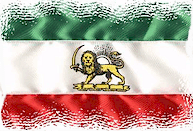
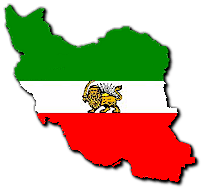
IMPERIAL EMBLEM

PERSIA
Iranian Freedom Fighters UNITE
Showing posts with label NATO. Show all posts
Showing posts with label NATO. Show all posts
Tuesday, August 14, 2007


Saturday, June 30, 2007
Revenge attack kills women and children in Afghanistan
NATO, Afghan officials probe report of civilian deaths
Allegation from mayor of Gereshk, who investigated attack near Hyderabad
Mayor reports 120 to 130 people killed, including women and children
NATO's ISAF also investigating to determine if any civilian casualties
KABUL, Afghanistan (CNN) -- The U.S.-led coalition and the Afghan government are investigating reports that as many as 130 people, including women and children, were killed Friday in an attack by coalition forces in southern Afghanistan's Helmand province. An attack by coalition forces may have left 130 civilians dead in southern Afghanistan. The allegation came from Dur Ali Shah, the mayor of Gereshk, who said he was appointed by the province to investigate the attack near the village of Hyderabad. "The people coming from the area are saying that 120 to 130 people have been killed, including women and children," Shah said. "We don't know how many of those are armed people and how many are civilians." A U.S.military spokesman assigned to NATO's International Security Assistance Force (ISAF) said he was aware that a large number of insurgents had been killed but they are investigating to determine if there were any civilian casualties. A spokesman with the Afghan Interior Ministry also said his government had sent investigators. This report comes one week after Afghan President Hamid Karzai accused NATO of "the disproportionate use of force" following an incident in which he said dozens of Afghan civilians were killed in the town of Gereshk, which is near Hyderabad.
Shah said the attack came after two coalition vehicles were hit with a mine and an ambush Friday afternoon.
Allegation from mayor of Gereshk, who investigated attack near Hyderabad
Mayor reports 120 to 130 people killed, including women and children
NATO's ISAF also investigating to determine if any civilian casualties
KABUL, Afghanistan (CNN) -- The U.S.-led coalition and the Afghan government are investigating reports that as many as 130 people, including women and children, were killed Friday in an attack by coalition forces in southern Afghanistan's Helmand province. An attack by coalition forces may have left 130 civilians dead in southern Afghanistan. The allegation came from Dur Ali Shah, the mayor of Gereshk, who said he was appointed by the province to investigate the attack near the village of Hyderabad. "The people coming from the area are saying that 120 to 130 people have been killed, including women and children," Shah said. "We don't know how many of those are armed people and how many are civilians." A U.S.military spokesman assigned to NATO's International Security Assistance Force (ISAF) said he was aware that a large number of insurgents had been killed but they are investigating to determine if there were any civilian casualties. A spokesman with the Afghan Interior Ministry also said his government had sent investigators. This report comes one week after Afghan President Hamid Karzai accused NATO of "the disproportionate use of force" following an incident in which he said dozens of Afghan civilians were killed in the town of Gereshk, which is near Hyderabad.
Shah said the attack came after two coalition vehicles were hit with a mine and an ambush Friday afternoon.
Wednesday, June 13, 2007
WHY IS THE ISLAMIC REPUBLIC OF IDIOTS SO STUPID ?
U.S.: NATO Has Intercepted Iranian Arms : Wednesday June 13, 2007 2:31 PM
By JAMEY KEATEN : Associated Press Writer
PARIS (AP) - NATO has intercepted Iranian weapons shipments to Afghanistan's Taliban insurgents, providing evidence Iran is violating international law to aid a group it once considered a bitter enemy, a senior U.S. diplomat said Wednesday. ``There's irrefutable evidence the Iranians are now doing this,'' Undersecretary of State Nicholas Burns said on CNN. ``It's certainly coming from the government of Iran. It's coming from the Iranian Revolutionary Guard corps command, which is a basic unit of the Iranian government.'' Speaking separately to The Associated Press, Burns said NATO must act to stop the shipments. The Iran-Afghanistan frontier is ``a very long border. But the Iranians need to know that we are there and that we're going to oppose this.'' ``It's a very serious question,'' he said, adding that Iran is in ``outright violation'' of U.N. Security Council resolutions. Burns did not give details on the scope of the alleged Iranian shipments, although he appeared to indicate that they were limited. ``I don't think it's made a substantial difference in the greater theater of the war,'' he said. ``It is not going to turn the tide against us, but it is very troublesome, it is illegal under international law ... and the Iranians need to stop it,'' Burns told the AP. Burns, who was holding talks in Paris, first accused Iran on Tuesday of transferring weapons to the Taliban insurgency in Afghanistan - the most direct comments yet on the issue by a ranking American official. In Afghanistan last week, Defense Secretary Robert Gates said Iranian weapons were falling into the hands of anti-government Taliban fighters, but he stopped short of blaming Tehran. Iran's possible role in aiding insurgents in Iraq has been hotly debated, and last month some Western and Persian Gulf governments alleged that the Islamic government in Tehran is also secretly bolstering Taliban fighters. In an AP interview Monday, U.S. Army Gen. Dan McNeill said Taliban fighters are showing signs of better training, using combat techniques comparable to ``an advanced Western military'' in ambushes of U.S. Special Forces soldiers. ``In Afghanistan it is clear that the Taliban is receiving support, including arms from ... elements of the Iranian regime,'' British Prime Minister Tony Blair wrote in the May 31 edition of the Economist. Iran, which is also in a dispute with the West over its nuclear program, denies the Taliban accusation, calling it part of a broad anti-Iranian campaign. Tehran says it makes no sense that a Shiite-led government like itself would help the fundamentalist Sunni movement of the Taliban. Burns acknowledged that it was ``curious'' that Iran would aid the Taliban. ``It's quite surprising,'' he told CNN. ``The Iranians had said that they were the mortal enemies of the Taliban in 2001 and '02.'' On the nuclear issue, Burns claimed that sanctions already leveled against Iran were being felt and reiterated the threat of more if the country refuses to suspend uranium enrichment - which the West fears could be meant for the production of nuclear weapons. President Mahmoud Ahmadinejad on Wednesday dismissed the possibility that a third set of Security Council sanctions would harm Iran. Burns disagreed. ``I think most people would say that the Iranians are experiencing considerable economic difficulties because of the financial sanctions that have been taken outside the Council and because of Security Council sanctions,'' he told CNN. While diplomatic solutions are preferable, ``they will get sanctions if they choose confrontation,'' Burns said. ``All of us want to prevent Iran from becoming a nuclear weapons power. That's the policy of the entire world.''
By JAMEY KEATEN : Associated Press Writer
PARIS (AP) - NATO has intercepted Iranian weapons shipments to Afghanistan's Taliban insurgents, providing evidence Iran is violating international law to aid a group it once considered a bitter enemy, a senior U.S. diplomat said Wednesday. ``There's irrefutable evidence the Iranians are now doing this,'' Undersecretary of State Nicholas Burns said on CNN. ``It's certainly coming from the government of Iran. It's coming from the Iranian Revolutionary Guard corps command, which is a basic unit of the Iranian government.'' Speaking separately to The Associated Press, Burns said NATO must act to stop the shipments. The Iran-Afghanistan frontier is ``a very long border. But the Iranians need to know that we are there and that we're going to oppose this.'' ``It's a very serious question,'' he said, adding that Iran is in ``outright violation'' of U.N. Security Council resolutions. Burns did not give details on the scope of the alleged Iranian shipments, although he appeared to indicate that they were limited. ``I don't think it's made a substantial difference in the greater theater of the war,'' he said. ``It is not going to turn the tide against us, but it is very troublesome, it is illegal under international law ... and the Iranians need to stop it,'' Burns told the AP. Burns, who was holding talks in Paris, first accused Iran on Tuesday of transferring weapons to the Taliban insurgency in Afghanistan - the most direct comments yet on the issue by a ranking American official. In Afghanistan last week, Defense Secretary Robert Gates said Iranian weapons were falling into the hands of anti-government Taliban fighters, but he stopped short of blaming Tehran. Iran's possible role in aiding insurgents in Iraq has been hotly debated, and last month some Western and Persian Gulf governments alleged that the Islamic government in Tehran is also secretly bolstering Taliban fighters. In an AP interview Monday, U.S. Army Gen. Dan McNeill said Taliban fighters are showing signs of better training, using combat techniques comparable to ``an advanced Western military'' in ambushes of U.S. Special Forces soldiers. ``In Afghanistan it is clear that the Taliban is receiving support, including arms from ... elements of the Iranian regime,'' British Prime Minister Tony Blair wrote in the May 31 edition of the Economist. Iran, which is also in a dispute with the West over its nuclear program, denies the Taliban accusation, calling it part of a broad anti-Iranian campaign. Tehran says it makes no sense that a Shiite-led government like itself would help the fundamentalist Sunni movement of the Taliban. Burns acknowledged that it was ``curious'' that Iran would aid the Taliban. ``It's quite surprising,'' he told CNN. ``The Iranians had said that they were the mortal enemies of the Taliban in 2001 and '02.'' On the nuclear issue, Burns claimed that sanctions already leveled against Iran were being felt and reiterated the threat of more if the country refuses to suspend uranium enrichment - which the West fears could be meant for the production of nuclear weapons. President Mahmoud Ahmadinejad on Wednesday dismissed the possibility that a third set of Security Council sanctions would harm Iran. Burns disagreed. ``I think most people would say that the Iranians are experiencing considerable economic difficulties because of the financial sanctions that have been taken outside the Council and because of Security Council sanctions,'' he told CNN. While diplomatic solutions are preferable, ``they will get sanctions if they choose confrontation,'' Burns said. ``All of us want to prevent Iran from becoming a nuclear weapons power. That's the policy of the entire world.''
Monday, February 26, 2007
Town’s Elders Plead for Help With Taliban
By ABDUL WAHEED WAFA and CARLOTTA GALL
KABUL, Afghanistan, Feb. 24 — Taliban fighters who seized control of a remote town in southern Afghanistan three weeks ago have started a campaign of arrests and reprisals against tribal elders and townspeople, according to tribal elders. The elders called on NATO forces and the government to move against the insurgents, even if it means bombing the town. Five elders from the town, Musa Qala, including a member of its tribal council, traveled to Kabul this week to plead for help, expressing bitterness that neither Afghan forces nor NATO troops responded when Taliban forces overran the town on Feb. 2. In October, in a controversial deal brokered by the town’s 50-member tribal council, both British NATO troops and the Taliban withdrew, and the town enjoyed three months of calm. But the Taliban remained at large in the district, and when NATO forces killed eight of their members in an airstrike last month, their leader seized control of the town, putting elders who did not flee under house arrest and issuing death threats.
Hundreds of families fled, anticipating NATO bombing. NATO airstrikes have continued in the region and have killed several local insurgent leaders, but the elders said that had made the situation harder for the townspeople. “Mullah Ghafoor was killed in an airstrike, and the Taliban started to blame the elders and people for spying for NATO troops,” said the main spokesman for the group that came to Kabul, identifying one insurgent leader. Another leader, Mullah Manan, was killed, and the house where his body was taken was bombed, he said.“Since Tuesday the Taliban started to arrest people and elders and charge them with helping the government,” he said.

Ten people had been arrested, including an elder who had served as police chief, and one man was hurt and may have died, the elders said. The spokesman and an elder interviewed by telephone said that a Taliban leadership council in Quetta, Pakistan, was ordering the arrests and issuing the death threats. The elders who spoke asked not to be identified for fear of reprisals from the Taliban. Two said they had received death threats from the Taliban and had fled their homes. Other members of the tribal council were in hiding, they said. One elder said the Taliban had told him by telephone that they were under strong pressure from Pakistan to seize control of the town and now to go further. “One of the Taliban told me on the telephone, ‘Hajji Sahib, I am respecting you like my father, but we are ordered to kill you,’ ” he said. One landowner from Kajaki, a neighboring district, said the Taliban had executed 13 people from their own ranks and arrested three more. About 1,000 Taliban are in Musa Qala’s broader district, also called Musa Qala, the elders said. The Taliban have boasted that they control 10,000 fighters in the region. “We want the government to take back Musa Qala,” said one elder who helped broker the October deal. “People are ready to help NATO and the government, but we don’t know what we are waiting for.” Asadullah Wafa, the governor of Musa Qala’s province, Helmand, was at the NATO airbase at Kandahar discussing the situation with NATO commanders. He said that he was not aware that the Taliban had begun making arrests but that the government and NATO were poised to act. “We have a comprehensive plan to resolve the issue of Musa Qala, and it will be solved very soon,” he said by telephone.
Abdul Waheed Wafa reported from Kabul, and Carlotta Gall from Lahore, Pakistan. Taimoor Shah contributed reporting from Kandahar, Afghanistan.
KABUL, Afghanistan, Feb. 24 — Taliban fighters who seized control of a remote town in southern Afghanistan three weeks ago have started a campaign of arrests and reprisals against tribal elders and townspeople, according to tribal elders. The elders called on NATO forces and the government to move against the insurgents, even if it means bombing the town. Five elders from the town, Musa Qala, including a member of its tribal council, traveled to Kabul this week to plead for help, expressing bitterness that neither Afghan forces nor NATO troops responded when Taliban forces overran the town on Feb. 2. In October, in a controversial deal brokered by the town’s 50-member tribal council, both British NATO troops and the Taliban withdrew, and the town enjoyed three months of calm. But the Taliban remained at large in the district, and when NATO forces killed eight of their members in an airstrike last month, their leader seized control of the town, putting elders who did not flee under house arrest and issuing death threats.
Hundreds of families fled, anticipating NATO bombing. NATO airstrikes have continued in the region and have killed several local insurgent leaders, but the elders said that had made the situation harder for the townspeople. “Mullah Ghafoor was killed in an airstrike, and the Taliban started to blame the elders and people for spying for NATO troops,” said the main spokesman for the group that came to Kabul, identifying one insurgent leader. Another leader, Mullah Manan, was killed, and the house where his body was taken was bombed, he said.“Since Tuesday the Taliban started to arrest people and elders and charge them with helping the government,” he said.
Ten people had been arrested, including an elder who had served as police chief, and one man was hurt and may have died, the elders said. The spokesman and an elder interviewed by telephone said that a Taliban leadership council in Quetta, Pakistan, was ordering the arrests and issuing the death threats. The elders who spoke asked not to be identified for fear of reprisals from the Taliban. Two said they had received death threats from the Taliban and had fled their homes. Other members of the tribal council were in hiding, they said. One elder said the Taliban had told him by telephone that they were under strong pressure from Pakistan to seize control of the town and now to go further. “One of the Taliban told me on the telephone, ‘Hajji Sahib, I am respecting you like my father, but we are ordered to kill you,’ ” he said. One landowner from Kajaki, a neighboring district, said the Taliban had executed 13 people from their own ranks and arrested three more. About 1,000 Taliban are in Musa Qala’s broader district, also called Musa Qala, the elders said. The Taliban have boasted that they control 10,000 fighters in the region. “We want the government to take back Musa Qala,” said one elder who helped broker the October deal. “People are ready to help NATO and the government, but we don’t know what we are waiting for.” Asadullah Wafa, the governor of Musa Qala’s province, Helmand, was at the NATO airbase at Kandahar discussing the situation with NATO commanders. He said that he was not aware that the Taliban had begun making arrests but that the government and NATO were poised to act. “We have a comprehensive plan to resolve the issue of Musa Qala, and it will be solved very soon,” he said by telephone.
Abdul Waheed Wafa reported from Kabul, and Carlotta Gall from Lahore, Pakistan. Taimoor Shah contributed reporting from Kandahar, Afghanistan.
Tuesday, February 13, 2007
Anxiety grows on Iran's eastern border
Rumours grow over Iranian interest in Taliban heartlands of southern Afghanistan and tribal regions of Pakistan
TAFTAN, PAKISTAN — You can smell the tension along the Iranian border. A thick stench of rotting fruit and vegetables hangs over market stalls in the border town of Taftan, near the three-way juncture of Afghanistan, Pakistan and Iran.The wild country here on the edge of the Afghan desert has grown notorious as a shipment point for drugs and weapons, a source of worry for all three governments. For years, those concerns rarely interrupted the work of ordinary traders, but last week the Pakistani authorities caught seven Iranians trying to sneak across the border at night, and a squabble ensued over which country had the right to interrogate them.Iran closed its border in protest, and for several days the town was awash with food destined for Iranian shelves, long rows of packing crates crawling with flies.Mullah Zafran, president of the Taftan fruit market, said these interruptions of trade are becoming more frequent. "There is no discipline on the border," he said, bitterly.The scene in Taftan is one of several signs of growing anxiety along Iran's eastern border. The country's western flank has received vastly more attention in recent days, as the United States accuses Iran of helping insurgents in Iraq. But some observers have also started to question Iran's strategy in the Taliban heartlands of southern Afghanistan and the tribal regions of Pakistan.Officially, Tehran remains closely allied with Kabul, having poured more than $200-million (U.S.) into the reconstruction of its war-torn neighbour. Iran's Foreign Minister met with Afghanistan's outgoing ambassador to Tehran on the weekend, praising their warm relations and calling for more economic co-operation.Behind the smiles, however, lies a heated debate. Nearly every Afghan politician criticizes Pakistan for stoking the Taliban insurgency, but they're divided about Iran. Some describe their neighbour as exerting only political and commercial influence, broadcasting anti-American radio and television programs into the country and using predatory business practices to gain control over parts of Afghanistan's economy."They are meddling, for sure," a senior Kabul politician said. "But for now, we can't say they are interfering in the military aspect." In Kandahar, another politician said he believes that Iran supports the Ishaqzai tribal faction within the Taliban. The Afghan politician said he recently met with an Iranian official and challenged him about the rumours, which produced only a shrug from the Iranian."He said, 'What should we do? If we knew that the United States would behave like this, we would not have opposed the Taliban at first,' " the politician said.Support for the Taliban would be a major reversal for the Shia government in Iran, which nearly went to war with the Sunni Taliban regime over the killing of seven Iranian diplomats in 1998. Iran continued to give weapons and other assistance to the Taliban's enemies in northern Afghanistan until the regime was overthrown.But the arrival of foreign soldiers in Afghanistan brought new concerns for Tehran, especially as the North Atlantic Treaty Organization increases its troop strength in provinces near the Iranian border. NATO's chief of staff in southern Afghanistan, Canadian Colonel Mike Kampman, responded cautiously when asked about Iran's response."You put all this in the larger international atmosphere, or environment, and you can imagine the tensions of any sort of Western presence that gets close to that border," Col. Kampman said.Lieutenant-General Rahmatullah Raoufi, southern regional commander for the Afghan army, said he hasn't seen any firm indications that Iran backs the insurgency. "We don't have any evidence," he said. "We just don't know." A few hints — rumours, mostly — suggest the Iranians may have established links with the insurgents.A 22-year-old Taliban fighter from Maywand district, west of Kandahar, was shot in the chest during a fight with NATO troops in September, and dragged off the battlefield by his comrades.He returned home several months later, with his wounds healed, and told his neighbours that the Taliban took him for treatment to a hospital in Tehran."He kept talking about the Iranian nurses," said a neighbour, who feared for his life if he told the story publicly. "He said, 'They were really beautiful, and I wish I could speak Persian.' " A Taliban source said he knows of opium barons who have dramatically increased their regular cash payments to insurgent leaders in Quetta, Pakistan. The payments are protection money, paid by drug dealers whose smuggling routes are guarded by Taliban fighters. Those routes often run across the Iranian border, and the Taliban source speculated that somebody inside Iran is putting cash in the drug convoys for delivery to the insurgents.(A low-ranking Western intelligence staffer also said Iran is funding the Taliban, but offered no details.)A Taliban fighter in Kandahar, however, was skeptical about the Iranian support. "We get some Kalashnikovs from Iran, but we have to pay for them," he said. "If they want to help us, they should give them free." Free or not, Iranian weapons have been reported on the battlefields of Panjwai district, where Canadian troops recently fought insurgents.Gul Mohammed, a villager from Sangisar, about 40 kilometres west of Kandahar city, said Taliban fighters burned his cousin's home and stole two Russian-made Kalashnikovs during the fighting in his village this summer. He approached the fighters on his cousin's behalf, he said, asking them to give the weapons back. Many households in Afghanistan are stocked with assault rifles for personal protection, and Mr. Mohammed argued with the Taliban that his cousin needed the weapons to protect his family.The insurgents were reluctant to give back the Russian rifles, which are prized in Afghanistan for their quality. Instead, the fighters offered Mr. Mohammed two rifles they described as "Iranian Kalashnikovs," shorter weapons with two grey plastic pistol-grips and folding metal stocks. His description sounded closer to the Hungarian AMD-65 than any Iranian rifle, but the insurgents said the weapons and ammunition were both supplied by Iran."The guns were new," Mr. Mohammed said. "The black paint was very shiny." Such claims are difficult to verify; Afghanistan has issued AMD-65s to some police officers, and deep corruption in the country's law enforcement means that police weapons often wind up in the hands of insurgents.In fact, the Afghan police officer who stood guard outside Iran's consulate in Kandahar last week was carrying the same weapon, a weathered AMD-65.Inside the ornate building, in an office decorated with hundreds of tiny mirrors and a portrait of Ayatollah Khomaini, the head of Iran's reconstruction efforts in southern Afghanistan shook his head scornfully when asked whether Iranian weapons are being used by the Taliban."It's impossible," said Sheik Hossein Zeineddin, director of the Iranian Council in Kandahar. "We are working in a very transparent way." Echoing the arguments made by Pakistani authorities, however, Mr. Zeineddin added that it's difficult for Iran to stop insurgents from crossing the expanses of open terrain that form his country's border with Afghanistan."We have a 900-kilometre border with Afghanistan," he said. "Who can control every kilometre?" But the problems with the border are less of a threat to Afghanistan than to Iran, Mr. Zeineddin added, because the Western allies now operating in the region are trying to make trouble for his country.He alleged that British forces are using the drug dealers in Helmand province for espionage against Iran: "They are gathering information, visiting, making connections, watching us."At the same time, Mr. Zeineddin said, the United States and Pakistan are supporting the Baloch tribes in their separatist insurgency in southeastern Iran."They are raising the Baloch against us," he said, even suggesting that NATO operates training camps for Baloch fighters inside Afghanistan.A gracious man, wearing a suit jacket and speaking fluent English, Mr. Zeineddin said his suspicions about the Western powers haven't stopped him from pursuing a humanitarian mission in southern Afghanistan. Some of the initiatives he described, such as subsidizing Ariana Afghan Airlines' regular flights to Tehran, and training 300 literacy teachers as Persian-language instructors, seemed designed to extend Iran's influence in this Pashto-speaking area.But he also gave a long list of other Iranian projects that appeared to support NATO's goal of rebuilding the country: a trade school, a sports centre, a women's clinic, a library, a soccer pitch, renovations for an orphanage and several others.The frustration of trying to implement these projects with the Afghan government — money gone missing, and Afghan officials refusing to take responsibility for their work — shows why insurgent groups such as the Taliban don't require help from outside the country, he said."Now, there's so much corruption, no wonder the people go back to the Taliban," Mr. Zeineddin said.
TAFTAN, PAKISTAN — You can smell the tension along the Iranian border. A thick stench of rotting fruit and vegetables hangs over market stalls in the border town of Taftan, near the three-way juncture of Afghanistan, Pakistan and Iran.The wild country here on the edge of the Afghan desert has grown notorious as a shipment point for drugs and weapons, a source of worry for all three governments. For years, those concerns rarely interrupted the work of ordinary traders, but last week the Pakistani authorities caught seven Iranians trying to sneak across the border at night, and a squabble ensued over which country had the right to interrogate them.Iran closed its border in protest, and for several days the town was awash with food destined for Iranian shelves, long rows of packing crates crawling with flies.Mullah Zafran, president of the Taftan fruit market, said these interruptions of trade are becoming more frequent. "There is no discipline on the border," he said, bitterly.The scene in Taftan is one of several signs of growing anxiety along Iran's eastern border. The country's western flank has received vastly more attention in recent days, as the United States accuses Iran of helping insurgents in Iraq. But some observers have also started to question Iran's strategy in the Taliban heartlands of southern Afghanistan and the tribal regions of Pakistan.Officially, Tehran remains closely allied with Kabul, having poured more than $200-million (U.S.) into the reconstruction of its war-torn neighbour. Iran's Foreign Minister met with Afghanistan's outgoing ambassador to Tehran on the weekend, praising their warm relations and calling for more economic co-operation.Behind the smiles, however, lies a heated debate. Nearly every Afghan politician criticizes Pakistan for stoking the Taliban insurgency, but they're divided about Iran. Some describe their neighbour as exerting only political and commercial influence, broadcasting anti-American radio and television programs into the country and using predatory business practices to gain control over parts of Afghanistan's economy."They are meddling, for sure," a senior Kabul politician said. "But for now, we can't say they are interfering in the military aspect." In Kandahar, another politician said he believes that Iran supports the Ishaqzai tribal faction within the Taliban. The Afghan politician said he recently met with an Iranian official and challenged him about the rumours, which produced only a shrug from the Iranian."He said, 'What should we do? If we knew that the United States would behave like this, we would not have opposed the Taliban at first,' " the politician said.Support for the Taliban would be a major reversal for the Shia government in Iran, which nearly went to war with the Sunni Taliban regime over the killing of seven Iranian diplomats in 1998. Iran continued to give weapons and other assistance to the Taliban's enemies in northern Afghanistan until the regime was overthrown.But the arrival of foreign soldiers in Afghanistan brought new concerns for Tehran, especially as the North Atlantic Treaty Organization increases its troop strength in provinces near the Iranian border. NATO's chief of staff in southern Afghanistan, Canadian Colonel Mike Kampman, responded cautiously when asked about Iran's response."You put all this in the larger international atmosphere, or environment, and you can imagine the tensions of any sort of Western presence that gets close to that border," Col. Kampman said.Lieutenant-General Rahmatullah Raoufi, southern regional commander for the Afghan army, said he hasn't seen any firm indications that Iran backs the insurgency. "We don't have any evidence," he said. "We just don't know." A few hints — rumours, mostly — suggest the Iranians may have established links with the insurgents.A 22-year-old Taliban fighter from Maywand district, west of Kandahar, was shot in the chest during a fight with NATO troops in September, and dragged off the battlefield by his comrades.He returned home several months later, with his wounds healed, and told his neighbours that the Taliban took him for treatment to a hospital in Tehran."He kept talking about the Iranian nurses," said a neighbour, who feared for his life if he told the story publicly. "He said, 'They were really beautiful, and I wish I could speak Persian.' " A Taliban source said he knows of opium barons who have dramatically increased their regular cash payments to insurgent leaders in Quetta, Pakistan. The payments are protection money, paid by drug dealers whose smuggling routes are guarded by Taliban fighters. Those routes often run across the Iranian border, and the Taliban source speculated that somebody inside Iran is putting cash in the drug convoys for delivery to the insurgents.(A low-ranking Western intelligence staffer also said Iran is funding the Taliban, but offered no details.)A Taliban fighter in Kandahar, however, was skeptical about the Iranian support. "We get some Kalashnikovs from Iran, but we have to pay for them," he said. "If they want to help us, they should give them free." Free or not, Iranian weapons have been reported on the battlefields of Panjwai district, where Canadian troops recently fought insurgents.Gul Mohammed, a villager from Sangisar, about 40 kilometres west of Kandahar city, said Taliban fighters burned his cousin's home and stole two Russian-made Kalashnikovs during the fighting in his village this summer. He approached the fighters on his cousin's behalf, he said, asking them to give the weapons back. Many households in Afghanistan are stocked with assault rifles for personal protection, and Mr. Mohammed argued with the Taliban that his cousin needed the weapons to protect his family.The insurgents were reluctant to give back the Russian rifles, which are prized in Afghanistan for their quality. Instead, the fighters offered Mr. Mohammed two rifles they described as "Iranian Kalashnikovs," shorter weapons with two grey plastic pistol-grips and folding metal stocks. His description sounded closer to the Hungarian AMD-65 than any Iranian rifle, but the insurgents said the weapons and ammunition were both supplied by Iran."The guns were new," Mr. Mohammed said. "The black paint was very shiny." Such claims are difficult to verify; Afghanistan has issued AMD-65s to some police officers, and deep corruption in the country's law enforcement means that police weapons often wind up in the hands of insurgents.In fact, the Afghan police officer who stood guard outside Iran's consulate in Kandahar last week was carrying the same weapon, a weathered AMD-65.Inside the ornate building, in an office decorated with hundreds of tiny mirrors and a portrait of Ayatollah Khomaini, the head of Iran's reconstruction efforts in southern Afghanistan shook his head scornfully when asked whether Iranian weapons are being used by the Taliban."It's impossible," said Sheik Hossein Zeineddin, director of the Iranian Council in Kandahar. "We are working in a very transparent way." Echoing the arguments made by Pakistani authorities, however, Mr. Zeineddin added that it's difficult for Iran to stop insurgents from crossing the expanses of open terrain that form his country's border with Afghanistan."We have a 900-kilometre border with Afghanistan," he said. "Who can control every kilometre?" But the problems with the border are less of a threat to Afghanistan than to Iran, Mr. Zeineddin added, because the Western allies now operating in the region are trying to make trouble for his country.He alleged that British forces are using the drug dealers in Helmand province for espionage against Iran: "They are gathering information, visiting, making connections, watching us."At the same time, Mr. Zeineddin said, the United States and Pakistan are supporting the Baloch tribes in their separatist insurgency in southeastern Iran."They are raising the Baloch against us," he said, even suggesting that NATO operates training camps for Baloch fighters inside Afghanistan.A gracious man, wearing a suit jacket and speaking fluent English, Mr. Zeineddin said his suspicions about the Western powers haven't stopped him from pursuing a humanitarian mission in southern Afghanistan. Some of the initiatives he described, such as subsidizing Ariana Afghan Airlines' regular flights to Tehran, and training 300 literacy teachers as Persian-language instructors, seemed designed to extend Iran's influence in this Pashto-speaking area.But he also gave a long list of other Iranian projects that appeared to support NATO's goal of rebuilding the country: a trade school, a sports centre, a women's clinic, a library, a soccer pitch, renovations for an orphanage and several others.The frustration of trying to implement these projects with the Afghan government — money gone missing, and Afghan officials refusing to take responsibility for their work — shows why insurgent groups such as the Taliban don't require help from outside the country, he said."Now, there's so much corruption, no wonder the people go back to the Taliban," Mr. Zeineddin said.
Monday, February 12, 2007
U.S. Fires Artillery Rounds Into Pakistan
Asserting a right to self-defense, American forces in eastern Afghanistan have launched artillery rounds into Pakistan to strike Taliban fighters who attack remote U.S. outposts, the commander of U.S. forces in the region said Sunday. The skirmishes are politically sensitive because Pakistan's government, regarded by the Bush administration as an important ally against Islamic extremists, has denied that it allows U.S. forces to strike inside its territory.The use of the largely ungoverned Waziristan area of Pakistan as a haven for Taliban and al-Qaeda fighters has become a greater irritant between Washington and Islamabad since Pakistan put in place a peace agreement there in September that was intended to stop cross-border incursions.

Army Col. John W. Nicholson, commander of the 3rd Brigade, 10th Mountain Division, said in an Associated Press interview that rather than halt such incursions, the peace deal has led to a substantial increase.Pakistani border forces, which had been active in stopping Taliban incursions into Afghanistan as recently as last spring, stopped offensive actions against them once the peace deal took effect, he said."That did relax some of the pressure on the enemy," said Nicholson.The Pakistan army's top spokesman said Sunday that coalition forces operating in Afghanistan are not allowed to fire into Pakistani territory, but acknowledged that artillery fire from the coalition had landed inside Pakistan in recent days. Pakistan also plans to seek "clarification" about Nicholson's comments. Members of Nicholson's brigade, which is based at Fort Drum, New York, recently were told that instead of going home this month after a year-long tour, they will stay for an extra four months, until June.Nicholson told the Army's vice chief of staff, Gen. Richard Cody, that this news hit soldiers and their families hard, but that they are now adjusting well. Cody is traveling in Afghanistan.The brigade of about 3,500 soldiers is being kept in Afghanistan because senior commanders decided they needed more forces to deal with an anticipated Taliban offensive this spring. The offensive is expected to focus not only on eastern Afghanistan but also the south, where the traditional Taliban stronghold of Kandahar is seen as a prized target. NATO forces operate in that area.
Army Col. John W. Nicholson, commander of the 3rd Brigade, 10th Mountain Division, said in an Associated Press interview that rather than halt such incursions, the peace deal has led to a substantial increase.Pakistani border forces, which had been active in stopping Taliban incursions into Afghanistan as recently as last spring, stopped offensive actions against them once the peace deal took effect, he said."That did relax some of the pressure on the enemy," said Nicholson.The Pakistan army's top spokesman said Sunday that coalition forces operating in Afghanistan are not allowed to fire into Pakistani territory, but acknowledged that artillery fire from the coalition had landed inside Pakistan in recent days. Pakistan also plans to seek "clarification" about Nicholson's comments. Members of Nicholson's brigade, which is based at Fort Drum, New York, recently were told that instead of going home this month after a year-long tour, they will stay for an extra four months, until June.Nicholson told the Army's vice chief of staff, Gen. Richard Cody, that this news hit soldiers and their families hard, but that they are now adjusting well. Cody is traveling in Afghanistan.The brigade of about 3,500 soldiers is being kept in Afghanistan because senior commanders decided they needed more forces to deal with an anticipated Taliban offensive this spring. The offensive is expected to focus not only on eastern Afghanistan but also the south, where the traditional Taliban stronghold of Kandahar is seen as a prized target. NATO forces operate in that area.

Nicholson described the fighting along the border, particularly in Afghanistan's Paktika and Khost provinces, as intense. In some cases, he said, the Taliban have crossed the border at night, using wire cutters to breach the perimeter of small U.S. outposts, "trying to get hand grenades into our bunkers"."I mean we're talking World War I type of stuff," said Nicholson. "These are some very sharp, intense fights" initiated by an enemy he described as resilient and undeterred by superior U.S. firepower. "They'll keep coming back," he said. When Taliban forces on the Pakistan side of the border fire on U.S. outposts on the Afghan side, the Americans are equipped to quickly pinpoint the launch location using radar and then strike back with artillery, he said."We do not allow the enemy to fire with impunity on our soldiers, and we have the inherent right of self defense," he said, speaking by video teleconference from his headquarters at Jalalabad air field. "Even if those fires are coming from across the border (in Pakistan), we have the right to defense ourselves, and we exercise that right." He added later, "We do fire missions across the border." Nicholson responded to questions from an A.P. reporter after the commander spoke by video teleconference with Cody. Cody had planned to fly to Jalalabad to meet with Nicholson and other commanders but poor weather forced him to remain at Bagram, the main American air base in Afghanistan.

Nicholson told Cody that U.S. forces have made important strides this winter in persuading local Afghans to side with the U.S.-backed government and to be less accommodating to the Taliban. The Taliban have been resurgent in some parts of the country after being driven from power by U.S. forces in 2001.Nicholson's area of responsibility includes the border provinces from Nuristan to Paktika. He said his forces are not required to get approval from Pakistan before responding to an attack. He emphasized that efforts are made to warn Pakistani government forces along the border to clear the intended target area before U.S. artillery is launched. "We make every effort to communicate with the Pakistan military," he said, Nicholson said the computers used to target U.S. artillery are programmed with the map coordinates of Pakistani border posts."If a fire mission is being called that would impact on a Pakistan border post, we typically will not shoot - we will not shoot that mission," he said. The United States has given radios to Pakistan border posts so they can communicate with U.S. forces in Afghanistan, he said. If U.S. troops are unable to contact them directly before launching an artillery assault, an illumination round is fired first as a means of warning the Pakistanis that high explosives will follow. The Pakistani army spokesman, Maj. Gen. Shaukat Sultan, told the A.P. by telephone in the Pakistani capital, Islamabad, "Pakistan would not allow any coalition forces to violate the international border. This is the understanding between us and the coalition forces." He added, "In case of any target inside Pakistani territory, the intelligence would be passed on to us and we would take action. This is the policy and we strictly adhere to the policy and we would not allow any violation of Pakistani border."
Subscribe to:
Posts (Atom)


 Posts
Posts




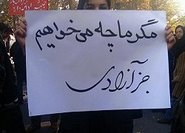
 اخبار مربوط به زندانیان سیاسی و نقض حقوق بشر







 Tulips in Holland