

WATCH THIS VIDEO : http://www.youtube.com/watch?v=ODOdTTntMF0
About This Video June 2004: Added: August 21, 2007 : http://www.blogger.com/
The success of the new government in Iraq rests on one man. Ayotollah Sistani has the power to unseat any government and unleash civil war. "If Ayatollah Sistani declares Jihad, I will put down my tools, say farewell to my family, and go to war," declares one man. Another refers to him as "our nuclear timebomb." Sistani hasn't left his house in six years and refuses interviews to anyone. But the vast majority of the country will do exactly as he asks, whatever it may be: Sistani is the leader of 180 million Shia Muslims worldwide. For now, he's urging moderation but the violence unleashed by his rival, Moqtada al-Sadr, who commands a fraction of the support of Sistani, reveals just how dangerous he could be if he called for jihad.
Rare footage of Ayatolah Ali Sistani and Mirza Javad Tabrizi : MrMehdi
Ali al-Sistani : TheYoungTurks
Ayatollah Khoei : hiqbal007
Sistani Verdict : supra786
Are you Sunni or Shia? - Civil War is Worse than Genocide : lostprophet786
Sistani in the US media : roadstoiraq
Re: Bill Maher on Sistani.org - by Seyed Mostafa PART 1 : almahdi140
Cannon Fodder - Iraq : journeymanpictures
IMPERIAL EMBLEM

PERSIA
Iranian Freedom Fighters UNITE
Showing posts with label Shia. Show all posts
Showing posts with label Shia. Show all posts
Wednesday, December 19, 2007
Sunday, December 16, 2007
Azerbaijan: Western secrets sent to Iran
Azerbaijan's security agency said Saturday that 15 people convicted this week of treason had passed information on U.S., British and Israeli activities in the ex-Soviet republic to Iranian intelligence.
The National Security Ministry gave new details about the group, which allegedly passed to Iranian agents details on Western embassies, companies, pipeline operations and employees operating in Azerbaijan from 2005 to 2006. The Court for Grave Crimes on Monday sentenced the 15 to lengthy prison sentences in a case that highlighted Azerbaijan's concern over the influence of neighboring Iran. The 15 were arrested in January on suspicion of crimes including plotting to forcefully seize power, treason, organizing a criminal group, possession of weapons and drugs, and counterfeiting. Two members of the group allegedly met repeatedly with intelligence agents in Iran, where they received training, equipment, maps and more than $10,000 in funding, the ministry said. Said Dadashbeyli, the alleged leader who worked at a U.S.-Azerbaijani drilling company, sought Iranian support for a plot to seize power in Azerbaijan and establish Islamic law in the oil-rich country. He was sentenced to 14 years in prison, along with two other group members. The others received sentences ranging from two years to 13, the court said. Dadashbeyli's lawyer said the charges were unfounded. Predominantly Muslim Azerbaijan has increasingly been caught in a tug-of-war for influence between the secular, democratic West and its large southern neighbor. Rumblings of Shiite political Islam have been particularly noticeable in the more conservative regions that border Iran, and the secular government has displayed concern over Iranian influence and Islamic extremism.
Iraqi FM: U.S, Iran postpone talks on Iraqi security
www.chinaview.cn 2007-12-16 06:20:56
TEHRAN, Dec. 15 (Xinhua) Iraqi Foreign Minister Hoshyar Zebari confirmed Saturday that U.S and Iranian officials had postponed their talks on Iraqi security, Iran's official IRNA news agency reported. Zebari revealed the postponement after his meeting with an Iranian delegation in Baghdad, said IRNA. The fourth round of trilateral talks grouping Iran, Iraq and the U.S. on security in Iraq has been postponed and it will be resumed after the Muslim festival Eidul-Adha due on Dec. 19-21,Zebari was quoted as saying. The Iraqi top diplomat stressed that the postponement is due to technical reasons rather than political. He, meanwhile, described the previous rounds of talks as "quite fruitful", saying that the results of such meetings in political, security and psychological terms were "quite acceptable". Iran's ambassador to Baghdad Hassan Kazemi Qomi was also quoted as saying that the Iranian delegation is now in Baghdad to prepare the grounds for the fourth round of trilateral talks, hoping the next round of talks would help alleviate the suffering of the Iraqi people. Earlier on Friday, Reuters quoted a spokesman for the U.S. embassy in Baghdad, Philip Reeker, as saying that "a scheduling conflict has necessitated in moving the talks, which we had anticipated to be next week." Officials from the three sides had been due to meet in Baghdad next Tuesday and are now trying to find a date later this month that suits everyone, it reported.
Friday, September 14, 2007
Iranian Influence Increasing in Iraq : By ALI AKBAR DAREINI
The Associated Press - Friday, September 14, 2007; 1:39 PM
SHALAMCHEH, Iran -- Trucks line up every day at this border crossing to carry melons, cookies, soft drinks and appliances into Iraq. For truck driver Ala Saeedi, the booming trade is proof his country is helping its war-torn neighbor. This spot in southwestern Iran, he notes, "was once the scene of chemical attacks by Saddam (Hussein) against Iranian troops. But now it's used for trade. ... Iran is meeting the daily needs of Iraqis."
More than four years after the U.S.-led invasion toppled Saddam, Iran's influence from trade links to political sway has never been greater _ a fact bedeviling the United States as President Bush pledges American troops will remain in Iraq in large numbers. In his speech Thursday night, Bush warned that a U.S. pullout would encourage Iran "in its efforts to gain nuclear weapons and dominate the region." Washington also has long accused Iran of sending arms and even fighters to help Shiite Muslim militias in Iraq that target U.S. troops, and both British and American commanders have called the fight in parts of Iraq a "proxy war" by Iran. Iran disputes those allegations, saying it doesn't meddle inside Iraq and isn't trying to acquire atomic weapons. But Iranian officials do agree they play a strong role in Iraq, much as they do with the trade and aid they provide to Afghanistan on their eastern border, as Tehran seeks to increase its regional influence. "The Iraqi government and nation are close friends of Iran," Iranian President Mahmoud Ahmadinejad said in an interview this week. "We are natural allies." Implicating the U.S. position, Iraq's Shiite-dominated government itself has sought close trade and political ties with Iran, whose people are predominantly Shiite. Iraq and Iran were hostile to each other throughout Saddam's reign, including fighting a long and destructive war through most of the 1980s. But when Saddam's Sunni regime fell and Iraq's Shiite majority took power, long-standing historical, religious and cultural ties between the Shiites of both countries flourished again. These days, Iran's influence still is most apparent across Iraq's mostly Shiite south. But it is also felt in Kurdish northern areas and even in Baghdad, where many new reconstruction projects _ such as improving Iraq's electricity grid _ are financed by Iranian investment. "Decades of war and U.S. invasion have destroyed almost everything in Iraq. And Iran is well prepared to make good use of this opportunity to flood Iraqi markets with goods and services," said Saeed Leilaz, an economic and political analyst in Iran. The export of goods to Iraq brings both money and influence, he noted. "Iranian products are sold everywhere in Iraq. This never happened before. Iran is playing a clever game," he said. Iran's ambassador to Baghdad, Hasan Kazemi Qomi, said last month that Iran-Iraq trade in 2006 totaled $2 billion _ 97 percent of that going from Iran into Iraq. Hossein Tizmaghz, an Iranian Commerce Ministry official, said he hopes trade will soar to $10 billion in five years. Shalamcheh is one of three major crossings along the 620-mile border. In the 1980s, it was a dusty battlefield where Iranians and Iraqis exchanged bullets and mortar shells and where Saddam's regime used chemical weapons. Today, its export terminal bustles with trucks as well as Iranian families traveling to Iraq's holy cities for pilgrimage. The border situation is more complicated in Iraq's Kurdish north. The inflow of goods, including cheap gasoline, booms, but the atmosphere is tense. Iran has periodically fired artillery across the border in recent weeks at bases used by ethnic militants staging attacks in Iran's Kurdish region. An Iranian envoy warned last weekend that if the Iraqis could not stop the Kurdish raids, Tehran might respond militarily. There are also tensions in Iraq's south, where there has been fighting between Shiite groups and political parties, some of which have closer links to Iran. But the traffic in commerce and pilgrims remains high. Each month, more than 40,000 Iranians visit southern Iraq's important Shiite spots such as the holy cities of Najaf and Karbala, buying religious souvenirs and pumping money into the economy by staying in hotels. Many pass through the south's biggest city, Basra, just over 30 miles from the border. It is has many Iranian cultural and religious centers, and its shops are full of high-quality and cheap Iranian food, kitchen appliances and construction materials. "The Iranian influence is very large," said Ali Abdul Aziz, a retired Sunni teacher in Basra. Iran has said it wants to build an airport in Najaf and promises to help renovate important shrines. It also has begun work on a railroad between Iranian port of Khorramshar and Basra, connecting Iran's rail system to Iraq's. Tehran also has signed a $150 million contract to build a 300-megawatt power plant in Baghdad. Another project, a 400-megawatt electricity transmission line from the Iranian frontier city of Abadan to the Iraqi town of Alharasa is expected to go into operation in a few months. Iran also is conducting feasibility studies on building two pipelines to carry oil and derivatives from Basra to Abadan. "Enmity is over," Iranian businessman Bahram Mehrparvar said as he filled out paperwork at the Shalamcheh export terminal for the bricks and cement he exports to Iraq. "Business and trade has replaced bullets and mortars."
Saturday, July 14, 2007
Dan Rather Reports: Watch "The Most Wanted Man in Iran"
Dan Rather Reports presents an in-depth look into reports that the CIA may be seeking to destabilize the Iranian Government. In his first-ever television interview, Abdulmalik Rigi, a guerrilla leader from Iran's volatile southeast, speaks out and brags of killing "cowardly" Iranian soldiers. Sometimes referred to as "Iran's Most Wanted Man" Rigi calls for a "United States of Iran," and with his young band of Sunni fighters he is seeking to spark a national uprising against the present government of the Shia-dominated Islamic Republic. In reporting this episode, DAN RATHER REPORTS traveled to Pakistan, the United Arab Emirates, Sweden and Paris to investigate Rigi's funding sources and his possible ties to U.S. intelligence.
Watch the Episode for Yourself Right Here : http://iranvajahan.net/cgi-bin/news.pl?l=en&y=2007&m=07&d=13&a=13
Watch the Episode for Yourself Right Here : http://iranvajahan.net/cgi-bin/news.pl?l=en&y=2007&m=07&d=13&a=13
Friday, July 13, 2007
HUMAN RIGHTS-IRAN: "Blood Was Everywhere, the Smell of Death"By Omid Memarian*
Credit:kosoof.com Shadi Sadr, a prominent lawyer and activist who has worked to overturn the convictions of several women sentenced to death.BERKELEY, United States, Jul 13 (IPS) - Criticism of Iran's judiciary is mounting following the brutal execution of a man who was convicted of adultery more than a decade ago and stoned to death on Jul. 5. Although the head of the judiciary branch, Ayatollah Mahmoud Shahroudi, issued a written order stopping the execution almost a month ago, the judge in the case insisted on stoning Jafar Kiani to death.Stoning is the prescribed punishment for adultery under Islamic law in Iran. However, in recent years, some judiciary officials have been reluctant to enforce it due to intense domestic and international objections to its barbaric nature. In Sharia (Islamic law), a man is usually buried up to his waist, while a woman is buried up to her neck. Those carrying out the verdict throw stones at the condemned person until they die. Almost a month ago, "Stop Stoning Forever", a social campaign formed by outspoken women activists, warned the public that Kiani and Mokarrameh Ebrahimi, a 43-year-old mother of three, would be stoned to death in Takistan, a city in Ghazvin province. They launched an internet campaign and contacted judiciary officials to stop the execution. They were successful in reaching the segment of the judiciary branch that opposed the use of stoning in such cases, convincing Ayatollah Mahmoud Shahroudi to order a halt to the execution. Since the Iranian government controls all major media such as television, radio and newspapers, the internet is the only communication tool that activists can employ to bypass censorship, filtering and suppression of freedom of speech. Then, on Jul. 10, Dr. Alireza Jamshidi, the spokesman for the judiciary branch, confirmed that in fact, Jafar Kiani had been executed by stoning five days earlier, although his partner, Mokarrameh Ebrahimi, has still not been executed. Jamshidi expressed surprise at the decision by a local judge to proceed: "There has been a stoning sentence carried out by a judge in Takistan branch recently, but the sentences were not supposed to be executed in such a manner according to the judiciary branch, and the ban order issued by the head of the judiciary is to ensure appropriate caution by the judges in issuing and executing such sentences." "But in this case, since the sentence had been confirmed [by the Supreme Court] it was carried out, although the woman's sentence has been stopped," he said. "The extent to which the ban order can deprive a judge from independence is a long discussion, but a judge can act independently -- although with the order of the head of judiciary, it is necessary to exercise more caution in issuing and executing these sentences," he added. Several sources say that the office of Judge Ashabi, who enforced the sentence, is closed and he has not been seen since the execution. The head of the judiciary in Ghazvin Province has also said that the sentence was implemented without his knowledge and the judge enforced the sentence on his accord. There is clear evidence of internal struggles over this issue among radical Islamists and moderates in the judiciary branch. Asieh Amini, a journalist and women's rights activist who went to Aghche-Kands, a small village near Takistan where the stoning took place, told IPS that none of the local people she spoke to were aware that such an incident had occurred. "From what I have found, Ayatollah Shahroudi just halted the stoning but he did not cancel it. Therefore, the judge was able to legally carry out the sentence under the current laws in Iran," she said. "The judge, with help from a few policemen, took the prisoner from detention to a very small village, along with some of his colleagues from the judiciary office in Ghazvin province. Although none of the people in that small village were agreeable to the stoning, the judge and his accomplices stoned him to death," Amini said, based on her observations from her trip to the area. She was able to locate a copy of the judge's report that was written to his superior official. The judge started the execution by throwing the first stone. "I went there; blood was everywhere, the smell of death. Killing a man by throwing out stones [is] a cold-blooded action. It seems it is a political game and a power struggle among radicals, traditionalists and moderates. I believe Ayatollah Shahroudi is not a fan of execution by stoning but as it is an Islamic law, he cannot oppose the fundamentalists in the judiciary and remains silent against enforcement of such a brutal sentence," she added. Many other countries and human rights groups have strongly condemned this barbaric punishment. Just a few days ago, Human Rights Watch sent a letter to Ayatollah Shahroudi urging him to eliminate the penalty from Iran's constitution. "We wrote to Ayatollah Shahroudi for several reasons: First, this cold-blooded killing was carried out by provincial judiciary officials who come under his supervision, at least nominally. Second, he had recently ordered the stay of execution in this case -- which the provincial authorities disregarded. Third, he had previously issued the moratorium on executions by stoning," Joe Stork, deputy director of the Middle East and North Africa division at Human Rights Watch, told IPS. "It would be a logical step, following on the moratorium, to remove from the books any regulations recommending or permitting execution by stoning for any offence," he added. "The next step, which we did not spell out in our letter, would be to ban execution by stoning, and affirmatively make it a criminal offence." Shadi Sadr, a prominent lawyer and leading member of the "Stop Stoning Forever" campaign, says there is clearly a conflict in the differing stances within the judiciary regarding the elimination of stoning laws in the constitution. "By empowering the radicalism in the state's discourse, some factions of the judiciary branch which support stoning as a part of Islamic laws, and resist its elimination, have become more powerful than the other factions which favour eradicating it from the constitution," Sadr told IPS from Tehran. "Ayatollah Shahroudi and his supporters in the judiciary do not have legal and political authority to oppose the radical Islamist faction," she added. Despite international pressure to stop the stoning of Jafar Kiani's partner, Mokarrameh Ebrahimi, Sadr is sceptical that even the nation's top judiciary official can block such sentences anymore, although officials say her case is currently being reviewed. "Previously, the stoning laws existed, but Ayatollah Shahroudi's political power allowed him to stay an execution order. Unfortunately, now, since the radicals have gained more power in the government, his political will and authority has been greatly undermined." *Omid Memarian is an Iranian journalist and civil society activist. He has won several awards, including Human Rights Watch's highest honour in 2005, the Human Rights Defender Award.
Saturday, June 16, 2007
Sunni Shrine Leveled In Apparent Reprisal Attack
PHOTOS: Violence Intensifies
• VIDEO: Fighting Continues in Gaza
Sunni Shrine Leveled In Apparent Reprisal Attack Spurs Basra Curfew; U.S. Troop Buildup Completed : By John Ward AndersonWashington Post Foreign Service - Saturday, June 16, 2007; A10
BAGHDAD, June 15 -- Extremists demolished a Sunni mosque near Basra early Friday, prompting the government to impose an indefinite curfew in the southern port city. The strike was an apparent retaliation for Wednesday's attack on a Shiite shrine in Samarra.
Elsewhere in Iraq, the threat of sectarian attacks seemed to abate. The government announced that a curfew in the capital that began at 3 p.m. Wednesday would be lifted at 5 a.m. Sunday.
The U.S. military announced that a troop buildup in Iraq had been completed with the full deployment of 28,500 additional U.S. troops, most in high-profile posts around the capital. The increase, which started in February, brings the number of U.S. forces in the country to about 160,000. The strategy, based on the idea that Baghdad must be pacified first, aims to create enough calm so that Iraqi leaders can reach agreement on key political measures to achieve reconciliation among the country's Shiites, Sunnis and Kurds. But Defense Secretary Robert M. Gates, who on Friday made an unannounced visit to Baghdad, said the United States was disappointed with the progress on the political front. Gates said he would give the Iraqi leadership "the same message that I have been delivering since December, that our troops are buying them time to pursue reconciliation, that frankly we are disappointed with the progress so far," the Reuters news service reported.
The importance of achieving political reconciliation and improving security was underscored this week by the attack on the revered Askariya shrine in Samarra, 65 miles north of Baghdad, and the subsequent retaliatory attacks on 13 Sunni mosques across Iraq. An attack on Askariya, also known as the Golden Mosque, in February 2006 sparked widespread Shiite-Sunni violence. Friday's 5:30 a.m. attack southwest of Basra occurred at the Sunni shrine of Talha bin Obeid-Allah when "14 pickups carrying unknown armed men attacked the mosque, put explosives inside of it and detonated them," said Anwar Abdul Sattar, who works nearby and witnessed the bombing.
The mosque, which was attacked by rocket-propelled grenades Thursday and blown to rubble Friday, was the largest Sunni mosque in the Basra region, which is dominated by Shiites. "All members in charge of security at the mosque have been arrested," Maj. Gen. Ali Hamadi, head of the provincial Basra emergency security committee, told Reuters. In other violence, 35 bodies were found Friday in the capital. Unidentified bodies dumped in Baghdad typically turn out to be those of Sunni men executed by Shiite death squads. Meanwhile, the U.S. military announced the deaths of five soldiers. Three were killed Thursday in an explosion near their vehicle in northern Iraq, and one was killed Thursday by small-arms fire in Diyala province north of Baghdad. The fifth died Wednesday in a noncombat incident that is under investigation, according to a military statement.
Dog Fights over Iraq and Iran Border's first casulty ?
An F-16 fighter jet with one crew member crashed while "on a close-air-support mission" early Friday, the Air Force said in a statement. It did not give further information about the fate of the pilot. The jet was deployed to the 332nd Air Expeditionary Wing at Balad Air Base, about 45 miles north of Baghdad, the statement said, adding that the cause of the crash was under investigation.
Monday, April 30, 2007
Marriage of convenience.
A New Empire of the Mahdi? Libyan and Iranian Pan-Islamic Agendas
April 08, 2007 Praeger Security International Timothy R. Furnish
On Easter weekend 2007, two important Muslim leaders issued proclamations which may prove supremely portentous for the Global War on Terror (GWOT). The more publicized announcement was by Libya’s leader Mu`ammar al-Qadhafi, who called for “the establishment of a second Shi`ite Fatimid state in North Africa.”1 Less well-known was the call by the real leader of Iran, Ayatollah Sayyid `Ali Khamanah’i [Khamanei], for a “charter of Islamic unity.”2 Neither of these statements can be understood without some recourse to Islamic history, whether ancient or more modern.To understand al-Qadhafi’s declaration, one must know something of the Fatimids, a Shi`ite group that controlled much of the Maghrib during the 10th century CE, until they conquered Egypt and transferred their headquarters there, ruling it from 969-1171 CE.3(The name of the dynasty comes from their claim of descent from `Ali, cousin of Muhammad, through his wife Fatimah—who was one of the daughters of Islam’s founder.) Two notable aspects of the Fatimid state were: its leaders—at least some of its caliphs in the early years—were considered to be Mahdis, or “(divinely) rightly-guided ones,” who were ushering in the kingdom of Allah; and it was a militantly-expansionist state, especially vis-à-vis its main opponent, the Sunni empire of the Abbasids centered in Baghdad. At its height the Fatimid state ruled Egypt, much of what is now Israel, Palestine and Syria, as well as the Hijaz (Arabia’s western region encompassing Mecca and Medina)—and had designs on the entirety of the Muslim world, planning to displace rivals via military conquest or undermining them by disseminating Fatimid doctrines via da`is, or professional propagandists: “the Fatimids proclaimed aloud that universal sovereignty was given to them by divine decree and that they were called to displace the Umayyads of Spain as well as the Abbasids of Baghdad and the Byzantine emperors.”4 al-Qadhafi’s wish to resurrect the Fatimid polity may be dismissed as just another of his hare-brained merger schemes; but perhaps we should not be so quick to do so. It could also just as plausibly be seen as a legitimate Islamic appeal for bridging the Sunni-Shi`i divide and, thus, as a renewal of the pan-Islamic ideal—especially since the Libyan leader “rebuked the Arab League for ‘hating Iran.’”5 al-Qadhafi seems to take a rather overly-rosy view of the Fatimid system, however: he claims that “this grand Fatimid state generously allowed the existence of mini-states in its interior” and that in it “you can remain Egyptian, Libyan, Algerian, Tunisian, Mauritanian, Nigerien, Malian and so on, and [you can] stay in Sudan, the Fertile Crescent, in Jordan—but the identity will be a Fatimid identity.”6 While briefly moving onto more solid historical ground by asserting that the Fatimid state was the first truly Shi`i one, he quickly heads back into historical quicksand with statements that “we the Arabs…are attached to `Ali” [which]…means that all of the Arabs are Shi`ites”7 and that “if being Sunni means that you believe in Muhammad and his sunna8 …then the Iranians are Sunnis.”9 Eliding over 14 centuries of Islamic history, al-Qadhafi claims that the very existence of Sunni and Shi`i branches of Islam is an artificial construct imposed by colonial powers, the “foreign occupation and the Zionist settlement.”10 And finally, in what is most likely a naked attempt to curry political favor with the Palestinians and the Islamic Republic of Iran, the Libyan leader says that “the two holy sites are not the two that we say they are today. The two holy sites are Mecca and Jerusalem.”11 al-Qadhafi’s neo-Fatimism can perhaps best be understood when compared and contrasted with the similar calls for pan-Islamic unity coming out of Tehran. Contrary to much conventional wisdom, Iranian calls for Islamic unity did not begin with the Ahmadinezhad administration. Indeed, wahdat-i Islami, “Islamic unity,” has been a major emphasis of the state since 1979.12 Going back to the Ayatollah Khomeini, this doctrine was centered around two main points: belief in the West as Muslims’ common enemy, and the three core trans-Islamic beliefs of tawhid (divine unity), nubuwwah (prophethood of Muhammad) and ma`ad (resurrection and Judgment).13 Building on the precedent of the Dar al-Taqrib, “House of Rapproachement,” which existed in Cairo from 1947 until the 1970s,14 the Revolutionary Iranian government set up two bodies aimed at pan-Muslim activity: al-Majma` al-`Alami lil-Taqrib bayna al-Madhahib al-Islamiyah, or “The World Assembly for Reconciliation between the Islamic Denominations;” and Majma` al-`Alami li- Ahl al-Bayt, or “The World Assembly for the People of the House [of Muhammad].”15 The former’s goal is the functional unity of the seven “legitimate” sects of Islam: the Hanafiyah, Hanbaliyah, Malikiyah, Shafi`iyah (all Sunni); and the Ja`fariyah, Zaydiyah and Ibadiyah (all Shi`i). Interestingly, considering the close relationship between Iran and Syria today, the `Alawiyah (to which the al-Assad family, as well as most high-ranking Syrians, belong) are excluded from the World Assembly as non-Muslim, as are the Isma’iliyah and the Druze.16 This organization, as might be expected considering its grandiose goals, has met with, at best, limited success—so far. However, Khamanah’i’s “renewed call for Islamic harmony” over against “modern time Crusades” and “the failed projects of the American-led front of arrogance in…Palestine, Iraq and Lebanon”17 needs be seen as the latest installment in this Iranian bid to be the arbiter of Islamic unity. As for the second organization, the World Assembly for the People of the House [of the Prophet], it has a more realistic goal: to bring Shi`is under Tehran’s sway. The close relationship between Iran and Hizbullah indicates that it is having much more success than its more ecumenical, pan-Islamic partner. What has this to do with al-Qadhafi? No North African country, at least by official tally, has more than 3% Shi`i population.18 So concerns about a Tripoli-Tehran axis would seem to be much ado about very little. However, the Egyptian government recently began to express concern about the alleged conversions of Sunnis to Shi`ism in that country—a number that may be even greater if, as some claim, many of them as masquerading as members of the Sufi (mystical) orders. The number of Shi`is in Egypt is said to be as low as 700,000 and as high as 1.5 million.19 If the “Shi`ite Crescent”—first so named by King `Abd Allah of Jordan--should be extended into Egypt and, via al-Qadhafi, into the Maghrib, perhaps it should be re-visioned as a “Shi`i Sickle”—with the handle reaching across North Africa. Furthermore, as history indicates, a state need not be majority Shi`i in population in order to play the role of a Shi`i actor on the world stage: under the Fatimids the majority was always Sunni, yet the foreign policy and military campaigns ordered by Cairo were most definitely militantly Shi`i.Might al-Qadhafi’s neo-Fatimism, assisted by the Islamic Republic of Iran’s aspirations, transmogrify into a real and present danger to the United States and the West? Consider: the most obvious common elements of both al-Qadhafi’s and Khamanah’i’s recently-articulated platforms include a papering-over of the Sunni-Shi`i divide and the creation of a united front against the West. However, perhaps the most striking, and potentially powerful, commonality to both the Libyan’s neo-Fatimism and the Iranian’s pan-Islam is, ominously, belief in the Mahdi.20 Recall that several of the Fatimid caliphs considered themselves, and/or were proclaimed, the Mahdi. And while eventually the state ideology was forced to concede that “the victory over the Infidels which the Mahdi was expected to bring about had been postponed to the end of time,”21 there is no shortage of Muslims today, both Sunni and Shi`i, seized with eschatological fervor about the nearness of The End and the imminent coming of the Mahdi:22 in January of this year a self-proclaimed Mahdi led his forces into battle against Iraqi and American troops;23 some books and websites openly speculate that Usamah bin Ladin might be the Mahdi;24 President Ahmadinezhad of Iran frequently invokes the Mahdi;25 and Hizbullah has created the “Imam Mahdi Scouts” to assist him when he arrives.26 Recall, too, that the very Constitution of the Islamic Republic of Iran declares that the state apparatus as such is in effect only until such time as the Imam Mahdi returns from his state of hiddenness (“occultation”).27 In such a climate, would it really be surprising if the Ahmadinezhad administration declared someone the returned Mahdi? Or if al-Qadhafi pledged allegiance to the same? Even if Libya and Iran never reach the point of agreeing upon a candidate for the Mahdiyah, the convergence between the two on at least some policy matters—and of, thus, a potential framework for political cooperation—marks the re-emergence of Pan-Islamic ideology onto the stage of state actors; heretofore, for the last few decades, ecumenical politico-religious efforts in the Islamic world have been largely limited to non-state, somewhat marginal, actors, such as the Muslim Brotherhood, Hizb al-Tahrir28 and al-Qa`idah. Now it is at least possible that the Shi`i Sickle may be wielded, if not by the strong arm of the Mahdi, at least by the sinews of the state—either of which pushes the GWOT that much closer to an openly-declared clash of civilizations.
Sunday, April 22, 2007
Iraq returns to its Persian heritage
Its newly ascendant Shiites no longer have to suppress their Persian roots, which tie them closely to Iran.By Borzou DaragahiTimes Staff WriterApril 16, 2007NAJAF, IRAQ — Persian script laces and flows across the walls of Najaf's seminaries.Shiite Muslim religious scholars in the ancient city's turquoise-tiled edifices bury their noses in Koranic texts illustrated with Persian calligraphy, in scenes that evoke Mesopotamia's rich history. For centuries, Najaf has been a key shrine city and center of worship for much of Iraq's people. But for centuries, Iraq's Ottoman and Arab rulers rarely considered Najaf part of their own history. It was always considered a troublesome outpost of the enemy: Iran.They were right, for the most part. Historically and culturally, Najaf has long been under Persia's sway. But so has much of Iraq. The reading of the Koran in this country differs from the rest of the Muslim world: The rhythm and cadence of Sunnis are unique to Iraq and the Shiites' are unique to Iran. Persian dishes such as fesenjan, a pomegranate stew, are a standard part of Mesopotamian fare. Even this nation's capital carries a Persian name, Baghdad.The sectarian nature of the war between Shiite and Sunni Arabs in Iraq reflects a centuries-old battle between Persia and the Arab world. It is a point often misunderstood by U.S. policymakers and ground commanders, who perceive the reemergence of Persian influence among Iraq's newly powerful Shiite Muslim majority as proof of meddling by the regime in Tehran.Rising Persian influence is a sign of Iraq's ascendance, not Iran's. "Iraq has been part of the Persian sphere of influence for more than 400 years," said Karar Dastour, an Iraqi Shiite intellectual who lives in southern Tehran and travels to Iraq. "But governments have always tried to crush anything that had the scent of Shiism or Iran. They were never accepted."Violent Sunni Arab rejection of Iraq's Persian roots plays out daily on the streets of the capital. In February, three bombs went off in the Shorja market in central Baghdad, killing more than 70 people. It was the fifth time the place, whose name means "salty well" in Persian, was struck in less than a year. Shiite Muslims were the intended targets, but so too was a landmark established long ago by Iranian merchants. When saboteurs blew up the Golden Mosque in Samarra last year, an attack widely viewed as the accelerant of the current civil war, they destroyed the handiwork of Iranian artisans.In their Internet postings, Sunni Arab insurgents, many of them officers during the Iran-Iraq war of the 1980s, describe their attacks on Shiites as settling accounts with "Safavids," a reference to the 16th century dynasty that embraced Shiite Islam as the official religion of Persia. Shiite Safavids and Sunni Ottomans fought for decades in a conflict that infused sectarianism into what had been a centuries-old ethnic and political conflict between Arabs and Persians."There has always been conflict between the Arabs and Iranians, and they always tried to involve Iraq," Sheik Humam Hamoodi, an Iraqi Shiite politician and cleric who lived in Tehran during Saddam Hussein's rule, said in an interview last year. "Both have wanted to use Iraq as the trench for their battles."Ignoring the protests of many Shiites, the British forces who forged modern-day Iraq after the defeat of the Ottoman Empire placed a Sunni Arab tribal leader at the country's helm. They dismissed the quarrelsome Shiite clerics as Iranian-backed interlopers in their plans to create an Iraq dominated by Sunni Arabs. Minority ruleIraq's 20th century leaders tried to graft a Sunni-dominated Arab identity onto a country that was majority Shiite. Even during the relatively benign years before Hussein's rise in the late 1960s, Shiites visiting Sunni Arab towns such as Tikrit and Fallouja feared for their lives. Pilgrims visiting Samarra, which housed the famous Shiite shrine destroyed by Sunni insurgents last year, rushed to make it back to Baghdad by sundown. The battle over Iraq's identity accelerated under Hussein, who brutally suppressed what he saw as the non-Arab elements of his country's character. Hussein equated Persians to "flies," invaded Iran and subsequently killed tens of thousands of Iraqi Kurds and Shiites, dubbing them Iranian collaborators. Hussein banned ceremonies of Ashura, the annual festival-like holiday commemorating the martyrdom of Imam Hussein, revered by Shiites as a saint. He ordered the desecration of Shiite shrines and the silencing and execution of the sect's clerics, many of them of Persian descent or married into Persian families. Offices and banks were ordered to stay open on Nowruz, the Persian New Year that falls on the first day of spring and is celebrated by Iraqi Kurds as well as Iranians, Tajiks and Afghans."There was a sectarian dimension and there was an ethnic dimension to his hatred," said Musayeb Naimi, editor of Al-Wifaq, a Tehran-based Arabic-language newspaper. Hussein's downfall after the U.S.-led invasion in 2003 ended the enforced separation between Iran and Iraq, much to the frustration and rage of Iraq's long-dominant Sunni Arabs. Industrially incapacitated, Iraq must import electricity, foodstuffs, appliances and automobiles from Iran and other neighboring countries such as Turkey and Syria. Persian cultural influences, long suppressed, have reemerged in the last four years. After Hussein's ouster, Iranian and Iraqi Shiites embraced during mass commemorations of the martyrdom of Imam Hussein, rites once banned under Baath Party rule. Those rites have now become symbols of Shiite power. Sunni insurgents repeatedly attacked the pilgrims headed to Karbala last month, killing more than 200.Persian has become common on the streets of Najaf and Karbala, as well as in Baghdad's Convention Center, where the Iraqi parliament convenes. Colorful posters of imams Ali and Hussein, of the kind found in pious Iranian enclaves, appear more frequently in Iraqi markets and homes.Young Iraqi women have begun wearing the same Grace Kelly-style head scarves and short overcoats favored by Iranians. Motorcycles, popular among youths in Iran but banned during Hussein's rule, traverse Baghdad streets, as do the heroin and opium that have become a habit for young Iranians. Unease among SunnisTo many Sunni Arabs, all those have been disturbing signs of a Persian ascendancy.Brought up on a diet of Arab nationalist propaganda, Sunni Iraqis see their country's drift into the Persian sphere of influence as foreign. At first Sunni insurgents attacked mostly U.S. troops, whom they saw as an occupation force. But as the Shiite-dominated government took hold in early 2005, the attacks took a sharply sectarian turn. Seconds before his execution, Hussein cursed both the Americans who overthrew him and the "Persians" who shouted populist Shiite cleric Muqtada Sadr's name as he stood on the gallows. A bitter Jan. 2 television debate about Hussein's legacy on the satellite channel Al Jazeera underscored the ethnic underpinnings of Sunni Arab rage against Iraq's new Shiite order.The debate pitted Mishaan Jaburi, a Sunni Arab politician, against Sadeq Moussawi, a Shiite journalist and supporter of the current government.During the debate, which was posted on the Internet and rapidly became famous here, Jaburi waved sheets of white paper at Moussawi, screaming, "These are your documents! You are an Iranian citizen …. You are Persian.""Your father killed Kurds," Moussawi snapped back. "You are Iranian," Jaburi reiterated. "These documents show that [you] applied for Iraqi citizenship in May 2004."Moussawi didn't bother denying the accusation. "We will settle accounts with all of you," he said instead.Yet many of Iraq's Persian-influenced citizens are neither loyal to nor fond of the government in Tehran. Many Shiites fought on Iraq's side in the war against Iran. And most Iraqis who sought shelter in Iran during Hussein's rule experienced hardship and bigotry. But culturally and politically, they cleave toward Iran instead of Washington's preferred proxy powers — Egypt, Jordan and Saudi Arabia.Iraqi Shiites have some leaders, including the cleric Sadr, who are Arab nationalists. In the last year, however, many of them have strayed from the Arab world, angered that Arab countries have shunned Iraq's newly crystallizing Shiite identity.Persians and Shiism have become so intertwined that opposition to Tehran's policies across the region has taken on a Sunni character. Ethnic Baluchi separatists in southeastern Iran fight under the banner of a Sunni Muslim group linked to the Al Qaeda terrorist network. And in a growing number of cases, Iran's Shiite Arab separatists have converted to Sunni Islam. Even as Sunnis fight Shiites, accusing them of being Iranians, Shiites have begun to whisper about the identity of Iraq's Sunnis."The Sunnis of Iraq aren't really Arabs," one Iraqi Shiite diplomat said recently. "They're Turks."
Thursday, March 01, 2007
"A cemetery of dreams."
Maintaining Perspective
By Fouad Ajami / Posted 2/25/07 -
'It's too soon to tell," The late Chinese leader Zhou Enlai is reported to have answered when asked for an evaluation of the significance of the French Revolution of 1789. This was nearly two centuries after the great upheaval of France. evolutions are full of cunning, and the Iranian Revolution, now almost three decades old, has been no exception-cunning and ferocity side by side, the talk of a revolutionary millennium often concealing the skills of a leadership steeped in the ways of the bazaar. Shrewd players, these clerical leaders have found the cracks in the order of states around them. Brutal men, they rule a society of great historical sophistication. Given room to maneuver by a substantial windfall of oil income, they have made their nation a player of consequence in its neighborhood. Sly and opportunistic, Iran's rulers have been able to pick and choose at a time, and in a place, of great volatility. American power swept away two regimes that the Iranians dreaded-the Taliban in Afghanistan and Saddam Hussein in Iraq. True, America was now a land power on Iran's flanks; the Iranians ducked at first, then gathered themselves as the American burden grew. Mixing bravado and bluff, and granting proxies in Palestine and Lebanon, the leaders of the Iranian theocracy appear to have succeeded in spreading the image of a mighty power able to have its way in the world. For some, that great arc stretching from the Persian Gulf to the Mediterranean is now a battleground between Pax Americana and the Persians. This belief is in part due to the abdication of the Arab states, their virtual absence from the contest of nations.


There is bigotry in Arab lands, an animus on the part of the Sunni majority toward the political emancipation of the Arab Shiites. Arab diplomats and leaders shy away from Iraq-the pitiless jihadists are the only Arabs who come to Iraq-but the Iranians are present in force as pilgrims and traders and troublemakers and intelligence operatives. "A cemetery of dreams." Iran is a radical player in the world of states, to be sure, but we should not overstate its power. We should not fall for the Persian bluff. It is important that we do all we can to thwart Iran's nuclear ambitions and to checkmate it in arenas that count, but we should always remember that this is a society swimming against the tide of history and confronting the limits of its capabilities. There is an Iranian role in Iraq, but it should not be exaggerated. It is not true that the Iraqi political class marches to the Iranian drummer. It is well known that Iraqi Prime Minister Nouri al-Maliki spent his years of exile in Syria and kept his distance from the Iranians.


"Iraq is a cemetery of dreams," a thoughtful Iraqi observed to me of his country. "Iranian dreams, no less than American dreams perhaps." Iraqis are a tough breed, and the notion that they are eager to take their country into a Persian dominion is unconvincing. The Iranians dwell virtually alone in the House of Islam, separated by language and culture, marked by their Shiism. Then there are the troubles that count-the disabilities at home. Iran's deranged president, Mahmoud Ahmadinejad, came into power promising to put Iran's oil wealth "on the dinner table." But the Iranian economy is on the ropes. Hyperinflation, the drying up of international credit lines, and the astounding growth in energy consumption in Iran are bringing the country to the edge of crisis. The price of bread and meat and basic commodities has risen by as much as 25 percent. To tranquilize the realm, gasoline is subsidized well below its cost, and domestic consumption now accounts for a stunning 40 percent of Iran's oil production. Dire predictions now hold that the country will be unable to export much oil a decade from now. The true believers will proclaim that revolutionary purity trumps all, but worldly needs and affairs ultimately prevail. A society that spends $20 billion a year to subsidize the price of energy, electricity, and gasoline will in the end have to contend with the wrath and disappointment of its people. There is swagger in Iran, and there is menace, for its rulers are without scruples. Terrorism, for them, is always an option. But theirs is a vulnerable and brittle society. There is no need to "engage" them and bail them out as they stumble. The regime should be harassed, contained, and held to account. We may not have to wait two centuries to pronounce on the fate of this revolution. The swagger abroad and the rot at home: It is a trajectory we are all too familiar with by now.This story appears in the March 5, 2007 print edition of U.S. News & World Report.
By Fouad Ajami / Posted 2/25/07 -
'It's too soon to tell," The late Chinese leader Zhou Enlai is reported to have answered when asked for an evaluation of the significance of the French Revolution of 1789. This was nearly two centuries after the great upheaval of France. evolutions are full of cunning, and the Iranian Revolution, now almost three decades old, has been no exception-cunning and ferocity side by side, the talk of a revolutionary millennium often concealing the skills of a leadership steeped in the ways of the bazaar. Shrewd players, these clerical leaders have found the cracks in the order of states around them. Brutal men, they rule a society of great historical sophistication. Given room to maneuver by a substantial windfall of oil income, they have made their nation a player of consequence in its neighborhood. Sly and opportunistic, Iran's rulers have been able to pick and choose at a time, and in a place, of great volatility. American power swept away two regimes that the Iranians dreaded-the Taliban in Afghanistan and Saddam Hussein in Iraq. True, America was now a land power on Iran's flanks; the Iranians ducked at first, then gathered themselves as the American burden grew. Mixing bravado and bluff, and granting proxies in Palestine and Lebanon, the leaders of the Iranian theocracy appear to have succeeded in spreading the image of a mighty power able to have its way in the world. For some, that great arc stretching from the Persian Gulf to the Mediterranean is now a battleground between Pax Americana and the Persians. This belief is in part due to the abdication of the Arab states, their virtual absence from the contest of nations.
There is bigotry in Arab lands, an animus on the part of the Sunni majority toward the political emancipation of the Arab Shiites. Arab diplomats and leaders shy away from Iraq-the pitiless jihadists are the only Arabs who come to Iraq-but the Iranians are present in force as pilgrims and traders and troublemakers and intelligence operatives. "A cemetery of dreams." Iran is a radical player in the world of states, to be sure, but we should not overstate its power. We should not fall for the Persian bluff. It is important that we do all we can to thwart Iran's nuclear ambitions and to checkmate it in arenas that count, but we should always remember that this is a society swimming against the tide of history and confronting the limits of its capabilities. There is an Iranian role in Iraq, but it should not be exaggerated. It is not true that the Iraqi political class marches to the Iranian drummer. It is well known that Iraqi Prime Minister Nouri al-Maliki spent his years of exile in Syria and kept his distance from the Iranians.
"Iraq is a cemetery of dreams," a thoughtful Iraqi observed to me of his country. "Iranian dreams, no less than American dreams perhaps." Iraqis are a tough breed, and the notion that they are eager to take their country into a Persian dominion is unconvincing. The Iranians dwell virtually alone in the House of Islam, separated by language and culture, marked by their Shiism. Then there are the troubles that count-the disabilities at home. Iran's deranged president, Mahmoud Ahmadinejad, came into power promising to put Iran's oil wealth "on the dinner table." But the Iranian economy is on the ropes. Hyperinflation, the drying up of international credit lines, and the astounding growth in energy consumption in Iran are bringing the country to the edge of crisis. The price of bread and meat and basic commodities has risen by as much as 25 percent. To tranquilize the realm, gasoline is subsidized well below its cost, and domestic consumption now accounts for a stunning 40 percent of Iran's oil production. Dire predictions now hold that the country will be unable to export much oil a decade from now. The true believers will proclaim that revolutionary purity trumps all, but worldly needs and affairs ultimately prevail. A society that spends $20 billion a year to subsidize the price of energy, electricity, and gasoline will in the end have to contend with the wrath and disappointment of its people. There is swagger in Iran, and there is menace, for its rulers are without scruples. Terrorism, for them, is always an option. But theirs is a vulnerable and brittle society. There is no need to "engage" them and bail them out as they stumble. The regime should be harassed, contained, and held to account. We may not have to wait two centuries to pronounce on the fate of this revolution. The swagger abroad and the rot at home: It is a trajectory we are all too familiar with by now.This story appears in the March 5, 2007 print edition of U.S. News & World Report.
0
comments

 Labels:
Americans,
Iran,
Iraq,
Middle East,
Shia,
Sunni,
US Naval Vessel. Persian Gulf,
USA,
War
 Labels:
Americans,
Iran,
Iraq,
Middle East,
Shia,
Sunni,
US Naval Vessel. Persian Gulf,
USA,
War
Tuesday, February 20, 2007
LATEST NEWS FROM THE IRAQI FRONT LINES
61 Terrorists Captured, Weapons Seized / By American Forces Press Service /
WASHINGTON - Iraqi and coalition forces captured 61 suspected terrorists, destroyed five improvised explosive devices and seized several weapons caches during operations across Iraq in the past four days. Today, special Iraqi army forces, along with coalition forces, destroyed a car rigged with an explosive device and captured seven suspected terrorists during a raid targeting foreign fighters east of Tikrit. Forces found the car bomb during a search for a suspected terrorist with ties to the foreign fighter facilitator network, officials said. During a raid of the targeted area, coalition forces detained the individual along with six other suspected terrorists. Further searching the area, ground forces discovered a vehicle on the property was rigged with an IED. After clearing the area of civilians, ground forces destroyed the vehicle. More searching by ground forces led them to numerous AK-47s, a sniper rifle, two machine guns, a pistol and a footlocker filled with ammunition. During an operation in southern Baghdad yesterday, special Iraqi army forces, along with coalition advisors, captured two suspected members of a rogue Jaysh Al-Mahdi militia cell. The Iraqi-led operation was targeting a cell believed responsible for attacks against civilians in the area, officials said. The cell is also suspected of participating in the kidnapping, torture and murder of an Iraqi army officer in December 2006. Elsewhere in Iraq yesterday, soldiers of the 2nd Battalion, 14th Infantry Regiment "Golden Dragons," 2nd Brigade Combat Team, 10th Mountain Division (Light Infantry), found a weapons cache during a routine combat patrol 30 miles southwest of the capital near Radwaniyah. The cache, which was destroyed during a controlled detonation, consisted of four 2.5-inch rockets and four 60 mm mortar rounds. The Golden Dragon troops also detained a suspected terrorist in the same area after they discovered IED-making materials. Meanwhile, soldiers with the 2nd Battalion, 15th Field Artillery Regiment, 2nd Brigade Combat Team, 10th Mountain Division (Light Infantry), and the 2nd Battalion, 4th Brigade, 6th Iraqi Army, seized an anti-aircraft heavy machine gun and ammunition during a combat patrol in Mahmudiyah, 20 miles southwest of Baghdad. The cache consisted of a ZPU-1 anti-aircraft heavy machine gun, 20 30 mm rounds, a tripod and three spare barrels. The weapon was in firing condition and configured for use. The ammunition was destroyed during a controlled detonation conducted by an explosive ordnance team; the weapon was seized. A two-day operation that began Feb. 16 in Quarghuli Village, southwest of Baghdad, let to the detention of 49 suspected terrorists and the discovery of three IEDs. Soldiers from the 4th Battalion, 31st Infantry Regiment "Polar Bears," 2nd Brigade Combat Team, 10th Mountain Division (Light Infantry), the 2nd Battalion, 5th Cavalry Regiment and the 4th Battalion, 4th Brigade, 6th Iraqi Army Division, conducted the clearing operation coined "Operation Polar Iron." The two-day operation, which consisted of air and ground assaults, was conducted in order to disrupt insurgents believed to be operating in and around Quarghuli Village, long known as a terrorist safe haven, officials said. During the operation, the soldiers received small-arms fire, but no one was hurt. The suspects were detained for further questioning. The explosive devices were detonated during a controlled detonation by an explosive ordnance team. Another IED was detonated by a coalition explosive ordnance team after it was spotted by a patrol southwest of Baghdad Feb. 16. Soldiers of Company A, 1st Squadron, 89th Cavalry Regiment, "Wolverines," 2nd Brigade Combat Team, 10th Mountain Division (Light Infantry), spotted the roadside bomb under an overpass while patrolling the major Iraqi highway known as Route Tampa. The patrol stopped to cordon off the area and a civilian vehicle crossed the cordon. Soldiers stopped the vehicle and conducted a search, uncovering two locked-and-loaded AK-47s, a 9 mm pistol, a hand grenade and a forged weapons permit. The two men were detained for questioning and the weapons seized.
WASHINGTON - Iraqi and coalition forces captured 61 suspected terrorists, destroyed five improvised explosive devices and seized several weapons caches during operations across Iraq in the past four days. Today, special Iraqi army forces, along with coalition forces, destroyed a car rigged with an explosive device and captured seven suspected terrorists during a raid targeting foreign fighters east of Tikrit. Forces found the car bomb during a search for a suspected terrorist with ties to the foreign fighter facilitator network, officials said. During a raid of the targeted area, coalition forces detained the individual along with six other suspected terrorists. Further searching the area, ground forces discovered a vehicle on the property was rigged with an IED. After clearing the area of civilians, ground forces destroyed the vehicle. More searching by ground forces led them to numerous AK-47s, a sniper rifle, two machine guns, a pistol and a footlocker filled with ammunition. During an operation in southern Baghdad yesterday, special Iraqi army forces, along with coalition advisors, captured two suspected members of a rogue Jaysh Al-Mahdi militia cell. The Iraqi-led operation was targeting a cell believed responsible for attacks against civilians in the area, officials said. The cell is also suspected of participating in the kidnapping, torture and murder of an Iraqi army officer in December 2006. Elsewhere in Iraq yesterday, soldiers of the 2nd Battalion, 14th Infantry Regiment "Golden Dragons," 2nd Brigade Combat Team, 10th Mountain Division (Light Infantry), found a weapons cache during a routine combat patrol 30 miles southwest of the capital near Radwaniyah. The cache, which was destroyed during a controlled detonation, consisted of four 2.5-inch rockets and four 60 mm mortar rounds. The Golden Dragon troops also detained a suspected terrorist in the same area after they discovered IED-making materials. Meanwhile, soldiers with the 2nd Battalion, 15th Field Artillery Regiment, 2nd Brigade Combat Team, 10th Mountain Division (Light Infantry), and the 2nd Battalion, 4th Brigade, 6th Iraqi Army, seized an anti-aircraft heavy machine gun and ammunition during a combat patrol in Mahmudiyah, 20 miles southwest of Baghdad. The cache consisted of a ZPU-1 anti-aircraft heavy machine gun, 20 30 mm rounds, a tripod and three spare barrels. The weapon was in firing condition and configured for use. The ammunition was destroyed during a controlled detonation conducted by an explosive ordnance team; the weapon was seized. A two-day operation that began Feb. 16 in Quarghuli Village, southwest of Baghdad, let to the detention of 49 suspected terrorists and the discovery of three IEDs. Soldiers from the 4th Battalion, 31st Infantry Regiment "Polar Bears," 2nd Brigade Combat Team, 10th Mountain Division (Light Infantry), the 2nd Battalion, 5th Cavalry Regiment and the 4th Battalion, 4th Brigade, 6th Iraqi Army Division, conducted the clearing operation coined "Operation Polar Iron." The two-day operation, which consisted of air and ground assaults, was conducted in order to disrupt insurgents believed to be operating in and around Quarghuli Village, long known as a terrorist safe haven, officials said. During the operation, the soldiers received small-arms fire, but no one was hurt. The suspects were detained for further questioning. The explosive devices were detonated during a controlled detonation by an explosive ordnance team. Another IED was detonated by a coalition explosive ordnance team after it was spotted by a patrol southwest of Baghdad Feb. 16. Soldiers of Company A, 1st Squadron, 89th Cavalry Regiment, "Wolverines," 2nd Brigade Combat Team, 10th Mountain Division (Light Infantry), spotted the roadside bomb under an overpass while patrolling the major Iraqi highway known as Route Tampa. The patrol stopped to cordon off the area and a civilian vehicle crossed the cordon. Soldiers stopped the vehicle and conducted a search, uncovering two locked-and-loaded AK-47s, a 9 mm pistol, a hand grenade and a forged weapons permit. The two men were detained for questioning and the weapons seized.
Monday, February 19, 2007
2 GIs Killed In Iraq Attack
Insurgents launched an attack on a U.S. combat post in Iraq Monday, sending in a suicide bomber and clashing with American troops, the military and residents said. Two U.S. soldiers were killed and 17 wounded, the military said. The attack came on a day when a string of car bombings and other attacks claimed at least 34 Iraqi lives in Baghdad and elsewhere, including a late afternoon mortar attack in the capital which killed 11, according to police. The assault on the American forces began with a suicide bomber exploding a vehicle outside the base north of Baghdad, said the military statement. It gave no further details beyond the number of dead and wounded. Residents said U.S. forces fought with insurgents after the suicide bomber tried to break through barriers around the base. For hours, helicopters were seen landing at the base and leaving. The military also said Monday that two personnel were killed while conducting combat operations in western Iraq during the weekend. A Marine was killed Saturday and an Army soldier died Sunday while fighting in the Anbar province, the statements said without giving further details. Their names were not immediately made public. Anbar is a main battlefield against Sunni insurgents .
The mortar attack in Baghdad hit just before sunset in the Dora area, which is surrounded by predominantly Sunni neighborhoods. Police and hospital officials put the death toll at 11, but it was unclear whether that number was likely to rise. Earlier, five people were killed when a suicide bomber detonated a bomb-rigged belt on a public bus headed for the mostly Shiite area of Karradah, in central Baghdad, police reported. A roadside bomb killed three policemen in the Shiite area of Zafraniyah in southeastern Baghdad, wounding two other people, including a civilian, police said. Only 100 yards away, a bomb hidden in an open-air market exploded, killing at least five. In Mahmoudiya, 20 miles south of the capital, a car bomb went off among auto repair shops, killing two and wounding two, police said. Mahmoudiya is mostly Shiite with Sunnis living in villages around the community and has long been a flashpoint for sectarian violence.
In other developments:
A Marine who apologized for the kidnap and murder of an Iraqi man by his squad has been sentenced to eight years in military prison. Lance Corporal Robert Pennington was sentenced to 14 years Saturday, but a military judge suspended six years of the sentence under terms of a pretrial agreement. Pennington also was reduced in rank and given a dishonorable discharge during sentencing at the Camp Pendleton Marine base in California. In Buhriz, a Sunni-dominated town about 35 miles north of Baghdad, U.S. and Iraqi soldiers kicked in doors and scoured homes, but most dwellings were eerily empty. Soldiers confiscated new Iraqi army uniforms in a building not known to house troops, along with a rocket-propelled grenade launcher and AK-47 magazines. There has been growing suspicion that militants have posed as Iraqi soldiers in some attacks and ambushes. The scattered blasts, which occurred during the morning rush hour, occurred one day after a massive car bomb attack in an outdoor market. Police said at least 63 people died in the attack in the mostly Shiite area of New Baghdad. Scores were injured as extremists sent a bloody calling card to officials boasting that militant factions were on the run. Nearly 130 people were injured. Another person was killed in a car bombing Sunday in the Shiite militia stronghold of Sadr City. Just a few hours before the weekend blasts, Lt. Gen. Abboud Qanbar led reporters on a tour of the neighborhood near the marketplace and promised to "chase the terrorists out of Baghdad." On Saturday, the Iraqi spokesman for the plan, Brig. Gen. Qassim Moussawi, said violence had plummeted 80 percent in the capital. Prime Minister Nouri al-Maliki condemned the bombing as a desperate act by "terrorists" and "criminals" who sense they are being squeezed. "These crimes confirm the defeat of these perpetrators and their failure in confronting our armed forces, which are determined to cleanse the dens of terrorism," al-Maliki said in a statement. U.S. Ambassador Zalmay Khalilzad said the bombings underscore the "increasing desperation felt by criminals" and would only serve to "galvanize Iraqi forces and their coalition partners." Sunday was by far the deadliest day since the security sweeps began last week. On Thursday, a string of car bombs killed seven civilians on the first full day of the house-to-house searches for weapons and suspected militants. The U.S.-led teams have faced limited direct defiance as they set up checkpoints and comb neighborhoods. But that could change as they move into more volatile sections. The next could be Sadr City, a stronghold of the Mahdi Army militia loyal to radical Shiite cleric Muqtada al-Sadr. U.S. soldiers pressed closer to Sadr City and the reception changed noticeably. In previous days, Shiite families opened their doors to welcome the troops — feeling that the American presence would be a buffer against feared attacks from Sunni militia. On Sunday, in areas closer to Sadr City, parents slapped away the candy and lollipops given by American soldiers. "The Baghdad security plan is very important to push Iraq ahead," said Haider al-Obeidi, a parliament member from the Dawa party of the prime minister al-Maliki. Meanwhile, borders with Iran and Syria — shut for three days as the plan got under way — reopened Sunday. But new and strict rules will apply. Moussawi was quoted in the Azzaman newspaper as saying the crossing points to the two nations would be open for only several hours a day and under "intense observation." The United States and allies claim Iraqi militants receive aid and supplies from Iran, including parts for lethal roadside bombs targeting U.S. forces. Iran denies any role in trafficking weapons.
Tens of thousands of addicted students in Iran

Thanks to the Islamic Republic of Idiots IRI, According to united nations , there are more than 10 million addicts in Iran within the age group of 20 to 30 years old
دهها هزار دانش آموز معتاد در مدارس ایران
به گزارش خبرگزاری حکومتی ایسنا، بیش از 30 هزار تن از دانش آموزان در ایران به مواد مخدر اعتیاد پیدا کرده و میانگین سنی معتادان نیز بطور چشمگیری کاهش یافته است. بر اساس این گزارش، اغلب معتادان کشور را جوانان بین 20 تا 30 ساله تشکیل می دهند و رشد اعتياد در گروه سنی آنان طی سالهای اخير بسيار محسوس بوده است. بنا به آخرین گزارش دفتر مبارزه با مواد مخدر سازمان ملل متحد، بیش از 10 میلیون نفر در ایران تحت حاکمیت رژیم ملایان با معضل اعتیاد دست به گریبان هستند.
NEW YEAR PRYER ( Thanks for all you have given, Please take it all back, we are happy with what we had)
● خداوندا 100 ملت متمدن آفريدي و ما را عضو هيچ کدام قرار ندادي تو را شکر مي گوييم که اينگونه قدر خوشي نداشته را به ما فهماندي.
● خداوندگارا همه ممالک دنيا را به سمت پيشرفت رهنمون شدي ، ما را عقب گرد فرمودي تو را شکر مي گوييم که لذت زندگي در تاريخ صدر اسلام و حتي جاهليت قبل از آن را به ما نمودي .
● خداوندا اگر چه شکمهايمان گشنه است اگرچه حقوقي نمي گيريم اگرچه هزار آرزو در يک جيب و هزار تومان در جيب ديگر داريم تو را شکر مي گوييم که ما را از نعمت انرژي اتمي برخوردار خواهي کرد و ما را در چشم دشمنان حسود همچون خاري قرار دادي . فقط خداوندا کاري نکن که ما را از چشم بيرون بياورند و در زباله دان بيندازند.
● خداوندا اگر چه ما را اجازه آزادي نفرمودي تو را شکر مي گوييم که طعم تلخ اسارت در کشور خود را چشاندي که در عاشورا ياد بازماندگان خاندان پيامبر را عزيزتر بداريم.
● خداوندا تو را شکر مي گوييم که پول و ثروت را همه به عربستان دادي ولي در عوض ما را در اسلام ناب غوطه ور ساختي و اينگونه عدالت فرمودي.
● خداوندا اگر آزادي نداريم ، اگر هر روز بر سرمان مي کوبند لا اقل چندين مجلس داريم و هر سال دعوت چوپانان جامعه را لبيک گفته راي مي دهيم پروردگارا تو را شکر مي گوييم که به ما نعمت انجام واجبات اعطا نمودي .
● خداوندگارا تو را شکر مي گوييم که به ما نجابتي همانند اسبان، وفاداري همچون سگان ، اجماعي همچون گوسپندان و هوشي همچون ماهيان آموختي و بدين وسيله اشرف مخلوقات خود کردي .
● گويند اگر کسي در عمر خود جهاد نکند و آرزوي آن نيز نداشته باشد کفر ورزيده خداوندا تو را شکر مي گوييم که 1000 دشمن برايمان آفريدي و هر روز به تعدادشان مي افزايي طوري که هر روز مرگ خود را در مقابل چشم داريم و جز جهاد در راه تو راهي نداريم .
● خداوندگارا وارثان سنت انيشتين را بر ما مسلط نمودي که دانشمان بسيار افزودند . پروردگارا به کدامين ملت اينگونه لطف نمودي که وراث سنت دانشمندان را بر آنان رهبر قرار دهي .
● خداوندا ملت ما گرسنه اند اگر چه نان نفت بر سر سفره ما نياوردي ولي ما را نعمت کارت هوشمند دادي که اسراف نکنيم و اينگونه از گناهان برحذر داشتي تو را شکر مي گوييم .
● پروردگارا اگر چه در اين سي سال در کارخانه ها را يکسره بستي ولي در هزار مسجد گشودي تو را شکر مي گوييم که معنويت را به ما هديه دادي .
● پروردگارا به دستان لرزان روشنفکران اين مملکت بنگر اي تو که هر روز نعمت ديدن روز قيامت را به آنها ارزاني داشتي .
● خدايا همه پا برهنه ايم ولي شادمان منتظر نيروگاه اتمي مي مانيم تا دردمان دوا نمايد تو را شکر مي گوييم که دروازه هاي خيال را بر ما گشودي .
● چنان پايه هاي شوکت ما را بلند نمودي که تمام مملکت فرنگ بر ما شوريدند . خداوندگارا تو را شکر مي گوييم اما بد نيست کمي تعديل مي داشتي؟
● هر چه بگويم کم است از محبت هاي هر سال تو اما امسال ما را خواهشيست از درگاهت که بيا و بزرگي کن اين همه نعمت را در اين مکان متمرکز نکن که شايد از چشم زخم حسودان ما را گزندي رسد . بيا لطف کن اين آبادگران را مملکتي ديگر محض عمران بنما ، اصلاح طلبان را سرزمين ديگري محض اصلاح از آسمان بفرست . لذت جهاد را بر امثال مردم عربستان بچشان . حماس را قيمي ديگر عطا فرما . پول نفت مال تو ، ما را قدري ميوه ارزان مرحمت کن . اتم را همه به امراي فرنگ ببخش از براي ما همان کمي آرامش مقدر فرما . شوکت را به هر که مي خواهي شوهر بده براي ما به همان اعتبار پسنده کن . تمدن 2500 ساله نمي خواهيم مردم ما را کمي فکر هوشمندانه عنايت فرما . چوپان نخواستيم گوسپندي ما را درمان نما . خداوندا معنويتمان چنان زياد شده که پاسبانها ي سر گذر قطاع الطريق گشته اند ديگر معنويت کافيست ما را کمي آزادي عنايت فرما . پروردگارا مي بيني که هر چه تو نعمت مي دهي ما به نصف قانع شديم لطف بنما اين نصفه را عنايت کن و لطف از اين فرا تر منما .
Sunday, February 18, 2007
SO MANY EXCUSES, SO MANY LIES. SORRY BUT THIS TIME IT WONT WASH ALL THE SINS IN CHINA!
Iran’s Chance: U.S. Troubles in Iraq Create Opening for Regional Shift : By MICHAEL SLACKMAN - CAIRO, Feb. 17 — In recent weeks, President Bush and American military officials have increasingly accused Iran of meddling in Iraq’s affairs. But from Iran’s perspective, given its longstanding interests in Iraq, it is the United States that is meddling in its backyard, analysts inside and outside of Iran say. From the very start of the American occupation of Iraq, at least some in the Bush administration saw an opportunity to curtail the influence of Iran’s radical Shiite leaders by producing an alternative, moderate center of Shiite Islam that would effectively neuter Tehran in ideological, political and strategic terms. This was abundantly clear to Iran’s clerical rulers, whose paramount priority since they seized power in 1979 has been to preserve their revolution and their grip on their own country. Faced with more than 250,000 American troops next door ( in Afghaniatan, Persian Golf, Kuwait, and Iraq ) and a White House that pursued a policy of pre-emptive war, Iran’s leaders moved quickly to try to prevent the United States from gaining a permanent foothold. “Iran’s policy in Iraq works to prevent the U.S. from feeling safe and secure,” said Talal Atrissi, a researcher and writer on Middle Eastern affairs based in Lebanon. “It works to prevent the formation of a pro-American Iraqi government, in favor of at least an Iraqi government that does not feel enmity toward Iran.” While the United States sees in Iraq a venture that will affect its foreign interests for years to come, Iran sees an occupied neighbor with close religious, cultural, political and economic ties. Though Iran is Persian while Iraq is Arab, both have majority Shiite populations that have mingled, religiously and culturally, for centuries. “We have been there for thousands of years,” said Reza Alavi, a historian and a former managing editor of the Harvard Middle Eastern and Islamic Review, who said his own grandfather — like many Iranian Shiites — was buried in the Iraqi holy city of Najaf. Mr. Atrissi said: “The Iranian historic, religious, economic ties with Iraq make Iran keen on preventing the U.S. being the sole authority in Iraq. They feel a duty to preserve these ties, and to protect their national security, which is threatened by the U.S. presence in Iraq.”

In strategic terms, America’s failure to secure its position in Iraq has presented Tehran with a rare opportunity to recalibrate the balance of power in a neighborhood that had long been hostile to its aspirations. Before Sept. 11, 2001, Iran was virtually surrounded by the Sunni-dominated states of Saudi Arabia, Iraq, Afghanistan and Pakistan, with Turkey, a NATO member, on its northern flank. Now, with the initial rout of the Taliban in Afghanistan and the ouster of Saddam Hussein, its most powerful and fearsome competitors, Iran is trying to assert itself as the dominant regional power. In defiance of the United Nations Security Council, the Iranian government has proceeded with a nuclear program that it says is for peaceful purposes, but that the West says is aimed at developing weapons. Iran has strengthened ties with Syria, built the militia Hezbollah into a state within a state in Lebanon and offered support to the radical Palestinian group Hamas. But the cornerstone to its regional plans lies in Baghdad. In economic terms, Iran has an interest in a stable, Tehran-friendly Iraq. For decades, while Mr. Hussein was in power, Iraq was an economic obstacle for Iran, a wall blocking trading routes and diplomatic ties with its Arab neighbors. The chaos in Iraq still means that Iran’s trade with Syria has to be routed through Turkey. But Iranian officials say they hope someday to link the railroads of Iran and Syria with Iraq’s, redrawing the economics of the region. But Tehran’s interests in Iraq cut much deeper than the economic. They range from its ideological desire to spread its influence throughout the Arab world — part of the so-called Shiite revival — to its connection to the people and holy sites of Iraq. “Iran and Iraq’s national interests are intertwined,” said Farzaneh Roostaee, foreign editor of Shargh, a popular reformist daily in Iran that the government shut down late last year. “Both geographically and religiously, the two countries have many common interests. No matter how much Americans try, they can not separate these two countries from one another. It won’t work.” The connections extend to the political sphere, as well. Iraq’s two dominant Shiite parties, Dawa and the Supreme Council for the Iraqi Islamic Revolution, or Sciri, have deep roots in Iran, where many Shiite leaders fled to escape Mr. Hussein’s violent repression of Shiites, which intensified after the Iranian revolution. Several top Dawa leaders, including Prime Minister Nuri Kamal al-Maliki and a former prime minister, Ibrahim al-Jaafari, along with Abdul Aziz al-Hakim, the leader of Sciri, lived for years in Iran before returning to Iraq after the American invasion. Sciri was founded in Iran in 1984, and its armed wing, the Badr Brigade, fought with Iran in the long, bitter war with Iraq in the 1980s. The militant Shiite cleric Moktada al-Sadr travels frequently to Iran; American officials said he went there this week to escape the security crackdown in Baghdad, though Shiite officials disputed that. And Mr. Sadr’s potent militia, the Mahdi Army, is said to have received training from the Iranians. There are deep spiritual connections, too, centered in Najaf and Karbala, the Iraqi cities which have for centuries been central to the Shiite faith. Long before the Iranian city of Qum grew into a hub of Islamic learning, Najaf was the center of thinking for the Shiite faithful. In the early 1900s, the religious scholars in Najaf effectively exported what came to be known as Iran’s constitutional revolution. Ayatollah Ruhollah Khomeini lived in Najaf for 12 years during his exile before returning to lead the overthrow of the shah of Iran and the installation of the clerical system. It is believed that Imam Ali, the son-in-law and cousin of the Prophet Muhammad, is buried there, and his tomb is a leading site for Shiite pilgrims. Karbala resonates throughout Shiite ideology and faith as the site of the martyrdom of Hussein, the grandson of the prophet, and his followers at the hands of a far larger Sunni army. His tomb is in Karbala, and his death in battle is central to Shiite notions of justice, self-sacrifice and opposition to oppression. The religious centers are so important to Iranians that legions of them still visit the shrines even amid the chaos and bloodshed in Iraq today. “There are still a lot of lower-middle-class Iranians who want to go to Iraq,” said Mr. Alavi in Iran. “It is a really big deal to them. They want to go, as they say, to ‘kiss the feet of Imam Hussein.’ ”Those links to Iran’s religious and revolutionary identity, combined with the presence of American troops in Iraq and thousands of NATO forces in Afghanistan, are more than enough justification for Iran to try to counter American influence next door, political analysts in the region said. “It is not logical to have an American presence in Iraq, and Iran sitting passively, waiting for the formation of an anti-Iranian Iraqi government,” Mr. Atrissi said. “From the Iranian perspective, Iran is a country defending its national security.” Nazila Fathi contributed reporting from Tehran, and Nada Bakri from Beirut, Lebanon.
In strategic terms, America’s failure to secure its position in Iraq has presented Tehran with a rare opportunity to recalibrate the balance of power in a neighborhood that had long been hostile to its aspirations. Before Sept. 11, 2001, Iran was virtually surrounded by the Sunni-dominated states of Saudi Arabia, Iraq, Afghanistan and Pakistan, with Turkey, a NATO member, on its northern flank. Now, with the initial rout of the Taliban in Afghanistan and the ouster of Saddam Hussein, its most powerful and fearsome competitors, Iran is trying to assert itself as the dominant regional power. In defiance of the United Nations Security Council, the Iranian government has proceeded with a nuclear program that it says is for peaceful purposes, but that the West says is aimed at developing weapons. Iran has strengthened ties with Syria, built the militia Hezbollah into a state within a state in Lebanon and offered support to the radical Palestinian group Hamas. But the cornerstone to its regional plans lies in Baghdad. In economic terms, Iran has an interest in a stable, Tehran-friendly Iraq. For decades, while Mr. Hussein was in power, Iraq was an economic obstacle for Iran, a wall blocking trading routes and diplomatic ties with its Arab neighbors. The chaos in Iraq still means that Iran’s trade with Syria has to be routed through Turkey. But Iranian officials say they hope someday to link the railroads of Iran and Syria with Iraq’s, redrawing the economics of the region. But Tehran’s interests in Iraq cut much deeper than the economic. They range from its ideological desire to spread its influence throughout the Arab world — part of the so-called Shiite revival — to its connection to the people and holy sites of Iraq. “Iran and Iraq’s national interests are intertwined,” said Farzaneh Roostaee, foreign editor of Shargh, a popular reformist daily in Iran that the government shut down late last year. “Both geographically and religiously, the two countries have many common interests. No matter how much Americans try, they can not separate these two countries from one another. It won’t work.” The connections extend to the political sphere, as well. Iraq’s two dominant Shiite parties, Dawa and the Supreme Council for the Iraqi Islamic Revolution, or Sciri, have deep roots in Iran, where many Shiite leaders fled to escape Mr. Hussein’s violent repression of Shiites, which intensified after the Iranian revolution. Several top Dawa leaders, including Prime Minister Nuri Kamal al-Maliki and a former prime minister, Ibrahim al-Jaafari, along with Abdul Aziz al-Hakim, the leader of Sciri, lived for years in Iran before returning to Iraq after the American invasion. Sciri was founded in Iran in 1984, and its armed wing, the Badr Brigade, fought with Iran in the long, bitter war with Iraq in the 1980s. The militant Shiite cleric Moktada al-Sadr travels frequently to Iran; American officials said he went there this week to escape the security crackdown in Baghdad, though Shiite officials disputed that. And Mr. Sadr’s potent militia, the Mahdi Army, is said to have received training from the Iranians. There are deep spiritual connections, too, centered in Najaf and Karbala, the Iraqi cities which have for centuries been central to the Shiite faith. Long before the Iranian city of Qum grew into a hub of Islamic learning, Najaf was the center of thinking for the Shiite faithful. In the early 1900s, the religious scholars in Najaf effectively exported what came to be known as Iran’s constitutional revolution. Ayatollah Ruhollah Khomeini lived in Najaf for 12 years during his exile before returning to lead the overthrow of the shah of Iran and the installation of the clerical system. It is believed that Imam Ali, the son-in-law and cousin of the Prophet Muhammad, is buried there, and his tomb is a leading site for Shiite pilgrims. Karbala resonates throughout Shiite ideology and faith as the site of the martyrdom of Hussein, the grandson of the prophet, and his followers at the hands of a far larger Sunni army. His tomb is in Karbala, and his death in battle is central to Shiite notions of justice, self-sacrifice and opposition to oppression. The religious centers are so important to Iranians that legions of them still visit the shrines even amid the chaos and bloodshed in Iraq today. “There are still a lot of lower-middle-class Iranians who want to go to Iraq,” said Mr. Alavi in Iran. “It is a really big deal to them. They want to go, as they say, to ‘kiss the feet of Imam Hussein.’ ”Those links to Iran’s religious and revolutionary identity, combined with the presence of American troops in Iraq and thousands of NATO forces in Afghanistan, are more than enough justification for Iran to try to counter American influence next door, political analysts in the region said. “It is not logical to have an American presence in Iraq, and Iran sitting passively, waiting for the formation of an anti-Iranian Iraqi government,” Mr. Atrissi said. “From the Iranian perspective, Iran is a country defending its national security.” Nazila Fathi contributed reporting from Tehran, and Nada Bakri from Beirut, Lebanon.
0
comments
Labels:
Ahmadinejad,
Iran,
Iraq,
Khamanei,
Khomaini,
Saddam,
Shia,
Sistani,
Sunni,
US AIR FORCE,
US ARMY,
US Naval Vessel. Persian Gulf,
USA,
War
Labels:
Ahmadinejad,
Iran,
Iraq,
Khamanei,
Khomaini,
Saddam,
Shia,
Sistani,
Sunni,
US AIR FORCE,
US ARMY,
US Naval Vessel. Persian Gulf,
USA,
War
NEWS FROM THE FRONT LINE OF ZAHEDAN (IN PERSIAN)
شنبه، 28 بهمن ماه 1385 برابر با 2007 Saturday 17 February
اطلاعیه جدید جنبش مقاومت مردمی ایران (جندالله)
باری دیگر دلاور مردان شاخه نظامی شهید احمد دهمرده با طراحی یک عملیات تاکتیکی شجاعت مردان این خطه را به نمایش گذاشتند .شب گذشته حدود ساعت 22 مبارزان دلاور با انفجار یک بمب صوتی نسبتا قوی نیروهای سرکوبگر رژیم را به نقطه ای خلوت در حاشیه شهر زاهدان کشاندند و در آنجا عملیاتی را که از قبل طراحی شده بود به اجرا در آوردند .در این عملیات شجاعانه که مستقیم و رودر روی با هزاران نیروی نظامی وامنیتی سرکوبگررژیم آخوندی صورت گرفت مبارزان غیور و مومن با مقاومتی بی نظیر و با چند حمله تاکتیکی و وارد کردن ضربات محکم و مهلک نیروهای ترسوی نظامی را وادار به عقب نشینی کردند.این عملیات که حدود 2 ساعت به طول انجامید دهها تن از نیروهای بزدل امنیتی و نظامی کشته و زخمی شد و دلاوران بدون کوچکترین خسارتی ، و در صحت و سلامت کامل به قرارگاههای خویش در کوههای بلوچستان بازگشتند.و جای بسی تعجب است که رژیم با وجود این همه امکانات قوت ایستادگی را در مقابل تنی چند از جوانان غیور ندارد و پا به فرار می گذارد و این همه به برکت ایمان و غیرت مردان راستین است . جنبش مقاومت مردمی از همه مردم عزیز می خواهد که هر چه زودتر در مقابل این رژیم جهل و جور آخوندی قیام کنند و مردانه بجنگند تا مادامیکه حقوق پایمال شده خویش را بازستانند و نیک بدانند که این رژیم بر اساس ادعاهایی پوچ و بی اساس و توخالی بنا شده است و در مقابل حق و عدالت خواهی تاب مقاومت را ندارد و بزرگترین شگردش دروغگویی است . جنبش مقاومت مردمی باری دیگر این عملیات موفقیت آمیز را به همه مردم عزیز تبریک عرض می نماید.جنبش مقاومت مردمی ایران
SEND IN THE HEZBOLLAH
SEND IN THE HEZBOLLAH TO SORT IT OUT. HERE THEY COME WITH THEIR BASEBALL BATS, KNIVES AND CHAINS. GOD PRESERVE THE POOR PEOPLE OF
ZAHEDAN
شنبه، 28 بهمن ماه 1385 برابر با 2007
Saturday 17 February .
خبرگزاری حکومتی انتخاب: "يك اطلاعيه منتسب به حزب الله سيستان و بلوچستان از رئيس جمهور خواسته تا براي ايجاد امنيت در اين استان از شيرمرداني همچون همت ها باكري ها و كاظمي ها كه در راس هر عملياتي جانفشاني مي كنند استفاده شود. اين اطلاعيه كه ديروز در مراسم تشييع جنازه کشته شدگان انفجار روز چهارشنبه در زاهدان توزيع شد خطاب به استاندار سيستان و بلوچستان دانستن را حق مردم توصيف كرده و تصريح نموده مردم مي خواهند بدانند كه پيرامون آنها چه مي گذرد. در اين اطلاعيه همچنين از مولوي عبدالحميد امام جمعه سني مسجد مكي زاهدان خواسته شده در محكوم نمودن انفجارهای زاهدان درنگ به خود راه ندهد."سخنان نماینده رژیم در زاهدان در مورد انفجار شب گذشته
نماينده زاهدان در مجلس هفتم گفت كه صداي مهيب جمعه شب در اين شهر نتيجه انفجار يك بمب صوتي بوده كه هيچ تلفات جاني در پي نداشته است. حسينعلي شهرياري، نماينده زاهدان در گفتوگو با خبرنگار پارلماني "ايلنا"، در خصوص انفجار جمعه شب در زاهدان، گفت: شب گذشته اشرار در اطراف بلوار جمهوري در شهر زاهدان يك بمب صوتي را منفجر كردند.وي در خصوص برخي اخبار كه اين صداي انفجار را ناشي از شليك «آر پي جي» به سوي يك پست برق عنوان كرده بودند، خاطرنشان كرد: صداي انفجار ناشي از منفجر شدن يك بمب صوتي بوده است و از هيچ سلاحي استفاده نشده و تلفات جاني نداشته است.شهرياري تصريح كرد: به نظر ميرسد اشرار جمعه شب قصد انجام يك عمليات تروريستي ديگر در زاهدان را داشتند كه با متوجه شدن و تعقيب نيروي انتظامي مجبور به فرار ميشوند، در نتيجه براي فرار در تاريكي شب از يك بمب صوتي استفاده ميكنند.
نماينده زاهدان با تاكيد بر اينكه خوشبختانه مردم حضور پرشكوهي در صحنه داشتهاند و به كمك نيروي انتظامي آمدهاند، افزود: متاسفانه نيروهاي وفادار به نظام در زاهدان مسلح نيستند در حالي كه نيروهاي ضد نظام و اشرار استان سيستان و بلوچستان مسلح هستند.وي خاطرنشان كرد: شب گذشته بيش از دو هزار نفر از مردم با چوب و چماق در صحنه حضور يافتند و با كمك نيروي انتظامي در تعقيب و گريز اشرار بودهاند.
شهرياري گفت: متاسفانه موقعيتي در استان به وجود آمده است كه مردم خودشان احساس ميكنند بايد در صحنه حضور داشته باشند.وي در خصوص اينكه چه گروهي مسووليت اقدامات جمعه شب را پذيرفته است، تصريح كرد: اين اقدامات همه توسط عبدالمالك ريگي كه در پاكستان است، صورت ميگيرد.شهرياري تاكيد كرد: موضوع در حال پيگيري است و مردم مطمئن باشند ظرف روزهاي آينده نيروهاي اطلاعاتي امنيتي خبرهاي خوبي را در رابطه با اقدامات گستردهاي كه صورت دادهاند، به اطلاع آنها ميرسانند.
WHO SAID THAT ?
سئوال: "آيا پرداخت و دريافت پول در قبال نوشتن دعا جايز است؟"
. فتوا: "دريافت يا پرداخت مبلغى به عنوان اجرت نوشتن دعاهاى وارده اشكال ندارد"
سئوال شرعی: "مراجعه مؤمنين به بعضى از كسانى كه از طريق تسخير ارواح و جن اقدام به معالجه مىكنند، با توجه به اينكه يقين دارند كه آنها فقط كار خير انجام مىدهند چه حكمى دارد؟
" فتوا: "اين كار فىنفسه اشكال ندارد، مشروط بر اينكه از راههايى كه شرعا حلال هستند، اقدام شود
The presidential hopeful Governor Mitt Romney: Iran Is 'Suicidal' Nation
Republican former Massachusetts Gov. Mitt Romney and his wife, Ann Romney, sat down with ABC News' George Stephanopoulos today for their first Sunday interview since jumping into the presidential race. Following is an excerpt from their conversation that will air this Sunday on "This Week."
George Stephanopoulos: Sen. Clinton took to the Senate floor earlier this week and said the president does not have the authority he needs to take military action against Iran. Do you agree? Former Gov. Mitt Romney, R-Mass.: I don't know about the constitutional definition that Sen. Clinton is referring to. I think the president has whatever authority is necessary to protect this country and protect our troops. I think [the] Iranian military has been involved in the conflict in Iraq. Iranians have supported the attack on our soldiers. But I don't think for a minute that this president is intent on attacking Iran. That's not where we're aiming. That's not going to happen. We have no interest in going into Iran. But we do have interest in making sure that they do not develop additional nuclear technology and, in my view, that's where Sen. Clinton has gone off the right track. She's suggesting engaging with Iran. That's a timidity that's not right. This is a time to tighten our sanctions, economic, because they're having an impact, and to increase our diplomatic isolation of Iran and communicate to the Iranian people, as well as to its religious leadership that there is a downside to having fissile material in your country and, that is, if that material falls in the hands of terrorists who use it, that the world community is not going to just respond to the terrorists, it's going to respond to who provided that material. So we've got some education to do and we've got some tightening to do, but negotiation and engaging with the Iranians at this point is not the way to go and neither is invading them. Stephanopoulos: But to be clear, if you were president, would you use military action to stop the Iranians from building a nuclear weapon? Romney: Well, not now. But, of course, the military option has to be on the table. Anyone who's considering being president hopefully will say that military options are always on the table when you consider a nation, which is a genocidal nation, a suicidal nation, in some respects, coming from Ahmadinejad, you say to yourself this is a setting where, of course, you have to consider the possibility of military action, but we're not there. Stephanopoulos: Suicidal, what do you mean by that? Romney: Well, it's a nation where people participate in suicide bombing and that kind of a suggestion, I think it was former President Rafsanjani who talked about Israel being a one-bomb nation, meaning they could not survive one bomb, but they, Iran, could survive one bomb. It's like, 'Are you kidding? Are you suggesting that you'd be willing to take a bomb in order to eliminate another people?' This is a nation where the genocidal inclination is really frightening and having a nation of this nature develop nuclear weaponry is unacceptable to this country and to the Middle East. And that's why I believe we should not be sitting down having a nice chat with the Iranians, but instead communicating to the religious leadership and the people that the consequences of going nuclear are very unattractive. That's a message we should be sending throughout the world.
George Stephanopoulos: Sen. Clinton took to the Senate floor earlier this week and said the president does not have the authority he needs to take military action against Iran. Do you agree? Former Gov. Mitt Romney, R-Mass.: I don't know about the constitutional definition that Sen. Clinton is referring to. I think the president has whatever authority is necessary to protect this country and protect our troops. I think [the] Iranian military has been involved in the conflict in Iraq. Iranians have supported the attack on our soldiers. But I don't think for a minute that this president is intent on attacking Iran. That's not where we're aiming. That's not going to happen. We have no interest in going into Iran. But we do have interest in making sure that they do not develop additional nuclear technology and, in my view, that's where Sen. Clinton has gone off the right track. She's suggesting engaging with Iran. That's a timidity that's not right. This is a time to tighten our sanctions, economic, because they're having an impact, and to increase our diplomatic isolation of Iran and communicate to the Iranian people, as well as to its religious leadership that there is a downside to having fissile material in your country and, that is, if that material falls in the hands of terrorists who use it, that the world community is not going to just respond to the terrorists, it's going to respond to who provided that material. So we've got some education to do and we've got some tightening to do, but negotiation and engaging with the Iranians at this point is not the way to go and neither is invading them. Stephanopoulos: But to be clear, if you were president, would you use military action to stop the Iranians from building a nuclear weapon? Romney: Well, not now. But, of course, the military option has to be on the table. Anyone who's considering being president hopefully will say that military options are always on the table when you consider a nation, which is a genocidal nation, a suicidal nation, in some respects, coming from Ahmadinejad, you say to yourself this is a setting where, of course, you have to consider the possibility of military action, but we're not there. Stephanopoulos: Suicidal, what do you mean by that? Romney: Well, it's a nation where people participate in suicide bombing and that kind of a suggestion, I think it was former President Rafsanjani who talked about Israel being a one-bomb nation, meaning they could not survive one bomb, but they, Iran, could survive one bomb. It's like, 'Are you kidding? Are you suggesting that you'd be willing to take a bomb in order to eliminate another people?' This is a nation where the genocidal inclination is really frightening and having a nation of this nature develop nuclear weaponry is unacceptable to this country and to the Middle East. And that's why I believe we should not be sitting down having a nice chat with the Iranians, but instead communicating to the religious leadership and the people that the consequences of going nuclear are very unattractive. That's a message we should be sending throughout the world.
0
comments
Labels:
Iran,
Mitt Romney,
Shia,
suicide bombers,
US Naval Vessel. Persian Gulf,
Us pressure,
USA,
War
Labels:
Iran,
Mitt Romney,
Shia,
suicide bombers,
US Naval Vessel. Persian Gulf,
Us pressure,
USA,
War
What do the ex CIA operatives say about USA`s War with Iran?
http://harpers.org/sb-war-with-ir-1171457451.html
Anonymous Former CIA Official #1 : A former CIA official, who asked to remain unnamed. He was stationed in the Persian Gulf during the first Gulf War and served in Iraq after the 2003 invasion. I don't think the administration is about to carry out military action. The military does not want to do this. We will lose planes if there is a massive air strike over Iran, we'll have pilots killed and captured. Iran has a lot of ways to hurt us. If they decide to come after uniformed personnel in Iraq, or more easily, civilians and contractors, things could quickly get out of hand. You could have kidnappings or a mass casualty attack—they drove us out of Lebanon in the 1980s; a mass casualty attack like the Marine barracks bombing would likely be the end in Iraq. But the administration's actions are increasing the chances for an accidental confrontation. People don't realize how small and narrow the Gulf is, especially as you approach the Straits of Hormuz. The tanker/container and related commerce traffic is incredible and it goes on twenty-four hours a day. We've already got one carrier battle group there and now we're going to put in another one, which will add a huge footprint. When you have, on both sides, nineteen-year-olds manning weapons, it's a formula for an accident that could spin out of control. Here's an example: Every night, members of the Revolutionary Guard pack up their speed boats with rugs and crafts, really pricey stuff. They weave their way through all the traffic on the Gulf and sell the stuff on remote areas of beach just north of Sharjah, Ajman, and Umm al Qaywayn. They off-load and sell their goods and then load up with Jack Daniels, porn, CDs, electronics, satellite receivers, and computers, and weave their way back through traffic to Iran. At 3 a.m. on a moonless night, one of those boats speeding across the Gulf could easily cross the defensive radar signature of a U.S. frigate, and it's going to get shot up. So you have a situation that is essentially an accident, and all of a sudden you have a crisis. Military action is not the best option. This is not like Iraq's Osirak reactor, which Israel destroyed in 1981. In that case, there was a single target. Iran's nuclear program is dispersed and our intelligence picture is thin because we don't have enough well-placed spies. It would take a massive air strike package with consecutive strikes to hit all the targets. You could hurt them and complicate their activities, but I don't think you could turn off their program. The way to pressure the Iranian government is through pressure inside Iran and inside Iraq. There's a thirst for information in Iran and we should be bombarding them with accurate information via conventional and unconventional means. We could be using TV and radio broadcasts, the Internet, Wi-Fi networks in Iraq, and underground newspapers to reach Iranians. There are about 60,000 Iranians in the Los Angeles area, many with daily contact with family and colleagues in Iran. Los Angeles is the headquarters for the American media/movie/television apparatus—and yet we're not broadcasting into Iran. Turn them loose! They can produce soap operas, talk shows, news programs, entertainment shows, all in Farsi. Propagandizing is part of the CIA's mission charter, but the current leadership has decided against it. (They've also decided against covert action, direct action, covert influence, and other active measures.) The agency did it for years in Eastern Europe, Africa, Central and South America, and other parts of the world during the Cold War, with huge impact. With advances in technology, it's so much easier to do now. When I started in this business, there was only TV, radio, and print, and it was very hard to influence what was shown on TV. Now you can plant a story on the Internet in a couple of minutes. You want to make Ahmadinejad react to stories—create the perception of a rift between him and the religious leadership and cast it as a problem in the country. The rumor mill works overtime in that part of the world. You'd want nuggets of truth in these stories, aimed at Iranian youth. We should be emphasizing the huge unemployment in Iran, the staleness of the revolution, the age of the mullahs, and how they live very well—their pious lifestyle is all baloney. But doing it requires too much effort, and careers could be risked.
Frank Anderson : Frank Anderson worked for the CIA from 1968 until 1995. He served three tours of duty in the Middle East as an agency station chief, headed the Afghan Task Force (1987-1989), and was chief of the Near East Division. He now runs a consulting practice that focuses on the Middle East.
I think that the Bush Administration has certainly ordered up contingency plans that give them military options for dealing with three possible Iran-related objectives. In decreasing order of importance, possible triggers for war are:
Reaction to Iranian support for attacks on U.S. troops;
Destruction or delay of Iranian nuclear capability; and/or
Regime change (the guys who brought us the Iraq war are still in charge).
Any administration would so prepare. This administration has, at least, a significant minority of officials who are determined to take on Iran, with the goals of destroying nuclear capabilities and/or regime change, before they leave office. Couple that with an abundant supply of provocations from an Iranian President whose political core is radically and almost recklessly anti-American. Thus, I think we're “locked and loaded” for an attack. That said, the barriers to action are formidable. The President's party has lost control of the legislature and is in trouble over war in the Middle East. Interestingly, the last Iranian elections showed that the Iranian President is also in trouble, mostly over botched economic performance, but his opponents have linked the troubled economy to Ahmadinejad's confrontational foreign and nuclear policies. So, no matter how much the national executive on both sides might want a fight, they are both constrained. Moreover, it's difficult to come up with a “target deck” that, if struck, would make a strategic difference worth the political price. Of course, even the Administration's biggest war fans have to deal with the condition of our overall military capabilities and our weakened diplomatic position. We should be trying to cope with Iran, rather than trying to take them out. Were I was still taking a government paycheck, I would be pushing for coping mechanisms but also looking hard for intelligence on which to base strikes that could take out targets clearly tied to Iranian misdeeds in Iraq, like I.E.D. engineering and supply. I'd also look for, but doubt I could find, some set of critical targets whose destruction could seriously impact the prospects for an Iranian nuclear weapon. My bottom-line guess is that we don't have the intelligence or military capability that would justify an attack on Iran that would be worth the significant cost. With the President politically constrained, that makes me bet against it, but the spread isn't big.
Anonymous Former CIA Official #2 : A former senior CIA official, who preferred to remain unidentified, but who has broad experience in the Middle East :
The Bush Administration's combative rhetoric—its accusations about Iran's nuclear program, involvement in Iraq, and support for Hezbollah and Hamas—looks like a prelude to military action. It's eerily reminiscent of the fall 2002/winter 2003 rhetoric on Iraq, when the administration was talking about WMDs and Saddam Hussein's meddling in the region. It's back to the future. The administration is unlikely to embark upon military action immediately, but it's trying to squeeze Iran, to egg on the government, and hoping that Iran commits some sort of military action that the Bush Administration can use as justification for a strike. The administration was hurt by the accusation that it conducted a war of choice against Iraq, so it's trying to create a situation where it can say this is a war of necessity against Iran. But its actions are essentially the same thing as planning to go to war. I see four types of evidence that the administration is planning military action. First, it is escalating its anti-Iran rhetoric. Second, it is parading evidence about Iranian involvement in Iraq, citing intelligence reports, serial numbers of weapons, and so on. Third, the United States is building up its military presence in the Gulf. Fourth, pro-United States regimes in the region, with encouragement, clearly, by the Bush Administration, are issuing statements denouncing Iran's threatening posture towards them, and its alleged efforts to pressure for the “Shiite-ification” of Sunni communities. Despite differences between Shiites and Sunnis, a U.S. attack on Iran would be viewed in the region as the fifth in a series of American wars against Islam—after Afghanistan, Iraq, Hamas, and Hezbollah. Iran and its supporters will seek to respond, including through attacks on Israel. An American strike poses a huge threat to Israel, which I'm not sure the administration has thought through. It will also destabilize pro-American regimes in the region, solidify the jihadists in Iraq, and unify Iranians around their government.
Also read : http://harpers.org/sb-war-with-iran-1-1171385486.html
and : http://harpers.org/sb-war-with-iran-3-1171549349.html
0
comments
Labels:
Ahmadinejad,
Bush,
Iran,
IRCG,
Islamic Republic,
Khamanei,
Shia,
Sunni,
US ARMY,
US Naval Vessel. Persian Gulf,
USA,
War
Labels:
Ahmadinejad,
Bush,
Iran,
IRCG,
Islamic Republic,
Khamanei,
Shia,
Sunni,
US ARMY,
US Naval Vessel. Persian Gulf,
USA,
War
THE SECOND BOMB COULD HAVE MADE MORE DAMAGE AND MAYHEM
2nd Bomb in 2 Days Explodes in IranSaturday, February 17, 2007, No one was injured in a bombing that took place near the site of an explosion that killed 11 members of the elite Revolutionary Guards in southeastern Iran this week, the country's state-run news agency said on Saturday.

The official Islamic Republic News Agency said police and insurgents briefly clashed after the explosion at a school in Zahedan late Friday. No one was in the school at the time of the blast."The explosion left no casualties or injuries and didn't cause damages," Hasan Ali Nouri, governor of Zahedan, was quoted as saying by IRNA.Nouri had previously told the semiofficial Fars news agency that the blast was a "sound bomb explosion" _ a device that creates a loud boom but that usually does not cause casualties.Friday's blast came just hours after the funeral for the 11 members of Iran's elite Revolutionary Guards who were killed in Wednesday's bombing.A Sunni Muslim militant group called Jundallah, or God's Brigade, had claimed responsibility for the attack. The blasts are a sharp flare-up of violence but the remote southeastern corner of Iran, near Pakistan and Afghanistan, has long been plagued by lawlessness. The area is a key crossing point for opium from Afghanistan and often sees clashes between police and drug gangs.The anti Government activities are a new form of resistence which started last year. Jundallah, has waged a low-level insurgency in the area and is led by Abdulmalak Rigi, a member of Iran's ethnic Baluchi minority, a community that is Sunni Muslim and also can be found in Pakistan and Afghanistan. Rigi has said his group is fighting for the rights of all the Iranian under the rile of the Shea Khamani and especially the impoverished Sunnis under Iran's Shiite government.
The official Islamic Republic News Agency said police and insurgents briefly clashed after the explosion at a school in Zahedan late Friday. No one was in the school at the time of the blast."The explosion left no casualties or injuries and didn't cause damages," Hasan Ali Nouri, governor of Zahedan, was quoted as saying by IRNA.Nouri had previously told the semiofficial Fars news agency that the blast was a "sound bomb explosion" _ a device that creates a loud boom but that usually does not cause casualties.Friday's blast came just hours after the funeral for the 11 members of Iran's elite Revolutionary Guards who were killed in Wednesday's bombing.A Sunni Muslim militant group called Jundallah, or God's Brigade, had claimed responsibility for the attack. The blasts are a sharp flare-up of violence but the remote southeastern corner of Iran, near Pakistan and Afghanistan, has long been plagued by lawlessness. The area is a key crossing point for opium from Afghanistan and often sees clashes between police and drug gangs.The anti Government activities are a new form of resistence which started last year. Jundallah, has waged a low-level insurgency in the area and is led by Abdulmalak Rigi, a member of Iran's ethnic Baluchi minority, a community that is Sunni Muslim and also can be found in Pakistan and Afghanistan. Rigi has said his group is fighting for the rights of all the Iranian under the rile of the Shea Khamani and especially the impoverished Sunnis under Iran's Shiite government.
0
comments
Labels:
Blast,
Bomb,
Iran,
Shia,
Sunni,
US Naval Vessel. Persian Gulf,
Us pressure,
Zahedan
Labels:
Blast,
Bomb,
Iran,
Shia,
Sunni,
US Naval Vessel. Persian Gulf,
Us pressure,
Zahedan
Subscribe to:
Posts (Atom)


 Posts




 اخبار مربوط به زندانیان سیاسی و نقض حقوق بشر


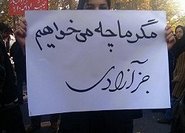


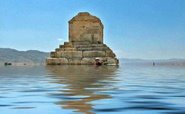


 Tulips in Holland