

Jun. 14 - Major powers have failed in their latest effort to end the nuclear crisis with Iran. In Tehran, the European Union's top diplomat, Foreign Policy boss Javier Solana, offered trade and other benefits to try to coax Iran into suspending sensitive nuclear work. But his updated package of proposals got short shrift from Foreign Minister Manouchehr Mottaki. U.S. President George W. Bush says he is 'disappointed'. French President Nicolas Sarkozy says it looks as if a new round of UN
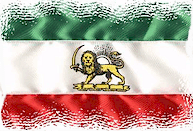
IMPERIAL EMBLEM

PERSIA
Iranian Freedom Fighters UNITE
Showing posts with label EU. Show all posts
Showing posts with label EU. Show all posts
Sunday, June 15, 2008
Saturday, December 22, 2007
Iran and what to do with this Rouge Fascist State
Bush backs Moscow's fueling of Bushehr.
The Costs of Containing Iran - Washington's Misguided New Middle East Policy
The Bush administration wants to contain Iran by rallying the support of Sunni Arab states and now sees Iran's containment as the heart of its Middle East policy: a way to stabilize Iraq, declaw Hezbollah, and restart the Arab-Israeli peace process. But the strategy is unsound and impractical, and it will probably further destabilize an already volatile region. Vali Nasr, Professor of International Politics at the Fletcher School of Law and Diplomacy and Adjunct Senior Fellow for the Middle East at the Council on Foreign Relations, is the author of "The Shia Revival: How Conflicts Within Islam Will Shape the Future." Ray Takeyh is a Senior Fellow at the Council on Foreign Relations and the author of "Hidden Iran: Paradox and Power in the Islamic Republic."
Europe Will Become a Muslim Continent, Says Khamenei's Spokesman
Tehran -- Europe will eventually become a Muslim continent, according to a representative of Iran's supreme leader, Ayatollah Seyyed Ali Khamenei. "In a dozen years, Europe will be an Islamic continent," said Rasul Jalilzadeh on Friday as he was speaking to the basiji, a voluntary organisation in the capital Tehran.
Senior US Envoy: Iran Needs to Admit to Past Weapons Program
VIENNA, Austria -- Iran needs to "confess" to running a past nuclear weapons program or its claims of cooperating with a U.N. investigation of its past clandestine activities will be a sham, the chief U.S. envoy to the International Atomic Energy Agency said Friday. In Washington, meanwhile, U.S. Secretary of State Condoleezza Rice said Tehran must do even more to end present U.N. sanctions and avoid new ones — halt uranium enrichment and related activities that could make the ingredients for a bomb.
The Report on Iran: Straight or Bent?
On December 3 of this year, the Directorate of National Intelligence, an agency attached to the White House that centralizes intelligence supplied by the ensemble of American intelligence agencies, made public a report (National Intelligence Estimate, NIE) deeming that Iran had suspended its nuclear program since autumn of 2003. That document, issued in mid-2007, asserts that Iran is no longer an immediate nuclear threat and that the Iranian regime is less determined to develop nuclear weapons than the United States thought in 2005. It still emphasizes that Tehran is continuing to enrich uranium for civilian purposes and judges that if the Iranian military effort were relaunched, the country could produce nuclear warheads between 2010 and 2015.
What Will Israel Do?
December 21, 2007 Newsweek Web Exclusive Michael Hirsh
A unilateral military strike against Iran is much more likely following the latest intel report about Tehran's nuke program.Ehud Olmert, like George W. Bush, is trying hard to make it seem that nothing has changed, and that the international diplomatic coalition against Iran is still intact. "The state of Israel is not the main flag-bearer against the quirks of the regime in Tehran," the Israeli prime minister declared testily last week, after officials in his own government seemed to suggest that Israel had been left on its own by Washington. Olmert said that the recent U.S. National Intelligence Estimate (NIE) on Iran--which stunned leaders around the world by concluding, after years of bellicose rhetoric from Bush officials about Iran's nuclear ambitions, that Tehran had halted its weapons program in 2003--has "generated an exaggerated debate" in Israel. "Some of us even interpreted the report as an American retreat from its support of Israel," Olmert said. "This is groundless … I trust and am confident that the United States will continue to lead the international campaign to stop the development of a nuclear Iran."But Olmert is not Moses; he can't hold back elemental forces all by himself. And a rising tide of opinion in Israel's intelligence and national-security circles believes that the NIE does signal American retreat--and, more profoundly, renewed Israeli isolation over what is deemed an existential threat out of Tehran. Gen. Ephraim Sneh, a former deputy defense minister who has warned for years that Israel would eventually have to confront Iran alone, told me that "today we are closer to this situation than we were three weeks ago ... we have to be prepared to forestall this threat on our own." Some prominent American experts think that the NIE all but assures Israeli military action at some point. "I came back from a trip to Israel in November convinced that Israel would attack Iran," Bruce Riedel, a former career CIA official and senior adviser to three U.S. presidents--including Bush--on Middle East and South Asian issues, told me Thursday, citing conversations he had with Mossad and defense officials. "And that was before the NIE. This makes it even more likely. Israel is not going to allow its nuclear monopoly to be threatened."Riedel said the Bush administration compounded the problem by failing to signal to the Israelis that the NIE assessment was coming. "Something like this should have been presented to the Israelis through professional intelligence channels," he said. Yuval Steinitz, a member of the right-wing Likud Party, told me that he had led a delegation of Knesset members to Washington a few weeks before the NIE was made public Dec. 3. Steinitz said he met with Vice President Dick Cheney, national-security adviser Stephen Hadley and other administration officials, but not even they seemed aware that their 2005 estimate that Iran was definitely pursuing nuclear weapons was about to be repudiated. Even though Iran was discussed, he said, "no one seemed to have any sign this was forthcoming," he says.Many Israeli experts are appalled by the tone of the report, which concludes with "high confidence" that Iran halted its "nuclear weapons program." The NIE arrived at this finding even though it also asserted that Washington now had concrete evidence of that program, and despite Tehran's brazen pursuit of uranium enrichment. Even formerly moderate European and Russian officials suggest that the report went too far, especially in concluding that the U.S. intel community still has "moderate confidence" that the suspension of the program continues. Uzi Arad, a former Mossad official and adviser to Benjamin Netanyahu, the former Likud prime minister, said that on a recent trip he made to Moscow, a Russian general poked fun at the naiveté of the NIE, commenting that if the Iranians had halted weapons development in 2003 it was partly because they were satisfied with progress there and wanted to devote investment to harder parts of the nuclear equation, like enrichment. In the end, these critics say, Iran is likely to be further emboldened by the report (Iranian President Mahmoud Ahmadinejad lost no time in boasting of America's "surrender"). "The irony is that the effect of this report may be self-negating--by itself it will accelerate Iranian acquisition of nuclear weapons," Arad said.Some experts question whether the Israelis have the capability to seriously damage Iran's nuclear program, which is secured in secret, hardened facilities around the country. But others point out that the new NIE gives evidence of far better intelligence on Iran--possibly including the whereabouts of its facilities. "It did state for first time that a military nuclear program was in motion until 2003," said Sneh. "That was a major revelation that should have been picked up, and it was very damaging incriminating evidence, justifying much harsher action against Iran."A few experts, such as David Albright of the Institute for Science and International Security in Washington, say the intel still seems scant on the location of Iran's secret centrifuge development and manufacturing complex. Still, Albright points out that the Israelis are likely encouraged by the nonreaction to their September airstrike on what is reported to have been a Syrian nuclear facility, which may have been a test run for Iran, or at least a warning directed at Tehran. "Israel has gotten away with it in a sense," says Albright. He suggests that any Israeli pre-emptive action might not be a "traditional strike" but could involve more "sabotage of equipment." The Israelis also know that the Arab states are terrified of an Iranian nuclear power, possibly to the point of looking the other way at another such strike.Sneh, like others, isn't conceding failure yet on the official Israeli and U.S. approach, which involves isolating Iran diplomatically and economically. A third U.N. Security Council resolution authorizing economic sanctions against Iran is expected to pass next year, but it is likely to be fairly hollow because of Russian and Chinese opposition. One reason for Bush's abruptly announced nine-day visit to the region in mid-January is to deal with the fallout from the NIE, which includes not only the possibility that Israel will act unilaterally but also that Bush's prized Annapolis peace process will stall. The Bush trip is, in part, an implicit concession to U.S. hawks that the NIE went too far in absolving Iran. It is also a conscious effort to reassure both Israel and the Arab states that Washington will stand up to Iran's increasing intrusiveness and hegemonic tendencies. A dominant conspiracy theory in Arab capitals in the wake of the NIE is that Washington is seeking to cut a deal with Tehran--one that would effectively allow it to keep its nascent uranium-enrichment capability--in exchange for Iranian help in stabilizing Iraq.Bush may also reassure the Israelis and Arab allies that the NIE overstated things in letting Iran off the hook. In yet another briefing to angry congressmen Wednesday, Director of National Intelligence Mike McConnell conceded that "we could have written parts of it more clearly," according to a senior congressman who was there. The ranking Republican member of the Permanent Select Committee on Intelligence, Rep. Peter Hoekstra, says he's calling for an independent commission to probe the report. "Most of the world looks at it and says it's an embarrassment to the United States because once again the U.S. intelligence community has dramatically changed its position," Hoekstra told NEWSWEEK. And it may well be that Washington must take back its words one more time to prevent the Israelis from acting on their own.
Tuesday, November 20, 2007
Latest News from a hell hole called 'Islamic Republic of Idiots' ( IRI )
Al Taqiyya: The Islamist Terrorist Weapon of Deception
Frank Salvato -- Western civilization’s delinquent knowledge of the Islamic faith leaves us naïve to many of its tenets. Many among us would be hard pressed to explain the differences between the Sunni and the Shi’ite, let alone the reasons why they have remained in conflict for almost the entire existence of the Islamic faith. This delinquency in understanding Islamic culture and doctrine makes those they consider non-believers – or kafirs – vulnerable both individually and collectively. This is especially true when we examine the Islamic concept of taqiyya.
Lebanon's Fateful Showdown
Within the next week or so, we'll know whether Iran (acting through proxies in Beirut) will trigger a new civil war in Lebanon. The issue is the choice of a replacement for President Emil Lahoud, imposed by Syria during its occupation of Lebanon. His term of office expires Nov. 23. By Amir Taheri
US CENTCOM Press Releases
SIX KILLED, 10 DETAINED AS COALITION FORCES TARGET AL-QAEDA LEADERSHIP, FOREIGN TERRORIST FACILITATORS
‘AWAKENING’ IN IRAQ SIGNALS CITIZENS’ RISE AGAINST AL-QEADA
MND-B TROOPS CAPTURE EXPLOSIVELY FORMED PENETRATORS, ROCKET CACHE
Aother Senior Iranian Nuclear Official Resigns
Tehran -- Another Iranian official related to nuclear issues has resigned, the Tehran press reported Tuesday. Abdol-Reza Rahman-Fazli, the first deputy of former chief nuclear negotiator Ali Larijani and acting head of Iran's National Security Council, resigned on Sunday. By Deutsche Presse-Agentur
Israel Must Talk To Iran
A Persian proverb says: “A Wiseman knows that everything in this world has a limit, the Wiseman must discern the limits to obtain results, for he knows exacerbating and abusing the limits would lend him the reverse he is seeking”. By Iran Press Service
Venezuela, Iran United in Defiance of United States
TEHRAN, Iran -- Venezuela's outspoken president joined with Iran's leader Monday in boasting that they are "united like a single fist" in challenging American influence, saying the fall of the dollar is a sign that "the U.S. empire is coming down." By The Associated Press
Iran Says Agrees To New Talks With U.S. on Iraq
TEHRAN -- Iran's foreign minister said on Tuesday Tehran would agree to a U.S. request for a new round of talks on security in Iraq, Iranian news agencies reported. "These negotiations will be held in a near future," Foreign Minister Manouchehr Mottaki said according to the ISNA news agency. The official IRNA news agency carried a similar report. By Reuters
French Filmmaker on Trial in Iran
PARIS -- A French-Iranian filmmaker was questioned for several hours by Iranian judges in a closed-door trial prompted by her efforts to film a documentary relating to the Iraq-Iran war, a media watchdog said Monday. By The Associated Press
Saudi Columnists Call on Gulf States to Form Anti-Iran Front
Following recent threats against the Gulf countries by leading Iranian officials, several Saudi columnists have criticized the Gulf Cooperation Council (GCC) member countries' passivity in the face of the danger posed by Iran. By The Middle East Media Research institute
Iran Nuclear Work 'Not Worth War'
Nobel laureate Shirin Ebadi has called on Iran to suspend its controversial nuclear work to avert what she says is a mounting threat of war with the US. "Using nuclear energy is every nation's right, but we have obvious other rights including security, peace and welfare," she told a press conference. By BBC News
EU Foreign Ministers Weigh Push for New Sanctions Against Iran
The European Union's chief negotiator in the dispute over Iran's nuclear program will consult with the bloc's foreign ministers Monday about whether to push for new sanctions to try to force Tehran to stop By The Associated Press
Powell: Forces in Iran May Bring Positive Changes
KUWAIT -- Describing Iran as not an easy target, a former secretary of state ruled out the prospect of the United States going to war with the Islamic republic. By Arab Times
Iran's Leader Calls Dollar 'Worthless'
RIYADH, SAUDI ARABIA -- Iranian President Mahmoud Ahmadinejad said Sunday that OPEC's members have expressed interest in converting their cash reserves into a currency other than the depreciating U.S. dollar, which he called a "worthless piece of paper." By The Associated Press
Student Held in Iran Questioned in Closed Trial
A Montreal doctoral student who was arrested after travelling to Iran to make a documentary faced a closed trial Saturday on accusations of intending to commit propaganda, a group seeking her freedom said. Mehrnoushe Solouki, who has dual French and Iranian nationality and is a Canadian permanent resident, travelled to Iran in December, but is currently prohibited from leaving the country since her arrest in February.
Frank Salvato -- Western civilization’s delinquent knowledge of the Islamic faith leaves us naïve to many of its tenets. Many among us would be hard pressed to explain the differences between the Sunni and the Shi’ite, let alone the reasons why they have remained in conflict for almost the entire existence of the Islamic faith. This delinquency in understanding Islamic culture and doctrine makes those they consider non-believers – or kafirs – vulnerable both individually and collectively. This is especially true when we examine the Islamic concept of taqiyya.
Lebanon's Fateful Showdown
Within the next week or so, we'll know whether Iran (acting through proxies in Beirut) will trigger a new civil war in Lebanon. The issue is the choice of a replacement for President Emil Lahoud, imposed by Syria during its occupation of Lebanon. His term of office expires Nov. 23. By Amir Taheri
US CENTCOM Press Releases
SIX KILLED, 10 DETAINED AS COALITION FORCES TARGET AL-QAEDA LEADERSHIP, FOREIGN TERRORIST FACILITATORS
‘AWAKENING’ IN IRAQ SIGNALS CITIZENS’ RISE AGAINST AL-QEADA
MND-B TROOPS CAPTURE EXPLOSIVELY FORMED PENETRATORS, ROCKET CACHE
Aother Senior Iranian Nuclear Official Resigns
Tehran -- Another Iranian official related to nuclear issues has resigned, the Tehran press reported Tuesday. Abdol-Reza Rahman-Fazli, the first deputy of former chief nuclear negotiator Ali Larijani and acting head of Iran's National Security Council, resigned on Sunday. By Deutsche Presse-Agentur
Israel Must Talk To Iran
A Persian proverb says: “A Wiseman knows that everything in this world has a limit, the Wiseman must discern the limits to obtain results, for he knows exacerbating and abusing the limits would lend him the reverse he is seeking”. By Iran Press Service
Venezuela, Iran United in Defiance of United States
TEHRAN, Iran -- Venezuela's outspoken president joined with Iran's leader Monday in boasting that they are "united like a single fist" in challenging American influence, saying the fall of the dollar is a sign that "the U.S. empire is coming down." By The Associated Press
Iran Says Agrees To New Talks With U.S. on Iraq
TEHRAN -- Iran's foreign minister said on Tuesday Tehran would agree to a U.S. request for a new round of talks on security in Iraq, Iranian news agencies reported. "These negotiations will be held in a near future," Foreign Minister Manouchehr Mottaki said according to the ISNA news agency. The official IRNA news agency carried a similar report. By Reuters
French Filmmaker on Trial in Iran
PARIS -- A French-Iranian filmmaker was questioned for several hours by Iranian judges in a closed-door trial prompted by her efforts to film a documentary relating to the Iraq-Iran war, a media watchdog said Monday. By The Associated Press
Saudi Columnists Call on Gulf States to Form Anti-Iran Front
Following recent threats against the Gulf countries by leading Iranian officials, several Saudi columnists have criticized the Gulf Cooperation Council (GCC) member countries' passivity in the face of the danger posed by Iran. By The Middle East Media Research institute
Iran Nuclear Work 'Not Worth War'
Nobel laureate Shirin Ebadi has called on Iran to suspend its controversial nuclear work to avert what she says is a mounting threat of war with the US. "Using nuclear energy is every nation's right, but we have obvious other rights including security, peace and welfare," she told a press conference. By BBC News
EU Foreign Ministers Weigh Push for New Sanctions Against Iran
The European Union's chief negotiator in the dispute over Iran's nuclear program will consult with the bloc's foreign ministers Monday about whether to push for new sanctions to try to force Tehran to stop By The Associated Press
Powell: Forces in Iran May Bring Positive Changes
KUWAIT -- Describing Iran as not an easy target, a former secretary of state ruled out the prospect of the United States going to war with the Islamic republic. By Arab Times
Iran's Leader Calls Dollar 'Worthless'
RIYADH, SAUDI ARABIA -- Iranian President Mahmoud Ahmadinejad said Sunday that OPEC's members have expressed interest in converting their cash reserves into a currency other than the depreciating U.S. dollar, which he called a "worthless piece of paper." By The Associated Press
Student Held in Iran Questioned in Closed Trial
A Montreal doctoral student who was arrested after travelling to Iran to make a documentary faced a closed trial Saturday on accusations of intending to commit propaganda, a group seeking her freedom said. Mehrnoushe Solouki, who has dual French and Iranian nationality and is a Canadian permanent resident, travelled to Iran in December, but is currently prohibited from leaving the country since her arrest in February.
Coalition, Iraqi Troops Have 'Momentum'
WASHINGTON - Terrorist-committed violence in Iraq has plummeted since the start of the surge of forces, a senior U.S. officer reported yesterday from Baghdad.Nov 19, 2007, 21:35 Forces Detain 27 Suspects While Targeting al Qaeda Networks in Iraq
WASHINGTON - Coalition forces detained 27 suspects yesterday during operations targeting al Qaeda networks in central and northern Iraq.Nov 19, 2007,
Iraqi Forces, Local Citizens Help to Reduce Violence in Northern Iraq
WASHINGTON - A robust partnership between coalition troops and Iraqi security forces and support from the Iraqi people is showing success in bringing down violence in Iraq's Multinational Division North sector, the troop commander there said today.Nov 19, 2007, 21:30 American Life League releases video report on children's sex book
WASHINGTON, D.C. – "Parents need to know what Planned Parenthood has in store for their children and this report is an excellent starting point," said Jim Sedlak, vice president of American Life League. "The book 'It's Perfectly Normal' is obscene and offensive to Christians."Nov 19, 2007,
The first casualtyGuardian Unlimited 12:19 19-Nov-07
The falling U.S. dollar is a prelude to the...International Herald Tribune 18:39 19-Nov-07
Riyadh Fears an American Attack on Irantruthout 19:32 19-Nov-07
Chavez in Tehran: "Empire of dollar is crashing" (Reuters)Yahoo! US 14:47 19-Nov-07
Spring will be crucial on IranInternational Herald Tribune 14:17 19-Nov-07
Israel's Syrian Air Strike Was Aimed at IranAntiwar.com 06:20 20-Nov-07
Chavez says "empire of dollar is crashing"Reuters UK 14:00 19-Nov-07
IAEA report on Iran's nuclear program ''a slap on...Mathaba.Net 12:40 19-Nov-07
Chavez, Ahmadinejad Vow To Defeat US11Alive, Georgia 08:24 20-Nov-07
US CENTCOM Press Releases
COALITION FORCES FIND EXECUTION SITE, LARGE CACHE; EIGHT KILLED, 13 DETAINED Posted: 19 Nov 2007 12:09 PM CST
IRAQI FORCES, U.S. SPECIAL FORCES DETAIN TWO EXTREMISTS IN AS SA’DIYAH Posted: 19 Nov 2007 10:44 AM CST
ARMY ENGINEERS TURNS OVER AL-GARMA 132 KILOVOLT SUBSTATION TO IRAQI MINISTRY OF ELECTRICITY Posted: 19 Nov 2007 10:39 AM CST
COALITION FORCES KILL ONE TERRORIST, TARGET CRIMINAL ELEMENT NETWORKS Posted: 19 Nov 2007 10:35 AM CST
FORMER EXTREMIST LEADS JOINT FORCES TO HUGE WEAPONS CACHE
IRAQI SECURITY FORCES DETAIN 81 SUSPECTED EXTREMISTS, CONFISCATE WEAPONS CACHES Posted: 21 Nov 2007 10:52 AM CST
0
comments

 Labels:
Arabs,
Canada,
EU,
France,
Iran,
Islamic Republic of Idiots,
Latest News,
Persian Gulf,
USA
Labels:
Arabs,
Canada,
EU,
France,
Iran,
Islamic Republic of Idiots,
Latest News,
Persian Gulf,
USA
 Labels:
Arabs,
Canada,
EU,
France,
Iran,
Islamic Republic of Idiots,
Latest News,
Persian Gulf,
USA
Labels:
Arabs,
Canada,
EU,
France,
Iran,
Islamic Republic of Idiots,
Latest News,
Persian Gulf,
USA
Saturday, November 10, 2007
Washington tells EU firms: quit Iran now
UK, French and German companies begin pullout under US pressure .
David Gow in Munich and Ewen MacAskill in Washington - Friday November 9, 2007

GuardianMultinational companies are coming under increasing pressure from the US to stop doing business with Iran because of its nuclear programme. European operators are facing threats from Washington that they could jeopardise their US interests by continuing to deal with Tehran, with increasing evidence that European governments, mainly France, Germany and Britain, are supporting the US campaign. It emerged last night that Siemens, one of the world's largest engineering groups and based in Germany, has pulled out of all new business dealings with Iran after pressure from the US and German governments. This follows the decision by Germany's three biggest banks, Deutsche, Commerzbank, and Dresdner, to quit Iran after a warning from US vice-president Dick Cheney that if firms remain in Tehran, they are going to have problems doing business in the US. The Foreign Office, while sympathising with City firms, has privately backed the US warnings in recent weeks, telling companies such as Shell and BP of the risks of continuing business with Iran. The French president, Nicolas Sarkozy, has urged French energy firms Total and GDF not to pursue new business in Iran. Angela Merkel, Germany's chancellor, is joining him in pressing for new sanctions, probably at EU level. The US is tightening its economic squeeze on Iran and last month unilaterally imposed a new round of sanctions. It regularly complains in private to the British and other European governments that American efforts are being undermined by European companies continuing to do business with Tehran. If economic sanctions fail to have an impact by next year, pressure will mount from Mr Cheney to launch air strikes against Iran. The under-secretary for political affairs at the US state department, Nicholas Burns, and the under-secretary at the Treasury, Stuart Levey, have made frequent trips to Europe to warn companies they face the loss of American business if they continue to deal with Iran. BP said back in 2005 that "politically Iran is not a flyer" because of the company's huge presence in the US. Rival Shell has been tentatively moving forward with engineering studies on a large gas project in Iran but has insisted in the past that it would only take a final decision once it knew it was commercially viable. A spokesman for the company would not comment last night but industry sources said it was a "very sensitive issue", given the scale of Shell's oil business in the US. The two British banks most frequently mentioned in Washington in relation to Iran are HSBC and Standard Chartered. Both banks have scaled down their operations in Iran but maintain a modest presence in Tehran. Siemens insiders said the group, which is in the throes of clearing up a series of bribery and corruption cases involving payments of some €1.3bn (£900,000), would carry out existing contracts in Iran which have attracted government export credit guarantees, but would seek no new contracts. The engineering group won a contract four years ago to supply 24 power stations to the Iranians and last year secured a provisional €450m deal to supply 150 locomotives for Iran's railways. Officials said Siemens' Iranian business amounted to less than 1% of annual group turnover of €84bn last year. This compares with sales of $21.4bn (€14.4bn or £10.1bn) in the US where the group employs 70,000. It is understood that 80% of the company's trade is in power generation but sources insisted that Siemens had no involvement in Iran's nuclear power programme. Germany is Iran's biggest trading partner, with a 2006 surplus of €4bn, but trade was down 18% in the first half of this year. UK exports to Iran fell 7% last year to £431.4m, according to the British-Iran chamber of commerce.
David Gow in Munich and Ewen MacAskill in Washington - Friday November 9, 2007
GuardianMultinational companies are coming under increasing pressure from the US to stop doing business with Iran because of its nuclear programme. European operators are facing threats from Washington that they could jeopardise their US interests by continuing to deal with Tehran, with increasing evidence that European governments, mainly France, Germany and Britain, are supporting the US campaign. It emerged last night that Siemens, one of the world's largest engineering groups and based in Germany, has pulled out of all new business dealings with Iran after pressure from the US and German governments. This follows the decision by Germany's three biggest banks, Deutsche, Commerzbank, and Dresdner, to quit Iran after a warning from US vice-president Dick Cheney that if firms remain in Tehran, they are going to have problems doing business in the US. The Foreign Office, while sympathising with City firms, has privately backed the US warnings in recent weeks, telling companies such as Shell and BP of the risks of continuing business with Iran. The French president, Nicolas Sarkozy, has urged French energy firms Total and GDF not to pursue new business in Iran. Angela Merkel, Germany's chancellor, is joining him in pressing for new sanctions, probably at EU level. The US is tightening its economic squeeze on Iran and last month unilaterally imposed a new round of sanctions. It regularly complains in private to the British and other European governments that American efforts are being undermined by European companies continuing to do business with Tehran. If economic sanctions fail to have an impact by next year, pressure will mount from Mr Cheney to launch air strikes against Iran. The under-secretary for political affairs at the US state department, Nicholas Burns, and the under-secretary at the Treasury, Stuart Levey, have made frequent trips to Europe to warn companies they face the loss of American business if they continue to deal with Iran. BP said back in 2005 that "politically Iran is not a flyer" because of the company's huge presence in the US. Rival Shell has been tentatively moving forward with engineering studies on a large gas project in Iran but has insisted in the past that it would only take a final decision once it knew it was commercially viable. A spokesman for the company would not comment last night but industry sources said it was a "very sensitive issue", given the scale of Shell's oil business in the US. The two British banks most frequently mentioned in Washington in relation to Iran are HSBC and Standard Chartered. Both banks have scaled down their operations in Iran but maintain a modest presence in Tehran. Siemens insiders said the group, which is in the throes of clearing up a series of bribery and corruption cases involving payments of some €1.3bn (£900,000), would carry out existing contracts in Iran which have attracted government export credit guarantees, but would seek no new contracts. The engineering group won a contract four years ago to supply 24 power stations to the Iranians and last year secured a provisional €450m deal to supply 150 locomotives for Iran's railways. Officials said Siemens' Iranian business amounted to less than 1% of annual group turnover of €84bn last year. This compares with sales of $21.4bn (€14.4bn or £10.1bn) in the US where the group employs 70,000. It is understood that 80% of the company's trade is in power generation but sources insisted that Siemens had no involvement in Iran's nuclear power programme. Germany is Iran's biggest trading partner, with a 2006 surplus of €4bn, but trade was down 18% in the first half of this year. UK exports to Iran fell 7% last year to £431.4m, according to the British-Iran chamber of commerce.
Tuesday, October 23, 2007
Second Kurdish Conflict Boils on Iran Border
October 23, 2007 New York Times Richard A. Oppel Jr.
BAGHDAD -- Deadly raids into Turkey by Kurdish militants holed up in northern Iraq are the focus of urgent diplomacy, with Turkey threatening invasion of Iraq and the United States begging for restraint while expressing solidarity with Turkish anger. Yet out of the public eye, a chillingly similar battle has been under way on the Iraqi border with Iran. Kurdish guerrillas ambush and kill Iranian forces and retreat to their hideouts in Iraq. The U.S. offers Iran little sympathy -- Tehran even says Washington aids the Iranian guerrillas, a charge the U.S. denies. True or not, that conflict, like the Turkish one, has explosive potential. On a recent trip to the Iran-Iraq border, Salih Shevger, an Iranian Kurdish guerrilla, and his comrades recounted how they ambushed an Iranian patrol a few days before, killing three soldiers and capturing another. "They were sitting and talking on top of a hill, and we approached, hiding ourselves, and fired on them from two sides," said Bayram Gabar, who commanded the raid. The guerrillas from the Party for Free Life in Kurdistan, or PJAK, have been waging a deadly insurgency in Iran; they are an offshoot of the Kurdistan Workers' Party, called the PKK, the Kurdish guerrillas who fight Turkey. While the U.S. calls the PKK terrorists, guerrilla commanders say PJAK has had "direct or indirect discussions" with U.S. officials. A bodyguard for Biryar Gabar, one of 11 members of the group's leadership, said officials of the group met with Americans in Kirkuk last year. Iranian officials have accused the U.S. of supplying the fighters and using them in a proxy war, but the "consensus is that U.S. forces are not working with or advising the PJAK," said a U.S. military spokesman in Baghdad, Cmdr. Scott Rye of the Navy. Because the PKK is on the State Department's list of terrorist organizations and aiding such groups is illegal, the U.S. is eager to avoid any hint of cooperation with the PJAK. Guerrilla leaders said the U.S. classifies the PKK as a terrorist group because it is fighting Turkey, an important U.S. ally, while the PJAK is not labeled as such because it is fighting Iran. In fact, the two groups appear to a large extent to be one and the same, and share the same goal: fighting campaigns to win new autonomy and rights for Kurds in Iran and Turkey. They share leadership, logistics and allegiance to Abdullah Ocalan, the PKK leader imprisoned in Turkey. The leader of the PKK, Murat Karayilan, said the PJAK fighters had killed at least 150 Iranian soldiers and officials in Iran since August.
EU Voices Concern Over Human Rights Situation in Iran
October 23, 2007 Kuwait News Agency KUNA
The European Union expressed Tuesday deep concern at what is said was "growing repression against all groups which exercise their right to freely express their opinions, and at the escalation of restrictions on freedom of the press and freedom of expression in the Islamic Republic of Iran." Observers were quick to point out that the strong EU broadside against Iran signals a deterioration in ties between Brussels and Tehran. It comes the same day when EU foreign policy chief is set to hold talks with Iranian negotiators on Iran's nuclear programme in Rome. The EU Presidency statement said it "condemns the closure of newspapers, magazines and of the Iranian Labour News Agency, as well as the arrest and persecution of journalists, web bloggers, and Human Rights Defenders for exercising their right to freedom of expression." The EU urged Iran to comply with its international human rights commitments and called on the Iranian authorities to review the announced restrictions for the next Majlis election campaign in order to ensure free and democratic elections.
BAGHDAD -- Deadly raids into Turkey by Kurdish militants holed up in northern Iraq are the focus of urgent diplomacy, with Turkey threatening invasion of Iraq and the United States begging for restraint while expressing solidarity with Turkish anger. Yet out of the public eye, a chillingly similar battle has been under way on the Iraqi border with Iran. Kurdish guerrillas ambush and kill Iranian forces and retreat to their hideouts in Iraq. The U.S. offers Iran little sympathy -- Tehran even says Washington aids the Iranian guerrillas, a charge the U.S. denies. True or not, that conflict, like the Turkish one, has explosive potential. On a recent trip to the Iran-Iraq border, Salih Shevger, an Iranian Kurdish guerrilla, and his comrades recounted how they ambushed an Iranian patrol a few days before, killing three soldiers and capturing another. "They were sitting and talking on top of a hill, and we approached, hiding ourselves, and fired on them from two sides," said Bayram Gabar, who commanded the raid. The guerrillas from the Party for Free Life in Kurdistan, or PJAK, have been waging a deadly insurgency in Iran; they are an offshoot of the Kurdistan Workers' Party, called the PKK, the Kurdish guerrillas who fight Turkey. While the U.S. calls the PKK terrorists, guerrilla commanders say PJAK has had "direct or indirect discussions" with U.S. officials. A bodyguard for Biryar Gabar, one of 11 members of the group's leadership, said officials of the group met with Americans in Kirkuk last year. Iranian officials have accused the U.S. of supplying the fighters and using them in a proxy war, but the "consensus is that U.S. forces are not working with or advising the PJAK," said a U.S. military spokesman in Baghdad, Cmdr. Scott Rye of the Navy. Because the PKK is on the State Department's list of terrorist organizations and aiding such groups is illegal, the U.S. is eager to avoid any hint of cooperation with the PJAK. Guerrilla leaders said the U.S. classifies the PKK as a terrorist group because it is fighting Turkey, an important U.S. ally, while the PJAK is not labeled as such because it is fighting Iran. In fact, the two groups appear to a large extent to be one and the same, and share the same goal: fighting campaigns to win new autonomy and rights for Kurds in Iran and Turkey. They share leadership, logistics and allegiance to Abdullah Ocalan, the PKK leader imprisoned in Turkey. The leader of the PKK, Murat Karayilan, said the PJAK fighters had killed at least 150 Iranian soldiers and officials in Iran since August.
EU Voices Concern Over Human Rights Situation in Iran
October 23, 2007 Kuwait News Agency KUNA
The European Union expressed Tuesday deep concern at what is said was "growing repression against all groups which exercise their right to freely express their opinions, and at the escalation of restrictions on freedom of the press and freedom of expression in the Islamic Republic of Iran." Observers were quick to point out that the strong EU broadside against Iran signals a deterioration in ties between Brussels and Tehran. It comes the same day when EU foreign policy chief is set to hold talks with Iranian negotiators on Iran's nuclear programme in Rome. The EU Presidency statement said it "condemns the closure of newspapers, magazines and of the Iranian Labour News Agency, as well as the arrest and persecution of journalists, web bloggers, and Human Rights Defenders for exercising their right to freedom of expression." The EU urged Iran to comply with its international human rights commitments and called on the Iranian authorities to review the announced restrictions for the next Majlis election campaign in order to ensure free and democratic elections.
Sunday, August 12, 2007
Engagement, as they call it, is, however, a thin veneer for doing business at any price.
The Achilles' Heel in an Iran Gone Mad -News Jonathan Gurwitz
Twenty years ago, the Soviet Union was on the verge of catastrophe. People who suffered under the repressive rule of the communist regime in Moscow had lost faith in its guiding ideology. Calls for internal reform met with increased internal repression. Revenue from the energy sector had for years sustained exorbitant military expenditures and propped up the Soviet state. But in the mid-1980s, America's Arab allies flooded the market with cheap Middle Eastern crude. Ronald Reagan's "Saudi strategy" led to a collapse in the price of oil. The authoritarian dictatorship that had been preserved by Siberian oil fields soon collapsed as well. The Cold War ended. The West had won. Not a shot was fired. There's a country today that resembles the Soviet Union of the 1980s, one that engages the West in a reckless game of adventurism, where the people have lost faith in a revolutionary ideology, that is resorting to increasingly harsh measures to deal with dissidents and whose regime is sustained solely by oil revenue. That country is Iran.

President Bush and the major presidential candidates of both parties are correct in saying that a military option for dealing with Iran must remain a contingency for the future. But the demise of Soviet Russia suggests there's another, better way to deal with Iran that avoids military confrontation. The case of Haleh Esfandiari, a 67-year-old Iranian American scholar who has been held in solitary confinement for three months in Tehran's dreaded Evin prison on charges of anti-state activity, is the best-known, but by no means the only, example of a paranoid crackdown by President Mahmoud Ahmadinejad on real and imagined opponents. The regime has imprisoned hundreds of thousands of Iranians in recent months for infractions of the Islamic dress code, "hooliganism" and other ethical transgressions. State security and paramilitary groups have detained and beaten university student reformers and labor union leaders. Iran is in the midst of an execution craze. The Iranian government has put to death more than 150 people this year, including women and juveniles. Most of the executions are public hangings, some broadcast on television. Iran expert Amir Taheri writes that 150 more are scheduled to be hanged or stoned to death in coming weeks. The heightened repression, televised confessions and executions — not so subtle reminders of the lethally coercive powers of the state — come amid signs of economic unrest, rising unemployment and inflation and declining oil production. While Iran is still OPEC's second-largest exporter of crude oil, it is a net importer of refined petroleum products, including gasoline. When the government was forced to institute gas rationing in June, rioting broke out. There's no Saudi option today with regard to Iran. The demand for energy from a robust international economy means that even if OPEC's other producers open their spigots to capacity, the price of oil won't appreciably decline. But domestic discontent and economic fragility point to the mullah's Achilles' heel. In conjunction with U.S.-sponsored U.N. Security Council resolutions that freeze the assets of entities and individuals involved in Iran's illicit nuclear program, Congress is seeking to broaden the economic front against Tehran. The Bush administration has already had success pressuring international financial institutions to cut their ties with Tehran. Proposed congressional measures would place sanctions on European energy companies — such as Royal Dutch Shell, France's Total and Spain's Repsol — for doing business in Iran. European governments object that this would hamper efforts to moderate Iranian extremism. Engagement, as they call it, is, however, a thin veneer for doing business at any price. The West can deal with Iran's nuclear weapons program and support for international terrorism without ever firing a shot. But those who aren't willing to work the economic lever make a teetering Iran more durable and dangerous than it otherwise ought to be.
Twenty years ago, the Soviet Union was on the verge of catastrophe. People who suffered under the repressive rule of the communist regime in Moscow had lost faith in its guiding ideology. Calls for internal reform met with increased internal repression. Revenue from the energy sector had for years sustained exorbitant military expenditures and propped up the Soviet state. But in the mid-1980s, America's Arab allies flooded the market with cheap Middle Eastern crude. Ronald Reagan's "Saudi strategy" led to a collapse in the price of oil. The authoritarian dictatorship that had been preserved by Siberian oil fields soon collapsed as well. The Cold War ended. The West had won. Not a shot was fired. There's a country today that resembles the Soviet Union of the 1980s, one that engages the West in a reckless game of adventurism, where the people have lost faith in a revolutionary ideology, that is resorting to increasingly harsh measures to deal with dissidents and whose regime is sustained solely by oil revenue. That country is Iran.
President Bush and the major presidential candidates of both parties are correct in saying that a military option for dealing with Iran must remain a contingency for the future. But the demise of Soviet Russia suggests there's another, better way to deal with Iran that avoids military confrontation. The case of Haleh Esfandiari, a 67-year-old Iranian American scholar who has been held in solitary confinement for three months in Tehran's dreaded Evin prison on charges of anti-state activity, is the best-known, but by no means the only, example of a paranoid crackdown by President Mahmoud Ahmadinejad on real and imagined opponents. The regime has imprisoned hundreds of thousands of Iranians in recent months for infractions of the Islamic dress code, "hooliganism" and other ethical transgressions. State security and paramilitary groups have detained and beaten university student reformers and labor union leaders. Iran is in the midst of an execution craze. The Iranian government has put to death more than 150 people this year, including women and juveniles. Most of the executions are public hangings, some broadcast on television. Iran expert Amir Taheri writes that 150 more are scheduled to be hanged or stoned to death in coming weeks. The heightened repression, televised confessions and executions — not so subtle reminders of the lethally coercive powers of the state — come amid signs of economic unrest, rising unemployment and inflation and declining oil production. While Iran is still OPEC's second-largest exporter of crude oil, it is a net importer of refined petroleum products, including gasoline. When the government was forced to institute gas rationing in June, rioting broke out. There's no Saudi option today with regard to Iran. The demand for energy from a robust international economy means that even if OPEC's other producers open their spigots to capacity, the price of oil won't appreciably decline. But domestic discontent and economic fragility point to the mullah's Achilles' heel. In conjunction with U.S.-sponsored U.N. Security Council resolutions that freeze the assets of entities and individuals involved in Iran's illicit nuclear program, Congress is seeking to broaden the economic front against Tehran. The Bush administration has already had success pressuring international financial institutions to cut their ties with Tehran. Proposed congressional measures would place sanctions on European energy companies — such as Royal Dutch Shell, France's Total and Spain's Repsol — for doing business in Iran. European governments object that this would hamper efforts to moderate Iranian extremism. Engagement, as they call it, is, however, a thin veneer for doing business at any price. The West can deal with Iran's nuclear weapons program and support for international terrorism without ever firing a shot. But those who aren't willing to work the economic lever make a teetering Iran more durable and dangerous than it otherwise ought to be.
Wednesday, April 04, 2007
France Says Iran Detains an Academic as a Hostage
PARIS -- Iranian authorities detained a French academic and have barred him from leaving the country since January, the French Foreign Ministry said Wednesday. Stephane Dudoignon was arrested in the sensitive region of Sistan-Baluchestan, in southeastern Iran, on Jan. 30 after photographing a religious procession there, Foreign Ministry spokesman Denis Simonneau said.
Iranian authorities immediately released Dudoignon but confiscated his personal items, including his passport, Simonneau said. Dudoignon — a historian specializing in Islam — has not been charged with any crime, Simonneau said. Dudoignon, who is married to an Iranian woman, is living with his wife's family in Tehran, the French Le Monde daily reported Wednesday. He is not authorized to leave the city, Le Monde said. The French Embassy in Tehran is in contact with Iranian authorities about the case, Simonneau said. Dudoignon's case was also discussed during a meeting last week between the Iranian ambassador and French Foreign Ministry officials. "We call on Iranian authorities to quickly find a solution to allow Mr. Dudoignon to leave Iranian territory," Simonneau said in an online briefing on Wednesday. In November 2005, Iranian officials arrested another Frenchman and a German, reportedly for taking photos of ships in the Persian Gulf. Stephane Lherbier and Donald Klein were convicted in January 2006 and sentenced to 18 months in prison. Lherbier, the Frenchman, was released in February, and Klein was freed last month. The announcement of Dudoignon's arrest comes amid mounting tensions over Iran's seizure of 15 British sailors and marines last month in disputed waters in the Persian Gulf.
Iranian authorities immediately released Dudoignon but confiscated his personal items, including his passport, Simonneau said. Dudoignon — a historian specializing in Islam — has not been charged with any crime, Simonneau said. Dudoignon, who is married to an Iranian woman, is living with his wife's family in Tehran, the French Le Monde daily reported Wednesday. He is not authorized to leave the city, Le Monde said. The French Embassy in Tehran is in contact with Iranian authorities about the case, Simonneau said. Dudoignon's case was also discussed during a meeting last week between the Iranian ambassador and French Foreign Ministry officials. "We call on Iranian authorities to quickly find a solution to allow Mr. Dudoignon to leave Iranian territory," Simonneau said in an online briefing on Wednesday. In November 2005, Iranian officials arrested another Frenchman and a German, reportedly for taking photos of ships in the Persian Gulf. Stephane Lherbier and Donald Klein were convicted in January 2006 and sentenced to 18 months in prison. Lherbier, the Frenchman, was released in February, and Klein was freed last month. The announcement of Dudoignon's arrest comes amid mounting tensions over Iran's seizure of 15 British sailors and marines last month in disputed waters in the Persian Gulf.
Wednesday, March 21, 2007
U.S. Cautions Foreign Companies on Iran Deals By STEVEN R. WEISMAN
WASHINGTON, March 20 — For all its efforts to apply economic and political pressure on Iran over its nuclear program, the United States has never used a potentially potent tool in its arsenal — penalties on foreign companies that assist Iran in producing oil and natural gas. That may be about to change. The Bush administration has quietly been warning energy companies, including Shell, Repsol and SKS, the Malaysian oil company, as well as the governments of China, India, Pakistan and Malaysia, that penalties are possible if they pursue energy deals with Iran. As a result, several huge projects planned for Iran could be vulnerable. These include one possible $10 billion project by Royal Dutch Shell and the Spanish oil company, Repsol YPF, to develop a natural gas field offshore in Iran, and a $20 billion venture by SKS Ventures of Malaysia to produce natural gas in Iran’s Golshan and Ferdows fields. In recent months, the administration has tried to avoid diplomatic or political controversies as a result of its jawboning. But the potential for sanctions is posing a quandary for the administration by setting up a possible fight with Europe if it proceeds with them or a fight with Congress if it does not. One factor behind the warnings, administration officials acknowledge, is that the Democratic-controlled Congress appears to be moving quickly to pass a law that would make sanctions mandatory out of concern about Iran’s suspected nuclear arms program and support for terrorism. “What we’re trying to do is create multiple points of pressure on Iran in both the private and public sector,” said R. Nicholas Burns, the under secretary of state for political affairs. “These companies also need to know that the attitude of Congress on their activities in Iran is hardening.” But in orchestrating all this pressure on Iran, President Bush and his aides have been careful to avoid any kind of boycott or other threat that might cause oil and gas prices to soar and strangle the economies of the West. Short of a cutoff, the administration clearly wants to make it harder for Iran to tap into its oil and gas reserves to increase exports in the future. Iran’s energy output has lagged in recent years, and many experts say the country faces the possibility of not having enough oil to export within as little as 10 years. Last month, the United States ambassador to Spain, Eduardo Aguirre Jr., met with Repsol executives in Madrid to advise them against going forward with a deal to develop Iran’s South Pars field, which contains one of the world’s biggest natural gas deposits. The ambassador was told that the deal was not yet final, according to American and Repsol officials. “No investment is being made at present,” said a Repsol spokesman in Madrid, who asked not to be identified by name. “There will not be a decision on this until next year.” The messages to oil companies mark the latest episode in a long campaign of pressure that reached a turning point in December, when the administration won approval of a United Nations Security Council resolution designating 10 Iranian companies and a dozen individuals as off-limits for international financial dealings.
Another resolution designating an additional 15 individuals and 13 Iranian government and business groups, including a leading Iranian bank, could be approved later this week. The administration, using the Security Council list, wants virtually all of the world’s banks and businesses to boycott all of these Iranian entities. Despite the stepped up American pressure, some Democratic leaders in Congress are complaining that the administration has not gone far enough. They want Mr. Bush to invoke a statute enacted in 1996 that obliges the United States government to punish any foreign energy company doing business with Iran unless the president waives the sanction on national security grounds. “This administration has done nothing to punish Iran,” said Representative Tom Lantos, a Democrat of California who is chairman of the House Foreign Affairs Committee. “The method I don’t favor on Iran is to bomb their nuclear facilities. The method I favor is to starve them of resources, which can only be done through sanctions.” After the bill passed a decade ago, European governments and companies vehemently objected, charging that it amounted to a brazen case of extra-territoriality, the term for one nation imposing its laws on foreign companies and sovereign nations. At the time, President Bill Clinton, acting to avoid a confrontation with Europe and in part to send a conciliatory message to Iran when moderates seemed to be vying for power, waived the sanctions on several European companies, including Total, the leading French oil concern. Recalling that precedent, Mr. Lantos said his bill would strip the president of the ability to waive sanctions on Iran on national security grounds. The Bush administration opposes that provision as a weakening of presidential prerogatives in foreign policy. A spokesman for House Speaker Nancy Pelosi said that she supported Mr. Lantos’s bill. Mr. Lantos says he is confident he can persuade lawmakers to pass his bill with a big enough majority to override a presidential veto. The existing sanctions law gives Washington the option to choose among several penalties, including denial of government credits to companies that deal with the foreign oil company, denial of export licenses and a ban on United States government procurement or imports from these companies. Administration officials say the reason no decisions have been made on whether to invoke or waive sanctions is that the energy exploration deals by Shell, Repsol, China, Malaysia, China and Pakistan are all still in an embryonic stage and that it is better to head them off by using persuasion than penalties. But they also say that the administration does not want to take any action now that would divide the United States from its allies in Europe on Iran, or to provoke China, India and Pakistan, whose support Washington needs for other foreign policy objectives. A senior European envoy involved in discussions over Iran said that Europeans would be unhappy with American sanctions against private oil companies, but that they also understood the importance of pressing the Tehran government. “As long as we want to avoid a war with Iran, we have to try sanctions,” he said. The steps being contemplated are part of a web of pressures, American and European officials say, which could be invoked in coming months. These include plans to sanction more Iranian banks, beyond the two that have already been hit by sanctions and barred from obtaining dollars from American banks.
The aim, American officials say, is to prevent Iran from obtaining dollars, the world’s reserve currency, for use in the purchase of goods or services. Iranian leaders have said that American sanctions are forcing them to sell oil for euros or other currencies, even though oil is traded on the international markets in dollars. In a separate set of actions, American and European officials say that recent pressure on European governments has led several to reduce or to pledge to reduce their government-backed credit guarantees for deals with Iran. Germany had $6.2 billion in outstanding export credits to Iran as of 2005, according to figures circulating at the United Nations. But Germany reported recently that after cutting back credits by 60 percent in the last two years, it planned further cutbacks this year. Japan, which had $1.9 billion in credits as of 2005, has also informed the United States that it has granted no medium- or long-term credit insurance since last June and has cut short-term credits. American officials say they have received similar pledges from Italy and France to cut back their export credits.
Another resolution designating an additional 15 individuals and 13 Iranian government and business groups, including a leading Iranian bank, could be approved later this week. The administration, using the Security Council list, wants virtually all of the world’s banks and businesses to boycott all of these Iranian entities. Despite the stepped up American pressure, some Democratic leaders in Congress are complaining that the administration has not gone far enough. They want Mr. Bush to invoke a statute enacted in 1996 that obliges the United States government to punish any foreign energy company doing business with Iran unless the president waives the sanction on national security grounds. “This administration has done nothing to punish Iran,” said Representative Tom Lantos, a Democrat of California who is chairman of the House Foreign Affairs Committee. “The method I don’t favor on Iran is to bomb their nuclear facilities. The method I favor is to starve them of resources, which can only be done through sanctions.” After the bill passed a decade ago, European governments and companies vehemently objected, charging that it amounted to a brazen case of extra-territoriality, the term for one nation imposing its laws on foreign companies and sovereign nations. At the time, President Bill Clinton, acting to avoid a confrontation with Europe and in part to send a conciliatory message to Iran when moderates seemed to be vying for power, waived the sanctions on several European companies, including Total, the leading French oil concern. Recalling that precedent, Mr. Lantos said his bill would strip the president of the ability to waive sanctions on Iran on national security grounds. The Bush administration opposes that provision as a weakening of presidential prerogatives in foreign policy. A spokesman for House Speaker Nancy Pelosi said that she supported Mr. Lantos’s bill. Mr. Lantos says he is confident he can persuade lawmakers to pass his bill with a big enough majority to override a presidential veto. The existing sanctions law gives Washington the option to choose among several penalties, including denial of government credits to companies that deal with the foreign oil company, denial of export licenses and a ban on United States government procurement or imports from these companies. Administration officials say the reason no decisions have been made on whether to invoke or waive sanctions is that the energy exploration deals by Shell, Repsol, China, Malaysia, China and Pakistan are all still in an embryonic stage and that it is better to head them off by using persuasion than penalties. But they also say that the administration does not want to take any action now that would divide the United States from its allies in Europe on Iran, or to provoke China, India and Pakistan, whose support Washington needs for other foreign policy objectives. A senior European envoy involved in discussions over Iran said that Europeans would be unhappy with American sanctions against private oil companies, but that they also understood the importance of pressing the Tehran government. “As long as we want to avoid a war with Iran, we have to try sanctions,” he said. The steps being contemplated are part of a web of pressures, American and European officials say, which could be invoked in coming months. These include plans to sanction more Iranian banks, beyond the two that have already been hit by sanctions and barred from obtaining dollars from American banks.
The aim, American officials say, is to prevent Iran from obtaining dollars, the world’s reserve currency, for use in the purchase of goods or services. Iranian leaders have said that American sanctions are forcing them to sell oil for euros or other currencies, even though oil is traded on the international markets in dollars. In a separate set of actions, American and European officials say that recent pressure on European governments has led several to reduce or to pledge to reduce their government-backed credit guarantees for deals with Iran. Germany had $6.2 billion in outstanding export credits to Iran as of 2005, according to figures circulating at the United Nations. But Germany reported recently that after cutting back credits by 60 percent in the last two years, it planned further cutbacks this year. Japan, which had $1.9 billion in credits as of 2005, has also informed the United States that it has granted no medium- or long-term credit insurance since last June and has cut short-term credits. American officials say they have received similar pledges from Italy and France to cut back their export credits.
Saturday, March 10, 2007
SPANISH PM TO VISIT IRAN - WHY - ? -
SPANISH PM TO VISIT IRAN
March 10, 2007 , 16:16
MADRID MARCH 10 (BNA)-- IRANIAN AMBASSADOR TO SPAIN DAWOOD SALEHI ANNOUNCED THAT SPANISH PRIME MINISTER JOSI LUIS RODRIGUEZ ZAPATERO WILL SOON BE VISITING HIS COUNTRY.
PREPARATIONS ARE ALSO ON FULL SWING FOR THE UPCOMING VISIT OF THE KING OF SPAIN JUAN CARLOS TO IRAN, HE SAID.
THE AMBASSADOR NOTED THAT HIS COUNTRY LOOKS AS THE RELATIONS WITH SPAIN AS STRATEGIC CONSIDERING THAT IT IS AN EU MEMBER.
March 10, 2007 , 16:16
MADRID MARCH 10 (BNA)-- IRANIAN AMBASSADOR TO SPAIN DAWOOD SALEHI ANNOUNCED THAT SPANISH PRIME MINISTER JOSI LUIS RODRIGUEZ ZAPATERO WILL SOON BE VISITING HIS COUNTRY.
PREPARATIONS ARE ALSO ON FULL SWING FOR THE UPCOMING VISIT OF THE KING OF SPAIN JUAN CARLOS TO IRAN, HE SAID.
THE AMBASSADOR NOTED THAT HIS COUNTRY LOOKS AS THE RELATIONS WITH SPAIN AS STRATEGIC CONSIDERING THAT IT IS AN EU MEMBER.
Thursday, March 01, 2007
Russia's New Initiatives in the Persian Gulf : Drafted By: Dario Cristiani
Shortly after giving a much-discussed speech at the annual security conference in Munich, Russian President Vladimir Putin visited Saudi Arabia, Qatar and Jordan from January 11-13, 2007. This was the first trip of a Russian head of state to the three countries, and following Putin's speech the trip took on greater importance, especially the visits to Saudi Arabia and Qatar. The trip highlighted how Russia's perception of its role in the international system has changed. In recent years, Moscow has represented itself as a "great power" with global influence, which was evident in Putin's harsh criticism of the United States during the conference.
Putin launched many direct and indirect accusations at the United States during the conference, such as: "We are seeing a greater and greater disdain for the basic principles of international law. … One state and, of course, first and foremost the United States, has overstepped its national borders in every way. ... Today we are witnessing an almost uncontained hyper use of force -- military force -- in international relations, force that is plunging the world into an abyss of permanent conflicts. … N.A.T.O. expansion does not have any relation with the modernization of the alliance...it represents a serious provocation that reduces the level of mutual trust." He also criticized harshly the U.S. and European positions over the Kosovo question and the procedure to set up a missile defense system in Poland and the Czech Republic. Russia's new attitude and its renewed sense of power have shaped its moves in the Middle East, particularly in the Persian Gulf, and are part of Russia's goal of playing a more important role within the international system. It does not mean a return to the Cold War era confrontation with the United States; rather, the institutional stabilization at home and Moscow's geopolitical reinforcement -- obtained through the often unscrupulous use of energy leverage in Russia's "near abroad" -- created the opportunity for Russia to again play a stronger part in world affairs.
Russia's Foreign Policy and the Renewed Importance of the Persian Gulf
Russia's foreign policy toward the Middle East is a paradigmatic example of the "extreme" pragmatism that has characterized Putin's attitude toward global political affairs since his arrival at the Kremlin in 2000. Russian moves in the Middle East aim at establishing good relations with every regional player. Therefore, Putin seeks positive ties with Israel, Iran, Syria, and Egypt, trying to keep a balance among the different interests and perceptions of these actors. The recent trip to the Persian Gulf is another example of this attitude.
The Persian Gulf is clearly one of the most important areas for the global balance of power. It is still the most important region for world energy supplies, and it is the theater where an important geopolitical shift is emerging out of competition between the United States and Iran. For Russia, playing a primary role in this region represents an important element to its internal stability. Since gaining power in 2000, Putin's main goal has been "rebuilding" the Russian state, which was threatened by powerful forces of disintegration, and to strengthen Moscow's hold in those areas of the country where Islam plays a fundamental role, especially in Chechnya and Tatarstan. Therefore, Putin is in search of a more effective role in the Gulf and in establishing friendly relations with countries such as Saudi Arabia that have an ideological and confessional influence over these groups. Demonstrating the importance of the relationship, the most significant Islamic political personality in Russia, Mintimer Shaimiev, the head of the Tatarstan republic, was part of the Russian delegation to the Middle East, even though Tatarstan's relations with Putin are not friendly.
Moscow's Goals in the Persian Gulf
Many issues were discussed during the meetings, but the most important were economic and commercial relations, the state of the global energy market, and the nuclear issue. From an economic point of view, Russia has great interest in entering Middle Eastern markets, which could represent an important opportunity for Russian arms and energy firms. Strengthening its economic role in the region would strengthen its political influence over these countries. The situation of the global energy market is a fundamental concern for Russia and this issue could represent an element of division between it and Saudi Arabia because they have two divergent approaches to the question. Both countries want to use energy as a geopolitical lever, but their aims in such a field are different. Saudi Arabia wants to raise its oil production in order to lower oil prices as an instrument to weaken Iran's emergence as a major regional power and to secure its relations with the West; by maintaining positive relations with the West, Saudi Arabia earns the protection of the United States and its allies. Russia, however, wants to maintain high oil prices because higher revenues in this field could permit Moscow to maintain its strong economic development and to offset the difficult process of modernizing its energy industry. During the past few years, energy security has become an important weapon to secure geopolitical influence, and Moscow has used this weapon in order to reposition itself in the international system. Putin, therefore, wants to build an important net of relations with those actors in the global energy system that may have the possibility to influence energy prices.
With energy demand on the rise, Russia wants to use its position as a major energy producer of both oil and gas in order to regain geopolitical significance. Putin aims to contain the freedom of action of other producers in the energy market, as well as reduce the geopolitical options for Russian energy clients in search of diversifying their supplies. This is a policy not only aimed at Saudi Arabia, but also at Iran, Algeria, Nigeria and Qatar, which was the second stop on Putin's Middle East tour and has the third-largest natural gas reserves in the world after Russia and Iran. This is also the reason behind the idea of creating a "gas cartel" similar to O.P.E.C. This cartel was discussed in Doha but its fulfillment appears difficult because the gas market has different players than the oil market. Finally, the idea of Putin helping Riyadh with nuclear power development was discussed during the meeting. All major regional players in the Middle East appear eager to gain nuclear energy capabilities. During the last few months, several announcements about this question have been made in the region, such as from Egypt and Turkey. Additionally, the six countries of the Gulf Cooperation Council claim the right to develop nuclear power. Therefore, Russia wants to exploit the opportunity to increase its regional involvement by giving support to those countries in search of nuclear energy. Putin, in a recent trip to Egypt, offered Russian nuclear knowledge to Cairo. The same offer was given to Saudi Arabia during Putin's meeting there. Moreover, Russia is one of the major diplomatic players involved in the Iranian nuclear dispute, as well as the development of Tehran's capabilities. [See: "The Risks Involved in Egypt's Quest for Nuclear Power"] There are several motivations for Putin's activism in the nuclear diplomatic game within the Middle East. On the one hand, it is an instrument for gaining influence over the regional dynamics of an area where Russia, since the end of the Cold War, has suffered a loss of power. It is also a tool for the Kremlin to bind the countries that want to develop nuclear energy to Russia. This is a very important point: by offering technical and logistic support for the construction of nuclear facilities, Russia will be able to create a relationship of technical, and consequently political, dependence in a fundamental sector among those countries that acquire nuclear knowledge from Moscow. This is the Russian strategy toward Iran. It is possible that Moscow does not prefer a nuclear Iran because the relations between the two countries are complex and often their interests diverge in spite of the current friendly ties. Therefore, Russian support for Iran on the nuclear issue is instrumental: it represents a way to limit Iran's strategic independence, and it is an instrument of pressure in the overall confrontation with the United States. The role of a "nuclear technology supplier" that Russia wants to play within this region is also an effort to show that Russia has the capability to represent an alternative for those regimes allied with the United States. To this point, during the past few months, Putin has visited Egypt and Saudi Arabia, which are the main Arab-Islamic allies of the United States in the region. Russia wants to use the troubles of the United States in Iraq and the perception that Washington's Middle East policy is weakening to erode the U.S. geopolitical position in the Middle East. [See: "Intelligence Brief: U.S. Moves to Implement the Surge Strategy"] Further to this consideration, the selling of arms to the major players in the region is an instrument to place pressure on the United States. Moscow discussed selling 150 T-90 tanks, which is the most modern tank in the Russian army arsenal, and some multi-purpose helicopters, the Mi-17, with Saudi Arabia. Moreover, in January, Tehran acquired from Russia 29 Tor-M1 missile defense systems that will be used for the protection of military and civilian assets in Isfahan and Bushehr, which are two of the most important sites of Iran's nuclear activities. This system was successfully test fired on February 7 by the Islamic Revolutionary Guard Corps. This strategy, however, has several controversial points. Moscow's moves are conditioned on the difficult balance between its support for Iran and its desire to reinforce its relations with those Arab countries that perceive the rise of Tehran as a threat. Saudi Arabia is the Arab country most concerned about Iran, and its political moves are oriented to limit the regional growth of Tehran. [See: "Intelligence Brief: Tensions Increase Between Iran and Saudi Arabia"] Serious obstacles, therefore, threaten to prevent Moscow from gaining its desired results on both fronts in the mid-term. Moreover, if the tensions between Iran and the rest of the Arab-Islamic states in the area increase, Russia's strategy could be affected strongly. Furthermore, despite its troubles, the United States is still the prominent power in the region. It will be extremely difficult for Moscow to replace Washington's role as the main ally of these countries. Although Moscow is attempting such a move, as long as the United States remains the hegemonic power in the region, and maintains a strong military presence in the Gulf area, this strategy will be difficult to realize.
Conclusion
In recent years, Russia has acquired new confidence about its role in global affairs. Putin succeeded in reinforcing the state, which was threatened with disintegration, and in gaining renewed geopolitical influence in its near abroad by using its energy leverage. Russia is moving powerfully in other contexts to play a greater role in the global geopolitical system. Putin's recent trip to the Persian Gulf is an example of this. Russia's foreign policy is aimed at gaining a part of the influence it lost with the collapse of the Soviet Union. The strengthening of relations with Saudi Arabia and the Gulf states is part of Russia's strategy for achieving this goal. Russia wants to use its role as a weapon and energy supplier, as well as a supplier of nuclear technology, to enhance its relations with all the major regional actors involved in the balance of power. It wants to use its relations with these states to place pressure on its geopolitical competitors, especially the United States. This does not mean that Russia wants to support every aspiration of Iran or Saudi Arabia; instead, it means that Moscow will calibrate its support for these countries on the basis of its contextual geopolitical needs. If, however, political tensions in the area continue to increase and the polarization between the major actors of the region mount, Moscow's attempt to become one of the Middle East's most influential players may encounter unexpected difficulties and force the Kremlin to adapt to the new situation tactically.
Putin launched many direct and indirect accusations at the United States during the conference, such as: "We are seeing a greater and greater disdain for the basic principles of international law. … One state and, of course, first and foremost the United States, has overstepped its national borders in every way. ... Today we are witnessing an almost uncontained hyper use of force -- military force -- in international relations, force that is plunging the world into an abyss of permanent conflicts. … N.A.T.O. expansion does not have any relation with the modernization of the alliance...it represents a serious provocation that reduces the level of mutual trust." He also criticized harshly the U.S. and European positions over the Kosovo question and the procedure to set up a missile defense system in Poland and the Czech Republic. Russia's new attitude and its renewed sense of power have shaped its moves in the Middle East, particularly in the Persian Gulf, and are part of Russia's goal of playing a more important role within the international system. It does not mean a return to the Cold War era confrontation with the United States; rather, the institutional stabilization at home and Moscow's geopolitical reinforcement -- obtained through the often unscrupulous use of energy leverage in Russia's "near abroad" -- created the opportunity for Russia to again play a stronger part in world affairs.
Russia's Foreign Policy and the Renewed Importance of the Persian Gulf
Russia's foreign policy toward the Middle East is a paradigmatic example of the "extreme" pragmatism that has characterized Putin's attitude toward global political affairs since his arrival at the Kremlin in 2000. Russian moves in the Middle East aim at establishing good relations with every regional player. Therefore, Putin seeks positive ties with Israel, Iran, Syria, and Egypt, trying to keep a balance among the different interests and perceptions of these actors. The recent trip to the Persian Gulf is another example of this attitude.
The Persian Gulf is clearly one of the most important areas for the global balance of power. It is still the most important region for world energy supplies, and it is the theater where an important geopolitical shift is emerging out of competition between the United States and Iran. For Russia, playing a primary role in this region represents an important element to its internal stability. Since gaining power in 2000, Putin's main goal has been "rebuilding" the Russian state, which was threatened by powerful forces of disintegration, and to strengthen Moscow's hold in those areas of the country where Islam plays a fundamental role, especially in Chechnya and Tatarstan. Therefore, Putin is in search of a more effective role in the Gulf and in establishing friendly relations with countries such as Saudi Arabia that have an ideological and confessional influence over these groups. Demonstrating the importance of the relationship, the most significant Islamic political personality in Russia, Mintimer Shaimiev, the head of the Tatarstan republic, was part of the Russian delegation to the Middle East, even though Tatarstan's relations with Putin are not friendly.
Moscow's Goals in the Persian Gulf
Many issues were discussed during the meetings, but the most important were economic and commercial relations, the state of the global energy market, and the nuclear issue. From an economic point of view, Russia has great interest in entering Middle Eastern markets, which could represent an important opportunity for Russian arms and energy firms. Strengthening its economic role in the region would strengthen its political influence over these countries. The situation of the global energy market is a fundamental concern for Russia and this issue could represent an element of division between it and Saudi Arabia because they have two divergent approaches to the question. Both countries want to use energy as a geopolitical lever, but their aims in such a field are different. Saudi Arabia wants to raise its oil production in order to lower oil prices as an instrument to weaken Iran's emergence as a major regional power and to secure its relations with the West; by maintaining positive relations with the West, Saudi Arabia earns the protection of the United States and its allies. Russia, however, wants to maintain high oil prices because higher revenues in this field could permit Moscow to maintain its strong economic development and to offset the difficult process of modernizing its energy industry. During the past few years, energy security has become an important weapon to secure geopolitical influence, and Moscow has used this weapon in order to reposition itself in the international system. Putin, therefore, wants to build an important net of relations with those actors in the global energy system that may have the possibility to influence energy prices.
With energy demand on the rise, Russia wants to use its position as a major energy producer of both oil and gas in order to regain geopolitical significance. Putin aims to contain the freedom of action of other producers in the energy market, as well as reduce the geopolitical options for Russian energy clients in search of diversifying their supplies. This is a policy not only aimed at Saudi Arabia, but also at Iran, Algeria, Nigeria and Qatar, which was the second stop on Putin's Middle East tour and has the third-largest natural gas reserves in the world after Russia and Iran. This is also the reason behind the idea of creating a "gas cartel" similar to O.P.E.C. This cartel was discussed in Doha but its fulfillment appears difficult because the gas market has different players than the oil market. Finally, the idea of Putin helping Riyadh with nuclear power development was discussed during the meeting. All major regional players in the Middle East appear eager to gain nuclear energy capabilities. During the last few months, several announcements about this question have been made in the region, such as from Egypt and Turkey. Additionally, the six countries of the Gulf Cooperation Council claim the right to develop nuclear power. Therefore, Russia wants to exploit the opportunity to increase its regional involvement by giving support to those countries in search of nuclear energy. Putin, in a recent trip to Egypt, offered Russian nuclear knowledge to Cairo. The same offer was given to Saudi Arabia during Putin's meeting there. Moreover, Russia is one of the major diplomatic players involved in the Iranian nuclear dispute, as well as the development of Tehran's capabilities. [See: "The Risks Involved in Egypt's Quest for Nuclear Power"] There are several motivations for Putin's activism in the nuclear diplomatic game within the Middle East. On the one hand, it is an instrument for gaining influence over the regional dynamics of an area where Russia, since the end of the Cold War, has suffered a loss of power. It is also a tool for the Kremlin to bind the countries that want to develop nuclear energy to Russia. This is a very important point: by offering technical and logistic support for the construction of nuclear facilities, Russia will be able to create a relationship of technical, and consequently political, dependence in a fundamental sector among those countries that acquire nuclear knowledge from Moscow. This is the Russian strategy toward Iran. It is possible that Moscow does not prefer a nuclear Iran because the relations between the two countries are complex and often their interests diverge in spite of the current friendly ties. Therefore, Russian support for Iran on the nuclear issue is instrumental: it represents a way to limit Iran's strategic independence, and it is an instrument of pressure in the overall confrontation with the United States. The role of a "nuclear technology supplier" that Russia wants to play within this region is also an effort to show that Russia has the capability to represent an alternative for those regimes allied with the United States. To this point, during the past few months, Putin has visited Egypt and Saudi Arabia, which are the main Arab-Islamic allies of the United States in the region. Russia wants to use the troubles of the United States in Iraq and the perception that Washington's Middle East policy is weakening to erode the U.S. geopolitical position in the Middle East. [See: "Intelligence Brief: U.S. Moves to Implement the Surge Strategy"] Further to this consideration, the selling of arms to the major players in the region is an instrument to place pressure on the United States. Moscow discussed selling 150 T-90 tanks, which is the most modern tank in the Russian army arsenal, and some multi-purpose helicopters, the Mi-17, with Saudi Arabia. Moreover, in January, Tehran acquired from Russia 29 Tor-M1 missile defense systems that will be used for the protection of military and civilian assets in Isfahan and Bushehr, which are two of the most important sites of Iran's nuclear activities. This system was successfully test fired on February 7 by the Islamic Revolutionary Guard Corps. This strategy, however, has several controversial points. Moscow's moves are conditioned on the difficult balance between its support for Iran and its desire to reinforce its relations with those Arab countries that perceive the rise of Tehran as a threat. Saudi Arabia is the Arab country most concerned about Iran, and its political moves are oriented to limit the regional growth of Tehran. [See: "Intelligence Brief: Tensions Increase Between Iran and Saudi Arabia"] Serious obstacles, therefore, threaten to prevent Moscow from gaining its desired results on both fronts in the mid-term. Moreover, if the tensions between Iran and the rest of the Arab-Islamic states in the area increase, Russia's strategy could be affected strongly. Furthermore, despite its troubles, the United States is still the prominent power in the region. It will be extremely difficult for Moscow to replace Washington's role as the main ally of these countries. Although Moscow is attempting such a move, as long as the United States remains the hegemonic power in the region, and maintains a strong military presence in the Gulf area, this strategy will be difficult to realize.
Conclusion
In recent years, Russia has acquired new confidence about its role in global affairs. Putin succeeded in reinforcing the state, which was threatened with disintegration, and in gaining renewed geopolitical influence in its near abroad by using its energy leverage. Russia is moving powerfully in other contexts to play a greater role in the global geopolitical system. Putin's recent trip to the Persian Gulf is an example of this. Russia's foreign policy is aimed at gaining a part of the influence it lost with the collapse of the Soviet Union. The strengthening of relations with Saudi Arabia and the Gulf states is part of Russia's strategy for achieving this goal. Russia wants to use its role as a weapon and energy supplier, as well as a supplier of nuclear technology, to enhance its relations with all the major regional actors involved in the balance of power. It wants to use its relations with these states to place pressure on its geopolitical competitors, especially the United States. This does not mean that Russia wants to support every aspiration of Iran or Saudi Arabia; instead, it means that Moscow will calibrate its support for these countries on the basis of its contextual geopolitical needs. If, however, political tensions in the area continue to increase and the polarization between the major actors of the region mount, Moscow's attempt to become one of the Middle East's most influential players may encounter unexpected difficulties and force the Kremlin to adapt to the new situation tactically.
Tuesday, February 27, 2007
No sanctions can resolve Iran’s nuke problem - spokesman
ONLY BECAUSE YOU WONT LET IT Mr. CHINA 27.02.2007, 11.10
BEIJING, February 27 (Itar-Tass) - China considers it necessary to resolve Iran’s nuclear problem by peaceful means only, Chinese Foreign Ministry spokesman Qin Gang has said in his comments on the London six-party meeting that took place on Monday. “China insists on diplomatic ways of settlement of this problem. Sanctions are not that measure that may help resolve this issue,” he said. As for the UN Security Council’s possible adoption of a new resolution, Qin said “any actions of the Security Council should be aimed only at peaceful settlement of Iran’s problem.”
BEIJING, February 27 (Itar-Tass) - China considers it necessary to resolve Iran’s nuclear problem by peaceful means only, Chinese Foreign Ministry spokesman Qin Gang has said in his comments on the London six-party meeting that took place on Monday. “China insists on diplomatic ways of settlement of this problem. Sanctions are not that measure that may help resolve this issue,” he said. As for the UN Security Council’s possible adoption of a new resolution, Qin said “any actions of the Security Council should be aimed only at peaceful settlement of Iran’s problem.”
Wednesday, February 21, 2007
Iran Will Regret Its Nuke Program; Here's How
By Robert Haddick : 20 Feb 2007 / Instead of bringing them security or status, Iran's nuclear program will only bring Iran economic ruin, internal chaos, and possibly death on a massive scale. Iran's nuclear program is stimulating a response from actors that have the ability to inflict great harm on Iran. Some of these actors will not be nation-states, but rather will be self-organizing non-state terror groups, operating on their own. There will be several paths of misery for Iran. The only question is from which path this misery will arrive.

Iran's Nuclear Program: Once Secret, Always Popular
The origins of Iran's nuclear program extend back more than 30 years, to the days of the Shah before the 1979 Islamic revolution. Iran's nuclear program is very popular inside Iran and would likely exist regardless of who was governing the country.
Iran's leaders repeatedly assert that the program is designed solely for the peaceful generation of electrical power. Regrettably for Iran's citizens, Iran's actions have damaged the confidence of this claim to most outside observers.
In August 2002, an Iranian resistance group revealed the existence of critical and clandestine nuclear facilities inside Iran, claims later verified by inspectors from the International Atomic Energy Agency. In its latest report, the IAEA still finds Iran's cooperation on inspections unsatisfactory. And of course the United Nations Security Council has applied mild sanctions on Iran for its defiance of the IAEA and the Security Council. (For more background on Iran's nuclear program, see summaries from the IAEA here and here, and numerous articles at the Globalsecurity.org website.)
Thus, even if Iran's claim to have a peaceful program is entirely true, there are powerful skeptics who will be impossible to reassure. A reaction to the Iranian nuclear program is inevitable. The Iranian government believes that it will be able to remorselessly advance its nuclear program until it, like India and Pakistan, blossoms as a full nuclear state, its nuclear status a fait accompli that the region and the world would then have to accept. Unfortunately for the Iranian people, this is the least likely outcome.
Three Paths to Iran's Ruin
The Iranian nuclear program will spark a reaction against it. All of these reactions will be very painful to the people of Iran, but not equally so.
Air strikes
Of all of the likely reactions to the Iranian nuclear program, a U.S. military air campaign focused on Iran's nuclear-industrial complex would be the most humane for the Iranian people. U.S. air power has the technical capability to discretely target the sites specific to Iran's nuclear industry while leaving untouched the rest of Iran's infrastructure and civilian population.
There is a long list of arguments against bombing Iran's nuclear industry. I personally oppose this option because the political and diplomatic damage the U.S. would suffer from this action would not be worth the benefits to the U.S. of the air campaign, especially when there are other options available that are not so politically damaging.
Another argument advanced against air strikes is that air operations planners won't know where all of the targets are and that the effects of bombing would only be temporary. In any case, some argue, bombing would unify the Iranian population and afterward Iran would renew its efforts to get a nuclear arsenal.
In his book Fiasco, Mr. Thomas Ricks describes the post-war evaluation of the 1998 Operation Desert Fox air and missile campaign against Saddam Hussein's suspected weapons programs. American air operations planners faced the same uncertainties they currently face with respect to Iran. And after the Desert Fox campaign ended, intelligence officers were unsure what they had accomplished.
But according to Mr. Ricks, analysis on the ground in 2003 showed that the Desert Fox campaign achieved far more than expected. Perhaps most important, the air campaign demoralized Iraq's scientific and engineering community. Iraq's special weapons programs withered away after the Desert Fox campaign and never restarted.
International sanctions
Although its terms are very far from being fulfilled, the recent agreement with North Korea to gradually dismantle its nuclear program gives new hope to the effectiveness of sanctions. It seems as if financial, banking, and luxury goods sanctions, targeted at leaders of a regime are especially useful at changing behavior.
Based on the possible success of the North Korean sanctions, the international community may be encouraged to employ this model against Iran. The Iranians themselves apparently recognize how vulnerable they are to sanctions. The Paris newspaper Le Monde obtained a secret Iranian government report that discussed Iran's vulnerability to sanctions (here is the Le Monde story in French, here in English, translated by Google). Unfortunately, an internationally-supervised sanctions program is not likely to be successful because too many countries will not cooperate with the program and will instead continue to trade with Iran.
But if national governments fail to impose economic and financial sanctions on Iran, Iran remains highly vulnerable to sanctions imposed by self-organized non-state actors. These sanctions could create more misery for the Iranian people that those imposed by legal and legitimate international policy.
Sanctions imposed by terror
Iran receives 80-90% of its export earnings from oil exports. Due to problems with Iran's oil refining sector, Iran must import 40% of the gasoline it consumes. Iran's existing oil fields suffer natural output declines of 8-10% per year. Iran requires foreign capital investment and foreign technical expertise to maintain its oil industry and the income it produces. (See this country report from the U.S. Energy Information Agency for background on Iran's energy sector. And see this recent academic study predicting the collapse of Iran's oil industry.)
Iran's undiversified economy is highly vulnerable to attack. Murder and intimidation, performed by a ruthless non-state group, may be all that is required to slowly but surely grind down the Iranian economy.
As previously mentioned, the Iranian oil industry requires the expertise of foreign engineers to maintain its output. An anti-Iranian terror group could target for assassination the engineers and executives (and their families) of any French, Russian, Japanese, or Chinese oil companies that may be considering work in Iran. The goals of such a terror group would be to create social and political chaos inside Iran, to weaken the government and its ability to function, and to dry up funding for Iran's nuclear industry.
Such an anti-Iranian terror group could mete out the same treatment to foreign bankers working with Iran, European oil trading firms, import-export companies, tanker shipping companies, tanker crews and their families, etc. A sharp wave of such murders might be enough to send out a chilling signal to those contemplating work for Iran.
Given the already precarious state of Iran's economy and its fragile political situation, relatively minor disruptions to Iran's commerce could induce chaotic effects inside the country. Grinding down Iran's oil industry through a private campaign of murder and intimidation could choke off Iran's main source of income. This would eventually inflict more suffering and more social disruption on Iranian society than either an American air campaign or internationally organized sanctions. And it will very likely occur if these other options don't.
In my last article at TCS Daily, I discussed how wealthy individuals could implement their own private foreign policies. We should not be surprised to see Iran used as a laboratory for such an experiment.
Passivity Will Lead to an Arms Race
Passively accepting the development of an Iranian nuclear weapons arsenal will, ironically, result in the greatest misery for Iranian society. Even if the Iranian government intends its nuclear weapons arsenal for defensive and deterrent purposes, a stable stand-off, as we witnessed in the Cold War between the U.S. and the Soviet Union, is highly unlikely. Much more likely is a highly unstable arms race, eventually leading to war.
The United States and the Soviet Union avoided nuclear war because both sides established large, redundant retaliatory reserve forces (especially onboard hidden submarines), forces that both sides knew would survive a first strike. Both sides also established robust command and control systems that would survive long enough to order retaliation. Deterrence was thus established.
We won't find these stabilizing conditions when a complicated, three-sided nuclear arms race breaks out among Israel, Iran, and Saudi Arabia. In the Middle East missile flight times are too short - a sneak attack would be very effective. Early warning systems are fragile or non-existent, and retaliatory forces and command and control structures will be vulnerable to destruction in a first strike. Relatively small nuclear arsenals will result in no survivable retaliatory redundancy. Nuclear forces will have to be kept on extremely high alert, a launch-on-warning status. The slightest hint of attack, even if false, will trigger a nuclear weapons launch. Under such conditions, there would be a tremendous incentive in a crisis for any of the countries to rapidly use its nuclear forces before they were destroyed. National survival will depend on disarming the enemies before being so disarmed.
Allowing Iran to establish a nuclear weapons arsenal will result in a highly unstable arms race in the region, very likely leading to war. Containment and deterrence is not a feasible solution because each side's nuclear forces and command and control structures will be highly vulnerable to destruction in a first strike. War will inevitably result.
From Which Direction Will Iran's Misery Arrive?
Iran's nuclear program will become increasingly destabilizing in the period ahead. Iran's government might have avoided this situation had it been completely transparent from the beginning with the IAEA inspectors. However, it is likely too late for openness; Iran's past behavior will leave skeptics unable to be reassured.
Passive acceptance of Iran's program would lead to a highly unstable three-sided arms race in the region. Unlike the Cold War, this arms race would lead to a real war. Internationally-supervised sanctions could in theory be effective (especially in light of the recent experience with North Korea) but won't happen due to cheating. Ironically, an American air strike on Iran's nuclear industry would be the most humane treatment for the problem.
If the situation is not resolved in another way, self-organized non-state terror groups will likely organize campaigns of murder, intimidation, and lawlessness on the Iranian economy and the foreigners who work for it. As their economy is ground down, the Iranian people will suffer the most. The Iranians will one day regret their nuclear program.
The author was a U.S. Marine Corps infantry company commander and staff officer. He was the global research director for a large private investment firm and is now a private investor. His blog is Westhawk. He is a TCS contributing writer.
Iran's Nuclear Program: Once Secret, Always Popular
The origins of Iran's nuclear program extend back more than 30 years, to the days of the Shah before the 1979 Islamic revolution. Iran's nuclear program is very popular inside Iran and would likely exist regardless of who was governing the country.
Iran's leaders repeatedly assert that the program is designed solely for the peaceful generation of electrical power. Regrettably for Iran's citizens, Iran's actions have damaged the confidence of this claim to most outside observers.
In August 2002, an Iranian resistance group revealed the existence of critical and clandestine nuclear facilities inside Iran, claims later verified by inspectors from the International Atomic Energy Agency. In its latest report, the IAEA still finds Iran's cooperation on inspections unsatisfactory. And of course the United Nations Security Council has applied mild sanctions on Iran for its defiance of the IAEA and the Security Council. (For more background on Iran's nuclear program, see summaries from the IAEA here and here, and numerous articles at the Globalsecurity.org website.)
Thus, even if Iran's claim to have a peaceful program is entirely true, there are powerful skeptics who will be impossible to reassure. A reaction to the Iranian nuclear program is inevitable. The Iranian government believes that it will be able to remorselessly advance its nuclear program until it, like India and Pakistan, blossoms as a full nuclear state, its nuclear status a fait accompli that the region and the world would then have to accept. Unfortunately for the Iranian people, this is the least likely outcome.
Three Paths to Iran's Ruin
The Iranian nuclear program will spark a reaction against it. All of these reactions will be very painful to the people of Iran, but not equally so.
Air strikes
Of all of the likely reactions to the Iranian nuclear program, a U.S. military air campaign focused on Iran's nuclear-industrial complex would be the most humane for the Iranian people. U.S. air power has the technical capability to discretely target the sites specific to Iran's nuclear industry while leaving untouched the rest of Iran's infrastructure and civilian population.
There is a long list of arguments against bombing Iran's nuclear industry. I personally oppose this option because the political and diplomatic damage the U.S. would suffer from this action would not be worth the benefits to the U.S. of the air campaign, especially when there are other options available that are not so politically damaging.
Another argument advanced against air strikes is that air operations planners won't know where all of the targets are and that the effects of bombing would only be temporary. In any case, some argue, bombing would unify the Iranian population and afterward Iran would renew its efforts to get a nuclear arsenal.
In his book Fiasco, Mr. Thomas Ricks describes the post-war evaluation of the 1998 Operation Desert Fox air and missile campaign against Saddam Hussein's suspected weapons programs. American air operations planners faced the same uncertainties they currently face with respect to Iran. And after the Desert Fox campaign ended, intelligence officers were unsure what they had accomplished.
But according to Mr. Ricks, analysis on the ground in 2003 showed that the Desert Fox campaign achieved far more than expected. Perhaps most important, the air campaign demoralized Iraq's scientific and engineering community. Iraq's special weapons programs withered away after the Desert Fox campaign and never restarted.
International sanctions
Although its terms are very far from being fulfilled, the recent agreement with North Korea to gradually dismantle its nuclear program gives new hope to the effectiveness of sanctions. It seems as if financial, banking, and luxury goods sanctions, targeted at leaders of a regime are especially useful at changing behavior.
Based on the possible success of the North Korean sanctions, the international community may be encouraged to employ this model against Iran. The Iranians themselves apparently recognize how vulnerable they are to sanctions. The Paris newspaper Le Monde obtained a secret Iranian government report that discussed Iran's vulnerability to sanctions (here is the Le Monde story in French, here in English, translated by Google). Unfortunately, an internationally-supervised sanctions program is not likely to be successful because too many countries will not cooperate with the program and will instead continue to trade with Iran.
But if national governments fail to impose economic and financial sanctions on Iran, Iran remains highly vulnerable to sanctions imposed by self-organized non-state actors. These sanctions could create more misery for the Iranian people that those imposed by legal and legitimate international policy.
Sanctions imposed by terror
Iran receives 80-90% of its export earnings from oil exports. Due to problems with Iran's oil refining sector, Iran must import 40% of the gasoline it consumes. Iran's existing oil fields suffer natural output declines of 8-10% per year. Iran requires foreign capital investment and foreign technical expertise to maintain its oil industry and the income it produces. (See this country report from the U.S. Energy Information Agency for background on Iran's energy sector. And see this recent academic study predicting the collapse of Iran's oil industry.)
Iran's undiversified economy is highly vulnerable to attack. Murder and intimidation, performed by a ruthless non-state group, may be all that is required to slowly but surely grind down the Iranian economy.
As previously mentioned, the Iranian oil industry requires the expertise of foreign engineers to maintain its output. An anti-Iranian terror group could target for assassination the engineers and executives (and their families) of any French, Russian, Japanese, or Chinese oil companies that may be considering work in Iran. The goals of such a terror group would be to create social and political chaos inside Iran, to weaken the government and its ability to function, and to dry up funding for Iran's nuclear industry.
Such an anti-Iranian terror group could mete out the same treatment to foreign bankers working with Iran, European oil trading firms, import-export companies, tanker shipping companies, tanker crews and their families, etc. A sharp wave of such murders might be enough to send out a chilling signal to those contemplating work for Iran.
Given the already precarious state of Iran's economy and its fragile political situation, relatively minor disruptions to Iran's commerce could induce chaotic effects inside the country. Grinding down Iran's oil industry through a private campaign of murder and intimidation could choke off Iran's main source of income. This would eventually inflict more suffering and more social disruption on Iranian society than either an American air campaign or internationally organized sanctions. And it will very likely occur if these other options don't.
In my last article at TCS Daily, I discussed how wealthy individuals could implement their own private foreign policies. We should not be surprised to see Iran used as a laboratory for such an experiment.
Passivity Will Lead to an Arms Race
Passively accepting the development of an Iranian nuclear weapons arsenal will, ironically, result in the greatest misery for Iranian society. Even if the Iranian government intends its nuclear weapons arsenal for defensive and deterrent purposes, a stable stand-off, as we witnessed in the Cold War between the U.S. and the Soviet Union, is highly unlikely. Much more likely is a highly unstable arms race, eventually leading to war.
The United States and the Soviet Union avoided nuclear war because both sides established large, redundant retaliatory reserve forces (especially onboard hidden submarines), forces that both sides knew would survive a first strike. Both sides also established robust command and control systems that would survive long enough to order retaliation. Deterrence was thus established.
We won't find these stabilizing conditions when a complicated, three-sided nuclear arms race breaks out among Israel, Iran, and Saudi Arabia. In the Middle East missile flight times are too short - a sneak attack would be very effective. Early warning systems are fragile or non-existent, and retaliatory forces and command and control structures will be vulnerable to destruction in a first strike. Relatively small nuclear arsenals will result in no survivable retaliatory redundancy. Nuclear forces will have to be kept on extremely high alert, a launch-on-warning status. The slightest hint of attack, even if false, will trigger a nuclear weapons launch. Under such conditions, there would be a tremendous incentive in a crisis for any of the countries to rapidly use its nuclear forces before they were destroyed. National survival will depend on disarming the enemies before being so disarmed.
Allowing Iran to establish a nuclear weapons arsenal will result in a highly unstable arms race in the region, very likely leading to war. Containment and deterrence is not a feasible solution because each side's nuclear forces and command and control structures will be highly vulnerable to destruction in a first strike. War will inevitably result.
From Which Direction Will Iran's Misery Arrive?
Iran's nuclear program will become increasingly destabilizing in the period ahead. Iran's government might have avoided this situation had it been completely transparent from the beginning with the IAEA inspectors. However, it is likely too late for openness; Iran's past behavior will leave skeptics unable to be reassured.
Passive acceptance of Iran's program would lead to a highly unstable three-sided arms race in the region. Unlike the Cold War, this arms race would lead to a real war. Internationally-supervised sanctions could in theory be effective (especially in light of the recent experience with North Korea) but won't happen due to cheating. Ironically, an American air strike on Iran's nuclear industry would be the most humane treatment for the problem.
If the situation is not resolved in another way, self-organized non-state terror groups will likely organize campaigns of murder, intimidation, and lawlessness on the Iranian economy and the foreigners who work for it. As their economy is ground down, the Iranian people will suffer the most. The Iranians will one day regret their nuclear program.
The author was a U.S. Marine Corps infantry company commander and staff officer. He was the global research director for a large private investment firm and is now a private investor. His blog is Westhawk. He is a TCS contributing writer.
Thursday, February 15, 2007
How the west can avert war with Iran
By Reuel Marc Gerecht and Gary Schmitt
Do the Europeans really want to prevent a war between the US or Israel and Iran? If they had to choose between curtailing trade with the Islamic republic, or seeing either America or Israel preventatively strike Iran’s nuclear facilities, which would London, Paris and Berlin prefer? These are not unfair questions: at no time since the European Union started the “EU3” negotiations with Iran’s clerical regime in 2004 have the Europeans probably had more leverage over Tehran’s actions. At no time since 2002, when it became clear that the mullahs were conducting a clandestine nuclear research programme, has there been a more critical moment for determining which path – diplomatic or military – the US and Israel will choose to try to stop Iran’s pursuit of the bomb.
Washington and Jerusalem clearly have no desire to attack Iran. But if the Europeans close down the option of boosting the soft-power of sanctions, the odds on military strikes will increase significantly. Most in Europe’s political elite may well agree with President Jacques Chirac of France when he recently revealed he had no problem with Iran having “one or two” nuclear weapons. Embracing the theory of deterrence, Mr Chirac apparently envisioned the Israelis or the Americans threatening annihilation of Iran as a means of escaping from the international contretemps provoked by the mullahs’ nuclear aspirations. The European hope is that the Americans and the Israelis will realise that an attack on Iran’s nuclear sites is unthinkable.
But what if the Americans or the Israelis do not see it that way? George W. Bush and many other Americans are not convinced that the theory of deterrence is either a moral or effective idea when used against a terrorist-supporting state. Is the US going to slaughter hundreds of thousands – even millions – of Iranians for an unclaimed nuclear terrorist strike? If Tehran launched a conventional terrorist attack on a US facility – such as the one it is strongly suspected of having masterminded on the Khobar Towers complex in Saudi Arabia in 1996 – would not Washington be even less likely to respond, knowing the other side has the bomb?
We know that Iran’s leaders allowed members of al-Qaeda to pass through their territory after al-Qaeda had successfully displayed its penchant for slaughtering Americans. Even after the anti-Semitic tirades of Mr Ahmadi-Nejad, which echo the “bye-bye-Israel” nuclear bravado of former president Ali Akbar Hashemi Rafsanjani, the Europeans remain surreally casual about how a nuclear Iran could effectively intimidate Israel – politically, spiritually and economically. Both Americans and Israelis reflect seriously on the awful prospect of ideologically volatile Sunni Arab dictatorships obtaining their own nuclear weapons to counter Shia Iran’s bomb-enhanced ambitions.
Within Iran, is the clerical regime likely to reform, or become more paranoid, as internal dissent mounts? The permanently dysfunctional nature of the Islamic republic – the tension between theocracy and democracy and the corrupt, impoverishing statist economic structure guarantee the continuing insecurity of the regime and hence, in part, its willingness to use violence internally and externally. Since the death of Ayatollah Ruhollah Khomeini in 1989, Iranian society has been shearing away from its clerical overlords, who see themselves as the vanguard of the Iranian nation and the Muslim world. This process will continue and, with it, the anti-American and anti-Israeli animosity of the regime.
In 2003 when the British, French and Germans feared that Mr Bush might attack another “axis of evil” member, European nuclear negotiations with Tehran began in earnest. One of the most serious diplomatic undertakings in the EU’s history, the EU3 process signalled to the Iranians, as well as to all EU members and the US, that Europe would use both carrots and sticks to persuade the mullahs to cease their uranium enrichment activities. In the intervening four years, the EU3 has dangled various inducements before Tehran to no avail. Proceeding with tougher sanctions is a real opportunity for transatlantic relations; conversely, failure to do so will only signal how great remains the divide in relations.
Timing in a poker game is critical: if you do not know when to raise, you always lose. There are signs of serious political and economic turbulence inside the Islamic republic’s autocratic, socialist system. Iran’s rulers have now seen the Americans deploy a new battle group to the Persian Gulf, implement more aggressive rules to counter Iranian meddling in Iraq, interrupt the cash-flow of Iranian banks overseas (with some European participation), and watched the Americans and Europeans move forward with a sanctions regime at the United Nations. It is no coincidence that the internal Iranian discussion about Mr Ahmadi-Nejad’s competence and the “nuclear energy” programme has heated up. The effect inside Iran of EU-imposed sanctions could be considerable, given the fragility of the Iranian economy and concerns among Iranians about the possible cascading effect of sanctions. Poker may well have been invented in Iran, but it came to the Americans via the Europeans. Do the Europeans still know how to play?
The writers are scholars at the American Enterprise Institute
Do the Europeans really want to prevent a war between the US or Israel and Iran? If they had to choose between curtailing trade with the Islamic republic, or seeing either America or Israel preventatively strike Iran’s nuclear facilities, which would London, Paris and Berlin prefer? These are not unfair questions: at no time since the European Union started the “EU3” negotiations with Iran’s clerical regime in 2004 have the Europeans probably had more leverage over Tehran’s actions. At no time since 2002, when it became clear that the mullahs were conducting a clandestine nuclear research programme, has there been a more critical moment for determining which path – diplomatic or military – the US and Israel will choose to try to stop Iran’s pursuit of the bomb.
Washington and Jerusalem clearly have no desire to attack Iran. But if the Europeans close down the option of boosting the soft-power of sanctions, the odds on military strikes will increase significantly. Most in Europe’s political elite may well agree with President Jacques Chirac of France when he recently revealed he had no problem with Iran having “one or two” nuclear weapons. Embracing the theory of deterrence, Mr Chirac apparently envisioned the Israelis or the Americans threatening annihilation of Iran as a means of escaping from the international contretemps provoked by the mullahs’ nuclear aspirations. The European hope is that the Americans and the Israelis will realise that an attack on Iran’s nuclear sites is unthinkable.
But what if the Americans or the Israelis do not see it that way? George W. Bush and many other Americans are not convinced that the theory of deterrence is either a moral or effective idea when used against a terrorist-supporting state. Is the US going to slaughter hundreds of thousands – even millions – of Iranians for an unclaimed nuclear terrorist strike? If Tehran launched a conventional terrorist attack on a US facility – such as the one it is strongly suspected of having masterminded on the Khobar Towers complex in Saudi Arabia in 1996 – would not Washington be even less likely to respond, knowing the other side has the bomb?
We know that Iran’s leaders allowed members of al-Qaeda to pass through their territory after al-Qaeda had successfully displayed its penchant for slaughtering Americans. Even after the anti-Semitic tirades of Mr Ahmadi-Nejad, which echo the “bye-bye-Israel” nuclear bravado of former president Ali Akbar Hashemi Rafsanjani, the Europeans remain surreally casual about how a nuclear Iran could effectively intimidate Israel – politically, spiritually and economically. Both Americans and Israelis reflect seriously on the awful prospect of ideologically volatile Sunni Arab dictatorships obtaining their own nuclear weapons to counter Shia Iran’s bomb-enhanced ambitions.
Within Iran, is the clerical regime likely to reform, or become more paranoid, as internal dissent mounts? The permanently dysfunctional nature of the Islamic republic – the tension between theocracy and democracy and the corrupt, impoverishing statist economic structure guarantee the continuing insecurity of the regime and hence, in part, its willingness to use violence internally and externally. Since the death of Ayatollah Ruhollah Khomeini in 1989, Iranian society has been shearing away from its clerical overlords, who see themselves as the vanguard of the Iranian nation and the Muslim world. This process will continue and, with it, the anti-American and anti-Israeli animosity of the regime.
In 2003 when the British, French and Germans feared that Mr Bush might attack another “axis of evil” member, European nuclear negotiations with Tehran began in earnest. One of the most serious diplomatic undertakings in the EU’s history, the EU3 process signalled to the Iranians, as well as to all EU members and the US, that Europe would use both carrots and sticks to persuade the mullahs to cease their uranium enrichment activities. In the intervening four years, the EU3 has dangled various inducements before Tehran to no avail. Proceeding with tougher sanctions is a real opportunity for transatlantic relations; conversely, failure to do so will only signal how great remains the divide in relations.
Timing in a poker game is critical: if you do not know when to raise, you always lose. There are signs of serious political and economic turbulence inside the Islamic republic’s autocratic, socialist system. Iran’s rulers have now seen the Americans deploy a new battle group to the Persian Gulf, implement more aggressive rules to counter Iranian meddling in Iraq, interrupt the cash-flow of Iranian banks overseas (with some European participation), and watched the Americans and Europeans move forward with a sanctions regime at the United Nations. It is no coincidence that the internal Iranian discussion about Mr Ahmadi-Nejad’s competence and the “nuclear energy” programme has heated up. The effect inside Iran of EU-imposed sanctions could be considerable, given the fragility of the Iranian economy and concerns among Iranians about the possible cascading effect of sanctions. Poker may well have been invented in Iran, but it came to the Americans via the Europeans. Do the Europeans still know how to play?
The writers are scholars at the American Enterprise Institute
0
comments
Labels:
Ahmadinejad,
Bomb,
EU,
Iran,
Islamic Republic,
Khamanei,
Military engagment,
Missile,
Nuclear,
Persian Gulf,
Petrol,
Qods,
Rafsanjani,
SANCTIONS,
US,
US ARMY,
Us pressure,
War
Labels:
Ahmadinejad,
Bomb,
EU,
Iran,
Islamic Republic,
Khamanei,
Military engagment,
Missile,
Nuclear,
Persian Gulf,
Petrol,
Qods,
Rafsanjani,
SANCTIONS,
US,
US ARMY,
Us pressure,
War
Tuesday, February 13, 2007
Donkeys following donkeys
West Adds to Strains on Iran’s Lifeline created by the mullah's
Western political and economic pressure on Iran over its nuclear program has chilled foreign investment to the extent that it is now squeezing the country’s long-fragile energy industry, adding strains to a government that is burdened by sanctions and wary of unrest at home.The world’s fourth-largest oil exporter, Iran sits on the second-largest oil and gas reserves. But it has struggled in recent years to keep its oil production, currently running at about four million barrels a day, from falling.
Some analysts say that if this acute imbalance between stagnant production and rising demand at home continues unchecked, Iran will have no oil left over to export within a decade. Its oil exports, totaling $47 billion last year, account for half the government’s revenue. “They have a perfect storm of problems feeding into each other,” said Robert Murphy, an analyst at PFC Energy, a consulting firm in Washington. He estimated that Iran might have no more oil to export by around 2015 if it did not rein in runaway consumption and reverse the long-term decline in its oil production. “The domestic energy situation is as big as the international issue, and feeds into it in a very significant way,” he said. To curb demand, which has been driven in part by subsidies that keep the domestic pump price at a mere 35 cents a gallon, the government plans to begin rationing gasoline in March, a measure so unpopular, and potentially explosive, that rationing plans have been put off several times in the past.

Iran’s energy problem is in many ways at the heart of the nuclear controversy as well. Iran’s leadership says it wants to develop nuclear power generation to free its petroleum resources for domestic use or for exports (a big lie). The United States and other Western countries say Iran is using the program as a front for building weapons. At a time of relatively high prices, oil is clearly providing Iran’s government with enormous strength — but also with an Achilles’ heel. In December, the United Nations Security Council voted unanimously to impose limited economic sanctions on Iran until it halts its nuclear program. So far, American and European officials say they are not seeking to cut off Iran’s oil exports, because that would disrupt global markets and raise prices for Western consumers. Still, the pressure on Western energy companies not to deal with Iran may ultimately speed that outcome. Iran currently exports about 2.5 million barrels a day. In recent weeks, senior American officials warned several European oil companies that if they invested in new energy projects, they risked financial sanctions in the United States, according to a European energy executive who spoke on the condition that he not be identified because of the delicate nature of his company’s relations with Iran. Foreign investors, who have helped promote Iran’s oil development, have been scarce since the 1979 revolution, and the country’s oil industry has now suffered decades of economic, political and technical problems. Iran has signed no firm oil or gas contracts with foreign investors since June 2005, when Mahmoud Ahmadinejad was elected president and began flaunting the country’s nuclear ambitions and renewing tensions with the West.
At home, meanwhile, Iran has had to appease a population historically prone to unrest. It spends about $20 billion each year, or 15 percent of its economic output, to keep consumer prices low for gasoline, natural gas, electricity and other energy products, according to estimates from the International Monetary Fund and others. Those subsidies have prompted double-digit growth in consumption in this country of 70 million people. Iran holds 11 percent of global oil reserves, second only to Saudi Arabia. But each year, Iran has to find ways to make up for natural declines in production from existing wells, which in past years has dipped by 200,000 to 500,000 barrels a day. It has managed to hold its own, but just barely. Moreover, Iran’s refining capacity lags far behind its domestic needs, so the country is forced to import 40 percent of its gasoline. Because of delays in developing new fields, like Yadavaran, Azadegan and others, Iran has scaled back its targets; it now plans to increase oil production to 4.5 million barrels by 2010, down from 5 million barrels. But even that might prove challenging, according to analysts who cite the figures. Iranian production is now about 3.9 million barrels. It peaked at more than 6 million barrels a day in the mid-1970s, but plummeted to 1.5 million barrels just after the 1979 revolution. During the eight-year war against Iraq that followed, Iran’s oil infrastructure lining the Persian Gulf was a frequent target.
Iran currently uses 1.5 million barrels of oil a day, triple its consumption in 1980, and must import about 170,000 barrels a day of gasoline, which last year cost the government more than $4 billion.
Some Iranian fields are in dire need of foreign technical expertise to help reverse their natural decline rates, estimated at 8 to 10 percent a year. Modern methods of enhanced oil recovery, which involve reinjecting natural gas to flush out more oil from the fields, can greatly increase production rates but are both costly and difficult to perform without foreign assistance.
“Iran needs to invest more than it does,” said Manouchehr Takin, an Iranian energy analyst at the Center for Global Energy Studies in London. “It needs foreign companies to bring expertise, capital and technology.” But oil companies complain that the rewards are limited. Under Iran’s stringent buyback contracts, oil companies basically operate as contractors for the government for a limited time. They are not allowed to book the reserves as their own and gain little in extra profits when energy prices go up. Iran’s energy officials have already indicated they would sweeten buyback contracts. At a meeting held at a Hilton hotel in Vienna this month, they unveiled a new licensing round for 17 onshore and offshore exploration blocks. The conference was attended by dozens of European, Chinese and Russian oil executives. For Gholam Hossein Nozari, the managing director of Iran’s national oil company, continued interest from Europe and Asia is “a sure sign companies do not cower to U.S. pressure,” according to Iran’s official news agency, IRNA. Fereidun Fesharaki, an energy adviser to the Iranian government before the revolution, said, “For all its faults, the Islamic Republic is very flexible.” Not all countries or international companies have bowed to American pressure. India has rebuffed Washington’s efforts to cut off gasoline exports to Iran. New Delhi has also rejected American requests to cancel a planned pipeline project that would take Iranian natural gas through Pakistan to India.
But recent conversations with European energy executives and consultants, who spoke anonymously to protect their relations with Iran, suggest there is a new wave of concern about starting projects in the country. Even Chinese companies, which Iran is trying to lure with big oil and gas deals, seem to be acting with caution. Oil companies, including Royal Dutch Shell, Total of France, Eni of Italy and Repsol YPF of Spain, are playing for time in the hope that the political situation may somehow improve, energy analysts said. Shell and Repsol announced last month a preliminary deal for South Pars, the world’s largest natural gas field. But the project, estimated at $10 billion, has been delayed for more than a year. A final investment decision is not due until at least the end of 2007. Asked about the project at a news conference this month, Jeroen van der Veer, the chief executive of Shell, expressed some embarrassment, saying, “We have a dilemma.” Iran’s oil and gas reserves are too big to ignore, he said, but “we have all the short-term political concerns, as you can see.”
Last year, Inpex, a Japanese oil company, agreed to sharply cut its stake in a $2 billion project to develop the Azadegan field, in the southwestern province of Khuzestan, near Iraq. Inpex cut its stake to 10 percent from 75 percent after problems with land mines left over from the Iran-Iraq war delayed development. But some analysts said the decision reflected Japan’s displeasure at Iran’s nuclear stance. Japan accounts for 20 percent of all Iranian oil exports.
“Oil companies are simply assessing risk, including what some see as the real risk of a military strike against Iran,” said Cliff Kupchan, an analyst at the Eurasia Group, a political risk consulting firm, and a former senior State Department official. “Some are deciding it’s not worth it.”
The United States is pressing Europeans to trim their government-backed loan guarantees, which amounted to $18 billion in 2005. European countries have recently said they would not issue guarantees for companies that the United Nations lists as tied to Iran’s nuclear or missile programs. But Washington is calling on Europe to make sure it is not dealing with front companies, possibly in the energy field.
Since opening up their energy sector to foreigners in the 1990s, Iran’s clerical leaders have sought to turn their energy riches into political alliances. In the mid-1990s, they tried to persuade an American company, Conoco (now ConocoPhillips), to develop an oil field in a strategic bid to thaw relations with the United States; when that failed, after President Bill Clinton banned American investments in Iran, Iran turned to Europe and Japan. More recently, Iranian leaders have set their sights on China and Russia.
But while China’s three main state-owned oil companies have been eager to sign preliminary agreements with Iran in recent years, drawing criticism from the United States, analysts say few projects have actually gotten off the ground.
Western political and economic pressure on Iran over its nuclear program has chilled foreign investment to the extent that it is now squeezing the country’s long-fragile energy industry, adding strains to a government that is burdened by sanctions and wary of unrest at home.The world’s fourth-largest oil exporter, Iran sits on the second-largest oil and gas reserves. But it has struggled in recent years to keep its oil production, currently running at about four million barrels a day, from falling.
Some analysts say that if this acute imbalance between stagnant production and rising demand at home continues unchecked, Iran will have no oil left over to export within a decade. Its oil exports, totaling $47 billion last year, account for half the government’s revenue. “They have a perfect storm of problems feeding into each other,” said Robert Murphy, an analyst at PFC Energy, a consulting firm in Washington. He estimated that Iran might have no more oil to export by around 2015 if it did not rein in runaway consumption and reverse the long-term decline in its oil production. “The domestic energy situation is as big as the international issue, and feeds into it in a very significant way,” he said. To curb demand, which has been driven in part by subsidies that keep the domestic pump price at a mere 35 cents a gallon, the government plans to begin rationing gasoline in March, a measure so unpopular, and potentially explosive, that rationing plans have been put off several times in the past.
Iran’s energy problem is in many ways at the heart of the nuclear controversy as well. Iran’s leadership says it wants to develop nuclear power generation to free its petroleum resources for domestic use or for exports (a big lie). The United States and other Western countries say Iran is using the program as a front for building weapons. At a time of relatively high prices, oil is clearly providing Iran’s government with enormous strength — but also with an Achilles’ heel. In December, the United Nations Security Council voted unanimously to impose limited economic sanctions on Iran until it halts its nuclear program. So far, American and European officials say they are not seeking to cut off Iran’s oil exports, because that would disrupt global markets and raise prices for Western consumers. Still, the pressure on Western energy companies not to deal with Iran may ultimately speed that outcome. Iran currently exports about 2.5 million barrels a day. In recent weeks, senior American officials warned several European oil companies that if they invested in new energy projects, they risked financial sanctions in the United States, according to a European energy executive who spoke on the condition that he not be identified because of the delicate nature of his company’s relations with Iran. Foreign investors, who have helped promote Iran’s oil development, have been scarce since the 1979 revolution, and the country’s oil industry has now suffered decades of economic, political and technical problems. Iran has signed no firm oil or gas contracts with foreign investors since June 2005, when Mahmoud Ahmadinejad was elected president and began flaunting the country’s nuclear ambitions and renewing tensions with the West.
At home, meanwhile, Iran has had to appease a population historically prone to unrest. It spends about $20 billion each year, or 15 percent of its economic output, to keep consumer prices low for gasoline, natural gas, electricity and other energy products, according to estimates from the International Monetary Fund and others. Those subsidies have prompted double-digit growth in consumption in this country of 70 million people. Iran holds 11 percent of global oil reserves, second only to Saudi Arabia. But each year, Iran has to find ways to make up for natural declines in production from existing wells, which in past years has dipped by 200,000 to 500,000 barrels a day. It has managed to hold its own, but just barely. Moreover, Iran’s refining capacity lags far behind its domestic needs, so the country is forced to import 40 percent of its gasoline. Because of delays in developing new fields, like Yadavaran, Azadegan and others, Iran has scaled back its targets; it now plans to increase oil production to 4.5 million barrels by 2010, down from 5 million barrels. But even that might prove challenging, according to analysts who cite the figures. Iranian production is now about 3.9 million barrels. It peaked at more than 6 million barrels a day in the mid-1970s, but plummeted to 1.5 million barrels just after the 1979 revolution. During the eight-year war against Iraq that followed, Iran’s oil infrastructure lining the Persian Gulf was a frequent target.
Iran currently uses 1.5 million barrels of oil a day, triple its consumption in 1980, and must import about 170,000 barrels a day of gasoline, which last year cost the government more than $4 billion.
Some Iranian fields are in dire need of foreign technical expertise to help reverse their natural decline rates, estimated at 8 to 10 percent a year. Modern methods of enhanced oil recovery, which involve reinjecting natural gas to flush out more oil from the fields, can greatly increase production rates but are both costly and difficult to perform without foreign assistance.
“Iran needs to invest more than it does,” said Manouchehr Takin, an Iranian energy analyst at the Center for Global Energy Studies in London. “It needs foreign companies to bring expertise, capital and technology.” But oil companies complain that the rewards are limited. Under Iran’s stringent buyback contracts, oil companies basically operate as contractors for the government for a limited time. They are not allowed to book the reserves as their own and gain little in extra profits when energy prices go up. Iran’s energy officials have already indicated they would sweeten buyback contracts. At a meeting held at a Hilton hotel in Vienna this month, they unveiled a new licensing round for 17 onshore and offshore exploration blocks. The conference was attended by dozens of European, Chinese and Russian oil executives. For Gholam Hossein Nozari, the managing director of Iran’s national oil company, continued interest from Europe and Asia is “a sure sign companies do not cower to U.S. pressure,” according to Iran’s official news agency, IRNA. Fereidun Fesharaki, an energy adviser to the Iranian government before the revolution, said, “For all its faults, the Islamic Republic is very flexible.” Not all countries or international companies have bowed to American pressure. India has rebuffed Washington’s efforts to cut off gasoline exports to Iran. New Delhi has also rejected American requests to cancel a planned pipeline project that would take Iranian natural gas through Pakistan to India.
But recent conversations with European energy executives and consultants, who spoke anonymously to protect their relations with Iran, suggest there is a new wave of concern about starting projects in the country. Even Chinese companies, which Iran is trying to lure with big oil and gas deals, seem to be acting with caution. Oil companies, including Royal Dutch Shell, Total of France, Eni of Italy and Repsol YPF of Spain, are playing for time in the hope that the political situation may somehow improve, energy analysts said. Shell and Repsol announced last month a preliminary deal for South Pars, the world’s largest natural gas field. But the project, estimated at $10 billion, has been delayed for more than a year. A final investment decision is not due until at least the end of 2007. Asked about the project at a news conference this month, Jeroen van der Veer, the chief executive of Shell, expressed some embarrassment, saying, “We have a dilemma.” Iran’s oil and gas reserves are too big to ignore, he said, but “we have all the short-term political concerns, as you can see.”
Last year, Inpex, a Japanese oil company, agreed to sharply cut its stake in a $2 billion project to develop the Azadegan field, in the southwestern province of Khuzestan, near Iraq. Inpex cut its stake to 10 percent from 75 percent after problems with land mines left over from the Iran-Iraq war delayed development. But some analysts said the decision reflected Japan’s displeasure at Iran’s nuclear stance. Japan accounts for 20 percent of all Iranian oil exports.
“Oil companies are simply assessing risk, including what some see as the real risk of a military strike against Iran,” said Cliff Kupchan, an analyst at the Eurasia Group, a political risk consulting firm, and a former senior State Department official. “Some are deciding it’s not worth it.”
The United States is pressing Europeans to trim their government-backed loan guarantees, which amounted to $18 billion in 2005. European countries have recently said they would not issue guarantees for companies that the United Nations lists as tied to Iran’s nuclear or missile programs. But Washington is calling on Europe to make sure it is not dealing with front companies, possibly in the energy field.
Since opening up their energy sector to foreigners in the 1990s, Iran’s clerical leaders have sought to turn their energy riches into political alliances. In the mid-1990s, they tried to persuade an American company, Conoco (now ConocoPhillips), to develop an oil field in a strategic bid to thaw relations with the United States; when that failed, after President Bill Clinton banned American investments in Iran, Iran turned to Europe and Japan. More recently, Iranian leaders have set their sights on China and Russia.
But while China’s three main state-owned oil companies have been eager to sign preliminary agreements with Iran in recent years, drawing criticism from the United States, analysts say few projects have actually gotten off the ground.
The best policy towards Iran may be to do nothing at all
US financial squeeze on Iran yields results . Iran's weekend offer to resume nuclear negotiations, coupled with new flexibility over how and where future uranium enrichment trials may be conducted, represents the first clear evidence that domestic and international pressure on Tehran's hardliners is beginning to bear fruit. But the US military build-up in the Gulf, UN sanctions, or even Washington's latest Iraq "dossier", are not primarily responsible for this apparent shift: American meddling with the mullahs' money has been much more effective. Since imposing penalties last autumn on Iran's largest commercial bank, Bank Saderat, for allegedly transferring funds to Hizbullah and other "terrorist organisations", the US treasury and associated agencies have been spinning an expanding, entangling web of unilateral sanctions and other punitive measures around Iran's financial institutions and commercial enterprises. Where direct US regulatory enforcement is impossible, as with European businesses trading with Iran, American political, diplomatic and other pressures are proving to be almost equally effective. Another big Iranian state-controlled bank, Bank Sepah, and its wholly owned UK subsidiary, was targeted last month. Washington accused the bank of being "the financial linchpin of Iran's missile procurement network", and off having links to a North Korean missile technology exporter. As in other cases, US entities and citizens were barred from dealing with the bank while assets under US jurisdiction were frozen. Officials said the US had also "shared information" with European and other allies and private sector businesses. There is speculation meanwhile that three other leading Iranian banks, Bank Melli, Bank Mellat and Bank Tejarat, may be targeted. Despite legal worries and concerns about "extra-territoriality" - attempts to apply US laws beyond US shores - European governments are being urged to curtail all types of business with Iran, including commodities and manufacturing. This goes far beyond the measures agreed in December by the UN security council and approved by EU foreign ministers yesterday. Further limited UN sanctions will follow if Iran misses the next UN compliance deadline later this month - but again, the scope of Washington's action remains far greater. Unlike the US, which has almost no bilateral trade, the EU is Iran's top trading partner, with business worth $25bn (£12.8bn) last year. EU countries provided $18bn in loan guarantees in 2005 to companies doing business in Iran. All this must stop, the Americans insist, if Iran's proliferation and terrorism-related activities are to be effectively discouraged. Latest figures suggest the strategy is working. Exports from Germany, which with Italy is Iran's leading European trade partner, dropped by an estimated 20% last year. "Business dealings are going backwards, de facto," a Berlin official said. "A lot of German companies do business with the US. We don't have to say anything. They've got the message." Private western banks are also under pressure to comply with what is rapidly becoming a "Cuba-plus" US-led international embargo, by withholding letters of credit, loans, loan insurance and transfer facilities. Barclays plc and HSBC holdings are among those that have curbed their Iranian dealings. Iran's oil industry, providing 70% of state revenues and crucial funding for an extensive welfare state, is a particular US target. The industry has suffered years of underinvestment and has never entirely recovered from the Iran-Iraq war. US pressure on western oil companies and energy-hungry governments such as Japan not to put money and technology into a country with the world's third largest oil reserves is intense. As a result, some estimates suggest Iran's oil exports are falling by 10% annually. All this hardly helps plans by President Mahmoud Ahmadinejad for a 20% increase in budget spending to quell growing public anger over rising prices and unemployment while maintaining domestic energy subsidies amounting to a massive 15% of GDP. Iran's fragile, mismanaged economy, 80% state owned or controlled and plagued by corruption and inefficiency, is the weak link in its defences, and Tehran's leaders know it - hence, perhaps, their new nuclear flexibility. Yet according to Roger Stern of Johns Hopkins University, Washington's financial squeeze may be unnecessary. "The mullahs are doing a good job of destroying Iran's economy. They should be left alone to complete their work," he wrote recently. "Attacking Iran would allow the regime to escape responsibility for the economic disaster it created. Worse, an attack could unite Iran behind the clerical terror sponsors whose grasp on power may be slipping. For these reasons, the best policy towards Iran may be to do nothing at all."
Subscribe to:
Posts (Atom)


 Posts
Posts




 اخبار مربوط به زندانیان سیاسی و نقض حقوق بشر


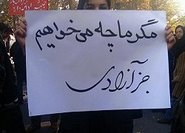


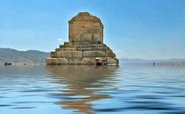


 Tulips in Holland