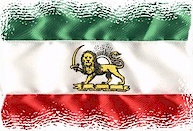

IMPERIAL EMBLEM

PERSIA
Iranian Freedom Fighters UNITE

Showing posts with label Pakistan. Show all posts
Showing posts with label Pakistan. Show all posts
Thursday, January 17, 2008
This Week in the Pentagon
Ahmadinejad: The Secret History of Iran's Radical Leader by Kasra Naji
US Official in Iran Talks Quits
Detained Student Dies Under 'Suspicious' Circumstances
Missile Test - Launched from Palmachim, Heard in Tehran
Stopping Iran: Why the Case for Military Action Still Stands
Detained French-Iranian Journalism Student Leaves Iran
Bush Gets Help From UBS, Deutsche Bank in Iran Sanctions Effort
Iran Receives Russian Nuclear Fuel
Indiana Jones Meets the Da Vinci Code
White House: Bush Fully Backs Iran Intelligence Report
Radical Left Challenging Authority in Iran
Iran President Says Israel Was "Rapidly Doomed to Collapse"
Iran's Gulag Archipelago
Frontpage Interview’s guest today is Roozbeh Farahanipour, an Iranian journalist, democracy activist and former political prisoner in Iran. He was a student leader in the 1999 uprising.
Stopping Iran: Why the Case for Military Action Still Stands
January 17, 2008 Commentary Magazine Norman Podhoretz
Up until a fairly short time ago, scarcely anyone dissented from the assessment offered with “high confidence” by the National Intelligence Estimate [NIE] of 2005 that Iran was “determined to develop nuclear weapons.” Correlatively, no one believed the protestations of the mullahs ruling Iran that their nuclear program was designed strictly for peaceful uses.
Friday, November 23, 2007
Iraq and Afghanistan: Democracy Trumps Democrats : Kevin Fatemi*
WHATCH THIS NOW !
http://tinyurl.com/2pl7we
As the Democratic Party and brutal dictatorships around the world grimace and curse at each iota of good news coming from Iraq, the freedom-loving people of Iran, Iraq and Afghanistan shake their heads in puzzlement at the news from America. Democracy in Iraq and Afghanistan was born on the first election days when proud citizens of these newly-liberated nations risked being blown up by exercising their right to vote for the first time. Meanwhile in Iran, sham elections held with virtually no opposition, no freedom of the press nor any of the facets of true free elections installed a madman bent on internal oppression, external terror and nuclear weapons production on an industrial scale. Instead of condemnation and protest by the Democratic Party at the brutal internal repression of any and all political opposition in Iran, Ahmadinejad is cited as a potential partner in peace talks by the Democrats. As Amir Taheri pointed out on Fox News, the Middle Eastern people are "baffled" by the propensity of the American press to spin the news in a negative light and also baffled by the "defeatist self-flagellation" of the Democratic leaders such a Harry Reid whose declaration that the war in Iraq was "lost" was broadcast worldwide to the shock of millions who look to America as their only beacon of hope for freedom and to the delight of all those who envision the ultimate destruction of the United States and the rest of Western Civilization.
Please read the full article here: http://tinyurl.com/243c2e
A Plan to Attack Iran Swiftly And From Above
November 22, 2007 Globe and Mail Paul Koring
WASHINGTON -- Massive, devastating air strikes, a full dose of "shock and awe" with hundreds of bunker-busting bombs slicing through concrete at more than a dozen nuclear sites across Iran is no longer just the idle musing of military planners and uber-hawks. Although air strikes don't seem imminent as the U.S.-Iranian drama unfolds, planning for a bombing campaign and preparing for the geopolitical blowback has preoccupied military and political councils for months. No one is predicting a full-blown ground war with Iran. The likeliest scenario, a blistering air war that could last as little as one night or as long as two weeks, would be designed to avoid the quagmire of invasion and regime change that now characterizes Iraq. But skepticism remains about whether any amount of bombing can substantially delay Iran's entry into the nuclear-weapons club. Attacking Iran has gone far beyond the twilight musings of a lame-duck president. Almost all of those jockeying to succeed U.S. President George W. Bush are similarly bellicose. Both front-runners, Democrat Senator Hillary Clinton and Republican Rudy Giuliani, have said that Iran's ruling mullahs can't be allowed to go nuclear. "Iran would be very sure if I were president of the United States that I would not allow them to become nuclear," said Mr. Giuliani. Ms. Clinton is equally hard-line. Nor does the threat come just from the United States. As hopes fade that sanctions and common sense might avert a military confrontation with Tehran - as they appear to have done with North Korea - other Western leaders are openly warning that bombing may be needed. Unless Tehran scraps its clandestine and suspicious nuclear program and its quest for weapons-grade uranium (it already has the missiles capable of delivering an atomic warhead), the world will be "faced with an alternative that I call catastrophic: an Iranian bomb or the bombing of Iran," French President Nicolas Sarkozy has warned. Bombing Iran would be relatively easy. Its antiquated air force and Russian air-defence missiles would be easy pickings for the U.S. warplanes.
Please Read the full article here: http://tinyurl.com/2bwmp9
The German Connection
November 22, 2007 Ha'aretz Benjamin Weinthal
BERLIN -- In early 2005, German customs police raided a series of German firms involved in a clandestine relationship with Vero, a Berlin-based front company that was illegally supplying nulcear technology and equipment to Iran. The smuggling operation involved 50 German companies and used a nuclear reactor in the Russian city of Rostov to hide the fact that it was supplying equipment to Bushehr, a port city in southern Iran. Bushehr is the site of a feverish attempt by Russians and Iranians to rebuild Iran's nuclear reactors. Iran's Islamic government insists that these efforts are aimed at a non-military nuclear program, yet intelligence experts believe Bushehr is the gateway to an Iranian nuclear weapons arsenal. Vero's now-defunct Berlin office served as an illegal conduit, operating throughout Germany, for Iran's nuclear program. Germany bars the sale of nuclear equipment and "technological support" to Iran and nine other nations, including Israel, without a special permit from the German Federal Office of Economics and Export Control (BAFA). The Russian government, however, is not required to secure such a permit. Thus, German engineering firms can easily circumvent export regulations by designating a country that is not among the 10 listed in the export control law. Hartwig Muller, head of the German domestic intelligence service Verfassungsschutz in the state of North Rhine-Westphalia (NRW), went so far as to say in an article in the weekly Die Zeit in late August that "we are seeing a regular procurement offensive ... Iran is putting out feelers even more greedily toward German high techs in NRW. The interest is primarily in arms and technology and know-how for the nuclear program."
Please read the full story here: http://tinyurl.com/2xrww8
Iranian Lawyer Representing Dervishes Is Detained : 11/22/07
November 21, 2007 (RFE/RL) -- One of the lawyers representing a Sufi order targeted by a recent crackdown has been detained in Iran, Radio Farda reported. Mostafa Daneshju was detained in Karaj on November 20, but the reason for his arrest has not been made clear, nor is it known where Daneshju is being held. A fellow lawyer, Farshid Yadollahi, told Radio Farda that Daneshju had previously been sentenced to a prison term and lashes on charges of spreading lies and insulting officials. He reportedly appealed against the sentence. Yadollahi also said Daneshju has been active in defending the rights of the Gonabadi order of dervishes. "Following the destruction of the Gonabadi worship house in Ghom, [Daneshju] launched a complaint about the legal and religious violations that happened there," Yadollahi said. "He also represented the case of a Sufi who had been attacked in Loristan Province." Daneshju's arrest comes about 10 days after clashes broke out between dervishes and Shi'ite hard-liners in the Western city of Borujerd. Dozens of people were injured and arrested during the skirmishes, and the Sufis' prayer house was partly destroyed. Human rights groups have expressed concern over what appears to be increased state pressure on the Sufi order in Iran. The U.S. State Department says respect for religious freedom in Iran is extremely poor and has been deteriorating since Ahmadinejad came to power in 2005 -- especially for Sufi Muslims and members of the Baha'i faith.
http://tinyurl.com/2pl7we
As the Democratic Party and brutal dictatorships around the world grimace and curse at each iota of good news coming from Iraq, the freedom-loving people of Iran, Iraq and Afghanistan shake their heads in puzzlement at the news from America. Democracy in Iraq and Afghanistan was born on the first election days when proud citizens of these newly-liberated nations risked being blown up by exercising their right to vote for the first time. Meanwhile in Iran, sham elections held with virtually no opposition, no freedom of the press nor any of the facets of true free elections installed a madman bent on internal oppression, external terror and nuclear weapons production on an industrial scale. Instead of condemnation and protest by the Democratic Party at the brutal internal repression of any and all political opposition in Iran, Ahmadinejad is cited as a potential partner in peace talks by the Democrats. As Amir Taheri pointed out on Fox News, the Middle Eastern people are "baffled" by the propensity of the American press to spin the news in a negative light and also baffled by the "defeatist self-flagellation" of the Democratic leaders such a Harry Reid whose declaration that the war in Iraq was "lost" was broadcast worldwide to the shock of millions who look to America as their only beacon of hope for freedom and to the delight of all those who envision the ultimate destruction of the United States and the rest of Western Civilization.
Please read the full article here: http://tinyurl.com/243c2e
A Plan to Attack Iran Swiftly And From Above
November 22, 2007 Globe and Mail Paul Koring
WASHINGTON -- Massive, devastating air strikes, a full dose of "shock and awe" with hundreds of bunker-busting bombs slicing through concrete at more than a dozen nuclear sites across Iran is no longer just the idle musing of military planners and uber-hawks. Although air strikes don't seem imminent as the U.S.-Iranian drama unfolds, planning for a bombing campaign and preparing for the geopolitical blowback has preoccupied military and political councils for months. No one is predicting a full-blown ground war with Iran. The likeliest scenario, a blistering air war that could last as little as one night or as long as two weeks, would be designed to avoid the quagmire of invasion and regime change that now characterizes Iraq. But skepticism remains about whether any amount of bombing can substantially delay Iran's entry into the nuclear-weapons club. Attacking Iran has gone far beyond the twilight musings of a lame-duck president. Almost all of those jockeying to succeed U.S. President George W. Bush are similarly bellicose. Both front-runners, Democrat Senator Hillary Clinton and Republican Rudy Giuliani, have said that Iran's ruling mullahs can't be allowed to go nuclear. "Iran would be very sure if I were president of the United States that I would not allow them to become nuclear," said Mr. Giuliani. Ms. Clinton is equally hard-line. Nor does the threat come just from the United States. As hopes fade that sanctions and common sense might avert a military confrontation with Tehran - as they appear to have done with North Korea - other Western leaders are openly warning that bombing may be needed. Unless Tehran scraps its clandestine and suspicious nuclear program and its quest for weapons-grade uranium (it already has the missiles capable of delivering an atomic warhead), the world will be "faced with an alternative that I call catastrophic: an Iranian bomb or the bombing of Iran," French President Nicolas Sarkozy has warned. Bombing Iran would be relatively easy. Its antiquated air force and Russian air-defence missiles would be easy pickings for the U.S. warplanes.
Please Read the full article here: http://tinyurl.com/2bwmp9
The German Connection
November 22, 2007 Ha'aretz Benjamin Weinthal
BERLIN -- In early 2005, German customs police raided a series of German firms involved in a clandestine relationship with Vero, a Berlin-based front company that was illegally supplying nulcear technology and equipment to Iran. The smuggling operation involved 50 German companies and used a nuclear reactor in the Russian city of Rostov to hide the fact that it was supplying equipment to Bushehr, a port city in southern Iran. Bushehr is the site of a feverish attempt by Russians and Iranians to rebuild Iran's nuclear reactors. Iran's Islamic government insists that these efforts are aimed at a non-military nuclear program, yet intelligence experts believe Bushehr is the gateway to an Iranian nuclear weapons arsenal. Vero's now-defunct Berlin office served as an illegal conduit, operating throughout Germany, for Iran's nuclear program. Germany bars the sale of nuclear equipment and "technological support" to Iran and nine other nations, including Israel, without a special permit from the German Federal Office of Economics and Export Control (BAFA). The Russian government, however, is not required to secure such a permit. Thus, German engineering firms can easily circumvent export regulations by designating a country that is not among the 10 listed in the export control law. Hartwig Muller, head of the German domestic intelligence service Verfassungsschutz in the state of North Rhine-Westphalia (NRW), went so far as to say in an article in the weekly Die Zeit in late August that "we are seeing a regular procurement offensive ... Iran is putting out feelers even more greedily toward German high techs in NRW. The interest is primarily in arms and technology and know-how for the nuclear program."
Please read the full story here: http://tinyurl.com/2xrww8
Iranian Lawyer Representing Dervishes Is Detained : 11/22/07
November 21, 2007 (RFE/RL) -- One of the lawyers representing a Sufi order targeted by a recent crackdown has been detained in Iran, Radio Farda reported. Mostafa Daneshju was detained in Karaj on November 20, but the reason for his arrest has not been made clear, nor is it known where Daneshju is being held. A fellow lawyer, Farshid Yadollahi, told Radio Farda that Daneshju had previously been sentenced to a prison term and lashes on charges of spreading lies and insulting officials. He reportedly appealed against the sentence. Yadollahi also said Daneshju has been active in defending the rights of the Gonabadi order of dervishes. "Following the destruction of the Gonabadi worship house in Ghom, [Daneshju] launched a complaint about the legal and religious violations that happened there," Yadollahi said. "He also represented the case of a Sufi who had been attacked in Loristan Province." Daneshju's arrest comes about 10 days after clashes broke out between dervishes and Shi'ite hard-liners in the Western city of Borujerd. Dozens of people were injured and arrested during the skirmishes, and the Sufis' prayer house was partly destroyed. Human rights groups have expressed concern over what appears to be increased state pressure on the Sufi order in Iran. The U.S. State Department says respect for religious freedom in Iran is extremely poor and has been deteriorating since Ahmadinejad came to power in 2005 -- especially for Sufi Muslims and members of the Baha'i faith.
Monday, July 23, 2007
Bush Aide: Military Could Go Into Pakistan
WASHINGTON, July 22, 2007
(CBS/AP) The U.S. would consider military force if necessary to stem al Qaeda's growing ability to use its hideout in Pakistan to launch terrorist attacks, a White House aide said Sunday. The president's homeland security adviser, Fran Townsend, said the U.S. was committed first and foremost to working with Pakistan's president, Pervez Musharraf, in his efforts to control militants in the Pakistan-Afghanistan border region. But she indicated the U.S. was ready to take additional measures. "Just because we don't speak about things publicly doesn't mean we're not doing things you talk about," Townsend said, when asked in a broadcast interview why the U.S. does not conduct special operations and other measures to cripple al Qaeda. "Job No. 1 is to protect the American people. There are no options off the table," she said. The national intelligence director, Mike McConnell, said he believed that Osama bin Laden was living in the tribal, border region of Pakistan. Bin Laden is the leader of the al Qaeda network and mastermind of the Sept. 11 attacks. McConnell said Musharraf's attempt at a political solution to peace in the region had backfired by giving al Qaeda a place and time to regroup. "Al Qaeda has been able to regain some of its momentum," McConnell said. "The leadership's intact. They have operational planners, and they have safe haven. The thing they're missing are operatives inside the United States." In the National Intelligence Estimate released last week, analysts stressed the importance of al Qaeda's increasingly comfortable hideout in Pakistan that has resulted from a hands-off accord between Musharraf and tribal leaders along the Afghan border. That 10-month-old deal, which has unraveled in recent days, gave al Qaeda new opportunities to set up compounds for terror training, improve its international communications with associates and bolster its operations. Since then, U.S. officials have said they expect Pakistan to launch more military strikes on Islamic militants while the Bush administration pumps hundreds of millions of dollars in development aid into lawless tribal regions to fight extremism. On Sunday, Townsend reiterated the importance of Musharraf's efforts. "We should also be clear that we believe Pakistan has been a very good ally in the war on terrorism," she said. "Musharraf has been the subject of numerous assassination attempts. Al Qaeda's trying to kill him. They get what the problem is. And we're working with them to deny al Qaeda and the Taliban the safe haven." McConnell also sought to bolster the leader of Pakistan, a key U.S. partner in its fight against terrorism. "President Musharraf is one of our strongest allies," McConnell said. Townsend spoke on "Fox News Sunday" and "Late Edition" on CNN. McConnell appeared on "Meet the Press" on NBC. The National Intelligence Estimate also suggested that al Qaeda was regaining strength and reconstituting its leadership in Pakistan in part because of increasing terrorism activity in Iraq. Critics have charged the administration with pulling resources from the hunt for bin Laden along the Afghanistan-Pakistan border to prosecute a war in Baghdad which has subsequently strengthened the terror group. On Tuesday Townsend said that U.S. military efforts in Afghanistan and Iraq are connected. "These aren't separate conflicts," she said. "These are clearly a single conflict by a single determined enemy who is looking for safe haven. And if they don't have safe haven in Afghanistan, they look for safe haven someplace else. "They'd like to find it — and bin Laden has been quite clear — they'd like to find it in Iraq. But if they don't find it in Iraq, they're going to look someplace else, whether that's northern Mali, in the Maghreb or that's Somalia in West Africa."
(CBS/AP) The U.S. would consider military force if necessary to stem al Qaeda's growing ability to use its hideout in Pakistan to launch terrorist attacks, a White House aide said Sunday. The president's homeland security adviser, Fran Townsend, said the U.S. was committed first and foremost to working with Pakistan's president, Pervez Musharraf, in his efforts to control militants in the Pakistan-Afghanistan border region. But she indicated the U.S. was ready to take additional measures. "Just because we don't speak about things publicly doesn't mean we're not doing things you talk about," Townsend said, when asked in a broadcast interview why the U.S. does not conduct special operations and other measures to cripple al Qaeda. "Job No. 1 is to protect the American people. There are no options off the table," she said. The national intelligence director, Mike McConnell, said he believed that Osama bin Laden was living in the tribal, border region of Pakistan. Bin Laden is the leader of the al Qaeda network and mastermind of the Sept. 11 attacks. McConnell said Musharraf's attempt at a political solution to peace in the region had backfired by giving al Qaeda a place and time to regroup. "Al Qaeda has been able to regain some of its momentum," McConnell said. "The leadership's intact. They have operational planners, and they have safe haven. The thing they're missing are operatives inside the United States." In the National Intelligence Estimate released last week, analysts stressed the importance of al Qaeda's increasingly comfortable hideout in Pakistan that has resulted from a hands-off accord between Musharraf and tribal leaders along the Afghan border. That 10-month-old deal, which has unraveled in recent days, gave al Qaeda new opportunities to set up compounds for terror training, improve its international communications with associates and bolster its operations. Since then, U.S. officials have said they expect Pakistan to launch more military strikes on Islamic militants while the Bush administration pumps hundreds of millions of dollars in development aid into lawless tribal regions to fight extremism. On Sunday, Townsend reiterated the importance of Musharraf's efforts. "We should also be clear that we believe Pakistan has been a very good ally in the war on terrorism," she said. "Musharraf has been the subject of numerous assassination attempts. Al Qaeda's trying to kill him. They get what the problem is. And we're working with them to deny al Qaeda and the Taliban the safe haven." McConnell also sought to bolster the leader of Pakistan, a key U.S. partner in its fight against terrorism. "President Musharraf is one of our strongest allies," McConnell said. Townsend spoke on "Fox News Sunday" and "Late Edition" on CNN. McConnell appeared on "Meet the Press" on NBC. The National Intelligence Estimate also suggested that al Qaeda was regaining strength and reconstituting its leadership in Pakistan in part because of increasing terrorism activity in Iraq. Critics have charged the administration with pulling resources from the hunt for bin Laden along the Afghanistan-Pakistan border to prosecute a war in Baghdad which has subsequently strengthened the terror group. On Tuesday Townsend said that U.S. military efforts in Afghanistan and Iraq are connected. "These aren't separate conflicts," she said. "These are clearly a single conflict by a single determined enemy who is looking for safe haven. And if they don't have safe haven in Afghanistan, they look for safe haven someplace else. "They'd like to find it — and bin Laden has been quite clear — they'd like to find it in Iraq. But if they don't find it in Iraq, they're going to look someplace else, whether that's northern Mali, in the Maghreb or that's Somalia in West Africa."
Homeland Security Adviser Leaves Force on Table to Deal With Al Qaeda in Pakistan
WASHINGTON — The U.S. would consider military force if necessary to stem Al Qaeda's growing ability to use its hideout in Pakistan to launch terrorist attacks, a White House aide said Sunday. The Senate's top Democrat endorsed that approach. The president's homeland security adviser, Fran Townsend, said the U.S. was committed first and foremost to working with Pakistan's president, Pervez Musharraf, in his efforts to control militants in the Pakistan-Afghanistan border region. But she indicated the U.S. was ready to take additional measures.
"Just because we don't speak about things publicly doesn't mean we're not doing things you talk about," Townsend said, when asked in a broadcast interview why the U.S. does not conduct special operations and other measures to cripple Al Qaeda."Job No. 1 is to protect the American people. There are no options off the table," she said. Townsend also said, "No question that we will use any instrument at our disposal" to deal with Al Qaeda and its leader, Usama bin Laden.
Responding to earlier comments by Townsend, Pakistan's foreign minister, Khurshid Kasuri, said Sunday that the country's military was in the best position to attack Al Qaeda, if the U.S. provided intelligence.The national intelligence director, Mike McConnell, said he believed that bin Laden was living in the tribal, border region of Pakistan. Bin Laden is the leader of the Al Qaeda network and mastermind of the Sept. 11 attacks.McConnell said Musharraf's attempt at a political solution to peace in the region had backfired by giving Al Qaeda a place and time to regroup."Al Qaeda has been able to regain some of its momentum," McConnell said. "The leadership's intact. They have operational planners, and they have safe haven. The thing they're missing are operatives inside the United States."In the volatile northwest tribal region of Pakistan, Islamic militants detonated bombs close to military convoys and attacked government positions on Sunday, leading to gunfights that left 19 insurgents dead, government officials said. The fighting was the latest since militants announced the termination of a peace agreement with the government last week following a deadly military raid on a radical mosque in the Pakistani capital.In the National Intelligence Estimate released last week, analysts stressed the importance of Al Qaeda's increasingly comfortable hideout in Pakistan that has resulted from a hands-off accord between Musharraf and tribal leaders along the Afghan border.That 10-month-old deal, which has unraveled in recent days, gave Al Qaeda new opportunities to set up compounds for terror training, improve its international communications with associates and bolster its operations.Since then, U.S. officials have said they expect Pakistan to launch more military strikes on Islamic militants while the Bush administration pumps hundreds of millions of dollars in development aid into lawless tribal regions to fight extremism.On Sunday, Townsend reiterated the importance of Musharraf's efforts."We should also be clear that we believe Pakistan has been a very good ally in the war on terrorism," she said. "Musharraf has been the subject of numerous assassination attempts. Al Qaeda's trying to kill him. They get what the problem is. And we're working with them to deny Al Qaeda and the Taliban the safe haven."McConnell also sought to bolster the leader of Pakistan, a key U.S. partner in its fight against terrorism. "President Musharraf is one of our strongest allies," McConnell said.
Senate Majority Leader Harry Reid, D-Nev., said he agreed with Townsend that the U.S. should consider going after Al Qaeda militarily "wherever they are.""We have the NIE report, which just came out, that says Al Qaeda during this administration is stronger than ever. I don't think we should take anything off the table. Wherever we find these evil people we should go get them," Reid said.But Kasuri said Pakistan was ready to act on any intelligence from the U.S.
"Let the United States provide us with actionable intelligence and you will find that Pakistan will never be lacking," he said. "Pakistan's army can do the job much better and the result will be that there will be far less collateral damage."The new U.S. intelligence estimate said Al Qaeda is using its growing strength in Pakistan and Iraq to plot attacks on U.S. soil, heightening the terrorist threat facing the United States over the next few years. In particular, it warned that through its affiliate in Iraq, Al Qaeda is able to recruit and energize extremists for attacks.
McConnell, the nation's intelligence chief, acknowledged that the war in Iraq has served as a recruiting tool for Al Qaeda. He said coalition forces and local leaders have had some successes in knocking back the terrorist network, particularly in the western region of the country.But when asked if Al Qaeda has a larger, more robust presence in Iraq than before the war began, McConnell said, "That's fair to say."
"Just because we don't speak about things publicly doesn't mean we're not doing things you talk about," Townsend said, when asked in a broadcast interview why the U.S. does not conduct special operations and other measures to cripple Al Qaeda."Job No. 1 is to protect the American people. There are no options off the table," she said. Townsend also said, "No question that we will use any instrument at our disposal" to deal with Al Qaeda and its leader, Usama bin Laden.
Responding to earlier comments by Townsend, Pakistan's foreign minister, Khurshid Kasuri, said Sunday that the country's military was in the best position to attack Al Qaeda, if the U.S. provided intelligence.The national intelligence director, Mike McConnell, said he believed that bin Laden was living in the tribal, border region of Pakistan. Bin Laden is the leader of the Al Qaeda network and mastermind of the Sept. 11 attacks.McConnell said Musharraf's attempt at a political solution to peace in the region had backfired by giving Al Qaeda a place and time to regroup."Al Qaeda has been able to regain some of its momentum," McConnell said. "The leadership's intact. They have operational planners, and they have safe haven. The thing they're missing are operatives inside the United States."In the volatile northwest tribal region of Pakistan, Islamic militants detonated bombs close to military convoys and attacked government positions on Sunday, leading to gunfights that left 19 insurgents dead, government officials said. The fighting was the latest since militants announced the termination of a peace agreement with the government last week following a deadly military raid on a radical mosque in the Pakistani capital.In the National Intelligence Estimate released last week, analysts stressed the importance of Al Qaeda's increasingly comfortable hideout in Pakistan that has resulted from a hands-off accord between Musharraf and tribal leaders along the Afghan border.That 10-month-old deal, which has unraveled in recent days, gave Al Qaeda new opportunities to set up compounds for terror training, improve its international communications with associates and bolster its operations.Since then, U.S. officials have said they expect Pakistan to launch more military strikes on Islamic militants while the Bush administration pumps hundreds of millions of dollars in development aid into lawless tribal regions to fight extremism.On Sunday, Townsend reiterated the importance of Musharraf's efforts."We should also be clear that we believe Pakistan has been a very good ally in the war on terrorism," she said. "Musharraf has been the subject of numerous assassination attempts. Al Qaeda's trying to kill him. They get what the problem is. And we're working with them to deny Al Qaeda and the Taliban the safe haven."McConnell also sought to bolster the leader of Pakistan, a key U.S. partner in its fight against terrorism. "President Musharraf is one of our strongest allies," McConnell said.
Senate Majority Leader Harry Reid, D-Nev., said he agreed with Townsend that the U.S. should consider going after Al Qaeda militarily "wherever they are.""We have the NIE report, which just came out, that says Al Qaeda during this administration is stronger than ever. I don't think we should take anything off the table. Wherever we find these evil people we should go get them," Reid said.But Kasuri said Pakistan was ready to act on any intelligence from the U.S.
"Let the United States provide us with actionable intelligence and you will find that Pakistan will never be lacking," he said. "Pakistan's army can do the job much better and the result will be that there will be far less collateral damage."The new U.S. intelligence estimate said Al Qaeda is using its growing strength in Pakistan and Iraq to plot attacks on U.S. soil, heightening the terrorist threat facing the United States over the next few years. In particular, it warned that through its affiliate in Iraq, Al Qaeda is able to recruit and energize extremists for attacks.
McConnell, the nation's intelligence chief, acknowledged that the war in Iraq has served as a recruiting tool for Al Qaeda. He said coalition forces and local leaders have had some successes in knocking back the terrorist network, particularly in the western region of the country.But when asked if Al Qaeda has a larger, more robust presence in Iraq than before the war began, McConnell said, "That's fair to say."
Wednesday, April 04, 2007
The (NOT SO) Secret War Against Iran : Brian Ross and Christopher Isham : ABC News Exclusive
A Pakistani tribal militant group responsible for a series of deadly guerrilla raids inside Iran has been secretly encouraged and advised by American officials since 2005, U.S. and Pakistani intelligence sources tell ABC News. The group, called Jundullah, is made up of members of the Baluchi tribe and operates out of the Baluchistan province in Pakistan, just across the border from Iran. It has taken responsibility for the deaths and kidnappings of more than a dozen Iranian soldiers and officials. U.S. officials say the U.S. relationship with Jundullah is arranged so that the U.S. provides no funding to the group, which would require an official presidential order or "finding" as well as congressional oversight. Tribal sources tell ABC News that money for Jundullah is funneled to its youthful leader, Abd el Malik Regi, through Iranian exiles who have connections with European and Gulf states. Jundullah has produced its own videos showing Iranian soldiers and border guards it says it has captured and brought back to Pakistan.The leader, Regi, claims to have personally executed some of the Iranians. "He used to fight with the Taliban. He's part drug smuggler, part Taliban, part Sunni activist," said Alexis Debat, a senior fellow on counterterrorism at the Nixon Center and an ABC News consultant who recently met with Pakistani officials and tribal members. "Regi is essentially commanding a force of several hundred guerrilla fighters that stage attacks across the border into Iran on Iranian military officers, Iranian intelligence officers, kidnapping them, executing them on camera," Debat said. Most recently, Jundullah took credit for an attack in February that killed at least 11 members of the Iranian Revolutionary Guard riding on a bus in the Iranian city of Zahedan. Last month, Iranian state television broadcast what it said were confessions by those responsible for the bus attack. They reportedly admitted to being members of Jundullah and said they had been trained for the mission at a secret location in Pakistan. The Iranian TV broadcast is interspersed with the logo of the CIA, which the broadcast blamed for the plot. A CIA spokesperson said "the account of alleged CIA action is false" and reiterated that the U.S. provides no funding of the Jundullah group. Pakistani government sources say the secret campaign against Iran by Jundullah was on the agenda when Vice President Dick Cheney met with Pakistani President Pervez Musharraf in February.
A senior U.S. government official said groups such as Jundullah have been helpful in tracking al Qaeda figures and that it was appropriate for the U.S. to deal with such groups in that context.
Some former CIA officers say the arrangement is reminiscent of how the U.S. government used proxy armies, funded by other countries including Saudi Arabia, to destabilize the government of Nicaragua in the 1980s.
A senior U.S. government official said groups such as Jundullah have been helpful in tracking al Qaeda figures and that it was appropriate for the U.S. to deal with such groups in that context.
Some former CIA officers say the arrangement is reminiscent of how the U.S. government used proxy armies, funded by other countries including Saudi Arabia, to destabilize the government of Nicaragua in the 1980s.
Wednesday, March 21, 2007
WAR ON TERROR, About 100 killed in Pakistani border clashes
Wed Mar 21, 2007 6:42PM GMT
WANA, Pakistan (Reuters) - At least 50 people were killed in fighting between al Qaeda-linked militants and Pakistani tribesmen near the Afghan border on Wednesday, taking the death toll in three days of fighting to about 100. The fighting follows a break-down in relations between the al Qaeda-linked militants and the tribesmen who previously sheltered them. The government has been urging the ethnic Pashtun tribesmen to bring the foreigners under control. Tribesmen in the South Waziristan region also called for holy war against the foreign militants, most of whom are Uzbeks. "Thirty-five foreign militants and 15 tribesmen were killed in today's fighting," said a security official who declined to be identified. Nearly 50 people, including 35 foreign militants, were killed in fighting on Monday and Tuesday, government and security officials said. Pakistani security forces say they are not involved. Hundreds of foreign militants, including Uzbeks, Chechens and Arabs, fled to the semi-autonomous tribal lands on the Pakistani side of the border after U.S.-led forces defeated the Taliban in Afghanistan in 2001. Most ethnic Pashtun tribesmen, who inhabit both sides of the Pakistani-Afghan border, gave the militants refuge despite government efforts to clear the foreigners out as part of its efforts in the war on terrorism. Fighting between the foreign militants and the Pashtun tribesmen first erupted on March 6, after the militants tried to kill a pro-government tribal leader. Seventeen people, most of them Uzbeks, were killed then. This week's clashes are a resumption of that battle, security officials said.
"SOURCE OF PROBLEMS"
On Monday and Tuesday the fighting took place in Azam Warsak and Shin Warsak, two villages west of South Waziristan's main town of Wana. Wednesday's clashes centred in nearby Kalusha village. "Today's was the fiercest fighting," the government security official said. Although South Waziristan has long been a hotbed of support for Islamist militants, officials and residents said the inhabitants had had enough of the foreigners. "Most people are against them because they are the main source of security problems in our area," said a resident, who declined to be identified. After the fighting resumed on Monday, calls were made in mosques in Wana urging people to join a jihad, or Muslim holy war, against the Uzbeks, residents said. Residents say up to 1,200 Uzbeks are in the region. The Pashtuns refer to them as "gungas", meaning the dumb ones because they can't speak the Pashto language. Most are members of the Islamic Movement of Uzbekistan militant group commanded by Tahir Yuldashev. Pakistani forces launched a major operation against the militants in the area in 2004. Hundreds of people were killed but Yuldashev escaped and is at large. Authorities have struck deals with tribal elders in South and North Waziristan aimed at ending fighting with Pakistani forces and raids into Afghanistan. But U.S. and Afghan military officials say the pacts have not stopped cross-border attacks.
WANA, Pakistan (Reuters) - At least 50 people were killed in fighting between al Qaeda-linked militants and Pakistani tribesmen near the Afghan border on Wednesday, taking the death toll in three days of fighting to about 100. The fighting follows a break-down in relations between the al Qaeda-linked militants and the tribesmen who previously sheltered them. The government has been urging the ethnic Pashtun tribesmen to bring the foreigners under control. Tribesmen in the South Waziristan region also called for holy war against the foreign militants, most of whom are Uzbeks. "Thirty-five foreign militants and 15 tribesmen were killed in today's fighting," said a security official who declined to be identified. Nearly 50 people, including 35 foreign militants, were killed in fighting on Monday and Tuesday, government and security officials said. Pakistani security forces say they are not involved. Hundreds of foreign militants, including Uzbeks, Chechens and Arabs, fled to the semi-autonomous tribal lands on the Pakistani side of the border after U.S.-led forces defeated the Taliban in Afghanistan in 2001. Most ethnic Pashtun tribesmen, who inhabit both sides of the Pakistani-Afghan border, gave the militants refuge despite government efforts to clear the foreigners out as part of its efforts in the war on terrorism. Fighting between the foreign militants and the Pashtun tribesmen first erupted on March 6, after the militants tried to kill a pro-government tribal leader. Seventeen people, most of them Uzbeks, were killed then. This week's clashes are a resumption of that battle, security officials said.
"SOURCE OF PROBLEMS"
On Monday and Tuesday the fighting took place in Azam Warsak and Shin Warsak, two villages west of South Waziristan's main town of Wana. Wednesday's clashes centred in nearby Kalusha village. "Today's was the fiercest fighting," the government security official said. Although South Waziristan has long been a hotbed of support for Islamist militants, officials and residents said the inhabitants had had enough of the foreigners. "Most people are against them because they are the main source of security problems in our area," said a resident, who declined to be identified. After the fighting resumed on Monday, calls were made in mosques in Wana urging people to join a jihad, or Muslim holy war, against the Uzbeks, residents said. Residents say up to 1,200 Uzbeks are in the region. The Pashtuns refer to them as "gungas", meaning the dumb ones because they can't speak the Pashto language. Most are members of the Islamic Movement of Uzbekistan militant group commanded by Tahir Yuldashev. Pakistani forces launched a major operation against the militants in the area in 2004. Hundreds of people were killed but Yuldashev escaped and is at large. Authorities have struck deals with tribal elders in South and North Waziristan aimed at ending fighting with Pakistani forces and raids into Afghanistan. But U.S. and Afghan military officials say the pacts have not stopped cross-border attacks.
Tuesday, March 06, 2007
Bin Laden Hunt Heating Up
The CIA is ramping up its activities in the lawless northern Waziristan area of Pakistan, on the trail of two very high value targets: Osama bin Laden and Ayman al-Zawahiri. Armed with fresh intelligence, the CIA is moving additional man power and equipment into Pakistan in the effort to find Osama bin Laden and his deputy Ayman al Zawahri, U.S. officials tell ABC News. “Reports that the trail has gone stone cold are not correct,” said one U.S. official. “We are very much increasing our efforts there,” the official said. People familiar with the CIA operation say undercover officers with paramilitary training have been ordered into Pakistan and the area across the border with Afghanistan as part of the ramp-up. Although never publicly acknowledged, Pakistan has permitted CIA teams to secretly operate inside Pakistan. Pakistan officials say they are aware that CIA teams have increased their presence in northern Waziristan since last September when Pakistan withdrew its troops from the area under a much-criticized “peace deal” with tribal leaders. Director of National Intelligence Mike McConnell testified last week that current intelligence “to the best of our knowledge” puts both bin Laden and al Zawahri in Pakistan. It was the first time a high-ranking U.S. official publicly identified Pakistan as bin Laden’s hiding place.
Sunday, March 04, 2007
Don't worry, Ahmadinejad will put your suggestion to the Saudis and will demand that they rein-in the Sunnies.
YOU WISH !
وزیر امور خارجه یا توریست و جهانگرد
به گزارش خبرگزاری ایلنا، نماينده رژیم از زاهدان در مجلس شورای اسلامی، با انتقاد شديد از وزارت امور خارجه جمهوری اسلامی به خاطر سکوت در برابر پاكستان گفت "متاسفانه وزارت خارجه ما بيعرضه است و وزير خارجه نقش يك توريست و جهانگرد را دارد." حسينعلي شهرياري گفت "همه مسوولان كشور ميدانند عبدالمالك ريگي مسوول شرارت های اخير است، اما نمي دانيم چه ملاحظاتي وجود دارد كه جمهوري اسلامي در برابر دولت پاكستان كه توان اداره مرزهايش را ندارد، سكوت پيشه ميكند." وي خواستار حمله هوايي جمهوری اسلامی به پایگاه مخالفان بلوچ شد و گفت "بايد پايگاه ريگي در پاكستان را هدف حمله هوايی قرار دهيم."
What an utter Idiot, you seem to have forgotten that the Pakistanis have atomic weapons that actually work and they ' possibly ' might answere you with that.
Friday, February 16, 2007
Rat catchers get some more in the net
Three Al Qaeda suspects arrested in PakistanPosted on : Fri, 16 Feb 2007 16:01:02 GMT
Karachi, Feb 16 Three suspected Al Qaeda-linked suicide bombers, who were planning attacks in the city, were arrested here Friday while six of their accomplices managed to escape after a shootout with police. Police sources said that when a police party raided the hideout of the accused in Gulistan-e-Jauhar area, the suicide bombers opened fire, which was returned by the police, Online news agency said.After an exchange of firing, police managed to apprehend the suspected suicide attackers, identified as Ferhan, Shahid and Ghani, and recovered three hand grenades, two explosive-laden jackets used in suicide attacks, two Kalashnikovs and two pistols from their possession. During interrogation, the accused revealed they had planned to conduct suicide attacks on foreign delegates of the IDEAS 2006, which was averted due to strict security measures, police sources added. According to police, the accused belong to Al Qaeda offshoot Qari Zafar group, headed by Qari Zafar, and had carried out a number of attacks in the country, including in Waziristan. Police said they were probing militants' links to the recent series of suicide attacks in capital Islamabad and in the North-West Frontier Province.
Karachi, Feb 16 Three suspected Al Qaeda-linked suicide bombers, who were planning attacks in the city, were arrested here Friday while six of their accomplices managed to escape after a shootout with police. Police sources said that when a police party raided the hideout of the accused in Gulistan-e-Jauhar area, the suicide bombers opened fire, which was returned by the police, Online news agency said.After an exchange of firing, police managed to apprehend the suspected suicide attackers, identified as Ferhan, Shahid and Ghani, and recovered three hand grenades, two explosive-laden jackets used in suicide attacks, two Kalashnikovs and two pistols from their possession. During interrogation, the accused revealed they had planned to conduct suicide attacks on foreign delegates of the IDEAS 2006, which was averted due to strict security measures, police sources added. According to police, the accused belong to Al Qaeda offshoot Qari Zafar group, headed by Qari Zafar, and had carried out a number of attacks in the country, including in Waziristan. Police said they were probing militants' links to the recent series of suicide attacks in capital Islamabad and in the North-West Frontier Province.
Wednesday, February 14, 2007
PRESS RELEASE BY JONDOLAH REGARDING THE BUS EXPLOSION IN ZAHEDAN
The latest news
2007 Friday 16 February
اطلاعیه جنبش مقاومت مردمی ایران (جندالله )
به نام خداجنبش مقاومت مردمی ایران (جندالله ) بیانیه تفرقه انگیز حسنعلی نوری فرماندار رژیم در زاهدان مبنی بر ادعای اینکه مسلم کیخا شهید عقیده ، اصالت و مردانگی سیستانی و شیعه است را به شدت محکوم می کند.
اینگونه بیانات اقدامی در راستای تفرقه اندازی بین مردم شیعه و سنی ، فارس و بلوچ می باشد و این نوع حرکات در راستای ضرب المثل مشهور تفرقه بینداز و حکومت کن می باشد .
همچنین جنبش مقاومت مردمی باری دیگر تاکید می کند که هیچ یک از دلاوران مبارز دستگیر نشده و ادعاهای پوچ و بی اساس رژیم آخوندی را تکذیب می کند.
از آنجا که رژیم می خواهد بر ضعف خود سر پوش نهاده و وانمود کند که بسیار مقتدر است فورا اعلام کرد که ما عوامل اصلی این عملیات را دستگیر کرده ایم و نیز مسئولیت ضعف خود را بر دوش دیگر کشورها نظیر پاکستان انداخت .
کسانی که دستگیر شده اند از اقوام و خویشاوندان مبارزان هستند که هیچ گونه همکاری با جنبش نداشته اند و رژیم از این ترفند برای فشار بر مبارزین استفاده می نماید و در مورد آنچه که رژیم ادعا می کند که سلاح ها و مهماتی کشف نموده ، جنبش این نکته را تایید می کند ولی در خانه ای که این مهمات قرار داشته اند فردی حضور نداشته و کسی دستگیر نشده است .
ادعای رژیم مبنی بر کشف اسنادی در ارتباط رابطه جنبش با سرویس های اطلاعاتی امریکا و انگلیس کذب محض بوده و مضحکه می باشد و دال بر بی عقلی ، جهالت و نادانی مسئولان جاهل و نادان رژیم می باشد .
اولا : اگر ارتباطی با سرویس های اطلاعاتی می باشد این وظیفه شبکه اطلاعاتی و کادر سیاسی است نه شاخه نظامی .
ثانیا : بر اساس آموزشهای چریکی اسنادی نه اینچنین مهم بلکه اسناد معمولی را نباید در منطقه عملیاتی نگاه داشت .
ثالثا : جنبش هیچ نیازی برای برقراری ارتباط با سرویس های اطلاتی ندارد و باید برای عقل و خرد این سرمداران رژیم عزای عمومی اعلام کرد ( بر این عقل و خرد بباید گریست ).
و در آخر جنبش مقاومت مردمی شدیدا به تمامی سردمداران رژیم و مزدورانش در منطقه هشدار می دهد که جواب تمام این توطئه ها و تبلیغات دروغین ، دستگیری و شکنجه جوانان بیگناه و به پای تلویزیون کشیدن آنها و وادار نمودنشان به اعتراف به جرمهای ناکرده را در اسرع وقت آنچنان زیبا و خوب خواهد گرفت تا باشد عبرتی برای بی خردان زیرا که خردمندان تا به حال می بایست عبرت می گرفتند .
و ان شاء الله به حول و قوه الهی حیات خلوت دشمنان مردم ایران را در پایتخت کشور که آزادانه و با امنیت تردد می کنند تبدیل به جهنمی خواهیم کرد تا همه مستکبران عالم بدانند که قهر و خشم یک ملت با سرکوب خاموش نخواهد شد.
طی این اطلاعیه فرماندهی نظامی جنبش مقاومت مردمی به شرافت خود قسم یاد می کند که اگر جوانان بیگناه تا چند روز دیگر آزاد نشوند درسی به یاد ماندنی به رژیم خواهیم داد و تمام استراتژیها و دکترینهای ضد حکومتی را اختیار خواهیم نمود.جنبش مقاومت مردمی ایران
انفجار زاهدان: اطلاعیه جدید جنبش مقاومت مردمی ایران (جندالله)
بنام خدا
جنبش مقاومت مردمی ایران (جندالله ) عملیات موفقیت آمیز چهارشنبه ۲۵ بهمن ماه ۱۳۸۵ دلاوران مبارز شاخه نظامی شهید احمد دهمرده را به عموم مردم ستمدیده بلوچستان و ایران تبریک عرض مینماید و همچنین این مژده را به مردم عزیز میدهد که رشته عملیاتهای اقتدار ۲ با موفقیت کامل به پایان رسید و به زودی رشته عملیاتهای اقتدار ۳ در ابعادی وسیعتر در سایر نقاط و مراکز حساس نظامی ایران به اجرا در خواهد آمد. موفقیت و پیروزی مبارزان در عملیاتهای متعدد مرهون خون مبارزان شهید و مردم بیگناهی که در زندانها و دادگاههای دژخیمانی همجون نکونام ها و بدون داشتن وکیل و اثبات جرمی به اعدام محکوم گشتند می باشد.
جنبش مقاومت به اطلاع مردم می رساند که اخبار مربوط به دستگیری مبارزین دروغ محض بوده و رژیم از روی ضعف و زبونی خویش در برابر مبارزین اینچنین شایعاتی را انتشار میدهد. طی این اطلاعیه فرمانده امیر عبدالمالک بلوچ رهبری جنبش مقاومت مردمی از اپوزیسیون خواستند که ندای حق خواهی مردم مظلوم ما را بیش از پیش به گوش هموطنان و جهانیان برسانند تا همگان بدانند که بر ما چه میگذرد. در ادامه ایشان افزودند که جنبش مقاومت مردمی به روشهای مسالت آمیز و مقاومت منفی و پرهیز از خشونت اعتقاد دارد تا زمانی که طرف مقابل نیز به این روشها احترام بگذارد اما هنگامیکه به اعتراضات مسالمت آمیز مردمی با خشونت پاسخ داده میشود دیگر این روشها ناکارآمد شده و توسل به این روشها پایان می پذیرد و در این مرحله است که چاره ای جر دست به سلاح بردن وجود ندارد. ما عدم خشونت را به عنوان یک استراتژی قبول داریم نه به عنوان یک اصل کلی و اساسی و اخلاقی . بنابراین استفاده از یک روش بی اثر هیچ پاداش اخلاقی ندارد و ما باری دیگر قبل از آغاز رشته عملیاتهای اقتدار ۳ رژیم را به فراهم نمودن زمینه برای راههای مقاومت منفی و اعتراضات دموکراتیک دعوت می نماییم و اگر رژیم از امروز این زمینه را فراهم نماید ما در انظار مردم ایران و حهان اعلام میکنیم که سلاح را بر زمین میگذاریم و در صورتیکه رژیم این زمینه را مهیا نکند ما نیز چاره ای به جز سلاح نداریم زیرا در کشوری که فضای خفگان بر آن حاکم باشد هیچ راهی برای زنده ماندن جز مقاومت مسلحانه نخواهد بود. جنبش ما هیچ گونه وابستگی با قاچاق مواد مخدر ، طالبان و القاعده نداشته و ندارد و اگر رژیم خود را صادق میداند چرا به نمایندگانی که از طرفش نزد ما می آیند اجازه نمی دهد تا حقایق را در رسانه های اظهار نمایند. خواسته های ما منطقی است و حقوقی است که همه انسانها در سراسر دنیا از آن برخوردارند و اولین خواسته ما این است که رژیم به منشور حقوق بشر سازمان ملل متحد احترام گذاشته و مطابق با آن ما حقوق اقلیتهای ملی و مذهبی را به رسمیت بشناسد . جنبش مقاومت مردمی ایران (جندالله )
0
comments

 Labels:
Bomb,
Concern in Iran,
FORCES,
Freedom,
insurgents,
Jondolah,
Middle East,
Military engagment,
Pakistan,
Pasdars,
Sunni
Labels:
Bomb,
Concern in Iran,
FORCES,
Freedom,
insurgents,
Jondolah,
Middle East,
Military engagment,
Pakistan,
Pasdars,
Sunni
 Labels:
Bomb,
Concern in Iran,
FORCES,
Freedom,
insurgents,
Jondolah,
Middle East,
Military engagment,
Pakistan,
Pasdars,
Sunni
Labels:
Bomb,
Concern in Iran,
FORCES,
Freedom,
insurgents,
Jondolah,
Middle East,
Military engagment,
Pakistan,
Pasdars,
Sunni
Tuesday, February 13, 2007
Anxiety grows on Iran's eastern border
Rumours grow over Iranian interest in Taliban heartlands of southern Afghanistan and tribal regions of Pakistan
TAFTAN, PAKISTAN — You can smell the tension along the Iranian border. A thick stench of rotting fruit and vegetables hangs over market stalls in the border town of Taftan, near the three-way juncture of Afghanistan, Pakistan and Iran.The wild country here on the edge of the Afghan desert has grown notorious as a shipment point for drugs and weapons, a source of worry for all three governments. For years, those concerns rarely interrupted the work of ordinary traders, but last week the Pakistani authorities caught seven Iranians trying to sneak across the border at night, and a squabble ensued over which country had the right to interrogate them.Iran closed its border in protest, and for several days the town was awash with food destined for Iranian shelves, long rows of packing crates crawling with flies.Mullah Zafran, president of the Taftan fruit market, said these interruptions of trade are becoming more frequent. "There is no discipline on the border," he said, bitterly.The scene in Taftan is one of several signs of growing anxiety along Iran's eastern border. The country's western flank has received vastly more attention in recent days, as the United States accuses Iran of helping insurgents in Iraq. But some observers have also started to question Iran's strategy in the Taliban heartlands of southern Afghanistan and the tribal regions of Pakistan.Officially, Tehran remains closely allied with Kabul, having poured more than $200-million (U.S.) into the reconstruction of its war-torn neighbour. Iran's Foreign Minister met with Afghanistan's outgoing ambassador to Tehran on the weekend, praising their warm relations and calling for more economic co-operation.Behind the smiles, however, lies a heated debate. Nearly every Afghan politician criticizes Pakistan for stoking the Taliban insurgency, but they're divided about Iran. Some describe their neighbour as exerting only political and commercial influence, broadcasting anti-American radio and television programs into the country and using predatory business practices to gain control over parts of Afghanistan's economy."They are meddling, for sure," a senior Kabul politician said. "But for now, we can't say they are interfering in the military aspect." In Kandahar, another politician said he believes that Iran supports the Ishaqzai tribal faction within the Taliban. The Afghan politician said he recently met with an Iranian official and challenged him about the rumours, which produced only a shrug from the Iranian."He said, 'What should we do? If we knew that the United States would behave like this, we would not have opposed the Taliban at first,' " the politician said.Support for the Taliban would be a major reversal for the Shia government in Iran, which nearly went to war with the Sunni Taliban regime over the killing of seven Iranian diplomats in 1998. Iran continued to give weapons and other assistance to the Taliban's enemies in northern Afghanistan until the regime was overthrown.But the arrival of foreign soldiers in Afghanistan brought new concerns for Tehran, especially as the North Atlantic Treaty Organization increases its troop strength in provinces near the Iranian border. NATO's chief of staff in southern Afghanistan, Canadian Colonel Mike Kampman, responded cautiously when asked about Iran's response."You put all this in the larger international atmosphere, or environment, and you can imagine the tensions of any sort of Western presence that gets close to that border," Col. Kampman said.Lieutenant-General Rahmatullah Raoufi, southern regional commander for the Afghan army, said he hasn't seen any firm indications that Iran backs the insurgency. "We don't have any evidence," he said. "We just don't know." A few hints — rumours, mostly — suggest the Iranians may have established links with the insurgents.A 22-year-old Taliban fighter from Maywand district, west of Kandahar, was shot in the chest during a fight with NATO troops in September, and dragged off the battlefield by his comrades.He returned home several months later, with his wounds healed, and told his neighbours that the Taliban took him for treatment to a hospital in Tehran."He kept talking about the Iranian nurses," said a neighbour, who feared for his life if he told the story publicly. "He said, 'They were really beautiful, and I wish I could speak Persian.' " A Taliban source said he knows of opium barons who have dramatically increased their regular cash payments to insurgent leaders in Quetta, Pakistan. The payments are protection money, paid by drug dealers whose smuggling routes are guarded by Taliban fighters. Those routes often run across the Iranian border, and the Taliban source speculated that somebody inside Iran is putting cash in the drug convoys for delivery to the insurgents.(A low-ranking Western intelligence staffer also said Iran is funding the Taliban, but offered no details.)A Taliban fighter in Kandahar, however, was skeptical about the Iranian support. "We get some Kalashnikovs from Iran, but we have to pay for them," he said. "If they want to help us, they should give them free." Free or not, Iranian weapons have been reported on the battlefields of Panjwai district, where Canadian troops recently fought insurgents.Gul Mohammed, a villager from Sangisar, about 40 kilometres west of Kandahar city, said Taliban fighters burned his cousin's home and stole two Russian-made Kalashnikovs during the fighting in his village this summer. He approached the fighters on his cousin's behalf, he said, asking them to give the weapons back. Many households in Afghanistan are stocked with assault rifles for personal protection, and Mr. Mohammed argued with the Taliban that his cousin needed the weapons to protect his family.The insurgents were reluctant to give back the Russian rifles, which are prized in Afghanistan for their quality. Instead, the fighters offered Mr. Mohammed two rifles they described as "Iranian Kalashnikovs," shorter weapons with two grey plastic pistol-grips and folding metal stocks. His description sounded closer to the Hungarian AMD-65 than any Iranian rifle, but the insurgents said the weapons and ammunition were both supplied by Iran."The guns were new," Mr. Mohammed said. "The black paint was very shiny." Such claims are difficult to verify; Afghanistan has issued AMD-65s to some police officers, and deep corruption in the country's law enforcement means that police weapons often wind up in the hands of insurgents.In fact, the Afghan police officer who stood guard outside Iran's consulate in Kandahar last week was carrying the same weapon, a weathered AMD-65.Inside the ornate building, in an office decorated with hundreds of tiny mirrors and a portrait of Ayatollah Khomaini, the head of Iran's reconstruction efforts in southern Afghanistan shook his head scornfully when asked whether Iranian weapons are being used by the Taliban."It's impossible," said Sheik Hossein Zeineddin, director of the Iranian Council in Kandahar. "We are working in a very transparent way." Echoing the arguments made by Pakistani authorities, however, Mr. Zeineddin added that it's difficult for Iran to stop insurgents from crossing the expanses of open terrain that form his country's border with Afghanistan."We have a 900-kilometre border with Afghanistan," he said. "Who can control every kilometre?" But the problems with the border are less of a threat to Afghanistan than to Iran, Mr. Zeineddin added, because the Western allies now operating in the region are trying to make trouble for his country.He alleged that British forces are using the drug dealers in Helmand province for espionage against Iran: "They are gathering information, visiting, making connections, watching us."At the same time, Mr. Zeineddin said, the United States and Pakistan are supporting the Baloch tribes in their separatist insurgency in southeastern Iran."They are raising the Baloch against us," he said, even suggesting that NATO operates training camps for Baloch fighters inside Afghanistan.A gracious man, wearing a suit jacket and speaking fluent English, Mr. Zeineddin said his suspicions about the Western powers haven't stopped him from pursuing a humanitarian mission in southern Afghanistan. Some of the initiatives he described, such as subsidizing Ariana Afghan Airlines' regular flights to Tehran, and training 300 literacy teachers as Persian-language instructors, seemed designed to extend Iran's influence in this Pashto-speaking area.But he also gave a long list of other Iranian projects that appeared to support NATO's goal of rebuilding the country: a trade school, a sports centre, a women's clinic, a library, a soccer pitch, renovations for an orphanage and several others.The frustration of trying to implement these projects with the Afghan government — money gone missing, and Afghan officials refusing to take responsibility for their work — shows why insurgent groups such as the Taliban don't require help from outside the country, he said."Now, there's so much corruption, no wonder the people go back to the Taliban," Mr. Zeineddin said.
TAFTAN, PAKISTAN — You can smell the tension along the Iranian border. A thick stench of rotting fruit and vegetables hangs over market stalls in the border town of Taftan, near the three-way juncture of Afghanistan, Pakistan and Iran.The wild country here on the edge of the Afghan desert has grown notorious as a shipment point for drugs and weapons, a source of worry for all three governments. For years, those concerns rarely interrupted the work of ordinary traders, but last week the Pakistani authorities caught seven Iranians trying to sneak across the border at night, and a squabble ensued over which country had the right to interrogate them.Iran closed its border in protest, and for several days the town was awash with food destined for Iranian shelves, long rows of packing crates crawling with flies.Mullah Zafran, president of the Taftan fruit market, said these interruptions of trade are becoming more frequent. "There is no discipline on the border," he said, bitterly.The scene in Taftan is one of several signs of growing anxiety along Iran's eastern border. The country's western flank has received vastly more attention in recent days, as the United States accuses Iran of helping insurgents in Iraq. But some observers have also started to question Iran's strategy in the Taliban heartlands of southern Afghanistan and the tribal regions of Pakistan.Officially, Tehran remains closely allied with Kabul, having poured more than $200-million (U.S.) into the reconstruction of its war-torn neighbour. Iran's Foreign Minister met with Afghanistan's outgoing ambassador to Tehran on the weekend, praising their warm relations and calling for more economic co-operation.Behind the smiles, however, lies a heated debate. Nearly every Afghan politician criticizes Pakistan for stoking the Taliban insurgency, but they're divided about Iran. Some describe their neighbour as exerting only political and commercial influence, broadcasting anti-American radio and television programs into the country and using predatory business practices to gain control over parts of Afghanistan's economy."They are meddling, for sure," a senior Kabul politician said. "But for now, we can't say they are interfering in the military aspect." In Kandahar, another politician said he believes that Iran supports the Ishaqzai tribal faction within the Taliban. The Afghan politician said he recently met with an Iranian official and challenged him about the rumours, which produced only a shrug from the Iranian."He said, 'What should we do? If we knew that the United States would behave like this, we would not have opposed the Taliban at first,' " the politician said.Support for the Taliban would be a major reversal for the Shia government in Iran, which nearly went to war with the Sunni Taliban regime over the killing of seven Iranian diplomats in 1998. Iran continued to give weapons and other assistance to the Taliban's enemies in northern Afghanistan until the regime was overthrown.But the arrival of foreign soldiers in Afghanistan brought new concerns for Tehran, especially as the North Atlantic Treaty Organization increases its troop strength in provinces near the Iranian border. NATO's chief of staff in southern Afghanistan, Canadian Colonel Mike Kampman, responded cautiously when asked about Iran's response."You put all this in the larger international atmosphere, or environment, and you can imagine the tensions of any sort of Western presence that gets close to that border," Col. Kampman said.Lieutenant-General Rahmatullah Raoufi, southern regional commander for the Afghan army, said he hasn't seen any firm indications that Iran backs the insurgency. "We don't have any evidence," he said. "We just don't know." A few hints — rumours, mostly — suggest the Iranians may have established links with the insurgents.A 22-year-old Taliban fighter from Maywand district, west of Kandahar, was shot in the chest during a fight with NATO troops in September, and dragged off the battlefield by his comrades.He returned home several months later, with his wounds healed, and told his neighbours that the Taliban took him for treatment to a hospital in Tehran."He kept talking about the Iranian nurses," said a neighbour, who feared for his life if he told the story publicly. "He said, 'They were really beautiful, and I wish I could speak Persian.' " A Taliban source said he knows of opium barons who have dramatically increased their regular cash payments to insurgent leaders in Quetta, Pakistan. The payments are protection money, paid by drug dealers whose smuggling routes are guarded by Taliban fighters. Those routes often run across the Iranian border, and the Taliban source speculated that somebody inside Iran is putting cash in the drug convoys for delivery to the insurgents.(A low-ranking Western intelligence staffer also said Iran is funding the Taliban, but offered no details.)A Taliban fighter in Kandahar, however, was skeptical about the Iranian support. "We get some Kalashnikovs from Iran, but we have to pay for them," he said. "If they want to help us, they should give them free." Free or not, Iranian weapons have been reported on the battlefields of Panjwai district, where Canadian troops recently fought insurgents.Gul Mohammed, a villager from Sangisar, about 40 kilometres west of Kandahar city, said Taliban fighters burned his cousin's home and stole two Russian-made Kalashnikovs during the fighting in his village this summer. He approached the fighters on his cousin's behalf, he said, asking them to give the weapons back. Many households in Afghanistan are stocked with assault rifles for personal protection, and Mr. Mohammed argued with the Taliban that his cousin needed the weapons to protect his family.The insurgents were reluctant to give back the Russian rifles, which are prized in Afghanistan for their quality. Instead, the fighters offered Mr. Mohammed two rifles they described as "Iranian Kalashnikovs," shorter weapons with two grey plastic pistol-grips and folding metal stocks. His description sounded closer to the Hungarian AMD-65 than any Iranian rifle, but the insurgents said the weapons and ammunition were both supplied by Iran."The guns were new," Mr. Mohammed said. "The black paint was very shiny." Such claims are difficult to verify; Afghanistan has issued AMD-65s to some police officers, and deep corruption in the country's law enforcement means that police weapons often wind up in the hands of insurgents.In fact, the Afghan police officer who stood guard outside Iran's consulate in Kandahar last week was carrying the same weapon, a weathered AMD-65.Inside the ornate building, in an office decorated with hundreds of tiny mirrors and a portrait of Ayatollah Khomaini, the head of Iran's reconstruction efforts in southern Afghanistan shook his head scornfully when asked whether Iranian weapons are being used by the Taliban."It's impossible," said Sheik Hossein Zeineddin, director of the Iranian Council in Kandahar. "We are working in a very transparent way." Echoing the arguments made by Pakistani authorities, however, Mr. Zeineddin added that it's difficult for Iran to stop insurgents from crossing the expanses of open terrain that form his country's border with Afghanistan."We have a 900-kilometre border with Afghanistan," he said. "Who can control every kilometre?" But the problems with the border are less of a threat to Afghanistan than to Iran, Mr. Zeineddin added, because the Western allies now operating in the region are trying to make trouble for his country.He alleged that British forces are using the drug dealers in Helmand province for espionage against Iran: "They are gathering information, visiting, making connections, watching us."At the same time, Mr. Zeineddin said, the United States and Pakistan are supporting the Baloch tribes in their separatist insurgency in southeastern Iran."They are raising the Baloch against us," he said, even suggesting that NATO operates training camps for Baloch fighters inside Afghanistan.A gracious man, wearing a suit jacket and speaking fluent English, Mr. Zeineddin said his suspicions about the Western powers haven't stopped him from pursuing a humanitarian mission in southern Afghanistan. Some of the initiatives he described, such as subsidizing Ariana Afghan Airlines' regular flights to Tehran, and training 300 literacy teachers as Persian-language instructors, seemed designed to extend Iran's influence in this Pashto-speaking area.But he also gave a long list of other Iranian projects that appeared to support NATO's goal of rebuilding the country: a trade school, a sports centre, a women's clinic, a library, a soccer pitch, renovations for an orphanage and several others.The frustration of trying to implement these projects with the Afghan government — money gone missing, and Afghan officials refusing to take responsibility for their work — shows why insurgent groups such as the Taliban don't require help from outside the country, he said."Now, there's so much corruption, no wonder the people go back to the Taliban," Mr. Zeineddin said.
Subscribe to:
Posts (Atom)


 Posts
Posts




 اخبار مربوط به زندانیان سیاسی و نقض حقوق بشر







 Tulips in Holland