Alliance For democracy In Iran

Please have a look at my other weblog, Iran Democracy - http://irandemocray.blogspot.com/

IMPERIAL EMBLEM

IMPERIAL EMBLEM
PERSIA

Shahanshah Aryameher

S U N OF P E R S I A

Iranian Freedom Fighters UNITE

Showing posts with label students. Show all posts

Monday, December 08, 2008

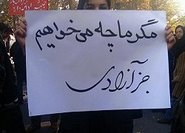
University Students Demonstrations on the 16 AZAR 2008

گزارش کوتاه تجمع دانشجویی 16 آذر در تهران


مجموعه فعالان حقوق بشر در ایران
صدها نفر از دانشجویان دانشگاه تهران از ساعت 11 صبح امروز روبروی دانشکده ی فنی تجمع کرده وبه سنت هر ساله برای حمایت و ورود دانشجویانی که بیرون دانشگاه حضور داشتند و نیروهای امنیتی و انتظامی مانع ورود آنان به دانشگاه شده بودند ساعت 12 با حرکت به سمت درب 16 آذر اقدام به شکستن قفل های این درب نموده و باعث ورود آنان به داخل دانشگاه شدند. سپس با هماهنگی دفتر تحکیم وحدت روبروی دانشکده فنی تریبون آزاد دانشجویی برپا شد و دانشجویان با سر دادن شعارهایی نسبت به سیاست های دولت بویژه طرح بومی گزینی دانشجویان ، سهمیه بندی جنسیتی ، سیاستهای اقتصادی ، فضای بسته دانشگاهها و سخنان تهدید آمیز وزیر علوم اعتراض کردند.جمعیت تجمع کنندگان علیرغم حضور پرشمار نیروهای امنیتی و انتظامی ، بالغ بر چهارهزار تن تخمین زده میشد.در این مراسم تعدادی از فعالان دانشجویی منجمله مهدی عربشاهی دبیر تحکیم وحدت ، شاهین زینعلی نماینده ائتلاف دانشجویان ملی آزادی خواه و خانم مهدیه گلرو نماینده کمیته ی دفاع از حق تحصیل سخنرانی کردند. این مراسم ساعت 14 با حرکت دانشجویان به سمت درب اصلی دانشگاه به پایان رسید


Image Hosted by ImageShack.us Image Hosted by ImageShack.us

Tuesday, September 16, 2008

Iraj Janati Ataie - Farakhan - ♫ فراخوان ایرج جنتی عطائی ♫ Help students in Iran now !

Iraj Janati Ataie - Farakhan - ♫ فراخوان ایرج جنتی عطائی ♫ Help students in Iran now !

http://www.janatie-ataie.com/weblog/2
ورود به صفحه فراخوان ایرج جنتی عطائی
Help students in Iran now !

Sunday, July 27, 2008

Nazanin Afshin-Jam in UK

By invitation of CIS (UK): Nazanin Afshin-Jam's week in London, highlighting Human Rights abuses in Iran. Mixed with clips of previous CIS activities and pro-democracy movement inside Iran

Saturday, July 26, 2008

Freedom V Oppression by Bahramerad

We Want Freedom
We get lies, deceit, & suppression

For nearley 30 years, the Non-Islamic Non Republic of non-Iranian Fascist mullah's have Lied,cheated and suppresed the Iranian people.
Enoough is Enough .
NOW IS THE TIME TO GET RID OF THEM.


Sunday, July 13, 2008

Ahmad Batebi - Dissident’s Tale of Epic Escape From Iran’s Vise : By SCOTT SHANE and MICHAEL R. GORDON

http://video.on.nytimes.com/?fr_story=5bff3ca827b78449844d92eb57190cbbd005c176

WASHINGTON — After three days on the run, Ahmad Batebi picked his way down a rocky slope to the stream that marked Iran’s border with Iraq. His Kurdish guides, who had led Mr. Batebi, an Iranian dissident, through minefields and dodged nighttime gunfire from border guards, passed him to a new team of shadowy human smugglers. At the age of 31, after nearly eight years in Iranian prisons, subjected to torture and twice taken to the gallows and fitted with a noose, Mr. Batebi had fled. But in Iraq, his former captors had one more chilling message for him. Not long after his arrival in Erbil in March, the new cellphone provided by United Nations officials rang. Mr. Batebi was shocked to hear the familiar voice of the chief interrogator at one of Iran’s notorious prisons. “We know where you are,” the interrogator said. “You must turn yourself in.”Instead, Mr. Batebi, one of Iran’s best-known dissidents, received permission to enter the United States. He arrived on June 24. In several lengthy interviews, Mr. Batebi provided an unusual window on Iran under its ruling clerics. His alienation began at age 9, when he witnessed a deadly stoning. He rose to fame in 1999, appearing on the cover of The Economist magazine holding the bloody T-shirt of a fellow student demonstrator — an image he first saw when a judge slapped it before him and declared, “You have signed your own death sentence.” Finally, after a decade of political combat, he reluctantly decided to abandon Iran for an uncertain exile. His escape has prompted a paroxysm of denunciation in Iran’s controlled news media, which have accused him of defrauding creditors and suggested that he has long been in league with the United States and Israel, claims that human rights groups dismiss as crude propaganda. From his Yahoo blog, Mr. Batebi has replied, posting the taunt, “Your hands will never reach me” and the instruction “Click here.” The photograph that pops up shows the dissident, an Iranian Johnny Depp with a ponytail and a satisfied expression, posing in front of the United States Capitol. While some details of Mr. Batebi’s biography, his treatment in Iran and his escape could not be independently confirmed, he provided a video he took during his journey, and independent advocates vouched for much of his account. He knows he has arrived during a time of tension between Iran and the United States, and he said he did not want his story to heighten the conflict. Wary of being viewed as a pawn of American policy, he said that the United States played no role in his departure from Iran, a fact American officials confirmed. The United States did give him permission to enter this country “out of concern for his safety,” said Gordon D. Johndroe, the spokesman for the National Security Council. He said Mr. Batebi attended a courtesy meeting with N.S.C. staff members on Friday. Despite Mr. Batebi’s soft-spoken Persian, translated by Lily Mazahery, an Iranian-American lawyer who is helping him resettle, his contempt for Iran’s rulers is palpable. But he does not want a violent revolution. “No one with a healthy brain wants a revolution without a plan for what comes after,” he said. “That’s what happened in 1979.”

An Awakening

Mr. Batebi may have inherited his jaundiced view of his country’s leaders. After the Islamic revolution of 1979, his father, a customs bureaucrat who had fallen out of favor with the shah’s regime, declined to join the Revolutionary Guards. His mother, a first-grade teacher, taught him and his younger brother and sister a mild, Golden Rule Islam that had little in common with the ayatollahs’ harsh theology. His own awakening began in fourth grade, when his teacher, fed up with the distortions of an official history textbook, burst out: “Go out and read other things to try to get the truth.”“The teacher probably doesn’t even remember,” Mr. Batebi said. “But he changed the course of my life.”A few weeks later came the stoning. Though forbidden by his mother, he slipped out of the house to see the commotion near his school. He saw a man, accused of adultery, buried to the waist, his head covered with a sack that turned red as Revolutionary Guards hurled chunks of concrete. A mullah standing atop a wall gave the orders, and an ambivalent crowd of neighbors looked on.“I was utterly shocked,” he recalled. “My hands and legs were shaking.” Afterward, he suffered from nightmares.Years later, he would witness public hangings and dismemberments. “But nothing had the impact of that stoning,” he said. “I thought, This can’t be Islam.” At the University of Tehran in the mid-1990s, Mr. Batebi embraced his photojournalism studies and made two dozen short films with existentialist themes, often with his own electric guitar for a soundtrack. He also joined in student protests, getting arrested three times. In fervent late-night discussions, he recalled, one admired model was the Rev. Martin Luther King Jr.The demonstrations exploded in 1999 in what would become known as 18 Tir, the date according to the Iranian calendar. In a wave of protests that threatened the 20-year-old regime, hundreds of students demonstrated against the closing of a newspaper, Salam. Mr. Batebi, busy making his senior thesis film about drug addiction, stumbled upon the demonstrators and joined in.When the police fired into a crowd, a bullet hit a young man next to Mr. Batebi, who pulled off the student’s shirt to try to stanch the bleeding. After carrying the wounded man to a makeshift clinic, he held up the shirt to warn other students against marching outside. A photographer caught the moment. Mr. Batebi was already in jail when The Economist published his picture, putting him in far greater peril. When the judge hearing his case showed him the magazine, Mr. Batebi reacted with both fear and perverse pride.“At first I was shocked and scared,” he said. “But then I thought that even though they’re going to kill me, I’ve caused a major blow to the regime.”

Confined and Tortured

Mr. Batebi described 17 months in solitary confinement, including repeated torture by interrogators trying to force him to say on television that the famous T-shirt was stained with paint or animal blood.His jailers thrashed him with a metal cable, beat his testicles and kicked in his teeth, he said. They held his face down in a pool of excrement. They tied his arms behind his back and hung him from the ceiling. At other times, strapping him to a chair, they kept him awake night after night, cutting him and rubbing salt into the wounds. To stave off madness, he said, he fought back. “If the interrogator cursed me, I would curse him back,” he said. “If the interrogator hit me, I’d try to hit him back.” Twice he was led blindfolded to the gallows. Once the noose was left around his neck for 45 minutes, and he passed out from fear, he recalled. The second time, he sat, waiting, as a prisoner on each side of him was hanged. The photo that so infuriated the authorities may have saved him, as advocates around the world took up his cause. His death sentence, for “agitating people to create unrest,” was commuted, first to 15 years and then to 10.In 2005, allowed a day pass to take exams for a sociology degree, he decided to flee. He remained free for five months, working in the political underground and marrying a young dentist. But after she was jailed because of his activities, they agreed to end their union, he said.After Mr. Batebi was rearrested in 2006, the harshest treatment stopped. But he was sometimes forced to watch his friends being tormented. Last year, after Mr. Batebi suffered what was probably a stroke and several seizures, he was released for medical treatment.In March, he was ordered to return to prison. He knew that supporters wanted him to keep up the fight from behind bars, but he was worn out. “I couldn’t do more than I had,” he said. “Everyone needs a life.”

An Underground Railroad

On a Yahoo chat site, on March 13, Mr. Batebi contacted Ms. Mazahery, the lawyer, who he knew had helped other Iranians get into the United States. At the same time, through a connection made in prison, Mr. Batebi sought help from the underground Kurdish Democratic Party of Iran, which soon directed him to Argentine Square in Tehran. To his surprise, his Kurdish helpers — volunteers whose real names he never learned — said he had to leave immediately, taking advantage of the authorities’ lax attention during the Iranian New Year holidays. Carrying only a backpack containing his Dell laptop computer, a camera and a pocket-size video recorder, he retrieved some money from an A.T.M. and climbed into the strangers’ car. The next two days were a blur, he said, as he was driven in a series of cars on a circuitous route to the northwestern border with Iraq, a straight-line distance of about 300 miles. Once, his ride was with a family. Another time, it was with a mother and her baby. A third time, he was directed to board a bus.With many precautions, the Kurdish underground railroad moved him to the border — he will not say exactly where. Then a new five-man team took over.For a day and a half, with burros carrying supplies, they moved along the border, which was patrolled by guards and protected by land mines. One of the escorts walked ahead to ensure that the way was clear, Mr. Batebi said.They heard sniper fire and occasional artillery bombardments, but never came under direct fire. Mr. Batebi’s tiny camera captured shaky images of the burros traversing the dry, rocky hills and gullies. Peering over bluffs, the group could see the flags of two nations facing one another at lonely border posts. On March 20, when Mr. Batebi’s guides handed him over to new Kurdish guides in Iraq, he said, he felt no elation.“Suddenly I was very scared,” he said. “I was like a baby who’s been separated from his mother and has stepped into a world of which he knows nothing.”

A Tense Stop in Iraq

His protectors brought him to the Erbil offices of the United Nations High Commissioner for Refugees, which began the laborious process necessary to move an Iranian with no passport and little identification to a new land. His Kurdish allies believed that an Iranian hit team was hunting for him, so he was moved from one safe house to another for three months.He was shaken one day by the unexpected phone call from the Iranian interrogator, a man known by the prison pseudonym Javad Javadi. Mr. Batebi sought to turn the tables on the interrogator, firing questions back at him and capturing a digital recording of one of the calls, but he knew he had to get out.The United Nations was arranging a placement in Sweden when Ms. Mazahery called to say that the United States had granted Mr. Batebi’s request for “humanitarian parole,” a relatively rare measure used in cases of danger or political importance.

An Opposition Icon

When his flight from Vienna landed at Dulles Airport in Virginia in late June, Mr. Batebi was astonished to see that the airport worker waving the jet into the gate was a Muslim woman wearing a tight head scarf. Mr. Batebi was enthralled, sensing a casual tolerance that was exactly what he had longed for in his own country. “It seems to me that people here are free to live their lives, as long as they do no harm to anyone else,” he said. There are more distinguished figures in the Iranian opposition, people who have spent decades in the struggle, as Mr. Batebi is quick to acknowledge. But he is discovering that few are so recognizable. For the Iranian diaspora, The Economist’s 1999 photo remains an iconic image. Mr. Batebi was a little nonplussed, Ms. Mazahery said, when an Iranian-American woman outside a Washington grocery store walked past him a few days ago, did a double take and called out his name. When he said that, yes, he was Mr. Batebi, the long-imprisoned dissident, she burst into tears. Zahir Janmohamed of Amnesty International USA called Mr. Batebi “grounded and humble” about his role. “As a human rights activist, Batebi’s credentials are unquestionable,” Mr. Janmohamed said. But he warned that now, as Mr. Batebi joins an exile community whose rivalries are legendary, many factions would seek to recruit him. Mr. Batebi speaks of working from afar for peaceful change in Iran. He recoils when asked about the possibility of American military action against Iran, saying that if the United States attacked, “I might go back and fight for my country myself.” He has some ordinary goals, the dreams of a man who spent most of his 20s in a prison cell. He wants to study politics and sociology, he said, and work as a photojournalist. He wants to play guitar. He thought for a moment, then he remembered one more modest ambition. “I want to fish!” Mr. Batebi said, his face relaxing into a smile. “I’m going to go fishing!”

Shining Stars are out there tonight ....

This is for Ahmad Batebi ( if he can see it )


Let Batebi Rest : by Potkin Azarmeher

Since the student uprising in July, 1999, many things have happened in my life that I never thought would happen. Looking back they just seem incredible. For example, when I was following the news of the suppression of the student uprising in Iran, I never thought one day, one of those student leaders, Gholamreza Mohajerani-Nejad will be my guest for two weeks in London. When I was helping to make the documentary, Iran Forbidden, I never thought one day I will meet Fakhravar face to face, and host him here in London. Similarly when I wrote the post on Nazanin Afshin-Jam two years ago, I never thought I will help organise an event for her to speak in the UK parliament. The list can go on like this, but I don't want to deviate from what I am about to write.After July, 1999, two other young Iranian ex-pat activists and myself in three different parts of the world, started a website which was supposed to concentrate on the new pro-democracy movement in Iran, publish related news and help us to establish contact with those inside Iran.One day we received a Persian text from an unknown source which read 'The young student whose picture was published on the cover of the Economist, is called Ahmad Batebi, and is sentenced to death' . In fact we misread the name as Bateni - the difference between the letters 'n' and 'b' in Persian is a dot above or below respectively.Immediately, I contacted the Economist's Foreign Editor at the time, a very pleasant and approachable lady by the name of Barbara Smith. She was devastated at what I told her and said she would check with her sources in Iran. Her sources confirmed the news and in fact Barbara Smith was the one who told us the young man's name is Ahmad Batebi and not Bateni.Barbara Smith then ran an article highlighting the severe sentences passed by the Islamic court, including the four death sentences in the next issue of the Economist. She also gave us a contact name at Reuters who owned the photograph of Batebi published on the cover of the magazine. I rang Reuters, explained the situation and Reuters kindly wavered their loyalty fee and provided me with the high resolution photograph. This enabled us to make posters and T-shirts of Batebi and publicise his plight.When Batebi's letter from prison about his treatment reached us, some English friends of mine made a play based on the letter. We staged this play in some UK universities and schools.I was invited to a UK student conference in East London, organised by Campaign for Free Education, and talked to them about the student movement in Iran from the cultural revolution right up to the July uprising. The students themselves then suggested to nominate Ahmad Batebi for the historic position of honorary vice-president of UK's National Union of Students.The NUS conference in March 2000, did in fact elect Batebi for this post. On one anniversary of the student uprising, we made a short clip for Azadi TV, where we went to a UK university and asked UK students to express messages of solidarity to Iranian students and hold up Batebi T-shirts while saying 'Azadi Andisheh, Hamishe Hamishe' - 'Freedom of Thought, For Ever, For Ever' The popular slogan of the uprising. The program was a huge success and was beamed almost every day to Iran leading up to the anniversary of the student uprising.Other Iranian pro-democracy activists in UK and other countries outside Iran also campaigned hard and Batebi with his famous picture holding a bloody T-shirt became the symbol of the new movement. All this we hoped helped to save Batebi from the death sentence.Today, I received an email from a friend who was familiar with the campaign we had for Batebi at the time. I laughed when she asked if I had some thing to do with his escape. The truth is I had nothing to do with it. I only ever managed to talk to Batebi once in the last 9 years and that was very briefly during one of his prison leaves.While I was happy to see Batebi finally find safety, I have been uncomfortable about the fact that he ended up in US. Unfortunately Iranian ex-pats in US and their petty rivalries and rumour mongering have often broken down escaped dissidents even more than the Islamic Republic prison authorities have managed. Cell mates who stood together against their interrogators in the Islamic Republic prisons become sworn enemies of each other in US through the unsavoury manipulation of some Iranian ex-pats in US who revel in petty factional rivalries.I have seen this unfortunate phenomenon too many times. While these dissidents are inside Iran, they are everyone's heroes but when they come out, God forbid if they hold an interview ,for example, with a rival TV presenter. Soon petty personal jealousies will make villains out of them and yesterday's heroes become Islamic Republic 'collaborators' etc. A point which was also raised by Amnesty International's Zahir JanMohammad in the article published in NY Times:' Mr. Batebi joins an exile community whose rivalries are legendary, many factions would seek to recruit him. 'I hope what happened to previous Iranian dissidents who ended up in US will not happen to Batebi, and I wish Iranian ex-pat groups in US will not get into yet another mud slinging match with each other over who is more suitable to recruit Batebi. I wish to talk and meet with Batebi one day and even have him as my guest in London in the future, but for now I just hope Batebi will get a chance to rest and Iranian ex-pats just help him get the medical attention he needs. I wish, as Batebi himself says in the NY Times, he can go fishing and enjoy life in a country where people are free to live their lives.

Tuesday, July 08, 2008

Prince Reza Pahlavi's message on the occasion of "18 Tir"

هم میهنان عزیزم،
جنبش دانشجویی در ۱۸ تیرماه ۱۳۷۸ فریاد آزادیخواهی نسلی بـود که از یک انقلاب بی هدف پیشینیان خود جز خفقان و بی دادگری بهره ای نبرده است.
دانشجویان در آن روز بپا خاستند تا زنجیرهای اسارت را بگسلند و راه را به سوی ترقی و آزادی برای خود و نسل های آینده بازگشایند.
دانشگاه همیشه بستر تحولات سیاسی و مکتب آزاداندیشی و سنگـر مبـارزه با خفقان و بی عدالتی بوده است.
دانشجویان و جوانان برومند ایران در این روزهای حساس و سرنوشت ساز نقش شما سازندگان ایران فردا از هر زمان حیاتی تراست.
شما مواجه با رژیمی هستید که با تمام قدرت در صدد نابودی تاریخ، فرهنگ و هویت ملی شما است با ایرانی و ایرانیت در ستیزاست و بیگانه پرستی را برای خود افتخار می داند.
مقاومت و پایداری شما در مقابل چنین رژیمی قابل ستایش است.
من اعتقاد راسخ دارم که راه شما سازندگان ایران فردا، راه پیروزی است.
دراین راه پرفراز و نشیب من همواره همراه با شما در تلاش هستم.
خداوند نگهدار ایران باد
رضا پهلوی

Sunday, June 15, 2008

ZANJAN UNIVERSITY SCANDAL : Islamic Republic of Idiots

The deputy head of Zanjan University was caught red handed trying to take advantage — rape — a student in his offices by the girl's friends which lead to a mass uprising by the university students demanding his arrest and the dismissal of him and his protector, the University's chancellor.


دانشجویان دانشگاه زنجان دراعتراض به فساد اخلاقی


Zanjan University New Video clear pictures

Friday, March 14, 2008

University Student's Demonstrations, Dec 2007 : From: Bahramerad

In the commemoration of The Students day and The protest against the new wave of arrest of Student's leaders by the fascist mullah In the commemoration of The Students day and The protest against the new wave of arrest of Student's leaders by the fascist mullah regime of the Islamic Republic of Idiots


Student Protest Yare Dabestani iran

Monday, February 04, 2008

Latest news from the Fascist rulers of Islamic Republic of Idiots


ليست روساي فاميلي دولت احمدي نژاد

سايت رجا نيوز در صفحه اولش مصاحبه ‌اي از احمدي نژاد در مورد جنبش دانشجويي گذاشته و يک سوتيتر هم به عنوان فراز مهم آن در صفحه اول ميبينيم:

آقاي احمدي نژاد: " ... نظام سياسي قبل از انقلاب كه سرتا پايش ظلم بود؛ بعداز انقلاب هم بالاخره در برنامه ريزيها، ارتباطات گروهي، عدم شايسته سالاريها، عزل و نصب ‌ها و توزيع فرصتها، گروههايي بودند كه يا رابطه‌اي و حزبي و فاميلي يا به خاطر منافع شخصي عملكردند و ميكنند. اگر دانشجو جلو اينها نايستد بقيه شعارها ديگر پوچ است... " اينک توجه شما را جلب ميکنم از مبارزه جناب احمدي نژاد با فاميل بازي در دولت نهم:

مهندس زريبافان (دبير هيات دولت):

داوود مددي : رييس سازمان تامين اجتماعي => باجناق زريبافان

سيدمحسن نبوي : عضو هيات مديره شركت سرمايه گذاري خارجي => داماد زريبافان

عليرضا مددي : مديركل وزارتي وزارت تعاون => برادرزاده باجناق زريبافان

ناظمي اردكاني : وزير تعاون => شوهر عمه داماد زريبافان

دانش جعفري : وزير اقتصاد => پسر عمه پدر داماد زريبافان

هاشمي ثمره (مشاور عالي، رييس ستاد انتخابات کشور و همه کاره رييس جمهور):

مهندس مهدي هاشمي ثمره : مديركل وزارتي وزير نيرو => برادر هاشمي ثمره

خانم قند فروش : مشاور خانواده وزير كشور => زن برادر هاشمي ثمره

عبدالحميد هاشمي ثمره : معاون وزير صنايع => برادر هاشمي ثمره

محمود احمدي نژاد (رييس جمهور):

داوود احمدي نژاد : رييس بازرسي رياست جمهوري => برادر احمدي نژاد

حسين شبيري : رييس صندوق مهر رضا => شوهر خواهر احمدي نژاد

پروين احمدي نژاد : معاون مركز امور زنان رياست جمهوري => خواهر احمدي نژاد

علي اکبر محرابيان : وزير صنايع => خواهرزاده احمدي نژاد


مرگ دانشجوی تنها در تهران
خبرگزاری حکومتی ایسکانیوز: با مرگ بی صدای دانشجوی تنها، شمار قربانیان گازگرفتگی در تهران باز هم افزایش یافت. آتش نشانی تهران گفت گاز سمی از یک خانه خیابان کرمان جنوبی متصاعد شده بود و در زیرزمین مسکونی با پیکر «باقر-ف» دانشجوی 23 ساله رو به رو شدیم.ابتدای هفته جاری نیز مرگ بی صدای پسر 17ساله ای به نام «ابراهیم» براثر گازگرفتگی، کمک رسانان آتش نشانی را به «آبعلی» کشید. او کارگر یک رستوران بود و شواهد نشان می دهد وقتی هنگام استحمام، برای گرم کردن خود «پیک نیک» روشن کرد به خاطر نشت گاز و بسته بودن محیط، به شدت مسموم و خفه شد.
آیا این قتل عام نیست ؟
جمهوری اسلامی کمر به نابودی مردم ایران بسته است. گویا انتقام نافرمانی مدنی مردم و عدم تمکین آنها به زعامت خامنه ای، دارد توسط دولت احمدی نژاد کلید می خورد. پاسخ خامنه ای به مردم ایران اعدام های جمعی در ملأ عام، تحقیر و توبیخ جوانان مردم تحت عنوان طرح ارتقآ امنیت خیابانی و مانور کوی و برزن و قلع و قمع اعتراضات معلمان و کارگران، زنان برابری طلب و دانشجویان قهرمان ایران می باشد. اما همه این ها هنوز کافی به نظر نمی رسد. تنبیه عمومی مردم بنا به دستو خامنه ای وارد فاز تازه ای شده است .اعتراض شدید مردم به بی گازی در دو هفته گذشته، باعث شد تا آقای احمدی نژاد دستور عجیبی صادر کنند. ایشان دستور دادند تا برای جبران کاهش فشار گاز در لوله ها، گاز تصقیه نشده که به گاز ترش موسوم است و دارای ترکیبات فراوان سولفور (گوگرد) و ترکیبات خطرناک دیگری می باشد به لوله های گاز شهری تزریق شود. این عمل جنایتکارانه باعث ایجاد انیدرید سولفریک، گاز کشنده منوکسید کربن و غیره است که همه به شدت کشنده هستند. این عمل جنایتکارانه که در زمان هیتلر برای قتل عام یهودیان در اتاق های گاز (با ظاهر حمام مانند) انجام می شد، اکنون در ایران و در زمان ریاست جمهوری احمدی نژاد انجام می شود و تا کنون سبب مرگ صد ها تن از هم میهنان ما در نقاط مختلف ایران شده است .


Our Politicized Intelligence Services
Today, Director of National Intelligence Michael McConnell testifies before the Senate Intelligence Committee (and Thursday on the House side) to give the intelligence community's annual global threat analysis. These hearings are always significant, but the stakes are especially high now because of the recent National Intelligence Estimate on Iran.
The mullahs and the death penalty
Saeed Jalili, the Secretary General of the Supreme National Security Council of the Islamic Republic of Iran, visited Brussels last week, to engage in dialogue with European counterparts. Little did he know that Members of the European Parliament would be particularly keen to have a candid exchange of views on the way Iran customarily hangs people from cranes in the public square. Though he did not answer, Jalili must have taken the outrage to heart, because barely a week later, Ayatollah Mahmoud Hashemi Shahrudi, the head of Iran’s judiciary, has banned all public executions unless he personally authorizes them. He has also banned photographs and films of the executions, though not the executions themselves.
Cross-Border Chases From Iraq O.K., Document Says
WASHINGTON -- American military forces in Iraq were authorized to pursue former members of Saddam Hussein’s government and terrorists across Iraq’s borders into Iran and Syria, according to a classified 2005 document that has been made public by an independent Web site
-WIKILEAKS

The 'Manchurian Mullah'
AS the "student" arrives in a bulletproof limousine with heavily armed guards, his teachers, ignoring that he's two hours late, greet him deferentially. The scene takes place at the Shiite seminary in Qom, Iran's holy city. The 35-year-old "student": Muqtada al-Sadr, leader of the Mahdi Army, a militia often deemed one of Iran's chief assets in Iraq.

Ahmadinejad Battles on the Home Front
WASHINGTON -- Iranian President Mahmud Ahmadinejad has garnered headlines around the world for his defiance of Washington, as well as his rhetorical grandstanding on Palestinian issues, Israel and his government's alleged support of Shi'ite militias in Iraq.

Iran Tries to Make Up Lost Ground
The conventional wisdom, particularly in the United States, is that Iran has gained from the US's invasion of Iran's neighbors since the events of September 11, 2001. Yet, a careful reading of the changing security calculus caused by the exponential increase in the US's military presence in Iran's vicinity leads to the opposite conclusion.


Bush: Don't Show Iran US is 'Paper Tiger'
LAS VEGAS, Nevada -- US President George W. Bush on Thursday warned that a hasty pull-out from Iraq would ruin fragile progress there and convince extremists and Iran that the United States is a "paper tiger." "Failure in Iraq would embolden the extremists. Failure in Iraq would say to thugs and killers, the United States is a paper tiger," Bush said in a speech here. "Failure in Iraq would embolden Iran."
Has Iran Won?
Who would have thought that a friendless theocracy with a Holocaust-denying president, which hangs teenagers in public and stones women to death, could run diplomatic circles around America and its European allies? But Iran is doing just that. And it is doing so largely because of an extraordinary own goal by America's spies, the team behind the duff intelligence that brought you the Iraq war.


Radioactive Cargo on Train to Iran Investigated
All Things Considered, January 31, 2008 · Authorities in the Central Asian Republic of Kyrgyzstan are investigating why a train traveling from Kyrgyzstan to Iran was carrying radioactive cargo.

Another Police Attack on Tehran University
While the Sunday police attack on students at Tehran University resulted in injuries to ten ‎of them and the arrest of more than five, University officials either remained silent about ‎the incident or complete denied it.


Food Protest Turns Sour at Tehran Campus
TEHRAN -- Iranian students demanding an improvement of food quality at a university in Tehran started a political protest at the campus. Around 150 Iranian university students held a protest on Sunday chanting political slogans and demanding the resignation of university officials, the ISNA student news agency said on Monday

Thursday, December 13, 2007

University Student's Demonstrations, Dec 2007

About This Video :
Added: December 13, 2007
For The Commemoration of The Students Day and The Protests against the new wave of arrest of Student's leaders by the fascist mullah regime of the Islamic Republic of Idiots.


Wednesday, December 12, 2007

Iran students break campus gate in protest: reports


View smaller image

Iranian students staged a new demonstration at Tehran University on Sunday, damaging the main gate to allow outsiders into the campus and denouncing President Mahmoud Ahmadinejad, news agencies reported. The protesters chanted slogans against the president and carried banners calling for the release of three fellow students who have been held since May in a high-profile case, the Fars news agency and state-run IRNA reported.

Image Hosted by ImageShack.us


Some video footage of the student protests in Iran last weekend:

http://tinypic.com/player.php?v=81hdjcm&s=1
http://tinypic.com/player.php?v=6wnb12b&s=1
http://tinypic.com/player.php?v=8509b4j&s=1
http://tinypic.com/player.php?v=6yck9qv&s=1

The reports did not disclose the number of students involved. Both news agencies said that the demonstration had been called by the radical wing of the Office to Foster Unity, a reformist student group. "The students marched on the gate and damaged it, and this allowed several non-students to enter the campus. The students chanted slogans and carried protesting placards," IRNA reported. "Ahmadi-Pinochet, Iran will not become Chile!" chanted the protesters, playing on the names of the Iranian president and late Chilean dictator Augusto Pinochet, Fars reported. The students also burned a copy of Kayhan newspaper, the mouthpiece of the clerical establishment that is bitterly critical of the Iranian reformist movement, it said. According to IRNA, anti-riot police were stationed outside the campus but did not intervene. There has been a string of demonstrations at Tehran universities in past months as students protest against the replacement of liberal professors, pressure on activists by the authorities and the detention of three students. The demonstration on Sunday was at least the second within a week at Tehran University after dozens of students held a similar protest on Tuesday. Mehdi Arabshahi, a member of the central board of the Office to Foster Unity, said that 1,500 people joined the latest protest, although there was no confirmation of this figure from Iranian media. Arabshahi told AFP that university security officials had initially shut the main gate in a bid to prevent large numbers gathering for the protest. "But the students forced their way in and broke the gate so that others could enter. "They protested against the detention of the students, the oppressive policies of the government and advocated rights for all Iranians," he added, saying that the participants included liberals and ethnic Kurds. Arabshahi said the protest lasted for more than two hours after starting at 12:00 pm (0830 GMT) and that it was peaceful. "We are gathered here to say students are alive and are critical of wrong polices," IRNA quoted another unnamed student as saying. The demonstration came a day after the intelligence ministry said it had arrested an unspecified number of people using "fake student cards to hold an illegal demonstration" at Tehran University. The timing of those arrests was not given, but it is likely that they took place before Friday which was annual students' day in Iran. The case of the three detained students from Tehran's Amir Kabir University has become a major issue for the protesting students. Detained since May, the trio were given jail sentences of up to three years in October on charges of printing anti-Islamic images in four student newspapers -- accusations they vehemently deny. Reformist leaders such as former president Mohammad Khatami have openly called for the three to be released, but hardliners have said the gravity of their crimes means they must stay behind bars. Meanwhile, a group of Islamist students held a counter-demonstration outside the offices of the Iranian judiciary to protest against the Tehran University gathering, Fars reported. "We condemn the demonstrations by the liberals at Tehran University, which are supported financially and morally by the opposition and the enemies," one demonstrator told the agency. "We are astonished that this is not prevented when they are growing bolder by the day."


For the Human Rights Day , a speach by Hamid Hamidia

Get this widget Track details eSnips Social DNA


http://www.esnips.com/doc/d8330719-42ce-4faa-b44e-a9858814d08c/malmo-10dec2007

Thursday, December 06, 2007

28 Students abducted and arrested by the Fascist regime in the last few days

بیانیه شماره 2 کمیته تلاش برای رهایی دانشجویان در بند

چهار شنبه 5 دسامبر 2007, بوسيله ى دیاکو
طبق آخرین خبرها آقایان اختای حسینی امروز آزاد شده است. همچنین از وبلاگ بافنده خبر رسید که آقای بهزاد باقری به اشتباه نامشان در لیست وارد گشته و ایشان توانسته بودند از چنگ ماموران فرار کنند. همچنین بنا بر گزارش خبرنامه بوعلی سینا آقای یونس میرحسینی، از فعالین دانشجویی دانشگاه شیراز، ظهر امروز در شیراز بازداشت شد. گفته می شود تعدادی از دانشجویان بازداشتی در دفتر پیگیری وزارت اطلاعات واقع در چهار راه ولیعصر، خیابان برادران مظفر، جنب پاساژ رضا نگهداری می شوند. بدین ترتیب تازه ترین لیست بازداشتی ها و مفقودین عبارت است از :
Please read the rest of this notice ( in Persian ) here: http://tinyurl.com/33sqk5

Monday, May 14, 2007

Campus Cartoons Trigger Wave of Suppression : Kimia Sanati

TEHRAN -- A new wave of suppression, following the publication of a cartoon of Iran's Supreme Leader Ayatollah Khamenei in several campus newspapers run by students of the prestigious Amirkabir University of Technology (AUT) ten days ago, has landed several student editors in jail. A joint-statement by the student editors denying involvement and stating that the newspapers were forged was not enough to stop the arrests. The students claimed that names and logos were misused to publish insulting and blasphemous material as part of an elaborately staged plot to begin the crackdown. At least seven AUT students are currently languishing in prison. All student publications have been banned by authorities at the university which has been the scene of protest gatherings by hard line student militia of the university and outside groups, gatherings of the accused student union's supporters and occasional clashes between the two groups, an AUT student told IPS on the condition of anonymity. A spokesman for the judiciary initially said five people who had been involved in the publication and distribution of the bulletins had been arrested and that 'there were no students among them,'' the independent Iranian Labour News Agency (ILNA) reported. Two of the editors of the four bulletins were arrested later. Hard line students, mainly affiliates of the militia, are allegedly supported by the university's chancellor and security setup. They have been demanding punishment over the article and the cartoon and a 'cultural revolution' to purge Iranian universities of dissident students. "For years the hard line establishment has tried to subdue students of AUT with very little success. The university has always been a scene of active political debate and new ideas so dangerous to the establishment," a student activist from the university told IPS on the condition of anonymity. "Just a few months ago President Ahmadinejad was booed and his picture was burned by angry students here while he was making an address on the occasion of the Students Day. Hardliners have since been awaiting a chance to retaliate. The university chancellor is an Ahmadinejad man, he is just applying the government policies in the university and giving every support to hard line militia students," she added. Established in 1958, AUT has an overall strength of 7,000 students, most of them in 14 engineering departments, five research centres and an associated university complex located at Tafresh, a town outside Tehran. Restrictions imposed on university students' activities and their social freedom, pressure on student unions and frequent arresting of student activists, pressure on non-conformist or politically minded professors and mismanagement of affairs by government-appointed chancellors has brought about great discontent and frequent unrest in various Iranian universities since President Ahmadinejad took over August 2005. After several years of disillusionment with reform prospects, the student movement in Iran has over the past year been gaining momentum again. "Hardliners are greatly troubled by the radical student movement and like the women's movement and that of workers' associations, consider it a huge threat to their power and hegemony," an analyst in Tehran who asked not to be named told IPS. "I believe there were several motives behind the scheme which largely failed due to accused student bodies' condemnation of blasphemous cartoons and remarks and their ability to avoid the trap set for them. If students hadn't acted wisely, insulting the prophet and Imams could be used as a very good excuse to crack down on them," the analyst said. Since early April, a large number of students, including 15 in Mazandaran university and three in AUT, have been arrested, tens have been summoned to their universities' disciplinary committees and several student activists, including the secretary of the Islamic Association of Students of Allameh Tababaie, one of Tehran's largest universities, have been barred by their universities' authorities from entering the campus. "Certain people who were humiliated in the past are now taking revenge and students must be alert and not provide them with excuses," Mehdi Karrubi, prominent reformist leader of Etemad Melli Party and former parliament speaker, was reported by ILNA as saying at a meeting with Mazandaran University student activists who are now free on bail. Mazandaran University students were arrested following unrest and a sit-in on Apr. 14 while protesting the arrest of a student activist and suspension of three more by the university. Protestors had been demanding freedom for student activities. On May 7-8, AUT students cancelled all classes and held elections to the Islamic Association's central council despite efforts to scuttle them. "The militia students tried to stop the elections and with the help of university security people tried to take away the ballot boxes, but students made a human wall to protect the ballot boxes. There was a shortage of ballot papers and the boxes were sealed and removed to a safe place later," one of the students told IPS. "The university security people who are naturally given authority and backing by the chancellor even attacked union offices in one of the faculties. They thought they could find ballot boxes there but failed to find them. They destroyed union property and later made an attack on a girls' resting hall, searched everyone's bags and broke the lockers," he said. In a separate incident, a 70-year-old professor of Tehran University, famous as the 'father of animation art in Iran', was expelled from the university last week for allegedly ‘insulting a female student's Islamic veil'. Hardliners known as Hizbullah have staged several gatherings in front of the university and in other universities and posted the professor's photo on walls with threats of assassinating him on their websites since then, Iranian news agencies reported. "The incident provided an excuse for hardliners to claim that moral corruption is prevailing in universities and there is need for purging them. They have been crying out for a cultural revolution again and the danger is serious," a professor of Tehran University told IPS on the condition of anonymity. "Cultural revolution has seriously been on the hardliners' agenda since they gained total control of all state bodies a little less than two years ago when Ahmadinejad took over from Khatami. Even if there isn't an extensive purge of dissidents in universities, they can expel the leading student activists and faculty to subdue the others," the professor said.

Thursday, April 26, 2007

Student Spokesman Arrested

Iran: April 25, 2007 Tehran --
The spokesman of the Muslim Students Association at a Tehran polytechnic was arrested on Wednesday, Iranian news agency ILNA reports. Babak Zamanian was reportedly arrested because of interviews he gave to Farsi language radio stations that broadcast outside Iran. The students of the Amir Kabir Polytechnic made front page news around the world last December when they managed to prevent President Mahmoud Ahmadinejad, on a visit to their campus, from making his speech. It was the first time since his landslide victory in June 2005 that Ahmadinejad had been challenged in public.Dozens of protesters burned pictures of the Iranian president crying 'dictator go away', 'death to dictatorship' and threw firecrackers, forcing him to interrupt several times a speech and leave before scheduled."The direction of the university had been warned we didn't want Ahmadinejad here," Mehdi Hatefi, an activist with students' group Tahkim Vahdat told Adnkronos International (AKI) at the time, saying the organisers had tried to fill up the lecture hall with people from other universities.
link to original article

Friday, March 16, 2007

آدينه، 25 اسفند ماه 1385 برابر با 2007 Friday 16 March


گفتگوی کیانوش سنجری با سایت گزارشگران
گزارشگران:شما خود بعنوان فردي كه مكررا زندانهاي كشور را تجربه كرده ايد و اخيرا نيز در زندان بوده ايد آيا اوضاع زندانهاي سياسي پس از روي كار آمدن آقاي احمدي نژاد تغييري حاصل كرده است؟ اين را از اين جهت ميپرسم كه در همين اواخر شاهد مواردي بوديم كه از مخاطره آميز بودن وضعيت جسماني زندانيان گزارشات متعددي در رسانه ها منتشر گرديده است. سنجري:بله تغيير كرده. اين تغيير براي زنداني هاي سياسي كاملا ملموس بوده. مثلا براي خود من. اين بار كه من بازداشت شدم، برخلاف سال 83 و 84 كه در بازداشت وزارت اطلاعات بودم، در بازداشتگاه 209 كتكم زدند. در جلسه ي اول بازجويي در اتاق بازجويي، در حالي كه چشم بند داشتم و روي صندلي رو به ديوار نشسته بودم، بازجو پيش از آن كه سوالي بپرسد و يا اتهامي مطرح كند، چند تا سيلي خيلي خيلي محكم زد توي صورتم و فحشم داد و ليچار بارم كرد و براي اينكه توي دلم را خالي كند گفت از دادگاه ويژه دستور گرفته كه پوستم را بكند. مي گفت اگر به سوال هايش درست جواب ندهم مي كشَدَم به چهار ميخ! تا آمدم بگويم چرا مي زني، چند تا سيلي ي ديگر گذاشت توي گوشم. و بعد روي برگه ي بازجويي نوشت با فلاني چه ارتباطي داشتي؟ نوشتم هيچي. دوباره چند تا سيلي زد توي صورتم و گفت جفنگ مي گي!اين اولين جلسه ي بازجويي من بود. من اين رفتار را به قاضي دادگاه گفتم، اما متوجه شدم كه گويا او خود دستور اين گونه برخورد را به بازپرسان پرونده داده بود.در دولت نهم، بازداشتگاه 209 را به زندان و ندامتگاه و يا بهتر است بگويم پشيمان گاه و يا توبه گاه و در نهايت بايد گفت به شكنجه گاه تبديل كرده اند. زنداني هايي را مي شناسم مانند سعيد ماسوري و يا يك نفر كه افشاكننده ي ماجراي سعيد امامي و قتل هاي زنجيره اي بوده، كارمند وزارت اطلاعات بوده، كه الان نام اش را به خاطر ندارم، اين ها الان چند سال است كه در بازداشتگاه 209 زنداني هستند، هرچند كه دوران بازجويي و تفهيم اتهام شان پايان يافته و براي شان حكم زندان هم صادر شده است. من سعيد را يكي دو بار در سالن ملاقات 209 ديدم. در يك فرصتي كه پيش آمد از او پرسيدم چرا هنوز در 209 زنداني هستي؟ او گفت اين دستور وزارت اطلاعات بوده كه من از بند عمومي زندان اوين به 209 منتقل شوم و همين جا زنداني بمانم. در مورد كيوان رفيعي كه يك فعال حقوق بشر است و همين طور در مورد كيوان انصاري و جهاندار و درخشندي هم همين طور است. آن ها با دستور وزارت اطلاعات در بازداشتگاه 209 زنداني هستند. من يكي دو زنداني را مي شناسم (كه البته الان در بند عمومي زندان اوين هستند) كه به دليل فشارها در بازداشتگاه 209 خودكشي كرده بودند. يكي شان – حميد رضا- با ته قاشقي كه با لبه ي ظرف روشويي برنده اش كرده بود رگ دست اش را بريده بود. و ديگري – بابك – كه نمي دانم چطوري، درون سلول خودش را حلق آويز كرده بود، اما زنده مانده بود.اين ها تازه كساني هستند كه نه عضو حزب و دسته اي هستند كه صداي شان را در رسانه ها بازتاب دهند و نه مانند من دست شان به ايميل و وبلاگ و تارنماهاي خبري مي رسد كه بتوانند رفتارهاي غير انساني را بنويسند و افشا كنند.مثلا ببينيد با علي اكبر موسوي خوئيني چه رفتاري داشتند. او خود نماينده ي مجلس بود و از بازداشتگاه هاي بيرون از نظارت سازمان زندان ها، و از همين بازداشتگاه 209 بازديد كرده بود. اما او را (كه به دليل شركت در تجمع زنان در ميدان هفت تير بازداشت شده بود) بيش از 4 ماه در اين بازداشتگاه زنداني كردند و زدند سرش را شكستند و او خود برايم تعريف كرد كه با خوني كه روي پيشاني اش جاري بود، روي ديوار اسم اش را نوشت تا ديگران متوجه شوند كه با او چه رفتاري شده بود. او كه نماينده ي مجلس بود، پس واي به حال زنداني هاي بي پناه، كه صداي شان به جايي نمي رسد.من در اين دوره، شب ها تا دم دماي صبح صداي بازجويي از زن ها و مرد هاي زنداني را مي شنيدم. آن ها در اتاق هاي بازجويي كه با سلول ها زياد فاصله نداشت، ناله مي كردند. آشكار بود كه آزارشان مي دادند. به زن ها فحش مي دادند. من خودم با گوش خودم شنيدم كه يك بازجو به زني مي گفت: برو زنيكه ي خراب، فيلم بازي نكن، و بعد چند تا سيلي توي گوش آن زن نشست. در سكوت محض كاريدورهاي بازداشتگاه 209، مي شد اين صداها را به روشني شنيد. من گرفتاري خودم را فراموش كرده بودم. به صداها گوش مي دادم و به حال و روز اين زنداني ها كه گريه و زاري مي كردند و كتك مي خوردند، بخصوص زن ها و دختر هاي جوان اشك مي ريختم. به راستي اشك مي ريختم.
گزارشگران: چه نوع شكنجه روحي در مورد زندانيان سياسي انجام ميشود؟
سنجري؛شكنجه ي سفيد. منظور هر شيوه ايست كه ضرب و جرح نداشته باشد. مثل سلول انفرادي، آن هم براي چندين ماه، بدون دسترسي به هواخوري، نور خورشيد، ملاقات، تلفن، همه ممنوع! و بدون آگاهي از دنياي پيرامون، بدون آگاهي از خانواده و بستگان. بازجو برايت خبر مي آورد كه مادرت را هم گرفته ايم، همسرت را هم مي خواهيم دستگير كنيم. همه دوستانت بازداشت شده اند. فلاني اعتراف كرده. فلاني اعتراف كرده كه تو بودي كه چنين حرفي زدي و چنين كاري انجام دادي.سناريو. پرونده سازي. و يك چيز ديگر؛ پيش فرض ها. بازجوها در جلسات بازجويي از پيش فرض ها استفاده مي كردند. پيش فرض ها اساس كارشان بود. مثلا بازجو مي گفت تو با امريكايي ها در ارتباط بودي. اين پيش فرض ِ او درباره ي فعاليت هاي من بود. حالا من – كه اساسا نه با امريكايي ها و نه با روس ها و چيني ها و هندي ها هيچ ارتباطي نداشته بودم، بايد درباره ي اين پيش فرض ها حرف مي زدم و به سوال ها و كنجكاوي هاي پيرامونش پاسخ مي دادم. همه ي اين ها با اتهام من نامربوط بود. اما وقتي اين مسئله را به آن ها متذكر شدم، آن ها مرا به سركشي متهم كردند.و سوالات نامربوط. كنكاش در زندگي خصوصي. اينكه با فلان دختر چه رابطه اي داشته اي، اينكه اين رابطه از كجا و براي چه منظوري برقرار شده بود. من متوجه نمي شدم اين موارد به اتهام من (كه در فلان تحصن اعتراضي بازداشت شده بودم) چه ربطي پيدا مي كرد؟ اما ربط پيدا مي كرد. ربطش را فقط بازجوها مي دانستند. بازجوها همه چيز و همه كس را به هم مي دوختند و ربط مي دادند. مثلا اينكه من در جلسه ي سازمان دانش آموختگان (ادوار) شركت كرده بودم، و اين جلسه البته عمومي بود و از همه دعوت شده بود، براي شان جاي سوال داشت. آن ها من را زير فشار قرار مي دادند تا اعتراف كنم به رابطه اي سيستماتيك و هدفمند با سازمان ادوار، تازه آن هم در جهت براندازي نظام! اين ديگر از آن حرف ها بود. اين همان پيش فرض بود. اين پيش فرض اساسا اشتباه بود. سناريو بود. پرونده سازي بود. توهم وزارت اطلاعات بود. توهم دستگاه امنيتي حكومتي بود كه همه كس را دشمن، و يا با كمي تخفيف، در جهت اهداف و كاركرد دشمن (مهره اي در خدمت دشمن) مي بيند و مي پندارد.و باز هم پيش فرض. مصاحبه هايم با راديو فردا و راديو هاي فارسي زبان ديگر. بازجوها پيش خودشان خيال مي كردند حالا كه فلاني با فلان راديو مصاحبه كرده، پس در نتيجه بايد به اين نتيجه برسيم كه فلاني از فلان راديو (كه در خدمت سازمان جاسوسي امريكاست) پول و امكانات ديگري دريافت كرده است!گزارشگران: اگر برايتان امكان دارد از وضعيت بند 209 براي ما بگوئيد و اينكه كدام زندانيان سياسي هم اكنون در اين بند بسر ميبرند؟سنجري: در زندان هاي عمومي هم رفتارها خشن تر شده است. مثلا در جريان داغان شدن ِ اعصاب و روان ِ احمد باطبي، و متشنج شدن اش، سه چهار نفر از هم اتاقي هايش او را روي برانكارد مي گذارند و مي برند به بهداري. آن جا كسي رسيدگي نمي كرده. اين سه چهار نفر داد و بي داد مي كنند و به اين بي توجهي اعتراض مي كنند. فرداي آن روز، اين سه چهار نفر، بي سر و صدا از بند 350 به اندرزگاه 8 تبعيد مي شوند!و يا چند هفته ي پيش، يك زنداني سياسي به نام دادبخش، كه در سالن 7 بند 8 زنداني بود، به دلايل ناروشن به زندان قزل حصار تبعيد شد. او پيش از انتقال، در قرنطينه ي زندان اوين خودش را حلق آويز كرده بود. اين اوج نااميدي زنداني ها را نشان مي دهد. وضعيت زندان هاي ايران دهشتبار است. تا اندازه اي كه حتا نمايندگان مجلس را (كه اين بار از معتمدين حكومت بوده اند) براي بازديد، مثلا به درون بازداشتگاه 209 راه ندادند و همين نماينده ها در مجلس اين موضوع را مطرح كردند و از وزير اطلاعات توضيح خواستند. اما من و شما مي دانيم كه بازداشتگاه هايي مانند 209 مانند جزيره هاي از مركز جدا افتاده اي هستند كه به صورت خودمختار اداره مي شوند و مستقيما زير نظر و نظارت محافل سركوب قرار دارند و به هيچ مرجعي پاسخگو نيستند. من فكر مي كنم محفل همفكران سعيد امامي در وزارت اطلاعات فعال شده و دارد سركوب جامعه مدني (جامعه مدني كه نداريم، بلكه همين افراد و گروه هاي منتقد و ناراضيان سياسي ي تا حدي تحمل شده) را از سر مي گيرد. آقاي محسني اژه اي، وزير اطلاعات هم به نظرم خودش همفكر با اين جريان است، و اگر هم همفكرشان نيست، حداقل دارد دست شان را باز مي گذارد براي اين گونه رفتارهاي خشن با ناراضيان سياسي. البته اين محفل سعي مي كند سركوب گري اش را از طريق دادستاني و شخص سعيد مرتضوي و معاون امنيتي اش، قاضي حداد (يا همان زارع دهنوي، قاضي سابق شعبه 26 دادگاه انقلاب) پوشش قانوني و قضايي بدهد. اما كيست كه نداند سعيد مرتضوي و قاضي حداد هم همفكر و همكار با همين محفل سركوبگر رفتار مي كنند. البته نبايد فراموش كنيم كه اين محفل سركوبگر دارد از رييس جمهور احمدي نژاد قدرت مي گيرد. اين همان سياست پادگاني ست. دولت نظامي و سياست پادگاني. سركوب و خفقان. البته اين محفل ديگر آدم نمي كشد، چون مي داند كه اين روش در نهايت بر ضد حكومت شان تمام مي شود. حالا آن ها سعي مي كنند به جاي كشتن و ترور كردن، ناراضيان سياسي و حتي منتقدان شان را وادار به سكوت كنند. خانه نشين شان كنند. تهديدشان كنند. اين سياست بازدارندگي است. بازداشتگاه 209 هم به كمك اين سياست آمده. ناراضي ها و سركش ها را مي برند آن جا زنداني مي كنند و بهشان مي فهمانند كه اگر به فعاليت هاي شان ادامه دهند برخورد سنگيني در انتظارشان خواهد بود.گزارشگران:در حال حاضر موقعيت نقض حقوق بشر در ايران بخصوص در ميان دانشجويان چگونه است؟ با روي كار آمدن احمدي نژاد چه تغييراتي را در اين زمينه ها مشاهده ميكنيد؟ سنجري: دانشجويان ستاره دار محصول دولت پادگاني احمدي نژاد است. دانشجوياني مانند اميني زاده، عارف و ده ها داشنجوي ديگر را از دانشگاه ها بيرون انداختند. اگر در سال هاي گذشته، يكي مانند من را به اتهام عضويت در گروه دانشجويي غير قانوني، خيلي بي سر و صدا از ادامه ي تحصيل در دانشگاه محروم مي كردند، امروز خيلي علني و رسمي، دانشجوياني را كه خيلي هاشان رتبه هاي علمي بالايي داشته اند، اما در زمينه ي فعاليت هاي سياسي فعال و پويا بوده اند و در تجمعات اعتراضي در دانشگاه ها شركت كرده بودند را از دانشگاه ها اخراج مي كنند. پيش تر اساتيد مجرب و دگرانديش از دانشگاه ها اخراج شده بودند. اين اخراج ها همگي هدفمند بوده، و در جهت هر چه بيشتر محدود كردن ِِ فضاي آزاد گردش افكار و انديشه ها در دانشگاه ها و محيط هاي علمي بوده است. به اين ها اضافه كنيد تخته كردن ِ در ِ بسياري از انجمن هاي مستقل و دمكراسي خواه دانشجويي را، احضار دانشجويان به كميته هاي انضباطي را، توقيف نشريات دانشجويي را، ربودن ِ دانشجويان را، به زندان انداختن شان را، بازداشت هاي يكي دو روزه، براي ارعاب و تهديد، و براي به سكوت وادار كردن آن ها، براي اينكه دست از فعاليت هاي شان بردارند و به اصطلاح فقط به درس و مشق شان توجه كنند و نه به سياست! آن وقت مي بينيم و مي شنويم كه رهبر مي گويد دانشگاه ها بايد سياسي باشند!
گزارشگران: چه نظراتي در حال حاضر و در ميان دانشجويان در رابطه با خطر جنگ موجود است و خط سوم تا چه حد در ميان دانشجويان مطرح است؟
سنجري: من مي خواهم به يك موضوع ديگر هم توجه تان بدهم. و آن اختلاف افكني هوشمندانه ي دستگاه هاي امنيتي و اطلاعاتي در بين طيف هاي مختلف دانشجويان است. من در جلسات بازجويي در بازداشتگاه 209 از برخي از موضوعاتي كه بازجوها طرح مي كردند و از برخي از پرسش ها و كنجكاوي هاي شان، آشكارا به سياست اختلاف افكنانه شان نسبت به افراد و جمع ها و گروه هايي كه آشنايي داشتم، پي بردم. البته نمي خواهم بگويم كه تفاوت در انديشه ها و افكار باعث بروز برخي از اين اختلاف ها نبوده. بلكه مي خواهم بگويم كه متوجه شده ام كه دستگاه امنيتي جمهوري اسلامي در بزرگ نمايي و پر و بال دادن به اين اختلاف هاي عقيدتي در بين طيف هاي مختلف جنبش دانشجويي نقش داشته است، به اين و آن كد داده است. اين كدها بر عليه يكديگر استفاده شده. اين كدها برخي ها را به جان هم انداخته. بدبين كرده، اختلاف انداخته، جدايي انداخته، تا جايي كه ديگر تحمل يكديگر دشوار شده است. وبلاگ هاي برخي از بچه ها را كه مي خوانم، مي بينم كه از هر 10 نوشته اي كه در نقد يكديگر نوشته شده، شايد يكي در نقد حكومت سركوبگر است.پيش تر، حكومت سعي داشت با به راه انداختن تشكيلات دانشجويي ي موازي در دانشگاه ها، جنبش دمكراسي خواه دانشجويان را به انحراف بكشاند، و امروز با اختلاف افكني، سعي دارد همان سياست را البته به گونه اي متفاوت با گذشته، پي بگيرد.

Thursday, March 15, 2007

مبارزات معلمان ایران برای احقاق حق است/حزب دموکرات ایران


پنجشنبه 24 اسفند 1385 برابر با 15 مارس 2007
در پی حضور معلمان زحمتکش کشور در مقابل مجلس انتصابی که تنها مطالبات اقتصادی خود را عنوان کرده بودند شاهد برخوردی ضد انسانی از طرف نیروهای امنیتی با معلمین هستیم. این برخورد خشونت بار در حالی صورت میگیرد که وزیر آموزش و پرورش به شکل طنز آمیزی خود را بهترین وزیر این وزارتخانه تا کنون میداند. جمهوری اسلامی در کلیت خود هیچگاه و در هیچ شرایطی پاسخی به خواست مردم ایران نداده است .حزب دموکرات ایران ضمن محکوم کردن تهاجم ماموران جمهوری اسلامی و دستگیری تعداد زیادی از نماینگان این قشر زحمتکش حمایت خود را از این مبارزات اعلام داشته و خواستار آزادی فوری آنها است.حزب دموکرات ایران

Thursday, March 01, 2007

IRAN: HUNDREDS DEMANDING STUDENT'S RELEASE TO GO ON HUNGER STRIKE

Hundreds of students, journalists and intellectuals have announced a 24-hour hunger strike on Friday to demand the release from jail of political prisoners including Ahmad Batebi, detained after the July 1999 students' protests. His father Bagher Batebi has also launched an appeal for the international public opinion demanding the release of his son which has been published by Amnesty International.Batebi was arrested in July 1999 after he became a symbol of the students' movement following the publication on the British-based Economist magazine's front page of a picture of him holding the bloodied shirt of a fellow student killed by police at a student rally. His wife Sommayah Batinat was arrested last week after disclosing to the international media, that her husband was still in detention despite his poor health. Plainclothes officials reportedly brought the woman to an undisclosed location . Batebi's parents have since Thursday morning also started a sit-in protest at Tehran's Daneshjoo( Students) park where they say they will remain until their son is freed. "For the past eight years I have been watching the famous picture of my son while waiting for his release and I have no intention to sit still," said Bagher Batebi in his appeal. "I ask the entire world to help us free Ahmad before he is handed back to us inside a coffin."

Monday, February 19, 2007

Tens of thousands of addicted students in Iran

Image Hosted by ImageShack.us Image Hosted by ImageShack.us
Thanks to the Islamic Republic of Idiots IRI, According to united nations , there are more than 10 million addicts in Iran within the age group of 20 to 30 years old
دهها هزار دانش ‌آموز معتاد در مدارس ایران
به گزارش خبرگزاری حکومتی ایسنا، بیش از 30 هزار تن از دانش آموزان در ایران به مواد مخدر اعتیاد پیدا کرده و میانگین سنی معتادان نیز بطور چشمگیری کاهش یافته است. بر اساس این گزارش، اغلب معتادان کشور را جوانان بین 20 تا 30 ساله تشکیل می دهند و رشد اعتياد در گروه سنی آنان طی سالهای اخير بسيار محسوس بوده است. بنا به آخرین گزارش دفتر مبارزه با مواد مخدر سازمان ملل متحد، بیش از 10 میلیون نفر در ایران تحت حاکمیت رژیم ملایان با معضل اعتیاد دست به گریبان هستند.