

Don't Be So Sure There Were No WMD in Iraq
By Rachel NeuwirthMichNews.comJul 11, 2007
Introduction
The references cited in this article strongly suggest that:
1. WMD did indeed exist inside Iraq before the war.
2. The weapons inspectors were both fooled and bribed to ignore evidence.
3. Massive amounts of WMD were removed to known locations in Syria just prior to the war.
4. Massive numbers of Saddam's audio tapes and paper documents were collected and most remain unavailable and presumably un-translated.
5. U.S. officials refused to investigate a number of likely WMD sites.
6. The U.S. intelligence community, and other branches of this government, are stonewalling the issue.
Readers are urged to review the references and decide for themselves.
Before America went to war to topple Saddam Hussein's regime it was widely believed that he possessed weapons of mass destruction. Today it is widely believed that there were no WMD in Iraq before the war. People of both political parties, the major media, and the intellectual community all appear in strong agreement on that point. Some even charge that the Bush Administration deliberately, and knowingly, misled the nation with false information as a pretext to justify going to war.
The Bush Administration is quietly acknowledging that they made a mistake, albeit not intentional. That admission seems to be the final confirmation that there were no WMD in Iraq. In police work when the accused confesses to making a mistake, it is then assumed that the accusation is true and people consider it to be ‘case closed'.
This widespread belief of no WMD in Iraq is seriously damaging our ability to deal with a growing nuclear threat from Iran. There are those who opposed our toppling mass murderer Saddam Hussein both in 1991 and again in 2003, even after he defied multiple U.N. resolutions and was generally believed to have WMD. Now the ‘peace at any price' crowd is exploiting the widespread belief of ‘no WMD' to undermine our war in Iraq. If we fail in Iraq it greatly weakens our ability to deal with Iran, which will become greatly emboldened and infinitely more dangerous as it eventually goes nuclear.
Opponents of military action to stop Iran claim that the mistake over Iraq means that we cannot trust any claim by the Bush Administration regarding Iran's growing nuclear threat. That logic may be faulty but it will further turn opinion against dealing with Iran, especially with those who are now sour on our war in Iraq - and that is currently a majority of Americans. The opponents of military action persistently argue for more ‘negotiations' as the only way to avoid a nuclear Iran even while Iran is clearly stalling for sufficient time to acquire the bomb.
It is therefore essential that the widespread belief of ‘no WMD in Iraq' be double-checked for accuracy. But how can average citizens, and other non-experts, really know the truth? Unfortunately, too many people refuse to reconsider an issue once their minds are made up. Reconsideration is essential and there is a way to deal with this question, at least indirectly. That way is to list critical unanswered questions and then demand that the proponents of ‘no WMD in Iraq' come up with credible answers. Those who adamantly insist that there were no WMD have a duty to answer the following questions or else admit their assertions remain unproven and conceivably wrong.
Obvious Question
Bill Clinton, John Kerry, and other Democrats, all saw the same intelligence back when Clinton was President and George Tenet headed the CIA. They all claimed Iraq had WMD which threatened America. If there really were no WMD, why are they not held equally accountable for misleading the American people? Shouldn't they be required to reveal the basis for their assertions? George Bush retained Clinton's CIA chief who reportedly assured Bush that it was a "slam dunk" that Saddam Hussein had WMD. Other intelligence services including those of NATO and Israel also believed there were WMD. Why don't the critics attempt to discover the evidence for those conclusions?
What was Saddam Hussein hiding with his elaborate schemes to frustrate the U.N. arms inspectors? Why would Saddam needlessly provoke the U.N. and the U.S. into going to war against him if he had nothing to hide? Why haven't the critics answered this question?
Shortly before the war, it was reported that U.S. satellites spotted truck convoys moving from Iraq to Syria at night. One possible explanation is that Saddam had WMD and removed them before the war. Various reports claim that the Russians helped move convoys and planeloads of materials from Iraq into Syria to at least three heavily guarded locations, identified, at least two years ago, by Debka.com and other news sources. Inexplicably, there has been no effort to discover what was moved. If WMD were indeed removed in this manner, shouldn't we know it? If it turns out that WMD were removed then the war in Iraq becomes justified and the focus should then shift to Syria. If Saddam Hussein was not allowed to have WMD, why then is Syria, Iran's new ally, allowed to have possible WMD with no inspection? Is there unfinished business relative to Saddam's WMD? Is Syria now able to threaten Israel and U.S. forces in the region with chemical and biological weapons?
Where is Saddam's bio weapons expert known as Doctor Germ? What was her work? Saddam's chemical weapons expert known as "Chemical Ali" was recently sentenced to death. What was he doing prior to the war in 2003? Two of Saddam's sons-in law defected and testified about Saddam's WMD. They were spirited back by Saddam and then promptly killed. What did they reveal to U.S. authorities?
Libya's Colonel Khaddaffi gave up his WMD to the U.S. What weapons did the U.S. recover and ship back to America and who was working on these programs? Did Saddam Hussein sponsor the Libyan WMD program?
Early Reports
Seven months after the war began, an extensive report was published presenting a wealth of information on Iraqi WMD and containing 76 open source citations. It described how and what was hidden and how much of it was moved to Syria and Lebanon. It is ‘a must read'. The following paragraph is excerpted from that report.
"Now, it would be common to ask for the reason the Bush Administration has not revealed that WMDs are in Syria and/or Lebanon. According to Israeli intelligence sources, it is likely because exposure of that would lead to a domino effect where evidence would leak out that Iraq's programs had roles played by Egypt, Syria, Libya and Saudi Arabia. [plus the French, Germans and Russians] Such leaks will enflame the region and especially Iraq, and make things much harder, resulting in a more bloody and costly war and diminishing likelihood that other countries would send forces in.[71] Additionally, people would be skeptic, saying it was a lie so that the war-mongering neo-cons were trying to justify a new conquest. The other side would put enormous pressure to bring the war to Syria-a war we are not yet ready to fight."
Iraqi General Georges Sada
In another intelligence revelation, ex Iraqi General Georges Sada recently published his book, Saddam's Secrets: How an Iraqi General Defied & Survived Saddam Hussein. In it he explains how, just prior to the war, Saddam moved his WMD to Syria, with Russian help. Go to www.amazon.com and search for author Georges Sada. Click on picture of book, "Saddam's Secrets". Scroll down to read reviews.
Reviews from Publishers Weekly:
Reviewer 1: In General Sada's unique position, he was able to observe some of the worst of Saddam's behavior and trickery and confirms in this book not only the existence of weapons of mass destruction (WMD), but also the extraordinary lengths that Saddam went to hide these weapons....
Reviewer 2: The author tells how Saddam managed to trick the world into believing he did not have weapons of mass destruction. He goes into detail how Saddam managed to hide all evidence of WMD's and how he managed to move all of them out of Iraq under the noses of the United Nations weapons inspectors. ....
Reviewer 3: Of particular note are tapes of more than 3,000 hours of Saddam Hussein meeting with his war cabinet and millions of pages of documents that contain vital information about Saddam's WMD program and plans for transporting the WMDs out of the country in order to dupe the weapons inspectors.... American and world citizens must demand that these tapes and documents be immediately released, translated, and analyzed in their entirety.
Intelligence Summit Meeting
Hundreds of security experts of diverse backgrounds convened on February 17, 2006 to evaluate Iraqi WMD. The organizers announced that translations of 12 hours of tapes of Saddam Hussein's cabinet meetings would be revealed at the meeting. In it Saddam would be heard talking about Iraq's WMD, its nuclear programs and how he fooled UN inspectors. Ten days before the meeting attendees received messages from inside the administration pressuring them not to attend. "However, these new tapes would have forced the intelligence community to admit that they misled President George W. Bush to state that Iraq had no WMD. Such admission, apparently, was something the intelligence community wanted to avoid by attempting to discredit this conference."
Captured Tapes and Documents
"Who'll Let the Docs Out? Bush wants to release the Saddam files but his [national] intelligence chief [John Negroponte] stalls. By Stephen F. Hayes" 03/20/2006, Volume 011, Issue 25 of the WeeklyStandard.com
Excerpts:
"On February 16, President George W. Bush assembled a small group of congressional Republicans for a briefing on Iraq." Representative Mike Pence said to President Bush, "There are 3,000 hours of Saddam tapes and millions of pages of other documents that we captured after the war. When will the American public get to see this information?"
"Bush replied that he wanted the documents released. He turned to [National Security Advisor Stephen] Hadley and asked for an update. Hadley explained that John Negroponte, Bush's Director of National Intelligence, "owns the documents" and that DNI lawyers were deciding how they might be handled........
"Bush told Hadley to expedite the release of the Iraq documents. "This stuff ought to be out. Put this stuff out." The president would reiterate this point before the meeting adjourned. .......
"Negroponte never got the message. Or he is choosing to ignore it. He has done nothing to expedite the exploitation of the documents. And he continues to block the growing congressional effort, led by [Rep. Pete] Hoekstra, [the Michigan Republican who chairs the House Intelligence Committee] to have the documents released.
‘I found Saddam's WMD bunkers'
Posted By Melanie Phillips On April 19, 2007 @ 9:26 am In Daily Mail
A devastating expose of criminal incompetence and cover-up by the U.S. government. The first two paragraphs follow.
"It's a fair bet that you have never heard of a guy called Dave Gaubatz. It's also a fair bet that you think the hunt for weapons of mass destruction in Iraq has found absolutely nothing, nada, zilch; and that therefore there never were any WMD programmers in Saddam's Iraq to justify the war ostensibly waged to protect the world from Saddam's use of nuclear, biological or chemical weapons."
"Dave Gaubatz, however, says you could not be more wrong. Saddam's WMD did exist. He should know because he found the sites where he is certain they were stored. And the reason you don't know about this is that the American administration failed to act on his information, ‘lost' his classified reports and is now doing everything it can to prevent disclosure of the terrible fact that, through its own incompetence, it allowed Saddam's WMD to end up in the hands of the very terrorist states against whom it is so controversially at war."
Media Spin
Another problem with objectively appraising the danger of WMD is exemplified in a recent article that originally appeared in the Los Angeles Times. The headline reads: "Scientist profits on fears of WMD. - Germ-weapons expert wins grants, federal contracts through his warnings of mass-casualty biological attack." Notice how the reader is immediately primed to be suspicious by the use of emotionally charged words such as "...profits on fears..."
The first paragraph reads,
"After helping to lead the Soviet Union's germ-weapons program, Ken Alibek defected to the United States and began warning about the threat of a mass-casualty biological attack. Alibek also has sought to profit from the fear of such weapons of mass destruction, landing federal contracts or grants totaling about $28 million."
The first sentence above acknowledges that Ken Alibeck had good reason to know about the Soviet Union's germ-weapons program and hence he has credibility. But then, as if to immediately undermine his credibility, there follows the insinuation that, ..." Alibek also has sought to profit from the fear ..." This implies a selfish, if not a sinister, motivation. And in support of this insinuation we are told that his company received government contracts or grants, as if that alone was evidence of wrongdoing.
If the LA Times has any proof of wrongdoing by Alibeck let them produce the evidence. Instead, this news implies an accusation without actually making a charge that could expose them to be prosecuted for libel. Honest reporting would require a clear separation between presenting hard facts and offering editorial opinion. Their blatant failure to observe journalistic ethics raises the question of an agenda on the part of the LA Times.
Too many people are imposing their biases and opinions on the WMD issue which makes it much harder to get the full truth and to defend against a future attack.
Bertram Cohen contributed to this article. Copyright by Rachel Neuwirth
IMPERIAL EMBLEM

PERSIA
Iranian Freedom Fighters UNITE
Showing posts with label Saddam. Show all posts
Showing posts with label Saddam. Show all posts
Thursday, July 12, 2007
Sunday, February 18, 2007
SO MANY EXCUSES, SO MANY LIES. SORRY BUT THIS TIME IT WONT WASH ALL THE SINS IN CHINA!
Iran’s Chance: U.S. Troubles in Iraq Create Opening for Regional Shift : By MICHAEL SLACKMAN - CAIRO, Feb. 17 — In recent weeks, President Bush and American military officials have increasingly accused Iran of meddling in Iraq’s affairs. But from Iran’s perspective, given its longstanding interests in Iraq, it is the United States that is meddling in its backyard, analysts inside and outside of Iran say. From the very start of the American occupation of Iraq, at least some in the Bush administration saw an opportunity to curtail the influence of Iran’s radical Shiite leaders by producing an alternative, moderate center of Shiite Islam that would effectively neuter Tehran in ideological, political and strategic terms. This was abundantly clear to Iran’s clerical rulers, whose paramount priority since they seized power in 1979 has been to preserve their revolution and their grip on their own country. Faced with more than 250,000 American troops next door ( in Afghaniatan, Persian Golf, Kuwait, and Iraq ) and a White House that pursued a policy of pre-emptive war, Iran’s leaders moved quickly to try to prevent the United States from gaining a permanent foothold. “Iran’s policy in Iraq works to prevent the U.S. from feeling safe and secure,” said Talal Atrissi, a researcher and writer on Middle Eastern affairs based in Lebanon. “It works to prevent the formation of a pro-American Iraqi government, in favor of at least an Iraqi government that does not feel enmity toward Iran.” While the United States sees in Iraq a venture that will affect its foreign interests for years to come, Iran sees an occupied neighbor with close religious, cultural, political and economic ties. Though Iran is Persian while Iraq is Arab, both have majority Shiite populations that have mingled, religiously and culturally, for centuries. “We have been there for thousands of years,” said Reza Alavi, a historian and a former managing editor of the Harvard Middle Eastern and Islamic Review, who said his own grandfather — like many Iranian Shiites — was buried in the Iraqi holy city of Najaf. Mr. Atrissi said: “The Iranian historic, religious, economic ties with Iraq make Iran keen on preventing the U.S. being the sole authority in Iraq. They feel a duty to preserve these ties, and to protect their national security, which is threatened by the U.S. presence in Iraq.”

In strategic terms, America’s failure to secure its position in Iraq has presented Tehran with a rare opportunity to recalibrate the balance of power in a neighborhood that had long been hostile to its aspirations. Before Sept. 11, 2001, Iran was virtually surrounded by the Sunni-dominated states of Saudi Arabia, Iraq, Afghanistan and Pakistan, with Turkey, a NATO member, on its northern flank. Now, with the initial rout of the Taliban in Afghanistan and the ouster of Saddam Hussein, its most powerful and fearsome competitors, Iran is trying to assert itself as the dominant regional power. In defiance of the United Nations Security Council, the Iranian government has proceeded with a nuclear program that it says is for peaceful purposes, but that the West says is aimed at developing weapons. Iran has strengthened ties with Syria, built the militia Hezbollah into a state within a state in Lebanon and offered support to the radical Palestinian group Hamas. But the cornerstone to its regional plans lies in Baghdad. In economic terms, Iran has an interest in a stable, Tehran-friendly Iraq. For decades, while Mr. Hussein was in power, Iraq was an economic obstacle for Iran, a wall blocking trading routes and diplomatic ties with its Arab neighbors. The chaos in Iraq still means that Iran’s trade with Syria has to be routed through Turkey. But Iranian officials say they hope someday to link the railroads of Iran and Syria with Iraq’s, redrawing the economics of the region. But Tehran’s interests in Iraq cut much deeper than the economic. They range from its ideological desire to spread its influence throughout the Arab world — part of the so-called Shiite revival — to its connection to the people and holy sites of Iraq. “Iran and Iraq’s national interests are intertwined,” said Farzaneh Roostaee, foreign editor of Shargh, a popular reformist daily in Iran that the government shut down late last year. “Both geographically and religiously, the two countries have many common interests. No matter how much Americans try, they can not separate these two countries from one another. It won’t work.” The connections extend to the political sphere, as well. Iraq’s two dominant Shiite parties, Dawa and the Supreme Council for the Iraqi Islamic Revolution, or Sciri, have deep roots in Iran, where many Shiite leaders fled to escape Mr. Hussein’s violent repression of Shiites, which intensified after the Iranian revolution. Several top Dawa leaders, including Prime Minister Nuri Kamal al-Maliki and a former prime minister, Ibrahim al-Jaafari, along with Abdul Aziz al-Hakim, the leader of Sciri, lived for years in Iran before returning to Iraq after the American invasion. Sciri was founded in Iran in 1984, and its armed wing, the Badr Brigade, fought with Iran in the long, bitter war with Iraq in the 1980s. The militant Shiite cleric Moktada al-Sadr travels frequently to Iran; American officials said he went there this week to escape the security crackdown in Baghdad, though Shiite officials disputed that. And Mr. Sadr’s potent militia, the Mahdi Army, is said to have received training from the Iranians. There are deep spiritual connections, too, centered in Najaf and Karbala, the Iraqi cities which have for centuries been central to the Shiite faith. Long before the Iranian city of Qum grew into a hub of Islamic learning, Najaf was the center of thinking for the Shiite faithful. In the early 1900s, the religious scholars in Najaf effectively exported what came to be known as Iran’s constitutional revolution. Ayatollah Ruhollah Khomeini lived in Najaf for 12 years during his exile before returning to lead the overthrow of the shah of Iran and the installation of the clerical system. It is believed that Imam Ali, the son-in-law and cousin of the Prophet Muhammad, is buried there, and his tomb is a leading site for Shiite pilgrims. Karbala resonates throughout Shiite ideology and faith as the site of the martyrdom of Hussein, the grandson of the prophet, and his followers at the hands of a far larger Sunni army. His tomb is in Karbala, and his death in battle is central to Shiite notions of justice, self-sacrifice and opposition to oppression. The religious centers are so important to Iranians that legions of them still visit the shrines even amid the chaos and bloodshed in Iraq today. “There are still a lot of lower-middle-class Iranians who want to go to Iraq,” said Mr. Alavi in Iran. “It is a really big deal to them. They want to go, as they say, to ‘kiss the feet of Imam Hussein.’ ”Those links to Iran’s religious and revolutionary identity, combined with the presence of American troops in Iraq and thousands of NATO forces in Afghanistan, are more than enough justification for Iran to try to counter American influence next door, political analysts in the region said. “It is not logical to have an American presence in Iraq, and Iran sitting passively, waiting for the formation of an anti-Iranian Iraqi government,” Mr. Atrissi said. “From the Iranian perspective, Iran is a country defending its national security.” Nazila Fathi contributed reporting from Tehran, and Nada Bakri from Beirut, Lebanon.
In strategic terms, America’s failure to secure its position in Iraq has presented Tehran with a rare opportunity to recalibrate the balance of power in a neighborhood that had long been hostile to its aspirations. Before Sept. 11, 2001, Iran was virtually surrounded by the Sunni-dominated states of Saudi Arabia, Iraq, Afghanistan and Pakistan, with Turkey, a NATO member, on its northern flank. Now, with the initial rout of the Taliban in Afghanistan and the ouster of Saddam Hussein, its most powerful and fearsome competitors, Iran is trying to assert itself as the dominant regional power. In defiance of the United Nations Security Council, the Iranian government has proceeded with a nuclear program that it says is for peaceful purposes, but that the West says is aimed at developing weapons. Iran has strengthened ties with Syria, built the militia Hezbollah into a state within a state in Lebanon and offered support to the radical Palestinian group Hamas. But the cornerstone to its regional plans lies in Baghdad. In economic terms, Iran has an interest in a stable, Tehran-friendly Iraq. For decades, while Mr. Hussein was in power, Iraq was an economic obstacle for Iran, a wall blocking trading routes and diplomatic ties with its Arab neighbors. The chaos in Iraq still means that Iran’s trade with Syria has to be routed through Turkey. But Iranian officials say they hope someday to link the railroads of Iran and Syria with Iraq’s, redrawing the economics of the region. But Tehran’s interests in Iraq cut much deeper than the economic. They range from its ideological desire to spread its influence throughout the Arab world — part of the so-called Shiite revival — to its connection to the people and holy sites of Iraq. “Iran and Iraq’s national interests are intertwined,” said Farzaneh Roostaee, foreign editor of Shargh, a popular reformist daily in Iran that the government shut down late last year. “Both geographically and religiously, the two countries have many common interests. No matter how much Americans try, they can not separate these two countries from one another. It won’t work.” The connections extend to the political sphere, as well. Iraq’s two dominant Shiite parties, Dawa and the Supreme Council for the Iraqi Islamic Revolution, or Sciri, have deep roots in Iran, where many Shiite leaders fled to escape Mr. Hussein’s violent repression of Shiites, which intensified after the Iranian revolution. Several top Dawa leaders, including Prime Minister Nuri Kamal al-Maliki and a former prime minister, Ibrahim al-Jaafari, along with Abdul Aziz al-Hakim, the leader of Sciri, lived for years in Iran before returning to Iraq after the American invasion. Sciri was founded in Iran in 1984, and its armed wing, the Badr Brigade, fought with Iran in the long, bitter war with Iraq in the 1980s. The militant Shiite cleric Moktada al-Sadr travels frequently to Iran; American officials said he went there this week to escape the security crackdown in Baghdad, though Shiite officials disputed that. And Mr. Sadr’s potent militia, the Mahdi Army, is said to have received training from the Iranians. There are deep spiritual connections, too, centered in Najaf and Karbala, the Iraqi cities which have for centuries been central to the Shiite faith. Long before the Iranian city of Qum grew into a hub of Islamic learning, Najaf was the center of thinking for the Shiite faithful. In the early 1900s, the religious scholars in Najaf effectively exported what came to be known as Iran’s constitutional revolution. Ayatollah Ruhollah Khomeini lived in Najaf for 12 years during his exile before returning to lead the overthrow of the shah of Iran and the installation of the clerical system. It is believed that Imam Ali, the son-in-law and cousin of the Prophet Muhammad, is buried there, and his tomb is a leading site for Shiite pilgrims. Karbala resonates throughout Shiite ideology and faith as the site of the martyrdom of Hussein, the grandson of the prophet, and his followers at the hands of a far larger Sunni army. His tomb is in Karbala, and his death in battle is central to Shiite notions of justice, self-sacrifice and opposition to oppression. The religious centers are so important to Iranians that legions of them still visit the shrines even amid the chaos and bloodshed in Iraq today. “There are still a lot of lower-middle-class Iranians who want to go to Iraq,” said Mr. Alavi in Iran. “It is a really big deal to them. They want to go, as they say, to ‘kiss the feet of Imam Hussein.’ ”Those links to Iran’s religious and revolutionary identity, combined with the presence of American troops in Iraq and thousands of NATO forces in Afghanistan, are more than enough justification for Iran to try to counter American influence next door, political analysts in the region said. “It is not logical to have an American presence in Iraq, and Iran sitting passively, waiting for the formation of an anti-Iranian Iraqi government,” Mr. Atrissi said. “From the Iranian perspective, Iran is a country defending its national security.” Nazila Fathi contributed reporting from Tehran, and Nada Bakri from Beirut, Lebanon.
0
comments

 Labels:
Ahmadinejad,
Iran,
Iraq,
Khamanei,
Khomaini,
Saddam,
Shia,
Sistani,
Sunni,
US AIR FORCE,
US ARMY,
US Naval Vessel. Persian Gulf,
USA,
War
Labels:
Ahmadinejad,
Iran,
Iraq,
Khamanei,
Khomaini,
Saddam,
Shia,
Sistani,
Sunni,
US AIR FORCE,
US ARMY,
US Naval Vessel. Persian Gulf,
USA,
War
 Labels:
Ahmadinejad,
Iran,
Iraq,
Khamanei,
Khomaini,
Saddam,
Shia,
Sistani,
Sunni,
US AIR FORCE,
US ARMY,
US Naval Vessel. Persian Gulf,
USA,
War
Labels:
Ahmadinejad,
Iran,
Iraq,
Khamanei,
Khomaini,
Saddam,
Shia,
Sistani,
Sunni,
US AIR FORCE,
US ARMY,
US Naval Vessel. Persian Gulf,
USA,
War
Subscribe to:
Posts (Atom)


 Posts
Posts




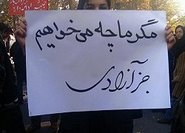
 اخبار مربوط به زندانیان سیاسی و نقض حقوق بشر







 Tulips in Holland