

Gasoline Black Market Thrives in Iran
BANDAR ABBAS, Iran -- Each day, the boulevard in this port city derisively dubbed "OPEC Street" is lined with dozens of vendors selling plastic jugs of black-market gasoline to desperate drivers who haggle over the price of a tankful.
Iran and its Economy
Last year I wrote two articles on Iranian economy, one on the U.S. plans for economic strangulation of Iran and the second on the existing systemic problems in the Iranian economy (Ahmadinejad's Achilles Heel: The Iranian Economy).
Iran extends olive branch to Israel and U.SIrish Sun 20:08 27-Jan-08
Iran vows to retaliate against U.S. basesThe Asian Age 18:35 27-Jan-08
Kayhan Editor Close To Iran's Supreme Leader Khamenei: 'America...The Middle East Media Research Institute (MEMRI) 23:02 27-Jan-08
Iran vows to hit American bases in Gulf if...Arab Times 06:49 28-Jan-08
Russia Sidelined in U.S. CampaignMoscow Times 23:21 27-Jan-08
U.S. presence in the region, its Achilles heel: Iranian...Payvand 17:49 27-Jan-08
AP: Iran gets army gear in Pentagon saleIranMania News 08:14 28-Jan-08
Dr. Abbas Bakhtiar: Iran and its EconomyScoop 21:24 27-Jan-08
Too Easy to RefuseThe New York Times 05:47 28-Jan-08
Iran 'will attack US Gulf bases'Gulf Daily News 22:02 27-Jan-08
Lebanon's Struggle with Terror
Lebanon has suffered another in a string of political assassinations clearly meant to replace the rule of law with a shadowy rule of terror. The perpetrators of these killings remain unknown, but the clear beneficiaries are forces aligned with Syria and Iran against Lebanon's democratic political majority.
Bush Blasts Lebanon Bombing, Tells Syria, Iran to Butt Out
US President George W. Bush on Saturday bemoaned the latest assassination of a Lebanese official and told Syria and Iran to stop meddling in its neighbor's affairs. Investigators tried to determine if the killing was tied to attacks against anti-Syrian politicians
Iran Says It Could Attack US Bases
CAIRO, Egypt -- Iran's top military commander said Saturday that his forces would retaliate against American military bases in the Persian Gulf if they are involved in any possible future attack on Iran. General Mohammad Ali Jaafari, commander of the Iran's Revolutionary Guards, told Al-Jazeera television that it is Iran's "natural right to respond" if attacked by land or air
Ehud Barak Sharply Disagrees with the U.S. NIE on Iran's Nuclear Capabilities
Sitting at the world Economic Forum in Davos last week, Israel's Minister of Defense Ehud Barak was sharply critical of the recent U.S. National Intelligence Estimate on Iran. In an interview with NEWSWEEK's Lally Weymouth, Barak suggested that, contrary to the impression left by that estimate, Iran continues to develop nuclear weapons and delivery systems
Mottaki: Iran Isn't Threatening Israel and Doesn't Want Nukes- AND IS FREE TO LIE, CHEAT AND KILL THE INNOCENT IRANIANS-( Bahramerad)
"Iran is not threatening Israel and does not want nuclear weapons, Iranian Foreign Minister Manouchehr Mottaki said Saturday. Speaking to Israel Radio on the sidelines of the World Economic Forum in Davos, Switzerland, Mottaki said that it was Israel that possessed nuclear weapons and "it is threatening Teheran."
Anger in Iran After Law Student Dies in Custody
The death of a student in the custody of Iranian intelligence officers has provoked outrage among opponents of the regime, who claim it is part of a concerted crackdown on dissent in the run-up to parliamentary elections.
Iran Says It Could Attack U.S. BasesForbes 22:51 26-Jan-08
Iran says break with U.S. won't last foreverWashington Post 21:20 26-Jan-08
Iran says it could attack US basesBoston.com 23:56 26-Jan-08
Iranian Foreign Minister praises U.S. moves in IraqInternational Herald Tribune 26-Jan-08
Iran & Bush's Crisis of Truthconsortiumnews.com 15:06 26-Jan-08
Iranian commander warns US of response in case of...Viewlondon.co.uk 10:37 27-Jan-08
GC rejects US allegations on Iran''s upcoming electionsKuwait News Agency (KUNA) 26-Jan-08
Top Iranian commander warns USAljazeera.Net, Qatar 06:39 27-Jan-08
Iran vows to retaliate against U.S. bases in GulfThe Globe and Mail 02:33 27-Jan-08
Iran: Break with US won't last foreverChina Business Weekly 02:24 27-Jan-08
Chomsky on World OwnershipForeign Policy In Focus 13:06 25-Jan-08
U.S. will not attack IranRIA Novosti 15:53 25-Jan-08
Column One: Is Livni the answer?Jerusalem Post 20:30 25-Jan-08
Saddam's FBI interrogator says Iraqi dictator didn't expect a...Irish Sun 09:23 26-Jan-08
Saddam did not expect invasionLos Angeles Daily News 08:07 26-Jan-08
Iran no longer wants to talk to USIranMania News 06:12 26-Jan-08
Iranian: Normal ties to U.S. impossible (AP)Yahoo! US 00:40 26-Jan-08
Interrogator: Saddam didn't think U.S. would invade IraqHouston Chronicle 21:58 25-Jan-08
US Democrats challenge Bush to renounce waterboarding, close Guantanamo...International Herald Tribune 19:18 25-Jan-08
Iran Condemns US Criticism Of Election Process -AFP
Key excerpts from Iran sanctions proposal
FOLLOWING are key excerpts from “elements” of a third round of sanctions circulated to the UN Security Council on Friday. The proposal was agreed to by Britain, France, Germany, the United States, Russia and China and will be the basis of a formal resolution intended for the Security Council to approve in the next few weeks. Voluntary travel restrictions: “Calls upon all States to exercise vigilance and restraint regarding the entry into or transit through their territories of individuals who are engaged in, directly associated with or providing support for Iran’s proliferation sensitive nuclear activities or for the development of nuclear weapon delivery systems.” This affects people “engaged in, directly associated with or providing support for Iran’s proliferation sensitive nuclear activities or for the development of nuclear weapon delivery systems, including through the involvement in procurement of the prohibited items, goods, equipment, materials and technology specified (in an earlier resolution).” Mandatory travel bans “Decides that all States shall take the necessary measures to prevent the entry into or transit through their territories of individuals designated in Annex II to this resolution ... provided that nothing in this paragraph shall oblige a state to refuse its own nationals entry into its territory.”... Freezing of assets: The proposal calls for an expansion of earlier asset freezes, saying they “shall apply also to the persons and entities listed in Annex I and III to this resolution, and any persons acting on their behalf or at their direction, and to entities owned or controlled by them.” Export credits: “Calls upon States to exercise vigilance in entering into new commitments for public provided financial support for trade with Iran, including the granting of export credits, guarantees or insurance, to their nationals or entities involved in such trade in order to avoid such financial support contributing to the proliferation sensitive nuclear activities, or to the development of nuclear weapon delivery systems.” Monitoring financial institutions: “Calls upon States to exercise vigilance over the activities of financial institutions in their territories with all banks domiciled in Iran, in particular with Bank Melli and Bank Saderat, and their branches and subsidiaries abroad, in order to avoid such activities contributing to the proliferation sensitive nuclear activities, or to the development of nuclear weapon delivery systems.” Cargo inspection: “Calls upon all States ... to inspect the cargoes to and from Iran, of aircraft and vessels at their airports and seaports owned or operated by Iran Air Cargo and Islamic Republic of Iran Shipping Line, provided there are reasonable grounds to believe that the aircraft/vessel is transporting goods prohibited under this resolution or (earlier) resolutions.” Iran’s refusal to suspend enrichment: The proposal “(notes) with serious concern that ... Iran has not established full and sustained suspension of all enrichment related and reprocessing activities and heavy water-related projects ... nor resumed (full) cooperation with the IAEA (International Atomic Energy Agency).” Offer of diplomacy: “China, France, Germany, the Russian Federation, the United Kingdom and the United States are willing to take further concrete measures on exploring an overall strategy of resolving the Iranian nuclear issue through negotiation on the basis of their June 2006 proposals.” IAEA report: “Requests within 90 days a further report from the Director General of the IAEA on whether Iran has established full and sustained suspension of all (enrichment, reprocessing and other) activities.” reuters
IMPERIAL EMBLEM

PERSIA
Iranian Freedom Fighters UNITE
Showing posts with label hezbolah. Show all posts
Showing posts with label hezbolah. Show all posts
Sunday, January 27, 2008
Saturday, December 15, 2007
North Korea apparently supplying Iran-backed group
WASHINGTON — The United States believes North Korea has become a major supplier to the Iranian-sponsored Hizbullah. The U.S. Congress raised the prospect that North Korea was providing weapons, technical assistance and military training to Hizbullah. The Congressional Research Service cited reputable sources that Pyongyang equipped Hizbullah with missiles and rockets used during the war against Israel in 2006. CRS, which provides independent analysis to Congress, discussed the purported North Korean aid to Hizbullah amid plans by the Bush administration to remove Pyongyang from the State Department list of terrorist sponsors. The report, first obtained by the Reuters news agency, cast doubts on claims that North Korea has ended support for groups deemed terrorists. "Questions about the credibility of the claim are relevant in view of the appearance of reports from reputable sources that North Korea has provided arms and possibly training to Hizbullah in Lebanon and the Tamil Tigers in Sri Lanka," the CRS report said. Hizbullah has been on the State Department list of terrorist organizations. The State Department has asserted that North Korea ended its sponsorship of terrorist groups more than 20 years ago. CRS said North Korea could have become a major supplier to Hizbullah. The report cited a September 2006 report by Paris Intelligence Online that North Korea provided extensive assistance to Hizbullah. The North Korean program was said to have begun in the 1980s when Hizbullah fighters were trained in Pyongyang. In 2000, during the Israeli withdrawal from Lebanon, the cooperation expanded and North Korean engineers were sent to Lebanon to instruct Hizbullah on the construction of underground facilities to store weapons, food and medical equipment. Pyongyang was also said to have helped install hundreds of remote-controlled underground 122 mm Katyusha rocket launchers throughout southern Lebanon. The network enabled Hizbullah to elevate a Katyusha launcher from a bunker via hydraulic lift, fire a salvo of rockets and then return underground. "This significantly improved Hizbullah's ability to fight the Israelis," CRS said.
Tuesday, July 24, 2007
My piece is BIGER than yours....
Hezbollah Gets The Bombs From Iran
BEIRUT, Lebanon -- Hezbollah leader Sheik Hassan Nasrallah said Monday his group possesses an arsenal of rockets that can reach all of Israel, including Tel Aviv. "We could absolutely reach any corner and any point in occupied Palestine," Nasrallah said in an interview aired by Arab broadcaster Al-Jazeera and Hezbollah's Al-Manar television. Celebratory gunshots and fireworks erupted in Beirut's southern suburbs for several minutes as the interview began and after it ended. Nasrallah said last year's war between Israel and Hezbollah did not succeed in diminishing his group's military capabilities. Repeating earlier claims, the Hezbollah leader said his group could already have fired at Tel Aviv last summer during the conflict, but had avoided doing so. "In July and August 2006, there wasn't a place in occupied Palestine that the rockets of the resistance could not reach, be it Tel Aviv or other cities," he said, describing Israel and the Hezbollah guerrillas in terms usually used by the group. "We could absolutely do that now," he added. In Jerusalem, Israeli Foreign Ministry spokesman Mark Regev said Hezbollah's rearmament "is a direct and grave violation of U.N. Security Council resolution 1701," which ended last year's war. "The international community must hold accountable those governments, namely Syria and Iran, who by supplying weapons to Hezbollah are deliberately trying to undermine the United Nations, the Lebanese government and peace and stability in the region," he said.
US Air Force B-2 Stealth Bombers Will Soon Be Fitted With Newly-Developed 15-Tonne Massive Ordnance
American military sources say the gigantic new bunker-blaster is designed to hit fortified underground targets such as Iran’s uranium-enrichment facility at Natanz. It will be capable of drilling through many meters of earth or concrete. When it falls from a high altitude, the MOP – composed of 20% explosives, 80% hardened metal - will punch a hole in the toughest protective casing before exploding in depth. It is GPS guided. DEBKAfile’s military sources reveal that Israel’s RAFAEL has upgraded its US-made SPICE air-to-ground missile, adding a stand-off precision guidance kit. This kit has been cleared for the US-made BLU-109 penetrator warhead, carried by Israeli warplanes, which is rated one of the top-line US weapons capable of hitting fortified targets from the air or warship. Its effective drop range has been extended from 60km to 90km enabling Israeli warplanes to release the missile to target from outside enemy territory without being exposed to air defense fire. The Israel-made PGM cannot be jammed since it does not depend on coordinates which can be falsified. After the targets are loaded into the bomb’s computer and dropped, it navigates and guides itself without pilot intervention and cannot therefore be diverted in mid-flight. The unveiling of these super-weapons comes shortly after satellite pictures showed new digging efforts in the mountains just outside Iran’s Natanz facility. Analysts worldwide believe a tunnel complex is under development.
BEIRUT, Lebanon -- Hezbollah leader Sheik Hassan Nasrallah said Monday his group possesses an arsenal of rockets that can reach all of Israel, including Tel Aviv. "We could absolutely reach any corner and any point in occupied Palestine," Nasrallah said in an interview aired by Arab broadcaster Al-Jazeera and Hezbollah's Al-Manar television. Celebratory gunshots and fireworks erupted in Beirut's southern suburbs for several minutes as the interview began and after it ended. Nasrallah said last year's war between Israel and Hezbollah did not succeed in diminishing his group's military capabilities. Repeating earlier claims, the Hezbollah leader said his group could already have fired at Tel Aviv last summer during the conflict, but had avoided doing so. "In July and August 2006, there wasn't a place in occupied Palestine that the rockets of the resistance could not reach, be it Tel Aviv or other cities," he said, describing Israel and the Hezbollah guerrillas in terms usually used by the group. "We could absolutely do that now," he added. In Jerusalem, Israeli Foreign Ministry spokesman Mark Regev said Hezbollah's rearmament "is a direct and grave violation of U.N. Security Council resolution 1701," which ended last year's war. "The international community must hold accountable those governments, namely Syria and Iran, who by supplying weapons to Hezbollah are deliberately trying to undermine the United Nations, the Lebanese government and peace and stability in the region," he said.
US Air Force B-2 Stealth Bombers Will Soon Be Fitted With Newly-Developed 15-Tonne Massive Ordnance
American military sources say the gigantic new bunker-blaster is designed to hit fortified underground targets such as Iran’s uranium-enrichment facility at Natanz. It will be capable of drilling through many meters of earth or concrete. When it falls from a high altitude, the MOP – composed of 20% explosives, 80% hardened metal - will punch a hole in the toughest protective casing before exploding in depth. It is GPS guided. DEBKAfile’s military sources reveal that Israel’s RAFAEL has upgraded its US-made SPICE air-to-ground missile, adding a stand-off precision guidance kit. This kit has been cleared for the US-made BLU-109 penetrator warhead, carried by Israeli warplanes, which is rated one of the top-line US weapons capable of hitting fortified targets from the air or warship. Its effective drop range has been extended from 60km to 90km enabling Israeli warplanes to release the missile to target from outside enemy territory without being exposed to air defense fire. The Israel-made PGM cannot be jammed since it does not depend on coordinates which can be falsified. After the targets are loaded into the bomb’s computer and dropped, it navigates and guides itself without pilot intervention and cannot therefore be diverted in mid-flight. The unveiling of these super-weapons comes shortly after satellite pictures showed new digging efforts in the mountains just outside Iran’s Natanz facility. Analysts worldwide believe a tunnel complex is under development.
Friday, July 13, 2007
NEWS FROM THE FRONT LINES
7/12/2007 ; ISF, COALITION FORCES CONDUCT OPERATIONS TO BRING SECURITY TO AD DIWANIYAH
7/12/2007 ; SAFE HAVEN DISRUPTED, IRAQI FORCES DETAIN TEN
7/11/2007 ; SUSPECTED SECRET CELL TERRORIST DETAINED BY COALITION FORCES
7/11/2007 ; TWO TERRORISTS KILLED, 20 SUSPECTS DETAINED
7/11/2007 ; IA, CF DISCOVER AL-QAEDA SAFE HOUSE NORTH OF BAQOUBA
7/12/2007 ; SAFE HAVEN DISRUPTED, IRAQI FORCES DETAIN TEN
7/11/2007 ; SUSPECTED SECRET CELL TERRORIST DETAINED BY COALITION FORCES
7/11/2007 ; TWO TERRORISTS KILLED, 20 SUSPECTS DETAINED
7/11/2007 ; IA, CF DISCOVER AL-QAEDA SAFE HOUSE NORTH OF BAQOUBA
Saturday, June 09, 2007
June 7: 16 captured during a raid in Sadr City.
Targeting the Iranian "Secret Cells" : Written by Bill Roggio on June 8, 2007 12:09 AM to The Fourth Rail
Coalition and Iraqi security forces work to dismantle the Iranian run Sheibani and Qazali networks
Since the end of April, Multinational Forces Iraq has released a multitude of press releases noting the capture or killing of members described as belonging to "a secret cell terrorist network known for its use of explosively formed penetrators, or EFPs, as well as facilitating the transport of weapons and EFPs from Iran to Iraq, and bringing militants from Iraq to Iran for terrorist training." Coalition and Iraqi forces killed 25 members of this network and captured 68 since April 27, 2007. These are Shia terrorists which are trained, armed, funded and directed by Iran's Qods Force, and have connections to Muqtada al Sadr's Mahdi Army. Multinational Forces Iraq is cryptic yet clear when discussing this network of Iranian backed operatives. Since General David Petraeus, the commander of Multinational Forces Iraq, gave a press briefing on April 26, where he identified the "secret cell network, the extremist secret cells" that "were provided substantial funding, training on Iranian soil, advanced explosive munitions and technologies as well as run of the mill arms and ammunition, in some cases advice and in some cases even a degree of direction," 17 press releases identified raids against the network. In his briefing on April 26, General Petraeus mentioned both the Sheibani and Qazali networks. The overarching network is actually the Sheibani Network, an unnamed intelligence official informed us. The Qazali network was described as a radical splinter Mahdi Army unit which operates under the aegis of the Sheibani network. General Petraeus stated the Qazali network received "substantial funding, training on Iranian soil, advanced explosive munitions and technologies as well as run of the mill arms and ammunition, in some cases advice and in some cases even a degree of direction." "There's no question, again, that Iranian financing is taking place through the Qods force of the Iranian Republican Guards Corps," General Petraeus noted, as documentation seized during raids provided evidence of this. Qods Force [or Jerusalem Force] is a branch of the Iranian Revolutionary Guard Corps, and is responsible for planning and conducting foreign operations, intelligence gathering and terrorist activities. The unit works extensively with Hezbollah. Qods Force regularly uses its diplomatic missions to provide cover for its operatives. The U.S. currently has 7 senior members of Iran's Qods Force in custody after raids in Baghdad in December of 2006 and Irbil in January of 2007. The Qazali Network responded by kidnapping and murdering 5 U.S. soldiers during a complex attack on the Joint Provincial Coordination Center in Karbala on January 20. On May 19, Coalition forces killed Azhar al-Dulaimi during a raid in Baghdad's Sadr City. Azhar al-Dulaimi was described as the "mastermind" and "tactical commander" of the Karbala attack and is known to have been a key player in numerous other high-profile terror attacks in Iraq. He was a major figure in the Iranian-supported Qazali network. "Intelligence reports indicate Dulaimi received military training from Iranian intelligence agents and from Lebanese Hezbollah, to include training on how to conduct terrorist-style kidnapping," according to the Department of Defense. The Sheibani Network's role in supplying the Qazali network was unmasked after "an individual named Sheibani, who is one of the heads of the Sheibani network" was captured, General Petraeus noted in April. "His brother is the Iranian connection. He is -- was in Iraq. And that has been the conduit that then distributes these among the extremist elements again [to] these secret cells and so forth." In July of 2006, Abu Mustafa Al-Sheibani, the leader of the network, was placed on the list of 41 most wanted, and a $200,000 bounty was placed for "information leading to his capture." While it isn't clear, it is believed he was the Sheibani captured. In August of 2005, Time described the activities of the Sheibani network, and documented the role of Iranian Qods Force in their operations to move weapons and employ the deadly Explosively Formed Penetrators - or EFPs - which are armor piercing mines. Back in 2005, the U.S. believed "al-Sheibani's team consisted of 280 members, divided into 17 bombmaking teams and death squads," Time noted. The U.S. also believed "[the Sheibani network] trained in Lebanon, in Baghdad's predominantly Shi'ite Sadr City district and 'in another country,'" presumably Iran. The vast majority of the Iraqi and Coalition raids occurred in Sadr City, the Shia dominated neighborhood in northeast Baghdad and stronghold of Muqtada al Sadr, the leader of the Mahdi Army. Sadr, who recently returned from Iran after fleeing the country at the onset of the Baghdad Security Plan, have a role in the "secret network," according to Azzaman. "Sadr’s sudden emergence and his meetings have been prompted by the defection of one of his most senior aides, former Health Minister Ali al-Shammari," anonymous sources inside Sadr's inner circle told Azzaman. "The sources said Shammari was close to Sadr and had insider information of the movement’s influence, spread and organization. The movement fears that Shammari might have passed to the U.S. confidential information on how the movement procures arms and training and the links it has with Iran." The Associated Press recently described the split in Sadr's militia as one between "a larger group that calls itself the "noble Mahdi Army" and accuses others in the Mahdi Army of going too far by killing innocent Sunni civilians and embezzling militia funds," and the more radical elements "trained and armed by Iranians." As the Mahdi Army fragmented last winter, a force of about 3,000 Mahdi fighters led by Qais al-Khazaali [or Qais al Qazali] were said to have sided with Iran and are training in Iranian camps.
Iran's Qods Force has set up the Qazali and Sheibani networks to provide for plausible deniability. "Military intelligence officers describe their Iranian Revolutionary Guard Corps counterparts' strategy as one of using "nonattributable attacks" by proxy forces to maximize deniability" Time noted in 2005. Qods has established their Iraqi networks to be manned by Iraqi operatives, which provides a degree of separation from the Iranian regime. However, Qods Force and the IRGC are not opposed to having foreign members in its ranks. International terrorists such as Imad Mugniyah, the operational leader of Hezbollah, also hold rank within Qods Force. "Imad Mugniyah embodies the complexity of where to tackle this terrorism because he stands with one foot in Hezbollah, reporting directly to [Hezbollah leader Hassan] Nasrallah, but he also has one foot in Iran, with the Iranian MOIS [the Iranian intelligence service] and the al-Qods, or the Jerusalem Force, of the Iranian Revolutionary Guard," terrorism and Hezbollah expert Magnus Ranstorp told the Council on Foreign Relations. "He allegedly works within the highest levels of the Iranian Revolutionary Guard Corps and Iranian intelligence and is said to take orders directly from Ayatollah Khamenei," notes the CFR. Leaders within Sheibani Network, and by extension the Qazali network, while Iraqi in nationality, are members of Iran's Qods Force.
A time line of the raids against the Qods force "secret cell terrorist network" since April 27, 2007. Coalition and Iraqi forces killed 25 and captured 68 during these raids.
April 26: General Pertraeus briefed on the capture of members of the Qazali and Sheibani networks
April 27: 4 captured during a raid in Sadr City
May 3: 2 captured during raids in Sadr City.
May 4: 16 captured during a raid in Sadr City, and a large Iranian supplied weapons cache found south of Baghdad.
May 6: 10 killed during a raid against a Sadr City "torture room," which also led to the discovery of large weapons cache
May 10: 4 captured, 3 killed during raids in Sadr City.
May 13: 3 captured during a raid in Sadr City.
May 19: 6 captured, 1 killed during raids in northeast Baghdad. Azhar al-Dulaimi, the "mastermind" and "tactical commander" of the Karbala attack and a leader in the Qazali network was the man killed.
May 25: 1 captured, 4 killed in Raids in Basra and Sadr City. "The individual targeted [in Sadr City] is suspected of having direct ties to the leader of the EFP network as well as acting as a proxy for an Iranian Revolutionary Guard Corps officer." "The British killed Abu Qader, the leader of the Mahdi Army in Basra, along with his brother and two aides."
May 26: 1 captured, 5 killed during raids in Sadr City. "The individual detained during the raid is believed to be the suspected leader in a secret cell terrorist network..."
May 27: 1 captured during a raid in Sadr City.
May 30: 6 captured during a raid in Sadr City, including one cell leader.
May 31: 2 captured during a raid in Sadr City.
June 5: 6 captured, 1 killed during two raids in Baghdad. One of those captured "is an integral member of the improvised explosive devises and EFP facilitation network... also believed to be responsible for numerous attacks against Coalition Forces, including heavy involvement in mortar attacks, personally observing and adjusting fire in the past two days."
June 7: 16 captured during a raid in Sadr City.
Coalition and Iraqi security forces work to dismantle the Iranian run Sheibani and Qazali networks
Since the end of April, Multinational Forces Iraq has released a multitude of press releases noting the capture or killing of members described as belonging to "a secret cell terrorist network known for its use of explosively formed penetrators, or EFPs, as well as facilitating the transport of weapons and EFPs from Iran to Iraq, and bringing militants from Iraq to Iran for terrorist training." Coalition and Iraqi forces killed 25 members of this network and captured 68 since April 27, 2007. These are Shia terrorists which are trained, armed, funded and directed by Iran's Qods Force, and have connections to Muqtada al Sadr's Mahdi Army. Multinational Forces Iraq is cryptic yet clear when discussing this network of Iranian backed operatives. Since General David Petraeus, the commander of Multinational Forces Iraq, gave a press briefing on April 26, where he identified the "secret cell network, the extremist secret cells" that "were provided substantial funding, training on Iranian soil, advanced explosive munitions and technologies as well as run of the mill arms and ammunition, in some cases advice and in some cases even a degree of direction," 17 press releases identified raids against the network. In his briefing on April 26, General Petraeus mentioned both the Sheibani and Qazali networks. The overarching network is actually the Sheibani Network, an unnamed intelligence official informed us. The Qazali network was described as a radical splinter Mahdi Army unit which operates under the aegis of the Sheibani network. General Petraeus stated the Qazali network received "substantial funding, training on Iranian soil, advanced explosive munitions and technologies as well as run of the mill arms and ammunition, in some cases advice and in some cases even a degree of direction." "There's no question, again, that Iranian financing is taking place through the Qods force of the Iranian Republican Guards Corps," General Petraeus noted, as documentation seized during raids provided evidence of this. Qods Force [or Jerusalem Force] is a branch of the Iranian Revolutionary Guard Corps, and is responsible for planning and conducting foreign operations, intelligence gathering and terrorist activities. The unit works extensively with Hezbollah. Qods Force regularly uses its diplomatic missions to provide cover for its operatives. The U.S. currently has 7 senior members of Iran's Qods Force in custody after raids in Baghdad in December of 2006 and Irbil in January of 2007. The Qazali Network responded by kidnapping and murdering 5 U.S. soldiers during a complex attack on the Joint Provincial Coordination Center in Karbala on January 20. On May 19, Coalition forces killed Azhar al-Dulaimi during a raid in Baghdad's Sadr City. Azhar al-Dulaimi was described as the "mastermind" and "tactical commander" of the Karbala attack and is known to have been a key player in numerous other high-profile terror attacks in Iraq. He was a major figure in the Iranian-supported Qazali network. "Intelligence reports indicate Dulaimi received military training from Iranian intelligence agents and from Lebanese Hezbollah, to include training on how to conduct terrorist-style kidnapping," according to the Department of Defense. The Sheibani Network's role in supplying the Qazali network was unmasked after "an individual named Sheibani, who is one of the heads of the Sheibani network" was captured, General Petraeus noted in April. "His brother is the Iranian connection. He is -- was in Iraq. And that has been the conduit that then distributes these among the extremist elements again [to] these secret cells and so forth." In July of 2006, Abu Mustafa Al-Sheibani, the leader of the network, was placed on the list of 41 most wanted, and a $200,000 bounty was placed for "information leading to his capture." While it isn't clear, it is believed he was the Sheibani captured. In August of 2005, Time described the activities of the Sheibani network, and documented the role of Iranian Qods Force in their operations to move weapons and employ the deadly Explosively Formed Penetrators - or EFPs - which are armor piercing mines. Back in 2005, the U.S. believed "al-Sheibani's team consisted of 280 members, divided into 17 bombmaking teams and death squads," Time noted. The U.S. also believed "[the Sheibani network] trained in Lebanon, in Baghdad's predominantly Shi'ite Sadr City district and 'in another country,'" presumably Iran. The vast majority of the Iraqi and Coalition raids occurred in Sadr City, the Shia dominated neighborhood in northeast Baghdad and stronghold of Muqtada al Sadr, the leader of the Mahdi Army. Sadr, who recently returned from Iran after fleeing the country at the onset of the Baghdad Security Plan, have a role in the "secret network," according to Azzaman. "Sadr’s sudden emergence and his meetings have been prompted by the defection of one of his most senior aides, former Health Minister Ali al-Shammari," anonymous sources inside Sadr's inner circle told Azzaman. "The sources said Shammari was close to Sadr and had insider information of the movement’s influence, spread and organization. The movement fears that Shammari might have passed to the U.S. confidential information on how the movement procures arms and training and the links it has with Iran." The Associated Press recently described the split in Sadr's militia as one between "a larger group that calls itself the "noble Mahdi Army" and accuses others in the Mahdi Army of going too far by killing innocent Sunni civilians and embezzling militia funds," and the more radical elements "trained and armed by Iranians." As the Mahdi Army fragmented last winter, a force of about 3,000 Mahdi fighters led by Qais al-Khazaali [or Qais al Qazali] were said to have sided with Iran and are training in Iranian camps.
Iran's Qods Force has set up the Qazali and Sheibani networks to provide for plausible deniability. "Military intelligence officers describe their Iranian Revolutionary Guard Corps counterparts' strategy as one of using "nonattributable attacks" by proxy forces to maximize deniability" Time noted in 2005. Qods has established their Iraqi networks to be manned by Iraqi operatives, which provides a degree of separation from the Iranian regime. However, Qods Force and the IRGC are not opposed to having foreign members in its ranks. International terrorists such as Imad Mugniyah, the operational leader of Hezbollah, also hold rank within Qods Force. "Imad Mugniyah embodies the complexity of where to tackle this terrorism because he stands with one foot in Hezbollah, reporting directly to [Hezbollah leader Hassan] Nasrallah, but he also has one foot in Iran, with the Iranian MOIS [the Iranian intelligence service] and the al-Qods, or the Jerusalem Force, of the Iranian Revolutionary Guard," terrorism and Hezbollah expert Magnus Ranstorp told the Council on Foreign Relations. "He allegedly works within the highest levels of the Iranian Revolutionary Guard Corps and Iranian intelligence and is said to take orders directly from Ayatollah Khamenei," notes the CFR. Leaders within Sheibani Network, and by extension the Qazali network, while Iraqi in nationality, are members of Iran's Qods Force.
A time line of the raids against the Qods force "secret cell terrorist network" since April 27, 2007. Coalition and Iraqi forces killed 25 and captured 68 during these raids.
April 26: General Pertraeus briefed on the capture of members of the Qazali and Sheibani networks
April 27: 4 captured during a raid in Sadr City
May 3: 2 captured during raids in Sadr City.
May 4: 16 captured during a raid in Sadr City, and a large Iranian supplied weapons cache found south of Baghdad.
May 6: 10 killed during a raid against a Sadr City "torture room," which also led to the discovery of large weapons cache
May 10: 4 captured, 3 killed during raids in Sadr City.
May 13: 3 captured during a raid in Sadr City.
May 19: 6 captured, 1 killed during raids in northeast Baghdad. Azhar al-Dulaimi, the "mastermind" and "tactical commander" of the Karbala attack and a leader in the Qazali network was the man killed.
May 25: 1 captured, 4 killed in Raids in Basra and Sadr City. "The individual targeted [in Sadr City] is suspected of having direct ties to the leader of the EFP network as well as acting as a proxy for an Iranian Revolutionary Guard Corps officer." "The British killed Abu Qader, the leader of the Mahdi Army in Basra, along with his brother and two aides."
May 26: 1 captured, 5 killed during raids in Sadr City. "The individual detained during the raid is believed to be the suspected leader in a secret cell terrorist network..."
May 27: 1 captured during a raid in Sadr City.
May 30: 6 captured during a raid in Sadr City, including one cell leader.
May 31: 2 captured during a raid in Sadr City.
June 5: 6 captured, 1 killed during two raids in Baghdad. One of those captured "is an integral member of the improvised explosive devises and EFP facilitation network... also believed to be responsible for numerous attacks against Coalition Forces, including heavy involvement in mortar attacks, personally observing and adjusting fire in the past two days."
June 7: 16 captured during a raid in Sadr City.
Wednesday, May 30, 2007
Turkey seizes weapons in Syria-bound container from Iran : The Associated Press
ANKARA, Turkey: Turkish authorities seized weapons hidden among construction materials on a Syria-bound train from Iran after Kurdish guerrillas bombed and derailed the train, according to a government official and news reports Wednesday.
The official, speaking Wednesday on condition of anonymity because he was not authorized to speak to the media, said the cargo included machine guns and pistols. The private Dogan news agency said it included a rocket launch pad and 300 rockets as well as other weapons and ammunition. The container was discovered when authorities checked the cargo of the train, attacked by separatist Kurdish guerrillas on May 25. The guerrillas had derailed eight cars of the train in a bomb blast near the town of Genc in Bingol province. Private NTV television said authorities had launched an investigation into the weapons discovery. On Tuesday evening, Turkish authorities forced a Syrian plane flying from Iran to land in the southeastern city of Diyarbakir and searched it for weapons. No arms were found. Turkish authorities suspect Iran is using Turkey as a transit point to send arms to Lebanon's Hezbollah movement via Syria.
Turkey, the only Muslim member of NATO, borders both Iran and Syria. It has good relations with Israel and its Arab neighbors and has contributed troops to the U.N.-led peacekeeping force in Lebanon.
The official, speaking Wednesday on condition of anonymity because he was not authorized to speak to the media, said the cargo included machine guns and pistols. The private Dogan news agency said it included a rocket launch pad and 300 rockets as well as other weapons and ammunition. The container was discovered when authorities checked the cargo of the train, attacked by separatist Kurdish guerrillas on May 25. The guerrillas had derailed eight cars of the train in a bomb blast near the town of Genc in Bingol province. Private NTV television said authorities had launched an investigation into the weapons discovery. On Tuesday evening, Turkish authorities forced a Syrian plane flying from Iran to land in the southeastern city of Diyarbakir and searched it for weapons. No arms were found. Turkish authorities suspect Iran is using Turkey as a transit point to send arms to Lebanon's Hezbollah movement via Syria.
Turkey, the only Muslim member of NATO, borders both Iran and Syria. It has good relations with Israel and its Arab neighbors and has contributed troops to the U.N.-led peacekeeping force in Lebanon.
Wednesday, April 25, 2007
After 30 years, the leader of Hezbollah, spills the beans.

The Secrets of a Hizballah Renegade
The white walls and guard towers of the hilltop Sheikh Abdullah military barracks are clearly visible from the home of Sheikh Sobhi Toufeili. As one of the founding fathers of Hizballah and its first secretary-general, the gruff 60-year-old cleric knows the barracks well — during the turbulent 1980s, it housed fighters from his organization and a contingent of Iranian Revolutionary Guards, as well as several Western hostages, including William Buckley, the CIA station chief in Beirut who died in captivity. But that was then
Monday, February 26, 2007
U.S. Says Raid in Iraq Supports Claim on Iran
By JAMES GLANZ and RICHARD A. OPPEL Jr.
BAGHDAD, Feb. 25 — A raid on a Shiite weapons cache in the southern city of Hilla one week ago is providing what American officials call the best evidence yet that the deadliest roadside bombs in Iraq are manufactured in Iran, but critics contend that the forensic case remains circumstantial and inferential.The new evidence includes infrared sensors, electronic triggering devices and information about plastic explosives used in bombs that the Americans say lead back to Iran. The explosive material, triggering devices, other components and the method of assembly all produce weapons with an Iranian signature that has never been found outside Iraq or southern Lebanon, where Hezbollah is believed to have used weapons supplied by Iran, the Americans say.
But critics assert that nearly all the bomb components could have been produced in Iraq or somewhere else in the region. Even if the evidence were to establish that Iran is the source, they add, that does not necessarily mean that the Iranian leadership is responsible. The raid by American and Iraqi forces discovered a fake boulder made of polyurethane and containing three of the deadliest kind of roadside bombs in Iraq. Smeared with dirt and pebbles to give it the color and texture of a rock, the polyurethane blob was resting in the back seat of a Toyota, apparently in preparation for a roadside attack, American officials said in lengthy briefings with two New York Times reporters last week. The Toyota, along with a second vehicle and a nearby house described as an assembly point, contained components and other weaponry that the officials say demonstrate that the bomb parts must have originated in Iran. Called explosively formed penetrators, or E.F.P.’s, bombs like the ones hidden inside the fake boulder are designed to eject molten slugs that slice through American armor with deadly precision. The assertion that the latest find greatly bolsters the theory of the Iranian origin of the E.F.P.’s is significant because it could provide the United States with a new justification to take action against Iran. But the evidence is unlikely to satisfy skeptics who have been suspicious that the Bush administration is trying to lay the groundwork for isolating or even attacking Iran. They point to the flawed intelligence used by the administration to accuse Saddam Hussein of harboring unconventional weapons before invading Iraq nearly four years ago. Still, American military officials appear to be making an attempt to respond to critics who say the evidence is inconclusive. In the course of the detailed briefing on the Hilla discovery, Maj. Marty Weber, an explosives expert, said that most of the E.F.P.’s in Iraq use C-4 plastic explosive manufactured in Iran. At the request of the Bush administration, The Times is withholding some specific details about the weapons to protect intelligence sources and methods. In addition to the Hilla discovery, military officials are expected to disclose at a briefing on Monday details about materials found in a raid in Diyala Province, the mixed Sunni-Shiite battleground north of Baghdad, that, according to one military official, included enough components to make more than 100 E.F.P.’s. The official asked not to be identified because the matter is so sensitive. All of the items found in the Hilla raid have been used by Hezbollah in southern Lebanon, said Major Weber, a master explosives ordnance technician who has studied many kinds of improvised bombs in the Middle East and elsewhere and is closely involved in the effort in Iraq. In addition, the shallow concave caps, which are made of copper and change into armor-piercing balls when the E.F.P.’s explode, were smooth and flawless, indicating to the explosives expert that they were manufactured in Iran because of the high precision required to make them so. Also found during the raid were 10 107-millimeter Strella rockets that had Iranian markings.
A Question of Technology
The most specialized part of the E.F.P.’s that were found is the concave copper disc, called a liner, that rolls into a deadly armor-piercing ball when the device explodes. Although American explosives experts say that the liner is deceptively difficult to make properly, the discs in Hilla look like a thick little alms plate or even a souvenir ashtray minus the indentations for holding cigarettes. The electronics package is built around everyday items like the motion sensors used in garage-door openers and outdoor security systems; in fact, at the heart of some of the bombs found in Iraq is a type of infrared sensor commonly sold at electronic stores like RadioShack. Major Weber said the use of precision copper discs combined with passive infrared sensors amounted to “a no-brainer” that the explosive components were of Iranian origin, because no one has used that sort of configuration except Iranian-backed Shiite militias. Could copper discs be manufactured with the required precision in Iraq? “You can never be certain,” Major Weber said. But he said that “having studied all these groups, I’ve only seen E.F.P.’s used in two areas of the world: The Levant and here,” meaning in Hezbollah areas of Lebanon and in Iraq. Hezbollah is thought to be armed and trained by Iran.
Skeptics say the new details do not support a conclusion that only Iran could be providing the components. “Iran may well be involved in the supply of these weapons, but so far they haven’t proved it,” said Joseph Cirincione, senior vice president for National Security at the Center for American Progress, a liberal research and advocacy organization. “Before we act on the assumption that these are Iranian we’ve got to rule out all these other possibilities,” he said. “The military hasn’t done that.” He noted that a related weapon, the shape charge, “has been around for decades. “This is not new stuff,” he continued. “There is a vast international arms market selling shape charges from many countries.”
New Details
The new information is more substantial than the limited details disclosed earlier this month in Baghdad, said John Pike, director of GlobalSecurity.org, a research group based in Alexandria, Va.“That initial briefing was not much to write home about,” Mr. Pike said. “The points that they are making here are rather more convincing. Whether they’re true is a completely different question.”Mr. Pike said he was not swayed by arguments that the copper discs could only be made by equipment in Iran. All that is required are machine tools, he said. “You can buy them,” he said. “I mean, look at all those cylinders people use for L.P.G. cooking gas. Do you think they are all imported from Iran? Probably not. I bet there are guys all over Iraq who make those things for a living.”But he found other details more persuasive. “The two points they are making about the tradecraft of the fuse and the wrappings of the explosives, those are pretty good pieces of evidence,” he said. “I will say that, totally apart from any of this evidence, I would be astonished if Iran was not providing military support to the Shia militias. It should be self-evident that they are doing that.”
Afternoon Attack
American officials gave this account of the Hilla raid:It took place at 1:30 p.m. on Feb. 17 after an informant reported seeing a tow truck carrying rockets.The fake rock with three E.F.P. canisters inside was sitting on the back seat of a different vehicle, a Toyota Crown. The trunk of the same car contained various equipment including an infrared sensor, a G.P.S. unit, two compasses and a jug filled with an unknown explosive.Tools and materials for making fake rocks were found inside the house along with a partly completed rock and two E.F.P.’s. Among the items found there were seven battery packs needed to set off the blasting caps that initiate the E.F.P. explosion, four cans of epoxy foam and three of the infrared sensors.The E.F.P.’s were designed to inflict maximum damage. The positioning of the sensor and the exact angles of the E.F.P.’s inside the rock were fixed to find weak points in American armored vehicles like Humvees and Strykers.“The E.F.P. canisters are typically arrayed at angles to minimize the effects of countermeasures,” Major Weber said. “They want to hit the truck when it is already well into the kill zone.”The infrared sensors could be armed and disarmed at a distance with cellphones, long-distance cordless phones or radios. That allows the attackers to arm the devices only when convoys are approaching. Then, when the convoys trip the sensors, the E.F.P.’s explode.Major Weber said many of those techniques were clearly Iranian in origin. Critics said that all of them could be replicated by skilled Iraqis or others in the Middle East with a solid knowledge of electronics and basic manufacturing techniques.Still, Major Weber said, there were other indications of Iranian involvement in Hilla. In the raid, the Iraqi and American troops also found a red 1988 Chevy tow truck carrying 10 Strella rockets under a false bottom in the bed. The rockets had MJ-1 contact fuses and were probably made in China and repainted with Iranian markings — the usual practice for weapons that Iran imports and re-sells. Following international convention, the markings were in English, not Persian. They indicated that the rockets had been made in 2005 and each carried 18 kilograms of explosive.As to why the Iranians would leave such obvious markings on the shells, Major Weber speculated that they had simply been taken out of stock and shipped across the border.
Comparisons to OthersMajor Weber said he doubted that Hezbollah — the group that the Mahdi militia leader Moktada al-Sadr has used as a model for his political movement — would have provided the material and technology to the Mahdi militia or to other Shiite fighters in Iraq. “It is possible, but based upon my experience we have not seen Hezbollah share information or technology on anything until they have been told to,” he said.“The E.F.P. is their silver bullet,” he said, referring to Iran and its allied militias.Major Weber also said that the use of passive infrared sensors, or P.I.R.’s, was one of the strongest markers of Iranian involvement, based on years of experience indicating that only Iranian-backed groups employ the sensors in that manner. But he also acknowledged that the electronic components needed to make the sensors were easily available off the shelf at places like RadioShack.Those components are used in commercial products, like motion sensors for a lighting system or garage door openers. Those products are opened up, rewired and repackaged.Sometimes on products requiring the triggering of multiple beams to close the circuit, masking tape is used to cover up some beams so that only one is triggered.“Every P.I.R. in Iraq has been RadioShack, Digigard or Everspring,” Major Weber said. “But in southern Lebanon I never saw them use RadioShack.”While he maintained that the copper liner also required specialized equipment and skills to make properly, that assertion also rests on some rather subtle distinctions. A senior military official displayed pictures of a stack of some 30 copper E.F.P. liners seized in a raid in Mahmudiya, a town south of Baghdad. Such liners, Major Weber said, were “copycats” stamped in Iraq, not Iran. To the untrained eye, the liners initially looked identical to the genuine ones.But Major Weber then pointed out that there were often slightly visible cracks forming circles around the tops of the liners when they were set on a table with their concave sides pointing down. Those imperfections were signs that the liners had been made in Iraq, Major Weber said. And because of the imperfections, he said, an E.F.P. made with them would be much less deadly. Such an E.F.P. would fragment rather than curl into a ball, he said, and the fragments would be much less likely to pierce armor.Michael R. Gordon and Scott Shane contributed reporting from Washington.
BAGHDAD, Feb. 25 — A raid on a Shiite weapons cache in the southern city of Hilla one week ago is providing what American officials call the best evidence yet that the deadliest roadside bombs in Iraq are manufactured in Iran, but critics contend that the forensic case remains circumstantial and inferential.The new evidence includes infrared sensors, electronic triggering devices and information about plastic explosives used in bombs that the Americans say lead back to Iran. The explosive material, triggering devices, other components and the method of assembly all produce weapons with an Iranian signature that has never been found outside Iraq or southern Lebanon, where Hezbollah is believed to have used weapons supplied by Iran, the Americans say.
But critics assert that nearly all the bomb components could have been produced in Iraq or somewhere else in the region. Even if the evidence were to establish that Iran is the source, they add, that does not necessarily mean that the Iranian leadership is responsible. The raid by American and Iraqi forces discovered a fake boulder made of polyurethane and containing three of the deadliest kind of roadside bombs in Iraq. Smeared with dirt and pebbles to give it the color and texture of a rock, the polyurethane blob was resting in the back seat of a Toyota, apparently in preparation for a roadside attack, American officials said in lengthy briefings with two New York Times reporters last week. The Toyota, along with a second vehicle and a nearby house described as an assembly point, contained components and other weaponry that the officials say demonstrate that the bomb parts must have originated in Iran. Called explosively formed penetrators, or E.F.P.’s, bombs like the ones hidden inside the fake boulder are designed to eject molten slugs that slice through American armor with deadly precision. The assertion that the latest find greatly bolsters the theory of the Iranian origin of the E.F.P.’s is significant because it could provide the United States with a new justification to take action against Iran. But the evidence is unlikely to satisfy skeptics who have been suspicious that the Bush administration is trying to lay the groundwork for isolating or even attacking Iran. They point to the flawed intelligence used by the administration to accuse Saddam Hussein of harboring unconventional weapons before invading Iraq nearly four years ago. Still, American military officials appear to be making an attempt to respond to critics who say the evidence is inconclusive. In the course of the detailed briefing on the Hilla discovery, Maj. Marty Weber, an explosives expert, said that most of the E.F.P.’s in Iraq use C-4 plastic explosive manufactured in Iran. At the request of the Bush administration, The Times is withholding some specific details about the weapons to protect intelligence sources and methods. In addition to the Hilla discovery, military officials are expected to disclose at a briefing on Monday details about materials found in a raid in Diyala Province, the mixed Sunni-Shiite battleground north of Baghdad, that, according to one military official, included enough components to make more than 100 E.F.P.’s. The official asked not to be identified because the matter is so sensitive. All of the items found in the Hilla raid have been used by Hezbollah in southern Lebanon, said Major Weber, a master explosives ordnance technician who has studied many kinds of improvised bombs in the Middle East and elsewhere and is closely involved in the effort in Iraq. In addition, the shallow concave caps, which are made of copper and change into armor-piercing balls when the E.F.P.’s explode, were smooth and flawless, indicating to the explosives expert that they were manufactured in Iran because of the high precision required to make them so. Also found during the raid were 10 107-millimeter Strella rockets that had Iranian markings.
A Question of Technology
The most specialized part of the E.F.P.’s that were found is the concave copper disc, called a liner, that rolls into a deadly armor-piercing ball when the device explodes. Although American explosives experts say that the liner is deceptively difficult to make properly, the discs in Hilla look like a thick little alms plate or even a souvenir ashtray minus the indentations for holding cigarettes. The electronics package is built around everyday items like the motion sensors used in garage-door openers and outdoor security systems; in fact, at the heart of some of the bombs found in Iraq is a type of infrared sensor commonly sold at electronic stores like RadioShack. Major Weber said the use of precision copper discs combined with passive infrared sensors amounted to “a no-brainer” that the explosive components were of Iranian origin, because no one has used that sort of configuration except Iranian-backed Shiite militias. Could copper discs be manufactured with the required precision in Iraq? “You can never be certain,” Major Weber said. But he said that “having studied all these groups, I’ve only seen E.F.P.’s used in two areas of the world: The Levant and here,” meaning in Hezbollah areas of Lebanon and in Iraq. Hezbollah is thought to be armed and trained by Iran.
Skeptics say the new details do not support a conclusion that only Iran could be providing the components. “Iran may well be involved in the supply of these weapons, but so far they haven’t proved it,” said Joseph Cirincione, senior vice president for National Security at the Center for American Progress, a liberal research and advocacy organization. “Before we act on the assumption that these are Iranian we’ve got to rule out all these other possibilities,” he said. “The military hasn’t done that.” He noted that a related weapon, the shape charge, “has been around for decades. “This is not new stuff,” he continued. “There is a vast international arms market selling shape charges from many countries.”
New Details
The new information is more substantial than the limited details disclosed earlier this month in Baghdad, said John Pike, director of GlobalSecurity.org, a research group based in Alexandria, Va.“That initial briefing was not much to write home about,” Mr. Pike said. “The points that they are making here are rather more convincing. Whether they’re true is a completely different question.”Mr. Pike said he was not swayed by arguments that the copper discs could only be made by equipment in Iran. All that is required are machine tools, he said. “You can buy them,” he said. “I mean, look at all those cylinders people use for L.P.G. cooking gas. Do you think they are all imported from Iran? Probably not. I bet there are guys all over Iraq who make those things for a living.”But he found other details more persuasive. “The two points they are making about the tradecraft of the fuse and the wrappings of the explosives, those are pretty good pieces of evidence,” he said. “I will say that, totally apart from any of this evidence, I would be astonished if Iran was not providing military support to the Shia militias. It should be self-evident that they are doing that.”
Afternoon Attack
American officials gave this account of the Hilla raid:It took place at 1:30 p.m. on Feb. 17 after an informant reported seeing a tow truck carrying rockets.The fake rock with three E.F.P. canisters inside was sitting on the back seat of a different vehicle, a Toyota Crown. The trunk of the same car contained various equipment including an infrared sensor, a G.P.S. unit, two compasses and a jug filled with an unknown explosive.Tools and materials for making fake rocks were found inside the house along with a partly completed rock and two E.F.P.’s. Among the items found there were seven battery packs needed to set off the blasting caps that initiate the E.F.P. explosion, four cans of epoxy foam and three of the infrared sensors.The E.F.P.’s were designed to inflict maximum damage. The positioning of the sensor and the exact angles of the E.F.P.’s inside the rock were fixed to find weak points in American armored vehicles like Humvees and Strykers.“The E.F.P. canisters are typically arrayed at angles to minimize the effects of countermeasures,” Major Weber said. “They want to hit the truck when it is already well into the kill zone.”The infrared sensors could be armed and disarmed at a distance with cellphones, long-distance cordless phones or radios. That allows the attackers to arm the devices only when convoys are approaching. Then, when the convoys trip the sensors, the E.F.P.’s explode.Major Weber said many of those techniques were clearly Iranian in origin. Critics said that all of them could be replicated by skilled Iraqis or others in the Middle East with a solid knowledge of electronics and basic manufacturing techniques.Still, Major Weber said, there were other indications of Iranian involvement in Hilla. In the raid, the Iraqi and American troops also found a red 1988 Chevy tow truck carrying 10 Strella rockets under a false bottom in the bed. The rockets had MJ-1 contact fuses and were probably made in China and repainted with Iranian markings — the usual practice for weapons that Iran imports and re-sells. Following international convention, the markings were in English, not Persian. They indicated that the rockets had been made in 2005 and each carried 18 kilograms of explosive.As to why the Iranians would leave such obvious markings on the shells, Major Weber speculated that they had simply been taken out of stock and shipped across the border.
Comparisons to OthersMajor Weber said he doubted that Hezbollah — the group that the Mahdi militia leader Moktada al-Sadr has used as a model for his political movement — would have provided the material and technology to the Mahdi militia or to other Shiite fighters in Iraq. “It is possible, but based upon my experience we have not seen Hezbollah share information or technology on anything until they have been told to,” he said.“The E.F.P. is their silver bullet,” he said, referring to Iran and its allied militias.Major Weber also said that the use of passive infrared sensors, or P.I.R.’s, was one of the strongest markers of Iranian involvement, based on years of experience indicating that only Iranian-backed groups employ the sensors in that manner. But he also acknowledged that the electronic components needed to make the sensors were easily available off the shelf at places like RadioShack.Those components are used in commercial products, like motion sensors for a lighting system or garage door openers. Those products are opened up, rewired and repackaged.Sometimes on products requiring the triggering of multiple beams to close the circuit, masking tape is used to cover up some beams so that only one is triggered.“Every P.I.R. in Iraq has been RadioShack, Digigard or Everspring,” Major Weber said. “But in southern Lebanon I never saw them use RadioShack.”While he maintained that the copper liner also required specialized equipment and skills to make properly, that assertion also rests on some rather subtle distinctions. A senior military official displayed pictures of a stack of some 30 copper E.F.P. liners seized in a raid in Mahmudiya, a town south of Baghdad. Such liners, Major Weber said, were “copycats” stamped in Iraq, not Iran. To the untrained eye, the liners initially looked identical to the genuine ones.But Major Weber then pointed out that there were often slightly visible cracks forming circles around the tops of the liners when they were set on a table with their concave sides pointing down. Those imperfections were signs that the liners had been made in Iraq, Major Weber said. And because of the imperfections, he said, an E.F.P. made with them would be much less deadly. Such an E.F.P. would fragment rather than curl into a ball, he said, and the fragments would be much less likely to pierce armor.Michael R. Gordon and Scott Shane contributed reporting from Washington.
Sunday, February 18, 2007
NEWS FROM THE FRONT LINE OF ZAHEDAN (IN PERSIAN)
شنبه، 28 بهمن ماه 1385 برابر با 2007 Saturday 17 February
اطلاعیه جدید جنبش مقاومت مردمی ایران (جندالله)
باری دیگر دلاور مردان شاخه نظامی شهید احمد دهمرده با طراحی یک عملیات تاکتیکی شجاعت مردان این خطه را به نمایش گذاشتند .شب گذشته حدود ساعت 22 مبارزان دلاور با انفجار یک بمب صوتی نسبتا قوی نیروهای سرکوبگر رژیم را به نقطه ای خلوت در حاشیه شهر زاهدان کشاندند و در آنجا عملیاتی را که از قبل طراحی شده بود به اجرا در آوردند .در این عملیات شجاعانه که مستقیم و رودر روی با هزاران نیروی نظامی وامنیتی سرکوبگررژیم آخوندی صورت گرفت مبارزان غیور و مومن با مقاومتی بی نظیر و با چند حمله تاکتیکی و وارد کردن ضربات محکم و مهلک نیروهای ترسوی نظامی را وادار به عقب نشینی کردند.این عملیات که حدود 2 ساعت به طول انجامید دهها تن از نیروهای بزدل امنیتی و نظامی کشته و زخمی شد و دلاوران بدون کوچکترین خسارتی ، و در صحت و سلامت کامل به قرارگاههای خویش در کوههای بلوچستان بازگشتند.و جای بسی تعجب است که رژیم با وجود این همه امکانات قوت ایستادگی را در مقابل تنی چند از جوانان غیور ندارد و پا به فرار می گذارد و این همه به برکت ایمان و غیرت مردان راستین است . جنبش مقاومت مردمی از همه مردم عزیز می خواهد که هر چه زودتر در مقابل این رژیم جهل و جور آخوندی قیام کنند و مردانه بجنگند تا مادامیکه حقوق پایمال شده خویش را بازستانند و نیک بدانند که این رژیم بر اساس ادعاهایی پوچ و بی اساس و توخالی بنا شده است و در مقابل حق و عدالت خواهی تاب مقاومت را ندارد و بزرگترین شگردش دروغگویی است . جنبش مقاومت مردمی باری دیگر این عملیات موفقیت آمیز را به همه مردم عزیز تبریک عرض می نماید.جنبش مقاومت مردمی ایران
اطلاعیه جدید جنبش مقاومت مردمی ایران (جندالله)
باری دیگر دلاور مردان شاخه نظامی شهید احمد دهمرده با طراحی یک عملیات تاکتیکی شجاعت مردان این خطه را به نمایش گذاشتند .شب گذشته حدود ساعت 22 مبارزان دلاور با انفجار یک بمب صوتی نسبتا قوی نیروهای سرکوبگر رژیم را به نقطه ای خلوت در حاشیه شهر زاهدان کشاندند و در آنجا عملیاتی را که از قبل طراحی شده بود به اجرا در آوردند .در این عملیات شجاعانه که مستقیم و رودر روی با هزاران نیروی نظامی وامنیتی سرکوبگررژیم آخوندی صورت گرفت مبارزان غیور و مومن با مقاومتی بی نظیر و با چند حمله تاکتیکی و وارد کردن ضربات محکم و مهلک نیروهای ترسوی نظامی را وادار به عقب نشینی کردند.این عملیات که حدود 2 ساعت به طول انجامید دهها تن از نیروهای بزدل امنیتی و نظامی کشته و زخمی شد و دلاوران بدون کوچکترین خسارتی ، و در صحت و سلامت کامل به قرارگاههای خویش در کوههای بلوچستان بازگشتند.و جای بسی تعجب است که رژیم با وجود این همه امکانات قوت ایستادگی را در مقابل تنی چند از جوانان غیور ندارد و پا به فرار می گذارد و این همه به برکت ایمان و غیرت مردان راستین است . جنبش مقاومت مردمی از همه مردم عزیز می خواهد که هر چه زودتر در مقابل این رژیم جهل و جور آخوندی قیام کنند و مردانه بجنگند تا مادامیکه حقوق پایمال شده خویش را بازستانند و نیک بدانند که این رژیم بر اساس ادعاهایی پوچ و بی اساس و توخالی بنا شده است و در مقابل حق و عدالت خواهی تاب مقاومت را ندارد و بزرگترین شگردش دروغگویی است . جنبش مقاومت مردمی باری دیگر این عملیات موفقیت آمیز را به همه مردم عزیز تبریک عرض می نماید.جنبش مقاومت مردمی ایران
SEND IN THE HEZBOLLAH
SEND IN THE HEZBOLLAH TO SORT IT OUT. HERE THEY COME WITH THEIR BASEBALL BATS, KNIVES AND CHAINS. GOD PRESERVE THE POOR PEOPLE OF
ZAHEDAN
شنبه، 28 بهمن ماه 1385 برابر با 2007
Saturday 17 February .
خبرگزاری حکومتی انتخاب: "يك اطلاعيه منتسب به حزب الله سيستان و بلوچستان از رئيس جمهور خواسته تا براي ايجاد امنيت در اين استان از شيرمرداني همچون همت ها باكري ها و كاظمي ها كه در راس هر عملياتي جانفشاني مي كنند استفاده شود. اين اطلاعيه كه ديروز در مراسم تشييع جنازه کشته شدگان انفجار روز چهارشنبه در زاهدان توزيع شد خطاب به استاندار سيستان و بلوچستان دانستن را حق مردم توصيف كرده و تصريح نموده مردم مي خواهند بدانند كه پيرامون آنها چه مي گذرد. در اين اطلاعيه همچنين از مولوي عبدالحميد امام جمعه سني مسجد مكي زاهدان خواسته شده در محكوم نمودن انفجارهای زاهدان درنگ به خود راه ندهد."سخنان نماینده رژیم در زاهدان در مورد انفجار شب گذشته
نماينده زاهدان در مجلس هفتم گفت كه صداي مهيب جمعه شب در اين شهر نتيجه انفجار يك بمب صوتي بوده كه هيچ تلفات جاني در پي نداشته است. حسينعلي شهرياري، نماينده زاهدان در گفتوگو با خبرنگار پارلماني "ايلنا"، در خصوص انفجار جمعه شب در زاهدان، گفت: شب گذشته اشرار در اطراف بلوار جمهوري در شهر زاهدان يك بمب صوتي را منفجر كردند.وي در خصوص برخي اخبار كه اين صداي انفجار را ناشي از شليك «آر پي جي» به سوي يك پست برق عنوان كرده بودند، خاطرنشان كرد: صداي انفجار ناشي از منفجر شدن يك بمب صوتي بوده است و از هيچ سلاحي استفاده نشده و تلفات جاني نداشته است.شهرياري تصريح كرد: به نظر ميرسد اشرار جمعه شب قصد انجام يك عمليات تروريستي ديگر در زاهدان را داشتند كه با متوجه شدن و تعقيب نيروي انتظامي مجبور به فرار ميشوند، در نتيجه براي فرار در تاريكي شب از يك بمب صوتي استفاده ميكنند.
نماينده زاهدان با تاكيد بر اينكه خوشبختانه مردم حضور پرشكوهي در صحنه داشتهاند و به كمك نيروي انتظامي آمدهاند، افزود: متاسفانه نيروهاي وفادار به نظام در زاهدان مسلح نيستند در حالي كه نيروهاي ضد نظام و اشرار استان سيستان و بلوچستان مسلح هستند.وي خاطرنشان كرد: شب گذشته بيش از دو هزار نفر از مردم با چوب و چماق در صحنه حضور يافتند و با كمك نيروي انتظامي در تعقيب و گريز اشرار بودهاند.
شهرياري گفت: متاسفانه موقعيتي در استان به وجود آمده است كه مردم خودشان احساس ميكنند بايد در صحنه حضور داشته باشند.وي در خصوص اينكه چه گروهي مسووليت اقدامات جمعه شب را پذيرفته است، تصريح كرد: اين اقدامات همه توسط عبدالمالك ريگي كه در پاكستان است، صورت ميگيرد.شهرياري تاكيد كرد: موضوع در حال پيگيري است و مردم مطمئن باشند ظرف روزهاي آينده نيروهاي اطلاعاتي امنيتي خبرهاي خوبي را در رابطه با اقدامات گستردهاي كه صورت دادهاند، به اطلاع آنها ميرسانند.
Monday, February 12, 2007
IF YOU DO NOTHING ELSE TONIGHT WATCH THIS VIDEO
Iran in Iraq
U.S. outlines its evidence of Iranian meddling in Iraq. CNN's Michael Ware reports. (February 11)
http://edition.cnn.com/video/player/player.html?url=/video/world/2007/02/11/ware.iraq.iran.weapons.cnn&source=money&wm=11
U.S. outlines its evidence of Iranian meddling in Iraq. CNN's Michael Ware reports. (February 11)
http://edition.cnn.com/video/player/player.html?url=/video/world/2007/02/11/ware.iraq.iran.weapons.cnn&source=money&wm=11
0
comments

 Labels:
Ahmadinejad,
Ghods,
hezbolah,
Iran,
Iranian Missile,
Khamanei,
Military engagment,
Shia,
Sunni,
US,
US ARMY,
US.,
War
Labels:
Ahmadinejad,
Ghods,
hezbolah,
Iran,
Iranian Missile,
Khamanei,
Military engagment,
Shia,
Sunni,
US,
US ARMY,
US.,
War
Labels:
Ahmadinejad,
Ghods,
hezbolah,
Iran,
Iranian Missile,
Khamanei,
Military engagment,
Shia,
Sunni,
US,
US ARMY,
US.,
War
U.S. Says Arms Link Iranians to Iraqi Shiites
BAGHDAD, Feb. 11 — After weeks of internal debate, senior United States military officials on Sunday literally put on the table their first public evidence of the contentious assertion that Iran supplies Shiite extremist groups in Iraq with some of the most lethal weapons in the war. They said those weapons had been used to kill more than 170 Americans in the past three years.

Never before displayed in public, the weapons included squat canisters designed to explode and spit out molten balls of copper that cut through armor. The canisters, called explosively formed penetrators or E.F.P.s, are perhaps the most feared weapon faced by American and Iraqi troops here. In a news briefing held under strict security, the officials spread out on two small tables an E.F.P. and an array of mortar shells and rocket-propelled grenades with visible serial numbers that the officials said link the weapons directly to Iranian arms factories. The officials also asserted, without providing direct evidence, that Iranian leaders had authorized smuggling those weapons into Iraq for use against the Americans. The officials said such an assertion was an inference based on general intelligence assessments. That inference, and the anonymity of the officials who made it, seemed likely to generate skepticism among those suspicious that the Bush administration is trying to find a scapegoat for its problems in Iraq, and perhaps even trying to lay the groundwork for war with Iran. Officials at the Iranian Embassy in Baghdad said they had no comment on the American accusations, the latest in a back-and-forth between the countries as tension has escalated over Tehran’s rising influence in Iraq and elsewhere in the Middle East and suspicions about its nuclear energy program. And while the Americans displayed what they said was the physical evidence of their claims about Iran’s role in Iraq, they also left many questions unanswered, including proof that the Iranian government was directing the delivery of weapons. The officials were repeatedly pressed on why they insisted on anonymity in such an important matter affecting the security of American and Iraqi troops. A senior United States military official gave a partial answer, saying that without anonymity, a senior Defense Department analyst who participated in the briefing could not have contributed.
The officials also were defensive about the timing of disclosing such incriminating evidence, since they had known about it as early as 2004. They said E.F.P. attacks had nearly doubled in 2006 compared with the previous year and a half. “The reason we’re talking about this right now is the vast increase in the number of E.F.P.s being found,” one official said. American-led forces in Iraq, the official said, “are not trying to hype this up to be more than it is.”Whatever doubts were created about the timing and circumstances of the weapons disclosures, the direct physical evidence presented on Sunday was extraordinary.The officials said the E.F.P. weapons arrived in Iraq in the form of what they described as a “kit” containing high-grade metals and highly machined parts — like a shaped, concave lid that folds into a molten ball while hurtling toward its target.

For the first time, American officials provided a specific casualty total from these weapons, saying they had killed more than 170 Americans and wounded 620 since June 2004, when one of the devices first killed a service member.But then the officials went much further, asserting without specific evidence that the Iranian security apparatus, called the Islamic Revolutionary Guard Corps - Quds Force controlled delivery of the materials to Iraq. And in a further inference, the officials asserted that the Quds Force, sometimes called the I.R.G.C. - Quds, could be involved only with Iranian government complicity. “We have been able to determine that this material, especially on the E.F.P. level, is coming from the I.R.G.C. - Quds Force,” said the senior defense analyst. That, the analyst said, meant direction for the operation was “coming from the highest levels of the Iranian government.” At least one shipment of E.F.P.s was captured as it was smuggled from Iran into southern Iraq in 2005, the officials said. Caches and arrays of E.F.P.s, as well as mortars and other weapons traceable to Iran, have been repeatedly found inside Iraq in areas dominated by militias known to have ties to Iran, the officials said. One cache of antitank rocket-propelled grenades and other items was seized as recently as Jan. 23, the officials said. The precise machining of E.F.P. components, the officials said, also links the weapons to Iran. “We have no evidence that this has ever been done in Iraq,” the senior military official said. The officials also gave fresh details on recent American raids in Baghdad and the northern city of Erbil in which Quds Force members were picked up and accused of working with extremist groups to plan attacks on American and Iraqi forces. Some of the five Iranians still being detained after they were picked up in Erbil on Jan. 11 had been flushing documents down a toilet when they were found, the defense analyst said, and they had recently been engaged in “changing their appearance” — apparently shaving their heads, though for what reason the analyst did not know. An earlier raid in Baghdad was carried out, the officials said, after American forces received word that the No. 2 Quds Force official, whom they identified as Mohsin Chizari, was unexpectedly in Iraq. When Mr. Chizari was picked up in a raid in December, he was carrying false identification, the officials said. He was later released to the Iraqi government with another Iranian official who was picked up at the same time. The Iraqis asked both Iranians to leave the country. The senior defense analyst said there was no direct link between the detained Iranians and the physical evidence presented on Sunday. But the analyst said, “the overall tenor” of the evidence was that Mr. Chizari was implicated in bringing E.F.P.s into Iraq. The briefing also presented new information on what the Americans call the smuggling routes. There are three main routes, officials said: the Mandelli border crossing, east of Baghdad; the Mehran crossing, in the marshes to the south; and in the southern city of Basra.
Paid Iraqis, rather than Iranians themselves, carry the materials across the border, the officials said. The senior military official blamed recent press reports for, he said, overstating the importance of the weapons presentation, which had been delayed. Part of the delay reflected a view among officials in Washington that the original presentation was insufficiently strong. Officials here did not address that element of the internal debate. The senior American military official did make it clear that declassifying the material took place only after weeks of analysis on what information could be useful to hostile forces — information that has mostly been kept out of the public eye since the E.F.P.s began turning up in Iraq. “We publicly have not acknowledged E.F.P.s for the past two years,” the senior military official said. Laid out on the tables themselves were the tailfins of dozens of apparently used mortar shells, as well as intact mortar shells, rocket-propelled grenades, cases for some of the weaponry, the E.F.P., and two identification cards the officials said were taken in the Erbil raid. The shells had serial numbers in English in order to comply with international standards for arms, the officials said. One grenade, for instance, was marked with the serial number P.G.7-AT-1 followed by LOT:5-31-2006. The officials said that the serial numbers clearly identified the grenade as being of Iranian manufacture and the date showed that it had been made in 2006. Commanders in Baghdad are acutely aware of the deadly E.F.P.s. Col. Steve Townsend, commander of the Third Stryker Brigade Combat Team in Baghdad, said his unit has encountered about a dozen E.F.P.s in the past two months. Iran’s role in Iraq has been discussed in recent months in public and private testimony by senior intelligence officials.
http://video.ap.org/v/en-ap/v.htm?g=2737E9D9-A77D-4C91-848D-1F78711FB35A&f=ncagw&fg=email
In testimony last month, Gen. Michael V. Hayden, director of the Central Intelligence Agency, said “there’s a clear line of evidence that points out the Iranians want to punish the United States, hurt the United States in Iraq, tie down the United States in Iraq, so that our other options in the region, against other activities the Iranians might have, would be limited.” Senator John D. Rockefeller IV, the West Virginia Democrat who chairs the Senate Intelligence Committee, said last month that he believed that Iranian operatives inside Iraq were supporting Shiite militias and working against American troops. But he also asserted that the White House had a poor understanding of Iranian calculations and added that he was concerned that the Bush administration was building a case for a more confrontational policy toward Tehran.
Never before displayed in public, the weapons included squat canisters designed to explode and spit out molten balls of copper that cut through armor. The canisters, called explosively formed penetrators or E.F.P.s, are perhaps the most feared weapon faced by American and Iraqi troops here. In a news briefing held under strict security, the officials spread out on two small tables an E.F.P. and an array of mortar shells and rocket-propelled grenades with visible serial numbers that the officials said link the weapons directly to Iranian arms factories. The officials also asserted, without providing direct evidence, that Iranian leaders had authorized smuggling those weapons into Iraq for use against the Americans. The officials said such an assertion was an inference based on general intelligence assessments. That inference, and the anonymity of the officials who made it, seemed likely to generate skepticism among those suspicious that the Bush administration is trying to find a scapegoat for its problems in Iraq, and perhaps even trying to lay the groundwork for war with Iran. Officials at the Iranian Embassy in Baghdad said they had no comment on the American accusations, the latest in a back-and-forth between the countries as tension has escalated over Tehran’s rising influence in Iraq and elsewhere in the Middle East and suspicions about its nuclear energy program. And while the Americans displayed what they said was the physical evidence of their claims about Iran’s role in Iraq, they also left many questions unanswered, including proof that the Iranian government was directing the delivery of weapons. The officials were repeatedly pressed on why they insisted on anonymity in such an important matter affecting the security of American and Iraqi troops. A senior United States military official gave a partial answer, saying that without anonymity, a senior Defense Department analyst who participated in the briefing could not have contributed.
The officials also were defensive about the timing of disclosing such incriminating evidence, since they had known about it as early as 2004. They said E.F.P. attacks had nearly doubled in 2006 compared with the previous year and a half. “The reason we’re talking about this right now is the vast increase in the number of E.F.P.s being found,” one official said. American-led forces in Iraq, the official said, “are not trying to hype this up to be more than it is.”Whatever doubts were created about the timing and circumstances of the weapons disclosures, the direct physical evidence presented on Sunday was extraordinary.The officials said the E.F.P. weapons arrived in Iraq in the form of what they described as a “kit” containing high-grade metals and highly machined parts — like a shaped, concave lid that folds into a molten ball while hurtling toward its target.
For the first time, American officials provided a specific casualty total from these weapons, saying they had killed more than 170 Americans and wounded 620 since June 2004, when one of the devices first killed a service member.But then the officials went much further, asserting without specific evidence that the Iranian security apparatus, called the Islamic Revolutionary Guard Corps - Quds Force controlled delivery of the materials to Iraq. And in a further inference, the officials asserted that the Quds Force, sometimes called the I.R.G.C. - Quds, could be involved only with Iranian government complicity. “We have been able to determine that this material, especially on the E.F.P. level, is coming from the I.R.G.C. - Quds Force,” said the senior defense analyst. That, the analyst said, meant direction for the operation was “coming from the highest levels of the Iranian government.” At least one shipment of E.F.P.s was captured as it was smuggled from Iran into southern Iraq in 2005, the officials said. Caches and arrays of E.F.P.s, as well as mortars and other weapons traceable to Iran, have been repeatedly found inside Iraq in areas dominated by militias known to have ties to Iran, the officials said. One cache of antitank rocket-propelled grenades and other items was seized as recently as Jan. 23, the officials said. The precise machining of E.F.P. components, the officials said, also links the weapons to Iran. “We have no evidence that this has ever been done in Iraq,” the senior military official said. The officials also gave fresh details on recent American raids in Baghdad and the northern city of Erbil in which Quds Force members were picked up and accused of working with extremist groups to plan attacks on American and Iraqi forces. Some of the five Iranians still being detained after they were picked up in Erbil on Jan. 11 had been flushing documents down a toilet when they were found, the defense analyst said, and they had recently been engaged in “changing their appearance” — apparently shaving their heads, though for what reason the analyst did not know. An earlier raid in Baghdad was carried out, the officials said, after American forces received word that the No. 2 Quds Force official, whom they identified as Mohsin Chizari, was unexpectedly in Iraq. When Mr. Chizari was picked up in a raid in December, he was carrying false identification, the officials said. He was later released to the Iraqi government with another Iranian official who was picked up at the same time. The Iraqis asked both Iranians to leave the country. The senior defense analyst said there was no direct link between the detained Iranians and the physical evidence presented on Sunday. But the analyst said, “the overall tenor” of the evidence was that Mr. Chizari was implicated in bringing E.F.P.s into Iraq. The briefing also presented new information on what the Americans call the smuggling routes. There are three main routes, officials said: the Mandelli border crossing, east of Baghdad; the Mehran crossing, in the marshes to the south; and in the southern city of Basra.
Paid Iraqis, rather than Iranians themselves, carry the materials across the border, the officials said. The senior military official blamed recent press reports for, he said, overstating the importance of the weapons presentation, which had been delayed. Part of the delay reflected a view among officials in Washington that the original presentation was insufficiently strong. Officials here did not address that element of the internal debate. The senior American military official did make it clear that declassifying the material took place only after weeks of analysis on what information could be useful to hostile forces — information that has mostly been kept out of the public eye since the E.F.P.s began turning up in Iraq. “We publicly have not acknowledged E.F.P.s for the past two years,” the senior military official said. Laid out on the tables themselves were the tailfins of dozens of apparently used mortar shells, as well as intact mortar shells, rocket-propelled grenades, cases for some of the weaponry, the E.F.P., and two identification cards the officials said were taken in the Erbil raid. The shells had serial numbers in English in order to comply with international standards for arms, the officials said. One grenade, for instance, was marked with the serial number P.G.7-AT-1 followed by LOT:5-31-2006. The officials said that the serial numbers clearly identified the grenade as being of Iranian manufacture and the date showed that it had been made in 2006. Commanders in Baghdad are acutely aware of the deadly E.F.P.s. Col. Steve Townsend, commander of the Third Stryker Brigade Combat Team in Baghdad, said his unit has encountered about a dozen E.F.P.s in the past two months. Iran’s role in Iraq has been discussed in recent months in public and private testimony by senior intelligence officials.
http://video.ap.org/v/en-ap/v.htm?g=2737E9D9-A77D-4C91-848D-1F78711FB35A&f=ncagw&fg=email
In testimony last month, Gen. Michael V. Hayden, director of the Central Intelligence Agency, said “there’s a clear line of evidence that points out the Iranians want to punish the United States, hurt the United States in Iraq, tie down the United States in Iraq, so that our other options in the region, against other activities the Iranians might have, would be limited.” Senator John D. Rockefeller IV, the West Virginia Democrat who chairs the Senate Intelligence Committee, said last month that he believed that Iranian operatives inside Iraq were supporting Shiite militias and working against American troops. But he also asserted that the White House had a poor understanding of Iranian calculations and added that he was concerned that the Bush administration was building a case for a more confrontational policy toward Tehran.
Sunday, February 11, 2007
Surprising Partners Among Tehran's Layer of Alliances
The Guardian / Julian Borger, Diplomatic Editor .

When Iran's supreme leader, Ayatollah Ali Khamenei, vowed this week to hit back at American interests around the world if Iran was attacked, it was no empty threat. More than at any time in the life of the Islamic republic, Iran is positioned to inflict significant pain on the US and its allies in many places at the same time. US stumbling in the Middle East has strengthened and emboldened Iran. On top of an array of patron-client relationships with powerful Shia groups, like Hizbullah in Lebanon, the Badr brigades and the Mahdi army in Iraq, Tehran has built a new layer of alliances with some more surprising partners among the Sunni jihadists. It has forged a relationship with Hamas in Gaza, and even appears to have developed links with the Taliban. In the wake of anecdotal accounts of would-be Iranian jihadists turning up in Afghanistan, western intelligence sources believe official contacts have been made between the erstwhile enemies. Iranian intelligence is thought to be providing some money and training to the Taliban and giving safe passage for jihadists travelling from the Iraqi to the Afghan front. Seth Jones, a terrorism expert at the Rand Corporation thinktank, who has just returned from Afghanistan, said: "There are indications the Iranians have opened contacts with insurgent groups, including the Quetta Shura (the Taliban command council for southern Afghanistan)". He said there was so far no evidence Iran had supplied what the Taliban need most, modern surface-to-air missiles. He also stressed that Iranian backing for the Taliban was barely significant compared to the support it enjoyed in Pakistan, while Tehran enjoyed strong relations with the Karzai government in Kabul. "What Iran in my view is doing is pursuing a hedging strategy," he said. "The Iranian government would prefer to keep a close relationship with the Afghan government, but also wants to protect itself from a strike from the US or Israel." Iran could make life more difficult for the US, Britain and their allies in southern Afghanistan. "If the Taliban got surface-to-air missiles, it would really change things in Afghanistan." What was unfolding in Afghanistan was part of a broader contest, in which both sides were seeking a more lethal grip on their opponent as insurance against attack. "There is a struggle for influence between US and Iran right across south-west Asia, in which main theatres of operation are Lebanon, Afghanistan and Iraq," said Afshin Molavi, an Iranian specialist at the International Crisis Group (ICG). In that struggle, Iran national interests rise above sectarian or ideological affiliation. Meanwhile, the long-standing relationship with Hizbullah offers Iran the potential to threaten US interests much further afield. Tehran helped set up the Shia militia after the Israeli invasion of Lebanon in 1982, and it has since developed a global presence stretching as far as Lebanese communities in Latin America.
In the event of an attack on Iran, it could offer Tehran a potent network for reprisals.
But Iran's capacity to hit back is limited to the readiness of its clients and partners to take on the US. In recent years, Hizbullah has opted to focus on its role in Lebanon and its conflict with Israel. "The Mahdi army and Moqtada al-Sadr are willing to take money from Iranians, but he is an Iraqi nationalist with no pro-Iranian proclivities," said Joost Hiltermann, a Jordan-based analyst for the ICG. Furthermore, Tehran must calibrate any retaliation to avoid bringing the region down on its head. It may support the Taliban, but does not want to see the Sunni extremist movement back in power on its eastern border.
When Iran's supreme leader, Ayatollah Ali Khamenei, vowed this week to hit back at American interests around the world if Iran was attacked, it was no empty threat. More than at any time in the life of the Islamic republic, Iran is positioned to inflict significant pain on the US and its allies in many places at the same time. US stumbling in the Middle East has strengthened and emboldened Iran. On top of an array of patron-client relationships with powerful Shia groups, like Hizbullah in Lebanon, the Badr brigades and the Mahdi army in Iraq, Tehran has built a new layer of alliances with some more surprising partners among the Sunni jihadists. It has forged a relationship with Hamas in Gaza, and even appears to have developed links with the Taliban. In the wake of anecdotal accounts of would-be Iranian jihadists turning up in Afghanistan, western intelligence sources believe official contacts have been made between the erstwhile enemies. Iranian intelligence is thought to be providing some money and training to the Taliban and giving safe passage for jihadists travelling from the Iraqi to the Afghan front. Seth Jones, a terrorism expert at the Rand Corporation thinktank, who has just returned from Afghanistan, said: "There are indications the Iranians have opened contacts with insurgent groups, including the Quetta Shura (the Taliban command council for southern Afghanistan)". He said there was so far no evidence Iran had supplied what the Taliban need most, modern surface-to-air missiles. He also stressed that Iranian backing for the Taliban was barely significant compared to the support it enjoyed in Pakistan, while Tehran enjoyed strong relations with the Karzai government in Kabul. "What Iran in my view is doing is pursuing a hedging strategy," he said. "The Iranian government would prefer to keep a close relationship with the Afghan government, but also wants to protect itself from a strike from the US or Israel." Iran could make life more difficult for the US, Britain and their allies in southern Afghanistan. "If the Taliban got surface-to-air missiles, it would really change things in Afghanistan." What was unfolding in Afghanistan was part of a broader contest, in which both sides were seeking a more lethal grip on their opponent as insurance against attack. "There is a struggle for influence between US and Iran right across south-west Asia, in which main theatres of operation are Lebanon, Afghanistan and Iraq," said Afshin Molavi, an Iranian specialist at the International Crisis Group (ICG). In that struggle, Iran national interests rise above sectarian or ideological affiliation. Meanwhile, the long-standing relationship with Hizbullah offers Iran the potential to threaten US interests much further afield. Tehran helped set up the Shia militia after the Israeli invasion of Lebanon in 1982, and it has since developed a global presence stretching as far as Lebanese communities in Latin America.
In the event of an attack on Iran, it could offer Tehran a potent network for reprisals.
But Iran's capacity to hit back is limited to the readiness of its clients and partners to take on the US. In recent years, Hizbullah has opted to focus on its role in Lebanon and its conflict with Israel. "The Mahdi army and Moqtada al-Sadr are willing to take money from Iranians, but he is an Iraqi nationalist with no pro-Iranian proclivities," said Joost Hiltermann, a Jordan-based analyst for the ICG. Furthermore, Tehran must calibrate any retaliation to avoid bringing the region down on its head. It may support the Taliban, but does not want to see the Sunni extremist movement back in power on its eastern border.
Subscribe to:
Posts (Atom)




 Posts
Posts




 اخبار مربوط به زندانیان سیاسی و نقض حقوق بشر


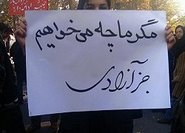





 Tulips in Holland