
IMPERIAL EMBLEM

PERSIA
Iranian Freedom Fighters UNITE

Showing posts with label Syria. Show all posts
Showing posts with label Syria. Show all posts
Thursday, October 30, 2008
Saturday, February 16, 2008
Hizbullah mastermind's true legacy! - By Caroline B. Glick
Mughniyeh personally bridged all the divisions within the world of Arab and Islamic terrorism. He showed that when it comes to attacking the West, there is no distinction between secular, nationalist, religious, Islamist, Sunni or Shiite terrorists.
PLEASE READ THIS AND PASS IT ON TO ALL YOUR FRIENDS AND CONTACTS.
It is quite possible that terror master Imad Mughniyah was not killed Tuesday night in Damascus for his past crimes, but to prevent him from carrying out additional attacks in the future. On January 30, French security services raided a Paris apartment and arrested six Arab men. Three of the men — two Lebanese and one Syrian — were travelling on diplomatic passports. According to the Italian Libero newspaper, the six were members of a Hizbullah cell. Seized documents included tourist maps of Paris, London, Madrid, Berlin and Rome marked up with red highlighter to indicate routes, addresses, parking lots and "truck stopping points." The maps pointed to several routes to Vatican back entrances. Libero's report explained that the "truck stopping points" aligned with information the French had received the week before from Beirut. There, Hizbullah chief Hassan Nasrallah convened a conference of his senior terror leaders where he ordered them to activate Hizbullah cells throughout Europe to kidnap senior European leaders. The day of the arrests, French Defense Minister Herve Morin was meeting with his American counterpart Defense Secretary Robert Gates and with Secretary of State Condoleezza Rice in Washington on a previously unannounced visit. During his public appearances, Morin criticized the US Intelligence Directorate's National Intelligence Estimate on Iran's nuclear program from November. Morin stated, "Coordinated information from a number of intelligence services leads us to believe that Iran has not given up its wish to pursue its [nuclear] program," and is "continuing to develop" it. Other recent reports relayed French concern that their embassy in Beirut is being targeted for attack by Hizbullah. On January 15 terrorists targeted a US embassy car in Beirut killing four and wounding sixteen. This week, French President Nicholas Sarkozy's chief of staff told L'Express newsweekly that the threat of terror against France "remains quite high." All of the feared terror attacks against French and European targets have the classic earmarkings of Hizbullah operations chief and Iranian Revolutionary Guards officer Imad Mughniyeh. Mughniyeh was the pioneer of embassy bombings and high-profile kidnappings. Most of the reports of his death treated Mughniyeh as a has-been. Coverage was devoted to his attacks against American, Israeli and Jewish targets in the 1980s and early 1990s. Yet at the time of his death, Mughniyeh remained one of the most dangerous and prolific terror operatives in the world.
Mughniyeh's broad-based leadership role in the global terror nexus was made clear by the reaction of seemingly unrelated terror groups to his death. Representatives of the reputedly nationalist, secularist Fatah terror group expressed their pride in his life's work. "We're very proud to have had a Palestinian holding such a high position in Hizbullah," one Fatah official who worked with Mughniyeh in the 1970s and 1980s told The Jerusalem Post. Every Palestinian terror group — from Fatah to Hamas to Islamic Jihad, the Popular Resistance Committees, the PFLP, and DFLP mourned the loss of Mughniyeh as a hero and martyr and called for revenge against Israel and the US. In Iraq, Shiite and Sunni terrorists alike bemoaned his death and called for revenge. Shiite militia leader Muqtada el Sadr whose forces were trained and organized by Mughniyeh and Iran condemned Mughniyeh's killing. Sadr's supposedly arch-foe, Abu Omar al-Baghdadi, who leads Al Qaida in Iraq and whose operational commanders are in Iran, responded to his death by calling for attacks against Israel. And of course, Hizbullah, and its state sponsors Iran and Syria all condemned Mughniyeh's death in the strongest terms and vowed to avenge his killing. These condemnations were not nostalgic pinings for a has-been. These uniform reactions from across the terror spectrum were the cries of Mughniyeh's soldiers for their commander. Through Iran, Mughniyeh was in effect the commander or godfather or both of all of these forces. His life's work embodied the growth, development and modus operandi of the forces of global terror and jihad. And understanding his life's work is a key to understanding the nature of the jihadist forces arrayed against the Western world and Israel. Mughniyeh began his terror career in the 1970s in Fatah leader Yassir Arafat's Force 17 in Lebanon. There, in addition to terrorizing Lebanese Christians, he and Arafat trained Iranian Shiite jihadists. These men arrived at PLO camps in Lebanon in the early 1970s to train to overthrow of the Shah of Iran and install their leader Ayatollah Khomeini as the head of a new Islamic state. In 1979 they became the backbone of the newly formed Iranian Revolutionary Guards Corps. When Israel forced Arafat and his Fatah terror army to flee Lebanon in 1982, Arafat gave Fatah's arsenal to Mughniyeh, who at that time, as an officer in the new IRGC was forming Hizbullah. As Fatah's terror heir, Mughniyeh and his colleagues set out to throw the US, the French and the Israelis out of Lebanon and to disenfranchise Lebanese Christians and Sunnis. They accomplished their goals through a mix of terror tactics including car bombings, suicide bombings, airline hijackings, kidnappings, assassinations, and embassy bombings; and guerilla warfare tactics like ambushes, RPG attacks on convoys, sniper fire, popular indoctrination and psychological warfare operations. Most of these operations were carried out in Lebanon. In the 1990s, Mughniyeh and Iran took their show on the road. Not only did they reenact their car bombings in South America. They also expanded their terror nexus to the then nascent Sunni Wahabist al Qaida organization. As Thomas Joscelyn documents in his short book Iran's Proxy War Against America, Iran through Mughniyeh was instrumental in the training, arming and sheltering al Qaida since the early 1990s. As an Iranian agent, in the early 1990s, Mughniyeh built operational alliances with Osama bin Laden, Ayman Zawahiri and al Qaida's military chief Saif al Adel when al Qaida was based in Sudan. Adel, along with several hundred other al Qaida operatives travelled to Lebanon to undergo training at Hizbullah camps. Hizbullah trainers also worked at al Qaida camps in Sudan and al Qaida operatives also trained at IRGC camps in Iran. >From 1996 through 1998, ten percent of bin laden's satellite phone calls were to Iran. Operational cooperation between Hizbullah and al Qaida quickly followed. In 1996, Iran ordered Hizbullah to blow up the Khobar Towers in Saudi Arabia which housed US military personnel. 19 US servicemen were killed. Although al Qaida was never officially tied to the bombing, Zahawiri phoned bin Laden to congratulate him on the attack. The al Qaida terror cell in Kenya that carried out the Kenyan arm of the twin US embassy bombings in Nairobi and Dars el Salaam in 1998 underwent training in Hizbullah camps in Lebanon. That attack had all the markings of Mughniyeh operations. Like the 1983 attacks on the US Marine barracks and French paratrooper base in Beirut, the 1998 attacks were double car bombings carried out in two disparate locations nearly simultaneously. As Joscelyn recalls, the 9/11 Commission called for further investigation of Iran's role in the September 11, 2001 attacks on America. Adel, a veteran of Hizbullah camps, was intimately aware of the bombing plans before it took place. Ramzi Binalshibh, the plot's mastermind travelled in and out of Iran several times in the months before the bombings. Then too, eight to ten of the September 11 bombers transited Iran assisted by Hizbullah and IRGC officials in late 2000. The Iranians did not stamp their passports. Several of the bombers transited Iran en route to Lebanon. Mughniyeh himself flew to Beirut from Teheran aboard the same flight as Sept. 11 hijacker Ahmad al-Ghamdi. Although Iran and the Taliban nearly went to war against one another in 2000, in the wake of the US-led invasion of Afghanistan in October 2001, according to jailed Taliban leaders, Iran pledged to assist the Taliban in their war against the US. Teheran opened its doors to fleeing Taliban leaders and senior al Qaida commanders — including Adel and bin Laden's son and heir apparent Saad and Abu Musab Zarkawi. From Iran, Adel and bin Laden Jr. planned and ordered attacks in Saudi Arabia. Moreover, from Iran, Adel and bin Laden worked with Zarkawi in planning the groups' insurgency in Iraq. Citing an extensive report from the German * Cicero* magazine, Joscelyn describes how Zarkawi set up his terror network under the protection of the IRGC. Zarkawi had no problem operating in Iran in spite of his avowed hatred of Shiite Muslims who, after entering Iraq, he massacred at every opportunity. Then too, as Al Sharq al Aswat reported Wednesday, Mughniyeh played a central role in organizing and training Shiite militia in Iraq. He worked as the head of Iran's intelligence directorate in southern Iraq, trained al Sadr's Mahdi army fighters in Iran, Iraq and Lebanon and set up shop in Basra to facilitate their entry into Iraq from Iran. After the 1993 Oslo Accord between Israel and the PLO, Iran abandoned Arafat as a traitor. Mughniyeh was responsible for mending fences. In 1999 he brought Fatah back under Iranian orbit when he acted as a middle-man in negotiating the Iranian sale of the Karine-A weapons ship to the Palestinian Authority which was intercepted by Israeli naval commandos in January 2002. After Israel withdrew from Gaza in 2005, Mughniyeh worked as a middle-man bringing Hamas under Iranian control. That control was consolidated in a meeting between Hamas leader Khaled Mashaal, Iranian President Mahmoud Ahmadinejad, Syrian President Bashar Assad and Mughniyeh in Damascus in January 2001, after Hamas's electoral victory in the PA's legislative ballot. Later in 2006, Mughniyeh returned to Lebanon to plan the kidnapping of IDF soldiers which was carried out on July 12, 2006 and precipitated that summer's war. Mughniyeh reportedly commanded Hizbullah forces during that war. Since the war, he oversaw Hizbullah's rearmament as well as the training of Hizbullah and Hamas forces in Iran. Saad bin Laden reportedly travelled to Syria to oversee weapons shipments to Hizbullah during the war. It is possible that Mughniyeh was irreplaceable. The pivotal role that he played in the nexus of global terror was unique. No one else has such wide-ranging accomplishments. But placing too much stress on Mugniyeh's uniqueness would serve to obfuscate the basic reality that his life's work embodied. Mughniyah embodied the fact that terrorists of all shapes and colors willingly collaborate with one another against their common enemies in the West. Mughniyeh personally bridged all the divisions within the world of Arab and Islamic terrorism. He showed that when it comes to attacking the West, there is no distinction between secular, nationalist, religious, Islamist, Sunni or Shiite terrorists. His work revealed the inconvenient truth so fervently denied by policymakers and politicians throughout the Western world. He showed that for the jihadists there is no distinction between terrorists who attack in Israel or Jewish targets abroad and those who attack non-Israeli and non-Jewish targets. Moreover, his work as an Iranian agent demonstrates Iran's central role in sponsoring jihad throughout the world. Mughniyeh's legacy is not simply a laundry list of massacre and torture. It is the nexus of global terror. While it is a great thing that he is dead, it must be understood that his death is insufficient. Hundreds of thousands converged in Beirut to celebrate his life's work. The West must understand the significance of that work and unite to destroy it — layer after layer.
Sunday, January 27, 2008
Latest news from the War on Islamic Republic of Idiots - IRI -
Gasoline Black Market Thrives in Iran
BANDAR ABBAS, Iran -- Each day, the boulevard in this port city derisively dubbed "OPEC Street" is lined with dozens of vendors selling plastic jugs of black-market gasoline to desperate drivers who haggle over the price of a tankful.
Iran and its Economy
Last year I wrote two articles on Iranian economy, one on the U.S. plans for economic strangulation of Iran and the second on the existing systemic problems in the Iranian economy (Ahmadinejad's Achilles Heel: The Iranian Economy).
Iran extends olive branch to Israel and U.SIrish Sun 20:08 27-Jan-08
Iran vows to retaliate against U.S. basesThe Asian Age 18:35 27-Jan-08
Kayhan Editor Close To Iran's Supreme Leader Khamenei: 'America...The Middle East Media Research Institute (MEMRI) 23:02 27-Jan-08
Iran vows to hit American bases in Gulf if...Arab Times 06:49 28-Jan-08
Russia Sidelined in U.S. CampaignMoscow Times 23:21 27-Jan-08
U.S. presence in the region, its Achilles heel: Iranian...Payvand 17:49 27-Jan-08
AP: Iran gets army gear in Pentagon saleIranMania News 08:14 28-Jan-08
Dr. Abbas Bakhtiar: Iran and its EconomyScoop 21:24 27-Jan-08
Too Easy to RefuseThe New York Times 05:47 28-Jan-08
Iran 'will attack US Gulf bases'Gulf Daily News 22:02 27-Jan-08
Lebanon's Struggle with Terror
Lebanon has suffered another in a string of political assassinations clearly meant to replace the rule of law with a shadowy rule of terror. The perpetrators of these killings remain unknown, but the clear beneficiaries are forces aligned with Syria and Iran against Lebanon's democratic political majority.
Bush Blasts Lebanon Bombing, Tells Syria, Iran to Butt Out
US President George W. Bush on Saturday bemoaned the latest assassination of a Lebanese official and told Syria and Iran to stop meddling in its neighbor's affairs. Investigators tried to determine if the killing was tied to attacks against anti-Syrian politicians
Iran Says It Could Attack US Bases
CAIRO, Egypt -- Iran's top military commander said Saturday that his forces would retaliate against American military bases in the Persian Gulf if they are involved in any possible future attack on Iran. General Mohammad Ali Jaafari, commander of the Iran's Revolutionary Guards, told Al-Jazeera television that it is Iran's "natural right to respond" if attacked by land or air
Ehud Barak Sharply Disagrees with the U.S. NIE on Iran's Nuclear Capabilities
Sitting at the world Economic Forum in Davos last week, Israel's Minister of Defense Ehud Barak was sharply critical of the recent U.S. National Intelligence Estimate on Iran. In an interview with NEWSWEEK's Lally Weymouth, Barak suggested that, contrary to the impression left by that estimate, Iran continues to develop nuclear weapons and delivery systems
Mottaki: Iran Isn't Threatening Israel and Doesn't Want Nukes- AND IS FREE TO LIE, CHEAT AND KILL THE INNOCENT IRANIANS-( Bahramerad)
"Iran is not threatening Israel and does not want nuclear weapons, Iranian Foreign Minister Manouchehr Mottaki said Saturday. Speaking to Israel Radio on the sidelines of the World Economic Forum in Davos, Switzerland, Mottaki said that it was Israel that possessed nuclear weapons and "it is threatening Teheran."
Anger in Iran After Law Student Dies in Custody
The death of a student in the custody of Iranian intelligence officers has provoked outrage among opponents of the regime, who claim it is part of a concerted crackdown on dissent in the run-up to parliamentary elections.
Iran Says It Could Attack U.S. BasesForbes 22:51 26-Jan-08
Iran says break with U.S. won't last foreverWashington Post 21:20 26-Jan-08
Iran says it could attack US basesBoston.com 23:56 26-Jan-08
Iranian Foreign Minister praises U.S. moves in IraqInternational Herald Tribune 26-Jan-08
Iran & Bush's Crisis of Truthconsortiumnews.com 15:06 26-Jan-08
Iranian commander warns US of response in case of...Viewlondon.co.uk 10:37 27-Jan-08
GC rejects US allegations on Iran''s upcoming electionsKuwait News Agency (KUNA) 26-Jan-08
Top Iranian commander warns USAljazeera.Net, Qatar 06:39 27-Jan-08
Iran vows to retaliate against U.S. bases in GulfThe Globe and Mail 02:33 27-Jan-08
Iran: Break with US won't last foreverChina Business Weekly 02:24 27-Jan-08
Chomsky on World OwnershipForeign Policy In Focus 13:06 25-Jan-08
U.S. will not attack IranRIA Novosti 15:53 25-Jan-08
Column One: Is Livni the answer?Jerusalem Post 20:30 25-Jan-08
Saddam's FBI interrogator says Iraqi dictator didn't expect a...Irish Sun 09:23 26-Jan-08
Saddam did not expect invasionLos Angeles Daily News 08:07 26-Jan-08
Iran no longer wants to talk to USIranMania News 06:12 26-Jan-08
Iranian: Normal ties to U.S. impossible (AP)Yahoo! US 00:40 26-Jan-08
Interrogator: Saddam didn't think U.S. would invade IraqHouston Chronicle 21:58 25-Jan-08
US Democrats challenge Bush to renounce waterboarding, close Guantanamo...International Herald Tribune 19:18 25-Jan-08
Iran Condemns US Criticism Of Election Process -AFP
Key excerpts from Iran sanctions proposal
FOLLOWING are key excerpts from “elements” of a third round of sanctions circulated to the UN Security Council on Friday. The proposal was agreed to by Britain, France, Germany, the United States, Russia and China and will be the basis of a formal resolution intended for the Security Council to approve in the next few weeks. Voluntary travel restrictions: “Calls upon all States to exercise vigilance and restraint regarding the entry into or transit through their territories of individuals who are engaged in, directly associated with or providing support for Iran’s proliferation sensitive nuclear activities or for the development of nuclear weapon delivery systems.” This affects people “engaged in, directly associated with or providing support for Iran’s proliferation sensitive nuclear activities or for the development of nuclear weapon delivery systems, including through the involvement in procurement of the prohibited items, goods, equipment, materials and technology specified (in an earlier resolution).” Mandatory travel bans “Decides that all States shall take the necessary measures to prevent the entry into or transit through their territories of individuals designated in Annex II to this resolution ... provided that nothing in this paragraph shall oblige a state to refuse its own nationals entry into its territory.”... Freezing of assets: The proposal calls for an expansion of earlier asset freezes, saying they “shall apply also to the persons and entities listed in Annex I and III to this resolution, and any persons acting on their behalf or at their direction, and to entities owned or controlled by them.” Export credits: “Calls upon States to exercise vigilance in entering into new commitments for public provided financial support for trade with Iran, including the granting of export credits, guarantees or insurance, to their nationals or entities involved in such trade in order to avoid such financial support contributing to the proliferation sensitive nuclear activities, or to the development of nuclear weapon delivery systems.” Monitoring financial institutions: “Calls upon States to exercise vigilance over the activities of financial institutions in their territories with all banks domiciled in Iran, in particular with Bank Melli and Bank Saderat, and their branches and subsidiaries abroad, in order to avoid such activities contributing to the proliferation sensitive nuclear activities, or to the development of nuclear weapon delivery systems.” Cargo inspection: “Calls upon all States ... to inspect the cargoes to and from Iran, of aircraft and vessels at their airports and seaports owned or operated by Iran Air Cargo and Islamic Republic of Iran Shipping Line, provided there are reasonable grounds to believe that the aircraft/vessel is transporting goods prohibited under this resolution or (earlier) resolutions.” Iran’s refusal to suspend enrichment: The proposal “(notes) with serious concern that ... Iran has not established full and sustained suspension of all enrichment related and reprocessing activities and heavy water-related projects ... nor resumed (full) cooperation with the IAEA (International Atomic Energy Agency).” Offer of diplomacy: “China, France, Germany, the Russian Federation, the United Kingdom and the United States are willing to take further concrete measures on exploring an overall strategy of resolving the Iranian nuclear issue through negotiation on the basis of their June 2006 proposals.” IAEA report: “Requests within 90 days a further report from the Director General of the IAEA on whether Iran has established full and sustained suspension of all (enrichment, reprocessing and other) activities.” reuters
BANDAR ABBAS, Iran -- Each day, the boulevard in this port city derisively dubbed "OPEC Street" is lined with dozens of vendors selling plastic jugs of black-market gasoline to desperate drivers who haggle over the price of a tankful.
Iran and its Economy
Last year I wrote two articles on Iranian economy, one on the U.S. plans for economic strangulation of Iran and the second on the existing systemic problems in the Iranian economy (Ahmadinejad's Achilles Heel: The Iranian Economy).
Iran extends olive branch to Israel and U.SIrish Sun 20:08 27-Jan-08
Iran vows to retaliate against U.S. basesThe Asian Age 18:35 27-Jan-08
Kayhan Editor Close To Iran's Supreme Leader Khamenei: 'America...The Middle East Media Research Institute (MEMRI) 23:02 27-Jan-08
Iran vows to hit American bases in Gulf if...Arab Times 06:49 28-Jan-08
Russia Sidelined in U.S. CampaignMoscow Times 23:21 27-Jan-08
U.S. presence in the region, its Achilles heel: Iranian...Payvand 17:49 27-Jan-08
AP: Iran gets army gear in Pentagon saleIranMania News 08:14 28-Jan-08
Dr. Abbas Bakhtiar: Iran and its EconomyScoop 21:24 27-Jan-08
Too Easy to RefuseThe New York Times 05:47 28-Jan-08
Iran 'will attack US Gulf bases'Gulf Daily News 22:02 27-Jan-08
Lebanon's Struggle with Terror
Lebanon has suffered another in a string of political assassinations clearly meant to replace the rule of law with a shadowy rule of terror. The perpetrators of these killings remain unknown, but the clear beneficiaries are forces aligned with Syria and Iran against Lebanon's democratic political majority.
Bush Blasts Lebanon Bombing, Tells Syria, Iran to Butt Out
US President George W. Bush on Saturday bemoaned the latest assassination of a Lebanese official and told Syria and Iran to stop meddling in its neighbor's affairs. Investigators tried to determine if the killing was tied to attacks against anti-Syrian politicians
Iran Says It Could Attack US Bases
CAIRO, Egypt -- Iran's top military commander said Saturday that his forces would retaliate against American military bases in the Persian Gulf if they are involved in any possible future attack on Iran. General Mohammad Ali Jaafari, commander of the Iran's Revolutionary Guards, told Al-Jazeera television that it is Iran's "natural right to respond" if attacked by land or air
Ehud Barak Sharply Disagrees with the U.S. NIE on Iran's Nuclear Capabilities
Sitting at the world Economic Forum in Davos last week, Israel's Minister of Defense Ehud Barak was sharply critical of the recent U.S. National Intelligence Estimate on Iran. In an interview with NEWSWEEK's Lally Weymouth, Barak suggested that, contrary to the impression left by that estimate, Iran continues to develop nuclear weapons and delivery systems
Mottaki: Iran Isn't Threatening Israel and Doesn't Want Nukes- AND IS FREE TO LIE, CHEAT AND KILL THE INNOCENT IRANIANS-( Bahramerad)
"Iran is not threatening Israel and does not want nuclear weapons, Iranian Foreign Minister Manouchehr Mottaki said Saturday. Speaking to Israel Radio on the sidelines of the World Economic Forum in Davos, Switzerland, Mottaki said that it was Israel that possessed nuclear weapons and "it is threatening Teheran."
Anger in Iran After Law Student Dies in Custody
The death of a student in the custody of Iranian intelligence officers has provoked outrage among opponents of the regime, who claim it is part of a concerted crackdown on dissent in the run-up to parliamentary elections.
Iran Says It Could Attack U.S. BasesForbes 22:51 26-Jan-08
Iran says break with U.S. won't last foreverWashington Post 21:20 26-Jan-08
Iran says it could attack US basesBoston.com 23:56 26-Jan-08
Iranian Foreign Minister praises U.S. moves in IraqInternational Herald Tribune 26-Jan-08
Iran & Bush's Crisis of Truthconsortiumnews.com 15:06 26-Jan-08
Iranian commander warns US of response in case of...Viewlondon.co.uk 10:37 27-Jan-08
GC rejects US allegations on Iran''s upcoming electionsKuwait News Agency (KUNA) 26-Jan-08
Top Iranian commander warns USAljazeera.Net, Qatar 06:39 27-Jan-08
Iran vows to retaliate against U.S. bases in GulfThe Globe and Mail 02:33 27-Jan-08
Iran: Break with US won't last foreverChina Business Weekly 02:24 27-Jan-08
Chomsky on World OwnershipForeign Policy In Focus 13:06 25-Jan-08
U.S. will not attack IranRIA Novosti 15:53 25-Jan-08
Column One: Is Livni the answer?Jerusalem Post 20:30 25-Jan-08
Saddam's FBI interrogator says Iraqi dictator didn't expect a...Irish Sun 09:23 26-Jan-08
Saddam did not expect invasionLos Angeles Daily News 08:07 26-Jan-08
Iran no longer wants to talk to USIranMania News 06:12 26-Jan-08
Iranian: Normal ties to U.S. impossible (AP)Yahoo! US 00:40 26-Jan-08
Interrogator: Saddam didn't think U.S. would invade IraqHouston Chronicle 21:58 25-Jan-08
US Democrats challenge Bush to renounce waterboarding, close Guantanamo...International Herald Tribune 19:18 25-Jan-08
Iran Condemns US Criticism Of Election Process -AFP
Key excerpts from Iran sanctions proposal
FOLLOWING are key excerpts from “elements” of a third round of sanctions circulated to the UN Security Council on Friday. The proposal was agreed to by Britain, France, Germany, the United States, Russia and China and will be the basis of a formal resolution intended for the Security Council to approve in the next few weeks. Voluntary travel restrictions: “Calls upon all States to exercise vigilance and restraint regarding the entry into or transit through their territories of individuals who are engaged in, directly associated with or providing support for Iran’s proliferation sensitive nuclear activities or for the development of nuclear weapon delivery systems.” This affects people “engaged in, directly associated with or providing support for Iran’s proliferation sensitive nuclear activities or for the development of nuclear weapon delivery systems, including through the involvement in procurement of the prohibited items, goods, equipment, materials and technology specified (in an earlier resolution).” Mandatory travel bans “Decides that all States shall take the necessary measures to prevent the entry into or transit through their territories of individuals designated in Annex II to this resolution ... provided that nothing in this paragraph shall oblige a state to refuse its own nationals entry into its territory.”... Freezing of assets: The proposal calls for an expansion of earlier asset freezes, saying they “shall apply also to the persons and entities listed in Annex I and III to this resolution, and any persons acting on their behalf or at their direction, and to entities owned or controlled by them.” Export credits: “Calls upon States to exercise vigilance in entering into new commitments for public provided financial support for trade with Iran, including the granting of export credits, guarantees or insurance, to their nationals or entities involved in such trade in order to avoid such financial support contributing to the proliferation sensitive nuclear activities, or to the development of nuclear weapon delivery systems.” Monitoring financial institutions: “Calls upon States to exercise vigilance over the activities of financial institutions in their territories with all banks domiciled in Iran, in particular with Bank Melli and Bank Saderat, and their branches and subsidiaries abroad, in order to avoid such activities contributing to the proliferation sensitive nuclear activities, or to the development of nuclear weapon delivery systems.” Cargo inspection: “Calls upon all States ... to inspect the cargoes to and from Iran, of aircraft and vessels at their airports and seaports owned or operated by Iran Air Cargo and Islamic Republic of Iran Shipping Line, provided there are reasonable grounds to believe that the aircraft/vessel is transporting goods prohibited under this resolution or (earlier) resolutions.” Iran’s refusal to suspend enrichment: The proposal “(notes) with serious concern that ... Iran has not established full and sustained suspension of all enrichment related and reprocessing activities and heavy water-related projects ... nor resumed (full) cooperation with the IAEA (International Atomic Energy Agency).” Offer of diplomacy: “China, France, Germany, the Russian Federation, the United Kingdom and the United States are willing to take further concrete measures on exploring an overall strategy of resolving the Iranian nuclear issue through negotiation on the basis of their June 2006 proposals.” IAEA report: “Requests within 90 days a further report from the Director General of the IAEA on whether Iran has established full and sustained suspension of all (enrichment, reprocessing and other) activities.” reuters
0
comments

 Labels:
hamas,
hezbolah,
Iran,
Islamic Republic of Idiots,
Latest News,
Lebanon,
Syria,
Us Military
Labels:
hamas,
hezbolah,
Iran,
Islamic Republic of Idiots,
Latest News,
Lebanon,
Syria,
Us Military
Labels:
hamas,
hezbolah,
Iran,
Islamic Republic of Idiots,
Latest News,
Lebanon,
Syria,
Us Military
Friday, November 02, 2007
Al-Sharq Al-Awsat Editor: After U.S. Withdrawal, Gulf Will Be ‘Under the Siege of the Islamic Revolution and Under the Pressure of Syrian Meddling’
In an editorial titled "[The] American Withdrawal and the Second Stage," published October 9, 2007 in Al-Sharq Al-Awsat, editor Tariq Alhomayed warned of what might happen after the U.S. withdraws its forces from Iraq. He argued that Iraq would be taken over by Iran and Syria, which are seeking to dominate the Middle East, and that the result would be the spread of extremism and violence throughout the region.
The following are excerpts from the article, as it appeared in the English edition of Al-Sharq Al-Awsat. [1]
"In preparation for the American withdrawal from Iraq, activity is in full swing to fill the imminent vacuum in Baghdad. "The Iranians are not the only ones who are preparing for this; the Syrians are also getting ready. A recent report in TheNew York Times details Syria’s intentions towards Baghdad. "Iran has, in fact, been present in Iraq since the fall of Saddam Hussein's regime. As for Syria, it has been one of the [elements] disrupting the Iraqi project... from afar. Nevertheless, what is new today is Damascus’s endeavor to reorganize the Ba'thist [elements] - rather than the Sunni elements, as is commonly believed - in order to ensure Syrian influence in Iraq. "In his interview with the BBC, the Syrian president stated that his country has influence over Lebanon; an influence that he described as positive. We all know that this is not true. This is the problem with Syria, and [with] Iran before it. The intervention of both countries can never be positive. Syria and Iran are two [regimes] that are not in accord with the future... "It is from here that the Arab world’s problem arises, since Iran and Syria are the two key political players today. "Syria wants [to gain] the Golan Heights without war, and wants to win America over without having to adopt a moderate approach or refrain from interfering in Lebanon or Iraq. At the same time, it denounces other Arab countries as traitors because of their relationship with Washington. Meanwhile, President Bashar Assad himself stated in a recent interview that Washington must be a third party to ensure peace with Tel Aviv. "It is for this reason that Damascus, like Iran, is playing the card of Hamas - a movement affiliated with the Muslim Brotherhood - while suppressing the Muslim Brotherhood in Syria. Damascus is also playing the card of Shi'ite Hezbollah in Lebanon. It is now [building up] the Ba'th party of Iraq under the 'Sunni' umbrella in Baghdad, just as Iran stifles the Sunnis of Iran but allies [itself] with Hamas! "Iran, by imposing a fait accompli or reaching an agreement with the United States, wants to dominate the Arab world and to resume exporting the Islamic revolution. "All this is taking place in light of what can be mildly described as a decline in Arab action vis-à-vis Tehran, Damascus, and the deteriorating situation in Iraq. This [activity] is not [intended] to belittle Tehran or Damascus, or to take control over Iraq, but rather to establish stability in the region and to prevent all the manipulators from manipulating the Arab countries and from disrupting development projects and [projects meant to] free [the Arab countries] of Iranian influence and Syrian manipulation. "This is the main problem. America will leave the region and we will find ourselves opening a new chapter that is no better than where we are today. After Iraq and Lebanon are devoured by Iran and Syria, the Gulf region will [find itself] under the siege of the Islamic revolution and under pressure from Syrian meddling. In this case, [our only option will be] to welcome the Muslim Brotherhood and other groups, which will establish their own branches in many Arab countries with Iranian sponsorship and Syrian support. "It is then that we will see many Khaled Mash'als, Hassan Nasrallahs, and Rustum Ghazalis, as well as [numerous] armed forces whose names will begin with 'Jerusalem,' and we do not know where all this will end. Therefore, in light of the American withdrawal and the lack of Arab action, the region will witness its second downfall - but this time, it will be at the hand of Tehran and Damascus. "As the popular saying goes: with friends like these, who needs enemies?"
The following are excerpts from the article, as it appeared in the English edition of Al-Sharq Al-Awsat. [1]
"In preparation for the American withdrawal from Iraq, activity is in full swing to fill the imminent vacuum in Baghdad. "The Iranians are not the only ones who are preparing for this; the Syrians are also getting ready. A recent report in TheNew York Times details Syria’s intentions towards Baghdad. "Iran has, in fact, been present in Iraq since the fall of Saddam Hussein's regime. As for Syria, it has been one of the [elements] disrupting the Iraqi project... from afar. Nevertheless, what is new today is Damascus’s endeavor to reorganize the Ba'thist [elements] - rather than the Sunni elements, as is commonly believed - in order to ensure Syrian influence in Iraq. "In his interview with the BBC, the Syrian president stated that his country has influence over Lebanon; an influence that he described as positive. We all know that this is not true. This is the problem with Syria, and [with] Iran before it. The intervention of both countries can never be positive. Syria and Iran are two [regimes] that are not in accord with the future... "It is from here that the Arab world’s problem arises, since Iran and Syria are the two key political players today. "Syria wants [to gain] the Golan Heights without war, and wants to win America over without having to adopt a moderate approach or refrain from interfering in Lebanon or Iraq. At the same time, it denounces other Arab countries as traitors because of their relationship with Washington. Meanwhile, President Bashar Assad himself stated in a recent interview that Washington must be a third party to ensure peace with Tel Aviv. "It is for this reason that Damascus, like Iran, is playing the card of Hamas - a movement affiliated with the Muslim Brotherhood - while suppressing the Muslim Brotherhood in Syria. Damascus is also playing the card of Shi'ite Hezbollah in Lebanon. It is now [building up] the Ba'th party of Iraq under the 'Sunni' umbrella in Baghdad, just as Iran stifles the Sunnis of Iran but allies [itself] with Hamas! "Iran, by imposing a fait accompli or reaching an agreement with the United States, wants to dominate the Arab world and to resume exporting the Islamic revolution. "All this is taking place in light of what can be mildly described as a decline in Arab action vis-à-vis Tehran, Damascus, and the deteriorating situation in Iraq. This [activity] is not [intended] to belittle Tehran or Damascus, or to take control over Iraq, but rather to establish stability in the region and to prevent all the manipulators from manipulating the Arab countries and from disrupting development projects and [projects meant to] free [the Arab countries] of Iranian influence and Syrian manipulation. "This is the main problem. America will leave the region and we will find ourselves opening a new chapter that is no better than where we are today. After Iraq and Lebanon are devoured by Iran and Syria, the Gulf region will [find itself] under the siege of the Islamic revolution and under pressure from Syrian meddling. In this case, [our only option will be] to welcome the Muslim Brotherhood and other groups, which will establish their own branches in many Arab countries with Iranian sponsorship and Syrian support. "It is then that we will see many Khaled Mash'als, Hassan Nasrallahs, and Rustum Ghazalis, as well as [numerous] armed forces whose names will begin with 'Jerusalem,' and we do not know where all this will end. Therefore, in light of the American withdrawal and the lack of Arab action, the region will witness its second downfall - but this time, it will be at the hand of Tehran and Damascus. "As the popular saying goes: with friends like these, who needs enemies?"
Sunday, October 14, 2007
Analysts Find Israel Struck a Nuclear Project Inside Syria
By DAVID E. SANGER and MARK MAZZETTI - October 14, 2007
WASHINGTON, Oct. 13 — Israel’s air attack on Syria last month was directed against a site that Israeli and American intelligence analysts judged was a partly constructed nuclear reactor, apparently modeled on one North Korea has used to create its stockpile of nuclear weapons fuel, according to American and foreign officials with access to the intelligence reports. The description of the target addresses one of the central mysteries surrounding the Sept. 6 attack, and suggests that Israel carried out the raid to demonstrate its determination to snuff out even a nascent nuclear project in a neighboring state. The Bush administration was divided at the time about the wisdom of Israel’s strike, American officials said, and some senior policy makers still regard the attack as premature.
WASHINGTON, Oct. 13 — Israel’s air attack on Syria last month was directed against a site that Israeli and American intelligence analysts judged was a partly constructed nuclear reactor, apparently modeled on one North Korea has used to create its stockpile of nuclear weapons fuel, according to American and foreign officials with access to the intelligence reports. The description of the target addresses one of the central mysteries surrounding the Sept. 6 attack, and suggests that Israel carried out the raid to demonstrate its determination to snuff out even a nascent nuclear project in a neighboring state. The Bush administration was divided at the time about the wisdom of Israel’s strike, American officials said, and some senior policy makers still regard the attack as premature.
Monday, October 08, 2007
Snatched: Israeli commandos ‘nuclear’ raid :
Uzi Mahnaimi, Tel Aviv, Sarah Baxter, Washington, and Michael Sheridan :From The Sunday Times - September 23, 2007
Also from Sarah Baxter: Israelis seized nuclear material in Syrian raid Secret US air force team to perfect plan for Iran strike Israelis 'blew apart Syrian nuclear cache' Alan Greenspan: "Blair was clearly an aide to Brown"
ISRAELI commandos from the elite Sayeret Matkal unit – almost certainly dressed in Syrian uniforms – made their way stealthily towards a secret military compound near Dayr az-Zawr in northern Syria. They were looking for proof that Syria and North Korea were collaborating on a nuclear programme. Israel had been surveying the site for months, according to Washington and Israeli sources. President George W Bush was told during the summer that Israeli intelligence suggested North Korean personnel and nuclear-related material were at the Syrian site.
Suicide bombers head to Iraq
Articulate, middle-class men are leaving Damascus and preparing to die for Bin Laden
Condoleezza Rice opposed Israel’s attack on Syrian nuclear site
US Secretary of state persuaded the Israelis to delay military strike on Syria last month
Also from Sarah Baxter: Israelis seized nuclear material in Syrian raid Secret US air force team to perfect plan for Iran strike Israelis 'blew apart Syrian nuclear cache' Alan Greenspan: "Blair was clearly an aide to Brown"
ISRAELI commandos from the elite Sayeret Matkal unit – almost certainly dressed in Syrian uniforms – made their way stealthily towards a secret military compound near Dayr az-Zawr in northern Syria. They were looking for proof that Syria and North Korea were collaborating on a nuclear programme. Israel had been surveying the site for months, according to Washington and Israeli sources. President George W Bush was told during the summer that Israeli intelligence suggested North Korean personnel and nuclear-related material were at the Syrian site.
Suicide bombers head to Iraq
Articulate, middle-class men are leaving Damascus and preparing to die for Bin Laden
Condoleezza Rice opposed Israel’s attack on Syrian nuclear site
US Secretary of state persuaded the Israelis to delay military strike on Syria last month
Wednesday, October 03, 2007
Islamic Republic of Idiots
Fear and Loathing in Iran (and Elsewhere) Monday, October 01, 2007
A hat tip to our friends at Kent's Imperative, one of the most insightful (and thoughtful) blogs on the intelligence community and related concerns. Kent's found this recent item at Strategy Page, detailing some of the repercussions from that recent Israeli air strike on a suspected Syrian nuclear facility. According to Strategy Page, Iran is a bit upset over the alleged "failure" of Russian air defense systems during the raid. Both Tehran and Damascus have spent billions on radar and missile systems built in Russia, with the assurance that such equipment could defend against an Israeli attack. Complaints that have made their way onto Farsi-language message boards (presumably from Iranian military officers) suggest that the IAF was able to blind Syria's defensive systems, rendering them useless. The Israeli strike package flew across hundreds of miles of Syrian airspace, strike the target and return, unmolested by air defense systems. Iran's concerns are three-fold. First, there is logical speculation that the recent raid on Syria was a dress rehearsal for an attack on Iran's nuclear sites, although that raid would be larger and much more complex. Secondly, Tehran is footing the bill for Syria's most recent upgrade, the acquisition of the Pantsir-S1 air defense system. Iran is also slated to acquire the system, although initial deliveries were made to Damascus. Equipped with two 30mm cannon and twelve Tunguska missiles, the Pantsir-S1 was supposed to provide point-defense for high-value targets--like that Syrian nuclear facility. The system's on-board radar can detect medium-altitude targets up to 30 miles away; the Pantsir's cannons are effective against targets up to 10,000 feet, and the missiles have a maximum range of roughly nine miles. In terms of close-in air defense, the Pantsir is supposed to be state-of-the-art, but it (apparently) proved ineffective against the Israeli raid. Tehran's third concern? The Iranian air defense network is far more chaotic than its Syrian counterpart. In recent years, there have been credible reports about Iranian fighters sent out in pursuit of mystery lights and "UFOs," and near-fratricide incidents involving civilian airliners. If the Israelis were successful in blinding Syria's more centralized system (which covers a relatively small area), then they should have little problem in creating mass confusion within the Iranian network. Assuming that Israel eventually attacks, Iranian air defense crews could find themselves operating in a de-centralized mode, chasing targets that don't exist, and illuminating their radars with the knowledge that an anti-radar missile may be on the way. If the reported grousing about Russian hardware sounds familiar, it should. We've seen this happen--to varying degrees--after almost every successful Israeli raid or air strike. The "operators" (in this case Iran and Syria) start complaining that their expensive air defense equipment didn't operate correctly--and point the finger of blame at Russia. If Moscow follows form, we'll start hearing whispers that "the Arabs" or "the Persians" are incompetent, or didn't follow the tactics manual. Who's right? To some degree, both are. As we've noted before, Russian defense firms typically don't offer an inclusive "one price" package that includes equipment, training and logistical support as part of an arms sale. If you want extensive training or maintenance support, that will cost more--and those are the very areas where clients are often tempted to cut corners. A handful of air defense crews may receive the "complete" training syllabus from Russian experts, and the rest are trained by that cadre. In some cases, that's the equivalent of xeroxing a poor copy, rather than the original. The quality of the product decreases with each generation, as new operators absorb the bad habits of their predecessors. However, given the fact that the Pantsir-S1 recently arrived in Syria, it's a reasonable assumption that most--if not all--of the crews were Russian trained. And that brings us to another defect often found in air defense networks that are equipped and trained by Moscow. Damascus's air defenses tend to be rigid in their doctrine and employment; air defense crews depend on higher echelons to identify and assign targets. If those echelons fail--or they're blinded by enemy countermeasures--they leave individual fire units in an autonomous mode, an environment they're unprepared for. If the Syrian air defense SOC (sector operations center) failed to "cue" air defenses at the nuke site, then it's quite likely that they never fired until the bombs began falling (if they responded at all). Needless to say, future sales of the Pantsir-S1 will be a little bit tougher, even if the system's "poor"performance was the result of Syrian buffoonery.
ADDENDUM: The Syrian "failure" also indicates that Damascus still doesn't grasp the impact of tactics and stand-off weapons. If Syrian Pantsir fire units were operating from fixed positions, it was simple for the Israelis to plan optimum routes to minimize exposure. Fixed site operations would also make it easier for the IAF to target Syrian air defense assets with stand-off weapons, including JDAM. The GPS-guided munition has a maximum range of up to 15 miles (and some versions can hit targets from even greater distances). That stand-off capability would allow IAF jets to take out Pantsir units before the air defenses could engage them. With that threat negated, other aircraft could then strike the nuclear complex. Another option would be targeting the Pantsir's radar with anti-radiation missiles from even greater distances. In either case, the Israelis had the ability to take out the Syrian air defenses before they could fire. No wonder the Iranians are worried--and rightfully so.
A hat tip to our friends at Kent's Imperative, one of the most insightful (and thoughtful) blogs on the intelligence community and related concerns. Kent's found this recent item at Strategy Page, detailing some of the repercussions from that recent Israeli air strike on a suspected Syrian nuclear facility. According to Strategy Page, Iran is a bit upset over the alleged "failure" of Russian air defense systems during the raid. Both Tehran and Damascus have spent billions on radar and missile systems built in Russia, with the assurance that such equipment could defend against an Israeli attack. Complaints that have made their way onto Farsi-language message boards (presumably from Iranian military officers) suggest that the IAF was able to blind Syria's defensive systems, rendering them useless. The Israeli strike package flew across hundreds of miles of Syrian airspace, strike the target and return, unmolested by air defense systems. Iran's concerns are three-fold. First, there is logical speculation that the recent raid on Syria was a dress rehearsal for an attack on Iran's nuclear sites, although that raid would be larger and much more complex. Secondly, Tehran is footing the bill for Syria's most recent upgrade, the acquisition of the Pantsir-S1 air defense system. Iran is also slated to acquire the system, although initial deliveries were made to Damascus. Equipped with two 30mm cannon and twelve Tunguska missiles, the Pantsir-S1 was supposed to provide point-defense for high-value targets--like that Syrian nuclear facility. The system's on-board radar can detect medium-altitude targets up to 30 miles away; the Pantsir's cannons are effective against targets up to 10,000 feet, and the missiles have a maximum range of roughly nine miles. In terms of close-in air defense, the Pantsir is supposed to be state-of-the-art, but it (apparently) proved ineffective against the Israeli raid. Tehran's third concern? The Iranian air defense network is far more chaotic than its Syrian counterpart. In recent years, there have been credible reports about Iranian fighters sent out in pursuit of mystery lights and "UFOs," and near-fratricide incidents involving civilian airliners. If the Israelis were successful in blinding Syria's more centralized system (which covers a relatively small area), then they should have little problem in creating mass confusion within the Iranian network. Assuming that Israel eventually attacks, Iranian air defense crews could find themselves operating in a de-centralized mode, chasing targets that don't exist, and illuminating their radars with the knowledge that an anti-radar missile may be on the way. If the reported grousing about Russian hardware sounds familiar, it should. We've seen this happen--to varying degrees--after almost every successful Israeli raid or air strike. The "operators" (in this case Iran and Syria) start complaining that their expensive air defense equipment didn't operate correctly--and point the finger of blame at Russia. If Moscow follows form, we'll start hearing whispers that "the Arabs" or "the Persians" are incompetent, or didn't follow the tactics manual. Who's right? To some degree, both are. As we've noted before, Russian defense firms typically don't offer an inclusive "one price" package that includes equipment, training and logistical support as part of an arms sale. If you want extensive training or maintenance support, that will cost more--and those are the very areas where clients are often tempted to cut corners. A handful of air defense crews may receive the "complete" training syllabus from Russian experts, and the rest are trained by that cadre. In some cases, that's the equivalent of xeroxing a poor copy, rather than the original. The quality of the product decreases with each generation, as new operators absorb the bad habits of their predecessors. However, given the fact that the Pantsir-S1 recently arrived in Syria, it's a reasonable assumption that most--if not all--of the crews were Russian trained. And that brings us to another defect often found in air defense networks that are equipped and trained by Moscow. Damascus's air defenses tend to be rigid in their doctrine and employment; air defense crews depend on higher echelons to identify and assign targets. If those echelons fail--or they're blinded by enemy countermeasures--they leave individual fire units in an autonomous mode, an environment they're unprepared for. If the Syrian air defense SOC (sector operations center) failed to "cue" air defenses at the nuke site, then it's quite likely that they never fired until the bombs began falling (if they responded at all). Needless to say, future sales of the Pantsir-S1 will be a little bit tougher, even if the system's "poor"performance was the result of Syrian buffoonery.
ADDENDUM: The Syrian "failure" also indicates that Damascus still doesn't grasp the impact of tactics and stand-off weapons. If Syrian Pantsir fire units were operating from fixed positions, it was simple for the Israelis to plan optimum routes to minimize exposure. Fixed site operations would also make it easier for the IAF to target Syrian air defense assets with stand-off weapons, including JDAM. The GPS-guided munition has a maximum range of up to 15 miles (and some versions can hit targets from even greater distances). That stand-off capability would allow IAF jets to take out Pantsir units before the air defenses could engage them. With that threat negated, other aircraft could then strike the nuclear complex. Another option would be targeting the Pantsir's radar with anti-radiation missiles from even greater distances. In either case, the Israelis had the ability to take out the Syrian air defenses before they could fire. No wonder the Iranians are worried--and rightfully so.
Thursday, September 20, 2007
Iranian personel killed in Syrian explosion
انفجار در کارخانه نصب شیمیائی سوریه و کشته شدن مهندسین ایرانی گزارش یک هفته نامه انگلیسی امور نظامی: دهها نفر از مهندسین ایرانی به دنبال انفجاردر کارخانه بمب شیمیائی سوریه جان باختند
19 سپتامبر 2007
هفته نامه "جینس دیفنس" که یکی از معتبرترین نشریات امور نظامی محسوب می شود، در شماره امروز خود (چهارشنبه 19 سپتامبر 2007) از وقوع انفجاری در یک کارخانه اسلحه سازی سوریه خبر داد که در جریان آن 15 نفر از کارگران نظامی سوریه همراه با دهها نفر از مهندسین ایرانی کشته شدند. در گزارش این نشریه چاپ لندن گفته شده که این انفجار هنگام تلاش برای سوار کردن بمب شیمیائی روی کلاهک موشکهای اسکاد (ساخت روسیه) روی داده است.گرچه سوریه خود فردای روز انفجار خبر وقوع آن را انتشار داده بود، ولی این نخستین بار است که یک نشریه اروپائی گزارش می دهد که مهندسین ایرانی نیز کشته شده اند و در آن کارخانه نظامی بمب شیمیائی به روی موشکهای اسکاد نصب می کرده اند. مقامات ایران و سوریه تا لحظه انتشار این خبر واکنشی نسبت به گزارش جینس دیفنس ویکلی و میزان درستی آن نشان نداده اند.در دو هفته اخیر گزارشهای بسیاری درباره فعالیتهای تسلیحاتی سوریه و از جمله همکاریهای آن کشور با کره شمالی درباره امور اتمی انتشار یافته که از جانب مقامات رسمی دمشق قاطعانه رد شده است.در صورتی که گزارش هفته نامه جینس دیفنس صحت داشته باشد، ایران و سوریه یکی از تعهدات مهم بین المللی خود را که خودداری از تولید و یا کاربرد سلاح شیمیائی باشد نقض کرده اند و در شرائط کنونی که هر دو رژیم با مشکلات گسترده بین المللی روبرو هستند و در انزوای فزاینده جهانی قرار دارند، این امر وضع آنها را بیش از پیش بغرنج می سازد.سوریه پیشتر اعلام داشته بود که در 26 ژوئیه 2007 در یک کارخانه تسلیحاتی آن کشور در شهر حلب انفجاری رخ داد که در آن چند تن از کارگران کشته شده اند و علت آن موج گرمای شدیدی بوده که در آن روزها سوریه را در بر گرفته بود – و این درحالی که انفجار در ساعت 30ر4 سپیده دم رخ داده بود که قاعدتا هوا خنک است.جینس دیفنس در گزارش امروز خود خبر می دهد که این انفجار هنگامی بوده که کارگران نظامی سوریه به کمک مهندسین ایرانی مشغول سوار کردن یک بمب گاز خردل به عنوان کلاهک موشک اسکاد از نوع C بودند. در گزارش گفته شده که جرقه پرتاب شده از موتور موشک موجب انفجار در نقطه ای شد که در آن مواد شیمیائی قرار داشت. به دنبال انفجار مواد مرگ آور شیمیائی و از جمله گازهای خردل، سارین وVX در فضا پخش شد و موجب بروز فاجعه گردید. این گازها بسیار کشنده هستند و معاهدات بین المللی کاربرد آن ها را ممنوع ساخته اند.در جریان جنگ هشت ساله ایران و عراق، ارتش صدام حسین سربازان ایرانی را چند بار هدف این گونه بمبهای شیمیائی قرار داد و در آن هنگام گزارش رسید که ایران نیز برای تولید بمبهای شیمیائی تلاش می کند. ولی بعدها اعلام شد که رهبران روحانی جمهوری اسلامی کاربرد این گونه سلاحها را حرام می دانند.سوریه در گزارش کوتاهی که فردای روز انفجار انتشار داد از کشته شدن چند تن از کارگران نظامی سخن گفت. ولی هفته نامه جینس از کشته شدن مهندسین ایرانی نیز خبر می دهد. بنا به گزارش این نشریه، کارخانه تسلیحاتی حلب در چارچوب پیمان همکاریهای نظامی که حدود دو سال پیش بین ایران و سوریه امضا شد برپا گردیده است و یکی از کمکهای ایران به سوریه به موجب این پیمان، یاد دادن شیوه تولید بمبهای شیمیائی بوده است. به موجب گزارش، حکومت ایران به طراحی و برپائی کارخانه های تولید جنگ افزار شیمیائی در سوریه و اجرای آزمایشهای لازم برای امتحان کردن انواع بمبهای ممنوع شیمیائی یاری می رساند. جینس دیفنس از قول یک دیپلمات اروپائی که نامش را نبرد افزود: ایران میلیونها دلار برای برپائی و راه اندازی این کارخانه ها در سوریه هزینه کرده است.هفته پیش اعلام شد که ایران برای احداث چند کارخانه جدید در سوریه و انجام پروژه های مختلف، ده میلیارد دلار در ظرف پنج سال آینده سرمایه گذاری می کند. پیشتر هم رسما گفته شده بود که ایران چند کارخانه در سوریه برپا ساخته و در یکی از آنها اتومبیل ایرانی نیز مونتاژ می شود. ولی این نخستین بار است که یک نشریه اروپائی گزارش می دهد که ایران به دولت سوریه در تولید بمبهای ممنوع شیمیائی و نصب آنها به روی موشک یاری می رساند.
Tuesday, September 11, 2007
CNN: Israel Bombed Iranian Arms in Syria Last Week
CNN: Israel Bombed Iranian Arms in Syria Last Week
September 11, 2007 : Arutz Sheva : Israel - NN.com
Israel's reported entry to Syrian airspace last week was actually a full-fledged attack on Iranian arms transferred through Syria for use by the Hizbullah, according to CNN. The CNN report, which quotes "sources in the region and in the United States," also claims a ground operation of troops directing the air strikes was part of the attack. The report said the operation left a “great hole in the desert” and quotes anonymous sources calling the transfer of weapons from Iran a "a pattern over the past three or four years which has occurred without any retaliation or action taken against it." CNN also said the US is “pleased” with the operation, which sent a “clear message” to the region.
Israel Hit Syrian Base Financed by Iran
September 12, 2007 AFP Khaleej Times Online
JERUSALEM - Israeli warplanes last week bombed and destroyed a northern Syrian missile base that was financed by Iran, an Arab Israeli newspaper reported on Wednesday. Citing anonymous Israeli sources, the Assennara newspaper said that Israeli jets “bombed in northern Syria a Syrian-Iranian missile base financed by Iran... It appears that the base was completely destroyed.” Syria on Tuesday lodged a formal complaint with the United Nations over the “flagrant violation” of its airspace last Thursday, during which it said its air defences opened fire on Israeli warplanes flying over the northeast of the country. Israeli officials have refused to comment on the report, as Prime Minister Ehud Olmert “specifically instructed ministers not to talk about the incident related to Syria at all,” one senior Israeli government official said. A US defence official said on Tuesday that Israel had launched an air strike well inside Syria, apparently to send Damascus a message not to rearm Shiite Hezbollah militants in Lebanon. The official did not know the target of the strike. “The Israelis are trying to tell the Syrians: “Don’t support a resurgence of Hezbollah in Lebanon.’” Israel fought a devastating 34-day war in July and August 2006 against Hezbollah, whose missile firepower and use of sophisticated weaponry surprised the Israelis. CNN said the strike, which could have also involved the use of ground forces, was believed to have targeted weapons either coming into Syria or moving through Syria from Iran to the Iranian-backed Hezbollah.
September 11, 2007 : Arutz Sheva : Israel - NN.com
Israel's reported entry to Syrian airspace last week was actually a full-fledged attack on Iranian arms transferred through Syria for use by the Hizbullah, according to CNN. The CNN report, which quotes "sources in the region and in the United States," also claims a ground operation of troops directing the air strikes was part of the attack. The report said the operation left a “great hole in the desert” and quotes anonymous sources calling the transfer of weapons from Iran a "a pattern over the past three or four years which has occurred without any retaliation or action taken against it." CNN also said the US is “pleased” with the operation, which sent a “clear message” to the region.
Israel Hit Syrian Base Financed by Iran
September 12, 2007 AFP Khaleej Times Online
JERUSALEM - Israeli warplanes last week bombed and destroyed a northern Syrian missile base that was financed by Iran, an Arab Israeli newspaper reported on Wednesday. Citing anonymous Israeli sources, the Assennara newspaper said that Israeli jets “bombed in northern Syria a Syrian-Iranian missile base financed by Iran... It appears that the base was completely destroyed.” Syria on Tuesday lodged a formal complaint with the United Nations over the “flagrant violation” of its airspace last Thursday, during which it said its air defences opened fire on Israeli warplanes flying over the northeast of the country. Israeli officials have refused to comment on the report, as Prime Minister Ehud Olmert “specifically instructed ministers not to talk about the incident related to Syria at all,” one senior Israeli government official said. A US defence official said on Tuesday that Israel had launched an air strike well inside Syria, apparently to send Damascus a message not to rearm Shiite Hezbollah militants in Lebanon. The official did not know the target of the strike. “The Israelis are trying to tell the Syrians: “Don’t support a resurgence of Hezbollah in Lebanon.’” Israel fought a devastating 34-day war in July and August 2006 against Hezbollah, whose missile firepower and use of sophisticated weaponry surprised the Israelis. CNN said the strike, which could have also involved the use of ground forces, was believed to have targeted weapons either coming into Syria or moving through Syria from Iran to the Iranian-backed Hezbollah.
Monday, August 20, 2007
Pressure Russia 'THE RED DEVIELS'
At the same moment when even Arab states are trying to reassure Israel that Syria has no plans to attack, Damascus is taking delivery of advanced Russian SA-22 E anti-aircraft missiles and artillery. According to Arab press reports, this arms deal, which cost some 900 million dollars, is being financed by Iran.
This news came on the heals of reports last month that Russia would sell 250 advanced long-range Sukhoi-30 fighter jets to Teheran. Russia has already supplied Iran with sophisticated air defense systems. Why would Russia, a country that expects to be counted among the world's leading industrialized nations, be selling advanced weaponry to the most belligerent outlaw states? The claim that such sales are of defense weapons and are therefore harmless is risible and insulting. It is not possible, of course, to make such a claim regarding fighter jets, which obviously have advanced offensive capabilities. But air defenses are also offensive tools in the hands of belligerent nations, because they protect missile arsenals or nuclear facilities from preemptive or counterattack, thereby giving rogues states greater confidence that they can either attack directly or support terrorism with impunity.
see here: http://iranvajahan.net/cgi-bin/news.pl?l=en&y=2007&m=08&d=20&a=6
This news came on the heals of reports last month that Russia would sell 250 advanced long-range Sukhoi-30 fighter jets to Teheran. Russia has already supplied Iran with sophisticated air defense systems. Why would Russia, a country that expects to be counted among the world's leading industrialized nations, be selling advanced weaponry to the most belligerent outlaw states? The claim that such sales are of defense weapons and are therefore harmless is risible and insulting. It is not possible, of course, to make such a claim regarding fighter jets, which obviously have advanced offensive capabilities. But air defenses are also offensive tools in the hands of belligerent nations, because they protect missile arsenals or nuclear facilities from preemptive or counterattack, thereby giving rogues states greater confidence that they can either attack directly or support terrorism with impunity.
see here: http://iranvajahan.net/cgi-bin/news.pl?l=en&y=2007&m=08&d=20&a=6
Saturday, July 21, 2007
Malijack on the world stage giving away Iranian Oil Money
Iran to Provide Syria with $1b for New Weapons
July 21, 2007 The Jerusalem Post JPost.com
Iran will reportedly fund, at a price of $1 billion, new Syrian fighter jets, tanks, missiles against naval craft and will aid in Syria's nuclear and chemical weapons research programs. In return, Syrian President Bashar Assad has reportedly promised Iranian President Mahmoud Ahmadinejad to cease the pursuit of peace talks with Israel in exchange for Iranian support of Syrian interests in Lebanon. The sensitive details from the two leaders' meeting in Damascus earlier in the week were related to the Lebanese Arabic daily Asharq Alawsat by an anonymous Iranian source involved with the discreet meeting, and were brought to light on Saturday. The Iranian source went on to tell the newspaper that the countries made strides in tightening their diplomatic and military relations. As a result of the new agreement, Asharq Alawsat reported, Syria will likely become increasingly dependent on Iran due to the large amount of money the Shi'ite country will transfer to it. The report went on to say that aside from economic, cultural and scientific cooperation, Iran will help to fund Syria's purchase of Russian and North Korean weapons. These weapons reportedly will include 400 advanced Russian T-72 tanks, 18 Russian Mig 31s, as well as eight M-8 helicopters and other military equipment. In addition, Iran will reportedly help Syria build factories that would manufacture medium-range missiles, and will also supply Syria with Iranian-made tanks and armored personnel carriers. The Syrian navy will also reportedly be rearmed with Chinese-made C-801 and C-802 missiles, which are presently being manufactured in Iran. The same type of missile struck an IDF Navy ship off the Lebanese coast last summer during the Second Lebanon War, killing four IDF sailors. On the diplomatic front, Ahmadinejad reportedly promised Assad to help topple Lebanese Prime Minister Fuad Saniora and to push sway on the Lebanese parliament with the aim of restoring pro-Syrian influence there. Assad, for his part, agreed not to enter peace negotiations with Israel.
July 21, 2007 The Jerusalem Post JPost.com
Iran will reportedly fund, at a price of $1 billion, new Syrian fighter jets, tanks, missiles against naval craft and will aid in Syria's nuclear and chemical weapons research programs. In return, Syrian President Bashar Assad has reportedly promised Iranian President Mahmoud Ahmadinejad to cease the pursuit of peace talks with Israel in exchange for Iranian support of Syrian interests in Lebanon. The sensitive details from the two leaders' meeting in Damascus earlier in the week were related to the Lebanese Arabic daily Asharq Alawsat by an anonymous Iranian source involved with the discreet meeting, and were brought to light on Saturday. The Iranian source went on to tell the newspaper that the countries made strides in tightening their diplomatic and military relations. As a result of the new agreement, Asharq Alawsat reported, Syria will likely become increasingly dependent on Iran due to the large amount of money the Shi'ite country will transfer to it. The report went on to say that aside from economic, cultural and scientific cooperation, Iran will help to fund Syria's purchase of Russian and North Korean weapons. These weapons reportedly will include 400 advanced Russian T-72 tanks, 18 Russian Mig 31s, as well as eight M-8 helicopters and other military equipment. In addition, Iran will reportedly help Syria build factories that would manufacture medium-range missiles, and will also supply Syria with Iranian-made tanks and armored personnel carriers. The Syrian navy will also reportedly be rearmed with Chinese-made C-801 and C-802 missiles, which are presently being manufactured in Iran. The same type of missile struck an IDF Navy ship off the Lebanese coast last summer during the Second Lebanon War, killing four IDF sailors. On the diplomatic front, Ahmadinejad reportedly promised Assad to help topple Lebanese Prime Minister Fuad Saniora and to push sway on the Lebanese parliament with the aim of restoring pro-Syrian influence there. Assad, for his part, agreed not to enter peace negotiations with Israel.
Thursday, July 19, 2007
Iran is Trying to Exploit Syria
July 17, 2007 Gulf News Amir Taheri
When he arrives in Damascus for what he has described as "an historic visit", Iran's President Mahmoud Ahmadinejad will be bearing a variety of gifts. And this is precisely when his Syrian counterpart Bashar Al Assad must be wary. The visit comes 48 hours after Bashar takes the oath of office at the start of his second term as president of Syria. The original idea had been that Ahmadinejad would be one of more than a dozen foreign presidents who come to Damascus to congratulate Bashar at the start of his second term. As things turned out, however, all those approached for making the trip found some excuse to decline the Syrian invitation. Ahamdinejad's solitary appearance in Damascus symbolises a degree of isolation that no Syrian regime has experienced since the darker days of the 1960s. Wrecked Within the past three years, the leadership in Damascus has wrecked Syria's traditionally close relations with key moderate Arab powers such as Saudi Arabia, Egypt, Kuwait and Jordan. It has also dissipated the goodwill that Syria won in Turkey years ago by arranging the capture of the Kurdish rebel leader Abdullah Ocalan by the Turkish security. Next, Syria quarrelled with both the United States and France, managing the rare feat of putting Washington and Paris on the same side on a Middle East issue. The late Hafez Al Assad, the father of the current Syrian president, had learned at least two lessons from Machiavelli on politics. The first was not to put all his eggs in one basket. The second was not to become involved in a fight between powers too big to care what happens to Syria. Bashar, however, has ended up with a basket whose bottom has fallen away, breaking whatever egg there once was in it. He has also drawn Syria into the conflict between Iran and the US over who should shape the future of the Middle East. The Syrian media see their nation's relationship with Iran as an alliance. The media in the Islamic Republic, however, see it as a reliance of Syria on Iran. Syria has no interest in becoming involved in what is not its fight. If the Americans win, Syria will end up with the losers and pay a heavy price. If Khomeinists win, Syria will pay an even heavier price because it would have to conform to an Islamist ideology that the ruling Ba'ath Party has always regarded as mortal enemy. Now let us turn to the "gifts" that Ahmadinejad will bring to Damascus tomorrow. One is the draft of a trade and economic cooperation treaty that will give the two sides priority in investment and exchanges in each other's markets. It is not hard to imagine who would benefit most from such an accord. Syria has no money to invest in Iran and few products to offer in the Iranian market. Bashar may not know this. But 57 of Iran's most distinguished economists have already written to Ahmadinejad to warn him against the disastrous effects of his economic philosophy. Based on the concept of "autarchy", this philosophy is inspired by the North Korean model of a peasant economy combined with a nuclear capacity. The draft treaty that Ahmadinejad is bringing is supposed to complete the defence pact the two sides signed in June 2006. In that context, Iran is offering to train Syrian military personnel in Iran and a number of "academies" in Syria itself. The ultimate effect of such a programme would be the creation of a network of pro-Iranian officers throughout the Syrian military apparatus, the backbone of the Ba'athist regime. It would also make the Syrian armed forces dependent on Iranian weapons' systems, military culture and strategic outlook. Free hand Ahmadinejad is also offering "a broad programme of cultural exchanges". This will include scholarships for thousands of Syrians to attend Iranian universities and religious seminaries. But it also envisages a free hand for Iranian and Lebanese missionaries seeking to covert Syrians to the Khomeinist brand of Shiism. Abandoned by Arabs and shunned by Europe and the US, Bashar may feel that he has no choice but to attach his wagon to Ahamdinejad's brake-less locomotive. Many Syrians, including some within Bashar's entourage, do not agree. They believe that Syria is still able to think again before it takes the plunge. Rather than becoming involved in a regional rivalry that it cannot control, Syria should focus on its national interests. Most Syrians agree that the return of the Golan Heights, occupied by Israel since 1967, should be the goal their government must focus upon. A strategy based on the illusion that the Islamic Republic will drive the US out of the Middle East, wipe Israel off the map and, along the line, return the Golan to Syria, can only lead to greater isolation for the Syrian regime. It is no accident that as the Arab League prepares to open negotiations with Israel on a comprehensive peace settlements, Syria is not even consulted. Iranian author Amir Taheri is based in Europe.
When he arrives in Damascus for what he has described as "an historic visit", Iran's President Mahmoud Ahmadinejad will be bearing a variety of gifts. And this is precisely when his Syrian counterpart Bashar Al Assad must be wary. The visit comes 48 hours after Bashar takes the oath of office at the start of his second term as president of Syria. The original idea had been that Ahmadinejad would be one of more than a dozen foreign presidents who come to Damascus to congratulate Bashar at the start of his second term. As things turned out, however, all those approached for making the trip found some excuse to decline the Syrian invitation. Ahamdinejad's solitary appearance in Damascus symbolises a degree of isolation that no Syrian regime has experienced since the darker days of the 1960s. Wrecked Within the past three years, the leadership in Damascus has wrecked Syria's traditionally close relations with key moderate Arab powers such as Saudi Arabia, Egypt, Kuwait and Jordan. It has also dissipated the goodwill that Syria won in Turkey years ago by arranging the capture of the Kurdish rebel leader Abdullah Ocalan by the Turkish security. Next, Syria quarrelled with both the United States and France, managing the rare feat of putting Washington and Paris on the same side on a Middle East issue. The late Hafez Al Assad, the father of the current Syrian president, had learned at least two lessons from Machiavelli on politics. The first was not to put all his eggs in one basket. The second was not to become involved in a fight between powers too big to care what happens to Syria. Bashar, however, has ended up with a basket whose bottom has fallen away, breaking whatever egg there once was in it. He has also drawn Syria into the conflict between Iran and the US over who should shape the future of the Middle East. The Syrian media see their nation's relationship with Iran as an alliance. The media in the Islamic Republic, however, see it as a reliance of Syria on Iran. Syria has no interest in becoming involved in what is not its fight. If the Americans win, Syria will end up with the losers and pay a heavy price. If Khomeinists win, Syria will pay an even heavier price because it would have to conform to an Islamist ideology that the ruling Ba'ath Party has always regarded as mortal enemy. Now let us turn to the "gifts" that Ahmadinejad will bring to Damascus tomorrow. One is the draft of a trade and economic cooperation treaty that will give the two sides priority in investment and exchanges in each other's markets. It is not hard to imagine who would benefit most from such an accord. Syria has no money to invest in Iran and few products to offer in the Iranian market. Bashar may not know this. But 57 of Iran's most distinguished economists have already written to Ahmadinejad to warn him against the disastrous effects of his economic philosophy. Based on the concept of "autarchy", this philosophy is inspired by the North Korean model of a peasant economy combined with a nuclear capacity. The draft treaty that Ahmadinejad is bringing is supposed to complete the defence pact the two sides signed in June 2006. In that context, Iran is offering to train Syrian military personnel in Iran and a number of "academies" in Syria itself. The ultimate effect of such a programme would be the creation of a network of pro-Iranian officers throughout the Syrian military apparatus, the backbone of the Ba'athist regime. It would also make the Syrian armed forces dependent on Iranian weapons' systems, military culture and strategic outlook. Free hand Ahmadinejad is also offering "a broad programme of cultural exchanges". This will include scholarships for thousands of Syrians to attend Iranian universities and religious seminaries. But it also envisages a free hand for Iranian and Lebanese missionaries seeking to covert Syrians to the Khomeinist brand of Shiism. Abandoned by Arabs and shunned by Europe and the US, Bashar may feel that he has no choice but to attach his wagon to Ahamdinejad's brake-less locomotive. Many Syrians, including some within Bashar's entourage, do not agree. They believe that Syria is still able to think again before it takes the plunge. Rather than becoming involved in a regional rivalry that it cannot control, Syria should focus on its national interests. Most Syrians agree that the return of the Golan Heights, occupied by Israel since 1967, should be the goal their government must focus upon. A strategy based on the illusion that the Islamic Republic will drive the US out of the Middle East, wipe Israel off the map and, along the line, return the Golan to Syria, can only lead to greater isolation for the Syrian regime. It is no accident that as the Arab League prepares to open negotiations with Israel on a comprehensive peace settlements, Syria is not even consulted. Iranian author Amir Taheri is based in Europe.
Thursday, July 12, 2007
NEWS THAT YOU WILL NOT READ ANYWHERE ELSE !
Don't Be So Sure There Were No WMD in Iraq
By Rachel NeuwirthMichNews.comJul 11, 2007
Introduction
The references cited in this article strongly suggest that:
1. WMD did indeed exist inside Iraq before the war.
2. The weapons inspectors were both fooled and bribed to ignore evidence.
3. Massive amounts of WMD were removed to known locations in Syria just prior to the war.
4. Massive numbers of Saddam's audio tapes and paper documents were collected and most remain unavailable and presumably un-translated.
5. U.S. officials refused to investigate a number of likely WMD sites.
6. The U.S. intelligence community, and other branches of this government, are stonewalling the issue.
Readers are urged to review the references and decide for themselves.
Before America went to war to topple Saddam Hussein's regime it was widely believed that he possessed weapons of mass destruction. Today it is widely believed that there were no WMD in Iraq before the war. People of both political parties, the major media, and the intellectual community all appear in strong agreement on that point. Some even charge that the Bush Administration deliberately, and knowingly, misled the nation with false information as a pretext to justify going to war.
The Bush Administration is quietly acknowledging that they made a mistake, albeit not intentional. That admission seems to be the final confirmation that there were no WMD in Iraq. In police work when the accused confesses to making a mistake, it is then assumed that the accusation is true and people consider it to be ‘case closed'.
This widespread belief of no WMD in Iraq is seriously damaging our ability to deal with a growing nuclear threat from Iran. There are those who opposed our toppling mass murderer Saddam Hussein both in 1991 and again in 2003, even after he defied multiple U.N. resolutions and was generally believed to have WMD. Now the ‘peace at any price' crowd is exploiting the widespread belief of ‘no WMD' to undermine our war in Iraq. If we fail in Iraq it greatly weakens our ability to deal with Iran, which will become greatly emboldened and infinitely more dangerous as it eventually goes nuclear.
Opponents of military action to stop Iran claim that the mistake over Iraq means that we cannot trust any claim by the Bush Administration regarding Iran's growing nuclear threat. That logic may be faulty but it will further turn opinion against dealing with Iran, especially with those who are now sour on our war in Iraq - and that is currently a majority of Americans. The opponents of military action persistently argue for more ‘negotiations' as the only way to avoid a nuclear Iran even while Iran is clearly stalling for sufficient time to acquire the bomb.
It is therefore essential that the widespread belief of ‘no WMD in Iraq' be double-checked for accuracy. But how can average citizens, and other non-experts, really know the truth? Unfortunately, too many people refuse to reconsider an issue once their minds are made up. Reconsideration is essential and there is a way to deal with this question, at least indirectly. That way is to list critical unanswered questions and then demand that the proponents of ‘no WMD in Iraq' come up with credible answers. Those who adamantly insist that there were no WMD have a duty to answer the following questions or else admit their assertions remain unproven and conceivably wrong.
Obvious Question
Bill Clinton, John Kerry, and other Democrats, all saw the same intelligence back when Clinton was President and George Tenet headed the CIA. They all claimed Iraq had WMD which threatened America. If there really were no WMD, why are they not held equally accountable for misleading the American people? Shouldn't they be required to reveal the basis for their assertions? George Bush retained Clinton's CIA chief who reportedly assured Bush that it was a "slam dunk" that Saddam Hussein had WMD. Other intelligence services including those of NATO and Israel also believed there were WMD. Why don't the critics attempt to discover the evidence for those conclusions?
What was Saddam Hussein hiding with his elaborate schemes to frustrate the U.N. arms inspectors? Why would Saddam needlessly provoke the U.N. and the U.S. into going to war against him if he had nothing to hide? Why haven't the critics answered this question?
Shortly before the war, it was reported that U.S. satellites spotted truck convoys moving from Iraq to Syria at night. One possible explanation is that Saddam had WMD and removed them before the war. Various reports claim that the Russians helped move convoys and planeloads of materials from Iraq into Syria to at least three heavily guarded locations, identified, at least two years ago, by Debka.com and other news sources. Inexplicably, there has been no effort to discover what was moved. If WMD were indeed removed in this manner, shouldn't we know it? If it turns out that WMD were removed then the war in Iraq becomes justified and the focus should then shift to Syria. If Saddam Hussein was not allowed to have WMD, why then is Syria, Iran's new ally, allowed to have possible WMD with no inspection? Is there unfinished business relative to Saddam's WMD? Is Syria now able to threaten Israel and U.S. forces in the region with chemical and biological weapons?
Where is Saddam's bio weapons expert known as Doctor Germ? What was her work? Saddam's chemical weapons expert known as "Chemical Ali" was recently sentenced to death. What was he doing prior to the war in 2003? Two of Saddam's sons-in law defected and testified about Saddam's WMD. They were spirited back by Saddam and then promptly killed. What did they reveal to U.S. authorities?
Libya's Colonel Khaddaffi gave up his WMD to the U.S. What weapons did the U.S. recover and ship back to America and who was working on these programs? Did Saddam Hussein sponsor the Libyan WMD program?
Early Reports
Seven months after the war began, an extensive report was published presenting a wealth of information on Iraqi WMD and containing 76 open source citations. It described how and what was hidden and how much of it was moved to Syria and Lebanon. It is ‘a must read'. The following paragraph is excerpted from that report.
"Now, it would be common to ask for the reason the Bush Administration has not revealed that WMDs are in Syria and/or Lebanon. According to Israeli intelligence sources, it is likely because exposure of that would lead to a domino effect where evidence would leak out that Iraq's programs had roles played by Egypt, Syria, Libya and Saudi Arabia. [plus the French, Germans and Russians] Such leaks will enflame the region and especially Iraq, and make things much harder, resulting in a more bloody and costly war and diminishing likelihood that other countries would send forces in.[71] Additionally, people would be skeptic, saying it was a lie so that the war-mongering neo-cons were trying to justify a new conquest. The other side would put enormous pressure to bring the war to Syria-a war we are not yet ready to fight."
Iraqi General Georges Sada
In another intelligence revelation, ex Iraqi General Georges Sada recently published his book, Saddam's Secrets: How an Iraqi General Defied & Survived Saddam Hussein. In it he explains how, just prior to the war, Saddam moved his WMD to Syria, with Russian help. Go to www.amazon.com and search for author Georges Sada. Click on picture of book, "Saddam's Secrets". Scroll down to read reviews.
Reviews from Publishers Weekly:
Reviewer 1: In General Sada's unique position, he was able to observe some of the worst of Saddam's behavior and trickery and confirms in this book not only the existence of weapons of mass destruction (WMD), but also the extraordinary lengths that Saddam went to hide these weapons....
Reviewer 2: The author tells how Saddam managed to trick the world into believing he did not have weapons of mass destruction. He goes into detail how Saddam managed to hide all evidence of WMD's and how he managed to move all of them out of Iraq under the noses of the United Nations weapons inspectors. ....
Reviewer 3: Of particular note are tapes of more than 3,000 hours of Saddam Hussein meeting with his war cabinet and millions of pages of documents that contain vital information about Saddam's WMD program and plans for transporting the WMDs out of the country in order to dupe the weapons inspectors.... American and world citizens must demand that these tapes and documents be immediately released, translated, and analyzed in their entirety.
Intelligence Summit Meeting
Hundreds of security experts of diverse backgrounds convened on February 17, 2006 to evaluate Iraqi WMD. The organizers announced that translations of 12 hours of tapes of Saddam Hussein's cabinet meetings would be revealed at the meeting. In it Saddam would be heard talking about Iraq's WMD, its nuclear programs and how he fooled UN inspectors. Ten days before the meeting attendees received messages from inside the administration pressuring them not to attend. "However, these new tapes would have forced the intelligence community to admit that they misled President George W. Bush to state that Iraq had no WMD. Such admission, apparently, was something the intelligence community wanted to avoid by attempting to discredit this conference."
Captured Tapes and Documents
"Who'll Let the Docs Out? Bush wants to release the Saddam files but his [national] intelligence chief [John Negroponte] stalls. By Stephen F. Hayes" 03/20/2006, Volume 011, Issue 25 of the WeeklyStandard.com
Excerpts:
"On February 16, President George W. Bush assembled a small group of congressional Republicans for a briefing on Iraq." Representative Mike Pence said to President Bush, "There are 3,000 hours of Saddam tapes and millions of pages of other documents that we captured after the war. When will the American public get to see this information?"
"Bush replied that he wanted the documents released. He turned to [National Security Advisor Stephen] Hadley and asked for an update. Hadley explained that John Negroponte, Bush's Director of National Intelligence, "owns the documents" and that DNI lawyers were deciding how they might be handled........
"Bush told Hadley to expedite the release of the Iraq documents. "This stuff ought to be out. Put this stuff out." The president would reiterate this point before the meeting adjourned. .......
"Negroponte never got the message. Or he is choosing to ignore it. He has done nothing to expedite the exploitation of the documents. And he continues to block the growing congressional effort, led by [Rep. Pete] Hoekstra, [the Michigan Republican who chairs the House Intelligence Committee] to have the documents released.
‘I found Saddam's WMD bunkers'
Posted By Melanie Phillips On April 19, 2007 @ 9:26 am In Daily Mail
A devastating expose of criminal incompetence and cover-up by the U.S. government. The first two paragraphs follow.
"It's a fair bet that you have never heard of a guy called Dave Gaubatz. It's also a fair bet that you think the hunt for weapons of mass destruction in Iraq has found absolutely nothing, nada, zilch; and that therefore there never were any WMD programmers in Saddam's Iraq to justify the war ostensibly waged to protect the world from Saddam's use of nuclear, biological or chemical weapons."
"Dave Gaubatz, however, says you could not be more wrong. Saddam's WMD did exist. He should know because he found the sites where he is certain they were stored. And the reason you don't know about this is that the American administration failed to act on his information, ‘lost' his classified reports and is now doing everything it can to prevent disclosure of the terrible fact that, through its own incompetence, it allowed Saddam's WMD to end up in the hands of the very terrorist states against whom it is so controversially at war."
Media Spin
Another problem with objectively appraising the danger of WMD is exemplified in a recent article that originally appeared in the Los Angeles Times. The headline reads: "Scientist profits on fears of WMD. - Germ-weapons expert wins grants, federal contracts through his warnings of mass-casualty biological attack." Notice how the reader is immediately primed to be suspicious by the use of emotionally charged words such as "...profits on fears..."
The first paragraph reads,
"After helping to lead the Soviet Union's germ-weapons program, Ken Alibek defected to the United States and began warning about the threat of a mass-casualty biological attack. Alibek also has sought to profit from the fear of such weapons of mass destruction, landing federal contracts or grants totaling about $28 million."
The first sentence above acknowledges that Ken Alibeck had good reason to know about the Soviet Union's germ-weapons program and hence he has credibility. But then, as if to immediately undermine his credibility, there follows the insinuation that, ..." Alibek also has sought to profit from the fear ..." This implies a selfish, if not a sinister, motivation. And in support of this insinuation we are told that his company received government contracts or grants, as if that alone was evidence of wrongdoing.
If the LA Times has any proof of wrongdoing by Alibeck let them produce the evidence. Instead, this news implies an accusation without actually making a charge that could expose them to be prosecuted for libel. Honest reporting would require a clear separation between presenting hard facts and offering editorial opinion. Their blatant failure to observe journalistic ethics raises the question of an agenda on the part of the LA Times.
Too many people are imposing their biases and opinions on the WMD issue which makes it much harder to get the full truth and to defend against a future attack.
Bertram Cohen contributed to this article. Copyright by Rachel Neuwirth
By Rachel NeuwirthMichNews.comJul 11, 2007
Introduction
The references cited in this article strongly suggest that:
1. WMD did indeed exist inside Iraq before the war.
2. The weapons inspectors were both fooled and bribed to ignore evidence.
3. Massive amounts of WMD were removed to known locations in Syria just prior to the war.
4. Massive numbers of Saddam's audio tapes and paper documents were collected and most remain unavailable and presumably un-translated.
5. U.S. officials refused to investigate a number of likely WMD sites.
6. The U.S. intelligence community, and other branches of this government, are stonewalling the issue.
Readers are urged to review the references and decide for themselves.
Before America went to war to topple Saddam Hussein's regime it was widely believed that he possessed weapons of mass destruction. Today it is widely believed that there were no WMD in Iraq before the war. People of both political parties, the major media, and the intellectual community all appear in strong agreement on that point. Some even charge that the Bush Administration deliberately, and knowingly, misled the nation with false information as a pretext to justify going to war.
The Bush Administration is quietly acknowledging that they made a mistake, albeit not intentional. That admission seems to be the final confirmation that there were no WMD in Iraq. In police work when the accused confesses to making a mistake, it is then assumed that the accusation is true and people consider it to be ‘case closed'.
This widespread belief of no WMD in Iraq is seriously damaging our ability to deal with a growing nuclear threat from Iran. There are those who opposed our toppling mass murderer Saddam Hussein both in 1991 and again in 2003, even after he defied multiple U.N. resolutions and was generally believed to have WMD. Now the ‘peace at any price' crowd is exploiting the widespread belief of ‘no WMD' to undermine our war in Iraq. If we fail in Iraq it greatly weakens our ability to deal with Iran, which will become greatly emboldened and infinitely more dangerous as it eventually goes nuclear.
Opponents of military action to stop Iran claim that the mistake over Iraq means that we cannot trust any claim by the Bush Administration regarding Iran's growing nuclear threat. That logic may be faulty but it will further turn opinion against dealing with Iran, especially with those who are now sour on our war in Iraq - and that is currently a majority of Americans. The opponents of military action persistently argue for more ‘negotiations' as the only way to avoid a nuclear Iran even while Iran is clearly stalling for sufficient time to acquire the bomb.
It is therefore essential that the widespread belief of ‘no WMD in Iraq' be double-checked for accuracy. But how can average citizens, and other non-experts, really know the truth? Unfortunately, too many people refuse to reconsider an issue once their minds are made up. Reconsideration is essential and there is a way to deal with this question, at least indirectly. That way is to list critical unanswered questions and then demand that the proponents of ‘no WMD in Iraq' come up with credible answers. Those who adamantly insist that there were no WMD have a duty to answer the following questions or else admit their assertions remain unproven and conceivably wrong.
Obvious Question
Bill Clinton, John Kerry, and other Democrats, all saw the same intelligence back when Clinton was President and George Tenet headed the CIA. They all claimed Iraq had WMD which threatened America. If there really were no WMD, why are they not held equally accountable for misleading the American people? Shouldn't they be required to reveal the basis for their assertions? George Bush retained Clinton's CIA chief who reportedly assured Bush that it was a "slam dunk" that Saddam Hussein had WMD. Other intelligence services including those of NATO and Israel also believed there were WMD. Why don't the critics attempt to discover the evidence for those conclusions?
What was Saddam Hussein hiding with his elaborate schemes to frustrate the U.N. arms inspectors? Why would Saddam needlessly provoke the U.N. and the U.S. into going to war against him if he had nothing to hide? Why haven't the critics answered this question?
Shortly before the war, it was reported that U.S. satellites spotted truck convoys moving from Iraq to Syria at night. One possible explanation is that Saddam had WMD and removed them before the war. Various reports claim that the Russians helped move convoys and planeloads of materials from Iraq into Syria to at least three heavily guarded locations, identified, at least two years ago, by Debka.com and other news sources. Inexplicably, there has been no effort to discover what was moved. If WMD were indeed removed in this manner, shouldn't we know it? If it turns out that WMD were removed then the war in Iraq becomes justified and the focus should then shift to Syria. If Saddam Hussein was not allowed to have WMD, why then is Syria, Iran's new ally, allowed to have possible WMD with no inspection? Is there unfinished business relative to Saddam's WMD? Is Syria now able to threaten Israel and U.S. forces in the region with chemical and biological weapons?
Where is Saddam's bio weapons expert known as Doctor Germ? What was her work? Saddam's chemical weapons expert known as "Chemical Ali" was recently sentenced to death. What was he doing prior to the war in 2003? Two of Saddam's sons-in law defected and testified about Saddam's WMD. They were spirited back by Saddam and then promptly killed. What did they reveal to U.S. authorities?
Libya's Colonel Khaddaffi gave up his WMD to the U.S. What weapons did the U.S. recover and ship back to America and who was working on these programs? Did Saddam Hussein sponsor the Libyan WMD program?
Early Reports
Seven months after the war began, an extensive report was published presenting a wealth of information on Iraqi WMD and containing 76 open source citations. It described how and what was hidden and how much of it was moved to Syria and Lebanon. It is ‘a must read'. The following paragraph is excerpted from that report.
"Now, it would be common to ask for the reason the Bush Administration has not revealed that WMDs are in Syria and/or Lebanon. According to Israeli intelligence sources, it is likely because exposure of that would lead to a domino effect where evidence would leak out that Iraq's programs had roles played by Egypt, Syria, Libya and Saudi Arabia. [plus the French, Germans and Russians] Such leaks will enflame the region and especially Iraq, and make things much harder, resulting in a more bloody and costly war and diminishing likelihood that other countries would send forces in.[71] Additionally, people would be skeptic, saying it was a lie so that the war-mongering neo-cons were trying to justify a new conquest. The other side would put enormous pressure to bring the war to Syria-a war we are not yet ready to fight."
Iraqi General Georges Sada
In another intelligence revelation, ex Iraqi General Georges Sada recently published his book, Saddam's Secrets: How an Iraqi General Defied & Survived Saddam Hussein. In it he explains how, just prior to the war, Saddam moved his WMD to Syria, with Russian help. Go to www.amazon.com and search for author Georges Sada. Click on picture of book, "Saddam's Secrets". Scroll down to read reviews.
Reviews from Publishers Weekly:
Reviewer 1: In General Sada's unique position, he was able to observe some of the worst of Saddam's behavior and trickery and confirms in this book not only the existence of weapons of mass destruction (WMD), but also the extraordinary lengths that Saddam went to hide these weapons....
Reviewer 2: The author tells how Saddam managed to trick the world into believing he did not have weapons of mass destruction. He goes into detail how Saddam managed to hide all evidence of WMD's and how he managed to move all of them out of Iraq under the noses of the United Nations weapons inspectors. ....
Reviewer 3: Of particular note are tapes of more than 3,000 hours of Saddam Hussein meeting with his war cabinet and millions of pages of documents that contain vital information about Saddam's WMD program and plans for transporting the WMDs out of the country in order to dupe the weapons inspectors.... American and world citizens must demand that these tapes and documents be immediately released, translated, and analyzed in their entirety.
Intelligence Summit Meeting
Hundreds of security experts of diverse backgrounds convened on February 17, 2006 to evaluate Iraqi WMD. The organizers announced that translations of 12 hours of tapes of Saddam Hussein's cabinet meetings would be revealed at the meeting. In it Saddam would be heard talking about Iraq's WMD, its nuclear programs and how he fooled UN inspectors. Ten days before the meeting attendees received messages from inside the administration pressuring them not to attend. "However, these new tapes would have forced the intelligence community to admit that they misled President George W. Bush to state that Iraq had no WMD. Such admission, apparently, was something the intelligence community wanted to avoid by attempting to discredit this conference."
Captured Tapes and Documents
"Who'll Let the Docs Out? Bush wants to release the Saddam files but his [national] intelligence chief [John Negroponte] stalls. By Stephen F. Hayes" 03/20/2006, Volume 011, Issue 25 of the WeeklyStandard.com
Excerpts:
"On February 16, President George W. Bush assembled a small group of congressional Republicans for a briefing on Iraq." Representative Mike Pence said to President Bush, "There are 3,000 hours of Saddam tapes and millions of pages of other documents that we captured after the war. When will the American public get to see this information?"
"Bush replied that he wanted the documents released. He turned to [National Security Advisor Stephen] Hadley and asked for an update. Hadley explained that John Negroponte, Bush's Director of National Intelligence, "owns the documents" and that DNI lawyers were deciding how they might be handled........
"Bush told Hadley to expedite the release of the Iraq documents. "This stuff ought to be out. Put this stuff out." The president would reiterate this point before the meeting adjourned. .......
"Negroponte never got the message. Or he is choosing to ignore it. He has done nothing to expedite the exploitation of the documents. And he continues to block the growing congressional effort, led by [Rep. Pete] Hoekstra, [the Michigan Republican who chairs the House Intelligence Committee] to have the documents released.
‘I found Saddam's WMD bunkers'
Posted By Melanie Phillips On April 19, 2007 @ 9:26 am In Daily Mail
A devastating expose of criminal incompetence and cover-up by the U.S. government. The first two paragraphs follow.
"It's a fair bet that you have never heard of a guy called Dave Gaubatz. It's also a fair bet that you think the hunt for weapons of mass destruction in Iraq has found absolutely nothing, nada, zilch; and that therefore there never were any WMD programmers in Saddam's Iraq to justify the war ostensibly waged to protect the world from Saddam's use of nuclear, biological or chemical weapons."
"Dave Gaubatz, however, says you could not be more wrong. Saddam's WMD did exist. He should know because he found the sites where he is certain they were stored. And the reason you don't know about this is that the American administration failed to act on his information, ‘lost' his classified reports and is now doing everything it can to prevent disclosure of the terrible fact that, through its own incompetence, it allowed Saddam's WMD to end up in the hands of the very terrorist states against whom it is so controversially at war."
Media Spin
Another problem with objectively appraising the danger of WMD is exemplified in a recent article that originally appeared in the Los Angeles Times. The headline reads: "Scientist profits on fears of WMD. - Germ-weapons expert wins grants, federal contracts through his warnings of mass-casualty biological attack." Notice how the reader is immediately primed to be suspicious by the use of emotionally charged words such as "...profits on fears..."
The first paragraph reads,
"After helping to lead the Soviet Union's germ-weapons program, Ken Alibek defected to the United States and began warning about the threat of a mass-casualty biological attack. Alibek also has sought to profit from the fear of such weapons of mass destruction, landing federal contracts or grants totaling about $28 million."
The first sentence above acknowledges that Ken Alibeck had good reason to know about the Soviet Union's germ-weapons program and hence he has credibility. But then, as if to immediately undermine his credibility, there follows the insinuation that, ..." Alibek also has sought to profit from the fear ..." This implies a selfish, if not a sinister, motivation. And in support of this insinuation we are told that his company received government contracts or grants, as if that alone was evidence of wrongdoing.
If the LA Times has any proof of wrongdoing by Alibeck let them produce the evidence. Instead, this news implies an accusation without actually making a charge that could expose them to be prosecuted for libel. Honest reporting would require a clear separation between presenting hard facts and offering editorial opinion. Their blatant failure to observe journalistic ethics raises the question of an agenda on the part of the LA Times.
Too many people are imposing their biases and opinions on the WMD issue which makes it much harder to get the full truth and to defend against a future attack.
Bertram Cohen contributed to this article. Copyright by Rachel Neuwirth
Wednesday, April 11, 2007
U.S. Official Cites Progress with Iraq Security Plan
State’s Satterfield blames Syria for continued flow of terrorists into Iraq : By David Shelby
Washington – A senior U.S. official sees positive signs in Iraq following implementation of the military surge strategy, but he cautions that the drop in violence must be sustained over a long period of time to allow the Iraqi government to re-establish political and economic stability.
The State Department’s senior Iraq coordinator, David Satterfield, told reporters in Washington April 9 that sectarian killings have dropped and that Iraqi forces are dealing with violent parties in an even-handed, nonsectarian manner. But he said the improved security situation must be sustained to provide “a window, time and space for political reconciliation to move forward, for the government to move forward in provision of economic resources to its people and economic opportunities for all Iraqis.” Satterfield echoed Iraqi Prime Minister Nuri al-Maliki’s assessment that the Iraqi government’s performance has been uneven over the past year. He said the government needs to move forward with the proposed hydrocarbons law, reform of the de-Baathification program restricting former members of Saddam Hussein’s Baath Party from holding office, provincial elections, constitutional revisions, demobilization of militias and effective budget execution. He said the United States is providing more than just military and economic support for the Iraqi government. He said the State Department is doubling the number of provincial reconstruction teams to help build civil society institutions outside Baghdad’s Green Zone. He said the department worked closely with local commanders to ensure that the skills represented on these teams correspond with the needs of the regions in which they are located. Satterfield said Syria continues to be the primary point of entry into Iraq for jihadist terrorists. “There is a reason why these individuals are transiting in those numbers through Syria and not through Jordan, not through Saudi Arabia,” he said. “Syria has a responsibility, an obligation as a sovereign government, to take control of its territory and its borders and stop this transit.” (See related article.) He said the United States has taken measures aimed at key Syrian officials and financial institutions in an effort to persuade the Syrian government to crack down on the flow of terrorists over its borders, but that Syria shows no inclination to change its policies. He called for “more universal measures” in addition to unilateral U.S. measures to “indicate to the Syrian government there is a real price or prices to be paid for continuing to engage in threatening behaviors.”
Washington – A senior U.S. official sees positive signs in Iraq following implementation of the military surge strategy, but he cautions that the drop in violence must be sustained over a long period of time to allow the Iraqi government to re-establish political and economic stability.
The State Department’s senior Iraq coordinator, David Satterfield, told reporters in Washington April 9 that sectarian killings have dropped and that Iraqi forces are dealing with violent parties in an even-handed, nonsectarian manner. But he said the improved security situation must be sustained to provide “a window, time and space for political reconciliation to move forward, for the government to move forward in provision of economic resources to its people and economic opportunities for all Iraqis.” Satterfield echoed Iraqi Prime Minister Nuri al-Maliki’s assessment that the Iraqi government’s performance has been uneven over the past year. He said the government needs to move forward with the proposed hydrocarbons law, reform of the de-Baathification program restricting former members of Saddam Hussein’s Baath Party from holding office, provincial elections, constitutional revisions, demobilization of militias and effective budget execution. He said the United States is providing more than just military and economic support for the Iraqi government. He said the State Department is doubling the number of provincial reconstruction teams to help build civil society institutions outside Baghdad’s Green Zone. He said the department worked closely with local commanders to ensure that the skills represented on these teams correspond with the needs of the regions in which they are located. Satterfield said Syria continues to be the primary point of entry into Iraq for jihadist terrorists. “There is a reason why these individuals are transiting in those numbers through Syria and not through Jordan, not through Saudi Arabia,” he said. “Syria has a responsibility, an obligation as a sovereign government, to take control of its territory and its borders and stop this transit.” (See related article.) He said the United States has taken measures aimed at key Syrian officials and financial institutions in an effort to persuade the Syrian government to crack down on the flow of terrorists over its borders, but that Syria shows no inclination to change its policies. He called for “more universal measures” in addition to unilateral U.S. measures to “indicate to the Syrian government there is a real price or prices to be paid for continuing to engage in threatening behaviors.”
Wednesday, March 07, 2007
Interview: Decision to Meet With Syria, Iran 'Positive Change' in U.S. Policy
By STEVEN A. COOK AND BERNARD GWERTZMAN
Interviewee: Steven A. Cook, Douglas Dillon Fellow
Interviewer: Bernard Gwertzman, Consulting Editor
Steven A. Cook, an expert on Middle East policy, who served as an adviser to the Iraq Study Group, says the Bush administration’s decision to participate in a regional meeting on Iraq, including Iran and Syria, marks “a positive change in policy,” at a time of widespread criticism of its Iraq policy in Congress.
The Iraq Study Group, in its report last December, called for a dialogue between Iraq and the United States on one side and other countries in the Middle East including Syria and Iran. The administration seemed to go out of its way to denigrate that recommendation; in fact, it said that until Iran and Syria changed their unhelpful behavior in Iraq, it wasn’t going to talk to them. What do you think brought about this change yesterday in which Secretary of State Condoleezza Rice said the United States would attend such a regional meeting?
There are a number of things that have happened that have forced the administration’s hand and forced it to change tracks. One, the political pressure in Washington has been building for a regional dialogue. Since the administration is on the defensive with regard to its Iraq policy, with nonbinding resolutions in the Congress opposing the administration’s policy, this is a way in which the Bush administration can demonstrate that it learned it can actually change, that it has learned from the experience and it is now willing to talk to the regional actors.
Now that’s not necessarily the way the administration sees it. The official reason for the change in policy is now the United States is not on the defensive vis-à-vis Iran in particular. They’ve ratcheted up the pressure on the Iranians over the course of the last month to six weeks. They’ve arrested Iranians in Iraq, they’ve made a big push to demonstrate that the Iranians are supplying a variety of Iraqi militia groups with these things called EFPs [Explosively Formed Projectiles] and the means to develop them. The United States has also sent another carrier battle group off the coast of Iran in an effort to ratchet up the pressure on the Iranians. So the administration feels they would be negotiating with the Iranians from a position of strength now. I’m not necessarily sure that I buy that argument. It is true they’ve ratcheted up the pressure on the Iranians. But at the same time, the Iranians hold many of the cards, and even with this pressure they have the means to make the U.S. military’s life much more difficult in Iraq. Even though we have done this “show the flag” operation with the navy, it hasn’t altered Iranian behavior. Iranian president Mahmoud Ahmadinejad has said as recently as yesterday that the Iranians will continue to develop their nuclear weapons. This is a positive change in policy; we need to have a broad discussion with the Iranians. But I don’t necessarily see this as being the end of the story here.
As many people have pointed out, the forces that have killed more Americans are the al-Qaeda and Sunni forces in Iraq, which presumably Iran has little influence over. Can such a regional conference do anything to halt that violence, since most Arab countries who would be at the conference are largely Sunni?
It should be part of our foreign policy to be talking to the Iranians and the Syrians. I’m not sure that in the region the Sunni powers can tamp down on al-Qaeda-type violence. This is a group that is not going to be satisfied by political deals, by carrots and things along those lines. The hope is that the broader Sunni population of Iraq will not feel so vulnerable if the whole region is involved, if there is support from the Saudis and the Jordanians. But with every action there’s a reaction. So if the Saudis, the Jordanians, the Egyptians, and the other Sunni powers seem to be supporting the Sunnis, what will the majority Shiites do in response?
There are competing visions over the future of Iraq. The Shiites clearly see power in their demographic numbers. The Sunnis, who don’t necessarily feel themselves as a minority, would like to regain power. But even if the Sunni powers were able to manage to help the Sunnis regain 30 percent of the power that they once held, that’s still 70 percent less than what they once held. So it’s a good thing for the United States to be discussing the region with folks like the Syrians and the Iranians, but I don’t see this as a panacea. It can help, but it’s not the magic bullet.
Now you and I talked recently when Rice started the round of talks with the Israelis and Palestinians because the Iraq Study Group had also said progress should be made on that front. That started before these Iraq talks will start. Is there still a relationship, you think?
I do think there is a relationship. The Sunni powers, the people who are going to help us on the Palestinian front, need to demonstrate something as a result of their helping the United States. This is the obvious thing for them, so I think there’s a relationship. And that’s why the United States has been so involved. You hate to be cynical about these things, but clearly, Condoleezza Rice has been as active as she has been—after six and a half years of this administration holding the Arab-Israeli conflict at arm’s length—because we need help from other Arab capitals, and this is clearly the price that they’re extracting from the United States. Bottom line, it’s a good thing for the United States to be involved in Arab-Israeli peacemaking. One of the things that outrages Arab publics is that we haven’t been involved. And if we can be seen to be constructive, it may help our very weak position in terms of public opinion in the Middle East.
Now the Palestinians still haven’t announced officially this new unity government. I guess people are waiting to see who’s in it and whether the United States and Israel will deal with it.
Right.
The United States has taken the position it’ll deal with that when they see the makeup of the new government. Do you think there’s any chance the United States might be more flexible?
My sense is that what we’ll see exactly what we’ve seen all along. The United States is going to follow the Israelis’ lead on this one. If it’s good enough for the Israelis, then it’ll be good enough for the United States. Interestingly though, the Europeans are starting to peel away from the United States on this. There have been some statements from British diplomats saying that if this national unity government is good enough, we should start dealing with whatever national unity government comes about. The Mecca agreement is enough for the European Union. So now you’re going to have a split within the “Road Map” quartet. Russia all along has been saying that we should lift the ban on aid to the Palestinians. The European Union has stood with the United States, but now we’re seeing some daylight between the United States and the European Union.
Coming back to yesterday’s announcement by Secretary of State Rice that the United States would participate in this regional conference, it has now been expanded I gather to include the European Union and the UN Security Council.
And invitations were sent to representatives from the Group of Eight (G8) industrialized nations last night. So this is going to be rather expansive, and I think the administration is hedging. It’s going to be at a meeting with the Iranians and the Syrians, but there is a desire to have enough people around the table so that it dilutes this. It’s unclear as of yet whether Secretary Rice will meet one-on-one with the Syrian and Iranian foreign ministers. There’s something else about this proposed meeting that I think is important. There has been continuity in Iranian foreign policy going back even to the days of the Shah, and this is a quest for recognition of Iran’s role as a regional power. Here’s an opportunity to open a broad dialogue with the Iranians in this way and implicitly recognize their regional role and their regional influence. I wonder whether this might be the start of a dialogue that would change in some ways Iranian behavior. I wonder if an acknowledgement of its role in the region and its importance may not ameliorate other areas where we’re having problems with the Iranians, particularly in the Gaza strip, particularly in Iraq, maybe that will change to some extent Iranian policy, and also in Lebanon.
The Iranians are hard-nosed negotiators. We do have a difference of interests with the Iranians and they still see large American forces on all of their borders, but this is a step that we should take before we take military action against the Iranians. We should exhaust the discussions with them.
You’re already talking about military action?
I’m not jumping into it. I’m saying we need to exhaust this diplomatic avenue before we move to military action because military action would actually be disastrous for the United States.
The administration keeps saying it’s not planning any military action.
The administration says a lot of things, but of course they are doing things that are ratcheting up the pressure. And from the other side, the Iranians perceive the United States to be weak. So, you know, that’s not a good combination. I’m not an advocate of military action and that’s why I think ultimately these talks are positive. We need to explore this avenue. If the Iranians reveal themselves to be noncooperative, well, then we’re on a different road.
What about Syria? Can they do anything to help out Iraq?
The Syrians can do a better job on policing their border. But what’s uppermost in the minds of the Syrian leadership is relieving the pressure on the investigation and international tribunal on the assassination of former Lebanese Prime Minister Rafik Hariri. That is essentially the price the United States is going to have to pay. That’s what the Syrians are looking for in terms of gaining its cooperation. Talks with the Iranians are much more important than the talks with the Syrians, to be honest with you. But there is a Syrian-Israeli angle here. The Israelis have demonstrated an interest in dealing with the Syrians as a result of the war in Lebanon over the summer. There may be something that can be done as a result of these talks to jump-start a Syrian-Israeli negotiation. But the Syrians have a history of playing both ends of the fence, being constructive in one area and being the furthest from constructive in another area.
Interviewee: Steven A. Cook, Douglas Dillon Fellow
Interviewer: Bernard Gwertzman, Consulting Editor
Steven A. Cook, an expert on Middle East policy, who served as an adviser to the Iraq Study Group, says the Bush administration’s decision to participate in a regional meeting on Iraq, including Iran and Syria, marks “a positive change in policy,” at a time of widespread criticism of its Iraq policy in Congress.
The Iraq Study Group, in its report last December, called for a dialogue between Iraq and the United States on one side and other countries in the Middle East including Syria and Iran. The administration seemed to go out of its way to denigrate that recommendation; in fact, it said that until Iran and Syria changed their unhelpful behavior in Iraq, it wasn’t going to talk to them. What do you think brought about this change yesterday in which Secretary of State Condoleezza Rice said the United States would attend such a regional meeting?
There are a number of things that have happened that have forced the administration’s hand and forced it to change tracks. One, the political pressure in Washington has been building for a regional dialogue. Since the administration is on the defensive with regard to its Iraq policy, with nonbinding resolutions in the Congress opposing the administration’s policy, this is a way in which the Bush administration can demonstrate that it learned it can actually change, that it has learned from the experience and it is now willing to talk to the regional actors.
Now that’s not necessarily the way the administration sees it. The official reason for the change in policy is now the United States is not on the defensive vis-à-vis Iran in particular. They’ve ratcheted up the pressure on the Iranians over the course of the last month to six weeks. They’ve arrested Iranians in Iraq, they’ve made a big push to demonstrate that the Iranians are supplying a variety of Iraqi militia groups with these things called EFPs [Explosively Formed Projectiles] and the means to develop them. The United States has also sent another carrier battle group off the coast of Iran in an effort to ratchet up the pressure on the Iranians. So the administration feels they would be negotiating with the Iranians from a position of strength now. I’m not necessarily sure that I buy that argument. It is true they’ve ratcheted up the pressure on the Iranians. But at the same time, the Iranians hold many of the cards, and even with this pressure they have the means to make the U.S. military’s life much more difficult in Iraq. Even though we have done this “show the flag” operation with the navy, it hasn’t altered Iranian behavior. Iranian president Mahmoud Ahmadinejad has said as recently as yesterday that the Iranians will continue to develop their nuclear weapons. This is a positive change in policy; we need to have a broad discussion with the Iranians. But I don’t necessarily see this as being the end of the story here.
As many people have pointed out, the forces that have killed more Americans are the al-Qaeda and Sunni forces in Iraq, which presumably Iran has little influence over. Can such a regional conference do anything to halt that violence, since most Arab countries who would be at the conference are largely Sunni?
It should be part of our foreign policy to be talking to the Iranians and the Syrians. I’m not sure that in the region the Sunni powers can tamp down on al-Qaeda-type violence. This is a group that is not going to be satisfied by political deals, by carrots and things along those lines. The hope is that the broader Sunni population of Iraq will not feel so vulnerable if the whole region is involved, if there is support from the Saudis and the Jordanians. But with every action there’s a reaction. So if the Saudis, the Jordanians, the Egyptians, and the other Sunni powers seem to be supporting the Sunnis, what will the majority Shiites do in response?
There are competing visions over the future of Iraq. The Shiites clearly see power in their demographic numbers. The Sunnis, who don’t necessarily feel themselves as a minority, would like to regain power. But even if the Sunni powers were able to manage to help the Sunnis regain 30 percent of the power that they once held, that’s still 70 percent less than what they once held. So it’s a good thing for the United States to be discussing the region with folks like the Syrians and the Iranians, but I don’t see this as a panacea. It can help, but it’s not the magic bullet.
Now you and I talked recently when Rice started the round of talks with the Israelis and Palestinians because the Iraq Study Group had also said progress should be made on that front. That started before these Iraq talks will start. Is there still a relationship, you think?
I do think there is a relationship. The Sunni powers, the people who are going to help us on the Palestinian front, need to demonstrate something as a result of their helping the United States. This is the obvious thing for them, so I think there’s a relationship. And that’s why the United States has been so involved. You hate to be cynical about these things, but clearly, Condoleezza Rice has been as active as she has been—after six and a half years of this administration holding the Arab-Israeli conflict at arm’s length—because we need help from other Arab capitals, and this is clearly the price that they’re extracting from the United States. Bottom line, it’s a good thing for the United States to be involved in Arab-Israeli peacemaking. One of the things that outrages Arab publics is that we haven’t been involved. And if we can be seen to be constructive, it may help our very weak position in terms of public opinion in the Middle East.
Now the Palestinians still haven’t announced officially this new unity government. I guess people are waiting to see who’s in it and whether the United States and Israel will deal with it.
Right.
The United States has taken the position it’ll deal with that when they see the makeup of the new government. Do you think there’s any chance the United States might be more flexible?
My sense is that what we’ll see exactly what we’ve seen all along. The United States is going to follow the Israelis’ lead on this one. If it’s good enough for the Israelis, then it’ll be good enough for the United States. Interestingly though, the Europeans are starting to peel away from the United States on this. There have been some statements from British diplomats saying that if this national unity government is good enough, we should start dealing with whatever national unity government comes about. The Mecca agreement is enough for the European Union. So now you’re going to have a split within the “Road Map” quartet. Russia all along has been saying that we should lift the ban on aid to the Palestinians. The European Union has stood with the United States, but now we’re seeing some daylight between the United States and the European Union.
Coming back to yesterday’s announcement by Secretary of State Rice that the United States would participate in this regional conference, it has now been expanded I gather to include the European Union and the UN Security Council.
And invitations were sent to representatives from the Group of Eight (G8) industrialized nations last night. So this is going to be rather expansive, and I think the administration is hedging. It’s going to be at a meeting with the Iranians and the Syrians, but there is a desire to have enough people around the table so that it dilutes this. It’s unclear as of yet whether Secretary Rice will meet one-on-one with the Syrian and Iranian foreign ministers. There’s something else about this proposed meeting that I think is important. There has been continuity in Iranian foreign policy going back even to the days of the Shah, and this is a quest for recognition of Iran’s role as a regional power. Here’s an opportunity to open a broad dialogue with the Iranians in this way and implicitly recognize their regional role and their regional influence. I wonder whether this might be the start of a dialogue that would change in some ways Iranian behavior. I wonder if an acknowledgement of its role in the region and its importance may not ameliorate other areas where we’re having problems with the Iranians, particularly in the Gaza strip, particularly in Iraq, maybe that will change to some extent Iranian policy, and also in Lebanon.
The Iranians are hard-nosed negotiators. We do have a difference of interests with the Iranians and they still see large American forces on all of their borders, but this is a step that we should take before we take military action against the Iranians. We should exhaust the discussions with them.
You’re already talking about military action?
I’m not jumping into it. I’m saying we need to exhaust this diplomatic avenue before we move to military action because military action would actually be disastrous for the United States.
The administration keeps saying it’s not planning any military action.
The administration says a lot of things, but of course they are doing things that are ratcheting up the pressure. And from the other side, the Iranians perceive the United States to be weak. So, you know, that’s not a good combination. I’m not an advocate of military action and that’s why I think ultimately these talks are positive. We need to explore this avenue. If the Iranians reveal themselves to be noncooperative, well, then we’re on a different road.
What about Syria? Can they do anything to help out Iraq?
The Syrians can do a better job on policing their border. But what’s uppermost in the minds of the Syrian leadership is relieving the pressure on the investigation and international tribunal on the assassination of former Lebanese Prime Minister Rafik Hariri. That is essentially the price the United States is going to have to pay. That’s what the Syrians are looking for in terms of gaining its cooperation. Talks with the Iranians are much more important than the talks with the Syrians, to be honest with you. But there is a Syrian-Israeli angle here. The Israelis have demonstrated an interest in dealing with the Syrians as a result of the war in Lebanon over the summer. There may be something that can be done as a result of these talks to jump-start a Syrian-Israeli negotiation. But the Syrians have a history of playing both ends of the fence, being constructive in one area and being the furthest from constructive in another area.
Sunday, February 18, 2007
On Iran: US Has Many Options, By Amir Taheri
Has war between the United States and the Islamic Republic of Iran become inevitable?These days, the question is at the center of discussions in diplomatic circles across the globe. A good part of the talk on the sidelines of the annual International Security Conference, held in Munich, Germany, last week was precisely about that.The same question will be at the center of talks between Iran President Mahmoud Ahmadinejad and his Syrian counterpart Bashar Assad who is due in Tehran today to coordinate his strategies with Iran.

Judged by the visuals of the case, a military conflict seems possible. Like a pair of angry cats contesting the same space, Iran and the United States have been frowning and making warlike gestures, over who should set the agenda for the Middle East, for a quarter of a century. At some point, the two cats must jump at one another. In a sense, the two have been at war since 1979 when Khomeinist militants raided the US Embassy in Tehran and seized its diplomat’s hostage.Since then, pro-Iran militants have killed almost 1,000 Americans across the globe, including in Pakistan, Saudi Arabia, Kuwait, Lebanon and, more recently, Iraq. The Americans killed almost as many Iranians with the accidental downing of an Iranian jetliner and the destruction of Revolutionary Guard positions along the Gulf in 1987. Through the 1990s, the two managed to avoid conflict, by ignoring one another. That changed after 9/11 when the US decided to reshape the Middle East with “regime change” in Afghanistan and Iraq. Calling the Islamic republic part of an “Axis of Evil”, President George W. Bush made it clear there would be no room for Khomeinism in his new Middle East.That prompted Tehran to prepare for a showdown that Ahamdinejad seems to welcome. Iran intensified the arming of Hezbollah, renewed contacts with Shiite militants in Arab states, and increased its military budget by 21 percent. It also resumed uranium enrichment, putting its controversial nuclear program into high gear, and provoking a diplomatic tussle with US and its allies. In Afghanistan, Iran reactivated Gulbuddin Hekmatyar’s Hizb Islami militia, shipped arms to the Is’haqzai Pushtun tribe, and helped Hazara Shiites raise an army of 12,000. Iran also opened its borders to fleeing Taleban and Al-Qaeda militants. According to Arab intelligence sources, some 30 senior “Arab Afghans” are in Iran. To exert pressure on another US ally, Iran has shipped arms to Balochi rebels in Pakistan, including Marri tribesmen led by Nawab Khair-Baksh.Next, Tehran established contact with Palestinian radicals, notably Hamas, feting its leaders in Tehran and providing aid worth $250 million. Last week’s capture of Iranian military advisers in Gaza shows that Tehran was also involved in training Palestinian fighters. Last summer, Tehran fought a proxy war against Washington in Lebanon with Israel, the United States’ regional ally, dueling with Hezbollah, Iran’s cat’s-paw in the Arab world. A month before the war, Iran had signed a defense treaty with Syria, turning into a client state. Hezbollah’s perceived “victory” encouraged Iran to seek extending its glacis to Lebanon, by trying to topple the pro-Arab government of Prime Minister Fouad Siniora. Since last year, however, Iraq has become the principal battleground in the indirect war between Iran and the US. Iranian strategists assume that, if the Americans run away, Iraq will be divided into three mini-states: Kurdish, Sunni, and Shiite. Invoking the 19th century Treaty of Erzerum, which gives Iran certain rights in Iraq’s Shiite areas, Tehran hopes to play “big brother” to a future ministate in southern Iraq. The list of US accusations against Tehran includes:

• Supplying Iraqi militants with roadside bombs, known as Explosive Formed Projectiles (EFPs), which have killed at least 170 US soldiers and maimed over 600 others. • Supplying Iraqi insurgents, both Sunni and Shiite, with sniper rifles bought by Iran from Austria in 2002.• Recruiting, training and financing a number of Iraqi Shiite militias, notably the Mahdi Army, led by Moqtada Sadr.• Setting up command-and-control networks to coordinate insurgent attacks on US forces in Iraq. Seventy-eight members of Iran’s Islamic Revolutionary Guard Corps and security services have been arrested in Iraq, including seven senior officers captured in raids in Erbil and Baghdad. Among them were Muhsin Shirazi and Muhammad-Ja’afar Sahraroudi who have been in charge of pro-Iran militant groups abroad since the 1980s.• Offering safe haven to anti-US militants, including Jamal Jaafar-Muhammad, a member of the Iraqi National Assembly who coordinated the smuggling of EFPs into Iraq. Moqtada Sadr is also in Iran along with Abu-Hamza, a leader of the Al-Qaeda and Ramadan Al-Shalah, leader of the Islamic Jihad Organization (IJO).Iran cannot allow the imposition of a pax Americana in which Khomeinism could have no place. The US, for its part, cannot allow its Khomeinist foes to dominate a region that contains half the world’s oil and gas reserves. The conventional wisdom is that with the US Army bogged down in Iraq and Afghanistan, Washington cannot wage full-scale war against the Islamic republic. This ignores the fact that the US Navy and Air Force remain fully free and ready for action. Washington’s choice is not limited to either invading Iran or surrendering to the mullahs. Between the two, a range of options is available.

/strong>
Some are already being used. These include moves, known in military jargon as “proximity pressure”. Bush has changed the rules of engagement in Iraq to allow US forces to capture or kill Iranian infiltrators. The arrival of two naval battle groups in the Gulf represents the biggest concentration of firepower there since 1990. These could take out the Islamic Revolutionary Guards positions close to or along the Gulf, including key strategic assets like the bases in Dezful, Bushehr, Bandar Abbas, the Jask Peninsula, and Konarak.Iran’s nuclear installations in Klardasht, Arak, Tehran, Natanz, and Isfahan, along with the uranium mines of Bafq and Sarcheshmeh could also be destroyed, postponing the emergence of the Khomeinist regime as a nuclear power by years.Other targets include the bases and headquarters of the so-called Quds (Jerusalem) Corps that Iran has uses for “exporting revolution”. Located in western Iran, close to Iraq, these could be taken out with a combination of air attacks and ground commando raids.Such moves by the US would face the Iranian leadership with a tough choice: Whether to retaliate, thus provoking a full-scale war. Iran could retaliate by using its Lebanese and Palestinian clients for attacks against Israel. It could also organize terror operations in several Arab states and in Europe while making life harder for NATO in Afghanistan. Escalation, however, would provide Washington with the excuse to hit the command-and-control structures of the Khomeinist regime, including in Tehran itself. So far, the Khomeinsit leadership has swallowed the American accusations and “proximity pressure” operations with uncharacteristic pusillanimity. Ahmadinejad’s talk of the “Samson option”, meaning to set the Middle East ablaze if the Islamic republic is threatened, has not gone beyond rhetoric. It is as if the mullahs are looking for a way to walk back from the edge of precipice without losing face. The question, however, is whether the US, emboldened by the mullahs’ lack of response, will not seek “regime change”, and whether the Khomeinist leadership can climb down without losing face, and, perhaps, its grip on power. This is high stakes poker, with its outcome hard to predict.
Judged by the visuals of the case, a military conflict seems possible. Like a pair of angry cats contesting the same space, Iran and the United States have been frowning and making warlike gestures, over who should set the agenda for the Middle East, for a quarter of a century. At some point, the two cats must jump at one another. In a sense, the two have been at war since 1979 when Khomeinist militants raided the US Embassy in Tehran and seized its diplomat’s hostage.Since then, pro-Iran militants have killed almost 1,000 Americans across the globe, including in Pakistan, Saudi Arabia, Kuwait, Lebanon and, more recently, Iraq. The Americans killed almost as many Iranians with the accidental downing of an Iranian jetliner and the destruction of Revolutionary Guard positions along the Gulf in 1987. Through the 1990s, the two managed to avoid conflict, by ignoring one another. That changed after 9/11 when the US decided to reshape the Middle East with “regime change” in Afghanistan and Iraq. Calling the Islamic republic part of an “Axis of Evil”, President George W. Bush made it clear there would be no room for Khomeinism in his new Middle East.That prompted Tehran to prepare for a showdown that Ahamdinejad seems to welcome. Iran intensified the arming of Hezbollah, renewed contacts with Shiite militants in Arab states, and increased its military budget by 21 percent. It also resumed uranium enrichment, putting its controversial nuclear program into high gear, and provoking a diplomatic tussle with US and its allies. In Afghanistan, Iran reactivated Gulbuddin Hekmatyar’s Hizb Islami militia, shipped arms to the Is’haqzai Pushtun tribe, and helped Hazara Shiites raise an army of 12,000. Iran also opened its borders to fleeing Taleban and Al-Qaeda militants. According to Arab intelligence sources, some 30 senior “Arab Afghans” are in Iran. To exert pressure on another US ally, Iran has shipped arms to Balochi rebels in Pakistan, including Marri tribesmen led by Nawab Khair-Baksh.Next, Tehran established contact with Palestinian radicals, notably Hamas, feting its leaders in Tehran and providing aid worth $250 million. Last week’s capture of Iranian military advisers in Gaza shows that Tehran was also involved in training Palestinian fighters. Last summer, Tehran fought a proxy war against Washington in Lebanon with Israel, the United States’ regional ally, dueling with Hezbollah, Iran’s cat’s-paw in the Arab world. A month before the war, Iran had signed a defense treaty with Syria, turning into a client state. Hezbollah’s perceived “victory” encouraged Iran to seek extending its glacis to Lebanon, by trying to topple the pro-Arab government of Prime Minister Fouad Siniora. Since last year, however, Iraq has become the principal battleground in the indirect war between Iran and the US. Iranian strategists assume that, if the Americans run away, Iraq will be divided into three mini-states: Kurdish, Sunni, and Shiite. Invoking the 19th century Treaty of Erzerum, which gives Iran certain rights in Iraq’s Shiite areas, Tehran hopes to play “big brother” to a future ministate in southern Iraq. The list of US accusations against Tehran includes:
• Supplying Iraqi militants with roadside bombs, known as Explosive Formed Projectiles (EFPs), which have killed at least 170 US soldiers and maimed over 600 others. • Supplying Iraqi insurgents, both Sunni and Shiite, with sniper rifles bought by Iran from Austria in 2002.• Recruiting, training and financing a number of Iraqi Shiite militias, notably the Mahdi Army, led by Moqtada Sadr.• Setting up command-and-control networks to coordinate insurgent attacks on US forces in Iraq. Seventy-eight members of Iran’s Islamic Revolutionary Guard Corps and security services have been arrested in Iraq, including seven senior officers captured in raids in Erbil and Baghdad. Among them were Muhsin Shirazi and Muhammad-Ja’afar Sahraroudi who have been in charge of pro-Iran militant groups abroad since the 1980s.• Offering safe haven to anti-US militants, including Jamal Jaafar-Muhammad, a member of the Iraqi National Assembly who coordinated the smuggling of EFPs into Iraq. Moqtada Sadr is also in Iran along with Abu-Hamza, a leader of the Al-Qaeda and Ramadan Al-Shalah, leader of the Islamic Jihad Organization (IJO).Iran cannot allow the imposition of a pax Americana in which Khomeinism could have no place. The US, for its part, cannot allow its Khomeinist foes to dominate a region that contains half the world’s oil and gas reserves. The conventional wisdom is that with the US Army bogged down in Iraq and Afghanistan, Washington cannot wage full-scale war against the Islamic republic. This ignores the fact that the US Navy and Air Force remain fully free and ready for action. Washington’s choice is not limited to either invading Iran or surrendering to the mullahs. Between the two, a range of options is available.
/strong>
Some are already being used. These include moves, known in military jargon as “proximity pressure”. Bush has changed the rules of engagement in Iraq to allow US forces to capture or kill Iranian infiltrators. The arrival of two naval battle groups in the Gulf represents the biggest concentration of firepower there since 1990. These could take out the Islamic Revolutionary Guards positions close to or along the Gulf, including key strategic assets like the bases in Dezful, Bushehr, Bandar Abbas, the Jask Peninsula, and Konarak.Iran’s nuclear installations in Klardasht, Arak, Tehran, Natanz, and Isfahan, along with the uranium mines of Bafq and Sarcheshmeh could also be destroyed, postponing the emergence of the Khomeinist regime as a nuclear power by years.Other targets include the bases and headquarters of the so-called Quds (Jerusalem) Corps that Iran has uses for “exporting revolution”. Located in western Iran, close to Iraq, these could be taken out with a combination of air attacks and ground commando raids.Such moves by the US would face the Iranian leadership with a tough choice: Whether to retaliate, thus provoking a full-scale war. Iran could retaliate by using its Lebanese and Palestinian clients for attacks against Israel. It could also organize terror operations in several Arab states and in Europe while making life harder for NATO in Afghanistan. Escalation, however, would provide Washington with the excuse to hit the command-and-control structures of the Khomeinist regime, including in Tehran itself. So far, the Khomeinsit leadership has swallowed the American accusations and “proximity pressure” operations with uncharacteristic pusillanimity. Ahmadinejad’s talk of the “Samson option”, meaning to set the Middle East ablaze if the Islamic republic is threatened, has not gone beyond rhetoric. It is as if the mullahs are looking for a way to walk back from the edge of precipice without losing face. The question, however, is whether the US, emboldened by the mullahs’ lack of response, will not seek “regime change”, and whether the Khomeinist leadership can climb down without losing face, and, perhaps, its grip on power. This is high stakes poker, with its outcome hard to predict.
Tuesday, February 13, 2007
Iraq closes borders with Syria and Iran
BAGHDAD, Feb 13 (Reuters) - Iraq's government said on Tuesday it had closed its borders with Syria and Iran and extended the hours of a night curfew in Baghdad under a U.S.- backed security plan to rein in violence in the capital.The measures ordered by Shi'ite Prime Minister Nuri al- Maliki were announced on Iraqiya state television by Lieutenant General Abboud Qanbar, the Iraqi commander who is leading the U.S.-backed security offensive in Baghdad.Qanbar said the border with Iran would be closed for 72 hours. He did not say how long the border with Syria will be closed.

Reading a statement issued in the name of Iraq's cabinet, the general said four Iranian and two Syrian border posts would remain closed for 72 hours, before reopening, but that others would shut indefinitely. The announcement followed two days of bloody bomb attacks in Baghdad and amid accusations by US military commanders that Iran is smuggling weapons to Shiite militias fighting in Iraq's sectarian conflict. Gambar, a 60-year-old Shiite general, has been put in charge of a security plan that will involve dividing Baghdad into 10 districts patrolled by US troops and forces from Iraq's defence and interior ministries. The force, which is slated to rise until it is 60,000-strong, will attempt to root out anti-government insurgents and disarm the illegal militias carrying out sectarian attacks on the city's rival Sunni and Shiite communities.
Reading a statement issued in the name of Iraq's cabinet, the general said four Iranian and two Syrian border posts would remain closed for 72 hours, before reopening, but that others would shut indefinitely. The announcement followed two days of bloody bomb attacks in Baghdad and amid accusations by US military commanders that Iran is smuggling weapons to Shiite militias fighting in Iraq's sectarian conflict. Gambar, a 60-year-old Shiite general, has been put in charge of a security plan that will involve dividing Baghdad into 10 districts patrolled by US troops and forces from Iraq's defence and interior ministries. The force, which is slated to rise until it is 60,000-strong, will attempt to root out anti-government insurgents and disarm the illegal militias carrying out sectarian attacks on the city's rival Sunni and Shiite communities.
Wednesday, February 07, 2007
Syria and Iran
Washington Makes Distinction Between Syria and Iran Drafted By: Dario Cristiani / Read the full article by following the link. http://www.pinr.com /
The next real regional struggle will be between Iran and the United States. Therefore, it is possible that, despite the current rhetoric, relations between Damascus and Washington will improve. The United States is seeking to weaken and further isolate Iran, and breaking the Damascus-Tehran axis could be an important step in such a direction. Moreover, it could gain an alignment of Syria with other Arab countries, thus obtaining an Arab arch of opposition to the rise of a Shi'a, Persian power. Finally, by improving relations with Syria, Washington could slacken the support of armed radical groups in Lebanon, the Palestinian territories and Iraq.
The next real regional struggle will be between Iran and the United States. Therefore, it is possible that, despite the current rhetoric, relations between Damascus and Washington will improve. The United States is seeking to weaken and further isolate Iran, and breaking the Damascus-Tehran axis could be an important step in such a direction. Moreover, it could gain an alignment of Syria with other Arab countries, thus obtaining an Arab arch of opposition to the rise of a Shi'a, Persian power. Finally, by improving relations with Syria, Washington could slacken the support of armed radical groups in Lebanon, the Palestinian territories and Iraq.
Subscribe to:
Posts (Atom)




 Posts
Posts




 اخبار مربوط به زندانیان سیاسی و نقض حقوق بشر


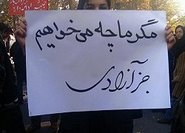





 Tulips in Holland