

CAIRO, Egypt - Al-Qaida threatened major new attacks in Afghanistan and dismissed setbacks in Iraq, vowing to continue its fight in a video marking the Sept. 11 attack, released Friday more than a week after the anniversary. The lag in release, apparently due to problems in militant Web sites where al-Qaida posts its videos, raised questions among counterterror specialists over whether the terror network's propaganda machine was faltering.The delay deflated what is usually a media splash for al-Qaida. In previous years, it released a string of videos on the attack's anniversary, featuring leaders trumpeting triumphs. Osama bin Laden spoke in one last year, making his first appearance in nearly three years.Al-Qaida had promised a similar event this year, announcing in a Sept. 8 Web advertisement that it would release a video that would bring joy to its followers. It sought to build drama by promising a surprise speaker, showing him in silhouette with a question mark over his face.But soon after, the Islamic militant Web forums traditionally used by al-Qaida to post such videos went down and have remained off. The reason is not known.The 90-minute video, titled "The Results of Seven Years of Crusades," was finally released Friday, according to two U.S. groups that monitor militant messages.It features speeches by bin Laden's top deputy, Ayman al-Zawahri, and other top figures in the terror network, as well as the final testament of Ahmed al-Ghamdi, one of the hijackers in the Sept. 11 attack. He was apparently the "surprise" speaker, SITE Intelligence and IntelCenter said. In the video, al-Qaida's top commander in Afghanistan, Mustafa Abu al-Yazeed, said the "mujahedeen (holy warriors) are on the increase day after day" in that country."We inform the forces of the cross and their apostate agents that the mujahedeen's policy in the coming stage, Allah permitting, is going to be more major, large-scale attacks," he said, according to a transcript by SITE. Elsewhere in the video, a leading al-Qaida cleric, known as Sheik Attiyatullah, dismissed claims that the U.S. and Iraqi military were defeating the terror group's branch in Iraq. "The Americans have not won nor has their security plan succeeded," he said. He acknowledged a "decline in the number of operations (in Iraq) and decline in the number of losses in the ranks of the Americans," but said that "this is something natural, as everything has its ups and downs, and every stage has its own circumstances." "The Americans are without a doubt going to pull out of Iraq dragging their tails in defeat," he said. "The jihad and mujahedeen are here to stay and will keep going, with Allah's help. It requires only a little patience." Violence has dramatically dropped in Iraq this year. U.S. commanders say the decline is in part due to setbacks to al-Qaida and the Sunni Arab-led insurgency, particularly because of U.S. reinforcements and the growth of anti-al-Qaida Sunni tribal fighters known as "Awakening Councils." The problems in posting the anniversary video, usually the most eagerly awaited among al-Qaida's sympathizers, raised eyebrows. "The late timing is certainly curious since they made such a big deal of the announcement," said Evan F. Kohlman, director of Globalterroralert.com, a private terrorism research group. "They made it seem this was something big, but in the end it turned out to be all bark and no bite," he told The Associated Press. "They could be having problems in the production line." Analysts have long seen al-Qaida's media arm, Al-Sahab, as a key tool for rallying the network's followers and sympathizers, churning out videos and audios even though top leaders are in hiding, apparently in the mountainous border regions of Pakistan and Afghanistan. David Heyman, at the Washington-based Center for Strategic and International Studies, pointed to recent Pakistani military sweeps in the border region. "It's possible some of those (personnel or facilities) associated with video production have been damaged or destroyed," he said. Bruce Hoffman, a terror expert at RAND Corp., said he was surprised by the delay. "It could be because there has been so much torment in Pakistan and general instability, it has made it more difficult for Al-Sahab to deliver their product," he said.
IMPERIAL EMBLEM

PERSIA
Iranian Freedom Fighters UNITE
Showing posts with label al-qaeda. Show all posts
Showing posts with label al-qaeda. Show all posts
Saturday, September 20, 2008


Thursday, April 17, 2008
Intercepted al-Qaida Letter Reveals Tactics, Strategy
By John J. Kruzel - American Forces Press Service
WASHINGTON, April 16, 2008 – Use silenced guns to kill coalition forces at Iraqi security checkpoints, smuggle weapons in gradual shipments to reduce the risk of detection, and poison Iraq’s water supply with nitric acid to spread disease and death.
Coalition forces found a chart showing senior al-Qaida leaders recently killed or captured and several pages of a letter found on the body of a terrorist. The items were released April 16, 2008, in Baghdad, Iraq, during a media briefing by U.S. Army Maj. Gen. Kevin Bergner, a Multinational Force Iraq spokesman.
(Click photo for screen-resolution image);high-resolution image available.Such tactics were fleshed out in a terrorist letter intended for Abu Ayyub al-Masri, the foreign-born leader of al-Qaida in Iraq. But the document never reached Masri. Instead, coalition forces lifted it from the body of a terrorist they killed last month during an operation 30 miles northwest of Baghdad. The slain terrorist and author of the 11-page missive was Abu Safyan, from Diyala, Iraq, according to military officials who made available all but two pages deemed “not releasable” on the Multinational Force Iraq Web site. Providing a glimpse into the proposed inner workings of al-Qaida in Iraq, the author discusses the need to split jihadists into three groups: snipers, assassination experts and martyrs. Each well-trained group should have an emir, or unit commander, at the lead. Through a series of coordinated surprise attacks, groups should work in unison to “bring down the city or the area,” he wrote. In addition to outlining extremist combat methods, Safyan advocated waging economic and psychological warfare, and his roadmap for success hinged on “continuous conflict” between Iraq’s Shiite government, Sunni members of “Awakening Movements” and Kurdish nationalists. “This will lessen the pressure against us and the Mujahidin brothers in all of Iraq when the enemies fight among themselves and weaken,” according to the handwritten Arabic letter, penned in blue ink on lined paper, that coalition forces captured in a remote farmhouse March 5 along with a suicide vest and computer equipment. Army Maj. Gen. Kevin Bergner, a Multinational Force Iraq spokesman, today said the intercepted pages offer insight into the mind of a terrorist and provide further evidence about al-Qaida’s overarching strategy and tactics of violence. “This document is just one man’s articulation, one terrorist’s views about instigating conflict and turning Iraqis against each other. But it is also quite consistent with the patterns of violence we see from AQI,” Bergner told reporters during a news conference in Baghdad, referring to al-Qaida in Iraq by the acronym AQI. To strike at Iraq’s economy, the document proposes attacking the fields, wells and pipelines that make up the national oil infrastructure. The author recommends targeting oil tankers and ships, specifically those in Basra, Kirkuk and Baghdad. “Attack all the targets that strengthen the enemy economically and militarily,” Safyan wrote. “Even the American Army will weaken since it depends on the Iraqi oil and gas wealth. The enemy will gradually drown step by step.” The letter advises that a chemical offensive can inflict both physical and mental harm. Contaminating Iraqis’ water can produce “killing and dangerous illness,” and also convince the enemy “that we have a dangerous chemical weapon,” Safyan wrote. “But in fact,” he continues, “it’s a psychological war that places fear in the enemy.” Page 8 of the document focuses on instigating fights between coalition forces and Iraqi groups, especially Sunnis who have rejected foreign extremism and terrorism in droves in what has been referred to as “Awakening Groups.” Safyan suggested infiltrating the Sunni cadres before planting and detonating mines “in their villages and streets.” Bergner said the author’s call for violence against the Awakening movement typifies the kind of extremism many Iraqis have turned against. The confiscated document also reveals the threat such groups present to terrorists, he added. “These writings are further examples of the corrupt ideology that Iraqis are broadly rejecting,” he said. “We have seen about 100,000 men choose a different path and join local volunteer groups like the Sons of Iraq instead.” Later in the briefing, Bergner told reporters that coalition forces had captured or killed 53 al-Qaida in Iraq leaders since his most recent news conference early this month. The 10 most significant targets, according to Bergner, were: -- Abd-al-Rahman Ibrahim Jasim Thair, the military emir responsible for al-Qaida’s operations in Mosul. Thair is the former emir in Beiji, who moved to Mosul because of the city’s importance to al-Qaida. -- Muhammad Fathi Hammad Husayn, an al-Qaida cell leader in Sharqat. Like Thair, he also moved from Beiji, where he was formerly the emir in charge of assassinations. -- Jasim Najm Khalaf Muhammad, a leader in al-Qaida’s network in Khark who was attempting to reconstitute terrorist networks around Baghdad when coalition forces captured him in Tarmiyah. -- Ali Mustashar Ali, a car bomb network operative in Baghdad. He and his associates moved explosives, vehicles and suicide bombers throughout the Iraqi capital. -- Hamid Awayd Muhammad, a car- and truck-bomb attack operative in Baghdad. Once the al-Qaida emir responsible for Anbar province, he handled the logistics for vehicle-bomb attacks north of Baghdad at the time of his capture. -- Ahmad Husayn Ghanim Ali, the security emir for eastern Mosul. -- Abu Mansur, al-Qaida’s deputy emir for Mosul, who acted as a judge in the terror network’s illegal courts. The role of Mansur, who died March 8, was to “cloak their corrupt ideology with religious sanction.” -- Tumah Khalaf Mutar Hassan, the leader of al-Qaida’s cell in Samarra, who worked closely with the area’s emir. Coalition forces captured him in Samarra in early March. -- Muqdad Ibrahim Abbas Husayn, al-Qaida’s military emir for Jalam, located east of Baghdad. He coordinated terror operations with counterparts from Tikrit, Samarra and Mosul, and arranged al-Qaida leadership meetings in the Tigris River valley. Husayn also oversaw kidnappings for ransom that terrorists relied on for operational funding. -- Mahmud Abd-al-Hamid Isa Aaywi, al-Qaida’s military emir for southern Karkh. His operations focused on trying to use car and truck bombs in Rashid, Karrada and Mansour. “These terrorists are just one component of the mosaic of security threats that seek to destabilize Iraq and incite a cycle of violence the Iraqi people broadly reject,” Bergner said. He noted that recent violence against Iraqi citizens “highlights the need to keep going forward and the need to keep pursuing these terrorists.”
Related Sites:Abu Safyan’s letter Briefing Transcript
A confiscated letter written by an al-Qaida in Iraq operative to the organization's top commander outlines terrorist tactics and broad strategy for defeating coalition forces and their Iraqi allies. From a Multinational Force Iraq presentation released April 16, 2008. Download screen-resolution Download high-resolution
Homicide Bomber Hits Iraqi Funeral, Killing at Least 50 in Deadliest Strike in Months ...
WASHINGTON, April 16, 2008 – Use silenced guns to kill coalition forces at Iraqi security checkpoints, smuggle weapons in gradual shipments to reduce the risk of detection, and poison Iraq’s water supply with nitric acid to spread disease and death.
Coalition forces found a chart showing senior al-Qaida leaders recently killed or captured and several pages of a letter found on the body of a terrorist. The items were released April 16, 2008, in Baghdad, Iraq, during a media briefing by U.S. Army Maj. Gen. Kevin Bergner, a Multinational Force Iraq spokesman.
(Click photo for screen-resolution image);high-resolution image available.Such tactics were fleshed out in a terrorist letter intended for Abu Ayyub al-Masri, the foreign-born leader of al-Qaida in Iraq. But the document never reached Masri. Instead, coalition forces lifted it from the body of a terrorist they killed last month during an operation 30 miles northwest of Baghdad. The slain terrorist and author of the 11-page missive was Abu Safyan, from Diyala, Iraq, according to military officials who made available all but two pages deemed “not releasable” on the Multinational Force Iraq Web site. Providing a glimpse into the proposed inner workings of al-Qaida in Iraq, the author discusses the need to split jihadists into three groups: snipers, assassination experts and martyrs. Each well-trained group should have an emir, or unit commander, at the lead. Through a series of coordinated surprise attacks, groups should work in unison to “bring down the city or the area,” he wrote. In addition to outlining extremist combat methods, Safyan advocated waging economic and psychological warfare, and his roadmap for success hinged on “continuous conflict” between Iraq’s Shiite government, Sunni members of “Awakening Movements” and Kurdish nationalists. “This will lessen the pressure against us and the Mujahidin brothers in all of Iraq when the enemies fight among themselves and weaken,” according to the handwritten Arabic letter, penned in blue ink on lined paper, that coalition forces captured in a remote farmhouse March 5 along with a suicide vest and computer equipment. Army Maj. Gen. Kevin Bergner, a Multinational Force Iraq spokesman, today said the intercepted pages offer insight into the mind of a terrorist and provide further evidence about al-Qaida’s overarching strategy and tactics of violence. “This document is just one man’s articulation, one terrorist’s views about instigating conflict and turning Iraqis against each other. But it is also quite consistent with the patterns of violence we see from AQI,” Bergner told reporters during a news conference in Baghdad, referring to al-Qaida in Iraq by the acronym AQI. To strike at Iraq’s economy, the document proposes attacking the fields, wells and pipelines that make up the national oil infrastructure. The author recommends targeting oil tankers and ships, specifically those in Basra, Kirkuk and Baghdad. “Attack all the targets that strengthen the enemy economically and militarily,” Safyan wrote. “Even the American Army will weaken since it depends on the Iraqi oil and gas wealth. The enemy will gradually drown step by step.” The letter advises that a chemical offensive can inflict both physical and mental harm. Contaminating Iraqis’ water can produce “killing and dangerous illness,” and also convince the enemy “that we have a dangerous chemical weapon,” Safyan wrote. “But in fact,” he continues, “it’s a psychological war that places fear in the enemy.” Page 8 of the document focuses on instigating fights between coalition forces and Iraqi groups, especially Sunnis who have rejected foreign extremism and terrorism in droves in what has been referred to as “Awakening Groups.” Safyan suggested infiltrating the Sunni cadres before planting and detonating mines “in their villages and streets.” Bergner said the author’s call for violence against the Awakening movement typifies the kind of extremism many Iraqis have turned against. The confiscated document also reveals the threat such groups present to terrorists, he added. “These writings are further examples of the corrupt ideology that Iraqis are broadly rejecting,” he said. “We have seen about 100,000 men choose a different path and join local volunteer groups like the Sons of Iraq instead.” Later in the briefing, Bergner told reporters that coalition forces had captured or killed 53 al-Qaida in Iraq leaders since his most recent news conference early this month. The 10 most significant targets, according to Bergner, were: -- Abd-al-Rahman Ibrahim Jasim Thair, the military emir responsible for al-Qaida’s operations in Mosul. Thair is the former emir in Beiji, who moved to Mosul because of the city’s importance to al-Qaida. -- Muhammad Fathi Hammad Husayn, an al-Qaida cell leader in Sharqat. Like Thair, he also moved from Beiji, where he was formerly the emir in charge of assassinations. -- Jasim Najm Khalaf Muhammad, a leader in al-Qaida’s network in Khark who was attempting to reconstitute terrorist networks around Baghdad when coalition forces captured him in Tarmiyah. -- Ali Mustashar Ali, a car bomb network operative in Baghdad. He and his associates moved explosives, vehicles and suicide bombers throughout the Iraqi capital. -- Hamid Awayd Muhammad, a car- and truck-bomb attack operative in Baghdad. Once the al-Qaida emir responsible for Anbar province, he handled the logistics for vehicle-bomb attacks north of Baghdad at the time of his capture. -- Ahmad Husayn Ghanim Ali, the security emir for eastern Mosul. -- Abu Mansur, al-Qaida’s deputy emir for Mosul, who acted as a judge in the terror network’s illegal courts. The role of Mansur, who died March 8, was to “cloak their corrupt ideology with religious sanction.” -- Tumah Khalaf Mutar Hassan, the leader of al-Qaida’s cell in Samarra, who worked closely with the area’s emir. Coalition forces captured him in Samarra in early March. -- Muqdad Ibrahim Abbas Husayn, al-Qaida’s military emir for Jalam, located east of Baghdad. He coordinated terror operations with counterparts from Tikrit, Samarra and Mosul, and arranged al-Qaida leadership meetings in the Tigris River valley. Husayn also oversaw kidnappings for ransom that terrorists relied on for operational funding. -- Mahmud Abd-al-Hamid Isa Aaywi, al-Qaida’s military emir for southern Karkh. His operations focused on trying to use car and truck bombs in Rashid, Karrada and Mansour. “These terrorists are just one component of the mosaic of security threats that seek to destabilize Iraq and incite a cycle of violence the Iraqi people broadly reject,” Bergner said. He noted that recent violence against Iraqi citizens “highlights the need to keep going forward and the need to keep pursuing these terrorists.”
Related Sites:Abu Safyan’s letter Briefing Transcript
A confiscated letter written by an al-Qaida in Iraq operative to the organization's top commander outlines terrorist tactics and broad strategy for defeating coalition forces and their Iraqi allies. From a Multinational Force Iraq presentation released April 16, 2008. Download screen-resolution Download high-resolution
Homicide Bomber Hits Iraqi Funeral, Killing at Least 50 in Deadliest Strike in Months ...
Sunday, March 02, 2008
Lawyer Says Bin Laden Did Not Orchestrate 9/11 During Terror Trial
Lawyer Says Bin Laden Did Not Orchestrate 9/11 During Terror Trial
Skepticism towards the 9/11 official story reached the Australian Supreme Court this week after a lawyer asserted that the attacks were not orchestrated by Osama bin Laden during the trial of an alleged terror group in Melbourne."To say that this was all orchestrated by Osama bin Laden is a silly thing to do. He's never claimed responsibility for it," Remy van de Wiel QC told the Australian jury.
Unless you accept the credibility of a dodgy videotape of a fat Bin Laden doppelganger "miraculously discovered" in a house in Jalalabad by U.S. troops and pushed as authentic by the ever-honest U.S. government, then van de Wiel has a point. Indeed, Bin Laden's first public statement following the 9/11 attacks was to deny any responsibility for carrying them out."I have already said that I am not involved in the 11 September attacks in the United States. As a Muslim, I try my best to avoid telling a lie. I had no knowledge of these attacks, nor do I consider the killing of innocent women, children and other humans as an appreciable act. Islam strictly forbids causing harm to innocent women, children and other people. Such a practice is forbidden even in the course of a battle," Bin Laden told the Pakistani-based Ummat newspaper.Despite the fact that it only took three months to charge him with the 1998 embassy bombings, there has been no formal indictment of bin Laden over six years after 9/11 and the FBI's wanted poster makes no reference of Bin Laden's involvement in 9/11.When asked by reporters why no reference was made, FBI agent Rex Tomb was forced to admit that "the FBI has no hard evidence connecting Bin Laden to 9/11."Van de Wiel is the defense lawyer for Abdul Nacer Benbrika, leader of an alleged terror organization that the prosecution claims planned to carry out violent attacks in Australia.Van de Wiel asserted that the group were incapable of organizing "a booze-up in a brewery," and pointed out the lack of evidence against them besides the fact that they liked to "bullshit to each other." The case mirrors almost every other example we have studied in Britain, Canada and America , where a group of Muslims are infiltrated by security agents, radicalized and provocateured into saying something which could be perceived as advocating violence, and then arrested. Despite the complete lack of hard evidence of intent or capability to carry out attacks, the trials provide fodder for propagandists to cite in order to hoax the public into thinking terrorists are everywhere, thus convincing them to hand over more liberty in the name of security.As we reported last week, four prosecutors In the Guantánamo Bay case assert that the trials are rigged and that convictions are already assured despite the fact that there is scant evidence to link Khalid Sheik Mohammed and his cohorts with 9/11, proving that the official story is a fable and the real perpetrators are being protected
Skepticism towards the 9/11 official story reached the Australian Supreme Court this week after a lawyer asserted that the attacks were not orchestrated by Osama bin Laden during the trial of an alleged terror group in Melbourne."To say that this was all orchestrated by Osama bin Laden is a silly thing to do. He's never claimed responsibility for it," Remy van de Wiel QC told the Australian jury.
Unless you accept the credibility of a dodgy videotape of a fat Bin Laden doppelganger "miraculously discovered" in a house in Jalalabad by U.S. troops and pushed as authentic by the ever-honest U.S. government, then van de Wiel has a point. Indeed, Bin Laden's first public statement following the 9/11 attacks was to deny any responsibility for carrying them out."I have already said that I am not involved in the 11 September attacks in the United States. As a Muslim, I try my best to avoid telling a lie. I had no knowledge of these attacks, nor do I consider the killing of innocent women, children and other humans as an appreciable act. Islam strictly forbids causing harm to innocent women, children and other people. Such a practice is forbidden even in the course of a battle," Bin Laden told the Pakistani-based Ummat newspaper.Despite the fact that it only took three months to charge him with the 1998 embassy bombings, there has been no formal indictment of bin Laden over six years after 9/11 and the FBI's wanted poster makes no reference of Bin Laden's involvement in 9/11.When asked by reporters why no reference was made, FBI agent Rex Tomb was forced to admit that "the FBI has no hard evidence connecting Bin Laden to 9/11."Van de Wiel is the defense lawyer for Abdul Nacer Benbrika, leader of an alleged terror organization that the prosecution claims planned to carry out violent attacks in Australia.Van de Wiel asserted that the group were incapable of organizing "a booze-up in a brewery," and pointed out the lack of evidence against them besides the fact that they liked to "bullshit to each other." The case mirrors almost every other example we have studied in Britain, Canada and America , where a group of Muslims are infiltrated by security agents, radicalized and provocateured into saying something which could be perceived as advocating violence, and then arrested. Despite the complete lack of hard evidence of intent or capability to carry out attacks, the trials provide fodder for propagandists to cite in order to hoax the public into thinking terrorists are everywhere, thus convincing them to hand over more liberty in the name of security.As we reported last week, four prosecutors In the Guantánamo Bay case assert that the trials are rigged and that convictions are already assured despite the fact that there is scant evidence to link Khalid Sheik Mohammed and his cohorts with 9/11, proving that the official story is a fable and the real perpetrators are being protected
Friday, November 30, 2007
This GUN has been smoking for years....
سایت حکومتی عصر ایران: یک مقام ارشد امنیتی آلمان اعلام کرد هرچند در خصوص ارتباط رژیم تهران با گروه تروریستی القاعده نمی توان با اطمینان سخن گفت اما این اعتقاد وجود دارد که جمهوری اسلامی با طالبان رابطه دارد و با آنها در حال مذاکره است. خبرگزاری رویترز به نقل از "آگوست هانینگ"، معاون وزیر کشور آلمان نوشت رژیم تهران قطعا مشغول مذاکره با طالبان بوده و در حال قاچاق سلاح به افغانستان برای استفاده علیه نیروهای ناتو از جمله 3 هزار سرباز آلمانی مستقر در این کشور است.پیش از این یک منبع اطلاعاتی در گفت و گو با رویتر گفته بود رژیم تهران برای هماهنگی جهت واکنش به حملات احتمالی آمریکا از خردادماه امسال تاکنون دو نشست سه جانبه با طالبان و القاعده در شهر مشهد برگزار کرده است. از صیف العادل مقام ارشد القاعده به عنوان یکی از شرکت کنندگان در این نشست ها یاد شده است.
Saturday, November 10, 2007
6 U.S. Soldiers Killed in Afghan Battle : Saturday November 10, 2007 7:31 AM
By JASON STRAZIUSO : Associated Press Writer
KABUL, Afghanistan (AP) - Six U.S. troops and three Afghan soldiers died when insurgents ambushed their foot patrol in eastern Afghanistan, one of the deadliest attacks on American forces this year, officials said Saturday. The troops were returning from a meeting with village elders Friday afternoon in Nuristan province when militants attacked them with rocket propelled grenades and gunfire, said Lt. Col. David Accetta. ``They were attacked from several enemy positions at the same time,'' said Accetta, a spokesman for NATO's International Security Assistance Force and the U.S. military. ``It was a complex ambush.'' Eight more Americans and 11 Afghans were wounded. The 14 total U.S. casualties was the highest number of wounded and killed from a battle in Afghanistan this year, Accetta said. Mohammad Daoud Nadim, Nuristan deputy police chief, said the ambush happened in the remote province's Waygal district. He said military aircraft fired on enemy positions but had no information on any casualties among the militants.
Suicide attack near NATO convoy in Afghanistan kills one:10 Nov 2007 07
Kabul - A suicide bomber detonated his explosive-laden vehicle near a convoy of NATO-led German troops on Saturday in northern Kunduz province, killing himself and one civilian, police said. "Afghan intelligence forces identified a suicide bomber who was driving a Corolla car and tried to stop him," Engineer Mohammad Omar, provincial police chief, told Deutsche Presse-Agentur dpa. "The suicide bomber, who was following a convoy of German forces and was some 40 metres from the convoy, detonated his car, killing himself and wounding an intelligence agent and a passer-by civilian," Omar said. However, a police official at the site of attack, which is some three kilometres north of Kunduz city, said that the wounded civilian succumbed to his injuries. Omar said that no-one from the German military convoy was hurt in the attack.
"The security forces identified the bomber and he is a Pakistani national," Omar said.
11 including 8 Taliban killed in Afghanistan
Posted on : 2007-11-10 Author : Xinhua News Category :
Kabul, (Xinhua) A clean-up operation against Taliban insurgents in Afghanistan's eastern Paktika province killed 11 people including eight rebels, a local newspaper reported Saturday.
'The sweep was carried out after the slaying of a tribal elder Hajji Tadi Khan along with his three bodyguards by Taliban insurgents Thursday,' the daily Outlook quoted Paktika's provincial governor Akram Khapalwak as saying. In the operation backed by International Security Assistance Force (ISAF), eight Taliban fighters had been killed, Khapalwak said.
However, he did not identify the three others who lost their lives during the sweep. Militancy and conflict related violence in Afghanistan have claimed the lives of more than 5,600 people since January this year.
Troops Target Foreign Facilitators in Iraq; 19 Terrorism Suspects Detained
WASHINGTON - Coalition forces wounded one suspected terrorist and detained 19 others today during operations to disrupt foreign terrorist networks in central Iraq.Nov 9, 2007, Jim Kouri
Coalition Forces Capture Terrorism Suspects in Iraq
WASHINGTON - Coalition forces captured a suspected terrorist and detained four other suspects today during operations in central and northern Iraq.Nov 9, 2007,
Iraqi Citizens Step Up to Confront al Qaeda
WASHINGTON - Decreased violence in Iraq is the result of ongoing U.S. surge operations and Iraqi citizens' increasing willingness to confront al Qaeda insurgents, a senior U.S. military officer said here today.Nov 9, 2007,
Chickens Are Returning to the Roost
Thomas E. Brewton -- The exchange value of the dollar is declining at an accelerating rate, and China has blown the whistle to stop the game.
Bush and Merkel to focus on Iran Mathaba.Net 03:13
Gareth Porter: How Cheney Cooked the Intelligence on Iran The Huffington Post:weblog) 02:57
US seeks Merkel's backing over Iran sanctions Telegraph.co.uk 02:44
Tempers cool as US frees Iran prisoners Telegraph.co.uk 02:44
Report: U.S. presses European companies to stop business with Iran People's Daily 02:23
An Open Letter To President Mahmoud Ahmadinejad And The People Of IRAN:
OpEdNews.com 02:22
Iran 'must free' woman activist BBCi 02:18
Revealed: Israel Plans Nuclear Strike on Iran Guerrilla News Network 02:15
'Lesson' on Iran misses plenty of vital points The Southern Illinoisan, Illinois 02:07
Merkel arrives for talks with Bush on Iran (2nd Roundup) Monsters and Critics 02:04
Proton sells 5,000 Wajas to Iran for use as taxis The Star Online 01:48
Cheney Tried to Stifle Dissent in Iran National Intelligence Estimate Mathaba.Net 01:47
KABUL, Afghanistan (AP) - Six U.S. troops and three Afghan soldiers died when insurgents ambushed their foot patrol in eastern Afghanistan, one of the deadliest attacks on American forces this year, officials said Saturday. The troops were returning from a meeting with village elders Friday afternoon in Nuristan province when militants attacked them with rocket propelled grenades and gunfire, said Lt. Col. David Accetta. ``They were attacked from several enemy positions at the same time,'' said Accetta, a spokesman for NATO's International Security Assistance Force and the U.S. military. ``It was a complex ambush.'' Eight more Americans and 11 Afghans were wounded. The 14 total U.S. casualties was the highest number of wounded and killed from a battle in Afghanistan this year, Accetta said. Mohammad Daoud Nadim, Nuristan deputy police chief, said the ambush happened in the remote province's Waygal district. He said military aircraft fired on enemy positions but had no information on any casualties among the militants.
Suicide attack near NATO convoy in Afghanistan kills one:10 Nov 2007 07
Kabul - A suicide bomber detonated his explosive-laden vehicle near a convoy of NATO-led German troops on Saturday in northern Kunduz province, killing himself and one civilian, police said. "Afghan intelligence forces identified a suicide bomber who was driving a Corolla car and tried to stop him," Engineer Mohammad Omar, provincial police chief, told Deutsche Presse-Agentur dpa. "The suicide bomber, who was following a convoy of German forces and was some 40 metres from the convoy, detonated his car, killing himself and wounding an intelligence agent and a passer-by civilian," Omar said. However, a police official at the site of attack, which is some three kilometres north of Kunduz city, said that the wounded civilian succumbed to his injuries. Omar said that no-one from the German military convoy was hurt in the attack.
"The security forces identified the bomber and he is a Pakistani national," Omar said.
11 including 8 Taliban killed in Afghanistan
Posted on : 2007-11-10 Author : Xinhua News Category :
Kabul, (Xinhua) A clean-up operation against Taliban insurgents in Afghanistan's eastern Paktika province killed 11 people including eight rebels, a local newspaper reported Saturday.
'The sweep was carried out after the slaying of a tribal elder Hajji Tadi Khan along with his three bodyguards by Taliban insurgents Thursday,' the daily Outlook quoted Paktika's provincial governor Akram Khapalwak as saying. In the operation backed by International Security Assistance Force (ISAF), eight Taliban fighters had been killed, Khapalwak said.
However, he did not identify the three others who lost their lives during the sweep. Militancy and conflict related violence in Afghanistan have claimed the lives of more than 5,600 people since January this year.
Troops Target Foreign Facilitators in Iraq; 19 Terrorism Suspects Detained
WASHINGTON - Coalition forces wounded one suspected terrorist and detained 19 others today during operations to disrupt foreign terrorist networks in central Iraq.Nov 9, 2007, Jim Kouri
Coalition Forces Capture Terrorism Suspects in Iraq
WASHINGTON - Coalition forces captured a suspected terrorist and detained four other suspects today during operations in central and northern Iraq.Nov 9, 2007,
Iraqi Citizens Step Up to Confront al Qaeda
WASHINGTON - Decreased violence in Iraq is the result of ongoing U.S. surge operations and Iraqi citizens' increasing willingness to confront al Qaeda insurgents, a senior U.S. military officer said here today.Nov 9, 2007,
Chickens Are Returning to the Roost
Thomas E. Brewton -- The exchange value of the dollar is declining at an accelerating rate, and China has blown the whistle to stop the game.
Bush and Merkel to focus on Iran Mathaba.Net 03:13
Gareth Porter: How Cheney Cooked the Intelligence on Iran The Huffington Post:weblog) 02:57
US seeks Merkel's backing over Iran sanctions Telegraph.co.uk 02:44
Tempers cool as US frees Iran prisoners Telegraph.co.uk 02:44
Report: U.S. presses European companies to stop business with Iran People's Daily 02:23
An Open Letter To President Mahmoud Ahmadinejad And The People Of IRAN:
OpEdNews.com 02:22
Iran 'must free' woman activist BBCi 02:18
Revealed: Israel Plans Nuclear Strike on Iran Guerrilla News Network 02:15
'Lesson' on Iran misses plenty of vital points The Southern Illinoisan, Illinois 02:07
Merkel arrives for talks with Bush on Iran (2nd Roundup) Monsters and Critics 02:04
Proton sells 5,000 Wajas to Iran for use as taxis The Star Online 01:48
Cheney Tried to Stifle Dissent in Iran National Intelligence Estimate Mathaba.Net 01:47
Friday, November 09, 2007
Officials: 59 Children on School Trip Killed by Afghan Homicide Bomber; 96 Injured : Friday, November 09, 2007
KABUL, Afghanistan — Dozens of schoolchildren and five teachers were among those killed in a suicide attack in northern Afghanistan earlier this week — the country's deadliest since the fall of the Taliban — the government said Friday. The 59 schoolchildren had lined up to greet a group of lawmakers visiting a sugar factory in the northern province of Baghlan on Tuesday when a suicide bomber detonated explosives. "The education minister has ordered that no children should be ever again be used in these sort of events," said Zahoor Afghan, an Education Ministry spokesman. He said the children ranged in age from 8 to 18. In all, the explosion claimed the lives at least 75 people, including several parliamentarians, and wounded 96. It was the deadliest attack in the country since the toppling of Taliban regime from power in the 2001 U.S.-led invasion. Afghan President Hamid Karzai declared three days of mourning Wednesday and ordered an investigation. No group has claimed responsibility, and the Taliban denied any involvement. Also Friday, NATO and Afghan troops battled Taliban fighters near Gulistan district in western Farah province. The soldiers seized the district center, killing up to 20 suspected militants who overran it last week, said Gen. Abdul Rahman Sarjang, the provincial police chief. On Thursday, U.S.-led coalition and Afghan troops surrounded a compound where militants had gathered near Tirin Kot, in Uruzgan province, sparking a clash which left seven suspected Taliban fighters dead, said Juma Gul Hamat, the provincial police chief. Four militants were detained, he said.There were no casualties among coalition and Afghan forces, Hamat said.In southern Zabul province, Taliban militants on motorbikes ambushed and killed Shahjoy's district chief and two bodyguards as they were shopping on Thursday, said Mohammad Rasool Khan, a district police chief. Coalition and Afghan troops, meanwhile, came under fire from Taliban insurgents in southern Helmand province's Nahr Surk district on Wednesday, a coalition statement said. "The combined force immediately engaged the Taliban fighters with small-arms fire and close air support, killing many of the insurgents before they fled the area," it said.Violence in Afghanistan this year has been the deadliest since the Taliban's ouster. More than 5,700 people, mostly militants, have died so far this year in insurgency-related violence, according to an Associated Press count based on figures from Afghan and Western officials.Separately, a British soldier was killed Friday in a vehicle accident in Afghanistan, the British Ministry of Defense said.
Al-Qaeda Member's Account of His Stay in Iran
Columnist Fares bin Hazam, who specializes in issues relating to Al-Qaeda in Saudi Arabia, published in the Saudi daily Al-Riyadh a personal account by a former Al-Qaeda member of Saudi origin. The article, titled "Iran Recruits Members to Al-Qaeda at Tens of Thousands Dollars a Month," describes the assistance the former fighter and his friends received from Iranian authorities after they fled Afghanistan, as well as Iranian attempts to recruit him as an Iranian agent in Saudi Arabia.
The following are excerpts from the account: "After the disintegration of the Taliban and Al-Qaeda in Afghanistan at the end of 2001 as a result of the American attack and the coming to power of other Afghan forces in the country, instructions were received from our leadership to retreat from Kabul in the direction of Kandahar. In the month of Ramadan, we received instructions from our commander to leave for Iran in order to seek refuge there. We arrived in Iran via Pakistan, where we did not stay very long. Our group consisted of about 30 fighters, among them Faisal Al-Dakhil, 'Amr Al-Shehri [both killed in 2004] and other prominent figures wanted by the Saudi government. "We were aware that Afghani [Islamist] leader Gulboddin Hekmatyar, who resided in Iran [at that time], was acting as an intermediary and liaison [between us and] Iran's Revolutionary Guards. Hekmatyar promised us accommodation in the border city of Zehdan [in southeastern Iran], where the majority of the residents are Baluchi Sunnis. There we met with Al-Qaeda commander Abu Hafs Al-Mauritani, who had earlier opposed the September 11 attacks. [Al-Mauritani] assured us that we were in a safe place, and that we would be questioned by Iranian intelligence services in Teheran, who would provide for all our needs during our stay in Iran. "Our numbers dwindled: only 10 of us remained after about two-thirds of our group had disappeared, Al-Dakhil and Al-Shehri among them. We moved to Teheran and met with the interrogators. They proposed that I collaborate with them from abroad, [that is,] from my country [Saudi Arabia], supplying them with information that they would need in the future. Their offer shocked me. I declined, and then was overcome with fear that the refusal would [harm the chances of] my release and return to my country. The interrogator began enticing me: '[You will receive] a monthly salary of $10,000, an Iranian passport, and military training with Hizbullah in Lebanon.' "However, I was firm in my refusal to cooperate in any way. All I wanted was to leave. The [Iranian] officer said: 'You and us, we are both fighting the same enemy, the American [enemy], as well as everyone who supports him and helps him to remain in the region. Your jihad is our jihad, and a joint jihad operation of this kind is a duty incumbent upon us all. Do not fear, we will release you, and when you [decide to] accept our offer, you will have to contact (…) in your country, and within a few days we will convey to him [instructions for] you.'
"I do not know whether the rest [of our group] received the same offer. We did not speak with one another on this matter, but we were all given travel permits and travel privileges. The intelligence officer told us that he would stamp our passports with a date preceding the September 11 attacks. As far as I can remember, the date was June, while we were already at the very end of 2001. He also explained to us how to act at the airport security checkpoints through which we would be passing en route to our country, so as to avoid being suspected of fleeing the war in Afghanistan."
Al-Riyadh (Saudi Arabia), November 6, 2007.
The following are excerpts from the account: "After the disintegration of the Taliban and Al-Qaeda in Afghanistan at the end of 2001 as a result of the American attack and the coming to power of other Afghan forces in the country, instructions were received from our leadership to retreat from Kabul in the direction of Kandahar. In the month of Ramadan, we received instructions from our commander to leave for Iran in order to seek refuge there. We arrived in Iran via Pakistan, where we did not stay very long. Our group consisted of about 30 fighters, among them Faisal Al-Dakhil, 'Amr Al-Shehri [both killed in 2004] and other prominent figures wanted by the Saudi government. "We were aware that Afghani [Islamist] leader Gulboddin Hekmatyar, who resided in Iran [at that time], was acting as an intermediary and liaison [between us and] Iran's Revolutionary Guards. Hekmatyar promised us accommodation in the border city of Zehdan [in southeastern Iran], where the majority of the residents are Baluchi Sunnis. There we met with Al-Qaeda commander Abu Hafs Al-Mauritani, who had earlier opposed the September 11 attacks. [Al-Mauritani] assured us that we were in a safe place, and that we would be questioned by Iranian intelligence services in Teheran, who would provide for all our needs during our stay in Iran. "Our numbers dwindled: only 10 of us remained after about two-thirds of our group had disappeared, Al-Dakhil and Al-Shehri among them. We moved to Teheran and met with the interrogators. They proposed that I collaborate with them from abroad, [that is,] from my country [Saudi Arabia], supplying them with information that they would need in the future. Their offer shocked me. I declined, and then was overcome with fear that the refusal would [harm the chances of] my release and return to my country. The interrogator began enticing me: '[You will receive] a monthly salary of $10,000, an Iranian passport, and military training with Hizbullah in Lebanon.' "However, I was firm in my refusal to cooperate in any way. All I wanted was to leave. The [Iranian] officer said: 'You and us, we are both fighting the same enemy, the American [enemy], as well as everyone who supports him and helps him to remain in the region. Your jihad is our jihad, and a joint jihad operation of this kind is a duty incumbent upon us all. Do not fear, we will release you, and when you [decide to] accept our offer, you will have to contact (…) in your country, and within a few days we will convey to him [instructions for] you.'
"I do not know whether the rest [of our group] received the same offer. We did not speak with one another on this matter, but we were all given travel permits and travel privileges. The intelligence officer told us that he would stamp our passports with a date preceding the September 11 attacks. As far as I can remember, the date was June, while we were already at the very end of 2001. He also explained to us how to act at the airport security checkpoints through which we would be passing en route to our country, so as to avoid being suspected of fleeing the war in Afghanistan."
Al-Riyadh (Saudi Arabia), November 6, 2007.
Saturday, October 13, 2007
"Did Osama bin Laden act alone, through his own Al Qaeda network, in launching the attacks?
IG, al Qaeda, and Hezbollah "the most formidable terrorist coalition in history." It was likely al Qaeda had received assistance from Iran and Hezbollah on the road to 9/11.
See Here: http://iranvajahan.net/cgi-bin/news.pl?l=en&y=2007&m=10&d=12&a=3
See Here: http://iranvajahan.net/cgi-bin/news.pl?l=en&y=2007&m=10&d=12&a=3
Sunday, May 13, 2007
GIVE ME LOVE....& celebrate.
Top Taliban Commander Is Killed in Clash : By THE NEW YORK TIMES - May 13, 2007
KANDAHAR, Afghanistan, Sunday, May 13 — Afghan government officials showed the body of Mullah Dadullah, the top operational commander for the Taliban insurgency, to reporters here Sunday morning, saying he had been killed in a joint operation of Afghan and coalition forces.
Mr. Dadullah, an amputee, was recognizable in part from his missing leg and black beard. He had been shot in the head and in the stomach. He was one of the most wanted Taliban leaders, responsible for numerous assassinations, beheadings and terrorist campaigns, and was thought to be behind many of the suicide bombings that have killed or wounded hundreds of Afghans in the last year and a half. He was seen as probably the most important operational commander, organizing groups of fighters, weapons supplies and finances across much of the south and southeast of Afghanistan.
And here is a present....http://www.buzzinfly.com/woodwardsept.html
KANDAHAR, Afghanistan, Sunday, May 13 — Afghan government officials showed the body of Mullah Dadullah, the top operational commander for the Taliban insurgency, to reporters here Sunday morning, saying he had been killed in a joint operation of Afghan and coalition forces.
Mr. Dadullah, an amputee, was recognizable in part from his missing leg and black beard. He had been shot in the head and in the stomach. He was one of the most wanted Taliban leaders, responsible for numerous assassinations, beheadings and terrorist campaigns, and was thought to be behind many of the suicide bombings that have killed or wounded hundreds of Afghans in the last year and a half. He was seen as probably the most important operational commander, organizing groups of fighters, weapons supplies and finances across much of the south and southeast of Afghanistan.
And here is a present....http://www.buzzinfly.com/woodwardsept.html
Monday, April 23, 2007
Al-Qaeda 'Planning Big British Attack'
VA VAILA .......April 22, 2007 The Sunday Times Dipesh Gadher
AL-QAEDA leaders in Iraq are planning the first “large-scale” terrorist attacks on Britain and other western targets with the help of supporters in Iran, according to a leaked intelligence report. Spy chiefs warn that one operative had said he was planning an attack on “a par with Hiroshima and Nagasaki” in an attempt to “shake the Roman throne”, a reference to the West.Another plot could be timed to coincide with Tony Blair stepping down as prime minister, an event described by Al-Qaeda planners as a “change in the head of the company”.The report, produced earlier this month and seen by The Sunday Times, appears to provide evidence that Al-Qaeda is active in Iran and has ambitions far beyond the improvised attacks it has been waging against British and American soldiers in Iraq.There is no evidence of a formal relationship between Al-Qaeda, a Sunni group, and the Shi’ite regime of President Mah-moud Ahmadinejad, but experts suggest that Iran’s leaders may be turning a blind eye to the terrorist organisation’s activities.The intelligence report also makes it clear that senior Al-Qaeda figures in the region have been in recent contact with operatives in Britain.It follows revelations last year that up to 150 Britons had travelled to Iraq to fight as part of Al-Qaeda’s “foreign legion”. A number are thought to have returned to the UK, after receiving terrorist training, to form sleeper cells.The report was compiled by the Joint Terrorism Analysis Centre (JTAC) - based at MI5’s London headquarters - and provides a quarterly review of the international terror threat to Britain. It draws a distinction between Osama Bin Laden and Al-Qaeda’s core leadership, who are thought to be hiding on the Afghan-Pakistan border, and affiliated organisations elsewhere.The document states: “While networks linked to AQ [Al-Qaeda] Core pose the greatest threat to the UK, the intelligence during this quarter has highlighted the potential threat from other areas, particularly AQI [Al-Qaeda in Iraq].”The report continues: “Recent reporting has described AQI’s Kurdish network in Iran planning what we believe may be a large-scale attack against a western target.“A member of this network is reportedly involved in an operation which he believes requires AQ Core authorisation. He claims the operation will be on ‘a par with Hiroshima and Naga-saki’ and will ‘shake the Roman throne’. We assess that this operation is most likely to be a large-scale, mass casualty attack against the West.”The report says there is “no indication” this attack would specifically target Britain, “although we are aware that AQI . . . networks are active in the UK”.Analysts believe the reference to Hiroshima and Naga-saki, where more than 200,000 people died in nuclear attacks on Japan at the end of the second world war, is unlikely to be a literal boast.“It could be just a reference to a huge explosion,” said a counter-terrorist source. “They [Al-Qaeda] have got to do something soon that is radical otherwise they start losing credibility.”Despite aspiring to a nuclear capability, Al-Qaeda is not thought to have acquired weapons grade material. However, several plots involving “dirty bombs” - conventional explosive devices surrounded by radioactive material - have been foiled.Last year Al-Qaeda’s leader in Iraq called on nuclear scientists to apply their knowledge of biological and radiological weapons to “the field of jihad”.Details of a separate plot to attack Britain, “ideally” before Blair steps down this summer, were contained in a letter written by Abdul al-Hadi al-Iraqi, an Iraqi Kurd and senior Al-Qaeda commander.According to the JTAC document, Hadi “stressed the need to take care to ensure that the attack was successful and on a large scale”. The plan was to be relayed to an Iran-based Al-Qaeda facilitator.The Home Office declined to comment.
AL-QAEDA leaders in Iraq are planning the first “large-scale” terrorist attacks on Britain and other western targets with the help of supporters in Iran, according to a leaked intelligence report. Spy chiefs warn that one operative had said he was planning an attack on “a par with Hiroshima and Nagasaki” in an attempt to “shake the Roman throne”, a reference to the West.Another plot could be timed to coincide with Tony Blair stepping down as prime minister, an event described by Al-Qaeda planners as a “change in the head of the company”.The report, produced earlier this month and seen by The Sunday Times, appears to provide evidence that Al-Qaeda is active in Iran and has ambitions far beyond the improvised attacks it has been waging against British and American soldiers in Iraq.There is no evidence of a formal relationship between Al-Qaeda, a Sunni group, and the Shi’ite regime of President Mah-moud Ahmadinejad, but experts suggest that Iran’s leaders may be turning a blind eye to the terrorist organisation’s activities.The intelligence report also makes it clear that senior Al-Qaeda figures in the region have been in recent contact with operatives in Britain.It follows revelations last year that up to 150 Britons had travelled to Iraq to fight as part of Al-Qaeda’s “foreign legion”. A number are thought to have returned to the UK, after receiving terrorist training, to form sleeper cells.The report was compiled by the Joint Terrorism Analysis Centre (JTAC) - based at MI5’s London headquarters - and provides a quarterly review of the international terror threat to Britain. It draws a distinction between Osama Bin Laden and Al-Qaeda’s core leadership, who are thought to be hiding on the Afghan-Pakistan border, and affiliated organisations elsewhere.The document states: “While networks linked to AQ [Al-Qaeda] Core pose the greatest threat to the UK, the intelligence during this quarter has highlighted the potential threat from other areas, particularly AQI [Al-Qaeda in Iraq].”The report continues: “Recent reporting has described AQI’s Kurdish network in Iran planning what we believe may be a large-scale attack against a western target.“A member of this network is reportedly involved in an operation which he believes requires AQ Core authorisation. He claims the operation will be on ‘a par with Hiroshima and Naga-saki’ and will ‘shake the Roman throne’. We assess that this operation is most likely to be a large-scale, mass casualty attack against the West.”The report says there is “no indication” this attack would specifically target Britain, “although we are aware that AQI . . . networks are active in the UK”.Analysts believe the reference to Hiroshima and Naga-saki, where more than 200,000 people died in nuclear attacks on Japan at the end of the second world war, is unlikely to be a literal boast.“It could be just a reference to a huge explosion,” said a counter-terrorist source. “They [Al-Qaeda] have got to do something soon that is radical otherwise they start losing credibility.”Despite aspiring to a nuclear capability, Al-Qaeda is not thought to have acquired weapons grade material. However, several plots involving “dirty bombs” - conventional explosive devices surrounded by radioactive material - have been foiled.Last year Al-Qaeda’s leader in Iraq called on nuclear scientists to apply their knowledge of biological and radiological weapons to “the field of jihad”.Details of a separate plot to attack Britain, “ideally” before Blair steps down this summer, were contained in a letter written by Abdul al-Hadi al-Iraqi, an Iraqi Kurd and senior Al-Qaeda commander.According to the JTAC document, Hadi “stressed the need to take care to ensure that the attack was successful and on a large scale”. The plan was to be relayed to an Iran-based Al-Qaeda facilitator.The Home Office declined to comment.
Saturday, March 24, 2007
Al-Qaida Urges Unity Among Terrorists
CAIRO, EGYPT -- In a new video posted Thursday on the Internet, an al-Qaida militant who escaped from a U.S. prison in Afghanistan urged Sunni militants in Iraq to join the terror group and claimed the U.S. military's security plan for Baghdad has failed. Abu Yahia al-Libi, who broke out of the U.S. prison at Bagram Air Base north of Kabul in 2005, said it was the sacred duty of all mujahedeen, or holy warriors, to "stand steadfast together." He called on militant groups known as Ansar al-Sunnah, the Islamic Army in Iraq and the Army of the Mujahedeen to "hurry up and respond to the call of the Quran to become one and ... join the Islamic State in Iraq," an al-Qaida affiliate in the country. "This is the legitimate duty and urgent need imposed by the circumstances of this stage of the jihad in Iraq," the black-turbaned al-Libi said, referring to militants' holy war. The 28-minute video, posted on a Web site commonly used by Islamist militants, shows al-Libi, whose nom de guerre means 'the Libyan' in Arabic, with a beard and wearing a camouflage uniform seated next to a Kalashnikov rifle. The videotape's authenticity could not be independently verified. It carried the logo of al-Qaida's media production wing, al-Sahab. The video was also released by IntelCenter, a U.S. government contractor that monitors al-Qaida messaging. IntelCenter said the earliest the video could have been made is Feb. 20, based on comments al-Libi makes on the decision by British Prime Minister Tony Blair to withdraw a portion of Britain's troops from Iraq. Blair's decision was first reported on Feb. 20.
In the video, al-Libi claims the monthlong Baghdad security crackdown by U.S. military and Iraqi troops, meant to curb sectarian violence that has shaken the Iraqi capital and its residents, has failed. "The break and defeat of your enemy is seen in the military arena, especially after the Security Plan failed and its defeat, with God's will, is very near," he says. "The enemy knows he is losing in this battle," al-Libi said, adding the proof of this was in the planned withdrawal of the British troops from Iraq. In addressing the militants, al-Libi said they were the "tip of the spear" in the holy war against the West and that they "must be more strong and more serious, and leave all trivia behind, resist any temptation." Al-Libi also urged them not to "fall into the trap of enemies reaching out to Sunnis in Iraq" and claimed Saudi Arabia's calls for the support of Iraq's beleaguered Sunni minority were a sham. "Your enemies are adding poison to exterminate you and sabotage your jihad. So don't be drawn in by flashy advertisements of Satan and his followers," he said. Al-Libi has recorded several tapes since he escaped from Bagram. Afghan police said at the time that his real name is Abulbakar Mohammed Hassan and that he is a Libyan.
In the video, al-Libi claims the monthlong Baghdad security crackdown by U.S. military and Iraqi troops, meant to curb sectarian violence that has shaken the Iraqi capital and its residents, has failed. "The break and defeat of your enemy is seen in the military arena, especially after the Security Plan failed and its defeat, with God's will, is very near," he says. "The enemy knows he is losing in this battle," al-Libi said, adding the proof of this was in the planned withdrawal of the British troops from Iraq. In addressing the militants, al-Libi said they were the "tip of the spear" in the holy war against the West and that they "must be more strong and more serious, and leave all trivia behind, resist any temptation." Al-Libi also urged them not to "fall into the trap of enemies reaching out to Sunnis in Iraq" and claimed Saudi Arabia's calls for the support of Iraq's beleaguered Sunni minority were a sham. "Your enemies are adding poison to exterminate you and sabotage your jihad. So don't be drawn in by flashy advertisements of Satan and his followers," he said. Al-Libi has recorded several tapes since he escaped from Bagram. Afghan police said at the time that his real name is Abulbakar Mohammed Hassan and that he is a Libyan.
Wednesday, March 21, 2007
WAR ON TERROR, About 100 killed in Pakistani border clashes
Wed Mar 21, 2007 6:42PM GMT
WANA, Pakistan (Reuters) - At least 50 people were killed in fighting between al Qaeda-linked militants and Pakistani tribesmen near the Afghan border on Wednesday, taking the death toll in three days of fighting to about 100. The fighting follows a break-down in relations between the al Qaeda-linked militants and the tribesmen who previously sheltered them. The government has been urging the ethnic Pashtun tribesmen to bring the foreigners under control. Tribesmen in the South Waziristan region also called for holy war against the foreign militants, most of whom are Uzbeks. "Thirty-five foreign militants and 15 tribesmen were killed in today's fighting," said a security official who declined to be identified. Nearly 50 people, including 35 foreign militants, were killed in fighting on Monday and Tuesday, government and security officials said. Pakistani security forces say they are not involved. Hundreds of foreign militants, including Uzbeks, Chechens and Arabs, fled to the semi-autonomous tribal lands on the Pakistani side of the border after U.S.-led forces defeated the Taliban in Afghanistan in 2001. Most ethnic Pashtun tribesmen, who inhabit both sides of the Pakistani-Afghan border, gave the militants refuge despite government efforts to clear the foreigners out as part of its efforts in the war on terrorism. Fighting between the foreign militants and the Pashtun tribesmen first erupted on March 6, after the militants tried to kill a pro-government tribal leader. Seventeen people, most of them Uzbeks, were killed then. This week's clashes are a resumption of that battle, security officials said.
"SOURCE OF PROBLEMS"
On Monday and Tuesday the fighting took place in Azam Warsak and Shin Warsak, two villages west of South Waziristan's main town of Wana. Wednesday's clashes centred in nearby Kalusha village. "Today's was the fiercest fighting," the government security official said. Although South Waziristan has long been a hotbed of support for Islamist militants, officials and residents said the inhabitants had had enough of the foreigners. "Most people are against them because they are the main source of security problems in our area," said a resident, who declined to be identified. After the fighting resumed on Monday, calls were made in mosques in Wana urging people to join a jihad, or Muslim holy war, against the Uzbeks, residents said. Residents say up to 1,200 Uzbeks are in the region. The Pashtuns refer to them as "gungas", meaning the dumb ones because they can't speak the Pashto language. Most are members of the Islamic Movement of Uzbekistan militant group commanded by Tahir Yuldashev. Pakistani forces launched a major operation against the militants in the area in 2004. Hundreds of people were killed but Yuldashev escaped and is at large. Authorities have struck deals with tribal elders in South and North Waziristan aimed at ending fighting with Pakistani forces and raids into Afghanistan. But U.S. and Afghan military officials say the pacts have not stopped cross-border attacks.
WANA, Pakistan (Reuters) - At least 50 people were killed in fighting between al Qaeda-linked militants and Pakistani tribesmen near the Afghan border on Wednesday, taking the death toll in three days of fighting to about 100. The fighting follows a break-down in relations between the al Qaeda-linked militants and the tribesmen who previously sheltered them. The government has been urging the ethnic Pashtun tribesmen to bring the foreigners under control. Tribesmen in the South Waziristan region also called for holy war against the foreign militants, most of whom are Uzbeks. "Thirty-five foreign militants and 15 tribesmen were killed in today's fighting," said a security official who declined to be identified. Nearly 50 people, including 35 foreign militants, were killed in fighting on Monday and Tuesday, government and security officials said. Pakistani security forces say they are not involved. Hundreds of foreign militants, including Uzbeks, Chechens and Arabs, fled to the semi-autonomous tribal lands on the Pakistani side of the border after U.S.-led forces defeated the Taliban in Afghanistan in 2001. Most ethnic Pashtun tribesmen, who inhabit both sides of the Pakistani-Afghan border, gave the militants refuge despite government efforts to clear the foreigners out as part of its efforts in the war on terrorism. Fighting between the foreign militants and the Pashtun tribesmen first erupted on March 6, after the militants tried to kill a pro-government tribal leader. Seventeen people, most of them Uzbeks, were killed then. This week's clashes are a resumption of that battle, security officials said.
"SOURCE OF PROBLEMS"
On Monday and Tuesday the fighting took place in Azam Warsak and Shin Warsak, two villages west of South Waziristan's main town of Wana. Wednesday's clashes centred in nearby Kalusha village. "Today's was the fiercest fighting," the government security official said. Although South Waziristan has long been a hotbed of support for Islamist militants, officials and residents said the inhabitants had had enough of the foreigners. "Most people are against them because they are the main source of security problems in our area," said a resident, who declined to be identified. After the fighting resumed on Monday, calls were made in mosques in Wana urging people to join a jihad, or Muslim holy war, against the Uzbeks, residents said. Residents say up to 1,200 Uzbeks are in the region. The Pashtuns refer to them as "gungas", meaning the dumb ones because they can't speak the Pashto language. Most are members of the Islamic Movement of Uzbekistan militant group commanded by Tahir Yuldashev. Pakistani forces launched a major operation against the militants in the area in 2004. Hundreds of people were killed but Yuldashev escaped and is at large. Authorities have struck deals with tribal elders in South and North Waziristan aimed at ending fighting with Pakistani forces and raids into Afghanistan. But U.S. and Afghan military officials say the pacts have not stopped cross-border attacks.
Sunday, March 11, 2007
1 Killed in Palestinian Shootout in Gaza
By IBRAHIM BARZAKAssociated Press WriterMarch 11, 2007, 12:25 AM ESTGAZA CITY, Gaza Strip -- Palestinian gunmen from Hamas and Fatah exchanged fire in the Gaza Strip early Sunday, killing a local militia leader and wounding seven people in the most serious flareup of violence since a power-sharing deal between the political rivals last month.Both sides blamed each other for starting the battle in the northern town of Beit Hanoun.Hamas said a truckload of Fatah gunmen opened fire on the militant group's forces near the town's sports club, killing a Hamas field commander, Mohammed Kafarneh. Fatah said the shooting began when Hamas attacked a compound of the security forces with rocket-propelled grenades. Later, Hamas and Fatah gunmen also exchanged fire for a few minutes in Gaza City.In another incident, two Gaza fishermen were wounded when an Israeli navy vessel fired on their boat near the Gaza-Egypt border, Palestinian security officials said. The Israeli military had no immediate comment.Sunday's death was only the second since last month's Saudi Arbaia-backed Hamas-Fatah cease-fire which cleared the way for talks on setting up a Hamas-Fatah coalition government.The violence followed an incident in the West Bank on Saturday in which gunmen fired on the car of Prisoners Affairs Minister Wasfi Kabaha of Hamas, security officials said. Nobody was injured in the attack, which Hamas blamed on Palestinian security officials with ties to Fatah. Security officials said they did not know who was responsible.The Palestinian unity government was intended to halt months of fighting in which more than 130 people were killed. But tensions have remained high since the accord was announced weeks ago.Palestinian President Mahmoud Abbas of Fatah hopes the coalition government, to be formed within two weeks, will also help end an international boycott of the year-old Hamas government and lead to a resumption of peace talks with Israel.The international community has said it would withhold judgment until it sees the new government's political program. However, the coalition, in deference to Hamas, is unlikely to agree to the world's conditions for acceptance, including recognition of Israel.With the Hamas-Fatah coalition not yet established, little progress was expected at a meeting Sunday between Abbas and Israeli Prime Minister Ehud Olmert.Israeli government spokeswoman Miri Eisin said Israel will not consider a resumption of peace talks unless it wins recognition from a new Palestinian government, and unless Palestinian militants halt rocket fire from Gaza."We are not at a phase where we're actually talking about substance," Eisin said. "We're at a point in which we're trying to build confidence between the sides."The Palestinians want to resume talks on a final peace deal which broke down more than six years ago. However, Palestinian negotiator Saeb Erekat said progress toward that goal is unlikely at the moment. "These are difficult times between us and I don't want to raise expectations," Erekat said.Abbas will ask Olmert to halt Israeli military operations in the West Bank, as part of an effort to broaden an informal cease-fire, in place in Gaza since November, Erekat said. Olmert and Abbas will also discuss Egyptian attempts to win the release of an Israeli soldier kidnapped in Gaza in June, Erekat said.Sunday's meeting is the second between Olmert and Abbas in a month. Secretary of State Condoleezza Rice hosted the previous talks on Feb. 19 and is expected back in the region later this month, Israel Army Radio said.
Qaeda's Zawahri criticizes Hamas over Mecca deal 7 minutes ago
7 minutes ago
DUBAI (Reuters) - Al Qaeda's second-in-command Ayman al-Zawahri lashed out at the leadership of Palestinian Islamist group Hamas on Sunday over its Saudi-brokered deal with the U.S.-backed Fatah' ."The leadership of Hamas surrendered to the Jews most of Palestine" to keep heading the Palestinian government, said the militant leader in an audio statement aired by Al Jazeera television. "It has fallen in the quagmire of surrender."
DUBAI (Reuters) - Al Qaeda's second-in-command Ayman al-Zawahri lashed out at the leadership of Palestinian Islamist group Hamas on Sunday over its Saudi-brokered deal with the U.S.-backed Fatah' ."The leadership of Hamas surrendered to the Jews most of Palestine" to keep heading the Palestinian government, said the militant leader in an audio statement aired by Al Jazeera television. "It has fallen in the quagmire of surrender."
Friday, February 16, 2007
Iran arrests bomb suspects, police say U.S. link
Fri Feb 16, 2007 12:18 PM ET (The red highlights are mine)
TEHRAN (Reuters) - Iran has arrested some 65 men suspected of being behind a deadly bombing that killed members of the elite Revolutionary Guards in a south-eastern border province, the student news agency ISNA said on Friday. It quoted the local police chief as saying the suspects had clear links to U.S. and British intelligence services. (what an idiot. I suppose al Qaeda, Taleban, USA, and English are all in cohorts against Iran all the same time and helping each other) The claim comes at a time when the United States has accused Iranian groups of involvement in the war in Iraq. A booby-trapped car blew up a bus owned by the Guards on Wednesday, killing at least 11 people in the city of Zahedan, the capital of the Sistan-Baluchestan province which has been the centre of low-level unrest over the past months. The attack was claimed by a shadowy Sunni militant group, JONDOLAH (God's soldiers), which Iran has said was linked to Osama bin Laden's al Qaeda network. Tehran has blamed JONDOLAH for past killings in the area bordering Pakistan. Iran has accused Britain and the United States of supporting ethnic minority rebels operating in the sensitive border areas to destabilise the country. "Our investigations clearly shows their connection to American and British intelligence organisations and also to groups opposed to the Islamic republic," Ghafari said. (in that case he has to arrest %80 of Iranians.) Iranian officials said on Wednesday that five of those behind the bombing, including the key suspect, were arrested by security forces. Iran's official IRNA news agency quoted an unnamed official on Friday as saying those behind the bombing had received training from the United States to create ethnic divisions in Iran. "I joined Jundallah three months ago ... and entered Iran from a neighbouring country to carry out terrorist acts. I received training in Pakistan," IRNA quoted the key suspect Nasrallah Shamsi Zehi as saying. Iran's semi-official Fars news agency also quoted an unnamed official as saying that "explosives used by the terrorists in Zahedan were American made". ( I suppose Hezbollah or hamas had learnt it from the US and then thought these poor bustards). The upsurge in unrest in Sistan-Baluchestan also follows violence in Iran's oil-rich south-western province of Khuzestan, which has a minority Arab population. Bombs killed six people in the provincial capital of Ahvaz and wounded nearly 100 in October 2005. Another double bombing in January 2006 killed eight and wounded 46.
TEHRAN (Reuters) - Iran has arrested some 65 men suspected of being behind a deadly bombing that killed members of the elite Revolutionary Guards in a south-eastern border province, the student news agency ISNA said on Friday. It quoted the local police chief as saying the suspects had clear links to U.S. and British intelligence services. (what an idiot. I suppose al Qaeda, Taleban, USA, and English are all in cohorts against Iran all the same time and helping each other) The claim comes at a time when the United States has accused Iranian groups of involvement in the war in Iraq. A booby-trapped car blew up a bus owned by the Guards on Wednesday, killing at least 11 people in the city of Zahedan, the capital of the Sistan-Baluchestan province which has been the centre of low-level unrest over the past months. The attack was claimed by a shadowy Sunni militant group, JONDOLAH (God's soldiers), which Iran has said was linked to Osama bin Laden's al Qaeda network. Tehran has blamed JONDOLAH for past killings in the area bordering Pakistan. Iran has accused Britain and the United States of supporting ethnic minority rebels operating in the sensitive border areas to destabilise the country. "Our investigations clearly shows their connection to American and British intelligence organisations and also to groups opposed to the Islamic republic," Ghafari said. (in that case he has to arrest %80 of Iranians.) Iranian officials said on Wednesday that five of those behind the bombing, including the key suspect, were arrested by security forces. Iran's official IRNA news agency quoted an unnamed official on Friday as saying those behind the bombing had received training from the United States to create ethnic divisions in Iran. "I joined Jundallah three months ago ... and entered Iran from a neighbouring country to carry out terrorist acts. I received training in Pakistan," IRNA quoted the key suspect Nasrallah Shamsi Zehi as saying. Iran's semi-official Fars news agency also quoted an unnamed official as saying that "explosives used by the terrorists in Zahedan were American made". ( I suppose Hezbollah or hamas had learnt it from the US and then thought these poor bustards). The upsurge in unrest in Sistan-Baluchestan also follows violence in Iran's oil-rich south-western province of Khuzestan, which has a minority Arab population. Bombs killed six people in the provincial capital of Ahvaz and wounded nearly 100 in October 2005. Another double bombing in January 2006 killed eight and wounded 46.
Rat catchers get some more in the net
Three Al Qaeda suspects arrested in PakistanPosted on : Fri, 16 Feb 2007 16:01:02 GMT
Karachi, Feb 16 Three suspected Al Qaeda-linked suicide bombers, who were planning attacks in the city, were arrested here Friday while six of their accomplices managed to escape after a shootout with police. Police sources said that when a police party raided the hideout of the accused in Gulistan-e-Jauhar area, the suicide bombers opened fire, which was returned by the police, Online news agency said.After an exchange of firing, police managed to apprehend the suspected suicide attackers, identified as Ferhan, Shahid and Ghani, and recovered three hand grenades, two explosive-laden jackets used in suicide attacks, two Kalashnikovs and two pistols from their possession. During interrogation, the accused revealed they had planned to conduct suicide attacks on foreign delegates of the IDEAS 2006, which was averted due to strict security measures, police sources added. According to police, the accused belong to Al Qaeda offshoot Qari Zafar group, headed by Qari Zafar, and had carried out a number of attacks in the country, including in Waziristan. Police said they were probing militants' links to the recent series of suicide attacks in capital Islamabad and in the North-West Frontier Province.
Karachi, Feb 16 Three suspected Al Qaeda-linked suicide bombers, who were planning attacks in the city, were arrested here Friday while six of their accomplices managed to escape after a shootout with police. Police sources said that when a police party raided the hideout of the accused in Gulistan-e-Jauhar area, the suicide bombers opened fire, which was returned by the police, Online news agency said.After an exchange of firing, police managed to apprehend the suspected suicide attackers, identified as Ferhan, Shahid and Ghani, and recovered three hand grenades, two explosive-laden jackets used in suicide attacks, two Kalashnikovs and two pistols from their possession. During interrogation, the accused revealed they had planned to conduct suicide attacks on foreign delegates of the IDEAS 2006, which was averted due to strict security measures, police sources added. According to police, the accused belong to Al Qaeda offshoot Qari Zafar group, headed by Qari Zafar, and had carried out a number of attacks in the country, including in Waziristan. Police said they were probing militants' links to the recent series of suicide attacks in capital Islamabad and in the North-West Frontier Province.
Tuesday, February 13, 2007
Al-Qaeda's hand in Istanbul plot
Turks met with bin Laden
ISTANBUL - About a week before Sept. 11, 2001, Osama bin Laden sat down to a breakfast meeting in the southern Afghan city of Kandahar. His Turkish guests had arrived with a plan for a spectacular terrorist strike, but according to accounts two of the visitors later gave investigators, there was no talk of business over the meal.Instead, bin Laden held forth for an hour about the injustices Muslims were suffering at the hands of Israel and the United States, standard motivational remarks tailored slightly for the occasion: He told the visitors that one of his grandmothers was Turkish. Afterward, outside the one-story house guarded by high walls and men with Kalashnikov rifles, it was al-Qaeda's military commander who gave the visitors $10,000 in cash and crucial words of guidance.

Read the rest of this fascinating story by following this link.
http://www.msnbc.msn.com/id/17123174/print/1/displaymode/1098/
ISTANBUL - About a week before Sept. 11, 2001, Osama bin Laden sat down to a breakfast meeting in the southern Afghan city of Kandahar. His Turkish guests had arrived with a plan for a spectacular terrorist strike, but according to accounts two of the visitors later gave investigators, there was no talk of business over the meal.Instead, bin Laden held forth for an hour about the injustices Muslims were suffering at the hands of Israel and the United States, standard motivational remarks tailored slightly for the occasion: He told the visitors that one of his grandmothers was Turkish. Afterward, outside the one-story house guarded by high walls and men with Kalashnikov rifles, it was al-Qaeda's military commander who gave the visitors $10,000 in cash and crucial words of guidance.
Read the rest of this fascinating story by following this link.
http://www.msnbc.msn.com/id/17123174/print/1/displaymode/1098/
Anxiety grows on Iran's eastern border
Rumours grow over Iranian interest in Taliban heartlands of southern Afghanistan and tribal regions of Pakistan
TAFTAN, PAKISTAN — You can smell the tension along the Iranian border. A thick stench of rotting fruit and vegetables hangs over market stalls in the border town of Taftan, near the three-way juncture of Afghanistan, Pakistan and Iran.The wild country here on the edge of the Afghan desert has grown notorious as a shipment point for drugs and weapons, a source of worry for all three governments. For years, those concerns rarely interrupted the work of ordinary traders, but last week the Pakistani authorities caught seven Iranians trying to sneak across the border at night, and a squabble ensued over which country had the right to interrogate them.Iran closed its border in protest, and for several days the town was awash with food destined for Iranian shelves, long rows of packing crates crawling with flies.Mullah Zafran, president of the Taftan fruit market, said these interruptions of trade are becoming more frequent. "There is no discipline on the border," he said, bitterly.The scene in Taftan is one of several signs of growing anxiety along Iran's eastern border. The country's western flank has received vastly more attention in recent days, as the United States accuses Iran of helping insurgents in Iraq. But some observers have also started to question Iran's strategy in the Taliban heartlands of southern Afghanistan and the tribal regions of Pakistan.Officially, Tehran remains closely allied with Kabul, having poured more than $200-million (U.S.) into the reconstruction of its war-torn neighbour. Iran's Foreign Minister met with Afghanistan's outgoing ambassador to Tehran on the weekend, praising their warm relations and calling for more economic co-operation.Behind the smiles, however, lies a heated debate. Nearly every Afghan politician criticizes Pakistan for stoking the Taliban insurgency, but they're divided about Iran. Some describe their neighbour as exerting only political and commercial influence, broadcasting anti-American radio and television programs into the country and using predatory business practices to gain control over parts of Afghanistan's economy."They are meddling, for sure," a senior Kabul politician said. "But for now, we can't say they are interfering in the military aspect." In Kandahar, another politician said he believes that Iran supports the Ishaqzai tribal faction within the Taliban. The Afghan politician said he recently met with an Iranian official and challenged him about the rumours, which produced only a shrug from the Iranian."He said, 'What should we do? If we knew that the United States would behave like this, we would not have opposed the Taliban at first,' " the politician said.Support for the Taliban would be a major reversal for the Shia government in Iran, which nearly went to war with the Sunni Taliban regime over the killing of seven Iranian diplomats in 1998. Iran continued to give weapons and other assistance to the Taliban's enemies in northern Afghanistan until the regime was overthrown.But the arrival of foreign soldiers in Afghanistan brought new concerns for Tehran, especially as the North Atlantic Treaty Organization increases its troop strength in provinces near the Iranian border. NATO's chief of staff in southern Afghanistan, Canadian Colonel Mike Kampman, responded cautiously when asked about Iran's response."You put all this in the larger international atmosphere, or environment, and you can imagine the tensions of any sort of Western presence that gets close to that border," Col. Kampman said.Lieutenant-General Rahmatullah Raoufi, southern regional commander for the Afghan army, said he hasn't seen any firm indications that Iran backs the insurgency. "We don't have any evidence," he said. "We just don't know." A few hints — rumours, mostly — suggest the Iranians may have established links with the insurgents.A 22-year-old Taliban fighter from Maywand district, west of Kandahar, was shot in the chest during a fight with NATO troops in September, and dragged off the battlefield by his comrades.He returned home several months later, with his wounds healed, and told his neighbours that the Taliban took him for treatment to a hospital in Tehran."He kept talking about the Iranian nurses," said a neighbour, who feared for his life if he told the story publicly. "He said, 'They were really beautiful, and I wish I could speak Persian.' " A Taliban source said he knows of opium barons who have dramatically increased their regular cash payments to insurgent leaders in Quetta, Pakistan. The payments are protection money, paid by drug dealers whose smuggling routes are guarded by Taliban fighters. Those routes often run across the Iranian border, and the Taliban source speculated that somebody inside Iran is putting cash in the drug convoys for delivery to the insurgents.(A low-ranking Western intelligence staffer also said Iran is funding the Taliban, but offered no details.)A Taliban fighter in Kandahar, however, was skeptical about the Iranian support. "We get some Kalashnikovs from Iran, but we have to pay for them," he said. "If they want to help us, they should give them free." Free or not, Iranian weapons have been reported on the battlefields of Panjwai district, where Canadian troops recently fought insurgents.Gul Mohammed, a villager from Sangisar, about 40 kilometres west of Kandahar city, said Taliban fighters burned his cousin's home and stole two Russian-made Kalashnikovs during the fighting in his village this summer. He approached the fighters on his cousin's behalf, he said, asking them to give the weapons back. Many households in Afghanistan are stocked with assault rifles for personal protection, and Mr. Mohammed argued with the Taliban that his cousin needed the weapons to protect his family.The insurgents were reluctant to give back the Russian rifles, which are prized in Afghanistan for their quality. Instead, the fighters offered Mr. Mohammed two rifles they described as "Iranian Kalashnikovs," shorter weapons with two grey plastic pistol-grips and folding metal stocks. His description sounded closer to the Hungarian AMD-65 than any Iranian rifle, but the insurgents said the weapons and ammunition were both supplied by Iran."The guns were new," Mr. Mohammed said. "The black paint was very shiny." Such claims are difficult to verify; Afghanistan has issued AMD-65s to some police officers, and deep corruption in the country's law enforcement means that police weapons often wind up in the hands of insurgents.In fact, the Afghan police officer who stood guard outside Iran's consulate in Kandahar last week was carrying the same weapon, a weathered AMD-65.Inside the ornate building, in an office decorated with hundreds of tiny mirrors and a portrait of Ayatollah Khomaini, the head of Iran's reconstruction efforts in southern Afghanistan shook his head scornfully when asked whether Iranian weapons are being used by the Taliban."It's impossible," said Sheik Hossein Zeineddin, director of the Iranian Council in Kandahar. "We are working in a very transparent way." Echoing the arguments made by Pakistani authorities, however, Mr. Zeineddin added that it's difficult for Iran to stop insurgents from crossing the expanses of open terrain that form his country's border with Afghanistan."We have a 900-kilometre border with Afghanistan," he said. "Who can control every kilometre?" But the problems with the border are less of a threat to Afghanistan than to Iran, Mr. Zeineddin added, because the Western allies now operating in the region are trying to make trouble for his country.He alleged that British forces are using the drug dealers in Helmand province for espionage against Iran: "They are gathering information, visiting, making connections, watching us."At the same time, Mr. Zeineddin said, the United States and Pakistan are supporting the Baloch tribes in their separatist insurgency in southeastern Iran."They are raising the Baloch against us," he said, even suggesting that NATO operates training camps for Baloch fighters inside Afghanistan.A gracious man, wearing a suit jacket and speaking fluent English, Mr. Zeineddin said his suspicions about the Western powers haven't stopped him from pursuing a humanitarian mission in southern Afghanistan. Some of the initiatives he described, such as subsidizing Ariana Afghan Airlines' regular flights to Tehran, and training 300 literacy teachers as Persian-language instructors, seemed designed to extend Iran's influence in this Pashto-speaking area.But he also gave a long list of other Iranian projects that appeared to support NATO's goal of rebuilding the country: a trade school, a sports centre, a women's clinic, a library, a soccer pitch, renovations for an orphanage and several others.The frustration of trying to implement these projects with the Afghan government — money gone missing, and Afghan officials refusing to take responsibility for their work — shows why insurgent groups such as the Taliban don't require help from outside the country, he said."Now, there's so much corruption, no wonder the people go back to the Taliban," Mr. Zeineddin said.
TAFTAN, PAKISTAN — You can smell the tension along the Iranian border. A thick stench of rotting fruit and vegetables hangs over market stalls in the border town of Taftan, near the three-way juncture of Afghanistan, Pakistan and Iran.The wild country here on the edge of the Afghan desert has grown notorious as a shipment point for drugs and weapons, a source of worry for all three governments. For years, those concerns rarely interrupted the work of ordinary traders, but last week the Pakistani authorities caught seven Iranians trying to sneak across the border at night, and a squabble ensued over which country had the right to interrogate them.Iran closed its border in protest, and for several days the town was awash with food destined for Iranian shelves, long rows of packing crates crawling with flies.Mullah Zafran, president of the Taftan fruit market, said these interruptions of trade are becoming more frequent. "There is no discipline on the border," he said, bitterly.The scene in Taftan is one of several signs of growing anxiety along Iran's eastern border. The country's western flank has received vastly more attention in recent days, as the United States accuses Iran of helping insurgents in Iraq. But some observers have also started to question Iran's strategy in the Taliban heartlands of southern Afghanistan and the tribal regions of Pakistan.Officially, Tehran remains closely allied with Kabul, having poured more than $200-million (U.S.) into the reconstruction of its war-torn neighbour. Iran's Foreign Minister met with Afghanistan's outgoing ambassador to Tehran on the weekend, praising their warm relations and calling for more economic co-operation.Behind the smiles, however, lies a heated debate. Nearly every Afghan politician criticizes Pakistan for stoking the Taliban insurgency, but they're divided about Iran. Some describe their neighbour as exerting only political and commercial influence, broadcasting anti-American radio and television programs into the country and using predatory business practices to gain control over parts of Afghanistan's economy."They are meddling, for sure," a senior Kabul politician said. "But for now, we can't say they are interfering in the military aspect." In Kandahar, another politician said he believes that Iran supports the Ishaqzai tribal faction within the Taliban. The Afghan politician said he recently met with an Iranian official and challenged him about the rumours, which produced only a shrug from the Iranian."He said, 'What should we do? If we knew that the United States would behave like this, we would not have opposed the Taliban at first,' " the politician said.Support for the Taliban would be a major reversal for the Shia government in Iran, which nearly went to war with the Sunni Taliban regime over the killing of seven Iranian diplomats in 1998. Iran continued to give weapons and other assistance to the Taliban's enemies in northern Afghanistan until the regime was overthrown.But the arrival of foreign soldiers in Afghanistan brought new concerns for Tehran, especially as the North Atlantic Treaty Organization increases its troop strength in provinces near the Iranian border. NATO's chief of staff in southern Afghanistan, Canadian Colonel Mike Kampman, responded cautiously when asked about Iran's response."You put all this in the larger international atmosphere, or environment, and you can imagine the tensions of any sort of Western presence that gets close to that border," Col. Kampman said.Lieutenant-General Rahmatullah Raoufi, southern regional commander for the Afghan army, said he hasn't seen any firm indications that Iran backs the insurgency. "We don't have any evidence," he said. "We just don't know." A few hints — rumours, mostly — suggest the Iranians may have established links with the insurgents.A 22-year-old Taliban fighter from Maywand district, west of Kandahar, was shot in the chest during a fight with NATO troops in September, and dragged off the battlefield by his comrades.He returned home several months later, with his wounds healed, and told his neighbours that the Taliban took him for treatment to a hospital in Tehran."He kept talking about the Iranian nurses," said a neighbour, who feared for his life if he told the story publicly. "He said, 'They were really beautiful, and I wish I could speak Persian.' " A Taliban source said he knows of opium barons who have dramatically increased their regular cash payments to insurgent leaders in Quetta, Pakistan. The payments are protection money, paid by drug dealers whose smuggling routes are guarded by Taliban fighters. Those routes often run across the Iranian border, and the Taliban source speculated that somebody inside Iran is putting cash in the drug convoys for delivery to the insurgents.(A low-ranking Western intelligence staffer also said Iran is funding the Taliban, but offered no details.)A Taliban fighter in Kandahar, however, was skeptical about the Iranian support. "We get some Kalashnikovs from Iran, but we have to pay for them," he said. "If they want to help us, they should give them free." Free or not, Iranian weapons have been reported on the battlefields of Panjwai district, where Canadian troops recently fought insurgents.Gul Mohammed, a villager from Sangisar, about 40 kilometres west of Kandahar city, said Taliban fighters burned his cousin's home and stole two Russian-made Kalashnikovs during the fighting in his village this summer. He approached the fighters on his cousin's behalf, he said, asking them to give the weapons back. Many households in Afghanistan are stocked with assault rifles for personal protection, and Mr. Mohammed argued with the Taliban that his cousin needed the weapons to protect his family.The insurgents were reluctant to give back the Russian rifles, which are prized in Afghanistan for their quality. Instead, the fighters offered Mr. Mohammed two rifles they described as "Iranian Kalashnikovs," shorter weapons with two grey plastic pistol-grips and folding metal stocks. His description sounded closer to the Hungarian AMD-65 than any Iranian rifle, but the insurgents said the weapons and ammunition were both supplied by Iran."The guns were new," Mr. Mohammed said. "The black paint was very shiny." Such claims are difficult to verify; Afghanistan has issued AMD-65s to some police officers, and deep corruption in the country's law enforcement means that police weapons often wind up in the hands of insurgents.In fact, the Afghan police officer who stood guard outside Iran's consulate in Kandahar last week was carrying the same weapon, a weathered AMD-65.Inside the ornate building, in an office decorated with hundreds of tiny mirrors and a portrait of Ayatollah Khomaini, the head of Iran's reconstruction efforts in southern Afghanistan shook his head scornfully when asked whether Iranian weapons are being used by the Taliban."It's impossible," said Sheik Hossein Zeineddin, director of the Iranian Council in Kandahar. "We are working in a very transparent way." Echoing the arguments made by Pakistani authorities, however, Mr. Zeineddin added that it's difficult for Iran to stop insurgents from crossing the expanses of open terrain that form his country's border with Afghanistan."We have a 900-kilometre border with Afghanistan," he said. "Who can control every kilometre?" But the problems with the border are less of a threat to Afghanistan than to Iran, Mr. Zeineddin added, because the Western allies now operating in the region are trying to make trouble for his country.He alleged that British forces are using the drug dealers in Helmand province for espionage against Iran: "They are gathering information, visiting, making connections, watching us."At the same time, Mr. Zeineddin said, the United States and Pakistan are supporting the Baloch tribes in their separatist insurgency in southeastern Iran."They are raising the Baloch against us," he said, even suggesting that NATO operates training camps for Baloch fighters inside Afghanistan.A gracious man, wearing a suit jacket and speaking fluent English, Mr. Zeineddin said his suspicions about the Western powers haven't stopped him from pursuing a humanitarian mission in southern Afghanistan. Some of the initiatives he described, such as subsidizing Ariana Afghan Airlines' regular flights to Tehran, and training 300 literacy teachers as Persian-language instructors, seemed designed to extend Iran's influence in this Pashto-speaking area.But he also gave a long list of other Iranian projects that appeared to support NATO's goal of rebuilding the country: a trade school, a sports centre, a women's clinic, a library, a soccer pitch, renovations for an orphanage and several others.The frustration of trying to implement these projects with the Afghan government — money gone missing, and Afghan officials refusing to take responsibility for their work — shows why insurgent groups such as the Taliban don't require help from outside the country, he said."Now, there's so much corruption, no wonder the people go back to the Taliban," Mr. Zeineddin said.
Monday, February 12, 2007
U.S. Fires Artillery Rounds Into Pakistan
Asserting a right to self-defense, American forces in eastern Afghanistan have launched artillery rounds into Pakistan to strike Taliban fighters who attack remote U.S. outposts, the commander of U.S. forces in the region said Sunday. The skirmishes are politically sensitive because Pakistan's government, regarded by the Bush administration as an important ally against Islamic extremists, has denied that it allows U.S. forces to strike inside its territory.The use of the largely ungoverned Waziristan area of Pakistan as a haven for Taliban and al-Qaeda fighters has become a greater irritant between Washington and Islamabad since Pakistan put in place a peace agreement there in September that was intended to stop cross-border incursions.

Army Col. John W. Nicholson, commander of the 3rd Brigade, 10th Mountain Division, said in an Associated Press interview that rather than halt such incursions, the peace deal has led to a substantial increase.Pakistani border forces, which had been active in stopping Taliban incursions into Afghanistan as recently as last spring, stopped offensive actions against them once the peace deal took effect, he said."That did relax some of the pressure on the enemy," said Nicholson.The Pakistan army's top spokesman said Sunday that coalition forces operating in Afghanistan are not allowed to fire into Pakistani territory, but acknowledged that artillery fire from the coalition had landed inside Pakistan in recent days. Pakistan also plans to seek "clarification" about Nicholson's comments. Members of Nicholson's brigade, which is based at Fort Drum, New York, recently were told that instead of going home this month after a year-long tour, they will stay for an extra four months, until June.Nicholson told the Army's vice chief of staff, Gen. Richard Cody, that this news hit soldiers and their families hard, but that they are now adjusting well. Cody is traveling in Afghanistan.The brigade of about 3,500 soldiers is being kept in Afghanistan because senior commanders decided they needed more forces to deal with an anticipated Taliban offensive this spring. The offensive is expected to focus not only on eastern Afghanistan but also the south, where the traditional Taliban stronghold of Kandahar is seen as a prized target. NATO forces operate in that area.
Army Col. John W. Nicholson, commander of the 3rd Brigade, 10th Mountain Division, said in an Associated Press interview that rather than halt such incursions, the peace deal has led to a substantial increase.Pakistani border forces, which had been active in stopping Taliban incursions into Afghanistan as recently as last spring, stopped offensive actions against them once the peace deal took effect, he said."That did relax some of the pressure on the enemy," said Nicholson.The Pakistan army's top spokesman said Sunday that coalition forces operating in Afghanistan are not allowed to fire into Pakistani territory, but acknowledged that artillery fire from the coalition had landed inside Pakistan in recent days. Pakistan also plans to seek "clarification" about Nicholson's comments. Members of Nicholson's brigade, which is based at Fort Drum, New York, recently were told that instead of going home this month after a year-long tour, they will stay for an extra four months, until June.Nicholson told the Army's vice chief of staff, Gen. Richard Cody, that this news hit soldiers and their families hard, but that they are now adjusting well. Cody is traveling in Afghanistan.The brigade of about 3,500 soldiers is being kept in Afghanistan because senior commanders decided they needed more forces to deal with an anticipated Taliban offensive this spring. The offensive is expected to focus not only on eastern Afghanistan but also the south, where the traditional Taliban stronghold of Kandahar is seen as a prized target. NATO forces operate in that area.

Nicholson described the fighting along the border, particularly in Afghanistan's Paktika and Khost provinces, as intense. In some cases, he said, the Taliban have crossed the border at night, using wire cutters to breach the perimeter of small U.S. outposts, "trying to get hand grenades into our bunkers"."I mean we're talking World War I type of stuff," said Nicholson. "These are some very sharp, intense fights" initiated by an enemy he described as resilient and undeterred by superior U.S. firepower. "They'll keep coming back," he said. When Taliban forces on the Pakistan side of the border fire on U.S. outposts on the Afghan side, the Americans are equipped to quickly pinpoint the launch location using radar and then strike back with artillery, he said."We do not allow the enemy to fire with impunity on our soldiers, and we have the inherent right of self defense," he said, speaking by video teleconference from his headquarters at Jalalabad air field. "Even if those fires are coming from across the border (in Pakistan), we have the right to defense ourselves, and we exercise that right." He added later, "We do fire missions across the border." Nicholson responded to questions from an A.P. reporter after the commander spoke by video teleconference with Cody. Cody had planned to fly to Jalalabad to meet with Nicholson and other commanders but poor weather forced him to remain at Bagram, the main American air base in Afghanistan.

Nicholson told Cody that U.S. forces have made important strides this winter in persuading local Afghans to side with the U.S.-backed government and to be less accommodating to the Taliban. The Taliban have been resurgent in some parts of the country after being driven from power by U.S. forces in 2001.Nicholson's area of responsibility includes the border provinces from Nuristan to Paktika. He said his forces are not required to get approval from Pakistan before responding to an attack. He emphasized that efforts are made to warn Pakistani government forces along the border to clear the intended target area before U.S. artillery is launched. "We make every effort to communicate with the Pakistan military," he said, Nicholson said the computers used to target U.S. artillery are programmed with the map coordinates of Pakistani border posts."If a fire mission is being called that would impact on a Pakistan border post, we typically will not shoot - we will not shoot that mission," he said. The United States has given radios to Pakistan border posts so they can communicate with U.S. forces in Afghanistan, he said. If U.S. troops are unable to contact them directly before launching an artillery assault, an illumination round is fired first as a means of warning the Pakistanis that high explosives will follow. The Pakistani army spokesman, Maj. Gen. Shaukat Sultan, told the A.P. by telephone in the Pakistani capital, Islamabad, "Pakistan would not allow any coalition forces to violate the international border. This is the understanding between us and the coalition forces." He added, "In case of any target inside Pakistani territory, the intelligence would be passed on to us and we would take action. This is the policy and we strictly adhere to the policy and we would not allow any violation of Pakistani border."
Sunday, February 11, 2007
Surprising Partners Among Tehran's Layer of Alliances
The Guardian / Julian Borger, Diplomatic Editor .

When Iran's supreme leader, Ayatollah Ali Khamenei, vowed this week to hit back at American interests around the world if Iran was attacked, it was no empty threat. More than at any time in the life of the Islamic republic, Iran is positioned to inflict significant pain on the US and its allies in many places at the same time. US stumbling in the Middle East has strengthened and emboldened Iran. On top of an array of patron-client relationships with powerful Shia groups, like Hizbullah in Lebanon, the Badr brigades and the Mahdi army in Iraq, Tehran has built a new layer of alliances with some more surprising partners among the Sunni jihadists. It has forged a relationship with Hamas in Gaza, and even appears to have developed links with the Taliban. In the wake of anecdotal accounts of would-be Iranian jihadists turning up in Afghanistan, western intelligence sources believe official contacts have been made between the erstwhile enemies. Iranian intelligence is thought to be providing some money and training to the Taliban and giving safe passage for jihadists travelling from the Iraqi to the Afghan front. Seth Jones, a terrorism expert at the Rand Corporation thinktank, who has just returned from Afghanistan, said: "There are indications the Iranians have opened contacts with insurgent groups, including the Quetta Shura (the Taliban command council for southern Afghanistan)". He said there was so far no evidence Iran had supplied what the Taliban need most, modern surface-to-air missiles. He also stressed that Iranian backing for the Taliban was barely significant compared to the support it enjoyed in Pakistan, while Tehran enjoyed strong relations with the Karzai government in Kabul. "What Iran in my view is doing is pursuing a hedging strategy," he said. "The Iranian government would prefer to keep a close relationship with the Afghan government, but also wants to protect itself from a strike from the US or Israel." Iran could make life more difficult for the US, Britain and their allies in southern Afghanistan. "If the Taliban got surface-to-air missiles, it would really change things in Afghanistan." What was unfolding in Afghanistan was part of a broader contest, in which both sides were seeking a more lethal grip on their opponent as insurance against attack. "There is a struggle for influence between US and Iran right across south-west Asia, in which main theatres of operation are Lebanon, Afghanistan and Iraq," said Afshin Molavi, an Iranian specialist at the International Crisis Group (ICG). In that struggle, Iran national interests rise above sectarian or ideological affiliation. Meanwhile, the long-standing relationship with Hizbullah offers Iran the potential to threaten US interests much further afield. Tehran helped set up the Shia militia after the Israeli invasion of Lebanon in 1982, and it has since developed a global presence stretching as far as Lebanese communities in Latin America.
In the event of an attack on Iran, it could offer Tehran a potent network for reprisals.
But Iran's capacity to hit back is limited to the readiness of its clients and partners to take on the US. In recent years, Hizbullah has opted to focus on its role in Lebanon and its conflict with Israel. "The Mahdi army and Moqtada al-Sadr are willing to take money from Iranians, but he is an Iraqi nationalist with no pro-Iranian proclivities," said Joost Hiltermann, a Jordan-based analyst for the ICG. Furthermore, Tehran must calibrate any retaliation to avoid bringing the region down on its head. It may support the Taliban, but does not want to see the Sunni extremist movement back in power on its eastern border.
When Iran's supreme leader, Ayatollah Ali Khamenei, vowed this week to hit back at American interests around the world if Iran was attacked, it was no empty threat. More than at any time in the life of the Islamic republic, Iran is positioned to inflict significant pain on the US and its allies in many places at the same time. US stumbling in the Middle East has strengthened and emboldened Iran. On top of an array of patron-client relationships with powerful Shia groups, like Hizbullah in Lebanon, the Badr brigades and the Mahdi army in Iraq, Tehran has built a new layer of alliances with some more surprising partners among the Sunni jihadists. It has forged a relationship with Hamas in Gaza, and even appears to have developed links with the Taliban. In the wake of anecdotal accounts of would-be Iranian jihadists turning up in Afghanistan, western intelligence sources believe official contacts have been made between the erstwhile enemies. Iranian intelligence is thought to be providing some money and training to the Taliban and giving safe passage for jihadists travelling from the Iraqi to the Afghan front. Seth Jones, a terrorism expert at the Rand Corporation thinktank, who has just returned from Afghanistan, said: "There are indications the Iranians have opened contacts with insurgent groups, including the Quetta Shura (the Taliban command council for southern Afghanistan)". He said there was so far no evidence Iran had supplied what the Taliban need most, modern surface-to-air missiles. He also stressed that Iranian backing for the Taliban was barely significant compared to the support it enjoyed in Pakistan, while Tehran enjoyed strong relations with the Karzai government in Kabul. "What Iran in my view is doing is pursuing a hedging strategy," he said. "The Iranian government would prefer to keep a close relationship with the Afghan government, but also wants to protect itself from a strike from the US or Israel." Iran could make life more difficult for the US, Britain and their allies in southern Afghanistan. "If the Taliban got surface-to-air missiles, it would really change things in Afghanistan." What was unfolding in Afghanistan was part of a broader contest, in which both sides were seeking a more lethal grip on their opponent as insurance against attack. "There is a struggle for influence between US and Iran right across south-west Asia, in which main theatres of operation are Lebanon, Afghanistan and Iraq," said Afshin Molavi, an Iranian specialist at the International Crisis Group (ICG). In that struggle, Iran national interests rise above sectarian or ideological affiliation. Meanwhile, the long-standing relationship with Hizbullah offers Iran the potential to threaten US interests much further afield. Tehran helped set up the Shia militia after the Israeli invasion of Lebanon in 1982, and it has since developed a global presence stretching as far as Lebanese communities in Latin America.
In the event of an attack on Iran, it could offer Tehran a potent network for reprisals.
But Iran's capacity to hit back is limited to the readiness of its clients and partners to take on the US. In recent years, Hizbullah has opted to focus on its role in Lebanon and its conflict with Israel. "The Mahdi army and Moqtada al-Sadr are willing to take money from Iranians, but he is an Iraqi nationalist with no pro-Iranian proclivities," said Joost Hiltermann, a Jordan-based analyst for the ICG. Furthermore, Tehran must calibrate any retaliation to avoid bringing the region down on its head. It may support the Taliban, but does not want to see the Sunni extremist movement back in power on its eastern border.
Subscribe to:
Posts (Atom)




 Posts
Posts




 اخبار مربوط به زندانیان سیاسی و نقض حقوق بشر


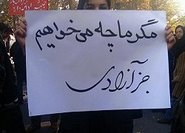





 Tulips in Holland