

911 Links & Videos
We've included links to investigative sites, video documentaries, and articles so that you may come to your own conclusions about PEAK OIL and the events of 9/11. Because a democracy depends on an informed citizenry, we strongly recommend reading "Crossing the Rubicon" by Michael C. Ruppert, one of the most comprehensive investigative reports ever written, as well as the extensive library of work listed at 911Truth.org and these other sites.
SEE HERE : http://www.theshellgame.net/links2.htm
Alian Gods
Alien Gods
Add to My Profile | More Videos
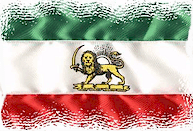
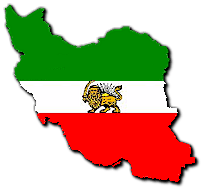
IMPERIAL EMBLEM

PERSIA
Iranian Freedom Fighters UNITE
Showing posts with label al quada. Show all posts
Showing posts with label al quada. Show all posts
Thursday, March 06, 2008


Friday, February 29, 2008
Monday, November 26, 2007
Annapolis: Peace In Someone Else's Time : November 26, 2007 It's all about who shows up...
On the face of it, the Annapolis peace parley that starts today looks like a colossal waste of time, says Jules Crittenden. Neither Ehud Olmert nor Mahmoud Abbas are currently in a political position to make real concessions or deliver on them. Still, this gathering will make clear who in the Middle East seeks peace and who does not - and that’s worth something.
Please read the rest of this article here: http://tinyurl.com/2w8qcl
IRAQI SECURITY FORCES, U.S. SPECIAL FORCES DETAIN 3, UNCOVER 18 IEDS IN SEPARATE OPERATIONS
COALITION FORCES CAPTURE CRIMINAL ELEMENT LEADER, TWO OTHERS DETAINED
Iranian Regime Fears Its People : 23 November 2007
Iranian Regime Fears Its People (MP3)
Listen to Iranian Regime Fears Its People (MP3)
Iranian Regime Fears Its People (Real Player) - Download
Listen to Iranian Regime Fears Its People (Real Player)
Vice President Dick Cheney says that the Iranian people “are living in a climate of fear and intimidation”: “With secret police, arbitrary detentions, and a hint of violence in the air. In the space of a generation, the regime has solidified its grip on the country and grown ever more arrogant and brutal toward the Iranian people. Journalists are intimidated. Religious minorities are persecuted. A good many dissidents and freedom advocates have been murdered, or have simply disappeared. Visiting scholars who’ve done nothing wrong have been seized and jailed.” Consider the case of French-Iranian filmmaker Mehrnoushe Solouki. Ms. Solouki went to Iran in December 2006 to make a film about the burial traditions of Iran’s religious minorities. In a telephone interview with Radio Farda, Ms. Solouki said that in the course of her work, she happened upon a section of Khavaran cemetery south of Tehran which was “totally different” from other parts she had seen. It was the section where some of the thousands of political prisoners summarily executed by the Iranian clerical regime in 1988 were interred in a mass grave. In February of this year, police stormed Ms. Solouki’s Tehran apartment. She was arrested and thrown into Evin prison. After a month in Evin, Ms. Solouki was released, but she has not been allowed to leave Iran. On November 17 she was questioned by a judge at a closed-door hearing. A trial was postponed to a yet-to-be determined date. Reportedly she is being charged with the so-called crime of intending to spread propaganda against the Iranian government. Ms. Solouki says she feels as if she is in limbo, “between life and death.” Others who have gone to Khavaran cemetery have also been arrested. They include six people who took part in an August ceremony marking the nineteenth anniversary of the “prison massacres” of 1988. A seventh person, twenty-two-year-old Masoumeh Mansouri was arrested after making inquiries about her father, who had attended the commemoration ceremony. All seven are being held in Evin prison.The Iranian clerical regime seems frightened of both the dead and the living. But as Vice President Cheney says, “The Iranian people have every right to be free from oppression. . .and tyranny in their own country.”
ONCE A TERRORIST - ALWAYS A TERRORIST
Iran May Seek to Lure Europe with Gas - Iran wants to use its massive gas reserves to wield influence over Europe. But if offering to supply Europe with gas via a pipeline through Turkey doesn't work, then the Revolutionary Guards may resort to plan B.
Iran's huge gas reserves, Europe's energy needs and the US's hard line on Iran's nuclear program all add up to an explosive mixture.Iran is planning to leverage its massive gas reserves to increase its influence in Western Europe -- by fair means or foul. If selling gas to Europe doesn't work, then Iran's Revolutionary Guards may resort to violence in the worst-case scenario. According to intelligence sources in the Middle East, Iranian leaders are considering making an unusual offer to supply Europe with large quantities of natural gas. The gas would be supplied via the planned Nabucco pipeline, which will run from Azerbaijan to Austria via Turkey. The offer would be attractive to European leaders as it would allow Europe to reduce its dependence on Russian natural gas. Germany currently gets about a third of its natural gas requirements from Russia, and demand is expected to increase in the coming years. There are major concerns in Europe about the continent relying too heavily on Russia for its natural gas, particularly after a series of recent disputes in which Russia cut off energy supplies to Ukraine and Belarus.According to minutes of a meeting obtained by SPIEGEL, a representative of Iran's Revolutionary Guard presented the proposal to Iran's National Security Council. The order to prepare the plan apparently came directly from Iran's supreme leader, Ayatollah Ali Khamenei, according to the intelligence sources. Construction work on the Nabucco pipeline is expected to begin in 2009 and to be finished by 2011. The pipeline, which is being built by a consortium headed by the Austrian company OMV, will have a total length of 3,300 kilometers and cost around €5 billion. However the pipeline is controversial within the European Union and Moscow has already made its opposition to the project clear.The planned Nabucco pipeline could be used to pipe Iranian natural gas to Europe.The project only makes economic sense if the pipeline is used to full capacity -- and Azerbaijan's natural gas reserves are not sufficient to guarantee that. Hence Iran, which has the world's second largest natural gas reserves after Russia, is the obvious natural partner for the project. Tehran has yet to make an official offer, however. And any overture could cause political friction between the US and Europe: The US government has demanded that Berlin and Paris take clear diplomatic and economic action against Tehran over its suspected nuclear weapons program. German Chancellor Angela Merkel recently assured US President George W. Bush that Germany would apply strong economic pressure on Tehran (more...). Increased sanctions could make Iran's economy vulnerable.
However if a carrot doesn't work, then Iran might resort to a stick. Other alternatives were apparently also discussed at the meeting in Tehran. Iran's elite Quds force, a branch of the Revolutionary Guards, are reported to be charged with looking into possible ways to disrupt Berlin's energy partnership with Russia -- for example through terrorist actions against the planned Baltic Sea pipeline (more...) between Russia and Germany.
Iran's Response to Western Warnings: 'First Strike,' 'Preemptive Attack,' Long-Range Ballistic Missiles, 'Asymmetric [Guerilla] Warfare' : By: Y. Mansharof and A. Savyon
Introduction
As the Iranian nuclear crisis escalates, Iranian officials have stepped up their threats against the West. Although regime spokesmen have stressed that Iran's security doctrine is defensive,(1) the threats issued by senior Iranian leaders and officials indicate that Iran's actual strategy for responding to a Western attack is taking on increasingly offensive and deterrent characteristics.
While in February 2003, then-defense minister Ali Shamkhani stated, "Iran has a deterrent defensive doctrine, which means that it will in no way take an offensive measure... Iran's objectives are of a defensive nature,"(2) - the new strategy is gradually revealed in both deeds and statements by regime spokesmen.(3) .The offensive elements of this doctrine include a "first strike" and "preemptive attack"; the development of long-range ballistic missiles (the Qadr and the Ashura(4)) with ranges of up to 2,000 km; and the development of an "asymmetrical [guerilla] warfare" tactic – that is, suicide bombings in the Persian Gulf, whether to close off the Strait of Hormuz or to hit targets in the Gulf countries.
Please read the full article here: http://tinyurl.com/38cmpv
Monday, November 12, 2007
Latest News : British forces to capitalise on Taliban 'split' By Tom Coghlan in Sangin, Helmand province
Progress in Northern, Western Baghdad 'Remarkable'
WASHINGTON - The transformation of the northern and western outskirts of Baghdad "has been nothing short of remarkable," the commander of 1st Cavalry Division's 1st Brigade Combat Team operating there said today.Nov 13, 2007,
Concerned Local Citizen Groups Aid Progress in Iraq
WASHINGTON - Captures of al Qaeda operatives and seizures of weapons caches in Iraq are up, and casualties are down, a senior military official in Baghdad told online journalists and "bloggers" today.Nov 13, 2007,
Coalition Troops Kill Terrorist, Detain 14 in Iraq
WASHINGTON - Coalition forces killed one insurgent and detained 14 others today during a series of operations across central and northern Iraq, military officials said.Nov 13, 2007, Coalition, Afghan Forces Kill Enemy Fighters
WASHINGTON - Afghan national security forces and coalition forces engaged and killed a large group of insurgents today near the Deh Rawod district of Afghanistan's Oruzgan province.
Terrorist Facilitators Detained in Zabul Province
WASHINGTON - An Afghan and coalition operation in Afghanistan's Ghazni province yesterday resulted in the detention of five people suspected of being foreign-fighter facilitators.
Coalition Forces Detain Dozens in Iraq Operations
WASHINGTON - Coalition forces detained 16 suspects, including three wanted individuals, during operations today to disrupt al Qaeda in Iraq and foreign terrorist operations in central and northern Iraq.
Frontline: Our soldiers fighting in Iraq and Afghanistan
British commanders have pushed an armoured column deep into Taliban-held territory in southern Afghanistan, threatening the stronghold of Musa Qala as commanders seek to capitalise on a rift within enemy ranks.
Senior British officers told The Daily Telegraph that the convoy of more than 50 armoured vehicles from the Scots Guards is designed to "disrupt and confuse" the Taliban. The operation in northern Helmand province comes with the Taliban apparently facing internal splits. One of the four senior Taliban commanders in the area, Mullah Abdul Salaam, has been in negotiations with the Afghan government and indicated that he wishes to defect with up to a third of the forces defending Musa Qala.Intelligence reports suggest that the Taliban are anticipating an imminent full-scale assault on the town by British forces, who refused to speculate on whether such an attack is planned.The Daily Telegraph accompanied Bravo Company from 40 Commando of the Royal Marines last week as they initiated the push north, driving across the Helmand river north of Sangin to create a bridgehead for the Scots Guards convoy.The operation, which came under fire from Taliban fighters armed with rockets, mortars and rocket-propelled grenades (RPGs), could not be reported until now because of the sensitivity of the unfolding tactical situation in HelmandUnder salmon pink dawn skies, the Marines began their advance in Viking armoured vehicles by fording the Helmand river.In the fields beyond - an area of rich farmland and numerous compounds where local farmers were busy sowing next year's hugely lucrative opium crop - men in black turbans watched their passage in silent apprehension."Don't expect any smiles up there, there's heavy Taliban influence," said Maj Dan Cheeseman, commander of Bravo Company, in a pre-operation briefing.Two hours after they crossed the river a dull thud announced the arrival of the first Taliban mortar shell as the Marines stopped south of a drab hamlet called Khor Ghak.Engineers from the Royal Gurkha Rifles set about filling an irrigation ditch, knocking down walls and trees and driving a roadway through the edge of the village to clear a route for the Scots Guards to reach the open country beyond. The inhabitants watched with unconcealed dismay."If you come here, then the Taliban will also come here and we will suffer," said Haji Allah Jan, the elderly headman of the village, whose white beard and turban were offset with a pair of antiquated red spectacles missing one lens."We will pay compensation for any damage we cause," Maj Cheeseman told him. "Can my Engineers build anything you might need, a well perhaps?""No," replied the headman gloomily. He assessed that the damage would cost $20,000 to fix, a figure the British forces' interpreters suggested was vastly exaggerated. The village later accepted $550.From old Soviet-built trench positions in the hills above, Marines traded fire with Taliban fighters to the north, who fired mortar, 107mm rockets and RPGs.Accurate Taliban fire later in the day forced the convoy to delay pushing northwards till the following morning and left the Marines facing a freezing night in the open.American jets flew repeated low level passes during the hours of darkness to dissuade the Taliban from a night attack.According to Afghan intelligence sources, the Taliban mortar units are receiving instruction from Iranian instructors in Musa Qala.One round narrowly missed a weapons-mounted Land Rover parked just behind the ridge. The Marines responded with heavy machine gun fire and artillery fire missions from British 105mm howitzers firing from several miles to the south.The Marine spotters watched as Taliban fighters initially fled the area under fire but then re-occupied trench positions.Plumes of smoke marked the impact point of shells before an Apache helicopter was guided in to attack with its cannon. It did so with an explosive clatter that echoed across the valley floor.With the Scots Guards pushing forward towards Musa Qala, the Taliban then attempted to draw them southward again by attacking a British forward operating base on the edge of Sangin. Several Marines were injured, two of them seriously, and two Afghan soldiers were killed.Fighting around Sangin has reduced since British forces pushed Taliban fighters north in April and swept the area during the summer. However, British commanders remain wary of a Taliban resurgence.Intelligence officers believe they are seeing a sustained drop in the number of local people willing to fight with the Taliban — it is now the season for the season for the maize harvest and opium poppy planting — but this is being compensated by an increase in foreign fighters, most of them from Pakistan.Musa Qala has become a talisman for the Taliban leadership since the insurgents took it in March. British military officials said another unit was pushing overnight into the area to the west of Musa Qala. Officials declined to identify the unit, which was said to be "company strength", or in excess of 100 men.With the Scots Guards already to the south-east of the town, one senior military source said: "The pressure is mounting around Musa Qala."
Wednesday, August 15, 2007
News from the front lines : Iraq - Baghdaad
Homicide Bombers Kill at Least 200 in Iraq
http://www.foxnews.com/printer_friendly_story/0,3566,293288,00.html
Just north of the capital, a homicide truck bomber devastated a key bridge on the highway linking Baghdad with Mosul. Police said at least 10 people died. The Thiraa Dijla bridge in Taji — near a U.S. air base 12 miles north of the capital — also was bombed three months ago, leaving only one lane open. The violence punctuated a day when 16,000 U.S. and Iraqi soldiers began a sweep through the Diyala River valley in a new operation north of Baghdad in pursuit of Sunni insurgents and Shiite militiamen driven out of Baqouba and Anbar province over the past several weeks. Lt. Col. Michael Donnelly, a military spokesman in northern Iraq, said the force included 10,000 Americans and 6,000 Iraqis. He said U.S. aircraft used more than 30,000 pounds of munitions to block routes and destroy known and suspected heavy machine gun positions.The Air Force also dropped 9,000 pounds of bombs to attack an Al Qaeda in Iraq training camp, which included bunkers, living quarters, weapons and ammunition caches, Donnelly said. Three suspected militants had been killed and four booby-trapped houses destroyed, he said, citing preliminary reports. In Washington, Defense Department spokesman Bryan Whitman said the new operation was one in a series planned over the next 30 days to try to blunt expected attempts by Al Qaeda in Iraq to influence events during "this critical period" as the top U.S. commander in Iraq, Gen. David Petraeus, plans his assessment for Congress.
"We fully expect that Al Qaeda in Iraq would like to increase their attacks during this critical period," Whitman said Tuesday. "And this increased intensity in offensive operations ... will take the fight to the enemy with the purpose of improving the overall security situation in Baghdad" as well as increase "pressure on Al Qaeda in Iraq countrywide and prevent the enemy from conducting their own operations."
Complete coverage is available in FOXNews.com's Iraq Center.
Raid Kills Four, Nets Eight Terrorists in Baghdad's Sadr CityBy American Forces Press ServiceMichNews.comAug 14, 2007
http://www.michnews.com/artman/publish/article_17598.shtml
WASHINGTON - Coalition forces killed four terrorists and detained a Jaysh al-Mahdi militia leader and several of his operatives during a raid in the Sadr City section of Baghdad early this morning.
Coalition Troops Launch Operation Phantom Strike in IraqMichNews.com-- WASHINGTON - Coalition soldiers today launched a major joint offensive, Operation Phantom Strike, in a powerful crackdown to disrupt al Qaeda and Iranian-supported extremist operations in Iraq.Aug 14, 2007, 20:26 ETNewswireCoalition Forces Capture, Kill Insurgents in IraqMichNews.com-- WASHINGTON - Iraqi and coalition forces detained 66 insurgents, killed five others and discovered weapons in Iraq over the past three days, military officials said.Aug 14, 2007, 20:24 ET
Troops Kill, Capture Insurgents, Discover Weapons in Afghanistan
MichNews.com-- WASHINGTON - Afghan forces working in concert with coalition forces netted three suspects and a weapons cache and killed several insurgents in Afghanistan over the past three days.Aug 14, 2007, 20:19 ET
Bush threatens IRAN
Monday, July 23, 2007
Bush Aide: Military Could Go Into Pakistan
WASHINGTON, July 22, 2007
(CBS/AP) The U.S. would consider military force if necessary to stem al Qaeda's growing ability to use its hideout in Pakistan to launch terrorist attacks, a White House aide said Sunday. The president's homeland security adviser, Fran Townsend, said the U.S. was committed first and foremost to working with Pakistan's president, Pervez Musharraf, in his efforts to control militants in the Pakistan-Afghanistan border region. But she indicated the U.S. was ready to take additional measures. "Just because we don't speak about things publicly doesn't mean we're not doing things you talk about," Townsend said, when asked in a broadcast interview why the U.S. does not conduct special operations and other measures to cripple al Qaeda. "Job No. 1 is to protect the American people. There are no options off the table," she said. The national intelligence director, Mike McConnell, said he believed that Osama bin Laden was living in the tribal, border region of Pakistan. Bin Laden is the leader of the al Qaeda network and mastermind of the Sept. 11 attacks. McConnell said Musharraf's attempt at a political solution to peace in the region had backfired by giving al Qaeda a place and time to regroup. "Al Qaeda has been able to regain some of its momentum," McConnell said. "The leadership's intact. They have operational planners, and they have safe haven. The thing they're missing are operatives inside the United States." In the National Intelligence Estimate released last week, analysts stressed the importance of al Qaeda's increasingly comfortable hideout in Pakistan that has resulted from a hands-off accord between Musharraf and tribal leaders along the Afghan border. That 10-month-old deal, which has unraveled in recent days, gave al Qaeda new opportunities to set up compounds for terror training, improve its international communications with associates and bolster its operations. Since then, U.S. officials have said they expect Pakistan to launch more military strikes on Islamic militants while the Bush administration pumps hundreds of millions of dollars in development aid into lawless tribal regions to fight extremism. On Sunday, Townsend reiterated the importance of Musharraf's efforts. "We should also be clear that we believe Pakistan has been a very good ally in the war on terrorism," she said. "Musharraf has been the subject of numerous assassination attempts. Al Qaeda's trying to kill him. They get what the problem is. And we're working with them to deny al Qaeda and the Taliban the safe haven." McConnell also sought to bolster the leader of Pakistan, a key U.S. partner in its fight against terrorism. "President Musharraf is one of our strongest allies," McConnell said. Townsend spoke on "Fox News Sunday" and "Late Edition" on CNN. McConnell appeared on "Meet the Press" on NBC. The National Intelligence Estimate also suggested that al Qaeda was regaining strength and reconstituting its leadership in Pakistan in part because of increasing terrorism activity in Iraq. Critics have charged the administration with pulling resources from the hunt for bin Laden along the Afghanistan-Pakistan border to prosecute a war in Baghdad which has subsequently strengthened the terror group. On Tuesday Townsend said that U.S. military efforts in Afghanistan and Iraq are connected. "These aren't separate conflicts," she said. "These are clearly a single conflict by a single determined enemy who is looking for safe haven. And if they don't have safe haven in Afghanistan, they look for safe haven someplace else. "They'd like to find it — and bin Laden has been quite clear — they'd like to find it in Iraq. But if they don't find it in Iraq, they're going to look someplace else, whether that's northern Mali, in the Maghreb or that's Somalia in West Africa."
Homeland Security Adviser Leaves Force on Table to Deal With Al Qaeda in Pakistan
WASHINGTON — The U.S. would consider military force if necessary to stem Al Qaeda's growing ability to use its hideout in Pakistan to launch terrorist attacks, a White House aide said Sunday. The Senate's top Democrat endorsed that approach. The president's homeland security adviser, Fran Townsend, said the U.S. was committed first and foremost to working with Pakistan's president, Pervez Musharraf, in his efforts to control militants in the Pakistan-Afghanistan border region. But she indicated the U.S. was ready to take additional measures.
"Just because we don't speak about things publicly doesn't mean we're not doing things you talk about," Townsend said, when asked in a broadcast interview why the U.S. does not conduct special operations and other measures to cripple Al Qaeda."Job No. 1 is to protect the American people. There are no options off the table," she said. Townsend also said, "No question that we will use any instrument at our disposal" to deal with Al Qaeda and its leader, Usama bin Laden.
Responding to earlier comments by Townsend, Pakistan's foreign minister, Khurshid Kasuri, said Sunday that the country's military was in the best position to attack Al Qaeda, if the U.S. provided intelligence.The national intelligence director, Mike McConnell, said he believed that bin Laden was living in the tribal, border region of Pakistan. Bin Laden is the leader of the Al Qaeda network and mastermind of the Sept. 11 attacks.McConnell said Musharraf's attempt at a political solution to peace in the region had backfired by giving Al Qaeda a place and time to regroup."Al Qaeda has been able to regain some of its momentum," McConnell said. "The leadership's intact. They have operational planners, and they have safe haven. The thing they're missing are operatives inside the United States."In the volatile northwest tribal region of Pakistan, Islamic militants detonated bombs close to military convoys and attacked government positions on Sunday, leading to gunfights that left 19 insurgents dead, government officials said. The fighting was the latest since militants announced the termination of a peace agreement with the government last week following a deadly military raid on a radical mosque in the Pakistani capital.In the National Intelligence Estimate released last week, analysts stressed the importance of Al Qaeda's increasingly comfortable hideout in Pakistan that has resulted from a hands-off accord between Musharraf and tribal leaders along the Afghan border.That 10-month-old deal, which has unraveled in recent days, gave Al Qaeda new opportunities to set up compounds for terror training, improve its international communications with associates and bolster its operations.Since then, U.S. officials have said they expect Pakistan to launch more military strikes on Islamic militants while the Bush administration pumps hundreds of millions of dollars in development aid into lawless tribal regions to fight extremism.On Sunday, Townsend reiterated the importance of Musharraf's efforts."We should also be clear that we believe Pakistan has been a very good ally in the war on terrorism," she said. "Musharraf has been the subject of numerous assassination attempts. Al Qaeda's trying to kill him. They get what the problem is. And we're working with them to deny Al Qaeda and the Taliban the safe haven."McConnell also sought to bolster the leader of Pakistan, a key U.S. partner in its fight against terrorism. "President Musharraf is one of our strongest allies," McConnell said.
Senate Majority Leader Harry Reid, D-Nev., said he agreed with Townsend that the U.S. should consider going after Al Qaeda militarily "wherever they are.""We have the NIE report, which just came out, that says Al Qaeda during this administration is stronger than ever. I don't think we should take anything off the table. Wherever we find these evil people we should go get them," Reid said.But Kasuri said Pakistan was ready to act on any intelligence from the U.S.
"Let the United States provide us with actionable intelligence and you will find that Pakistan will never be lacking," he said. "Pakistan's army can do the job much better and the result will be that there will be far less collateral damage."The new U.S. intelligence estimate said Al Qaeda is using its growing strength in Pakistan and Iraq to plot attacks on U.S. soil, heightening the terrorist threat facing the United States over the next few years. In particular, it warned that through its affiliate in Iraq, Al Qaeda is able to recruit and energize extremists for attacks.
McConnell, the nation's intelligence chief, acknowledged that the war in Iraq has served as a recruiting tool for Al Qaeda. He said coalition forces and local leaders have had some successes in knocking back the terrorist network, particularly in the western region of the country.But when asked if Al Qaeda has a larger, more robust presence in Iraq than before the war began, McConnell said, "That's fair to say."
Al-Qaeda faces rebellion from the ranks: Deborah Haynes in Doura
Sickened by the group’s barbarity, Iraqi insurgents are giving information to coalition forces
Fed up with being part of a group that cuts off a person’s face with piano wire to teach others a lesson, dozens of low-level members of al-Qaeda in Iraq are daring to become informants for the US military in a hostile Baghdad neighbourhood. The ground-breaking move in Doura is part of a wider trend that has started in other al-Qaeda hotspots across the country and in which Sunni insurgent groups and tribal sheikhs have stood together with the coalition against the extremist movement. “They are turning. We are talking to people who we believe have worked for al-Qaeda in Iraq and want to reconcile and have peace,” said Colonel Ricky Gibbs, commander of the 4th Brigade, 1st Infantry Division, which oversees the area. The sewage-filled streets of Doura, a Sunni Arab enclave in south Baghdad, provide an ugly setting for what US commanders say is al-Qaeda’s last stronghold in the city. The secretive group, however, appears to be losing its grip as a “surge” of US troops in the neighbourhood – part of the latest effort by President Bush to end the chaos in Iraq – has resulted in scores of fighters being killed, captured or forced to flee. “Al-Qaeda’s days are numbered and right now he is scrambling,” said Lieutenant-Colonel Stephen Michael, who commands a battalion of 700 troops in Doura. A key factor is that local people and members of al-Qaeda itself have become sickened by the violence and are starting to rebel, Lieutenant-Colonel Michael said. “The people have got to deny them sanctuary and that is exactly what is happening.” Al-Qaeda informants comprise largely members of the Doura network who found themselves either working with the group after the US-led invasion in March 2003, or signed up to earn extra cash because there were no other jobs going. Disgusted at the attacks and intimidation techniques used on friends, neighbours and even relatives, they are now increasingly looking for a way out, US officers say. “It is only after al-Qaeda has become truly barbaric and done things like, to teach lessons to people, cut their face off with piano wire in front of their family and then murdered everybody except one child who told the tale afterwards . . . that people realise how much of a mess they are in,” Lieutenant James Danly, 31, who works on military intelligence in Doura, said. It is impossible to corroborate the claims, but he said that scores of junior al-Qaeda in Iraq members there had become informants since May, including one low-level cell leader who gave vital information after his arrest. “He gave us dates, places and names and who did what,” Lieutenant Danly said. When asked why he was being so forthcoming, the man said: “Because I am sick of it and I hate them, and I am done.” Working with insurgents – even those who claim to have switched sides – is a leap of faith for both sides. Every informant who visits Forward Operating Base Falcon, a vast military camp on the southern outskirts of Baghdad, is blindfolded when brought in and out to avoid gleaning any information about his surroundings. The risk sometimes pays off. A recent tip-off led to the fatal shooting of Abu Kaldoun, one of three senior al-Qaeda leaders in Doura, during a US raid last week. “He was turned in by one of his own,” Colonel Michael said.
Progress with making contacts and gathering actionable information is slow because al-Qaeda has persuasive methods of keeping people quiet. This month it beheaded two men in the street and pinned a note on to their corpses giving warning that anyone who cooperated with US troops would meet the same fate. The increased presence of US forces in Doura, however, is encouraging insiders to overcome their fear and divulge what they know. Convoys of US soldiers are working the rubble-strewn streets day and night, knocking on doors, speaking to locals and following up leads on possible insurgent hideouts. “People in al-Qaeda come to us and give us information,” said Lieutenant Scott Flanigan, as he drove past a line of fruit and vegetable stalls near a shabby shopping street in Doura, where people were buying bread and other groceries.
The informants were not seeking an amnesty for crimes that they had committed. “They just do not want to be killed,” Lieutenant Flanigan said. Jordanian-born Abu Musab al-Zarqawi – who was killed in a US raid last year – established the Iraqi al-Qaeda network in 2004, but opinions differ on its compilation, size and capabilities. Some military experts believe that the group is a cell-based network of chapters who are loosely linked to an overall leader by go-between operatives. Others, however, describe al-Qaeda in Iraq as a sort of franchise, with separate cells around the country that use the brand – made infamous by Osama bin Laden – and cultural ideology but do not work closely with each other or for one overriding leader. Despite the uncertainties one thing seems guaranteed. A hardcore of people calling themselves al-Qaeda in Iraq remains devoted to the extremist cause and is determined to fight on whatever the cost.
Friday, July 20, 2007
NEWS FROM THE FRONT LINES
Al Qaeda in Iraq Duped Into Following Foreigners
WASHINGTON - A captured al Qaeda in Iraq leader has admitted the network's followers have been duped into following the direction of foreign leaders, not Iraqis, a military spokesman in Baghdad said today. Jul 19, 2007, 09:56
Terrorists: Using our liberties against us : Robert E. Meyer --
I recently heard about a statement from a discussion that allegedly occurred between an Islamic student attending an American university, and a traditional America student. The following statement may well be a fictitious conversation based in urban legend, but it is an accurate anecdote of the real threat America faces from the ideology of radical Islamic extremism. The Islamic student apparently stated resolutely, "Because of your Democracy we will invade you. Because of my religion we will dominate you." It rings as almost a parallel to the prophetic proclamation of Nikita Kruschev, who uttered from an Iowa cornfield during his excursion of the U.S., "we will bury you."Jul 19, 2007,
Thursday, 19 July 2007
Statement from Multi-National Force-Iraq condemning bridge attacks in Al Anbar
Thursday, 19 July 2007
Three Suspected Special Groups Terrorists Detained by Coalition Forces
Thursday, 19 July 2007
MND-B patrol struck by improvised explosive device
Thursday, 19 July 2007
Five militia suspects detained in Karkh
Thursday, 19 July 2007
Soldiers charged with murder
Thursday, 19 July 2007
ISF, CF continue clearing ‘Old Baqouba’
Thursday, 19 July 2007
Task Force Marne Soldier attacked
Thursday, 19 July 2007
12 detained in Coalition operations
Thursday, 19 July 2007
Iraqi informants lead U.S. Soldiers to weapons, IED caches
Thursday, 19 July 2007
Spartans strike dual targets for Marne Avalanche
Thursday, 19 July 2007
Senior al-Qaeda in Iraq foreign terrorist identified
Wednesday, 18 July 2007
Militia rounds fall in Baghdad civilian communities
Wednesday, 18 July 2007
MNC-I Soldiers targeted by IED
Wednesday, 18 July 2007
Iraqi National Police officers graduate from NCO Course
Wednesday, 18 July 2007
Central Baghdad car bomb blast kills four, wounds four
Wednesday, 18 July 2007
MND-B patrol struck by roadside bomb
Wednesday, 18 July 2007
Coalition Forces take offensive into eastern Baqouba
Wednesday, 18 July 2007
Iraq Army and Coalition Forces detain two al-Qaeda Iraq leaders in Baghdad
Wednesday, 18 July 2007
10 Iraqis killed in Rusafa car bomb attack
Wednesday, 18 July 2007
Coalition Forces kill three terrorists, detain two suspects
Wednesday, 18 July 2007
Update: Detainee captured June 28 identified
Thursday, July 19, 2007
The Revolution Strikes Back
An uncompromising Iran and an uncomprehending America may be stumbling to war, says Peter David .
http://iranvajahan.net/cgi-bin/news.pl?l=en&y=2007&m=07&d=19&a=12
and : The Riddle of Iran: July 19, 2007 The Economist Nuclear Proliferation
Iran's leaders think a nuclear weapon could rejuvenate their tired revolution. How can they be stopped? “The Iranian regime is basically a messianic apocalyptic cult.” So says Israel's once and perhaps future prime minister, Binyamin Netanyahu. If he is right the world is teetering on the edge of a terrifying crisis.
http://iranvajahan.net/cgi-bin/news.pl?l=en&y=2007&m=07&d=19&a=13
AND THIS : Iran's Evin Prison Likened to Torture Chamber : July 19, 2007 Morning Edition National Public Radio
Former student leader Ali Afshari was imprisoned in Iran's Evin Prison, the same prison now holding two Americans. Human rights lawyer Mehrangiz Kar was thrown in prison after giving a speech the government disliked. They spoke with Steve Inskeep. Listen to NPR's Morning Edition here
Al-Qaida Menace Is In Iran, Too
Editorial's & Opinion : Investor's Business Daily
That the latest U.S. intelligence outlook still sees al-Qaida as our main foe is no surprise. What is surprising is that the terrorist group seems to have found a welcome home in Iran. According to the new National Intelligence Estimate, the U.S. remains threatened by al-Qaida's presence in Iraq, making talk of withdrawing from that country before we vanquish the threat akin to a senseless, unilateral surrender. "Of note," says the report, "we assess that al-Qaida will probably seek to leverage contacts and capabilities of al-Qaida in Iraq, its most visible and capable affiliate and the only one known to have expressed a desire to attack the homeland. "As a result," the report continues, "we judge that the United States currently is in a heightened threat environment." One good thing to emerge from the report: Though we live in a "heightened threat environment" for terrorism, al-Qaida's ability to attack the U.S. has been "constrained" since 2001 thanks to global counterterrorism efforts. This represents the best thinking of all 16 U.S. spy agencies. It is important to remember this as Democrats pull their little all-night talk-fest, trying to force a withdrawal from Iraq even as the war, thanks to the surge strategy implemented by Gen. David Petraeus, becomes ever more winnable. But here's the bad part: Al-Qaida is, even now, trying to get its hands on weapons of mass destruction — chemical, biological and, scariest of all, nuclear. Given this, our question to those senators who spent the evening Tuesday debating a U.S. pullout from Iraq would be: What happens if the U.S. pulls out of Iraq, and al-Qaida then gets control of that country's immense oil wealth? And how long do you think it will take them to get a nuclear weapon — either on the still-existent black market for nukes, or from a friendly third party, or by reconstituting Saddam's old program?
The picture grows even worse when you consider that the battle against al-Qaida isn't just in Iraq or, as some Democrats would have it, Afghanistan. No, al-Qaida has found haven in the so-called tribal lands of Waziristan, Pakistan's Western frontier with Afghanistan. Worse still, it's also in Iran. That's right: Al-Qaida leaders regularly meet in the mountains of eastern Iran, according to New York Sun columnist Eli Lake, citing a final working draft of the NIE. Iran has, in effect, made it possible for al-Qaida to function even as we hunt down its leaders in Afghanistan and Iraq. It's aiding and abetting our enemy. Here's how it works. Al-Qaida now has two known leadership "councils" dubbed Shura Majlis. One meets in Pakistan's federally administered tribal areas, the other in Iran. The one operating in Iran does so with the aid of Iran's Quds force, the terrorist support group that has helped both Shiite and Sunni militias in Iraq kill American soldiers and Iraqi civilians alike. "In the past year," writes Lake, "the multinational Iraq command force has intercepted at least 10 couriers with instructions from the Iran-based Shura Majlis. In addition, two senior leaders of al-Qaida in 2006 have shared details of the Shura Majlis in Iran."
Those details include the fact that senior al-Qaida members have taken up residence in Lavizan, a military base near Tehran; Chalous, a Tehran suburb; Mashod, a Shiite holy city; and Zabul, a town near the Afghanistan border. If true — and there's little reason to believe it isn't — this is a blockbuster revelation, adding to the already long list of reasons for taking action against Iran. We've pledged to pursue al-Qaida to the ends of the earth — an idea that even the soft-on-security Democrats have signed off on. Well, today it appears that al-Qaida, the group responsible for the murder of 3,000 American civilians, has found a comfortable home in Iran. Yet, the U.S. is about to embark on direct talks with Iran about its "continued behavior that is leading to further instability in Iraq," a State Department spokesman said. We're not schooled in the delicate nuances of diplomatese. But at the very least, we'd like our envoys to look across the table and issue an ultimatum to Iran's representative: Expel al-Qaida, a group that's at war with the U.S. and the West, and hand its leaders over. Or consider yourselves at war with us. Then pause, take a drink of the bottled water, and wait for a response.
Wednesday, July 18, 2007
Rejoice , Rejoice , Happiness is near.
U.S. Military Says Top al-Qaida in Iraq Figure Captured : The Associated Press- BAGHDAD
The U.S. command said Wednesday the highest-ranking Iraqi in the leadership of al-Qaida in Iraq has been arrested, adding that information from him indicates the group's foreign-based leadership wields considerable influence over the Iraqi chapter. Khaled Abdul-Fattah Dawoud Mahmoud al-Mashhadani, also known as Abu Shahid, was captured in Mosul on July 4, said Brig. Gen. Kevin Bergner, a military spokesman. "Al-Mashhadani is believed to be the most senior Iraqi in the al-Qaida in Iraq network," Bergner said.
He said al-Mashhadani was a close associate of Abu Ayub al-Masri, the Egyptian-born head of al-Qaida in Iraq. Bergner said al-Mashhadani served as an intermediary between al-Masri and Osama bin Laden and al-Qaida No. 2 Ayman al-Zawahri. "In fact, communication between the senior al-Qaida leadership and al-Masri frequently went through al-Mashhadani," Bergner said. "Along with al-Masri, al-Mashhadani co-founded a virtual organization in cyberspace called the Islamic State of Iraq in 2006," Bergner said. "The Islamic State of Iraq is the latest efforts by al-Qaida to market itself and its goal of imposing a Taliban-like state on the Iraqi people." In Web postings, the Islamic State of Iraq has identified its leader as Abu Omar al-Baghdadi, with al-Masri as minister of war. There are no known photos of al-Baghdadi. Bergner said al-Mashhadani had told interrogators that al-Baghdadi is a "fictional role" created by al-Masri and that an actor is used for audio recordings of speeches posted on the Web. "In his words, the Islamic State of Iraq is a front organization that masks the foreign influence and leadership within al-Qaida in Iraq in an attempt to put an Iraqi face on the leadership of al-Qaida in Iraq," Bergner said. He said al-Mashhadani was a leader of the militant Ansar al-Sunnah group before joining al-Qaida in Iraq 2 1/2 years ago. Al-Mashhadani served as the al-Qaida media chief for Baghdad and then was appointed the media chief for the whole country. Al-Qaida in Iraq was proclaimed in 2004 by Jordanian-born Abu Musab al-Zarqawi, who led a group called Tawhid and Jihad, responsible for the beheading of several foreign hostages, whose final moments were captured on videotapes provided to Arab television stations. Al-Zarqawi posted Web statements declaring his allegiance to bin Laden and began using the name of al-Qaida in Iraq. Al-Zarqawi was killed in a U.S. airstrike in Diyala province in June 2006 and was replaced by al-Masri. The degree of control and supervision between bin Laden's clique and the Iraq branch has been the subject of debate, with some private analysts believing the foreign-based leadership plays a minor role in day to day operations. However, the U.S. military has released captured letters from time to time, suggesting the foreign-based leaders provide at least broad direction.
Iran Is Found To Be a Lair of Al Qaeda : Eli Lake
July 17, 2007 New York Sun
One of two known Al Qaeda leadership councils meets regularly in eastern Iran, where the American intelligence community believes dozens of senior Al Qaeda leaders have reconstituted a good part of the terror conglomerate's senior leadership structure. That is a consensus judgment from a final working draft of a new National Intelligence Estimate, titled "The Terrorist Threat to the U.S. Homeland," on the organization that attacked the World Trade Center on September 11, 2001. The estimate, which represents the opinion of America's intelligence agencies, is now finished, and unclassified conclusions will be shared today with the public. The classified document includes four main sections, examining how Al Qaeda in recent years has increased its capacity to stage another attack on American soil; how the organization has replenished the ranks of its top leaders; nations where Al Qaeda operates, and the status of its training camps and physical infrastructure. The judgment that Iran has hosted Al Qaeda's senior leadership council is likely to draw some criticism from those outside the government who doubt Iran plays a significant role in bolstering Sunni jihadist terrorism. Iran's Shiite Muslims are considered infidels by the Salafi sect of Sunnis that comprise Al Qaeda. While there is little disagreement that a branch of Al Qaeda's leadership operates in Iran, the intelligence community diverges on the extent to which the hosting of the senior leaders represents a policy of the regime in Tehran or the rogue actions of Iran's Quds Force, the terrorist support units that report directly to Iran's supreme leader. In the estimate's chapter on Al Qaeda's replenished senior leadership, three American intelligence sources said, there is a discussion of the eastern Iran-based Shura Majlis, a kind of consensus-building organization of top Al Qaeda figures that meets regularly to make policy and plan attacks. The New York Sun first reported in October that one of the Shura Majlis for Al Qaeda meets in the federally administered tribal areas of Pakistan, one of the areas the Pakistani army this week re-engaged after a yearlong cease-fire. Both Osama bin Laden and his deputy, Ayman al-Zawahri, participate in those meetings. The other Shura Majlis is believed to meet in eastern Iran in the network established after Al Qaeda was driven from Afghanistan in 2001. Following that battle, a military planner trained in the Egyptian special forces, Saif al-Adel, fled to Iran. Mr. Zawahri then arranged with the then commander of Iran's Quds Force, Ahmad Vahidi, for safe harbor for senior leaders. The three main Al Qaeda leaders in Iran include Mr. Adel; the organization's minister of propaganda, Suleiman Abu Ghaith, and the man who some analysts believe is the heir apparent to Mr. bin Laden — one of his sons, Saad bin Laden. The locations of the senior leaders include a military base near Tehran called Lavizan; a northern suburb of Tehran, Chalous; an important holy city, Mashod, and a border town near Afghanistan, Zabul, the draft intelligence estimate says. In 2003, Iran offered a swap of the senior leaders in exchange for members of an Iranian opposition group on America's list of foreign terrorist organizations, the People's Mujahadin. That deal was scuttled after signal intercepts proved, according to American intelligence officials, that Mr. Adel was in contact with an Al Qaeda cell in Saudi Arabia. In the aftermath of the failed deal, Al Qaeda's Iran branch has worked closely in helping to establish the group in Iraq. The late founder of Al Qaeda in Iraq, Abu Musab al-Zarqawi, had multiple meetings with Mr. Adel after 2001. In the past year, the multinational Iraq command force has intercepted at least 10 couriers with instructions from the Iran-based Shura Majlis. In addition, two senior leaders of Al Qaeda captured in 2006 have shared details of the Shura Majlis in Iran. "We know that there were two Al Qaeda centers of gravity. After the Taliban fell, one went to Pakistan, the other fled to Iran," Roger Cressey, a former deputy to a counterterrorism tsar, Richard Clarke, said in an interview yesterday. "The question for several years has been: What type of operational capability did each of these centers have?" A senior fellow at the Council on Foreign Relations and Iran expert, Vali Nasr, said he did not know that the Shura Majlis had reconstituted in eastern Iran, but he did say his Iranian contacts had confirmed recent NATO intelligence that Iran had begun shipping arms to Al Qaeda's old Afghan hosts, the Taliban in Afghanistan. Mr. Nasr, however, said Iran's recent entente with Al Qaeda could be simply a matter of statecraft. "Iran and Al Qaeda do not have to like one another," he said. "They can hate each other, they can kill each other, their ultimate goals may be against one another, but for the short term Iran can unleash Al Qaeda on the United States." Mr. Cressey said the Iranian regime's relationship with Al Qaeda is one of tolerance as opposed to command and control. "I think the Iranians are giving these guys enough latitude to operate to give them another chit in the game of U.S.-Iranian relations," he said. An intelligence official sympathetic to the view that it is a matter of Iranian policy to cooperate with Al Qaeda disputed the CIA and State Department view that the Quds Force is operating as a rogue force. "It is just impossible to believe that what the Quds Force does with Al Qaeda does not represent a decision of the government," the official, who asked not to be identified, said. "It's a bit like saying the directorate of operations for the CIA is not really carrying out U.S. policy." Some intelligence reporting suggests, the source said, that the current chief of the Quds Force, General Qassem Sulamani, has met with Saad bin Laden, Mr. Adel, and Mr. Abu Ghaith. The link between Iran and Al Qaeda is not new, in some cases. The bipartisan September 11 commission report, for example, concluded: "There is strong evidence that Iran facilitated the transit of Al Qaeda members into and out of Afghanistan before 9/11, and that some of these were future 9/11 hijackers." According to the commission, a senior Al Qaeda coordinator, Ramzi bin al-Shibh, said eight of the September 11 hijackers went through Iran on their way to and from Afghanistan.
In 2005, both Undersecretary of State Nicholas Burns and the then ambassador at large for counterterrorism, Cofer Black, disclosed that America believes that senior Al Qaeda leaders reside in Iran.
U.S. Says Iran Knows its Weapons Reaching Taliban : Jon Hemming
July 17, 2007 Reuters
KABUL -- Iranian arms are entering Afghanistan and reaching Taliban insurgents in such quality and quantity that the Tehran government must know about it, the U.S. ambassador to Kabul said on Tuesday. The charge is similar to that made by U.S. Defense Secretary Robert Gates a month ago, rejected by Tehran as "baseless and illogical". But it comes as Iran signaled on Tuesday there was a "high possibility" it would hold a second round of talks with the United States on Iraqi security in the "near future". "There are clearly some munitions coming out of Iran going into the hands of the Taliban," said Ambassador William Wood. "We believe that the quantity and quality of those munitions are such that the Iranian government must know about it," he told reporters. "Beyond that we really can't go." The United States accuses Iran of stoking instability in the Middle East by arming insurgents in Iraq, aiding militants in Lebanon and Gaza and trying to build a nuclear arsenal. Iran denies the charges and says the U.S. military presence in Iraq and Afghanistan, and Washington's support for Israel is the source of instability in the Middle East. U.S. officials said for several months this year they had evidence of Iranian weapons entering Afghanistan, but until Gates spoke a month ago, stopped short of linking the arms to the Iranian government. Afghan President Hamid Karzai has said relations with Iran have never been better and said his government does not have any evidence of Iranian arms reaching the Taliban. Afghanistan has seen a rise in Taliban suicide and roadside bombs in the last two years, but the 50,000 NATO and U.S.-led forces say they have largely thwarted a much-heralded Taliban spring offensive. "For the most part what we have seen has been terroristic violence rather than insurgent violence," said Wood. "The security situation is better, but it doesn't feel better." Iran was at odds with the Taliban government for most of the time it held sway in neighboring Afghanistan from 1996 to 2001 and massed troops on the Afghan border on 1998 after 11 of its diplomats were killed there. It then armed Northern Alliance factions that helped U.S.-led forces overthrow the Taliban after the September 11, 2001 attacks. But political and security analysts based in Kabul say Iran may have an interest in destabilizing Afghanistan so as to discredit U.S. attempts to foster democracy there.
Friday, July 13, 2007
NEWS FROM THE FRONT LINES
7/12/2007 ; ISF, COALITION FORCES CONDUCT OPERATIONS TO BRING SECURITY TO AD DIWANIYAH
7/12/2007 ; SAFE HAVEN DISRUPTED, IRAQI FORCES DETAIN TEN
7/11/2007 ; SUSPECTED SECRET CELL TERRORIST DETAINED BY COALITION FORCES
7/11/2007 ; TWO TERRORISTS KILLED, 20 SUSPECTS DETAINED
7/11/2007 ; IA, CF DISCOVER AL-QAEDA SAFE HOUSE NORTH OF BAQOUBA
Thursday, July 12, 2007
How Iran paid money to the Shea insurgents in Iraq
$282 Million Stolen in Heist at Private Bank in Baghdad : By ALISSA J. RUBIN
BAGHDAD, July 11 — In an astonishing heist, guards at a bank here made off with more than a quarter-billion dollars on Wednesday, according to an official at the Interior Ministry. The robbery, of $282 million from the Dar Es Salaam bank, a private financial institution, raised more questions than it answered, and officials were tight-lipped about the crime. The local police said two guards engineered the robbery, but an official at the Interior Ministry said three guards were involved. Both confirmed that the stolen money was in American dollars, not Iraqi dinars. It was unclear why the bank had that much money on hand in dollars, or how the robbers managed to move such a large amount without being detected. Several officials speculated that the robbers had connections to the militias, because it would be difficult for them to move without being searched through many checkpoints in Baghdad.
Otherwise on Wednesday, there was only scattered violence in the city, although 18 bodies were found by the police in different neighborhoods, signaling that sectarian killing had not ebbed.
In a village just north of Falluja, however, extremists in two vehicles, possibly in an act of revenge, forced the residents of a house inside, locked the doors and blew up the building. Eleven people died, according to a report by United States marines who operate in the area. The house is owned by a member of the local provincial security forces, which are fighting Al Qaeda in Mesopotamia, a homegrown Sunni Arab insurgent group that includes some foreigners.
In Mosul, an American helicopter returned fire after being shot at, but hit civilians, according to Brig. Gen. Abd al-Kareem Khalaf Juboori of the Mosul police. Two people were killed and 14 wounded, including two children. The killing continued in Diyala Province, where American operations are under way to try to reduce the influence of Al Qaeda in Mesopotamia. Three bodies were found with signs of torture near the town of Khalis; an army checkpoint was attacked with mortars; a local police station was attacked; and a roadside bomb killed an Iraqi Army soldier and wounded four others in Khan Beni Sa’ad, about 50 miles from Baghdad.
Iraqi solders at a checkpoint near the Syrian border seized a truck carrying 200 suicide vests. While the vests had not yet been loaded with explosives, a car filled with explosives was found nearby. The police suspect that the two were traveling together, said Maj. Gen. Abdul Kareem Khalaf, an official at the checkpoint. The government announced several measures to help repair the damage from the enormous truck bomb earlier this week in Amirli in northern Diyala Province. Families who lost one or more relatives will receive a payout of $2,400, and families that had a relative wounded will be awarded $800, said Abbas al-Bayati, a member of Parliament designated by Prime Minister Nuri Kamal al-Maliki to oversee the area’s reconstruction. Mr. Maliki also allocated $10 million to rebuild the remote village. The Ministry of Trade announced it had begun a coordinated effort with the Defense and Interior Ministries to ship food to areas that insurgents had cut off, and was making Amirli a special priority, along with Rutba in western Iraq and Tal Afar in the north near Mosul. The German Foreign Ministry announced the release of Hannelore Krause, who had been held hostage for 155 days by Iraqi insurgents calling themselves the Arrows of Righteousness. But her son, who is 20, was still being held, and in an interview on the Arabiya satellite television network she asked the German government to comply with the kidnappers’ demands that her country withdraw their troops from Afghanistan. “If they do not withdraw, they will slaughter my son,” she said.
Meanwhile, the United States Committee for Refugees and Immigrants said Wednesday that the number of refugees worldwide increased by almost two million in 2006, pushing the total to nearly 14 million, the highest level since 2001, The Associated Press reported. Iraqis accounted for more than a third of the increase.The committee, a nongovernmental group in Washington, said that of the 790,000 people who left Iraq last year, 449,000 went to Syria and 250,000 to Jordan. About 80,000 went to Egypt and 202 to the United States.
Cleric Flees After Death Threats
BAGHDAD, July 11 (AP) — An Anglican vicar who may have received a cryptic warning about the recent failed car bombings in London and Glasgow has fled Iraq after threats against his life, an associate said Wednesday. The vicar, Canon Andrew White, a Briton who ran Iraq’s only Anglican church, left Tuesday and returned to Britain, the associate said on condition of anonymity, saying the British Foreign Office had asked that it be the only source of information on the case.The associate refused to elaborate on the threats. But the BBC Web site said pamphlets dropped in Shiite areas of Baghdad said Canon White was “no more than a spy.”
Canon White had been working to secure the release of five British hostages who were seized at the Iraqi Finance Ministry on May 29 by gunmen wearing police uniforms. On July 4, he told The Associated Press that he had met a man in Amman, Jordan, in April who was identified by religious leaders as a leader of Al Qaeda. The man told him, “Those who cure you will kill you.” Canon White said in retrospect that it might have been a warning of the plot to blow up car bombs in London and Glasgow. All the suspects worked in the medical professions. Canon White had been visiting Iraq regularly since 1998 and remained here after the American invasion in 2003, holding services inside the Green Zone.
Lebanese Army Pounds Islamic Militants With Artillery Fire but Final Assault Uncertain
By ZEINA KARAM Associated Press Writer
TRIPOLI, Lebanon (AP) -- Two Lebanese soldiers were killed Thursday as the army pounded a refugee camp with artillery fire, an attack the military denied was part of a final assault on the al-Qaida inspired Islamic militants barricaded inside.The firing began just before dawn and hours after more than 150 civilians fled on foot from the camp in northern Lebanon, as soldiers ringing the neighborhood moved up tanks and armored vehicles.The army said two soldiers were killed Thursday, bringing the number of military dead to 88 since fighting began at the Nahr el-Bared camp on May 20. Earlier an armored personnel carrier was seen ferrying at least two wounded soldiers out of the camp.Between five and 10 shells were slamming into the camp every minute. Thick black smoke billowed from deep inside the seaside camp and covered a large area above it. Heavy machine gun fire could be heard.In a statement denying reports that it had announced a final assault, the army said that "the ongoing military operations are still in the context of tightening the noose on the gunmen to force them to surrender."The violence came on the anniversary of the start of Israel's war with Hezbollah guerrillas in southern Lebanon last summer. In an address to mark the occasion, Prime Minister Fuad Saniora late Wednesday called for "putting a final end" to the standoff at Nahr el-Bared.The army build up came after a sniper inside Nahr el-Bared killed a soldier overnight and following repeated refusals by the al-Qaida-inspired group Fatah Islam to surrender.Lebanese officials claimed victory June 21 after soldiers seized Fatah Islam positions on the camp's edges, but the militants retreated deeper into the warren of narrow lanes of densely packed buildings and continued to engage in daily fire fights.At least 60 militants and more than 20 civilians have been reported killed in the fighting, the country's worst internal violence since the 1975-90 civil war. The camp housed more than 30,000 Palestinian refugees before the battles began.Most of the camp's residents have already fled, but a few thousand are thought to have stayed in their homes. Those fleeing Wednesday were mostly men, accompanied by some women and a few children.
The daily An-Nahar, which is close to the government, said the army may not storm the camp outright but seize some strategic positions gradually and over time.The Fatah Islam fighters have refused to surrender.Samar Kadi, an International Red Cross official, said more than 150 Palestinians fled and witnesses said those suspected of ties with Fatah Islam were taken for questioning by the army.Among those fleeing were fighters of the Palestinian Fatah movement and other factions who stayed in the camp to defend positions against attack by Fatah Islam. They were reportedly urged to leave by their leaders in Beirut in anticipation of an army assault.
Tuesday, July 10, 2007
Latest news
Around 150, Death Toll in Iraq Attack Among War’s Worst
In White House, Debate Is Rising on Iraq Pullback
Insurgents Kill Iraqi Couple Employed by U.S. Embassy
Israel Approves the Release of 250 Palestinian Prisoners
Tehran Says Iranians Held in Iraq by U.S. Complain of Conditions
Truck Bomb Levels Section of Iraqi Village, Killing 105
Chaotic Lebanon Risks Becoming Militant Haven
Israeli Settlements Found to Grow Past Boundaries
Iraq Hangs Insurgent Who Killed Shiite Leader in Bombing of Shrine in 2003
G.I.’s Forge Sunni Tie in Bid to Squeeze Militants
Israeli Offensive in Central Gaza Kills 11 Militants
Moderates Try to Break Iraq’s Sectarian Logjam
Bombs, Gunmen and a U.S. Copter Crash Claim Lives in Iraq
No Fast Gain for Hamas After Release of Journalist
Monday, July 09, 2007
al-Qaeda-linked Group Threatens Iran and sets a SEPTEMBER deadline
July 09, 2007 -Reuters - ninemsn.com
THE CHICKENS ARE COMING HOME TO ROAST IN AYATOLLAHS FRONT GARDEN !
The leader of an al-Qaeda-linked group in Iraq has vowed to attack Iranians unless Iran cuts off its support for the Iraqi government within two months. "We give the ... Persians in general, and leaders of Iran in particular, two months to withdraw their support and presence in Iraq," Abu Omar al-Baghdadi, leader of the self-styled Islamic State in Iraq, said in the 50-minute audio tape posted on Islamist website which has often carried al-Qaeda statements. In the first such threat by his group, Baghdadi said that unless Iran meets his demands, the group will wage a "brutal war" against Iranians. "We announce it today, our hands will not stay far from you," he said. He did not say whether the group would mount attacks inside Iran. Baghdadi said his group's decision is the result of Iran's support for its fellow Shi'ite Muslims in Iraq, and accused Tehran of being behind the burning of Sunni Muslim mosques and killings of Sunni leaders. "We have prepared four years for this war, and all that remains is to give the orders," he said. The Sunni militant group has previously claimed responsibility for killing Iraqi police officers and suicide attacks on Iraqi and US military posts. In May, Iraq's Interior Ministry said Baghdadi had been killed, but the group denied his death in a web posting. Baghdadi said the ultimatum covers financial organisations and banks in Iraq that deal with Iran, without elaborating. He warned Sunni businessmen against doing business with Iran and urged Arab states to denounce the Iraqi government. "We give a precious chance to all countries that host the rejectionist Persians to issue a statement of condemnation denouncing the crimes committed by the rejectionist government (of Iraq)," he said. Sunni Islamists often refer to Shi'ites as
rejectionists". "They will be safe from our attacks if they do so within two months."
Saturday, July 07, 2007
QAEDA OPERATING IN IRAN
July 7, 2007 -- Al Qaeda is using Iran as a money and communications hub - and that nation's government is turning a blind eye, it was reported yesterday. "They are benefiting from the mayhem al Qeada is carrying out," a senior U.S. official told London's Financial Times. Operatives are moving around the country, and serve as a bridge between Pakistan and its fighters in Iraq and North Africa, the newspaper reported. The country is not supplying al Qaeda with weapons, but the government does not want to distract the group from its objectives in Iraq. "Our relationship with al Qaeda, at an intelligence level, can be said to be successful as long as they are at a distance," an Iranian official told Financial Times. The relationship was said to be born from the Shia Iran's fear of the terror network's Sunni extremists.
Al-Qaeda linked to operations from Iran :By Stephen Fidler in London
Published: July 6 2007 22:04
Evidence that Iranian territory is being used as a base by al-Qaeda to help in terrorist operations in Iraq and elsewhere is growing, say western officials.
It is not clear how much the al-Qaeda operation, described by one official as a money and communications hub, is being tolerated or encouraged by the Iranian government, they said. The group’s operatives, who link the al-Qaeda leadership in Pakistan with their disciples in Iraq, the Levant and North Africa, move with relative freedom in the country, they said.The officials said the creation of some kind of al-Qaeda hub in Iran appears to be separate from the group of seven senior al-Qaeda figures, including Saad bin Laden, son of the group’s figurehead, that Iran is said to have detained since 2002. A senior US official said the information had produced different assessments. “The most conservative, cautious intelligence assessment is that [the Iranian authorities] are turning a blind eye. But there are a lot of doubts about that,” he said.“They are benefiting from the mayhem that AQ is carrying out. They don’t have to deal with al-Qaeda to benefit.”Yet while Tehran might be content with the pressure al-Qaeda is placing on the US occupation in Iraq, Iran, as a state based on Shia Islam surrounded by mainly Sunni countries, has long been wary of al-Qaeda’s fierce brand of Sunni Islam. A former Iranian official said Iran feared al-Qaeda and did not want to distract it from Iraq, dismissing any idea that Iran was supplying it with weapons. “Our relationship with al-Qaeda, at an intelligence level, can be said to be successful as long as they are at a distance,” he said. Analysts say several Sunni extremist groups, some presumed linked to al-Qaeda and from various ethnic groups including Kurds, are in Iran. US-led military action in Iraq has led some to seek refuge over the border.In the past, Tehran has also been a target of al-Qaeda attacks. A militant Sunni group based in Pakistan and possibly linked to al-Qaeda was suspected of the 1994 bombing of the shrine of the seventh Shia Imam, Reza, in Mashhad, killing 26 people.Iran has also shown growing concern over Jundullah, a radical Sunni group from the restive south-east area of Balucestan that has carried out violent attacks in recent years. Three years ago, Pakistani officials said members of al-Qaeda had begun leaving Pakistan’s border region close to Afghanistan and heading for Iraq. Of the routes used, going overland via Iran was the easiest. That traffic might have increased as links between al-Qaeda and its Iraq offshoot intensify.
Friday, July 06, 2007
It's about IRAN....Stupid !
Two Decades Later - It's Still About Iran : Lt. Col. Rick Francona -July 05, 2007
(Bahramerad : I would say after 9 Decades )
It comes as no surprise that Iran’s Islamic Revolutionary Guard Corps Qods Force, the elite special operations unit, was involved in the January attack in Karbala that killed five American soldiers. The newer and somewhat surprising detail in the recent revelation by the American command in Baghdad is the direct participation of Lebanese Hezbollah operatives in Iraq. One of these fighters, Ali Musa Daqduq, was captured by American forces in March near Basrah.According to Daqduq, he was sent to Iran in 2005 by the Qods Force to train Iraqis. This makes good sense. Daqduq, being Lebanese, speaks Arabic. Qods Force officers, being Iranian, speak Persian. Although many IRGC officers, especially those who have worked with Hezbollah members in Lebanon or trained them in Iran, speak Arabic, having a native speaker with on-the-ground experience fighting the Israelis in Lebanon is a hard set of credentials to top. This recent revelation comes on the heels of Iran’s continuing provision of lethal weaponry to Shia militias, particularly the “explosively formed penetrator” that has killed over 100 American troops. This willingness to support terrorist operations in Iraq fits with Tehran’s longstanding support of the Syrian regime, Lebanese Hezbollah, Palestinian Hamas and Islamic Jihad, Chechen rebels and Bosnian Muslims – and underscores the importance of Iran for future American policy in the Middle East and Persian Gulf. We are fighting a proxy war in Iraq, a war between the United States and Iran. The winner will be the power broker in the Persian Gulf, source of much of the world’s oil. The success or failure of American policy in Iraq will determine how much influence we have with the Arab oil producers, especially Saudi Arabia with the world’s largest proved oil reserves, as well as traditional allies Kuwait, Qatar, Bahrain (homeport of the U.S. Fifth Fleet) and the United Arab Emirates. This showdown between the United States and Iran will reach an important crossroads in September, when our self-imposed review of the current “surge” operation takes place. It is important that we not lose sight of the consequences of declaring defeat and limiting American forces to fighting al-Qaida in Iraq. Yes, destroying al-Qaida is an important goal, but not the only goal. We are beginning to see some success in that arena, thanks to changes in our tactics and new alliances with some of the Sunni tribal shaykhs in al-Anbar province. While the tribes at first either supported or turned a blind eye to al-Qaida out of a sense of fear of the new-found power of the majority Shia population – they dominate the military and security forces – the shaykhs have realized that al-Qaida’s plans and dreams for the future of Iraq are not compatible with their own. Al-Qaida wants to establish an Islamic state; the shaykhs prefer their traditional form of tribal rule. Once al-Qaida showed its true colors by establishing Islamic courts and meting out Sharia justice, the shaykhs turned on them. American and Iraqi forces are cooperating with the tribes in this effort, arming them when necessary. Between the tribal militias, the Iraqi military and police and American combat forces, the eradication of al-Qaida in Iraq just might be accomplished. That said, we cannot take our eyes off the ball. There are other key objectives in Iraq, the most important of which is to ensure that Iran does not emerge as the principle power broker in the region. Not only have the neighboring Arab countries been concerned about Iranian power and aggressiveness – not to mention its arsenal of ballistic missile and potential nuclear weapons capability – the United States has long been concerned about Iran as well. Much of American policy in the region since we were thrust into superpower status following World War II has been about Iran, either seeking influence or containing it, or both. A new book (in which I am castigated) details our relationship with Saddam Hussein in the late 1980’s. The United States provided intelligence information to the Iraqi armed forces at the same time the Iraqis were using “special ammunition” - chemical weapons – on Iranian troops and their own Kurdish population. However, the relationship was not about supporting the dictatorship of Saddam Hussein in Iraq, it was about containing the Islamic revolution of the ayatollahs in Iran.
We contained Iran then - let’s hope we can do it now.
Subscribe to:
Posts (Atom)




 Posts




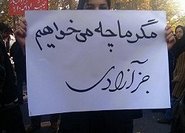
 اخبار مربوط به زندانیان سیاسی و نقض حقوق بشر







 Tulips in Holland