

August 8, 2008
Massive US Naval Armada Heads For Iran
Operation Brimstone ended only one week ago. This was the joint US/UK/French naval war games in the Atlantic Ocean preparing for a naval blockade of Iran and the likely resulting war in the Persian Gulf area. The massive war games included a US Navy supercarrier battle group, an US Navy expeditionary carrier battle group, a Royal Navy carrier battle group, a French nuclear hunter-killer submarine plus a large number of US Navy cruisers, destroyers and frigates playing the "enemy force". The lead American ship in these war games, the USS Theodore Roosevelt (CVN71) and its Carrier Strike Group Two (CCSG-2) are now headed towards Iran along with the USS Ronald Reagon (CVN76) and its Carrier Strike Group Seven (CCSG-7) coming from Japan. They are joining two existing USN battle groups in the Gulf area: the USS Abraham Lincoln (CVN72) with its Carrier Strike Group Nine (CCSG-9); and the USS Peleliu (LHA-5) with its expeditionary strike group. Likely also under way towards the Persian Gulf is the USS Iwo Jima (LHD-7) and its expeditionary strike group, the UK Royal Navy HMS Ark Royal (R07) carrier battle group, assorted French naval assets including the nuclear hunter-killer submarine Amethyste and French Naval Rafale fighter jets on-board the USS Theodore Roosevelt. These ships took part in the just completed Operation Brimstone. The build up of naval forces in the Gulf will be one of the largest multi-national naval armadas since the First and Second Gulf Wars. The intent is to create a US/EU naval blockade (which is an Act of War under international law) around Iran (with supporting air and land elements) to prevent the shipment of benzene and certain other refined oil products headed to Iranian ports. Iran has limited domestic oil refining capacity and imports 40% of its benzene. Cutting off benzene and other key products would cripple the Iranian economy. The neo-cons are counting on such a blockade launching a war with Iran. The US Naval forces being assembled include the following: Carrier Strike Group Nine USS Abraham Lincoln (CVN72) nuclear powered supercarrier with its Carrier Air Wing Two Destroyer Squadron Nine: USS Mobile Bay (CG53) guided missile cruiser USS Russell (DDG59) guided missile destroyer USS Momsen (DDG92) guided missile destroyer USS Shoup (DDG86) guided missile destroyer USS Ford (FFG54) guided missile frigate USS Ingraham (FFG61) guided missile frigate USS Rodney M. Davis (FFG60) guided missile frigate USS Curts (FFG38) guided missile frigate Plus one or more nuclear hunter-killer submarines Peleliu Expeditionary Strike Group USS Peleliu (LHA-5) a Tarawa-class amphibious assault carrier USS Pearl Harbor (LSD52) assult ship USS Dubuque (LPD8) assult ship/landing dock USS Cape St. George (CG71) guided missile cruiser USS Halsey (DDG97) guided missile destroyer USS Benfold (DDG65) guided missile destroyer Carrier Strike Group Two USS Theodore Roosevelt (DVN71) nuclear powered supercarrier with its Carrier Air Wing Eight Destroyer Squadron 22 USS Monterey (CG61) guided missile cruiser USS Mason (DDG87) guided missile destroyer USS Nitze (DDG94) guided missile destroyer USS Sullivans (DDG68) guided missile destroyer USS Springfield (SSN761) nuclear powered hunter-killer submarine IWO ESG ~ Iwo Jima Expeditionary Strike Group USS Iwo Jima (LHD7) amphibious assault carrier with its Amphibious Squadron Four and with its 26th Marine Expeditionary Unit USS San Antonio (LPD17) assault ship USS Velia Gulf (CG72) guided missile cruiser USS Ramage (DDG61) guided missile destroyer USS Carter Hall (LSD50) assault ship USS Roosevelt (DDG80) guided missile destroyer USS Hartfore (SSN768) nuclear powered hunter-killer submarine Carrier Strike Group Seven USS Ronald Reagan (CVN76) nuclear powered supercarrier with its Carrier Air Wing 14 Destroyer Squadron 7 USS Chancellorsville (CG62) guided missile cruiser USS Howard (DDG83) guided missile destroyer USS Gridley (DDG101) guided missile destroyer USS Decatur (DDG73) guided missile destroyer USS Thach (FFG43) guided missile frigate USNS Rainier (T-AOE-7) fast combat support ship Also likely to join the battle armada: UK Royal Navy HMS Ark Royal Carrier Strike Group with assorted guided missile destroyers and frigates, nuclear hunter-killer submarines and support ships French Navy nuclear powered hunter-killer submarines (likely the Amethyste and perhaps others), plus French Naval Rafale fighter jets operating off of the USS Theodore Roosevelt as the French Carrier Charles de Gaulle is in dry dock, and assorted surface warships Various other US Navy warships and submarines and support ships. The following USN ships took part (as the "enemy" forces) in Operation Brimstone and several may join in: USS San Jacinto (CG56) guided missile cruiser USS Anzio (CG68) guided missile cruiser USS Normandy (CG60) guided missile cruiser USS Carney (DDG64) guided missile destroyer USS Oscar Austin (DDG79) guided missile destroyer USS Winston S. Churchill (DDG81) guided missile destroyer USS Carr (FFG52) guided missile frigate The USS Iwo Jima and USS Peleliu Expeditionary Strike Groups have USMC Harrier jump jets and an assortment of assault and attack helicopters. The Expeditionary Strike Groups have powerful USMC Expeditionary Units with amphibious armor and ground forces trained for operating in shallow waters and in seizures of land assets, such as Qeshm Island (a 50 mile long island off of Bandar Abbas in the Gulf of Hormuz and headquarters of the Iranian Islamic Revolutionary Guards Corps). The large and very advanced nature of the US Naval warships is not only directed at Iran. There is a great fear that Russia and China may oppose the naval and air/land blockade of Iran. If Russian and perhaps Chinese naval warships escort commercial tankers to Iran in violation of the blockade it could be the most dangerous at-sea confrontation since the Cuban Missile Crisis. The US and allied Navies, by front loading a Naval blockade force with very powerful guided missile warships and strike carriers is attempting to have a force so powerful that Russia and China will not be tempted to mess with. This is a most serious game of military brinkmanship with major nuclear armed powers that have profound objections to the neo-con grand strategy and to western control of all of the Middle East's oil supply. The Russian Navy this spring sent a major battle fleet into the Mediterranean headed by the modern aircraft carrier the Admiral Kuznetsov and the flagship of its Black Sea Fleet, the Guided Missile Heavy Cruiser Moskva. This powerful fleet has at least 11 surface ships and unknown numbers of subs and can use the Russian naval facility at Syria's Tartous port for resupply. The Admiral Kuznetsov carries approximately 47 warplanes and 10 helicopters. The warplanes are mostly the powerful Su-33, a naval version (with mid-air refueling capability) of the Su-27 family. While the Su-33 is a very powerful warplane it lacks the power of the stealth USAF F-22. However, the Russians insist that they have developed a plasma based system that allows them to stealth any aircraft and a recent incident where Russian fighters were able to appear unannounced over a US Navy carrier battle group tends to confirm their claims. The Su-33 can be armed with the 3M82 Moskit sea-skimming missile (NATO code name SS-N-22 Sunburn) and the even more powerful P-800 Oniks (also named Yakhonts; NATO code name SS-N-26 Onyx). Both missiles are designed to kill US Navy supercarriers by getting past the cruiser/destroyer screen and the USN point-defense Phalanx system by using high supersonic speeds and violent end maneuvers. Russian subs currently use the underwater rocket VA-111 Shkval (Squall), which is fired from standard 533mm torpedo tubes and reaches a speed of 360kph (230mph) underwater. There is no effective countermeasures to this system and no western counterpart. A strategic diversion has been created for Russia. The Republic of Georgia, with US backing, is actively preparing for war on South Ossetia. The South Ossetia capital has been shelled and a large Georgian tank force has been heading towards the border. Russia has stated that it will not sit by and allow the Georgians to attack South Ossetia. The Russians are great chess players and this game may not turn out so well for the neo-cons. Kuwait has activated its "Emergency War Plan" as it and other Gulf nations prepare for the likelihood of a major regional war in the Middle East involving weapons of mass destruction. The two-ton elephant in the living room of the neo-con strategy is the advanced biowar (ABW) that Iran, and to a lessor extent Syria, has. This places the motherlands of the major neo-con nations (America, France, the United Kingdom), as well as Israel, in grave danger. When the Soviet Union fell the Iranians hired as many out-of-work former Soviet advanced biowar experts as possible. In the last 15 or so years they have helped to develop a truly world class ABW program utilizing recombination DNA genetic engineering technology to create a large number of man made killer viruses. This form of weapon system does not require high tech military delivery systems. The viruses are sub-microscopic and once seeded in a population use the population itself as vectors. Seeding can be done without notice in shopping malls, churches, and other public places. The only real defense to an advanced global strategic biowar attack is to lock down the population as rapidly as possible and let those infected die off. Unless the public gets it act together and forces the neo-cons to stop the march to yet another war in the Middle East we are apt to see a truly horrific nightmare unfold in OUR COUNTRIES.
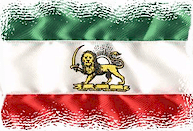
IMPERIAL EMBLEM

PERSIA
Iranian Freedom Fighters UNITE
Showing posts with label US Navy. Show all posts
Showing posts with label US Navy. Show all posts
Sunday, August 10, 2008
Wednesday, April 30, 2008
News Central
Rice: Hamas Serving as Iran's 'Proxy Warriors'
April 30, 2008 Google News AFP
Palestinian Hamas militants are serving as the "proxy warriors" for an Iran bent on destroying Israel and destabilizing the Middle East, US Secretary of State Condoleezza Rice said here. In a speech Tuesday to the American Jewish Committee in Washington that underscored growing US concerns about Tehran, Rice mentioned Iran as not just a threat in the Palestinian territories, but also in Lebanon, Iraq and even in Afghanistan.Israel's Deputy Prime Minister Shaul Mofaz said after talks with Rice on Monday that an Iran-led radical front in the Middle East is becoming more powerful and weaknesses in it need to be found.Rice vowed to pursue US efforts to isolate Hamas which she said refused to renounce violence, recognize Israel's right to exist and respect all previous Palestinian agreements with Israel."But perhaps of deepest concern, the leaders of Hamas are increasingly serving as the proxy warriors of an Iranian regime that is destabilizing the region, seeking a nuclear capability and proclaiming its desire to destroy Israel," Rice told the group's annual meeting.She did not elaborate.Iran is one of the most vocal backers of the Islamic Resistance Movement and pledged millions of dollars in 2006 to help a Hamas government through a funding drought caused by Western aid cuts.But Tehran has always insisted its support for Palestinian militant groups is moral in nature and does not extend to arming or training fighters.Hamas seized power in the Gaza Strip in June last year after ousting forces loyal to Palestinian Authority president Mahmud Abbas's Fatah faction, which remains in power in the West Bank.Fatah and Hamas had served in a national unity government after Hamas won elections in 2006.The United States backs the Palestinian Authority in new peace negotiations with Israel that were launched last November, and denounces Hamas as a terrorist organization.Rice called for international support for the Palestinian Authority, which she said had "the will to fight terrorism" and "the desire to govern effectively" but did not yet have the means.She echoed remarks by President George W. Bush who said Tuesday he was still hopeful of a Middle East peace deal before he left office in January but warned that Hamas could "undermine" the effort.Rice also vowed that Washington would continue to tighten controls on Iran's alleged misuse of the international financial system for terrorism and weapons proliferation.The US Treasury last October slapped sanctions on Iran's elite Quds Force, accused by the US of being a supporter of terrorism, as well as the country's Revolutionary Guards, said to be a proliferator of weapons of mass destruction."We made designations for instance of the Quds Force, we made designations of the Revolutionary Guard," Rice recalled. "You can believe that we're going to continue to make designations."In her speech, Rice spoke of a new "belt of extremism" that ranges from Hamas, to the Lebanese Shiite Muslim movement Hezbollah in Lebanon to radicals in Iraq and "radicals even increasingly in places like Afghanistan."It is "supported overwhelmingly by Iran and to a certain extent Syria, but particularly Iran, gives this conflict a regional dimension it has not had before," Rice said.Critics say the US-led invasion of Iraq that overthrew Saddam Hussein, a Sunni Arab, has emboldened non-Arab Iran and its Shiite Muslim allies throughout the region.
April 30, 2008 Google News AFP
Palestinian Hamas militants are serving as the "proxy warriors" for an Iran bent on destroying Israel and destabilizing the Middle East, US Secretary of State Condoleezza Rice said here. In a speech Tuesday to the American Jewish Committee in Washington that underscored growing US concerns about Tehran, Rice mentioned Iran as not just a threat in the Palestinian territories, but also in Lebanon, Iraq and even in Afghanistan.Israel's Deputy Prime Minister Shaul Mofaz said after talks with Rice on Monday that an Iran-led radical front in the Middle East is becoming more powerful and weaknesses in it need to be found.Rice vowed to pursue US efforts to isolate Hamas which she said refused to renounce violence, recognize Israel's right to exist and respect all previous Palestinian agreements with Israel."But perhaps of deepest concern, the leaders of Hamas are increasingly serving as the proxy warriors of an Iranian regime that is destabilizing the region, seeking a nuclear capability and proclaiming its desire to destroy Israel," Rice told the group's annual meeting.She did not elaborate.Iran is one of the most vocal backers of the Islamic Resistance Movement and pledged millions of dollars in 2006 to help a Hamas government through a funding drought caused by Western aid cuts.But Tehran has always insisted its support for Palestinian militant groups is moral in nature and does not extend to arming or training fighters.Hamas seized power in the Gaza Strip in June last year after ousting forces loyal to Palestinian Authority president Mahmud Abbas's Fatah faction, which remains in power in the West Bank.Fatah and Hamas had served in a national unity government after Hamas won elections in 2006.The United States backs the Palestinian Authority in new peace negotiations with Israel that were launched last November, and denounces Hamas as a terrorist organization.Rice called for international support for the Palestinian Authority, which she said had "the will to fight terrorism" and "the desire to govern effectively" but did not yet have the means.She echoed remarks by President George W. Bush who said Tuesday he was still hopeful of a Middle East peace deal before he left office in January but warned that Hamas could "undermine" the effort.Rice also vowed that Washington would continue to tighten controls on Iran's alleged misuse of the international financial system for terrorism and weapons proliferation.The US Treasury last October slapped sanctions on Iran's elite Quds Force, accused by the US of being a supporter of terrorism, as well as the country's Revolutionary Guards, said to be a proliferator of weapons of mass destruction."We made designations for instance of the Quds Force, we made designations of the Revolutionary Guard," Rice recalled. "You can believe that we're going to continue to make designations."In her speech, Rice spoke of a new "belt of extremism" that ranges from Hamas, to the Lebanese Shiite Muslim movement Hezbollah in Lebanon to radicals in Iraq and "radicals even increasingly in places like Afghanistan."It is "supported overwhelmingly by Iran and to a certain extent Syria, but particularly Iran, gives this conflict a regional dimension it has not had before," Rice said.Critics say the US-led invasion of Iraq that overthrew Saddam Hussein, a Sunni Arab, has emboldened non-Arab Iran and its Shiite Muslim allies throughout the region.
Sunday, November 25, 2007
US military: Iranian-linked Militants Bombed Baghdad Market :by Herve BarSat Nov 24, 11:50 AM ET
Americans are mad as hell and they are not going to take it any more...so watch it you slimy mullah's in Tehran. your bloody days are numbered....

"Based on subsequent confessions, forensics and other intelligence, the bombing was the work of an Iranian-backed special groups cell operating here in Baghdad." The term "special groups" is used by the US military to describe Shiite militias trained by Iranian Quds Force operatives in the use of sophisticated weaponry against US forces. However, Smith said there was "no evidence that the Iranian government ordered the attack." A separate military statement to AFP said the components of the bomb used in the pet market attack were linked to the type used by such special groups. "We also have scientific evidence that directly implicates the four detainees in the murder of the innocent Iraqi citizens at the market yesterday," the statement said. Smith said the militants tried to make the bomb attack look like the work of Al-Qaeda. "The group's purpose was to make it appear Al-Qaeda was responsible for this attack," he told reporters. "Despite killing innocent Shiites and Sunnis the special group's aim was to demonstrate to Baghdadis the need for militia groups to continue providing for their security."
Smith's accusations contrast with a recent softening of the rhetoric by US military commanders against Tehran, with some even crediting Washington's arch- foe with helping curb violence in Iraq. On Wednesday, US Lieutenant General James Dubik said Tehran had contributed to stopping the flow of arms across the border into its war-scarred neighbour. Earlier this month, US Defence Secretary Robert Gates said Tehran had assured Baghdad it would help stop the inflow of Iranian weapons into Iraq. In the past the US military used every occasion possible to point the finger at Iran, accusing the Quds Force, the covert unit of Iran's Revolutionary Guard, of helping smuggle lethal explosives across the border for use by special groups. Tehran has consistently denied it is fomenting violence in Iraq. The US military says most of the special groups members are militants who have broken away from radical Shiite cleric Moqtada al-Sadr's Mahdi Army militia and who are ignoring his call to lay down their arms. Smith repeated the claim on Saturday in relation to the pet market bombing. "This bombing demonstrates there remain individuals who continue to ignore Moqtada al-Sadr's pledge of a ceasefire," Smith said. "Iraq and coalition forces will continue to capture or kill those who choose to dishonour Moqtada al-Sadr by committing these acts of indiscriminate violence against the Iraqis." On August 29, Sadr ordered his militia to freeze its activities after it was accused of a fierce firefight with Iraqi police in the shrine city of Karbala which killed 52 people and wounded hundreds more.
US Navy Steps Up Fuel Deliveries to Gulf Forces : By Stefano Ambrogi : Reuters
Friday 23 November 2007- Editing by Anthony Barker.
London - The U.S. military has stepped up chartering of tankers and requests for extra fuel in the U.S. Central Command area, which includes the Gulf, shipping and oil industry sources say. A Gulf oil industry source said the charters suggested there would be high naval activity, possibly including a demonstration to Iran that the U.S. Navy will protect the Strait of Hormuz oil shipping route during tensions over Tehran's nuclear programme.
The U.S. Navy's Military Sealift Command (MSC) has tendered for four tankers in November to move at least one million barrels of jet and ship fuel between Gulf ports, from Asia to the Gulf and to the Diego Garcia base, tenders seen by Reuters show. It usually tenders for one or two tankers a month to supply Gulf operations, which include missions in Iraq. The MSC, asked for comment, confirmed the tenders and said there was nothing abnormal about current requirements in the Gulf, where it has a large military presence and which is home to the U.S. Navy's Fifth Fleet. A fifth hire request was recently cancelled, it said.Fuels specified to be moved between Gulf ports include JP5, high flashpoint jet fuel, used to power F18 fighters aboard aircraft carriers."They have been very active," said a ship industry source, familiar with the MSC tender process, who asked not to be named."Out of the multiple charter requirements they issue, they usually do maybe one or two (tankers) a month in the Gulf. They were quiet over the summer months," he said.
More Activity
The U.S. regularly carries out naval exercises in the region, moving aircraft carrier strike groups in and out of the Gulf to counter what it says are provocative military manoeuvres by Iran in the Strait of Hormuz and to reassure its Gulf allies. Iran, which denies Western charges that its nuclear power programme aims to produce arms, has threatened to disrupt oil flows through the Strait if attacked. According to U.S. figures, oil flowing through the Strait, at the entrance to the Gulf along Iran's coastline, accounts for roughly 40 percent of all globally traded oil supplies. Only last week the navy conducted an exercise to counter potential mine-laying by an unnamed foe in Gulf waters. At the same time the Enterprise aircraft carrier strike group concluded a three-day exercise in anti-submarine warfare skills. The source in the Gulf, with 50 years of experience in the oil industry, said the charters were indicative of extra U.S. military requirements for fuels."Bahrain, for example, has confirmed that there are additional volumes being requested by the U.S. Defense Energy Support Center, including JP5," the Gulf source said, speaking on condition of anonymity.One of the largest commercial tanker hires is on a time-charter basis, the length of time a ship is sought, stipulating a period of 90 days to carry a range of fuels between locations in the Gulf and the Gulf of Oman.The time charter, which begins in early December and allows for multiple journeys in Gulf waters, is to carry a minimum of 310,000 barrels of jet and marine fuel, some of it JP5."What's most interesting is the time-charter in the Gulf. It's a big ship and here we have a commitment for a lot of movement of fuels, backwards and forwards down to the Strait of Hormuz and the Gulf of Oman," the Gulf source said."This confirms there is going to be a lot of activity, possibly a serious demonstration to Iran that the military means to protect the Hormuz Strait," he said.He pointed out that Saudi Arabia had already promised U.S. forces long-term fuel supplies this year, known as term tenders.In February, oil industry sources told Reuters Riyadh had raised the amount of jet fuel earmarked for the military from 1.5 million barrels last year to close to eight million in 2007.
Fuel Charters
Apart from the time charter, MSC has also tendered for commercial tankers to move 235,000 barrels of marine diesel from South Korea to Jebel Ali and Fujairah in the United Arab Emirates and 310,000 barrels of JA1 jet fuel from Bahrain to Mesaieed in Qatar. Both tankers are required in November.A separate requirement is for a tanker to move 147,000 barrels of ship fuel from Singapore to Diego Garcia in the Indian Ocean, close to the Gulf and Arabian
Sea. MSC has ships stationed there, known as Maritime Prepositioning Squadron Two, used to support combat operations.In the past the United States has used the British Indian Ocean territory for long-range bombing raids on Iraq and Afghanistan. Fuel movements have provided advance clues of U.S. intentions.MSC, the defense department's transport arm, supplies U.S. forces with its own large fleet of ships, but significantly increases the use of merchant shipping to carry armour and fuels prior to a major exercise and during a war.
US CENTCOM Press Releases
COALITION FORCES RESCUE KIDNAP VICTIM; DISRUPT FOREIGN TERRORIST FACILITATORS, AL-QAEDA FINANCIERS; ONE KILLED, 10 DETAINED
TALIBAN WEAPONS SMUGGLING OPERATIONS DISRUPTED
"Based on subsequent confessions, forensics and other intelligence, the bombing was the work of an Iranian-backed special groups cell operating here in Baghdad." The term "special groups" is used by the US military to describe Shiite militias trained by Iranian Quds Force operatives in the use of sophisticated weaponry against US forces. However, Smith said there was "no evidence that the Iranian government ordered the attack." A separate military statement to AFP said the components of the bomb used in the pet market attack were linked to the type used by such special groups. "We also have scientific evidence that directly implicates the four detainees in the murder of the innocent Iraqi citizens at the market yesterday," the statement said. Smith said the militants tried to make the bomb attack look like the work of Al-Qaeda. "The group's purpose was to make it appear Al-Qaeda was responsible for this attack," he told reporters. "Despite killing innocent Shiites and Sunnis the special group's aim was to demonstrate to Baghdadis the need for militia groups to continue providing for their security."
Smith's accusations contrast with a recent softening of the rhetoric by US military commanders against Tehran, with some even crediting Washington's arch- foe with helping curb violence in Iraq. On Wednesday, US Lieutenant General James Dubik said Tehran had contributed to stopping the flow of arms across the border into its war-scarred neighbour. Earlier this month, US Defence Secretary Robert Gates said Tehran had assured Baghdad it would help stop the inflow of Iranian weapons into Iraq. In the past the US military used every occasion possible to point the finger at Iran, accusing the Quds Force, the covert unit of Iran's Revolutionary Guard, of helping smuggle lethal explosives across the border for use by special groups. Tehran has consistently denied it is fomenting violence in Iraq. The US military says most of the special groups members are militants who have broken away from radical Shiite cleric Moqtada al-Sadr's Mahdi Army militia and who are ignoring his call to lay down their arms. Smith repeated the claim on Saturday in relation to the pet market bombing. "This bombing demonstrates there remain individuals who continue to ignore Moqtada al-Sadr's pledge of a ceasefire," Smith said. "Iraq and coalition forces will continue to capture or kill those who choose to dishonour Moqtada al-Sadr by committing these acts of indiscriminate violence against the Iraqis." On August 29, Sadr ordered his militia to freeze its activities after it was accused of a fierce firefight with Iraqi police in the shrine city of Karbala which killed 52 people and wounded hundreds more.
US Navy Steps Up Fuel Deliveries to Gulf Forces : By Stefano Ambrogi : Reuters

Friday 23 November 2007- Editing by Anthony Barker.
London - The U.S. military has stepped up chartering of tankers and requests for extra fuel in the U.S. Central Command area, which includes the Gulf, shipping and oil industry sources say. A Gulf oil industry source said the charters suggested there would be high naval activity, possibly including a demonstration to Iran that the U.S. Navy will protect the Strait of Hormuz oil shipping route during tensions over Tehran's nuclear programme.
The U.S. Navy's Military Sealift Command (MSC) has tendered for four tankers in November to move at least one million barrels of jet and ship fuel between Gulf ports, from Asia to the Gulf and to the Diego Garcia base, tenders seen by Reuters show. It usually tenders for one or two tankers a month to supply Gulf operations, which include missions in Iraq. The MSC, asked for comment, confirmed the tenders and said there was nothing abnormal about current requirements in the Gulf, where it has a large military presence and which is home to the U.S. Navy's Fifth Fleet. A fifth hire request was recently cancelled, it said.Fuels specified to be moved between Gulf ports include JP5, high flashpoint jet fuel, used to power F18 fighters aboard aircraft carriers."They have been very active," said a ship industry source, familiar with the MSC tender process, who asked not to be named."Out of the multiple charter requirements they issue, they usually do maybe one or two (tankers) a month in the Gulf. They were quiet over the summer months," he said.
More Activity
The U.S. regularly carries out naval exercises in the region, moving aircraft carrier strike groups in and out of the Gulf to counter what it says are provocative military manoeuvres by Iran in the Strait of Hormuz and to reassure its Gulf allies. Iran, which denies Western charges that its nuclear power programme aims to produce arms, has threatened to disrupt oil flows through the Strait if attacked. According to U.S. figures, oil flowing through the Strait, at the entrance to the Gulf along Iran's coastline, accounts for roughly 40 percent of all globally traded oil supplies. Only last week the navy conducted an exercise to counter potential mine-laying by an unnamed foe in Gulf waters. At the same time the Enterprise aircraft carrier strike group concluded a three-day exercise in anti-submarine warfare skills. The source in the Gulf, with 50 years of experience in the oil industry, said the charters were indicative of extra U.S. military requirements for fuels."Bahrain, for example, has confirmed that there are additional volumes being requested by the U.S. Defense Energy Support Center, including JP5," the Gulf source said, speaking on condition of anonymity.One of the largest commercial tanker hires is on a time-charter basis, the length of time a ship is sought, stipulating a period of 90 days to carry a range of fuels between locations in the Gulf and the Gulf of Oman.The time charter, which begins in early December and allows for multiple journeys in Gulf waters, is to carry a minimum of 310,000 barrels of jet and marine fuel, some of it JP5."What's most interesting is the time-charter in the Gulf. It's a big ship and here we have a commitment for a lot of movement of fuels, backwards and forwards down to the Strait of Hormuz and the Gulf of Oman," the Gulf source said."This confirms there is going to be a lot of activity, possibly a serious demonstration to Iran that the military means to protect the Hormuz Strait," he said.He pointed out that Saudi Arabia had already promised U.S. forces long-term fuel supplies this year, known as term tenders.In February, oil industry sources told Reuters Riyadh had raised the amount of jet fuel earmarked for the military from 1.5 million barrels last year to close to eight million in 2007.
Fuel Charters
Apart from the time charter, MSC has also tendered for commercial tankers to move 235,000 barrels of marine diesel from South Korea to Jebel Ali and Fujairah in the United Arab Emirates and 310,000 barrels of JA1 jet fuel from Bahrain to Mesaieed in Qatar. Both tankers are required in November.A separate requirement is for a tanker to move 147,000 barrels of ship fuel from Singapore to Diego Garcia in the Indian Ocean, close to the Gulf and Arabian
Sea. MSC has ships stationed there, known as Maritime Prepositioning Squadron Two, used to support combat operations.In the past the United States has used the British Indian Ocean territory for long-range bombing raids on Iraq and Afghanistan. Fuel movements have provided advance clues of U.S. intentions.MSC, the defense department's transport arm, supplies U.S. forces with its own large fleet of ships, but significantly increases the use of merchant shipping to carry armour and fuels prior to a major exercise and during a war.
US CENTCOM Press Releases
COALITION FORCES RESCUE KIDNAP VICTIM; DISRUPT FOREIGN TERRORIST FACILITATORS, AL-QAEDA FINANCIERS; ONE KILLED, 10 DETAINED
TALIBAN WEAPONS SMUGGLING OPERATIONS DISRUPTED
Saturday, November 10, 2007
The Twin Team : Escorted by the US Navy, British Sailors Return to the Gulf
November 09, 2007 The Independent Terri Judd on board HMS Richmond in the Northern [Persian] Gulf
Seven months after the Royal Navy suffered one of the most humiliating episodes in its history when 15 sailors and Royal Marines were detained by Iranian forces, British patrols have resumed close to the Iranian border. But now the team is permanently flanked by heavily armoured US Navy gunboats and shadowed by a helicopter. Despite the Royal Navy's insistence that the capture on 23 March was about "judgement not kit", the "soft hat" stance of which the British are so proud has been tempered with beefed-up force protection. The head of UK maritime operations in the Gulf, Commodore Keith Winstanley, says that if the Iranians try it again "the result would be different". Commodore Winstanley said: "Not surprisingly, there has been a complete overhaul of procedures, training and equipment," At a time of continued tension and talk of a third round of UN sanctions against Iran, both sides still watch each other over the disputed water border. The Iranian Revolutionary Guard Corps Navy (IRGCN) in their fast skiffs repeatedly dip into Iraqi waters to taunt the warships protecting the two vital oil platforms on which the country's fragile economy depend. They are also sending up a small observation plane to skirt the border line daily. For the first time in 30 years, discussions have begun between the Iranians and Iraqis to establish an agreed border but neither side is yet giving any quarter.

British boarding patrols close to the buffer zone ceased almost six months ago. But last month the team, which patrols in rigid hull inflatable boats (RHIBS), armed with SA80 rifles and side arms, resumed patrols in the more precarious shallow waters. This time, shadowed by two 34ft American gunboats, armed with four 50-calibre heavy machine guns, which are permanently manned, four medium machine guns and their M16 rifles. The helicopter cover, on duty elsewhere the day the Iraqis surrounded the HMS Cornwall team, stays with them throughout their patrols. The air support, in the understated terms of pilot Lt-Cdr Phil Beacham, encourages the Iranians to be "much less vigorous". As the British withdrawal from Basra held the headlines, this often-ignored part of the Iraq operation quietly continued unheeded. Approximately $230m (£109m) of oil is pumped through the Al Basra (Abot) and the Khawr Al Amaya (KAAOT) oil terminals daily, making them the source of 90 per cent of Iraq's GDP and a prime terrorist target 10km (six miles) from land. A memorial on KAAOT provides a reminder of the potential human, economic and environmental disaster. On 24 April 2004, an Arab dhow exploded next to USS Firebolt's boarding team, killing three Americans. Minutes later, two skiffs heading for the Abot terminal were blown up just short of their target. Today, warships from the American, British, Australian and Singaporean navies ensure that no one gets within 3km without being challenged. But their task is complicated by the number of local fishermen, as well as merchant ships and smugglers that daily breach the exclusion zone. Fishermen in their tiny dhows risk the wrath of 4,000-tonne warships. For the oil terminal guardians, every one is a potential suicide bomber. When it was captured, the HMS Cornwall team was carrying out the vital counter-terrorism task of gathering information from the waterborne locals and keeping an eye on the craft going up the Shatt al-Arab waterway to Basra. A damning report by Lt -Gen Sir Rob Fulton, blamed the kidnap on lack of intelligence, poor armament, communications, doctrine and training Cdr Piers Hurrell, commanding officer of HMS Richmond – which took over from HMS Cornwall in July – said all those issues had been addressed and his crew maintain a balance between being "robust but non-escalatory". However, Lt Dan Ridgwell said the newly trained boarding team was frustrated as they were told to leave the contentious boardings to US forces while they perform routine security sweeps of tankers heading towards the oil platforms. Last week, when two IRGCN fast skiffs were spotted speeding towards the boarding team, one US gunboat blocked their path as the British helicopter dropped low in the sky while the second American craft led the team away. Petty Officer Simon Lay said: "It is easier for us now we have got that kind of back-up." The Royal Navy is set for a long-term role in the Gulf. Commodore Winstanley said: "Long after Iraq is done and dusted and a footnote in Mr Blair's book, the maritime operation will still be out here. We will be here as long as there is threat, as long as we are welcomed by the Gulf states."
Seven months after the Royal Navy suffered one of the most humiliating episodes in its history when 15 sailors and Royal Marines were detained by Iranian forces, British patrols have resumed close to the Iranian border. But now the team is permanently flanked by heavily armoured US Navy gunboats and shadowed by a helicopter. Despite the Royal Navy's insistence that the capture on 23 March was about "judgement not kit", the "soft hat" stance of which the British are so proud has been tempered with beefed-up force protection. The head of UK maritime operations in the Gulf, Commodore Keith Winstanley, says that if the Iranians try it again "the result would be different". Commodore Winstanley said: "Not surprisingly, there has been a complete overhaul of procedures, training and equipment," At a time of continued tension and talk of a third round of UN sanctions against Iran, both sides still watch each other over the disputed water border. The Iranian Revolutionary Guard Corps Navy (IRGCN) in their fast skiffs repeatedly dip into Iraqi waters to taunt the warships protecting the two vital oil platforms on which the country's fragile economy depend. They are also sending up a small observation plane to skirt the border line daily. For the first time in 30 years, discussions have begun between the Iranians and Iraqis to establish an agreed border but neither side is yet giving any quarter.
British boarding patrols close to the buffer zone ceased almost six months ago. But last month the team, which patrols in rigid hull inflatable boats (RHIBS), armed with SA80 rifles and side arms, resumed patrols in the more precarious shallow waters. This time, shadowed by two 34ft American gunboats, armed with four 50-calibre heavy machine guns, which are permanently manned, four medium machine guns and their M16 rifles. The helicopter cover, on duty elsewhere the day the Iraqis surrounded the HMS Cornwall team, stays with them throughout their patrols. The air support, in the understated terms of pilot Lt-Cdr Phil Beacham, encourages the Iranians to be "much less vigorous". As the British withdrawal from Basra held the headlines, this often-ignored part of the Iraq operation quietly continued unheeded. Approximately $230m (£109m) of oil is pumped through the Al Basra (Abot) and the Khawr Al Amaya (KAAOT) oil terminals daily, making them the source of 90 per cent of Iraq's GDP and a prime terrorist target 10km (six miles) from land. A memorial on KAAOT provides a reminder of the potential human, economic and environmental disaster. On 24 April 2004, an Arab dhow exploded next to USS Firebolt's boarding team, killing three Americans. Minutes later, two skiffs heading for the Abot terminal were blown up just short of their target. Today, warships from the American, British, Australian and Singaporean navies ensure that no one gets within 3km without being challenged. But their task is complicated by the number of local fishermen, as well as merchant ships and smugglers that daily breach the exclusion zone. Fishermen in their tiny dhows risk the wrath of 4,000-tonne warships. For the oil terminal guardians, every one is a potential suicide bomber. When it was captured, the HMS Cornwall team was carrying out the vital counter-terrorism task of gathering information from the waterborne locals and keeping an eye on the craft going up the Shatt al-Arab waterway to Basra. A damning report by Lt -Gen Sir Rob Fulton, blamed the kidnap on lack of intelligence, poor armament, communications, doctrine and training Cdr Piers Hurrell, commanding officer of HMS Richmond – which took over from HMS Cornwall in July – said all those issues had been addressed and his crew maintain a balance between being "robust but non-escalatory". However, Lt Dan Ridgwell said the newly trained boarding team was frustrated as they were told to leave the contentious boardings to US forces while they perform routine security sweeps of tankers heading towards the oil platforms. Last week, when two IRGCN fast skiffs were spotted speeding towards the boarding team, one US gunboat blocked their path as the British helicopter dropped low in the sky while the second American craft led the team away. Petty Officer Simon Lay said: "It is easier for us now we have got that kind of back-up." The Royal Navy is set for a long-term role in the Gulf. Commodore Winstanley said: "Long after Iraq is done and dusted and a footnote in Mr Blair's book, the maritime operation will still be out here. We will be here as long as there is threat, as long as we are welcomed by the Gulf states."
Wednesday, May 23, 2007
Nine U.S. warships enter Gulf for training : Wed May 23, 2007 1:35AM EDT
ABOARD USS JOHN C. STENNIS (Reuters) - Nine U.S. military ships entered the Gulf on Wednesday for a rare daylight assembly off Iran's coast in what naval officials said was the largest such move since the 2003 Iraq war. U.S. Navy officials said Iran had not been notified of plans to sail the vessels, which include two aircraft carriers, through the Straits of Hormuz, a narrow channel in international waters off Iran's coast and a major artery for global oil shipments. Most U.S. ships pass through the straits at night so as not to attract attention, and rarely move in such large numbers. Navy officials said the decision to send a second aircraft carrier was made at the last minute, without giving a reason. Tension between the United States and Iran over Tehran's nuclear ambitions and Iraq has raised regional fears of a possible military confrontation that could hit Gulf economies and threaten vital oil exports. But Rear Admiral Kevin Quinn, leading the group, said the ships would start conducting exercises after passing through the straits as part of a long-planned effort to reassure nearby countries of U.S. commitment to regional security. "There's always the threat of any state or non state actor that might decide to close one of the international straits, and the biggest one is the Straits of Hormuz," he told reporters on the USS John C. Stennis aircraft carrier before the crossing.
POWERFUL
On the way to the straits, a public announcement called on crew to witness "some of the most powerful ships in the world", whose tight formation against a backdrop of the setting sun created a dramatic image of American naval might. The group of ships, carrying around 17,000 personnel, crossed at roughly 0355 GMT. The maneuvers come less than two weeks after U.S. Vice President Dick Cheney, speaking aboard the Stennis during a tour of the Gulf, said the United States would stand with others to prevent Iran gaining nuclear weapons and "dominating the region". On a visit to Abu Dhabi a few days later, Iranian President Mahmoud Ahmadinejad threatened "severe" retaliation if the United States attacked his country, which is locked in a standoff with the United States over its nuclear programme. He also urged Gulf countries to "get rid of" foreign forces, blaming them for insecurity in the region. The United States accuses Iran of trying to produce nuclear weapons, and has sought tougher U.N. sanctions against Iran. Iran says its nuclear ambitions are for energy purposes only. U.S. and Iranian ambassadors are due to meet on Monday in Baghdad to discuss security in Iraq, where the United States has accused Iran of fomenting violence by backing Shi'ite militia there, and of providing weapons and the technology for roadside bombs. Iran has denied the accusations. Last month, the U.S. Fifth Fleet base in Bahrain conducted its biggest crisis response drill and in March, the U.S. navy conducted its biggest war drills in the Gulf since 2003.
Monday, April 09, 2007
Nimitz Carrier Strike Group Deploys to U. S. Central Command
USS NIMITZ, At Sea (NNS) -- More than 6,000 Sailors and Marines attached to the USS Nimitz (CVN 68) Carrier Strike Group (CSG) deployed from their homeport of San Diego on April 2. The Nimitz CSG will join the USS John C. Stennis (CVN 74) CSG and relieve the USS Dwight D. Eisenhower (CVN 69) CSG, currently operating in the Persian Gulf.
Nimitz’s arrival will continue the current two-carrier presence in the U.S. Central Command area of responsibility, demonstrating the U.S. resolve to build regional security and bring long-term stability to the region. While deployed, the Nimitz CSG will work closely with allies to support Operation Enduring Freedom, Operation Iraqi Freedom and to conduct Maritime Security Operations (MSO). “We’re ready to fight the war on terrorism and support troops on the ground in Afghanistan and Iraq,” said Capt. Michael Manazir, Nimitz commanding officer.
This is the fifth deployment for Interior Communications Electrician 1st Class (SW) David Wilson, Nimitz's Combat Systems Department. He knows every deployment can be unpredictable. “You can’t really say 'this is what’s going to happen,' 'this is what you’re going to experience'; they’re all different,” said Wilson. This is the Nimitz’s third deployment to the Central Command area of operations in four years. In mid-2005, the Nimitz CSG operated in the supported operations in Iraq and throughout the region. In 2003, the carrier flew combat missions over Iraq and supported combat operations during an eight-month deployment.
The Nimitz CSG, commanded by Rear Adm. Terry Blake, is comprised of Commander, Carrier Strike Group (CCG) 11, Carrier Air Wing (CVW) 11 and Destroyer Squadron (DESRON) 23. It includes the nuclear-powered aircraft carrier Nimitz; guided-missile cruiser USS Princeton (CG 59); guided-missile destroyers USS Higgins (DDG 76), USS Chafee (DDG 90), USS John Paul Jones (DDG 53), and USS Pinckney (DDG 91); two detachments from the Helicopter Anti-Submarine Squadron Light (HSL) 49 “Scorpions,” and Explosives Ordnance Disposal Unit 11, Det. 15.


Nimitz’s arrival will continue the current two-carrier presence in the U.S. Central Command area of responsibility, demonstrating the U.S. resolve to build regional security and bring long-term stability to the region. While deployed, the Nimitz CSG will work closely with allies to support Operation Enduring Freedom, Operation Iraqi Freedom and to conduct Maritime Security Operations (MSO). “We’re ready to fight the war on terrorism and support troops on the ground in Afghanistan and Iraq,” said Capt. Michael Manazir, Nimitz commanding officer.
This is the fifth deployment for Interior Communications Electrician 1st Class (SW) David Wilson, Nimitz's Combat Systems Department. He knows every deployment can be unpredictable. “You can’t really say 'this is what’s going to happen,' 'this is what you’re going to experience'; they’re all different,” said Wilson. This is the Nimitz’s third deployment to the Central Command area of operations in four years. In mid-2005, the Nimitz CSG operated in the supported operations in Iraq and throughout the region. In 2003, the carrier flew combat missions over Iraq and supported combat operations during an eight-month deployment.
The Nimitz CSG, commanded by Rear Adm. Terry Blake, is comprised of Commander, Carrier Strike Group (CCG) 11, Carrier Air Wing (CVW) 11 and Destroyer Squadron (DESRON) 23. It includes the nuclear-powered aircraft carrier Nimitz; guided-missile cruiser USS Princeton (CG 59); guided-missile destroyers USS Higgins (DDG 76), USS Chafee (DDG 90), USS John Paul Jones (DDG 53), and USS Pinckney (DDG 91); two detachments from the Helicopter Anti-Submarine Squadron Light (HSL) 49 “Scorpions,” and Explosives Ordnance Disposal Unit 11, Det. 15.
Sunday, February 25, 2007
US generals ‘will quit’ if Bush orders Iran attackMichael Smith and Sarah Baxter, Washington
SOME of America’s most senior military commanders are prepared to resign if the White House orders a military strike against Iran, according to highly placed defence and intelligence sources. Tension in the Gulf region has raised fears that an attack on Iran is becoming increasingly likely before President George Bush leaves office. The Sunday Times has learnt that up to five generals and admirals are willing to resign rather than approve what they consider would be a reckless attack.
“There are four or five generals and admirals we know of who would resign if Bush ordered an attack on Iran,” a source with close ties to British intelligence said. “There is simply no stomach for it in the Pentagon, and a lot of people question whether such an attack would be effective or even possible.” A British defence source confirmed that there were deep misgivings inside the Pentagon about a military strike. “All the generals are perfectly clear that they don’t have the military capacity to take Iran on in any meaningful fashion. Nobody wants to do it and it would be a matter of conscience for them. “There are enough people who feel this would be an error of judgment too far for there to be resignations.” A generals’ revolt on such a scale would be unprecedented. “American generals usually stay and fight until they get fired,” said a Pentagon source. Robert Gates, the defence secretary, has repeatedly warned against striking Iran and is believed to represent the view of his senior commanders. The threat of a wave of resignations coincided with a warning by Vice-President Dick Cheney that all options, including military action, remained on the table. He was responding to a comment by Tony Blair that it would not “be right to take military action against Iran”. Iran ignored a United Nations deadline to suspend its uranium enrichment programme last week.President Mahmoud Ahmadinejad insisted that his country “will not withdraw from its nuclear stances even one single step”. The International Atomic Energy Agency reported that Iran could soon produce enough enriched uranium for two nuclear bombs a year, although Tehran claims its programme is purely for civilian energy purposes.
Nicholas Burns, the top US negotiator, is to meet British, French, German, Chinese and Russian officials in London tomorrow to discuss additional penalties against Iran. But UN diplomats cautioned that further measures would take weeks to agree and would be mild at best. A second US navy aircraft carrier strike group led by the USS John C Stennis arrived in the Gulf last week, doubling the US presence there. Vice Admiral Patrick Walsh, the commander of the US Fifth Fleet, warned: “The US will take military action if ships are attacked or if countries in the region are targeted or US troops come under direct attack.” But General Peter Pace, chairman of the joint chiefs of staff, said recently there was “zero chance” of a war with Iran. He played down claims by US intelligence that the Iranian government was responsible for supplying insurgents in Iraq, forcing Bush on the defensive. Pace’s view was backed up by British intelligence officials who said the extent of the Iranian government’s involvement in activities inside Iraq by a small number of Revolutionary Guards was “far from clear”. Hillary Mann, the National Security Council’s main Iran expert until 2004, said Pace’s repudiation of the administration’s claims was a sign of grave discontent at the top. “He is a very serious and a very loyal soldier,” she said. “It is extraordinary for him to have made these comments publicly, and it suggests there are serious problems between the White House, the National Security Council and the Pentagon.” Mann fears the administration is seeking to provoke Iran into a reaction that could be used as an excuse for an attack. A British official said the US navy was well aware of the risks of confrontation and was being “seriously careful” in the Gulf. The US air force is regarded as being more willing to attack Iran. General Michael Moseley, the head of the air force, cited Iran as the main likely target for American aircraft at a military conference earlier this month. According to a report in The New Yorker magazine, the Pentagon has already set up a working group to plan airstrikes on Iran. The panel initially focused on destroying Iran’s nuclear facilities and on regime change but has more recently been instructed to identify targets in Iran that may be involved in supplying or aiding militants in Iraq. However, army chiefs fear an attack on Iran would backfire on American troops in Iraq and lead to more terrorist attacks, a rise in oil prices and the threat of a regional war. Britain is concerned that its own troops in Iraq might be drawn into any American conflict with Iran, regardless of whether the government takes part in the attack. One retired general who participated in the “generals’ revolt” against Donald Rumsfeld’s handling of the Iraq war said he hoped his former colleagues would resign in the event of an order to attack. “We don’t want to take another initiative unless we’ve really thought through the consequences of our strategy,” he warned.
“There are four or five generals and admirals we know of who would resign if Bush ordered an attack on Iran,” a source with close ties to British intelligence said. “There is simply no stomach for it in the Pentagon, and a lot of people question whether such an attack would be effective or even possible.” A British defence source confirmed that there were deep misgivings inside the Pentagon about a military strike. “All the generals are perfectly clear that they don’t have the military capacity to take Iran on in any meaningful fashion. Nobody wants to do it and it would be a matter of conscience for them. “There are enough people who feel this would be an error of judgment too far for there to be resignations.” A generals’ revolt on such a scale would be unprecedented. “American generals usually stay and fight until they get fired,” said a Pentagon source. Robert Gates, the defence secretary, has repeatedly warned against striking Iran and is believed to represent the view of his senior commanders. The threat of a wave of resignations coincided with a warning by Vice-President Dick Cheney that all options, including military action, remained on the table. He was responding to a comment by Tony Blair that it would not “be right to take military action against Iran”. Iran ignored a United Nations deadline to suspend its uranium enrichment programme last week.President Mahmoud Ahmadinejad insisted that his country “will not withdraw from its nuclear stances even one single step”. The International Atomic Energy Agency reported that Iran could soon produce enough enriched uranium for two nuclear bombs a year, although Tehran claims its programme is purely for civilian energy purposes.
Nicholas Burns, the top US negotiator, is to meet British, French, German, Chinese and Russian officials in London tomorrow to discuss additional penalties against Iran. But UN diplomats cautioned that further measures would take weeks to agree and would be mild at best. A second US navy aircraft carrier strike group led by the USS John C Stennis arrived in the Gulf last week, doubling the US presence there. Vice Admiral Patrick Walsh, the commander of the US Fifth Fleet, warned: “The US will take military action if ships are attacked or if countries in the region are targeted or US troops come under direct attack.” But General Peter Pace, chairman of the joint chiefs of staff, said recently there was “zero chance” of a war with Iran. He played down claims by US intelligence that the Iranian government was responsible for supplying insurgents in Iraq, forcing Bush on the defensive. Pace’s view was backed up by British intelligence officials who said the extent of the Iranian government’s involvement in activities inside Iraq by a small number of Revolutionary Guards was “far from clear”. Hillary Mann, the National Security Council’s main Iran expert until 2004, said Pace’s repudiation of the administration’s claims was a sign of grave discontent at the top. “He is a very serious and a very loyal soldier,” she said. “It is extraordinary for him to have made these comments publicly, and it suggests there are serious problems between the White House, the National Security Council and the Pentagon.” Mann fears the administration is seeking to provoke Iran into a reaction that could be used as an excuse for an attack. A British official said the US navy was well aware of the risks of confrontation and was being “seriously careful” in the Gulf. The US air force is regarded as being more willing to attack Iran. General Michael Moseley, the head of the air force, cited Iran as the main likely target for American aircraft at a military conference earlier this month. According to a report in The New Yorker magazine, the Pentagon has already set up a working group to plan airstrikes on Iran. The panel initially focused on destroying Iran’s nuclear facilities and on regime change but has more recently been instructed to identify targets in Iran that may be involved in supplying or aiding militants in Iraq. However, army chiefs fear an attack on Iran would backfire on American troops in Iraq and lead to more terrorist attacks, a rise in oil prices and the threat of a regional war. Britain is concerned that its own troops in Iraq might be drawn into any American conflict with Iran, regardless of whether the government takes part in the attack. One retired general who participated in the “generals’ revolt” against Donald Rumsfeld’s handling of the Iraq war said he hoped his former colleagues would resign in the event of an order to attack. “We don’t want to take another initiative unless we’ve really thought through the consequences of our strategy,” he warned.
Monday, February 19, 2007
GCC FOCUSES ON AIR DEFENSE, NAVY
ABU DHABI [MENL] -- Gulf Cooperation Council militaries have launched an effort to bolster the air defense and navies to prepare for any war with Iran. Western industry sources said Gulf Arab states such as Kuwait, Saudi Arabia and United Arab Emirates have led the way with procurement and development programs meant to bolster defenses in the Gulf. The sources said the three GCC states envisioned an Iranian attack on their oil facilities amid any U.S.-led war against Teheran. "The key threats will be an Iranian attack on oil facilities or on oil ships in the Straits of Hormuz," a Gulf industry source said. "These countries need an answer to these threats and quickly." The sources said the GCC focus would be on attack helicopters, fast attack craft, radars and air and missile defense. They said GCC states expect massive Iranian missile fire in any war with the United States.
0
comments

 Labels:
Ahmadinejad,
Air Force,
Iran,
IRCG,
Islamic Republic,
Khamanei,
Persian Gulf,
Qods,
US Naval Vessel. Persian Gulf,
US Navy,
USA,
War
Labels:
Ahmadinejad,
Air Force,
Iran,
IRCG,
Islamic Republic,
Khamanei,
Persian Gulf,
Qods,
US Naval Vessel. Persian Gulf,
US Navy,
USA,
War
Labels:
Ahmadinejad,
Air Force,
Iran,
IRCG,
Islamic Republic,
Khamanei,
Persian Gulf,
Qods,
US Naval Vessel. Persian Gulf,
US Navy,
USA,
War
Wednesday, February 14, 2007
U.S. admiral decries talk of war on Iran
Associated Press - Wednesday, February 14th, 2007 10:35:10 AM
CAMP H.M. SMITH, HAWAII -- The man who's about to become the new commander of all American forces in the Middle East says the US does not want war with Iran.Admiral William Fallon says another war in the region is, quote, "not where we want to go." Fallon takes over from Army General John Abizaid next month as he head of the US Central Command. He's currently chief of US forces in the Pacific.In an interview with The Associated Press, Fallon also calls for an end to speculation that the Bush administration may be gearing up for military action against Iran. He calls it "unhelpful" and says such talk only serves to "up the ante of fear and uncertainty."The administration recently has been underscoring Iranian threats, including its nuclear program and alleged backing for terrorists in Iraq. Fallon himself thinks Iran is trying to inflame instability in Iraq but hopes it will change direction and play a constructive role.
CAMP H.M. SMITH, HAWAII -- The man who's about to become the new commander of all American forces in the Middle East says the US does not want war with Iran.Admiral William Fallon says another war in the region is, quote, "not where we want to go." Fallon takes over from Army General John Abizaid next month as he head of the US Central Command. He's currently chief of US forces in the Pacific.In an interview with The Associated Press, Fallon also calls for an end to speculation that the Bush administration may be gearing up for military action against Iran. He calls it "unhelpful" and says such talk only serves to "up the ante of fear and uncertainty."The administration recently has been underscoring Iranian threats, including its nuclear program and alleged backing for terrorists in Iraq. Fallon himself thinks Iran is trying to inflame instability in Iraq but hopes it will change direction and play a constructive role.
0
comments
Labels:
Ahmadinejad,
Concern in Iran,
Iran,
Khamanei,
US,
US Naval Vessel. Persian Gulf,
US Navy,
Us pressure,
US.
Labels:
Ahmadinejad,
Concern in Iran,
Iran,
Khamanei,
US,
US Naval Vessel. Persian Gulf,
US Navy,
Us pressure,
US.
Friday, February 09, 2007
"we will stop them."
These two news items were the most important new of the last few days. In a speech on Thursday trying to gain support from the locals by raising alarm of an impending American attack Iran's top authority, Supreme Leader Ayatollah Ali Khamenei said that : Iran will target U.S. interests if attacked . Thu Feb 8, 2007 6:16 PM IST - TEHRAN (Reuters) -
He said that the Islamic Republic would target U.S. interests around the world if it came under attack. "The enemies know well that any aggression will lead to a reaction from all sides in the Iranian nation on the aggressors and their interests around the world," Khamenei was quoted as saying by state television. "We believe that no one will make such an unwise and wrong move (to attack Iran) that would endanger their country and interests. Some say that the U.S. president is not the type who acts based on calculations or thinks about the consequences of his action. But even these people can be brought to their senses," he said.
U.S. President George Bush has said he has no intention of invading Iran, though he has pledged to step up pressure on the Islamic Republic over its nuclear programme and what Washington calls Iran's meddling in Iraq. Tehran insists its nuclear programme is purely civilian and says it is not backing militants in Iraq.
Now this is the American reaction to this speech by Khamenei.
No intention of war with Iran, U.S. says . Thu Feb 8 , 8:01 PM
WASHINGTON (Reuters) - The White House dismissed threats from a top Iranian official on Thursday, saying the United States has no intention of going to war with Iran. Iran's top authority, Supreme Leader Ayatollah Ali Khamenei, had said the Islamic Republic would target U.S. interests around the world if it came under attack over its disputed nuclear program. "Khamenei from time to time makes these unprovoked statements and we would certainly hope they are not directed at the United States because President Bush has made it clear we have no intention of going to war with Iran," said Gordon Johndroe, spokesman for the White House National Security Council. In addition to Khamenei's remarks, an Iranian naval commander said the Revolutionary Guards had test fired missiles that could sink "big warships" in the Gulf, the waterway where a second U.S. aircraft carrier is now heading. Of this development, Johndroe said: "They run various exercises from time to time in the Persian Gulf. We monitor those exercises." President George W. Bush has vowed to find a diplomatic solution to Iran's nuclear ambitions, which Tehran denies is aimed at developing a nuclear weapon. But he has said if Iranian agents attempt to kill American forces or Iraqi citizens inside Iraq, "we will stop them."
He said that the Islamic Republic would target U.S. interests around the world if it came under attack. "The enemies know well that any aggression will lead to a reaction from all sides in the Iranian nation on the aggressors and their interests around the world," Khamenei was quoted as saying by state television. "We believe that no one will make such an unwise and wrong move (to attack Iran) that would endanger their country and interests. Some say that the U.S. president is not the type who acts based on calculations or thinks about the consequences of his action. But even these people can be brought to their senses," he said.
U.S. President George Bush has said he has no intention of invading Iran, though he has pledged to step up pressure on the Islamic Republic over its nuclear programme and what Washington calls Iran's meddling in Iraq. Tehran insists its nuclear programme is purely civilian and says it is not backing militants in Iraq.
Now this is the American reaction to this speech by Khamenei.
No intention of war with Iran, U.S. says . Thu Feb 8 , 8:01 PM
WASHINGTON (Reuters) - The White House dismissed threats from a top Iranian official on Thursday, saying the United States has no intention of going to war with Iran. Iran's top authority, Supreme Leader Ayatollah Ali Khamenei, had said the Islamic Republic would target U.S. interests around the world if it came under attack over its disputed nuclear program. "Khamenei from time to time makes these unprovoked statements and we would certainly hope they are not directed at the United States because President Bush has made it clear we have no intention of going to war with Iran," said Gordon Johndroe, spokesman for the White House National Security Council. In addition to Khamenei's remarks, an Iranian naval commander said the Revolutionary Guards had test fired missiles that could sink "big warships" in the Gulf, the waterway where a second U.S. aircraft carrier is now heading. Of this development, Johndroe said: "They run various exercises from time to time in the Persian Gulf. We monitor those exercises." President George W. Bush has vowed to find a diplomatic solution to Iran's nuclear ambitions, which Tehran denies is aimed at developing a nuclear weapon. But he has said if Iranian agents attempt to kill American forces or Iraqi citizens inside Iraq, "we will stop them."
Monday, February 05, 2007
U.S. Not Planning Iran War
The defense secretary Gates Says U.S. Not Planning Iran War

At a news conference on Thursday 1St February 2007 Defence Secretary Gates said that the decision announced in January to send a second U.S. aircraft carrier to the Persian Gulf region does not mean the United States is planning for a war with Iran. He said the purpose was to underscore to U.S. allies as well as potential adversaries that the Gulf is a vital interest to the United States. "Nobody is planning, we are not planning for a war with Iran," Gates said. He then went on to say that the United States' main aim with regard to Iranian influence inside Iraq is to counter what he called networks providing explosives used to make roadside bombs that are powerful enough to destroy a U.S. tank. "Because we are acting against the Iranians' activities in Iraq, it has given rise to some of these talks" of U.S. intentions to attack Iran, he said, adding that there is no such plan. Gen. Peter Pace, chairman of the Joint Chiefs of Staff in the same conference said that over the past month or so, raids against those bomb-supplying networks had netted two Iranians. Secretary Gates also said that it was too soon to say with a high degree of confidence whether Iranians were involved in the ambush in Karbala, in southern Iraq, that left five American soldiers dead. U.S. officials have said in recent days that they are investigating possible Iranian links. "The information that I've seen is ambiguous," he said.
Gates then said that U.S. military officers in Baghdad were planning to brief reporters on what is known about Iranian involvement in Iraq but that he and other senior administration officials had intervened to delay the briefing in order to assure that the information to be provided is accurate.
Iran has denied accusations it is supplying weapons to Shiite militias in Iraq. An official assessment of Iraq by U.S. intelligence agencies has said that Iran was providing lethal support to select Shiite groups but that "outside actors" such as Iran and Syria are "not likely to be a major driver of violence or the prospects for stability" in Iraq. Stephen Hadley, Bush's national security adviser, said the declassified public document "does not adequately reflect" the degree of concern in nearby Sunni nations about Shiite-run Iran's meddling in Iraq. He disputed suggestions that Bush has overemphasized Iran's role.In his Iraq speech to the nation last month, Bush said the U.S. would "seek out and destroy the networks providing advanced training and weaponry to our enemies in Iraq," citing Iran and Syria. Critics of Bush's harder line on Iran fall into two camps: those who worry his recent strong talk might lead to a military conflict and those who claim he should have gotten tough earlier. Democratic presidential hopeful John Edwards, for instance, has criticized what he suggests is previous indifference to the Iranian threat. "In order to ensure Iran never gets nuclear weapons, all options must remain on the table," Edwards says in a hint at possible military action. The vice presidential nominee in 2004 has called for withdrawing troops from Iraq.For now, time appears to favor Iran, says Anthony Cordesman, an analyst with the Center for Strategic and International Studies. Even if the United States and Iraq's Shiite-led government can bring stability, "Iran must now feel it can outwit the U.S., exploit U.S. unpopularity in many Shiite areas, and has every reason to be opportunistic. "Iran wins to some degree even if it does not exploit the situation. A Shiite-dominated Iraq is going to need Iranian help and support for years to come."
At a news conference on Thursday 1St February 2007 Defence Secretary Gates said that the decision announced in January to send a second U.S. aircraft carrier to the Persian Gulf region does not mean the United States is planning for a war with Iran. He said the purpose was to underscore to U.S. allies as well as potential adversaries that the Gulf is a vital interest to the United States. "Nobody is planning, we are not planning for a war with Iran," Gates said. He then went on to say that the United States' main aim with regard to Iranian influence inside Iraq is to counter what he called networks providing explosives used to make roadside bombs that are powerful enough to destroy a U.S. tank. "Because we are acting against the Iranians' activities in Iraq, it has given rise to some of these talks" of U.S. intentions to attack Iran, he said, adding that there is no such plan. Gen. Peter Pace, chairman of the Joint Chiefs of Staff in the same conference said that over the past month or so, raids against those bomb-supplying networks had netted two Iranians. Secretary Gates also said that it was too soon to say with a high degree of confidence whether Iranians were involved in the ambush in Karbala, in southern Iraq, that left five American soldiers dead. U.S. officials have said in recent days that they are investigating possible Iranian links. "The information that I've seen is ambiguous," he said.
Gates then said that U.S. military officers in Baghdad were planning to brief reporters on what is known about Iranian involvement in Iraq but that he and other senior administration officials had intervened to delay the briefing in order to assure that the information to be provided is accurate.
Iran has denied accusations it is supplying weapons to Shiite militias in Iraq. An official assessment of Iraq by U.S. intelligence agencies has said that Iran was providing lethal support to select Shiite groups but that "outside actors" such as Iran and Syria are "not likely to be a major driver of violence or the prospects for stability" in Iraq. Stephen Hadley, Bush's national security adviser, said the declassified public document "does not adequately reflect" the degree of concern in nearby Sunni nations about Shiite-run Iran's meddling in Iraq. He disputed suggestions that Bush has overemphasized Iran's role.In his Iraq speech to the nation last month, Bush said the U.S. would "seek out and destroy the networks providing advanced training and weaponry to our enemies in Iraq," citing Iran and Syria. Critics of Bush's harder line on Iran fall into two camps: those who worry his recent strong talk might lead to a military conflict and those who claim he should have gotten tough earlier. Democratic presidential hopeful John Edwards, for instance, has criticized what he suggests is previous indifference to the Iranian threat. "In order to ensure Iran never gets nuclear weapons, all options must remain on the table," Edwards says in a hint at possible military action. The vice presidential nominee in 2004 has called for withdrawing troops from Iraq.For now, time appears to favor Iran, says Anthony Cordesman, an analyst with the Center for Strategic and International Studies. Even if the United States and Iraq's Shiite-led government can bring stability, "Iran must now feel it can outwit the U.S., exploit U.S. unpopularity in many Shiite areas, and has every reason to be opportunistic. "Iran wins to some degree even if it does not exploit the situation. A Shiite-dominated Iraq is going to need Iranian help and support for years to come."
Sunday, February 04, 2007
Fear has griped the whole of the Government apparatus in IRAN
یکشنبه، 15 بهمن ماه 1385 برابر با 2007 Sunday 04 February
ترس و وحشت سرتاپای رژیم اسلامی را فراگرفته است
جملات زیر تيتر صفحات اول برخی از مطبوعات حکومتی است که بازتاب ترس و وحشت سردمداران رژیم جمهوری اسلامی از پیامدهای قطعنامه شورای امنیت سازمان ملل متحد است:
- در نشست نخبگان و فعالان سياسي كشور ابراز شد- نگران كشوريم (اعتماد ملي 4/11/85 شماره 286) - شرايط كشور عادي نيست (آينده نو 7/11/85 شماره 126) - همه جناح ها نگران كشورند (كارگزاران 4/11/85 شماره 217) - فرصت سوزي سم و خيانت است (همبستگي 5/11/85 شماره 1773) - جلسه سران حزب مشاركت با هاشمي رفسنجاني براي رفع نگراني ها برگزار شد (آينده نو 12/11/85 شماره 129) - شرايط كشور عادي نيست (اعتماد ملي 7/11/85 شماره 288) - مردم از وضع موجود نگرانند (توسعه 4/11/85 شماره 1579) - چرا نگرانيم؟ (اعتماد ملي 5/11/85 شماره 287) - شرايط كشور عادي نيست (حيات نو 7/11/85 شماره 1122) - فرصت سوزي براي كشور سم است (اعتماد ملي 5/11/85 شماره 387) - شرايط كشور عادي نيست (كارگزاران 7/11/85 شماره 219) - شرايط امروز كشورمان عادي نيست و نبايد با انحصارگري، نيروها را تفكيك كنيم (آفتاب يزد 7/11/85 شماره 1996)
ترس و وحشت سرتاپای رژیم اسلامی را فراگرفته است
جملات زیر تيتر صفحات اول برخی از مطبوعات حکومتی است که بازتاب ترس و وحشت سردمداران رژیم جمهوری اسلامی از پیامدهای قطعنامه شورای امنیت سازمان ملل متحد است:
- در نشست نخبگان و فعالان سياسي كشور ابراز شد- نگران كشوريم (اعتماد ملي 4/11/85 شماره 286) - شرايط كشور عادي نيست (آينده نو 7/11/85 شماره 126) - همه جناح ها نگران كشورند (كارگزاران 4/11/85 شماره 217) - فرصت سوزي سم و خيانت است (همبستگي 5/11/85 شماره 1773) - جلسه سران حزب مشاركت با هاشمي رفسنجاني براي رفع نگراني ها برگزار شد (آينده نو 12/11/85 شماره 129) - شرايط كشور عادي نيست (اعتماد ملي 7/11/85 شماره 288) - مردم از وضع موجود نگرانند (توسعه 4/11/85 شماره 1579) - چرا نگرانيم؟ (اعتماد ملي 5/11/85 شماره 287) - شرايط كشور عادي نيست (حيات نو 7/11/85 شماره 1122) - فرصت سوزي براي كشور سم است (اعتماد ملي 5/11/85 شماره 387) - شرايط كشور عادي نيست (كارگزاران 7/11/85 شماره 219) - شرايط امروز كشورمان عادي نيست و نبايد با انحصارگري، نيروها را تفكيك كنيم (آفتاب يزد 7/11/85 شماره 1996)
0
comments
Labels:
Ahmadinejad,
Concern in Iran,
Fear.,
Iran,
Khatami,
Military engagment,
Neil Young,
Persian Gulf,
Rafsanjani,
Shia,
US,
US Navy,
Us pressure,
War
Labels:
Ahmadinejad,
Concern in Iran,
Fear.,
Iran,
Khatami,
Military engagment,
Neil Young,
Persian Gulf,
Rafsanjani,
Shia,
US,
US Navy,
Us pressure,
War
Tuesday, January 30, 2007
Sub Commander Removed Over Collision
Email this StoryJan 29, 9:55 PM (ET)
WASHINGTON (AP) - The U.S. Navy on Monday relieved a submarine commander of his duties three weeks after his vessel collided with a Japanese oil tanker in the Persian Gulf.
Cmdr. Matthew A. Weingart was removed because of "a lack of confidence in his ability to command," according to a statement the Navy issued Monday. The USS Newport News, a nuclear-powered submarine, rear-ended the supertanker Mogamigawa Jan. 8 in the 34-mile-wide Straits of Hormuz, through which 40 percent of the world's oil supplies travel.
No one was injured in the accident. The submarine will return to the United States after undergoing temporary repairs in Bahrain. Legal and safety investigations are in progress, according to the Navy statement. The Newport News is based in Norfolk, Va., and is part of a U.S.-led multinational task force patrolling the Persian Gulf and nearby seas. It has a crew of 127.
WASHINGTON (AP) - The U.S. Navy on Monday relieved a submarine commander of his duties three weeks after his vessel collided with a Japanese oil tanker in the Persian Gulf.
Cmdr. Matthew A. Weingart was removed because of "a lack of confidence in his ability to command," according to a statement the Navy issued Monday. The USS Newport News, a nuclear-powered submarine, rear-ended the supertanker Mogamigawa Jan. 8 in the 34-mile-wide Straits of Hormuz, through which 40 percent of the world's oil supplies travel.
No one was injured in the accident. The submarine will return to the United States after undergoing temporary repairs in Bahrain. Legal and safety investigations are in progress, according to the Navy statement. The Newport News is based in Norfolk, Va., and is part of a U.S.-led multinational task force patrolling the Persian Gulf and nearby seas. It has a crew of 127.
Wednesday, January 24, 2007
Minister: Iranian Forces Prepared "At the Highest Levels"
Xinhua / Mu Xuequan
TEHRAN -- Iranian Defense Minister Mostafa Mohammad Najjar said on Wednesday that Iranian forces are prepared "at the highest levels," the local Fars news agency reported. "Our armed forces are in a state of readiness at the highest levels and they are monitoring all enemy moves vigilantly," Najjar was quoted as saying on the sidelines of an open session of the parliament. The Iranian forces will give the most devastating response possible to even the smallest aggressive moves by the enemies, he said. The Iranian defense minister also dismissed the current U.S. build-up in the region, saying it is a display of power by the "enemy" to affect Iran through increased psychological pressure.
He also urged the administration of U.S. President George W. Bush to take "rational" actions when dealing with Iran. "If you are wise, you must contemplate and take an action which is rational and serves the interests of your nation," Najjar said. "During the past 27 years, whatever action the enemies have taken against us has ended up in their own detriment," he warned. Najjar's defiant remarks came amid reports that the United States is increasingly flexing its muscles to counter Iran's growing regional assertiveness and put more pressure on Tehran over its controversial nuclear program. A second U.S. aircraft carrier, the USS John C. Stennis, will arrive in the Middle East in about one month, the first time since the U.S.-led Iraq war in 2003 that the United States will have two carrier battle groups in the region. U.S. Defense Secretary Robert Gates has warned Iran that its perception of U.S. vulnerability in the region was part of the reason the Pentagon sent the aircraft carrier to the region.
TEHRAN -- Iranian Defense Minister Mostafa Mohammad Najjar said on Wednesday that Iranian forces are prepared "at the highest levels," the local Fars news agency reported. "Our armed forces are in a state of readiness at the highest levels and they are monitoring all enemy moves vigilantly," Najjar was quoted as saying on the sidelines of an open session of the parliament. The Iranian forces will give the most devastating response possible to even the smallest aggressive moves by the enemies, he said. The Iranian defense minister also dismissed the current U.S. build-up in the region, saying it is a display of power by the "enemy" to affect Iran through increased psychological pressure.
He also urged the administration of U.S. President George W. Bush to take "rational" actions when dealing with Iran. "If you are wise, you must contemplate and take an action which is rational and serves the interests of your nation," Najjar said. "During the past 27 years, whatever action the enemies have taken against us has ended up in their own detriment," he warned. Najjar's defiant remarks came amid reports that the United States is increasingly flexing its muscles to counter Iran's growing regional assertiveness and put more pressure on Tehran over its controversial nuclear program. A second U.S. aircraft carrier, the USS John C. Stennis, will arrive in the Middle East in about one month, the first time since the U.S.-led Iraq war in 2003 that the United States will have two carrier battle groups in the region. U.S. Defense Secretary Robert Gates has warned Iran that its perception of U.S. vulnerability in the region was part of the reason the Pentagon sent the aircraft carrier to the region.
Tuesday, January 23, 2007


Official
U.S. Sending Warning to Iran With Second Aircraft Carrier
Tuesday , January 23, 2007
DUBAI, United Arab Emirates — A second U.S. aircraft carrier strike Group now steaming toward the Middle East is Washington's way of warning Iran to back down in its attempts to dominate the region, a top U.S. diplomat said here Tuesday.Nicholas Burns, the U.S. undersecretary of state for political affairs, ruled out direct U.S. negotiations with Iran and said a rapprochement between Washington and Tehran was "not possible" until Iran halts its enrichment of uranium.
"The Middle East isn't a region to be dominated by Iran. The Gulf isn't a body of water to be controlled by Iran. That's why we've seen the United States station two carrier battle groups in the region," Burns said in an address to the Dubai-based Gulf Research Center, an influential think-tank."Iran is going to have to understand that the United States will protect its interests if Iran seeks to confront us," Burns continued. "We will defend our interests if we are challenged. That might be a message Iran must understand."
The American aircraft carrier USS John C. Stennis and several accompanying ships are heading toward the Gulf to join an aircraft carrier group already in the region, the USS Dwight D. Eisenhower. The Stennis is expected to arrive in late February.The Stennis' arrival in the Middle East will mark the first time since the U.S.-led Iraq invasion in 2003 that the United States has had two carrier battle groups in the region.
Tuesday , January 23, 2007
DUBAI, United Arab Emirates — A second U.S. aircraft carrier strike Group now steaming toward the Middle East is Washington's way of warning Iran to back down in its attempts to dominate the region, a top U.S. diplomat said here Tuesday.Nicholas Burns, the U.S. undersecretary of state for political affairs, ruled out direct U.S. negotiations with Iran and said a rapprochement between Washington and Tehran was "not possible" until Iran halts its enrichment of uranium.
"The Middle East isn't a region to be dominated by Iran. The Gulf isn't a body of water to be controlled by Iran. That's why we've seen the United States station two carrier battle groups in the region," Burns said in an address to the Dubai-based Gulf Research Center, an influential think-tank."Iran is going to have to understand that the United States will protect its interests if Iran seeks to confront us," Burns continued. "We will defend our interests if we are challenged. That might be a message Iran must understand."
The American aircraft carrier USS John C. Stennis and several accompanying ships are heading toward the Gulf to join an aircraft carrier group already in the region, the USS Dwight D. Eisenhower. The Stennis is expected to arrive in late February.The Stennis' arrival in the Middle East will mark the first time since the U.S.-led Iraq invasion in 2003 that the United States has had two carrier battle groups in the region.
JEFFERSON'S KORAN
KEITH ELLISON & JEFFERSON'S KORAN: what the world doesn't knowBy J. Grant Swank, Jr./MichNews.com /Jan 22, 2007
Keith Ellison (D-MN) used Thomas Jefferson�s Koran for his pledge into the US Congress.Why did Thomas Jefferson have a copy of the Koran? He was studying everything he could about Islam. Why? He was proposing war against Islamic "barbary" states of Morocco, Algeria, Tunisia and Tripoli.Islamic pirate slavers caged in millions of Africans and untold numbers of Christian Europeans and Americans in the Islamic "Barbary" states. These pirates meandered about the African and Mediterranean coasts, "pillaging villages and seizing slaves," per Ted Sampley of US Veteran Dispatch."It was typical of Muslim raiders to kill off as many of the �non-Muslim� older men and women as possible so the preferred �booty� of only young women and children could be collected."Young non-Muslim women were targeted because of their value as concubines in Islamic markets. Islamic law provides for the sexual interests of Muslim men by allowing them to take as many as four wives at one time and to have as many concubines as their fortunes allow."Boys, as young as 9 or 10 years old, were often mutilated to create eunuchs who would bring higher prices in the slave markets of the Middle East. Muslim slave traders created �eunuch stations� along major African slave routes so the necessary surgery could be performed. It was estimated that only a small number of the boys subjected to the mutilation survived after the surgery."Congress appointed a special commission consisting of John Adams, Thomas Jefferson, and Benjamin Franklin to oversee the negotiations. Because American commerce in the Mediterranean was being destroyed by the pirates, the continental Congress agreed in 1784 to negotiate treaties with the four Barbary States," hence Jefferson having a copy of the Koran.Adams and Jefferson reported to their peers that Islam "was founded on the Laws of their Prophet, that it was written in their Quran, that all nations who should not have acknowledged their authority were sinners, that it was their right and duty to make war upon them wherever they could be found, and to make slaves of all they could take as Prisoners, and that every Musselman (Muslim) who should be slain in Battle was sure to go to Paradise." So what�s new? Copyright � 2006 by J. Grant Swank, Jr.
Keith Ellison (D-MN) used Thomas Jefferson�s Koran for his pledge into the US Congress.Why did Thomas Jefferson have a copy of the Koran? He was studying everything he could about Islam. Why? He was proposing war against Islamic "barbary" states of Morocco, Algeria, Tunisia and Tripoli.Islamic pirate slavers caged in millions of Africans and untold numbers of Christian Europeans and Americans in the Islamic "Barbary" states. These pirates meandered about the African and Mediterranean coasts, "pillaging villages and seizing slaves," per Ted Sampley of US Veteran Dispatch."It was typical of Muslim raiders to kill off as many of the �non-Muslim� older men and women as possible so the preferred �booty� of only young women and children could be collected."Young non-Muslim women were targeted because of their value as concubines in Islamic markets. Islamic law provides for the sexual interests of Muslim men by allowing them to take as many as four wives at one time and to have as many concubines as their fortunes allow."Boys, as young as 9 or 10 years old, were often mutilated to create eunuchs who would bring higher prices in the slave markets of the Middle East. Muslim slave traders created �eunuch stations� along major African slave routes so the necessary surgery could be performed. It was estimated that only a small number of the boys subjected to the mutilation survived after the surgery."Congress appointed a special commission consisting of John Adams, Thomas Jefferson, and Benjamin Franklin to oversee the negotiations. Because American commerce in the Mediterranean was being destroyed by the pirates, the continental Congress agreed in 1784 to negotiate treaties with the four Barbary States," hence Jefferson having a copy of the Koran.Adams and Jefferson reported to their peers that Islam "was founded on the Laws of their Prophet, that it was written in their Quran, that all nations who should not have acknowledged their authority were sinners, that it was their right and duty to make war upon them wherever they could be found, and to make slaves of all they could take as Prisoners, and that every Musselman (Muslim) who should be slain in Battle was sure to go to Paradise." So what�s new? Copyright � 2006 by J. Grant Swank, Jr.
Thursday, January 18, 2007
WHAT IS GOING ON?
http://www.newsmax.com/archives/ic/2007/1/18/112838.shtml?s=ic
By the NewsMax.com Staff
For the story behind the story... Thursday, Jan. 18, 2007 11:27 a.m. EST
U.S. defense officials on Thursday said a rumored Iranian missile strike on a U.S. naval vessel in the Gulf was not true. "No such event took place," said one of the officials on condition of anonymity.
The bond market briefly pared losses on talk of possible military engagement between the United States and Iran, but turned back down after the Defense Department said the incident did not occur.
Tensions are high between Washington and Tehran. The United States accuses Iran of supporting insurgents in Iraq and charges that Iran is seeking nuclear weapons under the cover of a civilian energy program. The Pentagon has increased the U.S. military presence in the Gulf in recent weeks, a move widely seen as a warning against provocative actions by Iran
By the NewsMax.com Staff
For the story behind the story... Thursday, Jan. 18, 2007 11:27 a.m. EST
U.S. defense officials on Thursday said a rumored Iranian missile strike on a U.S. naval vessel in the Gulf was not true. "No such event took place," said one of the officials on condition of anonymity.
The bond market briefly pared losses on talk of possible military engagement between the United States and Iran, but turned back down after the Defense Department said the incident did not occur.
Tensions are high between Washington and Tehran. The United States accuses Iran of supporting insurgents in Iraq and charges that Iran is seeking nuclear weapons under the cover of a civilian energy program. The Pentagon has increased the U.S. military presence in the Gulf in recent weeks, a move widely seen as a warning against provocative actions by Iran
Subscribe to:
Posts (Atom)




 Posts
Posts





 اخبار مربوط به زندانیان سیاسی و نقض حقوق بشر


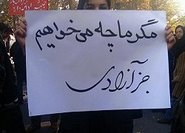


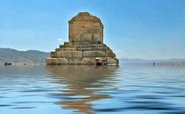



 Tulips in Holland