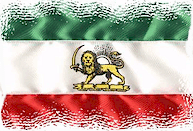

IMPERIAL EMBLEM

PERSIA
Iranian Freedom Fighters UNITE

Wednesday, October 08, 2008


Monday, February 18, 2008
Snoop Dogg Flava Flav Roast - and then the SECRETS OF THE CIA
Snoop Dogg ft Nate Dogg, Kurupt & Warren G - It Aint No Fun
Dr. Dre - The Next Episode
Eminem - Bitch Please II (feat. Dr. Dre, Snoop Dogg, Xzibit)
It's about goddamn time to blow the whistle. US government is the BIGGEST cocaine and heroin MAFIA in the whole freaking world. Bill Clinton's Mena Arkansas cocaine laundering, Bush CIA trafficking empire, Iran Contra, Plan Colombia, Turkey, Afghanistan, Pakistan poppy route, Vietnam War Burma Golden Triangle, none of these are enough evidence?
YOU ARE PAYING TAXES TO THE BIGGEST DRUG CARTELS AND YOU DON'T KNOW HALF OF THE STORY! YOU THINK YOU ARE STILL LIVING IN A DEMOCRACY?
Mike Ruppert - Former LAPD investigator, now 9-11 truther and CIA whistleblower, explains how the US government and Bush crime family is involved in drug trafficking, and how 9-11 plays into the global dominace scheme. A very important lecture. The Clinton Chronicles - Bill's Mena cocaine operations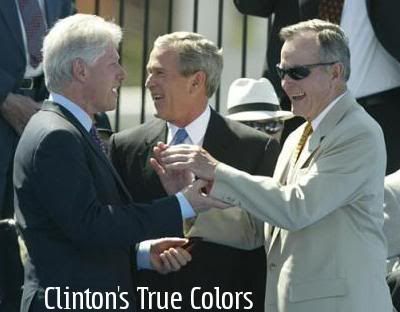
Secret Mason handshake... Bush Clinton crime syndicate came a LONG way together. All in the family.
***********************************************************************
Russian state TV suggests USA involved in drug-
trafficking from Afghanistan
***********************************************************************
BBC Monitoring - Channel One TV, Moscow, in Russian - Sun, 10 Feb 2008 15:04 EST
http://www.sott.net/articles/show/148967-Russian-state-TV-suggests-USA-involved-in-drug-trafficking-from-Afghanistan
Russian state-controlled Channel One TV has broadcast a report containing allegations that US forces are involved in drug-trafficking from Afghanistan to Europe. It also highlighted the problem of drug abuse in the British army.The channel's weekly news roundup "Voskresnoye Vremya" on 10 February noted that, according to the UN, the amount of opium being produced in Afghanistan has more than doubled since the coalition troops entered the country.The report went on to show former UK Prime Minister Tony Blair visiting the country at an unspecified time. It said that he had met almost 800 British troops during the visit. "This is either a coincidence or the working of cruel fate, but this is the exact number of soldiers that the British army loses each year because of drug abuse. This is more than the total combat losses of the royal army in Iraq and Afghanistan," the correspondent noted.The report then featured an extract from a BBC news website story saying that the British army loses a whole battalion of troops a year because of drug abuse (Research revealed that the story was published on 14 December 2007). The report went on to look at the wider problem of how to reverse the trend of increasing opium production in Afghanistan. Aleksandr Mikhaylov, the head of the department of interdepartmental and informational activity at the Russian Drugs Control Agency, was shown saying that economic measures to tackle the problem are foundering on local corruption. "The local authorities draw up seriously forged lists in which an amount is recorded for the amount destroyed and, in fact, the crop has not been destroyed at all. The theft of the money to combat narcotics is going on and is flourishing," he said. The accusation that US forces are involved in drug-trafficking came from Geydar Dzhemal, chairman of the Islamic Committee of Russia. "Without the control and connivance on the part of the special services none of these things are possible. For example in Afghanistan, the CIA and the special services are quite brazen. Under the protection of the American army they meet the necessary people. They collect the stuff, go to the Bagram airbase and they hand in a large consignment of narcotics, which is then taken away," he said. The report went on to say that heroin reached the Balkans via Turkey, which "has been a member of NATO since 1952 and is the USA's closest ally in the region". It said it is "another amazing coincidence" that Kosovo hosts the largest NATO base in Europe. The correspondent added that there is a "secret Interpol post" next to this base. "Here they speak almost openly about Afghan heroin in American planes," he noted.A man captioned as Marko Nicovic, Interpol employee, explained that 90 per cent of heroin goes through the Albanian mafia, which is now more powerful than the Sicilian mafia. He also alleged that members of this mafia bribe European parliamentarians to support the independence of Kosovo.The report went on to link high levels of drug crime in Russia with the US invasion of Afghanistan. "Since the Americans unleashed war on the Taleban, Russian crime labs have been working non-stop," the correspondent observed over footage of a drugs raid and packages of drugs being opened.Aleksandr Mikhaylov, the head of the department of interdepartmental and informational activity at the Russian Drugs Control Agency, was shown saying that the production of narcotics in Afghanistan is getting more professional and that drugs have taken a real stranglehold on the Afghan economy. "The situation today is that narcotics have become a substance used for barter in Afghanistan," he observed."For as long as heroin remains the only hard currency in the country and until NATO and its military coalition do not resolve their own issues, the agricultural proclivities here will hardly change," the correspondent concluded.
The true story of hemp, as told by Rick Simpson, the man who cured cancer with hemp oil. Please visit http://www.phoenixtears.ca/ for a vast collection of hemp research and hidden truth about "the miracle mdicine"!
N FROM THE CURE - The Rick Simpson Story (Part 1 of 7)
serious head injury in 1997, Rick Simpson sought relief from his medical condition through the use of medicinal hemp oil. When Rick discovered that the hemp oil ( Series (Part 1 of 7)
VIEW ALL 7 FILES AT http://www.youtube.com/chrychek
A Film By Christian Laurette - After a serious head injury in 1997, Rick Simpson sought relief from his medical condition through the use of medicinal hemp oil. When Rick discovered that the hemp oil (with its high concentration of T.H.C.) cured cancers and other illnesses, he tried to share it with as many people as he could free of charge - curing and controlling literally hundreds of people... but when the story went public, the long arm of the law snatched the medicine - leaving potentially thousands of people without their cancer treatments - and leaving Rick with unconsitutional charges of possessing and trafficking marijuana!
Canada is in the middle of a CANCER EPIDEMIC! Meet the people who were not allowed to testify on Rick's behalf at the Supreme Court of Canada's Infamous Rick Simpson Trial on September 10, 2007... INCLUDING A MAN WHO WAS CURED OF TERMINAL CANCER USING HEMP OIL!
IF YOU SEE ONLY ONE DOCUMENTARY THIS YEAR... MAKE IT THIS ONE!
Rick Simpson terminal cancer cure with cannabis oil -
RUN FROM THE CURE - The Rick Simpson Story (Part 2 of 7)
FILES AT http://www.youtube.com/chrychek...Cancer marijuana THC hemp oil
RUN FROM THE CURE - The Rick Simpson Story (Part 3 of 7)
AT http://www.youtube.com/chrychek...Cancer marijuana THC hemp oil Rick
RUN FROM THE CURE - The Rick Simpson Story (Part 4 of 7)
FILES AT http://www.youtube.com/chrychek...Cancer marijuana THC hemp oil
RUN FROM THE CURE - The Rick Simpson Story (Part 5 of 7)
FILES AT http://www.youtube.com/chrychek...Cancer marijuana THC hemp oil
RUN FROM THE CURE - The Rick Simpson Story (Part 6 of 7)
FILES AT http://www.youtube.com/chrychek...Cancer marijuana THC hemp oil
RUN FROM THE CURE - The Rick Simpson Story (Part 7 of 7)
FILES AT http://www.youtube.com/chrychek...Cancer marijuana THC hemp oil
Secrets of the CIA
Secrets of CIA (no commercials)- hr 32 min - 26 Jan 2007 -
This documentary explains how CIA pioneered, developed, manipulated prisoner abuse, sold drugs, changed regimes and killed millions of
http://video.google.com/videoplay?docid=-8562860981340825213
Secrets of the CIA - 1 hr
the CIA...Secrets
http://video.yahoo.com/video/play?ei=UTF-8&gid=433490&vid=40922...
Related videos
Secrets of CIA.avi - 2 hr 2 min - 3 Oct 2006 -
.This documentary explains how CIA pioneered, developed,manipulated prisoner abuse, sold drugs, changed regimes and killed millions of people
http://video.google.com/videoplay?docid=-2562011283313707032
New Trove Opened in Kennedy Killing : By LESLIE EATON
DALLAS — The Kennedy assassination — a defining moment in American history and a never-ending topic of debate among conspiracy theorists — re-entered the spotlight for a moment Monday, after the Dallas district attorney unveiled the contents of a safe that had been secret for more than 40 years.Inside were clothing worn by Lee Harvey Oswald; a small, tooled leather holster belonging to his killer, Jack Ruby; and piles of typed, old crackling documents. But nothing that was likely to settle the longstanding dispute over President John F. Kennedy’s death. Perhaps the most intriguing item was what purports to be a transcript of a conversation Ruby had with Oswald at Ruby’s Dallas nightclub, the Carousel, in which they plot to kill Kennedy to satisfy organized crime bosses.But the not-terribly-lifelike dialogue reads like a movie script — and may well have been. For example, Ruby responds to Oswald’s suggestion that they kill the president by saying, “But that wouldn’t be patriotic.”
The trove of material connected to the assassination was collected by the former district attorney, Henry M. Wade, who prosecuted Ruby and continued in office until 1987. Mr. Wade died in 2001.One of the surprises in the collection was a contract for a movie deal about the killing, signed by Mr. Wade, said Craig Watkins, who became district attorney last year. Mr. Watkins said he did not know if the transcript was meant to be part of the film or why the film was never made.An expert who has written a book on the assassination, Max Holland, said the transcript appeared to be based on a long-discredited claim by a Dallas lawyer named Carroll Jarnagin, who said he and a stripper had seen Oswald and Ruby together and overheard the discussion. “It’s a concoction,” Mr. Holland said, adding that Oswald and Ruby did not know each other. The report of the meeting was debunked by the Warren Commission, he said, which after extensive investigation concluded that Oswald was a lone gunman, not a participant in a conspiracy.The documents have not been examined by outside experts, and even his staff has yet to read most of the material, Mr. Watkins said. Once the material is cataloged and images scanned into computers, it will be donated to a museum and made available to the public, he said. The possibilities include the Smithsonian, in Washington, and the Sixth Floor Museum, in Dallas, in the former Texas School Book Depository, from which Oswald fired on Kennedy’s motorcade.Although his predecessors had chosen to keep the material in a safe on the 10th floor of the Dallas County Courthouse for decades, Mr. Watkins said he saw no reason to do so. “We decided that this information is too important to keep secret,” he said.Mr. Watkins, the first black district attorney in Texas, said he was releasing the material in part because of the window it provided on the racism of the past. The material “takes us back to 1960 and the climate not only of our criminal justice system, but of our country as it relates to race,” he said. He cited the official letterhead of nearby Hunt County, which claimed “the blackest land and the whitest people.”In addition to the transcript, he displayed two sets of brass knuckles that belonged to Ruby, and a letter from the Federal Bureau of Investigation to the Dallas police chief, contending that Ruby’s sister said her family had somehow obtained a police report on the preparations for Kennedy’s visit to Dallas.Oswald was arrested for fatally shooting the president on Nov. 22, 1963. Two days later, Ruby shot Oswald to death. He was convicted of murder, but won an appeal. He died of cancer in 1967, before the case was retried.The decision to release the material was praised by Gerald Posner, a lawyer and expert on the Kennedy assassination, who said that even if the transcript turned out to be a fake — “more entertaining than illuminating,” as he put it — historians would probably benefit from seeing contemporary documents related to the investigation.No matter what they contain, Mr. Posner said, the documents were almost certain to feed conspiracy theories. “And if it turns out they are innocuous,” he added, “people will say they must have destroyed the most incriminating documents.”Less than a mile away, vacationing families were celebrating Presidents’ Day by peering at the grassy knoll, now mostly bare dirt, from which conspiracy enthusiasts say a second gunman fired at Kennedy. Visitors there said they were aware of the new trove, but did not expect it to end the controversy.“There’s always going to be a theory,” said Donald E. Knox of Baltimore, here to attend a cheerleading competition with his daughter Samantha, 16, and wife, Sandra.About 1,500 people a day visit the Sixth Floor Museum, which was celebrating its 19th anniversary Monday with a chocolate-and-vanilla cake in the lobby.“A lot of people come here believing they can solve the complex details of this story,” said Nicola J. Longford, the museum’s executive director, adding that she would be delighted if the district attorney turned the trove over to her curators.The conspiracy debate continued to rage just outside the museum, where Roseanne Sande, 77, of Spokane, Wash., and her friend Mary Ann Thompson, 72, of Prescott, Ariz., stood on the corner preparing to enter.“Crazy things happen, and Oswald was crazy,” said Ms. Thompson, who said she believed that Oswald had acted alone.Her friend disagreed. “I think it was a conspiracy, I really do,” Ms. Sande said. “I’ve never had a good feeling about this, and I just can’t get it out of my mind.”
Thursday, December 06, 2007
The global drug war: beyond prohibition
By Juan Gabriel Tokatlian : Created 2007-12-04 16:07
The 2007 world drug report from the United Nations office of drugs and crime ((UNODC [6]) estimates that there are approximately 200 million consumers (ages 15 to 64) of naturally-based and synthetic drugs. The figure of individuals with a serious drug problem, 25 million, corresponds to 0.6% of the world's inhabitants between 15 and 64, and it represents 0.38% of the whole global population. Marijuana is used by some 158.8 million people; thus the percentage of users of hard drugs worldwide is even smaller. Therefore the crucial questions are: should we continue fighting a punitive, failed "war on drugs [7]" in the name of a very limited number of persons who consume cocaine and heroin? Is not the consumption of drugs a health issue which does not demand such a coercive strategy to cope with it? Should the international system continue to pay and suffer for an American-led prohibitionist Kulturkampf that chases [8] the ever elusive chimera of abstinence?
The facts regarding the "war on drugs" are staggering. For example, in 1990 the Latin American countries eradicated 23,080 hectares of illicit crops while in 2006 they destroyed 280.694 hectares of coca, marijuana and poppy plantations. In the last seventeen years the total area of illicit crops that were fumigated, both by air and manually, is the equivalent to four times the size of the state of Delaware in the United States (see Ben Wallace-Wells, "How America Lost the War on Drugs [9]", Rolling Stone, 27 November 2007). In Colombia [10], the drug barons of the 1980s are mostly dead or imprisoned [11], but the country is witnessing the proliferation of small, more sophisticated, cell-like "boutique" cartels; Mexico [12] has close to 40% of its territory under the direct influence [13] of organised criminal organisations; Brazil [14] is suffering an unprecedented level of urban violence [15] linked to the drug business; and some Caribbean islands are on the verge of collapse due to the combination of the narcotics trade and gang crime.
In 2001, the last year of the Taliban government in Afghanistan [16], the production of heroine was seventy-four metric tonnes; in 2006, under the nominal control of the US-led "coalition of the willing", the production of heroin in Afghanistan reached 6,100 metric tonnes. In the early 1970s, Mexico was the leading producer of marijuana, by the early 1980s it was Colombia; by 2007, the United States is the principal producer of marijuana, with approximately 10,000 metric tonnes. Also in openDemocracy on the drug gangs and urban violence in Latin America:Isabel Hilton, "Álvaro Uribe's gift: Colombia's mafia goes legit [17]" (24 October 2005)Sue Branford, "Colombia's other war [18]" (14 November 2005)Sergio Aguayo Quezada, "Mexico: a war dispatch [19]" (25 June 2007)Rodrigo de Almeida, "The shadow of urban war [20]" (18 July 2007)Arthur Ituassu, "Tropa de Elite: Brazil's dark sensation [21]" (2 November 2007) Even though harsher penalties on money-laundering have been imposed almost everywhere since 2001, the seizure of assets related to money-laundering in the United States and the rest of the world are insignificant. Millions of people are jailed in the industrialised nations and the underdeveloped countries because of minor offences related to drug consumption, while violent organisations grew stronger and more virulent. Thanks to the current futile policies of leading governments and state agencies, al-Qaida and related armed groups are becoming richer as well as more effective [22] and powerful. By 2008, the United Nations, under the auspices of its office on drugs and crime, must assess [23] the record of the last decade in the fight against narcotics as determined by its special session on drugs in 1998. As of December 2007, none of the targets the session outlined has been attained. In view of this repeated global failure it is time to rethink the "war on drugs" (see the International Drug Policy Consortium [24]). A broad alliance - a sort of "coalition of the healing" - in favour of bold ideas may lead to a more enlightened path beyond the current failed model on narcotics (see Ethan Nadelmann, "Think Again: Drugs [25]", Foreign Policy, September-October 2007). What is clear is that the current prohibitionist Kulturkampf needs to be replaced by a comprehensive [26] harm-reduction policy: in terms of health and of law, at the individual and community level, and on the local and the international scale. What this might look like, after so many decades of frustration, pain and ineffectiveness, should be the primary focus of a new debate on drugs.
Juan Gabriel Tokatlian is at Universidad de San Andrés in ArgentinaHe earned a doctorate in international relations from the Johns Hopkins University school of advanced international studies, and lived, researched and taught in Colombia from 1981-98Also by Juan Gabriel Tokatlian in openDemocracy:"Colombia needs a Contadora: a democratic proposal [1]" (30 May 2006)"The partition temptation: from Iraq to Latin America [2]" (29 November 2006)"Latin America, China, and the United States: a hopeful triangle [3] " (9 February 2007)"A Latin American's memo to Bush [4]" (9 March 2007)"After Bush: dealing with Hugo Chávez [5]" (13 March 2007)
Monday, November 12, 2007
Mullah Mafia Drug Over Lord is Devouring her Minions
دادگسترى سيستان و بلوچستان اعلام كرد بر اساس حكم صادره از سوى مقام قضايى "نادر كلبعلى" فرزند حسين به اتهام حمل و نگهدارى دو كيلوگرم هرويين به صورت جاسازى به اعدام محكوم شد . حكم صادره پس از تاييد توسط مراجع عالى قضايى صبح امروز در محوطه زندان زاهدان به اجرا در آمد رئيس كل دادگسترى استان زنجان گفت: اعداميهاى سرقت مسلحانه سال گذشته بازار زنجان از 7نفر به 9 نفر افزايش يافته است . جمال انصارى در گفت وگو با خبرگزارى فارس در زنجان، افزود: در دادگاه اوليه اين پرونده 7 نفر از سارقان به اعدام و ديگر محكومان به حبسهاى سنگين محكوم شده بودند، ولى به دليل اين كه توسط ديوان عالى كشور نقصهاى تحقيقاتى در مورد پرونده اعلام شد، پرونده مجددا به استان ارجاع و با حضور قاضى ويژه، جلسات متعدد برگزار و با توجه به موارد جديدى كه به پرونده اضافه شد، تعداد اعدامى هاى اين پرونده از 7 نفربه 9 نفر افزايش يافت.
نفر در خوزستان دستگير شدند 403
رئيس پليس مبارزه با مواد مخدر فرماندهي نيروي انتظامي خوزستان گفت: در مانور منطقهاي برخورد با قاچاقچيان مواد مخدر ،403 نفر در استان دستگير شدند. به گزارش مركز اطلاعرساني معاونت اجتماعي و ارشاد فرماندهي انتظامي خوزستان، عبدالله نظرپور افزود: در اين مانور 3 روزه ماموران پرتلاش مبارزه با موادمخدر موفق شدند 21-, كيلو و 295 گرم انواع موادمخدر را كشف و ضبط كنند. وي گفت: همچنين در اين رابطه 6 نفر قاچاقچي، 66 نفر توزيع كننده مواد، 51 نفر حمل كننده، 9 نفر نگهدارنده و 271 معتاد دستگير شدند.
Online Videos by Veoh.com
Monday, February 19, 2007
Tens of thousands of addicted students in Iran

Tuesday, February 13, 2007
Anxiety grows on Iran's eastern border
TAFTAN, PAKISTAN — You can smell the tension along the Iranian border. A thick stench of rotting fruit and vegetables hangs over market stalls in the border town of Taftan, near the three-way juncture of Afghanistan, Pakistan and Iran.The wild country here on the edge of the Afghan desert has grown notorious as a shipment point for drugs and weapons, a source of worry for all three governments. For years, those concerns rarely interrupted the work of ordinary traders, but last week the Pakistani authorities caught seven Iranians trying to sneak across the border at night, and a squabble ensued over which country had the right to interrogate them.Iran closed its border in protest, and for several days the town was awash with food destined for Iranian shelves, long rows of packing crates crawling with flies.Mullah Zafran, president of the Taftan fruit market, said these interruptions of trade are becoming more frequent. "There is no discipline on the border," he said, bitterly.The scene in Taftan is one of several signs of growing anxiety along Iran's eastern border. The country's western flank has received vastly more attention in recent days, as the United States accuses Iran of helping insurgents in Iraq. But some observers have also started to question Iran's strategy in the Taliban heartlands of southern Afghanistan and the tribal regions of Pakistan.Officially, Tehran remains closely allied with Kabul, having poured more than $200-million (U.S.) into the reconstruction of its war-torn neighbour. Iran's Foreign Minister met with Afghanistan's outgoing ambassador to Tehran on the weekend, praising their warm relations and calling for more economic co-operation.Behind the smiles, however, lies a heated debate. Nearly every Afghan politician criticizes Pakistan for stoking the Taliban insurgency, but they're divided about Iran. Some describe their neighbour as exerting only political and commercial influence, broadcasting anti-American radio and television programs into the country and using predatory business practices to gain control over parts of Afghanistan's economy."They are meddling, for sure," a senior Kabul politician said. "But for now, we can't say they are interfering in the military aspect." In Kandahar, another politician said he believes that Iran supports the Ishaqzai tribal faction within the Taliban. The Afghan politician said he recently met with an Iranian official and challenged him about the rumours, which produced only a shrug from the Iranian."He said, 'What should we do? If we knew that the United States would behave like this, we would not have opposed the Taliban at first,' " the politician said.Support for the Taliban would be a major reversal for the Shia government in Iran, which nearly went to war with the Sunni Taliban regime over the killing of seven Iranian diplomats in 1998. Iran continued to give weapons and other assistance to the Taliban's enemies in northern Afghanistan until the regime was overthrown.But the arrival of foreign soldiers in Afghanistan brought new concerns for Tehran, especially as the North Atlantic Treaty Organization increases its troop strength in provinces near the Iranian border. NATO's chief of staff in southern Afghanistan, Canadian Colonel Mike Kampman, responded cautiously when asked about Iran's response."You put all this in the larger international atmosphere, or environment, and you can imagine the tensions of any sort of Western presence that gets close to that border," Col. Kampman said.Lieutenant-General Rahmatullah Raoufi, southern regional commander for the Afghan army, said he hasn't seen any firm indications that Iran backs the insurgency. "We don't have any evidence," he said. "We just don't know." A few hints — rumours, mostly — suggest the Iranians may have established links with the insurgents.A 22-year-old Taliban fighter from Maywand district, west of Kandahar, was shot in the chest during a fight with NATO troops in September, and dragged off the battlefield by his comrades.He returned home several months later, with his wounds healed, and told his neighbours that the Taliban took him for treatment to a hospital in Tehran."He kept talking about the Iranian nurses," said a neighbour, who feared for his life if he told the story publicly. "He said, 'They were really beautiful, and I wish I could speak Persian.' " A Taliban source said he knows of opium barons who have dramatically increased their regular cash payments to insurgent leaders in Quetta, Pakistan. The payments are protection money, paid by drug dealers whose smuggling routes are guarded by Taliban fighters. Those routes often run across the Iranian border, and the Taliban source speculated that somebody inside Iran is putting cash in the drug convoys for delivery to the insurgents.(A low-ranking Western intelligence staffer also said Iran is funding the Taliban, but offered no details.)A Taliban fighter in Kandahar, however, was skeptical about the Iranian support. "We get some Kalashnikovs from Iran, but we have to pay for them," he said. "If they want to help us, they should give them free." Free or not, Iranian weapons have been reported on the battlefields of Panjwai district, where Canadian troops recently fought insurgents.Gul Mohammed, a villager from Sangisar, about 40 kilometres west of Kandahar city, said Taliban fighters burned his cousin's home and stole two Russian-made Kalashnikovs during the fighting in his village this summer. He approached the fighters on his cousin's behalf, he said, asking them to give the weapons back. Many households in Afghanistan are stocked with assault rifles for personal protection, and Mr. Mohammed argued with the Taliban that his cousin needed the weapons to protect his family.The insurgents were reluctant to give back the Russian rifles, which are prized in Afghanistan for their quality. Instead, the fighters offered Mr. Mohammed two rifles they described as "Iranian Kalashnikovs," shorter weapons with two grey plastic pistol-grips and folding metal stocks. His description sounded closer to the Hungarian AMD-65 than any Iranian rifle, but the insurgents said the weapons and ammunition were both supplied by Iran."The guns were new," Mr. Mohammed said. "The black paint was very shiny." Such claims are difficult to verify; Afghanistan has issued AMD-65s to some police officers, and deep corruption in the country's law enforcement means that police weapons often wind up in the hands of insurgents.In fact, the Afghan police officer who stood guard outside Iran's consulate in Kandahar last week was carrying the same weapon, a weathered AMD-65.Inside the ornate building, in an office decorated with hundreds of tiny mirrors and a portrait of Ayatollah Khomaini, the head of Iran's reconstruction efforts in southern Afghanistan shook his head scornfully when asked whether Iranian weapons are being used by the Taliban."It's impossible," said Sheik Hossein Zeineddin, director of the Iranian Council in Kandahar. "We are working in a very transparent way." Echoing the arguments made by Pakistani authorities, however, Mr. Zeineddin added that it's difficult for Iran to stop insurgents from crossing the expanses of open terrain that form his country's border with Afghanistan."We have a 900-kilometre border with Afghanistan," he said. "Who can control every kilometre?" But the problems with the border are less of a threat to Afghanistan than to Iran, Mr. Zeineddin added, because the Western allies now operating in the region are trying to make trouble for his country.He alleged that British forces are using the drug dealers in Helmand province for espionage against Iran: "They are gathering information, visiting, making connections, watching us."At the same time, Mr. Zeineddin said, the United States and Pakistan are supporting the Baloch tribes in their separatist insurgency in southeastern Iran."They are raising the Baloch against us," he said, even suggesting that NATO operates training camps for Baloch fighters inside Afghanistan.A gracious man, wearing a suit jacket and speaking fluent English, Mr. Zeineddin said his suspicions about the Western powers haven't stopped him from pursuing a humanitarian mission in southern Afghanistan. Some of the initiatives he described, such as subsidizing Ariana Afghan Airlines' regular flights to Tehran, and training 300 literacy teachers as Persian-language instructors, seemed designed to extend Iran's influence in this Pashto-speaking area.But he also gave a long list of other Iranian projects that appeared to support NATO's goal of rebuilding the country: a trade school, a sports centre, a women's clinic, a library, a soccer pitch, renovations for an orphanage and several others.The frustration of trying to implement these projects with the Afghan government — money gone missing, and Afghan officials refusing to take responsibility for their work — shows why insurgent groups such as the Taliban don't require help from outside the country, he said."Now, there's so much corruption, no wonder the people go back to the Taliban," Mr. Zeineddin said.




 Posts
Posts




 اخبار مربوط به زندانیان سیاسی و نقض حقوق بشر






 Tulips in Holland