

Persian Tanz - Students learning English in an UPMARKET School!
IMPERIAL EMBLEM

PERSIA
Iranian Freedom Fighters UNITE
Showing posts with label English. Show all posts
Showing posts with label English. Show all posts
Tuesday, April 15, 2008


Thursday, April 12, 2007
20 Shia gunmen die in British Basra fightback : By Thomas Harding
12/04/2007
Colleagues' farewell to victims
In pictures: A bridge blown in two
Your view: Has the war damaged Britain's standing?
Con Coughlin: The 'superpower lite' punching above its weight
Cars plunge into the Tigris as bomber hits bridge
British forces have hit back at Iraqi insurgents who killed six colleagues last week, by launching an operation in which they shot dead more than 20 gunmen of Basra's rogue militias.
Details of the assault emerged last night as the bodies of four soldiers killed by a roadside bomb on Thursday were put on flights back to the UK. They arrived at RAF Lyneham in Wiltshire this morning for a repatriation ceremony. The attack began when a battalion-size force was sent into one of the southern city's toughest terrorist strongholds, three miles from where four soldiers, including two women, were blown up in their Warrior armoured vehicle. An armoured force of 400 troops from the 2Bn The Rifles and 2Bn The Duke of Lancaster's Regiment, both of which suffered fatalities last week, entered the Shia Flats area on the western outskirts of Basra to search for hidden weapons. The district is notorious as one of the most dangerous in southern Iraq. "We wanted to make quite clear there's nowhere in Basra we cannot go," a British commander told The Daily Telegraph yesterday. "We are prepared to be there in daylight and take whatever comes our way. We are not being bombed out or intimidated." Initially there was no response as the troops began searching homes where they recovered some small arms. But then the atmosphere changed. "It was all going very well but then there was a sense something bad was about to happen as we noticed children starting to speak into their mobile phones and point at us," the commander said. "At this stage it became clear that the militia was massing for some kind of attack." As the troops took up defensive positions around their Warrior and Bulldog armoured vehicles, Iraqi gunmen carrying AK47 assault rifles and rocket-propelled grenades could be seen scurrying along rooftops and down streets. It is believed ammunition and hundreds of weapons are hidden in the area and brought into the open at short notice when the British appear. Intelligence sources also informed the troops on the ground that Shia terrorists were heading towards them from other parts of the city. The battle began on Tuesday afternoon with numerous rocket-propelled grenades and small arms fire hitting the British positions. The soldiers from the Rifles and Duke of Lancaster's held off the attacks for more than two hours and shot a number of gunmen. There were no British casualties as they gradually fought their way back to their base at Basra Palace. Coalition jets also made low flying passes to intimidate the enemy although they did not drop any bombs. During one skirmish two attackers, who fired grenades at a British position, were chased down and arrested. Both are likely to face charges. Commanders believed that some of the dead might have been behind the ambush of a Warrior in which 2nd Lt Joanna Dyer, a close friend of Prince William at Sandhurst, and three other soldiers were killed. A sniper, possibly from Shia Flats, also killed two other soldiers earlier last week. "This was at a location where we believe those responsible for killing our people were almost certainly recruited from," a military source said. During the battle an Iraqi policeman was shot by one of the militias. He later died. No civilians are believed to have been killed in the fight, the military reported, although it could not rule out innocent casualties caught in the crossfire. "While we may regret that such incidents have to take place, we will not allow militia gunmen to control parts of Basra," said Lt Col Kevin Stratford-Wright, the British military spokesman in southern Iraq. "There are no 'no-go' areas for multi-national forces in Basra. Security is our responsibility and, in conjunction with the Iraqi security forces, we seek to provide as secure an environment as possible. This will inevitably involve taking on the rogue militia who blight the lives of people in Basra." Official estimates put the number of Iraqis hit by British gunfire at 10 but other defence sources said that double that figure had been shot.
Colleagues' farewell to victims
In pictures: A bridge blown in two
Your view: Has the war damaged Britain's standing?
Con Coughlin: The 'superpower lite' punching above its weight
Cars plunge into the Tigris as bomber hits bridge
British forces have hit back at Iraqi insurgents who killed six colleagues last week, by launching an operation in which they shot dead more than 20 gunmen of Basra's rogue militias.
Details of the assault emerged last night as the bodies of four soldiers killed by a roadside bomb on Thursday were put on flights back to the UK. They arrived at RAF Lyneham in Wiltshire this morning for a repatriation ceremony. The attack began when a battalion-size force was sent into one of the southern city's toughest terrorist strongholds, three miles from where four soldiers, including two women, were blown up in their Warrior armoured vehicle. An armoured force of 400 troops from the 2Bn The Rifles and 2Bn The Duke of Lancaster's Regiment, both of which suffered fatalities last week, entered the Shia Flats area on the western outskirts of Basra to search for hidden weapons. The district is notorious as one of the most dangerous in southern Iraq. "We wanted to make quite clear there's nowhere in Basra we cannot go," a British commander told The Daily Telegraph yesterday. "We are prepared to be there in daylight and take whatever comes our way. We are not being bombed out or intimidated." Initially there was no response as the troops began searching homes where they recovered some small arms. But then the atmosphere changed. "It was all going very well but then there was a sense something bad was about to happen as we noticed children starting to speak into their mobile phones and point at us," the commander said. "At this stage it became clear that the militia was massing for some kind of attack." As the troops took up defensive positions around their Warrior and Bulldog armoured vehicles, Iraqi gunmen carrying AK47 assault rifles and rocket-propelled grenades could be seen scurrying along rooftops and down streets. It is believed ammunition and hundreds of weapons are hidden in the area and brought into the open at short notice when the British appear. Intelligence sources also informed the troops on the ground that Shia terrorists were heading towards them from other parts of the city. The battle began on Tuesday afternoon with numerous rocket-propelled grenades and small arms fire hitting the British positions. The soldiers from the Rifles and Duke of Lancaster's held off the attacks for more than two hours and shot a number of gunmen. There were no British casualties as they gradually fought their way back to their base at Basra Palace. Coalition jets also made low flying passes to intimidate the enemy although they did not drop any bombs. During one skirmish two attackers, who fired grenades at a British position, were chased down and arrested. Both are likely to face charges. Commanders believed that some of the dead might have been behind the ambush of a Warrior in which 2nd Lt Joanna Dyer, a close friend of Prince William at Sandhurst, and three other soldiers were killed. A sniper, possibly from Shia Flats, also killed two other soldiers earlier last week. "This was at a location where we believe those responsible for killing our people were almost certainly recruited from," a military source said. During the battle an Iraqi policeman was shot by one of the militias. He later died. No civilians are believed to have been killed in the fight, the military reported, although it could not rule out innocent casualties caught in the crossfire. "While we may regret that such incidents have to take place, we will not allow militia gunmen to control parts of Basra," said Lt Col Kevin Stratford-Wright, the British military spokesman in southern Iraq. "There are no 'no-go' areas for multi-national forces in Basra. Security is our responsibility and, in conjunction with the Iraqi security forces, we seek to provide as secure an environment as possible. This will inevitably involve taking on the rogue militia who blight the lives of people in Basra." Official estimates put the number of Iraqis hit by British gunfire at 10 but other defence sources said that double that figure had been shot.
Saturday, April 07, 2007
Is This Really The Way the English still See and understand Iranians and Iranian Culture?
How reality failed to live up to a dream : By Amir Taheri reviewing a book ' MIRRORS OF THE UNSEEN ': Journeys in Iran , by Jason Elliot , Picador £16.99 pp416
When he embarked on his journeys to Iran three years ago, Jason Elliot was hoping to re-live part of the experience of the English traveller Robert Byron as narrated in his 1933 classic, The Road to Oxiana.
The result of that quest is Mirrors of the Unseen which, although focused on Iran, is also about the death of the kind of travel writing of which Byron was a popular example. Byron came from a civilisation that was self-assured, not to say arrogant, and was looking for the exotic, which he found aplenty, running into colourful characters representing the “mysterious Orient”. Elliot, by contrast, comes from a civilisation riddled by self-doubt. In Isfahan he encounters a group of European women and finds them loud and aggressive — “like navvies” — that is, they behave like men. Elliot says he was pursuing a dream of smoking a hubble-bubble with a native in Isfahan, something he could have done in any of the tea-houses on Edgware Road in London. As he moves through Iran the shocking truth dawns on him — the country he had dreamt of does not exist. Iran today is a largely westernised society with the same pizza parlours, hamburger joints, traffic jams, mobile telephones and Chinese-made shoes everywhere. True, women are draped in the hijab and many men sport designer stubble. But these are mere props for a people who seem to be too enamoured of the “decadent West” for Elliot’s taste. On occasion Elliot tries to defend the Islamic revolution against Iranian interlocutors, who want none of it. He is shocked that Iranians like to talk of money, fast cars, sex, plastic surgery and whisky and, in most cases, dream of one day emigrating to the land of the “infidel”. As a sign of respect for the “natives” he grows a beard, dresses as an Islamist proletarian and rejects offers of drinks. Soon, however, people avoid him precisely because he looks “ Islamic”. Elliot encounters no dancing girls, no snake charmers, no fortune tellers, no mysterious shaikhs, no hashish dens and no jinns dressed as princes. Instead, he runs into businessmen, dual nationals who live part of the year in California, young ladies who turn out to be engineers or managers, a young man who designs equipment for underwater warfare, a professor of forensics returning from seminars in Europe, a married lady who has the audacity to invite him for a ride in her ultra-fast car, a dowager of American origin who breeds horses and is a name-dropper worthy of Hello! magazine, and, horror of horrors, Iranians who have travelled more widely than the Englishman could dream of. At one point Elliot complains that it is he “who should do the travelling”, not those cheeky natives! At times the cast of characters Elliot portrays is no different from ones he might have encountered on a train to Birmingham or in a pub in Hackney, bar the physical background and the better Iranian weather. In the end it is Elliot who ends up as the exotic item for the wealthy Iranians who invite him to lavish dinner parties with Filipino “slaves” in attendance, and, at times, present him as “the grandson of the famous English novelist George Eliot”. Almost all the Iranians he encounters tell him that, “This government has killed Islam” and that “There is nothing Islamic about Iran”. Elliot is disappointed: Where is the spirituality, the disdain for this transient world, the goddamn mystery of the “ancient East”? To compensate he clings to a wildly romanticised account of the past. He tells us that almost anything that is worthwhile in civilisation came from Iran, and that Christianity itself is a poor copy of the Persian cult of Mithra's, the Sun God. As an Iranian, I should feel flattered. I don’t, though, because Elliot’s account is naive and insulting. If the Persians did all he says they did, then their heirs, including myself, must be exceptionally stupid to have created the poverty, despotism, corruption and cynicism he so accurately describes. It is not clear what the word “Unseen” in the title of the book means. Is it a reference to the countless monuments that Elliot decided not to visit, although in most cases he was just a few hundred yards from them? He claims to be passionate about architecture. But in Tehran he does not bother with the city’s oldest “quarter”. And how could anyone go to Isfahan and not visit the shrine of Haroun Vilayat or to Shiraz and skip the oldest mosque in Iran or to Hamadan and miss the mausoleum of Esther and Mordecai? He visits Natanz, the site of Iran’s controversial nuclear project, and makes no mention of it. Visiting almost every important carpet-weaving centre in Iran, Elliot does not bother to visit a single workshop to see how it is done or to devote a paragraph to those exquisite works of Persian craft. The list of places he missed could go on and on. Elliot’s book suffers from poor editing and poorer fact-checking. The Caspian, for example, is an inland lake, not an “ocean”. Ctesiphon was the capital of the Sassanid not “the capitol (sic) of the Parthians”. The 25th centenary of the Persian empire was celebrated in 1971 not 1975. There is no “Hide Park” in London. The poets Saadi and Nizami were anything but “mystics”. Alexander the Great’s sacking of Persepolis was not part of the “crusades”. Darius the Great was not a grandson of Cyrus the Great but a distant relation. Iranian territory covers 1,648,000 square kilometres not 600,000. Richard Helms was CIA director before becoming ambassador to Tehran, not after. Iran never bought “submarines by the dozens from the Americans” under the shah. It has just two, bought from the Soviet Union in the 1990s. The Tehran Railway Station is not an example of “Soviet architecture” but was built by a Danish company in the 1930s. The Persian greeting is “Salaam”, not the Hebrew “Shalom” Elliot was offering to people in Iran (one wonders what their reaction was). Elliot says he had decided to “give politics a wide berth” when writing about Iran. But his book is a dramatic political portrayal of Iran today. He writes: “I had a familiar feeling that I had learned nearly nothing meaningful about the country I had come to explore, and certainly not enough worth writing about.” He is wrong for two reasons. First, he discovered a great deal about Iran, just not what he had set out to find. Secondly, all travel writers ultimately write about themselves and the way their culture sees “the other”. And Elliot has done a good job of illustrating that the English need a new kind of writing in which the “other” is not typecast, and patronised, in the way Byron did. Incidentally, the book is worth its price for one of the many photographs it offers, showing a shop window in Tabriz decorated with several posters of the prophet Muhammad and other “saints” of Islam. So who said portraying Muhammad was “an unpardonable sin” in Islam?
WORLD BEATERS
Elliot is eager to emphasise the role of the Persian civilisation in world history. Among the firsts he attributes to it are “the banker’s cheque; the world’s first postal service; the first international charter of human rights; the first modern astronomical observatory; the first calculating machine; the decimal fraction; the algorithm; the foundations of algebra and trigonometry; the almanac; the astrolabe; the theodolite; the earliest electric batteries; the windmill and the waterwheel . . .”
When he embarked on his journeys to Iran three years ago, Jason Elliot was hoping to re-live part of the experience of the English traveller Robert Byron as narrated in his 1933 classic, The Road to Oxiana.
The result of that quest is Mirrors of the Unseen which, although focused on Iran, is also about the death of the kind of travel writing of which Byron was a popular example. Byron came from a civilisation that was self-assured, not to say arrogant, and was looking for the exotic, which he found aplenty, running into colourful characters representing the “mysterious Orient”. Elliot, by contrast, comes from a civilisation riddled by self-doubt. In Isfahan he encounters a group of European women and finds them loud and aggressive — “like navvies” — that is, they behave like men. Elliot says he was pursuing a dream of smoking a hubble-bubble with a native in Isfahan, something he could have done in any of the tea-houses on Edgware Road in London. As he moves through Iran the shocking truth dawns on him — the country he had dreamt of does not exist. Iran today is a largely westernised society with the same pizza parlours, hamburger joints, traffic jams, mobile telephones and Chinese-made shoes everywhere. True, women are draped in the hijab and many men sport designer stubble. But these are mere props for a people who seem to be too enamoured of the “decadent West” for Elliot’s taste. On occasion Elliot tries to defend the Islamic revolution against Iranian interlocutors, who want none of it. He is shocked that Iranians like to talk of money, fast cars, sex, plastic surgery and whisky and, in most cases, dream of one day emigrating to the land of the “infidel”. As a sign of respect for the “natives” he grows a beard, dresses as an Islamist proletarian and rejects offers of drinks. Soon, however, people avoid him precisely because he looks “ Islamic”. Elliot encounters no dancing girls, no snake charmers, no fortune tellers, no mysterious shaikhs, no hashish dens and no jinns dressed as princes. Instead, he runs into businessmen, dual nationals who live part of the year in California, young ladies who turn out to be engineers or managers, a young man who designs equipment for underwater warfare, a professor of forensics returning from seminars in Europe, a married lady who has the audacity to invite him for a ride in her ultra-fast car, a dowager of American origin who breeds horses and is a name-dropper worthy of Hello! magazine, and, horror of horrors, Iranians who have travelled more widely than the Englishman could dream of. At one point Elliot complains that it is he “who should do the travelling”, not those cheeky natives! At times the cast of characters Elliot portrays is no different from ones he might have encountered on a train to Birmingham or in a pub in Hackney, bar the physical background and the better Iranian weather. In the end it is Elliot who ends up as the exotic item for the wealthy Iranians who invite him to lavish dinner parties with Filipino “slaves” in attendance, and, at times, present him as “the grandson of the famous English novelist George Eliot”. Almost all the Iranians he encounters tell him that, “This government has killed Islam” and that “There is nothing Islamic about Iran”. Elliot is disappointed: Where is the spirituality, the disdain for this transient world, the goddamn mystery of the “ancient East”? To compensate he clings to a wildly romanticised account of the past. He tells us that almost anything that is worthwhile in civilisation came from Iran, and that Christianity itself is a poor copy of the Persian cult of Mithra's, the Sun God. As an Iranian, I should feel flattered. I don’t, though, because Elliot’s account is naive and insulting. If the Persians did all he says they did, then their heirs, including myself, must be exceptionally stupid to have created the poverty, despotism, corruption and cynicism he so accurately describes. It is not clear what the word “Unseen” in the title of the book means. Is it a reference to the countless monuments that Elliot decided not to visit, although in most cases he was just a few hundred yards from them? He claims to be passionate about architecture. But in Tehran he does not bother with the city’s oldest “quarter”. And how could anyone go to Isfahan and not visit the shrine of Haroun Vilayat or to Shiraz and skip the oldest mosque in Iran or to Hamadan and miss the mausoleum of Esther and Mordecai? He visits Natanz, the site of Iran’s controversial nuclear project, and makes no mention of it. Visiting almost every important carpet-weaving centre in Iran, Elliot does not bother to visit a single workshop to see how it is done or to devote a paragraph to those exquisite works of Persian craft. The list of places he missed could go on and on. Elliot’s book suffers from poor editing and poorer fact-checking. The Caspian, for example, is an inland lake, not an “ocean”. Ctesiphon was the capital of the Sassanid not “the capitol (sic) of the Parthians”. The 25th centenary of the Persian empire was celebrated in 1971 not 1975. There is no “Hide Park” in London. The poets Saadi and Nizami were anything but “mystics”. Alexander the Great’s sacking of Persepolis was not part of the “crusades”. Darius the Great was not a grandson of Cyrus the Great but a distant relation. Iranian territory covers 1,648,000 square kilometres not 600,000. Richard Helms was CIA director before becoming ambassador to Tehran, not after. Iran never bought “submarines by the dozens from the Americans” under the shah. It has just two, bought from the Soviet Union in the 1990s. The Tehran Railway Station is not an example of “Soviet architecture” but was built by a Danish company in the 1930s. The Persian greeting is “Salaam”, not the Hebrew “Shalom” Elliot was offering to people in Iran (one wonders what their reaction was). Elliot says he had decided to “give politics a wide berth” when writing about Iran. But his book is a dramatic political portrayal of Iran today. He writes: “I had a familiar feeling that I had learned nearly nothing meaningful about the country I had come to explore, and certainly not enough worth writing about.” He is wrong for two reasons. First, he discovered a great deal about Iran, just not what he had set out to find. Secondly, all travel writers ultimately write about themselves and the way their culture sees “the other”. And Elliot has done a good job of illustrating that the English need a new kind of writing in which the “other” is not typecast, and patronised, in the way Byron did. Incidentally, the book is worth its price for one of the many photographs it offers, showing a shop window in Tabriz decorated with several posters of the prophet Muhammad and other “saints” of Islam. So who said portraying Muhammad was “an unpardonable sin” in Islam?
WORLD BEATERS
Elliot is eager to emphasise the role of the Persian civilisation in world history. Among the firsts he attributes to it are “the banker’s cheque; the world’s first postal service; the first international charter of human rights; the first modern astronomical observatory; the first calculating machine; the decimal fraction; the algorithm; the foundations of algebra and trigonometry; the almanac; the astrolabe; the theodolite; the earliest electric batteries; the windmill and the waterwheel . . .”
Tuesday, April 03, 2007
TIT FOR TAT, Hostage takers play the old game.
Iranian News Agency Reports Release of Iranian Diplomat Who Was Seized in Iraq in February
April 03, 2007. The Associated Press FOX News
TEHRAN, Iran -- An Iranian diplomat in Iraq who was kidnapped in mysterious circumstances two months ago has been released, the Iranian authorities reported Tuesday. Jalal Sharafi, the second secretary at the Iranian Embassy in Baghdad, will return to Tehran later Tuesday, the official Islamic Republic News Agency reported, citing "informed sources." The report gave no indication of why or how Sharafi had been freed. In Baghdad, an official at the Iranian embassy confirmed Sharafi's release, but said he did not know who was responsible for freeing him. "He was kidnapped and I don't have further details," said the official, who added Sharafi had already left the country. "He was released yesterday [Monday]," the official said, speaking on condition of anonymity for not being authorized to speak to the media. Sharafi was seized on Feb. 4 when his car was intercepted by vehicles carrying armed men in the Karradah district of Baghdad. The gunmen, who wore Iraqi uniforms, forced him into one of their vehicles and sped away. Iran said he had been taken by an Iraqi military unit commanded by the U.S. forces, and said it was holding the Americans responsible for his safety. The U.S. authorities denied any role in his disappearance. The Iraqi government said it did not know who had abducted Sharafi, but Shiite lawmakers said he had been taken by an Iraqi commando unit that reports to the U.S. command — an allegation strongly denied by U.S. spokesmen. The abduction took place as tension mounted between Iran and the United States over alleged Iranian support of Shiite extremists in Iraq and U.S. efforts to force Tehran to stop enriching uranium — a process that can produce material for nuclear reactors or bombs. It also occurred nearly a month after U.S. troops detained five Iranians in northern Iraq and accused them of having links to a network backing armed Shiite groups.
Former FBI Agent on Private Business in Iran Missing
April 02, 2007 The Washington Post Robin Wright
A former FBI agent has been missing in Iran since March 8, according to U.S. officials. The unnamed former agent was on private business, but the United States is now sufficiently concerned about his welfare that the State Department today sent a formal message to Iran through Swiss intermediaries asking about his whereabouts and his situation. The Swiss Embassy represents U.S. interests in Iran. The American was visiting Kish Island, an Iranian resort and "free zone" off the southwest coast that does not require an Iranian visa to visit. He had traveled to Iran from the United Arab Emirates, U.S. officials say. "We don't know where he is. We have no reliable information on him," a senior official said. "I would not characterize him as a hostage." U.S. officials stress that the missing American was not working in any capacity for the U.S. government or any agency. His specialty at the FBI was not Iran, officials add. The State Department said the missing American, a middle-aged man who had retired from the FBI, was going to meet someone to set up an interview or interviews for a project involving a book and a documentary by a third party from Canada. He was effectively doing legwork for what a senior U.S. official described as an "innocuous" project. The case is unrelated to the 15 British sailors and marines seized by Iran in the Persian Gulf on March 23, U.S. officials insist.
Blair Warns Iran Tough Decisions Loom Over Captive Crisis
April 03, 2007 Agence France Presse Yahoo News!
Prime Minister Tony Blair warned Iran on Tuesday that his government would have to take increasingly tough decisions if 15 captive sailors are not quickly released. Blair also said the next 48 hours could be crucial in the 12 day old crisis, which Iran's Vice President Parviz Davoudi said could be resolved if Britain admitted the naval personnel had illegally entered Iranian waters. The prime minister said Britain has had "two very clear tracks" throughout the 12-day crisis, which has further strained relations between Iran and the West. "One is to try and settle this by way of peaceful, calm negotiation, get our people back as quickly as possible ... The other is to make it clear that if that's not possible, then we have to take increasingly tougher decisions." In Tehran, senior officials appeared to be taking a more conciliatory tone over the 14 men and one woman who were seized in the northern Gulf on March 23 accused of trespassing into Iranian waters. "London has changed its attitude for several days now and is acting on the basis of negotiations," Vice President Davoudi told reporters in the southern city of Bushehr where he was opening a new installation at Iran's first nuclear power station. "London must give guarantees and say that there was a violation and there will be no other errors in the future. I think that the problem heading in this direction and God willing will be resolved soon." Iran's top national security official Ali Larijani also said new talks had started with Britain for resolving the crisis, which he described as the first step towards finding a solution. "The British government has started diplomatic discussions with the foreign ministry to resolve the issue of the British military personnel," Larijani told state television's central news agency. "It is at the beginning of the path. If they continue on this path then logically conditions can change and we can go towards ending this issue." Larijani also gave a rare interview to British television in an apparent attempt to cool the boiling controversy over the capture of the 15 marines and sailors. He told Britain's Channel Four television there was "no need" to put the group on trial, describing the stand-off as "quite resolvable." "I've read the transcripts of the interview (Larijani) gave and that seems to offer some prospect but the most important thing is to get these people back," Blair responded. Britain, which unlike its ally the United States has diplomatic relations with Iran, has kept up bilateral contacts throughout the crisis and ambassador Geoffrey Adams was to meet foreign ministry officials later Tuesday. London maintains the group was carrying out routine anti-smuggling operations in Iraqi waters. Iran says that their Global Positioning System (GPS) devices show they intruded into its waters. Britain says their GPS information shows the crew were in Iraqi waters. The crisis has come at a perilous time for Iran's relations with the West, with the United States refusing to rule out military action over the Iranian nuclear programme and the United Nations imposing tough new sanctions. The atmosphere had also been soured by Iran's broadcast of televised "confessions" of the sailors admitting that they crossed into Iranian waters which have infuriated London. However, in a possible sign of rapprochement, Iran refrained from broadcasting the sound on more images of the sailors that were shown on state television on Monday. State television said all 15 sailors had given "frank confessions," and admitted to illegally entering its waters. President Mahmoud Ahmadinejad had been scheduled to give a keenly anticipated news conference on Tuesday but this has been postponed "at the request of journalists," an official said. In one of the first press comments on the crisis after the Iranian New Year, the reformist Etemad Melli daily accused Britain of deliberately intruding on Iranian waters. "London's insistence on repeating such violations shows this country was prepared to pay the price -- which is the detention of its forces -- for carrying out this pre-meditated scenario."
The Botched US Raid that Led to the Hostage Crisis
April 03, 2007 Independent Online Patrick Cockburn
A failed American attempt to abduct two senior Iranian security officers on an official visit to northern Iraq was the starting pistol for a crisis that 10 weeks later led to Iranians seizing 15 British sailors and Marines. Early on the morning of 11 January, helicopter-born US forces launched a surprise raid on a long-established Iranian liaison office in the city of Arbil in Iraqi Kurdistan. They captured five relatively junior Iranian officials whom the US accuses of being intelligence agents and still holds. In reality the US attack had a far more ambitious objective, The Independent has learned. The aim of the raid, launched without informing the Kurdish authorities, was to seize two men at the very heart of the Iranian security establishment. Better understanding of the seriousness of the US action in Arbil - and the angry Iranian response to it - should have led Downing Street and the Ministry of Defence to realise that Iran was likely to retaliate against American or British forces such as highly vulnerable Navy search parties in the Gulf. The two senior Iranian officers the US sought to capture were Mohammed Jafari, the powerful deputy head of the Iranian National Security Council, and General Minojahar Frouzanda, the chief of intelligence of the Iranian Revolutionary Guard, according to Kurdish officials. The two men were in Kurdistan on an official visit during which they met the Iraqi President, Jalal Talabani, and later saw Massoud Barzani, the President of the Kurdistan Regional Government (KRG), at his mountain headquarters overlooking Arbil. "They were after Jafari," Fuad Hussein, the chief of staff of Massoud Barzani, told The Independent. He confirmed that the Iranian office had been established in Arbil for a long time and was often visited by Kurds obtaining documents to visit Iran. "The Americans thought he [Jafari] was there," said Mr Hussein. Mr Jafari was accompanied by a second, high-ranking Iranian official. "His name was General Minojahar Frouzanda, the head of intelligence of the Pasdaran [Iranian Revolutionary Guard]," said Sadi Ahmed Pire, now head of the Diwan (office) of President Talabani in Baghdad. Mr Pire previously lived in Arbil, where he headed the Patriotic Union of Kurdistan (PUK), Mr Talabani's political party. The attempt by the US to seize the two high-ranking Iranian security officers openly meeting with Iraqi leaders is somewhat as if Iran had tried to kidnap the heads of the CIA and MI6 while they were on an official visit to a country neighbouring Iran, such as Pakistan or Afghanistan. There is no doubt that Iran believes that Mr Jafari and Mr Frouzanda were targeted by the Americans. Mr Jafari confirmed to the official Iranian news agency, IRNA, that he was in Arbil at the time of the raid. In a little-noticed remark, Manouchehr Mottaki, the Iranian Foreign Minister, told IRNA: "The objective of the Americans was to arrest Iranian security officials who had gone to Iraq to develop co-operation in the area of bilateral security." US officials in Washington subsequently claimed that the five Iranian officials they did seize, who have not been seen since, were "suspected of being closely tied to activities targeting Iraq and coalition forces". This explanation never made much sense. No member of the US-led coalition has been killed in Arbil and there were no Sunni-Arab insurgents or Shia militiamen there. The raid on Arbil took place within hours of President George Bush making an address to the nation on 10 January in which he claimed: "Iran is providing material support for attacks on American troops." He identified Iran and Syria as America's main enemies in Iraq though the four-year-old guerrilla war against US-led forces is being conducted by the strongly anti-Iranian Sunni-Arab community. Mr Jafari himself later complained about US allegations. "So far has there been a single Iranian among suicide bombers in the war-battered country?" he asked. "Almost all who involved in the suicide attacks are from Arab countries." It seemed strange at the time that the US would so openly flout the authority of the Iraqi President and the head of the KRG simply to raid an Iranian liaison office that was being upgraded to a consulate, though this had not yet happened on 11 January. US officials, who must have been privy to the White House's new anti-Iranian stance, may have thought that bruised Kurdish pride was a small price to pay if the US could grab such senior Iranian officials. For more than a year the US and its allies have been trying to put pressure on Iran. Security sources in Iraqi Kurdistan have long said that the US is backing Iranian Kurdish guerrillas in Iran. The US is also reportedly backing Sunni Arab dissidents in Khuzestan in southern Iran who are opposed to the government in Tehran. On 4 February soldiers from the Iraqi army 36th Commando battalion in Baghdad, considered to be under American control, seized Jalal Sharafi, an Iranian diplomat. The raid in Arbil was a far more serious and aggressive act. It was not carried out by proxies but by US forces directly. The abortive Arbil raid provoked a dangerous escalation in the confrontation between the US and Iran which ultimately led to the capture of the 15 British sailors and Marines - apparently considered a more vulnerable coalition target than their American comrades. The targeted generals * MOHAMMED JAFARI Powerful deputy head of the Iranian National Security Council, responsible for internal security. He has accused the United States of seeking to "hold Iran responsible for insecurity in Iraq... and [US] failure in the country." * GENERAL MINOJAHAR FROUZANDA Chief of intelligence of the Iranian Revolutionary Guard, the military unit which maintains its own intelligence service separate from the state, as well as a parallel army, navy and air force
April 03, 2007. The Associated Press FOX News
TEHRAN, Iran -- An Iranian diplomat in Iraq who was kidnapped in mysterious circumstances two months ago has been released, the Iranian authorities reported Tuesday. Jalal Sharafi, the second secretary at the Iranian Embassy in Baghdad, will return to Tehran later Tuesday, the official Islamic Republic News Agency reported, citing "informed sources." The report gave no indication of why or how Sharafi had been freed. In Baghdad, an official at the Iranian embassy confirmed Sharafi's release, but said he did not know who was responsible for freeing him. "He was kidnapped and I don't have further details," said the official, who added Sharafi had already left the country. "He was released yesterday [Monday]," the official said, speaking on condition of anonymity for not being authorized to speak to the media. Sharafi was seized on Feb. 4 when his car was intercepted by vehicles carrying armed men in the Karradah district of Baghdad. The gunmen, who wore Iraqi uniforms, forced him into one of their vehicles and sped away. Iran said he had been taken by an Iraqi military unit commanded by the U.S. forces, and said it was holding the Americans responsible for his safety. The U.S. authorities denied any role in his disappearance. The Iraqi government said it did not know who had abducted Sharafi, but Shiite lawmakers said he had been taken by an Iraqi commando unit that reports to the U.S. command — an allegation strongly denied by U.S. spokesmen. The abduction took place as tension mounted between Iran and the United States over alleged Iranian support of Shiite extremists in Iraq and U.S. efforts to force Tehran to stop enriching uranium — a process that can produce material for nuclear reactors or bombs. It also occurred nearly a month after U.S. troops detained five Iranians in northern Iraq and accused them of having links to a network backing armed Shiite groups.
Former FBI Agent on Private Business in Iran Missing
April 02, 2007 The Washington Post Robin Wright
A former FBI agent has been missing in Iran since March 8, according to U.S. officials. The unnamed former agent was on private business, but the United States is now sufficiently concerned about his welfare that the State Department today sent a formal message to Iran through Swiss intermediaries asking about his whereabouts and his situation. The Swiss Embassy represents U.S. interests in Iran. The American was visiting Kish Island, an Iranian resort and "free zone" off the southwest coast that does not require an Iranian visa to visit. He had traveled to Iran from the United Arab Emirates, U.S. officials say. "We don't know where he is. We have no reliable information on him," a senior official said. "I would not characterize him as a hostage." U.S. officials stress that the missing American was not working in any capacity for the U.S. government or any agency. His specialty at the FBI was not Iran, officials add. The State Department said the missing American, a middle-aged man who had retired from the FBI, was going to meet someone to set up an interview or interviews for a project involving a book and a documentary by a third party from Canada. He was effectively doing legwork for what a senior U.S. official described as an "innocuous" project. The case is unrelated to the 15 British sailors and marines seized by Iran in the Persian Gulf on March 23, U.S. officials insist.
Blair Warns Iran Tough Decisions Loom Over Captive Crisis
April 03, 2007 Agence France Presse Yahoo News!
Prime Minister Tony Blair warned Iran on Tuesday that his government would have to take increasingly tough decisions if 15 captive sailors are not quickly released. Blair also said the next 48 hours could be crucial in the 12 day old crisis, which Iran's Vice President Parviz Davoudi said could be resolved if Britain admitted the naval personnel had illegally entered Iranian waters. The prime minister said Britain has had "two very clear tracks" throughout the 12-day crisis, which has further strained relations between Iran and the West. "One is to try and settle this by way of peaceful, calm negotiation, get our people back as quickly as possible ... The other is to make it clear that if that's not possible, then we have to take increasingly tougher decisions." In Tehran, senior officials appeared to be taking a more conciliatory tone over the 14 men and one woman who were seized in the northern Gulf on March 23 accused of trespassing into Iranian waters. "London has changed its attitude for several days now and is acting on the basis of negotiations," Vice President Davoudi told reporters in the southern city of Bushehr where he was opening a new installation at Iran's first nuclear power station. "London must give guarantees and say that there was a violation and there will be no other errors in the future. I think that the problem heading in this direction and God willing will be resolved soon." Iran's top national security official Ali Larijani also said new talks had started with Britain for resolving the crisis, which he described as the first step towards finding a solution. "The British government has started diplomatic discussions with the foreign ministry to resolve the issue of the British military personnel," Larijani told state television's central news agency. "It is at the beginning of the path. If they continue on this path then logically conditions can change and we can go towards ending this issue." Larijani also gave a rare interview to British television in an apparent attempt to cool the boiling controversy over the capture of the 15 marines and sailors. He told Britain's Channel Four television there was "no need" to put the group on trial, describing the stand-off as "quite resolvable." "I've read the transcripts of the interview (Larijani) gave and that seems to offer some prospect but the most important thing is to get these people back," Blair responded. Britain, which unlike its ally the United States has diplomatic relations with Iran, has kept up bilateral contacts throughout the crisis and ambassador Geoffrey Adams was to meet foreign ministry officials later Tuesday. London maintains the group was carrying out routine anti-smuggling operations in Iraqi waters. Iran says that their Global Positioning System (GPS) devices show they intruded into its waters. Britain says their GPS information shows the crew were in Iraqi waters. The crisis has come at a perilous time for Iran's relations with the West, with the United States refusing to rule out military action over the Iranian nuclear programme and the United Nations imposing tough new sanctions. The atmosphere had also been soured by Iran's broadcast of televised "confessions" of the sailors admitting that they crossed into Iranian waters which have infuriated London. However, in a possible sign of rapprochement, Iran refrained from broadcasting the sound on more images of the sailors that were shown on state television on Monday. State television said all 15 sailors had given "frank confessions," and admitted to illegally entering its waters. President Mahmoud Ahmadinejad had been scheduled to give a keenly anticipated news conference on Tuesday but this has been postponed "at the request of journalists," an official said. In one of the first press comments on the crisis after the Iranian New Year, the reformist Etemad Melli daily accused Britain of deliberately intruding on Iranian waters. "London's insistence on repeating such violations shows this country was prepared to pay the price -- which is the detention of its forces -- for carrying out this pre-meditated scenario."
The Botched US Raid that Led to the Hostage Crisis
April 03, 2007 Independent Online Patrick Cockburn
A failed American attempt to abduct two senior Iranian security officers on an official visit to northern Iraq was the starting pistol for a crisis that 10 weeks later led to Iranians seizing 15 British sailors and Marines. Early on the morning of 11 January, helicopter-born US forces launched a surprise raid on a long-established Iranian liaison office in the city of Arbil in Iraqi Kurdistan. They captured five relatively junior Iranian officials whom the US accuses of being intelligence agents and still holds. In reality the US attack had a far more ambitious objective, The Independent has learned. The aim of the raid, launched without informing the Kurdish authorities, was to seize two men at the very heart of the Iranian security establishment. Better understanding of the seriousness of the US action in Arbil - and the angry Iranian response to it - should have led Downing Street and the Ministry of Defence to realise that Iran was likely to retaliate against American or British forces such as highly vulnerable Navy search parties in the Gulf. The two senior Iranian officers the US sought to capture were Mohammed Jafari, the powerful deputy head of the Iranian National Security Council, and General Minojahar Frouzanda, the chief of intelligence of the Iranian Revolutionary Guard, according to Kurdish officials. The two men were in Kurdistan on an official visit during which they met the Iraqi President, Jalal Talabani, and later saw Massoud Barzani, the President of the Kurdistan Regional Government (KRG), at his mountain headquarters overlooking Arbil. "They were after Jafari," Fuad Hussein, the chief of staff of Massoud Barzani, told The Independent. He confirmed that the Iranian office had been established in Arbil for a long time and was often visited by Kurds obtaining documents to visit Iran. "The Americans thought he [Jafari] was there," said Mr Hussein. Mr Jafari was accompanied by a second, high-ranking Iranian official. "His name was General Minojahar Frouzanda, the head of intelligence of the Pasdaran [Iranian Revolutionary Guard]," said Sadi Ahmed Pire, now head of the Diwan (office) of President Talabani in Baghdad. Mr Pire previously lived in Arbil, where he headed the Patriotic Union of Kurdistan (PUK), Mr Talabani's political party. The attempt by the US to seize the two high-ranking Iranian security officers openly meeting with Iraqi leaders is somewhat as if Iran had tried to kidnap the heads of the CIA and MI6 while they were on an official visit to a country neighbouring Iran, such as Pakistan or Afghanistan. There is no doubt that Iran believes that Mr Jafari and Mr Frouzanda were targeted by the Americans. Mr Jafari confirmed to the official Iranian news agency, IRNA, that he was in Arbil at the time of the raid. In a little-noticed remark, Manouchehr Mottaki, the Iranian Foreign Minister, told IRNA: "The objective of the Americans was to arrest Iranian security officials who had gone to Iraq to develop co-operation in the area of bilateral security." US officials in Washington subsequently claimed that the five Iranian officials they did seize, who have not been seen since, were "suspected of being closely tied to activities targeting Iraq and coalition forces". This explanation never made much sense. No member of the US-led coalition has been killed in Arbil and there were no Sunni-Arab insurgents or Shia militiamen there. The raid on Arbil took place within hours of President George Bush making an address to the nation on 10 January in which he claimed: "Iran is providing material support for attacks on American troops." He identified Iran and Syria as America's main enemies in Iraq though the four-year-old guerrilla war against US-led forces is being conducted by the strongly anti-Iranian Sunni-Arab community. Mr Jafari himself later complained about US allegations. "So far has there been a single Iranian among suicide bombers in the war-battered country?" he asked. "Almost all who involved in the suicide attacks are from Arab countries." It seemed strange at the time that the US would so openly flout the authority of the Iraqi President and the head of the KRG simply to raid an Iranian liaison office that was being upgraded to a consulate, though this had not yet happened on 11 January. US officials, who must have been privy to the White House's new anti-Iranian stance, may have thought that bruised Kurdish pride was a small price to pay if the US could grab such senior Iranian officials. For more than a year the US and its allies have been trying to put pressure on Iran. Security sources in Iraqi Kurdistan have long said that the US is backing Iranian Kurdish guerrillas in Iran. The US is also reportedly backing Sunni Arab dissidents in Khuzestan in southern Iran who are opposed to the government in Tehran. On 4 February soldiers from the Iraqi army 36th Commando battalion in Baghdad, considered to be under American control, seized Jalal Sharafi, an Iranian diplomat. The raid in Arbil was a far more serious and aggressive act. It was not carried out by proxies but by US forces directly. The abortive Arbil raid provoked a dangerous escalation in the confrontation between the US and Iran which ultimately led to the capture of the 15 British sailors and Marines - apparently considered a more vulnerable coalition target than their American comrades. The targeted generals * MOHAMMED JAFARI Powerful deputy head of the Iranian National Security Council, responsible for internal security. He has accused the United States of seeking to "hold Iran responsible for insecurity in Iraq... and [US] failure in the country." * GENERAL MINOJAHAR FROUZANDA Chief of intelligence of the Iranian Revolutionary Guard, the military unit which maintains its own intelligence service separate from the state, as well as a parallel army, navy and air force
Sunday, April 01, 2007
Generals Hold Key to Hostage Crisis : The Sunday Times Uzi Mahnaimi and Marie Colvin
The fate of the 15 British marines and sailors held in Tehran may depend on the outcome of a power struggle between two of Iran’s top generals, write Uzi Mahnaimi and Marie Colvin. According to an Iranian military source, the commander of the Revolutionary Guards has called for them to be freed. Major-General Yahya Rahim Safavi is said to have told the country’s Supreme National Security Council on Friday that the situation was “getting out of control” and urged its members to consider the immediate release of the prisoners to defuse tension in the Gulf. However, Safavi’s intervention was reportedly denounced by another senior general at a meeting of high-ranking commanders yesterday. Yadollah Javani, the head of the Revolutionary Guards’ political bureau, was said to have accused him of weakness and “liberal tendencies”. Javani is said to have demanded that the prisoners be put on trial. Reports of the clash emerged as Terry Waite, who was kidnapped in Beirut while trying to negotiate a hostage release in 1987, offered to travel to Tehran to try to secure the release of the 14 servicemen and one woman. “I don’t think one needs to be afraid of these people, but one does need to have respect for their point of view, whether you agree with it or not,” said Waite, who spent almost five years as the hostage of an Iranian-backed fundamentalist group in Beirut. “I would rather like it if they would prove their humanity by giving me access to the country and the people being detained.” In Tehran, tension was expected to increase further today with a huge demonstration by students outside the British embassy. The protest was being organised by the Basij, a paramilitary force of about 10m people paid by the regime. At similar protests in the past, they have shouted, “Death to Britain” and thrown stones. An Iranian official said security was being increased in case the embassy was besieged. The developments followed a warning by Safavi, the Revolutionary Guards commander, that Iran should prepare for a possible invasion, which he believes could come as early as next month. US military exercises in the Persian Gulf involving two aircraft carriers, 100 aircraft and 10,000 personnel have fuelled fears in Tehran that America may be on the verge of launching airstrikes against Iran’s nuclear programme. Many military officers believe the British naval party intercepted on March 23 was part of a ploy to test Iran’s readiness for an invasion. Tens of thousands of Basij, the force that provided the shock troops for the Iran-Iraq war, have been sent to the Iraqi border. Iranian military sources said the Supreme National Security Council had concluded on Friday evening that Ayatollah Khamenei, the supreme leader, should order the release of the British naval personnel on Safavi’s advice. However, according to one account, which could not be confirmed, Javani described Safavi’s recommendation as tantamount to treason. The demand for a trial was backed by advisers to Khamenei. “The British aggressors must be tried and dealt with according to Iranian laws,” said Ayatollah Mojtahed Shabestari, an influential cleric. Iran’s ambassador to Moscow, Gholamreza Ansari, said a legal process was already underway. “If there is no guilt, they will be freed,” he added. But he denied that he had said they could face trial. Other officials called on Britain to send a delegation to Tehran to resolve the crisis. Margaret Beckett, the foreign secretary, urged Iran to resolve the crisis peacefully and said London was open to talks. A reply was sent to an Iranian embassy letter asking London to acknowledge that its sailors had trespassed in Iranian waters and to confirm that it would not happen again. The Foreign Office refused to reveal its response. Javier Solana, the EU policy chief, said he hoped to talk directly to Iran’s President Mahmoud Ahmadinejad.
Thursday, March 29, 2007
Iranian TV Airs Video of Seized British Troops
Iran broadcast the first pictures Wednesday of the 15 British sailors and marines it seized last week, including a female captive who wore a white tunic and a black head scarf and said the British boats had "trespassed" in Iranian waters.Britain immediately protested the airing of the footage, calling it "completely unacceptable for these pictures to be shown on television." Earlier in the day, Britain had announced it was freezing all contacts with Iran apart from negotiations to free the sailors.The 15 have been caught in the middle of a tense dispute between the two governments about whether the sailors were operating in Iraqi waters when they were captured Friday, as Britain says, or whether they had illegally entered Iranian waters, as Iran says.In the footage aired by Al-Alam, an Arabic-language, Iranian state-run television station, British sailor Faye Turney contradicts her government's claim that the team had not entered Iranian waters."Obviously we trespassed into their waters," Turney, 26, says on the video. "They were very friendly and very hospitable, very thoughtful, nice people. They explained to us why we've been arrested, there was no harm, no aggression," she said.Turney, sitting in a room with a floral background, was also shown in uniform eating with sailors and marines and at one point was shown smoking a cigarette with eyes downcast.British officials declined to comment on whether showing the video footage of the sailors and marines violated the Geneva Conventions, which prohibit countries from putting captured military personnel on display.The chief spokesman for the International Committee of the Red Cross also declined to comment, saying the ICRC was not involved in the situation.The video footage included a brief scene of what appeared to be the British sailors sitting in an Iranian boat in open waters immediately after their capture.At one point, a handwritten letter from Turney is shown. In it, Turney writes, "I have written a letter to the Iranian people to apologize for us entering their waters.Turney was the only person to be shown speaking in the video.
Iranian Foreign Minister Manouchehr Mottaki, speaking during an Arab leaders summit meeting in Riyadh, Saudi Arabia, had said that Turney — the only female crew member —could be released later on Wednesday or on Thursday.Prime Minister Tony Blair called the capture of the 15 Royal Navy crew "unacceptable, wrong and illegal." He told the House of Commons Wednesday that it was "now time to ratchet up the international and diplomatic pressure" on Tehran.That included the release by the British Defense Ministry Wednesday of GPS coordinates it said proved the 15 were in Iraqi waters when they were arrested — about 1.7 nautical miles inside Iraqi waters on the Shatt al-Arab waterway. The ministry also said the Iranians had made inconsistent designations of the location where the incident occurred.In a first act of retribution against Tehran, Foreign Secretary Margaret Beckett suspended bilateral talks with Tehran on all other issues. Visits by officials were stopped, issuing visas to Iranian officials suspended and British support for events such as trade missions put on hold, her office said.President Bush spoke to British Prime Minister Tony Blair over a secured video conference call about the standoff Wednesday."The president fully backs Tony Blair and our allies in Britain," she said.Oil prices rose by more than US$1 a barrel Wednesday as the sailor standoff continued and on rumors that Iran had fired a missile at a U.S. ship in the Persian Gulf.
Iranian Foreign Minister Manouchehr Mottaki, speaking during an Arab leaders summit meeting in Riyadh, Saudi Arabia, had said that Turney — the only female crew member —could be released later on Wednesday or on Thursday.Prime Minister Tony Blair called the capture of the 15 Royal Navy crew "unacceptable, wrong and illegal." He told the House of Commons Wednesday that it was "now time to ratchet up the international and diplomatic pressure" on Tehran.That included the release by the British Defense Ministry Wednesday of GPS coordinates it said proved the 15 were in Iraqi waters when they were arrested — about 1.7 nautical miles inside Iraqi waters on the Shatt al-Arab waterway. The ministry also said the Iranians had made inconsistent designations of the location where the incident occurred.In a first act of retribution against Tehran, Foreign Secretary Margaret Beckett suspended bilateral talks with Tehran on all other issues. Visits by officials were stopped, issuing visas to Iranian officials suspended and British support for events such as trade missions put on hold, her office said.President Bush spoke to British Prime Minister Tony Blair over a secured video conference call about the standoff Wednesday."The president fully backs Tony Blair and our allies in Britain," she said.Oil prices rose by more than US$1 a barrel Wednesday as the sailor standoff continued and on rumors that Iran had fired a missile at a U.S. ship in the Persian Gulf.
Friday, March 23, 2007
Iran Nabs British Sailors
Iran Nabs British Sailors
Associated Press March 23, 2007LONDON - Iranian naval vessels seized 15 British sailors in Iraqi waters on Friday, the Ministry of Defense said. The British Navy personnel were "engaged in routine boarding operations of merchant shipping in Iraqi territorial waters," and had completed a ship inspection when they were accosted by Iranian vessels, the ministry said. "We are urgently pursuing this matter with the Iranian authorities at the highest level and ... the Iranian ambassador has been summoned to the Foreign Office," the ministry said. A Pentagon official said the Britons were in two inflatable boats from the frigate H.M.S. Cornwall during a routine smuggling investigation, said the official, who spoke on condition on anonymity because he was not authorized to speak about the incident. He said the confrontation happened as the British contingent was traveling along the boundary of territorial waters between Iran and Iraq. They were detained by the Revolutionary Guard's navy, he said. A fisherman who said he was with a group of Iraqis from the southern city of Basra fishing in Iraqi waters in the northern area of the Gulf said he saw the Iranian seizure. The fisherman declined to be identified because of security concerns. "Two boats, each with a crew of six to eight multinational forces, were searching Iraqi and Iranian boats Friday morning in Ras al-Beesha area in the northern entrance of the Arab Gulf, but big Iranian boats came and took the two boats with their crews to the Iranian waters." The Britain government said it had demanded "the immediate and safe return of our people and equipment." The British Broadcasting Corp. said the British forces were inspecting a ship suspected of smuggling cars. It did not cite a source for the report. In June 2004, six British marines and two sailors were seized by Iran in the Shatt al-Arab between Iran and Iraq. They were presented blindfolded on Iranian television and admitted entering Iranian waters illegally. They were released unharmed after three days.
NEW in the last 5 minutes
Oil Rises Above $62 After Iran Seizes British Navy Personnel Fox News 13:36
Iran Seizes 15 British Marines Outside the Beltway (Weblog) 13:35
Iran's U.N. Mission Outraged at Movie Journal Gazette Times-Courier, Illinois 13:35
Iran pakt 15 Britse mariniers op NRC Handelsblad 13:35
5 to 10 minutes old
15 britische Matrosen in Iran festgenommen Sudwestrundfunk 13:33
Wall St set to open flat, eyes data, Iran Reuters 13:33
Iran nimmt vor Iraks Küste britische Marineangehörige fest AFP 13:32
L\'intermédiaire de Total en Iran était le secrétaire du fils RafsandjaniL\'intermédiaire présumé de Total... Voila.fr 13:32
White House says Iran visas approved The Washington Post 13:32
Iran's President to address UN The Times 13:31
World powers agree on Iran sanctions The Times 13:31
Iran nimmt vor Iraks Küste britische Marineangehörige fest Yahoo! Deutschland 13:31
Resolution gegen den Iran zur Abstimmung vorgelegt Yahoo! Deutschland 13:31
Iran Nabs British Sailors in Iraq Waters 11Alive, Georgia 13:30
10 to 15 minutes old
London fordert von Iran Freilassung von britischen Matrosen Rhein Zeitung 13:29
UK-Iran: A troubled relationship The News, Portsmouth 13:27
L'intermédiaire de Total en Iran était le secrétaire du fils Rafsandjani Tribune de Geneve 13:27
SA not decided on Iran yet IOL 13:26
UK sailors captured at gunpoint by Iran BBC 13:26
Crude Oil Rises Above $62 a Barrel After Iran Seizes... Bloomberg 13:26
British Colonel points to Iran's Seyyeds' Poodles in Iraq Iran News Blog (Weblog) 13:25
Gordon Brown and the Seyyeds in Iran Iran News Blog (Weblog) 13:25
US Hasn't Issued Visa For Iranian President To Address UN-Iran Min Nasdaq 13:25
15 British Sailors Detained by Iran WPVI, Pennsylvania 13:24
15 British troops held by Iran MSNBC 13:24
15 to 30 minutes old
Iran nimmt 15 britische Matrosen fest Abendzeitung Online [azm] 13:21
Oljeprishopp på Iran-uro Aftenposten 13:21
Britain Says Iran Seized Sailors In Persian Gulf Radio Free Europe 13:20
Iran Nabs British Sailors Military.com 13:20
Timeline: UK-Iran relations BBC 13:20
Tougher Iran sanctions 'agreed' BBC 13:20
Quinze marins britanniques détenus par l'Iran Liberation 13:19
Iran seizes 15 British Navy personnel Mail & Guardian Online 13:18
Iran funding Iraqis to attack British forces Khaleej Times 13:18
S.Africa says open to talks on Iran sanction vote Khaleej Times 13:18
Iran sanctions resolution due for Saturday vote Khaleej Times 13:18
Iran pakt Britse marinemensen op Provinciale Zeeuwse Courant 13:18
15 British Sailors Held By Iran NewsHog (Weblog) 13:16
Iran setzt 15 britische Soldaten fest N24.de 13:16
15 Royal Navy sailors and Marines arrested in Iran Plymouth Evening Herald 13:16
Associated Press March 23, 2007LONDON - Iranian naval vessels seized 15 British sailors in Iraqi waters on Friday, the Ministry of Defense said. The British Navy personnel were "engaged in routine boarding operations of merchant shipping in Iraqi territorial waters," and had completed a ship inspection when they were accosted by Iranian vessels, the ministry said. "We are urgently pursuing this matter with the Iranian authorities at the highest level and ... the Iranian ambassador has been summoned to the Foreign Office," the ministry said. A Pentagon official said the Britons were in two inflatable boats from the frigate H.M.S. Cornwall during a routine smuggling investigation, said the official, who spoke on condition on anonymity because he was not authorized to speak about the incident. He said the confrontation happened as the British contingent was traveling along the boundary of territorial waters between Iran and Iraq. They were detained by the Revolutionary Guard's navy, he said. A fisherman who said he was with a group of Iraqis from the southern city of Basra fishing in Iraqi waters in the northern area of the Gulf said he saw the Iranian seizure. The fisherman declined to be identified because of security concerns. "Two boats, each with a crew of six to eight multinational forces, were searching Iraqi and Iranian boats Friday morning in Ras al-Beesha area in the northern entrance of the Arab Gulf, but big Iranian boats came and took the two boats with their crews to the Iranian waters." The Britain government said it had demanded "the immediate and safe return of our people and equipment." The British Broadcasting Corp. said the British forces were inspecting a ship suspected of smuggling cars. It did not cite a source for the report. In June 2004, six British marines and two sailors were seized by Iran in the Shatt al-Arab between Iran and Iraq. They were presented blindfolded on Iranian television and admitted entering Iranian waters illegally. They were released unharmed after three days.
NEW in the last 5 minutes
Oil Rises Above $62 After Iran Seizes British Navy Personnel Fox News 13:36
Iran Seizes 15 British Marines Outside the Beltway (Weblog) 13:35
Iran's U.N. Mission Outraged at Movie Journal Gazette Times-Courier, Illinois 13:35
Iran pakt 15 Britse mariniers op NRC Handelsblad 13:35
5 to 10 minutes old
15 britische Matrosen in Iran festgenommen Sudwestrundfunk 13:33
Wall St set to open flat, eyes data, Iran Reuters 13:33
Iran nimmt vor Iraks Küste britische Marineangehörige fest AFP 13:32
L\'intermédiaire de Total en Iran était le secrétaire du fils RafsandjaniL\'intermédiaire présumé de Total... Voila.fr 13:32
White House says Iran visas approved The Washington Post 13:32
Iran's President to address UN The Times 13:31
World powers agree on Iran sanctions The Times 13:31
Iran nimmt vor Iraks Küste britische Marineangehörige fest Yahoo! Deutschland 13:31
Resolution gegen den Iran zur Abstimmung vorgelegt Yahoo! Deutschland 13:31
Iran Nabs British Sailors in Iraq Waters 11Alive, Georgia 13:30
10 to 15 minutes old
London fordert von Iran Freilassung von britischen Matrosen Rhein Zeitung 13:29
UK-Iran: A troubled relationship The News, Portsmouth 13:27
L'intermédiaire de Total en Iran était le secrétaire du fils Rafsandjani Tribune de Geneve 13:27
SA not decided on Iran yet IOL 13:26
UK sailors captured at gunpoint by Iran BBC 13:26
Crude Oil Rises Above $62 a Barrel After Iran Seizes... Bloomberg 13:26
British Colonel points to Iran's Seyyeds' Poodles in Iraq Iran News Blog (Weblog) 13:25
Gordon Brown and the Seyyeds in Iran Iran News Blog (Weblog) 13:25
US Hasn't Issued Visa For Iranian President To Address UN-Iran Min Nasdaq 13:25
15 British Sailors Detained by Iran WPVI, Pennsylvania 13:24
15 British troops held by Iran MSNBC 13:24
15 to 30 minutes old
Iran nimmt 15 britische Matrosen fest Abendzeitung Online [azm] 13:21
Oljeprishopp på Iran-uro Aftenposten 13:21
Britain Says Iran Seized Sailors In Persian Gulf Radio Free Europe 13:20
Iran Nabs British Sailors Military.com 13:20
Timeline: UK-Iran relations BBC 13:20
Tougher Iran sanctions 'agreed' BBC 13:20
Quinze marins britanniques détenus par l'Iran Liberation 13:19
Iran seizes 15 British Navy personnel Mail & Guardian Online 13:18
Iran funding Iraqis to attack British forces Khaleej Times 13:18
S.Africa says open to talks on Iran sanction vote Khaleej Times 13:18
Iran sanctions resolution due for Saturday vote Khaleej Times 13:18
Iran pakt Britse marinemensen op Provinciale Zeeuwse Courant 13:18
15 British Sailors Held By Iran NewsHog (Weblog) 13:16
Iran setzt 15 britische Soldaten fest N24.de 13:16
15 Royal Navy sailors and Marines arrested in Iran Plymouth Evening Herald 13:16
Monday, February 26, 2007
ENGLISH APPLES ?
The DNA of England's famous apple varieties is almost identical to that of fruit found in the Tian Shan forest . Science traces roots of 'traditional English' apple back to central Asia .
By Richard Gray, Sunday Telegraph
It is a taste of the English countryside, but the origins of the apple lie far from our shady orchards.

English apples can be traced back over 7,000 years
English apples are direct descendants of fruit trees growing in an inhospitable mountainous region of central Asia, plant scientists at Oxford University have discovered. The DNA of England's famous apple varieties is almost identical to that of fruit found in the Tian Shan forest which lies on the border of Kyrgyzstan and China, Barrie Juniper, who led the research, found.
Scientists previously assumed that the apple was a hybrid of different types of fruit, including the crab apple which is commonly found in English hedgerows. Instead Mr Juniper claims that many of the different types of apple found in Britain, including the Cox's Orange Pippin, the Discovery and the Beauty of Bath can be traced back directly more than 7,000 years to the trees of the Tian Shan. He said: "We started off on the premise that the apple was a hybrid, but to our surprise when we began to look at everything we were collecting in Tian Shan there didn't seem to be any mixing at all. "The extraordinary sweet apple seems to have come directly out of the Tian Shan and much of the diversity you find in English apples is already there. "You can have a day's march through the Tian Shan and find a range of different trees. You can pluck out big, red apples that are very similar to those you would find in the supermarkets and others that have the bitter characteristics of our cider apples." Mr Juniper, who has just completed a book about his research titled The Story of the Apple, spent 10 years attempting to trace the origins of the fruit by collecting and testing samples from around the globe. His search eventually led him to the perilously volatile region around the Tian Shan, a mountain range that during the Cold War harboured Soviet missile test sites and is still dangerous for foreigners to visit. He now believes that apple seeds were carried out of the forest to the West around 7,000 years ago by domesticated horses from the region that fed on the fruit. Horses are thought to have first been tamed on the plains surrounding the Tian Shan before being used on trade routes towards Europe. Experts have been able to track the apple's progress across the continent as the animals shed the seeds in their dung before the fruit eventually arrived in Britain in about 2000BC. Mr Juniper claims that these original apples then flourished in the rich British soil and damp climate, where they became a valuable food source due to their high nutritional value and hardy nature. Later plant breeders across Europe produced yet more varieties by careful cross-breeding to create the wide range of textures, flavours and colours now found across Britain. The findings have shaken the concept of the apple as a typically English fruit. Britain boasts more than 1,000 of its own varieties of apple and there are more than 4,000 that have been identified around the world. Jonathan Fry, a pomologist at the Brogdale Trust, which is responsible for the national fruit collection and maintains a database of more than 2,300 apple types, said that English farmers have made the apple their own through careful breeding. He added: "For a long time the apple was thought to be a hybrid between the crab apple and fruit from the Middle East, so finding it came directly from central Asia has surprised even some who work in the fruit industry. "The English climate is perfect for apples and the ingenuity of the people led them to experiment with the fruit. "There were a lot of varieties developed by breeders from those original species that arrived in Britain."
By Richard Gray, Sunday Telegraph
It is a taste of the English countryside, but the origins of the apple lie far from our shady orchards.
English apples can be traced back over 7,000 years
English apples are direct descendants of fruit trees growing in an inhospitable mountainous region of central Asia, plant scientists at Oxford University have discovered. The DNA of England's famous apple varieties is almost identical to that of fruit found in the Tian Shan forest which lies on the border of Kyrgyzstan and China, Barrie Juniper, who led the research, found.
Scientists previously assumed that the apple was a hybrid of different types of fruit, including the crab apple which is commonly found in English hedgerows. Instead Mr Juniper claims that many of the different types of apple found in Britain, including the Cox's Orange Pippin, the Discovery and the Beauty of Bath can be traced back directly more than 7,000 years to the trees of the Tian Shan. He said: "We started off on the premise that the apple was a hybrid, but to our surprise when we began to look at everything we were collecting in Tian Shan there didn't seem to be any mixing at all. "The extraordinary sweet apple seems to have come directly out of the Tian Shan and much of the diversity you find in English apples is already there. "You can have a day's march through the Tian Shan and find a range of different trees. You can pluck out big, red apples that are very similar to those you would find in the supermarkets and others that have the bitter characteristics of our cider apples." Mr Juniper, who has just completed a book about his research titled The Story of the Apple, spent 10 years attempting to trace the origins of the fruit by collecting and testing samples from around the globe. His search eventually led him to the perilously volatile region around the Tian Shan, a mountain range that during the Cold War harboured Soviet missile test sites and is still dangerous for foreigners to visit. He now believes that apple seeds were carried out of the forest to the West around 7,000 years ago by domesticated horses from the region that fed on the fruit. Horses are thought to have first been tamed on the plains surrounding the Tian Shan before being used on trade routes towards Europe. Experts have been able to track the apple's progress across the continent as the animals shed the seeds in their dung before the fruit eventually arrived in Britain in about 2000BC. Mr Juniper claims that these original apples then flourished in the rich British soil and damp climate, where they became a valuable food source due to their high nutritional value and hardy nature. Later plant breeders across Europe produced yet more varieties by careful cross-breeding to create the wide range of textures, flavours and colours now found across Britain. The findings have shaken the concept of the apple as a typically English fruit. Britain boasts more than 1,000 of its own varieties of apple and there are more than 4,000 that have been identified around the world. Jonathan Fry, a pomologist at the Brogdale Trust, which is responsible for the national fruit collection and maintains a database of more than 2,300 apple types, said that English farmers have made the apple their own through careful breeding. He added: "For a long time the apple was thought to be a hybrid between the crab apple and fruit from the Middle East, so finding it came directly from central Asia has surprised even some who work in the fruit industry. "The English climate is perfect for apples and the ingenuity of the people led them to experiment with the fruit. "There were a lot of varieties developed by breeders from those original species that arrived in Britain."
Friday, February 16, 2007
Iran arrests bomb suspects, police say U.S. link
Fri Feb 16, 2007 12:18 PM ET (The red highlights are mine)
TEHRAN (Reuters) - Iran has arrested some 65 men suspected of being behind a deadly bombing that killed members of the elite Revolutionary Guards in a south-eastern border province, the student news agency ISNA said on Friday. It quoted the local police chief as saying the suspects had clear links to U.S. and British intelligence services. (what an idiot. I suppose al Qaeda, Taleban, USA, and English are all in cohorts against Iran all the same time and helping each other) The claim comes at a time when the United States has accused Iranian groups of involvement in the war in Iraq. A booby-trapped car blew up a bus owned by the Guards on Wednesday, killing at least 11 people in the city of Zahedan, the capital of the Sistan-Baluchestan province which has been the centre of low-level unrest over the past months. The attack was claimed by a shadowy Sunni militant group, JONDOLAH (God's soldiers), which Iran has said was linked to Osama bin Laden's al Qaeda network. Tehran has blamed JONDOLAH for past killings in the area bordering Pakistan. Iran has accused Britain and the United States of supporting ethnic minority rebels operating in the sensitive border areas to destabilise the country. "Our investigations clearly shows their connection to American and British intelligence organisations and also to groups opposed to the Islamic republic," Ghafari said. (in that case he has to arrest %80 of Iranians.) Iranian officials said on Wednesday that five of those behind the bombing, including the key suspect, were arrested by security forces. Iran's official IRNA news agency quoted an unnamed official on Friday as saying those behind the bombing had received training from the United States to create ethnic divisions in Iran. "I joined Jundallah three months ago ... and entered Iran from a neighbouring country to carry out terrorist acts. I received training in Pakistan," IRNA quoted the key suspect Nasrallah Shamsi Zehi as saying. Iran's semi-official Fars news agency also quoted an unnamed official as saying that "explosives used by the terrorists in Zahedan were American made". ( I suppose Hezbollah or hamas had learnt it from the US and then thought these poor bustards). The upsurge in unrest in Sistan-Baluchestan also follows violence in Iran's oil-rich south-western province of Khuzestan, which has a minority Arab population. Bombs killed six people in the provincial capital of Ahvaz and wounded nearly 100 in October 2005. Another double bombing in January 2006 killed eight and wounded 46.
TEHRAN (Reuters) - Iran has arrested some 65 men suspected of being behind a deadly bombing that killed members of the elite Revolutionary Guards in a south-eastern border province, the student news agency ISNA said on Friday. It quoted the local police chief as saying the suspects had clear links to U.S. and British intelligence services. (what an idiot. I suppose al Qaeda, Taleban, USA, and English are all in cohorts against Iran all the same time and helping each other) The claim comes at a time when the United States has accused Iranian groups of involvement in the war in Iraq. A booby-trapped car blew up a bus owned by the Guards on Wednesday, killing at least 11 people in the city of Zahedan, the capital of the Sistan-Baluchestan province which has been the centre of low-level unrest over the past months. The attack was claimed by a shadowy Sunni militant group, JONDOLAH (God's soldiers), which Iran has said was linked to Osama bin Laden's al Qaeda network. Tehran has blamed JONDOLAH for past killings in the area bordering Pakistan. Iran has accused Britain and the United States of supporting ethnic minority rebels operating in the sensitive border areas to destabilise the country. "Our investigations clearly shows their connection to American and British intelligence organisations and also to groups opposed to the Islamic republic," Ghafari said. (in that case he has to arrest %80 of Iranians.) Iranian officials said on Wednesday that five of those behind the bombing, including the key suspect, were arrested by security forces. Iran's official IRNA news agency quoted an unnamed official on Friday as saying those behind the bombing had received training from the United States to create ethnic divisions in Iran. "I joined Jundallah three months ago ... and entered Iran from a neighbouring country to carry out terrorist acts. I received training in Pakistan," IRNA quoted the key suspect Nasrallah Shamsi Zehi as saying. Iran's semi-official Fars news agency also quoted an unnamed official as saying that "explosives used by the terrorists in Zahedan were American made". ( I suppose Hezbollah or hamas had learnt it from the US and then thought these poor bustards). The upsurge in unrest in Sistan-Baluchestan also follows violence in Iran's oil-rich south-western province of Khuzestan, which has a minority Arab population. Bombs killed six people in the provincial capital of Ahvaz and wounded nearly 100 in October 2005. Another double bombing in January 2006 killed eight and wounded 46.
Subscribe to:
Posts (Atom)




 Posts
Posts




 اخبار مربوط به زندانیان سیاسی و نقض حقوق بشر


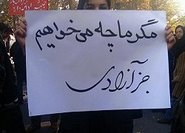


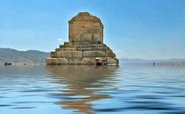


 Tulips in Holland