

Khoos o Shaar Vaghean Contoor Nadareh -
in martikeh Oolagh Tir e Kha_laas Zaan - khee_yaal mikooneh keh in pasdaran ham messleh khodesh Khar_ran Va Be Savad.
Be Moghehsh keh shood - Hamin_ha migeeran va dar_resh meezanan
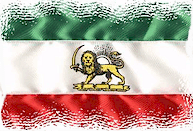
IMPERIAL EMBLEM

PERSIA
Iranian Freedom Fighters UNITE
Showing posts with label Pasdarans. Show all posts
Showing posts with label Pasdarans. Show all posts
Friday, July 11, 2008


Wednesday, August 15, 2007
Iranian Unit to Be Labeled 'Terrorist'U.S. Moving Against Revolutionary Guard
[The designation] will convince many in Iran's elite that there's no point in talking with us and that the only thing that will satisfy us is regime change."
By Robin WrightWashington Post Staff Writer - Wednesday, August 15, 2007; A01
The United States has decided to designate Iran's Revolutionary Guard Corps, the country's 125,000-strong elite military branch, as a "specially designated global terrorist," according to U.S. officials, a move that allows Washington to target the group's business operations and finances.
The Bush administration has chosen to move against the Revolutionary Guard Corps because of what U.S. officials have described as its growing involvement in Iraq and Afghanistan as well as its support for extremists throughout the Middle East, the sources said. The decision follows congressional pressure on the administration to toughen its stance against Tehran, as well as U.S. frustration with the ineffectiveness of U.N. resolutions against Iran's nuclear program, officials said. The designation of the Revolutionary Guard will be made under Executive Order 13224, which President Bush signed two weeks after the Sept. 11, 2001, attacks to obstruct terrorist funding. It authorizes the United States to identify individuals, businesses, charities and extremist groups engaged in terrorist activities. The Revolutionary Guard would be the first national military branch included on the list, U.S. officials said -- a highly unusual move because it is part of a government, rather than a typical non-state terrorist organization.
The order allows the United States to block the assets of terrorists and to disrupt operations by foreign businesses that "provide support, services or assistance to, or otherwise associate with, terrorists." The move reflects escalating tensions between Washington and Tehran over issues including Iraq and Iran's nuclear ambitions. Iran has been on the State Department's list of state sponsors of terrorism since 1984, but in May the two countries began their first formal one-on-one dialogue in 28 years with a meeting of diplomats in Baghdad. The main goal of the new designation is to clamp down on the Revolutionary Guard's vast business network, as well as on foreign companies conducting business linked to the military unit and its personnel. The administration plans to list many of the Revolutionary Guard's financial operations.
"Anyone doing business with these people will have to reevaluate their actions immediately," said a U.S. official familiar with the plan who spoke on the condition of anonymity because the decision has not been announced. "It increases the risks of people who have until now ignored the growing list of sanctions against the Iranians. It makes clear to everyone who the IRGC and their related businesses really are. It removes the excuses for doing business with these people." For weeks, the Bush administration has been debating whether to target the Revolutionary Guard Corps in full, or only its Quds Force wing, which U.S. officials have linked to the growing flow of explosives, roadside bombs, rockets and other arms to Shiite militias in Iraq and the Taliban in Afghanistan. The Quds Force also lends support to Shiite allies such as Lebanon's Hezbollah and to Sunni movements such as Hamas and the Palestinian Islamic Jihad.
Although administration discussions continue, the initial decision is to target the entire Guard Corps, U.S. officials said. The administration has not yet decided when to announce the new measure, but officials said they would prefer to do so before the meeting of the U.N. General Assembly next month, when the United States intends to increase international pressure against Iran.
Formed in 1979 and originally tasked with protecting the world's only modern theocracy, the Revolutionary Guard took the lead in battling Iraq during the bloody Iran-Iraq war waged from 1980 to 1988. The Guard, also known as the Pasdaran, has since become a powerful political and economic force in Iran. Iranian President Mahmoud Ahmadinejad rose through the ranks of the Revolutionary Guard and came to power with support from its network of veterans. Its leaders are linked to many mainstream businesses in Iran.
"They are heavily involved in everything from pharmaceuticals to telecommunications and pipelines -- even the new Imam Khomeini Airport and a great deal of smuggling," said Ray Takeyh of the Council on Foreign Relations. "Many of the front companies engaged in procuring nuclear technology are owned and run by the Revolutionary Guards. They're developing along the lines of the Chinese military, which is involved in many business enterprises. It's a huge business conglomeration." The Revolutionary Guard Corps -- with its own navy, air force, ground forces and special forces units -- is a rival to Iran's conventional troops. Its naval forces abducted 15 British sailors and marines this spring, sparking an international crisis, and its special forces armed Lebanon's Hezbollah with missiles used against Israel in the 2006 war. The corps also plays a key role in Iran's military industries, including the attempted acquisition of nuclear weapons and surface-to-surface missiles, according to Anthony H. Cordesman of the Center for Strategic and International Studies. The United States took punitive action against Iran after the November 1979 takeover of the U.S. Embassy in Tehran, including the breaking of diplomatic ties and the freezing of Iranian assets in the United States. More recently, dozens of international banks and financial institutions reduced or eliminated their business with Iran after a quiet campaign by the Treasury Department and State Department aimed at limiting Tehran's access to the international financial system. Over the past year, two U.N. resolutions have targeted the assets and movements of 28 people -- including some Revolutionary Guard members -- linked to Iran's nuclear program.
The key obstacle to stronger international pressure against Tehran has been China, Iran's largest trading partner. After the Iranian government refused to comply with two U.N. Security Council resolutions dealing with its nuclear program, Beijing balked at a U.S. proposal for a resolution that would have sanctioned the Revolutionary Guard, U.S. officials said.
China's actions reverse a cycle during which Russia was the most reluctant among the veto-wielding members of the Security Council. "China used to hide behind Russia, but Russia is now hiding behind China," said a U.S. official familiar with negotiations. The administration's move comes amid growing support in Congress for the Iran Counter-Proliferation Act, which was introduced in the Senate by Gordon Smith (R-Ore.) and in the House by Tom Lantos (D-Calif.). The bill already has the support of 323 House members. The administration's move could hurt diplomatic efforts, some analysts said. "It would greatly complicate our efforts to solve the nuclear issue," said Joseph Cirincione, a nuclear proliferation expert at the Center for American Progress. "It would tie an end to Iran's nuclear program to an end to its support of allies in Hezbollah and Hamas. The only way you could get a nuclear deal is as part of a grand bargain, which at this point is completely out of reach." Such sanctions can work only alongside diplomatic efforts, Cirincione added. "Sanctions can serve as a prod, but they have very rarely forced a country to capitulate or collapse," he said. "All of us want to back Iran into a corner, but we want to give them a way out, too. [The designation] will convince many in Iran's elite that there's no point in talking with us and that the only thing that will satisfy us is regime change."
Saturday, March 24, 2007
Latest News
Tehran's Power Play on the WaterIranian forces reportedly operating in Iraqi waters captured 15 sailors and members of the British marines on March 23 in the Persian Gulf. This incident comes as the U.N. Security Council is preparing to vote on a new resolution imposing additional sanctions on Iran for refusing to halt its controversial nuclear activities -- meaning it likely represents an Iranian attempt to underscore its resolve in the face of mounting international pressure. It also could complicate U.S.-Iranian negotiations on Iraq. more By Stratfor
Posted 24/3/2007 @ 14:54:53 GMTHostage Fears Over Ttroops Seized by IranBritain’s crisis with Iran deepened last night after Tehran justified seizing 15 British servicemen by claiming that they had strayed into Iranian territorial waters “illegally”. The announcement appeared to rule out any hope that the incident was a simple mistake that could be quickly rectified. more By The Times
Posted 24/3/2007 @ 14:40:38 GMTMarines Seized by Iranian GuardsA diplomatic crisis between London and Teheran erupted yesterday after 15 British sailors and Royal Marines carrying out a search of a cargo ship in the Gulf were seized at gunpoint by Iranian forces. more By Telegraph
Posted 24/3/2007 @ 14:34:5 GMTArrested British Sailors Confess Violating Iran's Waters: Official Deputy Commander in Chief of Armed Forces General Staff by confirming arrest of 15 British sailors by Islamic Revolutionary Guard Corps (IRGC) naval forces in Iran's territorial waters on Friday March 23, 2007, said the sailors were under interrogation and have confessed violating Iranian territorial waters. more By Islamic Republic News Agency
Posted 23/3/2007 @ 17:21:21 GMTDiplomatic Row Comes Amid Tensions Over Iran SanctionsSeizure of 15 British sailors and marines by Iranian forces threatens major fall-out on eve of expected vote by UN Security Council on imposing fresh sanctions on Iran, says Richard Beeston, Diplomatic Editor. more By Times Online
Friday, March 23, 2007
Britain: Iran Seizes 15 Sailors, Marines : By JIM KRANE
DUBAI, United Arab Emirates (AP) - Iranian naval vessels on Friday seized 15 British sailors and marines who had boarded a merchant ship in Iraqi waters of the Persian Gulf, British and U.S. officials said. Britain immediately protested the detentions, which come at a time of high tension between the West and Iran. In London, the British government summoned the Iranian ambassador to the Foreign Office and demanded ``the immediate and safe return of our people and equipment.'' Iran had no immediate comment. The U.S. Navy, which operates off the Iraqi coast along with British forces, said the British sailors appeared unharmed and that Iran's Revolutionary Guard naval forces were responsible. Britain's Defense Ministry said the British Navy personnel were ``engaged in routine boarding operations of merchant shipping in Iraqi territorial waters,'' and had completed a ship inspection when they were accosted by the Iranian vessels. ``We are urgently pursuing this matter with the Iranian authorities at the highest level,'' the ministry said. No one could be immediately reached for comment at either government offices in Iran or at the Iranian Embassy in Baghdad. An Iranian official at the U.N. mission in New York said he was not aware of the report and could not immediately comment.
Iran is in the middle of its New Year holiday when almost all government offices close.
The U.S. Navy said the incident occurred just outside a long-disputed waterway called the Shatt al-Arab dividing Iraq and Iran. It came as the U.N. Security Council debates further sanctions against Iran over its disputed nuclear program, and amid U.S. allegations that Iran is arming Shiite militias in Iraq.

U.S. officials had expressed concern that with so much military hardware concentrated in the Persian Gulf, just such a small incident could spiral out of control and trigger a major armed confrontation. White House press secretary Tony Snow said the Bush administration was monitoring the situation. ``The British government is demanding the immediate safe return of the people and equipment and we are keeping watch on the situation,'' Snow said. The United States, Britain's chief ally, has built up its naval forces in the Gulf in a show of strength directed at Iran. Two American carriers, including the USS John C. Stennis - backed by a strike group with more than 6,500 sailors and Marines and with additional minesweeping ships - arrived in the region in recent months.

The Foreign Office said the Iranian ambassador, Rasoul Movahedian, met with Sir Peter Ricketts, the senior civil servant in the department.
``The meeting was brisk but cordial. Sir Peter demanded the safe return of our personnel and equipment,'' said a spokesman, speaking on condition of anonymity according to government policy. Rhetoric between Western nations and Iran has escalated in recent months. Earlier this week, Ayatollah Ali Khamenei said if Western countries ``want to treat us with threats and enforcement of coercion and violence, undoubtedly they must know that the Iranian nation and authorities will use all their capacities to strike enemies that attack.'' In February, President Bush said: ``The Iranian people are good, honest, decent people and they've got a government that is belligerent, loud, noisy, threatening - a government which is in defiance of the rest of the world and says, 'We want a nuclear weapon.''' The Britons were in two boats from the frigate H.M.S. Cornwall during a routine smuggling investigation, said the British Defense Ministry.
According to a statement from the U.S. Navy's Fifth Fleet, which is based in Bahrain and operates jointly with the British forces off the coast of Iraq, the British sailors had just finished inspecting the merchant ship abou 10:30 a.m. ``when they and their two boats were surrounded and escorted by Iranian vessels into Iranian territorial waters.''

Cmdr. Kevin Aandahl of the Fifth Fleet said the British crew members were intercepted by several larger patrol boats operated by Iranian sailors belonging to the Iranian Revolutionary Guard Corps Navy, a radical force that operates separately from the country's regular navy.
The Iranian boats normally carry bow-mounted machine guns, while the British boarding party carried only sidearms, Aandahl said. No shots were fired and there appeared to be no physical harm done to any personnel involved or their vessels, Aandahl said. The seizure of the British vessels, a pair of rigid inflatable boats known as RIBs, took place in long-disputed waters just outside of the mouth of the Shatt al-Arab waterway that divides Iraq from Iran, Aandahl said. A 1975 treaty gave the waters to Iraq and U.S. and British ships commonly operate there, but Aandahl said Iran disputes Iraq's jurisdiction over the waters. ``It's been in dispute for some time,'' Aandahl said. ``We've been operating there for a couple of years and we know the lines very well. This was a compliant boarding, this happens routinely. What's out of the ordinary is the Iranian response.'' Aandahl said the U.S.-led task force has touchier relations with the Revolutionary Guard, which often ignores normal maritime operating traditions, than with the regular Iranian navy. The Shatt al-Arab waterway is formed by the confluence of the Tigris and Euphrates rivers at the town of Al-Qurnah. It flows southeastward for 120 miles and passes the port of Basra and the Iranian port of Abadan before emptying into the Persian Gulf. A fisherman who said he was with a group of Iraqis from the southern city of Basra fishing in Iraqi waters in the northern area of the Gulf said he saw the Iranian seizure. The fisherman, reached by telephone by an AP reporter in Basra, declined to be identified because of security concerns.
``Two boats, each with a crew of six to eight multinational forces, were searching Iraqi and Iranian boats Friday morning in Ras al-Beesha area in the northern entrance of the Arab Gulf, but big Iranian boats came and took the two boats with their crews to the Iranian waters.''
The Cornwall's commander, Commodore Nick Lambert, said the frigate lost communication with the boarding party, but a helicopter crew saw the Iranian vessels approach.

`I've got 15 sailors and marines who have been arrested by the Iranians and my immediate concern is their safety,'' Lambert told British Broadcasting Corp. television. In June 2004, six British marines and two sailors were seized by Iran in the Shatt al-Arab. They were presented blindfolded on Iranian television and admitted entering Iranian waters illegally, then released unharmed after three days.
Monday, March 19, 2007
Intelligence War in Iran
Intelligence War in Iran
By Kenneth R. Timmerman
FrontPageMagazine.com | March 19, 2007
As the debate between the Democrats and themselves over the war in Iraq becomes increasingly absurd, inside Iran another debate of momentous proportions is underway.
It involves Iran’s involvement with Iraq, and who is to blame for recent Iranian failures that have led to the capture of high-ranking Iranian intelligence officials by multinational forces in Iraq and the defection of two senior Revolutionary Guards intelligence officers, probably to the U.S.
The Revolutionary Guards Corps and the Ministry of Information and Security (MOIS, aka VEVAK) are hurling stink bombs at each other in the corridors of power in Tehran. Each is accusing the other of having screwed up in Iraq and allowing Iran’s intelligence and terrorist-support networks to get rolled up over the past three months.
More importantly, my sources in Tehran tell me: each organization also suspects the other of secret ties to U.S., British, and/or Israeli intelligence. True or not, this is terrific news for the United States. Mutual suspicion is the first stage of a crippling sick think that has ruined more than one world-class intelligence organization.
MOIS is the civilian branch of Iran’s intelligence. It tracks the Iranian opposition, handles internal security and counterespionage work. It also does Secret Service-style protection of the leadership.
The Rev. Guards Intelligence Department is tasked with penetrating foreign military organizations, acquiring defense technology, and liaising with armed terrorist organizations overseas, such as Hezbollah.
Both support Iranian government-ordered terrorist operations, from sending hit squads to assassinate dissidents, to blowing up U.S. and Israeli embassies. And both are deeply involved in Iraq.
In public, Iranian officials gloat over the coming American “defeat” in Iraq. In private, however, they fear the Bush administration will stand firm. The one thing giving them hope is the Democrats in Washington and their talk of an Iraq pullout.
Shortly after U.S. troops raided an Iranian intelligence headquarters in northern Iraq on the night of Jan. 10, the encourage of Supreme Leader Ayatollah Khamenei began referring to America as the Cobra standing on its tail.
Ayatollah Khamenei hastily convened a national security damage control committee to devise new strategies for reducing Iran’s footprint in Iraq. It was staffed almost exclusively with top Rev. Guards officers, including the head of IRGC intelligence, Maj. Gen. Morteza Rezai, and former deputy IRGC commander, Brig. Gen. Mohammad Baqr Zolqadr, now a deputy interior minister.
They accused MOIS of leaking information on rival IRGC networks in Iraq to the British, who passed the information to the Americans. That led to the capture over Christmas of a top IRGC operative, Brig. Gen. Amir Mohsen Shirazi.
As the U.S. raids on Iranian networks in Iraq intensified, the IRGC leaders urged Khamenei to order Ahmadinejad and MOIS to terminate their operations in Iraq, because they were “unprofessional.”
They also issued the Supreme Leader a dire warning: if MOIS continued to leak operational details of IRGC networks in Iraq to the British and the Americans, they would be compelled to strike back hard at the Americans. And that, in turn, could lead Iran into an open shooting war with the U.S. military.
Many Iranians believe this is just what Ahmadinejad wants, since his chiliastic vision of the End Times calls for an orgy of bloodshed on a planetary scale to usher in the return the 12th imam, the Imam Mahdi.
Even as this infighting continues, the Revolutionary Guards Qods Force is inserting fresh operatives into Iraq, according to my sources. More than one hundred fresh operatives have entered Iraq in recent weeks, even as militiamen loyal to Iranian stooge Muqtada al-Sadr have laid low.
The Iranian intelligence war and the rear guard effort by the IRGC to re-establish its operational networks in Iraq aren’t the only signs that the U.S. is starting to win in Iraq.
Last Friday, Maj. Gen. Benjamin Mixon, commander of Multinational Division-North and the 25th Infantry Brigade in Iraq, told reporters that his troops have seized another cache of Iranian-made weapons and have "got momentum" in the fight against the insurgents.
Speaking from Baghdad via live video-conference to reporters at the Pentagon, Mixon said he has beefed up his forces in the Diyala province northeast of Baghdad in recent months and is now asking for more units to take counter-insurgency operations beyond the provincial capital, Baquba.
"I've got momentum and want to press forward," Mixon said. "I know what I would do with more troops." The full transcript of Mixon’s remarks is here.
So with these first encouraging signs of a turning tide in Iraq, wouldn’t you think that Congress would get behind the war effort, to send a strong message to the insurgents and to their primary backer, Iran?
You would be wrong.
On Thursday, the House Appropriations Committee conducted a marathon hearing on the President’s supplemental budget request to fund the war in Iraq.
For anyone who caught part of the hearing on C-SPAN, there were comic moments to this underlying tragedy.
At one point, Rep. Bill Young of Florida introduced an amendment to prohibit the use of any funds in the supplemental from being used for combat operations in Iraq, other than what was strictly necessary to protect U.S. lives and cover the withdrawal of U.S. forces.
Rep. Young made clear he didn’t support his own amendment. However, because the appropriations bill was binding legislation – as opposed to the non-binding resolution calling for a U.S. withdrawal that passed a few weeks ago - he thought it was the proper moment to get committee members on the record on the war.
In the voice vote, more than a half-dozen of the committee’s 66 members voted “Yes” to the resolution. But when Rep. Young called for a recorded vote, not a single weasel stood by their vote.
The vote was 66 to nothing and the amendment was “narrowly defeated,” Chairman David Obey (D, WI) quipped.
Rep. Obey was filmed last week telling left-wing supporters that a vote for the supplemental was not a vote to prolong the war. They were wrong to protest his efforts to pass the president’s bill, because the Democrats had laid secret traps in the language that would actually end the war.
“We're trying to use the supplemental to end the war. But you can't end the war if you vote against the supplemental. It's time these idiot liberals understand that,” Obey said.
In case the “idiot liberals” didn’t get it, Obey got even more specific. “The language we have in the resolution ends the authority for the war. It makes it illegal to proceed with the war. You don’t have to defund something if the war doesn’t exist. That’s the problem. The liberal groups … don’t understand what the hell is in the bill.”
Thank-you, Congressman Obey. Just when the bad guys were beginning to lose hope, you are coming to their rescue.
Friday, March 16, 2007
What Was Once a Revolutionary Guard Is Now Just a Mafia By Mohsen Sazegara
Back in October 1978, none of us in exile with Ayatollah Ruhollah Khomeini imagined that victory for the Islamic Revolution would be attained only a few months later. It was during those days in Neuf-le-Chateau that the notion of starting a “people’s army” first took hold, and expecting that our battle would be a long one, we took as models for our soon-to-be established army the forces in Algeria and Cuba. But on February 1, 1979, we stepped off a plane from France into Tehran, and 10 days later we were in power. Suddenly we had a position to protect, and the model for our people’s army changed dramatically. It seemed more appropriate to emulate such forces as the Swiss Armed Forces, United States National Guard or Israel Defense Forces. The thought was that if the Islamic Republic had two separate armies with independent command structures, the country could insulate itself against a coup. If ordinary citizens were given military training in preparation for combat, we believed, then any military commander would think twice before contemplating overthrowing the government. In the three decades since, there has not been a coup. That people’s army, however, has grown into a multi-headed monster. Today the Army of the Guardians of the Islamic Revolution — known in Farsi as the Sepah-e Pasdaran and in English as the Revolutionary Guard — is a mafia-like organization with a corrupting influence on Iran’s army, police, media, industries, judiciary and government. It is imperative that every effort now be made to contain the Revolutionary Guard’s powers, because its political and economic adventurism will ultimately lead to a serious crisis, not just in Iran but also across the Middle East.
Please read the rest here :
http://www.forward.com/articles/what-was-once-a-revolutionary-guard-is-now-just-a/
Please read the rest here :
http://www.forward.com/articles/what-was-once-a-revolutionary-guard-is-now-just-a/
Tuesday, February 27, 2007
Another High Ranking IRI officer detained in Baghdad
سه شنبه، 8 اسفند ماه 1385 برابر با 2007 Tuesday 27 February
آمريكا يک فرمانده سپاه پاسداران را در عراق دستگير كرده است
آمريكا يک فرمانده سپاه پاسداران را در عراق دستگير كرده است
خبرگزاری حکومتی فارس: مقامات بلندپايه آمريكايي ادعا كردند نيروهاي ارتش اين كشور، سرهنگ "محسن شيرازي" از فرماندهان نيروي قدس سپاه پاسداران انقلاب اسلامي را در عراق دستگير كردهاند. شبكه خبري سيانان آمريكا، با بيان اين ادعا كه "محسن شيرازي" مسؤوليت ارسال اسلحه براي شبهنظاميان شيعه عراق را برعهده داشته، مدعي شد: شیرازی كه در سپاه پاسداران انقلاب اسلامي، درجه سرهنگي دارد، فرماندهي عمليات نيروي قدس و تهيه سلاح را براي گروههاي شبهنظامي شيعه عراق و آموزش نظامي آنها، برعهده داشته است.
Saturday, February 24, 2007
One by One, they are quietly being dispatched. If it goes on much longer none of thenm will remain.
شنبه، 5 اسفند ماه 1385 برابر با 2007 Saturday 24 February
دو تن از فرماندهان لشگر ویژه سپاه پاسداران کشته شدند
دو تن از فرماندهان لشگر ویژه سپاه پاسداران کشته شدند
سایت حکومتی بازتاب در گزارشی با عنوان "ترور دو سردار سپاه با موشک های آمريکايی؟" ، از کشته شدن هشت تن از نیروهای سپاه پاسداران در منطقه خوی در استان آذربایجان غربی خبر داده است.این سایت حکومتی نوشت: "خبرنگار بازتاب از اروميه گزارش داد در حادثه ظهر دیروز حدود هشت تن از نیروهای سپاهپاسداران انقلاب اسلامی در منطقه خوی به شهادت رسیدند. بنا بر اين گزارش؛ ظهر روز گذشته زماني كه يكي فروند بالگرد حامل هشت تن از نيروهاي سپاه پاسداران براي سركشي به منطقه خوي عزيمت گرده بودند بالگرد آنها دچار مشكل شده و فرود اضطراري مي كند، و پس از دقايقي با منفجر شدن اين بالگرد نيروهاي مذكور به شهادت مي رسند. در حالي كه برخي منابع، نقص فني و برخورد بالگرد با برخي موانع را علت انفجار بالگرد عنوان مي كنند، برخی دیگر مدعي شده اند برخورد موشك هاي آمريكايي sa-7 موجب انفجار بالگرد و شهادت نيروهاي سپاه شده است. براساس اطلاعات رسيده؛ سردار قهاري و سردار حنيف دروسي از فرماندهان لشگر ويژه شهدا در ميان سرنشينان اين بالگرد بوده اند."
Sunday, February 18, 2007
Sanction must Target Iranian Forces
Please follow this link :
http://iranvajahan.net/cgi-bin/news.pl?l=en&y=2007&m=02&d=16&a=7
http://iranvajahan.net/cgi-bin/news.pl?l=en&y=2007&m=02&d=16&a=7
Subscribe to:
Posts (Atom)




 Posts





 اخبار مربوط به زندانیان سیاسی و نقض حقوق بشر







 Tulips in Holland