

Army
At 350,000 strong, the Iranian army is one of the largest in the neighborhood. But its size may not matter. More than half of the army is conscripts who are reported to be undisciplined, unmotivated, and poorly trained. In a war, many of them may be on foot as well. During the Iran-Iraq war of the 1980s, the majority of Iran’s armored vehicles were captured or destroyed. Nearly three decades of arms sale restrictions have kept Iran from acquiring the spare parts and equipment it needs to maintain even its diminished inventory.
The Navy
Iran is no naval power, but it does have enough capabilities to play the spoiler. In the event of war, Iran would likely try to jam up waterways by conducting unconventional operations, including deploying small attack boats to strike at shipping tankers. Nearly a quarter of the global oil supply is shipped through the Strait of Hormuz every day. But shipping lanes would grind to a halt if Iran put its seven mine warfare ships to work.In April, the Iranians tested what was reported to be the world’s fastest underwater missile, capable of eluding radar and traveling up to 233 miles per hour. Most experts scoffed at the announcement as little more than chest-thumping. More seriously, Iran’s navy has purchased three Russian Kilo-class submarines, whose quiet diesel engines could make them dangerous to Western warships. As with so much else about Iran’s military, however, there is a catch: The subs don’t seem to run well in the warm waters of the Persian Gulf.
Air Force
The Iranian Air Force has been in a tailspin since the shah fled his palace in 1979. International restrictions on arms purchases have made it nearly impossible for Iran to obtain spare parts for its planes, and experts suggest that fewer than half of the 300 aircraft in its inventory are airworthy. Tehran recently unveiled plans for a domestically produced fighter jet, but the first prototype won’t be completed before 2008—too late to play a role in the current crisis. It’s not just the planes that are in disrepair. The Islamic government purged U.S.-trained pilots after the revolution, and the Air Force has never recovered. It’s been more than 15 years since Iranian pilots have been able to participate in air-to-air combat simulations or other realistic training. Any combat over Iranian airspace would likely be quick and one-sided.Ballistic MissilesInformation about Iran’s missile force is often as imprecise as the missiles themselves. Tehran likely has between 250 and 300 Scud B missiles (180-mile range) and more than 60 Scud C missiles (310-mile range). It is currently testing an 800-mile range Shahab-3 missile based on North Korean technology, and developing the Shahab-4 with a potential range of 1,250 miles. In January 2006, Jane’s Defence Weekly reported that Iran had acquired intermediate-range ballistic missiles from North Korea. Those missiles can carry nuclear warheads and travel up to 1,550 miles—not far enough to hit Western Europe, but more than enough for Jerusalem. Ubi Rubin, former director of an Israeli missile defense organization, notes, “Iran has been careful not to develop capabilities that would threaten Europe.” Regional rivals—and any Western military forces in the area—are vulnerable, however.
Islamic Revolutionary Guard Corps
As the United States has discovered in Iraq, the regular military is not always the toughest opponent. Groups of diehards, like the Fedayeen in Iraq, can live on even after the main army has crumbled. Iran’s equivalent is the Islamic Revolutionary Guard Corps, also known as the Pasdaran.A paramilitary force independent of the regular military, it was formed by the clerical regime soon after the revolution. In essence, the military protects the country, and the Pasdaran protects the regime. It has some very prominent alums: President Mahmoud Ahmadinejad and more than 80 parliamentarians are former Pasdaran members. The group also has some unsavory international contacts. The Pasdaran is widely believed to train groups such as Lebanon’s Hezbollah and Palestinian Hamas and Islamic Jihad. Numbering around 120,000 men, the Pasdaran controls most of Iran’s missiles, fields its own navy and air force, and trains several special operations groups. According to John Pike, director of GlobalSecurity.org, the Pasdaran would likely resist an invasion fiercely, mainly through attacks on naval units and on commercial shipping. Bottom lineIt is hard to envision Iran’s ramshackle forces giving a modern Western force the “burning hell” Iran’s leaders have promised. Only Iranian ingenuity has kept the military from falling into complete disarray, according to Pike. “Their understanding of war is about a century behind America’s understanding of war,” he says. Given that reality, it is not surprising that Iran may want the ultimate defense: a nuclear weapon.
What could Iran do if pushed in conflict?
The U.S. military could unleash superior military force if it attacked Iran over its nuclear program but analysts say Washington may struggle to prevent Tehran from hitting back in Iraq and threatening oil supplies. Following are some tactics Iran could employ, including unconventional or so-called "asymmetric" methods that have either already been used by Iranian forces or blamed on Iran in the past:
HIT-AND-RUN RAIDS IN THE GULF
During Iran's 1980s war the two OPEC states sought to knock out each others oil exports, Iran's military mounted hit-and-run raids on oil tankers and other shipping in the Gulf. Experts say the Revolutionary Guards, the ideological wing of Iran's military, were a driving force in developing such tactics, often involving small speedboats mounted with a missile and which would stand a better chance of evading detection until the last minute. The Revolutionary Guards has already warned its "martyrdom-seeking" volunteers could cause havoc in the strategic Gulf waterway, if the need arose.
STRIKING U.S. INTERESTS
Supreme Leader Ayatollah Ali Khamenei has said Iran would strike U.S. interests in the region if pushed. Iran's military has declared that they have missiles that can sink "big warships" and others with a range to hit targets across the Gulf, which could include U.S. bases in Qatar and Bahrain, though military experts say U.S. anti-missile defenses could stop such rockets. Outside the Gulf, the United States has blamed Lebanon's Iranian-backed Hezbollah for the 1983 bombing of its marines barracks in Beirut that killed 241 soldiers. Iran's longest range missile, the Shahab 3, can reach Israel.
VIOLENCE IN IRAQ
The United States accuses Iran of backing militants in Iraq, although Tehran denies this. Some Western diplomats say Iran appears to have imposed at least some restrictions to prevent weapons flooding across the border into Iraq, in part because ultimately Iran wants a stable neighbor. But they say, if it came under pressure, Tehran could quickly make the border porous and add to problems for U.S. troops trying to quell violence. U.S. officials say Iran is using rogue elements in the Mehdi Army, led by firebrand cleric Moqtada al-Sadr, to weaken the Iraqi government and boost its influence. Iran has historical ties with Shi'ite Muslim groups in Iraq's government because some of their leaders were exiled in Iran, but analysts say it is unclear if Tehran now holds much sway over policy.
DESTABILISING AFGHANISTAN
Iran says it wants a stable neighbor to its east, Afghanistan, but Western officials say weapons have been crossing the border from Iran and found their way into the hands of the Taliban, though they say this may be partly because the area is already full of weapons held by well-equipped drugs smuggling gangs. Shi'ite Muslim Iran is vehemently opposed to the strict Sunni views of the Taliban and almost went to war with Afghanistan when the Taliban were in power in 1998. But analysts suggest Iran could assist its sworn enemy if that meant hurting the United States during any conflict.
HOSTAGE-TAKING
Iran was blamed by the West for helping mastermind some of the kidnappings of U.S. and other foreigners during the 1975-1990 civil war in Lebanon. The Iran-Contra Affair involved selling arms to Iran, at the time fighting Iraq, in return for Tehran's assistance in releasing hostages held by Lebanese groups. In an added twist, profits from the arms sales were used to fund anti-Communist rebels, the Contras, in Nicaragua. The dealings were exposed in 1986.
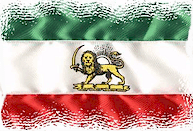
IMPERIAL EMBLEM

PERSIA
Iranian Freedom Fighters UNITE
Showing posts with label Revelutionary Forces. Show all posts
Showing posts with label Revelutionary Forces. Show all posts
Wednesday, November 07, 2007


Monday, September 10, 2007
Saturday, April 21, 2007
Monday, March 19, 2007
Intelligence War in Iran
Intelligence War in Iran
By Kenneth R. Timmerman
FrontPageMagazine.com | March 19, 2007
As the debate between the Democrats and themselves over the war in Iraq becomes increasingly absurd, inside Iran another debate of momentous proportions is underway.
It involves Iran’s involvement with Iraq, and who is to blame for recent Iranian failures that have led to the capture of high-ranking Iranian intelligence officials by multinational forces in Iraq and the defection of two senior Revolutionary Guards intelligence officers, probably to the U.S.
The Revolutionary Guards Corps and the Ministry of Information and Security (MOIS, aka VEVAK) are hurling stink bombs at each other in the corridors of power in Tehran. Each is accusing the other of having screwed up in Iraq and allowing Iran’s intelligence and terrorist-support networks to get rolled up over the past three months.
More importantly, my sources in Tehran tell me: each organization also suspects the other of secret ties to U.S., British, and/or Israeli intelligence. True or not, this is terrific news for the United States. Mutual suspicion is the first stage of a crippling sick think that has ruined more than one world-class intelligence organization.
MOIS is the civilian branch of Iran’s intelligence. It tracks the Iranian opposition, handles internal security and counterespionage work. It also does Secret Service-style protection of the leadership.
The Rev. Guards Intelligence Department is tasked with penetrating foreign military organizations, acquiring defense technology, and liaising with armed terrorist organizations overseas, such as Hezbollah.
Both support Iranian government-ordered terrorist operations, from sending hit squads to assassinate dissidents, to blowing up U.S. and Israeli embassies. And both are deeply involved in Iraq.
In public, Iranian officials gloat over the coming American “defeat” in Iraq. In private, however, they fear the Bush administration will stand firm. The one thing giving them hope is the Democrats in Washington and their talk of an Iraq pullout.
Shortly after U.S. troops raided an Iranian intelligence headquarters in northern Iraq on the night of Jan. 10, the encourage of Supreme Leader Ayatollah Khamenei began referring to America as the Cobra standing on its tail.
Ayatollah Khamenei hastily convened a national security damage control committee to devise new strategies for reducing Iran’s footprint in Iraq. It was staffed almost exclusively with top Rev. Guards officers, including the head of IRGC intelligence, Maj. Gen. Morteza Rezai, and former deputy IRGC commander, Brig. Gen. Mohammad Baqr Zolqadr, now a deputy interior minister.
They accused MOIS of leaking information on rival IRGC networks in Iraq to the British, who passed the information to the Americans. That led to the capture over Christmas of a top IRGC operative, Brig. Gen. Amir Mohsen Shirazi.
As the U.S. raids on Iranian networks in Iraq intensified, the IRGC leaders urged Khamenei to order Ahmadinejad and MOIS to terminate their operations in Iraq, because they were “unprofessional.”
They also issued the Supreme Leader a dire warning: if MOIS continued to leak operational details of IRGC networks in Iraq to the British and the Americans, they would be compelled to strike back hard at the Americans. And that, in turn, could lead Iran into an open shooting war with the U.S. military.
Many Iranians believe this is just what Ahmadinejad wants, since his chiliastic vision of the End Times calls for an orgy of bloodshed on a planetary scale to usher in the return the 12th imam, the Imam Mahdi.
Even as this infighting continues, the Revolutionary Guards Qods Force is inserting fresh operatives into Iraq, according to my sources. More than one hundred fresh operatives have entered Iraq in recent weeks, even as militiamen loyal to Iranian stooge Muqtada al-Sadr have laid low.
The Iranian intelligence war and the rear guard effort by the IRGC to re-establish its operational networks in Iraq aren’t the only signs that the U.S. is starting to win in Iraq.
Last Friday, Maj. Gen. Benjamin Mixon, commander of Multinational Division-North and the 25th Infantry Brigade in Iraq, told reporters that his troops have seized another cache of Iranian-made weapons and have "got momentum" in the fight against the insurgents.
Speaking from Baghdad via live video-conference to reporters at the Pentagon, Mixon said he has beefed up his forces in the Diyala province northeast of Baghdad in recent months and is now asking for more units to take counter-insurgency operations beyond the provincial capital, Baquba.
"I've got momentum and want to press forward," Mixon said. "I know what I would do with more troops." The full transcript of Mixon’s remarks is here.
So with these first encouraging signs of a turning tide in Iraq, wouldn’t you think that Congress would get behind the war effort, to send a strong message to the insurgents and to their primary backer, Iran?
You would be wrong.
On Thursday, the House Appropriations Committee conducted a marathon hearing on the President’s supplemental budget request to fund the war in Iraq.
For anyone who caught part of the hearing on C-SPAN, there were comic moments to this underlying tragedy.
At one point, Rep. Bill Young of Florida introduced an amendment to prohibit the use of any funds in the supplemental from being used for combat operations in Iraq, other than what was strictly necessary to protect U.S. lives and cover the withdrawal of U.S. forces.
Rep. Young made clear he didn’t support his own amendment. However, because the appropriations bill was binding legislation – as opposed to the non-binding resolution calling for a U.S. withdrawal that passed a few weeks ago - he thought it was the proper moment to get committee members on the record on the war.
In the voice vote, more than a half-dozen of the committee’s 66 members voted “Yes” to the resolution. But when Rep. Young called for a recorded vote, not a single weasel stood by their vote.
The vote was 66 to nothing and the amendment was “narrowly defeated,” Chairman David Obey (D, WI) quipped.
Rep. Obey was filmed last week telling left-wing supporters that a vote for the supplemental was not a vote to prolong the war. They were wrong to protest his efforts to pass the president’s bill, because the Democrats had laid secret traps in the language that would actually end the war.
“We're trying to use the supplemental to end the war. But you can't end the war if you vote against the supplemental. It's time these idiot liberals understand that,” Obey said.
In case the “idiot liberals” didn’t get it, Obey got even more specific. “The language we have in the resolution ends the authority for the war. It makes it illegal to proceed with the war. You don’t have to defund something if the war doesn’t exist. That’s the problem. The liberal groups … don’t understand what the hell is in the bill.”
Thank-you, Congressman Obey. Just when the bad guys were beginning to lose hope, you are coming to their rescue.
Friday, March 16, 2007
What Was Once a Revolutionary Guard Is Now Just a Mafia By Mohsen Sazegara
Back in October 1978, none of us in exile with Ayatollah Ruhollah Khomeini imagined that victory for the Islamic Revolution would be attained only a few months later. It was during those days in Neuf-le-Chateau that the notion of starting a “people’s army” first took hold, and expecting that our battle would be a long one, we took as models for our soon-to-be established army the forces in Algeria and Cuba. But on February 1, 1979, we stepped off a plane from France into Tehran, and 10 days later we were in power. Suddenly we had a position to protect, and the model for our people’s army changed dramatically. It seemed more appropriate to emulate such forces as the Swiss Armed Forces, United States National Guard or Israel Defense Forces. The thought was that if the Islamic Republic had two separate armies with independent command structures, the country could insulate itself against a coup. If ordinary citizens were given military training in preparation for combat, we believed, then any military commander would think twice before contemplating overthrowing the government. In the three decades since, there has not been a coup. That people’s army, however, has grown into a multi-headed monster. Today the Army of the Guardians of the Islamic Revolution — known in Farsi as the Sepah-e Pasdaran and in English as the Revolutionary Guard — is a mafia-like organization with a corrupting influence on Iran’s army, police, media, industries, judiciary and government. It is imperative that every effort now be made to contain the Revolutionary Guard’s powers, because its political and economic adventurism will ultimately lead to a serious crisis, not just in Iran but also across the Middle East.
Please read the rest here :
http://www.forward.com/articles/what-was-once-a-revolutionary-guard-is-now-just-a/
Subscribe to:
Posts (Atom)




 Posts




 اخبار مربوط به زندانیان سیاسی و نقض حقوق بشر







 Tulips in Holland