

IMPERIAL EMBLEM

PERSIA
Iranian Freedom Fighters UNITE

Showing posts with label Freedom. Show all posts
Showing posts with label Freedom. Show all posts
Sunday, November 23, 2008
FREEDOM -(آزادی)
From: : Atusamihan
http://video.google.com/videoplay?docid=-3175795221908287981&ei=rd0mSam2AoiG2gKVyOTyBg&q=tishktv&so=1
http://video.google.com/videoplay?docid=-7010013981084117283&ei=76IlSdzOLoKg2gLZpJyGAg&q=tishktv&hl=en&so=1
Friday, October 10, 2008
Iranians' interrupted freedom : By Nasrin Alavi,Created 2008-10-08 16:22
Fariba and her daughter Ava have travelled from Sari (near the Caspian coast) to Maydon Shoosh in working-class south Tehran to buy a dinner-service for Ava's wedding trousseau.They are determined to pick up a bargain today as a lot of the Shoosh shopkeepers personally import the china that is distributed and inevitably sold on at a higher price in the provinces. For Fariba, her daughter's trousseau has been a lifelong labour of love and a matter of honour. As a teacher she cannot afford the handmade (in Tabriz or Qom) Persian rugs costing tens of thousand of dollars that have become a mandatory part of wedding trousseaus amongst affluent families. But over the years she has saved up enough to buy an assortment of pots and pans, small electrical goods, a crimson Kashan rug; she also has a trunk full of hand-embroidered linen that she started making when Ava was born. Fariba regrets not buying Ava a dinner-service years ago and says that what she had in mind has doubled in the last year alone, adding: "but I wanted her to be old enough to choose her own china pattern". The rising prices otwithstanding, the shops are full of goods (mainly imported) and ready customers. Fariba leaves with an Arcopal dinner-service that the shopkeeper assures her is made in France. "Why buy Iranian china when this stuff is cheaper and more respectable? Anyway, you'll mainly find 'French' Arcopal or pyrex around here." There is little outward sign of a credit-crunch in Maydon Shoosh; the record prices of Iran's petrodollar exports (the country had reserves of $175 billion by mid-2008) mean that there is plenty of cash about - coupled with a desire to spend it as quickly as possible to get the better of rapidly rising inflation. Iran's central bank estimates that consumer spending is keeping pace - and needs to, for the official rate [11]of inflation in September 2008 is said to be 29% (though experts maintain that it is even higher). The Iranian daily newspaper Kargozaran (29 September 2008) showed that the cost of a basket of fortyfive staple foods had increased by nearly 50% in a single month. Iranians are as ready as ever to complain about inflation, corruption [12] and an overall lack of opportunity - but try and talk politics, and the most likely response is disinterest. True, at Page 1 of 6 the top levels [12] the attitudes and the rhetoric are still often vehement; the country's president, Mahmoud Ahmadinejad, was in routine form at the United Nations general assembly's annual meeting in New York, prophesying the end of the "American empire" and scorning the "few bullying powers" who were trying to ruin his country's "peaceful nuclear activities". But in much of Iran, in the marketplaces and cafes and streets, people have other concerns [13]: this sort of thing appears to be just irrelevant background noise.
Ferraris and warranties
If their own politics are remote to many Iranians, the talk of economic sanctions from the United States - itself at the centre of the western world's financial turmoil - seems on the surface almost farcical. Iranian shops are flooded with American goods; some, like Electrolux's Frigidaire shop on Tehran's Shariati Street, sell only American brands (with the customary US warranties to boot). The official figures say that there has been a 30% rise in the value of total imports in recent months (90% in the case of cars and 50% in washing machines). It is hard to see sanctions making a big difference here, though perhaps their real target is elsewhere. Iran has long been dominated by a "grey" economy dominated by unaccountable and oligarchic figures. During the reformist era of then-president Mohammad Khatami [14](1997-2005), parliamentarians often tried openly to challenge the way that (for example) the Revolutionary Guards ran some "unofficial" docks, or that as many as a third of Iran's imports came through unlawful routes. Yet the downside - an echo of the west here - may be that Iranians are shopping themselves and their country [15] into economic collapse. Ahmadinejad has faced rising criticism by reformers and conservatives alike for his confrontational rhetoric and economic mismanagement. Iran's former top nuclear [16] negotiator Hassan Rowhani has accused the president of squandering the record oil revenues. He argued that instead of channelling funds to diversifying economic programmes, the government has used the privatisation laws to hand over industries to political allies. Rowhani asked: "other than buying oranges, apples and grapes and importing them to Iran, what big long-term projects" has the government implemented? Mahmoud Ahmadinejad was elected in June 2005 [16]on a pledge to share Iran's oil wealth with the people. In the process of meeting it, he has passed on to Iran's poor a host of inflationary benefits, contributing to a vast increase in the money-supply and leaving them barely (if at all)better off. Most investors have ploughed extra funds exclusively into foreign imports and the housing market at the expense of other sectors. The hard-pressed owners of small businesses have also been hit hard enough to organise resistance [17] to a steep increase in VAT, forcing the government to retreat. The already propertied rich are alone in benefiting from inflation. So the presidency of the frugal man who promised justice to the poor has been marked by the emergence of Ferraris and private homes with helicopter-pads on the streets and in the exclusive suburbs of revolutionary Iran. The housing boom has indeed made many Iranian homeowners US-dollar millionaires overnight. It has also created a huge increase in demand in businesses such as furniture, often at the fatal expense of Iranian producers. Yaft-Abad, in a workingclass area of south Tehran, traditionally teemed with artisans and carpentry workshops that supplied most of Iran with home furnishings such as sofas, tables and chairs. Most have disappeared, and the area has being overtaken by huge western-style shopping-malls that sell mainly imported furniture from around the world. The long and winding Suhrawardi Street in central Tehran is named after the 12th-century Persian philosopher who (it is said) tried to blend western Greek philosophy with eastern Persian Zoroastrian and Islamic ideas into a way of thinking that has in many ways shaped the modern Iranian psyche. The anti-establishment Suhrawardi is credited with influence on the desire of Iran's ex-president Mohammad Khatami to launch a "dialogue among civilisations" (a pointed rebuttal to Samuel Huntington's "clash of civilisations"). Be that as it may, today east meets west on Suhrawardi Street in a very different way: via the ever-increasing number of kitchenware shops. Here you can buy anything from cheap Chinese to designer Italian kitchens costing the moon. An almost surreal spectacle - right in the middle of Suhrawardi - is Belka, a hardware store specialising in fancy foreign-made kitchen door-handles. It has the distinct feel of a fast-food hamburger joint; the youthful staff skid through the air taking orders from the jostling clientele who leave cradling bagfuls of overpriced metal, with every appearance of being thrilled to have a choice of something they have been denied for so long.
The new blogosphere
The excitement of the crowd is eerily reminiscent of, yet a world apart from, the height of the reform movement. Then you would queue outside newspaper kiosks and huddle in groups reading revelations of regime corruption by investigative journalist such as Akbar Ganji [23], or debates by Islamic thinkers about the cultural need for an "Islamic reformation". This, the "Prague spring" of Iranian journalism, faded with the closure of hundreds of publications and the arrest, intimidation and imprisonment of activists and journalists. Iranians adapted in ways familiar to those in comparable conditions of repression: by resisting, retreating, reconciling. Many found a new "virtual" space for free speech by creating one of the largest communities of bloggers in the world. I compiled a book about the early years of the Iran's vibrant blogosphere, We Are Iran [24]. To me the phenomenon expressed the voices of a burgeoning generation of educated young people and mirrored the uncensored dialogue and conversation you would hear around university campuses. This was, is, the post-war (that is, the Iran-Iraq war [25]of 1980-88) baby-boom generation that will determine the future of their country (hence the title). But this phenomenon too now has a history; things have changed, both in Iran's blogosphere and on Iranian campuses. Mahmoud Ahmadinejad's presidency has also seen an onslaught against publishing and the internet; Iranian officials have been unashamed to announce that they have blocked or filtered more than 10 million websites. This has meant that many Iranian bloggers who write under their own names use self-censorship, and their later observations bear no resemblance to the earlier unbridled writing in their archives. It is also true that their views have evolved as Iran and the world have changed around them, and as they have grown older. The shift is seen in the reaction of the authorities [25] too, a dual one. They have seen bloggers (especially critical ones) as part of an enemy within, yet they have also tried to encourage the formation of what they often label "Islamic bloggers". The resources spent on this effort can be
seen in the plush conferences held to celebrate and award the chosen few; in the blogging lessons offered by basij (militia) centres around the country and seminaries in the holy city of Qom. Even here, however, in the segments of Iranian blogosphere championed by the
government, the medium has proved its capacity to be liberating; calls for accountability and criticism of the president's failure to deliver social justice and distribution of oil money to the poor have grown. The once unconstrained blogosphere that I tried to highlight on the pages of We Are Iran [26]- the fundamental democracy of cyberspace - may no longer exist in the same way, but the young people who raised their voices then remain very much alive. Some have moved on in more than age or in opinion. A prominent and once prolific blogger closed his blog by writing a final note about the growing risks for bloggers, about self-censorship, and about his reasons to stop writing: "It's not that I have nothing to say, but I no longer want to write if I can't be myself."
Then and now
There had up to 2004 been very few blogs kept by Iran's hardline conservatives and their supporters. The political argument in the blogosphere and on Iranian campuses alike was until the mid-2000s dominated by passionate, critical and liberalising voices. The period had seen mass student demonstrations in many parts of Iran, sparked by a month-long student protest at Tehran University in November 2002 following the death sentence imposed on university professor Hashem Aghajari [27], a devout Muslim condemned for calling on Iranians "not to blindly follow" Islamic clerics. Most of Iran's online debates throughout this period echoed the disturbances, as the community furiously debated Aghajari's case. This grew into a broader concern with Iran's political condition and direction. By contrast, the blogosphere today and the campuses (allowing for the limits of such generalisation) seem largely silent on political matters. As I look through the piles of blog printouts from the two eras, there is an enormous gap between then and now. Then, as the students demonstrated on campus, the 29-year-old basij leader Mehrdad Bazrpash famously managed the crackdown. Now, Bazrpash (who has no relevant professional experience) has for his efforts been appointed by Ahmadinejad as the president of Saipa, one of Iran's main automobile manufacturers. Now, empowered people like him are more visible today around the blogosphere [28] and Iranian campuses; they appear confident and powerful; they have silenced their detractors. Here is another Iranian paradox. For the evidence also suggests that these people are still part of an unpopular minority. In the local council elections of December 2006 [28], Mehrdad Bazrpash - then the president's youth-affairs advisor - failed even to win a seat. Yet this defeat and similar setbacks have not meant a reformist resurgence. This outcome was avoided by the mass disqualification of candidates by the Guardian Council [29]that vets candidates for loyalty to the Islamic republic; in addition, an incomplete boycott and voter apathy have meant that recent elections have largely been between the right and the extreme right. The official ministry of the interior figures [30] say that in the March-April 2008 parliamentary elections [31], less than 30% of eligible voters took part in the capital. It is not so long ago that 70%-80% of eligible voters participated in such elections, and saw reformists elected as a result. It is sometimes hard for people who lived through the reform era to fathom the current political disengagement [31] of Iranian society. The intermission Davoud and Amin are architects in their early 30s. I can clearly remember their student days; they had both passionately campaigned for Mohammad Khatami's reformist agenda. Davoud shrugs in disgust as we talk about the news of Ahmadinejad's interior minister Ali Kordan, who had added to his credentials a fake [32] honorary doctorate in law from Oxford University. A lot of apathetic, dismayed shrugs can be seen in Iran these days. Mohammad Ali Abtahi [33], deputy president under Mohammad Khatami, writes in his blog that most regimes are reliant on public opinion - but that in Iran the authorities have not even bothered to address the Kordan issue. He says that instead of a logical "relationship of public opinion and survival of power, the relationship of the money gained from oil and survival of power exists and that is why public opinion is ignored in this way." For the time being, Abtahi's argument may well be true. The authorities don't see a need for transparency. They can merely disregard challengers and appease the people with petrodollars through farming subsidies or the import of flash new cars. But just like the rise in consumer spending it is unsustainable; as surely is the prevailing political apathy. Iran is not immune to the global financial crisis [33]; its budget deficit is growing, despite the record oil prices; inflation corrodes the savings of those who can afford to save; the figures in the treasury no longer add up. Mahmoud Ahmadinejad's response to this situation has been to replace the director-general of Iran's central bank, Tahmasb Mazaheri. The daily newspaper Sarmayeh published a letter by Mazaheri addressed to the president (29 September 2008); it referred to all these problems and warned [34] that "bitter and hard days" lay ahead. I ask Davoud and Amin: "Can Ahmadinejad get elected again? Who would you like to see as the next president?" The reactions are evasive. Amin even self-mockingly repeats the famous slogan of the reform movement: "Patience, our dawn is near". He adds: "our day will come, but now is not it." Davoud says: "They [the authorities] have made the price for activism too high. We don't want to spend the best years of our lives in jail... I'm just being realistic. But the authorities have no choice sooner or later to be realistic too and face the demands of the population". Reformist politicians have long argued against the hazards of such political disengagement. Mohammad Khatami, on 4 October 2008, set two preconditions that must be met before he would enter the race for the presidential election scheduled for June 2009: an assurance that he would be allowed to implement his programmes, and that "the demands of the nation" would be conceded. It is not clear whether such rhetoric can again mobilise the kind of enthusiasm that accompanied Khatami's victory in 1997. Yet Iranians in the past - including in the post-revolution [35]era - have shown a capacity for dramatic and largely unforeseen mood swings. The victories of Khatami and Ahmadinejad seemed to many people almost to come out of nowhere. It seems possible that Iran, which nearly three decades ago introduced a bemused world to political Islam, may yet surprise the world all over again.
Saturday, July 12, 2008
The Trap : by Mehdi-Palang
This is another brilliant Adam Curtis documentary originally produced for the BBC. It talks about the modern political realities, where the policies came from and the massive failures of those ideals and how they have ended up exactly where they did not want to be. This episode starts in the Cold War and shows the seeds that were sown to produce the modern political reality. The series consists of three one-hour programmes which explore the concept and definition of freedom, specifically, "how a simplistic model of human beings as self-seeking, almost robotic, creatures led to today's idea of freedom." for more info : http://en.wikipedia.org/wiki/The_Trap_%28television_documentary_series%29
SEE ALL THE VIDEOS HERE : http://www.iranian.com/main/blog/mehdi-palang/video-trap
SEE ALL THE VIDEOS HERE : http://www.iranian.com/main/blog/mehdi-palang/video-trap
Tuesday, July 01, 2008
California to Legalize Weed for Everyonelaist.com — With enough signatures, Californians could be voting to legalize marijuana in the upcoming Novembe
California to Legalize Weed for Everyone
California to Legalize Weed for Everyone - www.laist.com — With enough signatures, Californians could be voting to legalize marijuana in the upcoming November election. They need 694,354 signatures by September, 5, 2008. It's totally do-able. Its been over a decade since Proposition 215, the Compassionate Use Act of 1996, was passed with over 5 million votes in favor.
California to Legalize Weed for Everyone - www.laist.com — With enough signatures, Californians could be voting to legalize marijuana in the upcoming November election. They need 694,354 signatures by September, 5, 2008. It's totally do-able. Its been over a decade since Proposition 215, the Compassionate Use Act of 1996, was passed with over 5 million votes in favor.
Friday, June 06, 2008
Nefrin Nameh ( 2 )
A Peace Of Islam - الله أكبر معجزة الله
The Savage Language Of Savage - الله أكبر معجزة الله
0
comments

 Labels:
azadi,
Freedom,
Iran,
Islam,
Islamic Republic of Idiots,
Nefrin Nameh,
Opposition,
Persia
Labels:
azadi,
Freedom,
Iran,
Islam,
Islamic Republic of Idiots,
Nefrin Nameh,
Opposition,
Persia
Monday, May 19, 2008
FREEDOM LESSONS - No.20 - 45
نکته45 از پنجاه نکته اساسی مبارزه مسالمت آميز
نکته44 از پنجاه نکته اساسی مبارزه مسالمت آميز
نکته43 از پنجاه نکته اساسی مبارزه مسالمت آميز
نکته42 از پنجاه نکته اساسی مبارزه مسالمت آميز
نکته41 از پنجاه نکته اساسی مبارزه مسالمت آميز
نکته40 از پنجاه نکته اساسی مبارزه مسالمت آميز
نکته39 از پنجاه نکته اساسی مبارزه مسالمت آميز
نکته38 از پنجاه نکته اساسی مبارزه مسالمت آميز
نکته37 از پنجاه نکته اساسی مبارزه مسالمت آميز
نکته36 از پنجاه نکته اساسی مبارزه مسالمت آميز
نکته35 از پنجاه نکته اساسی مبارزه مسالمت آميز
نکته34 از پنجاه نکته اساسی مبارزه مسالمت آميز
نکته33 از پنچاه نکته اساسی مبارزه مسالمت آميز
نکته32 از پنجاه نکته اساسی مبارزه مسالمت آميز
نکته31 از پنجاه نکته اساسی مبارزه مسالمت آميز
نکته30 از پنجاه نکته اساسی مبارزه مسالمت آميز
نکته29 از پنجاه نکته اساسی مبارزه مسالمت آميز
نکته28 از پنجاه نکته اساسی مبارزه مسالمت آميز
نکته27 از پنجاه نکته اساسی مبارزه مسالمت آميز
نکته26 از پنجاه نکته اساسی مبارزه مسالمت آميز
نکته25 از پنجاه نکته اساسی مبارزه مسالمت آميز
کته24 از پنجاه نکته اساسی مبارزه مسالمت آميز
نکته23 از پنجاه نکته اساسی مبارزه مسالمت آميز
نکته22 از پنجاه نکته اساسی مبارزه مسالمت
Thursday, April 24, 2008
Esphahani Girl confronts the basiji's
SHIR DOKHT_E_IRANI - By Bahramerad
See how this true Iran_dokhte confronts the fascist agents of the IRI - The Islamic Republic of Idiots - and fights off their nonsense and puts them to sham! Bravo - What a courageous women - Thank you for keeping the flames of freedom burning in the face of so much repression.
SHIR DOKHT_E_IRANI - By Bahramerad - New Edited Version

0
comments
Labels:
azadi,
Basiji`s,
Concern in Iran,
Freedom,
Freedom Fighters,
Iran,
IRI,
Islamic Republic of Idiots,
Persia,
Police,
represion
Labels:
azadi,
Basiji`s,
Concern in Iran,
Freedom,
Freedom Fighters,
Iran,
IRI,
Islamic Republic of Idiots,
Persia,
Police,
represion
Saturday, April 19, 2008
Non Violent Revolution
پنجاه نکته برای مبارزه مسالمت آميز کتاب آموزشی ۵۰ نکته اساسی برای مبارزه مسالمت آميز با رژيمهای ديکتاتوری بصورت فايل پی دی اف با حجم ۵ مگابايت. برای دريافت فايل لطفا اينجا کليک کنيد.
آخرين نوشتار : نکته15 از پنجاه نکته اساسی مبارزه مسالمت آميز
نکته پانزدهم.چه کسی چه میکند؟ کِی، چگونه، کجا و چرا؟ادامه ...
نوشته های قبلی
» نکته14 از پنجاه نکته اساسی مبارزه مسالمت آميز » نکته13 از پنجاه نکته اساسی مبارزه مسالمت آميز » نکته12 از پنجاه نکته اساسی مبارزه مسالمت آميز » نکته11 از پنجاه نکته اساسی مبارزه مسالمت آميز » نکته 10 از پنجاه نکته اساسی مبارزه مسالمت آميز » نکته9 از پنجاه نکته اساسی مبارزه مسالمت آميز » نکته8 از پنجاه نکته اساسی مبارزه مسالمت آميز » نکته7 از پنجاه نکته اساسی مبارزه مسالمت آميز » نکته6 از پنجاه نکته اساسی مبارزه مسالمت آميز » نکته5 از پنجاه نکته اساسی مبارزه مسالمت آميز » نکته4 از پنجاه نکته اساسی مبارزه مسالمت آميز » نکته3 از پنجاه نکته اساسی مبارزه مسالمت آميز » نکته 2 از پنجاه نکته اساسی مبارزه مسالمت آميز » نکته 1 از پنجاه نکته اساسی مبارزه مسالمت آميز » پنجاه نکته برای مبارزه مسالمت آميز » متن کامل اعلاميه جهانی حقوق بشر » کورش بزرگ و منشور حقوق بشر » آزادی يا Liberty چيست؟
Friday, March 28, 2008
Wednesday, March 26, 2008
Saturday, February 09, 2008
HH Prince Reza Pahlavi's message regarding the 22 ed of Bahman

پیام شاهزاده رضا پهلوی به مناسبت ۲۲ بهمن
هم میهنان عزیزم،
نزدیک به ســه دهـۀ پیش در چنیـــن روزی، ملت ما مــردمی بودنـد که امیــد را در فــردای خود می جستند. ۲۹ سال پس از آن هــرج و مـرج بزرگ، حکومتی برایران چیــره شده است که تمام توانش را برآن گذاشته تا امید را ریشه کن کند. این حکومت برآن بوده و هست تا از شب، ابدیتی ســازد. شبــی کــــه سپیــده نــــدارد. شب سیــاه از فســاد. شب عــدول از حــق. شب دروغ. شب بی بخشش. شب سرد زمستانی که راکبان دروغ، بی بهارش می خواهند. ۲۹ سال از ۲۲ بهمن ۱۳۵۷، سالروز غروب امیــد، می گذرد. شبی که اگر بپایـــد، سرانجامش ویرانه ای خواهد بود فاجعه آمیزتر از ویرانۀ کنونی.
هم میهنم،
خطاب من در این روز سیـاه، فـرد فـرد شما عزیزان اید. جمهوری تباهی، امروز در سخت ترین تنگناهــای درونی و برونی گرفتارآمده است. نسلی نــو به میان آمده است. نسلی که هم از تجربـۀ ویرانگر پدران خود آموخته و هم نگاهش به فراسوی ماتم است. نسلی که بدنۀ هرم جمعیتی ایران و نیروی محرکۀ اصلی افکارعمومی این ملت را تشکیل می دهد. نسلی که بــرآنست که بساط غم برانــدازد و بـــرای میهن و زنــدگی خویش طرحی نــو دراندازد. نسلی کـــه، از این پس، هستی ایران در گروی ارادۀ آن نهفته است.
هم میهنانم،
من برآنـم تا همراه بــا شما و دست در دست هم، طومـار «آن دروغ بـــــزرگ» را درهم پیچیــم. حاکمیت می بــایست کــه از آن ملت ایـران باشــد. در ایـن راه، من برآنـم، این خواست دیــــرینۀ شما ملت بزرگ جامۀ حقیقت پوشد.
هم میهنانم،
پایان شب سیـه، صبح سپیــد است. بهــاران آزادی در راه است. امــروز جهان آزاد آماده است تا از حرکت شما پشتیبانی کند. بیاییــم دست دردست هم نهیم و فــرارسیدن فصل شادی را شتابی نو بخشیم، که پیروزی در انتظار ملت ایران است.
خداوند نگهدار ایران باد
رضا پهلوی
Tuesday, January 29, 2008
22 Bahman Shoresh 57 : New work by Mehrdin
روز اتحاد دشمنان ایران ، اتحاد کثیف سرخ و سیاه
روز اتحاد دشمنان ایران ، اتحاد کثیف سرخ و سیاه ،و ملی گرایان به کمک خارجی ها
برای از بین بردن کشور ایران
Monday, January 14, 2008
Monday, November 19, 2007
PEOPLE OF IRAN ARE STANDING UP FOR FREEDOM AND LIBIRTY


Dedicated to HH Prince Reza pahlavi of Iran
NDA @ HIGH CLUB
Add to My Profile | More Videos
best commute in the world
Add to My Profile | More Videos
Sunday, November 18, 2007
Success in Iraq Possible so is future actions in Iran
Iraq Briefing 19 November 2007
ADM Micheal Mullen's Briefings 20/11/2007
Success in Iraq Possible
WASHINGTON - Success is possible in Iraq, a senior Army commander there said today based on progress he has seen since his recent return to the country.
IED Attacks Down Significantly; Enemy Being Pushed North
WASHINGTON - Initiatives taken in Iraq over the past 11 months have reduced improvised-explosive-device attacks dramatically and sent the enemy scrambling, Multinational Corps Iraq's deputy commander for support told reporters in Baghdad today.
Iraqi Contractor Sees Hope Become Reality
BAGHDAD - The U.S. Army Corps of Engineers is overseeing 541 projects valued at $2 billion in a variety of areas in Iraq, including renovating hospitals and schools, installing new water and sewer lines, electrical generation, new water and wastewater treatment plants, bridges and road paving.
Coalition Forces Kill 2, Detain 12 Terrorists in Iraq
WASHINGTON - Coalition forces killed two terrorists and detained 12 suspects during operations today targeting terrorist networks in central and northern Iraq.Nov 18, 2007, Grant Swank, Jr.
U.S., Iraqi Efforts Reduce Violence in Eastern Baghdad
WASHINGTON - Surge-supplied U.S. and Iraqi security forces have contributed to a marked decrease of insurgent-committed violence in eastern Baghdad, a senior U.S. military officer said here today.Nov 18, 2007,
Officials Believe Iran Has Stemmed Weapons Flow Into Iraq
WASHINGTON - Recent weapons cache finds in Iraq indicate that the Iranian government is living up to its promise to Iraqi leaders to stem the flow of weapons across the border into Iraq, a senior U.S. general in Baghdad told reporters today.Nov 18, 2007,
Concerned Citizens Build Stronghold in Adwaniyah
WASHINGTON - About 15 al Qaeda operatives ended up dead in Adwaniyah, Iraq, on Nov. 12, as Iraqi citizens stood strong in their town's defense, a senior military officer said today.
Troops Detain Eight Suspects, Discover Weapons in Iraq
WASHINGTON - Iraqi and coalition forces detained eight suspects and uncovered a weapons cache in Iraq over the past few days, military officials said.
Wednesday, April 04, 2007
Prince Reza Pahlavi's Speech at the Hudson Institute
Hudson Institute Briefing Series
Iran, Regime Change or Behavior Change: A false choice
Ladies and gentlemen, distinguished guests good afternoon.
Allow me to express my gratitude for the invitation to be with you today.

To many of you whom I know personally, I extend my admiration and respect for the great work you have done over the years. To those I meet for the first time, thank you for letting me have the privilege of getting to know you.The Hudson Institute’s proud tradition of service to world peace includes the great work of those, like Herman Kahn, who dared to “think the unthinkable.” You can imagine the depth of my sorrow that today, the “unthinkable” concerns my homeland.The latest Presidential National Security Directive names the Islamic Republic of Iran as the greatest threat to international peace, security and stability. That is principally because permitting the foremost state-sponsor of terrorism to acquire nuclear weapons is unthinkable. What has changed from Herman Kahn’s era is that mutual assured destruction (MAD) worked against a rival that defined its interests in this material world. Messrs. Khamenei, Ahmadinejad and many of their cohorts do not. How can assured destruction deter those who glorify self-destruction and call it martyrdom? Just as suicide bombing has changed domestic security policies, dealing with the nuclearization of this new kind of “other-worldly” state requires a different approach in international relations. Far from acting to avoid assured destruction, they invite it with tireless exaltation of martyrdom! Which brings us to the question, what could be done?The current debate on Iran seems to have reduced the question to a choice between regime change and behavior change. That is a false choice. It is also a formulation preferred by those who do not mind loading the dice in favor of longer life for Iran’s clerical regime.

This is because short memories equate regime change with the use of force in Iraq. The unique mistakes in Iraq, however, should not sully regime change, which wasn’t such a bad phrase during the Cold War era, just two decades ago: President Reagan knew that he would not get behavior change from the Soviet regime unless he seemed serious about changing it. The actual change was a happy byproduct, which spelled the end of the Marxist mystique. East-European youth backpacked their way to the West to tell fellow students about the wide chasm between the deceptive promise of Marxism and its wretched reality. Long lines to take Marxist courses disappeared in Universities, from Buenos Aires to Paris. Similarly, I am convinced once the people bring down the clerical regime, with Iranian journalists, intellectuals and students free to travel, they will have the same shattering impact on the appeal of Islamist theocracy throughout the Moslem world.Ah, but Russia was more modern than the Middle East, riper for democracy – some say. They are perhaps unaware that Iran had a democratic “Constitutional Revolution,” fully 100 years ago, when Russia was still Czarist. They would be much surprised to learn that, in 1914, the Times of London wrote that British Parliamentarians would be well served to emulate democratic practices from their counterparts, in Iran’s Majles (parliament)! They know even less about the differences between Iran, which was never colonized, and Iraq, whose constituent parts were governed separately under Ottoman rule, which decapitated its independent political institutions and postponed our Iraqi brethren’s opportunity to develop a sense of nationhood.Still, it was easier to talk favorably about regime change in 2004 or 2005, when Iraqis were celebrating free elections and the Cedar Revolution was gaining steam in Lebanon. That is when Tehran’s theocrats and Syria’s Assad sensed the danger and set out to kill the hope for democracy in the region. They exploited religious and ethnic divisions to create a quagmire as a no-trespass sign to the rest of the world: Shelve any plans for democracy in the region, from the subcontinent to the Mediterranean, and from the Caspian to the Persian Gulf – read the sign. The Baker-Hamilton Report is a tacit acceptance of that no-trespass sign.

Unfortunately, the report does not indicate how one can reach an agreement with the Islamic Republic, whose primary purpose is to humiliate the US in the theater of the Moslem world. There is method to their madness: The theocracy’s anachronistic life is mortgaged on proving to regional governments, and non-governmental forces, that those who oppose America will defeat those who cooperate with her.The State Department’s policy on Iran relies on diplomatic isolation and economic pressure. It is more hard-nosed than Baker-Hamilton, but it still suffers from the flaws of realpolitik when facing an irrational actor. Isolation? What isolation, demands President Ahmadinejad! The day he was squaring off against President Bush at the UN General Assembly, last fall, 118 out of the 192 nations present, more than 60%, were with him. He had just come from Cuba, where he had secured the support of the non-aligned movement. He had been received like a rock star by radical students in Indonesia, applauded by Castro in Cuba, and bear-hugged by Chavez in Venezuela. Those in Foggy Bottom who think they can make Ahmadinejad feel isolated simply cannot see the world through his eyes. Even if he felt isolated, it is doubtful he would change his behavior. Even the threat of force is not enough to sway someone whose deepest beliefs welcome Armageddon – to expedite the return of the twelfth Imam, his messiah!As for economic pressures, recent history should have convinced us that they are not enough to change the behavior of a regime that does not care about the welfare of its people. In more than two years of negotiations, Iran’s major European trade partners, Germany, France and Britain played with numerous combinations of economic threats and incentives, before they threw in the towel. The International Atomic Energy Agency reported Iran to the UN Security Council shortly thereafter. Backed by the Russians and the Chinese, last June the US joined the Europeans to offer a very generous incentive package, should the regime suspend enrichment of uranium. Two deadlines came and passed, with the Islamic Republic dancing around the proposal, but not addressing its substance. Just as Presidents Bush, Putin and Chirac, Prime Minister Blair, and Chancellor Merkel were about to discuss what to do, Hizbullah crossed the Israeli border and took two hostages. Thus, the war precipitated by the Islamic Republic’s client washed discussions of pressuring Iran off the agenda at the St. Petersburg G8 Summit, late July of last year.It should not come as a surprise any longer that, three more deadlines and three UN Security Council resolutions later, we are back at the same old dance; except it has become more deadly, considering the regime’s plan for three thousand centrifuges and new restrictions placed on international inspections of Iran’s nuclear facilities; begging the question: To what level could unilateral US sanctions be expanded to, or what other UN sanctions could be acceptable to Russia and China? In short, US foreign policy and international pressure are reaching their limit, while the government whose head denies the Holocaust and wants an entire nation wiped off the map, is inching ever closer to the bomb!Having removed the Taliban and Saddam - two walls of Iran’s containment - having approached the limits of diplomatic and economic pressures, many discussions of US options now teeter between war and surrender. Surrender, by the way, has a fascinating new name: Engage and Deter! We engaged China to get out of Vietnam, why can’t we do the same with Iran to exit Iraq? That was the question put to the Senate Foreign Relations Committee by a Council of Foreign Relations fellow, who seemed to put some Senators in deep thought. We deterred the Soviet Union, why can’t we deter Iran, is more music to the ears of the Islamic Republic, playing in Washington these days. Perhaps, it is the current mood of desperation on Iraq, but few policymakers seem to peel these thin disguises of surrender and see through the false parallels and specious arguments:A cursory review of history will demonstrate that Henry Kissinger’s deal with China was possible because the latter saw the Soviets as the principal threat to her security. He knew how real that threat was when Leonid Brezhnev asked President Nixon to give him a free hand with China and stay out of a potential Sino-Soviet nuclear conflict.

There is today, no such parallel with the Islamic Republic, which does not see a third party as the principal threat, let alone seeing the US as a possible savior!In this new disguise for surrender, mention of deterrence is even less valid, but requires more insight to expose. During the cold war, nuclear deterrence gave the West an advantage: the Warsaw Pact’s conventional forces were quantitatively superior and nuclear arms acted as an equalizer in the European theater. In the Persian Gulf today, it is the US that has overwhelming conventional superiority. Should the Islamic Republic get the bomb, it will equalize that superiority and deter a high-intensity conventional attack. The nuclear shield will, thus, open the hands of the Islamic Republic to expand low intensity violence -- a.k.a. terrorism -- in furtherance of its constitutional mission of exporting Islamic Revolution. Hamas, Hizbullah, the Mahdi Army, the Badr Brigade and the like will then look ten feet taller than their intimidated moderate rivals.As one witness after another comforts Congressional leaders that the Islamic Republic can be deterred, I do not hear the riposte that even their best scenario means unshackling terrorism, let alone their worst! Nor does the administration seem to be able to lead Congress away from such harmful and deceptive advice, because it is ill-equipped to deal with unconventional states. Washington’s foreign policy is shaped by the State Department that understands diplomacy and the Defense Department that understands war. Both institutions are legacies of the state-centric view of the world which was consistent with the reality of international politics right after World War II – but not today, not after the Cold War. The Departments of State and Defense were not structured to help “velvet” revolutions, which have been the most significant patterns of positive change in the world since the Cold War. The problem is that the US does not have a third foreign policy department; one that understands, and can deal, with the peoples of the transitional world, not just their failed states.Is it all lost then? Are we back to war or surrender? Far from it! We haven’t focused on the greatest ally of the Free World in the Moslem World: the people of Iran. Three Iranian social groups, the women, youth and ethnic groups, as well as four professional and working groups, educators, lawyers, journalists and industrial labor, have been at the forefront of protests against and defiance of the Islamic Republic. Two of the top three Iranian cities, Tabriz and Mashhad, as well as other major cities, such as Sanandaj, have been out of government control, for days at a time. The principal reason why the vast majority of Iranians who want to reclaim peace and prosperity have not succeeded against the Islamic Republic is because they are prevented from communicating – with each other, and with the free world.Inside Iran, the government controls mass media with an iron fist. Even “Bloggers” with a limited audience are arrested, let alone published journalists – and there are more of them in jail than anywhere in the world. A must have for Iran’s pro-democracy movement is media that can connect Iranian activists inside Iran with each other. As I have mentioned before, there are a thousand circles of protest in Iran, but no nationwide medium to connect them. Since the government will not tolerate such a medium inside Iran, it has to be done from outside.As some of you may know, there are a few under-funded amateur-video type satellite television stations, beaming into Iran from the West. But they cannot even afford decent old movies, let alone produce meaningful programming. Then there is the Voice of America Radio and Television, and a forthcoming TV channel by the BBC. Although much improved, their governmental mission statements and cautious bureaucracies have not, and are not likely to, make a serious impact in Iran.What is needed is engaging programming that builds audience share by truly reflecting the needs, grievances and resistance of Iranian women, youth, ethnic groups and the professional groups. Given needed resources, modern technology makes it quite possible to have two-way communication between the politically active audience inside Iran and a medium outside which can connect them to each other. That is what it takes to mobilize the Iranian people – without whom, we are back to war or surrender. I never miss a chance to reject military action against my homeland. I am against war. I hope you are too, and I can not believe that you would be for surrender. Thus, we are left with regime change vs. behavior change. And as indicated earlier, that is a false choice. So what is the right choice?Like most totalitarian leaders, Iran’s Supreme Islamist leader wakes up every morning wondering if the morale and ideological glue of his security forces will hold. To strengthen their spine, he feels he has to take tough, uncompromising stands against his ideological adversaries – liberal democracies in general, and the United States and Israel in particular.The reckless self-righteousness of his “other-worldly” ideology will continue this course, until a final collision. This behavior will not change unless he wakes up one morning with an even greater fear: seeing the Iranian people joining hands and rising up against his theocratic tyranny. Unlike forgetful analysts in the West, he knows the Iranian people have changed their regimes many times before, when they had far less reasons to do so. He watches carefully for the signs of history repeating itself. Once he sees those signs, and only then, will he change his behavior. That is why idealism and realism, behavior change and regime change do not require different policies but the same: empowering the Iranian people. This is my political mission in life. I ask for your support, and thank you sincerely for sharing some of your valuable time with me.
Iran, Regime Change or Behavior Change: A false choice
Ladies and gentlemen, distinguished guests good afternoon.
Allow me to express my gratitude for the invitation to be with you today.
To many of you whom I know personally, I extend my admiration and respect for the great work you have done over the years. To those I meet for the first time, thank you for letting me have the privilege of getting to know you.The Hudson Institute’s proud tradition of service to world peace includes the great work of those, like Herman Kahn, who dared to “think the unthinkable.” You can imagine the depth of my sorrow that today, the “unthinkable” concerns my homeland.The latest Presidential National Security Directive names the Islamic Republic of Iran as the greatest threat to international peace, security and stability. That is principally because permitting the foremost state-sponsor of terrorism to acquire nuclear weapons is unthinkable. What has changed from Herman Kahn’s era is that mutual assured destruction (MAD) worked against a rival that defined its interests in this material world. Messrs. Khamenei, Ahmadinejad and many of their cohorts do not. How can assured destruction deter those who glorify self-destruction and call it martyrdom? Just as suicide bombing has changed domestic security policies, dealing with the nuclearization of this new kind of “other-worldly” state requires a different approach in international relations. Far from acting to avoid assured destruction, they invite it with tireless exaltation of martyrdom! Which brings us to the question, what could be done?The current debate on Iran seems to have reduced the question to a choice between regime change and behavior change. That is a false choice. It is also a formulation preferred by those who do not mind loading the dice in favor of longer life for Iran’s clerical regime.
This is because short memories equate regime change with the use of force in Iraq. The unique mistakes in Iraq, however, should not sully regime change, which wasn’t such a bad phrase during the Cold War era, just two decades ago: President Reagan knew that he would not get behavior change from the Soviet regime unless he seemed serious about changing it. The actual change was a happy byproduct, which spelled the end of the Marxist mystique. East-European youth backpacked their way to the West to tell fellow students about the wide chasm between the deceptive promise of Marxism and its wretched reality. Long lines to take Marxist courses disappeared in Universities, from Buenos Aires to Paris. Similarly, I am convinced once the people bring down the clerical regime, with Iranian journalists, intellectuals and students free to travel, they will have the same shattering impact on the appeal of Islamist theocracy throughout the Moslem world.Ah, but Russia was more modern than the Middle East, riper for democracy – some say. They are perhaps unaware that Iran had a democratic “Constitutional Revolution,” fully 100 years ago, when Russia was still Czarist. They would be much surprised to learn that, in 1914, the Times of London wrote that British Parliamentarians would be well served to emulate democratic practices from their counterparts, in Iran’s Majles (parliament)! They know even less about the differences between Iran, which was never colonized, and Iraq, whose constituent parts were governed separately under Ottoman rule, which decapitated its independent political institutions and postponed our Iraqi brethren’s opportunity to develop a sense of nationhood.Still, it was easier to talk favorably about regime change in 2004 or 2005, when Iraqis were celebrating free elections and the Cedar Revolution was gaining steam in Lebanon. That is when Tehran’s theocrats and Syria’s Assad sensed the danger and set out to kill the hope for democracy in the region. They exploited religious and ethnic divisions to create a quagmire as a no-trespass sign to the rest of the world: Shelve any plans for democracy in the region, from the subcontinent to the Mediterranean, and from the Caspian to the Persian Gulf – read the sign. The Baker-Hamilton Report is a tacit acceptance of that no-trespass sign.
Unfortunately, the report does not indicate how one can reach an agreement with the Islamic Republic, whose primary purpose is to humiliate the US in the theater of the Moslem world. There is method to their madness: The theocracy’s anachronistic life is mortgaged on proving to regional governments, and non-governmental forces, that those who oppose America will defeat those who cooperate with her.The State Department’s policy on Iran relies on diplomatic isolation and economic pressure. It is more hard-nosed than Baker-Hamilton, but it still suffers from the flaws of realpolitik when facing an irrational actor. Isolation? What isolation, demands President Ahmadinejad! The day he was squaring off against President Bush at the UN General Assembly, last fall, 118 out of the 192 nations present, more than 60%, were with him. He had just come from Cuba, where he had secured the support of the non-aligned movement. He had been received like a rock star by radical students in Indonesia, applauded by Castro in Cuba, and bear-hugged by Chavez in Venezuela. Those in Foggy Bottom who think they can make Ahmadinejad feel isolated simply cannot see the world through his eyes. Even if he felt isolated, it is doubtful he would change his behavior. Even the threat of force is not enough to sway someone whose deepest beliefs welcome Armageddon – to expedite the return of the twelfth Imam, his messiah!As for economic pressures, recent history should have convinced us that they are not enough to change the behavior of a regime that does not care about the welfare of its people. In more than two years of negotiations, Iran’s major European trade partners, Germany, France and Britain played with numerous combinations of economic threats and incentives, before they threw in the towel. The International Atomic Energy Agency reported Iran to the UN Security Council shortly thereafter. Backed by the Russians and the Chinese, last June the US joined the Europeans to offer a very generous incentive package, should the regime suspend enrichment of uranium. Two deadlines came and passed, with the Islamic Republic dancing around the proposal, but not addressing its substance. Just as Presidents Bush, Putin and Chirac, Prime Minister Blair, and Chancellor Merkel were about to discuss what to do, Hizbullah crossed the Israeli border and took two hostages. Thus, the war precipitated by the Islamic Republic’s client washed discussions of pressuring Iran off the agenda at the St. Petersburg G8 Summit, late July of last year.It should not come as a surprise any longer that, three more deadlines and three UN Security Council resolutions later, we are back at the same old dance; except it has become more deadly, considering the regime’s plan for three thousand centrifuges and new restrictions placed on international inspections of Iran’s nuclear facilities; begging the question: To what level could unilateral US sanctions be expanded to, or what other UN sanctions could be acceptable to Russia and China? In short, US foreign policy and international pressure are reaching their limit, while the government whose head denies the Holocaust and wants an entire nation wiped off the map, is inching ever closer to the bomb!Having removed the Taliban and Saddam - two walls of Iran’s containment - having approached the limits of diplomatic and economic pressures, many discussions of US options now teeter between war and surrender. Surrender, by the way, has a fascinating new name: Engage and Deter! We engaged China to get out of Vietnam, why can’t we do the same with Iran to exit Iraq? That was the question put to the Senate Foreign Relations Committee by a Council of Foreign Relations fellow, who seemed to put some Senators in deep thought. We deterred the Soviet Union, why can’t we deter Iran, is more music to the ears of the Islamic Republic, playing in Washington these days. Perhaps, it is the current mood of desperation on Iraq, but few policymakers seem to peel these thin disguises of surrender and see through the false parallels and specious arguments:A cursory review of history will demonstrate that Henry Kissinger’s deal with China was possible because the latter saw the Soviets as the principal threat to her security. He knew how real that threat was when Leonid Brezhnev asked President Nixon to give him a free hand with China and stay out of a potential Sino-Soviet nuclear conflict.
There is today, no such parallel with the Islamic Republic, which does not see a third party as the principal threat, let alone seeing the US as a possible savior!In this new disguise for surrender, mention of deterrence is even less valid, but requires more insight to expose. During the cold war, nuclear deterrence gave the West an advantage: the Warsaw Pact’s conventional forces were quantitatively superior and nuclear arms acted as an equalizer in the European theater. In the Persian Gulf today, it is the US that has overwhelming conventional superiority. Should the Islamic Republic get the bomb, it will equalize that superiority and deter a high-intensity conventional attack. The nuclear shield will, thus, open the hands of the Islamic Republic to expand low intensity violence -- a.k.a. terrorism -- in furtherance of its constitutional mission of exporting Islamic Revolution. Hamas, Hizbullah, the Mahdi Army, the Badr Brigade and the like will then look ten feet taller than their intimidated moderate rivals.As one witness after another comforts Congressional leaders that the Islamic Republic can be deterred, I do not hear the riposte that even their best scenario means unshackling terrorism, let alone their worst! Nor does the administration seem to be able to lead Congress away from such harmful and deceptive advice, because it is ill-equipped to deal with unconventional states. Washington’s foreign policy is shaped by the State Department that understands diplomacy and the Defense Department that understands war. Both institutions are legacies of the state-centric view of the world which was consistent with the reality of international politics right after World War II – but not today, not after the Cold War. The Departments of State and Defense were not structured to help “velvet” revolutions, which have been the most significant patterns of positive change in the world since the Cold War. The problem is that the US does not have a third foreign policy department; one that understands, and can deal, with the peoples of the transitional world, not just their failed states.Is it all lost then? Are we back to war or surrender? Far from it! We haven’t focused on the greatest ally of the Free World in the Moslem World: the people of Iran. Three Iranian social groups, the women, youth and ethnic groups, as well as four professional and working groups, educators, lawyers, journalists and industrial labor, have been at the forefront of protests against and defiance of the Islamic Republic. Two of the top three Iranian cities, Tabriz and Mashhad, as well as other major cities, such as Sanandaj, have been out of government control, for days at a time. The principal reason why the vast majority of Iranians who want to reclaim peace and prosperity have not succeeded against the Islamic Republic is because they are prevented from communicating – with each other, and with the free world.Inside Iran, the government controls mass media with an iron fist. Even “Bloggers” with a limited audience are arrested, let alone published journalists – and there are more of them in jail than anywhere in the world. A must have for Iran’s pro-democracy movement is media that can connect Iranian activists inside Iran with each other. As I have mentioned before, there are a thousand circles of protest in Iran, but no nationwide medium to connect them. Since the government will not tolerate such a medium inside Iran, it has to be done from outside.As some of you may know, there are a few under-funded amateur-video type satellite television stations, beaming into Iran from the West. But they cannot even afford decent old movies, let alone produce meaningful programming. Then there is the Voice of America Radio and Television, and a forthcoming TV channel by the BBC. Although much improved, their governmental mission statements and cautious bureaucracies have not, and are not likely to, make a serious impact in Iran.What is needed is engaging programming that builds audience share by truly reflecting the needs, grievances and resistance of Iranian women, youth, ethnic groups and the professional groups. Given needed resources, modern technology makes it quite possible to have two-way communication between the politically active audience inside Iran and a medium outside which can connect them to each other. That is what it takes to mobilize the Iranian people – without whom, we are back to war or surrender. I never miss a chance to reject military action against my homeland. I am against war. I hope you are too, and I can not believe that you would be for surrender. Thus, we are left with regime change vs. behavior change. And as indicated earlier, that is a false choice. So what is the right choice?Like most totalitarian leaders, Iran’s Supreme Islamist leader wakes up every morning wondering if the morale and ideological glue of his security forces will hold. To strengthen their spine, he feels he has to take tough, uncompromising stands against his ideological adversaries – liberal democracies in general, and the United States and Israel in particular.The reckless self-righteousness of his “other-worldly” ideology will continue this course, until a final collision. This behavior will not change unless he wakes up one morning with an even greater fear: seeing the Iranian people joining hands and rising up against his theocratic tyranny. Unlike forgetful analysts in the West, he knows the Iranian people have changed their regimes many times before, when they had far less reasons to do so. He watches carefully for the signs of history repeating itself. Once he sees those signs, and only then, will he change his behavior. That is why idealism and realism, behavior change and regime change do not require different policies but the same: empowering the Iranian people. This is my political mission in life. I ask for your support, and thank you sincerely for sharing some of your valuable time with me.
Tuesday, February 27, 2007
GO OUT AND DEMONSTRATE ON 8 Th MARCH, The International WOMEN'S DAY
سه شنبه، 8 اسفند ماه 1385 برابر با
2007 Tuesday 27 February
حمایت از فراخوان برای برگزاری روز جهانی زن
اطلاعیه شماره ۲
حمایت از فراخوان جامعه حمایت از زنان، شخصیتها و نهادهای مدنی برای برگزاری روزجهانی زن
روزجهانی زن را به روز اعتراض همه زنان ومردان آزادیخواه وبرابری طلب علیه تبعیض ونابرابی تبدیل میکنیم، بیاید ای انسانهای آزادیخواه به هم بپیوندیم تا ستمگران برخود بلرزند، متحد شویم وسرود بهترزیستن را بخوانیم ، که جهانی بهتر ممکن است همه باهم آنچه در کف داریم در این ره بگذاریم که مراسم های متنوع و گسترده ای درروزهشت مارس برپا کنیم . از همه نهادهای مدنی ، کمیته های برگزارکننده هشت مارس و شخصیتهای آزادیخواه میخواهیم برای تبادل نظر ، تهیه قطع نامه ای سراسریی براساس مطالبات جنبش زنان وهماهنگی هرچه بیشتر درمورد برگزاری مراسم های هشت مارس درهمه شهرها وهرجایی که زندگی می کنند با دبیرخانه جامعه حمایت از زنان تماس حاصل فرمایند
بدون شک پیشنهادات ، ملاحضات و نظرات شما مایه دلگرمی ماست و با کمال احترام وهمدلی درهمه برنامه ها و تصمیمات لحاظ می شود.
jameezanan@yahoo.com دبیرخانه جامعه حمایت از زنان۶ اسفند ماه ۱۳۸۵
Tuesday, February 20, 2007
Some propaganda Gospel according to BBC4 and Rageh Omaar
Find out what you're not supposed to know... while you still can...
Follow this link : http://www.informationliberation.com/?id=20386
Rageh Inside Iran
Rageh Omaar embarks on a unique journey inside what he describes as one of the most misunderstood countries in the world, looking at the country through the eyes of people rarely heard - ordinary Iranians.It took a year of wrangling to get permission to film inside Iran but the result is an amazing portrayal of an energetic and vibrant country that is completely different to the usual images seen in the media. A country of contrastsRageh soon discovers that Tehran is a complex place and uncovers a city of extremes of wealth and poverty, where some people survive on less than a dollar a day and others shop till they drop in glitzy shopping malls.Iran is a country that bans women from riding motorcycles but where 60 per cent of the student population is female. It is also a youthful place, with two thirds of Iran's 70 million population under the age of 30. Local storiesRageh meets with local people to hear their personal stories and feelings about the current state of affairs in Iran. There are stories of taxi drivers, wrestlers, business women, people working with drug addicts and the country's leading pop star and his manager - the 'Simon Cowell' of Iran.Rageh Inside Iran transcends images of angry demonstrations and burning flags to reveal a country that isn't without its problems but which is also fascinating, dynamic and hospitable.


 Posts
All Comments


PERSIA

AHURAMAZDA

NU ROOZ E TON PEEROZE BAD

KILL THE DEMONS

SHIR O KHORSHID

STRIKE NOW
TO SHOW
SOLIDARITY
WITH THE
IMPRISONED
WOMEN, STUDENTS
AND THE
TRADE UNIONITS


نکته بیستم از پنجاه نکته اساسی مبارزه مسالمت آميزhttp://www.iranpressnews.com/javan/2008/04/3933.htm

WHO WOULD HAVE BELIEVED IT
 اخبار مربوط به زندانیان سیاسی و نقض حقوق بشر

AHMADINEJAD


The 7th Century Shrine, A symbol dedicated to the resistance of the Iranians against the invading Arabs
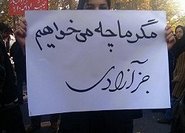
WHAT DO WE WANT OTHER THAN FREEDOM

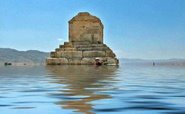
Catastrophe: http://www.savepasargad.com/european_languages.htm

UP YOURS

UP YOURS TOO !



Summer in Ibiza
 Tulips in Holland

Snow in Tehran

Autumn in Canada


 http://www.buzzinfly.com/
buzzradio.html
Podcast:http://www.audioagain.com/podcast.php?channel=buzzinfly


Follow this link : http://www.informationliberation.com/?id=20386
Rageh Inside Iran
Rageh Omaar embarks on a unique journey inside what he describes as one of the most misunderstood countries in the world, looking at the country through the eyes of people rarely heard - ordinary Iranians.It took a year of wrangling to get permission to film inside Iran but the result is an amazing portrayal of an energetic and vibrant country that is completely different to the usual images seen in the media. A country of contrastsRageh soon discovers that Tehran is a complex place and uncovers a city of extremes of wealth and poverty, where some people survive on less than a dollar a day and others shop till they drop in glitzy shopping malls.Iran is a country that bans women from riding motorcycles but where 60 per cent of the student population is female. It is also a youthful place, with two thirds of Iran's 70 million population under the age of 30. Local storiesRageh meets with local people to hear their personal stories and feelings about the current state of affairs in Iran. There are stories of taxi drivers, wrestlers, business women, people working with drug addicts and the country's leading pop star and his manager - the 'Simon Cowell' of Iran.Rageh Inside Iran transcends images of angry demonstrations and burning flags to reveal a country that isn't without its problems but which is also fascinating, dynamic and hospitable.
Monday, February 19, 2007
Es pan degan, Persian's Lovers day and a day known as Valentine's day in the west.
اسپندگان روز عشق در ایران باستان و والنتاین روز عشق در سرزمین های غربی <<بشنوید>>
Sunday, February 18, 2007
A SANE MAN IN AN INSANE WORLD
Victor Davis Hanson is a classicist and historian at the Hoover Institution, Stanford University, and author, most recently, of "A War Like No Other: How the Athenians and Spartans Fought the Peloponnesian War." You can reach him by e-mailing author@victorhanson.com.
In his latest article "Tapping Ahmadinejad's Egg " , February 15, 2007 Real Clear Politics ,Victor Davis Hanson says that : "Americans should continue to support Iranian dissidents. We need not encourage dissidents to go into the street, where they could be shot. Instead we can offer them media help and access to the West. Americans can highlight the plight of women, minorities and liberals in Iran - just the groups that so appeal to the elite Western left".
I think you should read the entir article here: http://www.realclearpolitics.com/articles/2007/02/tapping_ahmadinejads_egg.html
Subscribe to:
Posts (Atom)


O P E N O F F I C E - Free softwere -
Subscribe To - BAHRAMERAD -

 Posts
All Comments
S E A S O N S
A u t u m n 2 0 0 8

MYSPACE ADD ON

Map of Iran's Neighbours
MAP OF PERSIA
PERSIA
FARAVAHAR
AHURAMAZDA
Happy Nu Rooz
NU ROOZ E TON PEEROZE BAD
Sassanid King
KILL THE DEMONS
Nuclear Disaster فاجعه هسته ای

Free Iran Petition


SHIR O KHORSHID
SHIR O KHORSHID
PROTEST NOW !
STRIKE NOW
TO SHOW
SOLIDARITY
WITH THE
IMPRISONED
WOMEN, STUDENTS
AND THE
TRADE UNIONITS
R A H _ E _A Z A D I

Peaceful Revolution

نکته بیستم از پنجاه نکته اساسی مبارزه مسالمت آميزhttp://www.iranpressnews.com/javan/2008/04/3933.htm
REPRESSION
WHO WOULD HAVE BELIEVED IT
HANGINGS OF THE INNOCENTS
اخبار مربوط به زندانیان سیاسی و نقض حقوق بشر
Ahmad
AHMADINEJAD

Earthly Angles Weep With Sorrow

T o m b o f F I R U Z A N
The 7th Century Shrine, A symbol dedicated to the resistance of the Iranians against the invading Arabs
Freedom
WHAT DO WE WANT OTHER THAN FREEDOM

Women's Symble


Threat to Passargad
Catastrophe: http://www.savepasargad.com/european_languages.htm
Khamanei
UP YOURS
Georg W Bush
UP YOURS TOO !
I N F O : N e o w o r x .n e t
Visitors : World
A D : N E O W O R X . N E T
Visitor counter
Visitores Counter
Internet Speed Test

W I N T E R 2 0 0 7 / 2 0 0 8
S U M M E R
Summer in Ibiza
S P R I N G
Tulips in Holland
W i n t e r
Snow in Tehran
A U T U M N
Autumn in Canada
I B I Z A S U M M E R 2 0 0 8
TEHRAN BURNING MUSIC
 |
| NIGHT FEVER extra.... |
| Hosted by eSnips |
BEN WATT AT GALEXY RADIO
 http://www.buzzinfly.com/
buzzradio.html
Podcast:http://www.audioagain.com/podcast.php?channel=buzzinfly

Neoworx.net
New YOUTUBE Video Juke Box
For your listening pleasure and where to buy this music
FOR THE LOVE OF PERSIA , I R A N

I n f o - N e o w o r x . n e t