
IMPERIAL EMBLEM

PERSIA
Iranian Freedom Fighters UNITE

Sunday, November 30, 2008


Thursday, November 27, 2008
The Devil We Know
Organization for Support of the Families of the Unsung Hero's Members of the Imperial Iranian Armed Forces - http://www.sarbazan.com/, Private: shneshat@aol.com, Office: sshneshat@yahoo.com, and primmortalguard@yahoo.com. P.O. Box 16166 Beverly Hills, CA 90209, US
---------------------------------------------------------------------------------------------
IN THE NAME OF MY FATHER
---------------------------------------------------------------------------------------------
Saturday November 22nd, 2008 - Book Review
Book title: The Devil We Know: Dealing with the New Iranian Superpower- Published: 2008
Publisher: United States by Crown Publishers
Author: Robert Baer ; This author made below remarks which makes his credentials as a Central Intelligence Agency officer questionable.
1. This author on prologue section page 1 claimed that in 1978 he was 24 years old young man and was on his way to India, as he had short stop in Iran, Tehran during Marshall laws. This author alleged that “the kamikaze taxi driver who drove me into Tehran from the airport that night taught me my first lesson: Iranians can't drive. The way he swoop and darted between the army patrols, I was convinced he was trying to draw fire. And was it legal to drive down the sidewalk to get around traffic?” Input: This sidewalk needed to be wide enough as well as accessible for a moving vehicle to drive on it because there is a big gap between road and sidewalk, and the author's statement would be impossible to do so since there is no such a sidewalk in Iran. 2. This author on page 55 alleged that “in October 2000, Ayatollah Khamenei, Ayatollah Khomeini's successor as supreme leader-the only real executive power in Iran-made it clear what the victory in Lebanon meant for Iran. It was during a secret address to Iran's National Security Council. After the usual long preamble, larded with quotations from the Koran, Khamenei put both hands on the conference table.” Input: Since he is an intelligent officer, he is required due to nature of his work to be detail orient, and should know that Khamenei's right hand is immobile. As a result, there are cloud of doubts looming on the book as how truthful is this author with his readers. This author contradicts himself on major points as follow.
1. This author on page 10 asserted that “and it wasn't as if the Iranian government could not close down the opium dens if it wanted to. Iran is a police state. Every day I drove around Tehran, or walked around the streets and bazaars, I was stopped and my papers checked.” On page 77 this author claimed that “Iran is not a totalitarian state run by “Islamofascists” who believe they're in some quixotic war with the West.” Input: Police state and totalitarian state shared same meaning as a state controls every fabric of a society, as this author experienced in Iran under rule of the mullah in Iran.
2. This author on page 207 claimed that “since 9/11, without any evidence, these people have tried to make the case that Muslims intend to infiltrate the United States, bring down from inside, and convert us to Islam.” On page 230-231 this author was talking with Muhammad British-Pakistani born who made a remark about 7/7 which was the way to go and “accept Allah's law,” he said. “End of story. Accept Allah's law and I think you'll have a peaceful life.” In other words, we either convert to Islam or die.” Input: There is a reality that Muslims are planning to convert Western nations to Islam or they have to die. Author's theory frame work for the cleric regime in Iran:
1. This author was working on theory of green belt or green crescent which was orchestra by former democrat president Jimmy Carter to contain communism in the region. As this author claimed that the cleric regime in Iran has infiltrated in Afghanistan, Lebanon, Palestine and Iraq and the regime in Iran was in charge of the situation in the region. Also, Turkey was under spill of the regime too but not as strongly as other region. As a result, the cleric regime in Iran is a superpower. This author lacked understanding the term superpower which means a state is in leading position in the international system and has ability to influence on international events. Current regime in Iran is not able to control international event, and has been struggling about its nuclear programs. The regime in Iran is not a great power either which would have economic, military, diplomatic and cultural strength. The current regime in Iran is a rouge state, which is an authoritarian regime, absent of human rights, and seeking weapon of mass destruction.
2. This author was claiming that the regime in Iran is no longer relying on terrorism to advance its interest. However, the cleric regime has been targeting Iranian dissidents and have been murdering them around the world.
3. This author on page 15 claimed that the US do not understand the regime in Iran because of Iranian dissidents are lobbying the White House and the White House does not have clear understanding of Iran. According to the record, so far element of the cleric regime on individual base or as a council like National Iranian American Council had opportunity to meet senior staffs and elected politicians, and to mislead the White House and not Iranian dissidents.
4. This author is working on fear tactic that price of oil on rise and on page 198 this author says it is in best interest of the US to negotiate with the regime in Iran. However, he does not provide any information or strategy how to negotiate with the regime in Iran. Author was bias toward Iran: 1. On page 9, this author claimed that there was no moral police officers in Iran. However, the regime has moral police officers who are enforcing Islamic dress code in Iran. 2. On page 104, this author wrote “the Iranians understand perfectly that the only reason we care about that miserable body of water called the Persian Gulf.” Input: This author is hostile toward Iranian identity.
3. This author claimed that during Iran-Iraq War youths were not given keys to paradise and asked to rush at enemy front and die. The key was a symbol of martyrdom. However, the regime gave the youth the keys and told them that these were keys to paradise. Validity of information: This author used, on page 143, statics about unemployment rate in Iran, and other data that it was unclear where the numbers were extracted from. Last, he alleged when in 1700's England's warship moved to Persian Gulf, this body of water was called Gulf and not Persian Gulf. The above claim was not reference from any source of information. The bottom line, this book does not have any kind of academic merit, and it tries to claim that the regime in Iran is a superpower and the US needs to negotiate and accept the regime in Tehran as a power. However, this author's theory lacks understanding proper meaning of political terms that the regime in Iran is a rouge state and not a superpower.
Payandeh Iran/Long Live Iran
Copyright © 2008 Sarbazan and Janbakhtegan Organization - Copyright infringement shall be subject to prosecution
Permission granted to this web logger to post this article on the : http://bahrameradblg.blogspot.com/ - File number: 11-26-08/01
Sunday, August 31, 2008
Internet Traffic Begins to Bypass the U.S.


“Suppose the Internet was entirely confined to the U.S., which it once was? That wasn’t helpful,” said Vint Cerf of Google.
Invented by American computer scientists during the 1970s, the Internet has been embraced around the globe. During the network’s first three decades, most Internet traffic flowed through the United States. In many cases, data sent between two locations within a given country also passed through the United States.Engineers who help run the Internet said that it would have been impossible for the United States to maintain its hegemony over the long run because of the very nature of the Internet; it has no central point of control.
And now, the balance of power is shifting. Data is increasingly flowing around the United States, which may have intelligence — and conceivably military — consequences.
American intelligence officials have warned about this shift. “Because of the nature of global telecommunications, we are playing with a tremendous home-field advantage, and we need to exploit that edge,” Michael V. Hayden, the director of the Central Intelligence Agency, testified before the Senate Judiciary Committee in 2006. “We also need to protect that edge, and we need to protect those who provide it to us.”Indeed, Internet industry executives and government officials have acknowledged that Internet traffic passing through the switching equipment of companies based in the United States has proved a distinct advantage for American intelligence agencies. In December 2005, The New York Times reported that the National Security Agency had established a program with the cooperation of American telecommunications firms that included the interception of foreign Internet communications.
Monday, August 25, 2008
In Nuclear Net’s Undoing, a Web of Shadowy Deals

The president of Switzerland stepped to a podium in Bern last May and read a statement confirming rumors that had swirled through the capital for months. The government, he acknowledged, had indeed destroyed a huge trove of computer files and other material documenting the business dealings of a family of Swiss engineers suspected of helping smuggle nuclear technology to Libya and Iran. The files were of particular interest not only to Swiss prosecutors but to international atomic inspectors working to unwind the activities of Abdul Qadeer Khan, the Pakistani bomb pioneer-turned-nuclear black marketeer. The Swiss engineers, Friedrich Tinner and his two sons, were accused of having deep associations with Dr. Khan, acting as middlemen in his dealings with rogue nations seeking nuclear equipment and expertise. The Swiss president, Pascal Couchepin, took no questions. But he asserted that the files — which included an array of plans for nuclear arms and technologies, among them a highly sophisticated Pakistani bomb design — had been destroyed so that they would never fall into terrorist hands. Behind that official explanation, though, is a far more intriguing tale of spies, moles and the compromises that governments make in the name of national security. The United States had urged that the files be destroyed, according to interviews with five current and former Bush administration officials. The purpose, the officials said, was less to thwart terrorists than to hide evidence of a clandestine relationship between the Tinners and the C.I.A. Over four years, several of these officials said, operatives of the C.I.A. paid the Tinners as much as $10 million, some of it delivered in a suitcase stuffed with cash. In return, the Tinners delivered a flow of secret information that helped end Libya’s bomb program, reveal Iran’s atomic labors and, ultimately, undo Dr. Khan’s nuclear black market. In addition, American and European officials said, the Tinners played an important role in a clandestine American operation to funnel sabotaged nuclear equipment to Libya and Iran, a major but little-known element of the efforts to slow their nuclear progress. The relationship with the Tinners “was very significant,” said Gary S. Samore, who ran the National Security Council’s nonproliferation office when the operation began. “That’s where we got the first indications that Iran had acquired centrifuges,” which enrich uranium for nuclear fuel. Yet even as American officials describe the relationship as a major intelligence coup, compromises were made. Officials say the C.I.A. feared that a trial would not just reveal the Tinners’ relationship with the United States — and perhaps raise questions about American dealings with atomic smugglers — but would also imperil efforts to recruit new spies at a time of grave concern over Iran’s nuclear program. Destruction of the files, C.I.A. officials suspected, would undermine the case and could set their informants free. “We were very happy they were destroyed,” a senior intelligence official in Washington said of the files. But in Europe, there is much consternation. Analysts studying Dr. Khan’s network worry that by destroying the files to prevent their spread, the Swiss government may have obscured the investigative trail. It is unclear who among Dr. Khan’s customers — a list that is known to include Iran, Libya and North Korea but that may extend further — got the illicit material, much of it contained in easily transmitted electronic designs. The West’s most important questions about the Khan network have been consistently deflected by President Pervez Musharraf of Pakistan, who resigned last Monday. He refused to account for the bomb designs that got away or to let American investigators question Dr. Khan, perhaps the only man to know who else received the atomic blueprints. President Bush, eager for Pakistan’s aid against terrorism, never pressed Mr. Musharraf for answers. “Maybe that labyrinth held clues to another client or another rogue state,” said a European official angered at the destruction. The Swiss judge in charge of the Tinner case, Andreas Müller, is not terribly happy either. He said he had no warning of the planned destruction and is now trying to determine what, if anything, remains of the case against Friedrich Tinner and his sons, Urs and Marco. Some details of the links between the Tinners and American intelligence have been revealed in news reports and in recent books, most notably “The Nuclear Jihadist,” a biography of Dr. Khan by Douglas Frantz and Catherine Collins. But recent interviews in the United States and Europe by The New York Times have provided a fuller portrait of the relationship — especially the involvement of all three Tinners, the large amounts of money they received and the C.I.A.’s extensive efforts on their behalf. Virtually all the officials interviewed spoke on condition of anonymity because they were not authorized to discuss matters that remain classified. The destroyed evidence, decades of records of the Tinners’ activities, included not only bomb and centrifuge plans but also documents linking the family to the C.I.A., officials said. One contract, a European intelligence official said, described a C.I.A. front company’s agreement to pay the smugglers $1 million for black-market secrets. The front company listed an address three blocks from the White House. The C.I.A. declined to comment on the Tinner case, but a spokesman, Paul Gimigliano, called the disruption of Dr. Khan’s network “a genuine intelligence success.” With the evidence files destroyed and a trial in question, it is unlikely that the full story of the Tinners will be told any time soon. If it is, it is unlikely to come from the elder Mr. Tinner. Approached at his home in Haag, Switzerland, near the Liechtenstein border, Mr. Tinner, 71, was polite but firm in his silence. “I have an agreement not to talk,” he told a reporter.
Beginning a Double Life
An inventor and mechanical engineer, Friedrich Tinner got his start in Swiss companies that make vacuum technology, mazes of pipes, pumps and valves used in many industries. Mr. Tinner received United States patents for his innovative vacuum valves. By definition, his devices were so-called dual-use products with peacetime or wartime applications. Governments often feel torn between promoting such goods as commercial boons and blocking them as security risks. As recounted in books and articles and reports by nuclear experts, Mr. Tinner worked with Dr. Khan for three decades, beginning in the mid-1970s. His expertise in vacuum technology aided Dr. Khan’s development of atomic centrifuges, which produced fuel for Pakistan’s nuclear arsenal, now variously estimated at 50 to 100 warheads. Yet while Mr. Tinner repeatedly drew the attention of European authorities, who questioned the export of potentially dangerous technology, he never faced charges. Mr. Tinner’s involvement with Dr. Khan deepened beginning in the late 1990s, when, joined by his sons, he helped supply centrifuges for Libya’s secret bomb program. In 2000, American officials said, Urs Tinner was recruited by the C.I.A., and American officials were elated. Spy satellites can be fooled. Documents can lie. Electronic taps can mislead. But a well-placed mole can work quietly behind the scenes to get at the truth. For instance, the United States had gathered circumstantial evidence that Iran wanted an atom bomb. Suddenly it had a direct view into clandestine Iranian procurement of centrifuges and other important nuclear items. “It was a confirmation,” recalled Dr. Samore, the former national security official who is now director of studies at the Council on Foreign Relations. “That was much more significant than Libya,” because that country’s atomic program was in its infancy whereas Iran’s was rushing toward maturity. Despite considerable income from their illicit trade, the Tinners had money problems, a European intelligence official said. Eventually, Urs Tinner persuaded his father and younger brother to join him as moles, and they began double lives, supplying Dr. Khan with precision manufacturing gear and helping run a centrifuge plant in Malaysia even as their cooperation with the United States deepened. At the time, Washington was stepping up efforts to penetrate Libya’s bomb program. In early 2003, the European official said, the Tinners and C.I.A. agents met at a hotel in Innsbruck, Austria, to discuss cooperative terms. Several months later, in Jenins, a Swiss mountain village, Marco Tinner signed a contract dated June 21, 2003, with two C.I.A. agents, the official said. The contract outlined the sale of rights that the Tinners held for manufacturing vacuum gear, and of proprietary information about the devices. In exchange, $1 million would be paid to Traco Group International, a front company Marco Tinner had established in Road Town, the capital of the British Virgin Islands, on the island of Tortola. In the contract, according to the European intelligence official, the two C.I.A. agents used cover names — W. James Kinsman and Sean D. Mahaffey — and identified their employer as Big Black River Technologies Inc. In military and intelligence work, “black” means clandestine. In the contract, Black River gave an address on I Street in Washington, the intelligence official said. But no business directory lists the company, and employees in the mailroom at the address said they had no records for a company of that name. Four months after the signing of the contract, American and European authorities seized cargoes of centrifuge parts bound for Libya. “The Tinners were a source,” a former Bush administration official said. Two other officials credited the Tinners with helping end the Libyan bomb program. In Libya, investigators found the rudiments of a centrifuge plant and a blueprint for a basic atom bomb, courtesy of Dr. Khan’s network. The Bush administration celebrated Libya’s abandonment as a breakthrough in arms control. But the secret lives of the Tinners began to unravel. The Malaysian police issued a report naming them as central members of Dr. Khan’s network. An official of VP Bank Ltd., Traco’s business agent in the Virgin Islands, said it ended that relationship in early 2004, when Marco Tinner was exposed. Under growing pressure, Dr. Khan confessed. His clients turned out to include not only Libya but Iran and North Korea, and his collaborators turned out to be legion. “We will find you,” Mr. Bush said in February 2004 of Dr. Khan’s associates, “and we’re not going to rest until you are stopped.”
Acts of Sabotage
After the Tinners were arrested, Swiss and other European authorities began to scrutinize their confiscated files and to conduct wide inquiries. European investigators discovered not only that the Tinners had spied for Washington, but that the men and their insider information had helped the C.I.A. sabotage atomic gear bound for Libya and Iran. A former American official confirmed the disruptions, saying the technical architect of the operation was “a mad-scientist type” who took pleasure in devising dirty tricks. An American intelligence official, while refusing to discuss specifics of the sabotage operation or the Tinners’ relationship with the C.I.A., said efforts to cripple equipment headed to rogue nuclear states “buy us some time and space.” With Iran presumably racing for the capability to build a bomb, he added, “that may be the best we can hope for.” The sabotage first came to light, diplomats and officials said, when inspectors from the International Atomic Energy Agency traveled to Iran and Libya in 2003 and 2004 and discovered identical vacuum pumps that had been damaged cleverly so that they looked perfectly fine but failed to operate properly. They traced the route of the defective parts from Pfeiffer Vacuum in Germany to the Los Alamos National Laboratory in New Mexico, the birthplace of the bomb. There, according to a European official who studied the case, nuclear experts had made sure the pumps “wouldn’t work.” A more serious disruption involved a power supply shipped to Iran from Turkey, where Dr. Khan’s network did business with two makers of industrial control equipment. The Iranians installed the power supply at their uranium enrichment plant at Natanz. But in early 2006, it failed, causing 50 centrifuges to explode — a serious, if temporary, setback to Iran’s efforts to master the manufacture of nuclear fuel, the hardest part of building a bomb. (Iran says its nuclear efforts are for electricity, not weapons.)Gholamreza Aghazadeh, the head of the Iranian Atomic Energy Organization, told a reporter last year that Iranian investigators found that the power supply had been manipulated.After the episode, he added, “we checked all the imported instruments.”
Discussions With Washington
In 2005, Swiss authorities began asking the United States for help in the Tinner case. Among other things, they wanted information about the Libyan centrifuge program to press charges of criminal export violations. For more than a year, the Swiss made repeated requests. Washington ignored them. “Its lack of assistance needlessly complicates this important investigation,” David Albright, of the Institute for Science and International Security, a private group in Washington, told Congress in May 2006. Mr. Albright said he had helped Swiss prosecutors write to the State Department. The Swiss turned to the I.A.E.A. for help in assessing the Tinner cache. European officials said the agency was surprised to find multiple warhead plans and judged that most had originated in Pakistan. The country denied that Dr. Khan had access to nuclear weapon designs and questioned the agency’s conclusions. In late July 2007, according to Swiss federal statements, the justice minister, Christoph Blocher, flew to Washington for talks with Mike McConnell, the director of national intelligence; Alberto R. Gonzales, then the attorney general; and Robert S. Mueller III, the F.B.I. director.Officially, the statements said, the main topic was “cooperation in the criminal prosecution of terrorist activities.” But the real agenda was what to do about the Tinners.A former Bush administration official said different government agencies had differing views of the case. The State Department wanted the bomb plans destroyed as a way to stem nuclear proliferation, while the C.I.A. wanted to protect its methods for combating illicit nuclear trade.The C.I.A. also wanted to help the Tinners. “If a key source is prosecuted,” a former senior official involved in the case said, “what message does that send when you try to recruit other informants?”American officials discussed a range of possible outcomes with the Swiss and expressed their clear preferences. The best result, they said, would be turning over the family’s materials to the United States. Acceptable would be destroying them. Worst, according to the former administration official, would have been making them public in a criminal trial, where defense lawyers would have probably exposed as much American involvement as possible in hopes of getting their clients off the hook.
A Furor Over Destroyed Files
Last March, Mr. Müller became the examining magistrate in the Tinner case, charged with assessing if a trial was warranted. Soon after, he was quoted as saying the evidence files contained “obvious holes.” Sketchy reports of deleted computer files and shredded documents had been circulating, but he was the first identified official to hint at a widespread destruction. Then, on May 23, the Swiss president, Mr. Couchepin, revealed that Switzerland had begun a series of extraordinary actions just days after Mr. Blocher, the justice minister, returned from Washington. Swiss citizens are prohibited from aiding foreign spies. But in his statement, the president said that in late August 2007, the government canceled a criminal case against the Tinners for suspicions of aiding a foreign government. Though unmentioned, the C.I.A. seemed to peer out from his statement. On Nov. 14, his statement continued, the government decided to destroy “the comprehensive holding of the electronic files and documents” seized from the Tinners. The most dangerous items, the president said, included “detailed construction plans for nuclear weapons, for gas ultracentrifuges for the enrichment of weapons-grade uranium, as well as for guided missile delivery systems.” International atomic inspectors, he added, supervised the destruction. Mr. Couchepin said keeping the documents “was incompatible with Switzerland’s obligations” under the Nuclear Nonproliferation Treaty and added, “Under all circumstances, this information was not to reach the hands of a terrorist organization or an unauthorized state.” The statement provoked a political furor. Some politicians and columnists accused Switzerland of surrendering to Washington’s agenda and violating Swiss neutrality. Among the strongest critics was Dick Marty, a prominent Swiss senator. “We could have respected the treaty by avoiding their publication and putting them under lock and key,” he was quoted as saying on Swissinfo, the Web site of the Swiss Broadcasting Corporation. Destroying them, he added, “ could lead to the collapse of the legal case.” Many European officials dismissed the government’s arguments about terrorists and rogue states as empty. “If they had kept the material in federal possession for years, why not keep holding it?” asked Victor Mauer, a senior official at the Center for Security Studies of the Swiss Federal Institute of Technology. “Their explanation is not convincing.”
An Action’s Repercussions
In an interview, a senior European diplomat familiar with the I.A.E.A. said the destruction could have repercussions far beyond the criminal case. For one thing, he said, the international atomic agency had been allowed to examine only parts of the archive. He called it “a good sample” and judged that the agency had missed no significant clues. Even so, he said, the agency might “come to regret” its inability to examine the materials further for insights into hidden remnants of Dr. Khan’s network. And while the Swiss president made much of the proliferation danger, the diplomat insisted that the warhead designs were in many respects sketchy and incomplete. “These are almost like studies — bits and pieces,” he said, adding that they “wouldn’t be enough to let you build a replica.” So while they might have little or no value for a terrorist with no atomic experience, the plans might prove quite helpful for an ambitious state intent on building a nuclear arsenal. He said the agency had no evidence that Iran had acquired the bomb plans.The diplomat added that the Swiss had “lots of possibilities” other than destruction. He said they had no legal obligation to destroy the files under the nonproliferation treaty, and could have put them under I.A.E.A. seal in Vienna or Switzerland. Several European officials speculated that Washington might actually have kept secret copies of the archive. A senior American official said the United States had reviewed the material but declined to say if there were copies. As for the Tinners, the father was released in 2006, pending legal action. In a brief interview at his home, Mr. Tinner pleaded ignorance about basic aspects of the criminal case, such as where the authorities kept the materials that had belonged to him and his sons. “The newspapers know more about these things than I do,” he insisted. Should the case fall apart, the Tinners would join a growing list of freed associates of Dr. Khan. In June, Malaysia released the network’s chief operating officer, B. S. A. Tahir, saying he was no longer a national security threat. The authorities have kept the Tinner brothers in jail for fear that they might flee the country. In late May, a Swiss court rejected their bail application, and early this month, the ruling was upheld. But the judges also told the authorities that they could not hold the brothers indefinitely without charging them. With much of the evidence gone, the magistrate, Mr. Müller, expressed frustration at finding “no answers to the really interesting questions in this case.” He declined to predict how it might turn out. “At the moment,” he said, “it is impossible to make any schedule, since the case is in many aspects extraordinary.”
Tuesday, August 12, 2008
Former Iranian Officer Explains the Games Mullahs Play
Former Iranian Officer Explains the Games Mullahs Play
The men who ordered the destruction of the Pan Am flight over Lockerbie and the bombings of the Marine Corps barracks in Lebanon, the Jewish community center in Buenos Aires, and the Khobar Towers in S
Former CIA Agent in Iran Comes In from the Heat »
Sunday, May 18, 2008
The Common Thread Within the Kennedy Anathema
Saturday, April 12, 2008
Sunday, March 30, 2008
BBC uncovers the evidence that the CIA killed JFK
A new BBC documentary supports the conclusion that the CIA planned and executed the assassination of Robert Kennedy. The new video and photographic evidence -- the result of a three year long investigation --"puts three senior CIA operatives" at the scene of the murder.
Read the full article here: http://tinyurl.com/yqpagh
Sunday, February 24, 2008
When the Terrorists Were 'Our Guys': A Special Report
(http://www.smirkingchimp.com)
In 1976, when George H.W. Bush was CIA director, the U.S. government tolerated right-wing terrorist cells inside the United States and mostly looked the other way when these killers topped even Palestinian terrorists in spilling blood, including a lethal car bombing in Washington, D.C., according to newly obtained internal government documents. That car bombing on Sept. 21, 1976, on Washington’s Embassy Row, killed Chile’s former Foreign Minister Orlando Letelier and an American co-worker Ronni Moffitt, while wounding Moffitt’s husband.It soon became clear to the FBI and other federal investigators that the attack likely was a joint operation of DINA, the fearsome Chilean intelligence agency of military dictator Augusto Pinochet, and U.S.-based right-wing Cuban exiles.But Bush’s CIA steered attention away from the real assassins toward leftists who supposedly killed Letelier to create a martyr for their cause. Eventually, the CIA’s cover story collapsed and – during the Carter administration – at least some of the lower-level conspirators were prosecuted, though the full story was never told.Recently obtained internal FBI records [1] and notes of a U.S. prosecutor involved in counter-terrorism cases make clear that the connections among Bush’s CIA, DINA and the Cuban Nationalist Movement (CNM) – which supplied the trigger men for the Letelier bombing – were closer than was understood at the time.DINA provided intelligence training for CNM terrorists who acted like a “sleeper cell” inside the United States; federal prosecutions of right-wing Cuban terrorists were routinely frustrated; and the CIA did all it could to cover for its anticommunist allies who were part of a broader international terror campaign called Operation Condor.Beginning in late 1975, Operation Condor -- named after Chile's national bird -- was a joint operation of right-wing South American military dictatorships, working closely with U.S.-based Cuban and other anticommunist extremists on cross-border assassinations of political dissidents as far away as Europe.This meant that during George H.W. Bush’s year at the CIA’s helm, the United States both harbored domestic terrorist cells and served as a base for international terrorism. Yet no U.S. official was ever held accountable -- and in many cases, just the opposite.George H.W. Bush rose to be Vice President four years later and to be President eight years after that, with his son now sitting in the Oval Office. Former President Bill Clinton has said his wife's first act [2] as President would be to dispatch him and George H.W. Bush on a worldwide fence-mending tour.
The Letelier Plot
Regarding the DINA-CNM alliance, Chile’s star assassin Michael Townley told FBI interrogators after his arrest in 1978 that Cuban exiles involved in the Letelier murder had received DINA training, including CNM member Virgilio Paz, who “attended a one-month ‘quickie’ intelligence course sponsored by DINA,” the internal FBI report [3] said.Townley, a fiercely anticommunist American expatriate who had emerged as DINA’s chief overseas assassin, told the FBI that Paz’s training was personally approved by DINA’s director, Col. Manuel Contreras, who – the CIA later acknowledged – was an asset of the U.S. spy agency.Paz lived at Townley’s residence during his three-month stay in Chile and DINA paid for Paz’s frequent calls back home to the United States, Townley said, recalling that Paz left Chile close to his son Brian’s birthday on June 6, 1976.About a month later, Colonel Pedro Espinoza, DINA’s director of operations, summoned Townley to a meeting near St. Georges School in suburban Santiago. Townley recalled driving his DINA-supplied Fiat 125 sedan to the early-morning meeting and taking a thermos of coffee.Espinoza asked Townley if he’d be available for a special operation outside Chile. Townley complained “that he had spent a majority of 1975 in Europe on DINA missions and that he felt he was neglecting his family with constant travel on behalf of DINA,” according to the FBI report.(Only later would investigators learn that Townley had been working with European neo-fascists in hunting down Chilean dissidents in Europe, including Christian Democratic leader Bernard Leighton, who was severely wounded along with his wife in an assassination attempt in Rome on Oct. 6, 1975.)In late July 1976, Townley said he drove a stubby metallic green MG 1300 to a second meeting and spoke with Colonel Espinoza outside the car. Espinoza informed Townley that his mission would be the assassination of Orlando Letelier, who had emerged as an articulate critic of Pinochet’s dictatorship and was putting an unwanted spotlight on Chile’s central role in the spreading human rights calamity across South America.Espinoza said Paraguayan travel documents would be used for the operation and the preferred method of death was an arranged traffic accident while Letelier was alone.“Colonel Espinosa [sic] instructed him [Townley] that Cuban exile terrorists were to be utilized to carry out the actual assassination, and that his and [his DINA accomplice’s] role would be to plan the assassination and then withdraw leaving its execution to the Cubans,” the FBI report said.“Based on his [Townley’s] recent favorable association with Paz and the latter’s recent training under DINA sponsorship, he [Townley] told Colonel Espinosa [sic] that he believed the assassination in the United States might be arranged,” the FBI document said.
The CORU Umbrella
By June 1976, CNM also had joined in another campaign of right-wing terrorism, this one organized by Cuban exile Orlando Bosch under an umbrella group called the Coordination of United Revolutionary Organizations (CORU), which targeted Fidel Castro’s Cuba.According to the federal prosecutor’s notes, the CORU organizational meeting in the Dominican Republic in June 1976 brought together CNM and four other exile groups, including the “Force Fourteen (F-14, led by a CIA asset),” meaning the U.S. spy agency surely knew about CORU’s plans from the start.In early July 1976, after getting the assignment to murder Letelier, Townley said he contacted Paz and other CNM members to assist him.First, however, Townley and his DINA accomplice, Chilean Army Lieutenant Armando Fernandez Larios, went to Paraguay to arrange visas for a trip to the United States, using the false names, Juan Williams and Alejandro Romeral.Their cover story was that they were investigating suspected leftists working for Chile’s state copper company in New York and that – while in the United States – they would meet with Bush’s CIA deputy, Lt. Gen. Vernon Walters. A senior Paraguayan official, Conrado Pappalardo, urged U.S. Ambassador George Landau to cooperate, citing a direct appeal from Pinochet. An alarmed Landau recognized the visa request as highly unusual, since such operations were normally coordinated with the CIA station in the host country and were cleared with CIA headquarters in Langley, Virginia.Though granting the visas, Landau took the precaution of sending an urgent cable to Walters and photostatic copies of the fake passports to the CIA. Landau said he received an urgent cable back signed by CIA Director Bush, reporting that Walters, who was in the process of retiring, was out of town.When Walters returned a few days later, he cabled Landau that he had “nothing to do with this” mission. Landau immediately canceled the visas, but the U.S. government apparently never delivered a specific warning to DINA to call off the operation.To this day, it remains unclear what – if anything – Bush’s CIA did after learning about the
“Paraguayan caper.”Nevertheless, Townley said he and DINA’s Col. Espinoza worried about delays in getting the original visas, which suggested that the Paraguayan approach was compromised, Townley said in his FBI interrogation.To allay any U.S. suspicions, DINA did dispatch two other Chilean operatives using the phony names Juan Williams and Alejandro Romeral. After they arrived in the United States on Aug. 22, 1976, they made a point of having the Chilean Embassy notify Walters’s office, but the CIA again demonstrated little curiosity about the mission.
‘Beyond Belief’
“It is quite beyond belief that the CIA is so lax in its counterespionage functions that it would simply have ignored a clandestine operation by a foreign intelligence service in Washington, D.C., or elsewhere in the United States,” wrote John Dinges and Saul Landau in their 1980 book, Assassination on Embassy Row.“It is equally implausible that Bush, Walters, Landau and other officials were unaware of the chain of international assassinations that had been attributed to DINA.”As for the Letelier assassination, DINA was soon plotting another way to carry out the killing. In late August 1976, DINA dispatched a preliminary team, consisting of Larios Fernandez and a female agent, to do surveillance on Letelier as he moved around Washington.Then, on Sept. 8, 1976, Townley followed, using an official Chilean passport under the fictitious name of Hans Petersen Silva.After arriving at New York’s Kennedy International Airport, Townley said he contacted Virgilio Paz by telephone and then rented a car to drive to Union City, New Jersey, to meet Paz at a restaurant named “Bottom of the Barrel,” according to the FBI report.The next night, Paz brought members of the Cuban Nationalist Movement to Townley’s motel room, including Guillermo Novo Sampol and Jose Dionisio Suarez Esquivel, Townley said.
“Cuban exiles present at the meeting agreed that the CNM would assist DINA in assassinating Letelier,” the FBI report said. “Shortly thereafter he [Townley] traveled to Washington, D.C. in the automobile of Virgilio Paz in order to conduct additional surveillance on Letelier and to purchase additional materials necessary to make the bomb which would be utilized to kill Letelier.“Basically, the bomb was made up of TNT and a substance which he [Townley] believed to be C-3 plastic. Several months previously he modified a CB Fanon Courier … receiver in Chile at the request of the CNM to be utilized at a future date. … “The crystal on the receiver was set at 31.040 megahurts [sic]. A major modification made by Townley was to remove the speaker from the receiver and put in a transformer. A standard blasting cap was used in the construction of the bomb. The bomb was contained in an aluminum baking tin.”Townley’s remark about DINA’s preparation of the explosive device for the U.S.-based Cuban extremists further indicates that the DINA-CNM relationship represented an active penetration of the United States by an international terrorist cabal operating under the nose of U.S. intelligence.
Final Plans
After arriving in Washington and checking into a downtown Holiday Inn, Townley and Paz spent several days conducting surveillance of Letelier. After another CNM operative Suarez Equivel arrived, the assassination team took the next step, heading to Letelier’s house in suburban Maryland.Late that Saturday night, Sept. 18, or early Sunday morning, Sept. 19, Paz drove Townley to Letelier’s neighborhood. Townley “was dropped off at the top of a hill in a cul-de-sac street, immediately adjacent to the Letelier home. [After crawling under Letelier’s Chevelle] he affixed the bomb to the cross-member and recalled he had some trepidation as to whether the bomb would remain attached since he ran out of tape," the FBI report said.“The bomb contained a safety switch which he placed in the ‘on’ position after covering the switch with tape. … While he was placing the bomb he recalled that a police cruiser passed by … however, he was undetected. After placing the bomb he walked down the hill and joined Virgilio Paz in the latter’s automobile and they left the area and returned to their hotel.”On Sunday morning, Townley flew from Washington National Airport to Newark where he met CNM leader Novo Sampol for breakfast. Then they drove to New York City where Novo had a meeting with an “attorney apparently connected with the local New York City government,” the FBI report said.After a family visit in Westchester County, Townley flew to Miami where he saw his parents at their Boca Raton home before meeting with Miami CNM member Felipe Rivero Diaz, who pressed Townley for more assistance from DINA, the FBI report said.By Monday evening, Townley had become “troubled that no news had been received concerning Letelier and he suspected that something had gone wrong with the plan to assassinate him.”Early Tuesday morning, Sept. 21, Townley called Virgilio Paz to find out what had happened. “Paz was extremely angry at the early hour of the call and the use of the telephone from a security standpoint. Paz furnished no information concerning the Letelier bomb,” the report said.“Later on during the morning he [Townley] contacted Ignacio Novo Sampol in Miami and they arranged to have lunch at a Miami restaurant. During the telephone conversation, Novo informed him that something had happened in Washington, D.C. Subsequent news broadcast the death of Letelier as a result of a bomb which detonated in the latter’s automobile.”Next, Townley said he “eliminated the identity of Hans Petersen Silva and returned to Chile utilizing a United States passport under the name of Kenneth Enyart.”
Slowly into Focus
Back in Washington, the facts of the assassination slowly came into focus. The explosion that ripped apart Letelier’s Chevelle had shattered a quiet morning in the stately section of the capital where embassies line Massachusetts Avenue, what is called Embassy Row.The blast ripped off Letelier’s legs and punctured a hole in Ronni Moffitt’s jugular vein. She drowned in her own blood at the scene; Letelier died after being taken to George Washington University Hospital. Ronni’s husband, Michael Moffitt, survived.At the time, the attack represented the worst act of international terrorism on U.S. soil and remains the most notorious terror attack sponsored by a foreign government inside the United States.Adding to the potential for scandal, the terrorism had been carried out by a regime that was an ostensible ally of the United States, one that had gained power in 1973 with the help of the Nixon administration and the CIA.The scandal also jeopardized the reputation of CIA Director George H.W. Bush and the political future of his boss, President Gerald Ford, who was in the midst of a heated presidential campaign against Democrat Jimmy Carter.Within hours of the bombing, Letelier’s associates accused the Pinochet regime, citing its hatred of Letelier and its record for brutality. The Chilean government, however, heatedly denied any responsibility.That night, at a dinner at the Jordanian Embassy, Sen. James Abourezk, a South Dakota Democrat, spotted Bush and approached the CIA director. Abourezk said he was a friend of Letelier’s and beseeched Bush to use the CIA “to find the bastards who killed him.”Abourezk said Bush responded: “I’ll see what I can do. We are not without assets in Chile.” [See Robert Parry's Secrecy & Privilege [4].]A problem, however, was that one of the CIA’s best-placed assets – DINA chief Manuel Contreras – would turn out to be a mastermind of the assassination.Wiley Gilstrap, the CIA’s Santiago station chief, did approach Contreras with questions about the Letelier bombing and wired back to Langley Contreras’s assurance that the Chilean government wasn’t involved.Following the strategy of public misdirection that DINA already had used in hundreds of “disappearances” of dissidents, Contreras pointed the finger at the Chilean Left. Contreras suggested that leftists had killed Letelier to turn him into a martyr.
Evidence of Lying
The Ford administration had plenty of reasons to disbelieve Contreras. “The CIA had substantive evidence to show that Contreras was lying,” researcher Peter Kornbluh wrote in his 2004 book, The Pinochet File. “The Agency had concrete knowledge that DINA had murdered other political opponents abroad, using the same modus operandi as the Letelier case. The Agency had substantive intelligence on Condor, and Chile’s involvement in planning murders of political opponents in Europe.”Rather than fulfilling his promise to Abourezk to “see what I can do,” Bush ignored leads that would have taken him into a confrontation with Pinochet.As the Ford administration dawdled and Bush’s CIA kept its head down, right-wing Cuban terrorists stepped up their war against leftists in general and Fidel Castro’s communist government in particular.On Oct. 6, 1976, a Cubana airliner, flying the Cuban Olympic fencing team and other passengers to Cuba, exploded after taking off in Barbados, killing everyone onboard. At the time, this sort of mid-air bombing was unprecedented, and the evidence quickly pointed to Cuban extremists linked to CORU and the CIA.But the U.S. government either resisted putting the pieces together or chose to avoid the obvious conclusions.On Oct. 6, the day of the Cubana Airline bombing, a CIA informant in Chile went to the CIA station in Santiago and relayed an account of Pinochet denouncing Letelier, with the dictator calling Letelier’s criticism of the government “unacceptable.”The source “believes that the Chilean Government is directly involved in Letelier’s death and feels that investigation into the incident will so indicate,” the CIA field report said.But Bush’s CIA chose to accept Contreras’s denials and even began leaking information that pointed away from the real killers.Newsweek reported in the magazine’s Oct. 11, 1976, issue that “the Chilean secret police were not involved. …. The [Central Intelligence] agency reached its decision because the bomb was too crude to be the work of experts and because the murder, coming while Chile’s rulers were wooing U.S. support, could only damage the Santiago regime.”Similar stories ran in other newspapers. On Nov. 1, 1976, the day before the presidential election, the Washington Post became another vehicle for trumpeting Pinochet’s innocence.“Operatives of the present Chilean military Junta did not take part in Letelier’s killing,” the Post wrote, citing CIA officials. “CIA Director Bush expressed this view in a conversation late last week with Secretary of State [Henry] Kissinger.”Despite Bush’s success in keeping the truth about the Letelier assassination under wraps, Democrat Jimmy Carter narrowly defeated Ford on Nov. 2, 1976.
Cracking the Case
Over the next two years, federal investigators would crack the case, successfully bringing charges against Townley and several Cuban-American conspirators. But prosecutor Eugene Propper told me that the CIA didn’t volunteer the crucial information about the Paraguayan gambit or hand over the photo of the chief assassin, Townley.“Nothing the agency gave us helped us break this case,” Propper said.According to the recently obtained prosecutor’s notes, one of the breaks in the Letelier case came from Rolando Otero, a Cuban exile who was believed to be the youngest member of the CIA-trained Bay of Pigs invasion force in 1961 and who was implicated in a string of 1975-76 bombings in Miami (though ultimately
acquitted).Otero had worked with Chile’s DINA, but – according to John Dinges’s 2005 book, The Condor Years – was a double agent for Venezuela’s intelligence service, DISIP, causing his Chilean controllers to jail and torture him before expelling him to the United States.According to the prosecutor’s notes, “Otero became the witness who gave a Washington, D.C. AUSA [assistant U.S. attorney] the key to the car-bombing of Orlando Letelier. … The AUSA cut a deal with Otero that if Otero talked about the Letelier case, he would not have to give any information about [terrorism] cases … in Miami.”The prosecutor’s notes also complained of a wider lack of cooperation from Washington in the many cases of Cuban-exile terrorism in Miami.
Regarding the information generated by the Letelier prosecution, the Miami prosecutor asked, “why wasn’t that information ever communicated to Miami, the Cuban exile stronghold, where the most devious and clandestine plots were discussed on a regular basis? The links to Miami were so thick, the exchange of communication so thin.”As for the CIA's initial Letelier cover-up, neither Bush nor Walters was ever pressed to provide a full explanation.When I submitted questions to Bush in 1988 – while he was running for president and I was a Newsweek correspondent preparing a story on his year as CIA director – Bush’s chief of staff Craig Fuller responded, saying “the Vice President generally does not comment on issues related to the time he was at the Central Intelligence Agency and he will have no comment on the specific issues raised in your letter.”Newsweek editors subsequently killed my critical story about Bush’s CIA tenure, even though he was citing that experience as an important element of his résumé for the presidency. Walters also rebuffed interview requests on the Letelier topic prior to his death on Feb. 10, 2002, in West Palm Beach, Florida.
New Cover-up
In 1995, after the Pinochet dictatorship had ended, DINA chief Contreras and his assistant Espinoza were convicted in Chile for the Letelier assassination and sentenced to seven and six years, respectively. Contreras began implicating Pinochet in the Letelier case and other acts of terrorism, saying Pinochet knew and approved all of these actions.As for Pinochet, former President Bush didn’t hold a grudge against this foreign leader who allegedly had sponsored a terrorist attack under the nose of the U.S. government at a time when Bush was chief of U.S. intelligence.In 1998, when Pinochet was detained in Great Britain on an extradition request from Spanish Judge Baltasar Garzon, who was pursuing Pinochet for killing Spanish citizens, George H.W. Bush was one of the world leaders who rallied to Pinochet’s defense.Bush called the case against Pinochet “a travesty of justice” and demanded that Pinochet be sent home to Chile “as soon as possible,” which the British courts did.However, Garzon’s initiative prompted the Clinton administration to take a second look at the Letelier case in 2000. An FBI team reviewed new evidence that had become available and recommended the indictment of Pinochet.But the final decision was left to the incoming administration of George W. Bush. In effect, the baton of the Letelier-Moffitt-murder cover-up was passed to a new Bush generation. Besides failing to act on the FBI’s recommendation, the Bush II administration continued to withhold relevant documents from Chilean investigators.The younger George Bush – and his brother Florida Gov. Jeb Bush – also helped out in protecting the old Cuban terrorists who were implicated in the Cubana Airline bombing, Orlando Bosch and Luis Posada Carriles. Both have been allowed to live out their golden years in the relative safety and comfort of the United States.As for Pinochet, the aging general never had to face justice for his acts of international terrorism or for his domestic human rights crimes. Pinochet died of a heart attack on Dec. 10, 2006, at the age of 91.
‘Blood Boil’
When I tracked down former Assistant U.S. Attorney Jerry Sanford, who was assigned to the Cuban terrorism cases in the mid-1970s, he still sounded frustrated at the lack of support he got from Washington to pursue these killers who inflicted death both inside and outside the United States.“My blood starts to boil when I think of how much we could have done but how badly we were kept in the dark,” said Sanford, now 66, living in northern Florida. “I asked for stuff and never got it.”Sanford recalled that when CIA Director Bush visited Miami at the end of the bloody year 1976, FBI agents “asked him for information from the CIA on where explosives [for the Cuban exiles] were stashed.” The response from Bush, according to Sanford, was “forget about it.”Referring to the umbrella organization CORU, Sanford said, “it was the only terrorist group that ever exported terrorism from the United States.”
Ironically, the CIA’s analytical division reached a similar, troubling conclusion in an annual report entitled “International Terrorism in 1976” that was published in July 1977, after CIA Director Bush had left office.“Cuban exile groups operating under the aegis of a new alliance called the Coordination of United Revolutionary Organizations [CORU] were particularly active during the second half of the year,” the CIA reported. “They were responsible for no less than 17 acts of international terrorism (at least three of which took place in the US).“Statistically, this matches the record compiled by the various Palestinian terrorist groups during the same period. But largely because the Cuban exile operations included the October bombing of a Cubana Airlines passenger aircraft, their consequences were far more bloody.”In other words, Cuban exiles based in the United States – during George H.W. Bush’s year in charge of the CIA – outpaced Palestinian terrorists in terms of a total body count.After the 9/11 terror attacks in 2001, the U.S. government presented itself as the innocent victim of international terrorism with a moral right not only to pursue the “bad guys” across the globe but to subject some captives to torture, to lock others up indefinitely without trial, and to launch attacks that have killed many thousands of innocents.In the years that have followed, there were few recollections of the days under the current president’s father when the bloodiest terrorists were “our guys.”
Monday, February 18, 2008
Snoop Dogg Flava Flav Roast - and then the SECRETS OF THE CIA
Snoop Dogg ft Nate Dogg, Kurupt & Warren G - It Aint No Fun
Dr. Dre - The Next Episode
Eminem - Bitch Please II (feat. Dr. Dre, Snoop Dogg, Xzibit)
It's about goddamn time to blow the whistle. US government is the BIGGEST cocaine and heroin MAFIA in the whole freaking world. Bill Clinton's Mena Arkansas cocaine laundering, Bush CIA trafficking empire, Iran Contra, Plan Colombia, Turkey, Afghanistan, Pakistan poppy route, Vietnam War Burma Golden Triangle, none of these are enough evidence?
YOU ARE PAYING TAXES TO THE BIGGEST DRUG CARTELS AND YOU DON'T KNOW HALF OF THE STORY! YOU THINK YOU ARE STILL LIVING IN A DEMOCRACY?
Mike Ruppert - Former LAPD investigator, now 9-11 truther and CIA whistleblower, explains how the US government and Bush crime family is involved in drug trafficking, and how 9-11 plays into the global dominace scheme. A very important lecture. The Clinton Chronicles - Bill's Mena cocaine operations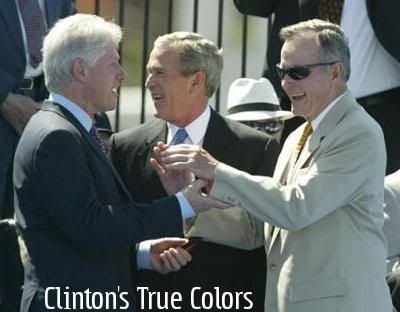
Secret Mason handshake... Bush Clinton crime syndicate came a LONG way together. All in the family.
***********************************************************************
Russian state TV suggests USA involved in drug-
trafficking from Afghanistan
***********************************************************************
BBC Monitoring - Channel One TV, Moscow, in Russian - Sun, 10 Feb 2008 15:04 EST
http://www.sott.net/articles/show/148967-Russian-state-TV-suggests-USA-involved-in-drug-trafficking-from-Afghanistan
Russian state-controlled Channel One TV has broadcast a report containing allegations that US forces are involved in drug-trafficking from Afghanistan to Europe. It also highlighted the problem of drug abuse in the British army.The channel's weekly news roundup "Voskresnoye Vremya" on 10 February noted that, according to the UN, the amount of opium being produced in Afghanistan has more than doubled since the coalition troops entered the country.The report went on to show former UK Prime Minister Tony Blair visiting the country at an unspecified time. It said that he had met almost 800 British troops during the visit. "This is either a coincidence or the working of cruel fate, but this is the exact number of soldiers that the British army loses each year because of drug abuse. This is more than the total combat losses of the royal army in Iraq and Afghanistan," the correspondent noted.The report then featured an extract from a BBC news website story saying that the British army loses a whole battalion of troops a year because of drug abuse (Research revealed that the story was published on 14 December 2007). The report went on to look at the wider problem of how to reverse the trend of increasing opium production in Afghanistan. Aleksandr Mikhaylov, the head of the department of interdepartmental and informational activity at the Russian Drugs Control Agency, was shown saying that economic measures to tackle the problem are foundering on local corruption. "The local authorities draw up seriously forged lists in which an amount is recorded for the amount destroyed and, in fact, the crop has not been destroyed at all. The theft of the money to combat narcotics is going on and is flourishing," he said. The accusation that US forces are involved in drug-trafficking came from Geydar Dzhemal, chairman of the Islamic Committee of Russia. "Without the control and connivance on the part of the special services none of these things are possible. For example in Afghanistan, the CIA and the special services are quite brazen. Under the protection of the American army they meet the necessary people. They collect the stuff, go to the Bagram airbase and they hand in a large consignment of narcotics, which is then taken away," he said. The report went on to say that heroin reached the Balkans via Turkey, which "has been a member of NATO since 1952 and is the USA's closest ally in the region". It said it is "another amazing coincidence" that Kosovo hosts the largest NATO base in Europe. The correspondent added that there is a "secret Interpol post" next to this base. "Here they speak almost openly about Afghan heroin in American planes," he noted.A man captioned as Marko Nicovic, Interpol employee, explained that 90 per cent of heroin goes through the Albanian mafia, which is now more powerful than the Sicilian mafia. He also alleged that members of this mafia bribe European parliamentarians to support the independence of Kosovo.The report went on to link high levels of drug crime in Russia with the US invasion of Afghanistan. "Since the Americans unleashed war on the Taleban, Russian crime labs have been working non-stop," the correspondent observed over footage of a drugs raid and packages of drugs being opened.Aleksandr Mikhaylov, the head of the department of interdepartmental and informational activity at the Russian Drugs Control Agency, was shown saying that the production of narcotics in Afghanistan is getting more professional and that drugs have taken a real stranglehold on the Afghan economy. "The situation today is that narcotics have become a substance used for barter in Afghanistan," he observed."For as long as heroin remains the only hard currency in the country and until NATO and its military coalition do not resolve their own issues, the agricultural proclivities here will hardly change," the correspondent concluded.
The true story of hemp, as told by Rick Simpson, the man who cured cancer with hemp oil. Please visit http://www.phoenixtears.ca/ for a vast collection of hemp research and hidden truth about "the miracle mdicine"!
N FROM THE CURE - The Rick Simpson Story (Part 1 of 7)
serious head injury in 1997, Rick Simpson sought relief from his medical condition through the use of medicinal hemp oil. When Rick discovered that the hemp oil ( Series (Part 1 of 7)
VIEW ALL 7 FILES AT http://www.youtube.com/chrychek
A Film By Christian Laurette - After a serious head injury in 1997, Rick Simpson sought relief from his medical condition through the use of medicinal hemp oil. When Rick discovered that the hemp oil (with its high concentration of T.H.C.) cured cancers and other illnesses, he tried to share it with as many people as he could free of charge - curing and controlling literally hundreds of people... but when the story went public, the long arm of the law snatched the medicine - leaving potentially thousands of people without their cancer treatments - and leaving Rick with unconsitutional charges of possessing and trafficking marijuana!
Canada is in the middle of a CANCER EPIDEMIC! Meet the people who were not allowed to testify on Rick's behalf at the Supreme Court of Canada's Infamous Rick Simpson Trial on September 10, 2007... INCLUDING A MAN WHO WAS CURED OF TERMINAL CANCER USING HEMP OIL!
IF YOU SEE ONLY ONE DOCUMENTARY THIS YEAR... MAKE IT THIS ONE!
Rick Simpson terminal cancer cure with cannabis oil -
RUN FROM THE CURE - The Rick Simpson Story (Part 2 of 7)
FILES AT http://www.youtube.com/chrychek...Cancer marijuana THC hemp oil
RUN FROM THE CURE - The Rick Simpson Story (Part 3 of 7)
AT http://www.youtube.com/chrychek...Cancer marijuana THC hemp oil Rick
RUN FROM THE CURE - The Rick Simpson Story (Part 4 of 7)
FILES AT http://www.youtube.com/chrychek...Cancer marijuana THC hemp oil
RUN FROM THE CURE - The Rick Simpson Story (Part 5 of 7)
FILES AT http://www.youtube.com/chrychek...Cancer marijuana THC hemp oil
RUN FROM THE CURE - The Rick Simpson Story (Part 6 of 7)
FILES AT http://www.youtube.com/chrychek...Cancer marijuana THC hemp oil
RUN FROM THE CURE - The Rick Simpson Story (Part 7 of 7)
FILES AT http://www.youtube.com/chrychek...Cancer marijuana THC hemp oil
Secrets of the CIA
Secrets of CIA (no commercials)- hr 32 min - 26 Jan 2007 -
This documentary explains how CIA pioneered, developed, manipulated prisoner abuse, sold drugs, changed regimes and killed millions of
http://video.google.com/videoplay?docid=-8562860981340825213
Secrets of the CIA - 1 hr
the CIA...Secrets
http://video.yahoo.com/video/play?ei=UTF-8&gid=433490&vid=40922...
Related videos
Secrets of CIA.avi - 2 hr 2 min - 3 Oct 2006 -
.This documentary explains how CIA pioneered, developed,manipulated prisoner abuse, sold drugs, changed regimes and killed millions of people
http://video.google.com/videoplay?docid=-2562011283313707032
New Trove Opened in Kennedy Killing : By LESLIE EATON
DALLAS — The Kennedy assassination — a defining moment in American history and a never-ending topic of debate among conspiracy theorists — re-entered the spotlight for a moment Monday, after the Dallas district attorney unveiled the contents of a safe that had been secret for more than 40 years.Inside were clothing worn by Lee Harvey Oswald; a small, tooled leather holster belonging to his killer, Jack Ruby; and piles of typed, old crackling documents. But nothing that was likely to settle the longstanding dispute over President John F. Kennedy’s death. Perhaps the most intriguing item was what purports to be a transcript of a conversation Ruby had with Oswald at Ruby’s Dallas nightclub, the Carousel, in which they plot to kill Kennedy to satisfy organized crime bosses.But the not-terribly-lifelike dialogue reads like a movie script — and may well have been. For example, Ruby responds to Oswald’s suggestion that they kill the president by saying, “But that wouldn’t be patriotic.”
The trove of material connected to the assassination was collected by the former district attorney, Henry M. Wade, who prosecuted Ruby and continued in office until 1987. Mr. Wade died in 2001.One of the surprises in the collection was a contract for a movie deal about the killing, signed by Mr. Wade, said Craig Watkins, who became district attorney last year. Mr. Watkins said he did not know if the transcript was meant to be part of the film or why the film was never made.An expert who has written a book on the assassination, Max Holland, said the transcript appeared to be based on a long-discredited claim by a Dallas lawyer named Carroll Jarnagin, who said he and a stripper had seen Oswald and Ruby together and overheard the discussion. “It’s a concoction,” Mr. Holland said, adding that Oswald and Ruby did not know each other. The report of the meeting was debunked by the Warren Commission, he said, which after extensive investigation concluded that Oswald was a lone gunman, not a participant in a conspiracy.The documents have not been examined by outside experts, and even his staff has yet to read most of the material, Mr. Watkins said. Once the material is cataloged and images scanned into computers, it will be donated to a museum and made available to the public, he said. The possibilities include the Smithsonian, in Washington, and the Sixth Floor Museum, in Dallas, in the former Texas School Book Depository, from which Oswald fired on Kennedy’s motorcade.Although his predecessors had chosen to keep the material in a safe on the 10th floor of the Dallas County Courthouse for decades, Mr. Watkins said he saw no reason to do so. “We decided that this information is too important to keep secret,” he said.Mr. Watkins, the first black district attorney in Texas, said he was releasing the material in part because of the window it provided on the racism of the past. The material “takes us back to 1960 and the climate not only of our criminal justice system, but of our country as it relates to race,” he said. He cited the official letterhead of nearby Hunt County, which claimed “the blackest land and the whitest people.”In addition to the transcript, he displayed two sets of brass knuckles that belonged to Ruby, and a letter from the Federal Bureau of Investigation to the Dallas police chief, contending that Ruby’s sister said her family had somehow obtained a police report on the preparations for Kennedy’s visit to Dallas.Oswald was arrested for fatally shooting the president on Nov. 22, 1963. Two days later, Ruby shot Oswald to death. He was convicted of murder, but won an appeal. He died of cancer in 1967, before the case was retried.The decision to release the material was praised by Gerald Posner, a lawyer and expert on the Kennedy assassination, who said that even if the transcript turned out to be a fake — “more entertaining than illuminating,” as he put it — historians would probably benefit from seeing contemporary documents related to the investigation.No matter what they contain, Mr. Posner said, the documents were almost certain to feed conspiracy theories. “And if it turns out they are innocuous,” he added, “people will say they must have destroyed the most incriminating documents.”Less than a mile away, vacationing families were celebrating Presidents’ Day by peering at the grassy knoll, now mostly bare dirt, from which conspiracy enthusiasts say a second gunman fired at Kennedy. Visitors there said they were aware of the new trove, but did not expect it to end the controversy.“There’s always going to be a theory,” said Donald E. Knox of Baltimore, here to attend a cheerleading competition with his daughter Samantha, 16, and wife, Sandra.About 1,500 people a day visit the Sixth Floor Museum, which was celebrating its 19th anniversary Monday with a chocolate-and-vanilla cake in the lobby.“A lot of people come here believing they can solve the complex details of this story,” said Nicola J. Longford, the museum’s executive director, adding that she would be delighted if the district attorney turned the trove over to her curators.The conspiracy debate continued to rage just outside the museum, where Roseanne Sande, 77, of Spokane, Wash., and her friend Mary Ann Thompson, 72, of Prescott, Ariz., stood on the corner preparing to enter.“Crazy things happen, and Oswald was crazy,” said Ms. Thompson, who said she believed that Oswald had acted alone.Her friend disagreed. “I think it was a conspiracy, I really do,” Ms. Sande said. “I’ve never had a good feeling about this, and I just can’t get it out of my mind.”
Saturday, February 16, 2008
Hizbullah mastermind's true legacy! - By Caroline B. Glick
Mughniyeh personally bridged all the divisions within the world of Arab and Islamic terrorism. He showed that when it comes to attacking the West, there is no distinction between secular, nationalist, religious, Islamist, Sunni or Shiite terrorists.
PLEASE READ THIS AND PASS IT ON TO ALL YOUR FRIENDS AND CONTACTS.
It is quite possible that terror master Imad Mughniyah was not killed Tuesday night in Damascus for his past crimes, but to prevent him from carrying out additional attacks in the future. On January 30, French security services raided a Paris apartment and arrested six Arab men. Three of the men — two Lebanese and one Syrian — were travelling on diplomatic passports. According to the Italian Libero newspaper, the six were members of a Hizbullah cell. Seized documents included tourist maps of Paris, London, Madrid, Berlin and Rome marked up with red highlighter to indicate routes, addresses, parking lots and "truck stopping points." The maps pointed to several routes to Vatican back entrances. Libero's report explained that the "truck stopping points" aligned with information the French had received the week before from Beirut. There, Hizbullah chief Hassan Nasrallah convened a conference of his senior terror leaders where he ordered them to activate Hizbullah cells throughout Europe to kidnap senior European leaders. The day of the arrests, French Defense Minister Herve Morin was meeting with his American counterpart Defense Secretary Robert Gates and with Secretary of State Condoleezza Rice in Washington on a previously unannounced visit. During his public appearances, Morin criticized the US Intelligence Directorate's National Intelligence Estimate on Iran's nuclear program from November. Morin stated, "Coordinated information from a number of intelligence services leads us to believe that Iran has not given up its wish to pursue its [nuclear] program," and is "continuing to develop" it. Other recent reports relayed French concern that their embassy in Beirut is being targeted for attack by Hizbullah. On January 15 terrorists targeted a US embassy car in Beirut killing four and wounding sixteen. This week, French President Nicholas Sarkozy's chief of staff told L'Express newsweekly that the threat of terror against France "remains quite high." All of the feared terror attacks against French and European targets have the classic earmarkings of Hizbullah operations chief and Iranian Revolutionary Guards officer Imad Mughniyeh. Mughniyeh was the pioneer of embassy bombings and high-profile kidnappings. Most of the reports of his death treated Mughniyeh as a has-been. Coverage was devoted to his attacks against American, Israeli and Jewish targets in the 1980s and early 1990s. Yet at the time of his death, Mughniyeh remained one of the most dangerous and prolific terror operatives in the world.
Mughniyeh's broad-based leadership role in the global terror nexus was made clear by the reaction of seemingly unrelated terror groups to his death. Representatives of the reputedly nationalist, secularist Fatah terror group expressed their pride in his life's work. "We're very proud to have had a Palestinian holding such a high position in Hizbullah," one Fatah official who worked with Mughniyeh in the 1970s and 1980s told The Jerusalem Post. Every Palestinian terror group — from Fatah to Hamas to Islamic Jihad, the Popular Resistance Committees, the PFLP, and DFLP mourned the loss of Mughniyeh as a hero and martyr and called for revenge against Israel and the US. In Iraq, Shiite and Sunni terrorists alike bemoaned his death and called for revenge. Shiite militia leader Muqtada el Sadr whose forces were trained and organized by Mughniyeh and Iran condemned Mughniyeh's killing. Sadr's supposedly arch-foe, Abu Omar al-Baghdadi, who leads Al Qaida in Iraq and whose operational commanders are in Iran, responded to his death by calling for attacks against Israel. And of course, Hizbullah, and its state sponsors Iran and Syria all condemned Mughniyeh's death in the strongest terms and vowed to avenge his killing. These condemnations were not nostalgic pinings for a has-been. These uniform reactions from across the terror spectrum were the cries of Mughniyeh's soldiers for their commander. Through Iran, Mughniyeh was in effect the commander or godfather or both of all of these forces. His life's work embodied the growth, development and modus operandi of the forces of global terror and jihad. And understanding his life's work is a key to understanding the nature of the jihadist forces arrayed against the Western world and Israel. Mughniyeh began his terror career in the 1970s in Fatah leader Yassir Arafat's Force 17 in Lebanon. There, in addition to terrorizing Lebanese Christians, he and Arafat trained Iranian Shiite jihadists. These men arrived at PLO camps in Lebanon in the early 1970s to train to overthrow of the Shah of Iran and install their leader Ayatollah Khomeini as the head of a new Islamic state. In 1979 they became the backbone of the newly formed Iranian Revolutionary Guards Corps. When Israel forced Arafat and his Fatah terror army to flee Lebanon in 1982, Arafat gave Fatah's arsenal to Mughniyeh, who at that time, as an officer in the new IRGC was forming Hizbullah. As Fatah's terror heir, Mughniyeh and his colleagues set out to throw the US, the French and the Israelis out of Lebanon and to disenfranchise Lebanese Christians and Sunnis. They accomplished their goals through a mix of terror tactics including car bombings, suicide bombings, airline hijackings, kidnappings, assassinations, and embassy bombings; and guerilla warfare tactics like ambushes, RPG attacks on convoys, sniper fire, popular indoctrination and psychological warfare operations. Most of these operations were carried out in Lebanon. In the 1990s, Mughniyeh and Iran took their show on the road. Not only did they reenact their car bombings in South America. They also expanded their terror nexus to the then nascent Sunni Wahabist al Qaida organization. As Thomas Joscelyn documents in his short book Iran's Proxy War Against America, Iran through Mughniyeh was instrumental in the training, arming and sheltering al Qaida since the early 1990s. As an Iranian agent, in the early 1990s, Mughniyeh built operational alliances with Osama bin Laden, Ayman Zawahiri and al Qaida's military chief Saif al Adel when al Qaida was based in Sudan. Adel, along with several hundred other al Qaida operatives travelled to Lebanon to undergo training at Hizbullah camps. Hizbullah trainers also worked at al Qaida camps in Sudan and al Qaida operatives also trained at IRGC camps in Iran. >From 1996 through 1998, ten percent of bin laden's satellite phone calls were to Iran. Operational cooperation between Hizbullah and al Qaida quickly followed. In 1996, Iran ordered Hizbullah to blow up the Khobar Towers in Saudi Arabia which housed US military personnel. 19 US servicemen were killed. Although al Qaida was never officially tied to the bombing, Zahawiri phoned bin Laden to congratulate him on the attack. The al Qaida terror cell in Kenya that carried out the Kenyan arm of the twin US embassy bombings in Nairobi and Dars el Salaam in 1998 underwent training in Hizbullah camps in Lebanon. That attack had all the markings of Mughniyeh operations. Like the 1983 attacks on the US Marine barracks and French paratrooper base in Beirut, the 1998 attacks were double car bombings carried out in two disparate locations nearly simultaneously. As Joscelyn recalls, the 9/11 Commission called for further investigation of Iran's role in the September 11, 2001 attacks on America. Adel, a veteran of Hizbullah camps, was intimately aware of the bombing plans before it took place. Ramzi Binalshibh, the plot's mastermind travelled in and out of Iran several times in the months before the bombings. Then too, eight to ten of the September 11 bombers transited Iran assisted by Hizbullah and IRGC officials in late 2000. The Iranians did not stamp their passports. Several of the bombers transited Iran en route to Lebanon. Mughniyeh himself flew to Beirut from Teheran aboard the same flight as Sept. 11 hijacker Ahmad al-Ghamdi. Although Iran and the Taliban nearly went to war against one another in 2000, in the wake of the US-led invasion of Afghanistan in October 2001, according to jailed Taliban leaders, Iran pledged to assist the Taliban in their war against the US. Teheran opened its doors to fleeing Taliban leaders and senior al Qaida commanders — including Adel and bin Laden's son and heir apparent Saad and Abu Musab Zarkawi. From Iran, Adel and bin Laden Jr. planned and ordered attacks in Saudi Arabia. Moreover, from Iran, Adel and bin Laden worked with Zarkawi in planning the groups' insurgency in Iraq. Citing an extensive report from the German * Cicero* magazine, Joscelyn describes how Zarkawi set up his terror network under the protection of the IRGC. Zarkawi had no problem operating in Iran in spite of his avowed hatred of Shiite Muslims who, after entering Iraq, he massacred at every opportunity. Then too, as Al Sharq al Aswat reported Wednesday, Mughniyeh played a central role in organizing and training Shiite militia in Iraq. He worked as the head of Iran's intelligence directorate in southern Iraq, trained al Sadr's Mahdi army fighters in Iran, Iraq and Lebanon and set up shop in Basra to facilitate their entry into Iraq from Iran. After the 1993 Oslo Accord between Israel and the PLO, Iran abandoned Arafat as a traitor. Mughniyeh was responsible for mending fences. In 1999 he brought Fatah back under Iranian orbit when he acted as a middle-man in negotiating the Iranian sale of the Karine-A weapons ship to the Palestinian Authority which was intercepted by Israeli naval commandos in January 2002. After Israel withdrew from Gaza in 2005, Mughniyeh worked as a middle-man bringing Hamas under Iranian control. That control was consolidated in a meeting between Hamas leader Khaled Mashaal, Iranian President Mahmoud Ahmadinejad, Syrian President Bashar Assad and Mughniyeh in Damascus in January 2001, after Hamas's electoral victory in the PA's legislative ballot. Later in 2006, Mughniyeh returned to Lebanon to plan the kidnapping of IDF soldiers which was carried out on July 12, 2006 and precipitated that summer's war. Mughniyeh reportedly commanded Hizbullah forces during that war. Since the war, he oversaw Hizbullah's rearmament as well as the training of Hizbullah and Hamas forces in Iran. Saad bin Laden reportedly travelled to Syria to oversee weapons shipments to Hizbullah during the war. It is possible that Mughniyeh was irreplaceable. The pivotal role that he played in the nexus of global terror was unique. No one else has such wide-ranging accomplishments. But placing too much stress on Mugniyeh's uniqueness would serve to obfuscate the basic reality that his life's work embodied. Mughniyah embodied the fact that terrorists of all shapes and colors willingly collaborate with one another against their common enemies in the West. Mughniyeh personally bridged all the divisions within the world of Arab and Islamic terrorism. He showed that when it comes to attacking the West, there is no distinction between secular, nationalist, religious, Islamist, Sunni or Shiite terrorists. His work revealed the inconvenient truth so fervently denied by policymakers and politicians throughout the Western world. He showed that for the jihadists there is no distinction between terrorists who attack in Israel or Jewish targets abroad and those who attack non-Israeli and non-Jewish targets. Moreover, his work as an Iranian agent demonstrates Iran's central role in sponsoring jihad throughout the world. Mughniyeh's legacy is not simply a laundry list of massacre and torture. It is the nexus of global terror. While it is a great thing that he is dead, it must be understood that his death is insufficient. Hundreds of thousands converged in Beirut to celebrate his life's work. The West must understand the significance of that work and unite to destroy it — layer after layer.




 Posts




 اخبار مربوط به زندانیان سیاسی و نقض حقوق بشر







 Tulips in Holland