Alliance For democracy In Iran

Please have a look at my other weblog, Iran Democracy - http://irandemocray.blogspot.com/

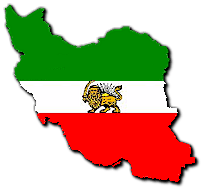
IMPERIAL EMBLEM

IMPERIAL EMBLEM
PERSIA

Shahanshah Aryameher

S U N OF P E R S I A

Iranian Freedom Fighters UNITE

Showing posts with label Kurdistan. Show all posts

Monday, May 05, 2008

Shot and Injured Kurdish-Iranian left to die by the Pasdarans in the road side.

کشته شدن هموطن کرد بدست ماموران رژيم

You can clearly see and here (as they talk in Farsi) that this poor young man is still alive and moving — nevertheless the Iranian Pasdars cover his head with plastic — to chock him, so that he may die quickly and then rap him up in rags — notice that he is still moving — but they do not attend to his injuries and leave him to die by the road side.


Saturday, April 19, 2008

CRIMES OF THE FASCIST ISLAMIC BLOODY MURDERING REPUBLIC OF QOM -

بریدن سر یک جوان در سقز -
هفته پیش گروههای اسلامی تندرو در شهر سقز سر جوانی به نام شورش سلیمی فر را به اتهام کفر وارتداد بریدند. سردسته این گروه جهادی-سلفی ملا محمد یکشوه میباشد که علنا در شهرهای بوکان وسقز فعالیت میکند.گفتنیست فرد قاتل خود را به نیروهای انتظامی تسلیم کرده و به انجام حکم شرعی مباهات مینماید.
رژيمي که وجود و استمرارش بر ايجاد بحران و خفقات و ارعاب و دروغ و نيرنگ موکول است . رزيمي که در جريان جنگ 8 ساله ايران و عراق جوانان ساده دل بسيجي را مي فريفت و آنان را گروه گروه بر روي ميادين مين مي فرستاد و اکنون هزاران داوطلب انتحاري را جهت کشته شدن و کشتن مردم بيگناه در اختيار دارد . رژيمي که به آتش کشيدن سينما رکس آبادان و جزغاله کردن چند صد تماشاچي رادر پرونده خود دارد. رژيمي که ازسنگسار زنان و بدارکشيدن نوجوانان و دست وپا بريدن مخالفان ابايي ندارد. رژيمي که بيت المال ايرانيان را در اختيار باندهاي تروريست لبنان و فلسطين قرار مي دهدآيا از منفجر کردن حسينيه اي در شيراز رويگردان است ? آيا هدف او از اين جنايت اين نيست که به جهانيان بقبولاند که در ترورهاي عراق و لبنان و...نه تنها دست ندارد بلکه خود قرباني تروريسم است ? آيا نارضايتي مردم از سياستهاي اقتصادي و عدم شرکت آنان در نمايش انتخابات باعث نشده است که رژيم با ايجاد انفجار در شيراز مردم را بفريبد و عليه دشمنان موهوم به خيابانها بکشد? باور کنيد از اين دم بريده ها هر کاري بر مي آيد
در خصوص انفجار حسينيه وصال شيراز دوستي از محل حادثه بصورت تلفني اين آمار را ارائه داد(خود دسترسي به اينترنت ندارند):بين 30 تا 40 نفر فقط به سقف حسينيه پرس شده بودند روي هم رفته بين 100 تا 150 نفر درجا هلاك شده بودند حالا جان باختگان بعدي بماند آنگاه رژيم گزارش ميدهد كه حداكثر 12 نفر از وحوش هلاك شده اند!
این دو خبر موثق هست : قطعات نظامی، بويژه رادارها و جنگ افزار مربوط به نيروی هوايی ارتش که رژيم از روسيه خريداری نموده، همگی خراب، دست دوم و خارج از رده هستند و تمامی آنها برای تعمير و بازسازی احتمالی در پادگانهای نيروی هوايی انبار شده اند . اين خبر از يک درجه دار و تکنسين نيروی هوايی ارتش در ايران است.
پيام بعدی :چند روز پيش چهار سرباز و درجه دار ارتش در مرز ايران و افغانستان در يک درگيری جان خود را از دست دادند و جنازه آنان به مشهد منتقل شد. کارکنان ارتش به خانواده آنها تلفن کردند و گفتند که پسر شما اسلحه اش را گم کرده و هم اکنون در بازداشت بسر می برد، برای تعيين تکليف به مشهد بيائيد. خانواده ها که به مشهد رسيدند، بدون هيچ مقدمه ای جنازه ها را به آنان تحويل دادند و گفتند به سلامت.آنها مجبور شدند بدون کمک ارتش، برای کفن و دفن در هوای گرم با آمبولانس جسد عزيزانشان را به شهرهای دوردست ايران ببرند.

Tuesday, April 01, 2008

Nu Rooz Tragedy 2008 - Turkish Nazis

The most important festival in Kurdish tradition is Newroz. Newroz means 'New Sun' and 'New Day' and is celebrated during the spring equinox on March 21st. There are many explanations for the origins of Newroz with records of the spring festival found as early as 3000BC. The festival symbolises the triumph of light over darkness, the celebration of new life and freedom from oppression.The Kurds in Wan, Hakkari and Siirt were not allowed to celebrate their Newroz at the weekend. Kurds in those cities started to celebrate Newroz and they were harshly attacked by the Turkish security forces.During the celebrations in Wan and Yüksekova, two of the Kurdish activists were shot dead by the Turkish police forces.


Newroz Tragedy 2008
Video sent by NewsVideoArchive


Saturday, February 23, 2008

WOMEN

Women In Art


Women In Films


DOC-DEBUT: Relocated Mountains
In this touching documentary, Kurdish refugee Sirwan Namo travels across the world from New Zealand to Iraq in order to reconnect with the family he was forced to leave in 1982. When Sirwan was just a boy his family fled from Iraq during the Kurdish genocide of Saddam Hussein's regime, and he and his family eventually found a new home in New Zealand as political refugees. Now, in the face of escalating violence, Sirwan risks his life to retrace his journey to freedom and to fulfill his promise to be reunited with his dying grandmother.Relocated Mountains takes the viewer on a personal journey through the Middle East and into Iraq, offering a rare opportunity to witness the reality of life in and around the war-zone, while giving insight into the Kurds, a people who have lived through one of the most devastating dictatorships in modern history.
Premieres Sunday, February 24th at 8PM Pacific/11PM Eastern!More Information and Broadcast Times

Thursday, January 03, 2008

Iran is continuing to supply weapons and personnel to train insurgents in Iraq.

In December, the Pentagon issued a report to Congress titled "Measuring Stability and Security in Iraq" stating that Iran is continuing to supply weapons and personnel to train insurgents in Iraq. But now a top U.S. commander in Iraq told The Washington Times that "Iran no longer aids Iraq militants". What is going on? What has changed?
January 3, 2008 : By
Sara A. Carter reports that " Iran's leaders are no longer supplying weapons or training to Islamic militants in Iraq ", according to the spokesman for the top U.S. commander in Iraq who told The Washington Times. that Gen. David H. Petraeus, commander of U.S. forces in Iraq, sees Iran as following through on assurances it made to Iraqi and U.S. officials last fall not to assist extremists in Iraq, spokesman Col. Steven Boylan said, adding that other U.S. officials have noted declines in Iranian weapons and funds to Iraqi insurgents. "We are ready to confirm the excellence of the senior Iranian leadership in their pledge to stop the funding, training, equipment and resourcing of the militia special groups," Col. Boylan said. "We have seen a downward trend in the signature-type attacks using weapons provided by Iran."
In October, U.S. military officials began noticing a decrease in the supply of Iranian weapons and assistance, Col. Boylan added. The disclosure comes just weeks after a National Intelligence Estimate pruned back its assessment of Iran's nuclear program, saying "with high confidence" that the Islamic republic had halted its nuclear weapons program in 2003 in the wake of the U.S.-led invasion of Iraq. Tehran's aid for Islamic militias in Iraq and its nuclear program have resulted in calls from some in Washington for military action against Iran, and these two developments are likely to dampen such calls. Some outside analysts have argued, though, that Iran-based aid may be getting to Iraqi insurgents without the approval of the government in Tehran. But the colonel cautioned that while Iran's efforts are promising, U.S. military officials remain wary, partly over some contrary events on the ground in Iraq. For example, he disclosed that U.S. troops "recently captured individuals who have been in Iran, training, as short as 45-60 days ago." He did not elaborate on the circumstances surrounding the captured individuals or the possible investigation. "We are very much in the wait-and-see mode to see what happens," Col. Boylan said. In July, four terrorists linked to an Iranian smuggling operation — responsible for targeting coalition forces with powerful bombs — were captured in Iraq. The confirmation of Iran's cooperation also comes at a time when U.S. military officials have confirmed a 60 percent decrease in violence, including improvised explosive device attacks and civilian deaths in Iraq. Last year, U.S. military officials publicly released evidence of links between Iran and insurgents, including weapons, such as improvised explosive devices and mortars, that bore the markings of Iran's Revolutionary Guard. The smuggling of deadly explosively formed projectiles (EFPs) — warhead-style weapons that can pierce armor and that have caused the most casualties and damage to U.S. forces — also was traced back to Iran. In December, the Pentagon issued a report to Congress titled "Measuring Stability and Security in Iraq" stating that Iran is continuing to supply weapons and personnel to train insurgents in Iraq. It suggested that the recent declines in violence aren't the result of Iran's claims that it has squelched involvement in Iraq but to other factors, such as the troop surge. "There has been no identified decrease in Iranian training and funding of illegal Shi'a militias in Iraq," the report stated. "Tehran's support for Shi'a militant groups who attack Coalition and Iraq forces remains a significant impediment to progress toward stabilization." Army Lt. Col. Mark Ballesteros, a Pentagon spokesman, said the words from Gen. Petraeus' office on Iran's cutting aid don't contradict the Department of Defense Iraq report, because it was based on information obtained prior to the end of the November deadline. "The report we issued to Congress is meant to be retrospective in nature," Col. Ballesteros said. "It is meant to cover the last 90 days of data and provides a snapshot of that period on the ground." Col. Boylan stated that despite Iran's current cooperation, Islamic radicals and terrorist groups still pose a serious danger to stability in the region.

Rice and Gates Divided over Iran's Role in Iraq : Analysis by Gareth Porter*
WASHINGTON, Jan 2 (IPS) - A State Department official's assertion in late December that Iran had exerted a restraining influence on Iraqi Shiite militia violence signaled a major divergence of views between Secretary of State Condoleezza Rice and Secretary of Defence Robert Gates over how to portray Iran's role in Iraq.In an interview with the Washington Post published Dec. 23, David Satterfield, a senior advisor to Rice and coordinator for Iraq, attributed to Iran a deliberate decision to help calm the situation in Iraq rather than to inflame it. Satterfield told the Washington Post that the decline in the number of attacks by Mahdi Army militiamen since August "has to be attributed to an Iranian policy decision" and suggested that the policy decision had been made "at the most senior level". Satterfield did not say that the new Iranian policy line was permanent, but he insisted that there had been such a "consistent and sustained diminution in certain kinds of violence by certain kinds of folks" that it could not be explained solely on the basis of internal factors in Iraq. U.S. Ambassador to Iraq Ryan Crocker also told the Post that "the freeze on JAM [the Iraqi acronym for the Mahdi Army] operations that began four months ago would not exist without Iranian approval". Those positive descriptions of the recent Iranian role in Iraq came just after Defence Secretary Gates had refused to endorse such an assessment. At a press conference on Dec. 21, Gates was asked whether he had "seen any additional or more current information to suggest maybe Iran is playing a more constructive role in trying to seal its border from arms shipments and so on?" He replied, "No, not yet." Significantly, however, Gates also passed up the opportunity to say that Iran was playing a "destabilising role" in Iraq. Instead he said simply that the "jury is out" on the issue. Gates mentioned the success of military operations against the Mahdi Army as well as the "ceasefire that has been put in place" as factors in the decline in attacks and said, "[W]e don't have a good feeling...or any confidence in terms of how to weigh these different things." These differing views on whether Iran has been playing a positive role in Iraq are the first clear evidence of a split between Gates and Rice over how to deal with Iran. Rice's State Department is now leaning toward treating Iran as something other than an outright enemy in regard to Iraq, whereas Gates is not ready to soften the administration's position of casting suspicion on Iranian intentions. Gates was the last administration official to denounce Iran in harsh terms over Iraq, declaring in a speech at a Persian Gulf security conference in Bahrain Dec. 8, "Everywhere you turn, it is the policy of Iran to foment instability and chaos, no matter the strategic value or cost in the blood of innocents." That rhetoric was almost certainly aimed, however, at avoiding a stampede away from the administration's efforts to pressure Iran on its uranium enrichment programme in the wake of the stunning publication of the national intelligence estimate's conclusion that Iran had abandoned covert nuclear weapons work in 2003.
Gates hinted in comments to reporters when he arrived in Bahrain that he was much less certain of the Iranian intention than his rhetoric at the conference would have suggested. He mentioned the call by Shiite Mahdi Army leader Muqtada al-Sadr for a ceasefire as a key factor in the improved security in the Baghdad area, along with the reduction in attacks by armour-piercing rounds which had long been blamed on Iran. Gates appeared to suggest that he did not rule out an Iranian contribution to the improvement, saying it was "too early to tell" whether the reduction in militia attacks since August was due to successful military efforts to disrupt Mahdi Army networks or "what the Iranians may or may not be doing". The State Department's decision to acknowledge that Iran has contributed to the reduction in violence in Iraq has no doubt been influenced by Iranian political figures and officials who work closely with the U.S. Embassy to oppose the Mahdi Army and who have been insisting for months that Iran was helping to restrain Sadr. Iraqi Islamic Council Chairman Abdul-Aziz al-Hakim, whose party is the key Shiite political ally in the U.S. effort to weaken the Madhi Army, met with Rice Nov. 30 and told her that Iran plays a positive role in establishing security in Iraq, according to the Tehran Times. Al-Hakim was quoted as saying, "There are documents proving that Iran has supported Iraq." Iraqi Foreign Minister Hoshyar Zebari, who had argued both publicly and privately last fall that Iran was behind Sadr's Aug. 29 ceasefire, met with Rice two days before the Satterfield and Crocker interviews. The implication of the advice of the anti-Sadr, pro-Iranian Iraqis is that the United States can use Iran to further weaken Sadr and the Madhi Army. The State Department strategy recognises that the Madhi Army, which poses the main threat to the George W. Bush administration's plan to maintain an indefinite U.S. military presence in the country, is too strong to be suppressed by U.S. or Iraqi military forces. And it would seek an end to the accusations against Iran regarding Iraqi Shiite militias that have been issued regularly by U.S. civilian and military officials throughout 2007. Crocker told the Post he was prepared to make the inference of a helpful Iranian role in the reduction of operations by the Shiite militias when he meets with Iran in the next round of talks. The Defence Department's view of Iranian policy is influenced primarily by the perspective of the U.S. military command in Baghdad. Gen. David Petraeus also recognises that there must be a political strategy to weaken Sadr's forces. However, he and his staff have been focusing more on the fact that the Madhi Army is continuing to attack U.S. and Iraqi security forces in the Shiite provinces of Qadisiyah, Babil and Dhi Qar, as stated in the latest Pentagon report. The military command continues to insists that the "Shi'a extremists and rogue elements" of the Mahdi Army are "Iranian-backed". That analysis clearly implies that the United States should not back away from the accusations of Iranian export of weapons to and manipulation of Shiite militias that the U.S. command has been making for nearly a year. Given President Bush's penchant for letting agencies with conflicting policies work things out themselves rather than impose a policy decision, the State and Defence Departments may continue to carry out their own policy lines on the subject of Iran's role in Iraq until a new development resolves the differences. That will introduce another layer of contradictions into an extraordinarily murky policy toward the Iran-Iraq complex of issues. *Gareth Porter is an investigative historian and journalist specialising in U.S. national security policy. His latest book, "Perils of Dominance: Imbalance of Power and the Road to War in Vietnam", was published in June 2005.

AND HERE COMES THE DENIAL ....

Petraeus Aide Denies Report That Iran Is Not Aiding Iraq Militants
January 03, 2008 Fox News foxnews.com
A spokesman for Gen. David Petraeus, commander of the Multi-National Force in Iraq, denied a story published Thursday in the Washington Times that said Petraeus believed Iran no longer was training or supplying weapons to Islamic militants in Iraq. Col. Steven Boylan told FOX News that the article, purported to include quotes from Petraeus and Boylan, "is inaccurate." "We do not know if there has been a decrease in the supply of Iranian weapons," Boylan wrote to news outlets that picked up the Washington Times story. "It is not clear if Iran's leaders stopped supplying weapons or training to extremist elements in Iraq. We hope that they have, but until we can confirm it, we are in the wait and see mode. "We have seen a decrease in the attacks using four specific types of Iranian weapons. However, this should not be misunderstood as anything other than lowered levels of attacks using these specific weapons," he wrote. The Times story included what it said was a quote from Boylan, saying, "We are ready to confirm the excellence of the senior Iranian leadership in their pledge to stop the funding, training, equipment and resourcing of the militia special groups. "We have seen a downward trend in the signature-type attacks using weapons provided by Iran." Click here to view the full report in The Washington Times. Several weeks ago the National Intelligence Estimate said that Iran had halted its nuclear weapons program in 2003 after the U.S.-led invasion of Iraq.

Friday, November 09, 2007

Ocalan: Israel supports the Kurds to fight Iran

In Sabah Turkish newspaper, there is an interview with Osman Ocalan [brother of PKK leader Ocalan, recently lives in Suleimaniya - North Iraq], he revealed very interesting information: Israel and the US support the PJAK organization, which is the PKK wing in Iran under the cover of American aid to northern Iraq. Israel fears the Shiites - Kurdish alliance, and shows its worries about the Kurdish relations with Iran. The US and Israel want turkey to push the PKK forces to operate more in Iran, they are trying to start a Kurd-Iranian war.PJAK was founded in September 2003, they have been fighting against Iran for 1 year, during the last 3 years, fighters recruitments from Iran has increased significantly. Generally %40 of PKK was Kurdish originate and %20 from Syria and %30 from Iran, but for last 3 years the organization is rapidly becoming Iranian due to high participation.

Turkey To Ease Curbs On Free Speech
EU criticized the law as too strongby UPI NewsTrackANKARA, TURKEY -- (UPI and OfficialWire) -- 11/09/07 --

The Turkish government says it will change a controversial law used to prosecute anyone who denigrates Turkish identity. Article 301 of Turkey's penal code has been a stumbling bloc to the country's efforts to join the European Union, the New Anatolian newspaper said Thursday. Intellectuals and writers, such as Nobel Prize-winning author Orhan Pamuk, have been prosecuted under the law. The government's announcement of the change came hours after the EU criticized the law as too strong a curb on free speech. "It is not acceptable that writers, journalists, academics and other intellectuals ... are prosecuted for simply expressing a critical but completely nonviolent opinion," EU Enlargement Commissioner Olli Rehn said. "The infamous Article 301 must be repealed or amended without delay."

Thursday, November 08, 2007

Iran kills three Kurdish militias in western province

www.chinaview.cn 2007-11-08 16:59:10

TEHRAN, Nov. 8 (Xinhua) -- Iranian military forces have killed three "foreign" Kurdish separatists during a battle in the western province of Kordestan, the state media reported Thursday. "The three people are nationals of a neighboring country, and are members of the Party of Free Life of Kurdistan (PJAK) terrorist group, they were killed in Kamyaran county (500 km southwest of the capital, Tehran)," said the report. The report didn't mention the specific time and other details of the battle. Iran's West Azarbaijan, Kordestan and Kermanshah provinces border Iraq and have substantial Kurdish populations. The Kurdish PJAK militant group was linked to the outlawed Kurdish Workers' Party (PKK) which was fighting with the Turkey, and had launched a string of deadly attacks against Iranian security forces in northwestern Iran in the past months. In last February and August, 20 Iranian military personnel, including some Revolutionary Guards commanders, were killed in two helicopter crashes during operations against the guerillas. Tehran has described the rebels as "mercenary elements", and has repeatedly accused the U.S. and Britain of trying to make convulsions in the country's bordering areas with Turkey, Iraq, Pakistan and Afghanistan.

Tuesday, October 23, 2007

Second Kurdish Conflict Boils on Iran Border

October 23, 2007 New York Times Richard A. Oppel Jr.
BAGHDAD -- Deadly raids into Turkey by Kurdish militants holed up in northern Iraq are the focus of urgent diplomacy, with Turkey threatening invasion of Iraq and the United States begging for restraint while expressing solidarity with Turkish anger. Yet out of the public eye, a chillingly similar battle has been under way on the Iraqi border with Iran. Kurdish guerrillas ambush and kill Iranian forces and retreat to their hideouts in Iraq. The U.S. offers Iran little sympathy -- Tehran even says Washington aids the Iranian guerrillas, a charge the U.S. denies. True or not, that conflict, like the Turkish one, has explosive potential. On a recent trip to the Iran-Iraq border, Salih Shevger, an Iranian Kurdish guerrilla, and his comrades recounted how they ambushed an Iranian patrol a few days before, killing three soldiers and capturing another. "They were sitting and talking on top of a hill, and we approached, hiding ourselves, and fired on them from two sides," said Bayram Gabar, who commanded the raid. The guerrillas from the Party for Free Life in Kurdistan, or PJAK, have been waging a deadly insurgency in Iran; they are an offshoot of the Kurdistan Workers' Party, called the PKK, the Kurdish guerrillas who fight Turkey. While the U.S. calls the PKK terrorists, guerrilla commanders say PJAK has had "direct or indirect discussions" with U.S. officials. A bodyguard for Biryar Gabar, one of 11 members of the group's leadership, said officials of the group met with Americans in Kirkuk last year. Iranian officials have accused the U.S. of supplying the fighters and using them in a proxy war, but the "consensus is that U.S. forces are not working with or advising the PJAK," said a U.S. military spokesman in Baghdad, Cmdr. Scott Rye of the Navy. Because the PKK is on the State Department's list of terrorist organizations and aiding such groups is illegal, the U.S. is eager to avoid any hint of cooperation with the PJAK. Guerrilla leaders said the U.S. classifies the PKK as a terrorist group because it is fighting Turkey, an important U.S. ally, while the PJAK is not labeled as such because it is fighting Iran. In fact, the two groups appear to a large extent to be one and the same, and share the same goal: fighting campaigns to win new autonomy and rights for Kurds in Iran and Turkey. They share leadership, logistics and allegiance to Abdullah Ocalan, the PKK leader imprisoned in Turkey. The leader of the PKK, Murat Karayilan, said the PJAK fighters had killed at least 150 Iranian soldiers and officials in Iran since August.

EU Voices Concern Over Human Rights Situation in Iran
October 23, 2007 Kuwait News Agency KUNA

The European Union expressed Tuesday deep concern at what is said was "growing repression against all groups which exercise their right to freely express their opinions, and at the escalation of restrictions on freedom of the press and freedom of expression in the Islamic Republic of Iran." Observers were quick to point out that the strong EU broadside against Iran signals a deterioration in ties between Brussels and Tehran. It comes the same day when EU foreign policy chief is set to hold talks with Iranian negotiators on Iran's nuclear programme in Rome. The EU Presidency statement said it "condemns the closure of newspapers, magazines and of the Iranian Labour News Agency, as well as the arrest and persecution of journalists, web bloggers, and Human Rights Defenders for exercising their right to freedom of expression." The EU urged Iran to comply with its international human rights commitments and called on the Iranian authorities to review the announced restrictions for the next Majlis election campaign in order to ensure free and democratic elections.

Thursday, October 18, 2007

Prince Reza pahlavi's role in Iran's future and his support for Democracy in Iran- 071014-10-2007 - TishkTV

Watch these videos : They are important.

Interview with Ms. Boghraat


Today, George Bush invoked the idea of World War III in connection with Iran...after the Russian leader Vladimir Putin declared Iran has no nuclear weapons program.Three Videos: http://www.brasschecktv.com/page/171.html
1st - 4 Minutes and 10 Seconds
2nd - 8 Minutes and 22 Seconds
3rd - 4 Minutes and 59 Seconds

Bush: Threat of World War III if Iran Goes Nuclear : October 17, 2007 : Reuters : Matt Spetalnick

WASHINGTON -- U.S. President George W. Bush warned on Wednesday a nuclear-armed Iran could lead to World War III as he tried to shore up international opposition to Tehran amid Russian skepticism over its nuclear ambitions. Bush was speaking a day after Russian President Vladimir Putin, who has resisted Western pressure to toughen his stance over Iran's nuclear program, made clear on a visit to Tehran that Russia would not accept any military action against Iran. At a White House news conference, Bush expressed hope Putin would brief him on his talks in Tehran and said he would ask him to clarify recent remarks on Iran's nuclear activities. Putin said last week that Russia, which is building Iran's first atomic power plant, would "proceed from the position" that Tehran had no plans to develop nuclear weapons but he shared international concerns that its nuclear programs "should be as transparent as possible." "The thing I'm interested in is whether or not he continues to harbor the same concerns that I do," Bush said. "When we were in Australia (in September), he reconfirmed to me that he recognizes it's not in the world's interest for Iran to have the capacity to make a nuclear weapon." Bush, who has insisted he wants a diplomatic solution to the Iranian issue, is pushing for a third round of U.N. sanctions against Iran.Russia, a veto-holding member of the Security Council, backed two sets of limited U.N. sanctions against Iran but has resisted any tough new measures. Stepping up his rhetoric, Bush said a nuclear-armed Iran would pose a "dangerous threat to world peace." "We've got a leader in Iran who has announced that he wants to destroy Israel," he said. "So I've told people that, if you're interested in avoiding World War III, it seems like you ought to be interested in preventing them from having the knowledge necessary to make a nuclear weapon."

Sunday, October 14, 2007

Kurdish rebel group kills policeman in north-western Iran

Tehran - Elements of an Iranian Kurdish rebel group killed a police officer in the province of Kurdistan in north-western Iran, ISNA news agency reported Sunday. ISNA said that members of the Party for Freedom and Life in Kurdistan (PJAK), which is linked to the Kurdistan Workers Party (PKK), has claimed responsibility for Friday's killing of an Iranian police officer and wounding another. The PJAK sabotage activities in Iran have prompted Iranian troops to infiltrate northern Iraqi soil to attack the group's bases. The incidents also triggered a temporary closure of the borders sparking a political crisis.

Wednesday, September 12, 2007

Iran's War on the Kurds : The New York Post Amir Taheri

For the last year at least, the Islamic Revolutionary Guard Corps, the back bone of the Islamic Republic in Iran, has been engaged in a bloody war against Kurdish rebels in four provinces bordering Iraq. Initially, the authorities in Tehran tried to keep the war a secret, referring to it only occasionally as "operations against evildoers." However, things changed last February when "evildoers" destroyed a Revolutionary Guard combat helicopter, killing nine officers - including the regional military commander, Gen. Saeed Qahhari. The incident took place in a western Azerbaijan province - where Kurds, though present in big numbers, form only a minority. The Guard retaliated with a series of attacks against alleged Kurdish rebel positions in the mountainous area around the border town of Salmas, killing 17 "Kurdish evildoers," including their local commander, a naturalized German citizen of Turkish-Kurdish origin, code-named Doctor Meraat. Since then, the Guard has issued cryptic reports about dozens of other "engagements" in which scores of policemen, border patrols and Guard members have been killed or wounded while killing at least 100 Kurdish insurgents. Recently, a group of alleged insurgents ambushed a police van near Kermanshah, a provincial capital close to the Iraqi border, and killed seven police officers. What is known in Tehran as "the Kurdish threat" clearly represents a key security concern of the Islamic Republic's leaders as they prepare for a broader regional war. To curb the insurgency, the Guard has set up a special command center at the Hamza Base, near the Iraqi border, and committed one full division plus a unit of airborne Special Forces. The Guard claims that the rebels are based in Iraqi Kurdistan. Yet all the fighting reported until earlier this month has taken place well inside Iranian territory, often in areas with a non-Kurdish majority. In June, the Guard started shelling Iraqi Kurdish villages - killing an unknown number of Kurds, both Iraqis and Iranians who had sought refuge in Iraq. Despite protests by the Iraqi government, including one delivered face-to-face by Prime Minister Nouri al-Maliki in his meeting with Iranian "Supreme Guide" Ali Khamenei in Tehran earlier this summer, the Guard has continued its attacks on Iraqi villages. The shelling has forced thousands of villagers, both Iranian and Iraqi Kurds, to abandon their homes for towns deeper inside Iraq. The areas most affected by the fighting are within the strongholds of Iraqi Kurdish leaders Massoud Barzani and Jalal Talabani. Each has a history of close ties with Iran going back four decades - but because both allied themselves with the United States in toppling Saddam Hussein in 2003, Tehran suspects them of trying to foment a Kurdish insurgency in Iran as part of a bigger "American plot" to destabilize the Islamic Republic. Yet the three Kurdish groups involved in the anti-Khomeinist insurgency can hardly be regarded as vassals of either Iraqi Kurdish chief. The group most active in the recent fighting is a new outfit, the Kurdistan Free Life Party, better known by its Kurdish acronym, PJAK. Judging by its literature, PJAK is an offshoot of the Kurdistan Workers Party (PKK) a guerrilla movement of Turkish Kurds that has been fighting for a Kurdish state in eastern Anatolia since the 1970s. Ironically, Tehran has given the PKK shelter and support against Turkey for years, as a means of bleeding NATO's lone regional member. Some claim that Ankara may have decided to repay Tehran in its own currency by creating PJAK. Others, however, regard PJAK as an effort by PKK to expand its constituency beyond Turkey. Certainly, however, most of PJAK's leaders are not Iranian Kurds. Some key party figures are Turkish Kurds who have lived in exile in Germany for at least a quarter-century. Moreover, PJAK has been operating in areas in Iran that are close to PKK strongholds in Turkey and Iraq - another indication that the two parties may well be one with two names. The areas where PJAK is active in Iran are home to substantial numbers of ethnic Kurds. But the majority in most areas consists of Turkic-speaking Azeris. In the Kurdish heartland of Iran - the two provinces of Kurdistan and Kermanshahan, where ethnic Kurds are in majority - PJAK appears to have little support. There, the Kurdistan Democratic Party (PDK) enjoys the largest support, followed by Komalah, a formerly communist outfit that claims to have converted to democracy after the fall of the Soviet empire. The PDK, a self-styled social-democratic group, has campaigned for greater autonomy for Iranian Kurds since the 1940s. After the mullahs seized power in 1979, it helped the regime in the hope of obtaining concessions. The mullahs, however, banned it and organized the assassination of two successive generations of its leaders in exile in Vienna and Berlin in 1989 and 2002. The group has since joined Iranian opposition groups that call for the overthrow of the Islamic Republic, but has not preached armed uprising as a means of achieving that goal. Komalah, however, has waged a guerrilla war against the Islamic Republic for 25 years, paying a high price in human terms. The Tehran rumor mill claims that the replacement of the senior Guard leaders, including its commander, is a sign that the "Supreme Guide" is unhappy about the spreading Kurdish insurgency along the Iraqi border. As always in the Islamic Republic, however, Tehran's claims of a U.S.-hatched plot to incite the Kurds against the mullahs should be taken with a pinch of salt. The Tehran leadership may be using the claim to justify building a string of fortifications along the border with Iraq in anticipation of conflict with the United States. If attacked, Iran could then retaliate by entering Iraq from the three Kurdish provinces most loyal to Washington and regarded as the only "safe haven" for U.S. forces there, while inciting the Iraqi Shiites to rise in revolt in the central and southern provinces. Talk of a Kurdish insurgency also helps Tehran impose what amounts to a state of emergency in parts of the four provinces with large Kurdish populations. This has enabled the authorities to arrest hundreds of opponents - including trade unionists, student leaders, journalists, lawyers and Sunni Muslim clerics - without bothering about legal formalities. At least 20 opposition leaders have been executed since last March, often in circumstances that resemble political assassinations rather than judicial killings. There's no doubt that the areas where Iran's estimated 4.5 million ethnic Kurds live are in turmoil, posing a challenge to the regime's leadership. The challenge, however, comes from political dissidents, especially working-class activists, not guerrillas operating from bases in Iraq.

Tuesday, September 11, 2007

Kurds Launch War In Iran : BY DAMIEN MCELROY

http://www.nysun.com/article/62270

Kurdish guerrillas have launched a clandestine war in northwestern Iran, ambushing troops as they seek Western backing to secure an ethnic homeland. In retaliation, the Iranian army has carried out a series of counterattacks in the mountains, which span the border with Iraq.Murat Karayilan, a Kurdish guerrilla commander, told the Daily Telegraph that Tehran had originally tried to recruit the outlawed groups to fight coalition troops in Iraq.
"The U.S. and Britain came to Iraq to establish a democratic system, but this scared the Iranians, so they negotiated with us and offered many things to attack the coalition," he said under a canopy of trees near his headquarters on Iraqi territory in the Qandil Mountains. Iranian newspapers have reported the deaths of seven soldiers in recent clashes with Kurdish guerrillas. Last month, the rebels claimed responsibility for shooting down an Iranian helicopter.
A loose alliance of guerrillas, styling itself the Kurdistan Democratic Federation, is fighting for an independent state which would cover the Kurdish-majority areas of Turkey, Iran, Iraq, and Syria. Mr. Karayilan, who is from the PKK guerrilla group, said Iran and Turkey were acting in tandem to repress their Kurdish regions. But, he added, the Kurds have been inspired by the autonomous Kurdish region in northern Iraq, which has been relatively secure since Saddam Hussein's downfall in 2003. "The regional government in Iraqi Kurdistan has increased the national feeling of Kurds everywhere," he said. Iran believes that the U.S. and Britain are now arming and training the Kurdish guerrillas to strike its territory from bases inside Iraq. Ali Larijani, secretary of Iran's Supreme National Security Council, accused America of supporting terrorism inside the Islamic Republic. "America wants to carry out actions such as blowing up the country's oil pipelines by supporting bandits and small groups of Kurdish rebels," he told the Iranian press.

Kurdish Guerillas Launch Clandestine War In Iran The Telegraph (UK) ^ by Damien McElroy in the Qandil mountainsLast Updated: 1:54am BST 10/09/2007

Mr Karayilan, who is from the PKK guerilla group, said that Iran and Turkey were acting in tandem to repress their Kurdish regions. But, he added, the Kurds have been inspired by the autonomous Kurdish region in northern Iraq, which has been relatively secure since Saddam Hussein's downfall in 2003. "The regional government in Iraqi Kurdistan has increased the national feeling of Kurds everywhere," he said. Iran believes that the US and Britain are now arming and training the Kurdish guerrillas to strike its territory from bases inside Iraq.
Ali Larijani, secretary of Iran's Supreme National Security Council, accused the US of supporting terrorism inside the Islamic Republic. "America wants to carry out actions such as blowing up the country's oil pipelines by supporting bandits and small groups of Kurdish rebels," he told the Iranian press. In the Qandil mountains, signs of a conflict gathering momentum are easily found. US army helicopters are reportedly used to shuttle officers to regular meetings with Kurdish fighters. There is a landing pad complete with spotlights near Mr Karayilan's headquarters, while four-wheel-drive vehicles belonging to a US private security contractor, are easily seen. PKK officials say privately that its fighters have left in recent months to join cells inside Iran. But Mr Karayilan, an apparently jovial figure who delights in the literal translation of his surname, Black Snake, suggests that the US has so far done too little for the Kurds. "We are defending the developments in the region since 2003," he said. "In this we are ready to be on the right side and have the benefits of that. "So far we keep our stance apart because American and Britain are not doing enough to help us." Meanwhile, artillery shells are reportedly fired into this region almost every day and families have been forced to abandon summer farmsteads. "Every day it gets worse," said Abdullah Hamid, 52. "I have crops still in the ground but I can't take it any more." Iran has denied responsibility for the shelling. Yet Abdulwahid Gwany, the mayor of nearby Chomin, recalls a telling encounter with his counterpart on the other side of the border. "I was showing him some photos on my desk when he saw one of Tony Blair with our Kurdish president. He was so startled he left immediately."

Iran Air Force plane crashes, no casualties
An Iranian military airplane crashed in northeastern Iran, but the pilot ejected from the crash and was unharmed, the state news agency reported on Tuesday. The crash occured on Monday near Mashhad, 1,000 kilometers (600 miles) northeast of Tehran, the Islamic Republic News Agency said. The pilot ejected and there were no casualties from the crash. A spokesman for the Mashhad Fighters' Base, Gholam Reza Zinatbakhsh, blamed the crash on technical failures. "The case is under investigations," Zinatbakhsh told IRNA. The report did not specify the type of the plane. Iran's air force has American-made jet fighters dating back to before the 1979 Islamic revolution that toppled the shah, a close U.S. ally. It also has more recent Russian-made fighters.

Ay-Melate-Hagh-Nashenas The Ungreatfull Nation

Monday, September 10, 2007

WHAT A BLOODY CHEEK !

Iranian Raises Possibility of an Intrusion Into Iraq : By JAMES GLANZ
BAGHDAD, Sept. 9 — In a sharp escalation of a dispute over border fighting, an official Iranian delegation at a diplomatic conference here warned Sunday that if the Iraqi government could not stop militants from crossing into Iran and carrying out attacks, the Iranian authorities would respond militarily. The Iranian delegation, led by a deputy foreign minister, Mohammad R. Baqiri, also charged that the United States was supporting groups believed to be mounting attacks from Iraqi territory in the Kurdish north.

Mr. Baqiri did not specifically say that Iran would enter Iraq militarily, but his statements, couched in diplomatic terms, raised the clear possibility that Iranian forces could cross the border in pursuit of the militants. But however carefully phrased his statements, many of those distinctions are likely to be lost on hundreds of families on the Iraqi side who have been driven from their villages by weeks of intermittent shelling from Iran. Hundreds of Kurds demonstrated Sunday against the shelling in the northern provincial capital of Erbil. They gathered outside the Kurdish Parliament building and asked that the northern government and the United Nations intervene. Senior Iranian officials have privately acknowledged to their Iraqi counterparts that the shelling is taking place in response to guerrilla attacks by a group opposed to the Iranian government that has bases on the Iraqi side of the border. At the conference on Sunday, at the Iraqi Foreign Ministry, Mr. Baqiri did not directly address the shelling, but he told officials from 16 nations, the Arab League, the Islamic Conference and the United Nations that it was time for Iraq to take action. “Supporting military and political actions by terrorist elements in Iraq against neighboring countries is considered dangerous behavior that we cannot tolerate, and a major factor in the chaotic security situation and instability in the region,” Mr. Baqiri told the assembled delegates, according to an Arabic translation of his remarks, which were made in Persian. “We are waiting for the Iraqi government to do what it takes to resolve this issue.” Later, asked at a briefing about the shelling, Mr. Baqiri said that in dealing with “terrorists who want to enter Iranian soil,” the Iranian government “will confront them and stop them.” “We have a long history in standing against terrorist groups,” Mr. Baqiri said. “We have made many sacrifices because of this, and we know how to confront these groups.”Mr. Baqiri’s comments are likely to raise tensions against the bloody backdrop of the Iran-Iraq war, which lasted throughout much of the 1980s and began with a border dispute in the south. Perhaps by design, his words seemed especially jarring because they were delivered during a conference organized to promote harmony in the region. That conference was organized by the Iraqi Foreign Ministry, led by Hoshyar Zebari, a Kurd who fought Saddam Hussein’s government as a guerrilla commander, often operating essentially as an ally of Iran.
But in a diplomatic meeting in Tehran last week, Mr. Zebari called the shelling indiscriminate and far out of proportion to the threat to Iran. On Sunday, Mr. Zebari acknowledged that the cross-border attacks were taking place, but described them as infrequent and more of a nuisance than a real threat. Still, Mr. Zebari agreed that it fell to the Iraqi government to rein in the groups. “But at the same time we want this shelling to stop or end because it’s causing a great deal of unease, and we don’t want to see the atmosphere of confidence to be compromised by these continuing acts,” Mr. Zebari said. The group that has claimed responsibility for the attacks, called Pezak or Pejak for its acronym, is believed to be made up mainly of Iranian Kurds seeking autonomy for Kurds in Iran. Asked specifically about that group, Mr. Baqiri stated publicly what Iranian officials have been claiming privately for months: that the United States supports the group. This support, Mr. Baqiri said, amounted to a “double standard” in American policy, given that the United States has repeatedly accused Iran of exporting deadly roadside bombs to Iraq and supporting armed groups here. Those weapons and support, American officials believe, have led directly to the deaths of American and Iraqi troops and other security forces. Told late Sunday of Mr. Baqiri’s accusations, a Pentagon spokesman, Lt. Col. Jonathan Withington, said, “I am not aware of any support being provided” to Pejak. While Mr. Baqiri’s comments appeared to be a direct response to the criticisms leveled by Mr. Zebari in Tehran, their precise timing was unlikely to be coincidental, occurring as they did the day before crucial reports on progress in Iraq were to be delivered to Congress by Gen. David H. Petraeus, the top commander in Iraq, and Ryan C. Crocker, the American ambassador to Iraq. Iran bitterly opposes the American presence in Iraq. For all the accusations leveled by the Iraqis and the Iranians, the conference, attended by this reporter at the invitation of the Foreign Ministry, offered an extraordinary glimpse into a regional dynamic that generally takes place behind closed doors. At a gathering in March, Mr. Zebari managed to bring the United States and Iran to the same conference table to discuss issues relating to Iraq. Along with representatives of Syria, Jordan, Saudi Arabia, Kuwait, Bahrain and other nations, the United States and Iran were once again seated at the same table, albeit nearly as far apart as the table’s geometry would allow. And the chill between the two nations was palpable. “The fact is that because of our great love for Iraq, we agreed to come here and sit at one table with our enemies,” Mr. Baqiri said. The American delegation, led by Patricia A. Butenis, the chargé d’affaires here while Mr. Crocker is in Washington, did not respond to that statement. But the overall dynamic in the room became starkly visible when Mr. Zebari proposed creating a “secretariat” to keep track of the Iraq issues being considered at the meetings. When it became apparent that the United States and Britain backed Mr. Zebari’s proposal, Syria, Jordan, Saudi Arabia, Bahrain and others quickly took the floor to shoot the proposal down. The conference ended with the issue unresolved.

Wednesday, September 05, 2007

Seven Iranian Police Killed in Clash with freedom fighters

what is it all about ? listen to this : IN PERSIAN :


September 05, 2007 Reuters: TEHERAN -- Seven Iranian policemen were killed in an overnight clash with freedom fighters ( so called bandits by the mullaha's) in a western province bordering Iraq, the ISNA news agency reported on Wednesday. A passenger in a passing car was also killed in the fighting in Kermanshah province, ISNA said, without saying if any of the freedom fighters had also died. It said police did not give any further details about the clash or the gunmen ( it was most probebly a road side Bomb ) . Kermanshah, which has a large Iranian Kurdish population, lies south of the province of Kurdistan, where clashes with separatist guerrillas occasionally take place. Smugglers of fuel and other contraband operate in the area. Earlier this week, an Iranian news agency said a senior Iranian official had denied allegations that Iran had been shelling Kurdish areas in an area of Iraq bordering northwestern Iran. Iraqi officials accused Iran last month of shelling Kurdish villages in Iraq’s northeast, a move Iraqi Foreign Minister Hoshiyar Zebari said threatened ties with Iran. Cross-border clashes occasionally occur as Iran and Turkey battle Kurdish separatist rebels operating from bases in Iraq’s mountainous northeastern region of Kurdistan.

Saturday, September 01, 2007

Iran reportedly bombs villages in northern Iraq

Strikes allegedly against suspected positions of breakaway Kurdish group

Aug. 13: In a Baghdad Sunni stronghold, GIs turn to former insurgents to help battle al-Qaida in Iraq. NBC's Jane Arraf reports. MARDOW, Iraq - As explosions boomed in the distance, a Kurdish woman stood outside her house and pointed to where shells scorched parts of her father’s grapes and plum orchards. “It was a bad day when some 20 shells hit our village in a single day last week. We were crying as we prayed to God to protect us from the bombs of the Islamic Republic of Iran,” said Serwa Ibrahim, one of the few remaining villagers in Mardow, about 25 miles from the Iranian border. “Despite the shelling, I will stay in my village until the end,” Ibrahim, 33, said Thursday. Iranian troops have been accused of bombing border areas for weeks against suspected positions of the Free Life Party, or PEJAK, a breakaway faction of the separatist Kurdistan Workers’ Party. Iran says PEJAK — which seeks autonomy for Kurds in Iran — launches attacks inside Iran from bases in Iraq. The Iranian shelling has been criticized by Iraqi officials and Foreign Minister Hoshyar Zebari warned it could have negative effects on the crucial relations between Iran and Iraq’s Shiite-led government. Ari Yashir, a PEJAK member, took a reporter in a tour around several deserted villages and claimed the Iranian attacks only serve to harm civilians. “The bombing is only targeting villages where we have no bases,” he said. “After three weeks of Iranian shelling none of our positions was hit and not a single member of our party was wounded.” Most of the people who fled their homes have gathered in an area known as Shewe Hasow, a valley with water springs in the Qandil Mountain area that borders Iran and Turkey. Many of them stay in tents or under covers mostly supplied by the International Committee of the Red Cross. “We are here because the refugees are in need,” said ICRC member Patrick Youssef, standing by a truck with canned food and bottled water. “We are helping them with needed stuff because most of them left their homes leaving their things behind.”
450 families displaced
The Kurdish region’s interior minister, Othman Haji Mahmoud, told the Kurdish regional parliament Tuesday that the Iranian shelling led to the displacement of some 450 families in 20 villages, adding that several people were wounded in addition to material damages. He said the latest wave of shelling began Aug. 14. In Baghdad, Zebari said Tuesday that the main areas struck are in the northern provinces of Irbil and Sulaimaniyah. Iranian shelling “has been ongoing and unfortunately has become a daily or a routine practice. Recently, we summoned the Iranian ambassador and handed him a note of protest.” “PEJAK sometimes moves in border area, but this does not permit all this continuous, daily and intensive shelling,” said Zebari, a Kurd, who noted that Iraq was prepared to hold negotiations with Iran on the disputes over Kurdish rebel groups. “We hope that these attacks will stop immediately.” To some Kurds in the region, they have been living the war for decades, including widespread atrocities blamed on Saddam Hussein’s regime in the 1980s. “We are the victims of a continuous struggle. My house was destroyed five times and I rebuilt it. Let this be the sixth time,” said Abdullah Wasou Ibrahim, who fled to the refugee camp with 10 family members.

Thursday, August 30, 2007

THEY ARE ASKING FOR IT.....

Iran continues shelling northern Iraq : Aug 30, 2007 9:42 PM

Iran has continued to fire shells into northern Iraq despite protests from Baghdad, threatening relations between the two neighbours, Iraqi Foreign Minister Hoshiyar Zebari said. Iraqi Kurdish officials have complained about cross-border shelling since mid-August.
Cross-border skirmishes also occasionally occur as Iraq's neighbours Turkey and Iran battle Kurdish separatist rebels operating from bases in Iraq's mountainous northeastern region of Kurdistan. "On the 28th of this month we summoned the Iranian ambassador and delivered a memorandum about shelling across the Iraqi border. We called at that time for Iran to immediately halt this operation because it is harming relations between the two countries," Zebari told a news conference. "According to information we have received, the shelling is continuing today in Arbil (province). We again call on the Iranian government to immediately stop this military operation." Baghdad says hundreds of people have had to be evacuated from border villages as a result of Iranian shelling. Kurdish PJAK guerrillas, who seek autonomy for Kurdish areas in Iran, are believed to shelter in the border area. "We have said many times that we will not allow any group to operate from our territory against neighbouring countries. But such cases are to be dealt with by discussion," Zebari said, adding that Baghdad was willing to discuss the issue with Iran. "Yes, there is a group that opposes the government of Iran, the PJAK, which moves inside the Iraqi border. But this does not justify continuous daily shelling," he said. "We are not so weak that everyone can interfere and fire shells across our border and we would not do anything about it." Iran has yet to comment officially regarding the shelling. Baghdad and Tehran also have a tense relationship over US accusations that Iran supports Shi'ite militants in Iraq with weapons and training, which Iran denies. Iraq has had similar disputes in the past with Turkey over Kurdish separatist guerrillas hiding in its border region.

Friday, August 24, 2007

پیشروی سپاه پاسداران تا عمق 5 کیلومتری کردستان عراق
كيانوش سنجري - Friday, August 24, 2007


در حالي كه غلامحسين الهام سخنگوي دولت جمهوري اسلامي امروز انتشار اخبار مربوط به پخش بيانيه هاي سپاه پاسداران در روستاهي مرزي كردستان عراق را تكذيب كرد، عبدالواحد گوانی، فرماندار چومان گفته است كه ”جمهوری اسلامی در مرز حاج عمران اطلاعیه هایي را از طریق کامیونهای باری در این دروازه مرزی منتشر کرده است.”

Iranian Forces Reportedly Attack Several Villages in Iraq

August 24, 2007 McClatchy Newspapers Chris Collins and Yaseen Taha
BAGHDAD -- Iranian soldiers crossed into Iraq on Thursday and attacked several small villages in the northeastern Kurdish region, local officials said. U.S. military spokesman Lt. Col. Christopher Garver said he couldn't confirm the attacks, but five Kurdish officials said that troops had infiltrated Iraqi territory and fired on villages. The Iranian military regularly exchanges artillery and rocket fire with Kurdish rebels who have taken refuge across the border, but Iraqi Kurdish officials worried that Iran's willingness to cross the border raises the possibility of a broader confrontation that would draw the Iraqi government and U.S. forces into an unwanted showdown. One Kurdish legislator said that if reports of the attacks were true, then Iraq must ''stand firmly'' against future Iranian encroachments. Details of the incursion were sparse. Abdul Wahid Gwany, the mayor of Choman, a village 250 miles north of Baghdad, said Iranian troops crossed the border in 10 places and traveled approximately three miles into the mountainous Iraqi region, bombing rural villages in the process. He didn't say how many Iranian troops were involved. Jamal Ahmed, the police chief of Benjawin, a village a little more than 200 miles north of Baghdad, said the attacks killed some residents. ''We don't know the amount of casualties as the bombing was continuous and so severe,'' Ahmed said. Gwany said the attacks also killed many cattle and left villages and farms burned to the ground. Gen. Jabbar Yawr, a spokesman for the Kurdish militia, said Iranian troops have been lobbing artillery at Iraq from across the border since Aug. 16, though Thursday was the first time that Iranian troops crossed the border. He said that a statement issued by the Party of Free Life of Kurdistan, a branch of the Kurdistan Workers Party, which is also known as the PKK, claimed credit for the recent assassination of an Iranian intelligence official. Yawr said the Iranian raid was in retaliation. The United States has declared the PKK to be an international terrorist group. Ethnic Kurds make up much of semi-autonomous northern Iraq and also populate large swaths of Iran, Turkey and Syria. Kurdish separatist rebels, who have sought to establish their own independent state, have long been at odds with all three countries. Earlier this year, Turkey, a NATO ally, threatened to invade northern Iraq if the United States and Iraq didn't stop PKK guerrillas from taking shelter there. Turkey said the PKK's battle for an ethnic homeland has claimed the lives of 30,000 people. Mahmoud Othman, a Kurdish member of the Iraqi parliament, said he hadn't heard about Iranian soldiers crossing the border, but that if they had, ''then this is open intervention. Iraq should stand firmly against it.'' Hiwa Osman, the spokesman for Iraqi Vice President Jalal Talabani, a Kurd who heads the Patriotic Union of Kurdistan, or PUK, said he had heard about Iranian troops crossing the border, but that ''details are sketchy.'' ''It seems something is taking place,'' he said. ''It's definitely seen as a violation of Iraqi sovereignty.'' Yawr said PUK sent a letter to Tehran demanding that it rein in its troops. He said representatives from the political party went to Baghdad on Thursday to lobby for the Iraqi government's help. Meanwhile, Brig. Gen. Ahmed Ghareeb, the chief commander of the border guards in the Sulaimaniyah region, where some of the attacks occurred, said he has asked U.S.-led coalition forces to help protect the border. ''We told them about this matter and we asked them to stop it immediately,'' he said. The U.S. military didn't respond to questions about Ghareeb's assertions.

Thursday, August 23, 2007

Secret Iranian war plan captured by Kurds

NEWSDESK, Aug 23 (DozaMe.org) - An alleged secret Iranian war plan outlines aggressive military operations in coordination with the Turkish army to capture Kurdish land in northern Iraq to create a buffer zone, Kurdish sources close to the PKK says. The primary objective is to sabotage a possible blitz by American ground troops into Iran. The information was disclosed by a dissident Iranian military official. The Iranian pretext for the offensive into southern Kurdistan will be to root out and destroy PKK forces along the border with eastern [Iranian] Kurdistan. “Iran has since last year tested the territorial integrity of Iraq and the KRG with incursions into south Kurdistan. The areas along Kurdish-controlled northern Iraq bordering Iran have been shelled by Iranian artillery and raiders have conducted one-day operations several kilometers into what is officially Iraqi territory. The Iraqi and American silence has encouraged them and they’re continuing to push the limits,” a PKK-source told DozaMe.org. The Iraqi and American silence has embroiled KRG who has sent Iran several diplomatic notes warning them against any military adventure in southern Kurdistan [northern Iraq].

THE PLAN

The operations will start with an offensive against PKK’s military units, but the real aim will be to capture border areas to push a possible American front further from the official Iranian border. Turkey will give air support to Iranian ground troops with attack helicopters. The Turkish helicopters will lift and land in Urmiye. A small number of Turkish special forces consisting of privates and NCO’s will act as tactical support, advising invading Iranian troops. Turkish officers will remain in Operational HQ’s on Iranian soil coordinating the Turkish troops embedded into the Iranian army. Turkish troops will wear Iranian uniforms or Kurdish pro-Iranian paramilitary uniforms. Any support to Iranian troops, open or covert, by the Kurdish PUK will be rewarded by Iran. Iran will then hand over PKK-controlled areas such as Asos, Martyr Harun, Martyr Ayhan and Qandil to the PUK. It is not known whether PUK has accepted or declined the offer. Coinciding with the Iranian incursion, Turkey will conduct enormous military operations against PKK forces in the border provinces of Hakkari, Van and Sirnak.

Tehran denies distributing warning pamphlets in Kurdish villages
Aug 23, 2007, 9:52 GMT
';
var PageContent= ' Tehran - Tehran denied reports of distributing pamphlets in Kurdish villages in northern Iraq warning inhabitants of Iranian military operations in the area, Tehran media reported Thursday. ISNA news agency quoted government spokesman Gholam-Hossein Elham as saying that Tehran did not know about existence of such flyers. If such pamphlets did indeed exist, Elham said, they \'would just be another propaganda and psychological war tactic against Iran with the aim of creating panic in Iran\'s neighbourhood.\' Local sources in northern Iraq said the purported flyers, written in Kurdish, instructed civilians to relocate in order to avoid either ground or airborne military operations against anti-Iranian fighters.

LIER LIER >>>>PANTS ON FIRE..................
Tehran - Tehran denied reports of distributing pamphlets in Kurdish villages in northern Iraq warning inhabitants of Iranian military operations in the area, Tehran media reported Thursday.
ISNA news agency quoted government spokesman Gholam-Hossein Elham as saying that Tehran did not know about existence of such flyers. If such pamphlets did indeed exist, Elham said, they 'would just be another propaganda and psychological war tactic against Iran with
the aim of creating panic in Iran's neighbourhood.' Local sources in northern Iraq said the purported flyers, written in Kurdish, instructed civilians to relocate in order to avoid either ground or airborne military operations against anti-Iranian fighters.

Bolton: I ‘Absolutely’ Hope The U.S. Will Attack Iran In The Next ‘Six Months’
Yesterday, Raw Story pointed out that former CIA operative Bob Baer told Fox News that the Bush administration will likely attack Iran in the coming months. “Iran policy is on close hold, but the feeling is we will hit the Islamic Revolutionary Guard corps sometime next six months or so,” said Baer. Today, former U.N. ambassador John Bolton appeared on Fox News and responded. He said that while he couldn’t confirm Baer’s statements, he “absolutely” hoped they were true: HEMMER: One final step here, too, that I want to take with you. You told one of our producers earlier today that you don’t know if it’s true — and you’ve made that clear in our interview here, that you don’t know what the odds are or are not against that — but you hope it’s true. Why do you hope it’s true?BOLTON: Absolutely. I hope Iran understands that we are very serious, that we are determined they are not going to get a nuclear weapon capability, and unless they change the strategic decision they’ve been pursuing for close to 20 years, that that’s something they better factor into their calculations.
Watch it: http://thinkprogress.org/2007/08/22/bolton-iran-six-months


High Stakes Game in Northern Iraq

August 23, 2007 FrontPageMagazine.com Kenneth R. Timmerman
Over the past week, with Iranian shells raining down on Iraqi villages in Kurdish areas along the border zone in the north, Iran’s leaders have engaged the United States in a high stakes game that has gone virtually unreported in the elite media. Iran has massed thousands of troops along its northwestern border in preparation for a ground assault against Iranian Kurdish fighters who have sought refuge in the rugged Qanbil mountains in northwestern Iraq. On Tuesday, villagers found leaflets bearing the official Islamic Republic of Iran logo, ordering them to leave the area or face the consequences. “Our enemies, mainly the Americans, are trying to plant security hurdles in our country (Iran),” the leaflets said. “They achieve this through using agents in the areas of Qandil and Khanira inside the Kurdish region. 'The authorities of the Islamic Republic of Iran will work on cleansing this area.” Hundreds of Iraqis from the villages of Qandoul and Qal’at Diza, close to the Iranian border in the province of Sulaymanyah, fled as a result of the Iranian shelling, according to wire service accounts. Should Iran be allowed to carry out its planned attack, it would amount to an overt aggression against its neighbor. But the potential damage is far worse, because of the deep U.S. engagement in Iraq. A successful Iranian attack against opposition Kurds from the Party of Free Life of Kurdistan (known as PJAK) based in Iraq, will strike a triple blow against America. Not only will the Iranians have violated Iraq’s sovereignty, guaranteed until now by the United States; they will have shown that despite the presence of 160,000 U.S. troops in Iraq, the United States “can do nothing” against Iran, as the founder of the Islamic Republic, Ayatollah Ruhollah Khomeini, liked to say. Even worse: if the United States sits this one out, we will send a terrible message to Iranian opponents of the regime in Tehran that despite all our calls for “freedom” and “democracy” in Iran, we will not intervene to prevent them from being massacred, even when we have the opportunity and the forces in place to save them from certain death. And yet, unless Congress and the White House react immediately, that is precisely what is going to happen. An Iranian victory in northern Iraq will have far-reaching consequences, and will further embolden president Mahmoud Ahmadinejad, who is engaged in political, military, and intelligence hardball with the United States on multiple fronts, including inside Iraq. Just last week, U.S. forces arrested another “high-priority” Iranian Revolutionary Guards officer in Baghdad, and accused him of funneling aid to Iraqi insurgents. U.S. military spokesman Lt. Col. Christopher Garver announced the arrest on August 15, and said that coalition forces “will continue their focused operations against unhelpful Iranian influence interfering in Iraq.” An unnamed U.S. official said that the Iranian Guardsman was responsible for smuggling explosively-formed penetrators, Katyusha rockets and other weapons into Iraq, and “had direct ties to senior militant leaders and the Iranian Revolutionary Guards Corps Quds Force.” Another U.S. military spokesman. Brig. Gen. Kevin Bergner, told reporters in Iraq on Aug. 14 that Iran had recently provided 240 mm long-range rockets to insurgents in Iraq for attacks on U.S. forces. "The 240 mm rocket is a large-caliber projectile that has been provided to militia extremists groups in the past along with a range of other weapons from Iranian sources," Bergner said. Similar Iranian-made rockets I examined last summer in Haifa and in other northern Israel towns and cities had been fired against Israeli civilian targets by Hezbollah with warheads containing thousands of miniature ball-bearings, designed to kill and maim. On May 25, PKK guerillas in Turkey derailed a train bound for Syria for Iran, ostensibly carrying construction materials. When prosecutors went through the wreckage they found an Iranian-made rocket launcher and 300 rockets bound for Hezbollah in Syria, according to Turkish press reports. There is no way those weapons could have transited Turkey on the Turkish national railroad without someone in the Turkish government knowing what was going on. Iran is banking on its secret “entente” with Turkey – to supply Hezbollah through Syria, and to smash the bases of each other’s opposition Kurds in Iraq - to deter the United States from any military intervention in northern Iraq. The Turks have been threatening for months to go after the PKK, who have tens of thousands of fighters training in camps inside Iraq, along the Turkish border. And so the Iranians have spread the rumor, which until now has been accepted at face value, that its own Kurdish dissidents (PJAK) are actually the Iranian branch of the PKK, which the U.S. has designated as an international terrorist organization. The State Department took Turkey’s insistence that PJAK was allied with the PKK seriously enough that it refused to meet earlier this month with visiting PJAK leader, Rahman Haj Ahmadi, despite his open support for the U.S. military presence in Iraq and his identification with U.S. goals in the region. Both the PKK and PJAK have training camps in the Qanbil mountain range in northern Iraq. But because of the difficult geography, and their different needs, they inhabit “different sides of the mountains,” Rahman Ahmadi told me in Washington. “The PKK doesn’t need us,” he said. “They have tens of thousands of fighters, and hundreds of thousands of sympathizers.” But Ahmadi acknowledges that PJAK and the PKK cooperate to a certain degree, if only to prevent clashes between their own fighters. “The president of the Iraqi Kurdish Regional government, Massoud Barzani, also has an agreement with the PKK,” he told me. “Does that make Barzani a supporter of the PKK?” This is not the first time the Turks have played us in Iraq. In 2003, on a flimsy pretext of domestic opposition, they successfully prevented the 4th Infantry Division from crossing Turkey to join coalition forces that liberated Iraq from Saddam Hussein. We can sit by and allow Iran to violate Iraq’s sovereignty, defy the U.S. military, and smash a significant Iranian opposition group on the slim pretext that Iran is “merely” seeking to punish its own rebels, just as Turkey. Or we can extend protection to the Iranian Kurds who have established training camps in the rugged mountains of northeastern Iraq, and inflict a double blow on Iran’s Revolutionary Guards Corps. Clearly, the Iranians believe they can thumb their noses at the U.S. military. For more than a week, they have conducted intermittent shelling of Iraqi Kurdish villages in the general vicinity of suspected PJAK bases. My Iranian sources tell me that the Iranians are hoping to expel PJAK from the area and replace them with Ansar al-Islam, the precursor group to al Qaeda in Iraq, “They want to send Saad Bin Laden, who is currently in Iran under Iranian government protection, into a new base inside Iraq,” one source told me. Saad Bin Laden is Osama Bin Laden’s eldest son, who is widely viewed as the heir to his terrorist empire, should his father die. He was given refuge in Iran shortly after al Qaeda evacuated its bases in Afghanistan following the September 11 attacks. PJAK is a natural ally of the United States. They seek to unite Iranians to overthrow the dictatorship of the clergy in Iran, and to work together to build a future secular democracy. We don’t have to provide them weapons, or money, or training. But if we allow Iranian Revolutionary Guards troops to attack PJAK inside Iraq with impunity, we may as well pack up and leave – not just Iraq, but the entire region. Because we will have no credibility left. If instead, if we seize this opportunity to smash an Iranian Revolutionary Guards offensive with massive force, we could send a message that will make Iran’s leaders think twice before messing with us again. It’s about time we made Iran’s leaders pay a price for killing Americans and undermining America’s allies. Here is a terrific opportunity to get that job done.

Wednesday, August 22, 2007

Iran, Iraq: Turkey, the U.S. and the Kurdish Wedge

Iran, Iraq: Turkey, the U.S. and the Kurdish Wedge
August 21, 2007 Stratfor Global Intelligence Brief
Turkish and Iraqi media are reporting active shelling by Iranian military forces into areas of northern Iraq where Kurdish rebels are hiding out. For now, it appears Iranian military action in northern Iraq will not go beyond the scope of shelling and artillery fire -- a periodic exercise the Iranians undertake to prove their worth to Turkey and exacerbate tensions between Washington and Ankara. The current spate of shelling reportedly started up around Aug. 14. The last Iranian military offensive in northern Iraq occurred June 8, when Iranian aircraft bombed Kurdish rebel hideouts a day after Turkish forces conducted hot-pursuit operations across the Iraqi border. An Iranian army helicopter crashed near the northern Iraqi border Aug. 18 while engaged in an operation against the Party of Free Life of Kurdistan (PJAK) and Kurdistan Workers' Party (PKK) rebels, leaving six security force members dead. The Iranian military labeled the helicopter crash a technical failure, which followed another Iranian helicopter crash in February that killed 14 army personnel, including Islamic Revolutionary Guard Corps commanders. This causes a great deal of embarrassment for Tehran, whose military is notorious for mechanical failures because of shortages of U.S. parts and hardware. The aggressive operations in northern Iraq allow the Iranians to save face from the incident and flex their muscles in the region. The thought of Iranian troops venturing across the border to carry out military operations will also allow Iran to unnerve Washington. Any hint of an Iranian military incursion into Iraq could create a crisis in Washington and Baghdad over Iranian threats and the U.S. inability to respond to those threats. The Iranian regime knows how U.S. politics are played, and is watching the scene in Washington closely for a window of opportunity to increase its leverage in the Iraq talks. The Iranians recently also have been putting much effort into strengthening ties with Turkey, which they see as their fellow non-Arab regional powerbroker. A prevalent theme in Iranian Friday prayers over the past few weeks has been the common ties that Turkey and Iran share as Islamic governments given the recent parliamentary win of the Islamist-rooted Justice and Development Party in Turkey. The prayers also have emphasized the need for the two countries to join to resist foreign elements, e.g., the United States. Iranian and Turkish officials also spent the weekend discussing ways to deepen energy cooperation, much to the consternation of Washington. While Iran is heavily playing up the uptick in Iranian-Turkish cooperation, the Turks are proceeding with caution in their relations with Iran. Ankara prefers to downplay these agreements, using these gestures toward Tehran as a way to pressure Washington into doing more to contain the Kurdish rebel threat in northern Iraq. Though Iraq's Kurdish leadership has an interest in bringing as much international attention to these Iranian aggressions as possible, it probably has had implicit knowledge of these operations for some time. There is little love lost between the Kurdistan Regional Government (KRG) in Iraq and PKK and PJAK rebels. The Kurds often can be their own worst enemy, and Kurdish factions in Iraq have been known to pit these rebel groups against each other in their own internal fights. Iraqi Prime Minister Nouri al-Maliki led a delegation to Turkey on Aug. 14 to discuss with Turkish Prime Minister Recep Tayyip Erdogan what can be done on the Iraqi side to help contain the PKK. Al-Maliki's delegation included Iraqi Foreign Minister Hoshyar Zebari, a Kurd, who privately agreed on behalf of the KRG to allow commando operations against the PKK along the Turkish-Iraqi border.