

Putting up the Family Jewels for Sale : Amir Taheri -
July 20, 2007
What would you do when faced with a cash flow problem? You might try to curb expenditure, work harder to earn more, borrow money, or, when all else fails, put up the family jewels for sale.
The latter is precisely what President Mahmoud Ahmadinejad’s administration is trying to do as it faces a cash shortage. Signs that the government may be running out of money have multiplied in recent months. Tens of thousands of civil servants, including school teachers, have not been paid since January. Bills from private contractors working for the government are piling up, threatening the survival of many businesses.The key oil industry, which accounts for more than 75 per cent of the government’s income, is being starved of cash. Efforts to attract some $15 billion in foreign investments in the oil and gas industries have borne no fruit. Foreign investors are wary of violating United Nations sanctions or running afoul of the US Treasury’s plans to put the financial squeeze on the Islamic Republic.
All this may seem surprising if only because Iran has earned almost $150 billion from oil exports since Ahmadinejad won the presidency in 2005. So, were did the money go?
Part of the answer lies in the hike in inflation rates. According to the Central Bank of Iran (CBI), monthly inflation rates since January 2006 have varied between 2.8 and 3.2 percentage points, making for an annual rate that could reach the 30 per cent mark next year. Theoretically, in an oil-based economy the government has a built-in interest in inflation. The problem, however, is that Ahmadinejad has presided over a massive increase in public expenditure. Part of this is due to an estimated 21 per cent rise in the budgets of military and security services in preparation for a war with the United States. Another big expenditure item is the ever-lengthening list of handouts by Ahmadinejad during his tours of the provinces - mockingly known as “The Ruin the Economy Road Show”. According to estimates, some $10 billion has been pumped into pork-barrel projects that often fuel inflation further.
Ahmadinejad has also increased expenditure on his so-called “exporting the revolution” programme. Syria has received almost $3 billion in cash and cut-price oil. The Lebanese branch of Hezbollah has been rewarded with $1.8 billion while the Palestinian Hamas movement has collected almost $1 billion. A further $3 billion has been spent on financing anti-US political and armed groups in Iraq and Afghanistan. The government has also made provisions worth $4 billion to cope with emergencies in its quest to dominate Iraq in case the Americans run away. The biggest rise in public expenditure, however, has come from increases in imports, as the government tries to stockpile “strategic goods” in anticipation of war with the US. Iran buys more than half of its food and some 42 per cent of its gasoline from abroad, and is now busy importing as much as it can to beat future sanctions. Iran’s industries also depend on imports of foreign raw material, parts and technology. Iranian imports from Germany, for example, have risen by some 17 per cent since 2005. Because of rising political tension many of Iran’s trading partners are exacting higher prices and demanding cash on delivery. Fears that the nation’s economy may be heading for the rocks prompted 57 of Iran’s best-known economists to publish an open letter to Ahmadinejad, warning that his policies were making for disaster. The letter, circulated and widely discussed throughout the country, forced Ahamdinejad to invite the signatories to a debate. In the event, some 40 economists turned up but there was no debate. Instead, Ahmadinejad treated them to a gallimaufry in which obscurantist religious beliefs were mixed with half-understood economic concepts. He told the critics that his administration feared no economic meltdown for two reasons. The first was that the “Hidden Imam” would not abandon “the world’s only truly Islamic regime,” at a time it faced a war with the American “Great Satan.” The second was that the government was launching a massive privatisation programme to raise billions of cash.
The economists had no comment about the role that the “Hidden Imam” might play in the Iranian economy. But they were critical of Ahmadinejad’s privatisation programme that they described as “a cover for bestowing free gifts on a few hundred individuals.”
The privatisation programme has been debated for a decade. Until recently, however, it was assumed that the government would privatise only loss-making public businesses. This was partly because Article 44 of the Constitution of the Islamic Republic imposes almost insurmountable hurdles on selling public businesses.
The virtual abolition of Article 44 is a major political victory for Ahmadinejad, something that his two immediate predecessors as presidents failed to achieve. His hands are no longer tied by the Constitution; Ahmadinejad is now putting up public businesses for sale that could be regarded as family jewels.
Among these are 17 of the 32 companies that together make up the National Iranian Oil Company (NIOC), the nation’s single biggest holding corporation. At a time that the government is imposing gasoline rationing, the privatisation programme is offering key refineries, including those of Isfahan and Tabriz, for sale. This marks the start of a process at the end of which the NIOC could become an empty shell. Also for sale are four of Iran’s most profitable petrochemical businesses. Five major gas companies and the nation’s biggest gas refinery at Bidbolabd, which has been plagued by strikes, are also to be sold. A start has also been made to privatise the metallurgical industries, regarded both by the late Shah and the late Ayatollah Khomeini as “strategic”. The Khuzestan Iron and Steel Corporation is to be completely sold while an unknown portion of the giant Mubarakeh Steel Complex in Isfahan is also on offer. The programme further envisages the privations of the banking and insurance sectors, first nationalised in 1979. This will be achieved through public selling of shares in tranches of five per cent. The problem with all this is a total lack of transparency. No one knows how the businesses have been evaluated or who would be allowed to buy them. The suspicion is that highly profitable units would be transferred to elements from the Islamic Revolutionary Guard Corps (IRGC) and their bazaari partners organised in the so-called Islamic Coalition. The government’s own banks will then provide the cash needed to buy the businesses.
Ahmadinejad’s garage sale may make a few thousand military men, mullahs and hajis of the bazaar immensely wealthier than they are today. But it is unlikely to help solve his cash flow problem for any appreciable length of time. It might also anger the so-called “mustazafeen” (the dispossessed) whom he has tried to court.
IMPERIAL EMBLEM

PERSIA
Iranian Freedom Fighters UNITE
Showing posts with label Malijack. Show all posts
Showing posts with label Malijack. Show all posts
Saturday, July 21, 2007


Thursday, January 18, 2007
Coalition of the Concerned Grows in Iran HA HA, LOL....
Financial Times reports OF A COMEDY SCENE from Tehran that there are some very YELLOWISH STAINED PANTS walking about there.
Here is How FT describes it with some help from me!
A new political coalition is emerging in Iran in response to growing US pressure, especially over Tehran's nuclear programme, and in concern over the radical approach of President Mahmoud Ahmadi-Nejad in both foreign and domestic policy. It stretches from reformists and even secular intellectuals to fundamentalists, and results from a belief that Iran may be facing the most serious challenge of its modern history.
Behzad Nabavi, a leading reformist (Piss Artist) has said that, new informal re groupings are being (groomed ) formed based on concern . . . over the fate of the country and the regime, and a common sense of danger is overcoming the differences over democracy and cultural issues.
Bullocks. WHAT THEY ARE REALLY SAYING IS TO LETS PUT AWAY THE DIFFERENCES OVER DEMOCRACY AND CULTURAL/RELIGIOUS ISSUES AND SAVE THE REGIME.)
Although it remains unclear what direct impact this so-called coalition of the concerned can have on nuclear policy or Iran’s relationship with Iraq, for instance, its aim is to put Tehran's case more clearly internationally and perhaps craft conciliatory measures (CAP IN HAND START TO KISS BUSH`S ASS). It also wants Iran’s supreme leader to rein in Mr Ahmadi-Nejad. (ANTARI-COMMUNIST-NEJAD.)
A regime insider ( MALIJACK ) have said that they ( IRI ) are facing the most serious political challenges domestically and internationally in THEIR history and that the ruling clerics may be forced into compromises that even the Qajar kings [1795-1925] didn't make.” Iranians remember the Qajar period for weakness, stagnation and humiliating concessions to great powers, including ceding territory to Russia and control of finance and oil to the British. (BEING WEAK, THEY WERE UNDER THE INFLUENCE OF THE CLERGY, VERY SIMILAR TO THIS LOT)
The coalition is gathered partly around two former presidents, Akbar Hashemi Rafsanjani, (Rasman Jani with an international warrant for his arrest for complicity to terrorism and murder) a conservative pragmatist, and the reformist Mohammad Khatami (the laughing Don Quito-matador facing more or less the same charges and maybe more).
With the UN resolution and US military build-up it has now down on them the feeling that Washington's aim is not just stopping Iran’s uranium enrichment but overthrowing its regime. Senior figures argue, the national interest cannot tolerate an inexperienced president whose rhetoric is inflammatory. (as though this poor idiot could set any agenda by himself or has the power to decide on anything important). (The BLAME GAME HAS STARTED).
Rasman jani, who has been at the centre of Iranian politics since the 1979 revolution and the CRIMINAL 1980-88 war with Iraq, (and is implicated with all the crimes committed in the last 28 years of IRI), repeatedly gives warning that Iran must be “careful” and not fuel “US adventurism”. Such wariness is apparently shared by Ayatollah Ali Khameni, the supreme leader, who waited two weeks before public comment on the UN resolution.
Mohammad Atrianfar, another (MALIJACK) boot licker has said that, “The regime's strategic policy remains avoiding confrontation because the US has the upper hand, even though Iran is being treated unjustly,”. (that makes me laugh). Some of Iran’s most seasoned politicians and officials are propagating that the US and Israel seek nothing short of the country's break-up. (that old chestnut).
'I backed talks with the US for a long time but sadly I've reached the conclusion they want to cut Iran into pieces,” a diplomat said. (which diplomat? the kind that got nabbed in ARBIL?).They are now putting out the line that 'Iran is a multinational state with a variety of groups who feel discrimination by the majority Persians and Shia Muslims and are accusing Britain and the US of stirring unrest among Kurdish and Arab minorities in the north-west and oil-rich south " [as thought the mullah Mafia's haven`t done enough themselves).
The FT, quotes a senior reformist. (LOL) that, “The leaders of the Islamic revolution managed to maintain Iran’s territorial integrity at critical times, but I'm not sure they can do the same this time if they face the US’s destructive power,” (ha ha ha ).
While some insiders argue that although Mr Ahmadi-Nejad has little role in the nuclear issue, they worry that his rhetoric is taken seriously by the west ( HA HA ) and even welcomed by hard-liners in the US and Israel.
And now parts of the conservative media with KHA manie (ac) blessings have blamed Mr Ahmadi-Nejad for the UN resolution and for disrupting nuclear talks with Europe (THE FALL GUY) and the pragmatists from across the spectrum (the Todeh -Communist) are looking to Ali Larijani, Iran’s top security official, to revive talks with Javier Solana, the European Union foreign policy chief, that stalled last year.
They are encouraged by his response to the UN resolution. Facing reporters’ insistence on Wednesday that he clarify Iran’s position on the nuclear issue, Mr Larijani stressed the importance of a “thoughtful” rather than a “hasty” reaction. (BULLOCKS! ITS TOO LATE).
Criticism of the president have been encouraged by Mr Ahmadi-Nejad’s setback in elections last month. The emboldened approach appears designed to create a consensus that leads Kha menei (ac) to rein in – or even remove – the president. (GOOD RIDDANCE)
“The leader is still quiet about election results, (HE IS SICK AND ON MORPHINE) probably trying to analyse them, but he doesn't seem happy with Mr Ahmadi-Nejad any more,” said one insider (MALIJACK). “Mr Ahmadi-Nejad consults the leader less than any previous president but, if one day he ignores the leader's orders, he'll be finished within a week through impeachment by parliament.” (as though it has been any different at any other time).
Parliament is in uproar, ( the same parliament that was stuffed with %90 Basiji's and pasdars) accusing the government of gross mismanagement as prices and unemployment rise. But such a dramatic move as impeachment – unknown in the Islamic Republic's 28 years – would need Kha menei (ac)’s backing to succeed. ( he appoints them and he sacks them ) “Kha menei (ac) still doesn't believe the president should go,” said a former Iranian diplomat. ( NOT YET ANYWAY ) “And if the international crisis becomes more serious, the leader would not allow an impeachment that would make Iran look weak domestically.” ( SHUT THE BARN DOOR, THE HORSES HAVE BOLTED! YOU IDIOT).
Here is How FT describes it with some help from me!
A new political coalition is emerging in Iran in response to growing US pressure, especially over Tehran's nuclear programme, and in concern over the radical approach of President Mahmoud Ahmadi-Nejad in both foreign and domestic policy. It stretches from reformists and even secular intellectuals to fundamentalists, and results from a belief that Iran may be facing the most serious challenge of its modern history.
Behzad Nabavi, a leading reformist (Piss Artist) has said that, new informal re groupings are being (groomed ) formed based on concern . . . over the fate of the country and the regime, and a common sense of danger is overcoming the differences over democracy and cultural issues.
Bullocks. WHAT THEY ARE REALLY SAYING IS TO LETS PUT AWAY THE DIFFERENCES OVER DEMOCRACY AND CULTURAL/RELIGIOUS ISSUES AND SAVE THE REGIME.)
Although it remains unclear what direct impact this so-called coalition of the concerned can have on nuclear policy or Iran’s relationship with Iraq, for instance, its aim is to put Tehran's case more clearly internationally and perhaps craft conciliatory measures (CAP IN HAND START TO KISS BUSH`S ASS). It also wants Iran’s supreme leader to rein in Mr Ahmadi-Nejad. (ANTARI-COMMUNIST-NEJAD.)
A regime insider ( MALIJACK ) have said that they ( IRI ) are facing the most serious political challenges domestically and internationally in THEIR history and that the ruling clerics may be forced into compromises that even the Qajar kings [1795-1925] didn't make.” Iranians remember the Qajar period for weakness, stagnation and humiliating concessions to great powers, including ceding territory to Russia and control of finance and oil to the British. (BEING WEAK, THEY WERE UNDER THE INFLUENCE OF THE CLERGY, VERY SIMILAR TO THIS LOT)
The coalition is gathered partly around two former presidents, Akbar Hashemi Rafsanjani, (Rasman Jani with an international warrant for his arrest for complicity to terrorism and murder) a conservative pragmatist, and the reformist Mohammad Khatami (the laughing Don Quito-matador facing more or less the same charges and maybe more).
With the UN resolution and US military build-up it has now down on them the feeling that Washington's aim is not just stopping Iran’s uranium enrichment but overthrowing its regime. Senior figures argue, the national interest cannot tolerate an inexperienced president whose rhetoric is inflammatory. (as though this poor idiot could set any agenda by himself or has the power to decide on anything important). (The BLAME GAME HAS STARTED).
Rasman jani, who has been at the centre of Iranian politics since the 1979 revolution and the CRIMINAL 1980-88 war with Iraq, (and is implicated with all the crimes committed in the last 28 years of IRI), repeatedly gives warning that Iran must be “careful” and not fuel “US adventurism”. Such wariness is apparently shared by Ayatollah Ali Khameni, the supreme leader, who waited two weeks before public comment on the UN resolution.
Mohammad Atrianfar, another (MALIJACK) boot licker has said that, “The regime's strategic policy remains avoiding confrontation because the US has the upper hand, even though Iran is being treated unjustly,”. (that makes me laugh). Some of Iran’s most seasoned politicians and officials are propagating that the US and Israel seek nothing short of the country's break-up. (that old chestnut).
'I backed talks with the US for a long time but sadly I've reached the conclusion they want to cut Iran into pieces,” a diplomat said. (which diplomat? the kind that got nabbed in ARBIL?).They are now putting out the line that 'Iran is a multinational state with a variety of groups who feel discrimination by the majority Persians and Shia Muslims and are accusing Britain and the US of stirring unrest among Kurdish and Arab minorities in the north-west and oil-rich south " [as thought the mullah Mafia's haven`t done enough themselves).
The FT, quotes a senior reformist. (LOL) that, “The leaders of the Islamic revolution managed to maintain Iran’s territorial integrity at critical times, but I'm not sure they can do the same this time if they face the US’s destructive power,” (ha ha ha ).
While some insiders argue that although Mr Ahmadi-Nejad has little role in the nuclear issue, they worry that his rhetoric is taken seriously by the west ( HA HA ) and even welcomed by hard-liners in the US and Israel.
And now parts of the conservative media with KHA manie (ac) blessings have blamed Mr Ahmadi-Nejad for the UN resolution and for disrupting nuclear talks with Europe (THE FALL GUY) and the pragmatists from across the spectrum (the Todeh -Communist) are looking to Ali Larijani, Iran’s top security official, to revive talks with Javier Solana, the European Union foreign policy chief, that stalled last year.
They are encouraged by his response to the UN resolution. Facing reporters’ insistence on Wednesday that he clarify Iran’s position on the nuclear issue, Mr Larijani stressed the importance of a “thoughtful” rather than a “hasty” reaction. (BULLOCKS! ITS TOO LATE).
Criticism of the president have been encouraged by Mr Ahmadi-Nejad’s setback in elections last month. The emboldened approach appears designed to create a consensus that leads Kha menei (ac) to rein in – or even remove – the president. (GOOD RIDDANCE)
“The leader is still quiet about election results, (HE IS SICK AND ON MORPHINE) probably trying to analyse them, but he doesn't seem happy with Mr Ahmadi-Nejad any more,” said one insider (MALIJACK). “Mr Ahmadi-Nejad consults the leader less than any previous president but, if one day he ignores the leader's orders, he'll be finished within a week through impeachment by parliament.” (as though it has been any different at any other time).
Parliament is in uproar, ( the same parliament that was stuffed with %90 Basiji's and pasdars) accusing the government of gross mismanagement as prices and unemployment rise. But such a dramatic move as impeachment – unknown in the Islamic Republic's 28 years – would need Kha menei (ac)’s backing to succeed. ( he appoints them and he sacks them ) “Kha menei (ac) still doesn't believe the president should go,” said a former Iranian diplomat. ( NOT YET ANYWAY ) “And if the international crisis becomes more serious, the leader would not allow an impeachment that would make Iran look weak domestically.” ( SHUT THE BARN DOOR, THE HORSES HAVE BOLTED! YOU IDIOT).
Subscribe to:
Posts (Atom)


 Posts
Posts




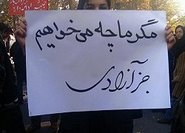
 اخبار مربوط به زندانیان سیاسی و نقض حقوق بشر






 Tulips in Holland