

In United States prisons, the Constitutional proscription against "cruel and unusual punishment" is not just a theoretical ideal, it is a belief enacted in daily practice. The United Kingdom is justifiably horrified at the treatment the sons and daughter of their nation experienced at the hands of their Iranian captors; however, the conditions Iranian citizens face in prisons there are far worse. In Iran, the very policies regarding housing of political prisoners are themselves a form of repression that Iran in no way seeks to hide from the civilized world. I am personally involved in the cases of thirty-one political prisoners languishing in nine of the most horrific prisons in the world, located in eight major Iranian cities. These prisoners began a hunger strike on April 7, 2007, protesting the brutal conditions in which they are being held. Hunger strikes are the last resort of these prisoners, whose only crimes have been to speak out against government policies in protests. Article 27 of the Iranian constitution guarantees freedom of peaceful assembly; however, Iranian judges conveniently skip this established precept of Iranian law. (Source: http://en.wikisource.org/wiki/Constitution_of_Islamic_Republic_of_Iran#Article_27)
Prisoners in these nine prisons (Evin and Raji Shahr prisons in greater Tehran; Bandar Abbas; Isfahan; Birjan; Semnan; Ahwaz, Oromieh in Tabriz; and Khorasan in Mashhad) have vowed to continue their hunger strike to expose these intolerable conditions. These hunger strikes became necessary because the United Nations, Amnesty International, and the International Red Cross/Red Crescent have obviously ignored their official obligations to frequently inspect prisons to ensure basic human rights including medical treatment and visitation rights. For the past month-and-a-half, these thirty-one political prisoners have been allowed no visitation from their families. Additionally, the government is refusing their basic medical requirements, and prison guards have denied these prisoners' own family members basic contact. Prison officials have even refused to deliver medication, upon which some of these prisoners' lives depend, in blatant violation of human rights standards. Hygiene in the prisons is non-existent; the smell of urine is overwhelming. Even though prisoners have begged to be allowed to spend their own meager funds to buy cleaning supplies to try to clean up their own cells, only within the walls of Evin Prison has this simple request for humane conditions been allowed granted. The prisons are infested with cockroaches and biting insects, and those who do not have beds must sleep on filth-mired floors. Evin Prison, which has historically been one of the worst in the world, seems to be a luxury prison in comparison to conditions inside Raji Shahr or Bandar Abbas. The heating systems in these prisons have been disabled all through the cold winter months. Prisoners have to ask their families to bring them jackets to keep warm; these requests, of course, only come to fruition when the officials allow these requests to be granted. Additionally, prisons such as Bandar Abbas and Ahvaz are death traps for prisoners; small barred cells have no air conditioning in 140-degree Fahrenheit temperatures. Families have to pay prison guards for dirty ice to help their loved ones survive. The food is disgusting, noxious and virtually inedible. Reports are rife of foodstuffs contaminated with rodent droppings and crawling with cockroaches. It is not surprising to some that the prisoners would refuse food under these circumstances, but as any American POW who suffered for years in notorious North Vietnamese prisons like the "Hanoi Hilton" will report, when starving, even food of this deplorable variety can mean the difference between life and death. Hunger strikes are not unknown in Iranian prisons. Human Rights Watch reports another hunger strike, this time by female prisoners, begun on March 6, 2007. Twenty-six women were arrested March 4, 2007 outside the Revolutionary Courts building in Tehran, protesting the trial of four additional women for a 2006 peaceful protest of discriminatory laws against women. (http://hrw.org/english/docs/2007/03/07/iran15452.htm) .US President George W Bush, in his inaugural address at the beginning of his second term, gave a glimmer of hope to the voices of freedom incarcerated for their beliefs: "America will not pretend that jailed dissidents prefer their chains, or that women welcome humiliation and servitude, or that any human being aspires to live at the mercy of bullies." (http://usinfo.state.gov/special/Archive/2005/Jan/20-603979.html) However, this inspiring rhetoric can ring hollow to those living, right now, in Iranian prisons, subjected to treatment that most Americans would not allow animals to suffer. I speak for these political prisoners who pray daily for Western help. The consequences of quiet acquiescence and apathetic acceptance of this type of barbarism means that these prisoners, and others, are going to die for standing up to the Iranian regime. Edmund Burke's admonition, "All that is necessary for the triumph of evil is that good men do nothing," is particularly applicable in this case. Silence only extends their suffering. These prisoners need our help, and they need it now.
Ghazal Omid is an author of Living in Hell, human rights and women's rights advocate, and an expert on Iran and Shiah Islam.
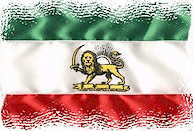
IMPERIAL EMBLEM

PERSIA
Iranian Freedom Fighters UNITE
Showing posts with label Prisioners. Show all posts
Showing posts with label Prisioners. Show all posts
Thursday, April 19, 2007
Monday, February 26, 2007
Reluctant hero , AHMAD BATEBI , VOICE OF A GENERATION
اعتصاب غذای خشک
جان احمد باطبی در خطر است, زمان را در یابیم

در تاریخ 21 فوریه 2007 همسر احمد باطبی را ربودند و این جوان دانشجو که دوران 10 ساله محکومیت خود را در زندان می گذراند دست به اعتصاب غذای خشک زده است. براستی جرم احمدها چیست؟؟؟؟ چرا باید این جوانان شجاع و دانشجو بهترین دوران زندگی خود را در زندانها سپری کنند؟؟؟؟ آیا اگر کسی پیراهن خونین جوان دانشجوی دیگری را که مورد ضرب و شتم ماموران سرکوب رژیم قرار گرفته بود د ر دست بگیرد, جرمی مرتکب شده؟؟؟؟ گناه او چیست که بطور ناخواسته عکسی از وی گرفته میشود و مورد توجه رسانه های بین المللی قرار میگیرد. آری در قاموس جمهوری اسلامی این جرمی است نابخشود نی و باید 10 سال در زندان بماند و مورد آزار جسمی و روحی قرار گیرد. احمد باطبی دیگر فقط به آزادیخواهان کشور خود متعلق نیست و به یک مبارز آزادیخواه جهانی تبدیل شده است و رژیم از این وحشت دارد. همسرش را میربایند و این عمل را انکار میکنند. هموطنان , آزادیخواهان ایرانی و جهانیان متمدن!!! احمد باطبی را در یابید و از هر طریق که میتوانید برای نجات وی اقدام کنید و مرگ دلخراش اکبر محمدی را بیاد آورید!!! کمیته های مبارزه با جمهوری اسلامی روز چهارشنبه 28 فوریه را روز نجات احمد باطبی و دیگر زندانیان سیاسی اعلام کرده و از ساعت 14 الی 16 در برابر سفارتهای اشغالی ایران , پارلمانهای کشورهای اروپایی , دفاتر سازمانهای دفاع از حقوق بشر و مراکز رسانه های بین المللی اجتماع کرده و خواستار آزادی تمام زندانیان سیاسی شویم.
زنده باد رستاخیز ملی ایران
زنده باد رستاخیز ملی ایران
0
comments

 Labels:
Iran,
IRI,
Islamic Republic of Idiots,
Prisioners,
SANCTIONS,
United Nations,
War
Labels:
Iran,
IRI,
Islamic Republic of Idiots,
Prisioners,
SANCTIONS,
United Nations,
War
Labels:
Iran,
IRI,
Islamic Republic of Idiots,
Prisioners,
SANCTIONS,
United Nations,
War
Sunday, February 25, 2007
Samieh Baiat has been freed on bail
سمیه بینات (همسر احمد باطبی) آزاد شد
کمیته دانشجویی گزارشگران حقوق بشر
سمیه بینات همسر احمد باطبی ، دقایقی پیش از زندان آزاد شد.
سمیه بینات، چهارشنبه شب به دلایل نامعلوم توسط نیروهایی ناشناس بازداشت شده و به زندان انتقال یافته بود.
هم اکنون پرونده ی وی در شعبه 1 دادسرای گرگان تحت رسیدگی است.
کمیته دانشجویی گزارشگران حقوق بشر
سمیه بینات همسر احمد باطبی ، دقایقی پیش از زندان آزاد شد.
سمیه بینات، چهارشنبه شب به دلایل نامعلوم توسط نیروهایی ناشناس بازداشت شده و به زندان انتقال یافته بود.
هم اکنون پرونده ی وی در شعبه 1 دادسرای گرگان تحت رسیدگی است.
Saturday, February 10, 2007
Al-Qaida suspects color Iran debate
White House offensive could prompt Tehran to free terror suspects
By Dafna Linzer / The Washington Post
Last week, the CIA sent an urgent report to President Bush's National Security Council: Iranian authorities had arrested two al-Qaeda operatives traveling through Iran on their way from Pakistan to Iraq. The suspects were caught along a well-worn, if little-noticed, route for militants determined to fight U.S. troops on Iraqi soil, according to a senior intelligence official.
The arrests were presented to Bush's senior policy advisers as evidence that Iran appears committed to stopping al-Qaeda foot traffic across its borders, the intelligence official said. That assessment comes at a time when the Bush administration, in an effort to push for further U.N. sanctions on the Islamic republic, is preparing to publicly accuse Tehran of cooperating with and harboring al-Qaeda suspects. The strategy has sparked a growing debate within the administration and the intelligence community, according to U.S. intelligence and government officials. One faction is pressing for more economic embargoes against Iran, including asset freezes and travel bans for the country's top leaders. But several senior intelligence and counterterrorism officials worry that a public push regarding the al-Qaeda suspects held in Iran could jeopardize U.S. intelligence-gathering and prompt the Iranians to free some of the most wanted individuals.
"There was real debate about all this," said one counterterrorism official. "If we go public, the Iranians could turn them loose." The official added: "At this point, we know where these guys are and at least they are off the streets. We could lose them for years if we go down this path." Squeezing Iran from multiple directionsThe administration's planned diplomatic offensive is part of an effort to pressure Tehran from multiple directions. Bush has given the U.S. military the authority to kill or capture Iranian government agents working with Shiite militias inside Iraq. Yesterday, Defense Secretary Robert M. Gates said serial numbers and markings on some explosives used in Iraq indicate that the material came from Iran, but he offered no evidence. With the aim of shaking Tehran's commitment to its nuclear program, Bush also approved last fall secret operations to target Iranian influence in southern Lebanon, in western Afghanistan, in the Palestinian territories and inside Iran. The new strategy, a senior administration official said, aims to portray Iran as a "terror-producing country, instead of an oil-producing country," with links to al-Qaeda, Hezbollah and death squads in Iraq. U.S. officials have asserted for years that several dozen al-Qaeda fighters, including Osama bin Laden's son, slipped across the Afghan border into Iran as U.S. troops hunted for the perpetrators of the Sept. 11, 2001, attacks. U.S. and allied intelligence services, which have monitored the men's presence inside Iran, reported that Tehran was holding them under house arrest as bargaining chips for potential deals with Washington. Last fall, Bush administration officials asked the CIA to compile a list of those suspects so the White House could publicize their presence. For years, the administration has not revealed their names, in part because it sought to protect its intelligence sources but also because at the time the U.S. government was concealing the identities of suspects it was holding in secret CIA custody. Names of 'high-value' targets emergeBut the names of some of the men in Iran have become public, including "high-value" targets such as al-Qaeda spokesman Sulaiman Abu Ghaith of Kuwait and Saif al-Adel of Egypt. U.S. intelligence officials said they are members of the "al-Qaeda operational management committee." U.S. intelligence officials said there are suspicions, but no proof, that one of them may have been involved from afar in planning an attack in Riyadh, Saudi Arabia, in May 2003. Intelligence officials said bin Laden's son Saad is also being held with the other men in Iran. Five administration officials were made available for interviews for this story on the condition that they not be identified. Other officials who spoke without permission -- including senior officials, career analysts and policymakers -- said their standing with the White House would be at risk if they were quoted by name. The State Department, Pentagon and CIA referred all questions about the story to the National Security Council. In a written response to questions, NSC spokesman Gordon Johndroe said: "Iran's sponsorship of terrorism is one of the reasons for the sanctions now against it. We note that U.N. Security Council resolutions already oblige all states to ensure that members of terrorist groups, including al-Qaeda, are brought to justice." Since al-Qaeda fighters began streaming into Iran from Afghanistan in the winter of 2001, Tehran had turned over hundreds of people to U.S. allies and provided U.S. intelligence with the names, photographs and fingerprints of those it held in custody, according to senior U.S. intelligence and administration officials. In early 2003, it offered to hand over the remaining high-value targets directly to the United States if Washington would turn over a group of exiled Iranian militants hiding in Iraq. Some of Bush's top advisers pushed for the trade, arguing that taking custody of bin Laden's son and the others would produce new leads on al-Qaeda. They were also willing to trade away the exiles -- members of a group on the State Department's terrorist list -- who had aligned with Saddam Hussein in an effort to overthrow the Iranian government. Bush rejects prisoner exchangeOfficials have said Bush ultimately rejected the exchange on the advice of Vice President Cheney and then-Defense Secretary Donald H. Rumsfeld, who argued that any engagement would legitimize Iran and other state sponsors of terrorism. Bush's National Security Council agreed to accept information from Iran on al-Qaeda but offer nothing in return, officials said. But no information has been forthcoming, intelligence officials said. One official said the CIA and the Pentagon's Defense Intelligence Agency have disagreed over how effectively the Iranians are controlling al-Qaeda members and whether the Tehran government is aware of the extent of al-Qaeda movements through the country. Nevertheless, administration officials said they are determined to press Iran on the matter. "We are not convinced that the Iranians have been honest or open about the level or degree of al-Qaeda presence in their midst," said one Bush adviser who was instrumental in coming up with a more confrontational U.S. approach to Iran. "They have not made proper accounting with respect to U.N. resolutions, have not been clear about who is in detention and have not been clear as to what is happening to individuals who might be in custody."
Violation of U.N. resolutions .
Bush administration officials pointed to U.N. Security Council Resolutions 1267 and 1373, which state that harboring al-Qaeda members constitutes a threat to international peace and security, and authorize force to combat that threat. The resolutions compel nations to share any information on al-Qaeda suspects and give the United Nations authority to freeze the assets of suspects and those who provide them with safe haven.Two U.S. officials said the administration plans to argue that Iran is violating those resolutions. A team of senior U.S. officials has been holding briefings for visiting European diplomats on the issue while administration lawyers prepare options for holding Iran in violation of U.N. resolutions. "We've started a more aggressive and major attempt to try to convince other countries to use their influence on this issue," a senior U.S. diplomat said. "Until now, the Europeans have been focused on the nuclear issue and we want this high up on the agenda." But another government official predicted that no European country would support a call on Iran to turn the al-Qaeda group over to U.S. military detention at Guantanamo Bay, Cuba, a facility widely condemned by Washington's closest allies. In the past year, U.S. officials said they successfully pushed Egypt, Kuwait and Saudi Arabia to seek extradition of their citizens held in Iran, but Tehran rebuffed the requests. Administration officials said they interpreted the refusal as evidence of cooperation between the Iranian government and the group. "We'd be happy to see them face trial anywhere," a senior administration official said.
By Dafna Linzer / The Washington Post
Last week, the CIA sent an urgent report to President Bush's National Security Council: Iranian authorities had arrested two al-Qaeda operatives traveling through Iran on their way from Pakistan to Iraq. The suspects were caught along a well-worn, if little-noticed, route for militants determined to fight U.S. troops on Iraqi soil, according to a senior intelligence official.
The arrests were presented to Bush's senior policy advisers as evidence that Iran appears committed to stopping al-Qaeda foot traffic across its borders, the intelligence official said. That assessment comes at a time when the Bush administration, in an effort to push for further U.N. sanctions on the Islamic republic, is preparing to publicly accuse Tehran of cooperating with and harboring al-Qaeda suspects. The strategy has sparked a growing debate within the administration and the intelligence community, according to U.S. intelligence and government officials. One faction is pressing for more economic embargoes against Iran, including asset freezes and travel bans for the country's top leaders. But several senior intelligence and counterterrorism officials worry that a public push regarding the al-Qaeda suspects held in Iran could jeopardize U.S. intelligence-gathering and prompt the Iranians to free some of the most wanted individuals.
"There was real debate about all this," said one counterterrorism official. "If we go public, the Iranians could turn them loose." The official added: "At this point, we know where these guys are and at least they are off the streets. We could lose them for years if we go down this path." Squeezing Iran from multiple directionsThe administration's planned diplomatic offensive is part of an effort to pressure Tehran from multiple directions. Bush has given the U.S. military the authority to kill or capture Iranian government agents working with Shiite militias inside Iraq. Yesterday, Defense Secretary Robert M. Gates said serial numbers and markings on some explosives used in Iraq indicate that the material came from Iran, but he offered no evidence. With the aim of shaking Tehran's commitment to its nuclear program, Bush also approved last fall secret operations to target Iranian influence in southern Lebanon, in western Afghanistan, in the Palestinian territories and inside Iran. The new strategy, a senior administration official said, aims to portray Iran as a "terror-producing country, instead of an oil-producing country," with links to al-Qaeda, Hezbollah and death squads in Iraq. U.S. officials have asserted for years that several dozen al-Qaeda fighters, including Osama bin Laden's son, slipped across the Afghan border into Iran as U.S. troops hunted for the perpetrators of the Sept. 11, 2001, attacks. U.S. and allied intelligence services, which have monitored the men's presence inside Iran, reported that Tehran was holding them under house arrest as bargaining chips for potential deals with Washington. Last fall, Bush administration officials asked the CIA to compile a list of those suspects so the White House could publicize their presence. For years, the administration has not revealed their names, in part because it sought to protect its intelligence sources but also because at the time the U.S. government was concealing the identities of suspects it was holding in secret CIA custody. Names of 'high-value' targets emergeBut the names of some of the men in Iran have become public, including "high-value" targets such as al-Qaeda spokesman Sulaiman Abu Ghaith of Kuwait and Saif al-Adel of Egypt. U.S. intelligence officials said they are members of the "al-Qaeda operational management committee." U.S. intelligence officials said there are suspicions, but no proof, that one of them may have been involved from afar in planning an attack in Riyadh, Saudi Arabia, in May 2003. Intelligence officials said bin Laden's son Saad is also being held with the other men in Iran. Five administration officials were made available for interviews for this story on the condition that they not be identified. Other officials who spoke without permission -- including senior officials, career analysts and policymakers -- said their standing with the White House would be at risk if they were quoted by name. The State Department, Pentagon and CIA referred all questions about the story to the National Security Council. In a written response to questions, NSC spokesman Gordon Johndroe said: "Iran's sponsorship of terrorism is one of the reasons for the sanctions now against it. We note that U.N. Security Council resolutions already oblige all states to ensure that members of terrorist groups, including al-Qaeda, are brought to justice." Since al-Qaeda fighters began streaming into Iran from Afghanistan in the winter of 2001, Tehran had turned over hundreds of people to U.S. allies and provided U.S. intelligence with the names, photographs and fingerprints of those it held in custody, according to senior U.S. intelligence and administration officials. In early 2003, it offered to hand over the remaining high-value targets directly to the United States if Washington would turn over a group of exiled Iranian militants hiding in Iraq. Some of Bush's top advisers pushed for the trade, arguing that taking custody of bin Laden's son and the others would produce new leads on al-Qaeda. They were also willing to trade away the exiles -- members of a group on the State Department's terrorist list -- who had aligned with Saddam Hussein in an effort to overthrow the Iranian government. Bush rejects prisoner exchangeOfficials have said Bush ultimately rejected the exchange on the advice of Vice President Cheney and then-Defense Secretary Donald H. Rumsfeld, who argued that any engagement would legitimize Iran and other state sponsors of terrorism. Bush's National Security Council agreed to accept information from Iran on al-Qaeda but offer nothing in return, officials said. But no information has been forthcoming, intelligence officials said. One official said the CIA and the Pentagon's Defense Intelligence Agency have disagreed over how effectively the Iranians are controlling al-Qaeda members and whether the Tehran government is aware of the extent of al-Qaeda movements through the country. Nevertheless, administration officials said they are determined to press Iran on the matter. "We are not convinced that the Iranians have been honest or open about the level or degree of al-Qaeda presence in their midst," said one Bush adviser who was instrumental in coming up with a more confrontational U.S. approach to Iran. "They have not made proper accounting with respect to U.N. resolutions, have not been clear about who is in detention and have not been clear as to what is happening to individuals who might be in custody."
Violation of U.N. resolutions .
Bush administration officials pointed to U.N. Security Council Resolutions 1267 and 1373, which state that harboring al-Qaeda members constitutes a threat to international peace and security, and authorize force to combat that threat. The resolutions compel nations to share any information on al-Qaeda suspects and give the United Nations authority to freeze the assets of suspects and those who provide them with safe haven.Two U.S. officials said the administration plans to argue that Iran is violating those resolutions. A team of senior U.S. officials has been holding briefings for visiting European diplomats on the issue while administration lawyers prepare options for holding Iran in violation of U.N. resolutions. "We've started a more aggressive and major attempt to try to convince other countries to use their influence on this issue," a senior U.S. diplomat said. "Until now, the Europeans have been focused on the nuclear issue and we want this high up on the agenda." But another government official predicted that no European country would support a call on Iran to turn the al-Qaeda group over to U.S. military detention at Guantanamo Bay, Cuba, a facility widely condemned by Washington's closest allies. In the past year, U.S. officials said they successfully pushed Egypt, Kuwait and Saudi Arabia to seek extradition of their citizens held in Iran, but Tehran rebuffed the requests. Administration officials said they interpreted the refusal as evidence of cooperation between the Iranian government and the group. "We'd be happy to see them face trial anywhere," a senior administration official said.
0
comments
Labels:
9/11,
al-qaeda,
Concern in Iran,
Criminal,
Iran,
IRI,
Khamanei,
Military engagment,
Prisioners,
SANCTIONS,
Sunni,
Taliban,
Trial,
US,
Us pressure,
War
Labels:
9/11,
al-qaeda,
Concern in Iran,
Criminal,
Iran,
IRI,
Khamanei,
Military engagment,
Prisioners,
SANCTIONS,
Sunni,
Taliban,
Trial,
US,
Us pressure,
War
CLAMP DOWN ON FREEDOM IN IRAN
نگرانی از افزايش موج اذيت و آزار و فشار و سرکوب در ایران
خبرنامه امیرکبیر: سازمان عفو بينالملل نگران افزايش موج اذيت و آزار خبرنگاران و فعالين حقوق زنان در ايران توسط نيروهای امنيتی است.
Read the rest by following this link, in Persian. http://www.iranpressnews.com/source/020678.htm
0
comments
Labels:
Ahmadinejad,
Concern in Iran,
Criminal,
Freedom,
Iran,
IRI,
Khamanei,
Pasdars,
Persian Nation,
Prisioners,
represion,
War
Labels:
Ahmadinejad,
Concern in Iran,
Criminal,
Freedom,
Iran,
IRI,
Khamanei,
Pasdars,
Persian Nation,
Prisioners,
represion,
War
Thursday, February 08, 2007
Coalition Forces Kill Terrorist, Detain 17
By American Forces Press Service.
WASHINGTON - Coalition forces killed one terrorist and detained 17 in operations across Iraq this week. In addition, car bombs in Iraq have killed 10 locals and wounded 26 in the past three days. In raids in Iraq today: -- In Karabilah, coalition forces killed one terrorist and detained two suspected terrorists while targeting a foreign fighter cell. -- Coalition forces North of Tarmiyah detained two suspected terrorists reportedly associated with an al Qaida foreign fighter network. -- Three individuals with suspected ties to a car bomb cell operating near Karmah were captured. -- During a raid in Ramadi, coalition forces detained six individuals with suspected ties to al Qaida. -- Two suspects with reported ties to car bomb operations were detained in Baghdad. -- Coalition forces north of Tikrit captured a suspected al Qaida regional leader and another suspect with foreign fighter affiliations. Also this week in Iraq, coalition forces used guided munitions to stop an insurgent attack northwest of Khalidiyah yesterday. When coalition forces were attacked with a rocket-propelled grenade and a heavy volume of small-arms fire, the troops used guided munitions against the attackers, who were hiding in two buildings. The guided munitions destroyed both buildings and ended the attack. In Ramadi on Feb. 3, members of the Albu Obaid Iraqi police station discovered one of the largest weapons cache in the past year while patrolling. The cache consisted of over 300 82 mm mortar rounds, three 152 mm artillery rounds, two bags of homemade explosives, two Katyusha 107 mm rockets, a spool of copper wire used for detonating improvised explosive devices, and other smaller caliber ammunition. Deadly car bombs have rocked several Iraq communities in the past few days. Nine Iraqis were killed and 24 wounded yesterday when a pair of car bombs detonated within minutes of each other in eastern Baghdad. The first attack occurred just after noon in the central neighborhood of Rusafa, killing four Iraqi residents and wounding 15. At about 1:10 p.m., a suicide bomber drove into a mechanic's garage in a Karadah neighborhood and detonated a car bomb, killing five residents and wounding nine. On Feb. 3 in Mosul, a pregnant woman was fatally wounded and two medical personnel were wounded when a suicide bomber drove into an ambulance transporting the woman to the hospital. (Compiled from Multinational Corps Iraq news releases.)
WASHINGTON - Coalition forces killed one terrorist and detained 17 in operations across Iraq this week. In addition, car bombs in Iraq have killed 10 locals and wounded 26 in the past three days. In raids in Iraq today: -- In Karabilah, coalition forces killed one terrorist and detained two suspected terrorists while targeting a foreign fighter cell. -- Coalition forces North of Tarmiyah detained two suspected terrorists reportedly associated with an al Qaida foreign fighter network. -- Three individuals with suspected ties to a car bomb cell operating near Karmah were captured. -- During a raid in Ramadi, coalition forces detained six individuals with suspected ties to al Qaida. -- Two suspects with reported ties to car bomb operations were detained in Baghdad. -- Coalition forces north of Tikrit captured a suspected al Qaida regional leader and another suspect with foreign fighter affiliations. Also this week in Iraq, coalition forces used guided munitions to stop an insurgent attack northwest of Khalidiyah yesterday. When coalition forces were attacked with a rocket-propelled grenade and a heavy volume of small-arms fire, the troops used guided munitions against the attackers, who were hiding in two buildings. The guided munitions destroyed both buildings and ended the attack. In Ramadi on Feb. 3, members of the Albu Obaid Iraqi police station discovered one of the largest weapons cache in the past year while patrolling. The cache consisted of over 300 82 mm mortar rounds, three 152 mm artillery rounds, two bags of homemade explosives, two Katyusha 107 mm rockets, a spool of copper wire used for detonating improvised explosive devices, and other smaller caliber ammunition. Deadly car bombs have rocked several Iraq communities in the past few days. Nine Iraqis were killed and 24 wounded yesterday when a pair of car bombs detonated within minutes of each other in eastern Baghdad. The first attack occurred just after noon in the central neighborhood of Rusafa, killing four Iraqi residents and wounding 15. At about 1:10 p.m., a suicide bomber drove into a mechanic's garage in a Karadah neighborhood and detonated a car bomb, killing five residents and wounding nine. On Feb. 3 in Mosul, a pregnant woman was fatally wounded and two medical personnel were wounded when a suicide bomber drove into an ambulance transporting the woman to the hospital. (Compiled from Multinational Corps Iraq news releases.)
Sunday, January 21, 2007
I SHALL BE RELEASED
DEDICATED TO ALL THE PRISIONERS EVERYWHERE.
The Band and Friends.
The Band & Friends - I Shall Be Released - 1976
Add to My Profile | More Videos
Neil Young
Add to My Profile | More Videos
The Band and Friends.
The Band & Friends - I Shall Be Released - 1976
Add to My Profile | More Videos
Neil Young
Add to My Profile | More Videos
Subscribe to:
Posts (Atom)




 Posts
Posts





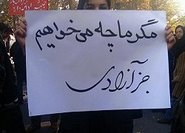
 اخبار مربوط به زندانیان سیاسی و نقض حقوق بشر







 Tulips in Holland