Alliance For democracy In Iran

Please have a look at my other weblog, Iran Democracy - http://irandemocray.blogspot.com/

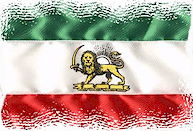
IMPERIAL EMBLEM

IMPERIAL EMBLEM
PERSIA

Shahanshah Aryameher

S U N OF P E R S I A

Iranian Freedom Fighters UNITE

Showing posts with label New Year. Show all posts

Tuesday, March 18, 2008

Payameh Eaid Nu Rooze - Happy New Year -

Shahanshah Aryamehr of Iran


From: sunpacificblue
My humble tribute to the Shahbanou of Iran.God bless her & her family.Javid Shabbanou!!!!Javid Shah!!!Long live Reza Pahlavi II!!!!!
http://www.youtube.com/watch?v=st4wfX6vROA


پیام شاهزاده رضا پهلوی
بمناسبت
نوروز ۱۳۸۷
اول فروردین ماه ۱۳۸۷
هم میهنان عزیزم،
همواره حیات و دوام ملت ها با قابلیت آنها در تولید، حفظ و اشاعۀ فرهنگ خویش در پیوندی تنگاتنگ بوده است. همواره، پایداری هرملتی در عرصۀ تاریخ، با استواری فرهنگی آن ملت عجین بوده است. اهل اندیشه و ایران شناسان، ملت ما را فرهنگجو و سرزمین ایران را از مهمترین بسترهای فرهنگ خیز در پهنۀ تمدن بشری به شمار آورده اند. تا فرهنگ ایران هست؛ تا ایرانی قابلیت خود را در خلق و تولید و سپس پاسداری از ارزش های هنری و ادبی و اخلاقی، در بطن ملت خود، با تمام تکثر آن، زنده نگه دارد؛ ایران و ایرانی زنده و پا برجا خواهد ماند.
در ژرفای سرد و تاریک تحجر، همین پابرجایی فرهنگی بوده و هست که ملت ما را زنده و زاینده نگه داشته است. براستی اگر شما ملت در برابر تهاجم فرهنگ ستیز جاهلیت در این سال ها نایستاده بودید، برچهارشنبه سوری، برتخت جمشید، برچهل ستون و بر نوروز ما چه می رفت؟ این شما ملت ایران و پیشتازان هنری و فرهنگی امان بوده اید، که خداوند جان و خِرد را در برابر این بی خدایان نهاده اید. این شما بودید که جهل را با علم، کراهت را با زیبایی و ماتم این شادی ستیزان را به پایبندی به آئین هزار و هزاران سالۀ خود پاسخ گفتید.

هم میهنانم،

نوروز، ستایش زندگی ست. زندگی، زیباترین زیبایی ها و ارزش ارزش هاست.
هم میهنان عزیزم،
فصلی نو و روزی نو و طرحی نو در پیش است. بهارانتان خجسته و نوروزتان فرخنده باد، که ایرانی نو در پیش است، سربلند و پوینده.
نوروزتان شاد و پیروز باد، که ایرانی آزاد و شکوفا در افق نمایان است که درآن، نخستین و آخرین رسالت دولتمردان و دولتزنانش، هیچ نباشد مگر رفاه، آسایش و امنیت ایرانی.

خداوند نگهدار ایران باد
رضا پهلوی


LINK MOSTAGHIM

پیام شاهزاده رضا پهلوی بمناسبت نوروز ۱۳۸۷(2567 شاهنشاهی) - (صوتی)


Image Hosted by ImageShack.us

نوروز تان پیروز بهاران خجسته باد

http://irandad-14.blogfa.com/post-7.aspx

http://www.irandad-14.blogfa.com/post-18.aspx
http://www.irandad-14.blogfa.com/post-19.aspx
http://www.irandad-14.blogfa.com/post-20.aspx


Haft Ceen Table in the White House


A traditional Haft Sin table celebrating Nowruz, the Persian New Year, is seen set ..Home > News & Policies > March 2008 A traditional Haft Sin table celebrating Nowruz, the Persian New ..http://www.whitehouse.gov/news/releases/2008/03/images/20080319-11_p031908cg-0017-515h.html - 19 Mar 08
Mrs. Laura Bush welcomes guests to a tea Wednesday, March 19, 2008 in the State Dining Room ...Home > News & Policies > March 2008 Mrs. Laura Bush welcomes guests to a tea Wednesday, March 19, ..http://www.whitehouse.gov/news/releases/2008/03/images/20080319-11_p031908pt-0003-515h.html
19 Mar 08
Interview of the President by VOA Persian News NetworkTHE PRESIDENT: Well, first, Nowruz a tan Mubarak. Secondly, that the people of the United States respects the people of Iran; that ..http://www.whitehouse.gov/news/releases/2008/03/20080319-13.html%20-%2012.2KB

Presidential Message on Nowruz Celebrations

For the millions of people who trace their heritage to Iran, Iraq, Afghanistan, Turkey, Pakistan, India, and Central Asia, and the greater middle east and parts of southern Europe - Nowruz ..http://www.whitehouse.gov/news/releases/2008/03/20080319-11.html

Interview of the President: by VOA Persian News Network Map Room
White House News -

Q Mr. President, let me thank you first on behalf of the Voice of America, on behalf of the Persian News Network for giving us your time. We really appreciate that, sir.
THE PRESIDENT: Thank you.
Q As you know, Mr. President, this is the eve of Nowruz, the Iranian New Year. What is your message to the Iranian people as they face tough economic circumstances and infringement on their freedoms?
THE PRESIDENT: Well, first, Nowruz a tan Mubarak. Secondly, that the people of the United States respects the people of Iran; that we respect the traditions of Iran, the great history of Iran. We have differences with the government, but we honor the people, and we want the people to live in a free society. We believe freedom is a right for all people and that the freer the world is, the more peaceful the world is. And so my message is, please don't be discouraged by the slogans that say America doesn't like you, because we do, and we respect you.
Q What do you say to the regime, sir -- what would you say to the regime?
THE PRESIDENT: I'd say to the regime that they made decisions that have made it very difficult for the people of Iran. In other words, the Iranian leaders, in their desire to enrich uranium -- in spite of the fact that the international community has asked them not to -- has isolated a great country; and that there's a way forward. I mean, the Iranian leaders know there's a way forward, and that is verifiably suspend your enrichment and you can have new relationship with people in the U.N. Security Council, for example.
It's just sad that the leadership is in many ways very stubborn, because the Iraqi -- the Iranian people are not realizing their true rights. And they're confusing people in Iraq, as well, about their desires. It's a tough period in history for the Iranian people, but it doesn't have to be that way.
Q On the nuclear issue, sir, is there a solution to the problem that would both satisfy the United States' concern and at the same time allow Iran to proceed with non-military nuclear energy research?
THE PRESIDENT: Well, part of the problem is that it's very hard for people to trust the Iranian government because they haven't told the full truth, and that's why the people of Iran have got to understand there are great suspicions right now, not only in the United States, but around the world. But there is a better way forward. And I thought, for example, the Russians proposed an interesting way, that says -- and I have said publicly, and the Iranian people need to know that I believe Iran has the right to have civilian nuclear power. I believe in civilian nuclear power. Iran is a sovereign country and they should have it.
The problem is we just don't trust the government because they haven't been forthcoming about their enrichment of fuels to go into the reactor, and therefore Russia has offered to provide fuel on a contractual basis and provide fuel on a consistent basis. It would help solve the problem, and that is the Iranians wouldn't need to enrich, it would have fuel for their reactor and the people would have cheaper electricity. And I support that idea.
Q Sir, would you allow enrichment inside Iran if there are guarantees and international supervision?
THE PRESIDENT: I would have to be convinced that any secret programs would be disclosed. In other words, I -- once a nation hasn't told the truth, it requires a lot of work to convince people that they'll be telling the truth in the future. And my problem is, is that the Iranian government has not been forthcoming, has not fully disclosed their programs like the IAEA asked them to. So there's a lot of distrust right now.
And the better way forward is for there to be a contractual, solid obligation to provide fuel for a nuclear reactor and then the Iranians can have their civilian nuclear power.
Q At a time when Iranians are going through very difficult economic circumstances -- there's high employment -- high unemployment, there are high prices, there are unfilled promises -- the United Nations Security Council just passed a new set of sanctions against the regime. Is the United States concerned, sir, that the regime might exploit these circumstances to whip up anti-American sentiment, and also to use those and misuse them?
THE PRESIDENT: Sure. No, I appreciate that. Of course we are. We're always concerned about the individual. I'm concerned about the mom trying to raise her child in a hopeful environment. I'm concerned about a child wanting to gain the knowledge so that he or she can realize her God-given talents. And of course we're worried about the human condition.
And any time a government is failing to meet the needs of people -- or a lot of times, not "any time," but a lot of times governments have failed to meet the needs of their people, particularly in relatively non-transparent, non-free societies they always look for somebody to blame. And I'm not surprised that the leaders would blame the United States for the problems they, themselves, have created.
So, yes, this enters my mind. On the other hand, the people of Iran must understand that the conditions exist in large part because of either management by the government or isolation because of the government's decisions on foreign policy matters -- such as announcing they want to destroy countries with a nuclear weapon. It is irresponsible remarks like that which cause great credibility loss with the Iranian government, the actions of which are affecting the country.
Q Mr. President, if I may, I want to ask you about Iraq also. Today is the fifth anniversary of the start of the Iraq war and you had a speech on the war on terror. Are you satisfied with the political situation in Iraq, in view of the improving security situation? And also, has Iran played a role in this?
THE PRESIDENT: I am pleased, but not satisfied. I am pleased because there's a modern constitution in Iraq. I am pleased because people have voted in Iraq. I am pleased because they're heading toward provincial elections in Iraq. I'm pleased to see democracy moving. I'm not satisfied because there's more work to be done.
One of the problems we do have in Iraq is the -- there's been some negative Iranian influence, such as the exportation from Iran of certain weapons that have been used by extremists to murder and to kill people. And it's been particularly unhelpful.
Now, look, I understand Iraq and Iran are going to have relations; after all, they've got a long border. But from my perspective, Iran has not been helpful in terms of helping this young democracy survive. I would think it would be in Iran's interests to have a peaceful neighbor. They had been at war at one time with Iraq. I would believe that a peaceful Iraq would be in the long-term interests of the Iranian people. And yet it's hard to have a peaceful Iraq if there are elements inside the country that are trying to use violence and murder to continue to stir up sectarian doubts and raise concerns which will cause more violence.
Q There have been recent contacts between the United States and Iran over Iraq. Some dissidents inside Iran think that these might expand to other areas, and they feel that this will undercut their position and that would strengthen the regime's hand. What are your thoughts on that, sir?
THE PRESIDENT: My thought is, is that the reformers inside Iran are brave people, they've got no better friend than George W. Bush, and I ask for God's blessings on them on their very important work. And secondly, that I would do nothing to undermine their efforts. And thirdly, that the talks between Iran -- between the U.S. and Iran about Iraq are solely about Iraq, and that the message to the Iranians is: Stop importing your weapons, your sophisticated IEDs, or there will be consequences inside of Iraq. And when we find people transporting weapons that are aimed to harm innocent people or to arm militias that are aiming to harm innocent people, then they will be brought to justice; that there's a better way to deal inside of Iraq than the Iranians are now dealing. And so this message is nothing more than limited to Iraq.
Q Mr. President, thank you very much. And thanks for allowing me to do the interview, sir.
THE PRESIDENT: Thank you; yes, ma'am.


ای مزدا - اهورا:
با دستهای برافراشته و خواهان خشنودی بتو روی می آوریم تا بهترین سرود ستایش خود را بدرگاهت بر افرازم .
در آستانه ی سال نو ترا می ستاییم ای دادار ِ بزرگ که سپهر ِ بیکران را فراز گستردی و خورشید تیز اسب ِ جاودان پیروز را روشنی بخش آن کردی تا پرتو زرینش غبار تاریکی از چهره ی زمین برگیرد و رویش و بالش گیاهان، و پویش پویندگان را فراهم آورد .
تا درختان بارده بار بردارند و با سرهای خمیده سپاس ترا بجای آرند.
تا گلهای نوشکفته زرینه پرتوش را بنوشند و چهره ی زمین را به زیباترین رنگها بیارایند.
تاآدمی راه از چاه باز شناسد و شایست از نا شایست بداند.
ای بزرگترین سزاوار ستایش:
ترا می ستاییم که گردونه ی ماه را گردن آویز ِ سپهر کردی تا با سیمینه پرتوَش پهنه ی بی کران جهان را روشنایی بخشد وسپاه تاریکی را بتارا ند.
تا گیاهان را ببالاند و جامه ی زیبای سبزگون بر تن زمین بپوشاند.
تا دریانوردان و کاروانیان را راه بنماید.
تا هنگامی که پر می شود دلهای دلباختگان را بلرزاند، و هنگامی که کمان می شود آرش را بیاد آرد و کوهساران را پر از آوای ایران بگرداند.
ترا می ستاییم ای هستی بخش بزرگ:
که ستاره ی باران زای ِ تیشتر را آفریدی تا پیش آهنگ ِ خورشید در آسمان باشد و دیگر ستارگان را در پیرامون خود گرد آورد.
تا بجنگ خشکی برخیزد و با آذرَخش و تُندَر سپاه خشکسالی را بتاراند.
تا با آب ِ پَهنه ِ گستر غبار خشکی از تن زمین برگیرد و زمین را چِشمه ی زاینده ی زندگانی بگرداند.
تا رودها و چشمه ساران را سرشار از آبهای توان ساز زندگی بخش بگرداند .
ترا می ستاییم ای دادار همه دانا:
که زمان ِ بیکران را آفریدی تا جام ِ سپهر باشد.
تا هستی بیکران را در پیاله ی خود جای دهد .
تا هر چیز را بزاید، ببالاند و بمیراند.
ترا می ستاییم ای بهترین سزاوار ستایش:
که فر کیانی نیرومند را آفریدی
آن فر بسیار ستوده، و کار آمد و چالاک را،
فری که بدان آ فریدگان را پدید آوردی،
فراوان و خوب،
فراوان و زیبا،
فراوان و دلپذیر،
فراوان و کار آمد،
فراوان و درخشان .
ترا می ستاییم ای مزدااهورا:
که در میان کشور ها ایران را آفریدی:
تا شهبانوی کشورها شود .
که البرز ِ بالا بلند را آفریدی تا آرش کمانگیر تیرش را از فراز آن بپراند و مرزهای ایران را تا فراسوی پندار بگستراند.
که الوند برفپوش را آفریدی تا فر شاهنشهی را در گنجنامه ی خود جاودان نگهدارد.
که زاگرس سخت گذر را آفریدی تا دشمن از ایران دور بدارد.
که رود ارس، و کارون فراخ بستر، و خلیج همیشه پارس را آفریدی تا ایران را جاودان بالنده بگردانند.
ترا می ستایییم ای سزاوار ستایش:
که ما را به کالبد هستی در آوردی و به ما خرد بخشیدی تا راه از چاه، و شایست از ناشایست باز شناسیم.
اندیشه ی نیک را بر ما فراز آوردی تا گفتار و کردار خود را با آن همساز کنیم.
به ما توان بخشیدی تا با کار و کوشش و جهش و جنبش، خانمان- و روستا - و شهر- و کشوری آباد پدید آوریم.
به ما توان دادی تا با شادی پراکنی و مهر گستری دستیاران تو در کار آفرینش جهان باشیم و جهان بهتری برای خود و برای دیگر مردم ِ جهان پدید آوریم و شادی و مهر در میان مردمان بگسترانیم.
ای مزدا اهورا:
درآستانه ی سال نو سرود ستایش ما را که از ژرفای دل فراز می شود بشنو و خواست هایمان را برآورده ساز.
نیروی پایداری را در ما بیفزا، تا بر کاستی ها چیره گردیم و در پیکار زندگی سربلند باشیم و پیروزگر .
در خانه هایمان پسران و دختران سینه ستبر و بلند بالا و خرد گرا را فزون بگردان، و ما را که ستایشکران تو ایم پیروز گر بساز.
به ما تندرستی و توانایی ارزانی بدار تا همه ی آن چیز ها را که به زندگی شکوه و شادمانی می بخشند فراچنگ آوریم...
بشود که روشنایی تو بر زندگانی ما پرتو بیفشاند...
بشود که در خانه ها ی ما شادمانی و پر خواستگی ریشه بگستراند...
بشود که دانش نیک بیاریمان آید و ما را بسوی زندگی بهتر راه بنماید...
بشود که در خانه هامان فرزندانی زیبا پیکر و دانا و توانا زاده شوند...
فرزندانی زور مند و گویا و خرد گرا و رزمنده در راه کشور...
فرزندانی با هوش و دانش و توانش، و با فر و فرهنگ...
فرزندانی آراسته به اندیشه و گفتار و کردار نیک که در یابند خانه، و خانواده، و روستا، و شهر، و کشور را.
واینهمه را خواستاریم:
نه برای آنکه گام به بیراهه بگذاریم،
نه برای اینکه دانش و توانش خود را در راه تباهی جهان بکار بندیم !
نه برای اینکه پیک اندوه، و پیام آوران مرگ باشیم !
برای اینکه اراده ی ترا که پیشرفت و نو سازی جهان است جامه ی کردار بپوشانیم،
برای اینکه زمین را جشنگاهی بزرگ برای مردمان سازیم .
برای اینکه پیرو خرد باشیم و از خرافه باوری که دستاورد اهریمن است روی بگردانیم.
برای اینکه ریشه ی دروغ برکنیم و آیین نیاکانمان را که همساز با هنجار آفرینش است جایگزین آیین تازیان بگردانیم.
برای اینکه میهن خود را از چنگال اهریمنی رایات دور بداریم.
پس ای دادار بزرگ که چرخه هستی جز به داد تو نمی چرخد، به ما دانش و توانش بیشتر ارزانی بدار تا اراده ی ترا در زندگانی خود به کردار درآوریم.
این سال نو خورشیدی را بر همه ی مردم جهان، بویژه به هم میهنان خوب ما در هر کجای این جهان فراخدامن که هستند خجسته بگردان و سفره ی شادمانی را فراروی همگان بگذار.
ایدون باد و ایدون تر باد .
آرش برخی از واژه ها:
1- سپهر: آسمان - فلک
2- زرینه: طلایی.
3- پویندگان: جانداران .
4- سیمینه: نقره ای
5- تیشتر Tishtar: ( تیر ) که ایزد باران زا است و نام درخشتنده ترین ستارگان می باشد.در اوستا یشت هشتم بنام او است. در زبان لاتین Sirius و در زبان تازی شعری یمانی. در پارسی شباهنگ هم گفته شده است . این ستاره در شبهای تابستان نمایان می شود.
6- آذرخش: صاعقه.
7- تُندر: رَعد . غُرش ابر.
8- فر کیانی: نیرویی نادیدنی و نابسودنی که از آن اهورا مزدا است.
9- پُر خواستگی: دارشمندی . داراییِ فراوان ( خواسته= دارایی)
ایدون باد: اینچنین باد ( آمین)
از سرپرستان تارنماهای ایرانی خواهش می کنم اگر دوست دارند این نیایش را در تارنمای خود بگذارند .از برنامه سازان رادیو تلویزونهای پارسی زبان خواهش می کنم این نیایش را
جایگزین دعای «یا مقلب القلوب» کنند

Please have a look at this excellent site : http://farhanggoftego.org

The Sabian Symbols for this Full Moon are:

Pluto at 1 Capricorn: An Iranian chief claims power from the assembled tribe. The power and responsibility implied in any claim for leadership

Sun at 2 Aries: A comedian reveals human nature. The capacity to look objectively at oneself and others – with humor!

Moon at 2 Libra: The transmutation of the fruits of past experiences into the seed-realizations of the forever creative Spirit. A repolarization of inner energies leading to a creative centralization of consciousness. This symbolizes a mystery – after the fruition of all past efforts and activities, you find the seed to the new life cycle in the SELF.
.
These Sabian symbols speak to the fact that all of our life experiences up until now have made us who we are. Can we look at ourselves objectively? Have we achieved the maturity and accepted the responsibility of being leaders? For each of us, if we have traveled the paths of consciousness in our lives, are being called upon to lead in some capacity. Now is the time to stop and see ourselves and life objectively, and then go on and create the life we are called to by Spirit. REED THE REST HERE : http://tinyurl.com/2gk8hg

Spring begins in the northern hemisphere around the months of March, April, May, or as reckoned astronomically extending from the vernal equinox. As in summer, the axis of the Earth is tilted toward the Sun, and the length of daylight days rapidly increases as latitude increases. The northern hemisphere begins to warm significantly, causing new plant growth to "spring forth", giving the season its name. Snow begins to melt, and streams swell with runoff and spring rains. Most flowering plants bloom this time of year, in a long succession beginning even when snow is still on the ground, and continuing into early summer. In normally snowless areas, "spring" may begin as early as February during warmer years, with subtropical areas having very subtle differences, and tropical ones none at all. Subarctic areas may not experience "spring" at all until May or even June, or December in the outer Antarctic.

Nowruz
Main article: Nowruz
The first day of spring is the beginning of the new year, Nowruz, in the Iranian calendar. Nowruz (also Norooz, Newroz, Navroj, and many other variants) marks an important traditional holiday festival celebrated in Iran as well as in many other countries with a significant population from one of various Iranian peoples, such as Azerbaijan, Afghanistan and Tajikistan, and by Kurdish communities in Turkey and elsewhere. Several Turkic peoples also celebrate Nowruz
Main article: Equinox The first day on the Iranian calendar falls on the spring equinox,(turkish called this day choog day) the first day of spring. At the time of the equinox, the sun is observed to be directly over the equator, and the north and south poles of the Earth lie along the solar terminator; sunlight is evenly divided between the north and south hemispheres.
[edit] History and Tradition
Tradition dates Noruz as far back as 15,000 years ago, before the end of the last ice age. The mythical Persian King Jamshid (Yima or Yama of the Indo-Iranian lore) symbolizes the transition of the Indo-Iranians from animal hunting to animal husbandry and a more settled life in human history. Seasons began to play a vital aspect in culture; after a severe winter, the beginning of spring was a great occasion with Mother Nature rising up in a green robe of colorful flowers. Prophet Zoroaster (Zarathushtra) was the architect of the pre-Islamic Iranian cosmology who instituted many feasts, festivals and rituals to pay homage to the seven creations, the holy immortals and Ahura Mazda. The seven most important ones are known as Gahambars, the feasts of obligation. The last and the most elaborate was Noruz, celebrating Ahura Mazda and the Holy Fire at the spring equinox. Some 12 centuries later, in 487 BC, Darius the Great of the Achaemenian dynasty celebrated the Noruz at his newly built palaces of Persepolis. On that day, the first rays of the rising sun fell on the observatory in the great hall of audience at 06:30 a.m., an event which repeats itself once every 1400-1 years[citation needed]; it also happened to coincide with the Babylonian and Jewish new years. It was, therefore, a highly auspicious occasion for the ancient peoples. It has been suggested that the famous Persepolis complex, or at least the palace of Apadana and the Hundred Columns Hall, were built for the specific purpose of celebrating Nowruz. However, no mention of Nowruz exists in Achaemenid inscriptions (see picture).
Nowruz later became the national holiday of Arsacid/Parthian dynastic Empires who ruled Iran (248 BC-224 AD). There are specific references to the celebration of Nowruz during the reign of Vologases I (51-78 AD), but these include no details. Extensive records on the celebration of Nowruz appear following the accession of Ardashir I of Persia, the founder of the Sassanid dynasty (224-651 AD). Under the Sassanid emperors, Nowruz was celebrated as the most important day of the year. Most royal traditions of Nowruz such as royal audiences with the public, cash gifts, and the pardoning of prisoners, were established during the Sassanian era and persisted unchanged until modern times. Nowruz, along with Sadeh (celebrated in mid-winter), survived in society following the introduction of Islam in 650 AD. Other celebrations such Gahanbar and Mehragan were eventually side-lined or were only followed by the Zoroastrians, who carried them as far as Turkey. Nowruz, however, was most honored even by the early founders of Islam. There are records of the Four Great Caliphs presiding over Nowruz celebrations, and it was adopted as the main royal holiday during the Abbasid period.
Following the demise of the Caliphate and the subsequent re-emergence of Persian dynasties such as the Samanids and Buyids, Nowruz was elevated to an even more important event. The Buyids revived the ancient traditions of Sassanian times and restored many smaller celebrations that had been eliminated by the Caliphate. Even the Turkish and Mongol invaders did not attempt to abolish Nowruz in favor of any other celebration. Thus, Nowruz remained as the main celebration in the Persian lands by both the officials and the people.
Omar Khayyam in his Nowruznama has written a vivid description of the celebration of ancient Persians:
“
From the era of Keykhosrow till the days of Yazdegard, last of the pre-Islamic kings of Persia, the royal custom was thus: on the first day of the New Year, Nau Ruz, the King's first visitor was the High Priest of the Zoroastrians, who brought with him as gifts a golden goblet full of wine, a ring, some gold coins, a fistful of green sprigs of wheat, a sword, and a bow. In the language of Persia he would then glorify God and praise the monarch.. This was the address of the High Priest to the king : "O Majesty, on this feast of the Equinox, first day of the first month of the year, seeing that thou hast freely chosen God and the Faith of the Ancient ones; may Surush, the Angel-messenger, grant thee wisdom and insight and sagacity in thy affairs. Live long in praise, be happy and fortunate upon thy golden throne, drink immortality from the Cup of Jamshid; and keep in solemn trust the customs of our ancestors, their noble aspirations, fair gestes and the exercise of justice and righteousness. May thy soul flourish; may thy youth be as the new-grown grain; may thy horse be puissant, victorious; thy sword bright and deadly against foes; thy hawk swift against its prey; thy every act straight as the arrow's shaft. Go forth from thy rich throne, conquer new lands. Honor the craftsman and the sage in equal degree; disdain the acquisition of wealth. May thy house prosper and thy life be long!"

Saturday, March 15, 2008

Persian new year 2008

Happy new year 2567 هر روزتا ن نوروز , نوروزتان پيروز

لحظه تحويل سال ۱۳۸۷ هجری خورشیدی به ساعت رسمی ايرانساعت ۹ و ۱۵ دقيقه و ۱۲ ثانيه روز پنج‌شنبه ۱ فروردين ۱۳۸۷ هجری خورشیدیمطابق ۲۰ مارس ۲۰۰۸ ميلادی - لحظه تحویل سال ۱۳۸۷ در سراسر جهانسالنمای سال ۱۳۸۷ ایرانی

چارشنبه سوری، جشن شب چارشنبه آخر - سه شنبه، ۲۸ اسپند ۱۳۸۶ »
http://www.ghiasabadi.com/charshanbehsuri.htmlافزودن به تقویم شخصی
چارشنبه آخر - چهارشنبه، ۲۹ اسپند ۱۳۸۶ »
افزودن به تقویم شخصی
گاهنبار - جشن پایان زمستان - چهارشنبه، ۲۹ اسپند ۱۳۸۶ »
جشن پایان فصل زمستان و زمان گاهَنباری بنام «هَـمَـسْـپَـت مَـدَم» در اوستایی «هَـمَـسْـپَـث مَـئیدَیـه» به معنای «برابری شب و روز / برابری سرما و گرما» شامگاه آخرین روز سال در بسیاری از نواحی ایران بر بام‌ها آتش می‌افروزند زمان: ۲۹ اسفند یا آخرین روز سالافزودن به تقویم شخصی
جشن نوروز - جشن سال نو - تعطیل - پنجشنبه، ۱ فروردین ۱۳۸۷ »
روز جشن بزرگ «نوروز» در اعتدال بهاری و آغاز فصل بهار. زمان تحویل سال در ایران پنجشنبه 1 فروردین 1387 ساعت 9:15:12 صبح http://www.ghiasabadi.com/ayinenawruzi.html افزودن به تقویم شخصی
جشن نخستین شنبه سال - شنبه، ۳ فروردین ۱۳۸۷ »
افزودن به تقویم شخصی
روز امید / روز شادباش نویسی - سه شنبه، ۶ فروردین ۱۳۸۷ »
روز «امید»، روز «اسپیدا‌ نوشت» یا روز «نوروز بزرگ» از روزهای خجسته ایرانیان، همراه با شادی و آب‌پاشی افزودن به تقویم شخصی
جشن نخستین جارشنبه سال - چهارشنبه، ۷ فروردین ۱۳۸۷ »
افزودن به تقویم شخصی


Emissary of Love


A Conversation with Kourosh Taghaviby Mersedeh14-Mar-2008
There once was one; and then there were none. Under the blue dome of the evening sky, apart from the presence of God, there was absolutely no one…. Nestled between the Caspian Sea and the Alborz Mountains, in the city of wolves, lived a little boy with his grandfather. The little boy loved to hear stories and his grandfather had many to tell, and so they spent most of their days together. Years passed; the boy grew up and left home to live adventures of his own; chasing legends and dreaming of giants. Videos: [1] [2] [PHOTOS]
Along his journey, he spent many nights under the blue dome of foreign skies, far from his city and far from anyone to guide him. But his grandfather’s tales never left him and when he listened real hard, he could always hear his old familiar voice echoing through his consciousness and lighting up his path. Today the little boy is a man; and the giants are his friends. Today, the man is a storyteller in his own right and although the story of his journey is most enchanting when it is he who tells it through his Setar, I am nonetheless grateful to bring to you my conversations with him in the following pages. http://www.iranian.com/main/2008/emissary-love

Kourosh Taghavi and Namaad Ensemble will be performing in Cal State Fullerton's Recital Hall Friday, March 14, 2008, 8 pm. For Tickets and Information Call 714/278-3371 or for more information please visit For more information please visitwww.Fullerton.Edu/Arts/Events
-- Kourosh’s webpage: http://ava-setar.com/-- MySpace: http://www.myspace.com/kouroshtaghavi-- Purchase CDs: http://ava-setar.com/discography.htm
Mersedeh Mehrtash is the English editor at Peyk magazine published in San Diego, California. This interview was first published in the magazine's March 2008 issue.

Thursday, March 13, 2008

Tuesday, March 11, 2008

پیام شهبانو فرح پهلوی به مناسبت نوروز، ۱۳۸۷
۲۰ مارچ، ۲۰۰۸
هم میهنان گرامی،
فرا رسیدن نوروز فرخنده را به شما در هر كجای جهان كه هستید شادباش می گویم و سالی بهتر از
سالهائی را كه پشت سر گذاشته ایم آرزو می كنم.
خوب می دانم كه اكثریت قریب به اتفاق شما هم میهنان داخل كشور با چه فشار های روحی و مالی روبرو
هستید و چگونه یک رژیم سركوبگر می كوشد تا شما و به خصوص جوانان ما را از رسیدن به حقوق مسلم
و مشروع وانسانی خود كه برخورداری از آزادی های لازم برای شكوفائی هر یک و در نهایت، پیشرفت
جامعه ایرانی است، باز دارد.
برای همه ایرانیان این سئوال بایستی مطرح باشد: با در نظر گرفتن ثروت عظیمی كه خداوند به میهن ما
اعطاء كرده و قیمت كنونی نفت، چرا وضع مالی مردم هر روز بد و بد تر شده است و قیمت مواد اولیّه
زندگی با تورمی وحشت آور هر روز گران و گران تر می شود؟ و چرا بیش از سی در صد هم میهنان ما
در زیر خط فقر زندگی می كنند؟
می دانم، نسل جوانی كه مسئولیت سنگین و پر افتخار سازندگی ایران فردا را به عهده دارد، به خوبی می
داند كه در طول سده ها و هزاره های تاریخ پر فراز و نشیب كشورمان هیج فاجعه ای هر اندازه هم كه
خونین و كمر شكن بوده نتوانسته است كاخ استوار هویّت و فرهنگ این ملّت بزرگ را متزلزل كند و به گفته
همواره طوفان ها و سیلاب ها به رودخانه پر تلاطم تاریخ ایران گذشته اند » یک ایران شناس نامی جهان
ولی سنگ خارای هویّت شكست نا پذیر ملی این ملّت بزرگ بر جای خودش باقی مانده است و باقی نیز
«. خواهد ماند
همه ما می دانیم كه جهان امروزی ما دوران تب و تاب بسیار حساسی را از سر می گذراند كه مسلماً می
تواند برای ملّت ما نیز سرنوشت ساز باشد. دست اندركاران امروزی ما را به راه خطرناكی برده اند. من
امیدوارم كه در سال جدید ایرانیان دست به دست همدیگر داده، جدائی های گذشته را در راه یكپارچگی
امروز كنار بگذارند و به این واقعیت شناخته شده تاریخ توجه كنند، كه اگر یک نبرد را باخته اند، پیروزی
در جنگ سرنوشت ساز نهائی از آن آنها است.
نوروزتان پیروز خداوند نگهبان ایران باد.

Monday, March 03, 2008

HAJI FIROUZE OMADEH - NU ROOZ DAREH MIAD !


چهارشنبه سوري؛ آيين‌ها و ريشه‌ها

چهارشنبه سوري نام واپسين چهارشنبه‌ي تقويم خورشيدي ايراني است، كه شب آن با رسوم و آيين‌هايي ويژه، خصوصاً پرش از روي آتش مشخص مي‌شود. نام‌هاي محلي گوناگون اين روز عبارت است از: گول چارشمبه (اردبيل)، گوله گوله چارشمبه (گيلان)، كوله چووارشمبه (كردستان)، چووارشمبه كولي (قروه، نزديك سنندج)، و چارشمبه سرخي (اصفهان). برخي دانشمندان واژه‌ي «سوري» را با «سور» (ميهماني، جشن) ارتباط داده و آن را به معناي «وابسته به سور، جشن‌آميز» گرفته‌اند، برخي ديگر، به طور موجه‌تري، سور را گونه‌اي ديگر از واژه‌ي سرخ مي‌پندارند (مانند گل سوري "گل سرخ") و آن را اشاره‌اي به خود آتش يا به «سرخي»، به مفهوم تن‌درستي يا بلوغ، كه به طور فرضي با پرش از روي آتش به دست مي‌آيد، مي‌انگارند. كاربرد عنوان متفاوت چارشمبه سرخي در اصفهان و قرار داشتن گونه‌ي گويشي رايج سور در برابر سرخ، تأييد ديگري است بر اين ديدگاه. + آيين‌هاي اصلي: يك يا دو روز پيش از واپسين چهارشنبه‌ي سال، مردم براي چيدن بوته‌هاي گوناگون، خارشتر، خور، گون، يا ساقه‌ي برنج (در گيلان) بيرون مي‌روند؛ و در شهرها خاشاك مي‌خرند. در عصر روز پيش از آغاز چهارشنبه سوري، خار و خاشاك فراهم آمده، در حياط خانه (اگر جادار باشد)، يا در ميدان روستا، يا در خيابان شهر گذاشته و در يك، سه، پنج، يا هفت (هميشه عدد فرد) دسته، كه چند پا از يك‌ديگر فاصله دارند، مرتب مي‌گردند. در غروب آفتاب يا اندكي بعد، دسته‌هاي چوب و خاشاك سوزانده مي‌شوند، و هنگامي كه زبانه‌هاي آتش در تاريكي مي‌لرزند، مردان و زنان از روي آن مي‌پرند و چنين مي‌خوانند: «سرخي تو از من، زردي من از تو». مردم بر اين باورند كه اين آيين آنان را براي همه‌ي سال در برابر ناخوشي‌هايي كه انسان را رنگ‌پريده و ضعيف مي‌كند، ايمن و مصؤون مي‌سازد. در برخي جاها (مانند: نايين، انارك، خور، اروميه) آتش را بر پشت بام مي‌افروزند، سپس يك آفتابه آب روي آن مي‌ريزند، و خاشاك سوزان را به خيابان زيرين جاري مي‌كنند؛ در جاهاي ديگر اين آيين بر فراز تپه‌ها انجام مي‌شود. در طي اين مراسم هيچ كس نبايد به آتش بدمد؛ پس از آن كه همه‌ي اعضاي خانواده از روي آن پريدند، آتش رها مي‌شود تا كم كم خاموش شود يا آن را با آب خاموش مي‌كنند (مثلاً در خور). اگر اين آيين در حياط خانه برگزار شده باشد، يكي از اعضاي خانواده، معمولاً دختري كه هنوز به سن بلوغ نرسيده است، خاكسترها را جمع مي‌كند و با يك خاك‌انداز به چهارراهي مي‌برد و در آن جا پراكنده مي‌سازد، سپس به خانه باز مي‌گردد. او به در مي‌كوبد و آن گاه اين پرسش و پاسخ با فرد/ افراد داخل خانه رد و بدل مي‌شود: «كي هستي؟» «من‌ام». «از كجا آمده‌اي؟» «از يك جشن عروسي». «چه چيزي آورده‌اي؟» «سلامتي». رسمي بسيار همانند با آيين پرش از روي آتش را ارمنيان ايران در روز تعطيل (14 فوریه-Derendez) برگزار مي‌كنند. چنين آيين‌ها در همه‌ي نقاط ايران مرسوم و معمول است. در بيش‌تر روستاها نوازندگان و طبال‌هاي محلي [در طي مراسم،] ساز همراهي كننده‌اي را مي‌نوازند. نويسنده‌ي سده‌ي 19م./ 13ق. آقا جمال خوانساري (درگذشته‌ي 1706م./ 1121ق.) نواختن سازي را در اين روز براي دور كردن بدبختي تجويز كرده بود. تا دهه‌ي 1300خ/ 1920م.، كه حمل سلاح ممنوع شد، مردان از شليك تير هوايي به نشانه‌ي شعله‌ور شدن چوب و خاشاك‌ها، استفاده مي‌كردند. اينك ترقه‌ها جاي‌گزين گلوله‌ها شده‌اند. + ريشه‌ها: به نوشته‌ي ابراهيم پورداوود، جشن چهارشنبه سوري از جشن زرتشتي Hamaspathmaedaya برگرفته شده است، كه پس از اصلاح گاهشماري در زمان اردشير يكم (40-224 م.)، شش روز پيش از نوروز برگزار مي‌شد. انتخاب چهارشنبه، و نيز پرش از روي آتش و «دشنام دادن» به آن، در هر حال مي‌بايست پس از فتح اسلامي به وجود آمده باشد. برانگيزنده‌ي انتخاب واپسين چهارشنبه‌ي سال، احتمال دارد كه يك باور خرافي عربي، مبني بر اين كه چهارشنبه‌ها نحس‌اند، بوده باشد. ظاهراً اين عقيده در دو سده‌ي نخست اسلامي در ايران كاملاً گسترش يافته بود. از سوي ديگر، استفاده از آتش در جشن‌ها، تاريخ و پيشينه‌اي ديرين در ايران داشته است. نرشخي به رسم كهني در زمان سامانيان اشاره مي‌كند كه در آن، يك شب پيش از پايان سال آتش بزرگي افروخته مي‌شد؛ او اين شب را «شب سوري» مي‌خواند اما از آيين‌هاي ويژه‌ي بعدي مرتبط با چهارشنبه سوري يادي نمي‌كند. باوري عاميانه، به ويژه در خراسان، خاستگاه آيين آتش را در شب چهارشنبه سوري به مختار بن ابي عبيد ثقفي، كه در 685 م./ 66 ق. خيزشي شيعي را در كوفه رهبري كرد، نسبت مي‌دهد. به اشتباه گمان برده شده است كه مختار اين جنبش را در واپسين چهارشنبه‌ي سال آغاز كرد (وي در واقع در 14 ربيع الاول 66 ق./ 20 اكتبر 685 م. چنين كرد)، و به پي روان‌اش فرمان داد كه آتش‌هايي را در پشت بام‌هاي خود روشن كنند. برخي مردم بر اين باورند كه اين آتش‌ها براي جشن گرفتن پيروزي مختار بر قاتل امام حسين و هم‌دستان وي در كوفه در 680 م./ 61 ق. برافروخته شده بودند، اما مدارك تاريخي چنين تصوري را تأييد نمي‌كند. هم‌چنين گزارش شده است كه ابومسلم خيزش خود را در خراسان با دادن دستور روشن كردن آتش بر بام خانه‌هاي پي روان‌اش آغاز كرد. انگاره‌ي آيين آتش ممكن است از جشن زرتشتي سده برگرفته شده باشد، كه جشني زمستاني بود كه در شب 11 بهمن با شادماني بسيار و با روشن كردن آتش‌هايي بزرگ در زمين هاي باز يا بر فراز تپه‌ها برگزار مي‌شد. به نوشته‌ي ابوريحان بيروني، در اين روز تعطيل (سده) ايرانيان باستان خانه‌هاي خود را براي دور كردن بلا و چشم بد، بخور مي‌دادند تا اين كه نزد شاهان رسم شد كه در اين جشن آتش بيافروزند. با وجود اعتراضات فقهاي اصول‌گرا، بر اين سنت در عصر اسلامي پاي فشرده شده، و به واقع در همه‌ي شهرها و روستاهاي ايران گسترش يافت. اين آيين‌ها اينك در سراسر ايران مرسوم و متداول مي‌نمايد، چنان كه براي چندين سده به گستردگي انجام مي‌يافته است. در طي دوراني كه فقهاي مسلمان، كه تصور مي‌كردند اصل اين آيين‌ها زرتشتي است، بدان اندازه نيرومند بودند كه مي‌توانستند شركت‌كنندگان در اين مراسم را تهديد به مجازات‌هاي سخت ‌كنند، مردم اين آيين‌ها را از واپسين چهارشنبه‌ي سال خورشيدي به واپسين چهارشنبه‌ي ماه قمري صفر، كه روزي به ويژه نحس دانسته مي‌شد و مي‌شود، منتقل كردند. به نوشته‌ي Binning (سياح انگليسي سده‌ي 19)، چهارشنبه سوري نام واپسين چهارشنبه‌ي ماه صفر بود. در اصفهان، زماني كه پاي‌تخت صفويان و مقر برخي فقهاي قدرتمند مانند محمدباقر مجلسي بود، عده‌اي از مردم هنوز، هم چهارشنبه سوري و هم واپسين چهارشنبه‌ي ماه صفر را جشن مي‌گرفتند. در اردبيل و اروميه سه چهارشنبه آخر سال (توز چارشنبه، كول چارشنبه، و گول چارشنبه در اردبيل؛ يالانچي چارشنبه، خبرچي چارشنبه، و آخر چارشنبه در اروميه) و در بزرگ‌آباد، روستايي نزديك اروميه، 4 چهارشنبه‌ي آخر سال (مشتلقچي چارشنبه، كوله چارشنبه، قره چارشنبه، و آخر چارشنبه) جشن گرفته مي‌شود. در دو سال نخست انقلاب، دولتْ جشن چهارشنبه سوري را ممنوع كرده و اظهار داشته بود كه اين سنت بازمانده‌ي [آيين‌هاي] آتش پرستي است.
--
پاينده ايران
پويندگان راه دو ,جاودان زنده ,رضاشاه كبير و محمد رضا شاه اريا مهر
با احترام م ش
سازمان هواداران پادشاهي ايران
واژه نگار برای کسانی که آذری آشنا نيستند: توز چارشنبه = گرد و خاک چهار شنبه (اصطلاحی مبنی بر رسيدن چيزی از راه( کول چارشنبه = خاکستر چارشنبه صطلاحی برای اينکه سال تمام شده بپايان رسيده)
گول چارشنبه = گل و يا به معنی خنده نيز می آيد چهارشنبه شادی و خنده
يالانچی = دروغی
خبرچی = خبر آورنده
آخر چهارشنبه = آخر
مشتلقچی = خبرآورنده، خبر خوش آورنده
کوله = کوتاه يا، کوله بار
قره = سياه
آخر = آخر، پايانی
درضمن توجه داشته باشيد جطور اين اسلاميون و اين انگليسی بی شعور موضوع را به ماه صفر (ماه قمری) که هرسال ده يا يازده روز عقب می ماند نمی تواند چهارشنبه آخر سال باشد و هرسال از زمستان به بهار، به تابستان يا پائيز جابجا خواهد شد. لذا اين انگليسی بی سواد برای اينکه فرهنگ ايرانی را به نابودی بکشد آنرا به اسلام ارتباط می دهد
.

Thursday, February 14, 2008

Peanut Carter and his crimes against Iranians - The US has a lot of explaining to do - WE WILL NOT FORGET

WATCH THESE VIDEOS From : persiansword -
http://www.youtube.com/watch?v=fttlX9SpbZY


From: mybeata : About This Video
A music for Iran-e-man TV in Portland Oregon featuring Saadi Nikoo


Protest Closure of Iranian Women's Magazine

With parliamentary elections around the corner in Iran, the free press and the right to freedom of expression are increasingly under fire. Last week, the authorities shut down Zanan, the country's premier women's magazine. President Ahmadinejad said that Zanan showed Iranian women in a "black light" and was a threat to the psychological well being of Iranian society. Zanan had long argued that the legal discrimination suffered by women in Iran is not mandated by Islamic law and that therefore it can and should be changed.

Join us in demanding that Iran:
Cancel the order to close the magazine and reinstate its press license.
Ensure the safety of the staff of Zanan.
Urge all branches of the government to respect the right to freedom of expression and the importance of a free and independent press. Visit the web address below to tell your friends about this important case.
Click Here to Take Action>> Learn more about this case>> Tell-a-friend!

HOW TO CORRUPT A SOCIETIES MOROL BACKBONE THROUGH MARXISAM - BY AN EX KGB DEFECTOR IT WORKED IN IRAN - NOW LETS USE IT IN AMERICA
A corrupção moral da sociedade pelos Marxistas


وبلاگ دانشجويان الکترونيك دانشگاه گيلان
کمتر کسي است که بداند در ايران باستان، از بيست قرن پيش از ميلاد، روزي موسوم به روز عشق بوده است! جالب است بدانيد که اين روز در تقويم جديد ايراني دقيقا مصادف است با 29 بهمن، يعني تنها 3 روز پس از والنتاين فرنگي! اين روز "سپندار مذگان" نام داشته است. فلسفه بزرگداشتن اين روز به عنوان "روز عشق" به اين صورت بوده است که در ايران باستان هر ماه را سي روز حساب ميکردند و علاوه بر اينکه ماهها اسم داشتند، هر يک از روزهاي ماه نيز يک نام داشتند. بعنوان مثال روز اول "روز اهورا مزدا"، روز دوم، روز بهمن (سلامت، انديشه) که نخستين صفت خداوند است، روز سوم ارديبهشت يعني "بهترين راستي و پاکي" که باز از صفات خداوند است، روز چهارم شهريور يعني "شاهي و فرمانروايي آرماني" که خاص خداوند است و روز پنجم "سپندار مذ" بوده است. سپندار مذ لقب ملي زمين است. يعني گستراننده، مقدس، فروتن. زمين نماد عشق است چون با فروتني، تواضع و گذشت به همه عشق ميورزد. زشت و زيبا را به يک چشم مينگرد و همه را چون مادري در دامان پرمهر خود امان ميدهد. به همين دليل در فرهنگ باستان اسپندار مذگان را بعنوان نماد عشق ميپنداشتند. در هر ماه، يک بار، نام روز و ماه يکي ميشده است که در همان روز که نامش با نام ماه مقارن ميشد، جشني ترتيب ميدادند متناسب با نام آن روز و ماه. مثلا شانزدهمين روز هر ماه مهر نام داشت و که در ماه مهر، "مهرگان" لقب ميگرفت. همين طور روز پنجم هر ماه سپندار مذ يا اسفندار مذ نام داشت که در ماه دوازدهم سال که آن هم اسفندار مذ نام داشت، جشني با همين عنوان ميگرفتند. سپندار مذگان جشن زمين و گرامي داشت عشق است که هر دو در کنار هم معنا پيدا ميکردند. در اين روز زنان به شوهران خود با محبت هديه ميدادند. مردان نيز زنان و دختران را بر تحت شاهي نشانده، به آنها هديه داده و از آنها اطاعت ميکردند. ملت ايران از جمله ملتهايي است که زندگي اش با جشن و شادماني پيوند فراواني داشته است، به مناسبتهاي گوناگون جشن ميگرفتند و با سرور و شادماني روزگار ميگذرانده اند. اين جشنها نشان دهنده فرهنگ، نحوه زندگي، خلق و خوي، فلسفه حيات و کلاً جهانبيني ايرانيان باستان است. از آنجايي که ما با فرهنگ باستاني خود ناآشناييم شکوه و زيبايي اين فرهنگ با ما بيگانه شده است. براي اينکه ملتي در تفکر عقيم شود، بايد هويت فرهنگي تاريخي را از او گرفت. فرهنگ مهمترين عامل در حيات، رشد، بالندگي يا نابودي ملتها است. هويت هر ملتي در تاريخ آن ملت نهاده شده است. اقوامي که در تاريخ از جايگاه شامخي برخوردارند، کساني هستند که توانسته اند به شيوه مؤثرتري خود، فرهنگ و اسطوره هاي باستاني خود را معرفي کنند و حيات خود را تا ارتفاع يک افسانه بالا برند. آنچه براي معاصرين و آيندگان حائز اهميت است، عدد افراد يک ملت و تعداد سربازاني که در جنگ کشته شده اند نيست! بلکه ارزشي است که آن ملت در زادخانه فرهنگي بشريت دارد.

NOW READ THIS : "SOVIET" PUTIN INCHING
CLOSER TO DOMINATING IRAN

The late Shah of Iran lost his throne twice, once to falsely lauded "nationalist" Dr. Mossadegh (acting on behalf of the Soviets) and the second time, again on behalf of the Soviets, orchestrating it from their Tehran Embassy, to the Marxist-Islamists Mojaheddin & Fedayeen, from whom the Mullahs usurped it.

Old "Mossyface" as many called Mossadegh, always pretended to be ill and even received foreign dignitaries when he was Prime Minister lying on an army cot or wrapped in a military blanket. In the video below, he drags his "ill" persona into court for his trial, the poor little victim. Then forgets his role and jumps up and down gesticulating in excitement. He was sentenced by the Shah's courts to only THREE YEARS in prison for plotting and conducting the overthrow of the legal monarchy, whereas those who now rule (Mullahs) thanks to peanut Carter, have been executing (hanging) someone convicted of having been caught having consumed alcoholic drinks THREE TIMES. The first time, if very lucky, he gets some physical abuse, a warning and perhaps some prison time, the second time the standard 80 lashes and the third time he/she HANGS by the neck till dead. Interesting to note: nearly all supply of illegal drugs and alcohol to the Iranian populace is a virtual monopoly of the Mullahs and their henchmen.
As interesting a factoid is the absolutely false claim by Mossy's supporters , then and now, of Mossy having a nationalistic "democracy" in mind. To the contrary, he brooked no argument nor advice from anyone and was an absolute dictator in running his government by virtual decree. Finally, overthrowing the Constitution to make it easier to rule this way and favor the Soviets, something the Shah strongly opposed. Never was it on behalf of the people.
As one of his major Socialist/Communist supporters admitted recently, the political "freedom" they demanded of the Shah was not for the populace but for their own, "imported" Soviet philosphy and freedom to have a Communist Iran.
Even today, "Soviet" Putin has some 50,000 Russian advisors inside Iran, every Islamic government agency or office seems to have one attached to it. Providing a revenue of some $100 million a MONTH to Russia, the way Mexicans, legal or otherwise, send money home from the USA.
An example of Mossy's absolute control was when one of the Farmanfarmaian family (of the pre-Pahlavi, Qajar dynasty) suggested that he follow the example of another country which was making huge profits from the way it handled its oil. Instead of listening, the highly irritable, suddenly incensed Prime Minister considered the advice as criticism, threw the man out of his office and later ordered his arrest! Fearing for his life, this member of a prominent family ran to the Shah and asked for a passport with which to leave the country before Mossy caused him grievous harm. The next day, on the monarch's orders, a military Colonel brought a passport and escorted the man to the airport and ensured his safe passage out of the country. Bad, bad, Shah! Poor, kind, democratic, nationalist Mossy! What nonsense.Mossy was about to hand Iran and its oil to Soviet control and a path to warm waters for their navy and the USA and the West removed him before he could achieve his aims and rescued Iran from total Soviet domination. So it was again the bad, bad Shah's fault! Had the West not restored him to the throne, history would have been very different for Western interests and the well being of Iran's populace (minus the pro-Soviet . Communist Tudeh party), who continued to plot the overthrow of the government on behalf of the Soviets, often ending up in prison for sedition. Had idiot Carter, considered by more than you might know, as a Soviet mole, not again destabilized the Shah, we would not be facing ANY of the Islamic problems that threaten us today and might even end up destroying us.

AND WATCH THIS :


Iran: Historical Treasure

Monday, December 17, 2007

How Britain Re- invented Christmas : By Harry Bingham

Ever wondered why we in the west / Britain celebrate on
December 25 ? Or why we eat turkey and sing carols?
Harry Bingham tells the story of a surprisingly home-grown festival .


The Christmas story starts a long way back - though not 20 centuries ago, as you might expect. Indeed, for several hundred years after the birth of Christ, believers no more thought to celebrate his birth than they did the loss of his first milk tooth. No one pretended to know the exact date he was born, nor did anyone much care. Until, that is, the British got involved. There's nothing less British, you might think, than a story set in the Middle East involving wise men crossing the desert with exotic gifts of gold, frankincense and myrrh. But look deeper and you will find that Christmas is an example, in microcosm, of this country's extraordinary influence. Read the Full article here : http://tinyurl.com/39ksrm


STORIES BEHIND THE SONGS
Away in a manger
God rest you merry, gentlemen
Hark, the herald angels sing
The holly and the ivy
In the bleak midwinter
O come all ye faithful
Once in royal David's city
While shepherds watched their flocks by night

LISTEN TO THE CAROLS
Away in a manger
God rest you merry, gentlemen
Hark, the herald angels sing
The holly and the ivy
In the bleak midwinter
O come all ye faithful
Once in royal David's city
While shepherds watched their flocks...

Listen to your favourite carols ---- Telegraph's guide to Christmas 2007

Image Hosted by ImageShack.us

Star turn: an ancient mosaic in Ravenna showing the three wise men

NOW THE REAL STORY OF THE WINTER CELEBERATIONS :

Merry Yalda - The Iranian Christmas By Iranian Scholar Dr. Esmail Nooriala

يلدای مهر و روشنايی بر شما شاد باد
کميته بين المللی نجات پاسارگاد
ترديدی نيست که مهمترين دليل ماندگاری ارزش های فرهنگی ايرانزمين، از آنجا است که ريشه در باور به انسان و به اهميت حضور او، به عنوان يک اصل مسلط دارد. در عين حال اين ارزش ها، حتی در قالب سنت هايي چند هزار ساله پيوند ناگسستنی انسان با طبيعت و محيط زيست او را به روشنی تاييد و تحسين می کند.
فرهنگ ايرانزمين با اين که بارها مورد تجاوز و تهاجم بيگانگان از سويي، و سرکوبی قدرت های متعصب مذهبی از سويي ديگر بوده اند، اما همچنان تا امروز زنده و شکست ناپذير باقی مانده و در ذهن مردمان ما هر روز رنگی از تازگی به خود گرفته اند.
يلدا يکی از نمودهای زيبا و ماندگار اين فرهنگ است. مراسم و ريشه ی يلدا، چه به عنوان تولد ميترا، خدای مهر و روشنايي، و چه به عنوان اسطوره ای برآمده از ارتباط انسان با طبيعت، اگر چه از هزاران سال قبل می آيد اما تفکری که در پی آن است، يعنی «باور به پيروزی غير قابل ترديد روشنايي بر تاريکی» «اهميت پاسداری از مهر، دوستی و پيمان» « اهميت احترام به نظم و قانون» تفکر انسان متمدن و صاحب حقوق بشر امروز نيز هست.
قرن هاست که انسان ايرانی هر سال با جشن و شادمانی به استقبال خورشيد گرمابخش، آن فاتح تاريکی، می رود و به ياد می آورد که آدمی طالب مهر، آرامش، رفاه و امنيت و شادمانی است و ظلم و تاريکی و جهل و اندوه شايسته او نيست. کميته نجات پاسارگاد ضمن شادباش فرارسيدن يلدای مهر و روشنايي از همگان می خواهد تا در يکی از تاريک ترين و تلخ ترين دوران های تاريخی سرزمين مان، به برگزار کردن هر چه با شکوهتر و زيباتر مراسم يلدا بپردازند و به جهانيان نشان دهند که فرهنگ ايرانی ما فرهنگ مهر، شادمانی، وفای به پيمان و آشتی و صلح است و آن چه اکنون در سرزمين ما، می گذرد، از نوع همان تاريکی هايي است که انسان سالم و با فرهنگ ايرانی، از آن می گريزد و آن را دوست نمی دارد
در عين حال لازم است که بار ديگر به لزوم حفظ و نگاهبانی از گنجينه های ملی و بشری ايرانزمين تاکيد کرده و يادآور شويم که ويران کردن هر تکه از اين ميراث های بشری به معنای ويران کردن بخشی از فرهنگ زنده و خردمداری است که می تواند سازنده فردای ما و نسل های آينده باشد
با مهر و احترامکميته بين المللی نجات پاسارگادبيست و يکم دسامبر 2007 (يلدا)


WATCH THIS VIDEO : http://tinyurl.com/28sgbc


Yalda - Shab-e Cheleh - Shab-e Yalda -

Yalda, a Syric word imported into the Persian language by the Syric Christians means birth (tavalud and melaad are from the same origin). It is a relatively recent arrival and it is refereed to the "Shab e Cheleh Festival" a celebration of Winter Solstice on December 21st. Forty days before the next major Persian festival "Jashn e Sadeh" this night has been celebrated in countless cultures for thousands of years. The ancient Roman festivals of Saturnalia (God of Agriculture, Saturn) and Sol Invicta (Sun God) are amongst the best known in the Western world. In most ancient cultures, including Persia, the start of the solar year has been marked to celebrate the victory of light over darkness and the renewal of the Sun. For instance, Egyptians, four thousand years ago celebrated the rebirth of the sun at this time of the year. They set the length of the festival at 12 days, to reflect the 12 divisions in their sun calendar. They decorated with greenery, using palms with 12 shoots as a symbol of the completed year, since a palm was thought to put forth a shoot each month. The Persians adopted their annual renewal festival from the Babylonians and incorporated it into the rituals of their own Zoroastrian religion. The last day of the Persian month Azar is the longest night of the year, when the forces of Ahriman are assumed to be at the peak of their strength. While the next day, the first day of the month "Day" known as "khoram rooz" or "khore rooz" (the day of sun) belongs to Ahura Mazda, the Lord of Wisdom. Since the days are getting longer and the nights shorter, this day marks the victory of Sun over the darkness. The occasion was celebrated in the festival of "Daygan" dedicated to Ahura Mazda, on the first day of the month "Day" Fires would be burnt all night to ensure the defeat of the forces of Ahriman. There would be feasts, acts of charity and a number of deities were honored and prayers performed to ensure the total victory of sun that was essential for the protection of winter crops. There would be prayers to Mithra (Mehr) and feasts in his honor, since Mithra is the Eyzad responsible for protecting "the light of the early morning" known as "Havangah" It was also assumed that Ahura Mazda would grant people's wishes, specially those with no offspring had the hope to be blessed with children if performed all rites on this occasion. One of the themes of the festival was the temporary subversion of order. Masters and servants reversed roles. The king dressed in white would change place with ordinary people. A mock king was crowned and masquerades spilled into the streets. As the old year died, rules of ordinary living were relaxed. This tradition persisted till Sassanian period, and is mentioned by Biruni and others in their recordings of pre-Islamic rituals and festivals. Its' origin goes back to the Babylonian New Year celebration. These people believed the first creation was order that came out of chaos. To appreciate and celebrate the first creation they had a festival and all roles were reversed. Disorder and chaos ruled for a day and eventually order was restored and succeeded at the end of the festival. The Egyptian and Persian traditions merged in ancient Rome, in a festival to the ancient god of seedtime, Saturn. The Romans exchanged gifts, partied and decorated their homes with greenery. Following the Persian tradition, the usual order of the year was suspended. Grudges and quarrels forgotten, wars would be interrupted or postponed. Businesses, courts and schools were closed. Rich and poor became equal, masters served slaves, and children headed the family. Cross-dressing and masquerades, merriment of all kinds prevailed. A mock king, the Lord of Misrule, was crowned. Candles and lamps chased away the spirits of darkness. Another related Roman festival celebrated at the same time was dedicated to Sol Invictus ("the invincible sun" Originally a Syrian deity, this cult was imported by Emperor Heliogabalus into Rome and Sol was made god of the state. With the spread of Christianity, Christmas celebration became the most important Christian festival. In the third century various dates, from December to April, were celebrated by Christians as Christmas. January 6 was the most favored day because it was thought to be Jesus' Baptismal day (in the Greek Orthodox Church this continues to be the day to celebrate Christmas). In year 350, December 25 was adopted in Rome and gradually almost the entire Christian Church agreed to that date, which coincided, with Winter Solstice and the festivals, Sol Invicta and Saturnalia. Many of the rituals and traditions of the pagan festivals were incorporated into the Christmas celebration and are still observed today. It is not clear when and how the world "Yalda" entered the Persian language. The massive persecution of the early Christians in Rome brought many Christian refugees into the Sassanin Empire and it is very likely that these Christians introduced and popularized "Yalda" in Iran. Gradually "Shab e Yalda" and "Shab e Cheleh" became synonymous and the two are used interchangeably. With the conquest of Islam the religious significance of the ancient Persian festivals was lost. Today "Shab e Cheleh" is merely a social occasion, when family and friends get together for fun and merriment. Different kinds of dried fruits, nuts, seeds and fresh winter fruits are consumed. The presence of dried and fresh fruits is reminiscence of the ancient feasts to celebrate and pray to the deities to ensure the protection of the winter crops. The Iranian Jews, who are amongst the oldest inhabitants of the country, in addition to "Shab e Cheleh" also celebrate the festival of "Illanout" (tree festival) at around the same time. Their celebration of Illanout is very similar to Shab e Cheleh celebration. Candles are lit; all varieties of dried and fresh winter fruits will have to be present. Special meals are prepared and prayers are performed. There are also very similar festivals in many parts of Southern Russia that are identical to "Shab e Cheleh" festival with local variations. Sweet breads are baked in shape of humans and animals. Bon fires are made; dances are performed that resemble crop harvesting. Comparison and detailed studies of all these celebrations no doubt will shed more light on the forgotten aspects of this wonderful and ancient festival, where merriment was the main theme of the festival. Happy Shab e Cheleh.
Courtesy of Massoume Price.

The Festival of "Yalda" (Winter Solstice Celebrations)

The winter solstice, December 21st or 22nd, is the longest night of the year. For example, this year, on 21st December London (England) will see only seven hours and 49 minutes of daylight. Near the winter solstice, the length of the day changes very slowly, as does the Sun's height in the sky - one of the reasons why the long winter nights seem to go on forever!In Iran, the winter solstice has been celebrated for centuries and it is called Shab-e yalda, which refers to the birthday or rebirth of the sun. Yalda is a Syriac word and means birth (tavalod and meelaad are from the same origin). The ceremony is traced to the primal concept of Light and Good against Darkness and Evil in the ancient Iranian religion. This night with Evil at its zenith is considered unlucky. The last day of the Persian month of 'Azar' is the longest night of the year. From this day forward, Light triumphs as the days grow longer and give more light. This celebration comes in the Persian month of 'Day', which was also the name of the pre-Zoroastrian creator god (deity). Later he became known as the God of creation and Light, from which we have the English word day (the period of light in 24 hours).The Persians adopted their annual renewal festival from the Babylonians and incorporated it into the rituals of their own Zoroastrian religion. The occasion was celebrated in the festival of 'Daygan' dedicated to Ahura Mazda, the Lord of Wisdom. Fires would be burnt all night to ensure the defeat of the forces of Ahriman (principle Evil). There would be feasts, acts of charity and a number of deities honoured and prayers performed to ensure the total victory of the sun that was essential for the protection of winter crops. There would be prayers to Mithra (Mehr) and feasts in his honour, since Mithra is the Eyzad (deity) responsible for protecting " the early morning light", known as 'Havangah'. It was also assumed that Ahura Mazda would grant people's wishes.Early Christians took this very ancient Persian celebration and linked it to Christ's birthday. Today, the date for Christmas has slightly changed, but there are many similarities such as, lighting candles, decorating trees with lights, staying up all night, singing and dancing, eating special foods, paying visits to family and friends, ...

Traditions:

In the evening of Shab-e Yalda bonfires are lit outside, while inside the home, family and friends gather in a night-long vigil around the korsi, a low, square table covered with a thick cloth overhanging on all sides. A brazier with hot coals is placed under the table. In the past, fruit and vegetables were only available in season and the host, usually the oldest in the family, would have carefully saved grapes, honeydew melons, watermelons, pears, oranges, tangerines, apples, and cucumbers. These were then enjoyed by everyone gathered around the korsi, or a fireplace.On this night, the oldest member of the family says prayers, thanking God for previous year's blessings, and prays for prosperity in the coming year. Then he cuts the melon, and the watermelon and gives everyone a share. The cutting symbolizes the removal of sickness and pain from the family. Snacks are passed around throughout the night: pomegranates with angelica powder (gol-par) and Ajil-e shab-e yalda, a combination of nuts and dried fruits, particularly pumpkin and watermelon seeds and raisins. This mixture of nuts literally means night-grazing; eating nuts is said to lead to prosperity in days to come. More substantial fare for the night's feast include eggplant stew with plain saffron-flavored rice, rice with chicken, thick yogurt, and halva (saffron and carrot brownies). The foods themselves symbolize the balance of the seasons: watermelons and yogurt are eaten as a remedy for the heat of the summer, since these fruits are considered cold, or sardi; and halva is eaten to overcome the cold temperatures of winter, since it is considered hot, or garmi. On into the night of festivities the family keeps the fires burning and the lights glowing to help the sun in its battle against darkness. They recite poetry and play music, tell jokes and stories, until the sun, triumphantly reappears in the morning.


جـشـن در ایران


ما که بـه آواز سیمـُرغ
سخن میگفته ایم
چرا رقصیدن در اندیشیدن ِ
به آوازسیمرغ را
فراموش کرده ایم؟
منوچهرجمالی


بزرگترین آماج فرهنگ ایران، «زندگی کردن به کردارجشن» بود. زندگی درگیتی، باید « جشن همیشه تازه » باشد . هر روز از زندگی ، باید ، جشنی دیگرباشد. این آماج ، بافـت ِ « دین وخـدا » ، وروش ِ« جهان آرائی = سیاست وحکومت» ، و ساختـار ِ« اقتصاد» را معین میسازد .« زمان »، هرروزجشنی دیگر، و گـُلی دیگر، و آهنگ وترانه ای دیگر، و خدائی دیگر میشود( آنچه که امروز دراصطلاح سکولاریته ، عرضه میشود ) زمان وزندگی باهمند . زندگی، دگردیسی جشنی درزمان است . این آرمان ، هنگامی واقعیت پذیر بود که « بُن یا تخم جشن ِهمیشه تازه شونده » که « فرشگرد » نامیده میشد ، درگوهر هرانسانی باشد . پیشوند « فرش» درفرشگرد، همان معنای « فرشک » درکردی را داشته است که « آغوز و پنیرمایه » میباشد . آغوز، شیرجانورتازه زائیده است و مایه ،« اصل تحول دهنده» است . « زندگی» ، این« آماج یا مزه ویا معنا » را درخود، نهفته وپوشیده دارد . هیچکسی وهیچ قدرتی و هیچ آموزه ای ومذهبی وعقیده ای وعلمی ، ازفراسوی انسان ، به زندگی ، مزه وغایت ومعنا نمیدهد . هرانسانی، آبستن به آنست .این تخم ، همان زندگی بود که « جی= ژی= زی » نامیده میشد، و همین « جی= ژی= زندگی » ، نام خودِ مادر ِزمان واصل زندگی ، « رام » بود ، که « خرّم و فرّخ » هم نامیده میشد . به عبارت دیگر، گوهرجداناپذیراز زندگی هرانسانی، خدا یا، اصل خرّمی و فرّخی هست، و بدینسان زندگی خرّم، قداست دارد، وخدائیست . خدا، چیزی جز« اصل همیشه تازه شوی زندگی ، و اصل جشن سازی همیشگی » نیست. این بُن یا « تخم جشن همیشه تازه شونده » ، ازخوشه ای بود که « خوشه همه جانها، وهمه انسانها، یا همه هستان » بود ، و نام آن ، « ارتای خوشه، یا سیمرغ، یا سئنا، یا سین، یا سن، یا صنم » بود، وتخم همین « خوشه جشن ساز» که خدا باشد، درتن هرانسانی ، تخم خودرا افشانده و کاشته بود . تخم ِ خوشه خدای جشن سازیا مطرب ، نطفه در زهدان وجود هرانسانی شده بود. واژه های « خوشه » وخوش(= زهدان) و قوش ( باز) یک واژه اند . همچنین « وشی » که خوشه( کردی) باشد و به معنای نوزائیست ، درتبری به « باز» هم گفته میشود . پروازپرنده ، پیکریابی اندیشه ازنو، خوشه شوی ، از سر، به کمال رسی ، ازسر، اصل نوآفرینی شوی بوده است . چنین ویژگی، گوهر خدا هست . همچنین درتـُرکی ،« بوغدایتو»، نام هماست . این نام ، دو معنا دارد . بوغدای + دایتی که به معنای« خدای خوشه گندم » است . ودراین ترکیب ِ« بوغ + دایتی» ، به معنای « نی – خدا» هست. نام دیگر هما درترکی « لوری قوش» هست که به معنای مرغ ِ سرودگوی هست ( لوری دربرهان قاطع به معنای سرودگوی ) . همچنین واژه « جشن » که « یسنا = یز+ نا » باشد ، دراصل، به معنای « سرود نای » است . معنائی که الهیات زرتشتی به « یز، و یزدان وایزد » میدهد ، برای تحریف ذهن ازگوهراصلی خدا است . ایزد و یزد و یزید و یزدان ، به معنای « خدای موسیقی وسرود وجشن » است. ایزد، اصل سرودن وجشن سازی و خرّم سازی است . واژه « دین » هم که « دا ئنا = داء + نای » باشد به معنای « نای، یا زهدان واصل نوازنده ، و اندیشنده ، وآفریننده ، و شیردهنده ... » میباشد .ازاین رو هست که دروندیداد ( اوستا ) مرغ « کرشیپ » هست که دین را به شهرجمشید ( =جم ، فرزند ِنای است. شیت= جید= چیت، نای است )، نخستین انسان، که فرزند سیمرغست ، میآورد. این اصل وسرچشمه همیشه نوشوی زندگی است که بنیاد گذار دین ، یا بینش زایشی و بینش جشنسازمیباشدJashne Deagan - شب يلدا Khodi Kaviani & Haideh Esfahani . « مرغ » ، پیکریابی این« آرمان زندگی » بوده است . افسانه سازی سیمرغ یا عنقا ( عنق= نی= گردن وحلق هست ) یا هما (= هو+ مایه = مادربه ، یا آب ِبه، آب، آوه یا آپه ، معنای شیرابه کل هستی را داشته است ) ، پیکارپیروان میتراس و موءمنان به اهورامزدای زرتشت ، برضد این آرمان زندگی بوده است، و هنوزنیز هست .


Jashne Deagan - شب يلدا Khodi Kaviani & Haideh Esfahani

Taraneh baraye Jashne Deygan dar Mahe Dey. Dar Mahe Dey 4 Bar Jashne Deygan Gerefte Mishe, ke "Shabe Yalda" faghad yeki az baghimandehaye inast.


Santa Claus

St Nicholas, also known as Santa ClausBy Jonathan Petre : Father Christmas is inescapably associated these days with the jingling tills and shopping mall grottos of the modern Christmas.
Santa "mistreats his elves and tricks children"
Telegraph.co.uk guide to Christmas 2007


So it is easy to forget that beneath the roly-poly, scarlet-coated, ho-ho-hoing secular exterior there beats the heart of a saint.St Nicholas' appearance was finally defined by a Coca-Cola advertising campaign in 1931- The transformation of St Nicholas, an obscure fourth-century bishop, into the star of the retail trade and Hollywood schmaltz has involved a few facts, layers of legend and a generous sprinkling of savvy American marketing.Little is know of the historical St Nicholas, not even whether he was particularly plump or jolly, though he almost certainly wore a beard.But his reputation for generosity and for giving gifts anonymously have survived down the centuries and, say his admirers, he is the last remaining link with the true spirit of Christmas.What we do know is that he was born in the third century in Patara, an important port on the southern coast of what is now Turkey. After the death of his wealthy parents, he reputedly inherited a fortune, much of which he gave away. He was eventually elected a bishop of the nearby city of Myra, and almost certainly suffered persecution and imprisonment at the hands of the Roman Emperor Diocletian. He is listed among the participants of the First Council of Nicaea, which formulated the Creed that is still adhered to today, and even supposedly slapped another bishop in a squabble over the nature of the Trinity.St Nicholas is believed to have died in Myra in AD 343, and his cult spread after his bones were stolen by Italian sailors and taken to a crypt in Bari in the heel of Italy in the eleventh century. Because of the often miraculous legends that have attached to him over time like tinsel on a Christmas tree, he has been adopted as a patron saint of numerous causes, from sailors and merchants to archers and
children.The most enduring story, however, tells of a poor man who had three daughters but could not afford a proper dowry for them, leaving them facing the prospect of remaining unmarried and even being forced into prostitution. Wanting to help, but being too modest or shy to do so publicly, Nicholas went to the man's house at night and threw three purses filled with gold coins through the window. One of the many versions of the story has him throwing in one purse on three successive nights.Another has him drop one of the bags down the chimney to avoid being spotted by the father; a variant on this has the bag falling into a stocking drying above the fire.In yet another version, the father does confront the saint, only to have Nicholas say that the man should thank God alone. As a result of this association, Nicholas is the patron saint of pawnbrokers; the three gold balls that traditionally hung outside a pawnshop symbolise the three sacks of gold.The historical Nicholas is still revered among Roman Catholic and Orthodox Christians, and he is honoured by a number of Anglican and Lutheran churches. No fewer than 500 churches claim his patronage in Britain, 400 of them in the Church of England.In much of Europe, where the veneration of saints remains part of popular culture, St Nick appears in a variety of forms - in some cities he rides through the streets on a horse - and children receive models of a jolly bearded bishop.In this country, he was the basis for Father Christmas, who emerged during the Victorian era as a jolly-faced and bearded character, usually wearing holly on his head.But the familiar modern creation was born in America, where Dutch settlers had taken their Christmas customs; their Sinter Klaas and the German Sankt Niklas metamorphosed into Father Christmas.His main progenitor was Clement C Moore, a New York Episcopal minister, who is not remembered for his life work, the Hebrew and English Lexicon, but for a poem he composed for his children, "The Visit of St Nicholas", now universally known by the title based on its first line, "The Night Before Christmas". Published in 1822, he gave the world St Nicholas as a nocturnal Christmas gift bringer with sleigh, reindeer and a sack of toys on his back, who enters the house down the chimney and fills children's stockings with toys and sweets. According to the verses, St Nicholas had by now developed a portly shape - "a little round belly/ that shook when he laughed like a bowlful of jelly". He was also pink-cheeked and dressed in furs; "His eyes - how they twinkled! His dimples how merry!/ His cheeks were like roses, his nose like a cherry!/ "His droll little mouth was drawn up like a bow,/ And the beard of his chin was as white as the snow." But the poem neglected to describe his costume, or even mention its colour, and he was depicted in a variety of outfits and a range of colours over the following decades. His physical appearance was finally defined in the well-known Coca-Cola advertising campaign of 1931, when fat Father Christmas in a red coat trimmed with fur and secured with a large belt became the universally accepted image. This somewhat saccharine secular figure, who has perhaps more in keeping with pagan midwinter festivities than with the sombre St Nicholas, is now the ubiquitous presence at this time of year. Indeed, the Father Christmas myth has spawned its own academic industry, with anthropologists and sociologists offering rival analyses of his role in our psyche.One Sheffield University professor devised the bizarre-sounding theory that the traditional image of the flying Father Christmas owes a great deal to an hallucinogenic "magic" mushroom used in Lapp societies in northern Europe. Even physicists such as the Daily Telegraph's own Dr Roger Highfield have attempted to work out how Father Christmas could travel around the world to deliver presents to every child in just one night. He has calculated that the elderly gentleman would have to travel 221 million miles at an average speed of 1,279 miles per second, 6,395 times the speed of sound.For all those dads about to unpack the fake beard and red coat to delight, or terrify, their children this Christmas, that is a sobering thought indeed.
The saintly CV
· St Nicholas was born circa AD 260 in Patara, in what is now Turkey
· Became Bishop of Myra and was probably jailed by Emperor Diocletian. Attended Council of Nicaea in 325.
· Died in 343, possibly on December 6. His relics were removed in 1087 to Bari, Italy
· Gradually transmogrified into Father Christmas in this country (and Santa Claus in the United States)
· Familar image of red coated Father Christmas became universal after 1931 Coca-Cola advertising campaign

Santa 'mistreats elves and tricks children'By Fiona Govan in Madrid

Santa Claus is an overweight clown in red pyjamas who mistreats elves and tricks generations of children into believing reindeer can fly, according to a Spanish advertising campaign that hopes to remind the nation of the real magic of Christmas.
Watch the three rapping kings video
How About That: More weird news from around the world
Your complete guide to Christmas 2007

Spanish children traditionally received their Christmas presents on January 6, when parades are held to commemorate the journey of the Three Kings who, guided by the Star of Bethlehem, brought gifts of gold, frankincense and myrrh to the infant Christ.But in recent years Father Christmas has hijacked the traditional festivities helped by Hollywood films and shops eager to use his image to persuade parents to buy more toys and Spanish children now expect their presents delivered via the chimney on Christmas Eve.A Spanish advertising agency is now fighting to win back the festive season for Caspar, Melchior and Balthasar, the three wise men from the East. read it here : http://tinyurl.com/2qwjka

We three kings of Orient aren't

The Archbishop of Canterbury has questioned the story of the three wise men but, argues Christopher Howse, this does not change the message of Christmas .
Transcript: Archbishop's interview with Simon Mayo
Damian Thompson: Another of Rowan Williams' own goals

What's this? Has the Archbishop of Canterbury, Dr Rowan Williams, said that the Three Kings didn't exist? Well, not quite. "St Matthew's Gospel," he remarked in a radio discussion, "says they're astrologers, wise men, priests from somewhere outside the Roman Empire. That's all we're really told." But think how deeply these three men have entered our imagination as part of the Christmas story. "A cold coming they had of it at this time of the year, just the worst time of the year to take a journey, and specially a long journey, in. The ways deep, the weather sharp, the days short, the sun farthest off, in solstitio brumali, the very dead of winter." Those words, in a tremendous sermon by Lancelot Andrewes that King James I heard on Christmas Day 1622, were brilliantly stolen by TS Eliot and incorporated into his poem The Journey of the Magi. And we can see it all: the camels' breath steaming in the night air as the kings, in their gorgeous robes of silk and cloth-of-gold and clutching their precious gifts, kneel to adore the baby in the manger. Yet, that is not entirely what the Gospel says. The wise men, as Dr Williams points out, figure only in the Gospel according to St Matthew. That's no surprise, since Mark and John do not give accounts of the infancy of Jesus. St Matthew tells of them in just 12 verses, beginning: "Now when Jesus was born in Bethlehem of Judaea in the days of Herod the king, behold, there came wise men from the east to Jerusalem, saying, 'Where is he that is born King of the Jews? For we have seen his star in the east, and are come to worship him.'" It doesn't say they were kings, or that there were three of them. We suppose they were three because they brought gold, frankincense and myrrh. From the earliest times these gifts were accorded mystic significance: gold for kingship, incense for worship, and myrrh for anointing, just as Christ was anointed with precious spices for his tomb.