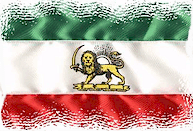

IMPERIAL EMBLEM

PERSIA
Iranian Freedom Fighters UNITE

Showing posts with label Americans. Show all posts
Showing posts with label Americans. Show all posts
Tuesday, April 01, 2008
Wednesday, March 07, 2007
United States Policy Towards Iran
R. Nicholas Burns, Under Secretary for Political Affairs Testimony Before the House Committee on Foreign AffairsWashington, DCMarch 6, 2007
INTRODUCTION
Thank you, Chairman Lantos, Ranking Member Ros-Lehtinen, and distinguished Members of the Committee for this opportunity to discuss our strategy to address the profound challenges Iran poses to our national security interests. We face a complex, interconnected set of four crises in the Middle East: the need to achieve a stable and democratic Iraq, to strengthen the democratically elected government of Lebanon, to block Iran’s nuclear and regional ambitions, and to establish the foundation for a final peace between the Israeli and the Palestinian people. This region is now the area of greatest importance for the U.S. worldwide, and critical interests are engaged in all of these areas. But beyond our responsibility to help stabilize Iraq, nothing is more vital to the future of America’s role in the Middle East than addressing the challenges posed by the radical regime in Iran, whose public face is the vitriolic President Mahmoud Ahmadi-Nejad. For nearly three decades, dealing with Tehran’s confrontational ideology and blatant anti-Americanism has been a persistent dilemma for every administration since that of President Carter. But never have our concerns regarding Iran’s intentions been more serious, nor the intricacies of Iranian politics more significant and the policy imperatives more urgent than they are today. Tehran has embarked on a dangerous course, repeatedly defying its obligations under international law – to say nothing of the normative standards of international behavior – and appalling the world with its vitriol and the most abhorrent, irresponsible rhetoric of any global leader in many years. Ahmadi-Nejad has declared that Iran’s nuclear program has “no brakes,” and the Iranian regime has brazenly disregarded demands from both the International Atomic Energy Agency and the United Nations Security Council for a suspension of its enrichment and related reprocessing activities. We are joined by the great majority of countries around the world who are concerned that Iran’s nuclear program is designed to produce a nuclear weapon. In proceeding with its efforts, the Iranian regime has also ignored the generous and historic incentives package offered by the P5 countries and Germany, as well as the United States' offer to begin serious negotiations with Tehran if it verifiably suspends enrichment at its Natanz facility. During the past week, I have had three discussions with my P5+1 counterparts from Russia, China, the United Kingdom, France, and Germany about a second and strengthened Chapter VII Security Council Resolution. In fact, formal deliberations are now beginning at the Security Council. We are pleased by the serious and very constructive talks we have had with our P5+1 partners. Iran must know that we are united in our aim to deny it a nuclear weapon. We have all agreed to try to pass such a resolution as quickly as possible to warn the Iranian regime that it is isolated internationally and needs to negotiate with us. Global leaders as diverse as India, Egypt, and Brazil have supported this effort at the IAEA. The Iranian government finds itself in profound isolation on the nuclear issue. Beyond its drive for nuclear weapons, Iran has endeavored to sow violence and instability throughout the region, particularly in the vulnerable democracies of Lebanon and Iraq. And as Tehran has escalated its long-standing and violent rejection of a Middle East peace settlement between the Israeli and the Palestinian people, its human rights record at home has once again taken a dismal turn.
We are responding to these challenges with a comprehensive strategy that relies on American diplomatic leadership and a strong multilateral coalition. First and foremost, we made clear to the Iranian regime that the provocative and destabilizing policies pursued by Ahmadi-Nejad will entail painful costs for Iran, including financial hardship, diplomatic isolation, and long-term detriment to Iran’s prestige and fundamental national interests. Secondly, and equally important, we have worked to alter the regime’s behavior and convince it that a cooperative, more appealing course is available to it. Though the challenge is great and the road may be long, I believe that this concerted diplomatic strategy is the best way forward for our country. Just a few months ago, Iran appeared to be riding high. It was proceeding unimpeded in its obvious campaign to develop a nuclear weapons capability. It had funded Hizballah’s irresponsible provocations that led to war against Israel last summer. In the closing months of 2006, the United States took significant steps to contain Iran’s regional aims and to press forward to isolate Tehran on the nuclear issue. We have coordinated a series of diplomatic initiatives with friends from across the world to knock Iran off its stride. This strategy appears to have sparked a divisive debate in Iranian ruling circles about whether to continue a confrontational course or agree to negotiations. Let me describe how we have applied this pressure to isolate and contain Iran’s ambitions. We have worked at the United Nations to shine a bright spotlight on Iran’s nuclear program. In December, the United Nations Security Council unanimously adopted Resolution 1737, imposing Chapter VII sanctions targeting Iran’s nuclear and ballistic missile programs. The resolution was a significant milestone following two years of patient diplomacy among the United States, our European partners, Russia, and China, and represented a turning point in international willingness to pressure the Iranian regime to comply with its obligations.
Outside of the Security Council, we have worked cooperatively with major governments to curtail business transactions with Iranian companies and individuals tied to Iran’s nuclear activities and support for terrorism. The Department of Treasury has used its authority under the International Emergency Economic Powers Act (IEEPA) to sanction Iranian Bank Sepah for providing support and services to entities involved in Iran’s missile programs. Additionally, the Department of the Treasury cut Iranian state-owned Bank Saderat off from all access to the U.S. financial system because of its support for terrorism. Banks worldwide have begun to recognize the serious risk associated with Iranian business with some beginning to scale back their Iran portfolios. We have also acted to blunt Iran’s regional ambitions. In Iraq, Iran continues to provide lethal support to select groups of Shia militants who target and kill U.S. and British troops, as well as innocent Iraqis. We have made clear to Tehran that this is unacceptable. As President Bush announced in January, our troops on the ground in Iraq will act to disrupt networks in Iraq—regardless of nationality—which provide deadly weapons to Iraqi groups. These actions are consistent with the mandate granted to the Multi-National Forces in Iraq by both the United Nations Security Council and the Iraqi Government to take all necessary measures to contribute to the maintenance of Iraq’s security and stability. We have an absolute and indisputable obligation to defend our soldiers from such attacks.
We are also working with France, Saudi Arabia, Egypt, Jordan, and others to signal our strong support for Prime Minister Siniora’s democratically elected government in Lebanon, to enforce the arms embargo imposed by Security Council Resolution 1701, and to prevent Iran and Syria from rearming Hizballah. We have stationed two carrier battle groups in the Gulf to reassure our friends in the Arab world that it remains an area of vital importance to us. And at the regional level, Secretary Rice last autumn launched a series of ongoing discussions with our GCC partners, as well as Egypt and Jordan, regarding issues of shared concern, including the threat posed by Iran. Combined with our long-term efforts to promote peace and stability and reassure allies, including Israel, these steps mark the natural evolution of our efforts to demonstrate international resolve against Iran’s disregard for international law and its aspirations to dominate the region. And they have all had an impact. Iran is now off-balanced, more isolated, and under more intense international scrutiny.
This U.S. policy of applying multiple points of pressure against the Iranian regime is the right course for us to follow. Despite the fulminations of President Ahmadi-Nejad, Iran is not impervious to financial and diplomatic pressure. It is clear to us that concerted international pressure can help to undercut the Iranian regime’s sense of ascendancy, and unnerve its overly confident leadership while clarifying to it the costs of its irresponsible behavior. While we are acting vigorously to isolate the Iranian government, we are also offering to it a diplomatic way forward. For this reason, Secretary Rice has agreed to join her P5+1 colleagues in direct discussions with Iran regarding the nuclear and other issues “at any place and at any time,” provided Iran verifiably suspends its enrichment-related and reprocessing activities. This avenue represents the best opportunity for Iran and the United States to begin resolving our differences. To this end, we have also agreed to participate this week in the “Neighbors Conference” sponsored by the Iraqi Government, where we will sit with Iran, Syria, and other countries and support strategies to end bloodshed in Iraq and divisive internal struggles. We hope all governments will seize this opportunity to improve relations with Iraq and to work for peace and stability in the region. And we hope, as well, that Iran will commit itself to a more constructive and positive role in Iraq as a result of those discussions . Diplomacy is our best course of action in blocking and containing the Iranian regime. I do not believe a military confrontation with Iran is either desirable or inevitable. If we continue our skillful diplomatic course and have the patience to see it play out over the mid to long-term, I am confident we can avoid conflict and see our strategy succeed. Our strong hope is that Iran will accept the offer to negotiate with the U.S. and our P-5 partners so that we can achieve a peaceful end to Tehran’s nuclear weapons ambitions. Any effective diplomatic strategy must provide one’s adversary with exit doors when, as Iran has certainly done, it paints itself into a diplomatic corner. While we are acting vigorously to contain Iran in the Middle East, we are also offering it a chance to negotiate with us. When the UN Security Council soon adopts a second sanctions resolution, the United States and our partners will also reaffirm our wish to negotiate. We hope the Iranian regime will reflect on its isolation and decide to meet us at the negotiating table. Part of charting a new course for U.S.-Iranian relations is intensifying our engagement with the Iranian people. While it is now not feasible for us to have formal diplomatic relations with Iran, it is within our grasp to bridge the divide between our peoples. So in addition to our diplomatic efforts to persuade Tehran to alter its foreign policy, we have launched a program to increase contacts between the American and Iranian peoples. We sent the U.S. National Wresting Team to compete in Iran in January; we are also bringing hundreds of Iranians on exchange programs to the United States. These efforts have been helped tremendously by Congressional support for the Administration’s 2006 supplemental funding request. In the long-term, assuaging the separation between our peoples is critical to overcoming the nearly 30-years estrangement that currently divides the U.S. from Iran. Our diplomatic success vis-à-vis Tehran, and the endurance and vitality of our international coalition, are no small achievements. They reflect the leadership of President Bush and the sustained efforts of Secretary Rice, the State Department, and contributions from other government agencies. As the President and Secretary Rice have reiterated—and I cannot emphasize this enough—we seek a diplomatic solution to the challenges posed by Iran. Today, I would like to provide some details on the steps we are pursuing at the United Nations and bilaterally to increase pressure on Iran to abandon its quest for a nuclear weapons capability. I will also touch briefly on our continued efforts to discourage the Iranian regime’s support for terrorism and extremism, while expanding engagement with the Iranian people.
IRANIAN NUCLEAR PROLIFERATION
The greatest immediate threat posed by the Iranian regime is its pursuit of a nuclear weapons capability. For more than 18 years, Iranian leaders pursued a clandestine enrichment program and other undeclared nuclear activities in violation of their international obligations. It is this continued abuse of the world’s trust that is at the heart of the international community’s impasse with Iran. The United States and the entire permanent membership of the UN Security Council recognize Iran’s right to peaceful, civil nuclear energy under relevant articles of the Nuclear Non-Proliferation Treaty (NPT). However, that right comes with responsibilities, paramount among them a legal obligation to forgo the pursuit of nuclear weapons and to subject all nuclear activities to International Atomic Energy Agency (IAEA) monitoring. As IAEA Director General ElBaradei’s most recent report to the Security Council makes clear, the Iranian regime remains in noncompliance with its international obligations and has been anything but transparent. Despite multiple requests over more than three years, the regime has yet to clarify several outstanding issues with the IAEA. As a result, the IAEA Director General says he is unable to verify that Iran’s program is solely peaceful. A review of Dr. ElBaradei’s report is instructive and alarming. Iran has repeatedly failed not only to meet the IAEA’s requirements; it has also failed to even have the courtesy of responding to many of the IAEA’s direct questions on behalf of a concerned international community. The regime has refused to enable the IAEA to clarify the past history of its P1/P2 centrifuge work, plutonium separation experiments, and uranium contamination. It has refused to agree to IAEA requests for access to Iranian officials and documentation, including a 15-page document that describes the procedures for casting and machining uranium into hemispheres, for which the only plausible purpose is weapons. And it has refused to accept and implement the safeguards measures that the IAEA believes are necessary to ensure non-diversion of enriched uranium at the Natanz enrichment plant.
The Iranian regime has, of course, had sufficient time to clarify questions regarding its nuclear activities. Since 2003, the IAEA Board of Governors has called on Iran to meet its obligations under the Nuclear Nonproliferation Treaty. On March 29, 2006, the UN Security Council adopted unanimously a Presidential Statement calling on Iran to fully suspend all enrichment-related and reprocessing activities and to cooperate with the IAEA’s ongoing inspections. Iran ignored these requests, as well as UNSC Resolution 1696, passed in July 2006, which made clear that if Iran did not comply by August 31, 2006, the Security Council would adopt appropriate measures under Article 41 of Chapter VII of the UN Charter, which provides for sanctions. Faced with the Iranian regime’s blatant disregard for its international nuclear obligations, the UN Security Council had no choice but to unanimously adopt Resolution 1737, in December 2006, imposing sanctions under Chapter VII. Specifically, Resolution 1737 required Iran to immediately suspend its uranium enrichment, reprocessing, and heavy water-related activities and to cooperate fully with the IAEA. It also inter alia imposed prohibitions on states’ ability to transfer proliferation-sensitive technology to Iran, sharply limited technical or financial assistance to the Iranian nuclear and ballistic missile programs, and required states to freeze the assets of key individuals and entities associated with both programs.
FINANCIAL PRESSURES
Beyond imposing an asset freeze on various Iranian entities and individuals associated with Tehran’s nuclear and ballistic missile program, Resolution 1737 also provides leverage to increase bilateral economic pressure outside of the United Nations. To this end, the Departments of State and the Treasury have engaged with foreign governments and private firms, reminding them of the financial and reputational risks of doing business with Iran.
Iran is one of the largest beneficiaries of official export credits and guarantees, with $22.3 billion in exposure reported by OECD countries as of the end of 2005. Noting that a number of major international banks have now reduced their business with Iran, we are also encouraging governments in Europe and Asia to reduce the official export credits they provide to Iran. Governments should not take on the financial risk that private companies are facing in that country. Many countries share our concerns and are starting to decrease their official lending. Some countries have capped their exposure at current levels, while others have begun scrutinizing Iranian credit applications to ensure they comply with the strict, nonproliferation guidelines contained in Resolution 1737. France, Germany, and Japan have reduced export credits limits for Iran, while others have committed privately to doing the same, and especially, reducing the medium and long-term credits that Iran uses for capital goods and project finance.
We worked last year with Congress on the reauthorization and amendment of the Iran and Libya Sanctions Act (ILSA) which, thanks to the success of our diplomatic and economic efforts with respect to Libya, is now simply the Iran Sanctions Act (ISA). ISA has been valuable in emphasizing to foreign governments and firms our concerns about Iran and highlighting the risks and potential consequences of investing there. Indeed, we attribute the continued lack of investment in Iran’s oil and gas sectors, in part, to ISA. In recent weeks, we have engaged relevant companies and countries about their potential investment in Iran’s oil and gas sector. In making clear our opposition to such deals, we have emphasized how they would undermine international efforts to resolve the nuclear issue, as well as the potential legal implications of future investment under our law. Most of these deals remain in the negotiation stage. Our discussions are intended to diminish the likelihood of seeing them finalized. More broadly, Iran continues to encounter great difficulties in attracting foreign investment to its hydrocarbon sector and few foreign companies have committed to developing Iranian oil and gas fields. Iran’s own behavior and policies have contributed to this situation, but ILSA/ISA has contributed to Iran’s poor investment prospects.
We are also utilizing other domestic authorities to limit Iran’s nuclear progress. Under Executive Order 13382, the United States designated 14 individuals and entities associated with Iran’s weapons of mass destruction and missile programs. Designated entities are denied access to the U.S. financial system and their assets in U.S. banks are frozen. Citing ties to WMD proliferation activities, the Treasury Department used domestic authorities to terminate Iran-based Bank Sepah and Bank Sepah International’s access to the U.S. financial system. We are encouraging foreign governments to scrutinize activities of Banks Saderat and Sepah, as well as other Iranian financial institutions in their jurisdictions, and, whenever appropriate, revoke their operating licenses. These targeted financial pressures have denied suspect Iranian individuals and entities access to the funds needed to sustain Iran’s nuclear program, and made clear to Iran that activities in defiance of international law will result in real economic consequences. Treasury Under Secretary Stuart Levey and I will continue to engage with our foreign partners regarding such economic pressures, as they are one of our most effective tools for making clear to the Iranian regime the cost of its continued defiance.
NEXT STEPS AT THE UNSC
We also anticipate additional action from the Security Council, which expressed its intent in Resolution 1737 to adopt additional sanctions under Article 41 of Chapter VII of the UN Charter if the IAEA found Iran to be in noncompliance. Last week, I met in London with my counterparts from China, France, Germany, Russia and the United Kingdom to discuss next-steps at the Security Council. Our discussions followed Secretary Rice’s meeting on February 22 with EU Foreign Policy Chief Javier Solana, Russian Foreign Minister Lavrov, and German Foreign Minister Steinmeier in Berlin. We have had a series of productive discussions in the past week regarding a second sanctions resolution to be adopted by the Security Council. dditionally, we have reiterated our common determination to resolve the nuclear issue diplomatically and considered how to best re-engage Iran. I am encouraged by the seriousness of these ongoing discussions and I am confident that members of the Security Council will continue to make clear to the Iranian regime the consequences of its actions. Iran’s continued refusal to suspend enrichment – despite the generous incentives package and offer of direct talks with the United States – is a missed opportunity. As Secretary Rice has reiterated many times, and I will reiterate here, that offer remains on the table. The Secretary will meet with her Iranian counterpart anytime, anywhere. All the Iranian Government must do is completely and verifiably suspend its enrichment and related reprocessing activities as the UN Security Council has mandated.
CURBING IRAN’S DESTABILIZING ACTIONS ABROAD
Looking beyond its nuclear aspirations, the Iranian regime’s aggressive foreign policy and hegemonic aspirations constitute an increasing threat to regional security and U.S. interests.
I noted in my opening remarks our serious concerns regarding Iran’s lethal support to Iraqi militants, and the steps we are taking to counter thee destructive activities in Iraq. But Iranian interference is also evident in Lebanon, where its efforts to rearm and financially bolster Hizballah threaten to set back the democratic progress of the past two years. President Ahmadi-Nejad’s repeated threats to “wipe Israel off of the map,” and the regime’s internationally condemned Holocaust denial conference in December, highlight regime hostility toward a major U.S. partner—as does continued Iranian financial and military support to Palestinian terrorist groups such as Hamas and Palestinian Islamic Jihad. As Secretary Rice noted during her recent testimony, we are intensifying our efforts to lay the foundation for a Palestinian state that can exist peacefully alongside Israel. We have also enhanced our support to Lebanon’s democratically elected government, and will sustain our efforts to enforce all applicable UN Security Council resolutions pertaining to the rearmament of Hizballah. More broadly, we are enhancing our security cooperation with longstanding partners throughout the region. The deployment of a second aircraft carrier battle group to the Gulf reinforces these efforts, reassures our allies, and underscores to Tehran our commitment to protect our vital interests.
BLOCKING IRAN’S SUPPORT FOR TERRORISM
No discussion of Iran would be complete without mentioning the regime’s record of supporting terrorism. Tehran has long been the world’s leading state sponsor of terrorism; the regime sponsored and was responsible for the deaths of scores of Americans in the 1980s and 1990s. Through its efforts to rearm Hizballah, the Iranian regime has violated its obligations under UNSCR 1701. And it has violated UNSCR 1267 and successor resolutions by failing to impose sanctions on al-Qaida and continues to refuse to bring to justice or confirm the whereabouts of senior al-Qaida members it detained in 2003.
Recognizing Iran’s role as the central banker of global terrorism, the Departments of State and the Treasury have enlisted foreign support in efforts to deny suspect Iranian individuals and entities access to the international financial system. The termination of Iranian Bank Saderat’s “U-turn” authorization effectively prohibits one of Iran’s largest banks from conducting business in U.S. dollars. Utilizing E.O. 13224, Treasury has also designated two entities that have functioned as Hizballah’s unofficial treasury by holding and investing the group’s assets and serving as intermediaries between the terrorist organization and international banks. Additionally, we have disrupted Hizballah’s financial support network by designating and blocking the assets of individuals and two entities affiliated with Hizballah in the Tri-Border region of South America.
EMPOWERING IRANIAN CIVIL SOCIETY AND ENGAGING THE IRANIAN PEOPLE
Before I conclude, I would like to discuss briefly the Iranian regime’s repressive treatment of its own people. The regime recently celebrated the achievements of the 1979 Revolution. But the regime’s conduct is not equal to the aspirations of the Iranian people. The regime’s record of human rights abuse remains among the worst in the world. As the annual Human Rights Report outlines we are releasing today emphasizes, the record has worsened over the past year. The regime regularly abuses its own people, restricting basic freedoms of expression and assembly to discourage political opposition. The regime has purged liberal university professors; threatened, jailed and tortured journalists; and harassed student organizations and other groups and just this week violently disrupted a women’s rally in Tehran only days before the International Women’s Day. The regime denies its people freedom of expression by cracking down on bloggers, closing independent newspapers, censoring internet use and blocking satellite dish ownership—all in an effort to control their access to information. These actions make one ask—What does the regime have to hide? And why is it afraid of its own people? For years, the regime has prevented transparent judicial proceedings and persecuted women and minority ethnic and religious groups. The regime’s decision to disqualify hundreds of candidates from participating in the December 15, 2006 elections prevented the Iranian people from choosing government officials representing a range of viewpoints. The Iranian people deserve better from their leaders. They are a proud, well-educated people with a rich history. To counter such abuses, we are promoting greater freedom in Iran by funding a variety of civil society programs. Our efforts to foster Iran’s civil society have expanded. The Congress apportioned $66.1 million in the FY 06 Supplemental to support our efforts in Iran. $20 million of these funds are going to support civil society, human rights, democratic reform and related outreach, while $5 million was given to the Bureau of International Information Programs (IIP) for increased Persian language electronic and speaker programming about American society, institutions, policy and values. An additional $5 million was allocated to the Bureau of Education and Cultural Affairs (ECA) for new cultural and educational exchange programs to increase mutual understanding between our two peoples. The Congress allocated the remaining $36.1 million of FY 2006 supplemental Iran funds directly to the Broadcasting Board of Governors (BBG) for media programming into Iran, including our VOA Farsi television service and Radio Farda. These funds have allowed us to initiate a wide range of democracy, educational, and cultural programs, as well as significantly expanded efforts to improve the free flow of information to the Iranian people. We also allocated over $11 million of the FY 2006 base budget to support Iranian democracy programs, with other funds allocated to BBG, public diplomacy, and exchange programs. This builds on programming that we already had underway in FY 2004 and FY 2005. The Congress allocated the remaining $36.1 million of FY 2006 supplemental Iran funds directly to the Broadcasting Board of Governors (BBG), for media programming into Iran, including our VOA Farsi television service and Radio Farda. Our programs are open to all who are committed to peaceful, democratic progress in Iran. Their goal is to support different parts of Iranian society by promoting basic human rights and religious freedoms; building civil society; improving justice, accountability and the rule of law; providing access to unbiased information; and promoting a deeper understanding of our culture, values and ideas. Given Iran’s restricted political climate, progress towards our goals has been predictably difficult. We have accordingly employed all possible safeguards to enable our partners on the ground to pursue their work. Projects are moving forward, and many brave men and women are helping promote basic civil rights and the necessity of political dialogue. In the long-term, we hope that a more open environment that encourages, rather than represses, dialogue, will stimulate a change in the behavior of the Iranian Government. State Department officials are also reaching out to the Iranian people to convey our policies. Secretary Rice and I have given interviews on Persian language media highlighting the Iranian people’s aspirations for increased respect for human rights and civil liberties, as well as a more democratic, open government. With the recently appropriated funds, the United States has resumed official educational and cultural exchange programs between the United States and Iran, which the U.S. Government suspended at the time of the Iranian Revolution in 1979. In late 2006, a group of medical professionals were the first Iranians to visit the United States as part of this reinvigorated effort. Their non-political visit brought them in contact with medical professionals from the Centers for Disease Control, Harvard Medical School, and other major medical institutions. Several professional, athletic, and cultural exchanges are planned for 2007, with the goal of building greater understanding between the people of the United States and of Iran. In January, the USA Wrestling Team traveled to Bandar Abbas, Iran, at our request, where it was greeted warmly by the Iranian people and loudly cheered during the competition. We have extended an invitation to the Iranian National Wrestling Team to travel to the United States, and are confident the American people will extend an equally warm welcome. It is our hope that increased exchanges will provide the Iranian people with a clearer and more accurate understanding of American society, culture and democratic values. For FY 2008, the President has requested over $100 million in Iran funding, including roughly $20 million for VOA’s Persian service and $8.1 million for Radio Farda, as well as $5.5 for consular affairs, and $75 million in economic support funds to civil society and human rights projects in Iran. We appreciate the Committee’s continued support of efforts in these areas which are a vital component of our comprehensive Iran strategy. The United States stands with the Iranian people in their struggle to advance democracy, freedom, and the basic civil rights of all citizens. We believe the Iranian people have made clear their desire to live in a modern, tolerant society that is at peace with its neighbors and is a responsible member of the international community. We are confident that if given the opportunity to choose their leaders freely and fairly, the Iranian people would elect a government that invests in developments at home rather than supporting extremism abroad; a government that would choose dialogue and responsible international behavior rather than seeking to produce nuclear weapons; a government that would nurture a political system that respects all faiths, empowers all citizens, and returns Iran to its historic place in the community of nations.
CONCLUSION
The United States is committed to pursuing a diplomatic solution to the challenges posed by Iran. This will require patience and persistence. We are making every effort to improve U.S.-Iranian relations. But that cannot happen without a change in the Iranian regime’s policies. Secretary Rice offered the Iranian Government an extraordinary opportunity, in June 2006, when she pledged to engage in direct talks alongside Russian, China, and our European partners if Iran verifiably suspends enrichment and cooperates with the IAEA. This offer remains on the table, and we will continue to make clear to the Iranian regime that the best to way to ensure its security is by complying with, not ignoring its international nuclear obligations.
Released on March 6, 2007
Sunday, March 04, 2007
Iran Rejects direct US Talks at Iraq Conference but what about this then?
Which is it :
Mohammad Hosseini told reporters. "We are in the process of examining our participation in the Baghdad conference. If it is our interests we will participate."
Iran's top security official Ali Larijani said last week that Tehran would take part in the conference on the condition that it was in the interests of its violence-plagued neighbour.
March 04, 2007 Agence France Presse
Iran on Sunday said it was still considering whether to take part in a conference next month on Iraq's security and had no intention of holding bilateral talks with the United States at the meeting. The Baghdad conference aimed at quelling the violence in Iraq is set to include the United States and neighbours of Iraq such as Iran and Syria, in a rare opportunity for the enemies to sit down at one table. "No bilateral meetings (with the United States) are planned at the Baghdad conference," foreign ministry spokesman Mohammad Hosseini told reporters. "We are in the process of examining our participation in the Baghdad conference. If it is our interests we will participate." Hosseini also repeated that the United States had made "proposals" for talks with Iran although he did not specify if these concerned the Baghdad conference. "Recently the Americans have made proposals for talks through different channels about Iraq and security in that country. We are in the process of examining these requests." "Our priority is to help the Iraqi government to reinforce stability and security in the country. Insecurity in Iraq is not in our interests. There is a historic relationship between our two countries" Iran's top security official Ali Larijani said last week that Tehran would take part in the conference on the condition that it was in the interests of its violence-plagued neighbour. Iran and the United States have had no diplomatic relations since Washington severed ties in 1980 in the wake of the seizure of its embassy in Tehran by Islamist students. Any official contacts between the two sides would mark a major break in the frozen relations, which have been marked by mutual recriminations and enmity over almost three decades. Washington, which has repeatedly accused Tehran and its close ally Damascus of fomenting the violence in Iraq, said it would join the conference and would not rule out possible contacts between US envoys and Iranians.
Saturday, March 03, 2007
Iraqi Leader: Cabinet Shakeup in 2 Weeks
BAGHDAD, Iraq (AP) - Iraq's prime minister said Saturday he will reshuffle his Cabinet within two weeks and pursue criminal charges against political figures linked to extremists as a sign of his government's resolve to restore stability during the U.S.-led security crackdown in Baghdad.Prime Minister Nouri al-Maliki also told The Associated Press during an interview at his Green Zone office that Iraq will work hard to ensure the success of a regional security conference. The conference in Baghdad, tentatively set for next weekend, is expected to bring together all of Iraq's neighbors, including Iran and Syria, as well as the United States and Britain to find ways to ease this country's security crisis.Iran has not announced whether it will attend, but Iraqi officials believe that Tehran will send a representative. Al-Maliki has been under pressure from the U.S. to bring order into his factious government of Shiites, Sunnis and Kurds since it took office last May. Rumors of Cabinet changes have surfaced before, only to disappear because of pressure from coalition members seeking to keep power.Nevertheless, al-Maliki said there would be a Cabinet reshuffle ``either this week or next.'' After the changes are announced, al-Maliki said he would undertake a ``change in the ministerial structure,'' presumably consolidating and streamlining the 39-member Cabinet. The prime minister did not say how many Cabinet members would be replaced. But some officials said about nine would lose their jobs, including all six Cabinet members loyal to radical anti-American Shiite cleric Muqtada al-Sadr, an al-Maliki ally.Al-Sadr also controls 30 of the 275 parliament seats, and his support for al-Maliki has been responsible for the government's reluctance to crack down on the cleric's Mahdi Army militia, blamed for much of the Shiite-Sunni slaughter of the past year. U.S. officials had been urging al-Maliki to cut his ties to al-Sadr and form a new alliance of mainstream Shiites, moderate Sunnis and Kurds. Al-Maliki had been stalling, presumably at the urging of the powerful Shiite clerical hierarchy that wants to maintain Shiite unity. But pressure for change has mounted since President Bush ordered 21,500 U.S. troops to Iraq last January despite widespread opposition in Congress and among the U.S. public - weary of the nearly five-year-long war. Last month, U.S. and Iraqi troops arrested Deputy Health Minister Hakim al-Zamili, an al-Sadr ally, for allegedly diverting millions of dollars in government funds to the Mahdi Army and allowing death squads to use ambulances and government hospitals to carry out kidnappings and killings. During the interview, al-Maliki said other top officials would face prosecution for ties to insurgents, sectarian militias and death squads - including members of parliament. ``There has been coordination between us and the Multinational Forces ... starting at the beginning of this year ... to determine who should arrested and the reasons behind arresting them,'' he said. Al-Maliki did not elaborate on the U.S.-Iraqi coordination but said Iraqi judicial authorities were reviewing case files to decide which to refer to an Iraqi investigative judge, who must decide whether there is enough evidence to order a trial. Al-Maliki said he was encouraged by Iraqi public response to the new Baghdad security operation - which has led to a sharp drop in violence in the capital. He also defended his government, saying it managed to ``achieve a lot of harmony and stability'' despite attacks by al-Qaida and Saddam Hussein loyalists. The prime minister did not say how many politicians and officials might be targeted for formal investigation, an Iraqi legal step that corresponds to a grand jury probe. But five senior Iraqis - two of them generals and three from Shiite and Sunni parties - have told the AP that up to 100 prominent figures could face legal proceedings. The five spoke on condition of anonymity because they were not authorized to talk about the subject to the media. All five had direct knowledge of the case review. U.S. officials have said privately that a number of prominent Iraqis were believed to have ties to armed groups. One Shiite parliament member, Jamal Jaafar Mohammed, is believed to have fled to Iran after U.S. authorities learned that he was convicted by a Kuwaiti court in absentia and sentenced to death in the 1983 bombing of the U.S. and French embassies in Kuwait. Mohammed fled Kuwait for Iran before he could be arrested and returned after the fall of Saddam Hussein in 2003. U.S. officials have alleged he was a conduit for Iranian weapons and supplies smuggled to Shiite militias. U.S. military officials have expressed concern over alleged Iranian weapons shipments and financial support to Shiite parties allied with al-Maliki. The Shiite-led government hopes the upcoming regional conference will ease tensions between the U.S. and Shiite-dominated Iran - and allay Washington's fears of Tehran's influence here. The U.S. also hopes the conference will encourage Syria and other Arab countries - most of them Sunni-led - to increase their support for Iraqi's leadership, despite regional unease over the Shiite-led government's ties to Iran. ``In fact the importance of the upcoming conference lies in the fact that the Iraqi government has the ability to serve as a proper venue for solving conflicts,'' al-Maliki said. ``So we will exert the utmost effort to find solutions to all pending questions, either among regional countries themselves or between them and Iraq, or between them and powers such as the U.S. and Britain and the international community.''
Friday, March 02, 2007
TODAYS LATEST NEWS, FROM WHERE WE LEFT OFF LAST
Posted 2/3/2007 @ 12:38:56 GMTA Muckraker on the Wane?It's become a habit to greet whatever journalist Seymour Hersh writes with reverence. However, after his ludicrous claim last summer that Israel's war in Lebanon was a trial run for an American bombing of Iran—an accusation undermined by postwar narratives showing the confused way Israel and the United States responded to the conflict—my doubts hardened. In his latest New Yorker piece, Hersh maintains he has unearthed more dirt on the Bush administration: The U.S. is involved in containing Iran by directly or indirectly "bolstering Sunni extremist groups that espouse a militant vision of Islam and are hostile to America and sympathetic to Al Qaeda." more By Reason Magazine
Posted 2/3/2007 @ 12:31:52 GMTIran Cleric Says Pakistan Becoming 'Terrorist Sanctuary'A top Iranian cleric accused Pakistan on Friday of becoming a "terrorist sanctuary," following an upsurge of violence on the two nations' border area that Tehran blames on plots by arch foe the United States and on Pakistan's inability to control its border. more By Agence France Presse
Posted 2/3/2007 @ 12:21:21 GMTIf Iran Gets the BombWith the Bush administration now happily basking in the glory of positive coverage in The New York Times and enjoying the warm embrace of the James Baker/Brent Scowcroft wing of the Republican Party, it is hard to imagine that it will reconsider its decision to abandon the Bush Doctrine. That doctrine, named after President George W. Bush and most forcefully enunciated by him, eschewed appeasement of terror-supporting, weapons of mass destruction-proliferating enemies of the free world. more By The Jerusalem Post
Posted 2/3/2007 @ 11:1:44 GMTIran Sanctions Talks Make ProgressMajor powers of the world have made progress Thursday on imposing further sanctions against Iran for defying a UN deadline and refusing to suspend uranium enrichment, even though some differences still persist, UN diplomats said. more By Nasdaq
Posted 2/3/2007 @ 10:56:25 GMTAnalysis: U.S. Intel on Nukes in DoubtVIENNA, Austria -- New doubts are arising about the accuracy of U.S. intelligence on the nuclear programs in North Korea and Iran, only a few years after faulty warnings about weapons of mass destruction helped President Bush justify the invasion of Iraq. more By The Associated Press
Posted 2/3/2007 @ 10:53:25 GMTAhmadinejad: U.S., Israel Cause ProblemsKHARTOUM, Sudan -- Iran's president blamed the United States and Israel for the world's problems Thursday in a lecture to Sudanese officials and intellectuals during his visit to Sudan. more By The Associated Press
Posted 2/3/2007 @ 10:39:37 GMTStudent Rebels in Iran Expelled and Earmarked for ArmyIranian students involved in an angry protest against the president, Mahmoud Ahmadinejad, have been expelled and earmarked for compulsory military service in an apparent act of official retribution. more By The Guardian
TELL THE DOOR .....HOPING THAT THE WALL TOO WILL HEAR......
"Algeria became the pivotal Third World state, but the cost of its status - above all the financial cost - was staggering. It ate up millions of dollars for which the country had a crying need ... Gradually, the gap between Ben Bella's domestic and foreign policies grew wider. The contrast deepened. Algeria had earned an international reputation as a revolution state ... it was an example for the non-European continents, a model, bright and entrancing; while at home, the country was stagnating; the unemployed filled the square of every city; there was no investment; illiteracy ruled, bureaucracy, reaction, fanaticism ran riot; intrigues absorbed the attention of the government ... The country cannot carry the burden of these polices. It cannot afford to and it has no interest in them."
The matter with Iran Fred Halliday 1 - 3 - 2007
Fred Halliday is professor of international relations at the LSE, and visiting professor at the Barcelona Institute of International Studies (IBEI). His books include Islam and the Myth of Confrontation (IB Tauris, 2003) and 100 Myths About the Middle East (Saqi, 2005)
The key to understanding Iran's contemporary role in the middle east is less its millennia of statehood or its Shi'a identity than its political dynamic as a revolutionary state, says Fred Halliday. A few years ago, during a visit to Tehran to give some lectures at the foreign ministry research and training institute, I was taken to lunch by a senior Iranian diplomat at a once fashionable Italian restaurant in the northern middle-class suburb of Tajrish. Educated as a scientist in the United States before the 1979 revolution, he had been an important figure in the post-revolutionary regime, and later a senior diplomat. I had met him at various conferences on European-Iranian relations and we had struck up something of a rapport. On this occasion, after the usual semi-official tour d'horizon, we began talking about the early history of the Iranian revolution and of its foreign policy.
"We made three big mistakes", he said: first, in holding the American diplomats hostages for a year and a half and thereby deeply antagonising the US; second, by not accepting the very favourable peace which Saddam Hussein had offered in the summer of 1982, when Iran had the upper hand in the war, then already two years old; and third - to me the most surprising of his points - in not supporting the communist regime that came to power in Afghanistan in 1978, and instead backing the pro-American guerrillas that (with eventual success) opposed them.
The reflections of this diplomat are of considerable relevance to the situation in which Iran finds itself today. For sure, the pressure being put on Iran by the US is arrogant and in many ways illegal. For Washington to protest about Iranian "interference" in Iraq when it is the US which invaded the country in 2003, and when it is Iranian allies (if not clients) who staff much of the government and armed forces of Iraq, is also ridiculous. So too is the attempt to blame Iran for the spread of Sunni terrorism, including al-Qaida activities, in the region. No country has a greater interest in the stability of Iraq than Iran, a point Washington has stupidly failed to note these four years past.
Read the rest here :http://www.opendemocracy.net/themes/article.jsp?id=6&articleId=4396
Thursday, March 01, 2007
Iraq says police kill dozens of al Qaeda members
By Waleed Ibrahim
BAGHDAD (Reuters) - Iraqi security forces killed dozens of al Qaeda militants who attacked a village in western Anbar province on Wednesday, during fierce clashes that lasted much of the day, police officials said on Thursday. Sunni tribal leaders are involved in an escalating power struggle with Sunni al Qaeda for control of Anbar, a vast desert province that is the heart of the Sunni Arab insurgency in Iraq. Interior Ministry spokesman Abdul Karim Khalaf said foreign Arabs and Afghans were among some 80 militants killed and 50 captured in the clashes in Amiriyat al Falluja, a village where local tribes had opposed al Qaeda. A police official in the area, Ahmed al-Falluji, put the number of militants killed at 70, with three police killed. There was no immediate verification of the number of casualties from medical sources. A U.S. military spokesman in the nearby city of Falluja, Major Jeff Pool, said U.S. forces were not involved in the battle but had received reports from Iraqi police that it lasted most of Wednesday. He could not confirm the number killed. Another police source in Falluja said dozens were killed."Because it was so many killed we can't give an exact number for the death toll," the police source told Reuters. Witnesses said dozens of al Qaeda members attacked the village, prompting residents to flee and seek help from Iraqi security forces, who sent in police and soldiers.
POWER STRUGGLE
The escalating power struggle within the Sunni community in Anbar comes as U.S. and Iraqi troops concentrate efforts in Baghdad to stem violence between Shi'ites and Sunnis that is pushing the country to civil war. It also occurs ahead of a planned reinforcement in Anbar by 4,000 U.S. troops, who could find themselves in the middle of the deadly rivalry. The U.S. military has encouraged an alliance of Sunni tribesmen against al Qaeda in the province, the deadliest place for American troops in Iraq. A lorry bomb last Saturday near a Sunni mosque in Ramadi, the capital of Anbar, killed 52 people. That blast occurred a day after the mosque's imam made a speech criticising al Qaeda. The U.S. military says it cannot defeat al Qaeda in Anbar without the help of the traditionally minded tribal leaders, who oppose the militant group's plan to impose an Islamic caliphate. Tribesmen and al Qaeda militants have fought recent battles in towns and villages along the length of the Euphrates valley from Falluja, west of Baghdad, to the Syrian border. In other violence in the region, a car bomb targeting a convoy of cars carrying guests celebrating the wedding of a policemen killed five people and wounded 10 in Falluja on Thursday, a separate police source said. The number of Iraqi civilian deaths in February was the lowest for four months, figures from Iraq's interior, defence and health ministries showed. A new security offensive in Baghdad was launched midway through the month. But at 1,645 civilian deaths, the figures provided by ministry officials are still far above the 545 civilian deaths recorded a year ago during February 2006.
"A cemetery of dreams."
Maintaining Perspective
By Fouad Ajami / Posted 2/25/07 -
'It's too soon to tell," The late Chinese leader Zhou Enlai is reported to have answered when asked for an evaluation of the significance of the French Revolution of 1789. This was nearly two centuries after the great upheaval of France. evolutions are full of cunning, and the Iranian Revolution, now almost three decades old, has been no exception-cunning and ferocity side by side, the talk of a revolutionary millennium often concealing the skills of a leadership steeped in the ways of the bazaar. Shrewd players, these clerical leaders have found the cracks in the order of states around them. Brutal men, they rule a society of great historical sophistication. Given room to maneuver by a substantial windfall of oil income, they have made their nation a player of consequence in its neighborhood. Sly and opportunistic, Iran's rulers have been able to pick and choose at a time, and in a place, of great volatility. American power swept away two regimes that the Iranians dreaded-the Taliban in Afghanistan and Saddam Hussein in Iraq. True, America was now a land power on Iran's flanks; the Iranians ducked at first, then gathered themselves as the American burden grew. Mixing bravado and bluff, and granting proxies in Palestine and Lebanon, the leaders of the Iranian theocracy appear to have succeeded in spreading the image of a mighty power able to have its way in the world. For some, that great arc stretching from the Persian Gulf to the Mediterranean is now a battleground between Pax Americana and the Persians. This belief is in part due to the abdication of the Arab states, their virtual absence from the contest of nations.


There is bigotry in Arab lands, an animus on the part of the Sunni majority toward the political emancipation of the Arab Shiites. Arab diplomats and leaders shy away from Iraq-the pitiless jihadists are the only Arabs who come to Iraq-but the Iranians are present in force as pilgrims and traders and troublemakers and intelligence operatives. "A cemetery of dreams." Iran is a radical player in the world of states, to be sure, but we should not overstate its power. We should not fall for the Persian bluff. It is important that we do all we can to thwart Iran's nuclear ambitions and to checkmate it in arenas that count, but we should always remember that this is a society swimming against the tide of history and confronting the limits of its capabilities. There is an Iranian role in Iraq, but it should not be exaggerated. It is not true that the Iraqi political class marches to the Iranian drummer. It is well known that Iraqi Prime Minister Nouri al-Maliki spent his years of exile in Syria and kept his distance from the Iranians.


"Iraq is a cemetery of dreams," a thoughtful Iraqi observed to me of his country. "Iranian dreams, no less than American dreams perhaps." Iraqis are a tough breed, and the notion that they are eager to take their country into a Persian dominion is unconvincing. The Iranians dwell virtually alone in the House of Islam, separated by language and culture, marked by their Shiism. Then there are the troubles that count-the disabilities at home. Iran's deranged president, Mahmoud Ahmadinejad, came into power promising to put Iran's oil wealth "on the dinner table." But the Iranian economy is on the ropes. Hyperinflation, the drying up of international credit lines, and the astounding growth in energy consumption in Iran are bringing the country to the edge of crisis. The price of bread and meat and basic commodities has risen by as much as 25 percent. To tranquilize the realm, gasoline is subsidized well below its cost, and domestic consumption now accounts for a stunning 40 percent of Iran's oil production. Dire predictions now hold that the country will be unable to export much oil a decade from now. The true believers will proclaim that revolutionary purity trumps all, but worldly needs and affairs ultimately prevail. A society that spends $20 billion a year to subsidize the price of energy, electricity, and gasoline will in the end have to contend with the wrath and disappointment of its people. There is swagger in Iran, and there is menace, for its rulers are without scruples. Terrorism, for them, is always an option. But theirs is a vulnerable and brittle society. There is no need to "engage" them and bail them out as they stumble. The regime should be harassed, contained, and held to account. We may not have to wait two centuries to pronounce on the fate of this revolution. The swagger abroad and the rot at home: It is a trajectory we are all too familiar with by now.This story appears in the March 5, 2007 print edition of U.S. News & World Report.
By Fouad Ajami / Posted 2/25/07 -
'It's too soon to tell," The late Chinese leader Zhou Enlai is reported to have answered when asked for an evaluation of the significance of the French Revolution of 1789. This was nearly two centuries after the great upheaval of France. evolutions are full of cunning, and the Iranian Revolution, now almost three decades old, has been no exception-cunning and ferocity side by side, the talk of a revolutionary millennium often concealing the skills of a leadership steeped in the ways of the bazaar. Shrewd players, these clerical leaders have found the cracks in the order of states around them. Brutal men, they rule a society of great historical sophistication. Given room to maneuver by a substantial windfall of oil income, they have made their nation a player of consequence in its neighborhood. Sly and opportunistic, Iran's rulers have been able to pick and choose at a time, and in a place, of great volatility. American power swept away two regimes that the Iranians dreaded-the Taliban in Afghanistan and Saddam Hussein in Iraq. True, America was now a land power on Iran's flanks; the Iranians ducked at first, then gathered themselves as the American burden grew. Mixing bravado and bluff, and granting proxies in Palestine and Lebanon, the leaders of the Iranian theocracy appear to have succeeded in spreading the image of a mighty power able to have its way in the world. For some, that great arc stretching from the Persian Gulf to the Mediterranean is now a battleground between Pax Americana and the Persians. This belief is in part due to the abdication of the Arab states, their virtual absence from the contest of nations.
There is bigotry in Arab lands, an animus on the part of the Sunni majority toward the political emancipation of the Arab Shiites. Arab diplomats and leaders shy away from Iraq-the pitiless jihadists are the only Arabs who come to Iraq-but the Iranians are present in force as pilgrims and traders and troublemakers and intelligence operatives. "A cemetery of dreams." Iran is a radical player in the world of states, to be sure, but we should not overstate its power. We should not fall for the Persian bluff. It is important that we do all we can to thwart Iran's nuclear ambitions and to checkmate it in arenas that count, but we should always remember that this is a society swimming against the tide of history and confronting the limits of its capabilities. There is an Iranian role in Iraq, but it should not be exaggerated. It is not true that the Iraqi political class marches to the Iranian drummer. It is well known that Iraqi Prime Minister Nouri al-Maliki spent his years of exile in Syria and kept his distance from the Iranians.
"Iraq is a cemetery of dreams," a thoughtful Iraqi observed to me of his country. "Iranian dreams, no less than American dreams perhaps." Iraqis are a tough breed, and the notion that they are eager to take their country into a Persian dominion is unconvincing. The Iranians dwell virtually alone in the House of Islam, separated by language and culture, marked by their Shiism. Then there are the troubles that count-the disabilities at home. Iran's deranged president, Mahmoud Ahmadinejad, came into power promising to put Iran's oil wealth "on the dinner table." But the Iranian economy is on the ropes. Hyperinflation, the drying up of international credit lines, and the astounding growth in energy consumption in Iran are bringing the country to the edge of crisis. The price of bread and meat and basic commodities has risen by as much as 25 percent. To tranquilize the realm, gasoline is subsidized well below its cost, and domestic consumption now accounts for a stunning 40 percent of Iran's oil production. Dire predictions now hold that the country will be unable to export much oil a decade from now. The true believers will proclaim that revolutionary purity trumps all, but worldly needs and affairs ultimately prevail. A society that spends $20 billion a year to subsidize the price of energy, electricity, and gasoline will in the end have to contend with the wrath and disappointment of its people. There is swagger in Iran, and there is menace, for its rulers are without scruples. Terrorism, for them, is always an option. But theirs is a vulnerable and brittle society. There is no need to "engage" them and bail them out as they stumble. The regime should be harassed, contained, and held to account. We may not have to wait two centuries to pronounce on the fate of this revolution. The swagger abroad and the rot at home: It is a trajectory we are all too familiar with by now.This story appears in the March 5, 2007 print edition of U.S. News & World Report.
0
comments

 Labels:
Americans,
Iran,
Iraq,
Middle East,
Shia,
Sunni,
US Naval Vessel. Persian Gulf,
USA,
War
Labels:
Americans,
Iran,
Iraq,
Middle East,
Shia,
Sunni,
US Naval Vessel. Persian Gulf,
USA,
War
Subscribe to:
Posts (Atom)




 Posts




 اخبار مربوط به زندانیان سیاسی و نقض حقوق بشر







 Tulips in Holland