

WATCH THIS VIDEO : http://www.youtube.com/watch?v=ODOdTTntMF0
About This Video June 2004: Added: August 21, 2007 : http://www.blogger.com/
The success of the new government in Iraq rests on one man. Ayotollah Sistani has the power to unseat any government and unleash civil war. "If Ayatollah Sistani declares Jihad, I will put down my tools, say farewell to my family, and go to war," declares one man. Another refers to him as "our nuclear timebomb." Sistani hasn't left his house in six years and refuses interviews to anyone. But the vast majority of the country will do exactly as he asks, whatever it may be: Sistani is the leader of 180 million Shia Muslims worldwide. For now, he's urging moderation but the violence unleashed by his rival, Moqtada al-Sadr, who commands a fraction of the support of Sistani, reveals just how dangerous he could be if he called for jihad.
Rare footage of Ayatolah Ali Sistani and Mirza Javad Tabrizi : MrMehdi
Ali al-Sistani : TheYoungTurks
Ayatollah Khoei : hiqbal007
Sistani Verdict : supra786
Are you Sunni or Shia? - Civil War is Worse than Genocide : lostprophet786
Sistani in the US media : roadstoiraq
Re: Bill Maher on Sistani.org - by Seyed Mostafa PART 1 : almahdi140
Cannon Fodder - Iraq : journeymanpictures
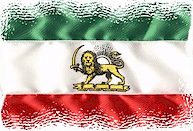
IMPERIAL EMBLEM

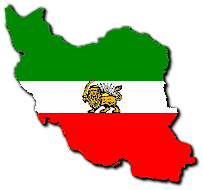
PERSIA
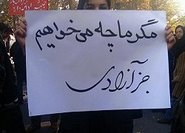
Iranian Freedom Fighters UNITE
Showing posts with label Sistani. Show all posts
Showing posts with label Sistani. Show all posts
Wednesday, December 19, 2007
Thursday, September 06, 2007
After Talks With Bush, Maliki Visits Top Shiite Cleric to Discuss Plans
Prime Minister Nuri Kamal al-Maliki of Iraq, second from right, prayed at Imam Ali shrine yesterday. He was in Najaf to meet with Grand Ayatollah Ali al-Sistani.

By SABRINA TAVERNISE : Published: September 6, 2007
BAGHDAD, Sept. 5 — Prime Minister Nuri Kamal al-Maliki, under significant American pressure to break the stalemate in Iraq’s government, flew to the holy city of Najaf on Wednesday for talks with the country’s top Shiite cleric. The meeting with Grand Ayatollah Ali al-Sistani, who as Iraq’s most powerful religious leader influences millions of Iraqi Shiites, took place two days after Mr. Maliki met President Bush on an air base in western Iraq.
In Najaf, Mr. Maliki said Mr. Bush had “carried a message of support to the Iraqi government.”
Mr. Maliki last met with Ayatollah Sistani in October, during a disagreement with the prime minister’s American supporters over his progress in stabilizing the country, particularly in reining in militias. A delegation of senior government officials met with the ayatollah in December. “I came here carrying a message of Iraq and the Iraqi government,” Mr. Maliki said after the meeting. “I raised before him my viewpoints to form a government of technocrats.” Mr. Bush’s top officials in Iraq, Gen. David H. Petraeus and Ambassador Ryan C. Crocker, will deliver to Congress next week a broad assessment of American policy in Iraq, and a central focus will be the effectiveness of Mr. Maliki’s government. Mr. Maliki also spoke of the Shiite-on-Shiite violence that left scores dead last week during a Shiite religious festival in the southern city of Karbala, saying that no religious place should be protected by armed guards, but instead by the Iraqi Army at a distance. The fighting spread when rival Shiite militias fought each other near a holy shrine. “This idea will avoid a lot of problems for us, and this is what I am going to discuss with local authorities in Najaf and in Karbala,” he said. The American military said it had captured a “highly sought individual” whom it suspected of belonging to the Iranian Revolutionary Guard. Soldiers captured the man in a raid before dawn in Karbala. The military said it suspected him of coordinating the transport of Iraqis into Iran for training in insurgency tactics and of aiding militants in Baghdad. The soldiers also seized computers, communication devices, documents and photographs. Mr. Maliki said again that he was considering replacing Sunni ministers who, in protest of what they say is the Maliki government’s sectarianism, walked out of his cabinet, contributing to the current political paralysis. But he said he was still working hard to bring them back into the fold. “If they decide not to go back, then the posts can’t remain vacant,” he said, “and we will choose ministers according to the standards of competence.”
New U.N. Envoy to Iraq
UNITED NATIONS, Sept. 5 — Staffan de Mistura, a veteran of many United Nations operations in the Middle East, was chosen Wednesday as the organization’s top envoy to Iraq, replacing Ashraf Qazi, who was assigned Tuesday to lead United Nations operations in southern Sudan. Mr. de Mistura served under Mr. Qazi in 2005 and 2006 as the deputy United Nations representative in Iraq. Before that he spent four years in southern Lebanon as a personal representative of Kofi Annan, then the secretary general. Mr. de Mistura, who is of Italian and Swedish descent, is now director of the United Nations Staff College in Turin, Italy.
By SABRINA TAVERNISE : Published: September 6, 2007
BAGHDAD, Sept. 5 — Prime Minister Nuri Kamal al-Maliki, under significant American pressure to break the stalemate in Iraq’s government, flew to the holy city of Najaf on Wednesday for talks with the country’s top Shiite cleric. The meeting with Grand Ayatollah Ali al-Sistani, who as Iraq’s most powerful religious leader influences millions of Iraqi Shiites, took place two days after Mr. Maliki met President Bush on an air base in western Iraq.
In Najaf, Mr. Maliki said Mr. Bush had “carried a message of support to the Iraqi government.”
Mr. Maliki last met with Ayatollah Sistani in October, during a disagreement with the prime minister’s American supporters over his progress in stabilizing the country, particularly in reining in militias. A delegation of senior government officials met with the ayatollah in December. “I came here carrying a message of Iraq and the Iraqi government,” Mr. Maliki said after the meeting. “I raised before him my viewpoints to form a government of technocrats.” Mr. Bush’s top officials in Iraq, Gen. David H. Petraeus and Ambassador Ryan C. Crocker, will deliver to Congress next week a broad assessment of American policy in Iraq, and a central focus will be the effectiveness of Mr. Maliki’s government. Mr. Maliki also spoke of the Shiite-on-Shiite violence that left scores dead last week during a Shiite religious festival in the southern city of Karbala, saying that no religious place should be protected by armed guards, but instead by the Iraqi Army at a distance. The fighting spread when rival Shiite militias fought each other near a holy shrine. “This idea will avoid a lot of problems for us, and this is what I am going to discuss with local authorities in Najaf and in Karbala,” he said. The American military said it had captured a “highly sought individual” whom it suspected of belonging to the Iranian Revolutionary Guard. Soldiers captured the man in a raid before dawn in Karbala. The military said it suspected him of coordinating the transport of Iraqis into Iran for training in insurgency tactics and of aiding militants in Baghdad. The soldiers also seized computers, communication devices, documents and photographs. Mr. Maliki said again that he was considering replacing Sunni ministers who, in protest of what they say is the Maliki government’s sectarianism, walked out of his cabinet, contributing to the current political paralysis. But he said he was still working hard to bring them back into the fold. “If they decide not to go back, then the posts can’t remain vacant,” he said, “and we will choose ministers according to the standards of competence.”
New U.N. Envoy to Iraq
UNITED NATIONS, Sept. 5 — Staffan de Mistura, a veteran of many United Nations operations in the Middle East, was chosen Wednesday as the organization’s top envoy to Iraq, replacing Ashraf Qazi, who was assigned Tuesday to lead United Nations operations in southern Sudan. Mr. de Mistura served under Mr. Qazi in 2005 and 2006 as the deputy United Nations representative in Iraq. Before that he spent four years in southern Lebanon as a personal representative of Kofi Annan, then the secretary general. Mr. de Mistura, who is of Italian and Swedish descent, is now director of the United Nations Staff College in Turin, Italy.
Saturday, June 16, 2007
Iraq's Sistani urges end to attacks on Sunni mosques
Sat 16 Jun 2007 11:46:06 BST
BAGHDAD, June 16 (Reuters) - Iraq's top Shi'ite cleric Grand Ayatollah Ali al-Sistani on Saturday condemned attacks on Sunni mosques in the southern city of Basra and called for a halt to such violence.The attacks have been apparent reprisals against Sunnis after militants blew up the minarets of a revered Shi'ite mosque in Samarra on Wednesday."He heavily condemns the attacks against the mosques of Talha ben Obaida Alla and al-Eshra al Mubashera in Basra," Sistani's spokesman, Hamed al-Khafaf, told Reuters. "He calls on believers to prevent, as much as they can, such attacks from taking place on mosques and shrines."
BAGHDAD, June 16 (Reuters) - Iraq's top Shi'ite cleric Grand Ayatollah Ali al-Sistani on Saturday condemned attacks on Sunni mosques in the southern city of Basra and called for a halt to such violence.The attacks have been apparent reprisals against Sunnis after militants blew up the minarets of a revered Shi'ite mosque in Samarra on Wednesday."He heavily condemns the attacks against the mosques of Talha ben Obaida Alla and al-Eshra al Mubashera in Basra," Sistani's spokesman, Hamed al-Khafaf, told Reuters. "He calls on believers to prevent, as much as they can, such attacks from taking place on mosques and shrines."
Sunday, February 18, 2007
SO MANY EXCUSES, SO MANY LIES. SORRY BUT THIS TIME IT WONT WASH ALL THE SINS IN CHINA!
Iran’s Chance: U.S. Troubles in Iraq Create Opening for Regional Shift : By MICHAEL SLACKMAN - CAIRO, Feb. 17 — In recent weeks, President Bush and American military officials have increasingly accused Iran of meddling in Iraq’s affairs. But from Iran’s perspective, given its longstanding interests in Iraq, it is the United States that is meddling in its backyard, analysts inside and outside of Iran say. From the very start of the American occupation of Iraq, at least some in the Bush administration saw an opportunity to curtail the influence of Iran’s radical Shiite leaders by producing an alternative, moderate center of Shiite Islam that would effectively neuter Tehran in ideological, political and strategic terms. This was abundantly clear to Iran’s clerical rulers, whose paramount priority since they seized power in 1979 has been to preserve their revolution and their grip on their own country. Faced with more than 250,000 American troops next door ( in Afghaniatan, Persian Golf, Kuwait, and Iraq ) and a White House that pursued a policy of pre-emptive war, Iran’s leaders moved quickly to try to prevent the United States from gaining a permanent foothold. “Iran’s policy in Iraq works to prevent the U.S. from feeling safe and secure,” said Talal Atrissi, a researcher and writer on Middle Eastern affairs based in Lebanon. “It works to prevent the formation of a pro-American Iraqi government, in favor of at least an Iraqi government that does not feel enmity toward Iran.” While the United States sees in Iraq a venture that will affect its foreign interests for years to come, Iran sees an occupied neighbor with close religious, cultural, political and economic ties. Though Iran is Persian while Iraq is Arab, both have majority Shiite populations that have mingled, religiously and culturally, for centuries. “We have been there for thousands of years,” said Reza Alavi, a historian and a former managing editor of the Harvard Middle Eastern and Islamic Review, who said his own grandfather — like many Iranian Shiites — was buried in the Iraqi holy city of Najaf. Mr. Atrissi said: “The Iranian historic, religious, economic ties with Iraq make Iran keen on preventing the U.S. being the sole authority in Iraq. They feel a duty to preserve these ties, and to protect their national security, which is threatened by the U.S. presence in Iraq.”

In strategic terms, America’s failure to secure its position in Iraq has presented Tehran with a rare opportunity to recalibrate the balance of power in a neighborhood that had long been hostile to its aspirations. Before Sept. 11, 2001, Iran was virtually surrounded by the Sunni-dominated states of Saudi Arabia, Iraq, Afghanistan and Pakistan, with Turkey, a NATO member, on its northern flank. Now, with the initial rout of the Taliban in Afghanistan and the ouster of Saddam Hussein, its most powerful and fearsome competitors, Iran is trying to assert itself as the dominant regional power. In defiance of the United Nations Security Council, the Iranian government has proceeded with a nuclear program that it says is for peaceful purposes, but that the West says is aimed at developing weapons. Iran has strengthened ties with Syria, built the militia Hezbollah into a state within a state in Lebanon and offered support to the radical Palestinian group Hamas. But the cornerstone to its regional plans lies in Baghdad. In economic terms, Iran has an interest in a stable, Tehran-friendly Iraq. For decades, while Mr. Hussein was in power, Iraq was an economic obstacle for Iran, a wall blocking trading routes and diplomatic ties with its Arab neighbors. The chaos in Iraq still means that Iran’s trade with Syria has to be routed through Turkey. But Iranian officials say they hope someday to link the railroads of Iran and Syria with Iraq’s, redrawing the economics of the region. But Tehran’s interests in Iraq cut much deeper than the economic. They range from its ideological desire to spread its influence throughout the Arab world — part of the so-called Shiite revival — to its connection to the people and holy sites of Iraq. “Iran and Iraq’s national interests are intertwined,” said Farzaneh Roostaee, foreign editor of Shargh, a popular reformist daily in Iran that the government shut down late last year. “Both geographically and religiously, the two countries have many common interests. No matter how much Americans try, they can not separate these two countries from one another. It won’t work.” The connections extend to the political sphere, as well. Iraq’s two dominant Shiite parties, Dawa and the Supreme Council for the Iraqi Islamic Revolution, or Sciri, have deep roots in Iran, where many Shiite leaders fled to escape Mr. Hussein’s violent repression of Shiites, which intensified after the Iranian revolution. Several top Dawa leaders, including Prime Minister Nuri Kamal al-Maliki and a former prime minister, Ibrahim al-Jaafari, along with Abdul Aziz al-Hakim, the leader of Sciri, lived for years in Iran before returning to Iraq after the American invasion. Sciri was founded in Iran in 1984, and its armed wing, the Badr Brigade, fought with Iran in the long, bitter war with Iraq in the 1980s. The militant Shiite cleric Moktada al-Sadr travels frequently to Iran; American officials said he went there this week to escape the security crackdown in Baghdad, though Shiite officials disputed that. And Mr. Sadr’s potent militia, the Mahdi Army, is said to have received training from the Iranians. There are deep spiritual connections, too, centered in Najaf and Karbala, the Iraqi cities which have for centuries been central to the Shiite faith. Long before the Iranian city of Qum grew into a hub of Islamic learning, Najaf was the center of thinking for the Shiite faithful. In the early 1900s, the religious scholars in Najaf effectively exported what came to be known as Iran’s constitutional revolution. Ayatollah Ruhollah Khomeini lived in Najaf for 12 years during his exile before returning to lead the overthrow of the shah of Iran and the installation of the clerical system. It is believed that Imam Ali, the son-in-law and cousin of the Prophet Muhammad, is buried there, and his tomb is a leading site for Shiite pilgrims. Karbala resonates throughout Shiite ideology and faith as the site of the martyrdom of Hussein, the grandson of the prophet, and his followers at the hands of a far larger Sunni army. His tomb is in Karbala, and his death in battle is central to Shiite notions of justice, self-sacrifice and opposition to oppression. The religious centers are so important to Iranians that legions of them still visit the shrines even amid the chaos and bloodshed in Iraq today. “There are still a lot of lower-middle-class Iranians who want to go to Iraq,” said Mr. Alavi in Iran. “It is a really big deal to them. They want to go, as they say, to ‘kiss the feet of Imam Hussein.’ ”Those links to Iran’s religious and revolutionary identity, combined with the presence of American troops in Iraq and thousands of NATO forces in Afghanistan, are more than enough justification for Iran to try to counter American influence next door, political analysts in the region said. “It is not logical to have an American presence in Iraq, and Iran sitting passively, waiting for the formation of an anti-Iranian Iraqi government,” Mr. Atrissi said. “From the Iranian perspective, Iran is a country defending its national security.” Nazila Fathi contributed reporting from Tehran, and Nada Bakri from Beirut, Lebanon.
In strategic terms, America’s failure to secure its position in Iraq has presented Tehran with a rare opportunity to recalibrate the balance of power in a neighborhood that had long been hostile to its aspirations. Before Sept. 11, 2001, Iran was virtually surrounded by the Sunni-dominated states of Saudi Arabia, Iraq, Afghanistan and Pakistan, with Turkey, a NATO member, on its northern flank. Now, with the initial rout of the Taliban in Afghanistan and the ouster of Saddam Hussein, its most powerful and fearsome competitors, Iran is trying to assert itself as the dominant regional power. In defiance of the United Nations Security Council, the Iranian government has proceeded with a nuclear program that it says is for peaceful purposes, but that the West says is aimed at developing weapons. Iran has strengthened ties with Syria, built the militia Hezbollah into a state within a state in Lebanon and offered support to the radical Palestinian group Hamas. But the cornerstone to its regional plans lies in Baghdad. In economic terms, Iran has an interest in a stable, Tehran-friendly Iraq. For decades, while Mr. Hussein was in power, Iraq was an economic obstacle for Iran, a wall blocking trading routes and diplomatic ties with its Arab neighbors. The chaos in Iraq still means that Iran’s trade with Syria has to be routed through Turkey. But Iranian officials say they hope someday to link the railroads of Iran and Syria with Iraq’s, redrawing the economics of the region. But Tehran’s interests in Iraq cut much deeper than the economic. They range from its ideological desire to spread its influence throughout the Arab world — part of the so-called Shiite revival — to its connection to the people and holy sites of Iraq. “Iran and Iraq’s national interests are intertwined,” said Farzaneh Roostaee, foreign editor of Shargh, a popular reformist daily in Iran that the government shut down late last year. “Both geographically and religiously, the two countries have many common interests. No matter how much Americans try, they can not separate these two countries from one another. It won’t work.” The connections extend to the political sphere, as well. Iraq’s two dominant Shiite parties, Dawa and the Supreme Council for the Iraqi Islamic Revolution, or Sciri, have deep roots in Iran, where many Shiite leaders fled to escape Mr. Hussein’s violent repression of Shiites, which intensified after the Iranian revolution. Several top Dawa leaders, including Prime Minister Nuri Kamal al-Maliki and a former prime minister, Ibrahim al-Jaafari, along with Abdul Aziz al-Hakim, the leader of Sciri, lived for years in Iran before returning to Iraq after the American invasion. Sciri was founded in Iran in 1984, and its armed wing, the Badr Brigade, fought with Iran in the long, bitter war with Iraq in the 1980s. The militant Shiite cleric Moktada al-Sadr travels frequently to Iran; American officials said he went there this week to escape the security crackdown in Baghdad, though Shiite officials disputed that. And Mr. Sadr’s potent militia, the Mahdi Army, is said to have received training from the Iranians. There are deep spiritual connections, too, centered in Najaf and Karbala, the Iraqi cities which have for centuries been central to the Shiite faith. Long before the Iranian city of Qum grew into a hub of Islamic learning, Najaf was the center of thinking for the Shiite faithful. In the early 1900s, the religious scholars in Najaf effectively exported what came to be known as Iran’s constitutional revolution. Ayatollah Ruhollah Khomeini lived in Najaf for 12 years during his exile before returning to lead the overthrow of the shah of Iran and the installation of the clerical system. It is believed that Imam Ali, the son-in-law and cousin of the Prophet Muhammad, is buried there, and his tomb is a leading site for Shiite pilgrims. Karbala resonates throughout Shiite ideology and faith as the site of the martyrdom of Hussein, the grandson of the prophet, and his followers at the hands of a far larger Sunni army. His tomb is in Karbala, and his death in battle is central to Shiite notions of justice, self-sacrifice and opposition to oppression. The religious centers are so important to Iranians that legions of them still visit the shrines even amid the chaos and bloodshed in Iraq today. “There are still a lot of lower-middle-class Iranians who want to go to Iraq,” said Mr. Alavi in Iran. “It is a really big deal to them. They want to go, as they say, to ‘kiss the feet of Imam Hussein.’ ”Those links to Iran’s religious and revolutionary identity, combined with the presence of American troops in Iraq and thousands of NATO forces in Afghanistan, are more than enough justification for Iran to try to counter American influence next door, political analysts in the region said. “It is not logical to have an American presence in Iraq, and Iran sitting passively, waiting for the formation of an anti-Iranian Iraqi government,” Mr. Atrissi said. “From the Iranian perspective, Iran is a country defending its national security.” Nazila Fathi contributed reporting from Tehran, and Nada Bakri from Beirut, Lebanon.
0
comments

 Labels:
Ahmadinejad,
Iran,
Iraq,
Khamanei,
Khomaini,
Saddam,
Shia,
Sistani,
Sunni,
US AIR FORCE,
US ARMY,
US Naval Vessel. Persian Gulf,
USA,
War
Labels:
Ahmadinejad,
Iran,
Iraq,
Khamanei,
Khomaini,
Saddam,
Shia,
Sistani,
Sunni,
US AIR FORCE,
US ARMY,
US Naval Vessel. Persian Gulf,
USA,
War
Labels:
Ahmadinejad,
Iran,
Iraq,
Khamanei,
Khomaini,
Saddam,
Shia,
Sistani,
Sunni,
US AIR FORCE,
US ARMY,
US Naval Vessel. Persian Gulf,
USA,
War
Thursday, February 15, 2007
Fighting Iran in Iraq ( An excelent article )
One of the best analyses that I have seen in the last few years. Thank you Mr. White.
By Jeffrey WhiteFebruary 14, 2007
The February 11 intelligence briefing in Baghdad revealed specific information about the transfer of weapons and weapons technology to Iranian allies in Iraq. This has furthered an extensive discussion of Iran's role in Iraq, especially as it relates to violence in the region. The involvement of Iran's clerical regime in Iraq is not new, or simple. It can be measured in decades, and is multifaceted and comprehensive, demanding an equally broad response from the United States and U.S. allies.
Iran's preferred outcome is that Iraq be dominated by Shiite elements under the sway -- if not the direct control -- of the Iranian regime. Iran may not be interested in having a collapsed state next door, but it has no interest in a viable Iraqi government independent of Tehran, standing as a symbol of American success in the region. If it cannot dominate the nation, a weak and conflict-ridden Iraq will at least serve Iran's interests. More broadly, in the wider contest between Tehran and Washington, Iran is exploiting U.S. involvement in Iraq to weaken U.S. capabilities and will.
Dimensions of the Iranian Challenge
The Iranian challenge in Iraq has at least six major dimensions:
Military. The United States has now provided concrete evidence of Iranian weapons in Iraq, including rocket-propelled grenades, 81mm and 60mm mortar rounds, and components for improvised explosive devices (IEDs) with explosively formed penetrators. The latter are especially important because they are capable of penetrating the armor on the heaviest coalition vehicles. At least 170 American soldiers have been killed by these devices. Press reports also indicate that over 100 fifty-caliber sniper rifles, sold to Iran by Austria, were found during a raid on an arms cache in Baghdad. Even at long range, these weapons are capable of penetrating the body armor worn by coalition troops, as well as many lightly armored vehicles.
Iran also provides military training and advice to its allies and accomplices in Iraq. These activities are carried out by the elite Quds (Jerusalem) Force, a component of the Islamic Revolutionary Guard Corps (IRGC), and one of the principal groups that Iran uses to conduct clandestine operations. Quds Force leaders are close to the most senior leadership of the regime, including Supreme Leader Ali Hussein Khamenei, The IRGC commander himself has stated that Iran can provide military assistance to any country in the region, including Iraq, based on its war experience. In all probability the group's actions are known and directed by the Iranian regime and as such are actions of the state of Iran.
Political. Iran attempts to influence Iraq's internal political situation through connections to numerous political parties and factions. Observers in Iraq note that Iran casts a wide net of influence rather than focusing on one or a few players. The Supreme Council for the Islamic Revolution in Iraq (SCIRI), Dawa, the Sadr movement, and other Shiite organizations are all reportedly in contact with Iranian operatives within Iraq -- in addition to consulting with Iranian officials in Tehran. U.S. intelligence indicates that Iran is also providing financial aid to Iraqi extremist organizations. The fact that Iranian agents detained by the United States have included Quds Force personnel in a SCIRI compound and in a long-established Iranian government office in the Kurdish region underscores the scope of Iran's reported activity in Iraq.
Social. Through the provision of social services, medical care, and support to the Shiite religious community, Iran has created a network of influence at all levels in Shiite Iraq. Some Iraqis travel to Iran for medical care unavailable in Iraq, free of charge. Iranian media extend widely across southern Iraq, including at least one television network (al-Alam).
Religious. Under an agreement between the two countries, 1,500 Iranian pilgrims a day cross into Iraq. That is 547,500 people a year -- by far the largest group of civilian foreigners entering Iraq. Such pilgrims are a major presence in the Shia holy cities of Najaf and Karbala. As explained by Washington Institute visiting fellow Mehdi Khalaji in Policy Focus no. 59, The Last Marja: Sistani and the End of Traditional Religious Authority in Shiism (September 2006), Iran has become a major influence on Shiite religious education circles in Iraq.
Economic. Iran has growing trade ties with Iraq, particularly and is establishing a branch of its state bank in Baghdad. Tehran is offering assistance in reconstruction, based on its own experience of post-war rebuilding. Iranian businessmen are very active in the Kurdish region, especially around Sulaymaniyah, and throughout southern Iraq. On January 15, Iraq and Iran signed a "Memorandum of Understanding" to expand cooperation in air, land, and sea transportation. While Iran represents these activities as being beneficial to Iraq, they are arguably as beneficial to Iran; in at least several cases, Iranians seem to be profiting well from their role in Iraq. These activities also have the effect of creating a denser web of relationships between the two states.
Diplomatic. Iran's leadership makes frequent public statements concerning the situation in Iraq, attempting to present itself as Iraq's friend, as supportive of Iraq's independence, and as critical of the United States and its activities in Iraq. It receives both elected Iraqi officials and factional leaders in Tehran as official guests. Muqtada al-Sadr has made at least two visits to Iran, including one during which he pledged to use his Mahdi Army to defend Islamic states if attacked by the United States. Iranian ambassador to Iraq Hassan Kazemi Qumi, who is reportedly a senior officer in the Quds Force, has publicly stated that it is Iran's intention to expand its economic and military activity in Iraq, while denying any involvement in attacks on Americans.
Iranian Capabilities
Iran has significant capabilities for wielding influence in Iraq. These include:
History and experience. Both the IRGC and the Ministry of Intelligence and Security (MOIS) have extensive experience in the Kurdish region and in southern Iraq from the time of the Saddam Hussein regime. Iran provided assistance to Kurdish elements including both the Kurdistan Democratic Party (KDP) and the Patriotic Union of Kurdistan (PUK) in their struggles against Saddam, and had extensive dealings with SCIRI, Dawa, and the exiled leaders of both. Iranian operatives well know the complex human, physical, and operational terrain of Shiite Iraq.
Appropriate military capabilities. Chaotic and unsettled conditions in Iraq make it a good operational area for special forces and unconventional capabilities. The IRGC and Quds Force, as well as the MOIS, are well adapted for operations in Iraq. They have the skills to establish safe houses, monitor the movement of coalition forces, tend weapons caches, facilitate cross-border travel, smuggle munitions and money, and recruit individuals as intelligence sources.
Geography. Iraqi officials along the 870-mile Iraq-Iran border are not able to exercise serious control, and, in some cases, are complicit with smugglers. Iran probably uses both official and unofficial crossing points to move men, money, and materials into Iraq. According to U.S. intelligence, there are three primary areas of Iranian cross-border arms smuggling: the Mandali area east of Baghdad, the Mehran area in the southern marsh region, and the Basra area.
Surrogates and allies. In addition to its own forces, Iran employs surrogates and allies to aid its activities in Iraq. Hizballah in Lebanon is reportedly assisting Iran by providing military and unconventional warfare training and IED technology to Shiite fighters. U.S. intelligence reports indicate that 1,000 to 2,000 militiamen had been sent to Lebanon for training as of November 2006.
Will. Finally, Iran has the interest and the will to carry out prolonged underground action in Iraq. It has an interest in shaping the future government and direction of Iraq, and in weakening U.S. resources and will. Tehran is capable of fighting a long war of its own, and Iraq is a good place to do it. Furthermore, at least some in the Iranian government seem to think that escalating tensions with the United States will make Washington back off from pressing Iran on its nuclear program.
Iranian Challenges
Iraq is not completely open to Iranian influence. Many Iraqi Shiites are opposed to Iranian involvement based on either religious differences or nationalism. The religious establishment in Najaf is in competition with the Iranian clerical establishment and is not beholden to it. Iraqi Shiites retain some sense of Iraqi nationalism and do not necessarily welcome the Iranian embrace. Iran must be careful not to overplay its hand in Iraq. The U.S. detention of Quds Force personnel in Iraq focuses attention on Iran's broad range of activities and the extent of its influence. It also places Iraqi politicians in a difficult situation, forcing them to take positions on the Iranian presence. The Iraqi government was severely embarrassed by the detention of Iranian diplomats and IRGC officers, and was forced to address the purpose and extent of Iranian activity -- even while working to release those detained.
Implications
Iran is using all means necessary to achieve its aims in Iraq. Some of these means are overt and represent the normal stuff of diplomacy and influence. Others are secret operations carried out by clandestine elements of the Iranian regime, and are intended to remain undiscovered -- or at least deniable. Iran employs the Quds Force for precisely this kind of activity. The Quds Force's known presence in Iraq is itself evidence of clandestine Iranian operations. The fact that Iran's ambassador in Baghdad reportedly is a high-ranking member of the Quds Force proves the boldness -- even brazen cynicism -- of the Iranian regime.
While it is clear that Iran is aggressively involved in Iraq, it is not clear what the United States should do about it -- and it is important to decide this carefully. Iran's capabilities in Iraq are not less than -- and, broadly considered, may exceed -- those of the United States, and there is little doubt that Tehran is exerting only a fraction of the effort it could. The United States could face grave difficulties if it decided to confront Iran in Iraq. To date, both sides have exercised restraint even while taking occasional jabs at one another. Both Iranian and U.S rhetoric have cooled. The February 11, 2007, intelligence briefing in Baghdad was notably restrained, even low key. To be sure, however, the basic perception that Iran is challenging U.S. goals in Iraq and killing American soldiers has not changed.
The United States is not yet fighting Iran in Iraq, although it is increasingly engaging Iranian agents there. Washington is still concentrating on achieving its goals in Iraq, rather than on the broader competition with Iran. An expansion of the Iranian role in Iraq -- particularly more direct involvement in attacks on U.S. forces -- or increased U.S. operations against Iranian operatives could push the situation toward a more direct conflict, although one still fought mostly below the surface. It remains to be seen if the United States and Iran have the skill and the patience to manage such a conflict and avoid escalation.
Iranian behavior in Iraq says something about the state and its leadership. Iran's leaders are ruthless, clever, and willing to take risks in Iraq. This should be noted and understood as Iran acts on other issues. The choices for dealing with the Iranian challenge, both in and outside Iraq, are not clear, and the consequences of making the wrong choices are dire. But by the time the choices are clear, it will be too late for anything but acquiescence to the presence of a nuclear-armed Iran driven by hostility toward the West -- or a war to prevent it.
Jeffrey White is the Berrie defense fellow at The Washington Institute, specializing in the military and security affairs of Iraq and the Levant, and a former Middle East intelligence analyst with the Defense Intelligence Agency.
By Jeffrey WhiteFebruary 14, 2007
The February 11 intelligence briefing in Baghdad revealed specific information about the transfer of weapons and weapons technology to Iranian allies in Iraq. This has furthered an extensive discussion of Iran's role in Iraq, especially as it relates to violence in the region. The involvement of Iran's clerical regime in Iraq is not new, or simple. It can be measured in decades, and is multifaceted and comprehensive, demanding an equally broad response from the United States and U.S. allies.
Iran's preferred outcome is that Iraq be dominated by Shiite elements under the sway -- if not the direct control -- of the Iranian regime. Iran may not be interested in having a collapsed state next door, but it has no interest in a viable Iraqi government independent of Tehran, standing as a symbol of American success in the region. If it cannot dominate the nation, a weak and conflict-ridden Iraq will at least serve Iran's interests. More broadly, in the wider contest between Tehran and Washington, Iran is exploiting U.S. involvement in Iraq to weaken U.S. capabilities and will.
Dimensions of the Iranian Challenge
The Iranian challenge in Iraq has at least six major dimensions:
Military. The United States has now provided concrete evidence of Iranian weapons in Iraq, including rocket-propelled grenades, 81mm and 60mm mortar rounds, and components for improvised explosive devices (IEDs) with explosively formed penetrators. The latter are especially important because they are capable of penetrating the armor on the heaviest coalition vehicles. At least 170 American soldiers have been killed by these devices. Press reports also indicate that over 100 fifty-caliber sniper rifles, sold to Iran by Austria, were found during a raid on an arms cache in Baghdad. Even at long range, these weapons are capable of penetrating the body armor worn by coalition troops, as well as many lightly armored vehicles.
Iran also provides military training and advice to its allies and accomplices in Iraq. These activities are carried out by the elite Quds (Jerusalem) Force, a component of the Islamic Revolutionary Guard Corps (IRGC), and one of the principal groups that Iran uses to conduct clandestine operations. Quds Force leaders are close to the most senior leadership of the regime, including Supreme Leader Ali Hussein Khamenei, The IRGC commander himself has stated that Iran can provide military assistance to any country in the region, including Iraq, based on its war experience. In all probability the group's actions are known and directed by the Iranian regime and as such are actions of the state of Iran.
Political. Iran attempts to influence Iraq's internal political situation through connections to numerous political parties and factions. Observers in Iraq note that Iran casts a wide net of influence rather than focusing on one or a few players. The Supreme Council for the Islamic Revolution in Iraq (SCIRI), Dawa, the Sadr movement, and other Shiite organizations are all reportedly in contact with Iranian operatives within Iraq -- in addition to consulting with Iranian officials in Tehran. U.S. intelligence indicates that Iran is also providing financial aid to Iraqi extremist organizations. The fact that Iranian agents detained by the United States have included Quds Force personnel in a SCIRI compound and in a long-established Iranian government office in the Kurdish region underscores the scope of Iran's reported activity in Iraq.
Social. Through the provision of social services, medical care, and support to the Shiite religious community, Iran has created a network of influence at all levels in Shiite Iraq. Some Iraqis travel to Iran for medical care unavailable in Iraq, free of charge. Iranian media extend widely across southern Iraq, including at least one television network (al-Alam).
Religious. Under an agreement between the two countries, 1,500 Iranian pilgrims a day cross into Iraq. That is 547,500 people a year -- by far the largest group of civilian foreigners entering Iraq. Such pilgrims are a major presence in the Shia holy cities of Najaf and Karbala. As explained by Washington Institute visiting fellow Mehdi Khalaji in Policy Focus no. 59, The Last Marja: Sistani and the End of Traditional Religious Authority in Shiism (September 2006), Iran has become a major influence on Shiite religious education circles in Iraq.
Economic. Iran has growing trade ties with Iraq, particularly and is establishing a branch of its state bank in Baghdad. Tehran is offering assistance in reconstruction, based on its own experience of post-war rebuilding. Iranian businessmen are very active in the Kurdish region, especially around Sulaymaniyah, and throughout southern Iraq. On January 15, Iraq and Iran signed a "Memorandum of Understanding" to expand cooperation in air, land, and sea transportation. While Iran represents these activities as being beneficial to Iraq, they are arguably as beneficial to Iran; in at least several cases, Iranians seem to be profiting well from their role in Iraq. These activities also have the effect of creating a denser web of relationships between the two states.
Diplomatic. Iran's leadership makes frequent public statements concerning the situation in Iraq, attempting to present itself as Iraq's friend, as supportive of Iraq's independence, and as critical of the United States and its activities in Iraq. It receives both elected Iraqi officials and factional leaders in Tehran as official guests. Muqtada al-Sadr has made at least two visits to Iran, including one during which he pledged to use his Mahdi Army to defend Islamic states if attacked by the United States. Iranian ambassador to Iraq Hassan Kazemi Qumi, who is reportedly a senior officer in the Quds Force, has publicly stated that it is Iran's intention to expand its economic and military activity in Iraq, while denying any involvement in attacks on Americans.
Iranian Capabilities
Iran has significant capabilities for wielding influence in Iraq. These include:
History and experience. Both the IRGC and the Ministry of Intelligence and Security (MOIS) have extensive experience in the Kurdish region and in southern Iraq from the time of the Saddam Hussein regime. Iran provided assistance to Kurdish elements including both the Kurdistan Democratic Party (KDP) and the Patriotic Union of Kurdistan (PUK) in their struggles against Saddam, and had extensive dealings with SCIRI, Dawa, and the exiled leaders of both. Iranian operatives well know the complex human, physical, and operational terrain of Shiite Iraq.
Appropriate military capabilities. Chaotic and unsettled conditions in Iraq make it a good operational area for special forces and unconventional capabilities. The IRGC and Quds Force, as well as the MOIS, are well adapted for operations in Iraq. They have the skills to establish safe houses, monitor the movement of coalition forces, tend weapons caches, facilitate cross-border travel, smuggle munitions and money, and recruit individuals as intelligence sources.
Geography. Iraqi officials along the 870-mile Iraq-Iran border are not able to exercise serious control, and, in some cases, are complicit with smugglers. Iran probably uses both official and unofficial crossing points to move men, money, and materials into Iraq. According to U.S. intelligence, there are three primary areas of Iranian cross-border arms smuggling: the Mandali area east of Baghdad, the Mehran area in the southern marsh region, and the Basra area.
Surrogates and allies. In addition to its own forces, Iran employs surrogates and allies to aid its activities in Iraq. Hizballah in Lebanon is reportedly assisting Iran by providing military and unconventional warfare training and IED technology to Shiite fighters. U.S. intelligence reports indicate that 1,000 to 2,000 militiamen had been sent to Lebanon for training as of November 2006.
Will. Finally, Iran has the interest and the will to carry out prolonged underground action in Iraq. It has an interest in shaping the future government and direction of Iraq, and in weakening U.S. resources and will. Tehran is capable of fighting a long war of its own, and Iraq is a good place to do it. Furthermore, at least some in the Iranian government seem to think that escalating tensions with the United States will make Washington back off from pressing Iran on its nuclear program.
Iranian Challenges
Iraq is not completely open to Iranian influence. Many Iraqi Shiites are opposed to Iranian involvement based on either religious differences or nationalism. The religious establishment in Najaf is in competition with the Iranian clerical establishment and is not beholden to it. Iraqi Shiites retain some sense of Iraqi nationalism and do not necessarily welcome the Iranian embrace. Iran must be careful not to overplay its hand in Iraq. The U.S. detention of Quds Force personnel in Iraq focuses attention on Iran's broad range of activities and the extent of its influence. It also places Iraqi politicians in a difficult situation, forcing them to take positions on the Iranian presence. The Iraqi government was severely embarrassed by the detention of Iranian diplomats and IRGC officers, and was forced to address the purpose and extent of Iranian activity -- even while working to release those detained.
Implications
Iran is using all means necessary to achieve its aims in Iraq. Some of these means are overt and represent the normal stuff of diplomacy and influence. Others are secret operations carried out by clandestine elements of the Iranian regime, and are intended to remain undiscovered -- or at least deniable. Iran employs the Quds Force for precisely this kind of activity. The Quds Force's known presence in Iraq is itself evidence of clandestine Iranian operations. The fact that Iran's ambassador in Baghdad reportedly is a high-ranking member of the Quds Force proves the boldness -- even brazen cynicism -- of the Iranian regime.
While it is clear that Iran is aggressively involved in Iraq, it is not clear what the United States should do about it -- and it is important to decide this carefully. Iran's capabilities in Iraq are not less than -- and, broadly considered, may exceed -- those of the United States, and there is little doubt that Tehran is exerting only a fraction of the effort it could. The United States could face grave difficulties if it decided to confront Iran in Iraq. To date, both sides have exercised restraint even while taking occasional jabs at one another. Both Iranian and U.S rhetoric have cooled. The February 11, 2007, intelligence briefing in Baghdad was notably restrained, even low key. To be sure, however, the basic perception that Iran is challenging U.S. goals in Iraq and killing American soldiers has not changed.
The United States is not yet fighting Iran in Iraq, although it is increasingly engaging Iranian agents there. Washington is still concentrating on achieving its goals in Iraq, rather than on the broader competition with Iran. An expansion of the Iranian role in Iraq -- particularly more direct involvement in attacks on U.S. forces -- or increased U.S. operations against Iranian operatives could push the situation toward a more direct conflict, although one still fought mostly below the surface. It remains to be seen if the United States and Iran have the skill and the patience to manage such a conflict and avoid escalation.
Iranian behavior in Iraq says something about the state and its leadership. Iran's leaders are ruthless, clever, and willing to take risks in Iraq. This should be noted and understood as Iran acts on other issues. The choices for dealing with the Iranian challenge, both in and outside Iraq, are not clear, and the consequences of making the wrong choices are dire. But by the time the choices are clear, it will be too late for anything but acquiescence to the presence of a nuclear-armed Iran driven by hostility toward the West -- or a war to prevent it.
Jeffrey White is the Berrie defense fellow at The Washington Institute, specializing in the military and security affairs of Iraq and the Levant, and a former Middle East intelligence analyst with the Defense Intelligence Agency.
Subscribe to:
Posts (Atom)




 Posts
Posts




 اخبار مربوط به زندانیان سیاسی و نقض حقوق بشر







 Tulips in Holland