
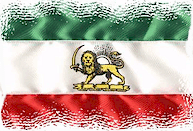

IMPERIAL EMBLEM

PERSIA
Iranian Freedom Fighters UNITE

Friday, March 16, 2007
New sanctions said unlikely to hurt Iran By SEBASTIAN ABBOT
New sanctions agreed on by the major powers at the U.N. are unlikely to hurt Iran much, serving more as a signal to Tehran that worse could come, analysts say. A centerpiece of the draft resolution agreed to on Thursday is a ban on arms exports from Iran. However, this measure will do little to stop deliveries to militant groups like Hezbollah, and government customers like Sudan could find ways to keep buying. Other measures - the freezing of assets of individuals and companies involved in Iran's nuclear and missile programs and a call to suspend financial assistance to the Iranian government - may be more effective. But still don't significantly increase pressure on Iran. "There are ways and means to avoid these sorts of restrictions," said Mustafa Alani, a military analyst with the Dubai-based Gulf Research Center. Iran has prepared for this kind of pressure by setting up shell companies to disguise the companies' business dealings. Former U.N. nuclear inspector David Albright says the new sanctions represent an incremental move rather than a major escalation, but believes they are a step in the right direction. "They are not expected to turn Iran around but are expected to send a signal to Iran that this could isolate you, hurt you economically in the long run," he said. "I think it does successfully accomplish that." The sanctions are aimed at punishing Iran for its continuing refusal to suspend uranium enrichment, a key process that can produce fuel for a nuclear reactor or the material for a nuclear weapon. The United States and its allies accuse Iran of seeking to develop an arsenal, a charge Iran denies. Under the new measures, all countries would be prohibited from buying Iranian "arms or related material." Analysts point out that many of Iran's arms exports aren't affected because they are illicitly sent to non-state actors, such as Lebanon's Hezbollah militant group and Shiite militias in Iraq. "If we look at illegal exports, like to Hezbollah, there is no way we can control it," Alani said. Iran also sells weapons to dozens of countries in the developing world, according to its Defense Ministry, which has not identified the buyers. According to Human Rights Watch, Iran sells in the Mideast and Africa, including Sudan among its major customers. Arms exports made to fellow governments could also escape pressure, at least for the time being, if sanctions are not applied to existing contracts that have not been delivered yet. "If the arms embargo is only on new contracts and not on old contracts, its effectiveness is dramatically reduced because contracts are often signed long before the arms are delivered," said Patrick Clawson, deputy director for research at the Washington Institute for Near East Policy. Russia, which has significant trade ties with Iran, is reportedly pressuring the other permanent members of the Security Council to exempt existing contracts from the new sanctions. Iranian analyst Hamid Reza Shokouhi, who writes for the moderate newspaper Mardomsalari, said Iran's arms industry could feel the pain if the export sanction is enforced. "Iran has developed technologies in the past decades and is now producing various weaponry, from armored vehicles to missiles," he said. "An arms embargo will undermine Iran's military programs." They could also have political fallout for Iranian President Ahmadinejad, who has come under criticism at home in recent months for his defiant talk. On Thursday, he dismissed the draft sanctions, calling them a "torn piece of paper" and saying they will only help Iran to become more self-sufficient. Iranian journalist Iraj Jamshidi said, "Ahmadinejad's harsh rhetoric is more harmful than the Security Council sanctions."


Subscribe to:
Post Comments (Atom)




 Posts
Posts




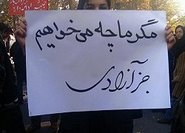
 اخبار مربوط به زندانیان سیاسی و نقض حقوق بشر






 Tulips in Holland



No comments:
Post a Comment